Yoga for low back and hamstrings — Video Below
Boost Your Metabolism Naturally
Looking for the best metabolism boosters that actually work? Check out my recommended picks on Amazon: Best Metabolism Boosters
Yoga for low back and hamstrings — Video Below
Boost Your Metabolism Naturally
Looking for the best metabolism boosters that actually work? Check out my recommended picks on Amazon: Best Metabolism Boosters
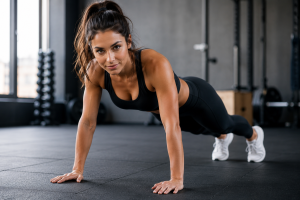 When it comes to fitness, few exercises are as simple, accessible, and effective as the pushup.
 The beauty of the pushup lies in its simplicity. By using your own body weight as resistance, you can develop strength, improve endurance, and enhance overall fitness without ever stepping into a gym.
One of the primary benefits of pushups is their ability to strengthen the upper body. During a standard pushup, several muscle groups work together to move and stabilize the body.
The chest muscles, particularly the pectorals, are heavily involved throughout the movement. The shoulders and triceps also play major roles, helping to push the body upward during each repetition.
Unlike some isolation exercises that target a single muscle group, pushups train multiple muscles simultaneously. This makes them a highly efficient exercise for developing practical, functional strength.
Many people think of pushups as an upper-body exercise, but they are also an excellent core workout. To maintain proper form, the abdominal muscles, obliques, and lower back muscles must remain engaged throughout the movement.
A correctly performed pushup requires the body to remain in a straight line from head to heels. This constant stabilization challenges the core and helps improve overall trunk strength.
A stronger core can contribute to better posture, improved balance, and reduced risk of lower back discomfort.
Functional fitness refers to the ability to perform everyday activities more efficiently and safely. Pushups help develop this type of fitness because they train the body to move as a coordinated unit.
The pushing motion used during a pushup resembles many real-life activities, such as pushing a heavy door, lifting objects, or getting up from the floor. By strengthening the muscles involved in these movements, pushups can make daily tasks easier and reduce the risk of injury.
In addition to building strength, pushups improve muscular endurance. Endurance is the ability of muscles to perform repeated contractions over time without becoming fatigued.
As individuals increase the number of pushups they can perform, their muscles become better conditioned to sustain effort. This can translate into improved performance in sports, recreational activities, and physically demanding jobs.
Higher muscular endurance also supports overall fitness by allowing people to remain active for longer periods without excessive fatigue.
When performed with proper technique, pushups can help strengthen the muscles that support the shoulders and elbows. Stronger supporting muscles contribute to greater joint stability and control.
Because the exercise requires the shoulders to work through a natural range of motion, pushups can promote healthy movement patterns and balanced muscle development.
However, proper form is essential. Performing pushups incorrectly may place unnecessary stress on the joints, so beginners should focus on technique before increasing volume or difficulty.
Modern lifestyles often involve long hours spent sitting at desks, using computers, or looking down at mobile devices. These habits can contribute to poor posture and muscular imbalances.
Pushups help strengthen the chest, shoulders, upper back, and core muscles that play important roles in maintaining proper posture. A stronger upper body can help counteract some of the effects of prolonged sitting and encourage better body alignment.
Over time, improved posture may reduce neck strain, shoulder tension, and back discomfort.
One of the greatest advantages of pushups is their convenience. Unlike many forms of exercise, pushups require no expensive equipment, gym memberships, or specialized facilities.
They can be performed almost anywhere, including at home, in a hotel room, at a park, or even in a small office space during a break.
This accessibility makes it easier for people to stay consistent with their fitness routine. Consistency is often one of the most important factors in achieving long-term health and fitness goals.
Pushups are remarkably versatile. Beginners who find standard pushups challenging can start with wall pushups, incline pushups, or knee pushups. These variations reduce the amount of body weight being lifted while still providing many of the same benefits.
More advanced exercisers can increase the difficulty by performing decline pushups, diamond pushups, archer pushups, or one-arm pushups.
This adaptability allows individuals to continue progressing as their strength and fitness improve.
Regular physical activity is associated with numerous health benefits, including improved cardiovascular health, better weight management, increased energy levels, and enhanced mood. While pushups alone are not a complete fitness program, they can be an important component of a healthy lifestyle.
The exercise elevates heart rate, engages multiple muscle groups, and contributes to overall physical conditioning. Combined with a balanced diet and other forms of exercise, pushups can help support long-term health and wellness.
Pushups remain one of the most effective exercises ever developed. They build upper-body strength, strengthen the core, improve muscular endurance, support joint stability, and enhance functional fitness. Best of all, they require no equipment and can be adapted for virtually any fitness level.
Whether you are just beginning your fitness journey or looking to maintain an active lifestyle, incorporating pushups into your routine can provide significant benefits. Sometimes the simplest exercises deliver the most impressive results, and the pushup is a perfect example.
Boost Your Metabolism Naturally
Looking for the best metabolism boosters that actually work? Check out my recommended picks on Amazon: Best Metabolism Boosters
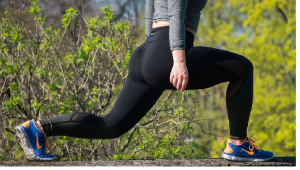 Getting in shape at home doesn’t require expensive gym memberships, fancy machines, or complicated programs.
In fact, some of the most effective fitness routines rely on simple bodyweight movements that have been used for decades.
With consistency and the right approach, exercises like pushups, deep knee bends, jumping jacks, and yoga can help you build strength, improve flexibility, boost cardiovascular health, and feel better overall.
If you’re looking for a realistic, no-nonsense way to improve your fitness without leaving the house, this approach is hard to beat.
One of the biggest advantages of getting in shape at home is convenience. There’s no commute, no waiting for equipment, and no pressure to perform in front of others. This makes it easier to stay consistent, which matters far more than intensity alone.
Home workouts also encourage functional fitness. Instead of isolating muscles, bodyweight exercises train your body to move as a unit. This improves balance, coordination, and real-world strength you can actually use.
Best of all, these workouts are adaptable. You can scale them up or down based on your current fitness level, making them suitable for beginners and experienced exercisers alike.
Pushups are one of the most effective exercises for getting in shape at home. They work the chest, shoulders, triceps, core, and even the legs when performed correctly.
To get the most benefit:
Keep your body in a straight line from head to heels
Engage your core throughout the movement
Lower yourself under control and push back up with intention
If standard pushups feel too challenging at first, knee pushups or incline pushups using a sturdy surface can help you build strength safely. As you progress, increasing repetitions or slowing the tempo can keep the exercise effective without adding equipment.
Deep knee bends, often called squats, are essential for building lower-body strength at home. They target the quadriceps, hamstrings, glutes, and core, all while improving mobility and balance.
Proper form is key:
Keep your chest upright
Push your hips back as you lower
Aim for depth that feels challenging but controlled
Deep knee bends are especially valuable because they strengthen muscles used in daily activities like standing, walking, and climbing stairs. This makes them a cornerstone exercise for anyone focused on long-term health and independence.
Jumping jacks are a simple but powerful way to raise your heart rate and improve cardiovascular fitness while getting in shape at home. They also engage the arms, legs, and core, making them a full-body movement.
Including jumping jacks in your routine helps:
Improve endurance
Burn calories efficiently
Increase circulation and energy levels
They’re easy to modify too. You can reduce impact by stepping side to side instead of jumping, or increase intensity by speeding up or extending workout intervals.
Yoga adds a crucial dimension to getting in shape at home that many people overlook. Beyond flexibility, yoga improves muscular endurance, posture, breathing, and mental focus.
Regular yoga practice can:
Reduce stress and tension
Improve joint mobility
Enhance recovery between workouts
Simple poses like downward dog, plank, warrior poses, and gentle stretches help balance the more dynamic movements like pushups and jumping jacks. Yoga also encourages mindfulness, making workouts feel more sustainable rather than exhausting.
A balanced home workout doesn’t need to be complicated. Here’s a simple structure you can repeat several times per week:
Pushups: 2–4 sets
Deep knee bends: 2–4 sets
Jumping jacks: 30–60 seconds per set
Yoga: 10–20 minutes to finish
This approach allows you to build strength, improve endurance, and maintain flexibility all in one session. Over time, small increases in repetitions, duration, or control will lead to noticeable results.
The most important factor in getting in shape at home isn’t perfection. It’s consistency. Short, regular workouts performed week after week are far more effective than occasional intense sessions.
By sticking with simple movements like pushups, deep knee bends, jumping jacks, and yoga, you remove barriers and excuses. Your body responds to what you do repeatedly, not what you do occasionally.
Getting in shape at home is not only possible, it’s practical and sustainable. With nothing more than your own body and a small space, you can build strength, boost endurance, and improve flexibility at your own pace.
If you stay patient, focus on proper form, and keep showing up, these simple exercises can deliver results that rival far more complicated fitness plans. Your living room can become your gym, and your consistency becomes your greatest piece of equipment.
—
Amazon Has Low Prices on Weight Loss and Appetite Suppression Products
When people think about building muscle, they often picture lifting heavy weights for low reps. But what if there was another way? Science and experience suggest that lifting lighter weights for higher reps—30 to 50 per set until failure—can be just as effective for muscle growth while significantly reducing the risk of injury.
This method, often called high-rep, low-load training, is gaining traction among athletes, bodybuilders, and fitness enthusiasts. Whether you’re looking to build lean muscle, avoid joint pain, or recover from previous injuries, lifting lighter weights can be a powerful approach.

Many assume that only heavy weights lead to muscle growth. However, research shows that muscle hypertrophy (growth) happens when a muscle is worked to failure, regardless of the weight used. When you perform 30 to 50 reps with a light weight until failure, your muscle fibers still experience high levels of tension, which triggers growth.
A 2016 study published in the Journal of Applied Physiology found that lifting lighter weights to failure resulted in similar muscle growth as lifting heavy weights for lower reps. The key factor was reaching muscle fatigue, not just the weight itself.
Muscle fibers are generally categorized into two types:
Fast-twitch fibers (activated with heavy weights and explosive movements)
Slow-twitch fibers (used for endurance and sustained contractions)
Lifting light weights for high reps stimulates slow-twitch muscle fibers, which are often neglected in traditional weightlifting programs. These fibers are essential for endurance, improved muscle tone, and long-term muscular development.
If you’ve ever done a high-rep set, you’ve likely felt an intense “pump”—that tight, swollen sensation in your muscles. This happens due to increased blood flow and metabolic stress, both of which contribute to hypertrophy.
Additionally, training with higher reps improves muscular endurance, which benefits both strength athletes and those looking to maintain functional fitness.
One of the biggest drawbacks of heavy lifting is the strain it places on joints, tendons, and ligaments. Over time, lifting heavy weights can lead to issues like:
Shoulder impingements
Knee pain
Lower back strain
Tendonitis
Lifting lighter weights allows you to stress the muscles while sparing the joints, making it a safer option for long-term training.
Heavy weights can sometimes force lifters to use poor form, leading to increased injury risk. Lighter weights allow you to:
Maintain strict control over the movement
Use full range of motion
Focus on muscle activation rather than just moving the weight
This makes high-rep training especially useful for beginners or those recovering from injuries.
Heavy squats, deadlifts, and overhead presses put significant pressure on the spine. While these movements are valuable, constant heavy loading can increase the risk of disc herniation, nerve compression, and chronic back pain.
Switching to lighter weights with high reps reduces spinal compression while still stimulating the muscles effectively.
If you want to incorporate 30-50 rep sets to failure into your routine, here’s how to do it:
Pick a weight that allows you to complete at least 30 reps but no more than 50 before hitting failure.
The last 5-10 reps should feel challenging, but your form should remain solid.
Avoid rushing through reps. Use slow, controlled movements to maximize time under tension.
Focus on mind-muscle connection, ensuring that the target muscle does the work.
The effectiveness of high-rep training depends on reaching muscular failure—the point where you can’t complete another rep with proper form.
Don’t stop just because you hit a certain number. Go until you physically can’t lift anymore.
You can replace some heavy lifting days with high-rep training or use it for specific body parts prone to injury (e.g., shoulders, knees).
A sample hybrid plan could look like this:
Day 1 (Heavy) – Squats, deadlifts, bench press (5-8 reps)
Day 2 (High Rep) – Leg press, dumbbell presses, lateral raises (30-50 reps)
Day 3 (Heavy) – Rows, overhead presses, lunges (5-8 reps)
Day 4 (High Rep) – Curls, triceps extensions, band exercises (30-50 reps)
If 50 reps isn’t enough to reach failure, use drop sets (reduce weight mid-set) or supersets (combine exercises back-to-back).
Older adults – Reduces joint stress while maintaining strength and muscle mass.
Beginners – Helps build a foundation of endurance and control before moving to heavy weights.
Athletes recovering from injuries – Strengthens muscles without excessive strain.
Anyone looking for muscular endurance – Great for sports performance and overall fitness.
Lifting lighter weights for 30-50 reps until failure is an effective, joint-friendly way to build muscle. It recruits slow-twitch fibers, maximizes metabolic stress, and avoids the injuries often caused by heavy weights.
If you’ve been stuck in a heavy-lifting mindset, consider adding high-rep training into your routine. You may be surprised by the gains in muscle endurance, size, and longevity.
Please share this post on X, Facebook or Pinterest.
Thanks !!!
High-Intensity Interval Training (HIIT) with bodyweight exercises like jumping jacks, stair stepping, and similar movements can be an effective way to burn calories and boost cardiovascular fitness without needing additional weights or equipment.
HIIT involves alternating between short bursts of high-intensity activity and brief periods of rest or low-intensity exercise. When structured properly, a 20 to 30-minute HIIT session can be enough to burn around 300 calories, depending on individual factors like weight, fitness level, and workout intensity.
Here’s how you can incorporate exercises like jumping jacks, stair stepping, mountain climbers, burpees, and high knees to maximize calorie burn:
Using the above exercises in a HIIT format, try this 20-minute routine to aim for a 300-calorie burn:
| Exercise | Duration |
|---|---|
| Warm-up (march in place) | 2 minutes |
| Jumping Jacks | 30 seconds |
| Rest | 15 seconds |
| Stair Stepping | 1 minute |
| Rest | 15 seconds |
| Mountain Climbers | 30 seconds |
| Rest | 10 seconds |
| High Knees | 30 seconds |
| Rest | 15 seconds |
| Burpees | 30 seconds |
| Rest | 20 seconds |
| Squat Jumps | 20 seconds |
| Rest | 10 seconds |
| Repeat the circuit 3x | 15 minutes |
| Cool Down (stretching) | 2-3 minutes |
Total Time: ~20 minutes
This bodyweight HIIT session is a quick and effective way to burn 300 calories, increase endurance, and enhance muscle tone without any equipment. Adjust the intensity or duration based on your fitness level, and with regular sessions, you’ll see noticeable improvements in both fitness and calorie burn