You know when you find something that feels like a total game-changer and you want to tell everyone you know?
Well, over the past year, I’ve found several hormone-health-friendly products that have made a huge difference in my life that I want to share with you. They’ve helped me tackle stress, get better sleep, and improve my skin — all areas of my health that affect how I feel on a daily basis.
And while I’m by no means perfect, I do feel so much better as a result of making small changes to my daily routine and adding in these products.
Here are just a few that I’m loving lately…
This post includes affiliate links, which means The Balanced Life may receive a commission, at no cost to you, if you make a purchase through the link!
Favorite Products
Non-Toxic Cookware
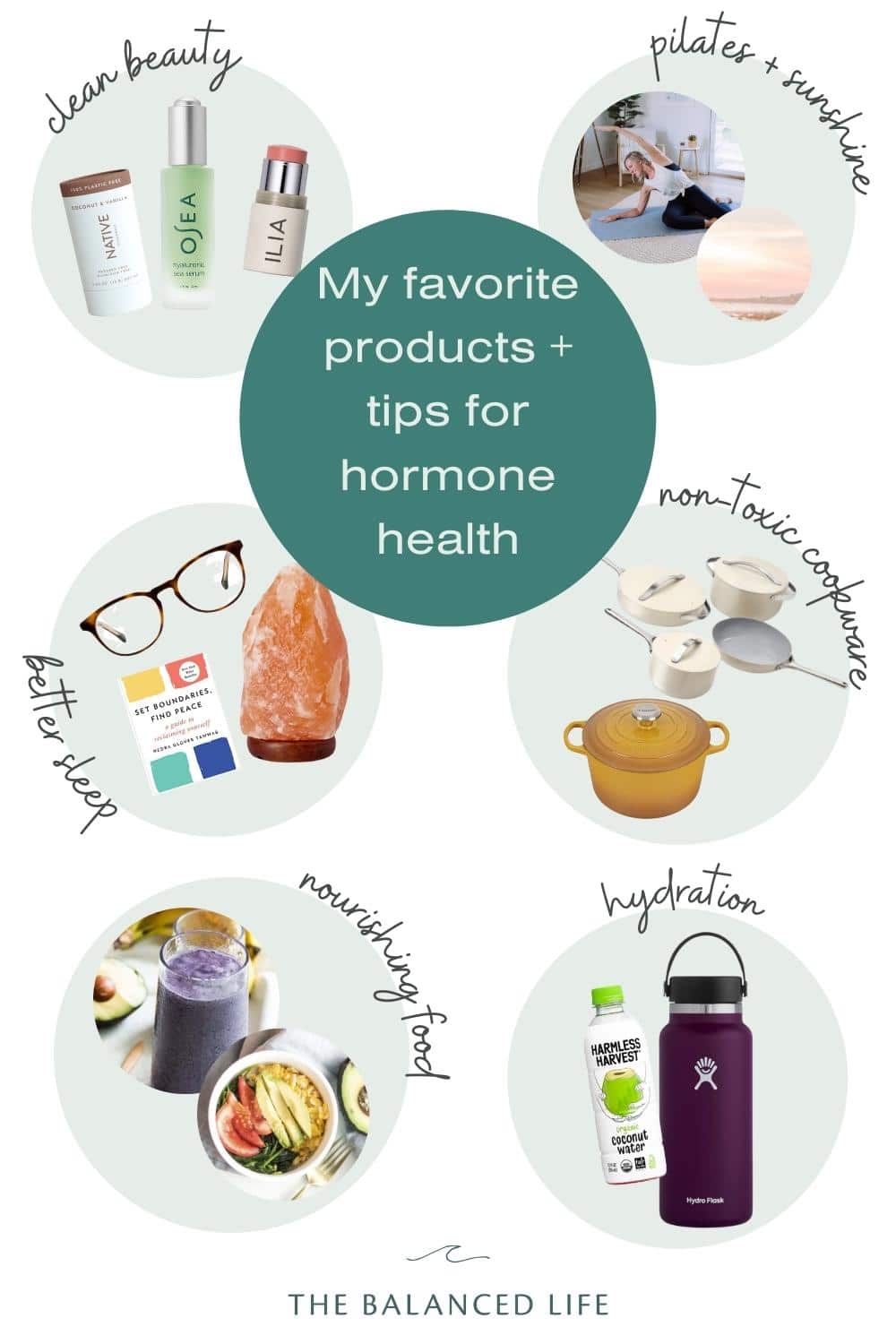
Reducing exposure to hormone-disrupting chemicals in my food is essential. I love my Caraway set and Le Creuset (an investment for sure – I bought mine at their outlet) to help me reduce these chemicals on a daily basis.
Clean Beauty products
Your skin is your largest organ, so what you put on your skin is important! I love Osea for their serums + moisturizer, Ilia for their cheek stain, and Native Deodorant (I’ve been using this for years!).
Hydration
It’s no secret staying hydrated is an essential part of staying healthy! I love using my large hydroflask to keep water nearby all day and have Harmless Harvest Coconut Water on hand for days I’m feeling a little more depleted and want some extra minerals and hydration support.
Blue Light Blocking Glasses
Blue light can really affect our sleep and our body’s biological clock (AKA circadian rhythm) when we look at screens late at night or too close to bed. By using blue light blocking glasses, you help the production of melatonin, which helps keep your body to its natural timing and get better sleep. I love these glasses and TBL team uses them too!
The warm pink and orange glow creates a calming and relaxing atmosphere within a room, helping to increase melatonin production for a comfortable night’s sleep.
Supplements
I’ve talked a lot about my daily supplements on the podcast here!
Routines + Habits
Winding down an hour before bed with an epsom salt bath + a good book to help prepare me for a good night’s sleep.
Keeping a lighter schedule in an effort to slow down (always a work in progress!).
Morning sunlight as often as possible – this helps by triggering my body to stop the production of melatonin and increase cortisol, to help me feel away and ready for the day!
Afternoon stretch + breathing breaks to calm my mind and refocus (and lowering stress-related hormones).
Daily Pilates to help release endorphins and serotonin to help me feel my best (you aren’t surprised by that one, are you?).
Nourishing meals + snacks
I’ve been making a lot of smoothies with blueberries recently, like this one from Recipe Central! Smoothies are a great way to sneak in a lot of nutrients and help reduce inflammation.
Eggs for breakfast for a solid protein and nutrient-rich start to the day. I love a good breakfast bowl! I also do my best to eat within an hour of waking to help keep my hormones and insulin balanced throughout the day.
While swapping out products isn’t a cure-all, simple changes to our products and routines can have a direct impact on our health and the way we feel each day, so I hope you find these helpful and are able to make small steps towards your healthiest self!
xo,
PS – These products and recommendations should not be considered medical advice. I encourage you to talk to your doctor so you can care for your hormones in a way that works best for you!
Welcome to the Ultimate Beginner’s Guide to the Gym!
As part of our Strength 101 series, this guide will dive deep into everything you need to know about working out properly in a gym.
By the time you finish reading, you’ll never have to wonder “what should I do in the gym?”
I bet I also make you laugh once or twice with bad jokes and perfect gifs.
We’ve helped thousands of Online Coaching Clients build confidence and start strength training in the gym, so I worked with our coaches to create today’s Ultimate Beginner Gym Guide!
Okay, time to start working out. Let’s hit the gym and explore the following:
Regardless of your physique, if you are 400 pounds or 100 pounds, going to a regular commercial gym for the first time can be intimidating as hell.
And that’s only if you can get yourself to use 20 Seconds of Courage to walk in the door!
I explain exactly what I mean by it in this video:
I know many people who say “gyms are not for me,” or “gyms are dumb” and never even go into one, simply because gyms can be scary/not welcoming/not cool.
Now, if you CAN work up the courage to walk through the door, you’ll be faced with the following:
#1) People with pained looks on their faces dutifully using machines that somewhat resemble medieval torture devices.
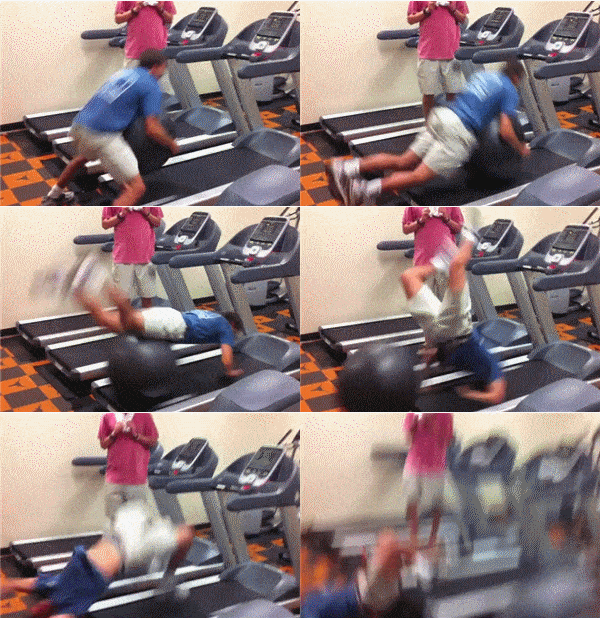
#2) Others on cardio machines, treadmills, and ellipticals, and you can already picture yourself wiping out and ending up in a YouTube fail montage.
#3) Really strong jacked people picking up heavy free weights so effortlessly that you can’t help but instantly compare yourself to them…and get intimidated.
If you struggle with self-confidence, or you don’t love how you look, you might assume that everybody around you will be judging you the whole time and don’t want to subject yourself to this torture.
In fact, you might think that somehow you need to get in shape FIRST, and THEN you can go to the gym…
Wrong!
You go to the gym TO get in shape. And I will get you there.
If you are going to start using a gym, here are some truths you need to know:
Everybody around you is just as self-conscious as you are. Yes, that super jacked dude. Or that thin (or jacked) fit woman on the elliptical. They aren’t focused on you, because they’re too busy living inside their own head wondering if everybody is thinking about them.
Everybody starts somewhere. You don’t look good so that you can then go to the gym. You go to the gym to get stronger, more confident, and then look good.
MOST will applaud you for trying. When I see somebody who is severely overweight at the gym, it makes me happy – they’re trying to better themselves! That’s freaking AWESOME. This is the mentality 90%+ of the people will have.
MANY will be too self-focused to even notice you. These are the dudes lifting up their shirt in the mirror to check their abs, doing bicep curls in the squat rack, and/or making sure they take photos to post on Facebook to prove they did in fact go to the gym. #Fitspo #Instagram #OtherNonsensicalHashtags
A RARE few will judge. Though, they’re not just judging you, I promise. They’re judging EVERYBODY around you, because they can’t help but compare themselves to others and they’re terrible people. This is no different than in real life. Screw these people, haters gonna hate, slaters gonna slate.
Sure, you can say “people are mean, the gym is scary, I just won’t show up.” But then, the terrorists win. And so do those people. So f*** that!.
Instead, this is going to be your gym mentality:
Accept that some people suck (like anywhere in life), and most people are indifferent or focused on being self-conscious themselves. Everybody else will applaud you for trying and being there.
Make an epic Spotify playlist that makes you feel heroic.
Wear clothes that you feel comfortable in.
Keep your headphones on, zone out everybody, and go about your business. Imagine you’re the only one there.
These are tips Coach Matt brings up in his video How to Overcome Gym Anxiety:
We work with all of our Online Coaching clients who are worried about looking foolish in the gym. We know this is a huge challenge, so we create small levels and missions for our clients to get them comfortable in the gym.
We’ve helped people just like you go from sheepish beginner to barbell-wielding badass. Let us help you!
Sign up in the box below and I’ll send you this workout free (along with some other goodies):
Grab Your Beginner Bodyweight Routine Worksheet. No Gym Required!
Complete this workout at home, no equipment required
Avoid the common mistakes everybody makes when doing bodyweight exercises
Learn how to finally get your first pull-up
How Often Should I go to the Gym?
Many people think they need to hit the gym 6 days per week, dutifully alternating weight training with cardio and bootcamps to get that jacked/toned body they’re after.
That sounds exhausting and miserable to me…
…and I LOVE the gym!
So here’s what you need to know about gym frequency:
Go as much as you can, or as little as you want.
All of the workouts in this guide are “full-body workouts” which means they work out all of the muscles in your body.
And as we lay out in “Strength 101: Beginner Strength Workouts,” your muscles get broken down in the gym and then they rebuild themselves stronger over the next 48 hours.
For that reason, we recommend you hit the gym 2-3 times per week, with a day off or more in between each session.
This advice comes with a few caveats:
If you’re a single mom or working two jobs or just busy living your life and you can only go to the gym once, great! Once a week is better than zero times a week!
If you have specific athletic or cardiovascular goals you’re training for, then hitting the gym more frequently might get you faster results.
We craft our workout routines for our coaching clients around their schedules – some people hit the gym 5 days per week, while others only go once a week. We’re all unique snowflakes!
Okay! Now that we got THAT out of the way, are we ready!?
Great! Let’s level up in the gym!
Level One Gym Workout: First Day At the Gym
The toughest part about going to a gym for the first time is just walking through the door.
If you do that, you’ve already gone farther than 74% of the population (a totally made-up statistic that I’m using to prove my point), so give yourself a pat on the back.*
So on your first day in the gym, just GOING to the gym is a big step in the right direction. And I’m proud of you.
Note: You might need to also change into gym clothes if you’re coming from work. I know walking out onto the floor in gym clothes might be intimidating too (another chance to use 20 Seconds of Courage).
But now you’re wondering, “Steve you half-witted, scruffy-looking nerf herder, what do I DO on my first day at the gym?”
If you haven’t already done so, ask somebody at the front desk the following:
“Hey I’m new here, could I get a tour of the gym?”
“Excuse me, today’s my first day, can you point me in the direction of a place I can stretch?”
“Can you help me work the treadmill?”
Go full YOLO and try to figure these things out on your own.
If you’re able to get a personal tour, great! Ask the treadmill question when you get to them. If they can’t walk you through, just do a lap yourself and see where things are and who is doing what.
Pro tip (also works outside of the gym): pretend you’re confident – even if you’re dying inside – walk with purpose, and nobody will question why you’re doing what you’re doing.
So, when you’re ready, walk over towards the stretching area, and do a few basic mobility/warm-up stretches while continuing to get the lay of the land and see what people are doing (don’t stare excessively, cool? cool).
Roll your head in half-circles slowly, from shoulder to shoulder. 5 circles in each direction
Slowly roll your shoulders forwards and backwards. 10 each way.
Keep your legs stationary, and twist your torso, left and right. 10 twists on each side.
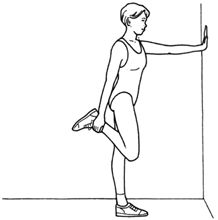
Quad stretch: Hold each stretch for 5 seconds. Do 3 on each side:
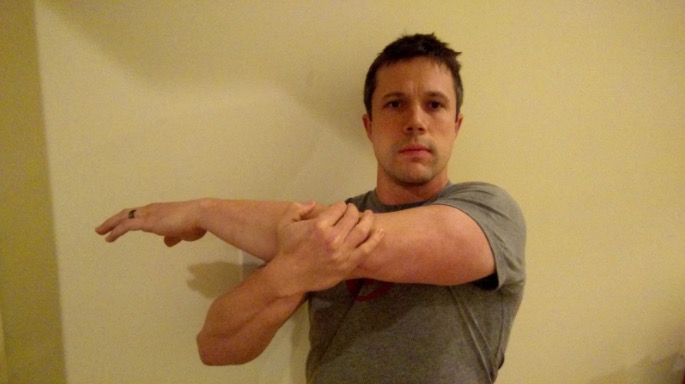
Cross one arm in front of your chest, then the other, as demonstrated here by lead coach Jim: Hold each stretch for 5 seconds. Do 3 on each side:
These movements have the awesome side-effect of you being able to look around the gym and get the “flow” of things, while still looking busy. Jim STILL uses this “trick” when checking out new gyms.
Really, just get your body moving. We don’t have to make you a gym warrior on Day 1. Some stretches and sightseeing will be good enough.
LEVEL 1 MISSION:
Take a lap around the gym and do your stretches.
If you walked out right now after doing these things, it’s still a win for Day 1 in a gym. Seriously – I don’t care what you do on Day 1 – as long as it leaves you feeling good enough to come back for a Day 2!
GYM LEVEL 1 RECAP:
Walking through the door makes you a winner.
Ask for a tour if you need to know where things are!
Change into workout clothes.
Stand in one spot, do a few stretches, get the lay of the land.
If you’re up for MORE or ready to level up consider going to the next level, become a cardio cadet!
Level 2 Gym Workout: Join the Cardio Cadets
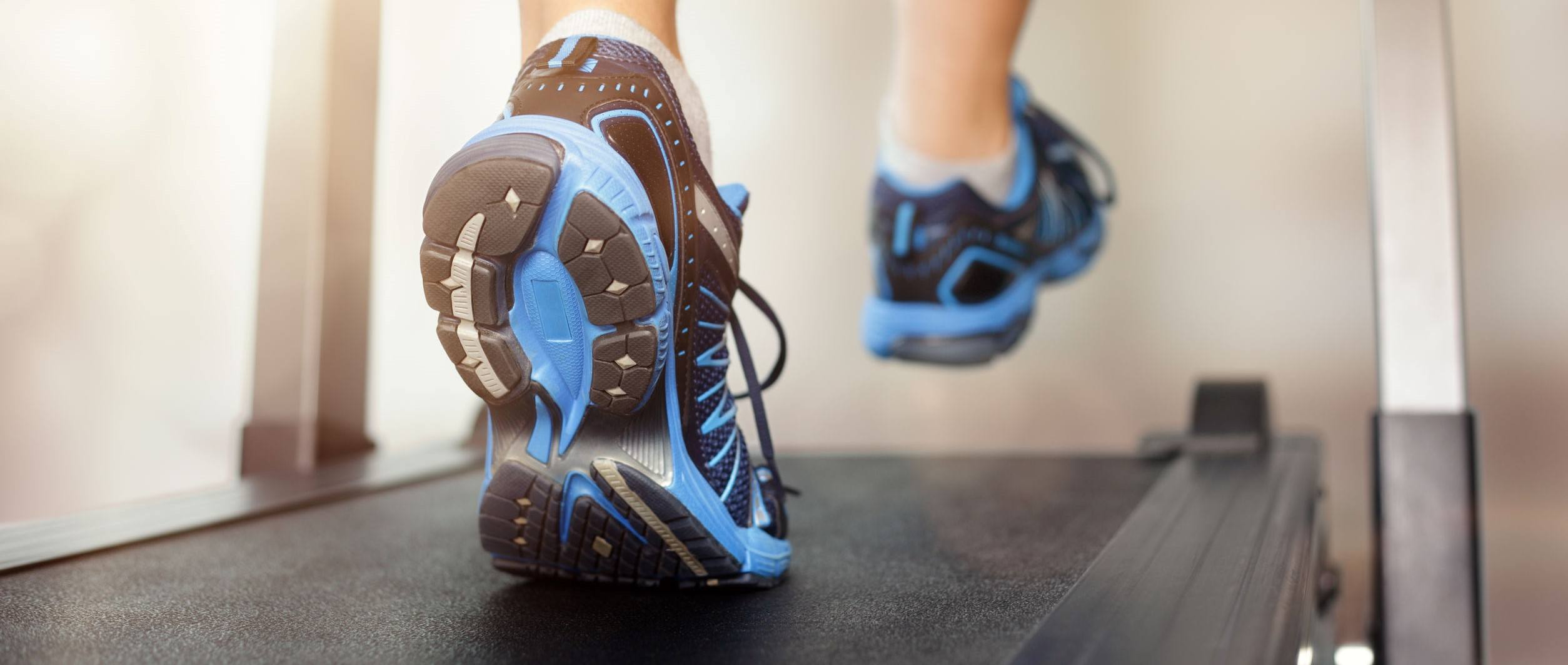
Get on the treadmill and start it up, based on the staff’s instructions.
If you weren’t able to get instructions, many treadmills have a “quick start” button that will start things up.
Why start with just walking?
It gets you moving and out of your head! I know you’re smart – you’re reading NERD Fitness. But you also probably deal with paralysis by analysis a lot by overanalyzing everything, so we need to get OUT of our heads and get moving!!
So, for your first 10-15 minutes, just walk. Set the treadmill at 3mph or 3.5 or whatever speed is comfortable but not too strenuous.
A speed that gets you moving and gives you a chance to decide what you’ll do next while you look around the gym. (Aka, it gives you a chance to get out of your head and stop thinking everyone is looking at you. They’re not)
LEVEL 2 MISSION:
Do your Level 1 stretches, then spend 15 minutes walking, and then you are free to go home.
Repeat this as many days in a row that you need to until this starts to feel comfortable and you stop feeling self-conscious.
Scientists, Benedictine monks, and German scholars refer to such a thing as a “routine.”
As you get more comfortable, you can increase your walking speed or length of walking (20 minutes, 60 minutes, whatever)
If I’m gonna walk, I like to crush podcasts while doing so (My favorites: Watch out for Fireballs, Pardon My Take, and Bill Burr). Maybe you listen to Harry Potter on Audible.
Whatever floats your boat.
GYM LEVEL 2 RECAP:
What you do in the gym doesn’t matter – build the habit of going regularly.
Develop confidence at the treadmill with just walking.
Start to realize you have just as much of a right to be there as anybody else.
Give yourself a high five for being you.
This routine of walking and stretching might only be one day in the gym for you, or it might be two months of this before you finally feel like you don’t want to jump out of your own skin while in the gym.
Going to the gym is the habit I want you to build, so this is a great start. Remember, you should be thinking in terms of “days and years,” not “weeks and months”:
We have many coaching clients who spend MONTHS just walking and working up the courage to move beyond the treadmill. That’s cool. We’re all on our own journey, at our own pace, so go at the pace that fits YOUR schedule.
Level 3 Workout: Join the Bodyweight Brigade!
After getting comfortable with the stretching/treadmill routine, you may want to hop on a weight lifting machine at this point like the leg press or chest press machine.
Is this progress? Sure!
Can you do this? Absolutely!
But, but, but… we are going to recommend you try some bodyweight exercises instead as your next step.
Controlling your body through space (not outer space) is going to be more beneficial in the long run than strapping into a machine and moving through a set path.
If you can do bodyweight exercises proficiently, then stepping into a machine is “easy.”
The reverse is not always the case.
So, if we’ve convinced you to try some bodyweight exercises, then next thing is to identify a place in the gym you can do bodyweight exercises where you’re not in the way. This oftentimes might double as the place that some people are doing stretches, where you’ve already been before!
If you don’t know, ask the front desk or find a trainer! That’s what they’re there for!
LEVEL 3 MISSION:
After your 5 minutes of warm-up (Level 1) and 10 minutes on the treadmill (Level 2), your next step is to go to a place you can do the Level 3 Gym Workout:
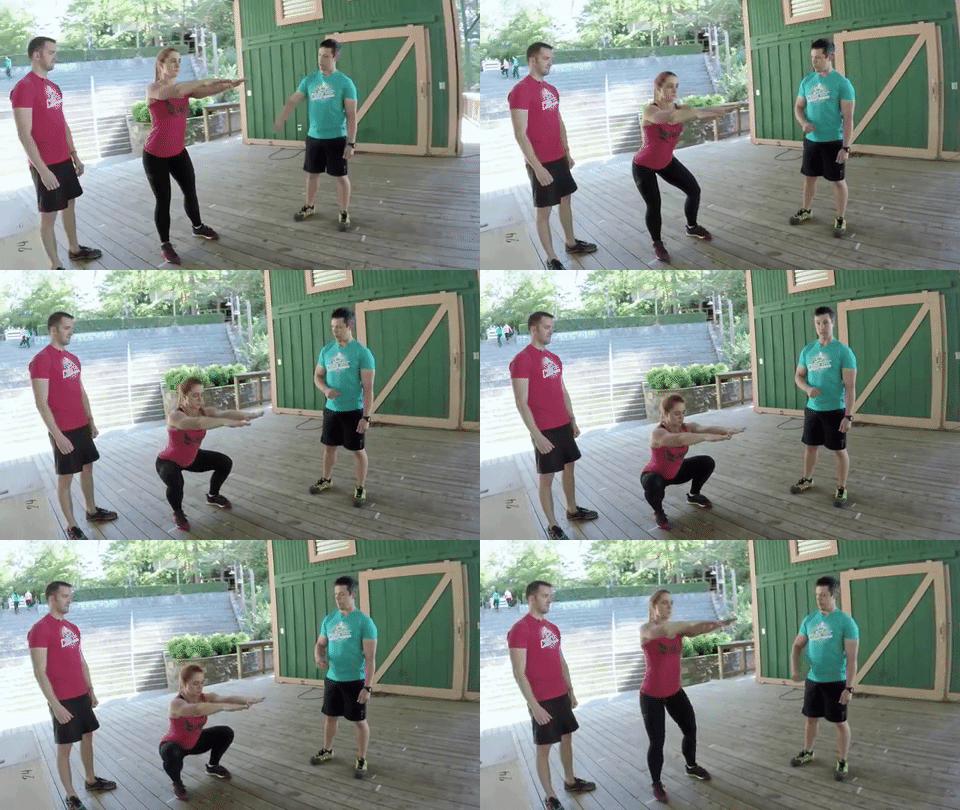
10 bodyweight squats
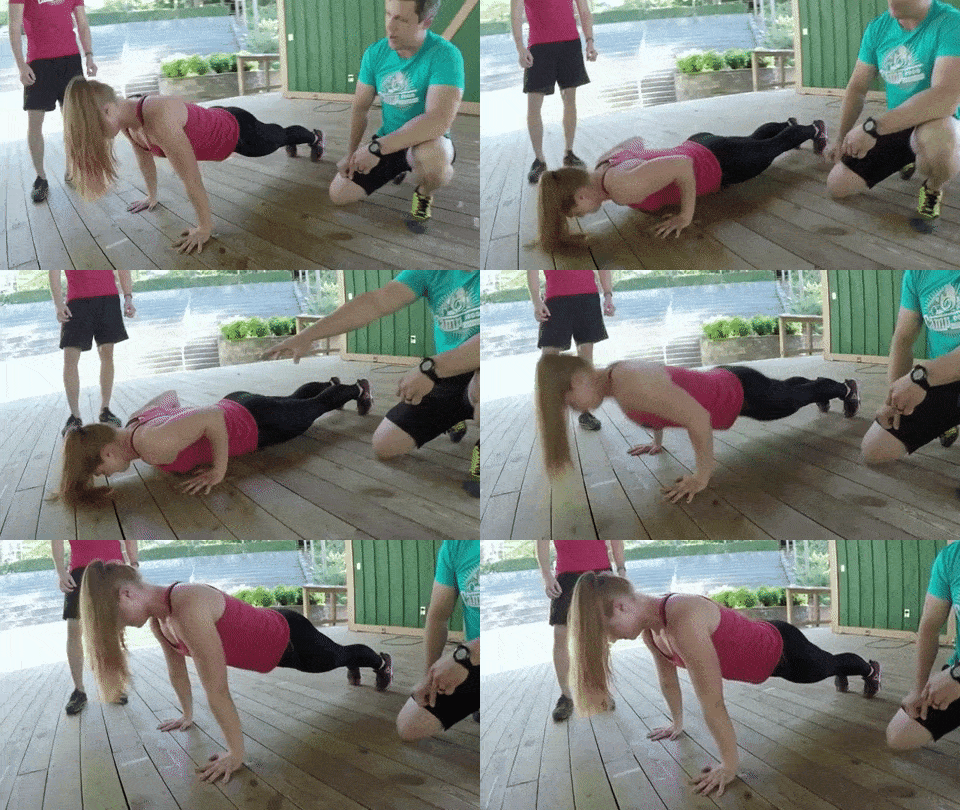
10 push-ups
10 bodyweight squats
10 push-ups
10 bodyweight squats
10 push-ups
Can’t get through it all? No worries, do what you can.
This style of alternating one exercise with another is called a circuit workout, by the way!
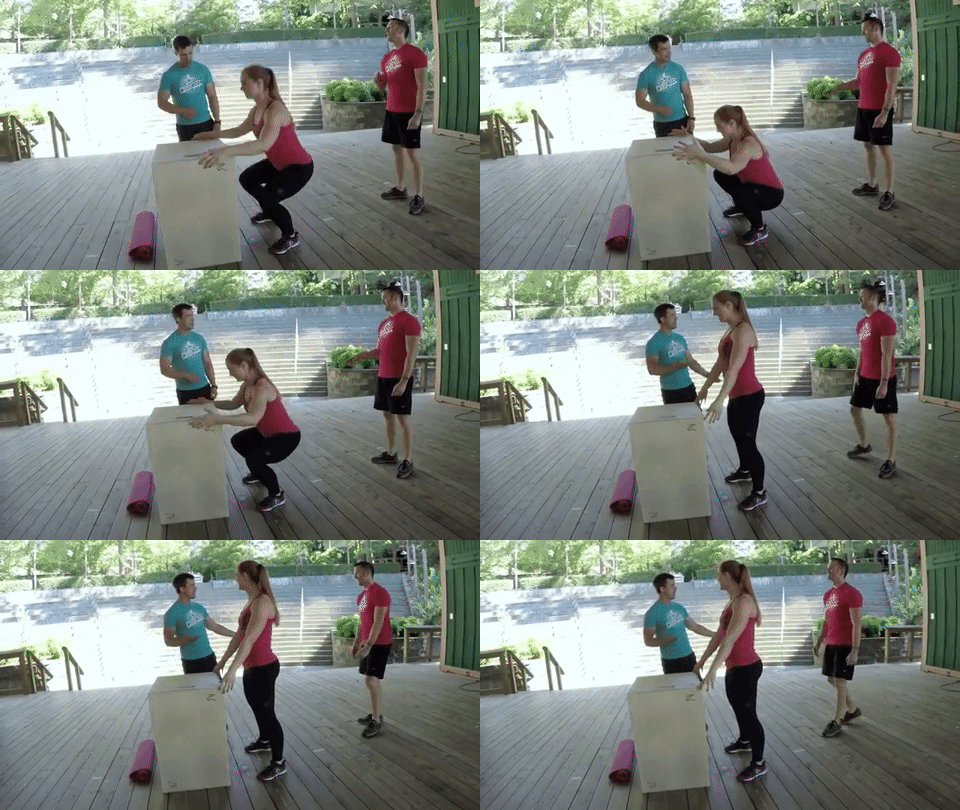
If you don’t know how to do those movements well, watch coaches Jim, Staci, and myself show you how!
If you just did the above mini-workout for a month, you’d be off to a great start! If you’re feeling frisky and starting to find some confidence in the gym, it’s time to branch out more!
GYM LEVEL 3 RECAP:
Warm-up on the treadmill with a 10-minute walk
Find a place where you can do bodyweight movements out of the way
Complete 3 circuits of 10 push-ups and 10 bodyweight squats each at a pace that works for you
Stay at this stage as long as you need, until you can move on!
Note: If you enjoy the bodyweight brigade, or you’re not quite ready to start doing weight training yet, that’s cool too.
We have tons of 1-on-1 coaching clients who have gotten in GREAT shape without ever picking up a weight. It all comes down to constantly increasing the challenge and making progress each week.
Level 4 Gym Workout: Join the Dumbbell Division
It’s time to wander into the place that strikes fear in the heart of most gym goers:
The free weight section.
Gulp.
DO NOT FORGET THIS:If you are a 400 pound woman, or 85 years-old, or a 100-pound man, you have just as much of a right to be in the free weight section as anybody else.
It might take yet another 20 Seconds of Courage to wander in there, so I’m challenging you to try it.
LEVEL 4 MISSION:
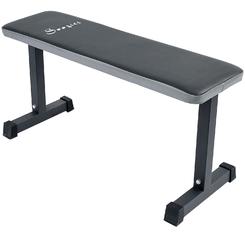
After you do 10 minutes of walking on the treadmill, go to the dumbbell section, grab a single 10 lb (4.5kg) dumbbell, and find a flat bench like this:
Stand next to that bench, and make sure nobody is using it. If somebody is at a bench nearby, ask them “is anybody using this bench?” If they say no, put your towel on the bench, your 10 lb dumbbell on it, and stand next to it.
We’re going to add a 1-arm dumbbell row to our circuit above:
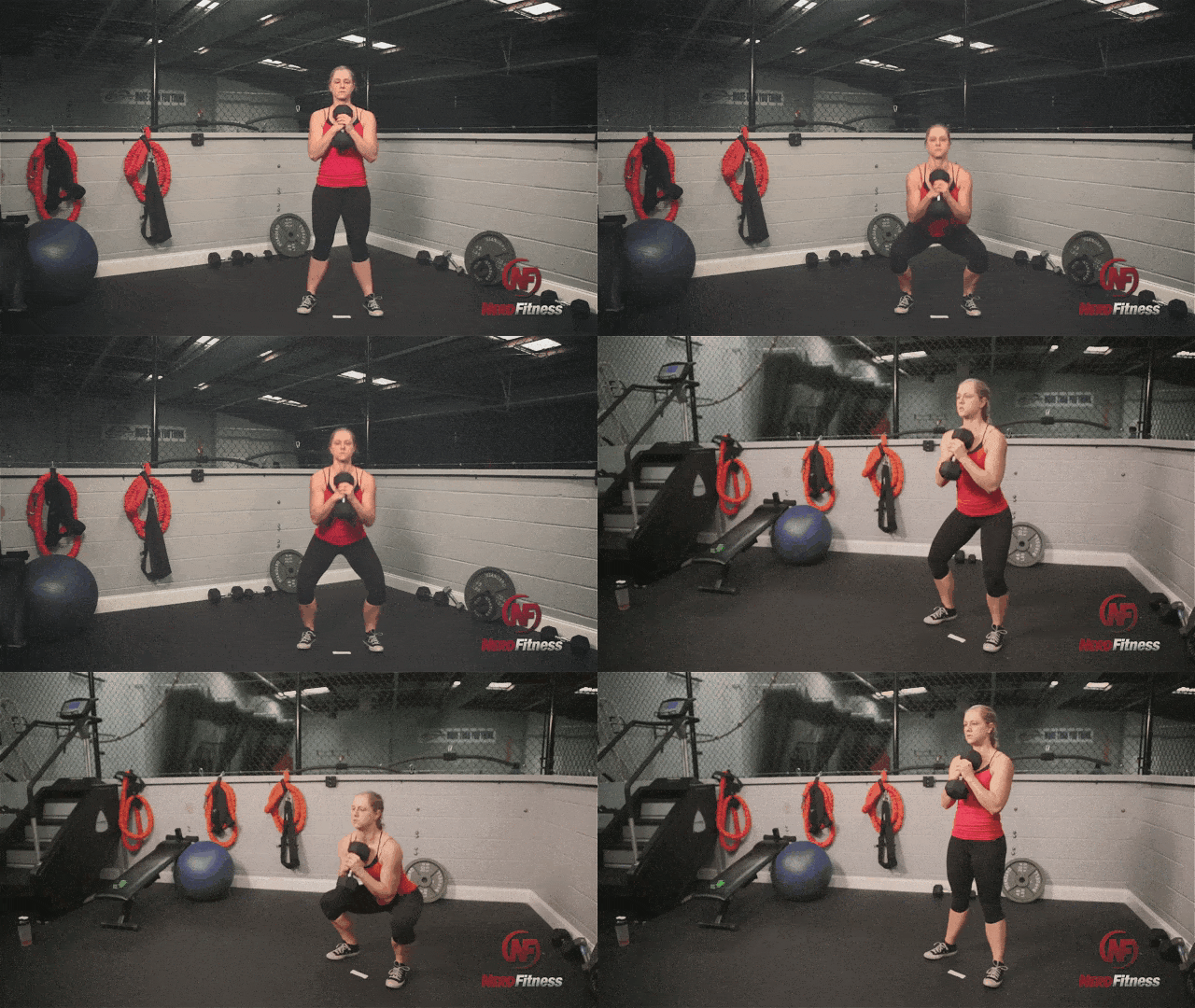
The last dumbbell exercise to learn is the dumbbell Romanian deadlift (RDL). This is like a cousin of the bodyweight squat where we move through the hips more than the knees.
Grab a pair of dumbbells now, push your hips back and bow forward like you’re being polite. Or, you’re like one of those novelty “drinking birds.”
Bring the dumbbells down to about your knees, not to the ground, then stand back up.
You can see the exercise right here:
Every other workout, swap out the goblet squat for the dumbbell Romanian deadlift.
So our circuit is now alternating with each gym workout.
Do 3 circuits of each if you can! If the weight is too light, use heavier dumbbells the next time you train.
Level 4 Gym Workout: Dumbbell Division C:
10 goblet squats OR 10 dumbbell Romanian deadlifts
10 push-ups
10 dumbbell rows per arm.
GYM LEVEL 4 RECAP:
Remember you have just as much a right as everybody else to use the free weights.
Take a deep breath, go into free weights section, and get a 10 lb. dumbbell.
Learn to do a bent over row and goblet squats.
Learn to do dumbbell Romanian deadlifts.
High five yourself for weight training.
Training with dumbbells opens up infinite possibilities.
Okay, probably not INFINITE possibilities, but close enough.
If you are somebody that wants to learn how to train with dumbbells even more seriously, or you’re looking for ways to put that dumbbell set you have in your garage to proper use, let us help!
If you have a great program to follow, you can get in incredible shape with just a set of dumbbells.
Level 5: Enlist in the Barbell Battalion
The two final pieces of the puzzle are things I want for you so badly, I can taste it. These two exercises have changed my life, our lead coach Jim’s life, Staci’s life, and the lives of hundreds of thousands of people in the Nerd Fitness Rebellion:
And here is a quick video demonstration of the Squat, but I would REALLY read our full article!
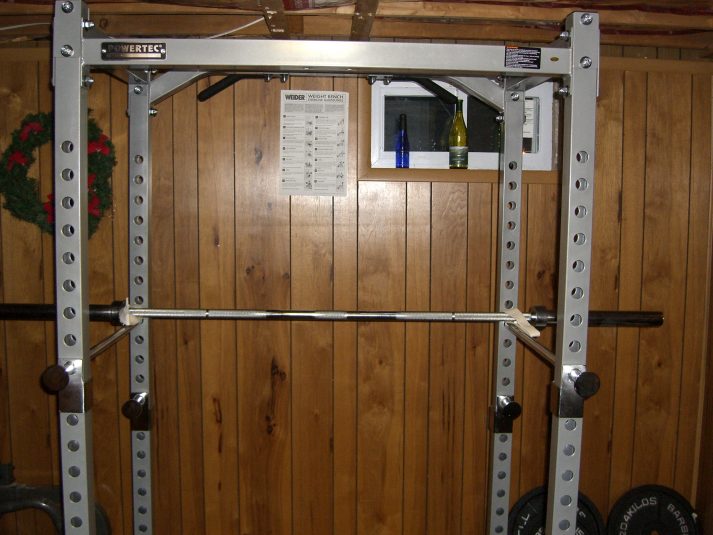
And then I want you to find a squat rack:
THIS IS ONE TYPE OF SQUAT RACK (the barbell is NOT connected to the apparatus). USE THESE:
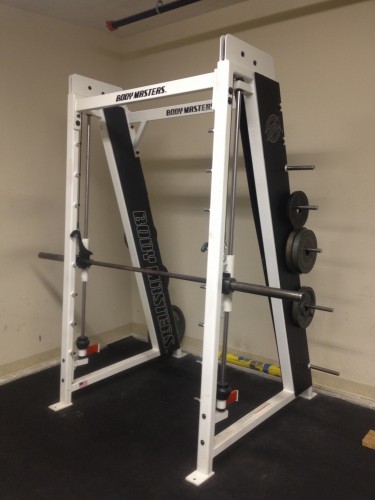
THIS IS A SMITH MACHINE (bar is attached to apparatus). THIS IS DIFFERENT FROM A “SQUAT RACK”:
Note: if you are training in a hotel gym, an apartment gym, or at some locations like Planet Fitness, they might NOT have a squat rack!
This can be for a variety of issues (liability, lack of space, most people just want to use a Smith Machine, etc.). They might even tell you, “A Smith Machine is the same thing.” It is not, in fact, the same thing. You hopefully can find a gym that has an ACTUAL squat rack with a free barbell.
If your gym doesn’t have a squat rack, and you want to start barbell training, I would consider finding a new gym or just hanging out in the Level 4: Dumbbell Division!
If using a squat rack scares the crap out of you: wait to attempt your FIRST trip to the squat rack when the gym is nearly empty, or recruit a buddy who knows what they’re doing. If there’s a special day you can go VERY early to the gym, or VERY late, or during the workday, do it then.
Watch this video from The Nerd Fitness Prime about how to set the ‘pins’ in the squat rack to put the bar at the proper height!
YOUR NEXT LEVEL 5 MISSION:
Attempt 1 set of a 5 barbell squats with JUST the bar (first ask the staff or a trainer how much the bar weighs: most standard barbells weigh 45 lbs (20Kg) but your gym might not have standard barbells).
You can then complete our tried and true circuit – replacing goblet squats with barbell squats.
So our circuit is now 3 circuits.
Level 5 Gym Workout: Barbell Battalion A:
10 barbell squats or 10 dumbbell Romanian deadlifts
10 push-ups
10 dumbbell rows/side
(See Level 4 for explanations on the Dumbbell deadlifts and rows)
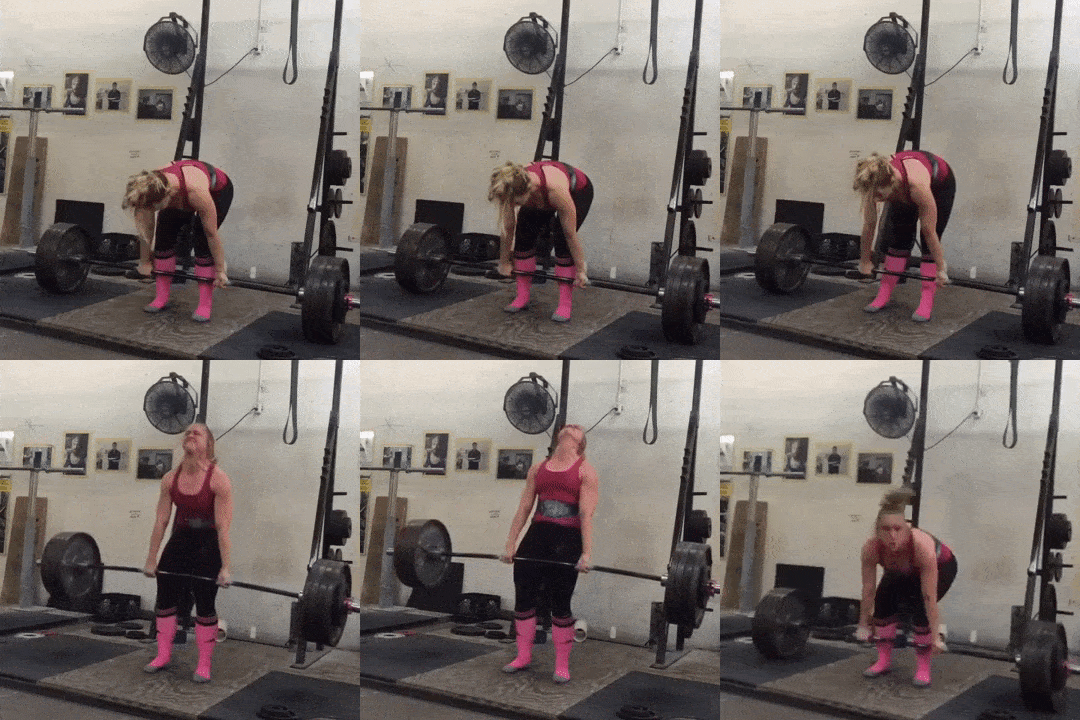
Congrats! You’re using barbells! If you haven’t already read NF’s Senior Coach Staci’s transformation story of how she went from barely being able to lift a 10 lb dumbbell to now deadlifting 425 lbs, it’s a really inspiring story!
Speaking of Staci, let’s move on to her favorite exercise (and mine!)…
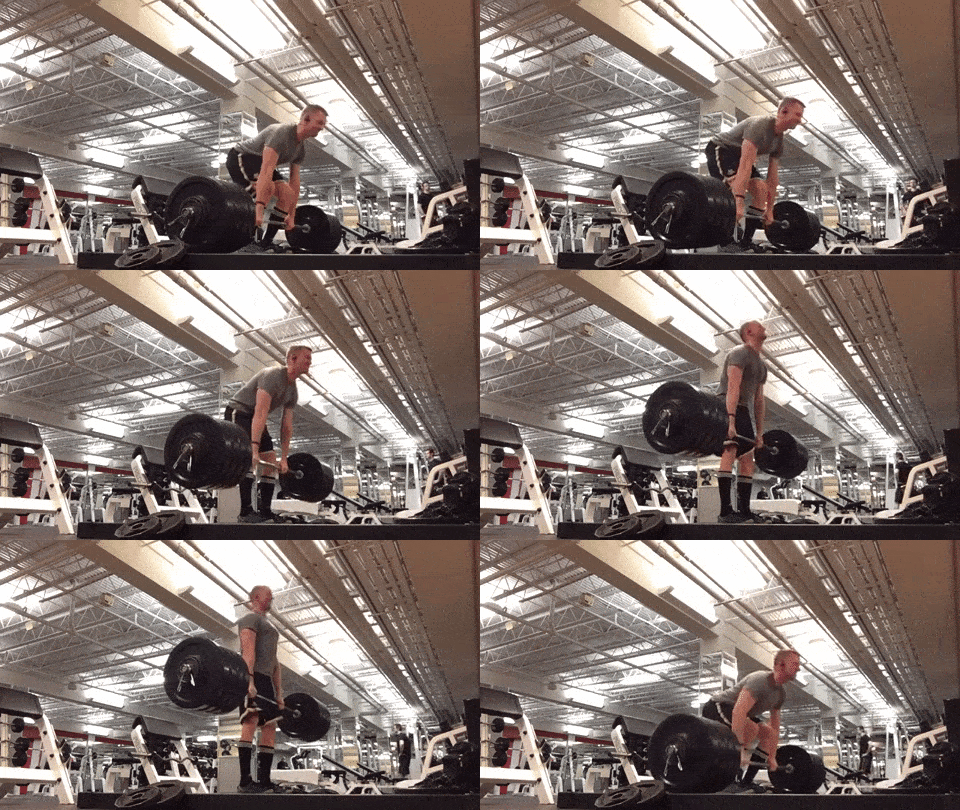
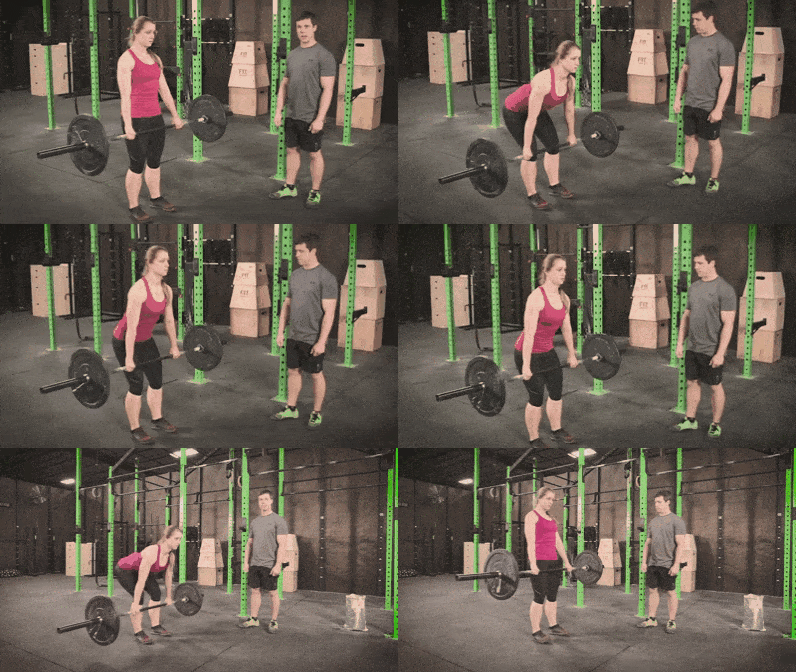
The deadlift movements starts with the weight on the ground, and ends with it back on the ground.
If you’ve got regular, large weights (usually 45 lbs/20 kgs) on each side then the bar sits the proper height off the ground.
Some facilities have lighter plates at that same large diameter. Use them.
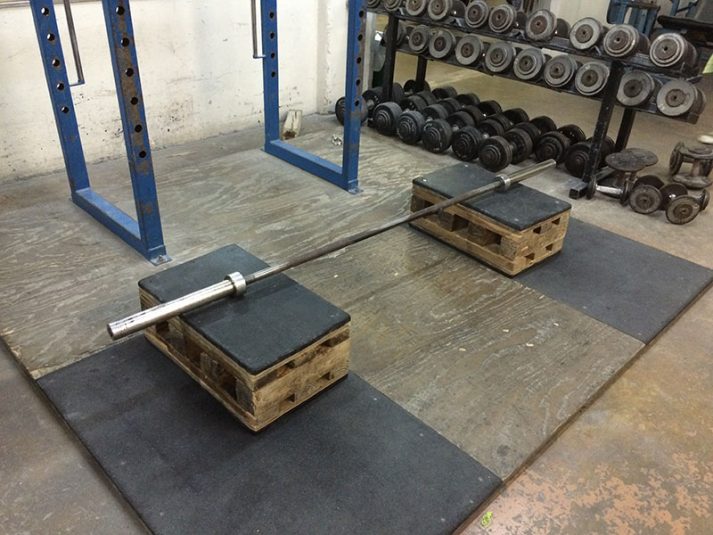
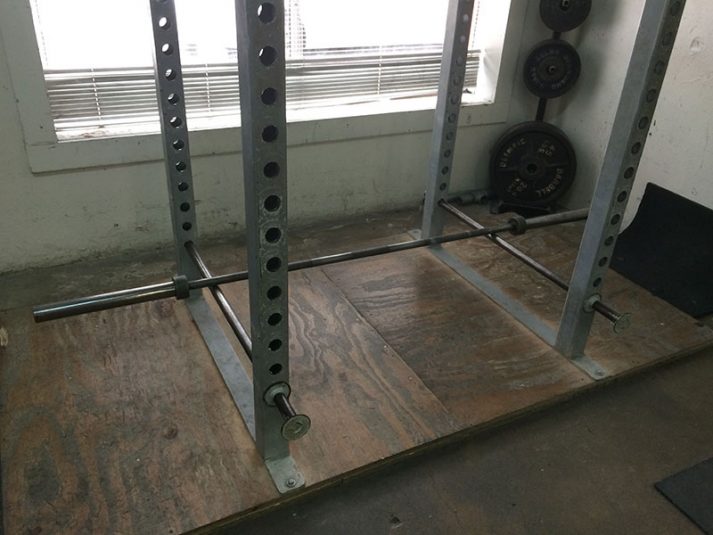
If you are lifting less weight (or just using the bar to start off) then DON’T do the deadlift from the ground. The bar will be too low to the ground and mess up proper technique.
Instead, do the following to start your deadlifts at proper height:
1) Use blocks to adjust the barbell starting height:
2) Use the safety bars in a squat rack to set the height of the bar correctly!
3) Do the Romanian deadlift instead! (Whew, glad we learned that!). It’s the exact same movement as the dumbbell Romanian deadlifts, you’re just using a barbell instead.
START WITH A LIGHT WEIGHT – JUST the bar. As we cover in our “How much weight should I lift?”, you should ALWAYS start with just the bar.
And work on technique.
Only then should you start adding more weight, and add it slowly – you’ll be picking up heavy weights in no time, so don’t rush it.
Here’s Staci demonstrating a proper barbell Romanian deadlift from Nerd Fitness Prime:
Once you’ve started doing these two movements in your routine, your two alternating gym days will look like this. Simply alternate every time you go to the gym (with a day off in between sessions).
Focus on proper form, and slowly start to add weight to the bar.
You are now a gym “regular” and I salute you!
Now, I know the barbell squat and barbell deadlift are two complex, potentially scary exercises. It’s important to get your form correctly now when you are just lifting the bar, so that you don’t hurt yourself once you start adding weight!
If you want a professional to check your form, tell you when to add weight to the bar, and teach you other barbell movements, check out our online coaching program!
Level 6 Gym Workout: Gym Class Hero
Did I tell you that I’m proud of you yet? I really am, I promise. Your mom is proud too. So is your dad, but he just doesn’t know how to express it.
So now you’re thinking: “Steve, I did a barbell squat. It was terrifying but I did it. I tried deadlifts too and those are kind of fun.
What’s next? Give me MOAR!!”
It’s like you’ve finally learned to cook, and now you’re asking for more spices.
So, here in Level 6, we’re going to turn you into a full Gym Class Hero. And it requires you to learn a super standard, incredibly challenging exercise that also happens to be amazing for you…
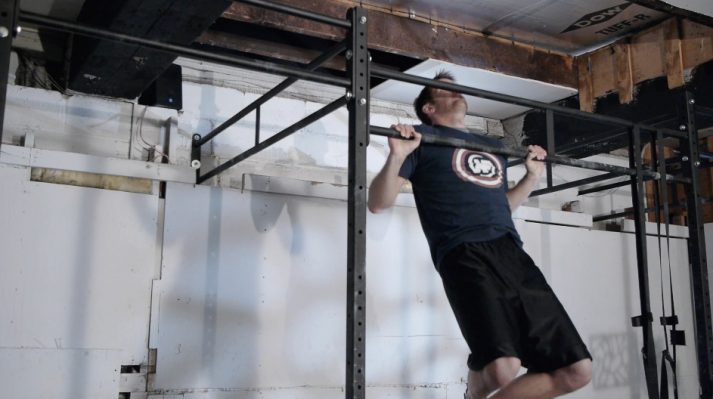
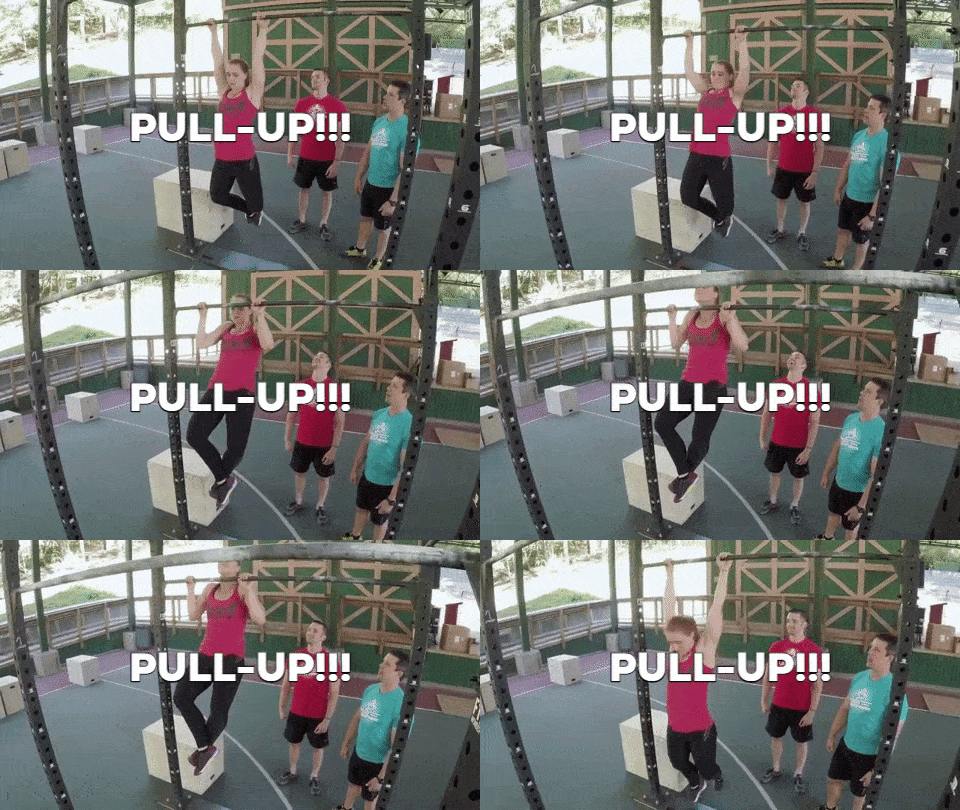
Alternate inverted bodyweight rows with pull-ups or an easier pull-up variation every other workout.
So our circuit will be alternating these movements on your A and B Days:
LEVEL 6 DAY A CIRCUIT – 3 rounds of:
10 barbell squats
10 push-ups
10 pull-ups or pull-up alternatives!
LEVEL 6 DAY B CIRCUIT – 3 rounds of:
10 barbell Romanian deadlifts/regular deadlifts
10 push-ups
10 inverted bodyweight rows
Spice it up further! If you’ve read up to this point, and put the work in, we hope you feel like a Gym Class Hero, and you can start to build your own workout!
Coach Staci explains exactly how to design an exercise routine in this video:
SO what can you do to add some variety? Throw in or replace another exercise!
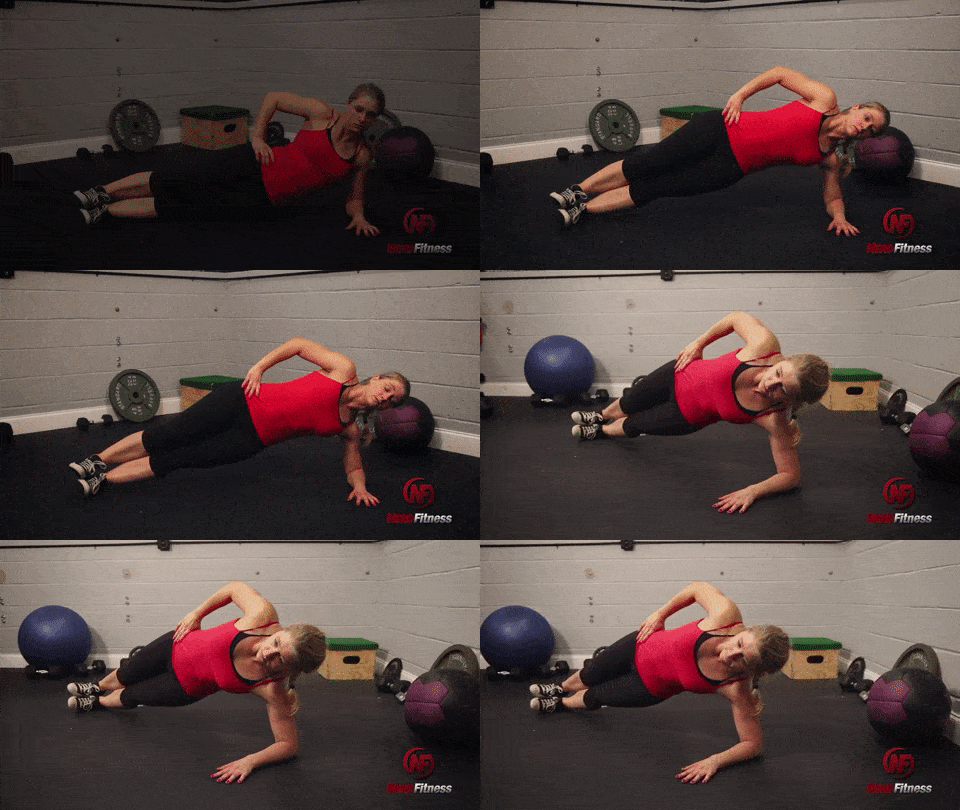
Want to do some planks? Put them in the circuit after your other movements!
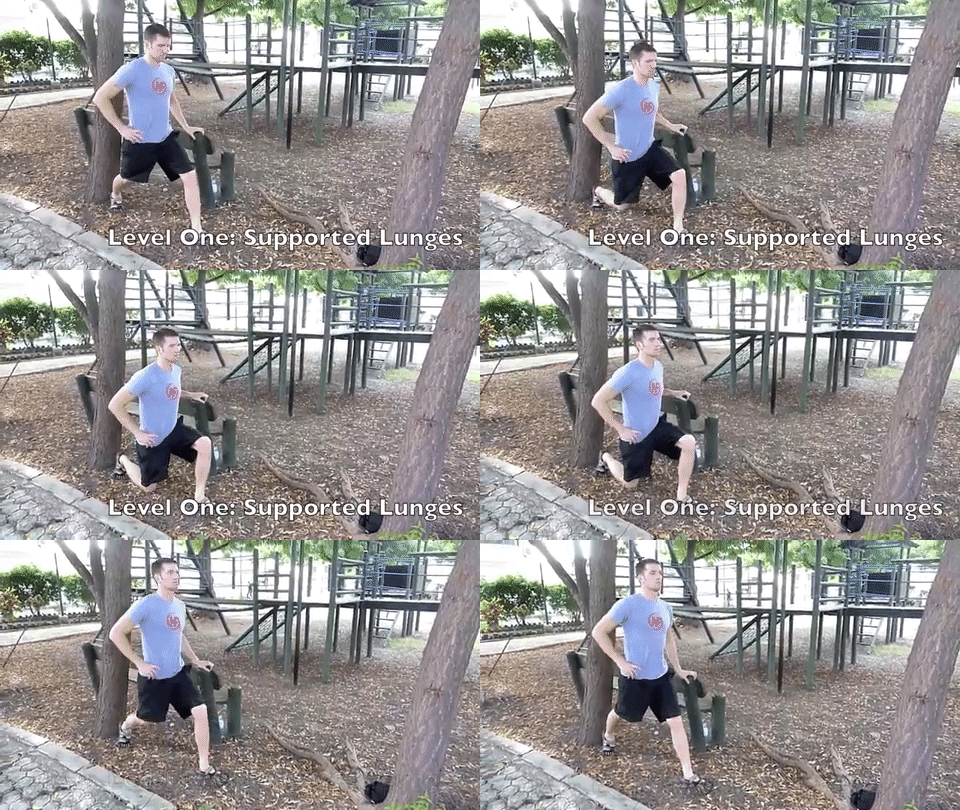
Lunges to replace the squats or deadlifts one day? Sounds good!
There are a ton of different options for what to do and where to go.
If we’ve gotten you more comfortable in the gym, we’ve done our job!
WANT MORE HANDS-ON INSTRUCTION? If you’re looking to get out of the generic workout programs and follow along with a routine that fits your goals and lifestyle, consider checking out our 1-on-1 Coaching Program!
Sure, we help beginners get started with strength training. But we also help seasoned gym-goers take their training more seriously, and even help some folks start competing in powerlifting competitions.
I personally hired an online coach in 2014, and I’ve been with him ever since. It’s the best money I spend every month, and the best investment I make in myself.
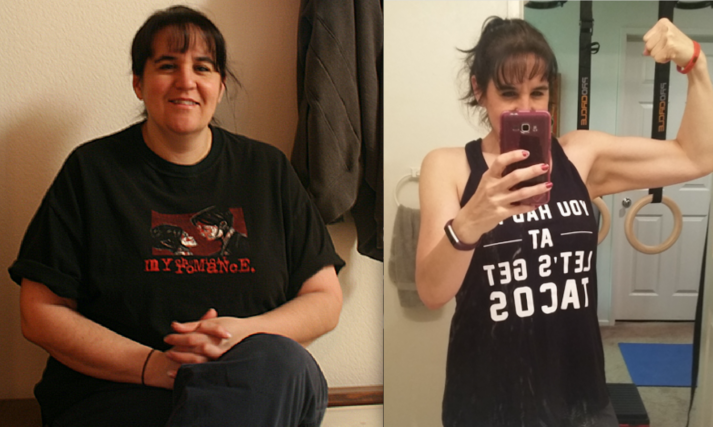
We’ve worked with men and women like Leslie here, a single mom that lost 100 + pounds thanks to following Coach Jim’s program.
She now works on things like gymnastic training and handstands and deadlifts and squats!
Interested in having expert guidance in your pocket? Click on the image below to book a free call with our team!
Gym Etiquette: Tips and Tricks
I asked the entire 15-person staff in our Online Coaching Program – most of whom have trained clients in a gym for 5+ years – what information they would share with new gym-goers:
#1) Take your time. The above 6 level workout plan might take you 12+ months to move through, and that’s okay! I would rather you slowly wade into the water instead of terrifying yourself with the thought of cannonballing into the deep end and never even starting a gym routine.
Stick with what you know, and then bit by bit, one movement at a time, branch out and try new things.
Remember: “days and years,” not “weeks and months.”
#2) Do what makes you happy. You might have noticed above I didn’t mention things like bicep curls, bench press, cardio classes, spin class, etc.
If those things make you happy, start adding them to the mix. However, if you are only doing those things because you think you are supposed to, don’t!
The above 6-Stage strategy combined with a healthy nutritional strategy will get you 95% of the way to where you want to go.
I promise. Nerd’s honor.
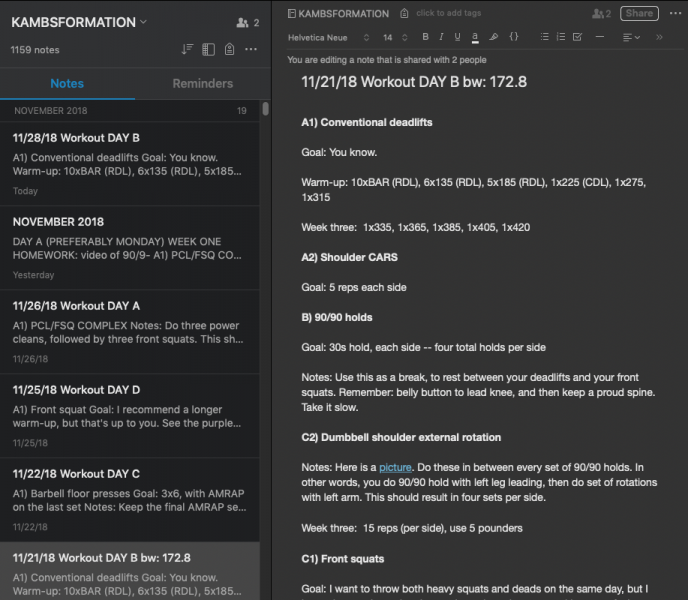
#3) Write down everything you’re doing and track your progress. Keep a simple note on your phone, write in a notebook, use Evernote, whatever. Write down what you do so that you know what to do next time.
When you get stronger and things feel too easy, you know to move up in weight slowly (and record that too!).
Keeping track of everything is one of the easiest and most important ways to make progress. Staci, Jim, and I ALL still record every workout and never stop trying to get a teeny, tiny bit stronger with each session.
#4) It’s better to lift a TOO LIGHT weight than try one that’s TOO HEAVY. You want to finish the workout saying “hey I could do more, this is encouraging” rather than “that was too much, I hurt myself/failed/and I’m demoralized.”
#5) If you don’t know, ask somebody who works there. If you’re worried that you’re using a machine incorrectly, and you’re sheepish and self-conscious about it, ask somebody who works in the gym.
Usually, there will be trainers that work there walking around the floor – ask them! That’s what they’re there for.
They can help you set the safety bars and pins on the squat rack if you’re not sure how. They can tell you how to adjust the seat on a machine, or how the treadmill works. That is what they are there for!
#6) If you want to hire a trainer for a few sessions, it might be a great investment! Good trainers are hard to come by, but if you happen to like our style of doing things here at Nerd Fitness, we have our own 1-on-1 Coaching Program that will program your workouts and help you fix your diet:
#7) Work out with what you can work with.
If you are a member at a Planet Fitness or similar gym: Your gym might not allow you to do barbell deadlifts, might not have a squat rack, or ONLY have a Smith Machine. If this is true of your gym, this is okay!
Do the best you can with what you have. Like MacGyver.
You can still get quite strong with the dumbbell workouts and bodyweight movements in Stage 4! And you’ll be that much more prepared when you do start working with barbells if you eventually join a different gym.
#8) Don’t let perfect be the enemy of the good. Just going to the gym takes courage.
Trying a machine for the first time takes courage.
Picking up a dumbbell takes courage.
Using the squat rack takes a lot of courage.
Don’t worry about perfect, or having perfect form or the perfect routine after you finish this article, just START! It’s how we all learn: like scientists trying new experiments and subtly tweaking the variables.
These are our favorite tips and tricks with regards to the gym. But I’d be remiss if I didn’t also mention something equally important:
Gym etiquette!
We’ve created another article in this gym series called “29 Unwritten Rules to the Gym,” to make sure you don’t be an accidental ass in the gym.
This list includes some obvious things like wiping down the bench after you use it, or not monopolizing a squat rack, but then some other more subtle things that will keep you in everybody’s good graces!
How to Build the Routine of Going to the Gym.
If you read this far, 6000 words later, I have to imagine it means you’re really interested in getting started with strength training!
The first time going to a gym can be nerve-wracking and exciting, but it’s the 100th, 500th, 1000th trip to the gym where results get made.
1) Accountability! If you’re new to going to the gym, it’s really easy to fall off the wagon once life gets busy. For that reason, I encourage you to be accountable to somebody other than yourself.
2) Focus on hacking into the Matrix and setting up your system! Put your workout time and place into your Google Calendar so that you always know when your next workout is. Focus on creating an environment where you are more likely than not gonna DO THE THING you want to do (go to the gym). We call this “Building your Batcave.”
3) Cultivate a love of constant improvement. Imagine this: you’re no longer going to the gym just to lose weight or look good. Those things are a happy consequence of what you’re really there for:
Because you ACTUALLY like to work out!
I cannot tell you how many NF Coaching Clients I’ve seen message me and say “Holy crap Steve, I don’t know how it happened, but I actually LIKE working out now!”
Every week, you’re excited to hit the gym because:
You’re adding more weight to your squats.
You are attempting a new personal best for the deadlift.
You get to see your gym friend and hear how his day went.
You LOVE how you feel after the gym.
Getting there takes time and energy, but that’s really when life changes and sh** gets magical with regards to your health and fitness.
These are the tools we’ve created to help you turn the gym into something you look forward to:
1) Our popular 1-on-1 coaching program. No more guesswork, no wondering if you’re doing the right program, no shame or guilt. Just results that don’t suck, and a plan that doesn’t make you miserable.
We keep you accountable to make sure you actually do your workout, we answer any questions you have, and we cheer you on every step of the way:
2) If you want a daily prompt for doing workouts at the gym (or at home), check out NF Journey. Our fun habit-building app helps you exercise more frequently, eat healthier, and level up your life (literally).
Try your free trial right here:
3) Join the Rebellion! Our free community numbers in the hundreds of thousands scattered throughout the globe, and we need good people like you!
You can join by signing up in the awesome yellow box below, and I’ll send you a bunch of free guides and printable workouts, including our Strength 101 guide!
Download our comprehensive guideSTRENGTH TRAINING 101!
Everything you need to know about getting strong.
Workout routines for bodyweight AND weight training.
How to find the right gym and train properly in one.
PHEW!
Okay, by now you should have all of the tools you need to get started in the gym, but maybe you have more questions. If you do, I have answers!
Simply leave a comment below and I’ll do my best to answer it soon!
I’d love to hear from you too if you found this article helpful. Which gym workout are you following?
Have you made it all the way to Level 6 yet!?
-Steve
PS: Make sure you read the other 3 articles in our gym series:
I get multiple emails and messages per day asking:
“Steve, what should I do for a workout?”
Well, partner, today is your lucky day.
I’m gonna help build you a custom workout program, step-by-step!
After all, a workout should be developed around a person’s age, goals, nutritional strategy, free time, etc.
Not only that, but it’s easy to overcomplicate this process – there are an infinite number of exercises, sets, reps, and programs to choose from.
Now, if you’re somebody that wants to skip all of that, and JUST want to be told what exactly to do:
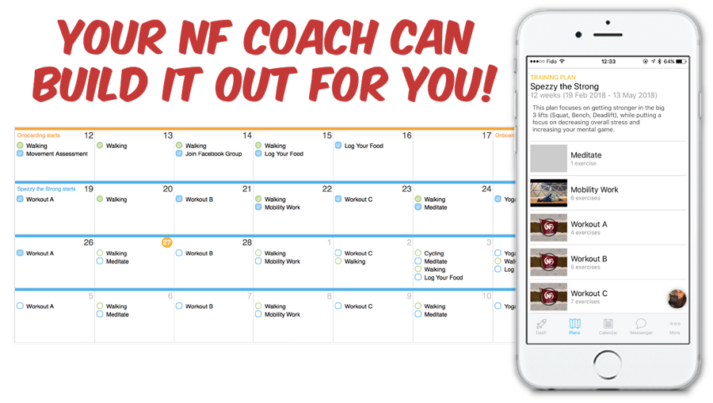
We build customized workouts for our Online Coaching Clients and would love to have you. We get to know your story and struggles, your goals, and your lifestyle, and develop a workout plan that fits your schedule.
Now, if you’re more of a “figure this stuff out on my own” kind of person – we’re going to dig into how to build your own workout plan today!
We’ve also created a free resource for folks who want to build their own workout but would love some more specific direction and instruction.
You can download our free guide, Strength Training 101: Everything You Need to Know, which covers all of this stuff in a single guide:
Download our comprehensive guideSTRENGTH TRAINING 101!
Everything you need to know about getting strong.
Workout routines for bodyweight AND weight training.
How to find the right gym and train properly in one.
OKAY! Are you ready to start building your own routine and want to know how it’s done?
Whatever your goals are, it’s good to write them down and be aware of what you’re trying to accomplish.
These goals will shape HOW you build your workout.
An effective way to create goals is by using the SMART method, which stands for specific, measurable, attainable, relevant, and timely.[1]
Specific – Your goals must specifically state what is to be accomplished. They must be clear and easy to understand.
Measurable – Your goals must be measurable so you can tell if you’re making progress or not. For example, I want to gain 5 pounds of muscle. To track your progress you will need body composition equipment that is designed to assess your fat and muscle mass.
Attainable – Your goals should be realistically attainable. Remember, a realistic amount of muscle mass to gain per week is about 0.5 pounds. For example, gaining 5 pounds of muscle should realistically take about 10 weeks
Relevant – Your goals must be relevant to your particular interests, needs, likes/dislikes, and abilities. Another thing to remember is that your goals need to be generated by you and you alone!
Timely – Your goals must have a timeline for completion. If your goal is to gain 5 pounds of muscle then a reasonable end-point should be at minimum 10 weeks.
A SMART goal is a good goal.
QUESTION 2: How much time can you devote to exercise?
If you can do an hour a day, that’s fantastic.
But maybe you have a wife or husband, three kids, a dog, two jobs, and no robot butler…then maybe you only have thirty minutes, twice a week.
That’s fine too!
Also, break up your workout! According to the American College of Sports Medicine (ACSM), if you accumulate three 10-minute bouts of exercise throughout the day to total 30-minutes of exercise, then that is as effective as someone who does one 30-minute bout of exercise.[2]
Now, no matter how much time you have, developing the most efficient workout is crucial.
Why spend two hours in a gym when you can get just as much accomplished in 30 minutes, right?
So whether you are building muscle or looking to lose weight, a strength training workout will get you the results you’re after (when combined with the right eating strategy!)
While we’re talking about time, let me quickly mention something important:
As we mention in that guide, here are some realistic timeframes for weight loss or muscle gain:[3]
If you are trying to lose weight it is recommended that you seek a calorie deficit by consuming 250-500 fewer calories per day below your typical calorie intake. This will result in a realistic weight loss goal of 1-2 pounds per week
If you’re trying to gain muscle mass, then it is recommended that you seek a calorie surplus by consuming 250-500 additional calories above your typical calorie intake. This will result in a realistic gain in lean muscle mass of about 0.5 pounds per week.
Unless you’ve been strength training for years and know what you’re doing, we recommend that you pick a full-body routine that you can do 2-3 times a week.
You want a workout routine that has at least one exercise for your:
Quads (front of your legs).
Butt and hamstrings (back of your legs).
Chest, shoulders, and triceps: (“push” muscles).
Back, biceps, and grip ( “pull” muscles).
Core (abdominals and lower back).
I have a trick for you: by targeting compound movements that recruit multiple muscles at the same time, you can build a full-body routine that uses only four or five exercises.
How’s THAT for efficiency!
A compound exercise would be the yin to the yang of the isolation exercise.
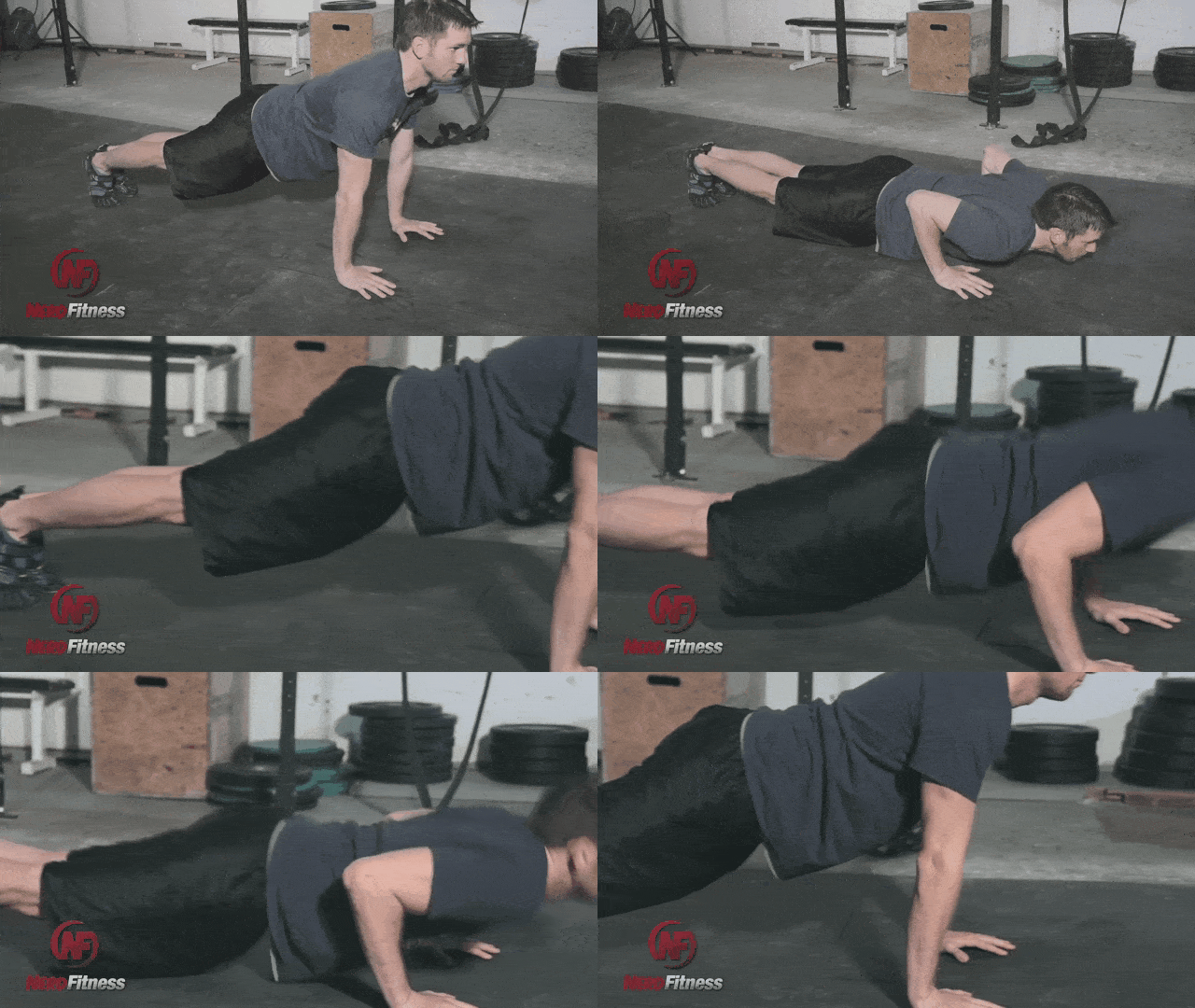
Think a push-up (compound):
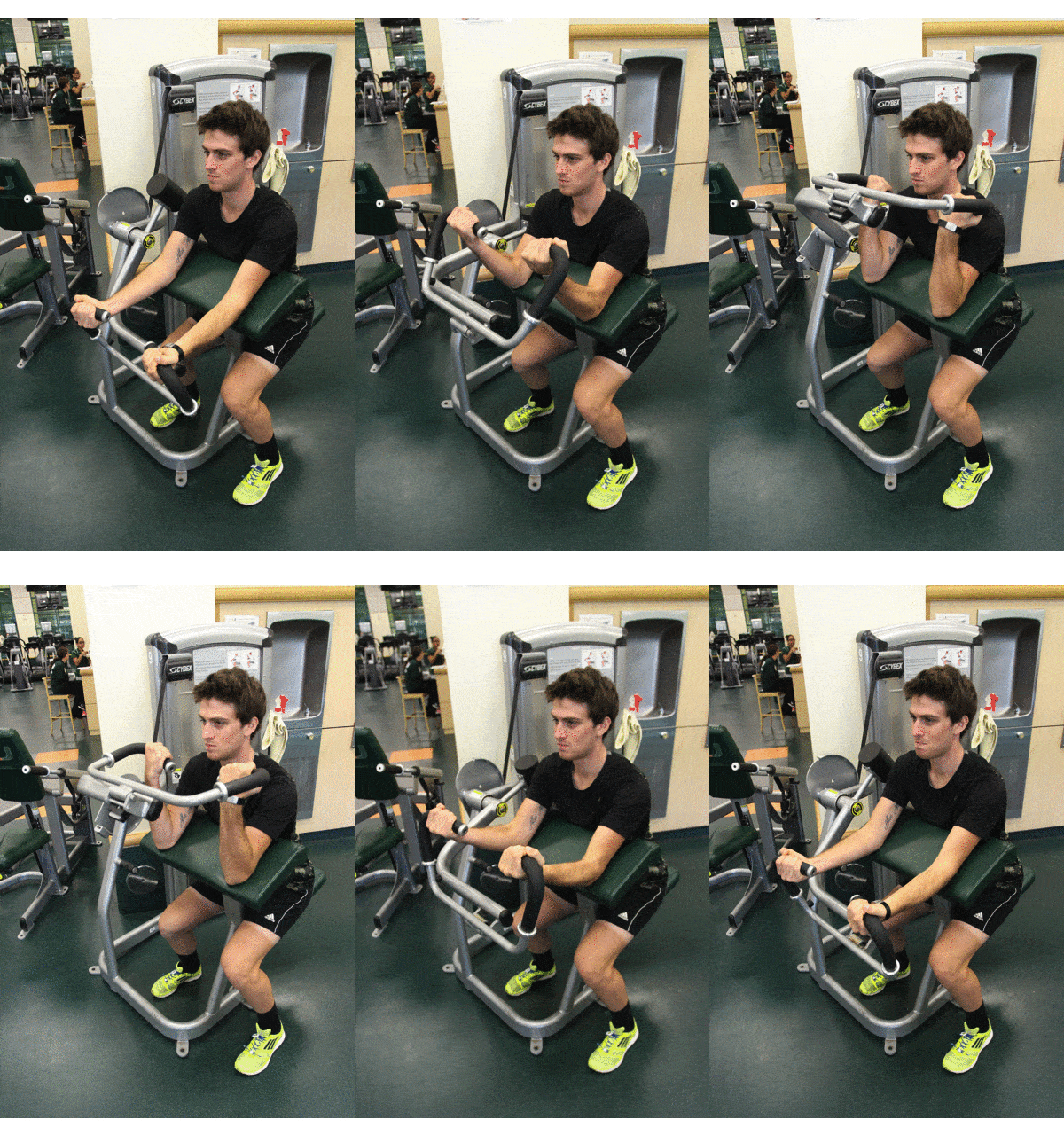
Compared to bicep curls through a machine (isolation):
Compound exercises have been found to result in improvements in aerobic endurance, muscular fitness, and flexibility, since you’re recruiting all sorts of muscle groups at once.[5]
Where an isolation exercise would be a single-joint movement involving only one single muscle group, like the biceps, in our example above.
I will say, there is a time and place for implementing compound and isolation exercises.
You don’t need to make things more complicated than this!
(Not that we humans have a tendency to overcomplicate things to the point of paralysis and inaction…)
Ahem.
If you’re not sure how to do any of the movements above, click on their links for thorough write-ups and video demonstrations.
Pick one exercise from EACH category above, specifically ones that scare you the least, and that will be your workout every other day for the next week.
Get really good at these basic movements and focus on getting stronger each week (I’ll cover how below).
If you get really strong at squats, deadlifts, pull-ups, and push-ups, you will build an incredible physique to be proud of.
Plus, building strength with these exercises will also help in other areas such as improving your performance in sports, decreasing your risk of chronic diseases (e.g., CVD) and premature mortality (an early death).[6]
*mic drop*
**picks up mic**
Then, once you get confident in those movements, feel free to add some variety.
Why?
If you do the same exact routine, three days a week, for months and months, you might get bored, and start slacking…
Do deadlifts every Wednesday, but change up the sets and reps you pick!
If you hit a plateau or find yourself getting bored, pick a different exercise to improve so you’ll stay challenged, and you’ll actually DO the workout!
I know it’s really easy to overcomplicate this process as there’s an infinite number of exercises, sets, reps, and programs to choose from.
And yes, we have a solution for people that JUST want to be told what exactly to do: our uber-popular 1-on-1 coaching program pairs you with your own Nerd Fitness Coach who will get to know you, your goals, and your lifestyle, and develop a workout plan that’s specific to not only your body, but also to your schedule and life:
Step #3: How Many Sets And Reps Should I Do?
SIMPLE ANSWER: Not including a warm-up set or two, I recommend:
If you can do more than 15 reps without much of a challenge, consider increasing the weight or the difficulty of the movement. This is true for things like lunges, bodyweight squats, push-ups, pull-ups, etc.
There are some other generally accepted ‘rules’ – as pointed out in Starting Strength – about how to determine how many reps you should target per set, based on your goals:
Reps in the 1-5 range build super dense muscle and strength (called myofibrillar hypertrophy).
Reps in the 6-12 range build a somewhat equal amount of muscular strength and muscular size (this is called sarcoplasmic hypertrophy).
Reps in the 12+ range build muscular endurance.
A 2015 study [10] called into question the best rep strategy for building muscle or size:
“It appears that high-intensity resistance (sets of 3-5 reps) training stimulates greater improvements in some measures of strength and hypertrophy in resistance-trained men during a short-term training period [compared to sets of 8-10 reps].”
What this means: Do not freak yourself out by worrying if you should do 4 sets or 5 sets of 8 reps or 10 reps.
Our advice would be to START with lighter weight and more reps as you learn the movement, and then decide if you want to stay at higher reps and lower weight or vice versa.
You do you, because either way will get you results!
The only thing you need to worry about: get stronger the next time you do that movement.
Either pick up a heavier weight, or do 1 more repetition than last time.
“JUST GIVE ME THE ANSWER!”
Keep your TOTAL (all exercises combined) workout number of sets for all exercises in the 15-25 set range, with 8-10 reps per set:
5 exercises total, each with 4 “work sets” is a good start.
Remember, the most important part is to get started – you’ll learn how your body responds and you can adapt as you go.
What you DON’T need to do: multiple exercises for each body part with 10 sets.
This will result in significant fatigue during your workout increasing your risk for sustaining an injury. It can also result in overtraining, in which you will experience a decrease in performance and plateauing (will not see muscular improvements).[11]
So calm down you eager beaver.
A BIG CAVEAT:How you eat will determine if you get bigger or stronger. Nutrition is 80-90% of the equation. So pick a range that feels good, and then focus on nutrition.
And if you don’t want to figure any of this out and just want to be told exactly how what exercises, sets, and reps to do, our online coaches can take care of that for you.
Step #4: How Long Should I Wait Between Sets?
Keep it simple, you “smart, good looking, funny, modest person” you.
Below is a basic formula for you to determine how long you should wait between sets, but this can be adjusted based on your level of health.
The goal is to wait the least amount of time you need, but still rest enough that you can perform all reps of the next set safely and properly!
Adequate rest in-between sets will allow your body to regenerate energy, so you can execute the next set of reps with good form and technique, therefore, decreasing your risk of injury.
I’ll provide some guidelines for how long to rest based on how heavy you’re lifting (not rules set in stone!):
1-3 Reps (lifting heavy for strength/power): Rest for 3 to 5 minutes between sets.
4-7 Reps (lifting for strength): Rest for 2 to 3 minutes between sets.
8-12 Reps (lifting for size/strength): Rest for 1 to 2 minutes between sets.
13 Reps+ (lifting for endurance): Rest long enough to recover to allow you to do the next long-ass set!
If you need more or less rest than the above recommendations, that’s fine.[13]
Do the best you can, record how long it takes you to rest between sets, and try to rest for shorter periods in the future.
Your body will adjust as you get stronger and healthier!
If you want more information on how much you should lift, how many reps, and when to scale certain movements or adjust your workout, check out our Strength 101: Everything You Need to Know.
It’s free when you join the Rebellion with your email in the box below:
Download our comprehensive guideSTRENGTH TRAINING 101!
Everything you need to know about getting strong.
Workout routines for bodyweight AND weight training.
How to find the right gym and train properly in one.
The simple to learn but tough to implement answer:
“Lift enough so that you can get through the set, but not too much that you have NO fuel left in the tank at the end.”
How do you determine how much that is?
Trial and error.
ALWAYS err on the side of “too light” versus “too heavy” when starting out.
It’s better to say “I bet I could have done more!” instead of “that was too much, and now I need to go to the hospital!”
Plus, when you start working out, you’re actually programming your neuromuscular systems to do the movement correctly.[14] You can’t rush this, so it’s best not to start off too heavy.[15]
If a person can do two reps (or more) over their set goal, then they should increase the load.
How much should you increase weight by?
For less trained people (i.e., beginners), it is recommended that for upper body exercises you increase the load by 2 – 5 pounds and by 5 – 10 pounds for lower body exercises.
For more trained people (i.e., advanced), it is recommended that for upper body exercises you increase the load by 5 – 10 pounds or more and by 10 – 15 pounds or more for lower body exercises
I will say, if you’re doing exercises with just your body weight, you need to make each exercise more difficult as you get in shape – once you get past 20 reps for a particular exercise and you’re not gassed, it’s time to mix things up.
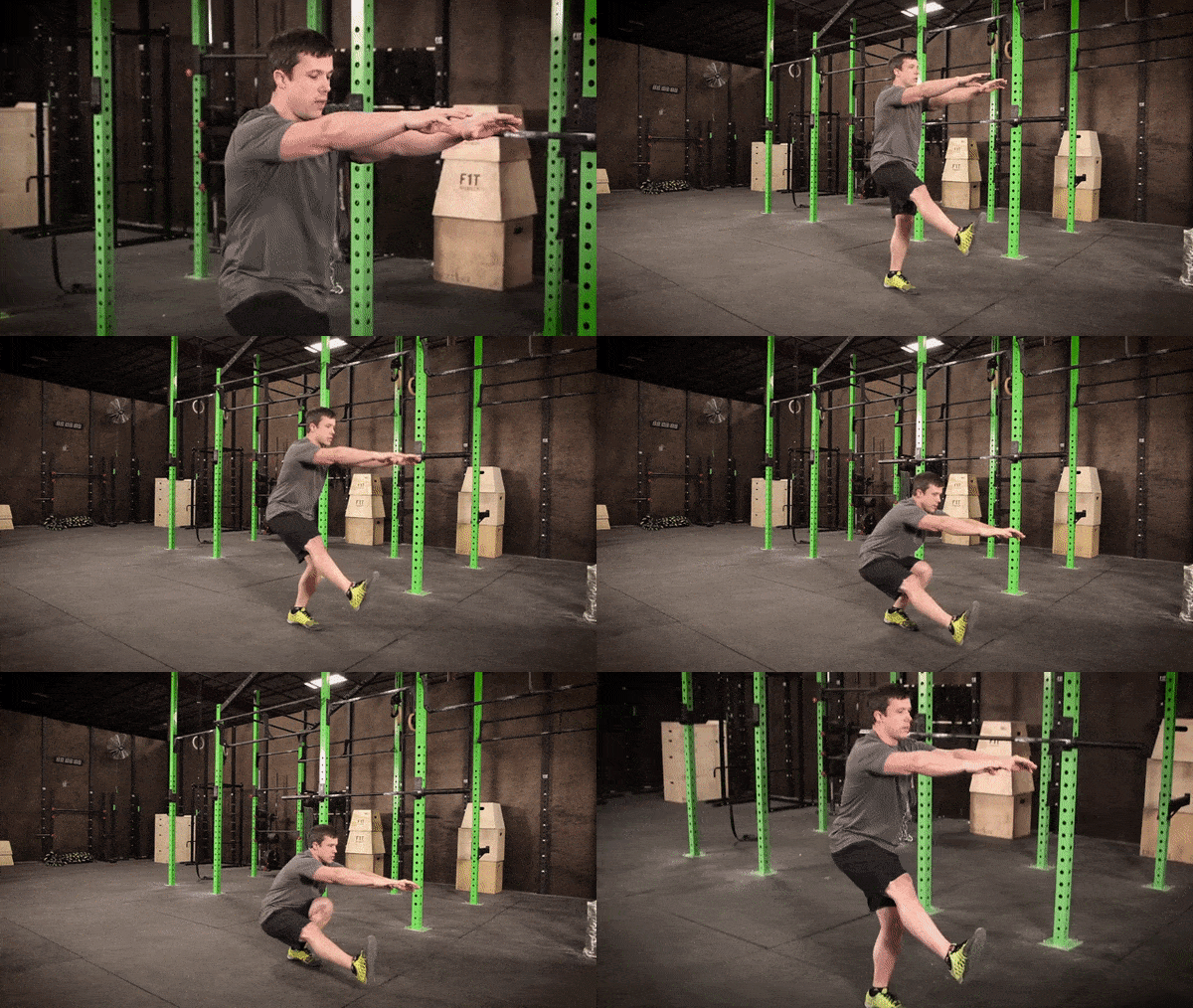
20 bodyweight squats too easy? Hold some weights high above your head as you do the next set. Eventually, you can scale up to do exercises like the pistol squat:
And if you’re not sure how to scale bodyweight movements, or you are interested in mixing things up and want guidance…
Step #6: How Long Should I Exercise For? How Long Should My Workout Be?
Easy answer: 45 minutes to an hour.
Longer answer: If you’re doing 15-25 sets of total exercise (3-5 sets for your 5 exercises), you should be able to get everything done within that 45-minute block.[17]
Now, factor in a five or ten-minute warm-up, and then some stretching afterward, and the workout can go a little bit longer.[18]
If you can go for over an hour and you’re not completely worn out, try increasing the intensity.
You’re getting a cardiovascular workout by consistently moving from exercise to exercise.
You’re exercising different muscles back to back, giving each muscle group a chance to recover, but in a condensed amount of time. Efficiency for the win!
If you’re familiar with CrossFit, many of the workouts are built on circuit principles.
This is also the most effective way to make you involuntarily swear at inanimate objects because you’re so tired and beat up.
A superset is performing two exercises in a row on two different muscle groups.
For example, you perform a set of squats, wait one minute, then do a set of dumbbell presses, wait one minute, then do your next set of squats, and so on.
Because you’re exercising two completely different muscle groups, you can exercise one while the other is “resting.”
You’re now getting the same workout done in half the time.
Also, because you’re resting less, your body has to work harder so your heart is getting a workout too. Jackpot.
Let’s see how this would play out in a sample workout:
Lunges alternating with incline dumbbell presses, four sets each, one minute between sets.
Wait a few minutes to catch your breath and get set for your next two exercises.
Straight leg deadlifts alternating with wide-grip pull-ups, four sets each, one minute between sets.
3 Sets of planks, stretch, and get the hell out of there!
#2) CIRCUIT TRAINING
A circuit requires you to do one set for EVERY exercise, one after the other, without stopping.
After you’ve done one set of each exercise in succession, you then repeat the process two, or three, or four more times.[22]
I’ve written about multiple bodyweight circuits here on the site:
And lastly, we love building circuit training routines for our Coaching Clients – and we’d love to build them for you too:
Step #8: How Many Days per Week Should I Train?
We get this question quite a bit, usually from overeager beavers who decide they are going to go from “sitting on the couch watching The Office on repeat” to “exercising 7 days per week.”
I would advise something different.
I mean you can still watch The Office…
…but you don’t need to be training 7 days a week!
We don’t want you burning out quickly and falling back to square one, a concern we mention in our guide “How Often Should I Work Out?“
Just pick “exercise” that’s fun for you, that won’t exhaust your muscles.[26][[26]]However, don’t forget that recovery is key to preventing injuries and allowing the body to rebuild itself after the stress of exercise. If you are looking to exercise on your off days we suggest that you cross-train. Cross-training involves engaging in a training routine or exercises that are different from what you normally would do. For example, if you always run for cardio, we would suggest that you change things up and go on the elliptical or bike. This allows you to stay active on your off days while also allowing the muscles that are always stressed from running to rest and recuperate. (Haff G, Triplett NT. (2016). Essentials of strength training and conditioning. Fourth edition. Champaign, IL: Human Kinetics).[[25]]
Also, here’s a lifehack: Program your workouts INTO your Google calendar (or Outlook).
You’re much more likely to do a workout that has been planned for in your work week!
Alternatively, you can hire a coach to program your workouts for you, so every day you know exactly what you need to do!
Step #9: Keep Track Of Everything!
Last but not least, keep a workout journal!
As they say, that which gets measured gets improved.
You should be getting stronger, faster, or more fit with each day of exercise.
Around these parts, we say “Level up your life, every single day.”
If you want to build from scratch, great! Let’s break it down into easy chunks with this recap:
ALWAYS warm up – 5-10 minutes on a bike, rowing machine, jumping jacks, run up and down your stairs, etc. Get the blood flowing and your muscles warm.[29]
Pick one exercise for each big muscle group – quads, butt and hamstrings, push, pull, and core.[30]
Do 3-5 sets for each exercise.
Do 5-10 reps per set for each exercise.
Determine how many reps and how long you’ll wait between sets for each exercise. Keep it simple. 60 seconds.[31]
Increase your efficiency and work your heart by doing supersets or circuits. This results in a higher EPOC meaning greater caloric expenditure and weight loss!
Give yourself permission to mess up, learn a little, and keep improving as you train more regularly!
More often than not, when I email people back and tell them how to build their own workout, they generally respond with:
“Steve, can’t you just TELL me what to do? I’m afraid of building a crappy workout.”
Why we built THREE options for people like that:
1) If you are somebody that wants to know they are following a program that is tailor-made for their life and situation and goals, check out our Online Coaching Program.
You’ll work with our certified NF instructors who will get to know you better than you know yourself and program your workouts and nutrition for you.
2) Exercising at home and need a plan to follow? Check out Nerd Fitness Journey!
Our fun habit-building app helps you exercise more frequently, eat healthier, and level up your life (literally). Plus, NF Journey will build a workout for you!
Try your free trial right here:
3) Join the Rebellion (our free community) and I’ll send you free guides, workouts, and worksheets that you can read at your leisure.
We need good people like you!
Download our comprehensive guideSTRENGTH TRAINING 101!
Everything you need to know about getting strong.
Workout routines for bodyweight AND weight training.
How to find the right gym and train properly in one.
I certainly encourage you to try and build your own workout routine.
It can really help you develop a sense of excitement and pride when you start to get in shape based on your workout!
If you have more questions, or have a workout program you’re really proud of, share it in the comments below!
-Steve
PS: Check out the rest of our beginner content. I promise, it kicks ass 🙂
American College of Sports Medicine. ACSM’s Guidelines for Exercise Testing and Prescription. Philadelphia: Lippincott Williams & Wilkins, 2000
Read, “Effect of short moderate intensity exercise bouts on cardiovascular function and maximal oxygen consumption in sedentary older adults.” Souce, BMJ Journals
(Spano MA, Kruskall LJ, Thomas DT. (2018). Nutrition for Sport, Exercise, and Health).
American College of Sports Medicine. ACSM’s Guidelines for Exercise Testing and Prescription. Philadelphia: Lippincott Williams & Wilkins, 2000
Haff G, Triplett NT. (2016). Essentials of strength training and conditioning. Fourth edition. Champaign, IL: Human Kinetics
Remember, it all comes down to a caloric deficit or surplus. if you are trying to lose weight it is recommended that you seek a calorie deficit by consuming 250-500 less calories per day below your typical calorie intake. This will result in a realistic weight loss goal of 1-2 pounds per week. If you’re trying to gain muscle mass, then it is recommended that you seek a calorie surplus by consuming 250-500 additional calories above your typical calorie intake. This will result in a realistic gain in lean muscle mass of about 0.5 pounds per week. Source: Spano MA, Kruskall LJ, Thomas DT. (2018). Nutrition for Sport, Exercise, and Health
American College of Sports Medicine. ACSM’s Guidelines for Exercise Testing and Prescription. Philadelphia: Lippincott Williams & Wilkins, 2000)
This goes back to the progressive overload principle. Remember, in order to achieve your training goals or to see improvements, your training must gradually and constantly increase Source: Haff G, Triplett NT. (2016). Essentials of strength training and conditioning. Fourth edition. Champaign, IL: Human Kinetics.
If you do not progress your workout, then you will reach a plateau because your body has met the demands of your exercise or stress that you have placed upon it. If you progress your workout (e.g., do more reps, lift heavier weights, do different exercises, etc.), then those microscopic tears (that don’t hurt) will happen and your muscles will go through hypertrophy and grow bigger and stronger. Source: Powers SK, Howley ET. (2011). Exercise physiology: Theory and application to fitness and performance. New York: McGraw-Hill Humanities/Social Sciences/Languages).
You’ll see a few different recommendations around this. The National Strength and Conditioning Association (NSCA) recommends 6-12 reps for 3-6 sets for muscle hypertrophy and more than 12 reps for 2-3 sets for muscular endurance (Source: Haff G, Triplett NT. (2016). Essentials of strength training and conditioning. Fourth edition. Champaign, IL: Human Kinetics). While the American College of Sports Medicine (ACSM) simply recommends 8-12 reps for 2-4 sets for healthy individuals (Read, American College of Sports Medicine position stand. Progression models in resistance training for healthy adults. Source, PubMed.
Read, “Musculoskeletal adaptations and injuries due to overtraining.” Soucre, PubMed.
Excessive muscle fatigue, often resulting by engaging in higher intensity exercise or engaging in exercise with short rest intervals has been found to increase one’s risk for muscle strains due to fatigue eliciting poor exercise technique. For more, read “Muscle strain injury: diagnosis and treatment.” Source, PubMed.
The NSCA also has guidelines in-place to help you determine your rest intervals in-between sets: 2 to 5 minutes for strength and power, 30 seconds to 1.5 minutes for hypertrophy, and 30 seconds or less for muscular endurance (Haff G, Triplett NT. (2016). Essentials of strength training and conditioning. Fourth edition. Champaign, IL: Human Kinetics).
Plus, ACSM has a basic recommendation of 2 to 3 minutes (American College of Sports Medicine. ACSM’s Guidelines for Exercise Testing and Prescription. Philadelphia: Lippincott Williams & Wilkins, 2000). So we don’t have to get overly dogmatic here.
More efficient communication between your neuromuscular systems results in proper motor unit recruitment. A motor unit is a single motor neuron and the muscle fibers it innervates. We have small motor units, meaning that a single motor neuron innervates relatively few muscle fibers, and these smaller motor units are good for precise and detailed movements (e.g., moving your fingers). On the other hand, we have large motor units, meaning that a single motor neuron innervates hundreds of muscle fibers, and these larger motor units are good for generating a lot of force (e.g., getting larger muscle groups like the quads to generate a lot of force to help in running) (Powers SK, Howley ET. (2011). Exercise physiology: Theory and application to fitness and performance. New York: McGraw-Hill Humanities/Social Sciences/Languages; Heckman CJ, Enoka RM. Motor unit. Compr Physiol. 2012 Oct;2(4):2629-82. doi: 10.1002/cphy.c100087. PMID: 23720261).
When you first start strength training, your motor units don’t fire as quickly and smaller motor units that don’t generate a lot of force are recruited. As you continue working out and become more trained, your motor units fire more rapidly and your brain recruits larger motor units that can generate more force allowing you to lift heavier weights. This is why the progressive overload principle is important! As your neuromuscular system communicates more efficiently, you will see improvements in your exercise technique and muscle adaptations (e.g., hypertrophy) taking place.
Haff G, Triplett NT. (2016). Essentials of strength training and conditioning. Fourth edition. Champaign, IL: Human Kinetics.
According to ACSM and the CDC, all healthy adults aged 18-65 years should participate in moderate-intensity aerobic physical activity for a minimum of 30-minutes on five days per week, or vigorous-intensity aerobic activity for a minimum of 20-minutes on three days per week. Additionally, every adult should perform activities that maintain or increase muscular strength and endurance for a minimum of two days per week. Performing exercise at a moderate-to-vigorous intensity will result in greater caloric expenditure and weight loss. (American College of Sports Medicine. ACSM’s Guidelines for Exercise Testing and Prescription. Philadelphia: Lippincott Williams & Wilkins, 2000).
The NSCA recommends a 5-10 minute warm-up to prepare the body for the exercise session, and the exercise session should be followed by a 5-10 minute cool-down to bring the body back down to rest (Haff G, Triplett NT. (2016). Essentials of strength training and conditioning. Fourth edition. Champaign, IL: Human Kinetics).
The ACSM and other researchers have found that if you ACCUMULATE 10-minute bouts of exercise throughout the day that can be as effective as one who does one 30-minute bout of exercise. Read, “The Effects of Continuous Compared to Accumulated Exercise on Health: A Meta-Analytic Review.” Source, PubMed.
Circuit training results in a higher excess post-exercise oxygen consumption (EPOC) resulting in great caloric expenditure when compared to traditional strength training with longer rest intervals in-between sets and exercises. Read, “Circuit weight training and its effects on excess postexercise oxygen consumption.” Souce, PubMed.
Haff G, Triplett NT. (2016). Essentials of strength training and conditioning. Fourth edition. Champaign, IL: Human Kinetics
Oh, and even if you aren’t doing a ciruict, don’t use your cell phone for other purposes besides using it to listen to music! Other cell phone functions such as texting and talking have been found to lower the intensity of exercise resulting in lower caloric expenditure, and disrupt balance leading to a greater risk of musculoskeletal injuries. Read, “The Impact of Cell Phone Use on the Intensity and Liking of a Bout of Treadmill Exercise.” Source, PubMed. Read, “The impact of different cell phone functions and their effects on postural stability.” Source, ScienceDirect.
The NSCA recommends 2-3 training sessions for novice or beginners, 3 sessions if using total body training or 4 sessions if using a split routine for intermediates, and 4-6 sessions for advanced lifters (Haff G, Triplett NT. (2016). Essentials of strength training and conditioning. Fourth edition. Champaign, IL: Human Kinetics).
Strength training results in microscopic muscle tears in the muscles. This causes a cascade of events eventually leading to muscle repair and growth (i.e., hypertrophy). Our muscles adapt to the overload stress of strength training immediately after each bout of exercise, but it takes roughly eight weeks to see physical improvements (Powers SK, Howley ET. (2011). Exercise physiology: Theory and application to fitness and performance. New York: McGraw-Hill Humanities/Social Sciences/Languages).
Adequate recovery is essential to prevent overtraining. When we become overtrained, our injury risk increases and we reach a plateau and no longer see any improvements from our training. For more, read “The effects of resistance training, overtraining, and early specialization on youth athlete injury and development.” Source, PubMed.
This applies to all healthcare professionals who are working with clients, athletes, military personnel, special populations (e.g., cardiac rehab). These healthcare professionals are tracking everything so they can see if you are improving or not. And if you’re not improving, that is okay. At least you know and then you can start making changes to your exercise routine: change your exercises from bodyweight to free weights; change the number of sets and rep; shorten or lengthen your rest intervals, etc.
And if you’re not improving, that is okay. At least you know and then you can start making changes to your exercise routine: change your exercises from body weight to free weights; change the number of sets and rep; shorten or lengthen your rest intervals, etc.
A traditional warm-up usually consists of two components. The first is a general warm-up of 5-10 minutes of low- to moderate-intensity aerobic exercise, such as jogging or stationary cycling. The second is a specific warm-up that involves less intense movements similar to the sport or activity about to be performed. This second part involves performing dynamic stretches such as high knees, butt-kicks, skipping, shuffling, carioca, etc. The purpose of this type of warm-up is to allow the body to gradually adjust to the demands of exercise by allowing for increases in heart rate, blood flow, muscle temperature, and core body temperature (Haff G, Triplett NT. (2016). Essentials of strength training and conditioning. Fourth edition. Champaign, IL: Human Kinetics).
These big muscle groups allow for everyday activities to be performed with more ease and for you to maintain a more independent lifestyle for a longer period of time. For more, read “American College of Sports Medicine position stand. Progression models in resistance training for healthy adults. Source, PubMed.
But remember, the sets, reps, and rest intervals will change as your training goals change.
The longer your workout the more fatigue you will experience, therefore, increasing your risk of injury. Keep your cell phone in the locker room if you’re having a difficult time keeping your workout to less than an hour!
The same rules apply as for the warm-up. After you are done with your exercise session perform 5-10 minutes of low- to moderate-intensity aerobic exercise. The second part of the cool-down will consist of static stretching instead of dynamic stretching. Static stretching involves slowly moving a muscle to the end of its range of motion and then holding that position for a period of time (10-30 seconds or 30-60 seconds for its greatest benefits). You should stretch the muscle enough to feel a slight discomfort, but don’t go too far where you start to feel pain. For more, read “American College of Sports Medicine position stand. Quantity and quality of exercise for developing and maintaining cardiorespiratory, musculoskeletal, and neuromotor fitness in apparently healthy adults: guidance for prescribing exercise.” Source, PubMed.
Remember, the only way you’re going to know if you’re improving and if your program works is if you’re recording the data. If it’s not working, at least you can catch it early and make the necessary adjustments.
So you want to lose weight and get in shape, but don’t want to leave your house?
Well, as your fitness Yoda, I will teach you a great bodyweight workout routine that you can do ANYWHERE: In your living room, at a park, or in a galaxy far, far away…
These are the types of workouts we build for our busy Online Coaching Clients, and I’m pumped to share it with you today!
Let’s dig into the different parts of this workout and get to the action:
You just need to make sure you have the right program to follow.
Enter the Beginner Bodyweight Workout.
I’m going to take you through a basic home workout today that can be completed anywhere – in your house, apartment, out at a park, in your basement, on the moon, wherever.
Beginner Body Weight Workout Video & exercises
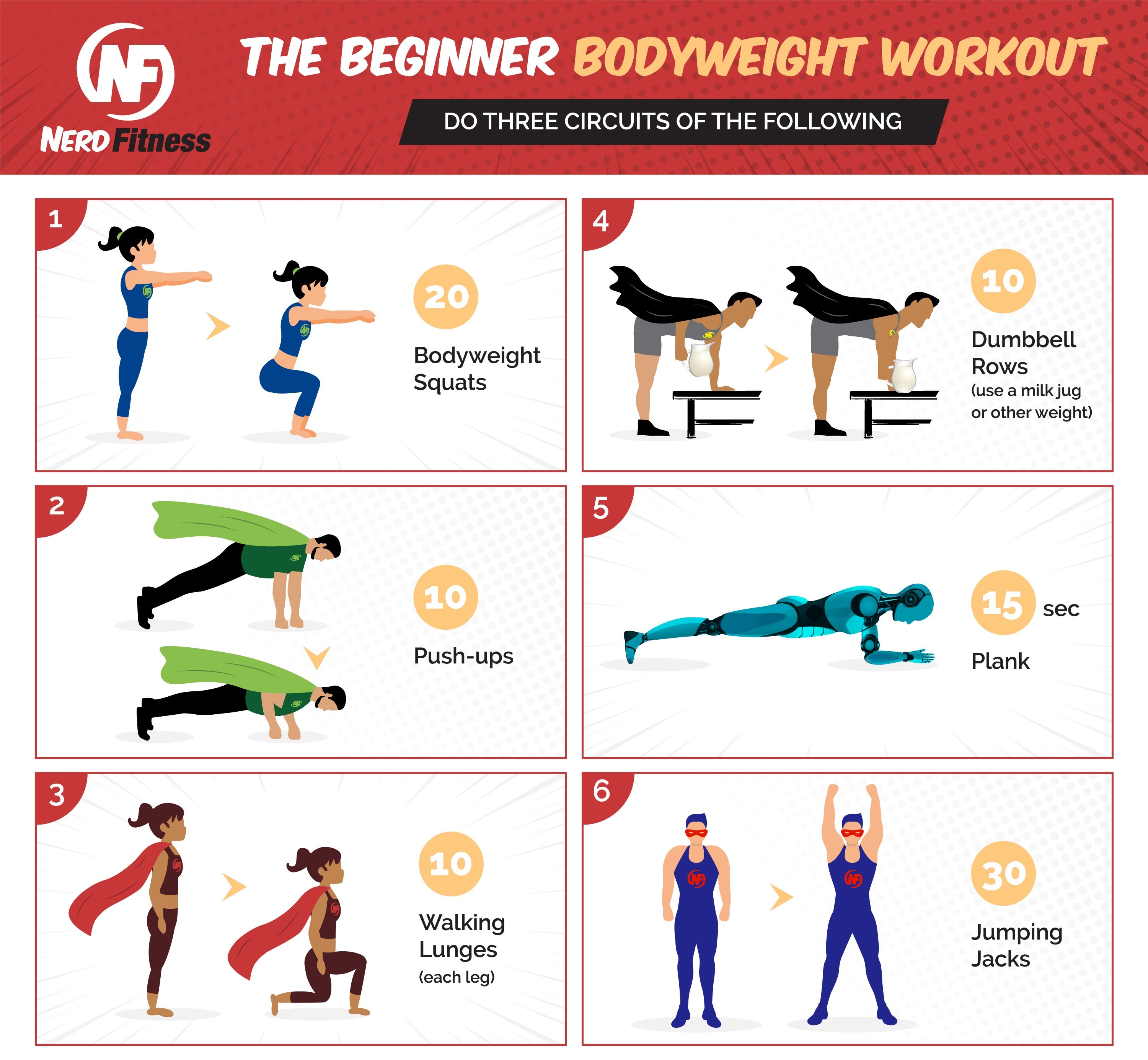
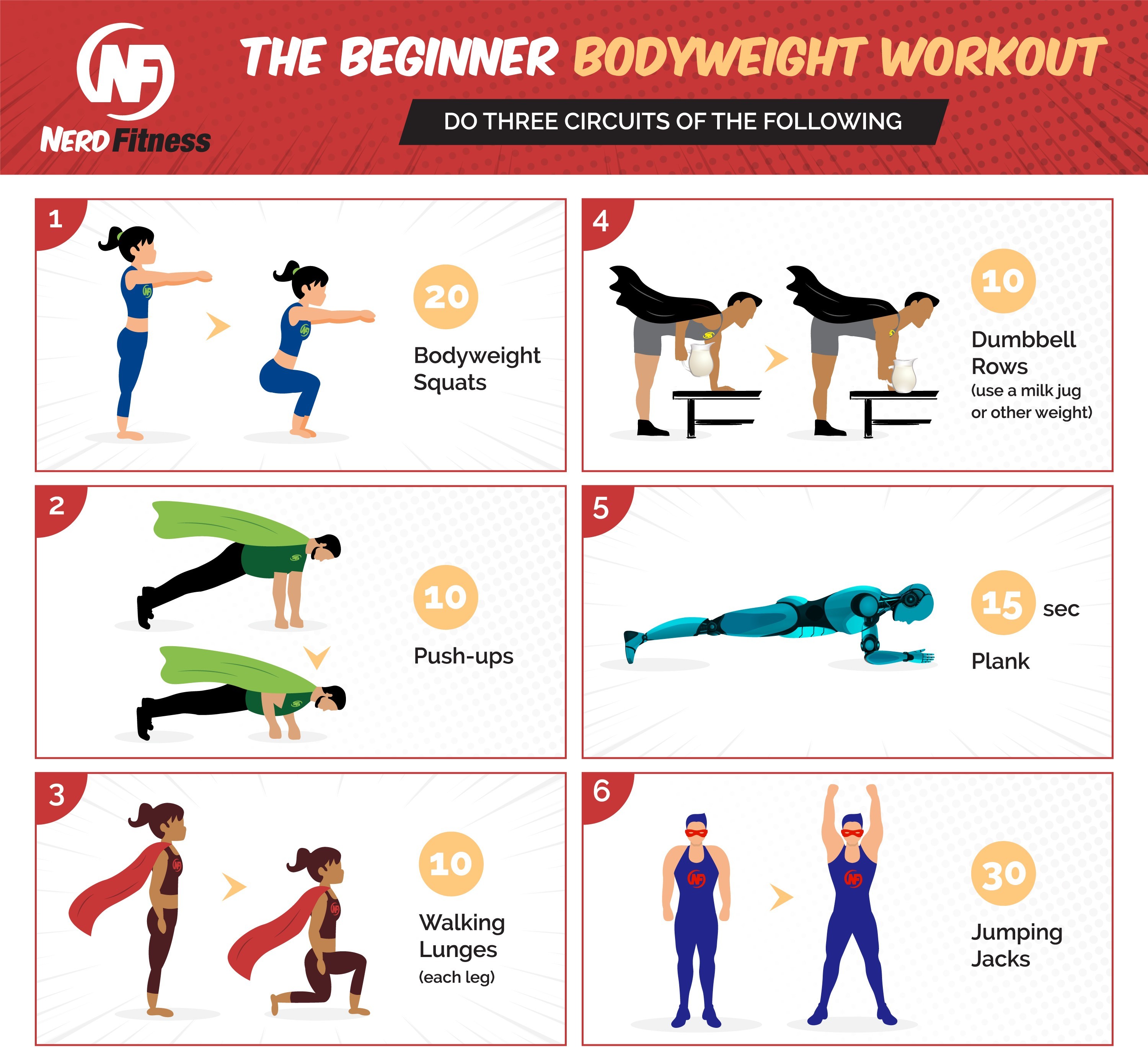
This is the Beginner Bodyweight Workout (3 Circuits):
20 Bodyweight squats.
10 Push-ups.
10 Walking lunges (each leg).
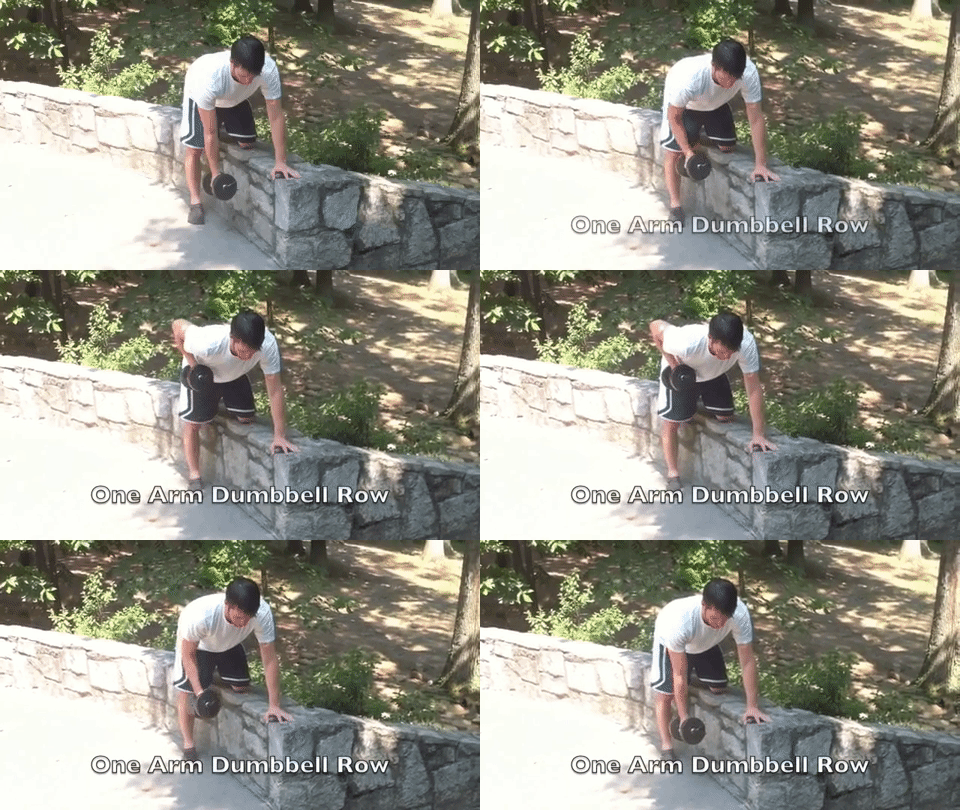
10 Dumbbell rows (use a milk jug or other weight).
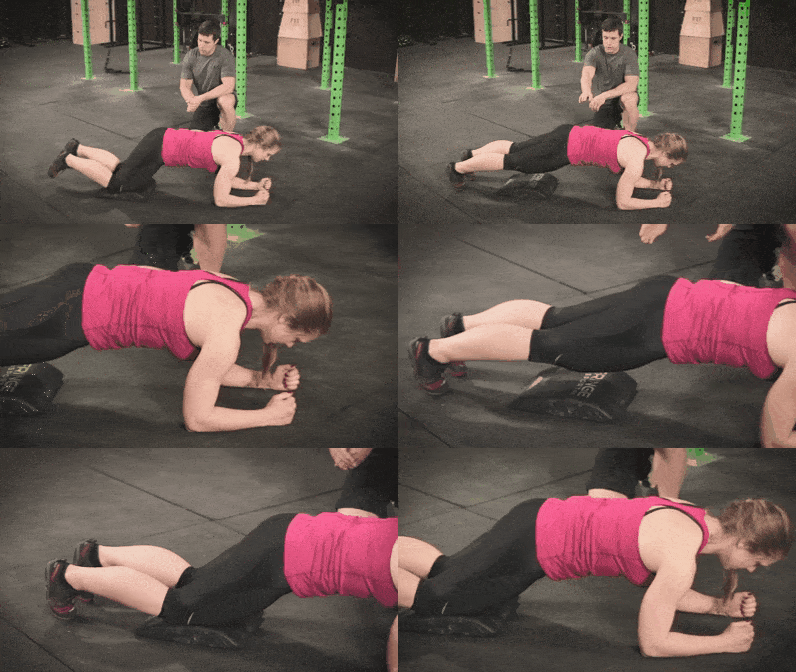
15 Second Plank.
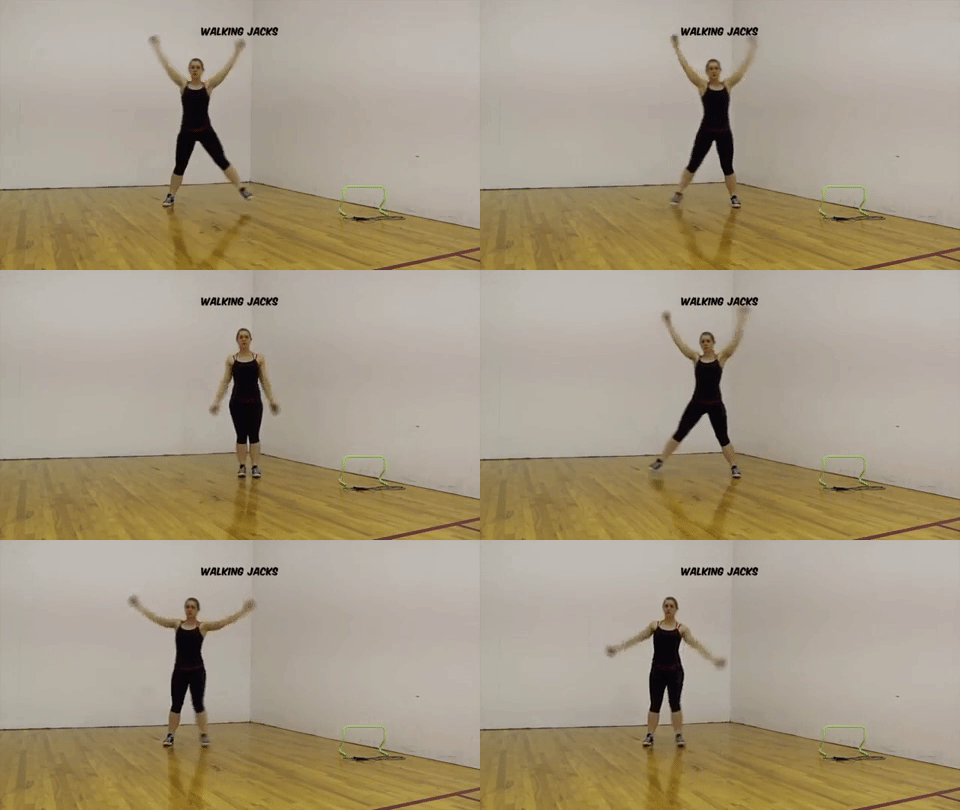
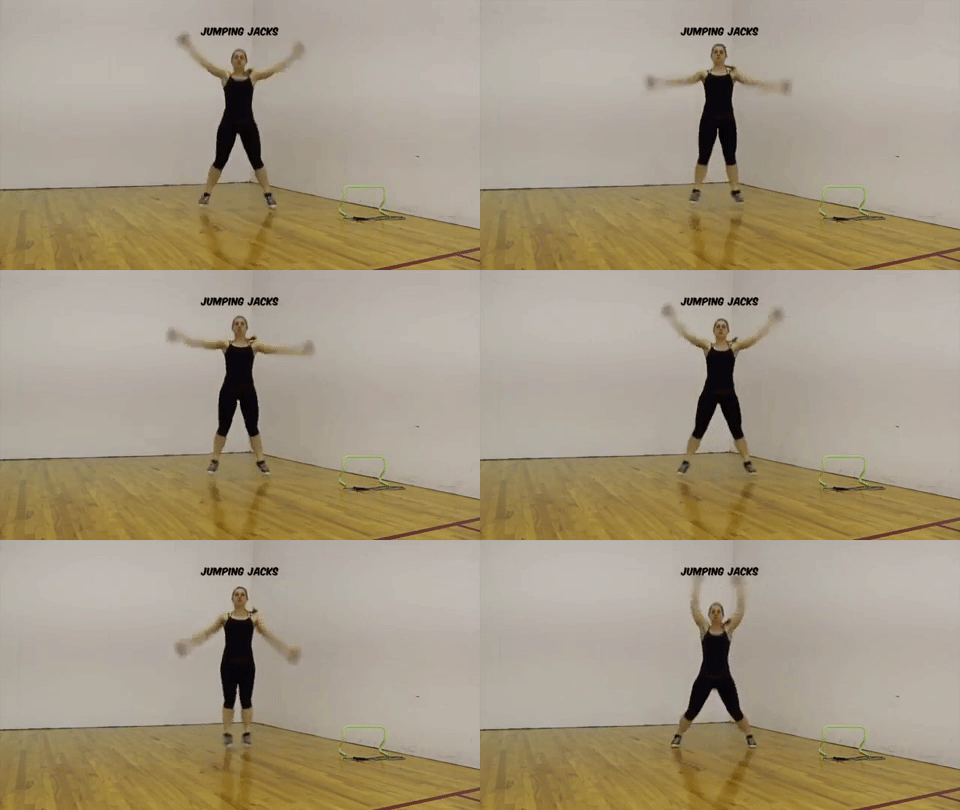
30 Jumping jacks
We turned this bodyweight workout into a fun infographic, because that’s how we roll around here:
In a circuit routine, you’ll do each exercise in succession without a break in between (if you’re able).
Once you’ve finished all exercises in the circuit, do it again.
If you’re still able after the 2nd run through, go for a third.
Because all of these exercises come one after another, you’re bound to get tired – and that’s okay!
It’s better to stop and take a break than to do an exercise incorrectly.
Before you start, don’t forget to do a Dynamic Warm-Up – Make sure to get your heart rate pumping and get your muscles warmed or you’re just asking for injury.
You can run in place, jump rope, do a few push-ups, pedal on a stationary bike, do some punches and kicks, jog up and down your stairs, and/or twist and swing your arms and legs to get them moving!
“HOW OFTEN SHOULD I DO THE BEGINNER BODYWEIGHT WORKOUT?”
Do this routine 2-3 times a week, but never on consecutive days.
You don’t build muscle when you’re exercising, you build muscle when you’re resting, so try not to do a strength training routine (of the same muscle groups) two days in a row.
In addition to checking out our Online Coaching Program, make sure you download the worksheet for this workout by joining the Rebellion (our free online community)!
I’ll send it to you right away when you sign up in the box below:
Grab Your Beginner Bodyweight Routine Worksheet. No Gym Required!
Complete this workout at home, no equipment required
Avoid the common mistakes everybody makes when doing bodyweight exercises
Note: We have helped hundreds of 1-on-1 Coaching clients get started with strength training and other awesomeness – but EVERYBODY starts with bodyweight training like these movements and this workout!
Is Bodyweight Training Effective for Weight Loss?
The question of the day is:
Is bodyweight training effective for weight loss?
Yep! Bodyweight training can be great for weight loss, as long as you have your nutrition dialed in.
If you don’t…then no, it won’t be your magic bullet.
We’ve actually developed our own 10-level nutrition system and mindset blueprint in Nerd Fitness Prime, but let me break this down into some basics:
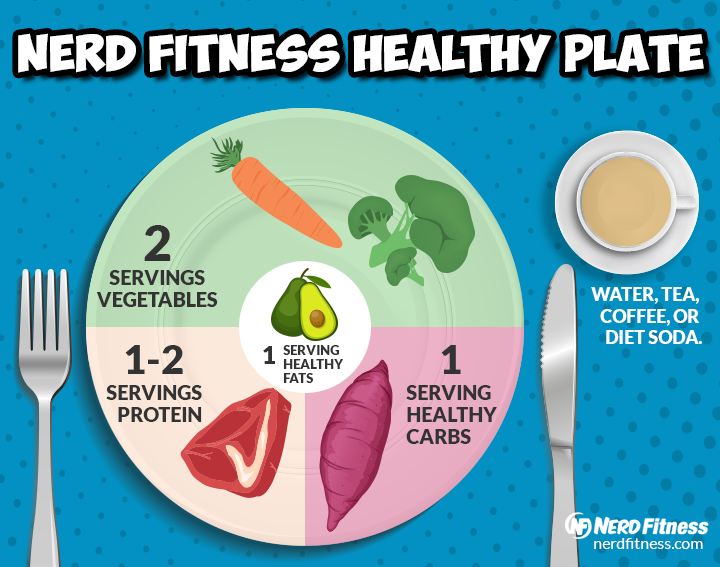
Eat natural, whole foods whenever possible.
Cut back on sugar and liquid calories wherever you can. The stuff is in everything!
Put vegetables and fruit on your plate!
Know your fats and carbs – these are the foods we can overeat without realizing it.
Make sure you get enough protein each day (meat, chicken, fish) – this helps with rebuilding muscles and things like that.
You can download a Free 10 Level Diet Guide too when you join the Rebellion and sign up in the box below:
Download our free weight loss guide
THE NERD FITNESS DIET: 10 Levels to Change Your Life
Follow our 10-level nutrition system at your own pace
What you need to know about weight loss and healthy eating
3 Simple rules we follow every day to stay on target
The raw honest truth:how you eat will be responsible for at least 80% of your success or failure.
If you’re doing bodyweight workouts because you’re interested in losing weight, know that training is only 10-20% of the puzzle!
If you need help figuring this all out, or you just want your own Yoda to tell you what to do, you’re in the right place!
We’ve been helping busy people like you train at home and make better food decisions without hating life! It’s our 1-on-1 Online Coaching Program, and it might be a great fit for you.
Schedule a call with us to learn more by clicking on the image below:
After the Beginner Bodyweight Workout: Next Steps!
Do this Beginner Bodyweight Workout for the next 4-6 weeks and focus on getting better.
If doing just one circuit of the workout was really challenging, no big deal!
Write down how you did, and try to do just 1 more rep or exercise next time through.
The whole point is “do a bit more than last time.”
I also have MULTIPLE options for you to take for your next step too. Pick the option below that best aligns with your goals and timeline:
1) If you want step-by-step guidance on how to lose weight, eat better, and get stronger, check out our killer 1-on-1 coaching program:
2) If you want a daily prompt for doing workouts at home, check out NF Journey. Our fun habit-building app helps you exercise more frequently, eat healthier, and level up your life (literally).
Try your free trial right here:
3) Join the Rebellion! We need good people like you in our community, the Nerd Fitness Rebellion.
Sign up in the box below to enlist and get the Beginner Bodyweight Workout sheet so you can print out the sheet and train at home!
Grab Your Beginner Bodyweight Routine Worksheet. No Gym Required!
Complete this workout at home, no equipment required
Avoid the common mistakes everybody makes when doing bodyweight exercises
Learn how to finally get your first pull-up
I’d love to hear how this workout went for you, and how else we can help!
This is what we’ve dedicated our lives to, and you’re now part of a killer community.
Welcome to the Nerd Fitness Rebellion!
You can do this, we got your back!
-Steve
PS: If you’re looking for more workout routines to follow, I got you covered:
No matter which at-home workout you pick, I want you to start with one important thing:
Warm-up!
I cover why you should always warm up in an article found right here. It doesn’t have to be much though, give it about five minutes to get your muscles active and your heart rate up.
This will help you do exercises properly and help prevent injury. You can run in place, do air punches and kicks, or some jumping jacks.
Here is NF Senior Coach Staci (you might know her incredible story) showing you many beginner options you can use to warm up as well:
If you’re curious, here’s my personal (advanced) warm-up:
Advanced Warm-up Routine:
Jump rope: 2-3 minutes
Jumping jacks: 25 reps
Bodyweight squats: 20 reps
Lunges: 5 reps each leg.
Hip extensions: 10 reps each side
Hip rotations: 5 each leg
Forward leg swings: 10 each leg
Side leg swings: 10 each leg
Push-ups: 10-20 reps
Spider-man steps: 10 reps
Our goal isn’t to tire you out, instead we want to warm you up.
That’s step one.
Completing your chosen at-home workout would be step two.
Below, you’ll find 8 sequences you can follow along with!
I warn you, the above sequence will hurt… in a good way. You should be proud if you can get through this three times.
Do you want to get as strong as possible so this workout ain’t no thang?
Sign up in the box below to grab our guide, Strength Training 101: Everything You Need to Know. It’ll teach you all of these advanced bodyweight exercises!
Download our comprehensive guideSTRENGTH TRAINING 101!
Everything you need to know about getting strong.
Workout routines for bodyweight AND weight training.
How to find the right gym and train properly in one.
Home Workout #3: The 20-Min Hotel Routine
Sometimes, you just plain find yourself stuck in a hotel room. Maybe you can find the hotel gym, but I bet it’s terrible! It probably has 2 machines, a broken treadmill, and no free weights.
Ugh.
Instead, how about a 20-min workout you can do in the room itself! Utilize the furniture to its full potential.
If you don’t have time to run through the whole sequence, no problem!
Depending on how much time you have during the day, you can do your whole workout at once, or break up your training into four different sessions throughout the day (with each session being ONE of the exercises).
Here’s a sample day for your No-Equipment Workout:
Wake up, do 40 jumping jacks to warm up, and then do bodyweight squats.
At lunch, you grab your suitcase (if you’re at work, milk jug if you’re at home) and do inverted rows.
After work, you do another 50 jumping jacks and then do your push-ups.
After dinner, you do your planks while watching TV.
You could even split it up over two days if needed, but the goal would be to do it the whole sequence at once.
The main Angry Birds Workout article describes in detail Levels 1-6, but here’s Level 3 for you:
Bonus points if you somehow do this no-equipment workout in a cave, as that’s how Bruce Wayne would roll.[1]
This workout is separated into two days for you.
Here’s a video for the first day:
Batman No-Equipment Workout Day 1:
Rolling squat tuck-up jumps: 5 reps
Side to side push-ups: 5 reps
Modified headstand push-ups: 5 reps
Jump pull-up with tuck / Pull-up with Tuck-up: 5 reps
Handstands against wall: 8 seconds
Here’s a video for the second day:
Batman No-Equipment Workout Day 2:
‘180 Degree’ jump turns: 5 reps
Tuck front lever hold: 8 seconds
Tuck back lever hold: 8 seconds
Low frog hold: 8 seconds
This is a relatively advanced workout already, but if you want to progress to the next level, check out the main Batman Bodyweight Workout for tips on how to do just that.
NOTE: This is NOT a beginner program, and should not be attempted unless you have been training consistently and can do multiple repetitions of pull-ups and push-ups with great form.
Like this perfect push-up:
And this perfect pull-up:
Here’s how the PLP Progression works:
Day 1:
Pull-ups: 10 reps
Push-ups: 10 reps
Lunges: 10 reps (each leg)
Day 2:
Pull-ups: 11 reps
Push-ups: 11 reps
Lunges: 11 reps (each leg)
Day 3:
Pull-ups: 12 reps
Push-ups: 12 reps
Lunges: 12 reps (each leg)
How long do you keep doing this?
As originally envisioned by Chad Waterbury, the PLP Workout lasts 60 days.[3]
Yeah…by the end of it you’ll be doing more than 50 pull-ups.
There are two versions:
If you can do 10 straight pull-ups: Start day 1 with 10 reps of each.
If you cannot do 10 straight pull-ups: Start day 1 with 1 rep of each.
Complete your required reps each day in as many sets as you need, whenever you need to. The goal is to do it in as few sets as possible, but enough so that you can complete each rep with proper form.
If you want to advance to the Jedi Knight or Master Levels, check out The Star Wars Workout, which will also offer you a full description of each move.
Bonus No-Equipment Workout: The Playground Circuit
Do you have a nearby playground? Why not work out there! If you have kids, you can do it together. Or let them ignore you.
The trick here is to couple your home workouts with adjustments to your nutrition.
We’re big believers that you can’t outrun your fork, so any successful weight loss plan will include a focus on building a healthy plate.
That will look something like this:
If you want some help on adjusting your nutrition, I’ve got two great resources for you:
The Nerd Fitness Guide to Healthy Eating. This massive resource will help you slowly adjust your nutrition, without forcing you to give up the food you love (yes, you can still eat pizza here and there). No more diets, instead we’ll work on building habits together.
Nerd Fitness Coaching. If you want to take it to the next level, one of our trained professionals can help you adjust your way of eating to help you reach your goals. No shame. No judgment. Just a like-minded nerd who will show you the way.
I have two resources to help you design your own no-equipment workout:
The 42 Best Bodyweight Exercises: This guide will teach you how to perform the best bodyweight exercises – no equipment required! Check it out if you are unfamiliar with any of the movements referenced in today’s guide.
How To Build Your Own Workout Routine: Once you’re comfortable with a handful of bodyweight exercises, use this guide to pull them all together into a full-body workout!
That should get you going on building a workout you can do in the comfort of your own home.
Want more? Alright, eager beaver, I got you.
We built THREE options for people just like you:
1) If you want step-by-step guidance, a custom workout program that levels up as you get stronger, and a coach to keep you accountable, check out our killer 1-on-1 coaching program:
2) If you want a daily prompt for doing workouts at home, check out NF Journey. Our fun habit-building app helps you exercise more frequently, eat healthier, and level up your life (literally).
Try your free trial right here:
3) Join the Rebellion! We need good people like you in our community, the Nerd Fitness Rebellion.
Sign up in the box below to enlist and get our guide, Strength Training 101: Everything You Need to Know. It’ll help you start incorporating these bodyweight moves into your training.
Download our comprehensive guideSTRENGTH TRAINING 101!
Everything you need to know about getting strong.
Workout routines for bodyweight AND weight training.
How to find the right gym and train properly in one.
Alright, your turn: I’d love to hear how your home training is going!
Which workout above did you try? Did you make one of your own?
Leave a comment below with your results or any questions you have on working out at home.
For the Rebellion!
-Steve
PS: If you were going to buy one piece of equipment to utilize in your home, a kettlebell would offer you a lot of versatility:
However, as I mentioned in the intro, you’ll often hear that losing fat while gaining muscle is impossible. The argument goes that you should just focus on one or the other, because doing both at once is destined to fail.
Let’s explore this claim.
Losing Fat and Gaining Muscle at the Same Time (The Controversy)
To understand why losing fat while gaining muscle can be problematic, we need to explore both processes.
To gain muscle, your body needs to be in a caloric surplus. This surplus provides the energy your body requires to repair and build bigger muscles.
Given this, losing fat (caloric deficit) at the same time one is gaining muscle (caloric surplus) seems impossible.
However, if we go a few steps deeper into the science, it IS possible!
To appreciate the nuance here, let’s get into some specifics on losing fat and gaining muscle separately, and then we’ll combine them.
HOW DO YOU LOSE FAT?
There is a simple answer and a slightly less simple answer when it comes to losing body fat.
The simple answer: “consume fewer calories than you expend or burn.”[1]
Eight words, and one or two of those could probably be thrown out.
When your body needs more calories than the amount you are eating, you are in a “caloric deficit.” Your body doesn’t have the calories it needs as fuel, so it’ll start breaking down parts of itself for its energy requirements.
The hope is that your body will mostly pull from fat stores, though depending on how you are training it will also break down muscle too.[2]
Said again: when you are eating a caloric deficit, your body will pull from both its fat stores AND existing muscle for energy.
Troubling indeed.
From a physique and health standpoint, obviously we’d prefer that your body doesn’t break down muscle when in a caloric deficit, and instead really focuses on using fat stores instead.[3]
I make this point for a reason: your goal in fitness shouldn’t only be “weight loss,” despite the common vernacular used.
Who cares what the scale says, right?
The goal instead is to reduce body fat while also keeping the muscle you have (or even building more muscle).
That leads to a better physique and a healthier body.
This is why there is a big market for devices that supposedly assess your body fat percentage.
By reducing your total fat on your body, OR increasing muscle mass, you’ll end up with a lower body fat percentage (it’s just a simple ratio of fat to everything else).
And lower body fat percentages are where “toned arms” and “6-pack abs” hang out.
We’ll discuss tips on keeping and growing your muscle while in a calorie deficit later in this guide. For now, remember you need fewer calories “in” compared to calories “out” for weight loss to occur, from either fat stores or muscle.
You may be asking, “Steve, what’s easier to do? Burn more calories or consume less?”
Good question.
Numbers will help tell the story: though this is a gross oversimplification – let’s use the ‘widely accepted’ starting point of “3,500 calories equals roughly one pound of fat.”[4]
If you want to lose one pound – or half a kilogram – of body fat in a week (a worthy, sustainable goal for some), you need to create a caloric deficit of 500 calories per day.
Your options to create this caloric deficit include:
Consuming 500 fewer calories
Burning 500 more calories
A combination of the two
Which is easier?
Here are both halves of that equation. 500 calories equals:
The number of calories found in a Big Gulp of Mountain Dew.
When it comes to maintaining a caloric deficit, it really comes down to diet.
It’s significantly more effective and time-efficient to consume 500 fewer calories than it is to burn 500 additional calories.
As Time magazine controversially pointed out – with tons of cited studies – “exercise alone won’t make you thin.” It’s too easy to add more calories in, and requires too much work to effectively influence “calories out.”
This brings us to our slightly less simple answer on getting in shape:
To lose body fat, you need to watch what you eat, and do so in a sustainable way.
Here at Nerd Fitness, we are firm believers that 80-90% of the fat-loss equation comes down to diet (check out Rule # 4).
Here’s another idea we focus on: EAT MOSTLY UNPROCESSED FOOD.[5]
Meat, fish, eggs, vegetables, fruits, nuts are all great examples.
These foods are very nutrient-dense and often low in calories compared to their processed counterparts. Which means you get filled up without overeating.
Win-win-win.
Have you ever seen the difference between 200 calories of broccoli and 200 calories of a bagel? WiseGEEK does a great job of displaying this, so we’ll borrow a couple of their photos.
200 calories of broccoli:
200 calories of a bagel:
That’s why REAL food is the answer to creating a sustainable caloric deficit.
Most people can eat an entire bagel, no problem. Plates of broccoli, with all of the fiber, are much tougher to overeat.
We lay it all out in our Beginner’s Guide to Healthy Eating. It’ll provide tips on how to gradually create habits that get you to a “REAL food” way of eating, including proper portion sizes, tips on batch cooking, and a cameo from Winnie the Pooh.
With all of this, we advise you to take it slow, so new habits of healthy eating become permanent.
Something you can do for the rest of your life.
It’s a strategy we work closely with our coaching clients on: small nutritional adjustments they feel comfortable making. It’s how some of them have been able to lose 50-100 pounds!
Let me explain again: what you eat will be 80%-90% of the equation for losing body fat.
The other 10-20%? Exercise.
Of course it’s exercise.
That’s a pretty good segue into…
HOW DO YOU GAIN MUSCLE?
If you want to build muscle, you’ll have to lift heavy things and ensure that your body has enough calories and protein to adapt by building more muscle.
I will always be on Team Strength Training. If you’re looking to build muscle, you’re gonna need to lift heavy things.
When you lift an object (or your own bodyweight) enough times, your muscles reach the point of failure. This causes your muscles to tear and breakdown.
When your muscle rebuilds itself following the workout, it’ll be bigger and stronger than before. Then you do it again.
And again.
And again.
As long as you are eating enough to rebuild your muscle, you’ll get stronger!
Not sure where to start on a Strength Training practice? No problem! You can download our free guide Strength Training 101: Everything You Need to Know when you join the Rebellion (our free community) below:
Download our comprehensive guideSTRENGTH TRAINING 101!
Everything you need to know about getting strong.
Workout routines for bodyweight AND weight training.
How to find the right gym and train properly in one.
Because your muscle needs to be rebuilt after exercise, the calories are gonna need to come from somewhere. I’ll talk a lot about proper diet in the next section (with a Harry Potter analogy), so I won’t spend too much time on it here.
Just know that eating the right quantity of foods will be a big part of gaining muscle.
#3) Rest
Your body rebuilds itself while you sleep, so make sure you get plenty of rest each night. I’m talking 7-8+ hours. This will help ensure your body has the time it needs to grow stronger.
If you’re strength training and only getting 6 hours of sleep a night or less, you’re really doing yourself a disservice. Go to bed!
That’s the short gist of how to build strength: challenge your muscles, eat well, and get some rest.
Let’s narrow in on our second point, “Eat a diet based on your goals.” It’ll become very important when balancing both losing body fat and gaining muscle.
To do that properly, grab your owl, and let’s chat about Hogwarts.
How to Lose Fat WHILE Gaining Muscle (The Science)
To answer the question of losing body fat and gaining muscle at the same time, I’d like to introduce an analogy from the world of Harry Potter.
Recall the “Sorting Hat:” The Sorting Hat’s job was to determine which of the four houses kids will call their home.
It’s almost like a traffic director: “Harry, you will go to Gryffindor! Draco, you will go to Slytherin!”
Your body operates on a VERY similar operation: every day it receives new calories (when you eat), and it needs to decide what to do with them!
For example:
You eat a chicken parm sub with fries and a 20-ounce soda. Your body then has to know where to route all those calories.
To keep things simple, it has three choices. It’ll sort those calories into one of three houses:[6]
A. Burn for Fuel.
B. Rebuild Muscle.
C. Store as Fat.
Right now, when you eat food, your body sorts most of those calories into “Burn for Fuel.”
There’s a number of calories your body needs each day just existing: to keep your liver functioning, your heart pumping, your brain operating, to regulate your body temperature, and so on – it burns a good chunk of calories just keeping the lights on.
This is your “Basal Metabolic Rate” which you can calculate for yourself in our TDEE calculator.
There’s also “B. Rebuild as Muscle” and “C. Store as Fat,” which I devoted entire sections to above.
This is where the problems arise: When you overeat calories and your body doesn’t need anymore to fuel itself, it takes those extra calories and stores them as fat.
However, our goal is the OPPOSITE of this.
We want to keep the muscle we have (or grow it) while getting rid of the fat!
So let’s imagine a scenario where we pull all this together by strength training heavy AND reducing our caloric intake:
You strength train regularly, and your muscles break down and need to be rebuilt.
You don’t consume enough calories to both rebuild muscle and fuel itself. There’s not enough to go into the “Burn for Fuel” and “Rebuild Muscle” houses.
Does your body just shut down?
NOPE!
Your body has been preparing for this, by storing any excess calories over the years in the “Store as Fat” house.
This means your body can pull from “Store as Fat” to make sure all the work still gets done, including your daily functions as a human and rebuilding the muscle you tore apart.
Said another way:
If you have fat stores (and we all do), you do not need to be in a “caloric surplus” to rebuild muscle. The calories stored in your fat cells act as this required energy.
There is also evidence that muscle can even be grown while in a caloric deficit.[7]
However, if you want to skip all the experimentation and trial and error, you can have a Nerd Fitness Coach do all the heavy lifting for you (not really, you’ll still need to work out).
TIPS TO LOSE BODY FAT WHILE GAINING MUSCLE
Let’s bring this all together and create some actionable steps to losing body fat and building muscle at the same time.
#1) Sustain a caloric deficit while eating enough protein
You need your body to burn more calories than you consume, and also provide your body with enough protein to rebuild its muscle.
You can only lose fat if you’re in a calorie deficit.
Remember the Sorting Hat analogy:
If you’re eating too much, your excess calories are being sent to the “Store as Fat” house.
We want to pull from this house instead. So eat less than you burn consistently.
To help here, I have 3 resources for you:
Beginner’s Guide to Healthy Eating. If you want tips and tricks to create habits based on REAL food, that guide will help get you there.
You don’t have to follow some predetermined blueprint like “low-carb.” You can create your own diet (which is what I do). Learn all about it right here.
#2) Strength train
If you could sell a pill that could be prescribed to every single person on Earth to make them healthier, it would look something like a strength training routine in a bottle.
It is one of the best things you can do for your body.[9]
And really, if you want to build muscle, you’re gonna need to lift something! Either weights or your own bodyweight.
You need to challenge your muscles in order for them to get stronger. Now, as we discuss in our article on the correct number of reps and sets, there are multiple ways to do so.
To build muscle:
Lift lighter weights for lots of reps.
Lift really heavy with fewer reps.
The important thing: pick a strategy and get started.
To recap: if you train heavy and eat a caloric deficit, your body will pull from its fat stores to both fuel itself and potentially also build muscle. This is a double whammy of AWESOME.
#3) Prioritize protein
Outside of being in a caloric deficit and lifting weights (or yourself), eating enough protein is one of the key components of both losing body fat and building muscle.
Protein is the number one nutrient for creating new tissue.[10]
So when you cut out calories to create a caloric deficit, don’t cut them from protein sources.
Studies have shown that participants can gain muscle, even while in a caloric deficit, as long as they eat enough protein.[11]
It’s important enough that I’ll say it again:
If you don’t want your body cannibalizing its muscles while you are in a caloric deficit, you need to eat plenty of protein.[12]
How much protein?
As we point out in our Guide to Protein, roughly 1 gram for every pound of your weight, with an upper limit of 250 grams.[13] Or two grams for every kilogram if you are on the metric system. This means:
If you weigh 300 pounds (136 kg), eat 250g of protein.
If you weigh 250 pounds (113 kg), eat 250g of protein.
If you weigh 200 pounds (91 kg), eat 200g of protein.
If you weigh 180 pounds (82 kg), eat 180g of protein.
The gist: don’t skip out on protein. It should be on your plate for every meal (we’ll show you exactly how much in the next section).
If these generalized recommendations stress you out, and you want to know exactly what to do, we can help!
I’ll remind you of Nerd Fitness Coaching, where we help clients lose body fat, gain muscle, and level up their lives. We provide tailored and specific recommendations based on your body and lifestyle, plus accountability and mindset changes to help ensure your new habits stick.
WHAT SHOULD I EAT TO LOSE FAT AND GAIN MUSCLE?
Remember, your eating strategy needs to include two points to lose fat while gaining muscle:
Sustain a caloric deficit.
Prioritize protein so you can build muscle even while in a deficit.
You may be thinking, “That’s all well and good Steve, but what’s that actually look like?”
A serving of protein is about the size and thickness of your palm.
*The 4 oz serving is for an uncooked piece of meat. Cooking reduces about 25% of the weight, bringing it down to about 3 oz.
If you’re curious, here’s how much protein is in a serving of food:
4 oz (113 g) serving of chicken has around 30 g of protein.
4 oz (113 g) serving of salmon has 23 g of protein
4 oz (113 g) of steak has 28 g of protein.
While all of the Healthy Plate above is important, I want you to pay extra attention to your protein intake since we are trying to build muscle.
If you’re having trouble making your protein intake goals, check out our Guide on Protein Supplements for some tips and tricks to up your intake, including some awesome smoothie recipes.
If you are NOT losing weight, it means you are still eating too many calories. Keep your protein intake high, and reduce your fat and carbohydrate intake.
Eventually, you’ll reach a status where there just isn’t enough fat on you to help with “Rebuild Muscle.” At this stage, you can no longer stay with a caloric deficit. You’ll need to flip to a slight “caloric surplus” to build more muscle.
Which means you’ll have to eat more.
It’s debatable when this will actually occur, and we are all different. Reaching 8% body fat for men and 16% body fat for women is a good place to start.
It covers ways to increase your calories for muscle gain, from eating plentiful amounts of Paleo foods to drinking enough milk to make Santa Clause jealous.
Go check it out if you’ve been having trouble putting on muscle.
I want to stress that if you are lifting heavy, and not gaining muscle, diet is likely the culprit.
It was my problem for years, and I’ve seen it amongst countless readers of Nerd Fitness who have trouble gaining muscle.
HOW TO TELL IF IT’S ALL WORKING (Continuing to Lose Fat While Gaining Muscle)
If you’re trying to improve something, it’s important to track it. This also holds true of body composition.
Most people do this by jumping on the scale. This can be “okay,” but it’s only going to tell part of the story.
If you’re building muscle while losing fat, the scale might not go down. You might even weigh more!
Despite weighing more, you could potentially have a better physique.
That’s why in addition to jumping on the scale, I would also encourage you to take progress photos.
Take front and side photos in your mirror, wearing underwear or a bathing suit. Each week, take new photos, and record the number on the scale under the same scenario. Two forms of tracking here allow us to get the full picture.
The scale sometimes lies!
If you eat for a caloric deficit, strength train, and prioritize protein, see what happens.
You may find yourself losing some fat and gaining muscle.
Are you lifting enough? Perform resistance training consistently and track your workouts to determine whether or not you’re progressing via increased weight or repetitions.
The tips outlined above will get you started losing fat while building muscle, but if you’re looking to go a bit further…
#1) If you want step-by-step guidance on how to lose weight, eat better, and get stronger, check out our killer 1-on-1 coaching program:
#2) If you want an exact blueprint for getting in shape, check out NF Journey. Our fun habit-building app helps you exercise more frequently, eat healthier, and level up your life (literally).
Try your free trial right here:
#3) Enlist in the Rebellion! We have a free email newsletter that we send out twice per week, full of tips and tricks to help you get healthy, get strong, and have fun doing so.
I’ll also send you tons of free guides that you can use to start leveling up your life too:
Download our free weight loss guide
THE NERD FITNESS DIET: 10 Levels to Change Your Life
Follow our 10-level nutrition system at your own pace
What you need to know about weight loss and healthy eating
3 Simple rules we follow every day to stay on target
Alright, I think that about does it for this guide.
Did I miss anything? Do you have any tips and tricks when it comes to shedding body fat and building muscle?
Share it with us!
-Steve,
PS: Make sure you read the rest of the articles in our “How to Lose Weight 101” Series!
Check out this study on energy deficits and fat loss.
You can read a study on calorie deficits causing muscle loss right here and here.
Here’s a study on the importance of lean muscle right here.
3,500 calories in a pound of fat was determined in this 1958 report, although as Today’s Dietitian points out, it’s likely more complicated than that. However, it’ll work for our intent and purpose.
People are far more likely to over-consume ultra-processed foods due to their palatability, and as such, we should be consuming them in smaller quantities with less frequency if we’re looking to lose weight. For more, read “Ultra-Processed Diets Cause Excess Calorie Intake and Weight Gain: An Inpatient Randomized Controlled Trial of Ad Libitum Food Intake.” Source, PubMed.
Technically, there’s a fourth with “Store as Glycogen,” but we can skip that for now.
You can read this study for more. Although it should be said that if you’re already relatively lean, and have been lifting weights for a while, you may not grow much muscle in a deficit.
Check out this interesting study on gaining muscle while in a caloric deficit. It should be noted that the participants drank milk. We’ll touch on macronutrient breakdown being key to muscle growth below.
A study on resistance training benefits can be read here.
You can check out this report for a look at protein intake and muscle growth.
That study on protein and muscle gain is right here.
Here’s a systematic review on protein being critical for muscle retention. You can also check out these studies here, here, and here.
This Vegan Baked Camembert & Tomato Spaghetti takes less than 10minutes to prepare and cook, making for a quick, tasty and easy meal for lunch or dinner. I dunno how long it’s been since “that” viral recipe took over TikTok…
Weird hours be damned, I’m gonna help you build up momentum.
These are the exact strategies we work with our night-shift clients in our 1-on-1 Coaching Program! Although each situation is unique, we have certain principles that are universal and can help you start living healthier even when your work life is crazy.
Want to see if we are a good fit for each other? Click on the button below to schedule a free call. We’d love to talk to you, no matter what!
How to Lose Weight Working a 12-Hour or Night Shift?
Now, whether you work weird hours or normal hours, diet is still responsible for 80-90% of your success or failure when it comes to getting in shape.
80-90 PERCENT.
This is both a blessing and a curse. It means you don’t need to freak out if you miss a workout after a long night shift, but it also means you gotta take care of yourself while you are working.
Simply put, if you’re not losing weight, it’s because you’re eating too many calories. So if you’re trying to lose weight while working a night shift or working 12-hour shifts, you need to find ways to eat fewer calories without driving yourself crazy.
I’m a fan of any diet that gets you to accomplish this goal, but you know yourself better than others. So any “diet” may help you, as long as you have access to food for that particular way of eating.
This isn’t a problem, as we have a plan for that!
This just means you need to become the master of meal preparation.
“But Steve I don’t have time to prepare food!” you say.
Yeah, I heard you.
What you’re REALLY saying is, “But Steve, preparing food ahead of time isn’t a priority for me.”
If you are working overnight shifts, you’re gonna need to bring in your own food. Want to know how easy it is?
Here are 3 easy steps to feed yourself on a graveyard shift:
Purchase a bunch of chicken breast on Sunday Night (or whatever night you actually have off). Cook them on a tray in the oven, ALL of them. Put them in separate containers or bags in your fridge.
Purchase a bunch of $1 steam fresh bags of frozen veggies. Stick them in the fridge at your workplace.
Need more calories/carbs in your diet? Buy some sweet potatoes. Microwave one and put it on your plate.
In about 3 minutes and minimal effort, you know have a well-balanced meal.
“But that’s boring!” Sheesh, I have to do EVERYTHING, huh? Welp, get creative, sucka!
Chop up the chicken and put it in a big salad with whatever you prefer (and keep it in your fridge).
Make stir fry, put some in containers in your fridge, and then heat it up on your break.
Google “chicken paleo marinade” and mix up how you prepare chicken. Or steak. Or pork. Or salmon.
YES, this does require effort. YES, this does require preparation. YES, it does work. YES, you will find your rhythm with it.
Again, it comes down to two things: priorities and excuses:
Do you REALLY not have time? Or are you using “I don’t have time” as an excuse to feel sorry for yourself?
Is your job REALLY stopping you from getting in shape? Or is it a convenient excuse to use when you go to Taco Bell or the vending machine?
Remember: nobody believes your excuses except for you. It may seem harsh, but overcoming the “this won’t work for me” mindset will be the first battle we need to win.
You can do this. Just don’t let “perfect’ be the enemy of the “good.”
How to not gain weight while working 12-hour and night shifts: Avoid these things!
Let’s talk about things to eat and avoid while on shift work: the good, the bad, the ugly.
Whether you’re at a desk or up stocking shelves or making your rounds, you probably deal with one of four points:
Exhaustion: Let’s be honest, when you work a night shift or early shift, you never get as much sleep as if you were sleeping during the night with normal hours.
Lack of “time.” If you’re working long days/nights and trying to raise a family/have a social life, food preparation probably doesn’t figure into your schedule. You need convenience, even if you have to pay a bit more for it.
Hunger: If you forgot to pack your “meal” or “meals,” your only option is to eat what you can find, which is unlikely to be nutritious at that time of day.
Boredom: If you are making rounds or stuck at a desk during the middle of the night, there may be more periods of downtime than if you were working during the day.
So you’re tired, hungry, bored, and struggle with time management.
Where do you turn? Caffeine!
Now, I have no problem with Caffeine. I wake up every morning and drink a few cups of green tea while sitting at my desk to write. We’ve even covered caffeine extensively on this site already. The short version? Don’t get caught in bad liquid calorie trap:
Empty liquid calories are the devil. If you are drinking soda, energy drinks, or lattes for the caffeine, understand that you are also probably consuming hundreds of calories and 50+ grams of sugar. And these extra calories are contributing to your waistline. So read the labels or do the research before you drink six Monster drinks, a case of coke, or a Coffee Coolata.
If you’re going to get caffeine, get it from a healthy source: Black coffee, green tea, and a no-calorie or low-calorie energy drink (Monster Zero Carb, for example). Try to wean yourself off the gallons of caffeine and work your way over to black coffee/green tea as time goes on (they have some helpful nutrients). Hopefully, once you start exercising, you’ll have more energy and need less caffeine to survive your shifts.
Avoid the drinks that don’t give you any nutritional value and are full of sugar and calories. See if you can get your caffeine from better sources. Speaking of better sources of calories…
What Liquid Calories Will Help Your 12 Hour or Night Shift
Low on time? Need a meal? Make yourself a smoothie!
Depending on what you put into it or where it comes from, a smoothie can be an incredibly healthy option for meals during the night or as you’re running out the door to your shift.
A few ice cubes if you want to ‘thicken it up’ a bit
(Optional) Organic frozen spinach. Doesn’t change the taste, but gets you a serving of veggies.
I drink a smoothie similar to the one above for a meal almost on a daily basis (though I add in extra carbs and calories because I’m attempting to pack on extra weight). It looks like so:
Can’t bring a blender to work? Stick a scoop of protein in a shaker bottle, and BAM – there’s 25 g of protein prepared in 60 seconds. Add a bag of mixed veggies from the microwave and you’ve got yourself a really weird meal that is pretty damn easy to prepare and pretty damn good for you.
A word of caution: Smoothies from Smoothie King don’t count, as they have more sugar than two cans of Coke and HUNDREDS of calories. Naked Juices are also full of sugar, as we point out here:
They might look healthy, but they’re not. LOOK AT THE LABEL AND PAY ATTENTION TO THE CALORIE SUGAR CONTENT!
Foods to Avoid on a 12-Hour or Night Shift
Now, along with empty liquid calories, let’s talk about empty food calories.
When you are at your desk, are you eating snacks while answering the phone or while on your rounds through the hospital?
Personally, I’m a big fan of No Snacking, as I find I tend to eat more calories than I need during the day, simply because I’m not paying attention (check out the research in that snacking article for more).
Bring some healthy snacks with you if you’re going to be snacking. My personal favorite would be apple slices with almond butter, but don’t forget almond butter can be very high in calories and easily over-consumed too
If you struggle with overeating, look at your snacking at your night job. Are you eating because you are bored? Are you eating because you’re not paying attention? Are you eating because you’ve trained your body to expect food every 5 seconds?
If it’s any of these things, try the “No eating AND _________” strategy:
No eating and surfing the internet.
No eating and watching TV shows.
No eating AND _____.
If you’re going to eat, that’s the only thing you’re going to do. This can help you not accidentally, absentmindedly over calories.
Let’s move on to the other 10-20% of the equation: exercise!
It’s no surprise around these parts that I’m a HUGE proponent of strength training. Guys like Joe (above) travel two weeks a month and yet still manage to have tremendous transformation because they are smart with their time.
From an efficiency standpoint, no other type of exercise gives you as much bang for your buck (aka: the most results with the least amount of time spent exercising).
You can get an incredible workout that exhausts all of your muscles and burns a crazy number of calories (not just during the workout, but in the hours afterward as your body tries to rebuild all of the muscle). Just reference any Nerd Fitness success story, all built with strength training and healthy eating.
So, if your time is limited, and your focus is staying healthy/losing weight, you need to be strength training and walking.
When’s the best time to work out? When you will actually do it! If you find yourself too exhausted after your 12-hour shift (and I don’t blame you), then get your workout done before you go to work, even if you only have twenty minutes! Heck, even if you only have 10 minutes!
I know you don’t need a gym to grow strong because we see it daily here in the Rebellion. We work with coaching clients and design custom programs that take into account each person’s work environment, home environment, and equipment they have available. It works.
We also have the Nerd Fitness Journey which gives you more bodyweight routines and gym routines if you’re looking for specific instruction and exercise demonstrations.
You can try it out right here:
If you are somebody that works a few days on (for long shifts) and a few days off, try this: a really intense strength building routine on your first day off from work and again on your last day. Two strength training days combined with walks and proper eating (on your work days) is more than enough to get you quality results.
Spreading out the Workout Throughout Your Long Shift
Don’t be afraid of simply exercising here and there, when you can.
Check out the Angry Birds Workout and split up your workout throughout your shift:
Do squats in the supply closet. Weirdo? YUP. Who cares?
Pull-ups on the bus stop overhang waiting to go to work? I’ve been there.
Dumbbell rows with your desk and briefcase/backpack.
Walking up the stairs on your break. Why not?
It all adds up, and every little bit is better than nothing. The strength training benefits are key, but there’s one other key benefit to exercising throughout the day.
Coach Matt provides more tips on how to sneak in your training throughout the day right here:
And trust me, as a father of five who works from home, Matt knows how to sneak in his training.
Staying Active During Your 12-Hour or Night Shift
Along with strength training, just staying active will help.
I actually have a timer (FocusBooster) on my laptop that goes off every 15 minutes to remind me to get up, walk around, stretch, do some push-ups, etc. Your phone can do the same thing! Technology, amazing.
Go for a walk around the office. If you are a nurse or doctor you are probably already doing a considerable amount of walking to make your rounds, so keep it up.
The reason for staying active is so important is three-fold:
Every little bit counts. That push-up, those squats, that extra mile walked…they all add up!
Your brain keeps thinking “I am active.” Because it has to work more when you move! Remember, diet is 80% of your success or failure. When you exercise and constantly stay active, you are consistently reminding yourself that you are making healthier decisions, and these should carry over to your eating decisions too. Exercising and eating poorly is kind of like paddling a row-boat with one oar – you’re just spinning in circles. Work both together and dominate!
Exercising can make you smarter and more alert at work. Detailed incredibly well in the book Spark, studies have shown that exercising can increase brain activity and performance. Healthier on the outside, smarter on the inside = NERD FITNESS WIN.
Remember, it comes down to one thing: taking an active role in your health.
1) Don’t use the job as an excuse, and instead remind yourself that you are in control. You don’t need anybody’s permission to get healthy.
2) It adds up. Every little change. Every meal you switch up. Every minute of exercise.
3) Plan out your day. Spending 5 minutes identifying what you’ll eat and when you’ll work out makes you WAY more likely to actually follow through with it.
Leave a comment and share your story and struggles with the Rebellion. I’d love to hear from you:
Do you work a night shift or have funny hours?
Have you had success and want to share your tips and tricks?
Have a REALLY funky job and need more help (Deathstar operator, daytime student/nighttime superhero)? Post below and I’ll see what I can do.
Here’s how it works: we get to learn your goals, lifestyle, challenges, and situation: Kids? An old injury? Graveyard shift?
No problem!
We’ll then pair you with a coach from Team Nerd Fitness that fits your personality and situation. Click below to find out if we are a good fit for each other.
Hello, hormones! Nice to meet you! This month, we’re talking about hormonal health.
Hormones often get overlooked, yet they are at the heart of our lives and wellness. They are fundamental to how we feel each day and how our bodies function. And we need to normalize talking about hormones and learn about our hormonal health before we find ourselves out of balance.
In this insightful episode, Robin brings the conversation about hormones into light. She talks about getting to the root cause of our physical problems and dives into the key things she focused on over the last year, while overcoming hormonal imbalance. She shares actionable steps you can take to care for yourself and support healthy hormones. Stay tuned to learn what you can do to support hormonal health and maintain hormone balance!
Show highlights: what you can look forward to in this episode!
Hormones are the basis for just about every function in the body and affect almost every bodily process.
We don’t always go to the root cause of the issue when looking to solve physical problems like acne, thinning hair, weight gain, or energy loss. We often go for a quick fix.
Robin talks about the physical symptoms she was experiencing and what finally led her to search for the root cause and make a change.
Robin’s healing process was gradual, but very effective. She shares a list of the key things she has focused on over the past year.
We all need opportunities to reset. Robin had to become aware of when she was becoming overstimulated and learn to relax her body and calm her mind.
Pilates has been helpful for Robin over the last year. It kept her moving without any added stress.
We need to embrace where we are now, listen to our bodies, and allow time to heal when necessary.
It’s been a few years (circa 2017) since I’ve been logging consistent long weekend rides but the 100km ride from London to Windsor seemed like a good idea especially with RideLondon Essex on the horizon. In reality, completing 100km was…