While periods are a natural part of our cycle, pain is not. For some women, this news may be shocking. Despite what you may think, periods shouldn’t be painful. Today’s guest, Berrion Berry, is a menstrual health educator who helps women have simple and uncomplicated periods. She helps women find ways to optimize their flow and understand their cycle in a deeper and new way.
In this conversation, Berrion and Robin discuss cycle syncing, the different phases of the cycle, and how to honor our cycle with our fitness routine. Berrion shares an abundance of knowledge to help educate you on your cycle, stress management, and how you, too, can be in better flow.
Show highlights: what you can look forward to in this episode!
How Berrion became a menstrual health educator
What inspired Berrion to help other women fix their periods
Things we should all know about our cycle that most women don’t
The four phases of the menstrual cycle
Berrion’s daily journal prompts to stay in touch with herself
Giving ourselves permission to pause + to not be perfect
Honoring your body in your workouts
Ways to manage pain that aren’t birth control
The biggest “aha” moments to improve your lifestyle
The importance of regulating stress
How Berrion aligns her daily life with flow
How Berrion decides what to say yes or no to, and operates using the B.I.G. method
After the last year we’ve had, your stress level may have quadrupled.
If you find yourself responding by “stress eating,” know that you are not alone.
One of the top issues faced by clients in our 1-on-1 Online Coaching Program is emotional or stress eating. After 2020 being all 2020 like (and 2021 having its own challenges), these episodes have only increased.
Today, we’re going to show you exactly how we address emotional eating with our clients, including when it’s – GASP – actually okay to stress eat.
Justin covers three important lessons I want to highlight, but before we do that, we should ask ourselves a question:
“What exactly is stress eating?”
Stress eating is consuming food in response to negative emotions like fear, anger, or sadness.
When we stress eat, food is being used to solve a problem. Now, unless we’re actually hungry, it’s likely a problem that food itself isn’t meant to solve.
That’s stress or emotional eating.
Here’s what compounds the whole problem:stress eating itself can make us feel guilty. We often feel terrible once our spoon hits the bottom of the pint of ice cream.
This can drive more negative emotions, which can trigger even more stress eating.
And the pattern continues.
We’ll talk about ways to break this cycle in a moment, but before we do, we need to create some tools to identify it in the first place.
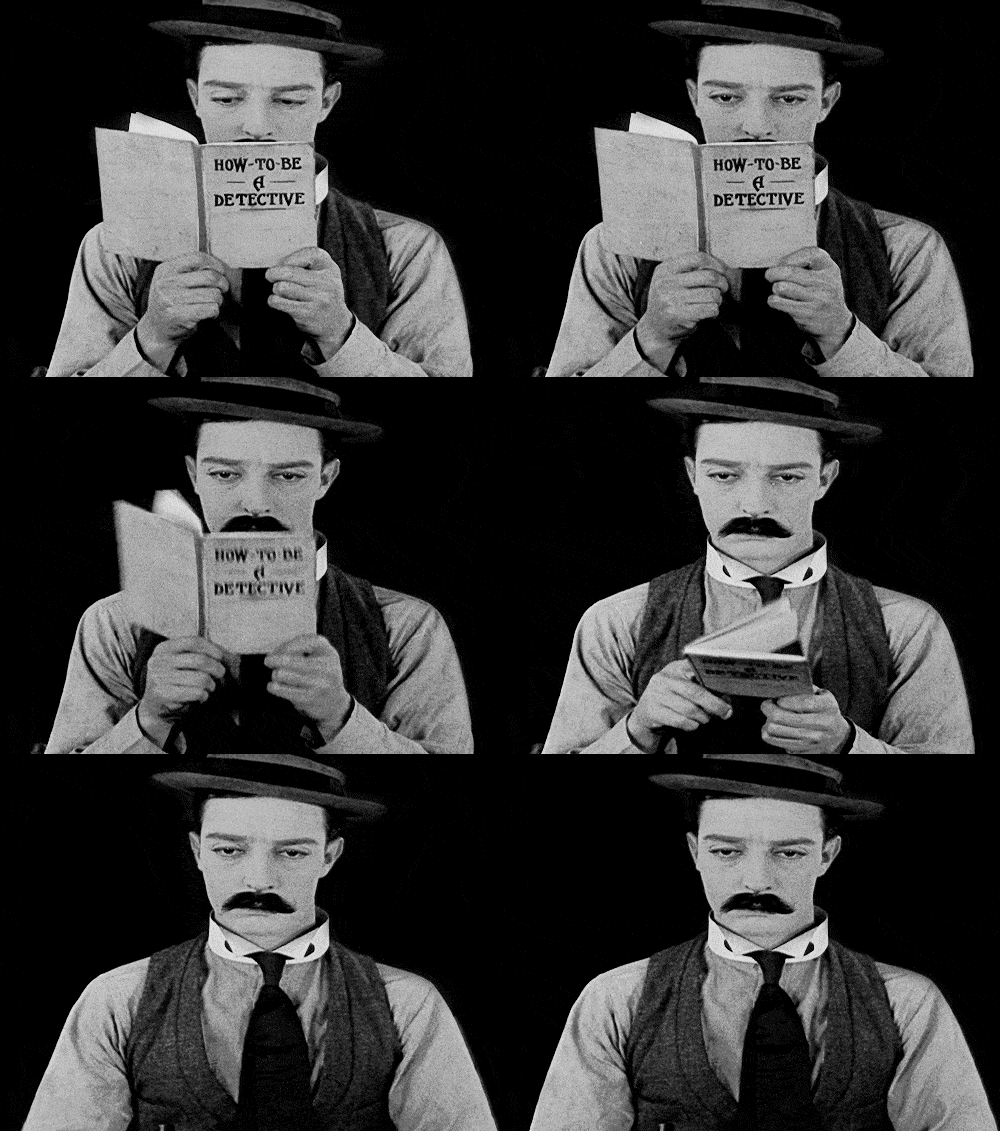
What Causes Stress Eating? (Lesson #1: Playing Detective)
You may have been surprised in our video above when Coach Justin gives permission to stress eat.
Counterintuitive and seemingly counterproductive, I know. But this is going to be important for two reasons.
How to Approach Stress Eating Step #1: we need to curb the guilty feelings about stress or emotional eating.
I started this guide off by highlighting the frequency of stress eating amongst our Online Coaching clients.
You are not the only one struggling with this.
Most humans do.
And robots with human-like emotions and taste buds
We’ll come back to this idea again, because ending the shame of emotional eating will be critical for moving forward.
How to Approach Stress Eating Step #1: allowing ourselves to stress eat will help us learn why we do it.
We’re going to be playing detective here, to see if we can piece apart your actions and routines.
At the end of the day, our lives are a cumulation of habits. Stress eating is one such habit.
So let’s learn about it!
To do so, we’re gonna need to record some Emotional Eating Notes.
During an episode of stress eating, it’s important to ask ourselves:
What am I doing?
What am I feeling? (Both physically and emotionally)
What am I thinking about?
What time is it?
Where am I?
Who am I with?
Ideally, we’ll start to ask yourself these questions:
An hour or two before the eating episode
Right before it
During it
Right after it
The purpose of theseEmotional Eating Notes?
To look for patterns!
Perhaps you’ll notice some of the following:
“After my recent Tuesday morning conference call, when I got grilled by my company’s leadership, I grabbed some chocolate chip cookies. This happened the week before too.”
“Around 2pm, when I get the ‘afternoon slumps,’ I normally grab a Coca-Cola. This little boost gets me through the end of the day. This is almost a daily practice.”
“Last Sunday evening, when thinking about the start of the workweek, I had a couple glasses of wine. When looking back at my notes, this takes place at the end of most weekends.”
We’re looking for patterns to help us understand what drives our stress eating.
The most important thing about this process: withholding judgment.
We’re looking at our notes for clues into our psyche. Whatever we captured is okay.
If you order pizza every Thursday after talking with your overbearing mom (of course, she means well), step one is to recognize it.
Oftentimes, this awareness step alone can help shift behavior. “Oh, I’m reaching for a beer like I normally do after ending my workday. Typical Me.”
After creating some notes on what spurs our emotional eating, it’s time to think about some alternatives for coping with stress.
How Do I Stop Mindless Eating? (Lesson #2: The Stress Response Menu)
After documenting what sets off our stress eating, we need to formulate a plan on what to do when our anxiety rises.
That means it’s time to build…a Stress Response Menu!
Our Stress Response Menu will be a list of actions or activities you can do to de-stress outside of eating.
Ideally, you’ll do them before an eating episode, but they can be done during or after the fact too.
In other words, if you only realized you were stress eating when your hand reaches the bottom of the Doritos bag, no problem, you can do your stress response activity right then.
The purpose of the Stress Response Menu is to reward yourself with a small moment of self-love, whenever your anxiety levels are too much.
Here are some ideas for activities to place on your Stress Response Menu:
Close your eyes and take five deep breaths (Coach Justin’s go-to move)
Just make sure it’s something you won’t dread doing.
A combination of a “de-stressor” and a “reward.”
This is important, as Coach Justin mentions that many of his clients only reward themselves with food. The self-love they practice only takes place in the kitchen.
Our menu above will help us develop some more options, not solely based on food.
To make the most of your Stress Response Menu:
#1) Make the activities short and easy.
You should feel confident that you can do every item on your list. So avoid activities that will take longer than 10 minutes to complete.
If you’re going to journal when stressed, keep your diary open on your work desk.
If you’re going to drink water before any emotional eating, keep your full glass near you.
If you’re going to take a short walk, keep your kicks near the door.
Don’t set yourself up for failure by picking overly complicated or burdensome activities.
#2) Place your Stress Response Menu somewhere visible.
Once you make your list, print it out and place it in your kitchen or pantry (or wherever you typically stress eat).
You could also write out a couple of your favorite activities and attach them to your refrigerator.
If it’s right in front of you, it’ll be harder to ignore (however, it’s okay to ignore it from time to time, as we aren’t striving for perfection).
Just please don’t write it and then stick the list in the junk drawer that opens to another dimension.
You never can find anything in that drawer.
#3)Track your usage of the Stress Response Menu.
This will help us in two ways:
First, by tracking your usage, you’ll start to feel better about using the SRM. You’ll see an accumulation of all the times you successfully deployed a stress response, helping you visualize the momentum you’re building.
Second, the data will help you understand your patterns of emotional eating. Maybe five deep breaths steered you away from ice cream but the large glass of water did not. You can then use this information to update and revise your response plan.
For the first point, Coach Justin has his clients keep a “Jar of Awesome.”
Every time they have a small win in the day, like taking five deep breaths instead of chugging soda, they place a marble or small token in a jar. After a while, the jar will have a decent amount of marbles or “small wins” in it.
This will then stand as a visual reminder of all the progress being made, proof of their ongoing wins.
How Common Is Stress Eating? (Lesson #3: Learning Self-Compassion)
The American Psychological Association has found that about a third of Americans respond to stress with food.[1]
This research was done BEFORE our global pandemic.
So if you find yourself binging in response to the stress of our global pandemic, know that you are not alone here.
Our coaching clients, and the NF Coaches themselves, have all found themselves turning to food and alcohol for comfort during quarantine.
Heck, recently I mindlessly devoured an entire tub of Animal Crackers too. It was only when the bag was gone did I understand what just happened.
Many of us, even fitness “experts,” are prone to stress eating.
Now, don’t take this as a free pass to stress eat.
If the behavior goes against your goals, it’s something we want to work towards improving.
But there’s a reason they call it “comfort food.” Food can often be used to make us happier, pandemic or no pandemic.
And we’re all emotional bags of meat of this floating hunk of space rock, and we’re doing the best we can.
So give yourself a bit of a break, my friend.
You’re here, you’re reading, and you’re trying. That’s great!
This will bring me to my last point with our handy guide:
Is It Okay to Stress Eat? (Next Steps)
There are times when food is the perfect response to stress.
It’s something Coach Justin mentions in his video.
“Stress eating” might be appropriate if:
After a long workday, a glass of wine with cheese helps you unwind.
To celebrate the coming of the weekend, you have an ice cream party on Friday night.
The week already seems long, and it just started, “Taco Tuesday” might help you survive until Friday.
The important thing here?
“We are making a choice.”
We are choosing to deal with stress or anxiety with food. By making it an intentional activity, we can remove the guilt around emotional eating.
Food can be fine as a reward, as long as it’s us controlling the behavior, and not the food itself.
In addition, if we can recognize the action (or plan for it), we can then adjust our calories before and after and not go off the rails.
If it seems like you aren’t quite there yet, start with your Emotional Eating Notes and your Stress Response Menu.
Even just the process of taking notes on specific episodes of stress eating may be enough to slow down the behavior.
Remember, no matter what happens:
You are not a bad person if you stress eat.
You are not a bad person if you forget to take notes.
You are not a bad person if you ignore your Stress Response Menu.
You are not a bad person (unless you’re a Death Eater, but come on, you know what side you’re on).
If you need any help along the way, we are here for you.
We have three specific paths to continue with Nerd Fitness:
#1) Our Online Coaching program: a coaching program for busy people to help them make better food choices, stay accountable, and get healthier, permanently.
As I said before, “stress eating” is the number one issued faced by our coaching clients, so we know exactly how to help recognize and address the habit.
You can schedule a free call with our team so we can get to know you and see if our coaching program is right for you:
#2) If you want an exact blueprint leveling up your nutrition, check out Nerd Fitness Journey! Our fun habit-building app helps you exercise more frequently, eat healthier, and level up your life (literally).
If you follow our Mindset missions, you’ll learn to de-stress while earning XP! Sah-weeeet.
Try your free trial right here:
#3) Join the Rebellion! We need good people like you in our community, the Nerd Fitness Rebellion.
Sign up in the box below to enlist and get our Rebel Starter Kit, which includes all of our “work out at home” guides, the Nerd Fitness Diet Cheat Sheet, and much more!
Get your Nerd Fitness Starter Kit
The 15 mistakes you don’t want to make.
Full guide to the most effective diet and why it works.
Complete and track your first workout today, no gym required.
Alright, I want to hear from you:
Have you been stress eating more over the last year?
Do you have any tips or tricks to interrupt the pattern?
I want to talk about the “unseen” benefits of Pilates…
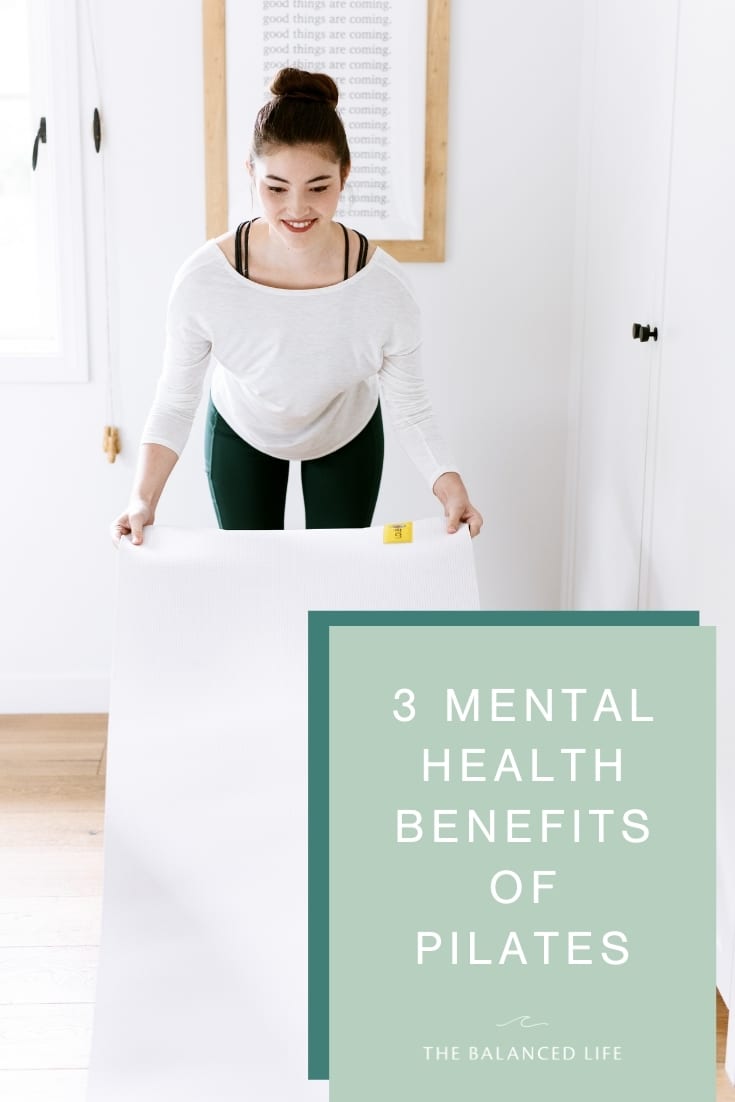
We often talk about the physical benefits of Pilates – such as increased strength and muscle tone, more flexibility, and better posture – but Pilates actually has numerous benefits for our mental and emotional health as well.
Here are three “unseen” benefits of Pilates…
1. Pilates can help release emotional tension
Did you know that many of us store emotions in our body? This might look like hunching our shoulders when self-conscious, tensing our jaws when angry, or tightening muscles when afraid.
Pilates helps us release tension in our muscles – including emotional tension that we might be carrying. (This is why many people actually experience a feeling of emotional release at the end of Pilates workouts!)
2. Pilates can help provide stress relief
When we experience high levels of mental stress over prolonged periods of time, our stress hormones can lead to physical symptoms such as aches, pains, and spasms. Through strengthening and stretching, Pilates helps relieve physical stress, which in turn can help with mental stress.
Joseph Pilates actually once said the following: “A body free from nervous tension and fatigue is the ideal shelter provided by nature for housing a well balanced mind…”
3. Pilates can provide benefits of mindfulness
You’ll often hear me remind you during our Pilates workouts to be present and clear your mind of distractions. The reason for this is because when we quiet our minds and focus on the present, we can better focus on our mind-body connection.
The mindfulness aspect of Pilates can lead to multiple benefits, including reduced stress, improved concentration and focus, better sleep quality, and more.
Want to experience these benefits for yourself? Then I invite you to try out Pilates Strong – a FREE, 5-day Pilates challenge that will show you the power of Pilates in just 15 minutes per day.
Simply click here to check it out and I’ll send these quick workouts straight to your inbox!
As you might know from our “How to lose weight” guide, the key to sustainable weight loss is getting ourselves to consume fewer calories in a way that doesn’t make us miserable.
Because our brains and bodies are complicated emotional disasters, there are some tips and tricks we can implement to protect us from…ourselves:
Use smaller plates. Folks will often eat what’s placed in front of them, so using smaller dinnerware has been shown to help people eat less.[1]
Drink a glass of water before your meal. If you chug a glass of water 30 minutes before you plan on eating, the H20 will take up some room in your stomach. This might help you eat less.[2]
Take it slow. It can take about 20 minutes for your body to come around to the fact that it’s full, so slowing down your meals can help you eat less.[3]
Use a food journal. Recording everything you eat and drink is a great way to become aware of portions, which can help you control them.[4] In fact, one of the first missions we have Nerd Fitness Prime members complete is creating a food journal.
All of these strategies will work to some extent, and they’re good to keep in mind and also practice.
However, nothing will get more consistent results than actually learning the number of calories in the food you eat (Portion Control Tip #5)!
Study[4] after study[5] after study[6] shows that our bodies obey the laws of thermodynamics and that in order to lose weight, we need to burn more calories than we consume regularly.
When you consume more calories than you burn, your body tends to store those extra calories as fat (weight gain).
When you burn more calories than you consume, your body will pull from fat stores for energy (weight loss).
However, as we point out in our Calories In, Calories Out guide, determining your exact “calories in” can be a real pain. Not only that, but many people with certain personality traits can become neurotic about tracking every single calorie. They worry if they go 1 calorie over their daily allotment.
So, what’s a nerd to do?
Unless you’re going to weigh out all your food (something I’ve done before) and be militant about tracking, is it possible to “track” your food with a high level of accuracy without having it take over your life?
The answer: yes, by getting darn good at estimating!
Portion Sizes: How to Portion Control (The Best Method)
You already carry with you the best method for portion control.
Your hands!
Even if you have robot hands.
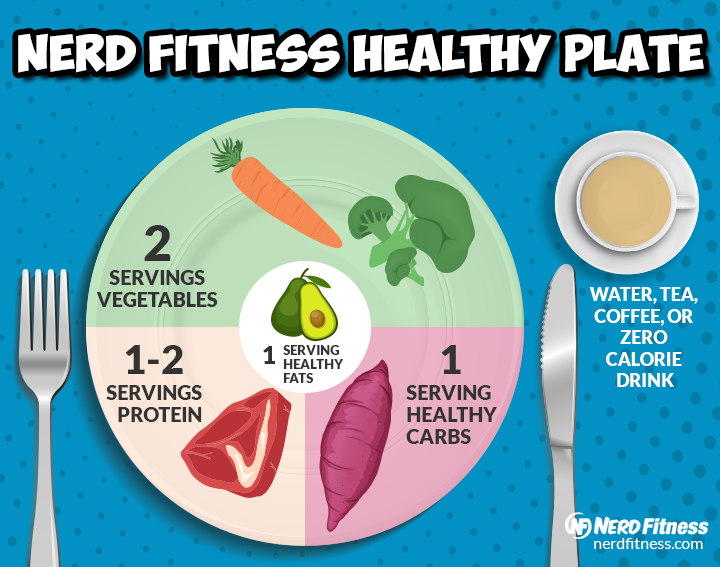
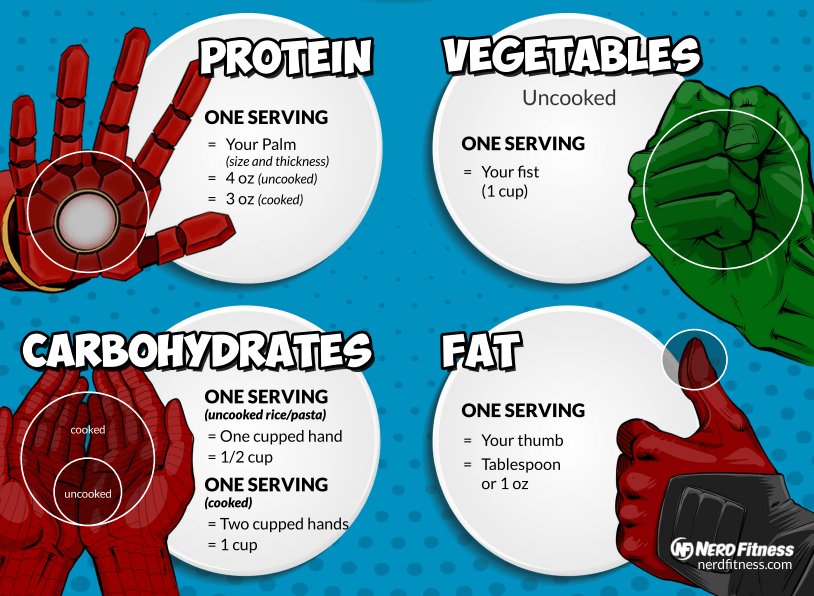
We’re going to use them to build a healthy plate, as shown above.
However, using your hands as a tool for portion control provides a “good enough” strategy that can help your food intake:
As you can see, we’re going to focus our portion control strategy on:
Protein
Vegetables (technically carbs, but important enough to deserve their own category)
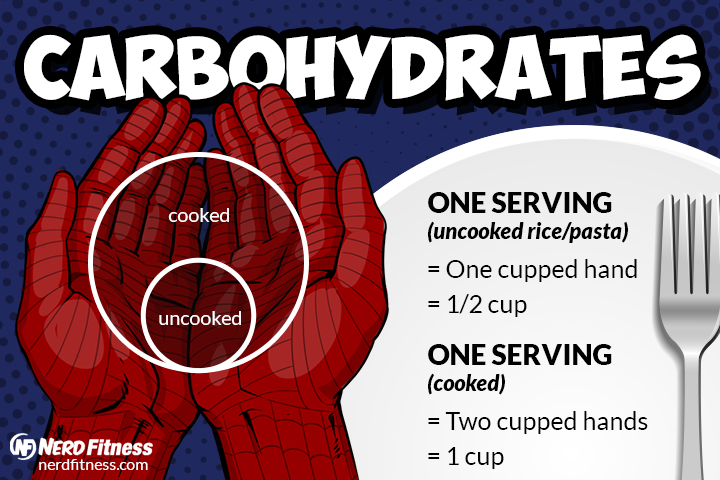
Carbohydrates (think starches and fruit)
Fat
Each macronutrient will correspond to an area of your hand, to give you a sense of what a proper portion size should be.
We’ve learned that using your hand as a guide is the most helpful strategy for portion control:
You might not always have access to small plates.
You might forget to drink water before each meal.
You might have a short lunch break without the luxury of eating slowly.
You might grow tired of logging all your food intake.
However, having an intuitive sense of what foods should be eaten in what portions will help you level up your healthy eating.
When in doubt, match the food in front of you to your hand and carry on.
Let’s break this down a little by talking about protein and veggies.
What is the Correct Portion Size Part 1: Protein and Vegetables
The above video is taken from Nerd Fitness Prime, as part of our NF Kitchen series.
In it, Coach Lauren and Justin discuss the two most important parts of every meal: protein and vegetables.
Here’s something that might seem counterintuitive: our #1 recommendation for portion control isn’t about limiting food. Instead, make sure you get a proper serving of protein and vegetables every time you sit down to eat.
In other words, when you begin your healthy eating journey, don’t even worry about nixing any specific food. Just make sure you are leaving plenty of room for protein and vegetables.
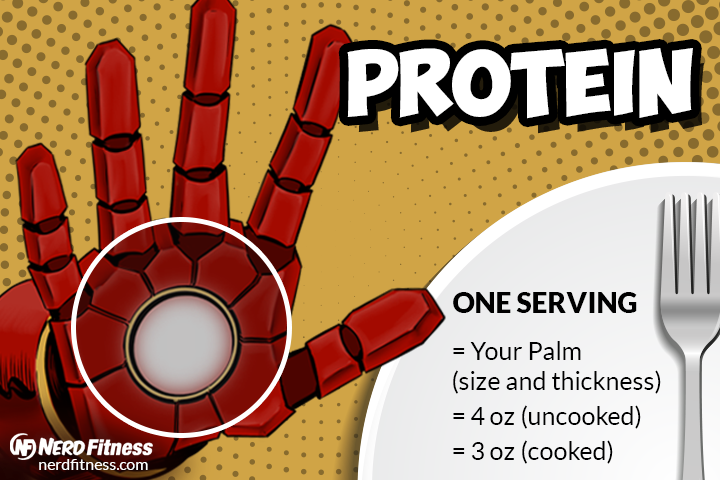
A serving of protein is about the size and thickness of your palm:
Protein can come from any number of sources, including:
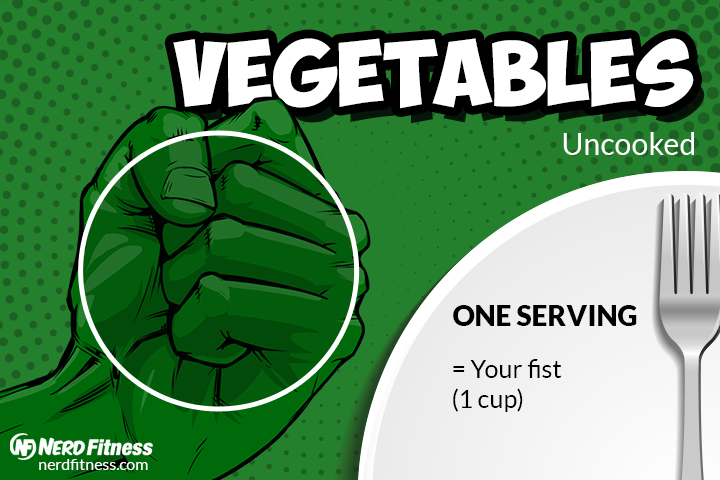
A serving of veggies is about the size of your fist:
Here’s a quick, non-complete list of veggies that can fill half your plate:
Broccoli
Broccolini
Cauliflower
Spinach
Kale
Spaghetti squash
Brussels sprouts
Zucchini
Cucumber
Carrots
Onion
Asparagus
When it comes to learning portion control, start by making sure you eat enough protein and vegetables.
How much?
As we discuss in our protein guide, when building a plate aim for the following amount of protein:
Dudes: 1-2 servings (6-8 oz or about 170-228 g): two palms
Dudettes: 1 serving (3-4 oz or about 85-114 g): 1 palm.
For vegetables, in practice you can probably eat as much as you can stomach (the fiber will likely slow you down), but aim for about 2 fist fulls at most meals, or about half your plate.[9]
Here’s why you should prioritize protein and vegetables if you’re struggling with portion control:
Protein. Eating enough protein will assist your health as you age.[10]Plenty of protein will also help you retain and grow muscle.[11] Plus, prioritizing protein will help you stay full and satiated between meals.[12]
Vegetables. Veggies are both high in nutrients and low in calories, which makes them ideal for a healthy plate. Plus, the fiber will not only help your health, it’ll also keep your indoor plumbing in proper order.[13]
In the video that kicks off this section, Coach Justin makes a great point: aim for a little better than you are today.
Meaning if you don’t really plan your meals at all, start by having ONE meal include a good protein source and some veggies.
You also want to make sure you’re including healthy fat in your diet too.
Fat is actually the most calorically dense macronutrient, so comparatively it’ll take up less room on your hand.
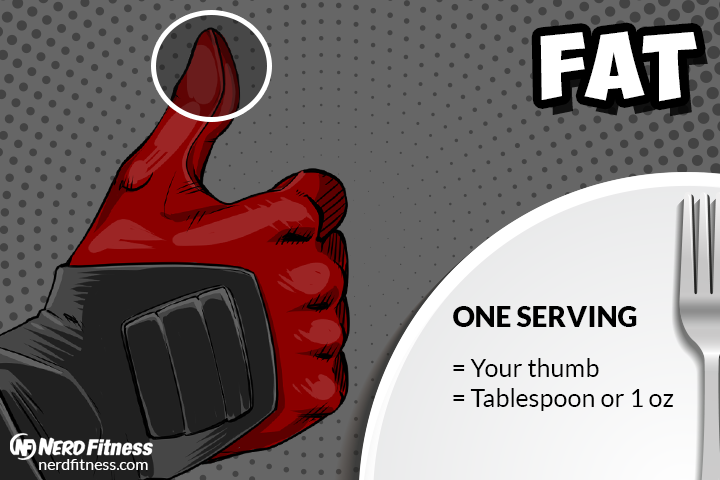
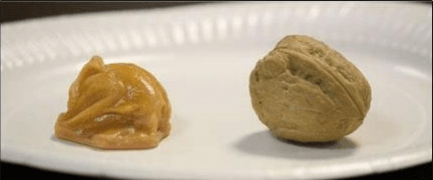
Here is a serving of fat, roughly the size of your thumb!
Healthy fat can be found in foods like:
Avocado
Almonds
Walnuts
Macadamia nuts
Olive oil
Almond butter
Peanut butter
The reason people call it “healthy” is because the fat is unsaturated, although science has recently come around on saturated fat too in the correct amounts.[14]
When it comes to portion control, we need to pay close attention to carbohydrates and fats, because this is where people have the tendency to overeat.
However, that doesn’t mean we want to completely ditch both food groups either.
Here’s why you need to eat these two macronutrients:
Carbohydrates. Did you know fiber is a type of carbohydrate? Yep. As we mentioned earlier, you need plenty of fiber for good health.[15] Carbs are also a great source of quick energy, especially fruit.[16]
Fats. Some nutrients like Vitamin A are fat-soluble, meaning they are best absorbed alongside some fat.[17]Fat will also help you feel full, which can help with overall portion control for the day.[18] While a little goes a long way, you wouldn’t want a “zero fat” diet.[19]
An area of concern when attempting to portion control is dining out.
It seems like restaurants serve you twice the amount of food that you need.
Here’s what Coach Justin does in the situation: ask for a to-go box as soon as you place your order.
Yeah, it’s a little weird, but as soon as you get your food, place half of it in the container.
Boom! An extra meal for later.
Another thing to consider: restaurants want you to leave feeling full.
They often do this by piling on the carbs. Think extra bread, lots of rice, plenty of pasta, etc.
So it might make sense to split these portions in two, and you’re set for lunch the next day.
Also, if you get hungry after eating only half your meal, no problem. Just eat the other half. Even if you’re still at the restaurant.
The point is to consciously think about how much you’re eating. A break halfway through can be used as a decision tree:
Should I keep eating?
This question alone can help with portion control.
One last thing: we know eating out at restaurants is often a family or friend bonding experience, so we’d prefer you ENJOY the night. Food is more than just calories.
Just plan for it! If you eat a really large dinner for a celebration, eat slightly smaller portions for the next day or so and your body will be right back on track.
How to Portion Control for Weight Loss (Next Steps)
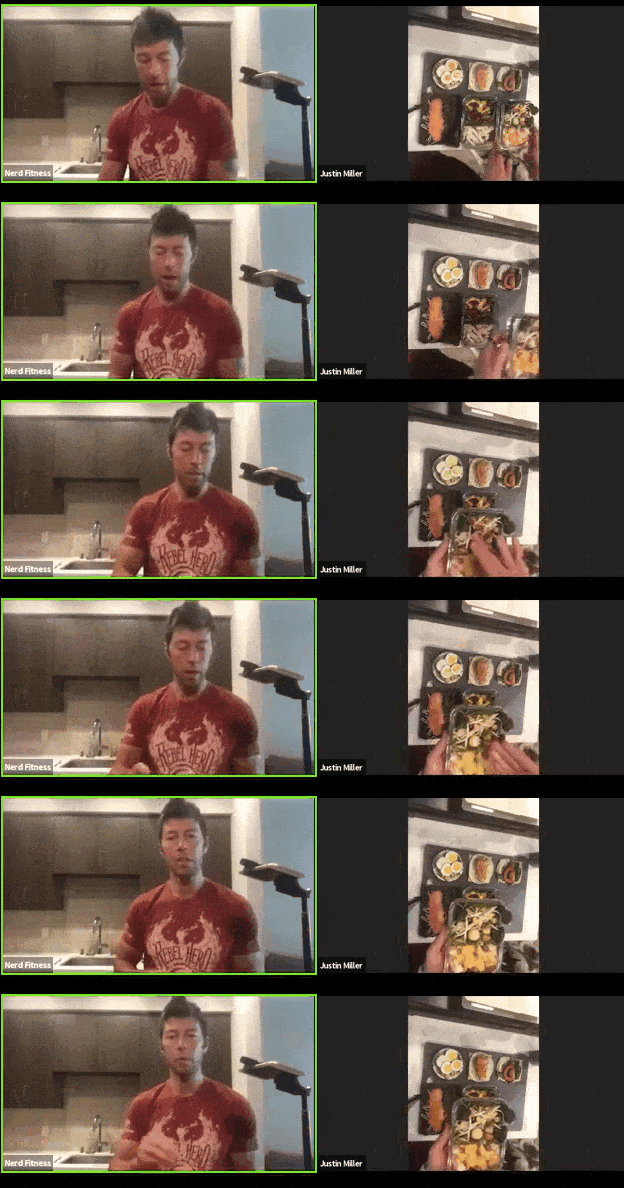
In the video above, Coach Lauren and Justin walk you through eating a Nerd Fitness Healthy Plate IRL (In Real Life).
It’s all well and good to build a healthy plate at home, but…
What if you’re at a restaurant?
What if you need to order a sandwich?
How about pizza?
Here are some tips from the Coaches for portion control IRL:
#1) Sandwich
The trick here is to pack in as many vegetables as you can. Yeah, you’re probably not going to get two fist fulls in, but you can squeeze in a lot of spinach, onion, sauerkraut, and tomato (yeah, it’s technically a fruit, whatevs) on your sandwich.
Your carbs can be some type of whole grain bread (you can do an open face sandwich if you want to limit this).
Your protein can come from some turkey.
Your fat can be a little avocado.
Boom.
You now have a turkey sandwich that matches our healthy plate strategy.
#2) Chili/Soup
This can be a little tougher when everything is mixed together.
If you’re making it yourself, perhaps you measure out your hand portions as you cook.
Put a palm-size portion of ground beef in.
Your vegetables can be onion, garlic, and tomatoes (again a fruit, but who cares).
Your carbs can be pinto and/or kidney beans.
Your fat can be a little bit of cheese sprinkled on top.
Sure, maybe you’re doing less than two fistfuls of vegetables, and more than a cupped hand of carbs (beans).
It doesn’t matter. Again, the point is you’re putting a little thought into proper portions.
If you’re eating out and ordering soup or chili, maybe just think of the end product in mind:
“After portioning everything out, it should be about two fistfuls of food. So that’s what I’ll eat. Everything else I’ll take home.”
#3) Pizza
This is a little trickier because pizza is mostly bread (carbs).
But Coach Justin has a solution for this.
First, he eats something he’s proud of, like a salad.
Then he portions out his pizza, which if he uses his hand strategy, would be about two slices:
Is it perfect?
Nope.
Does it help Coach Justin reach his goals and allow him to still enjoy life?
Yep!
So experiment a little by creating some rough guidelines, see how you feel, and course-correct as you go.
Remember, any step you take on leveling up your nutrition is great.
If you don’t know where to start, I actually recommend you begin by not worrying about what to take OFF your plate, but instead what to add!
Make sure every meal you eat has a healthy protein source and a vegetable. Once you have that dialed in, THEN you can worry about portion controlling your carbs and fat.
If you need help along the way, we got you.
Here are three ways to continue your journey with Nerd Fitness.
#1) Our Online Coaching program: a coaching program for busy people to help them make better food choices, stay accountable, and get healthier, permanently.
As I said before, we teach portion control to our clients who struggle with overeating, so we’ll provide a non-judgmental expert to help you reach your goals.
You can schedule a free call with our team so we can get to know you and see if our coaching program is right for you:
#2) If you want an exact blueprint leveling up your nutrition, check out Nerd Fitness Journey! Our fun habit-building app helps you exercise more frequently, eat healthier, and level up your life (literally).
If you follow our Nutrition missions, you’ll learn to portion control while earning XP! Sah-weeeet.
Try your free trial right here:
#3) Join the Rebellion! We need good people like you in our community, the Nerd Fitness Rebellion.
Sign up in the box below to enlist and get our Rebel Starter Kit, which includes all of our “work out at home” guides, the Nerd Fitness Diet Cheat Sheet, and much more!
Get your Nerd Fitness Starter Kit
The 15 mistakes you don’t want to make.
Full guide to the most effective diet and why it works.
Complete and track your first workout today, no gym required.
Alright, I want to hear from you:
Do you have any tips or tricks for portion control?
Do you use the hand strategy that we covered today?
What’s your biggest challenge with portion sizes?
Let us know in the comments!
-Steve
PS: If you’re just starting your weight loss journey, make sure you check out:
As you might know from our “How to lose weight” guide, the key to sustainable weight loss is getting ourselves to consume fewer calories in a way that doesn’t make us miserable.
Because our brains and bodies are complicated emotional disasters, there are some tips and tricks we can implement to protect us from…ourselves:
Use smaller plates. Folks will often eat what’s placed in front of them, so using smaller dinnerware has been shown to help people eat less.[1]
Drink a glass of water before your meal. If you chug a glass of water 30 minutes before you plan on eating, the H20 will take up some room in your stomach. This might help you eat less.[2]
Take it slow. It can take about 20 minutes for your body to come around to the fact that it’s full, so slowing down your meals can help you eat less.[3]
Use a food journal. Recording everything you eat and drink is a great way to become aware of portions, which can help you control them.[4] In fact, one of the first missions we have Nerd Fitness Prime members complete is creating a food journal.
All of these strategies will work to some extent, and they’re good to keep in mind and also practice.
However, nothing will get more consistent results than actually learning the number of calories in the food you eat (Portion Control Tip #5)!
Study[4] after study[5] after study[6] shows that our bodies obey the laws of thermodynamics and that in order to lose weight, we need to burn more calories than we consume regularly.
When you consume more calories than you burn, your body tends to store those extra calories as fat (weight gain).
When you burn more calories than you consume, your body will pull from fat stores for energy (weight loss).
However, as we point out in our Calories In, Calories Out guide, determining your exact “calories in” can be a real pain. Not only that, but many people with certain personality traits can become neurotic about tracking every single calorie. They worry if they go 1 calorie over their daily allotment.
So, what’s a nerd to do?
Unless you’re going to weigh out all your food (something I’ve done before) and be militant about tracking, is it possible to “track” your food with a high level of accuracy without having it take over your life?
The answer: yes, by getting darn good at estimating!
Portion Sizes: How to Portion Control (The Best Method)
You already carry with you the best method for portion control.
Your hands!
Even if you have robot hands.
We’re going to use them to build a healthy plate, as shown above.
However, using your hands as a tool for portion control provides a “good enough” strategy that can help your food intake:
As you can see, we’re going to focus our portion control strategy on:
Protein
Vegetables (technically carbs, but important enough to deserve their own category)
Carbohydrates (think starches and fruit)
Fat
Each macronutrient will correspond to an area of your hand, to give you a sense of what a proper portion size should be.
We’ve learned that using your hand as a guide is the most helpful strategy for portion control:
You might not always have access to small plates.
You might forget to drink water before each meal.
You might have a short lunch break without the luxury of eating slowly.
You might grow tired of logging all your food intake.
However, having an intuitive sense of what foods should be eaten in what portions will help you level up your healthy eating.
When in doubt, match the food in front of you to your hand and carry on.
Let’s break this down a little by talking about protein and veggies.
What is the Correct Portion Size Part 1: Protein and Vegetables
The above video is taken from Nerd Fitness Prime, as part of our NF Kitchen series.
In it, Coach Lauren and Justin discuss the two most important parts of every meal: protein and vegetables.
Here’s something that might seem counterintuitive: our #1 recommendation for portion control isn’t about limiting food. Instead, make sure you get a proper serving of protein and vegetables every time you sit down to eat.
In other words, when you begin your healthy eating journey, don’t even worry about nixing any specific food. Just make sure you are leaving plenty of room for protein and vegetables.
A serving of protein is about the size and thickness of your palm:
Protein can come from any number of sources, including:
A serving of veggies is about the size of your fist:
Here’s a quick, non-complete list of veggies that can fill half your plate:
Broccoli
Broccolini
Cauliflower
Spinach
Kale
Spaghetti squash
Brussels sprouts
Zucchini
Cucumber
Carrots
Onion
Asparagus
When it comes to learning portion control, start by making sure you eat enough protein and vegetables.
How much?
As we discuss in our protein guide, when building a plate aim for the following amount of protein:
Dudes: 1-2 servings (6-8 oz or about 170-228 g): two palms
Dudettes: 1 serving (3-4 oz or about 85-114 g): 1 palm.
For vegetables, in practice you can probably eat as much as you can stomach (the fiber will likely slow you down), but aim for about 2 fist fulls at most meals, or about half your plate.[9]
Here’s why you should prioritize protein and vegetables if you’re struggling with portion control:
Protein. Eating enough protein will assist your health as you age.[10]Plenty of protein will also help you retain and grow muscle.[11] Plus, prioritizing protein will help you stay full and satiated between meals.[12]
Vegetables. Veggies are both high in nutrients and low in calories, which makes them ideal for a healthy plate. Plus, the fiber will not only help your health, it’ll also keep your indoor plumbing in proper order.[13]
In the video that kicks off this section, Coach Justin makes a great point: aim for a little better than you are today.
Meaning if you don’t really plan your meals at all, start by having ONE meal include a good protein source and some veggies.
You also want to make sure you’re including healthy fat in your diet too.
Fat is actually the most calorically dense macronutrient, so comparatively it’ll take up less room on your hand.
Here is a serving of fat, roughly the size of your thumb!
Healthy fat can be found in foods like:
Avocado
Almonds
Walnuts
Macadamia nuts
Olive oil
Almond butter
Peanut butter
The reason people call it “healthy” is because the fat is unsaturated, although science has recently come around on saturated fat too in the correct amounts.[14]
When it comes to portion control, we need to pay close attention to carbohydrates and fats, because this is where people have the tendency to overeat.
However, that doesn’t mean we want to completely ditch both food groups either.
Here’s why you need to eat these two macronutrients:
Carbohydrates. Did you know fiber is a type of carbohydrate? Yep. As we mentioned earlier, you need plenty of fiber for good health.[15] Carbs are also a great source of quick energy, especially fruit.[16]
Fats. Some nutrients like Vitamin A are fat-soluble, meaning they are best absorbed alongside some fat.[17]Fat will also help you feel full, which can help with overall portion control for the day.[18] While a little goes a long way, you wouldn’t want a “zero fat” diet.[19]
An area of concern when attempting to portion control is dining out.
It seems like restaurants serve you twice the amount of food that you need.
Here’s what Coach Justin does in the situation: ask for a to-go box as soon as you place your order.
Yeah, it’s a little weird, but as soon as you get your food, place half of it in the container.
Boom! An extra meal for later.
Another thing to consider: restaurants want you to leave feeling full.
They often do this by piling on the carbs. Think extra bread, lots of rice, plenty of pasta, etc.
So it might make sense to split these portions in two, and you’re set for lunch the next day.
Also, if you get hungry after eating only half your meal, no problem. Just eat the other half. Even if you’re still at the restaurant.
The point is to consciously think about how much you’re eating. A break halfway through can be used as a decision tree:
Should I keep eating?
This question alone can help with portion control.
One last thing: we know eating out at restaurants is often a family or friend bonding experience, so we’d prefer you ENJOY the night. Food is more than just calories.
Just plan for it! If you eat a really large dinner for a celebration, eat slightly smaller portions for the next day or so and your body will be right back on track.
How to Portion Control for Weight Loss (Next Steps)
In the video above, Coach Lauren and Justin walk you through eating a Nerd Fitness Healthy Plate IRL (In Real Life).
It’s all well and good to build a healthy plate at home, but…
What if you’re at a restaurant?
What if you need to order a sandwich?
How about pizza?
Here are some tips from the Coaches for portion control IRL:
#1) Sandwich
The trick here is to pack in as many vegetables as you can. Yeah, you’re probably not going to get two fist fulls in, but you can squeeze in a lot of spinach, onion, sauerkraut, and tomato (yeah, it’s technically a fruit, whatevs) on your sandwich.
Your carbs can be some type of whole grain bread (you can do an open face sandwich if you want to limit this).
Your protein can come from some turkey.
Your fat can be a little avocado.
Boom.
You now have a turkey sandwich that matches our healthy plate strategy.
#2) Chili/Soup
This can be a little tougher when everything is mixed together.
If you’re making it yourself, perhaps you measure out your hand portions as you cook.
Put a palm-size portion of ground beef in.
Your vegetables can be onion, garlic, and tomatoes (again a fruit, but who cares).
Your carbs can be pinto and/or kidney beans.
Your fat can be a little bit of cheese sprinkled on top.
Sure, maybe you’re doing less than two fistfuls of vegetables, and more than a cupped hand of carbs (beans).
It doesn’t matter. Again, the point is you’re putting a little thought into proper portions.
If you’re eating out and ordering soup or chili, maybe just think of the end product in mind:
“After portioning everything out, it should be about two fistfuls of food. So that’s what I’ll eat. Everything else I’ll take home.”
#3) Pizza
This is a little trickier because pizza is mostly bread (carbs).
But Coach Justin has a solution for this.
First, he eats something he’s proud of, like a salad.
Then he portions out his pizza, which if he uses his hand strategy, would be about two slices:
Is it perfect?
Nope.
Does it help Coach Justin reach his goals and allow him to still enjoy life?
Yep!
So experiment a little by creating some rough guidelines, see how you feel, and course-correct as you go.
Remember, any step you take on leveling up your nutrition is great.
If you don’t know where to start, I actually recommend you begin by not worrying about what to take OFF your plate, but instead what to add!
Make sure every meal you eat has a healthy protein source and a vegetable. Once you have that dialed in, THEN you can worry about portion controlling your carbs and fat.
If you need help along the way, we got you.
Here are three ways to continue your journey with Nerd Fitness.
#1) Our Online Coaching program: a coaching program for busy people to help them make better food choices, stay accountable, and get healthier, permanently.
As I said before, we teach portion control to our clients who struggle with overeating, so we’ll provide a non-judgmental expert to help you reach your goals.
You can schedule a free call with our team so we can get to know you and see if our coaching program is right for you:
#2) If you want an exact blueprint leveling up your nutrition, check out Nerd Fitness Journey! Our fun habit-building app helps you exercise more frequently, eat healthier, and level up your life (literally).
If you follow our Nutrition missions, you’ll learn to portion control while earning XP! Sah-weeeet.
Try your free trial right here:
#3) Join the Rebellion! We need good people like you in our community, the Nerd Fitness Rebellion.
Sign up in the box below to enlist and get our Rebel Starter Kit, which includes all of our “work out at home” guides, the Nerd Fitness Diet Cheat Sheet, and much more!
Get your Nerd Fitness Starter Kit
The 15 mistakes you don’t want to make.
Full guide to the most effective diet and why it works.
Complete and track your first workout today, no gym required.
Alright, I want to hear from you:
Do you have any tips or tricks for portion control?
Do you use the hand strategy that we covered today?
What’s your biggest challenge with portion sizes?
Let us know in the comments!
-Steve
PS: If you’re just starting your weight loss journey, make sure you check out:
As you might know from our “How to lose weight” guide, the key to sustainable weight loss is getting ourselves to consume fewer calories in a way that doesn’t make us miserable.
Because our brains and bodies are complicated emotional disasters, there are some tips and tricks we can implement to protect us from…ourselves:
Use smaller plates. Folks will often eat what’s placed in front of them, so using smaller dinnerware has been shown to help people eat less.[1]
Drink a glass of water before your meal. If you chug a glass of water 30 minutes before you plan on eating, the H20 will take up some room in your stomach. This might help you eat less.[2]
Take it slow. It can take about 20 minutes for your body to come around to the fact that it’s full, so slowing down your meals can help you eat less.[3]
Use a food journal. Recording everything you eat and drink is a great way to become aware of portions, which can help you control them.[4] In fact, one of the first missions we have Nerd Fitness Prime members complete is creating a food journal.
All of these strategies will work to some extent, and they’re good to keep in mind and also practice.
However, nothing will get more consistent results than actually learning the number of calories in the food you eat (Portion Control Tip #5)!
Study[4] after study[5] after study[6] shows that our bodies obey the laws of thermodynamics and that in order to lose weight, we need to burn more calories than we consume regularly.
When you consume more calories than you burn, your body tends to store those extra calories as fat (weight gain).
When you burn more calories than you consume, your body will pull from fat stores for energy (weight loss).
However, as we point out in our Calories In, Calories Out guide, determining your exact “calories in” can be a real pain. Not only that, but many people with certain personality traits can become neurotic about tracking every single calorie. They worry if they go 1 calorie over their daily allotment.
So, what’s a nerd to do?
Unless you’re going to weigh out all your food (something I’ve done before) and be militant about tracking, is it possible to “track” your food with a high level of accuracy without having it take over your life?
The answer: yes, by getting darn good at estimating!
Portion Sizes: How to Portion Control (The Best Method)
You already carry with you the best method for portion control.
Your hands!
Even if you have robot hands.
We’re going to use them to build a healthy plate, as shown above.
However, using your hands as a tool for portion control provides a “good enough” strategy that can help your food intake:
As you can see, we’re going to focus our portion control strategy on:
Protein
Vegetables (technically carbs, but important enough to deserve their own category)
Carbohydrates (think starches and fruit)
Fat
Each macronutrient will correspond to an area of your hand, to give you a sense of what a proper portion size should be.
We’ve learned that using your hand as a guide is the most helpful strategy for portion control:
You might not always have access to small plates.
You might forget to drink water before each meal.
You might have a short lunch break without the luxury of eating slowly.
You might grow tired of logging all your food intake.
However, having an intuitive sense of what foods should be eaten in what portions will help you level up your healthy eating.
When in doubt, match the food in front of you to your hand and carry on.
Let’s break this down a little by talking about protein and veggies.
What is the Correct Portion Size Part 1: Protein and Vegetables
The above video is taken from Nerd Fitness Prime, as part of our NF Kitchen series.
In it, Coach Lauren and Justin discuss the two most important parts of every meal: protein and vegetables.
Here’s something that might seem counterintuitive: our #1 recommendation for portion control isn’t about limiting food. Instead, make sure you get a proper serving of protein and vegetables every time you sit down to eat.
In other words, when you begin your healthy eating journey, don’t even worry about nixing any specific food. Just make sure you are leaving plenty of room for protein and vegetables.
A serving of protein is about the size and thickness of your palm:
Protein can come from any number of sources, including:
A serving of veggies is about the size of your fist:
Here’s a quick, non-complete list of veggies that can fill half your plate:
Broccoli
Broccolini
Cauliflower
Spinach
Kale
Spaghetti squash
Brussels sprouts
Zucchini
Cucumber
Carrots
Onion
Asparagus
When it comes to learning portion control, start by making sure you eat enough protein and vegetables.
How much?
As we discuss in our protein guide, when building a plate aim for the following amount of protein:
Dudes: 1-2 servings (6-8 oz or about 170-228 g): two palms
Dudettes: 1 serving (3-4 oz or about 85-114 g): 1 palm.
For vegetables, in practice you can probably eat as much as you can stomach (the fiber will likely slow you down), but aim for about 2 fist fulls at most meals, or about half your plate.[9]
Here’s why you should prioritize protein and vegetables if you’re struggling with portion control:
Protein. Eating enough protein will assist your health as you age.[10]Plenty of protein will also help you retain and grow muscle.[11] Plus, prioritizing protein will help you stay full and satiated between meals.[12]
Vegetables. Veggies are both high in nutrients and low in calories, which makes them ideal for a healthy plate. Plus, the fiber will not only help your health, it’ll also keep your indoor plumbing in proper order.[13]
In the video that kicks off this section, Coach Justin makes a great point: aim for a little better than you are today.
Meaning if you don’t really plan your meals at all, start by having ONE meal include a good protein source and some veggies.
You also want to make sure you’re including healthy fat in your diet too.
Fat is actually the most calorically dense macronutrient, so comparatively it’ll take up less room on your hand.
Here is a serving of fat, roughly the size of your thumb!
Healthy fat can be found in foods like:
Avocado
Almonds
Walnuts
Macadamia nuts
Olive oil
Almond butter
Peanut butter
The reason people call it “healthy” is because the fat is unsaturated, although science has recently come around on saturated fat too in the correct amounts.[14]
When it comes to portion control, we need to pay close attention to carbohydrates and fats, because this is where people have the tendency to overeat.
However, that doesn’t mean we want to completely ditch both food groups either.
Here’s why you need to eat these two macronutrients:
Carbohydrates. Did you know fiber is a type of carbohydrate? Yep. As we mentioned earlier, you need plenty of fiber for good health.[15] Carbs are also a great source of quick energy, especially fruit.[16]
Fats. Some nutrients like Vitamin A are fat-soluble, meaning they are best absorbed alongside some fat.[17]Fat will also help you feel full, which can help with overall portion control for the day.[18] While a little goes a long way, you wouldn’t want a “zero fat” diet.[19]
An area of concern when attempting to portion control is dining out.
It seems like restaurants serve you twice the amount of food that you need.
Here’s what Coach Justin does in the situation: ask for a to-go box as soon as you place your order.
Yeah, it’s a little weird, but as soon as you get your food, place half of it in the container.
Boom! An extra meal for later.
Another thing to consider: restaurants want you to leave feeling full.
They often do this by piling on the carbs. Think extra bread, lots of rice, plenty of pasta, etc.
So it might make sense to split these portions in two, and you’re set for lunch the next day.
Also, if you get hungry after eating only half your meal, no problem. Just eat the other half. Even if you’re still at the restaurant.
The point is to consciously think about how much you’re eating. A break halfway through can be used as a decision tree:
Should I keep eating?
This question alone can help with portion control.
One last thing: we know eating out at restaurants is often a family or friend bonding experience, so we’d prefer you ENJOY the night. Food is more than just calories.
Just plan for it! If you eat a really large dinner for a celebration, eat slightly smaller portions for the next day or so and your body will be right back on track.
How to Portion Control for Weight Loss (Next Steps)
In the video above, Coach Lauren and Justin walk you through eating a Nerd Fitness Healthy Plate IRL (In Real Life).
It’s all well and good to build a healthy plate at home, but…
What if you’re at a restaurant?
What if you need to order a sandwich?
How about pizza?
Here are some tips from the Coaches for portion control IRL:
#1) Sandwich
The trick here is to pack in as many vegetables as you can. Yeah, you’re probably not going to get two fist fulls in, but you can squeeze in a lot of spinach, onion, sauerkraut, and tomato (yeah, it’s technically a fruit, whatevs) on your sandwich.
Your carbs can be some type of whole grain bread (you can do an open face sandwich if you want to limit this).
Your protein can come from some turkey.
Your fat can be a little avocado.
Boom.
You now have a turkey sandwich that matches our healthy plate strategy.
#2) Chili/Soup
This can be a little tougher when everything is mixed together.
If you’re making it yourself, perhaps you measure out your hand portions as you cook.
Put a palm-size portion of ground beef in.
Your vegetables can be onion, garlic, and tomatoes (again a fruit, but who cares).
Your carbs can be pinto and/or kidney beans.
Your fat can be a little bit of cheese sprinkled on top.
Sure, maybe you’re doing less than two fistfuls of vegetables, and more than a cupped hand of carbs (beans).
It doesn’t matter. Again, the point is you’re putting a little thought into proper portions.
If you’re eating out and ordering soup or chili, maybe just think of the end product in mind:
“After portioning everything out, it should be about two fistfuls of food. So that’s what I’ll eat. Everything else I’ll take home.”
#3) Pizza
This is a little trickier because pizza is mostly bread (carbs).
But Coach Justin has a solution for this.
First, he eats something he’s proud of, like a salad.
Then he portions out his pizza, which if he uses his hand strategy, would be about two slices:
Is it perfect?
Nope.
Does it help Coach Justin reach his goals and allow him to still enjoy life?
Yep!
So experiment a little by creating some rough guidelines, see how you feel, and course-correct as you go.
Remember, any step you take on leveling up your nutrition is great.
If you don’t know where to start, I actually recommend you begin by not worrying about what to take OFF your plate, but instead what to add!
Make sure every meal you eat has a healthy protein source and a vegetable. Once you have that dialed in, THEN you can worry about portion controlling your carbs and fat.
If you need help along the way, we got you.
Here are three ways to continue your journey with Nerd Fitness.
#1) Our Online Coaching program: a coaching program for busy people to help them make better food choices, stay accountable, and get healthier, permanently.
As I said before, we teach portion control to our clients who struggle with overeating, so we’ll provide a non-judgmental expert to help you reach your goals.
You can schedule a free call with our team so we can get to know you and see if our coaching program is right for you:
#2) If you want an exact blueprint leveling up your nutrition, check out Nerd Fitness Journey! Our fun habit-building app helps you exercise more frequently, eat healthier, and level up your life (literally).
If you follow our Nutrition missions, you’ll learn to portion control while earning XP! Sah-weeeet.
Try your free trial right here:
#3) Join the Rebellion! We need good people like you in our community, the Nerd Fitness Rebellion.
Sign up in the box below to enlist and get our Rebel Starter Kit, which includes all of our “work out at home” guides, the Nerd Fitness Diet Cheat Sheet, and much more!
Get your Nerd Fitness Starter Kit
The 15 mistakes you don’t want to make.
Full guide to the most effective diet and why it works.
Complete and track your first workout today, no gym required.
Alright, I want to hear from you:
Do you have any tips or tricks for portion control?
Do you use the hand strategy that we covered today?
What’s your biggest challenge with portion sizes?
Let us know in the comments!
-Steve
PS: If you’re just starting your weight loss journey, make sure you check out:
So you’re having trouble working out consistently?
I get it.
Life is busy and hectic. You probably wear multiple hats in your life.
Hopefully, one of them is a pirate hat:
If you are having trouble exercising regularly, know that you aren’t alone.
Not being able to work out consistently is one of the top issues facing our clients in Nerd Fitness Coaching. Luckily, there are some tips and tricks that help them, which we’ll share with you right now too.
As I mention in the video above, it’s okay to stumble – everyone misses a workout now and again.
Life happens:
Your job might need you to stay late.
Maybe your spouse can’t pick up the kids today.
Or perhaps you just lost track of time while playing video games.
These things happen, so don’t freak out whenever you miss a workout.
“Wait, wait, wait Jim! I thought this article was about consistency – then you start off saying it’s OK to miss a workout?”
What I’m saying is to not beat yourself up over it. I’ll see people be so tough on themselves for one missed workout, that it spirals downward and then they’re doing NO workouts.
It’s unnecessary, and it’s not sustainable.
Here’s something I remind my clients: If being tough on yourself helped with workout consistency, it would’ve helped by now.
So first of all, forgive yourself.
Then, I share with them a saying we have here at Nerd Fitness:
“Never Two in a Row.”
That means aim to not miss two workouts, back to back.
It’s a mantra you’ll hear throughout the Rebellion (our community!).
Here’s the justification: as I mentioned, missing one workout is nbd.
However, two workouts in a row could be the start of a trend. If you’re not careful, after a few missed workouts, you could just stop exercising altogether.
That’s the real danger.
So we aim to not allow the trend to start in the first place.
Takeaway: If you miss a workout, it’s fine. Just try not to miss the next one.
Step 2: Building a Workout Plan
Here’s a great quote from Benjamin Franklin:
If you fail to plan, you are planning to fail.
When it comes to working out consistently, we need to define what “consistently” actually means.
As Coach Staci mentions in the video above, we want to focus on three key questions when programming our training:
What type of workout are you doing?
When do you plan on doing your training?
Where will this workout take place?
All three questions are important, but we’re going to focus on “when” right now.
Determining “when” you’ll train is easily the most important step for working out consistently.
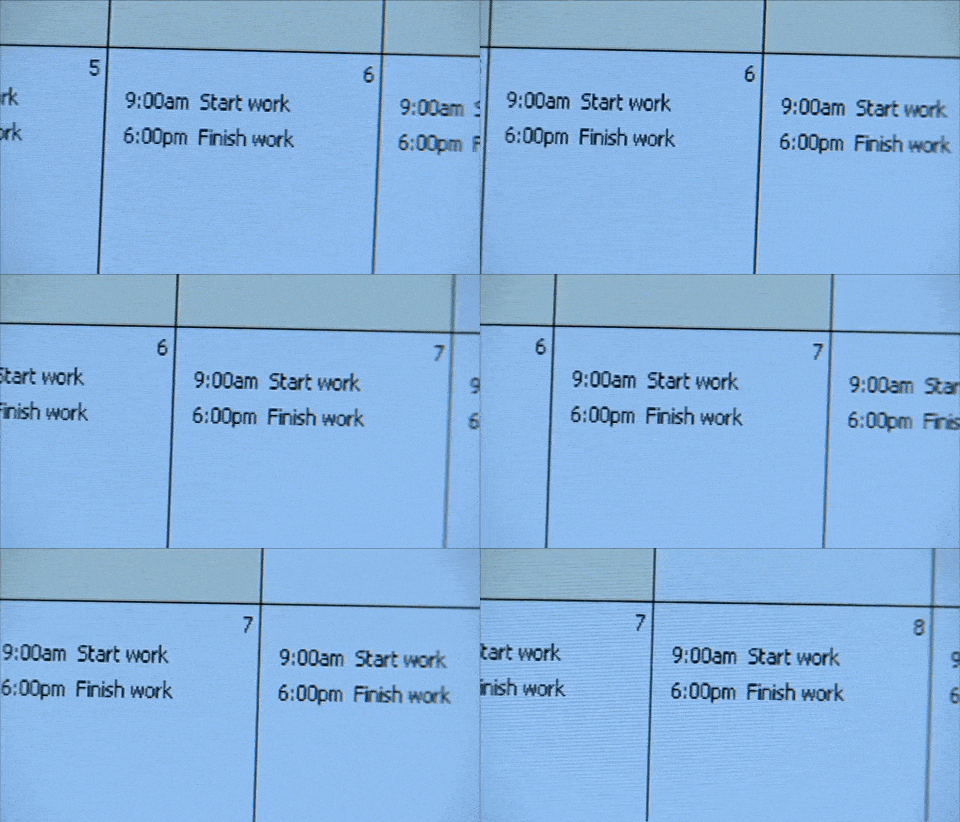
That’s why I want you to place your workouts in your calendar!
Schedule your workout like it’s the most important meeting of the day!
(A reminder that you ARE important!)
That’s what I have my clients do in our 1-on-1 Coaching Program. It goes a long way to helping them stick to their workout schedule.
So if you plan on training first thing at 8am, have a calendar reminder go off at 7:50am.
It’ll make a difference. I promise.
What days should be workout days?
For that, I have a couple of resources to share with you:
How to Build Your Own Workout Routine. Our MASSIVE guide will teach you exactly how to create a training schedule, including what exercises to do and when to take rest days. If you want to get your hands dirty by building your own workout, this is the way to do it.
Nerd Fitness Journey. Our fun habit-building app will tell you exactly when to workout, with video tutorials for every exercise covered. No need to create a plan, just open up the app and check your missions for the day. Plus, you’ll build your very own superhero as you go, which is totally sweet. You can try it out for free right below:
Step 3: Why “All of Nothing” Hurts Workout Consistency
Another one of the best things you can do to improve your workout consistency: have a backup plan.
Let’s say a pipe bursts at your gym, and it’s closed for the next few days.
Does that mean you should stop working out until they resolve their plumbing emergency?
Here’s another trick to start enjoying your workouts – do them while listening to some of your favorite music, or a podcast you enjoy.
Heck, you can even flip the TV on in the corner and watch your favorite show while you train.
We call this “Temptation Bundling” and I’ve seen it help a lot of my clients:
If you only listen to your favorite podcast when you run, eventually, you might start looking forward to running.
The same thing could happen with music. If you start to associate your favorite tunes with building up a sweat, one day you might actually enjoy building up a sweat.
Let’s say you only watch The Great British Bake Off while on your elliptical. If that’s the case, you’re going to start protecting your time exercising (“Don’t bother me now”).
Don’t overlook the power of coupling activities you enjoy with your workouts.
Step 5: How to Build Workout Accountability
Another strategy we can deploy when improving workout consistency: accountability and support.
There’s nothing quite like being accountable to another human being when it comes to exercising regularly.
There are a few ways we can create workout accountability:
#1) Tell Friends and Family.
Share your goals with your loved ones, then let them know the times you’ll be working out.
This will help for a couple of reasons:
We’re more likely to follow through with action if we commit ourselves in front of others.
If we don’t show up for a workout, they may politely call us out on it.
#2) Join an Online Community.
In the 21st century, it’s very easy to find a group of people who are on a similar mission.
If you want to exercise regularly, I’d wager you aren’t the only person on the internet working towards that goal.
So join a digital community! That way you can get in on some group accountability.
We regularly hold group challenges through our app, Nerd Fitness Journey. I’ve been told by countless Rebels that they’re more likely to get their training in if they know everyone else in the community is doing it too.
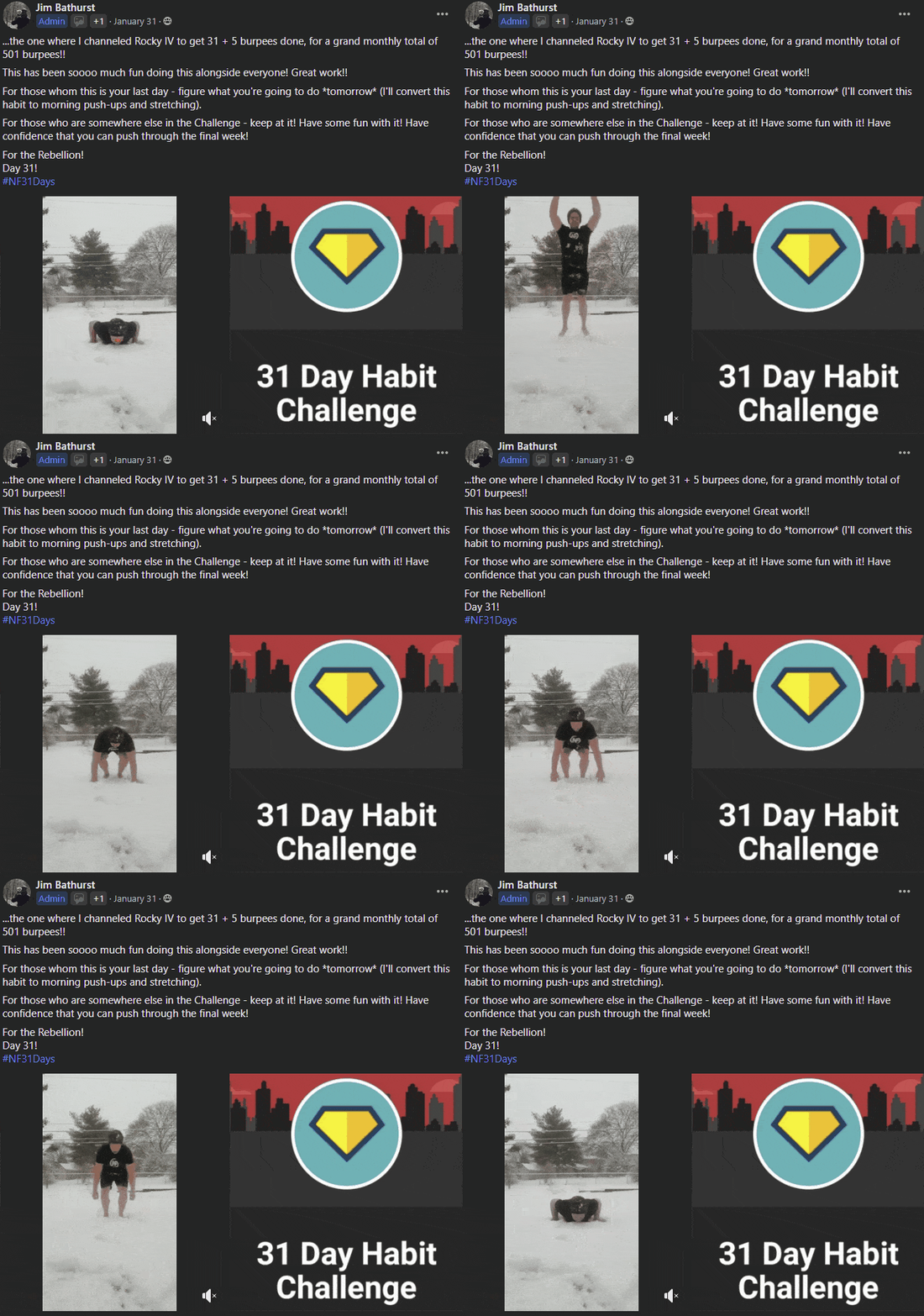
Heck, I did burpees in the snow because everyone in the Rebellion was doing a burpee challenge.
If you want to try out some of these experiences, you can sign-up for a free trial to our snazzy new app right here:
If you want some next-level accountability, I have to mention the ultimate power-up: hire a coach.
It could be a half-mile around the block. Or it could be to the mailbox and back.
The exact amount doesn’t matter, but being intentional is. That’s how we work to build consistency.
So do a short walk today. Then another one the day after tomorrow. Then a third two days from then.
Boom, three workouts in one week, all by just walking.
Step 7: How to Find Time to Workout
I’ll be real with you: no one is sitting around, twiddling their thumbs with time to kill.
If you’re going to make time to work out, you’ll need to figure out what activity in your life you can change or eliminate:
Maybe your two-hour nightly TV ritual can come down to an hour.
Maybe you start biking home from work instead of driving.
Maybe you catch up with your spouse over an evening walk instead of a drink.
This is why scheduling your workouts in your calendar can be so critical – it helps you see what needs to be moved around to get your training done.
Also, it’s okay to experiment here.
If you create a schedule, and you don’t hit it all, it’s okay.
Perhaps you just created an unrealistic schedule.
If so, then modify the workout:
Try a 30-minute workout instead of an hour.
Try two workouts a week instead of three.
Go around the block once instead of twice.
Again, we’re not worried about the amount of time here. Instead, we’re concerned about you hitting your workout schedule consistently. It’s okay to scale down to do that.
Once you’re rocking and rolling, we can always scale it up if it seems right.
If you want some tips on how to gauge your adherence to sticking with your workout schedule, then check out How to Track Your Fitness Progress.
Start Working Out Consistently
There you have it, my friend.
When it comes to working out consistently, remember to:
Step 1: It’s okay to stumble (Forgive yourself). Everyone I know misses a workout here or there. It’s nothing to feel shame over.
Step 2: Have a plan! Without scheduling your week’s workouts, how do you even know if you’re being consistent or not?
Step 3: Have a backup plan! (Lose the “all or nothing” mindset). If your first plan falls through, nbd. Just move onto the next one. “Some” workout is always better than “no” workout. Do the best you can.
Step 4: Make it fun. Your workout doesn’t need to be something you dread. If you like hiking, go hiking. If you like swimming, go swimming. Any movement is beneficial and should be encouraged. No one said you have to hate it.
Step 5: Find an accountability partner. Going alone is almost always harder. If you can find a friend or coach to team with, it will make working out consistently easier.
Step 6: Embrace “action” not “motivation.” If you have to wait around for motivation to start working out, you might be waiting for quite a while. You’ll become motivated after you act.
Step 7: Don’t find time, make time. Your schedule won’t magically free itself. Look at your calendar and start prioritizing.
That’s it.
The most important thing you can do now today: START!
Not tomorrow. Not next Monday.
Today!
If you don’t know what to do, look at the next free spot on your calendar. Then schedule a walk.
Then schedule it a couple of days later.
Then the following week.
BOOM! You just started a plan for working out consistently.
As always, if you need any help here, we gotcha.
Here are three ways that Nerd Fitness can help you exercise regularly.
#1) Our Online Coaching Program: a coaching program for busy people to help them make better food choices, stay accountable, and get healthier, permanently.
As I said, this is the ultimate way to build workout accountability. Not only will a NF Coach build your workout, but they’ll check in with you too to make sure you’re able to do it.
If you can’t?
No problem, they’ll work with you to create a new plan.
You can schedule a free call with our team so we can get to know you and see if our coaching program is right for you. Just click on the image below for more details:
#2) If you want an exact roadmap for working out consistently, check out NF Journey. Our fun habit-building app tells you exactly what days to exercise, what days to rest, and helps you track it all so you know if it’s working for you.
Interested?
Try your free trial right here:
#3) Join the Rebellion! We need good people like you in our community, the Nerd Fitness Rebellion.
Sign up in the box below to enlist and get our Rebel Starter Kit, which includes all of our “work out at home” guides, our Strength Training 101 eBook, and much more!
Get your Nerd Fitness Starter Kit
The 15 mistakes you don’t want to make.
Full guide to the most effective diet and why it works.
Complete and track your first workout today, no gym required.
Alright, I want to hear from you now:
What’s your biggest issue with working out consistently?
What tips helped the most?
Are we missing any helpful suggestions for a beginner?
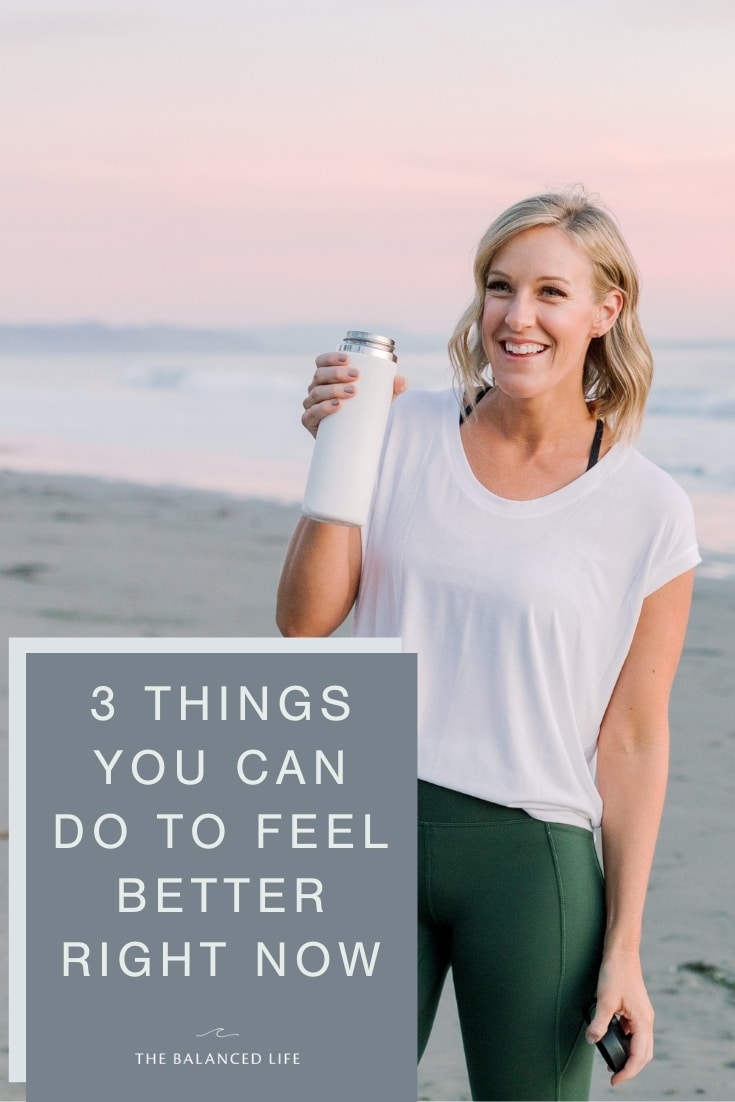
We’ve all been there. Mid-day we start to feel kind of sluggish, or just need a reset before taking on the rest of the day.
If you can relate, here are three things you can do to feel better right now…
Drink a glass of water
Staying hydrated is vital for so many bodily functions, including our energy levels and brain function. Drinking a glass of water can give our bodies a little boost, increasing energy and overall body functions like memory, mood, and the ability to focus.
Get some sunshine
Getting some sunshine actually boosts our serotonin levels, which helps improve our mood and stay focused. If you have time, take a walk around the block or simply head outside and take a few deep breaths.
Do a few quick stretches
Roll out your mat for just a few minutes to get the blood flowing and to help release tension (tense shoulders, anyone?) at any time of day. Do a quick roll down, figure 4 stretch, or rest pose – you’ll be amazed at how much better you feel!
And of course, a quick Pilates workout is always recommended for a mood boost.
If you have a few minutes, check out my IGTV for quick workouts to help you feel your best and follow me on Instagram for more inspiration and quick tips to help you live a balanced and healthy life.
Remember to take a deep breath, drink some water, and take a moment for yourself today. You are worth it.
We’ve all been there. Mid-day we start to feel kind of sluggish, or just need a reset before taking on the rest of the day.
If you can relate, here are three things you can do to feel better right now…
Drink a glass of water
Staying hydrated is vital for so many bodily functions, including our energy levels and brain function. Drinking a glass of water can give our bodies a little boost, increasing energy and overall body functions like memory, mood, and the ability to focus.
Get some sunshine
Getting some sunshine actually boosts our serotonin levels, which helps improve our mood and stay focused. If you have time, take a walk around the block or simply head outside and take a few deep breaths.
Do a few quick stretches
Roll out your mat for just a few minutes to get the blood flowing and to help release tension (tense shoulders, anyone?) at any time of day. Do a quick roll down, figure 4 stretch, or rest pose – you’ll be amazed at how much better you feel!
And of course, a quick Pilates workout is always recommended for a mood boost.
If you have a few minutes, check out my IGTV for quick workouts to help you feel your best and follow me on Instagram for more inspiration and quick tips to help you live a balanced and healthy life.
Remember to take a deep breath, drink some water, and take a moment for yourself today. You are worth it.
We’ve all been there. Mid-day we start to feel kind of sluggish, or just need a reset before taking on the rest of the day.
If you can relate, here are three things you can do to feel better right now…
Drink a glass of water
Staying hydrated is vital for so many bodily functions, including our energy levels and brain function. Drinking a glass of water can give our bodies a little boost, increasing energy and overall body functions like memory, mood, and the ability to focus.
Get some sunshine
Getting some sunshine actually boosts our serotonin levels, which helps improve our mood and stay focused. If you have time, take a walk around the block or simply head outside and take a few deep breaths.
Do a few quick stretches
Roll out your mat for just a few minutes to get the blood flowing and to help release tension (tense shoulders, anyone?) at any time of day. Do a quick roll down, figure 4 stretch, or rest pose – you’ll be amazed at how much better you feel!
And of course, a quick Pilates workout is always recommended for a mood boost.
If you have a few minutes, check out my IGTV for quick workouts to help you feel your best and follow me on Instagram for more inspiration and quick tips to help you live a balanced and healthy life.
Remember to take a deep breath, drink some water, and take a moment for yourself today. You are worth it.