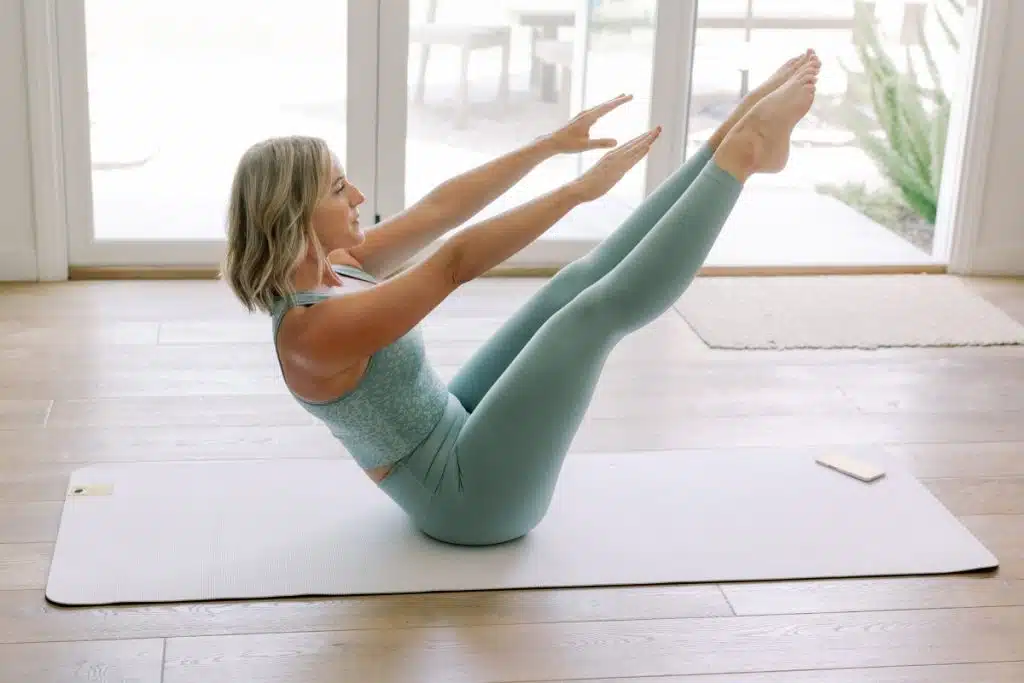
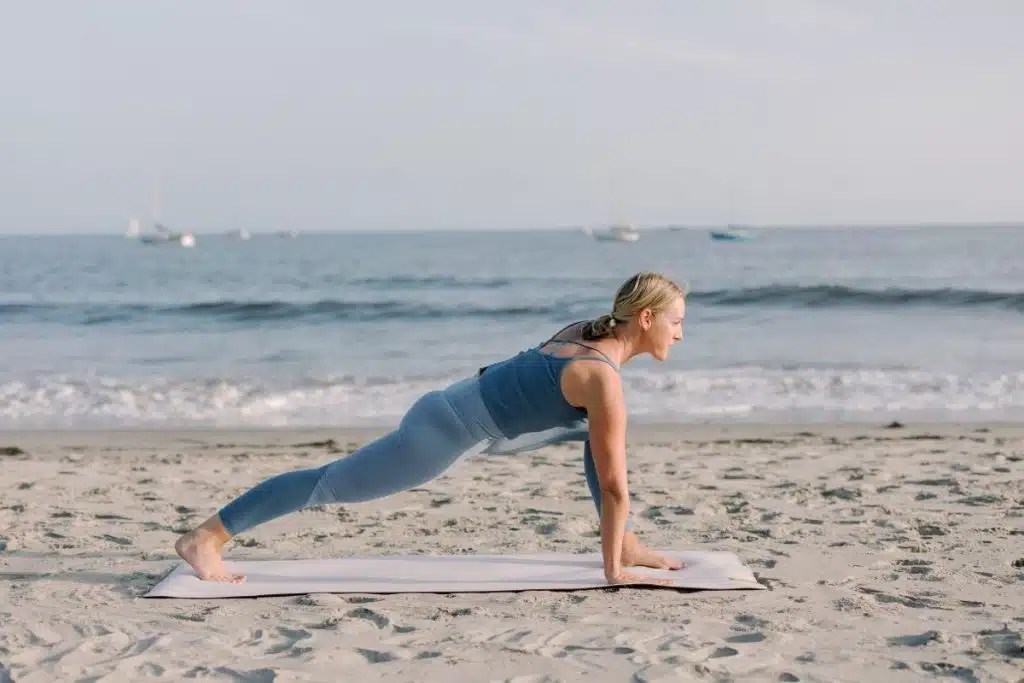
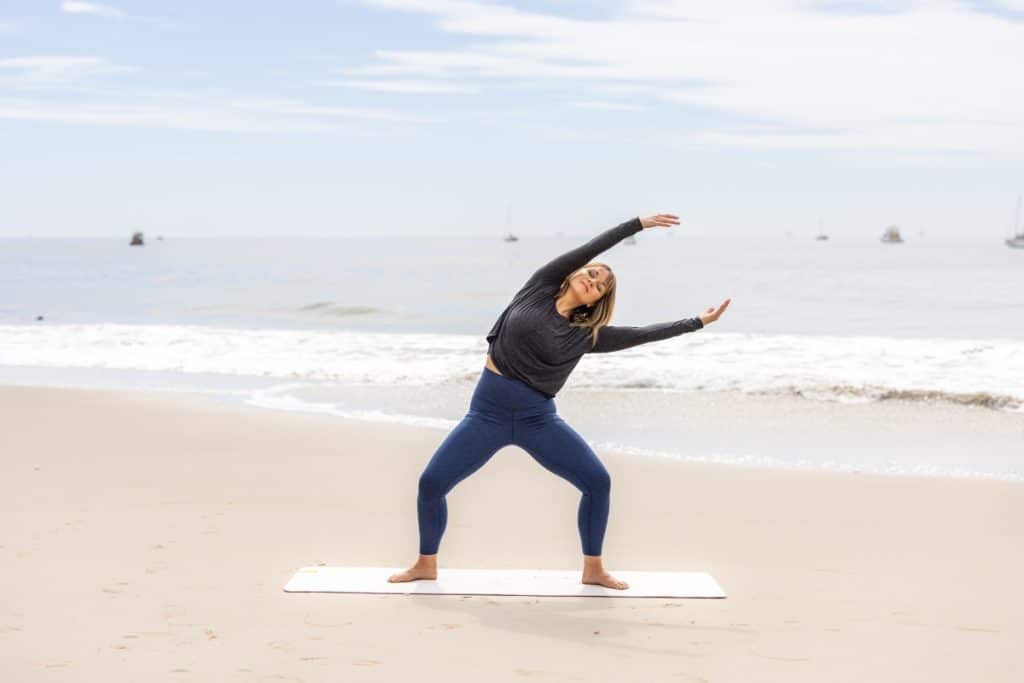
There literally is no time like the present to make changes which can impact your health, fitness and overall wellness. A quick 15 minute home workout is one of the best places to start and I’ve got one for you…
Q&A with Robin as a Newly Certified Nutrition Therapy Practitioner
What led you to pursue further education in nutrition and to acquire your certification as a Nutrition Therapy Practitioner?
It’s no secret that I’m passionate and deeply interested in the power of food and nutrition. For more than a decade I’ve been supporting clients and members on their quest to nourish their bodies well and understand the implications of food on our health and wellbeing. Up until this past year I’ve been largely self-taught (through hours and hours of reading, classes, courses, etc) and have partnered closely with nutrition professionals and registered dietitians in order to lead and guide in a way that is ethical and well-researched. I will still continue to do that, but I also wanted to go through the entire certification process myself to bolster my knowledge, increase my understanding and allow myself and our team at Lindywell to support our community in more significant ways as it relates to nutrition.
Why now?
The past 10 years have been so full – full of growing a business and growing a family, while cultivating our very special Lindywell community. Adding to my plate by going back to school was just not in the cards. Once I completed my manuscript for Well to the Core, it felt like the right time given that the massive project of writing a book was nearing completion. However, in hindsight. Adding “going back to school” to my plate this last year has been extremely challenging. I’m grateful that the Nutrition Therapy Association is designed to work for working professionals, but it was still a lot of work! From weekly reading, to weekly homework, to weekly classes and midterms and finals – it was a lot to juggle while also being a mom and working full-time. But I am SO glad I did and so grateful to have made it through!
In a world full of nutrition programs and certifications, why did you choose Nutrition Therapy Association?
My dear friend Madeline Given recommended them to me because she knows me well, she knows my approach to nutrition and she thought we would have good alignment. She was right! I did a lot of research on programs and certifications and found that my approach to food and nutrition fell very in line with the Nutrition Therapy Association.
A few of the key elements that come to mind are that many of modern society’s health problems result from dysfunction and imbalances in the body’s physiological foundations, which include:
A nutrient dense diet
Sleep
Stress
Blood sugar regulation
Digestion.
In my years of studying nutrition on my own accord, my own personal experience and my work with clients and members of Lindywell, these are the foundations I believe in as well. (If you’ve read Well to the Core, this is no surprise!)
The NTA also believes in the fact that we are all bio-individual (meaning one approach to food doesn’t always fit all) and that the body must be treated as a whole. I also greatly appreciated the depth of education they provide within the curriculum, the acknowledgment that access to quality food is not equal and the celebration of food as an important part of emotional, cultural and social health.
I love this quote from their website:
“Our practitioners work to help each client find the right types of whole foods that will restore balance and enhance their health. They teach the importance of following a thoughtfully prepared, nutrient-dense diet, rich in whole foods that are delicious, nourish our bodies, and restore good health. We also honor the body’s innate intelligence and its incredible capacity to restore, regenerate, and correct itself – when given support through nutritional therapy, lifestyle modifications, and patience.”
How did you fit this into your busy schedule?
A lot of creativity and hard work! I tried my best to not do school work at night, because I know how much that impacts my sleep and circadian rhythms (I talk about this more in chapter _ of Well to the Core). So I time-blocked my schedule to allow time for nutrition homework either during the week or on the weekend. I did lots of nutrition work from the airport or on planes and I was very thankful that classes were recorded so that in the even that I couldn’t show up live (which was often) I could watch the replay on my own time. I’m very thankful for the Lindywell team that supports me so much and for my husband, Matt, who is a true partner in caring for the kids and the home.
How do you see this impacting what you do at Lindywell?
I am so excited because I am now able to lean deeper into nutrition, provide more specific guidance and I have SO much information that I want to share! I’m eager to hear what our community hopes for in terms of nutrition support and to continue listening to our community and providing the most trustworthy, reliable and realistic information I can to help each of us feel our best and live our lives to the fullest. As someone who spent years feeling paralyzed and frustrated by food (ie: Is this “healthy”? Should I eat this? Is this a good food/bad food to eat?) that I’m excited to bring more information and support to our community to make it easier to nourish our bodies well, support our health, achieve our fitness goals (like more muscle and healthier bones!), and to do so while celebrating and enjoying the gift that food is in our lives.
I want to improve my diet, but get so overwhelmed by all the conflicting information about where to focus first. What should I start with?
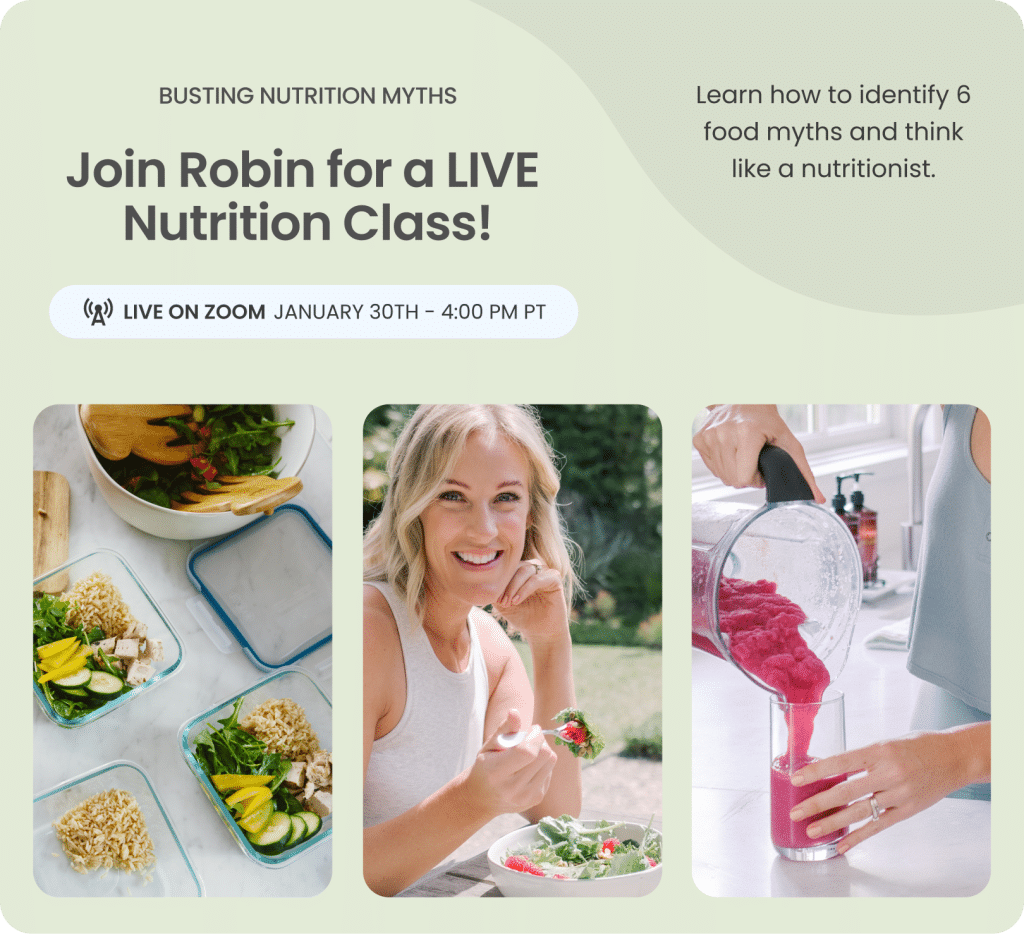
Join me LIVE as I dive deeper into these myths on a FREE Nutrition Class on January 30 at 4pm PT/ 7pm ET.
PS: If you’re wanting to study nutrition for your own personal purposes or for your career, I do highly recommend the Nutrition Therapy Association. I paid in full and this post is not sponsored. However, if you enroll you can use my code at checkout (code: ROBIN) to receive a bonus resource. And you can also enter the code FEB24NTP500 to receive $500 off the February enrollment!
Despite what we have been taught to believe, a great functional core workout has nothing to do with aesthetics. A strong and stable core is about so much more than visibly toned abs. As the body’s main center of gravity, this muscle group allows you to stand, reach, twist, bend, lean, squat, and perform other basic moves without losing your balance. You cannot live your life without your core—and life is much easier and more enjoyable when it’s strong!
Even more importantly, your core is important in all stages of life, especially for women. If you want to age joyfully—and with strength—you can’t overlook this aspect of strength-building. Luckily, this is a critical aspect of what we do at Lindywell. We say that your core is at the heart of ours because we know how important the core is to living a happy and functional life.
Before you do another random “ab workout” from YouTube, take a few minutes to learn about your core and how to keep it (truly) strong, so you can enhance mobility and function in everyday life. Don’t miss our functional core workout at the end.
The Health Benefits of Core Strength and Stability
The core muscles include your front abdominals, obliques, diaphragm, pelvic floor, and lumbar spine. Increased strength and stability in these muscles will lead to a wide range of physical benefits, including:
Postural alignment
Muscular endurance
Flexible range-of-motion
Lower risk of injury
Balance control
Core stabilization exercises, like the ones you’ll find in the work below, can also help reduce non-specific lower back pain, which could improve mobility. Pilates was key for managing and living with my scoliosis while still enjoying life and movement. I shared about in my blog post, Pilates for Scoliosis: How to Find Relief with Movement. Please check this out if you’re struggling with scoliosis too.
The problem is, most people associate a core workout with a series of boring, repetitive crunches. Crunches only activate the abdominals and obliques with one back-and-forth spinal motion. This creates pressure on the lower back and hip flexors, which can lead to chronic pain or injuries over time. It also ignores all other areas of your core, which are just as important. The most beneficial core exercises recruit all the deep core muscles—not just your abs—for a more holistic, functional movement.
The gentle, whole-body approach of Pilates is the perfect way to build core strength, flexibility, and balance—without adding pressure or discomfort to your spine.
I don’t just believe this as the founder of Lindywell; science tells us this too. The European Journal of Investigation in Health, Psychology, and Education found that Pilates is a more efficient way to promote core balance, maintain functional autonomy, and lower the risk of age-related falls than traditional resistance training.
No matter what season or phase of life you’re in, Pilates is a simple and effective way to strengthen this key area of your body.
5 Functional Pilates Exercises for Optimal Core Strength
If you’re ready to build core strength (for real—not just do a bunch of crunches!), you’ve come to the right place. I have a free workout for you below to get started with. If you want more workouts like this, start your free trial of our Pilates app, Lindywell. You’ll get instant access to 300+ workouts, guided breathwork sessions and more.
1. Pelvic Floor Lift
As you do this, imagine there’s a corset around your waist, causing the pelvic floor muscles to draw in and lift. Keep that corset image in mind as you continue to perform this subtle movement.
2. Single Leg Toe Taps
As your leg hinges and your toes tap down, the pelvic floor should remain stable. Don’t let your back arch up and keep your collarbone open. If you can’t stop the arching, make your movement a little smaller.
3. Single Leg Stretch
Make sure your core stays activated while drawing the belly button in and lifting your legs into the tabletop position. Aim to keep your shoulder blades up off the mat during the entire workout; you can also lay flat between movements if that’s easier for you too.
4. Chest Lift
As you lengthen the head, neck, and chest, focus on keeping your waits in the corset and your pelvis strong and stable. As you lift, think of lifting the pelvic floor as well to stay connected to your core.
5. Double Leg Toe Taps
Lie on your back with a neutral spine and flat pelvis. Maintain the corset feeling around your waist as you lift both legs into a tabletop position. Open the collarbone, then draw the belly button in. If your back arches during this exercise, make the movement smaller again, as you did during the single-leg toe tap.
Harness the Power of Pilates to Build a Strong and Stable Core
Having visible abs doesn’t mean someone has a strong core—this goes much deeper than that (literally). The core is one of the most important areas of the body, making it easier and more comfortable for you to go about daily life. Whether you’re bending down to pick a flower or reaching up high on one foot to get something at the top of a cabinet, your core is always working for you. That’s why this functional core workout, and those similar to it in the Lindywell app, cannot be overlooked if you want to live a long, healthy life!
Self-care Sunday is more than just something to share about on social media. While it may have started that way, it’s a trend that’s actually rooted in science! (And you know how we feel about that here at Lindywell!)
A recent study from the University of Exeter found that it’s more common than you might think to feel stressed, nervous, or emotionally down on Sundays. For some, this feeling comes from the pressure to be all ready for the upcoming week. For others, it’s an inability to “switch off” and relax.
However it manifests for you, this phenomenon has a name: The Sunday Scaries. Sounds like the exact opposite of restful and enjoyable, doesn’t it?
At Lindywell, we’re about finding holistic ways to balance mental, emotional, and physical well-being, so we don’t have to feel stressed at the thought of another week ahead. After all, fresh starts and new possibilities should be revitalizing—not anxiety-inducing.
So if you want to add some self-care Sunday ideas to your toolbox (and ditch The Sunday Scaries), I have you covered! Here are some of the many ways I bring this fun trend into my life to feel refreshed and happy heading into each new week.
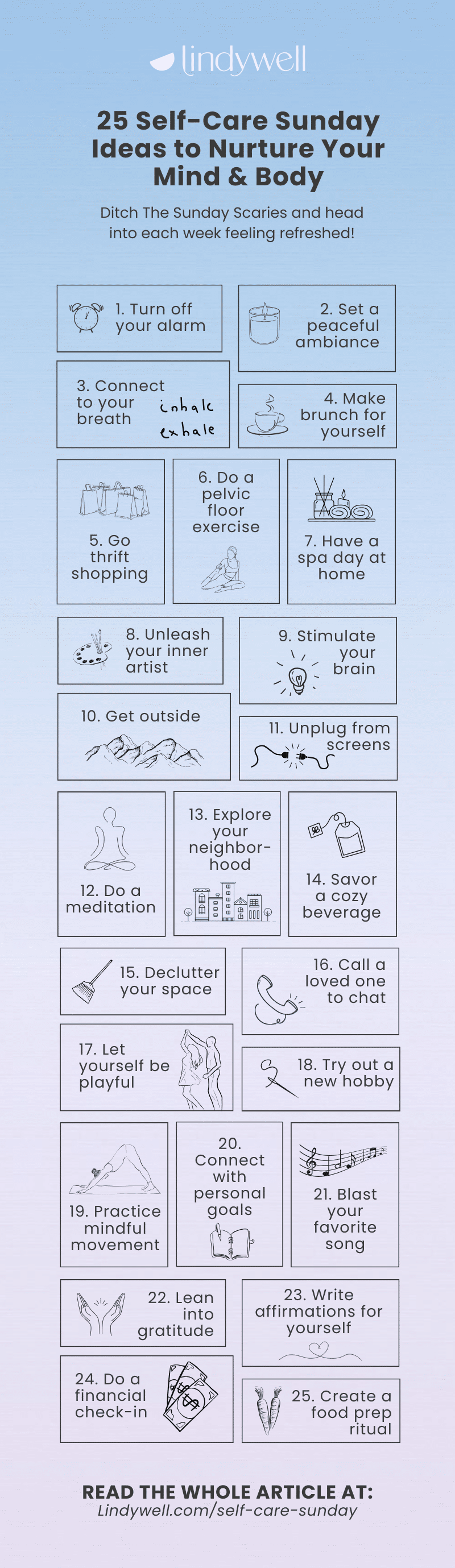
25 Simple Ways to Nurture Yourself on Self-Care Sunday
Self-care Sunday is about cultivating an intentional practice that feels nurturing during a time when you might otherwise feel anxious or stressed. No matter what you choose, the idea is to nourish your mind, soul, and body in order to achieve a deep sense of wellness and balance in heading into the week.
Here are some ideas to help you begin creating your own self-care Sunday practice.
1. Turn Off Your Alarm
How often do you sleep in without any guilt attached? Rest is one of the most precious gifts we can offer ourselves—especially in a culture that glorifies constant busyness, often to the point of burnout. Don’t set your alarm and let yourself wake up naturally in the morning, with no expectations to hit the floor running. I know for parents this one can be hard, but maybe you can take turns each week allowing one of you to sleep in.
2. Set a Peaceful Ambiance
Curate an environment that makes you feel calm and relaxed during the day:
Light your favorite candle.
Diffuse some aromatherapy or essential oils.
Turn on soft, ambient music in the background.
Research shows that a “multisensory atmosphere” with pleasant sounds, sights, and smells will enhance your mood state and sense of well-being.
3. Connect to Your Breath
Breathwork is a powerful somatic tool to reset the nervous system, slow down anxious thoughts or frenetic energy, and anchor yourself in the present. Work this into your self-care Sunday routine to let go of tension and connect to your intentions for the week—or simply slow your thoughts for a few minutes.
Sure, it’s fun to meet your friends for brunch and mimosas at a trendy café—but cooking brunch for yourself at home can be just as satisfying (not to mention, less expensive). Find a recipe that looks delicious, whether it’s a fluffy batch of pancakes or a cheesy egg frittata and recreate it in your own kitchen. Don’t forget the coffee!
Sometimes retail therapy is hard to beat—but it doesn’t have to be expensive. Not only is thrifting a fun and cost-effective activity for your self-care Sunday, but it’s also more sustainable for our planet. Fun fact that I just love: if all of us bought a used outfit instead of something new, it would lower carbon emissions by over 2 billion pounds!
6. Do a Pelvic Floor Exercise
Pelvic floor function is often ignored in women’s health and wellness—but crucial for alignment, mobility, balance, strength, and flexibility. If you want to feel strong as you move around all day long, you can’t ignore your pelvic floor. That’s why some gentle, low-impact movements that stretch, lengthen, and alleviate tension in this group of muscles is perfect for self-care Sunday.
Learn more about pelvic floor movement here:5 Deep Core and Pelvic Floor Exercises. Take it a step further and start your Lindywell free trial to get access to 350+ Pilates workouts, all of which support the pelvic floor and full-body strength and mobility.
7. Have a Spa Day at Home
You don’t have to plan an entire weekend retreat to reap the benefits of a luxurious spa day. I love to give myself that same lush treatment right in the comfort of my own home! Here are a few small “spa treatments” you can do for yourself:
Take a warm bath with Epsom salts.
Put on a bathrobe and fuzzy socks.
Exfoliate with a seaweed face mask.
Paint your nails a fun, bright color.
Do a hot bath followed by a cold shower to mimic a sauna and cold plunge.
8. Unleash Your Inner Artist
Whether your medium is a professional canvas or a coloring book, let your creativity run wild on Sundays. You don’t have to be an “artist” to enjoy this either. There are so many ways to tap into your creative side:
Make a collage or vision board.
Paint a sunset.
Take photos of nature.
Learn calligraphy.
Write a haiku.
Your end result doesn’t have to be perfect. Art is about the freedom of self-expression without a rigid outcome. You may be surprised by how much you love it!
9. Stimulate Your Brain
The brain needs regular exercise just like the body. In fact, “brain training” can lower the risk of memory loss or cognitive decline. On Sundays, carve out some time for a puzzle, sudoku, crossword, or anything else that activates your thinking cap. You’ll have fun, and your brain will get a workout. I love doing Wordle!
Learn more about healthy brain function and how you can use it to create healthy habits in our blog post, Principles of Neuroplasticity 101.
10. Get Outside
Spending at least 120 minutes each week outside in green spaces will increase physical health markers while alleviating mental distress. Walk or ride your bike to a local park, trail, or nature preserve on Sundays. If you don’t want to get out and about, just spend time in your yard.
I started doing daily walks and I’ve come to love it much more than I anticipated I would. There’s something so pure and restorative about touching the earth, breathing in the fresh air, and soaking up the scenic views.
11. Unplug from Screens
Let’s be honest: many of us have jobs and other obligations that make it hard to escape from screens during the week. But all this exposure to technology can feel stressful or overwhelming at times. If this sounds familiar, make intentional screen-free time part of your self-care Sunday routine.
Instead, read a book, write in your journal or just listen to music with a cup of tea—those social media notifications can wait. If you don’t know where to start, buy my book Well to the Core to get access to the Choose Your Own Digital Detox Guide that I share inside!
12. Do a Meditation
The science-based benefits of meditation are seemingly endless. Even better, just 10 minutes can feel so refreshing and allow you to reap the many benefits. Bring meditation into your self-care Sunday routine to calm your mind, balance your nervous system and so much more.
You don’t need a plane ticket to have an adventure—be a tourist in your own zip code! I love seeing all the beauty that Santa Barbara (where I live) holds. Here are some ways you can do this where you live:
Check out a museum or a new restaurant that opened recently.
Take your time checking out all the unique vendors at your local farmers market.
Grab some coffee and walk around a new neighborhood or area of town.
You might discover a hidden gem that you can’t believe you never knew existed!
14. Savor a Cozy Beverage
Raise your hand if the idea of curling up under a blanket with a warm beverage makes you feel warm and cozy. Same! Especially in the winter. Whether you prefer your drink to be light and fizzy or rich and toasty, mix up whatever libation you’re craving on Sunday.
Since your brain is wired to seek out order, too much clutter can make you feel out of control. Fortunately, there’s a solution—organize your space on Sundays. If you do this regularly, there will be less and less to organize each time and you’ll feel more calm all week long.
16. Call a Loved One to Chat
Maintaining healthy relationships is an essential part of your overall health. The CDC says, “When people are socially connected and have stable and supportive relationships, they are more likely to make healthy choices and to have better mental and physical health outcomes. They are also better able to cope with hard times, stress, anxiety, and depression.”
When was the last time you called someone just to catch up? Reach out to a loved one you haven’t spoken to in a while and ask about what’s happening in their world. It can be casual and short, but you’ll finish feeling refreshed and connected.
17. Let Yourself Be Playful
You’re never too old to play! During the week, other commitments can make it difficult to prioritize this—I know how it goes as a business owner with four kids myself—but Sunday is the ideal time to cut loose and unleash your inner child:
It can be easy to feel “too busy” to explore something you love. I know I feel that way sometimes too. But there’s no time like the present to learn a new hobby—or revisit one that you used to love. I started gardening as a new hobby! It was a great way to learn about something new, get outside, get my hands dirty, and include my kids in the process as well. A total win-win-win!
19. Practice Mindful Movement
Fitness doesn’t have to be boring, repetitive, or forced. In the Lindywell world, we focus on mindful movement that’s anything but those three things. Instead, I guide our members through Pilates routines that encourage them to tune into the mind-body connection as they flow through each exercise building strength, mobility, and self-compassion. Make this a part of your Sunday routine and your mind and body will thank you.
Pursuing goals that align with your values and passions can boost your well-being, vitality, and sense of meaning in life. So don’t let these goals fall to the wayside as you focus on other areas of your life, like work. Spend time during self-care Sunday to reconnect with what you want to achieve in your personal life and what you need to do to get there.
Journaling is a way that I like to check in with myself and how I’m doing with goals that I previously set. I also like to set intentions for the week when I do this. For example, I might set an intention of taking three walks and doing 3 Pilates workouts throughout the week, plus drinking 64+ oz of water per day.
21. Blast Your Favorite Song
This one is simple—and maybe also one of my favorites on this list. From Beyonce’s “Run the World,” to Taylor Swift’s “Shake It Off,” to Lady Gaga’s “Born This Way,” the right song can make any day feel better. Put on your favorite playlist and belt out the lyrics at the top of your lungs. Side note: Free-style dance moves are also encouraged!
22. Lean into Gratitude
There’s so much to be grateful for in this world—from the small pleasures, like morning coffee, to the existential blessings, like another day to be alive. Pause to reflect on these gifts, then set aside a few minutes to cultivate your own gratitude practice. You’ll feel more generous, altruistic, compassionate, and a whole lot happier!
Personal affirmations or mantras are truthful statements you repeat in order to combat intrusive thoughts and critical self-talk. These can also help you manage stress and cope with uncertainties. On Sunday, write an affirmation that resonates with you (ex: “I am worthy”), then place it in a visible area like on your fridge or mirror so you can see it and repeat it each day.
Have a budget meeting with yourself each week. Believe it or not, financial literacy is part of self-care too. When you’re in control of spending habits, saving plans and other facets of money management, you’ll be in a more stable position to work toward your future dreams, such as buying a house or traveling abroad. Plus you feel more confident as you educate yourself on finances and how to get where you want to go!
25. Create a Food Prep Ritual
Prep some of your favorite meals in advance for the upcoming week. This is a convenient way to ensure you’re eating nutritious foods on a regular basis. Plus, the mindful act of preparing your own meals (whether it’s oatmeal for breakfast or a grain bowl for dinner) can help you start nurturing a balanced relationship with food. It’s an act of self-care that also makes your week easier—win-win!
Make Self-Care Sunday an Intentional Part of Your Weekly Routine
Self-care Sunday is more than just a social media trend. It’s a great way to transition back into the week feeling calm, confident, and connected rather than stressed or anxious. I hope some of these ideas will find their way into your weekly routine, even beyond Sunday!
The best way to take care of yourself is to make it a regular practice. See how you might be able to weave some of these ideas into your daily routine or as part of other days of your week, in addition to Sunday, to reduce stress even more.
Most women experience the pressures of unrealistic beauty standards and this was happening well before Instagram came along and the mainstream media became what it is today. Learn more about the long-running history of unrealistic beauty standards in this fascinating article.
I’ve experienced this pressure to look a certain way my entire life. It’s been even more heightened with a career in the fitness industry. There was always pressure to fit a certain standard in the size, shape, and muscle tone of my body to be taken seriously or seen as someone worth learning from.
While dealing with these standards has been difficult to navigate, and still can be some days, I know in my heart that my worth is not defined by the way I look. Today, I want to share a few of the shifts I’ve made over the years to let go of unrealistic beauty standards and embrace who I am. I hope that my story might help you do the same.
Connecting With My Purpose
As a fitness professional, the pressure can be strong to use my body as a billboard. I hear comments all of the time about fitness instructors’ bodies as a measure of their expertise. It can be hard to avoid this way of thinking and internalize it.
When I feel this pressure arise, I remind myself of my purpose and why I do what I do. My job is to teach you how to connect to your body, move well, build strength, and restore alignment so you can feel better as you go through your days. I can do that no matter what my body looks like.
Despite knowing this logically, we’re surrounded by these unrealistic beauty standards everywhere we go. I have to remind myself of this often. Sometimes it feels as though I have to actively fight against that pressure in my mind and in my actions daily to avoid succumbing to it.
The Power of Staying Connected
You can know this consciously, and get caught up in these unrealistic beauty standards. When I stay connected to my purpose, however, it’s easier to remember that I don’t have to play along with the fitness industry’s focus on aesthetics to be successful. My purpose is to help women show up just as they are today and build strength and resiliency in their bodies and minds through the power of movement and connection to their bodies.
It’s THIS that has created our community of thousands of members around the world who want to choose grace over guilt and feel good in their bodies—not the number that shows up on the scale each day. It’s also this purpose that drove me to write my first book, Well to the Core.
My purpose is also connected to leading more people toward freedom and self-compassion: whether that’s my children, my friends, or our online community. When the pressure is rising to “look good in my workout clothes.” I remind myself that my job is to embody freedom and self-compassion so that others feel comfortable to do the same; to show up as they are today and believe that they don’t have to look a certain way to be worthy or valuable.
With young children, especially daughters, I want to be the best role model I can be. I want them to grow up feeling confident in their skin too. Remembering this helps me let go of those standards and find love for my authentic self, exactly as I am.
Leaning Into Gratitude
I practiced 30 days of gratitude leading up to my 30th birthday and it impacted my life in so many unexpected ways. One of the shifts I noticed was feeling the need to compare myself to others less often. Interestingly, something I learned after is that gratitude directs our attention away from social comparison, so it’s not surprising this happened.
This has helped me release those unrealistic beauty standards because I feel less compelled to compare myself to the people around me or other professionals in the space. As a result, it’s easier to embrace who I am more completely.
When those old beliefs around unrealistic beauty standards start pushing me back to that comparison habit, I focus on gratitude. I remember that I’m grateful for my body, my “twin skin” (the loose skin on my belly as a result of 4 full-term pregnancies including twins), and everything in my life that has absolutely nothing to do with how I look.
Cultivating and maintaining that attitude of gratitude lightens the figurative load and makes it easier to lean into what I know in my heart to be true.
Remembering the Reality
I often feel pressure to look flawless because there are so many fitness professionals and influencers with “ideal” physiques. Add to that the thick flowing hair, and wrinkle-free skin—you name it and you can find it. Not to mention, flawless appearances are everywhere to be found on social media, whether natural or through a filter. If I’m being honest, it’s easy to feel like I don’t measure up.
The reality is, that I know how much work goes into achieving that “perfect look,” like skipping margarita night with friends, avoiding foods I love, and spending hours in the salon getting extensions, botox, and manicures.
I’m not saying this to make anyone feel bad for the choices they make related to their appearance because I take pride in my appearance and love to feel beautiful and pulled together, too!
For me personally, when the pressure is too much to keep up with, but I want to purse beauty, I focus on staying aligned with my values. When I’m tempted to get caught in the comparison trap, this is especially helpful. Ultimately, this idea of “keeping up” is just not worth the sacrifices I have to make to do it—both mentally and physically.
Staying Aware of the Culture Around Me
I’m very clear on my values and my ultimate worth. Yet I still have to fight against that immense pressure to stay true to those values and what matters to me most. One of the ways I do that is by staying very aware of what I’m consuming and the culture I live and work in.
It’s so easy to consume content that’s damaging to our self-esteem and mental health. Even scarier is that with the rise of filters and AI, more and more of what we’re seeing isn’t even real. The problem is that humans don’t do a good job of deciphering between what’s real and fake.
In addition, because the brain changes with what is consumed consistently, the belief that you need to look a certain way only becomes more prominent with each image you see that aligns with those unrealistic beauty standards.
You have to be a conscious consumer everywhere you go, from stores to social media, to let go of what you’re told to look like and embrace who you truly are.
You Don’t Have to Accept Unrealistic Beauty Standards
It’s taken years of work to know that who I am, on any given day, is good enough. Some days, even now, it still takes work. I don’t know that we as women can ever fully let go of those unrealistic beauty standards. They’re so prevalent in our lives. However, that doesn’t mean they have to rule our lives. With conscious consumption, intentional gratitude, and connection to your purpose it is possible to live according to your own standards instead—and when we can do that, the pressure recedes and freedom appears.
Since I learnt many years ago that 40% of women do not wear a sports bra when exercising, and when we do, 80% of us are wearing the wrong size bra, I’ve made it my goal to educate myself and…
Self-trust is critical to the success of your wellness journey for so many reasons. First and foremost, in our culture of influencers and “health experts,” it can be overwhelming to know who or what to believe. I’m a trained professional in the health and wellness space, and I still find it hard to know what or who to trust sometimes.
That’s why I always come back to myself—and the fact that I know my body best. For so long, I pushed my body hard on days when it asked for rest. I ignored cues for hunger to follow specific diet plans. Spoiler alert: it didn’t get me anywhere but burned out and anything but healthy when you look at wellness as a whole-body experience. (Check out my recent blog post,
If you can relate to being overwhelmed by information and not knowing who to trust, it’s time to check in with yourself. Let’s talk about why self-trust (that inner wisdom, sometimes referred to as your gut) matters and how to use this intuition to chart a wellness path that’s right for you. Plus, I’ll share how to cultivate self-trust so you can discern fact from fiction or fad.
Why Self-Trust Is Important for Your Wellness Journey
In a recent survey of 1,022 U.S. adults, 60 percent of respondents feel motivated by wellness-related content on social media to make healthier, more nutritious choices for their bodies. However, 68 percent have seen conflicting information from multiple sources. Another 60 percent are confused about which habits are worth implementing.
When you can trust in yourself to determine what’s right and not right—or even what’s potentially dangerous—you can use that self-trust to inform your decisions, which nurtures confidence, self-efficacy, and empowerment.
In a recent study of patients with chronic health issues, building self-efficacy helped alleviate symptoms of their illness. It also improves mental health outcomes and quality of life. Plus, these patients were more motivated to heal, which ultimately made them feel secure in their overall capacity to reach that goal.
Long story short, self-trust will impact every area of your health and wellness journey.
How to Hone Your Self-Trust
We are surrounded by an excess of information every single day. Often that information is contradictory or confusing. As a result, it’s hard to know what to eat, what’s truly effective when it comes to exercise, or what habits to implement to care for our mental health.
Personally, I consume a lot of content—like most people! I’m constantly reading books, listening to podcasts, watching interviews, reading articles, etc. While it’s certainly a part of my job to stay educated and informed, it’s also a passion of mine. I love learning.
One of the side effects of taking in a lot of information from a wide variety of sources is seeing just how much conflicting information there is out there. This used to drive me crazy. But over time, I’ve learned to use it to my advantage and hone my self-trust.
What I mean is, I understand that there can be many viewpoints on a certain topic and even research can be done in ways that result in conflicting conclusions. Over the years, I’ve learned to take the information I learn, run it through what I’ve already learned or experienced to be true, and then also run it through a lens of what I know to be true for ME.
For example, what do I know about myself that this person/research doesn’t know? While one non-toxic expert may tell me I should never use plastic products to avoid potential toxins—that’s not the whole story. I also know that I spent years dealing with anxiety around health. This means, for me, it’s important to be informed of those potential dangers, without embracing an “all or nothing” mentality that leads to more stress, which in turn, would have an even bigger negative impact on my health.
Ultimately, nothing is more trustworthy than the gut instinct within you and what you know about yourself. The goal is to take what you hear, check in with yourself, and then choose what’s best for you. If you’re not sure how to connect with that inner source of wisdom, here are a few ways to practice and learn.
Listen to the Cues from Your Own Body
Your body is wise and is always communicating. Learning how to listen, and then respond accordingly, is one of the most important skills we can develop. For example, a few years ago my body was responding strangely to high-intensity workouts.
It took me a while to understand what my body was trying to tell me. Listening, paying attention, and recognizing symptoms, I was able to adapt, seek support, and make changes to help me feel better and to help my body function more optimally. Listen to my surprising health diagnosis podcast episode to learn more about what happened.
Even more interestingly, what I’ve found is that honing this self-trust has a ripple effect throughout every aspect of your life. When you make an effort to create a mindful, trusting relationship with the body, you’re likely to experience a wide range of outcomes, including:
Lower depression and anxiety
Mental resilience and emotional regulation
Higher levels of self-awareness
Positive outlook on body image
Improved stress management
Healthy eating and exercise behaviors
Increased motivation for self-care
If you’re not sure how to block out external noise and tune into the wellness cues coming from your own body, read my blog post, 5 Practical Strategies to Listen to Your Body Each Day. As with anything you do, this skill takes time and practice, but is very much within your reach!
Practice Self-Compassion
Everyone has imperfections and shortcomings, that’s what makes us human. The sooner you embrace this, the less susceptible you’ll be to self-doubt. Also, the more confidence you will have in your decision-making abilities.
According to the Health Psychology Open Journal, even just listening to a brief, 10-minute recording of compassionate mantras over four consecutive days can lead to reduced inflammation, healthier immune function, and calmer nervous system response.
If you’re prone to second-guessing your intuition when confronted with varying health trends, claims, or opinions, practice pausing. When you come across any piece of wellness advice, take a moment to reflect. Interrogate the information before believing it at face value. Ask the questions below to learn how to trust what feels nourishing and beneficial for your well-being while also assessing its reliability:
Does this information come from a reliable, legitimate source?
Does this cause me to feel shame about my current habits?
Does it come across as extreme, restrictive, or unattainable?
A self-reflection inventory will help connect back to your health priorities, so you can align with behaviors or decisions that reinforce them. Then as you turn inward, get curious, and ask honest questions, it becomes easier to follow the guidance that resonates with you, while creating boundaries to set aside whatever doesn’t feel right.
After all, what works for someone else might not serve you.
Self-Trust Is a Foundational Piece of Your Wellness Journey
No one is more competent at making decisions for your own health, fitness, and well-being than you are. In a culture saturated with what seems like as many clashing wellness opinions as there are Instagram and TikTok accounts, it’s essential to tune out the noise. Use these ideas to cultivate and nurture your own self-trust. You might just discover the answers to a healthier, more vibrant life have been inside you all along.
I write and talk about breathwork benefits often as the Director of Content for Lindywell. (Check out our breathwork page that I helped create!) While I have enjoyed some breathwork practices here and there, I have to say I was skeptical about whether consistency really mattered (doing it daily) versus just in the moment, when I felt I needed it.
I was also curious whether I needed guided sessions, like what Lindywell offers—and if I would notice more benefits if I did have the expert prompts and guidance that Kiesha provides.
Ultimately, I know nervous system regulation is important so I decided to push myself to try breathwork every day for 31 days.
First and foremost, let me say that I was surprised by some changes, despite all that I know about the benefits of breathwork. Ultimately, I can truly say that it has changed my life. Not only do I feel calmer and more present, but my kids and co-workers have all noticed I’m more peaceful than I was at the start of the month too!
If you’re thinking about challenging yourself to try breathwork more consistently, I want to share my experience to give you a taste of why it’s absolutely worth it. The breathwork benefits far exceeded my expectations and I know they’ll exceed yours too!
How I Did My Breathwork Sessions
While there are many ways to practice breathwork, I wanted to be guided by Kiesha Yokers, our Head of Breathwork and Somatic Programs. I love how she teaches and guides in her sessions and knew she’d be the perfect person to take me on this journey. Read Kiesha’s article, The Healing Power of Breath, to learn about her approach to breathwork and how it can impact every area of your life.
Within Lindywell, I (and all of our members!) have access to more than 25 guided breathwork sessions that cover a wide variety of topics from sleep to gratitude. Each one ranges from 5-12 minutes, so I could choose whichever topic and time frame worked best for me each day. Some of the sessions I found myself coming back to were:
If you want to try these breathwork practices with Kiesha, start your free Lindywell trial and get instant access to each and every one! You can listen to them on your phone with our Lindywell app or through your web browser. Plus, when you sign up, you’ll also get access to 300+ Pilates workouts and hundreds of nutritious (and easy to make!) recipes created by a registered dietician.
Breathwork Benefits After 31 Days of Practicing
First and foremost, let me remind you that you don’t need to practice breathwork every single day for 31 days (or longer) to experience benefits. Even after a single session, you’ll likely feel less stressed, more calm, and more connected to yourself.
As with many aspects of health and wellness, however, consistency is the best way to create habits and experience long-term results. That was my goal and absolutely what I experienced. My day-to-day experience is calmer, my sleep is better, and I notice I am a better version of myself in every area of life. So let’s get into the details!
I Feel a Greater Sense of Calm
While this is one of the breathwork benefits we talk about a lot at Lindywell, I feel it is truly life-changing for me. I feel like I can ride the waves of my emotions with more awareness and can come back to a steady mood faster now.
A great example of this was when I recently had to drive my husband’s car (which I don’t like driving because it’s a manual transmission). Normally I would be shaking by the end of this drive from nerves and fear of stalling and holding up traffic. This time, I used box breath (a popular technique Kiesha teaches) the whole drive and the nerves didn’t peak as high, I never stalled and I also felt calm and happy when I got home instead of stressed!
Think of how many times in life we have to do something we don’t want to do—and how stressed or anxious that can make us feel. Having this new breathwork tool makes it so much easier to manage those situations without all that added emotion.
I’m Sleeping Better
I’m not only sleeping better but I’m also falling asleep faster! This has been an incredible shift because sleep has never come quickly for me. I did Breathwork for Sleep and Calm in the Lindywell app many nights during this time and noticed that sleep comes easier and I don’t wake up as often. This also means I feel more rested during the day—a huge win for me.
This translated into greater focus at work. Tackling an important task was so much easier because my mind felt sharp and I felt less distracted.
I’m a Better Mom
Breathwork has been a game-changer in my parenting. One of my children is struggling with anxiety and using my breath has helped me stay calm so I can help him do the same. I love that teaching him these resources has helped him face his fears too.
I’m also able to be the steady parent I want to be for my kids when something wild comes up (which it often does!) and I pause to breathe or have done breathwork that day.
One time, my son thought it would be fun to bring a pile of leaves into the house and throw them like confetti. Before breathwork, I would have gotten angry and felt a shift in my mood for the rest of the day. Because of breathwork, however, I stayed calm, talked to him about his choice (and laughed internally), and had him clean it up so we could move on with our night.
My ability to stay calm translates to my children’s ability to also stay calm during and after a challenging situation, which keeps it from becoming something more than it is.
I Have More Energy
I never realized how my breath can actually fuel my energy. My default used to be to just push through the drained feeling after a series of calls and keep working. But with low energy, tasks would take longer or I’d feel a lack of creativity. I realized that when I pause for five minutes after the calls and do an energizing breathwork technique, I get a new burst of energy and can stay focused again and be more creative.
Breathwork for Midday Mind Support and Breathwork for Energy became my new go-tos after a series of Zoom meetings in the middle of the day instead of turning to food for a pick-me-up. I love the tingly energized feeling I have after practicing those sessions and how ready I feel to tackle the next thing. I can’t stress enough that this is worth trying!
I’m More Aware of and Responsive to My Body’s Needs
It’s so easy to ignore the cues from your body, whether it’s asking you to slow down in the middle of a busy season. I’m no stranger to that, but now, I feel much more in tune with my body’s cues—and more likely to give myself whatever I need when I need it.
I also feel more at peace with my body and gratitude for all it can do rather than trying to always fix something. The gratitude meditations within the Lindywell app are some of my favorites.
My Inner-Critic is Quieter
That inner critic can be so challenging to deal with, giving constant commentary that is rarely helpful. My breathwork sessions have helped me quiet that voice, which also allows me to move past things faster. Instead of letting my inner critic beat me up when I make a mistake, I’m able to notice it, pause to see if there’s anything I can learn from it, and then move on without it impacting me for the rest of the day—or week.
Bonus: My Lung Capacity Improved
This is not something I was working toward or focusing on, but was excited to see! I used a new feature coming to the Lindywell app that allows you to test your breath capacity. When I did this, I saw significant improvements in my lung capacity (ex. how long I can hold my breath and exhale) because of my new breathwork habit. It’s amazing to me how our bodies adapt with a little bit of consistency and commitment.
Now I crave opening up my app to be guided through a breathwork session and I love that I can access this tool whenever I need it. Experiencing these breathwork benefits first-hand has made me love this practice even more than I already did—and I couldn’t recommend it more, no matter what stage or season of life you’re in. Let’s be honest, we can all use a little more calm and connection! Start your free trial of Lindywell to try all the breathwork sessions I mentioned here, plus the 20+ others in the app!
One of the biggest questions we get from everyone is “How do I work my legs at home?”
After all, challenging the legs with barbells, dumbbells, and machines at the gym is easy. We can just continue to add weight to our exercises until our legs look like tree trunks. But if we want to build strength but we’re unable to get to the gym, don’t have a gym membership, or are traveling – then what do we do?
Enter the NERD FITNESS LEG DAY WORKOUT.
Our 20-minute routine can be scaled for someone just getting started (beginner), or someone looking to get their legs blasted (advanced).
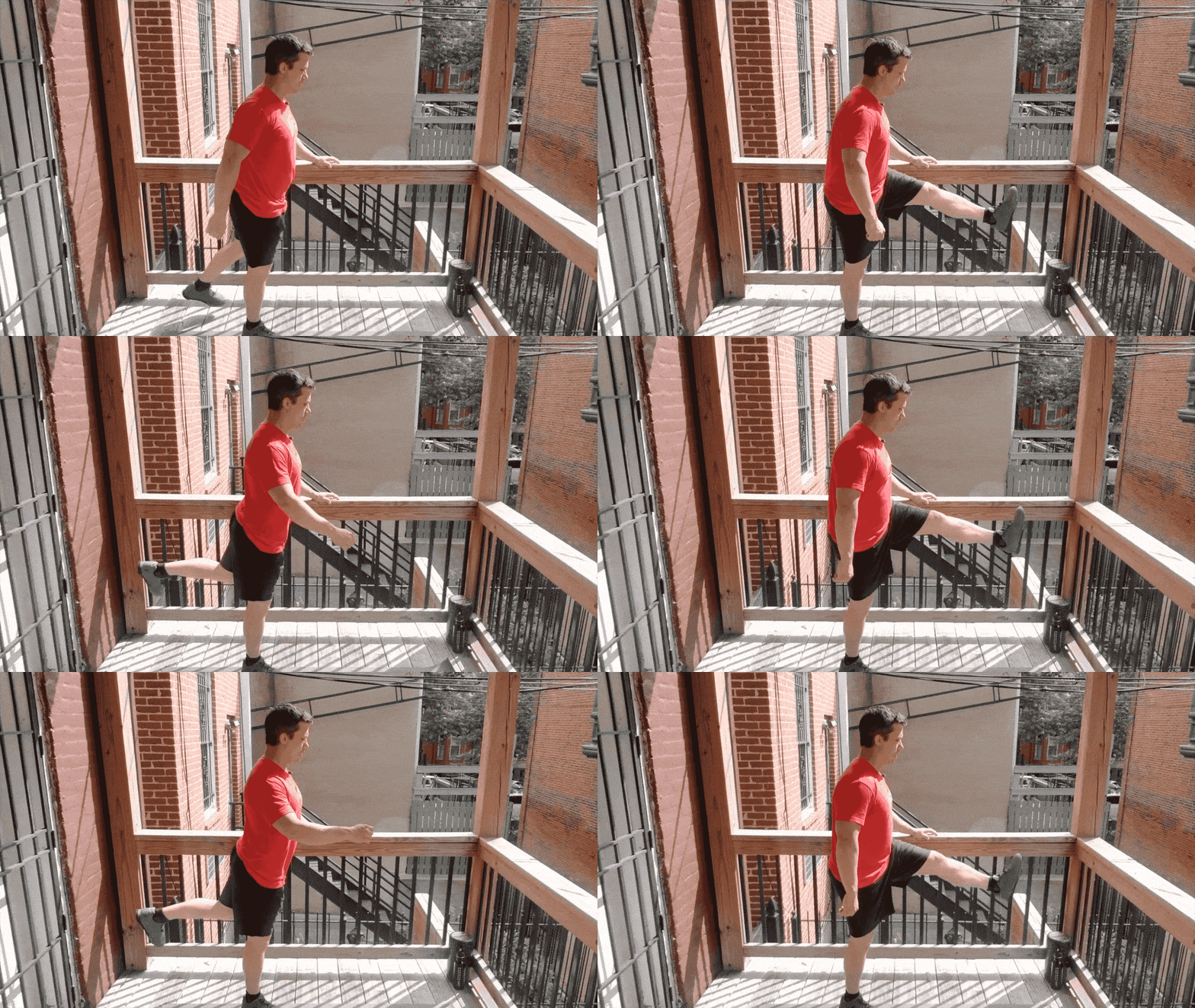
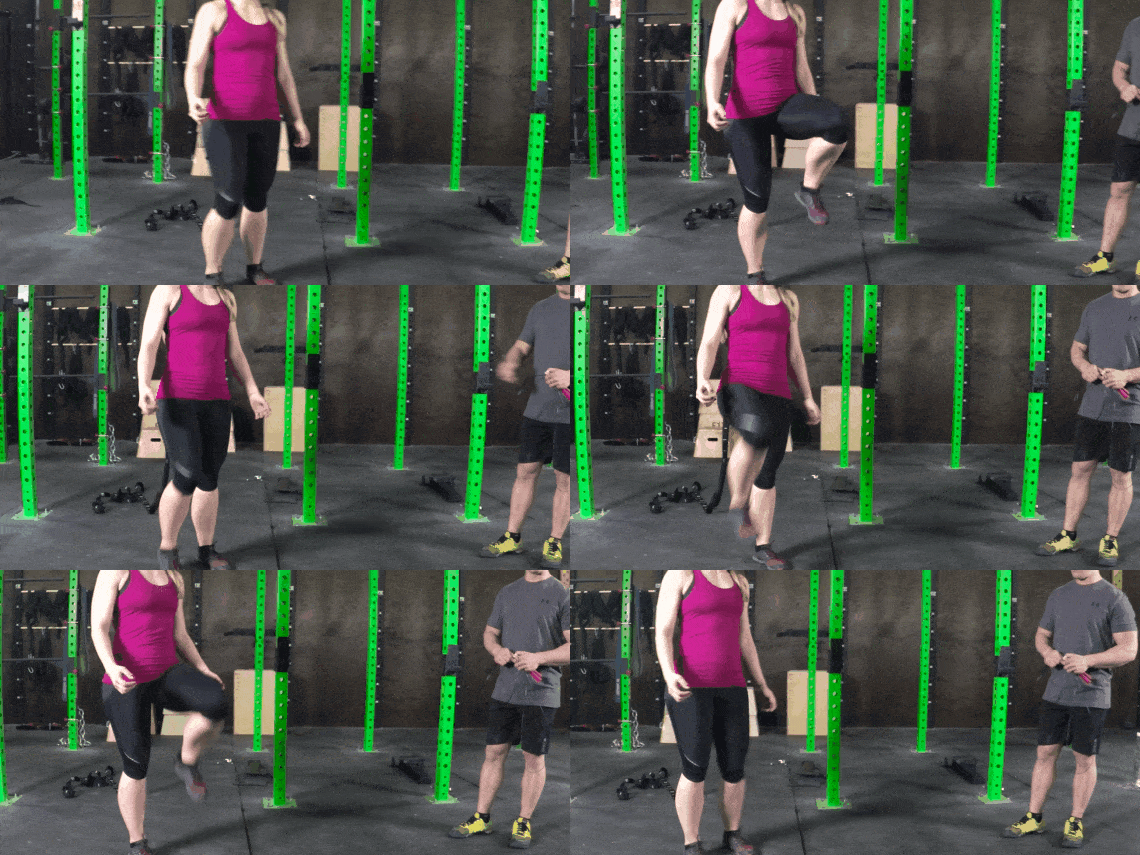
To get started with our Leg Day Workout, warm up with 1-2 minutes of leg swings and marching in place.
Continue the warm-up with 1-2 sets of the first exercise at an easier variation (or less weight/reps) then move on to your work sets. For the remaining exercises, perform 1-2 additional warm-up sets at the start, if needed. (A bit more on the warm-up later!)
Alternate between Workout A and Workout B on non-consecutive days to properly recover. Meaning, give yourself a “rest day” before doing a leg workout again.
If you’re new to dedicated leg days (or just getting back into things), then choose the lower end of the prescribed sets and reps, while picking easier variations. If you’re a seasoned pro, then start increasing the number of sets or reps you do each workout, while pushing for harder and harder variations.
Rest 1-2 minutes between sets (or longer, if needed).
Now, let’s give you some specifics.
Home Leg Day Workout A
Phase 1
Warm up for a few minutes.
Phase 2
Do 2 or 4 sets of the following:
Squat Variation: 5-8 reps
Deadlift Variation: 8-12 reps
Phase 3
Do 2 or 3 sets of the following:
Lunge Variation: 5-8 per side
Calf Raise Variation: 8-12 reps
Home Leg Day Workout B
Phase 1
Warm up for a few minutes.
Phase 2
Do 2 or 4 sets of the following:
Deadlift Variation: 8-12 reps
Squat Variation: 5-8 reps
Phase 3
Do 2 or 3 sets of the following:
Step-up Variation: 5-8/side
Shin Raise Variation: 8-12 reps
There are a lot of variations you can choose from for these exercises, so let’s break these down for you.
Real quick, before we do, I’d like to highlight that crafting effective routines, much like the one above, is a significant aspect of NF Coaching. Our team of coaches understands the hustle, so we tailor quick workouts that optimize available resources—be it equipment, time, or energy.
And that’s not all! A coach can also help with your nutrition and stress management, two vital components of the fitness adventure.
In fact, there’s a whole lot more to explore. If you’re intrigued, take a closer look at our online one-on-one program here:
The 6 Best Leg Day Exercises for Home
Let’s go over some categories of leg day exercises that you can do at home, plus some variations you can choose to get started with.
#1) Squat Variations:
No leg workout would be complete without the squat.
It uses all the muscles of the lower body in a very natural pattern – ever see a baby squat?
However, as we age and adopt unnatural sitting postures, our squat form tends to suffer.
So let’s work to get back to basics, baby!
Squat variations to choose from:
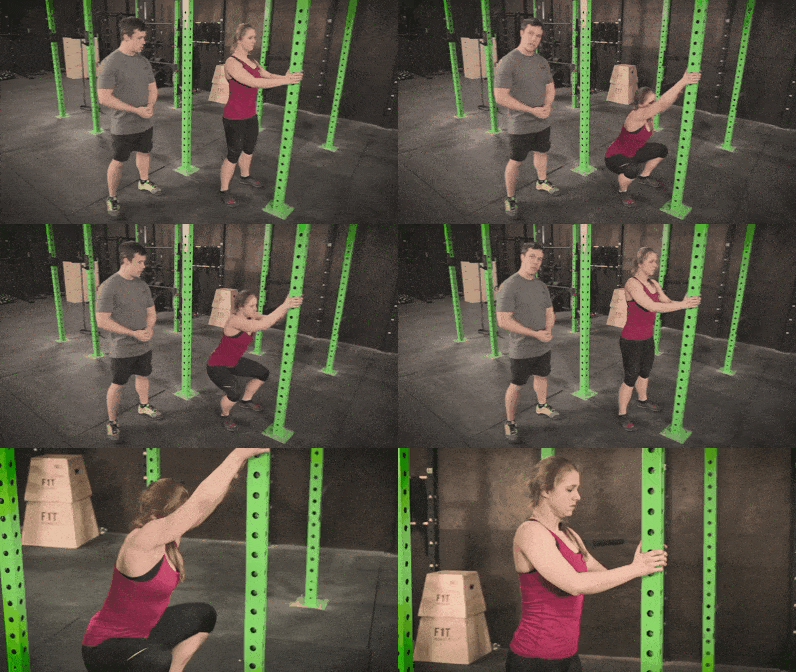
1) Assisted Squats
Working up to an unassisted squat in your workout, or just need a good option for your warm-up? Enter the assisted squat! Hold onto anything safe and stable (a countertop, a chair, the wall) to put some of the work off your legs and into your arms.
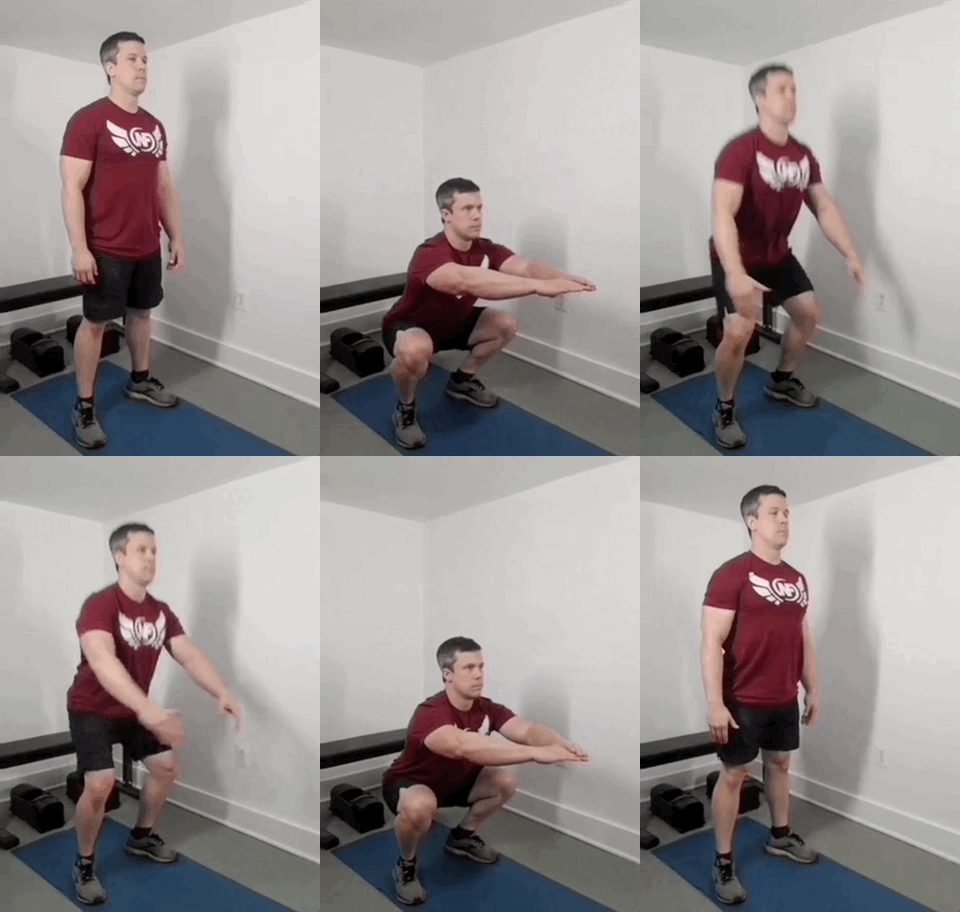
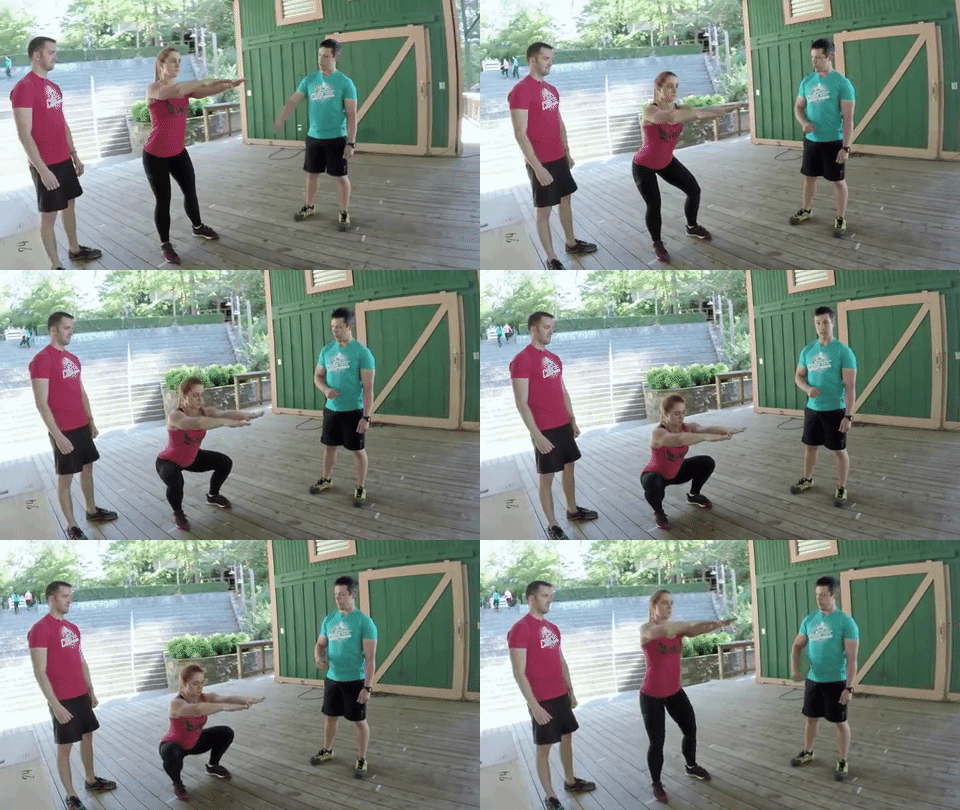
2) Bodyweight Squat
In the video above, we cover five common mistakes folks often make when performing a squat.
Give it a watch so you don’t make them too!
3) Pause Squat
Is the regular squat feeling too easy? Pause for a couple of seconds at the bottom. This will work the muscles a bit more as well as help improve your mobility for the exercise.
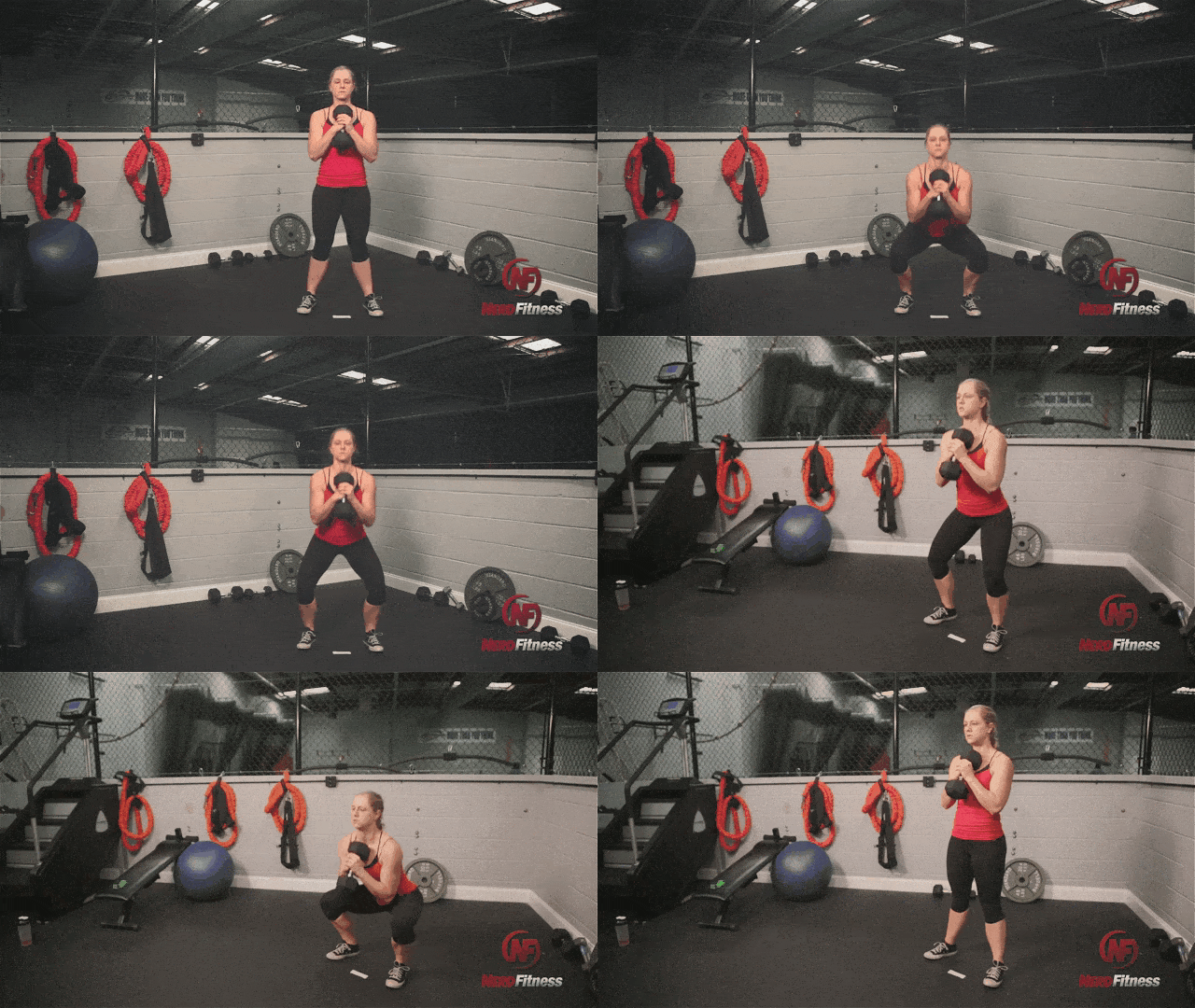
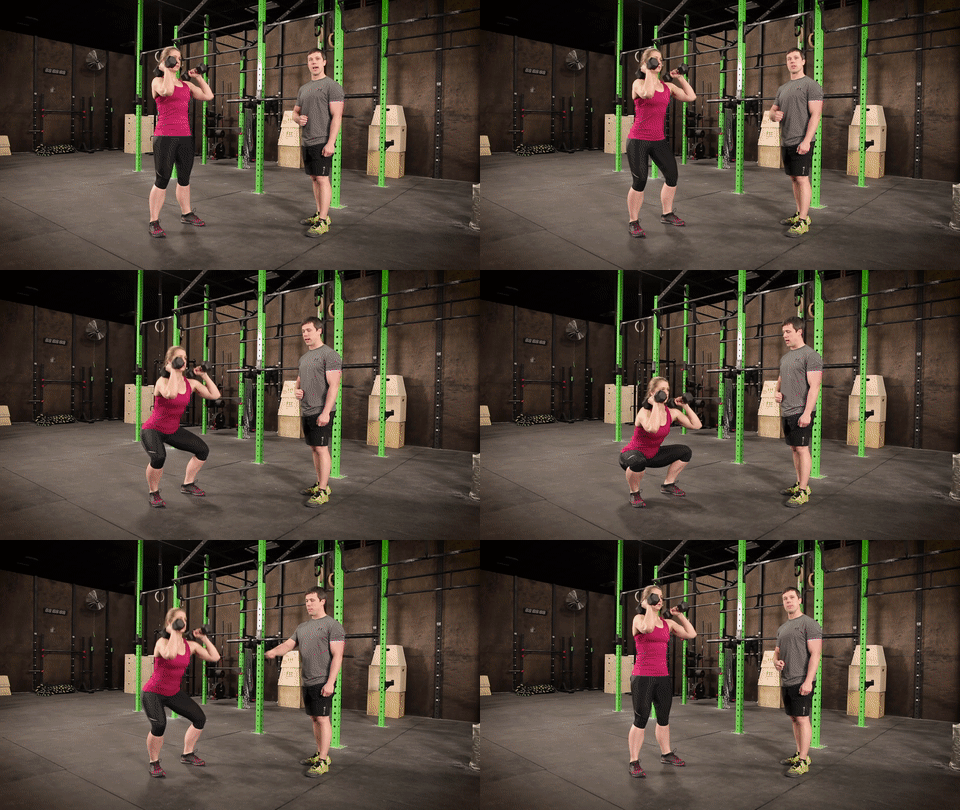
4) Goblet Squat
Have you become a master of the bodyweight squat? Then add some weight to it! Hold a weight with two hands in front of your chest, like a big goblet that you don’t want to spill. This means keeping the chest and weight up!
If you don’t have a dumbbell, then this is the perfect time to hold a suitcase or backpack up for improvised weight as we describe here.
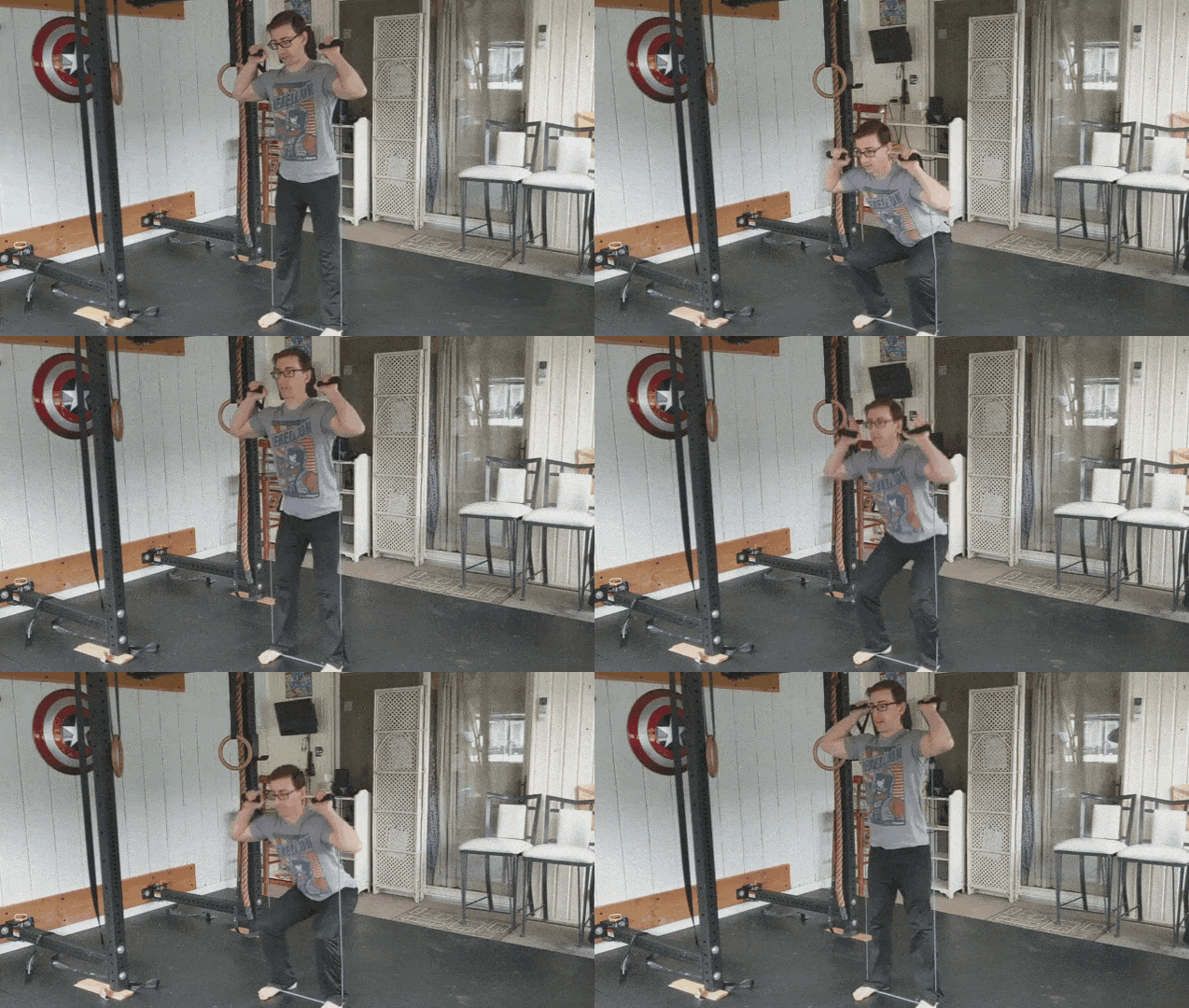
5) Banded Squat
Weighted squats are great, until you have to travel! For a much lighter, but still powerful option, hold a band in your hands and stand on it. If your band is a continuous loop, you can also stand on it and drape the band over the front of your shoulders while crossing and lifting the arms up.
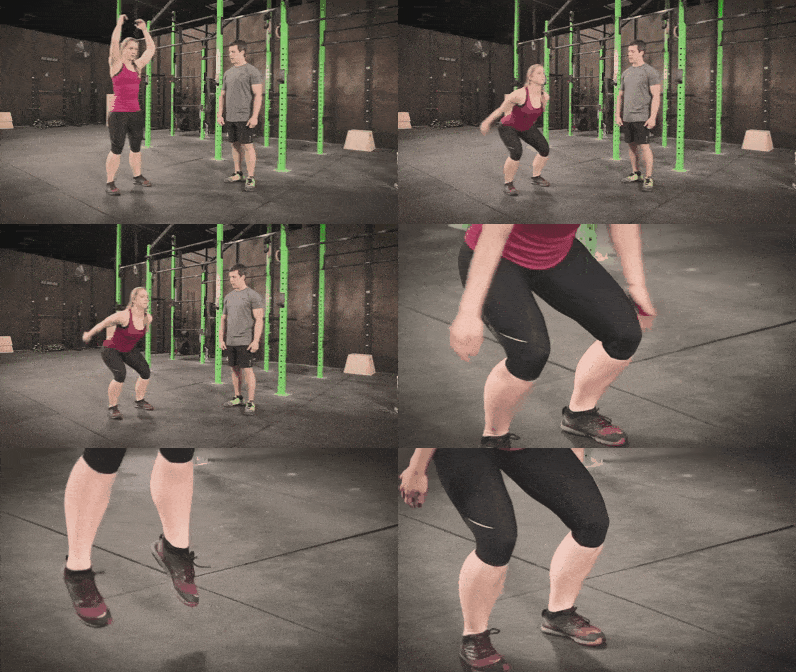
6) Jumping Squat
No weights? No bands? No problem! Add some explosion to the movement and jump off the ground for each rep. You don’t have to jump sky high, or honestly even leave the ground. Even just a slight weight reduction should prove more challenging than a regular bodyweight squat.
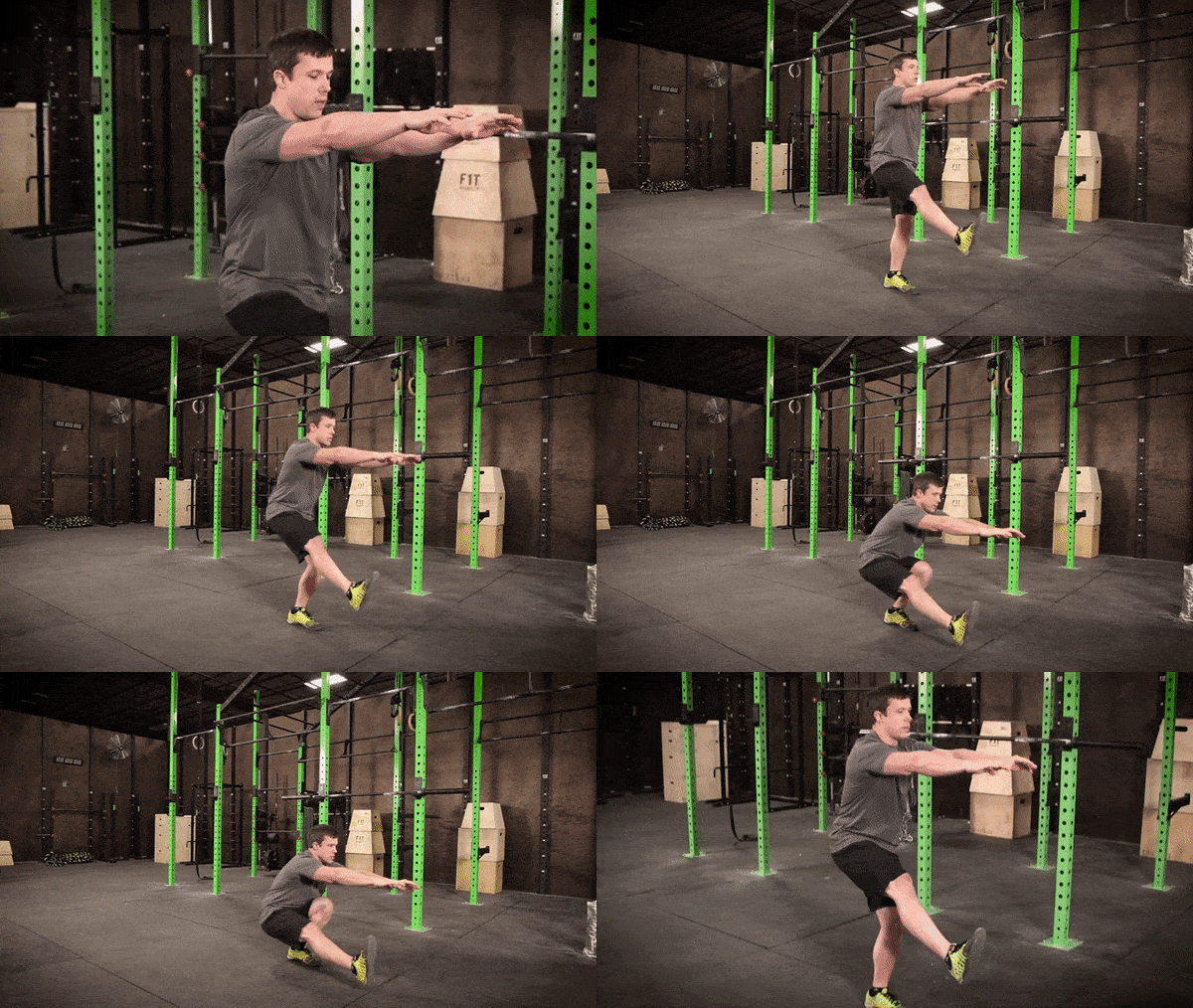
7) One-Legged Squat (do 5-8 per side)
Ready for the ultimate challenge? Build up enough strength to do a squat with just one leg! This is an amazing variation when you find yourself with no gym and no equipment. Just like the regular bodyweight squat, you can work this assisted first by holding onto a chair or doorframe.
We cover a lot of the finer points in our YouTube video – getting your first one-legged squat:
Well, not only will a deadlift challenge our legs. But really, it’s an EVERYTHING exercise, as we engage every muscle in our body throughout the movement:
Posterior chain and legs? They’re the powerhouse, working like a lever to hoist that weight up.
Back and core? Engaged throughout the movement as we keep our whole body tight and steady.
Shoulders and traps? They’re working hard to keep the weight secure as we lift.
So any solid leg day workout should aim to include deadlifts in it.
Deadlift variations to choose from:
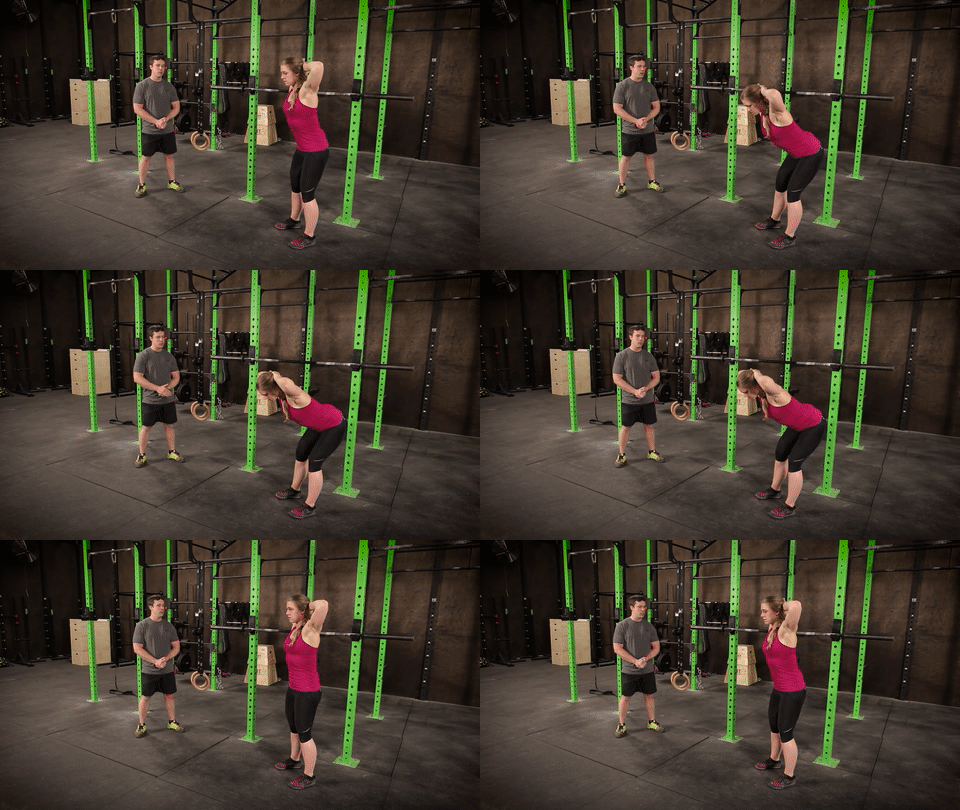
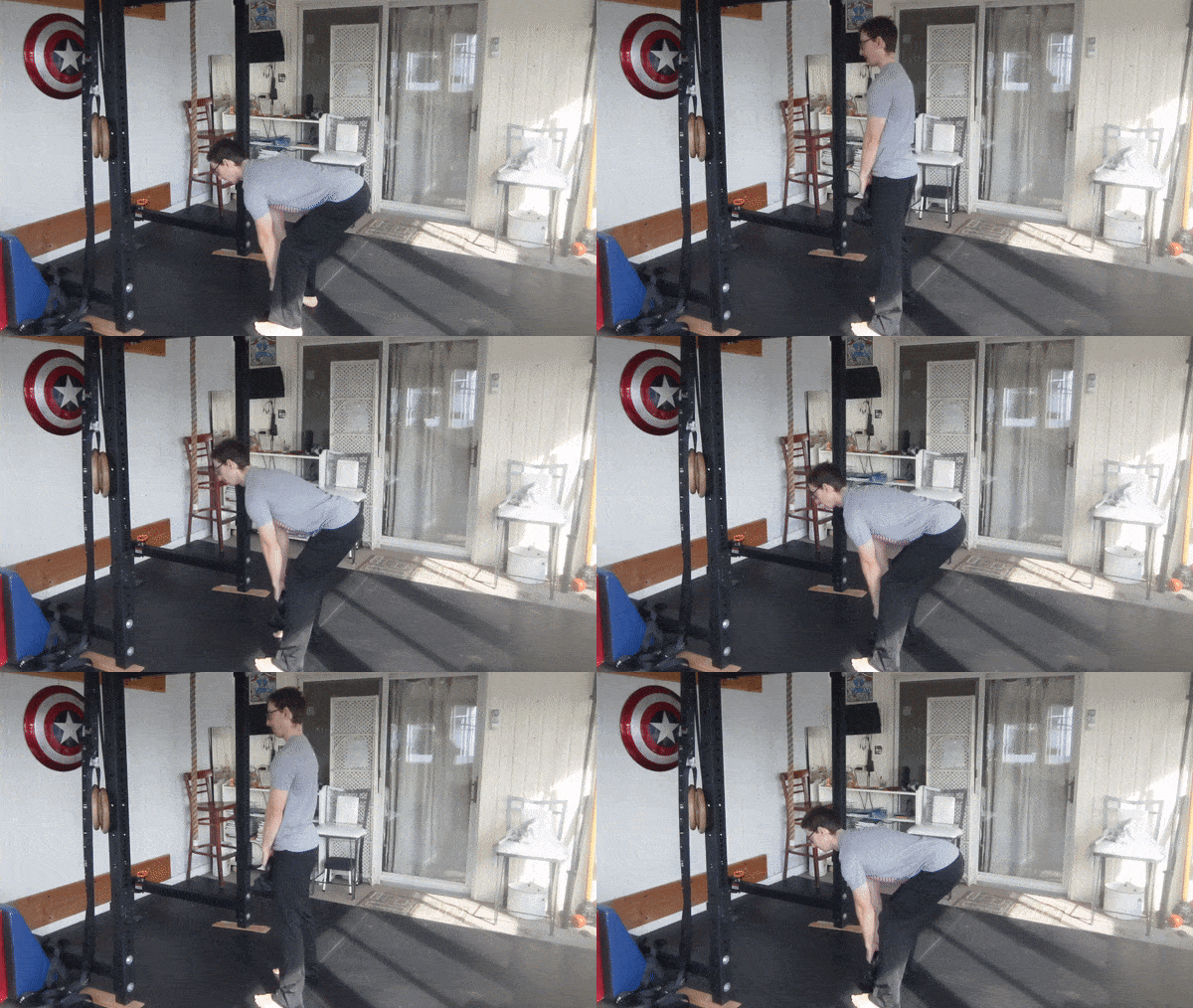
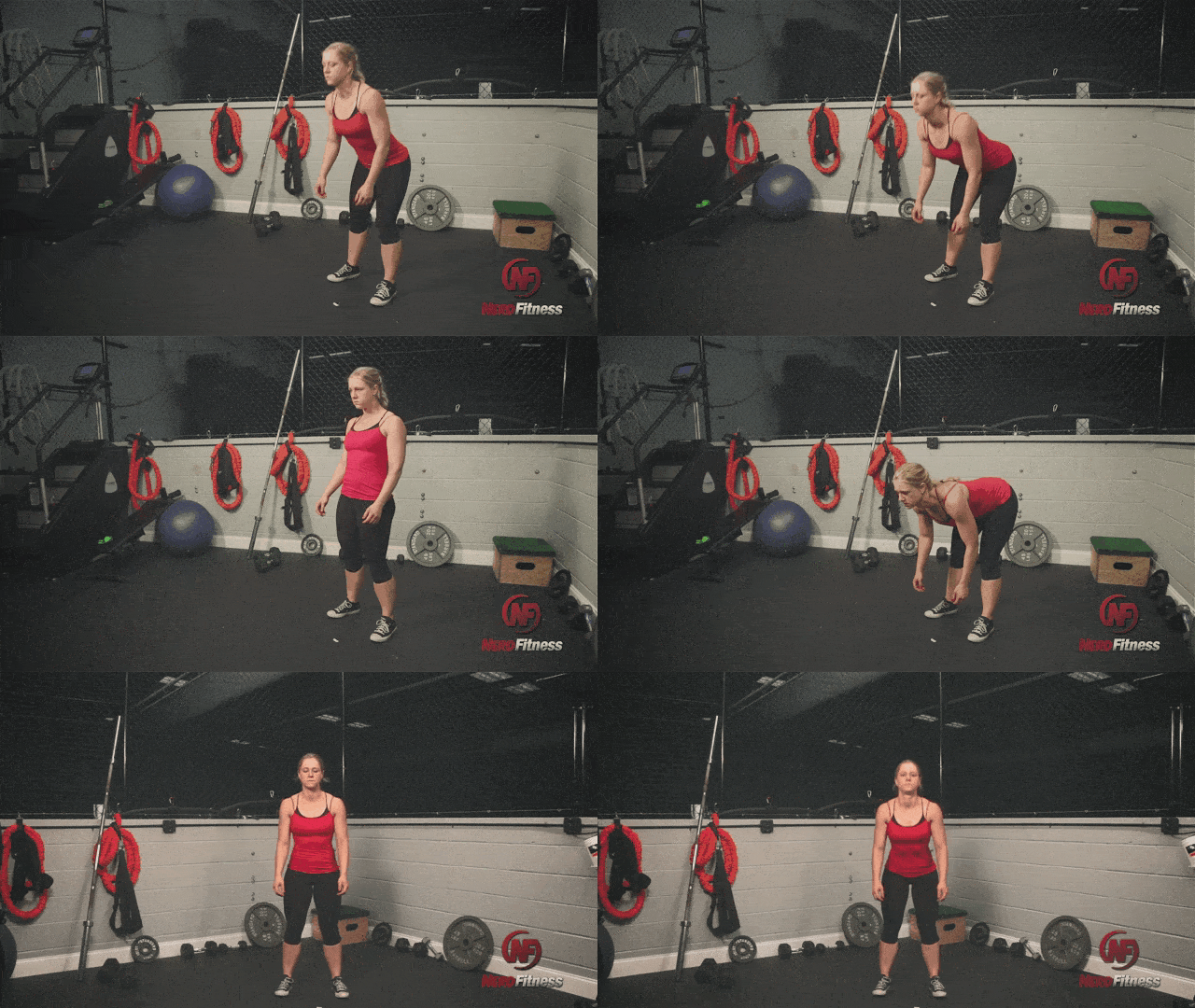
1) Bodyweight Deadlift (Good Morning)
While we’re not “lifting” anything in this variation, it’s still the same movement of hinging at the hips and leaning forward. You can keep your hands in front of you holding imaginary weights, or placed up behind your head for an exercise that is often called the “good morning”.
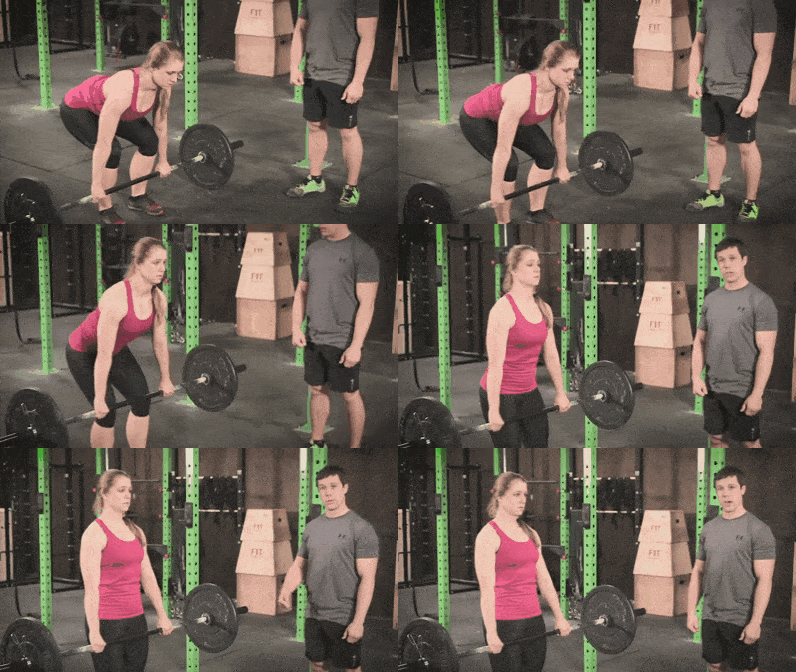
2) Weighted Deadlift
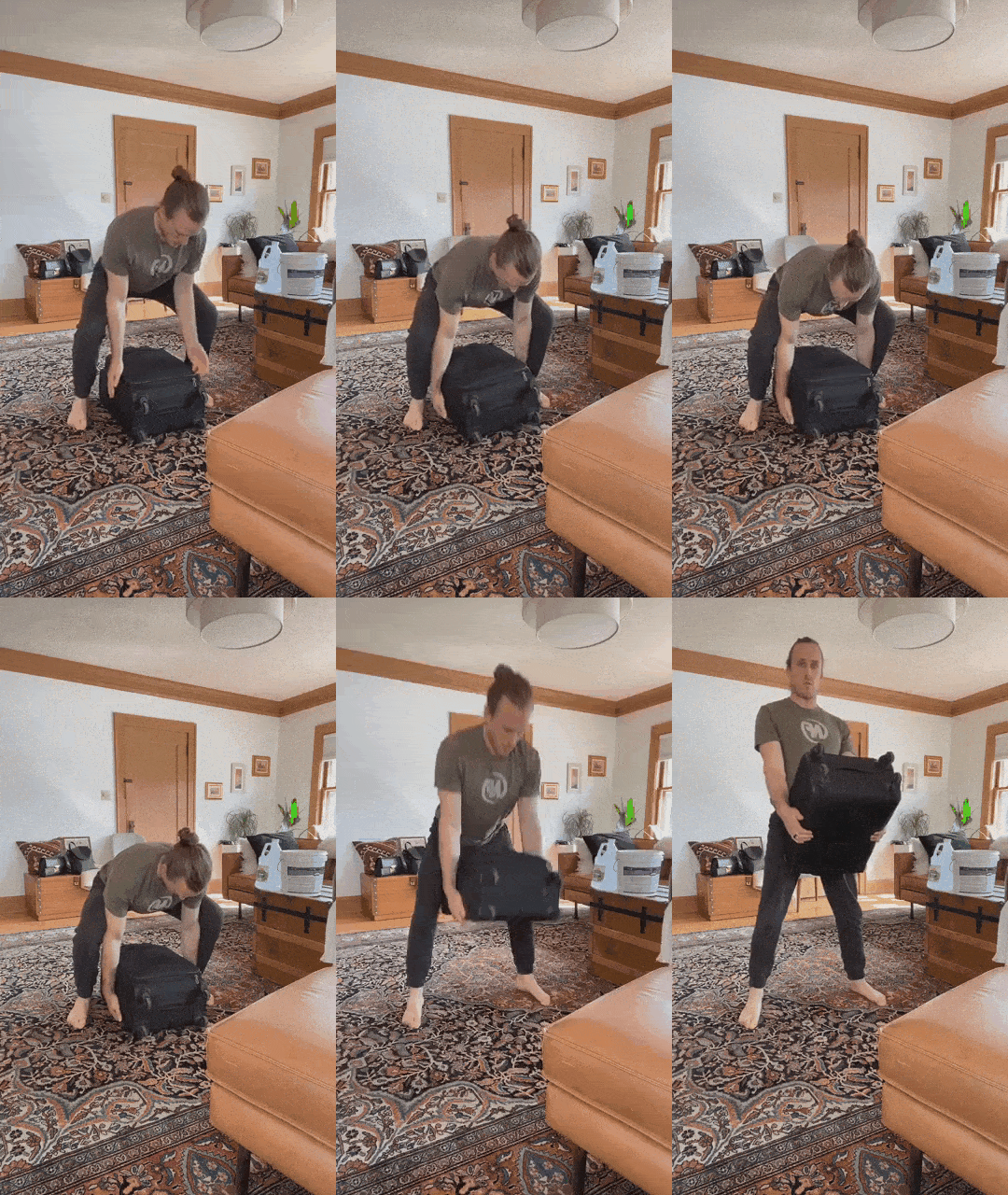
We can pick up dumbbells, kettlebells, or barbells. At home, we might be picking up luggage, backpacks, or sandbags. In any of these examples, the form remains the same! Push your hips back and lean forward, like you did for the good morning.
Once you’ve leaned forward a bit, then bend your knees slightly to be able to reach your weight. Grab strong and stand up tall. Put the weight back down by reversing the process. Hips back, lean forward, and bend the knees slightly.
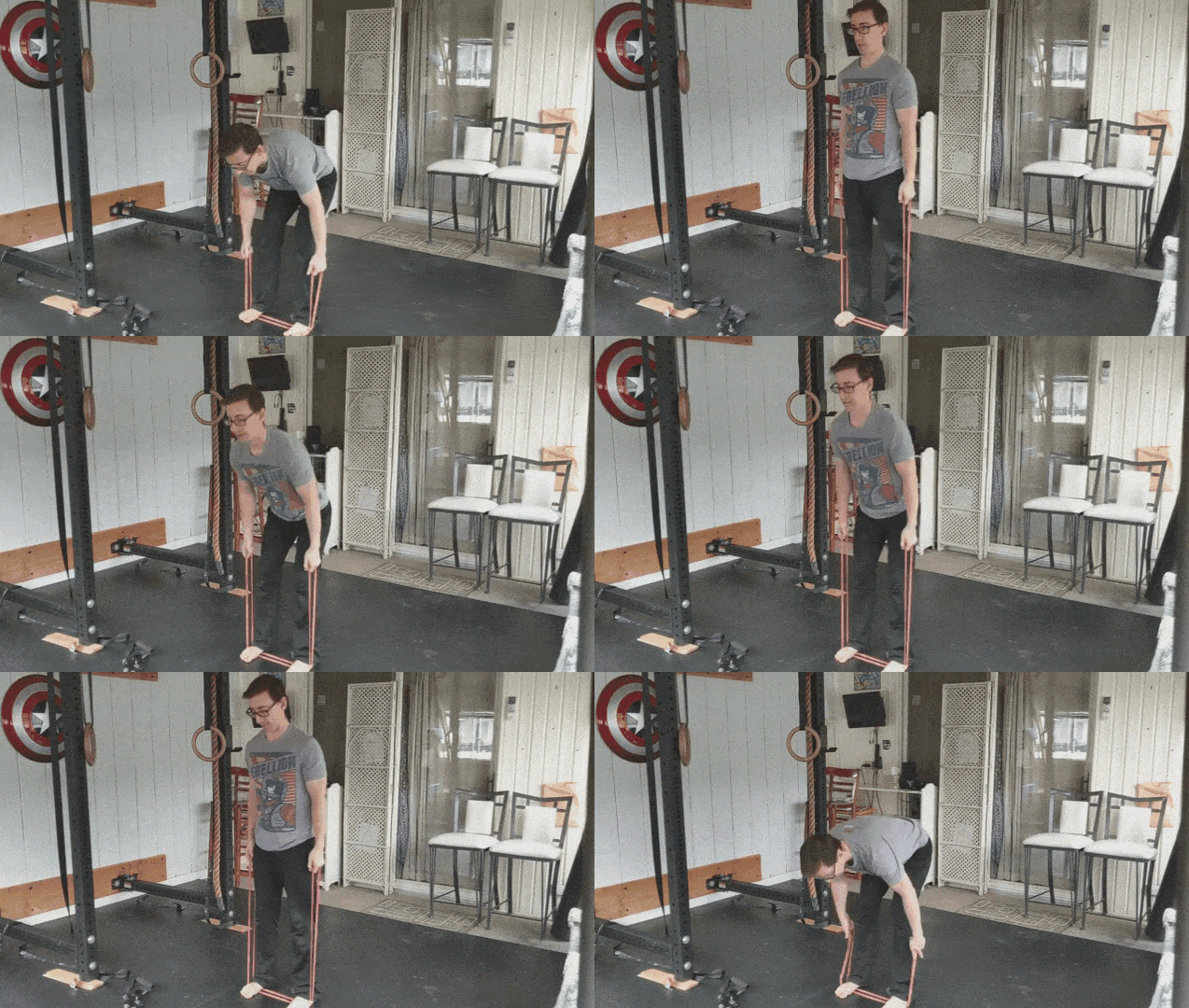
3) Banded Deadlift
No weights? Again, no problems. You can stand on a band and work the deadlift.
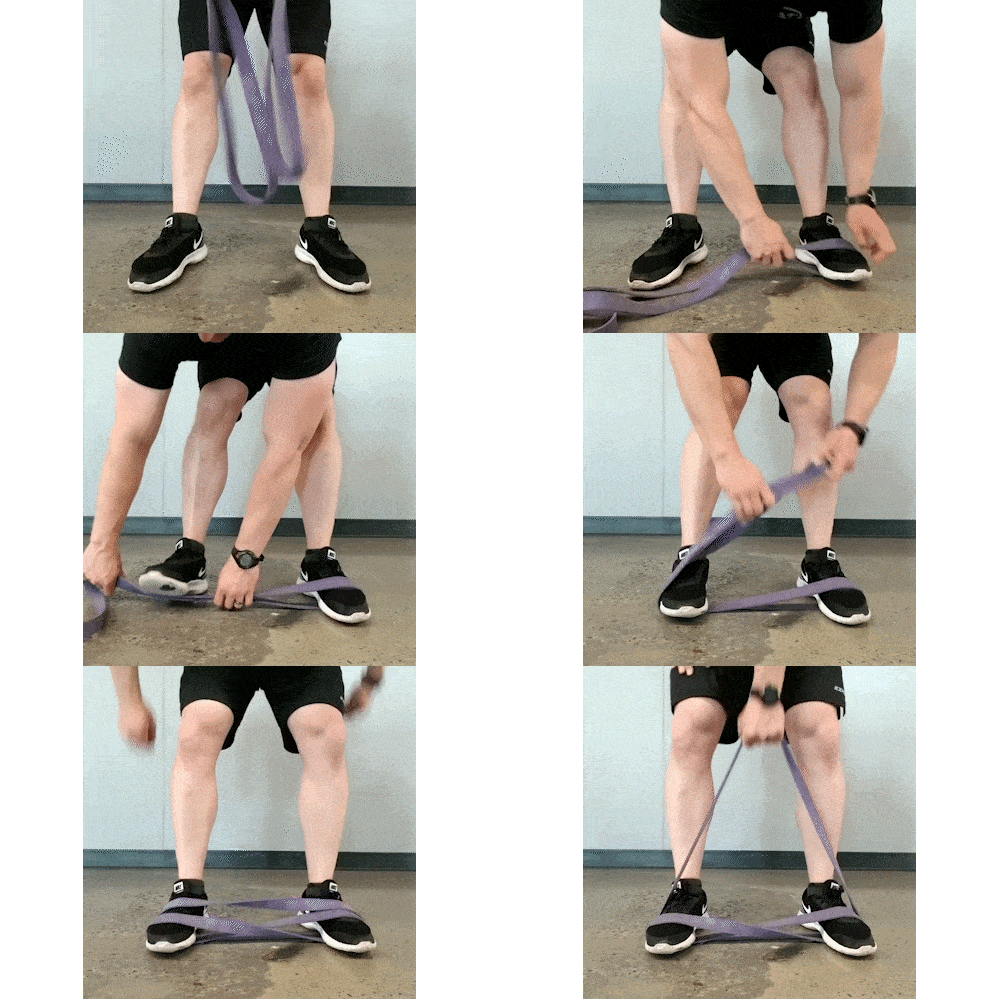
If you have a close-looped band, another option is to loop the band around one foot, then under the second foot, and then back around the first foot. This will give you a cat’s cradle of bands between your feet where you can grab one to four bands to deadlift for a variety of difficulties.
Check the gif for further explanation:
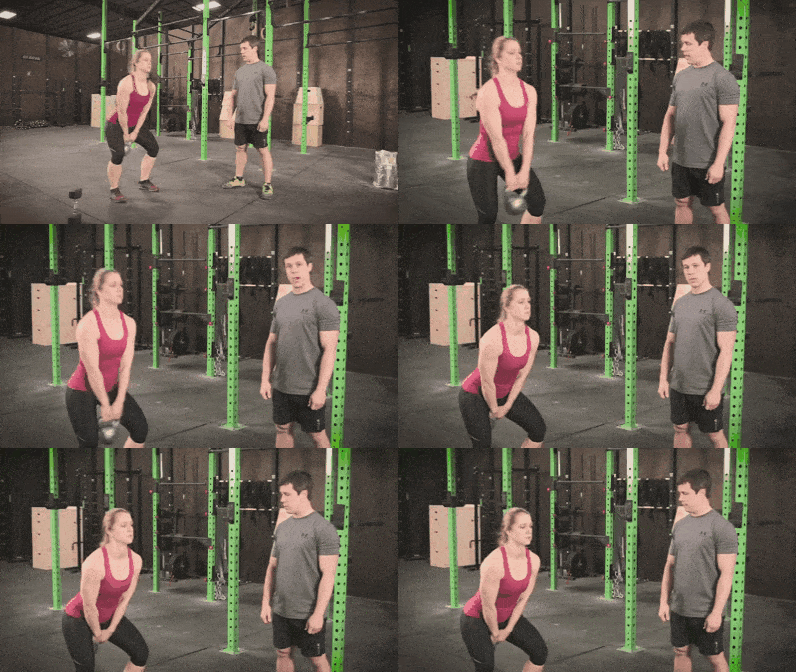
4) Kettlebell or Dumbbell Swing
Just as we added some speed and explosion to the squats, we can do the same thing to the deadlift movement too. This is called ‘the swing’ and can be done with a dumbbell, kettlebell, or even a compact backpack.
The biggest focus is to make sure the power is coming from your hips and they pop open, and not from your arms lifting the weight.
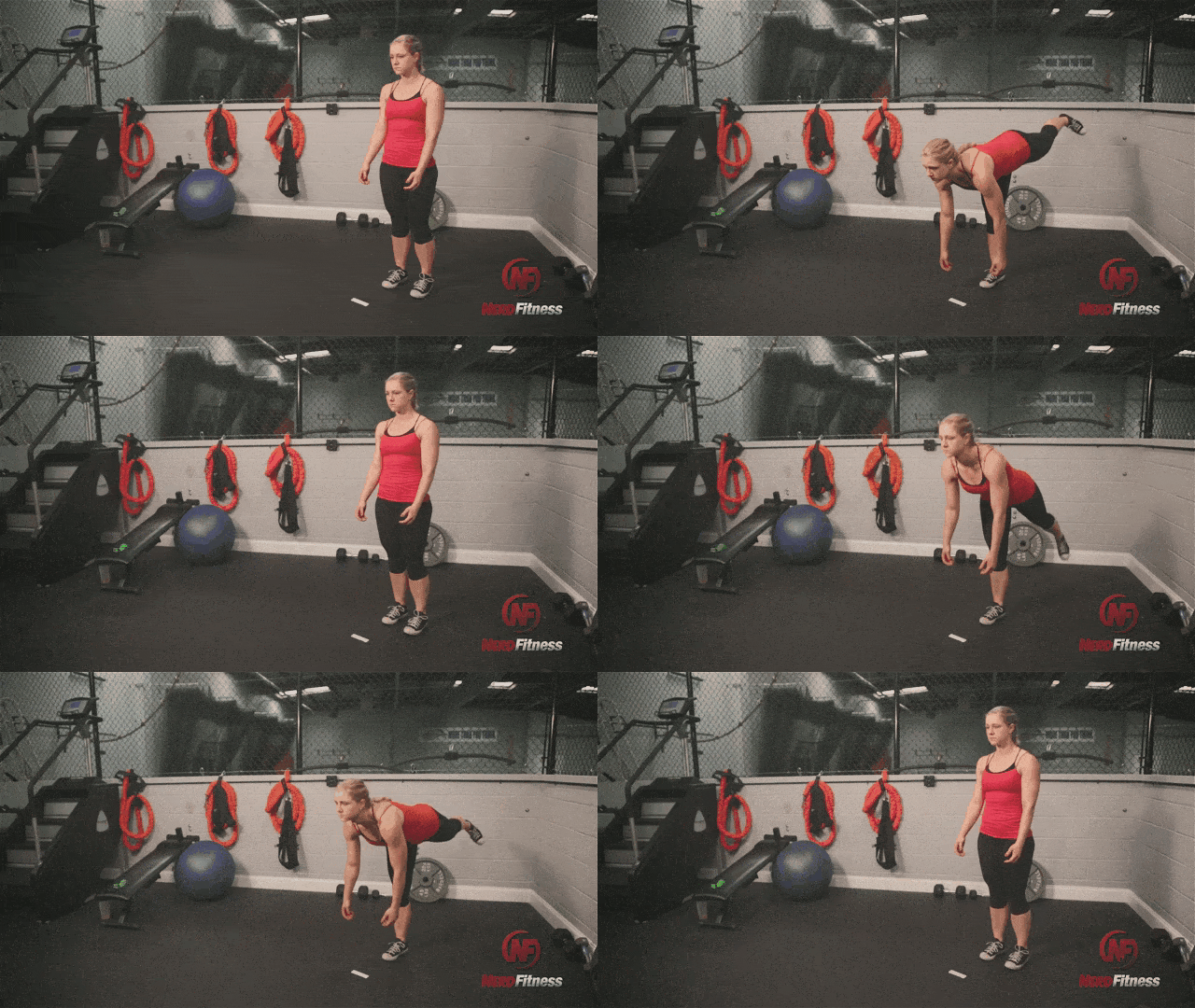
5) One-Legged Deadlift (do 8-12 per side)
As with the squat, if we don’t have bands or equipment, then one of the best go-to’s is to perform the exercise on one leg. This puts more work on that single leg, as well as makes it more challenging for our balance as we go through the reps.
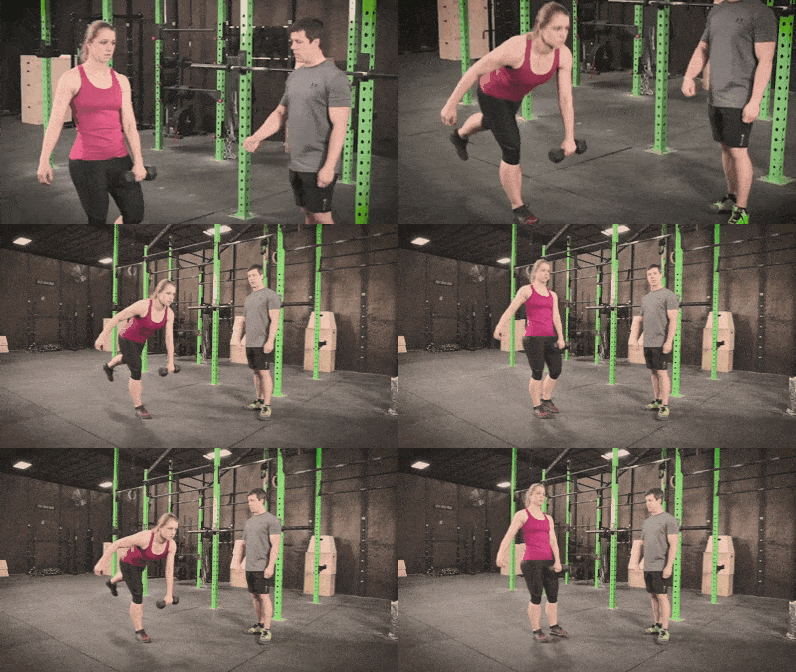
6) Weighted One-Legged-Deadlift
Have some weights to use, but a two-legged deadlift is too easy – then do it on one leg! Take your time, and continue to focus on pushing those hips back at the start of the exercise.
When done correctly, lunges target the quadriceps, hamstrings, glutes, and calves, enhancing lower body strength and stability. Additionally, because they are iso-lateral (your feet aren’t in line with each other), lunges help stress the lower body in a different way that can help reduce imbalances from left to right.
When you add it all up: lunges are perfect for leg day!
Lunge variations to choose from:
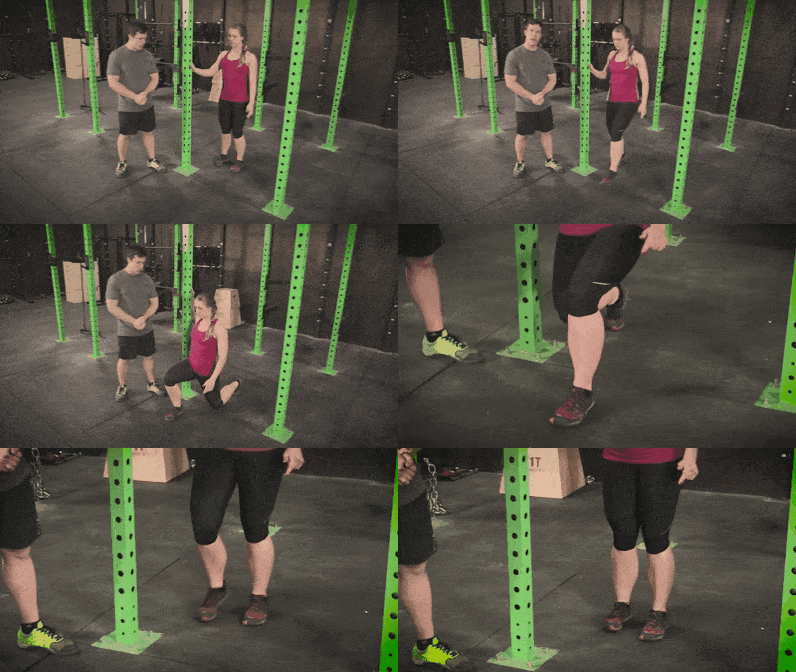
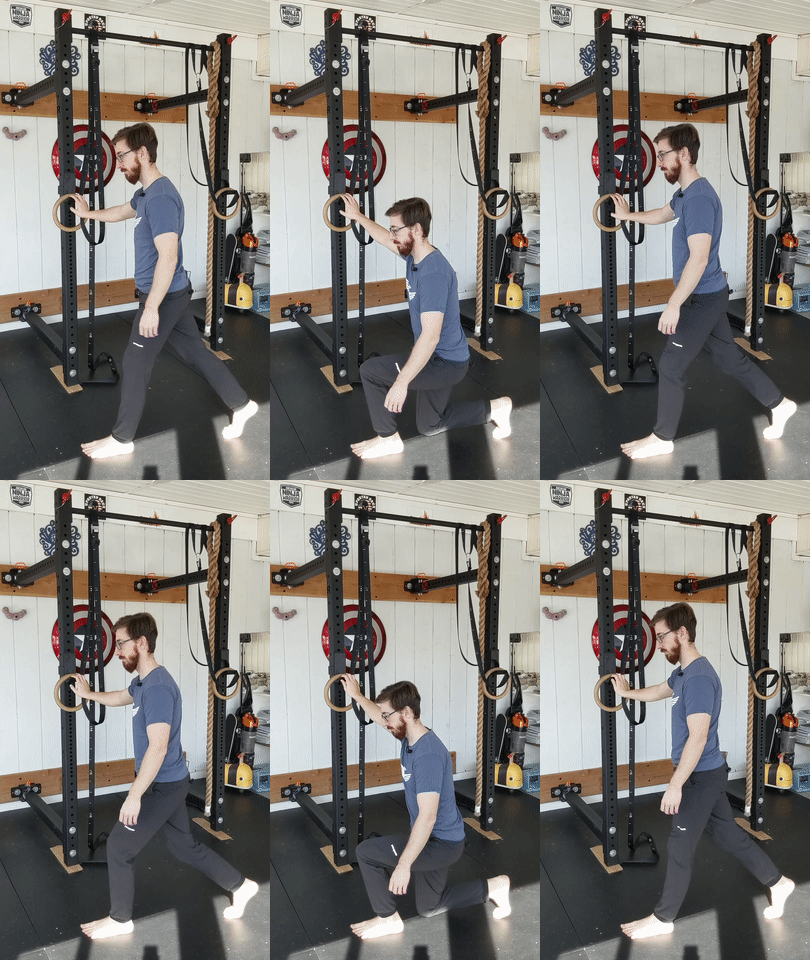
1) Assisted Lunges
Just like with the assisted squats, for assisted lunges, we can hold onto something stable like a countertop, chair, or wall. The idea again is to put some of the work into your arms and off your legs, as well as provide more stability.
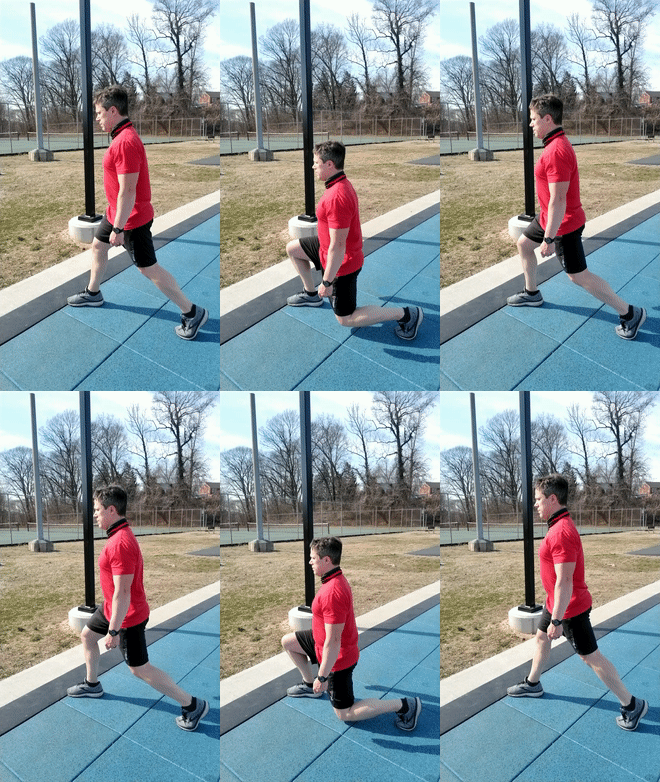
2) Split Squats
The split squat is another great variation to work on the way to a regular bodyweight lunge. While it looks very similar to a lunge, the biggest difference is that we’ll set our feet once, and then keep them in place and we move up and down. By keeping the feet stationary, the exercise can be a bit easier to balance.
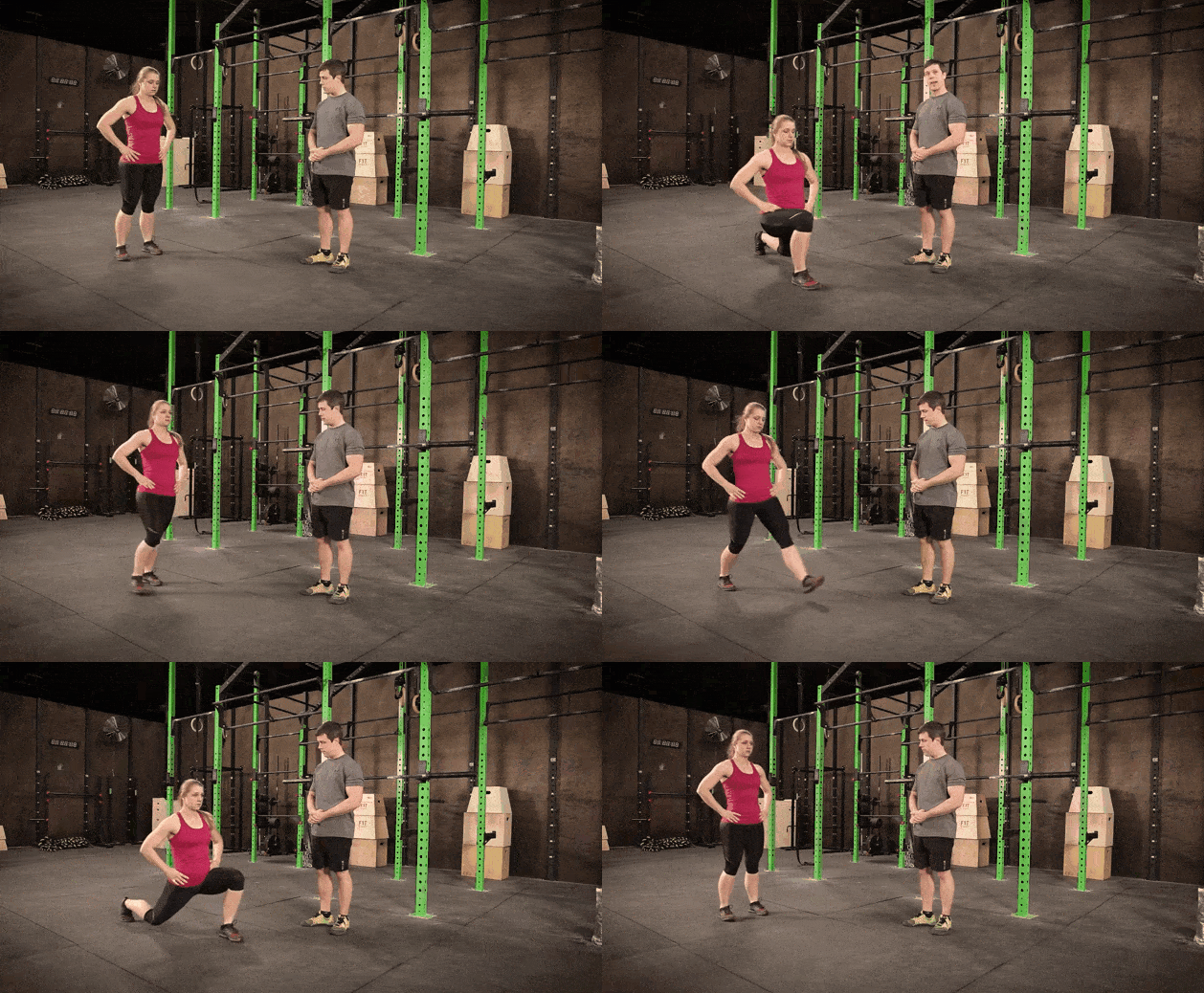
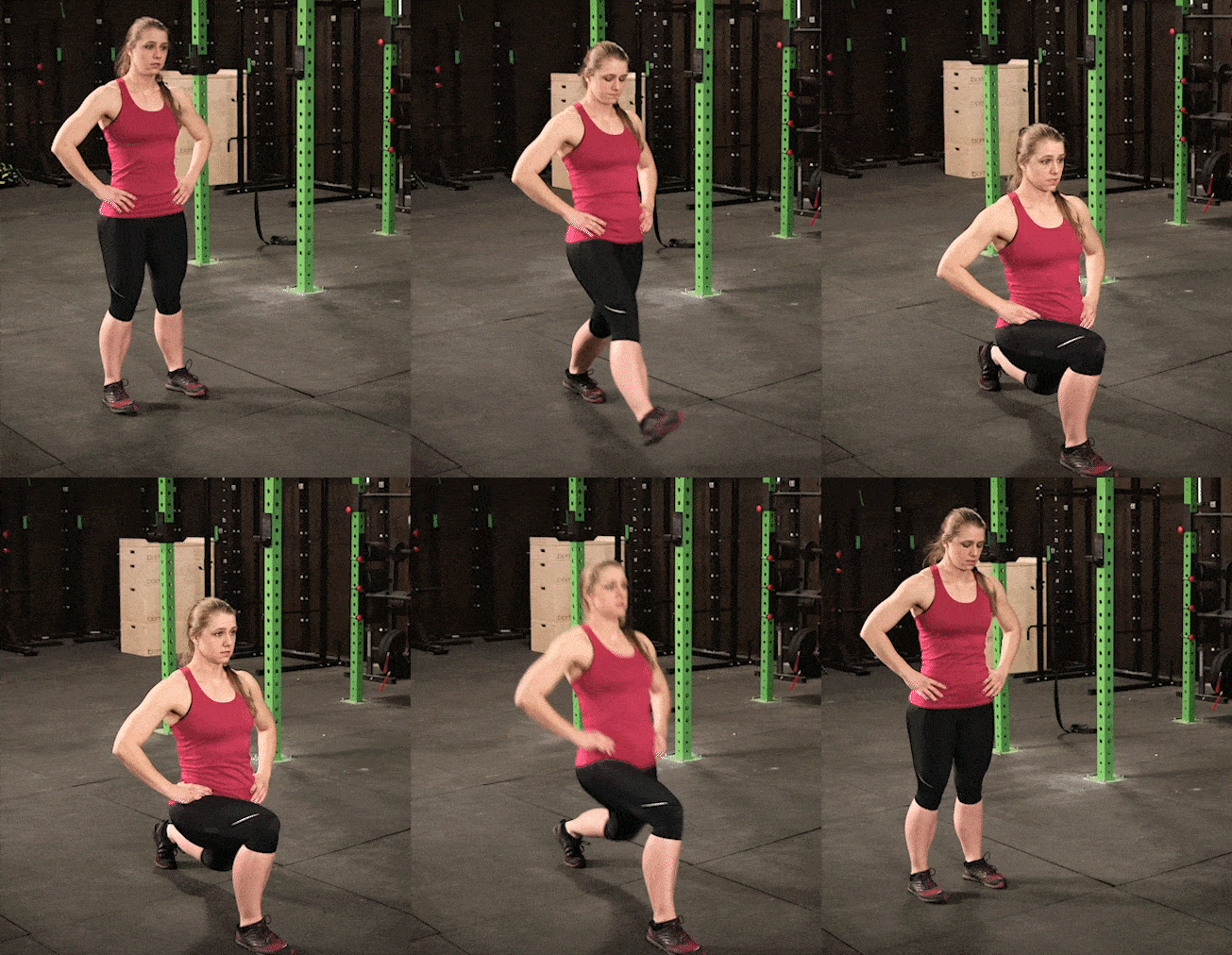
3) Bodyweight Lunges
The lunge puts stress on the legs greater than just a bodyweight squat, while also challenging our balance. Step out far enough to be able to sink down so that your back knee comes close to the ground (it can lightly touch, but don’t slam it down).
If stepping forward feels a little achy for the knee, you can work on stepping backward into position (aka the reverse lunge).
4) Pause Lunges
If the regular lunge is feeling strong, then add a pause! We’ll pause at the bottom of each rep for a couple of seconds before returning to standing. Get as low as you can, while still keeping the back knee off the ground.
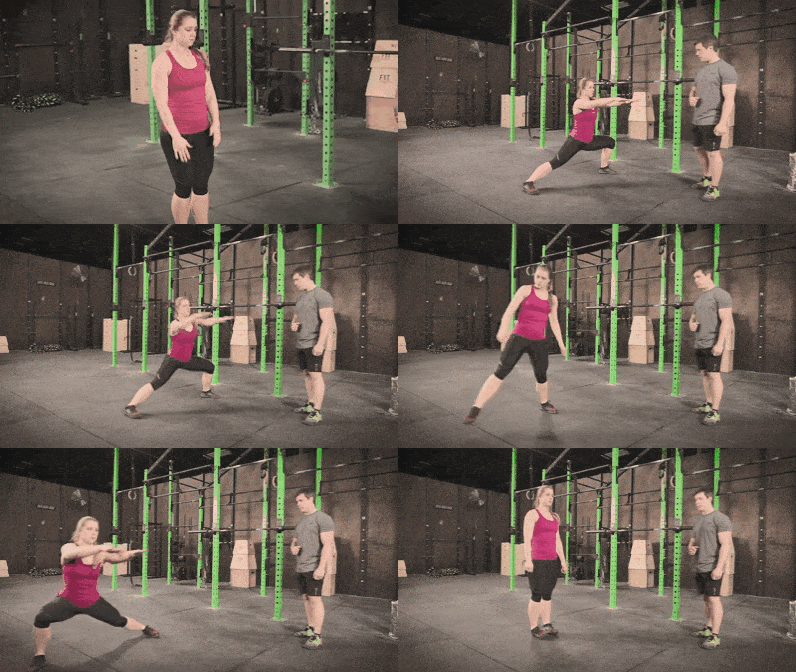
5) Lateral Lunges
Lateral lunges are a deceptively challenging lunge variation. While many of our movements in the gym have us moving forward and backward (the sagittal plane, for you anatomy nerds). The lateral lunge has us moving sideways (the frontal plane), so it may feel new and unfamiliar.
Take your time, use an assist if needed, and look to sink down as low on your leading leg as you would in a squat. The other leg can remain straight, with the foot on the ground.
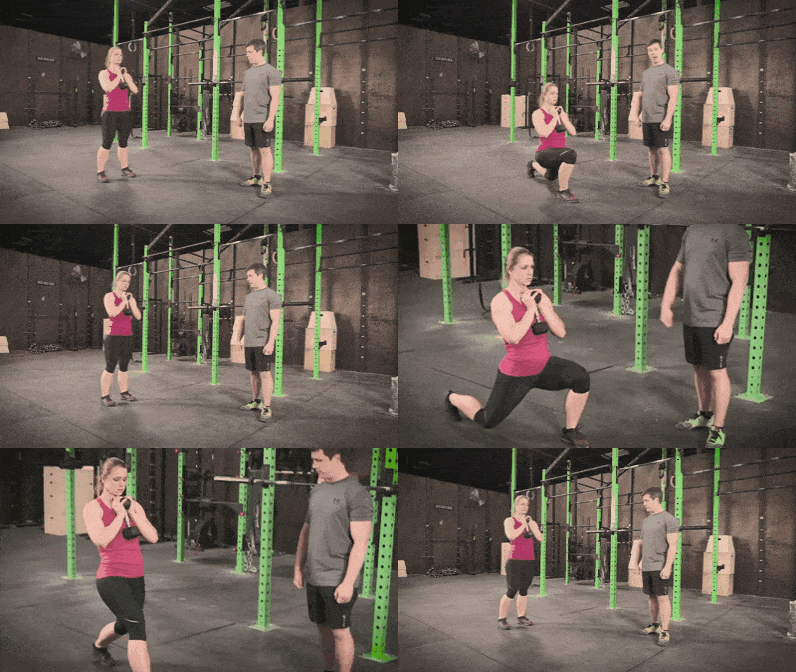
6) Weighted Lunges
Are all of these lunges too easy so far? Then add some weight! You can hold weight up at your chest, like the goblet squat, or in your hands. If you have some weight in a backpack, you can even wear it to make the exercise more difficult.
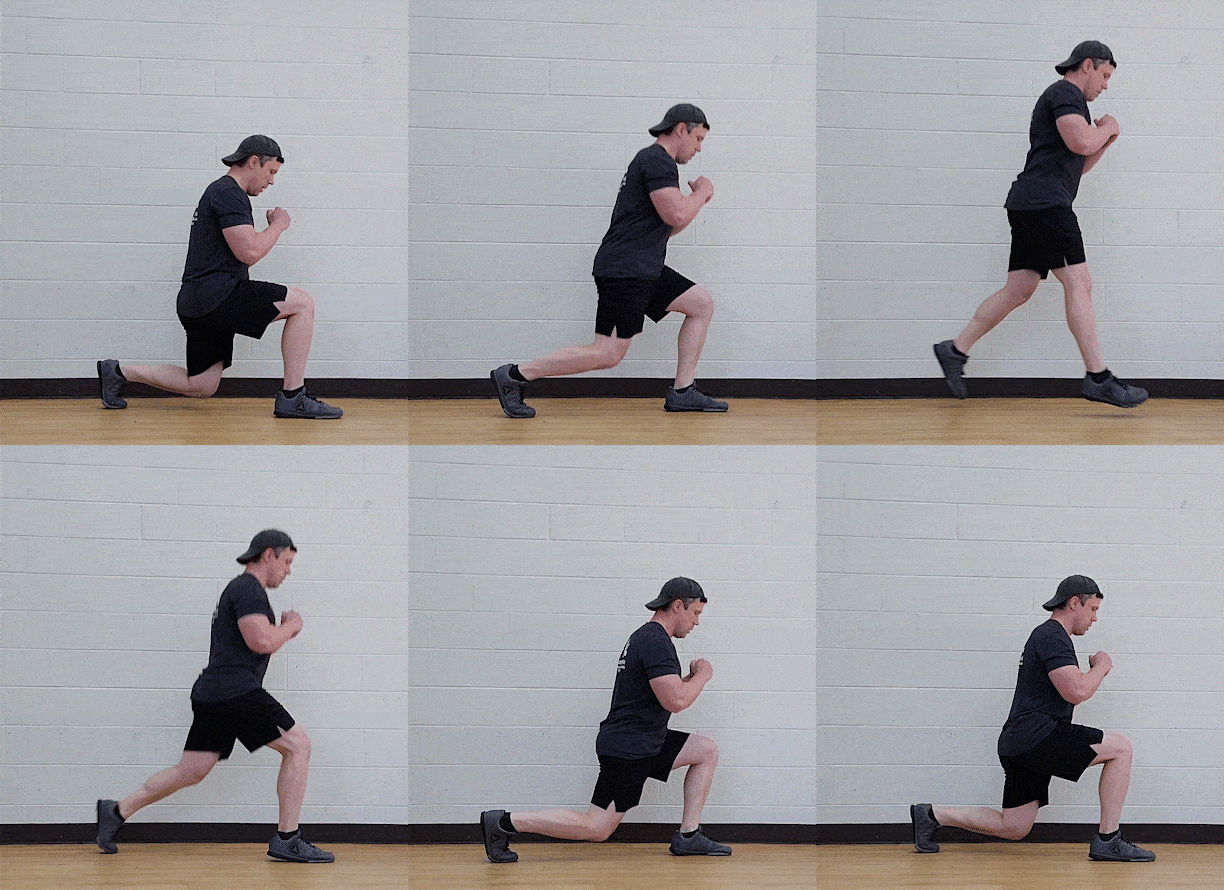
7) Jumping Split Squats
When you’re working out, but don’t have any extra weight to add to your lunges, this dynamic variation will get the job done. Get set just like a regular split squat – stepping out with one foot and sinking down. But now, instead of just split squatting up and down with the feet in place, you want to explode off the ground and switch feet in mid-air.
No surprise here that calf raises target our calf muscles…it’s right in the name.
But the exercise also promotes foot and ankle strength, contributing to overall body balance. That makes it a great exercise for leg day.
Calf Raise variations to choose from:
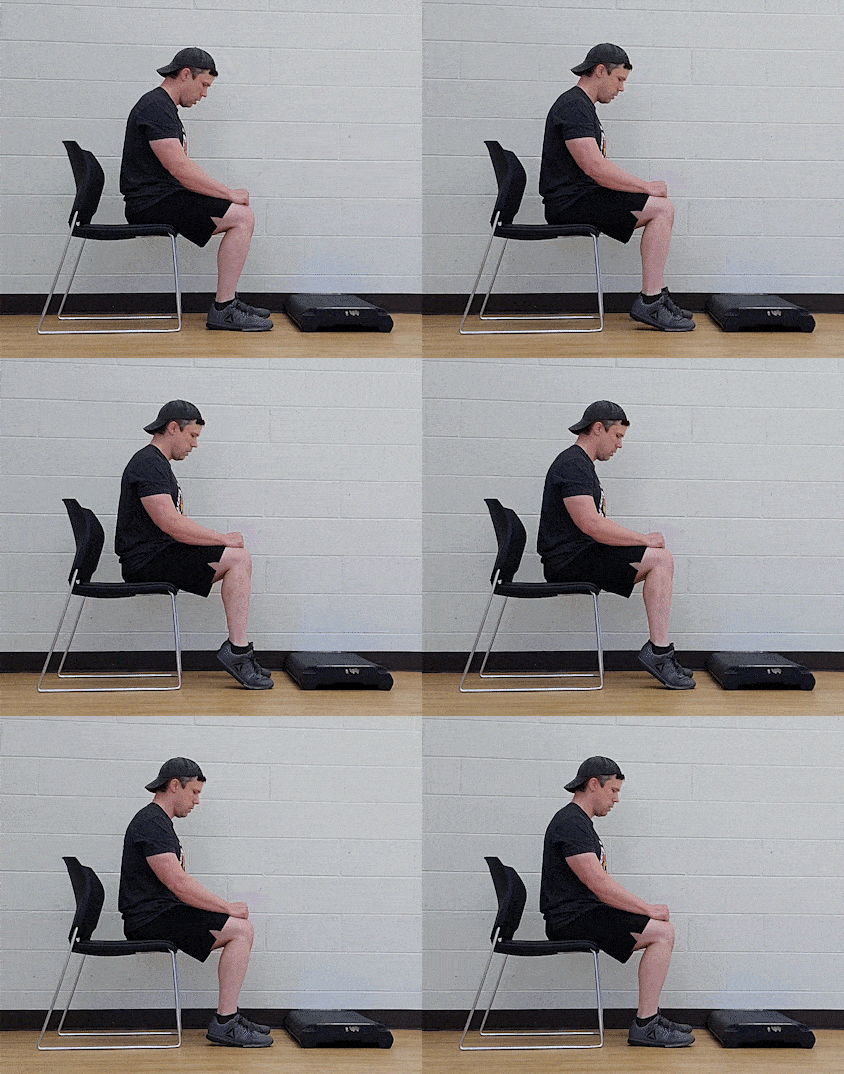
1) Seated Calf Raises
If this is your first time doing dedicated calf work, I’d highly suggest starting with seated calf raises. The extra focused work on this muscle can make them sore very easily, so this a good option to dip your toes in.
2) Standing Calf Raises (Floor)
If seated calf raises are feeling strong, then stand up to add a bit of weight to the movement. Press your toes through the ground and get up as high as you can. Hold onto a wall, chair, or countertop to assist with your balance, but look to keep most of the weight still in the legs.
3) Standing Calf Raises (Step)
Adding a step to your standing calf raises allows you to drop your heels lower and increase the range of motion. This also increases the likelihood that it’ll be a little tough to walk normally the next day!
Get a good stretch at the bottom, and then really extend up to the top.
4) One-Leg Calf Raises (Floor)
Once two-legged calf raises are no problem, then it’s easy to increase the intensity by working one leg at a time. As before, we can start on the ground to get more weight into the movement while working in a smaller range of motion.
5) One-Leg Calf Raises (Step)
Ready to turn those calves into cows? Then let’s get up on the step and work the one-legged calf raise. All the previous cues still apply – look to drop your heel below the step and get a good stretch before pushing through and really extending at the top.
If this continues to feel easy, then your free hand can hold a weight to increase the intensity further.
#5) Step-Up Variation
Step-ups, a versatile leg exercise, amp up strength in crucial muscle groups—quadriceps, hamstrings, glutes, and adductors.
Moreover, being a unilateral leg exercise (since we’re doing one leg at a time), step-ups play a vital role in balancing strength between both sides. This can help us improve imbalances. As we strive to create a killer leg day routine (which is the plan), step-ups definitely deserve a spot in the spotlight.
Step-up variations to choose from:
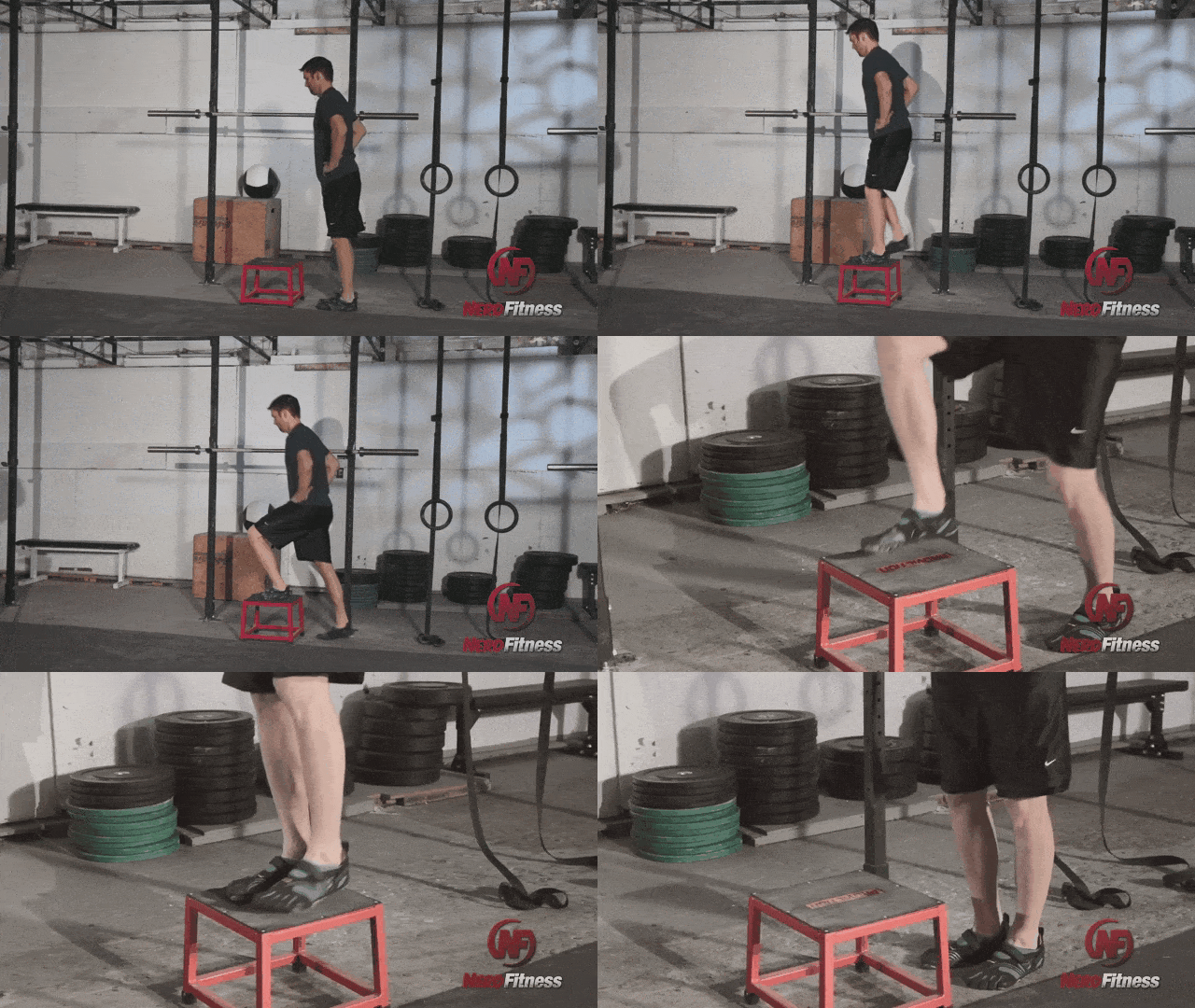
1) Assisted Step-Ups
As with the previous assisted variations, use something stable to help you step up onto the object. You may step onto a stepstool, a step or two on a flight of stairs, or any stable box.
The higher the object, the harder the step-up, but looking for a height that puts your front thigh about horizontal is a good average to work towards.
2) Bodyweight Step-Ups
When the legs feel strong enough, then remove any assist and step up strong. Look to keep the chest up as you stand up tall at the top. Alternate back and forth with which leg you step with, to give the legs an equal amount of work.
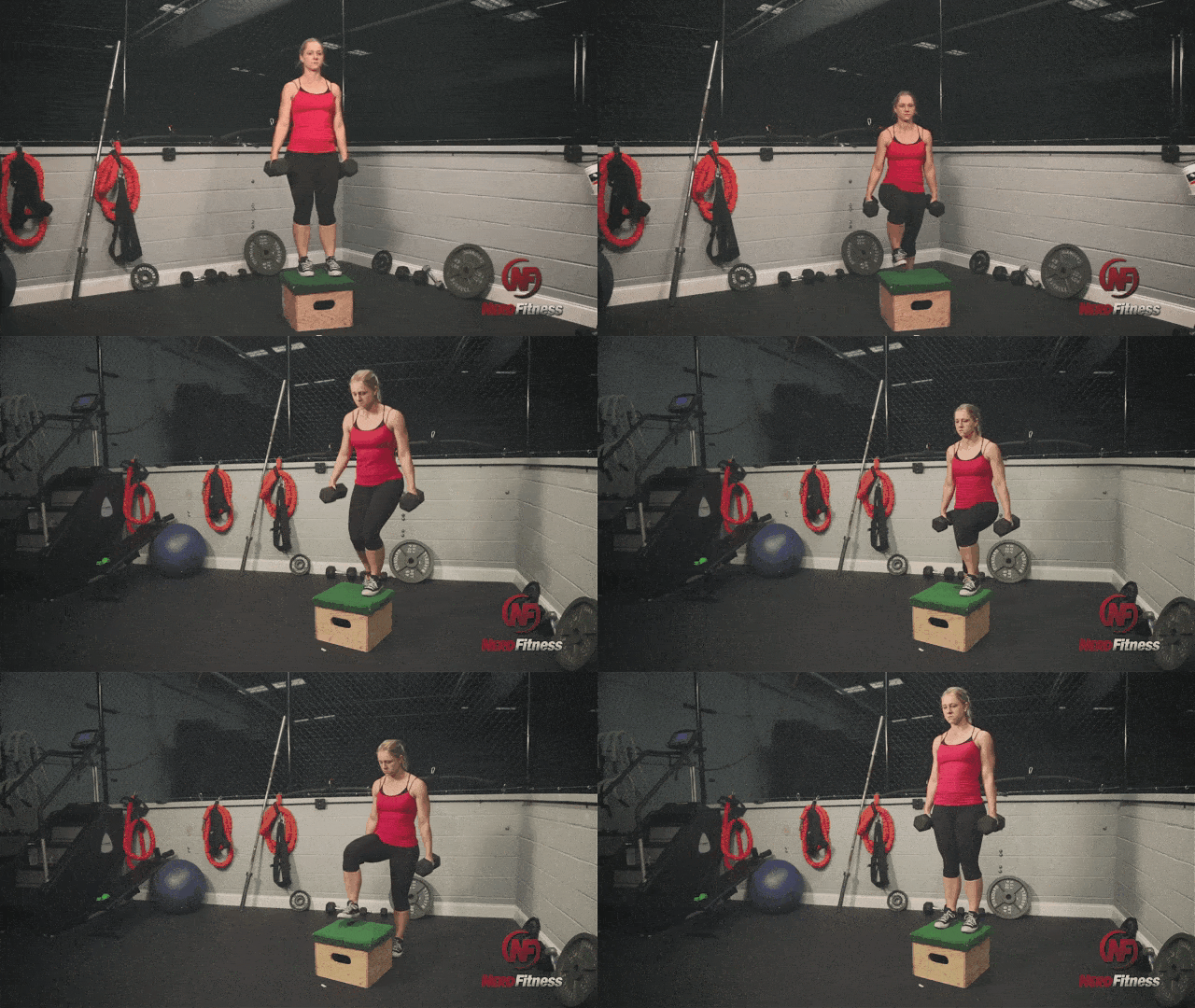
3) Weighted Step-Ups
As we continue to get stronger with the step-ups, then adding weight is the next natural progression. As with the lunges, you can hold weight up at your chest, like the goblet squat, or in your hands. If you have some weight in a backpack, you can even wear it to make the exercise more difficult.
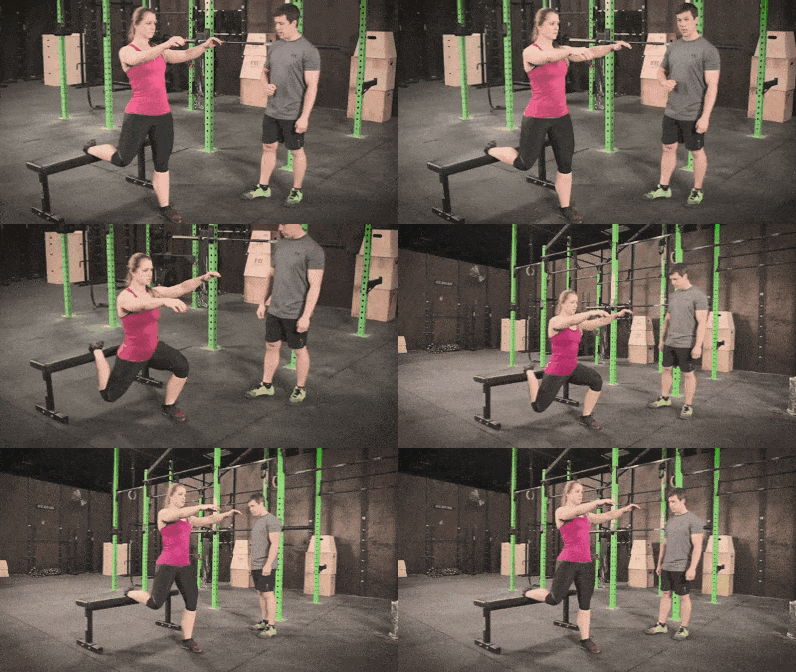
4) Bulgarian Split Squats
While the Bulgarian Split Squat looks like a lunge, we’ll keep it in the Step-Up Variations as A) we should be putting more emphasis on the front leg than both legs and B) you’ll likely be performing this exercise with the same set-up as your step-ups – on a flight of stairs or with a box.
Step out in front of whatever object you’re using, and then place the top of your foot up on the object. If this is too uncomfortable, then you can place a towel or other similar padding to help.
Sink down until your front thigh gets horizontal, and then stand back up. If you feel too “cramped” when trying to descend, then step a little further away from the object.
#6) Shin Raises
Shin raises are great. They make the front shin muscle, called the tibialis anterior, stronger. This muscle helps protect your knees by reducing the force on them when you run or jump. They are also fantastic if you’ve ever suffered from shin splints. So, shin raises are like a shield for your knees during active stuff!
They are also much less frequently worked, so take your time and don’t get frustrated if they feel challenged!
Shin raise variations to choose from:
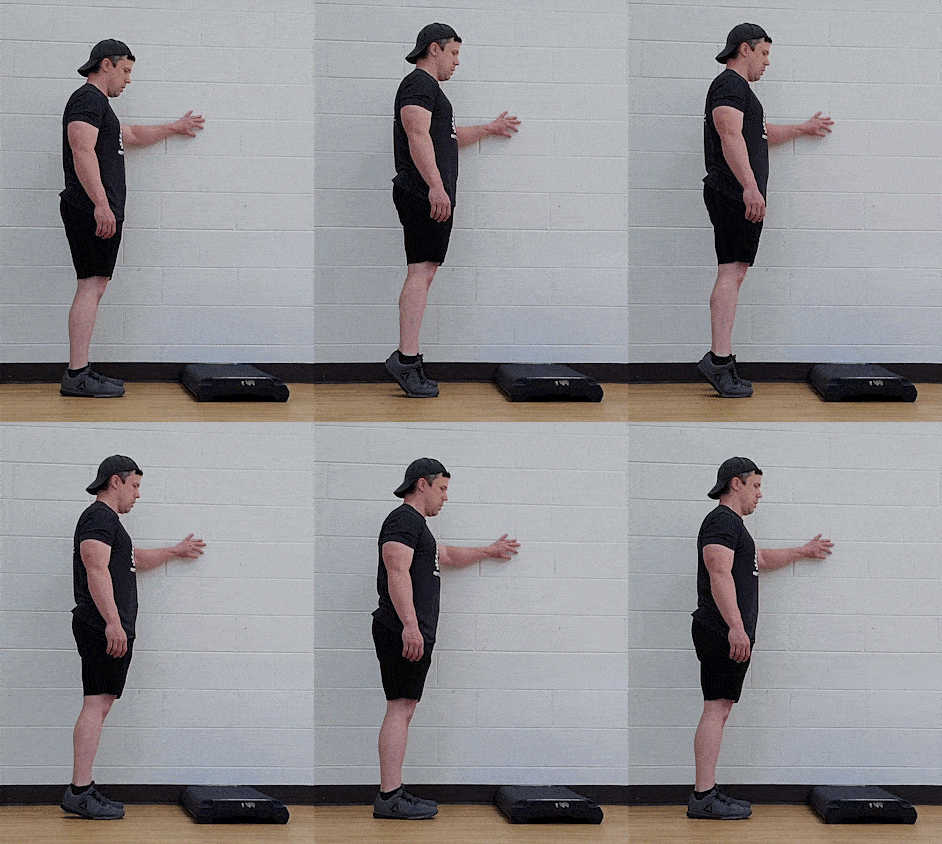
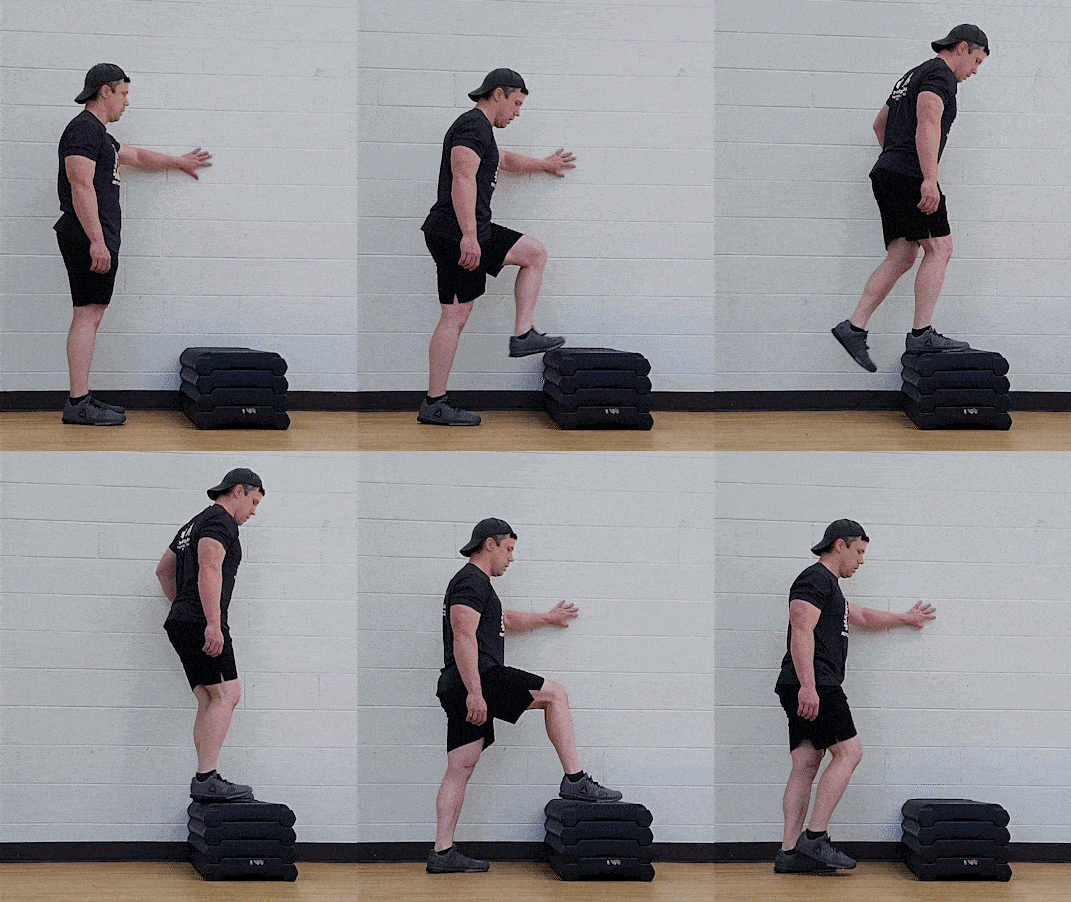
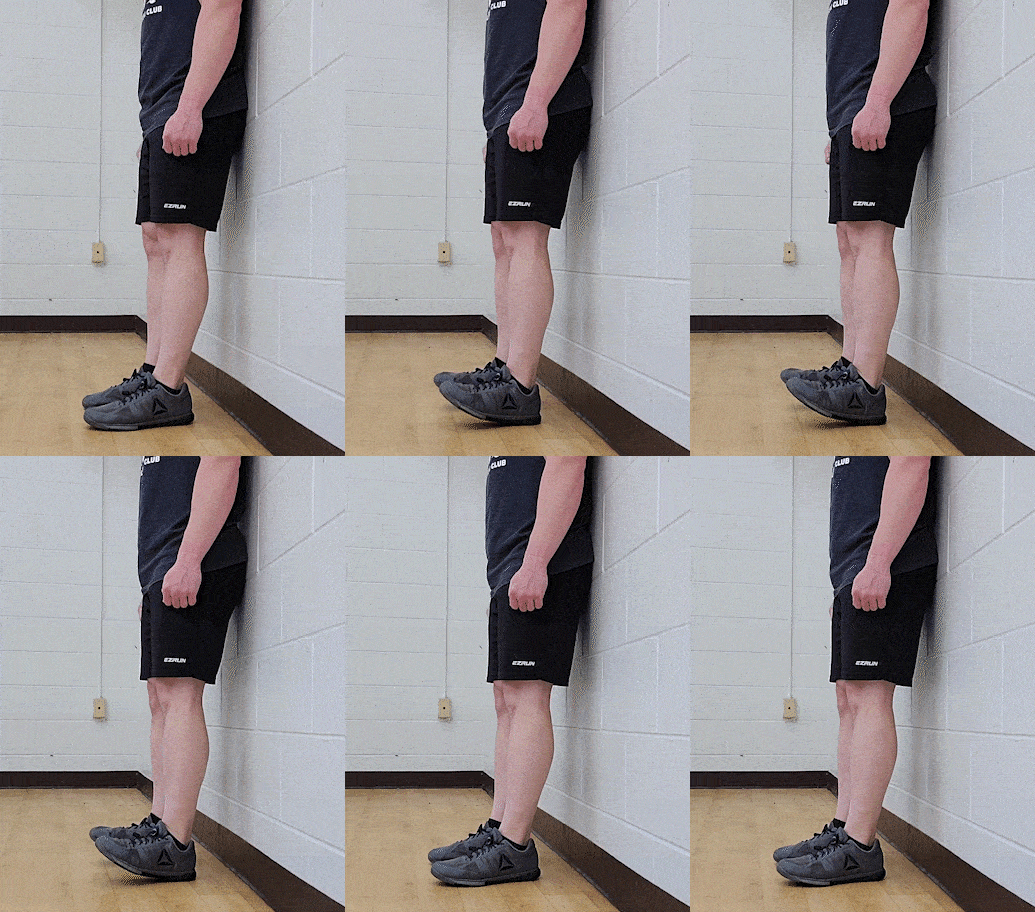
1) Shin Raise – Feet Close to Wall
The first and relatively easiest variation is to perform shin raises with your feet closer to the wall and your back leaning up against the wall. Feet should be naturally hip-width apart, and then lift your feet as high as you are able to go. Again, take your time and go for quality reps.
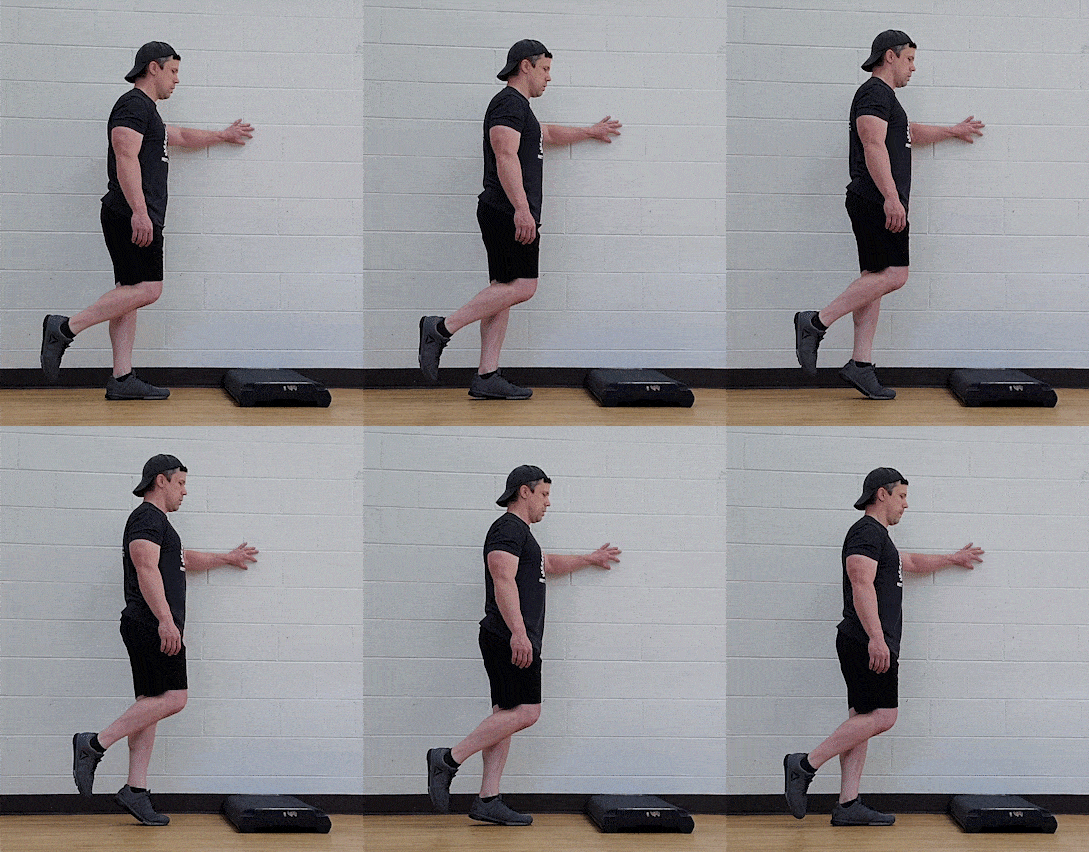
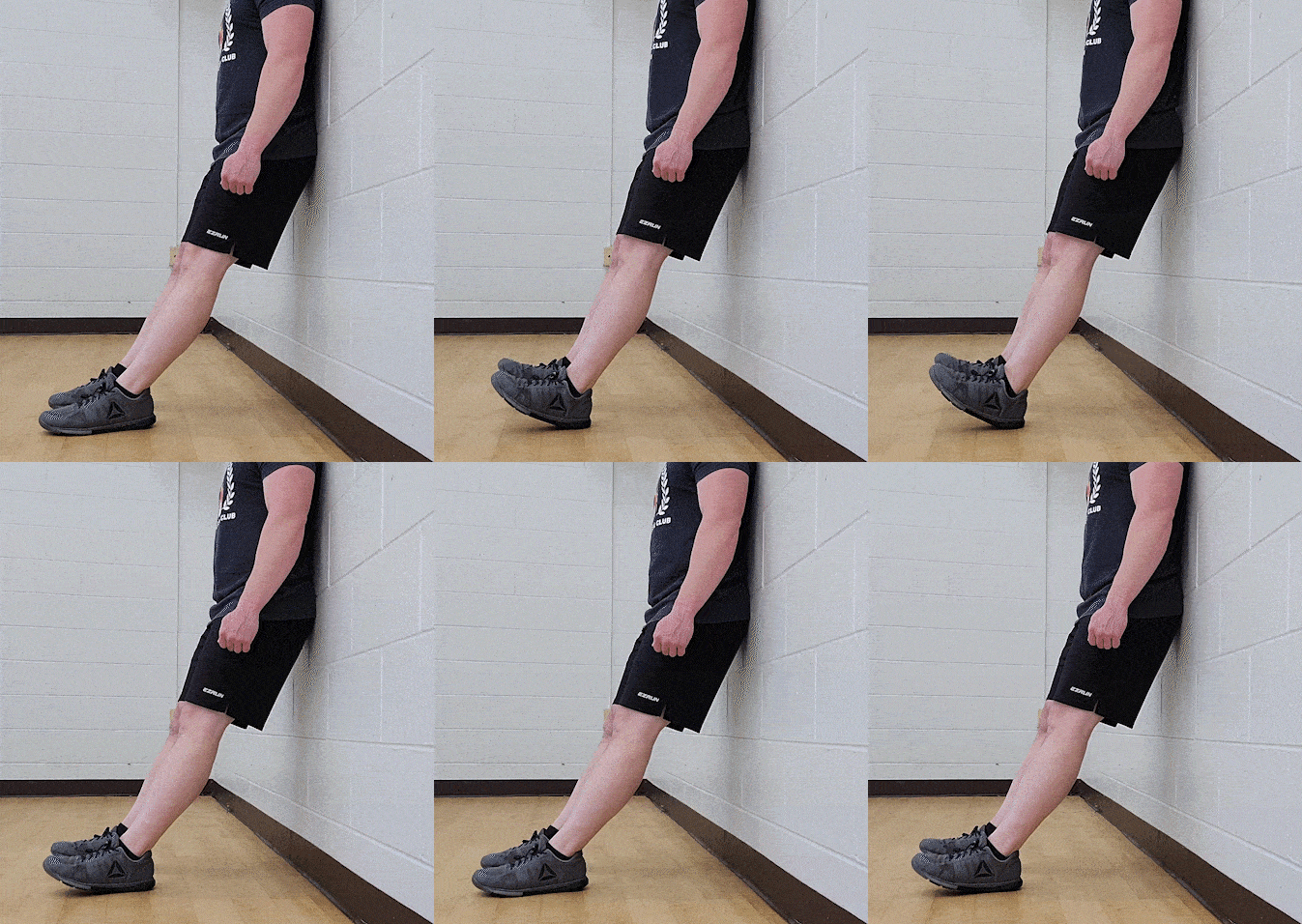
2) Shin Raise – Feet Far from Wall
As the shin raise gets easier, you can increase the range of motion and difficulty by moving your feet farther from the wall. Continue with the same cues – putting your feet hip-width apart, and lifting your feet as high as you can go.
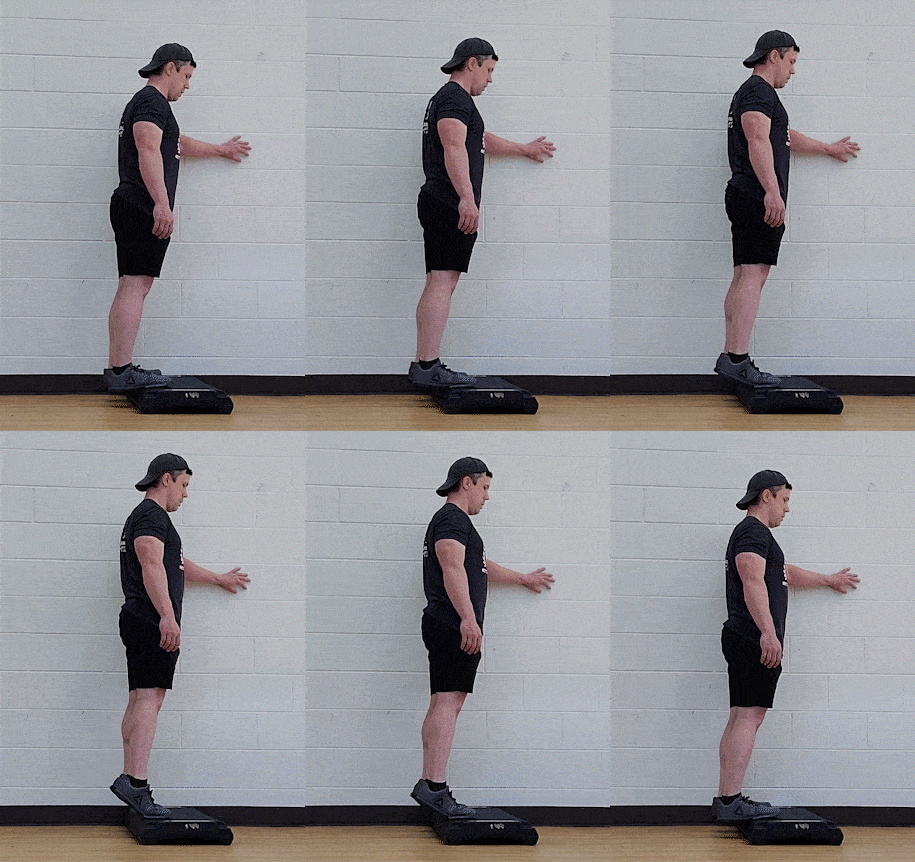
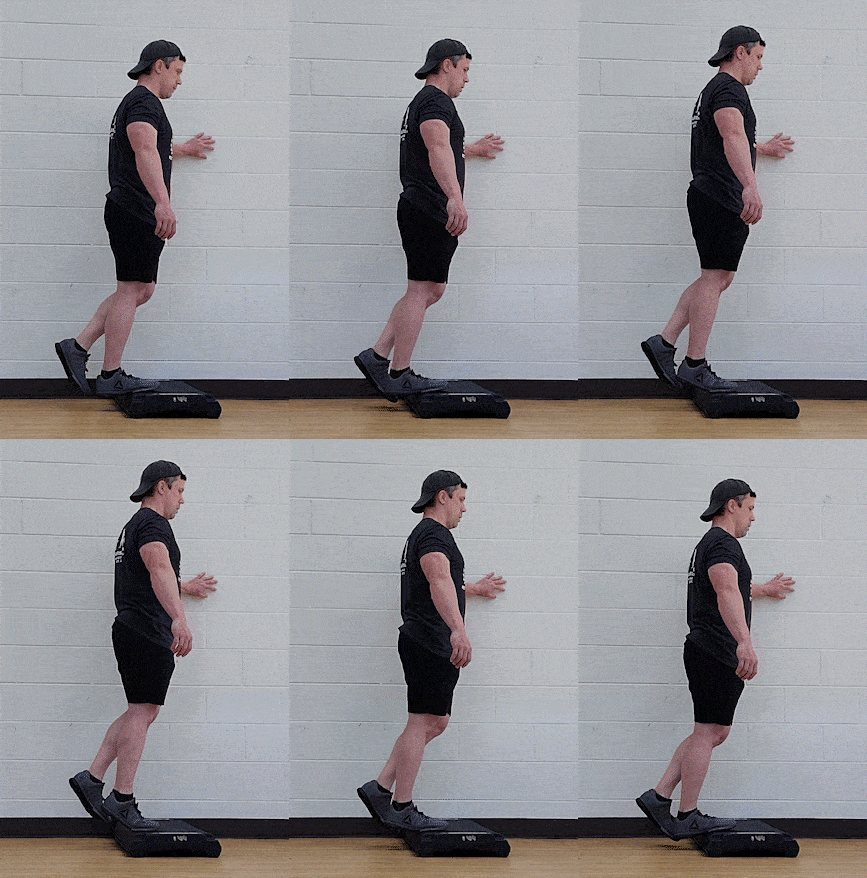
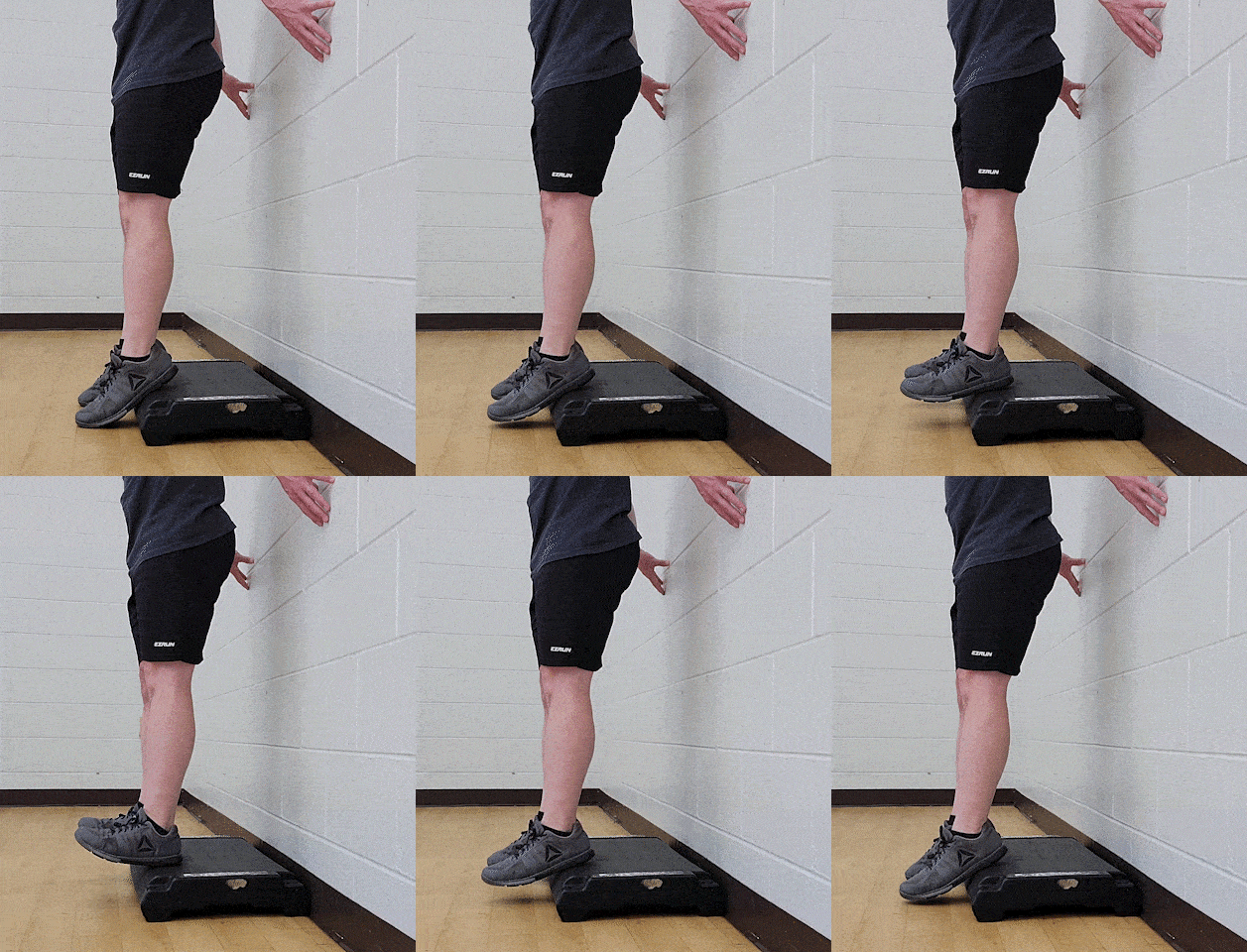
3) Shin Raise – Heels on Edge of a Step
Some people prefer standing on the edge of a step and lowering their feet down, as opposed to moving their feet out away from the wall, to make the shin raise more difficult.
Care should be taken here to set up a safe position. Look to pick a very low step where your toes can touch the ground lightly at the bottom. This will help minimize the risk of slipping off the front. Your heels should be firmly on the step, and then reach back to the wall for balance.
What’s a Good Leg Day Warm-Up?
Warming up before tackling leg day is crucial because it’ll help you move better and feel stronger through your workout.
As your body temperature rises during a warm-up, blood flow to muscles increases. This enhances oxygen delivery and nutrient supply, optimizing muscle function.
Additionally, warm-ups promote the release of synovial fluid – this is a thick liquid between your joints that reduces friction. This helps the exercises feel more effortless.
So, in a nutshell, warming up is like priming your engine before pushing the pedal.
Here’s a warm-up you can do to prepare for leg day:
#1) Leg Swings for 20-30 seconds per side
The objective for this movement is to lightly move the hip joint through a big range of motion. Only swing as high as you feel comfortable, and keep the body in a strong upright posture.
#2) Marching in Place for 30-60 seconds
You can march in place or march straight ahead. The marching should increase our heart rate a bit, but not be strenuous. The objective here is to introduce some movement in the knee joint and continue to warm the whole body up.
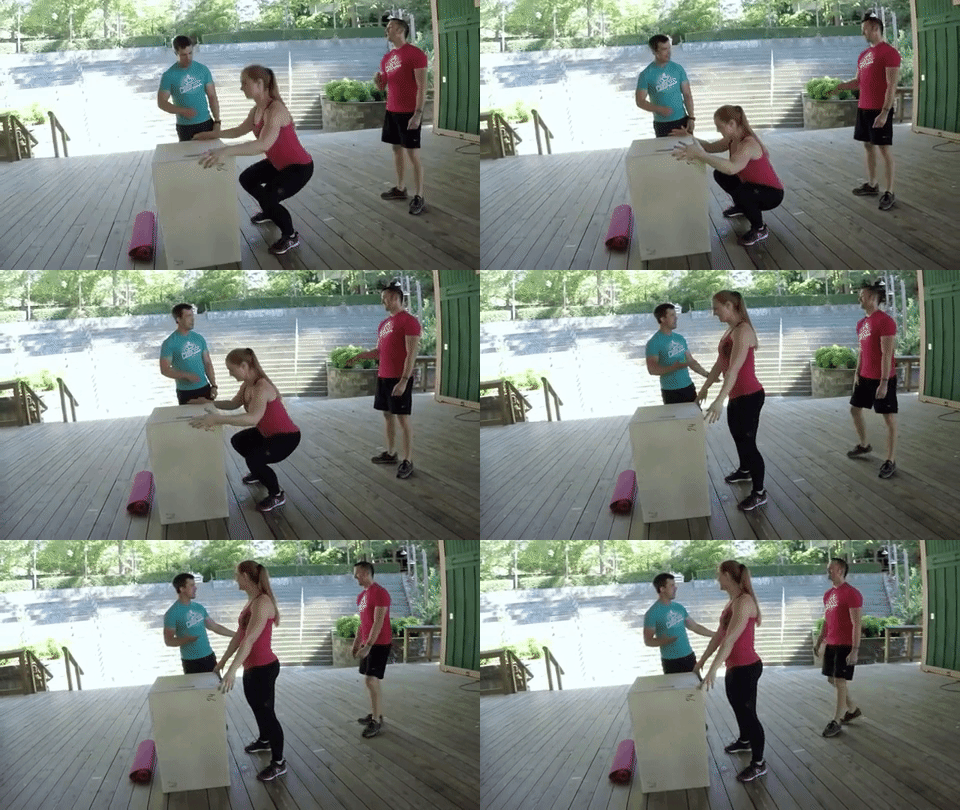
#3) One to Two Sets of an Easier Variation of Your First Chosen Exercise
These are not part of the prescribed sets that are in the workout. These are additional sets! Adding in a few warm-up sets is one of the best things to do to specifically prepare the body for the exercise.
So if you’re first exercise is a bodyweight squat:
Start off with an assisted squat:
Or if you’re doing a goblet squat, then start off with a lighter weight (or a bodyweight squat).
Adjust the movement for these warm-up sets so that they feel good and you feel more prepared for the tougher sets ahead.
#4) Include Additional Warm-up Sets, as Necessary, as You Continue Through Your Workout
After the first exercise, you may feel good enough to step right into the main sets of your next exercises. If you don’t feel ready, then continue performing 1-2 easier sets as a warm-up for any additional exercise.
If you’re going to be lifting heavy weights, or just challenging yourself in general, it’s still a good idea to do warm-up sets before you get to the main event.
So if you plan on doing a kettlebell deadlift:
Deadlifts at a lighter weight, or a bodyweight good morning would help.
Listen to your body as you go, and don’t be afraid to add a warm-up set or two before every new exercise.
3 Ways to Challenge Your Legs Without Using Weights
If you’re at home, you might have some weights around for your leg day workout.
Great!
But if you’re away from home, like at an Airbnb, you might not.
Don’t fret.
Here are three ways to challenge your legs without weights:
Pause variation: this will make the movement tougher as we pause for a couple of seconds at a certain point in the exercise, usually at the bottom where the muscles are doing the most work.
Banded version: this will make the movement tougher as we use bands to add resistance to the exercise. There are different exercise bands you can purchase, but we tend to like the thicker, closed-loop bands. They are much easier to pack for a road trip than a set of weights. You can learn more about resistance bands here.
Dynamic version: this will make the movement tougher as we add some speed to the exercise. This generally involves a jumping variation of a regular exercise, such as jumping squats or jumping split squats.
Now, sometimes we need to make exercises EASIER.
This is generally done by performing an assisted variation.
With an assisted variation, we make the movement easier and generally involve holding onto something solid nearby – whether that’s a countertop, chair, or wall.
Assisted variations are also handy (hehe) for doing warm-ups. See above.
Now, obviously, a simple way to make an exercise tougher is to add some weight to it. Let’s talk about that next.
How to Use Weights at Home for Leg Day (Including Household Objects)
Adding any weight to an exercise will naturally make the movement tougher, as we have to move our bodyweight and this additional weight. You might have a small collection of weights and dumbbells at home that you can use, but we can also grab anything safe and stable for additional weight. We’ll go over a few ideas below and it’s something we bring up in this video:
As highlighted by Coach Matt in the video above, various household items can be repurposed for your home gym!
Picture yourself as a fitness MacGyver, but instead of building a helicopter with a crazy straw, a can of hairspray, and some bubble gum…
You’re crafting a home gym!
Consider these alternative fitness equipment ideas using everyday items:
#1) Household Containers (Milk, Laundry)
If it has a handle and can hold water, it can serve as a makeshift free weight.
Another idea is to use an empty laundry detergent bottle, refilled with water. To make it lighter, adjust the water level.
Want it even heavier? Use sand instead.
#2) Buckets
What’s designed to hold water and be lifted and carried?
A bucket!
With a bucket and your legs, you can perform a Romanian deadlift:
Like a jug, fill it with enough water (or sand) to match your strength. Take your time if you’re using water, as it’ll be likely to slosh out otherwise!
#3) Luggage and Backpacks
Your luggage might just be sitting in a closet right now. Or you might have a ton of extra bags or backpacks lying around.
So why not turn these into weights? Fill them with anything that can add a bit of heft.
Need some ideas? How about:
Books
Canned goods
Laundry!
Take a stroll around your house; you’ll find plenty to add to make things challenging. (Just remember to keep it safe!)
Now that you have heavy luggage, deadlifts are a great option. You may find it a bit more challenging to lift than a traditional dumbbell or barbell too!
Most exercises with a sandbag can be replicated with a suitcase filled with weight too. You could even just dive into the deep end and make a few sandbags yourself.
And finally, a heavy backpack is great to wear for weighted squats, lunges, or step-ups.
What Exactly Is Leg Day?
So what is this “leg day”, and why does everyone always seem to be skipping it?
Leg day isn’t any more complex than dedicating an entire workout to the lower body. This allows you to focus much more time and attention on it, than if you were working your leg exercises during a total body routine. (Like something we outline here.)
Leg day also tends to be really, really HARD. Not only because we’re recruiting the biggest muscles of the body to move around the most amount of weight, but the rest of the body usually also has to work and stabilize everything in the process.
Lots more working than just the legs here!
Now there’s nothing right or wrong about having a dedicated leg day. This may or may not work with your current goals and situation.
But whether you have an entire dedicated leg workout, or work total body with each session, training your legs is a must.
That’s because…
5 Reasons to Never Skip Leg Day
You may wondered:
“Are training legs really that important? I mean, I walk a lot.
Isn’t that good enough?”
My answer: no. Now go do some squats!
Kidding (but seriously do some squats).
Here are the benefits of doing leg day:
Build a Beastly Base: Your legs are the powerhouse of your body, literally. Strong legs = better balance, improved athleticism, and a boost in everyday activities like climbing stairs or carrying groceries like a champ. Think of them as the foundation of your fitness empire!
Calorie Crushing: Leg workouts engage multiple muscle groups, making them calorie-burning machines. Squats, lunges, deadlifts – they all send your metabolism into overdrive, helping you sculpt a leaner, fitter you. Plus, the extra muscle mass you build burns more calories even at rest, meaning more calories burned while playing video games.[1]
Total Body Gains: Forget the myth of isolated muscle groups. Leg workouts trigger a hormonal cascade throughout the whole body that benefits the rest of your muscles, leading to gains in upper body strength as well. Biceps? Triceps? They’ll be thanking you for those squats!
Brain Booster: Exercise isn’t just about the body, it’s a friend to the brain too. Leg workouts increase blood flow to your head, delivering oxygen and nutrients that boost cognitive function and memory. So, next time you need to ace that presentation or remember where you parked the car (again), hit the gym and give your legs some love.[2]
Pain Prevention Powerhouse: Strong leg muscles are your body’s shock absorbers, protecting your joints and spine from injuries. So embrace the leg day life – your future self will thank you for it![3]
Now, to answer your question:
Can You Get Strong Legs Just by Walking?
While a brisk walk (or a run) is a fantastic way to stay active, improve your cardiovascular health, and boost your mood, it’s not quite the muscle-building superhero you might be hoping for. Think of it like a gentle tap on the shoulder compared to the full-on boot camp of squats and lunges. Challenging strength exercises, like the ones you see in this article, have a host of benefits you won’t get walking and running.
First off, they take the joints through a much bigger range of motion. The amount of movement in the knees and hips during a squat is significantly more than a walk. It’s important to move our joints through these ranges of motion, so we can continue moving them well for years to come!
Next, this bigger range of motion means we’re building strength in the muscles much more effectively than with a walk or a run. More strength will serve us well in anything we do – from sports to life.
Lastly, this strength-building also puts enough stress on the body to build (or maintain) muscle and bone. The same can’t be said for walking and running. Maintaining muscle and bone is vital as we age (and also pretty darn important when we’re younger too!).
So, while walking is excellent for the heart and a great foundation for a healthy lifestyle, don’t underestimate the power of adding some targeted strength training to unlock those hidden gains. Trust me, your legs will thank you for it!
Soreness is a natural consequence of challenging your muscles – especially if you’re coming back from a long break or trying something new. It’s like your body throwing a tiny temper tantrum because you dared to ask it to get outside its comfort zone.
So maybe reframe this as your muscles whispering, “Hey, we just leveled up!”
Now, that doesn’t mean we gotta roll around in agony the day after. We can outsmart the soreness a bit with some clever strategies.
Step 1) Pre-Workout Prep
Warm up like nobody’s watching: Get your blood pumping with some easy movements like leg swings or marching. Think of it as waking up your muscles before they get thrown into the gladiator arena. We covered a warm-up at the top of this article (found here), but we also have a complete guide that covers different warm-up routines.
Hydrate!: Water is your post-workout soreness BFF. Hydrating properly can lessen discomfort and safeguard your joints and muscles. It works by maintaining the flexibility of the cartilage, kind of like giving them a regular dose of TLC. Fill up before, during, and after your leg day adventure. Think of it as internal lubrication for those tired warriors.
Step 2) During Your Workout
Form is your fortress: Don’t ego-lift, my friend. Use proper form to target the right muscles and avoid injury. If you find an exercise too challenging, then adjust to another variation. We’re trying to slowly build a castle here, and proper form is how we make sure all the rocks go in the right places.
Progressive overload, not extreme overload: Push yourself, but listen to your body. Don’t go from “I never work out” to “squat champion” in a day. Your muscles need time to adapt and build strength. Increasing the amount of work you do too drastically is a surefire way to have some debilitating soreness from your workout.
Variety is the spice of leg life: Different exercises target different muscle fibers within your legs. Squats primarily engage quads, while lunges hit hamstrings and glutes more prominently. By mixing things up, you ensure all muscle groups get challenged, and one area isn’t beaten up relentlessly (and incredibly sore the next day). Working different exercises also leads to more balanced and overall leg development.
Now, Step 3 is going to get us into “active recovery.” Basically, what to do AFTER your leg day workout.
But let’s dive into a new section for that.
What Workout to Do AFTER Leg Day? (5 Ideas)
To recover from an intense leg day workout, there are a few things we can do. Some of these things can be done right after our workout, while others can be prioritized the next day.
Here are some ideas:
#1) Cool Down
Avoid the post-workout slump with a gentle cooldown. Light activity like walking or jogging helps pump blood through your working muscles, preventing them from feeling like overinflated balloons. This can reduce lactic acid buildup, a major contributor to muscle soreness.
#2) Foam Rolling
Foam rolling is your secret weapon for releasing tension and improving blood flow in those tired legs, especially in your quads, hamstrings, and glutes. Think of it as giving your muscles a mini massage after a workout. Studies show that foam rolling can help increase blood flow to the treated area, potentially aiding in faster recovery and reducing muscle soreness.[4]
Remember, it’s not a battle – listen to your body and apply gentle pressure. We’re trying to relax the muscles a bit, not beat them down into submission.
Here’s a routine you can run through if you have a roller handy:
Soon after your workout, replenish your energy stores with a delicious blend of protein and carbs.
Think of meals like:
Protein smoothie with banana
Greek yogurt with berries and granola
Whole-wheat wrap with turkey and avocado
Studies show that consuming protein and carbs soon after a workout optimizes muscle recovery and growth.[5]
#4) Motion is Lotion!
This is a favorite saying we have around here. It means to move around nice and easy, anyway that you can! This might mean a light walk, or a yoga session, or even a set or two of yesterday’s exercises at an easy level. Look to get the joints and muscles through as big a range of motion as you can.
This is often the exact opposite of what many people do the day after leg day – which is to sit around for days and wait for the soreness to subside. You’ll feel much better and be able to tackle your next workout a lot sooner if you remember to keep moving around!
#5) Sleep
Don’t underestimate the power of sleep! Aim for 7-8 hours of quality shut-eye to allow your muscles to repair and rebuild. As we cover in our Guide to a Goodnight’s Rest, sleep is like magic for your body – it’s when the real growth and progress happen.
What’s the Best Day for Leg Day? (When to Schedule Leg Day)
When it comes to scheduling your leg day, there’s no one-size-fits-all solution. It’s all about finding what works best for your schedule.
With that being said, here are some things to consider when scheduling Leg Day:
When you have the most time. Working legs is tough and takes time to warm up and go heavy in your sets, as compared to the upper body. While we still recommend getting in your leg workouts even if you have a busy schedule, IF you have a choice then look to line up your leg day with the day of the week that gives you the most available time.
Post rest day for a fresh attack. To maximize muscle engagement, potentially schedule your leg day workout after a rest day. That way you’re feeling recovered and ready to put in the hard work.
Avoid pulling exercises the day before. Often when someone is doing a dedicated leg day, they’ll work their upper body on the other days of the week. With these upper body workouts, it’s also common for people to break up the exercises into pushing and pulling workouts. Because we often have to grab and hold weights or bands for our leg day workouts, it’s better to avoid scheduling leg day the day after your pulling workouts. The grip will be tired and it may affect what you can lift.
So there you have it, my friend! The leg day gauntlet has been laid, but how you choose to conquer it is entirely yours.
You may find a dedicated leg day to work best for you – allowing you to really focus on each exercise and push really hard. Or you may find that a total body workout – hitting legs and upper body in the same session – works much better for your schedule and your goals. There are no right and wrong answers here.
Remember, the Nerd Fitness Rebellion isn’t about rigid rules, it’s about experimenting, finding what lights your training fire, and making progress toward your goals while having fun.
And if you’re looking for even more help in building your workout, don’t forget to check out our guide on crafting the perfect personalized workout plan: How to Build a Workout Routine.
It’ll help you incorporate your new leg day routine into a complete workout.
Now go forth, nerdy warriors! Conquer leg day, conquer your workouts, and conquer the world, one step, squat, and lunge at a time!
There are many ways to approach healing the nervous system, from one-on-one support, like therapy, to group or solo work with meditation and the breath. One approach I’ve found immensely valuable in my life is a somatic approach, which simply means “relating to the body.”
It’s so important to take care of your nervous system because prolonged stress forces it into high alert. Over time, this can lead to serious health risks such as inflammation, hypertension, digestive issues, heart disease, low immunity, high cholesterol, and stroke. In fact, 58 percent of Americans currently have at least one chronic illness from dealing with constant stress, anxiety, and other mental health issues.
No matter your circumstances, healing the nervous system will help you better manage anything that comes your way—and let’s be honest, life has been known to throw us some doozies! Add these reliable, effective somatic practices to your self-care toolbox so you can approach each day with greater balance and peace.
How Somatic Practices Restore Nervous System Balance
The term somatic might sound overly complicated or technical, but it just means, “relating to the body.” As such, a somatic practice is any self-care or therapeutic modality that teaches you how to become more aware of physical sensations and what they’re communicating to you.
For example, a somatic breathwork practice might draw your attention to areas of pain, discomfort, tension, or imbalance in the body that are representative of something you’re struggling with emotionally. This is critical because you are an interconnected organism—what you feel in your mind lives in the body too. We can’t just address one area and not the other and expect to feel good.
From a scientific standpoint (you know I love the science!), somatic practices nurture the connection between body and mind. When you do this, you anchor your awareness in the present, create a sense of embodiment, and feel more integrated within yourself. This is key to finding that balance and peace you’ve been craving.
5 Somatic Practices for Healing the Nervous System
Healing your nervous system through somatic practices not only helps you handle a current challenge, but allows you to build more resilience for future challenges too. Luckily, if you’re new to this concept, it’s easier than you might think to incorporate these practices into your routine.
Here are a few options that are accessible for all of us no matter where we are or what we’re experiencing. Reach for any one of these when you feel stressed, anxious, or overwhelmed.
As you try each one, remember to be patient and open. It may not come easily at first. We live in an always-on world, so learning how to slow down and tune into the body can be challenging. The more you do it, though, the easier it gets. This is your permission slip to trust the process and yourself.
1. Body Scans
A body scan allows you to quickly turn your focus inward and start attuning to the sensations within your body. Stress lives both in the mind and the body. Instead of approaching relief just from the brain, you can do it through the body and physically release the tension that’s present there. This in turn helps release the stress in your mind, alleviating your entire being.
To do a body scan, follow this process:
Stop what you’re doing and take three deep breaths. Let go of whatever is happening and simply tune into the present moment. It can be helpful to count to three as you breathe in and then again as you breathe out to anchor into your breath.
Now begin to scan your body from the top of your head all the way to the bottom of your feed. As you do, check in with each area: do you notice constriction in your throat? Is your breathing shallow? Do your neck or shoulders feel tight? Is there sweat or tingling in your hands or feet? Don’t judge these sensations—simply feel them and concentrate on releasing the tension.
Once you’ve scanned your body, send your breath to any area that is tense, anxious, tight or tingly. As you do this, imagine breathing in peace and giving that feeling to each of those areas.
When you feel calm and centered and are ready to be done, follow the same process of taking three deep breaths in and three deep breaths out before returning to your day.
You can also try this practice with progressive relaxation. Contract and relax each muscle group as you move through your body. Each contraction should be slow and intentional. As you do this, imagine any emotions, stress, or tension being flushed out to create room for peace, balance, healing, and self-love.
2. Intentional Breathing
Your breath is a vital mechanism for healing the nervous system because it quickly connects you to your body. The best part is, it doesn’t have to be complicated! Simply breathing with intention (noticing or counting your breath in and out) will help you tune into the present, let go of whatever stress or anxiety is hanging out, and start to feel more balanced.
As you tune into the breath, you may notice how your breathing becomes shallow when you’re anxious. This is that good old fight or flight response that your body moves into automatically when the brain thinks you’re in danger. The brain doesn’t know the difference between real danger (like a tiger chasing after you) and perceived danger (like a stressful email from your boss) so it shifts into full-on protection mode. Cue anxiety, shallow breathing, and fear.
However, as you slow down that reaction and focus on taking deep, rhythmic breaths from low in the diaphragm, you initiate a parasympathetic (relaxation) nervous response. This calms your body in the moment (so needed!) but it also improves your health long-term, allowing for:
Increased heart rate variability
Healthier blood pressure and circulation
Lower depression, stress, and anxiety levels
Enhanced cardiorespiratory fitness
Relief from migraine and gastrointestinal issues
Improved metabolic function
Use this somatic practice any time you need it, even if you’re in the middle of a stressful meeting. No one has to know you’re taking deep breaths to calm your nervous system! No matter where you are, remember to breathe low, breathe slow, and through the nose. Even better if you let out a longer exhale than the inhale. For example, breathe in for a count of four and breathe out for a count of six.
3. Mindful Movement
Sometimes the quickest way to move past difficult or uncomfortable emotions is through the physical act of mindful movement. You can work on healing your nervous system with movement-based somatic practices like Pilates, Tai Chi, yoga, stretching, walking, or even dancing. The type of movement doesn’t matter—what does matter is that you’re intentional and mindful as you do it.
The goal here is to become attuned to the sensory connection between physical action and emotional release. This type of mindful movement can promote emotional regulation, behavioral and impulse control, focused attention, and cognitive flexibility. It can also help you avoid certain maladaptive coping outlets such as substance abuse or eating disorders.
What’s even better is that just a brief 10-minute mindful Pilates session can leave you feeling more balanced, refreshed, and emotionally lighter—you don’t need a 60-minute intense gym session to get there. (In fact, that type of workout might have the opposite effect, building even more stress in your body during some seasons.)
Practice mindful movement as often as you want with the support of Lindywell. Start your free trial of Lindywell today and get access to 300+ Pilates classes, dozens of breathwork sessions, and hundreds of nutritious recipes that are also easy to make!
4. Sit with Emotions
Sitting with emotions is so important—and yet, it can be incredibly difficult to do. Not only are we often taught to push past our emotions from a young age, but these feelings can also hold pain or challenging experiences that we’d rather ignore.
Sitting with your emotions, however, is one of the most powerful tools for healing your nervous system because it gives that emotion less power. Instead of running from it (remember that flight or fight reaction we were talking about), you shift into a less stressful state by addressing it head-on with compassion and kindness.
In fact, a brief meditative moment with your emotions can help soothe the intensity and reactivity around them, which makes it easier to process them. Not to mention, the sheer intentionality of pursuing stillness creates more space in your mind. This is such a rare gift in our culture of productivity, rush, and hustle.
How to Sit With Your Emotions
If you’re feeling a challenging emotion like sadness, frustration, or anger, wrap your arms around yourself. Take deep breaths and sway back and forth. As you do this, ask yourself: “What do I need right now?” If no answer comes in that particular moment, give yourself a few more moments, or even 24 hours, and ask again. It will come if you’re compassionate and honest with yourself.
This practice might feel awkward at first, but over time, you can build a tolerance level to emotions that were once impossible to face. Below are some questions to reflect on as you learn how to sit with emotions:
How is this emotion showing up in my life?
What is its impact?
Can I be with it?
Can I breathe with it?
Where is the sensation of it located in my body?
Am I ready to let it go?
Is there something it needs to tell me?
A lot of times when I picture the emotion, I tend to see a small version of me, as a child, and I pretend to pull up a chair as my adult self to sit with her. I know that I am a safe adult and can be trusted so I comfort that little version of me. If it becomes too much, I can leave the situation. I just give myself a hug, breathe until I feel relaxed enough to move on, and know I can come back to it.
When we experienced trauma or pain in the past, we most likely didn’t have autonomy or power of choice. With this work, we are in total control. Plus, we don’t have to heal it all in one sitting, we can come back to it again and again.
5. Body Check-In Routine
Start each morning and close out each night with a somatic body check-in. Tune into the sensations, thoughts, and emotions that enter your consciousness in the first moments of waking, then set aside quiet time in the evening.
Use this time to journal about any patterns, insights, habits, or experiences that are present for you. Even if all you have time for is a quick head-to-toe body scan, you’ll feel more in touch with yourself.
As basic as it might sound, when you bookend your days with some intentional time like this, you build resilience and start to shift your mindset. By the way, that mindset is so key—read our blog post, 5 Reasons Mindset is Everything in Wellness and Life (Backed By Science!), to learn about why.
You may notice you’re able to approach challenges from a place of balance and resilience instead of stress or frustration.
Restore Your Nervous System With Somatic Practices
Somatic practices are invaluable for healing your nervous system. These self-care tools can nurture your physical, mental, and emotional wellbeing in the midst of life’s inevitably stressful moments. Make time each day to do one or more of these somatic practices and remember to be patient with yourself as you try them. Even a few moments of deep breathing each day will help you begin to heal and reset your nervous system so you can feel balanced and connected no matter what’s going on around you.