I feel slightly spoilt that my first experience racing* gravel, was in such a beautiful location and at such an epic event – the inaugural FNLD GRVL in June 2023. *I feel racing is a strong word for my participation…
I’m sure if you’ve been running for a while, you’ll have noticed the growing popularity of trail running and also trail running in Chamonix. Personally, I haven’t covered much ground trail running with the exception of Love Trails Festival back…
When thinking of all the places I wanted to fly away to and ride, a Switzerland cycling holiday honestly never crossed my mind. The first place most cyclists will suggest as the best place to cycle in Europe is Mallorca….
July is here and that means it is time to have some fun. Every July we break out of our routines, let go, and focus on play. This year we have a special guest to join us and guide us as we play.
Kara Latta is the Chief Fun Officer at The Playful Warrior and today we chat about the positive impact that play has on our mental and physical health. We’ll learn about the neuroscience behind incorporating play into our daily routine and you’ll discover how you can incorporate fun into your life each day.
Make sure to stick around until the end of the episode to hear how you can join all of us at Lindywell for a play-filled workshop.
You will want to hear this episode if you are interested in…
What Kara does at The Playful Warrior [1:22]
What inspired Kara to create The Playful Warrior [6:04]
What your inner child really is [10:30]
Roadblocks to play [13:00]
How she got back into play [16:39]
What playful resilience is [17:58]
Play rewires your brain [24:44]
How to navigate play through the hard seasons of life [30:48]
What play looks like in Kara’s daily life [32:17]
How community is an important part of play [35:51]
What to expect in the live workshop on Sunday, July 16 [38:50]
How Kara became a Playful Warrior
In 2019 Kara experienced a dark night of the soul. She suffered from health issues, lost her job, and ended a long-term relationship. Therapy helped her work through codependency issues and abandonment wounds. However, it was only when she began to incorporate the power of play into her life that she began to fully heal.
Today Kara helps people connect with their inner child through the power of play. In her healing journey, she realized that she could overcome perfectionism and self-doubt and to become the playful creative self that she didn’t even realize she could be.
This healing journey led her to become a play and mindset coach. At The Playful Warrior Kara offers a safe space for others to express themselves without judgment through play. Kara connects adults to their innate creativity and offers fun and joy in the true spirit of play.
What play can mean for your life
When Kara’s therapist first brought up the subject of play therapy she wondered what that would mean for an adult. How does an adult play?
She felt so disconnected from her childhood self that she had to research what it could mean to play. The more she researched, the more she learned about the science of play. Kara discovered that play is actually important for brain health and mental well-being.
While play still isn’t valued in society, it helps people reconnect with their curiosity, bring spontaneity, and navigate challenging situations. Neuroscience has shown that play can even improve physical health and brain function.
As a natural perfectionist, she thought about the outcomes of play, but the more she got into the true nature of play she realized that playing is not about the outcomes or proving her worth, it is about enjoying the present moment. This freedom of expression changed her relationships and her life.
Are you ready to play?
Join us for a live workshop with Kara Latta, The Playful Warrior, via Zoom on Sunday, July 16. Kara will lead us through interactive playful exercises offered in a safe space. Come have fun simply for the sake of having fun.
Resources & People Mentioned
Register here for our FREE play workshop with Kara Latta on July 16 at 4 pm PDT
If you have been trying to incorporate more exercise into your life you know exactly how challenging it can be to build the habit. Our habits make us who we are, so it’s important to intentionally cultivate good habits.
Our guest today is Sandra Chuma, a coach and certified habit-building expert. In this episode, she answers some of the most frequent questions I get surrounding habits: how to create habits that stick, how to break bad habits, and how many habits we should work on building at once.
Sandra provides us with a number of practical tips that we can implement today. Press play to discover her wealth of inspiration and knowledge.
You will want to hear this episode if you are interested in…
How Sandra got into coaching [3:42]
How to know where to start [8:33]
How many habits to crate at one time [20:05]
How to stop bad habits [27:40]
Breathwork hour [37:52]
What people forget about building habits [42:22]
Sandra Chuma helps others build an extraordinary life
Sandra Chuma is a repeat guest. We discussed habits on episode 74 and she had such great advice that I knew I had to have her back on the show. Sandra is a coach, a mentor, a serial entrepreneur, a podcaster, and a documentarian.
She became an expert on habits after reading Dr. BJ Fogg’s book, Tiny Habits. Since his book so inspired her, she was motivated to learn more. That’s when she studied with Dr. Fogg to become a certified habit coach so that she could share what she was learning with others.
Her passion is helping people step into their greatest version of themselves. Her goal is to help others create an extraordinary life for themselves.
How do we know where to start?
When people decide to build a new habit they sometimes feel that they must go big or go home. They go all in to achieve the best results. However, the truth is, habits are cumulative. Starting small and sticking to it will actually yield greater results than trying to overdo it and stopping a few months later.
To understand how behaviors are created you can use the Fogg behavior model with the acronym MAP.
M is for motivation – Your motivation is what drives you to create the habit. While it is important to have motivation to get started, solely relying on your motivation will ultimately end in failure.
A is for action – Make it as easy as possible for yourself to take action. Give yourself as little friction as possible. See how you can make your habit easy to do. Is it something that can be done in five or ten minutes? Small changes can yield mighty results
P is for prompt – Look for a cue or trigger that will prompt you to do the habit you are trying to build. Should you build your habit as soon as you wake up? Should you put a reminder on your phone? No behavior happens without a prompt or trigger.
It is also important to acknowledge your efforts. Celebrate your wins and your milestones. Reinforce the good you are doing with a small celebration. This is another way to train your mind.
How many habits to create at one time
When we get started creating new habits we may tend to overdo it. Rather than chasing too many things, consider dialing in on one particular habit that could be a lynchpin for the rest of your life. By finding that keystone habit to focus on, it could lead you to make better choices throughout your day. Sandra asks herself three questions each day. Want to know what they are? Listen in! When you’re done listening to this episode take a screenshot and tag us @WeAreLindywell and @Sandra.Chuma!
There’s no gentle way to say this – training with injuries SUCKS!
The most important thing you can do now is to let yourself heal.
However, depending on your injury, there might be quite a few ways to stay active while also recovering.
We do this all the time in our Online Coaching Program. We’ll build workouts for clients who are dealing with pre-existing injuries, so they can make the most of their recovery time.
REAL QUICK: If you’re worried about hurting yourself while lifting, I would encourage you to check out our guide, Strength Training 101: Everything You Need to Know. We cover all you need to begin a strength training practice, from equipment, starting weight recommendations, and proper form techniques to prevent injuries. You can grab it for free when you join the Rebellion below!
Download our comprehensive guideSTRENGTH TRAINING 101!
Everything you need to know about getting strong.
Workout routines for bodyweight AND weight training.
How to find the right gym and train properly in one.
NOTE: I am not a doctor (in fact, I’m not even wearing pants right now). You should really seek medical attention for any injury you receive.
Step 1: Preventing Injuries in the First Place (Warming-Up)
Now, it should go without saying: the best way to handle an injury is to prevent it in the first place.
Studies have shown that a brief warm-up before your workout can help prevent injuries.[1]
Here’s why:
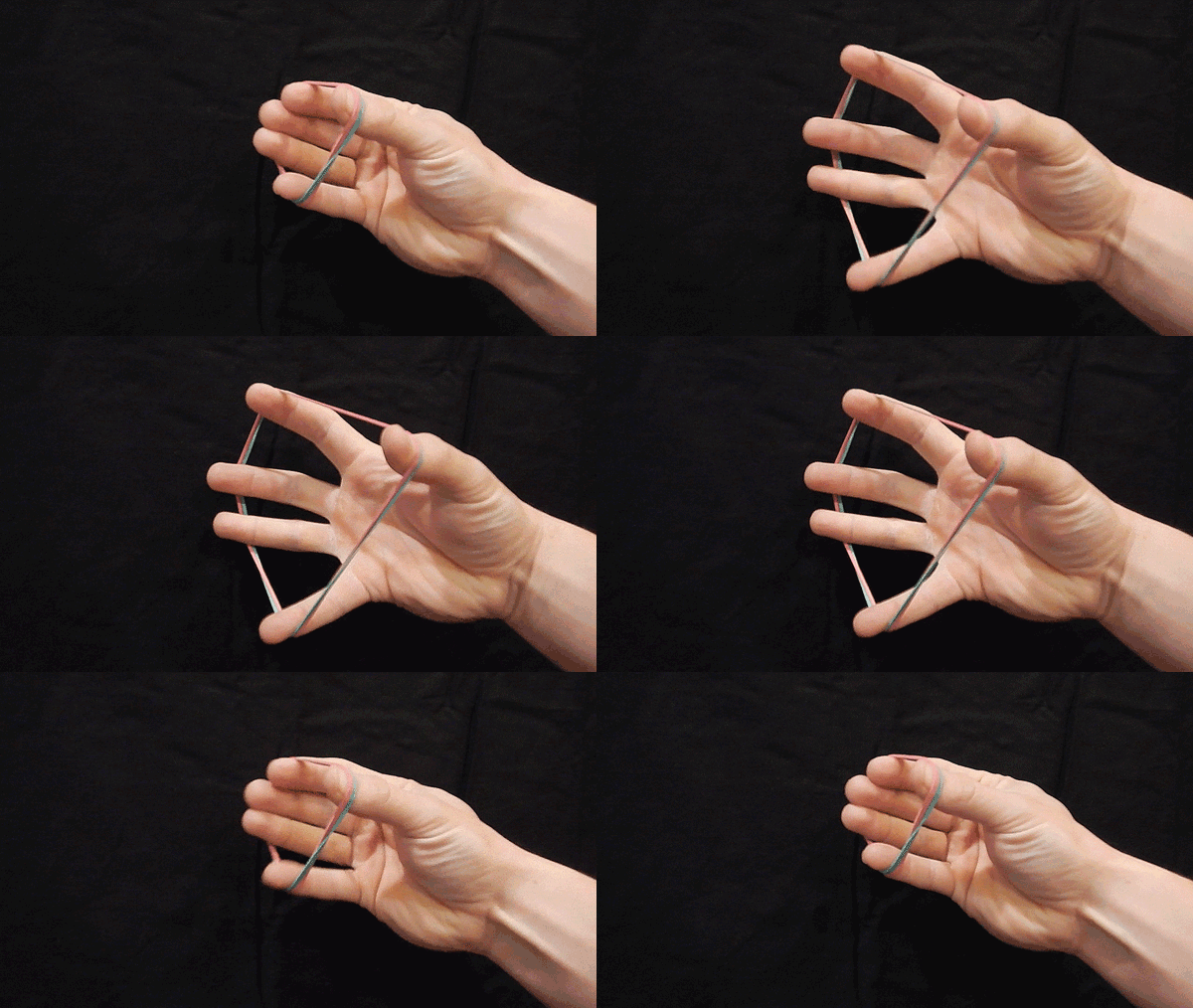
You can think of your muscles like rubber bands:
Should you start your workout by immediately lifting heavy weights or sprinting really fast, those cold, unstretched rubber bands can get pulled apart very quickly. They can then get snapped or pulled out of shape.
Ouch.
That’s why every workout should start with a warm-up.
We are such big believers of this, that when we program workouts through our Online Coaching Program, we ALWAYS kick it off with a warm-up. It’s one of the tools in our kit to help clients stay injury-free.
Step 2: When Should I See a Doctor After an Injury?
As Coach Jim mentions in the video above, the FIRST thing to do after an injury is to seek a professional.
All the internet advice in the world won’t take the place of a single session with a doctor or physical therapist.
After you get hurt, really the best thing you can do is have the injury examined by someone who knows what they’re doing.
I will say, that not all doctors are created equal…
…but that’s not another article.
Next, we need to get your headspace in proper order (even if you don’t have a head injury)
Step 3: How to Mentally Deal With Injuries
The SECOND thing to do right after an injury: realize it’s going to affect you mentally…just as much, if not more than physically.
So be prepared!
There are numerous studies showing the different negative emotional reactions that people have when injured.[2]
But just from the School of the Obvious – if you’ve ever had an injury – you know how it puts you in a bad mood.
What may help, is recognizing and reframing negative thoughts, like with some quiet meditation or journaling. Or even seeing a therapist or sports psychologist
Just make sure you don’t overlook the mental aspects of recovery.
Step 4: Testing Movement Around the Injury
After you’ve seen a doctor and prepared for the mental battle ahead, I want you to test all movements.
And by test, I mean work through as much of the range of motion of an exercise as possible with zero additional resistance and without feeling any pain.
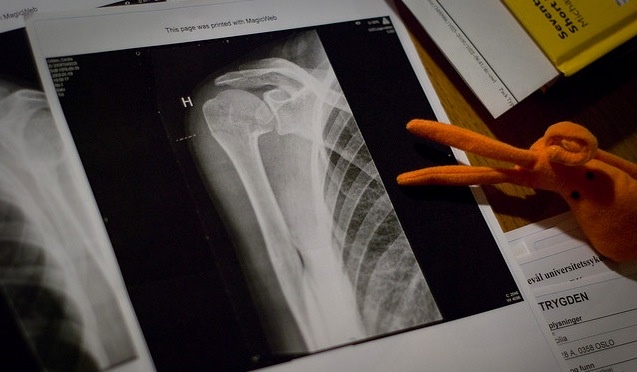
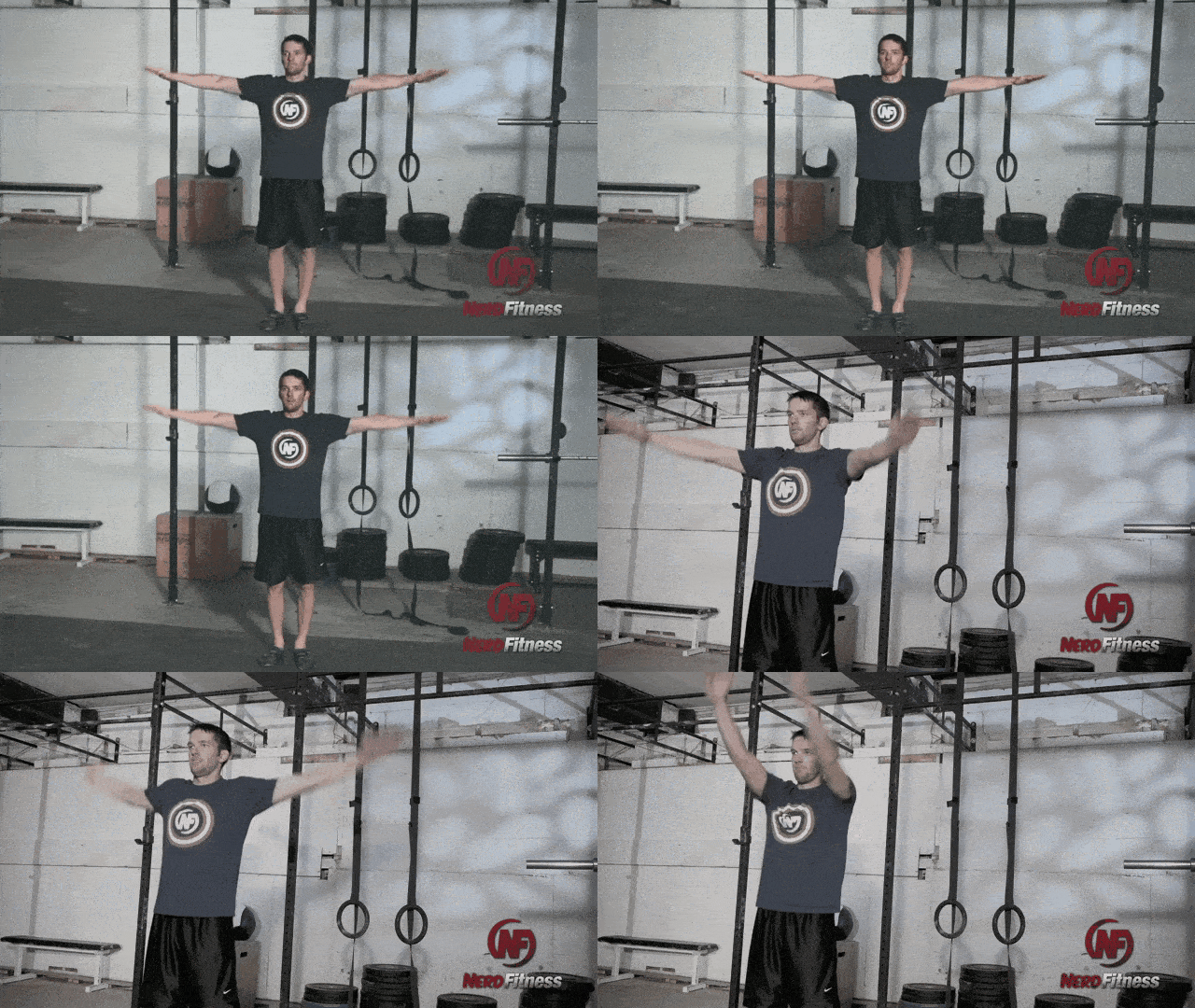
That means if your shoulder bothers you, just see if you can extend your arms all the way above your head. Do this before you even consider doing a push press or shoulder press.
After that, make sure to test movements that you don’t suspect will be a problem.
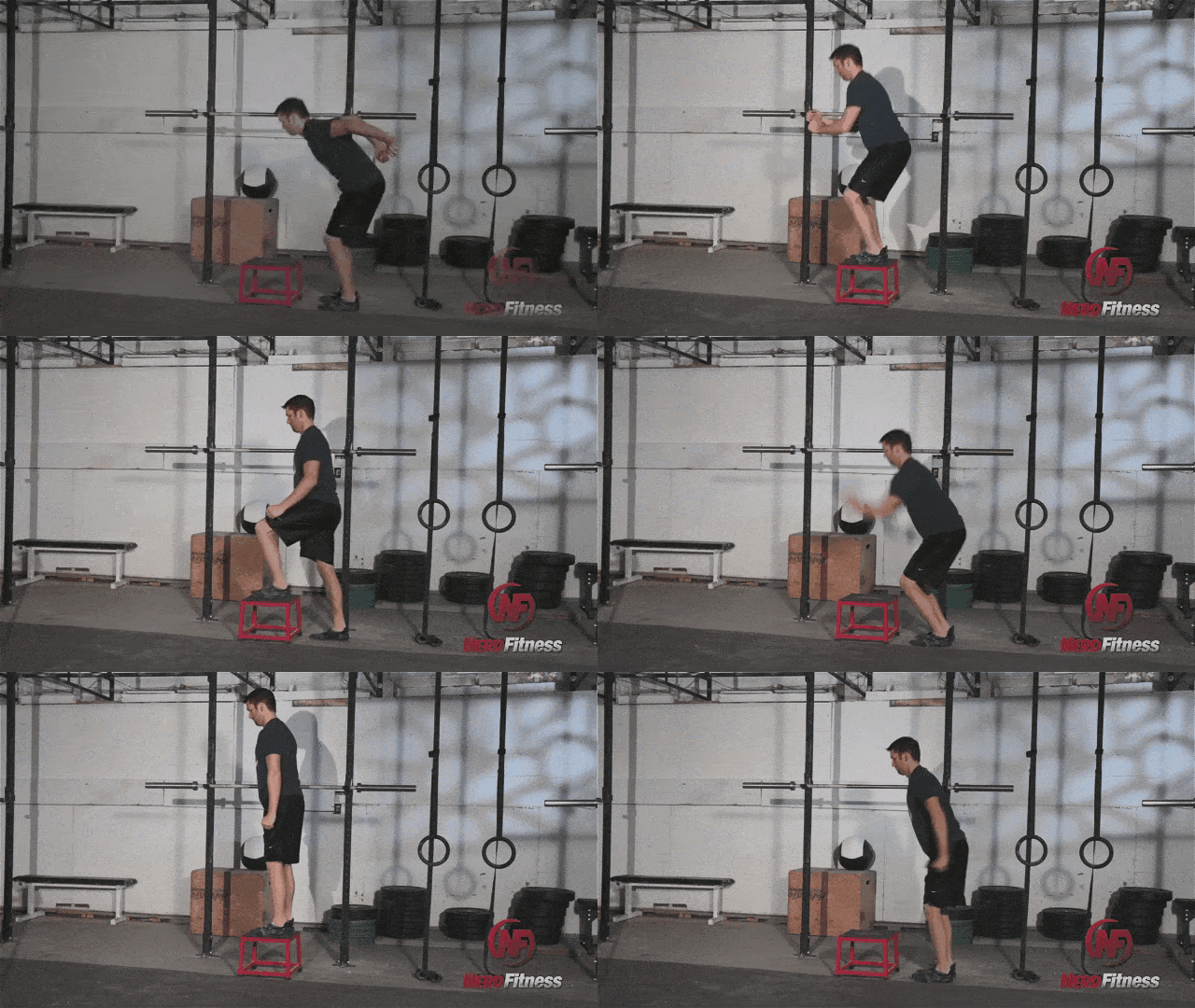
A shoulder injury could very well make box jump sessions impossible, due to the arm swing involved in the movement.
Try out each movement cautiously!
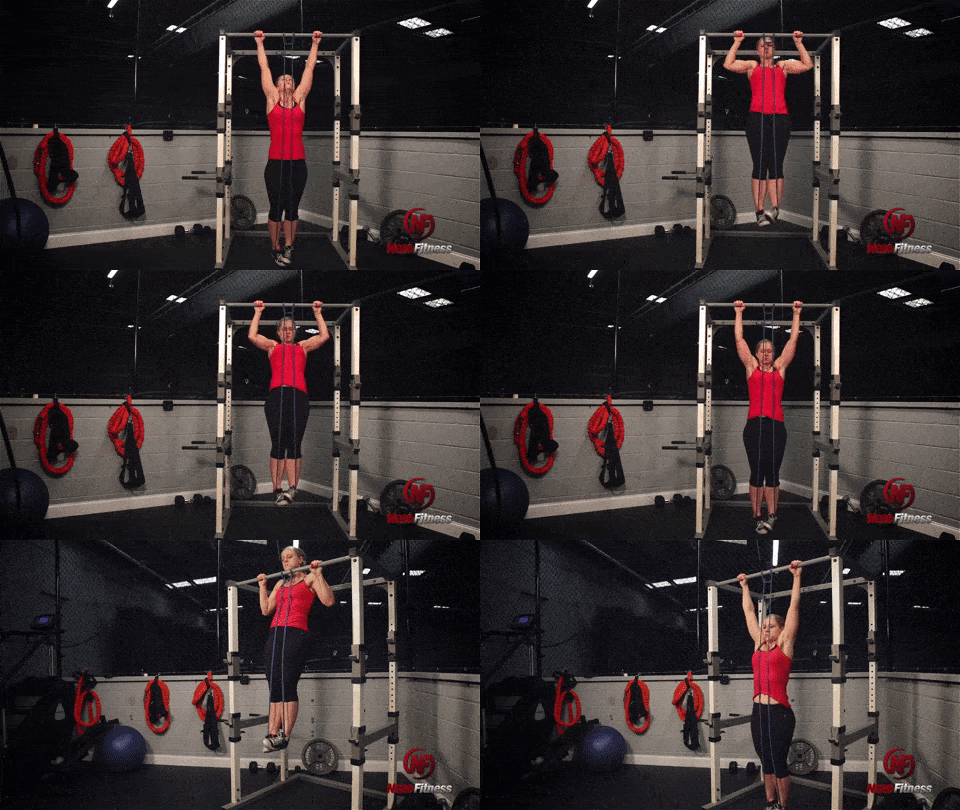
Something to keep in mind: just because you have pain with a push movement, does not necessarily mean you will have pain with a pull movement.
I have had a shoulder injury where dips and push-ups were out of the question…but pull-ups were fine.
And that is why you should test all movements – you may have more training options than you expect. Then again, your injury may limit movement more than you realize.
Last time I’m going to say it – test.
Step 5: How to Make the Most Of Your Recovery (Sleep and Nutrition)
Next, rest.
And by rest, I mean completely stop doing movements that cause you pain until you are healed.
If you feel any pain during your test (especially joint pain), then you should abandon that movement until the injury heals.
You cannot “suck it up” and just grind through joint pain without hindering healing at best…
…and causing further damage at worst.
Along with rest, a recovery regimen to accelerate healing should be considered. Ideally, this would be done under the care of a physician. I have been to the doc for injuries in the past and have found that those that use “Sports” in the title of their practice (Sports Medicine, Sports Therapy) do their damnedest to keep you active.
Here are two often overlooked components of recovery:
Sleep and nutrition are always important when it comes to fitness. But for the swiftest recovery from an injury, you need to get your food intake and sleep schedule dialed in extra tight.
To prioritize sleep, sign off of Fortnite an hour earlier and get to bed (Life is cruel).
If you want to do everything within your control to sway the healing forces in your favor, be extra diligent with your sleep and eats.
Step 6: Staying Active While Injured
If your doctor has okayed it, stay active any way you can.
This is often the opposite of what many people will do – which is to completely stop using the injured area.
We want to move pain-free, of course, but any light movement is often going to be more beneficial than just stopping movement altogether – as it gets the blood flowing through the area and helps recovery.[3]
This might mean lowering the weights used, doing an assisted or even unweighted variation of an exercise.
But if you can still safely move the injured area without causing added pain or setbacks – then it’s often a good idea to do so.
If that’s not an option, consider different ways to move while injured:
If you can’t run, how about an elliptical or stationary bike?
If you can’t use one leg or the other, can you work out your upper body?
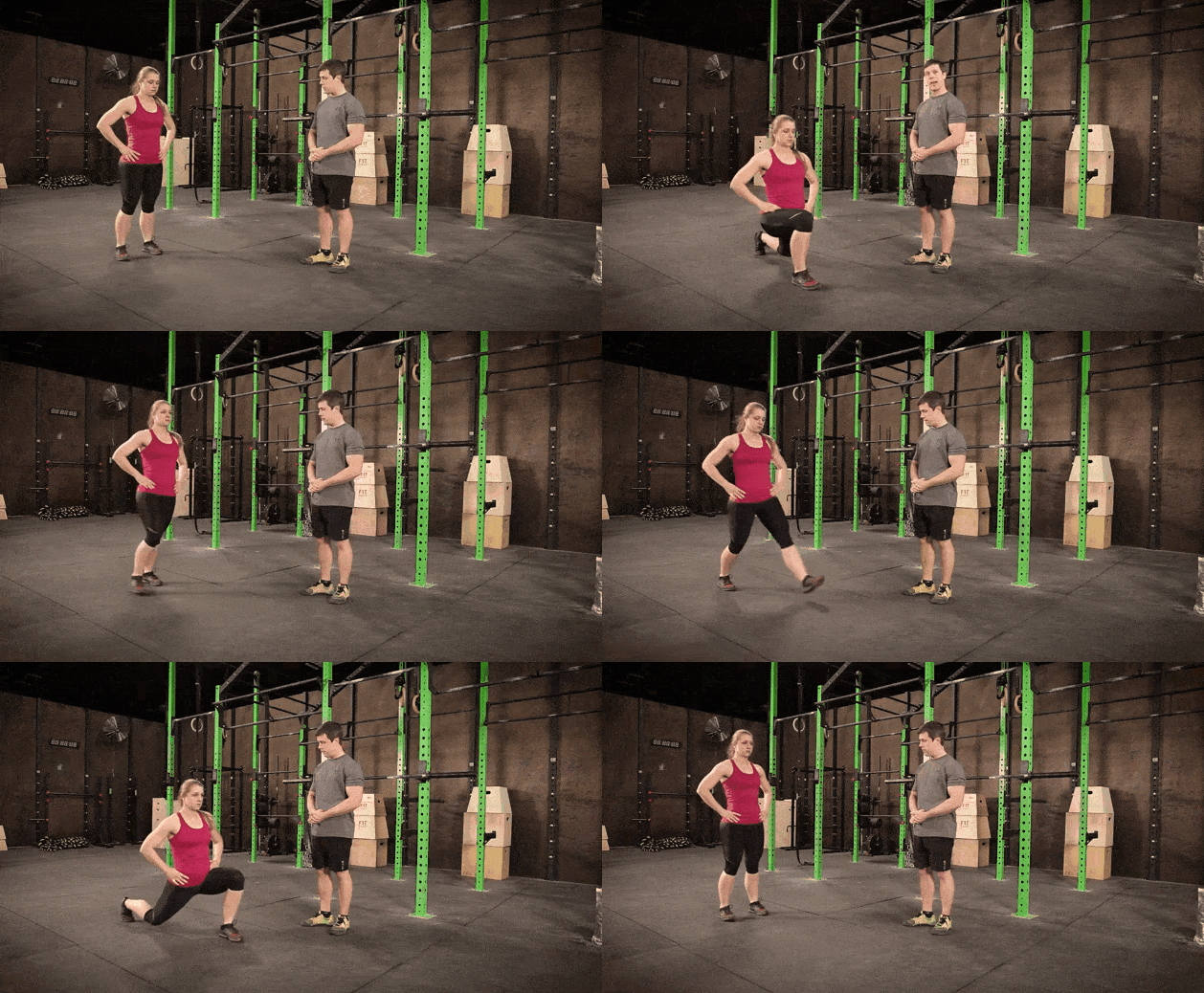
If you can’t use one arm/shoulder, can you still do lower body exercises like lunges/squats/step-ups?
If you can’t do any resistance training, can you still go for walks?
Let’s dive into this point a little more.
Step 7: Getting Creative While Working Out With an Injury
My dear friend, it’s time to get creative.
When you get injured, start thinking outside of the box to find the opportunity in the obstacle.
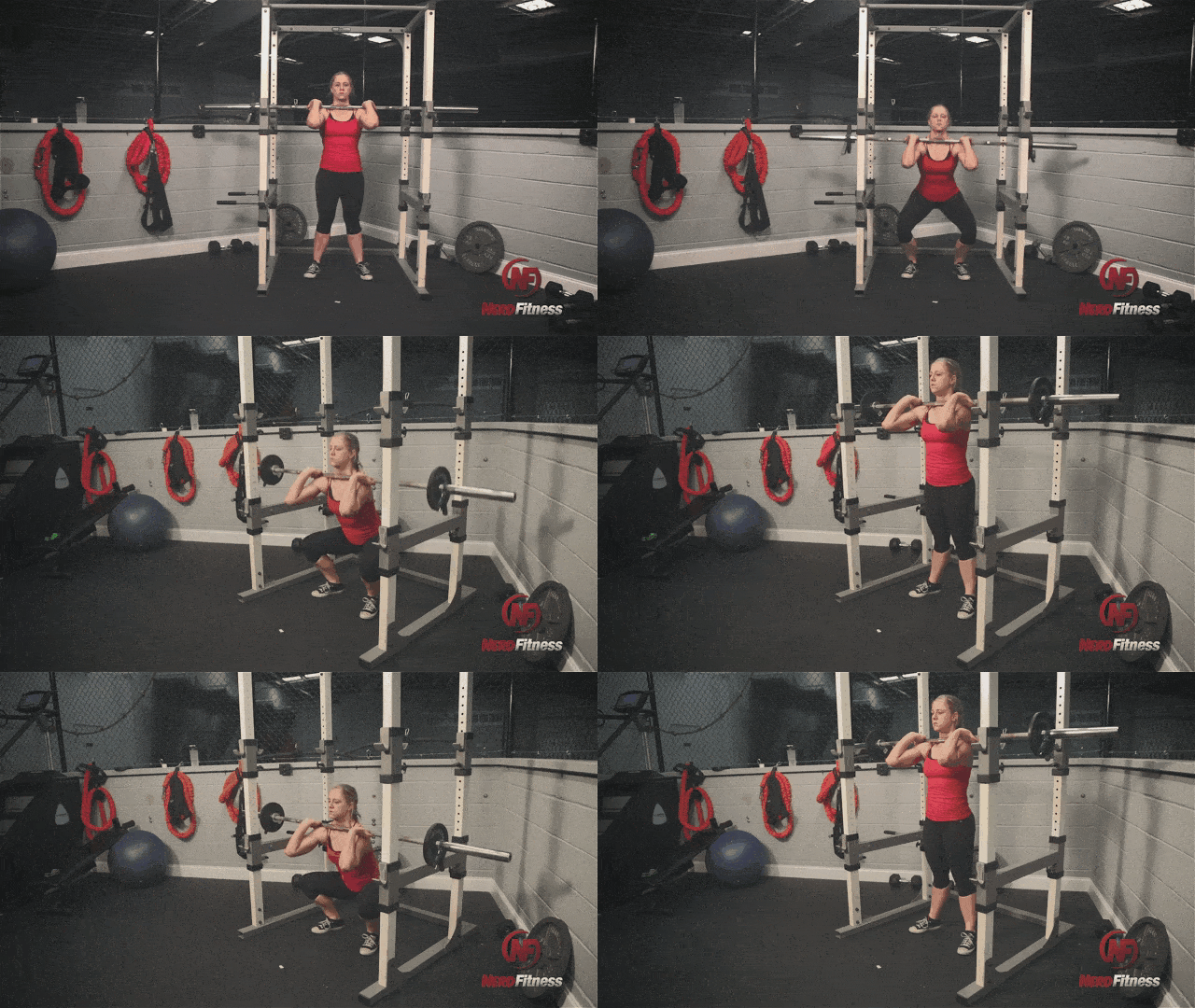
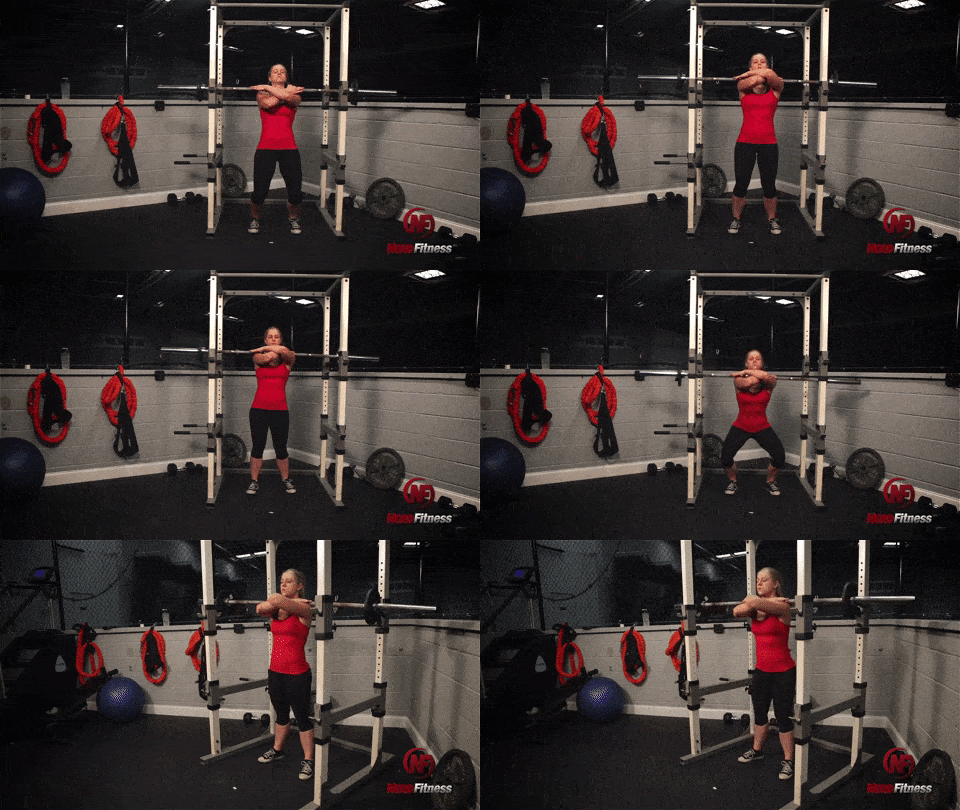
A shoulder injury may make back squats incredibly painful. But holding the bar for a front squat instead could feel fine…
…and perhaps it just so happens that you have neglected the front squat lately.
So instead, try to look at an injury as an opportunity for you to focus on a weakness. Strengthen your weaknesses, become more well-rounded, and better equipped to deal with rigorous activity.
You want some specific recommendations on how to train around your injuries…
Here are some tips for training around common injuries:
#1) Training with Lower Back Pain
When thinking about working around back injuries, look for lower-body exercises that increase knee movement and keep oneself vertical. This often feels safer to many when navigating a tweaked back.
For your upper body, you’re free to do anything you’re comfortable with:
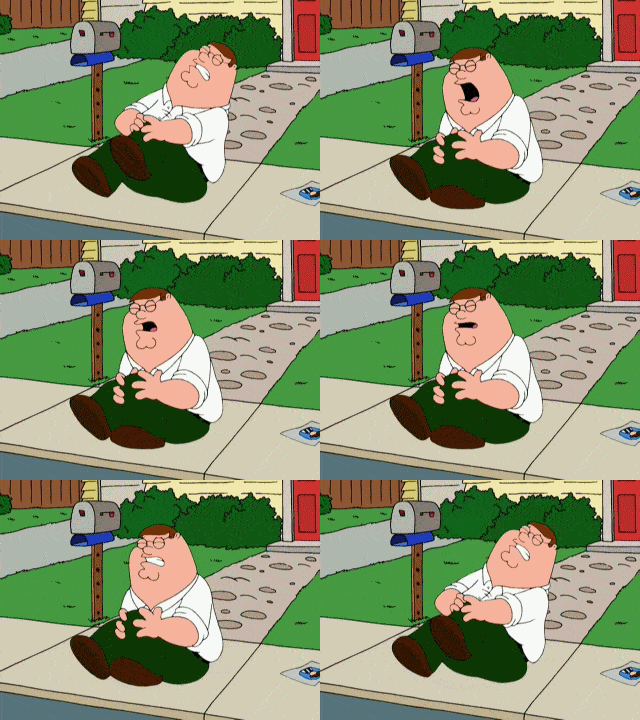
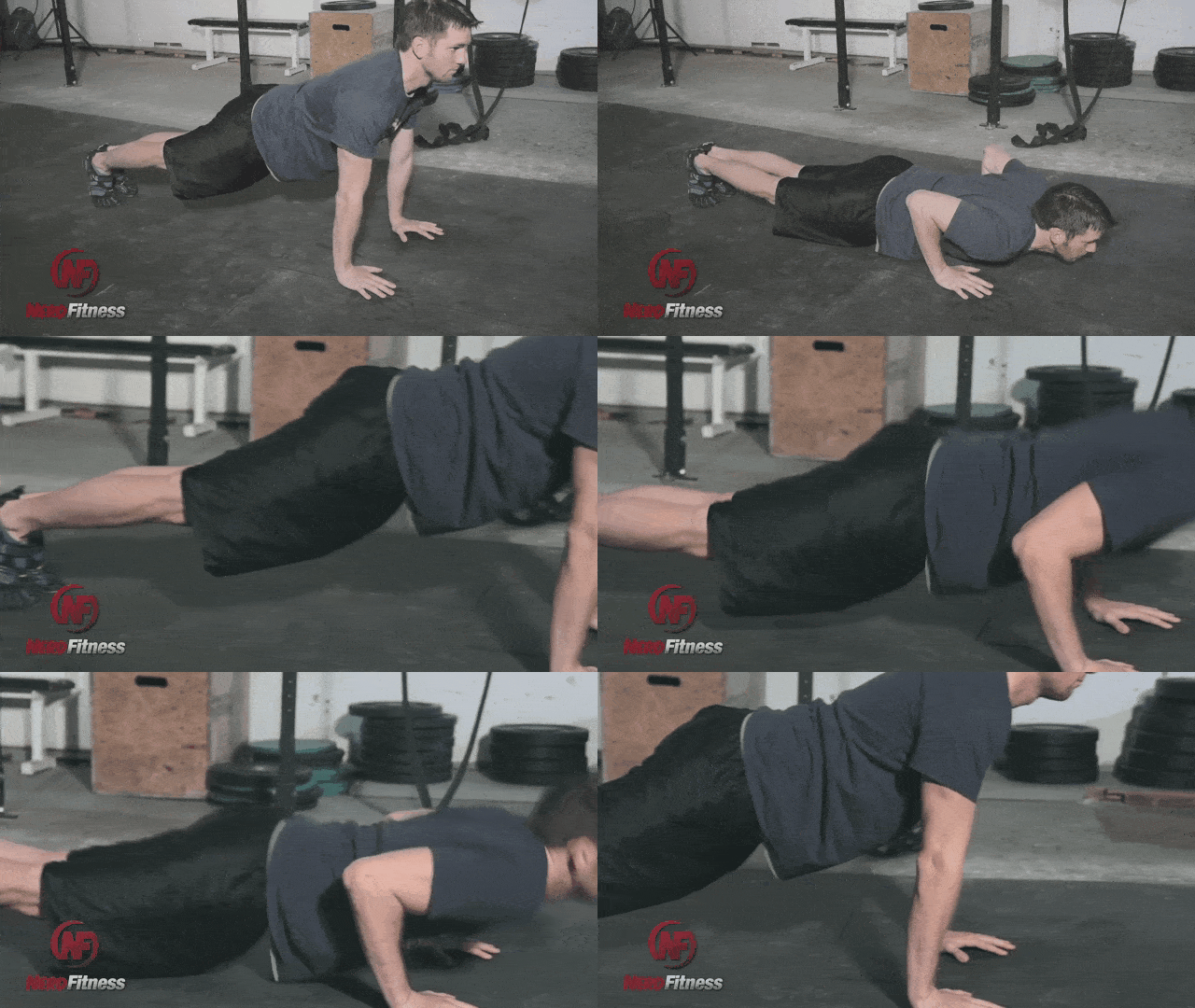
Wrist pain is most commonly complained about when doing the traditional push-up:
You might be able to alleviate this pain by using push-up bars and even (believe it or not) knuckle push-ups.
This is because you might be dealing with a flexibility issue and not an actual injury.
Front squats and power cleans done with the Olympic rack position may also lead to complaints of wrist pain.
To eliminate wrist pain in the front squat, try the more common crossed-arm rack position:
For the power clean, concentrate on getting the bar on top of the front of your front deltoids (shoulders) – if the bar is touching your throat, you are getting there.
Impact that corresponds with landing from jumping.
Lateral (side to side) movement, especially for participants of sports like soccer, rugby, basketball, and other “man to man” athletics.
When thinking about working around knee injuries, look for lower-body exercises that reduce the amount of knee movement and increase the amount of hip movement.
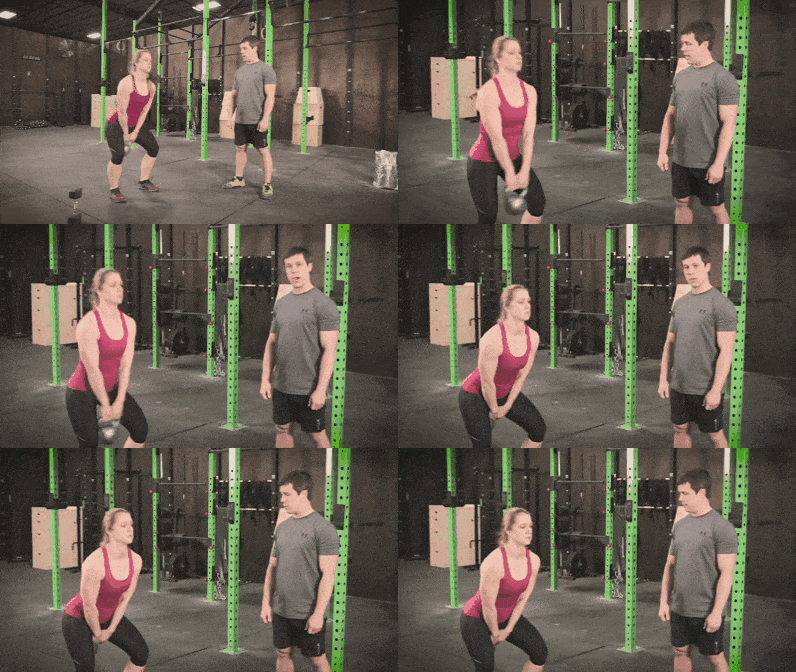
A properly executed swing does not involve much bending of the knee. In my experience, most people who cannot squat can handle swings without screwing up any preexisting knee conditions.
Just remember, when testing out these movements, the goal is to pick variations that put less pressure and stress on the knee joint.
#4) Can I Lift with a Hurt Elbow?
You’re out of luck on this one, unfortunately. Sorry.
Nearly any upper body exercise, push or pull, will hinder your recovery time.
Avoid any high-impact movements with a hurt ankle.
And all that means is do not jump.
But other movements that involve more subtle ankle movement such as squats may also have to be put on the back burner as you heal. It is possible (likely?) that you may have to focus on upper body movements and use seated versions of movements such as rows and overhead presses instead of standing.
This will help let your ankle heal.
#6) What Should I Do With Shoulder and/or Hip Pain?
Test, test, test.
These ball and socket joints can be the most unpredictable when it comes to training options.
Start slow, start light, and back off the second you feel any pain.
Be aware of training opportunities that you would not have considered without the injury
If you want any more help along your journey, you know we’re here for you.
Here are three ways that Nerd Fitness can help you level up.
#1) Our Online Coaching Program: a coaching program for busy people to help them make better food choices, stay accountable, and get healthier, permanently.
They can build you a custom program so you can grow strong, to hopefully prevent you from getting injured in the first place. Plus, they can do form checks to help make sure you’re doing all your training correctly.
You can schedule a free call with our team so we can get to know you and see if our coaching program is right for you. Just click on the image below for more details:
#2) If you want a roadmap for getting in shape, check out NF Journey. Our fun habit-building app will help you exercise and eat better, all while you build your very own superhero.
Interested?
Try your free trial right here:
#3) Join the Rebellion! We need good people like you in our community, the Nerd Fitness Rebellion.
Sign up in the box below to enlist and get our Rebel Starter Kit, which includes all of our “work out at home” guides, our Strength Training 101 eBook, and much more!
Get your Nerd Fitness Starter Kit
The 15 mistakes you don’t want to make.
Full guide to the most effective diet and why it works.
Complete and track your first workout today, no gym required.
Alright, I think that about does it for today’s articles.
Now, I want to hear from you!
Do you have an injury that is preventing you from training?
Do you have any tips and tricks to keep moving while still recovering?
Did you seek advice from a doctor who gave you good information?
Changing seasons in life call for different kinds of workouts and adjustments to wellness routines. At Lindywell, we’re all about honoring the season you’re in, meeting your body where it is, and adjusting as necessary.
My season of life is changing which is why I want to share what I’m currently doing in my workouts, what has changed, what I’m loving, what I’m struggling with, and everything in between.
If you would like an honest look at where I am in my wellness journey, press play.
You will want to hear this episode if you are interested in…
Where my life has been over the past ten years [2:02]
How my morning routine has shifted in the last six months [6:10]
How I strive to challenge myself [9:40]
What we just released in the Lindywell app [12:30]
Adjusting workouts during the changing seasons of life
Our workouts change throughout the seasons of life. If you have been following me for a while, you know that I’ve spent the past ten years with small children at home. If you are a busy mom like me, you know exactly what that means for my self-care routine.
While I haven’t been able to revolve my life around my workouts, I have been able to consistently incorporate short workouts into my daily routine. My goal has been to work out 15 minutes each day. Anything more has been icing on the cake.
Now that my twins are almost five, I can carve out a bit more time to focus on self-care and I can actually leave the room without being called back five minutes later!
Finding quality strength training workouts on the internet is a challenge
Pilates has transformed my body and my life. While the past ten years have been challenging for exercise they have been the inspiration behind Lindywell.
I recognized just how hard it was to fit in a quality workout which is why our workouts are so efficient and effective. If I only have ten or fifteen minutes to devote to working out, I’d better make it count.
Now that I have a bit more energy and time, I decided that I wanted to add a bit of strength training to my wellness routine. Over the past six months, I have searched the internet for quality strength training workouts, but I haven’t found any guided workouts with cues that would help me prevent injury while gaining strength.
This is why I decided to make my own. My strength training videos use the philosophy of Pilates and focus on alignment and moving with precision and control so that you can add more strength training to your wellness routine.
How to access Lindywell’s new strength training videos
In addition to an introductory video, there is a series of five strength training videos now available in the Lindywell app.
If you are over 30 that means that you are losing muscle mass each year. Pilates uses your body weight to incorporate strength training, and you can use props like our hand weights and resistance bands to add more of a strength workout to your Pilates routine.
However, like me, you may be looking to add a bit more. If so, head on over to the app to check out the new strength training series. Lindywell is your wellness companion. The app provides everything you need to support your goals to live a healthy, balanced life. If you still aren’t a Lindywell member, you can try it out free for 14 days.
If you’ve been playing the Pilates vs. weight training game (Which one is better? Which one should I choose?)—I have good news: you don’t have to choose. Even better, when you combine Mat Pilates (Pilates without a reformer, which is what we do at Lindywell) with weight training, you reap the benefits of both.
When you look closely, it’s easy to see how the two are very similar: both target the musculoskeletal system to develop strong, resilient muscles, joints, tissues, and bones. In addition, both forms of exercise can be classified as resistance training:
Weight workouts utilize weights for added resistance
Pilates mat workouts primarily utilize body weight for resistance
This means that combining the two can provide a well-rounded workout routine that not only builds strength but also improves mobility, reduces stress, and increases mindfulness.
I’m often asked, “Which is better?” and I’m here to tell you that they both have benefits.
What I’ve seen, however, is that not all weight training programs are created equal. It’s imperative to bring what we know about Pilates in terms of proper movement mechanics into our weights workouts to reduce the risk of injury and actually benefit from the workouts.
Let’s ditch the Pilates vs. weight training mindset. Here’s what you need to know to get started with both!
Pilates vs. Weight Training: Let’s Break it Down
Traditional weight training relies on lifting weights as the primary form of resistance to increase muscle strength. Progressively increasing load is what leads to gains in strength, stamina, and endurance. Weight training is an important and effective way to maintain muscle mass and bone density as we age.
Mat Pilates, on the other hand, can be done with or without light weights (1-3 lbs), or other equipment to increase resistance. Whether you’re using body weight or added weight, the Pilates principles remain the same, keeping the movement focused on alignment, control, and intention.
And this is what’s often left out of weight training programs or may be missed if you’re lifting on your own: the focus on form, alignment, and breath. However, applying these Pilates principles to weight training workouts not only reduces your risk of injury but also increases the effectiveness of your weight training workout so you see better results.
Pilates and Your Core
There is one more distinction that sets all Pilates (Mat and otherwise!) apart from traditional weight training: the core. Pilates focuses on engaging the core in every movement to create stability, protect your back and build strength in your spine. It’s imperative that we add this focus to weight-training workouts for the best results.
Your body relies on this strength for nearly everything you do in life, from reaching for a glass to bending down to tie your shoes. This means weight training can be more impactful when combined with Pilates because you’re also getting that core focus.
How to Choose Your Workout
First and foremost, you don’t need weights to experience the benefits of Mat Pilates. These bodyweight workouts allow you to build strength using your own body weight as resistance. This has even been shown to increase bone density as well.
This is incredibly important as we age, considering we begin to lose muscle and bone as early as age 30. Adding additional resistance to your Mat Pilates workouts (through light weights, bands, or even equipment like the Reformer) or lifting heavier weights with traditional strength training, can help you continually challenge your body.
Challenging your body, in whatever way is best for you, is important in maintaining your muscle mass and strength as you get older. And how you create that challenge will change from season to season. Sometimes this might mean using weights and sometimes it may not.
With that in mind, the workouts you choose from day to day depend upon the following:
How much do you want to challenge yourself?
What is your body is craving in this season?
Can you maintain your form as your weight increases?
Here’s what you need to know and how I recommend making this choice for yourself.
Weighted Pilates Workouts
Adding light weights to your Mat Pilates workouts can be a great way to add an extra challenge. In this case, I typically reach for our Lindywell hand weights, which are just 2.2 lbs each. They’re built as a no-slip capsule so they’re easy to use and look as good as they feel in your hand.
If you want to switch it up with your resistance-based Pilates workout, here are some additional ways to do that:
If your body feels ready for the added challenge of heavy weights, strength training is a great choice. But I encourage you to do it with the Pilates Principles in mind. The tricky thing is, not many workout programs focus on this.
I’ve noticed that most programs include little to no cueing and there’s also no guidance on how to activate the proper muscle groups or where you should be feeling the movement.
If you want to learn how to strength train in a way that focuses on form, breath, alignment, and mindfulness, we have something for you: our new series, Pilates-Inspired Weight Training, inside the Lindywell app!
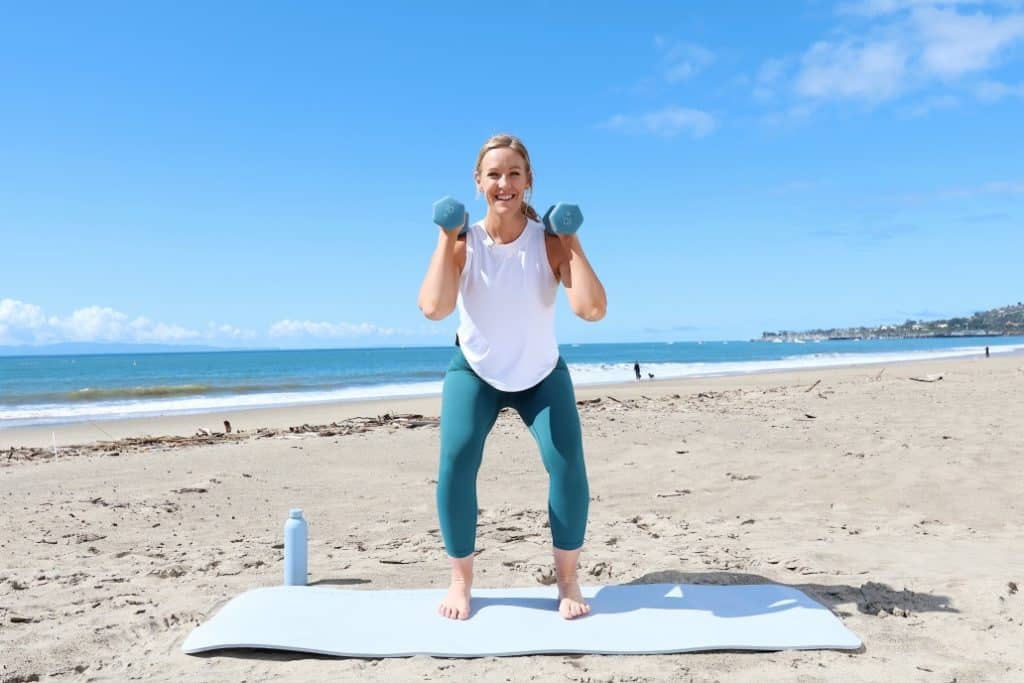
With this series, you’ll do traditional strength training exercises like squats, lunges, bicep curls, and flies. How much weight you use will be up to you. Tthe program is designed to focus on working your muscles to fatigue. This helps you progress in your strength training in a way that is safe, effective, and tailored to your personal needs and goals.
Each movement is slow, controlled, and supported by our core, which is likely very different from how you’ve learned to lift weights.
Inside the Lindywell app, you’ll find a variety of strength workouts. You can integrate these into your routine, including full body, lower, upper, arms, and shoulders. Each workout is 10-20 minutes so you can choose what’s best for your body and day.
Start your 14-day free trial to get instant access to all of Pilates-Inspired Weight Training, along with 275+ Pilates workouts, hundreds of anti-inflammatory recipes, and guided breathwork sessions.
Don’t Choose Between the Two: Combine Them!
You can amplify the power of Pilates by adding external weights safely and with intention. If you want to build more strength and challenge yourself, this is a perfect way to do that. Remember to tune into what your body needs in each workout. Sometimes weights will be the perfect addition while other times, your body may be asking for less intensity.
Don’t forget that as you add strength training you will need to do Pilates all the more to make sure you don’t add tension or tightness to your body. This will help you stay strong in your core to support your strength and weight-training workouts.
The bottom line is it’s not Pilates vs. weight training. It’s: how can I bring these together to see even more progress in my practice?
If you’re ready to bring weights into your Pilates workouts or try Pilates-inspired strength training, sign up for a 14-day trial of Lindywell and get instant access. If you’re already a member, just open your app and choose your workout!
Mindful movement changed the fitness game for me. I spent years exercising without any sense of what my body needed or how it actually felt. Coincidentally, I could also never stay consistent with any program or routine.
I’d be invested and excited for a few months and then life would get busy and all of a sudden, lifting weights or going to the gym felt like the last thing I wanted to do. So I’d stop and then eventually, start again at some point in the distant future.
You may be familiar with this off-and-on relationship with your fitness routine. One of the things that made it possible for me to stay consistent once and for all was mindful movement.
Pilates brought this style of exercise to my attention and in the last 10 years, it’s created a powerful shift, not just in my fitness routine but in my life as well.
If you struggle with stopping and starting your fitness routine but want to be consistent enough to experience both the mental and physical benefits, this may be the missing piece. Mindful movement reminds us that exercise is about so much more than simply showing up. It’s about slowing down, being in your body, and taking even just 10 minutes for you to focus on yourself.
Let’s talk about what mindful movement is and how it can help your fitness routine stick once and for all.
What Is Mindful Movement?
Do you pay attention to the sensation of your muscles contracting as you lift weights?
Are you able to breathe slowly and intentionally as you move your body through your workout?
How often do you listen to the needs of your body when choosing your workout each day?
All of these ways of thinking about and approaching exercise are part of mindful movement. This is the integration of mental awareness and physical exertion. It helps you focus on what your body is doing—and how it feels—from one exercise to the next.
This style of movement helped me stick with my workout routine once and for all. I started choosing exercises that my body was craving rather than forcing something I didn’t want. I also started noticing the mental benefits of consistent mindful movement, like less stress and better sleep.
All of this showed me that simply showing up to my workouts wasn’t enough. To stick with it, I needed to slow down, tune into my body, and take note of how each workout was impacting my life, not just during but after.
How to Incorporate Mindful Movement
A few of the most common examples of mindful movement include yoga, tai chi, and, of course, Pilates. This is the basis for our workouts here at Lindywell, but all types of movement can be done with a mindful approach using these basic principles:
Slow down and breathe: Slow down each movement and use your breath to connect with your body as you do it. For example, breathe out as you roll your body down to touch your toes, breathe in at the bottom, and breathe out as you roll back up.
Focus on what your body needs: Some days you may want to lift heavy weights but other days you may want to stretch gently. This is especially true for women who have a monthly cycle. Choose the movement that your body is craving each day rather than forcing something that doesn’t feel good.
Set an intention: Your workout does so much more than build muscle. It can help you tap into your creativity, let go of anxiety, or cultivate energy for your day. What do you want to get out of your workout? Set that intention and keep it front of mind as you go through the movements so it becomes not only about the movement itself but how you feel as a result.
How Mindful Movement Creates Consistency
If your idea of a workout is to rush through a series of intense exercises as quickly as possible, then mindful movement may be far outside your comfort zone. That’s okay, I’ve been there! But, trust me, if you’re willing to give it a try, this will change the way you experience movement.
It may also be the missing piece to creating more consistency in your workout routine. On that note, here are eight science-backed reasons mindful movement will make your fitness routine (finally!) stick.
1. Stress Management
The combination of being mindful while also moving your body is impactful, according to researchers at Penn State University. This state of being can help relieve stress, anxiety, or depression because mindfulness trains you to take deep breaths and concentrate on physical sensations, rather than what’s happening in your mind.
Both of these actions reduce cortisol (stress hormone) levels, creating a relaxing effect on the body—even when it’s in motion.
When do you most often bail on your workouts? When you have a stressful day. Yet that’s when you need it most. Consistent mindful movement with Pilates is one of the main ways I show up as the best version of myself for my kids, my husband, and my business because it helps me manage and reduce my stress.
Without it, I would definitely struggle more to juggle everything that life throws my way so I always prioritize it.
2. Fewer Injuries
When you slow down to focus on the correct form, cadence, and technique of an exercise, you’re less likely to injure yourself. This is important to consider because, when you injure yourself, you’re more likely to get out of your workout rhythm to take time for rest and healing.
Slow down with mindful movement to avoid injury in the first place. This way you have one less reason to get out of your fitness routine. Let’s be honest, we all have enough reasons already, right?!
3. Better Sleep
Mindful movement can boost sleep quality and alleviate insomnia by regulating your nervous system. A regulated nervous system can stimulate the natural sleep-wake cycle, in addition to helping you manage inflammation, increase oxygenation, and lower your resting heart rate, all of which promote better sleep. Lindywell member, Kristen, experienced this after starting Pilates:
“I have also noticed that I am getting more deep sleep than I was before starting Pilates, and there is a noticeable increase in my core strength, which is definitely encouraging and motivating.”
Take note of your sleep patterns and habits. When you slow down your workout, do you notice you sleep better at night? This benefit might just be enough to help you stick with your routine because we all feel so much better when we get quality sleep!
4. Mood Regulation
Physical activity releases mood-lifting hormones (cue that post-workout glow) like dopamine, serotonin, and endorphins. When you integrate mindfulness into the exercise routine, those benefits are amplified.
That’s because mindfulness training improves emotional regulation, self-esteem resilience, and satisfaction in life. Being mindful during workouts can strengthen your mental health as a whole. This makes your fitness routine so much more impactful in every area of your life, giving you just another reason to stick with it consistently.
5. Athletic Endurance
Stamina is important not just in your workout, but in life. If you want to go hiking with friends or run around your yard with a pup or grandkids, you need stamina. According to the Neural Plasticity Journal mindfulness optimizes aerobic endurance (stamina). In other words, you can enjoy your favorite physical activities for longer periods of time when you stick with a mindful movement practice. Yes, please!
6. Improved Energy Levels
Diaphragm-based breathwork (deep, slow breathing) is an essential part of mindful movement that brings big benefits. It’s been found to boost respiratory function, which helps circulate more oxygen to the brain and body and, in turn, can boost your energy levels.
Research from the Health Promotion Perspectives Journal also found that combining exercise with meditation curbs fatigue. This means you feel both alert and invigorated, which is another great reason to stick with it. I mean, does anyone else always want more energy, or is that just me?
Here’s how Lindywell member, Lori, experienced this boost of energy after she joined:
“I joined Lindywell in 2017 and I was hooked. I was able to be more consistent with exercise because of the shorter workouts at any time of day. I quickly built strength and tone and more energy and less stress!”
Experience this yourself with Lindywell’s guided breathwork! Join our 14-day free trial to get access to all the breathwork sessions plus 275+ workouts!
7. Better Concentration
Mindful movement requires a different level of concentration than simply doing a workout. The benefit of tuning into each muscle contraction and physical sensation is that you’re grounded in the present. Consistently doing this enhances your brain function.
In fact, a new study from Frontiers in Psychology found that mindfulness-based exercises strengthen the neural networks that increase focus, memory attention span, informational processing, and other key executive functions. Stick with your mindful movement routine and you may notice you focus better in every other area of life!
8. More Enjoyable Workouts
When you’re connected to the sensory experience of a workout, it’s easier to intuit how your body feels and what it might need. This makes the fitness program itself more enjoyable which promotes well-being and makes it easier to turn it into a habit.
It makes sense when you think about it: why would you keep doing something that doesn’t feel good or that you don’t enjoy? Choosing workouts that you do enjoy—the format of which may change from day to day—makes you want to do it, rather than feeling like you need to force it.
Tap into Mindful Movement with Lindywell
Mindful movement might just be the missing piece in creating a fitness routine that sticks. You can bring mindfulness into any movement format, and at Lindywell, we help you do that through Pilates. With more than 275 workouts ranging from 10 to 30 minutes, plus breathwork sessions, anti-inflammatory recipes, and more, you’ll stress less, feel amazing, and strengthen your mind-body connection. Start your 14-day free trial to access your workouts instantly!
The benefits of wall sits go much further than just getting you through the dreaded middle school PE tests! While not all fitness challenges have stood the test of time, wall sits are still one of the most effective ways to build strength in your core and lower body.
That’s why I love this movement. At Lindywell, we love efficiency and a wall sit is exactly that. It’s also simple, requiring no equipment or space (just an empty wall!), and can help tone your body, challenge your endurance, and boost your confidence. Yup, all of that!
Plus, it only takes one minute each day to see these results. If this exercise isn’t part of your movement routine already, allow me to convert you. Here are five undeniable benefits you can experience from doing a wall sit for just one minute per day. Make it a consistent habit, and I’m confident you’ll notice the difference, both mind and body.
How to Do a Wall Sit
As with all exercises in Pilates, I want you to be intentional with form so you can maximize the benefits and avoid injury. Here are five steps for getting in and out of your wall sit while protecting your spine and building strength and endurance.
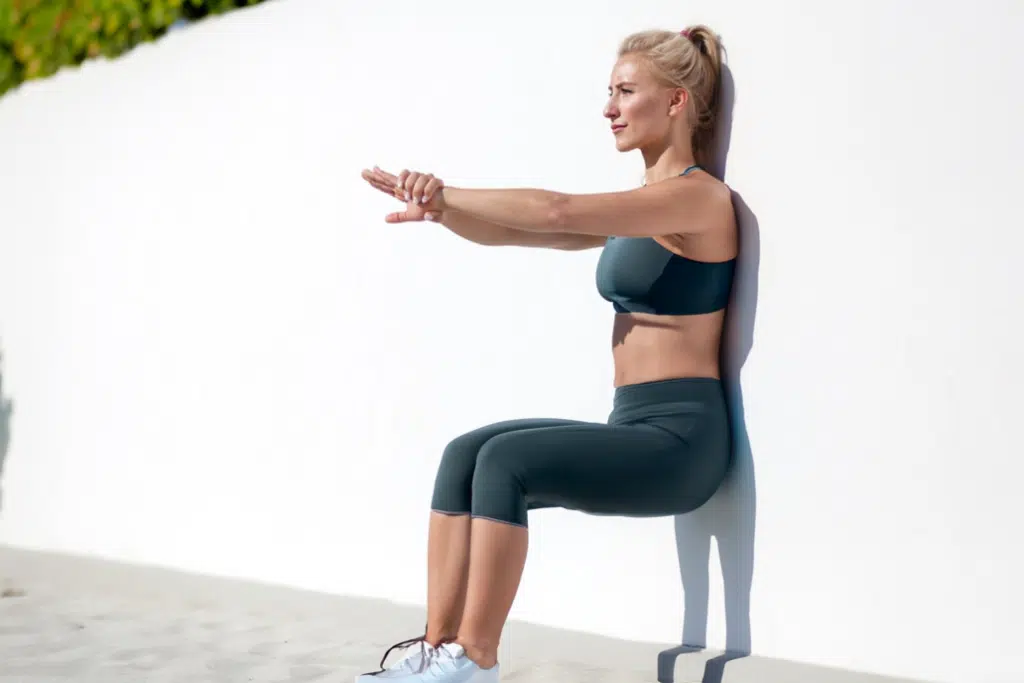
1. Position your back flush against the wall, pull your belly button toward your spine, and place your feet hip-width apart.
2. Walk your feet away from the wall and slide your back down until your knees are bent at 90 degrees. You can reduce this angle by not sliding down to a full 90 degrees, if you’re new to the exercise or concerned about balance.
3. Relax your shoulders away from your ears and push your feet into the floor to activate your glutes and keep your core activated (belly button pulled toward the spine).
4. Breathe in and out slow and controlled, sending energy down into your body which will help you hold the motion and sustain the burning sensations you might be feeling in your muscles.
5. Hold the stance for one minute and then slowly slide your back up as you step your feet back toward the wall to return to standing.
The Mind-Body Benefits of Wall Sits
The beauty of a wall sit is you don’t need to unroll your mat or pick up your weights to build strength. Simply holding this position for one minute can impact your mind and body in ways you may not realize. Here are a few of the benefits of wall sits that I can’t get enough of.
1. Boost Core Strength
At Lindywell, your core is always at the heart of ours so I love this move to help you (and me!) continue building core strength. When performing a wall sit, it’s common to feel the most work in your lower body. However, your core is firing on all cylinders too.
Holding an isometric contraction—which is when your muscles are flexed and strong, but don’t actually move—takes a lot of work. In a wall sit, your abdominals (as well as surrounding muscles in your back and hips) have to work hard to hold your entire body in this isometric contraction for a whole minute.
Your abdominal muscles maintain stability and support the spine, in other words: keep you upright. Your lower back muscles help counterbalance your natural inclination to lean forward. Finally, your pelvic floor muscles help your body stay in pelvic alignment and provide stability.
All of this leads to a stronger core that supports your body in nearly any movement, from bending over to reaching over ahead.
I also want to add that if you’re healing from Diastasis Recti and looking for safe ab exercises to recover your strength and repair connective tissue, wall sits can be great for you! Just focus on drawing the belly button to the spine and lifting the pelvic floor as you hold the contraction. Learn more about this, your core and pelvic floor in episode 90 of The Balanced Life!
Nearly every workout you’ll find within the Lindywell app helps you build core strength. Sign up for your 14-day trial and get access to all 250+ workouts, plus breathwork, recipes and more!
2. Build Muscle and Improve Circulation and Metabolism
Wall sits activate your hamstrings, quadriceps, calves, and glutes. The isometric contraction increases tension on these muscle groups which, in turn, stimulates hypertrophy (muscle cell growth). In other words, holding the squat position for even just a minute helps you build muscle.
Not only does this contribute to muscle mass in your legs and core, but hypertrophy can also boost your metabolism and circulation. This can lead to reduced inflammation, better digestion, and an overall greater sense of mental and physical well-being. A win-win-win!
3. Improve Alignment and Posture
We care a lot about posture here at Lindywell because a healthy mobile spine helps you move throughout your day with ease and freedom. Part of maintaining great posture is having awareness of it as you go about your day.
Maybe you’ve had a moment where you finished a meeting on your computer or had been watching TV on the couch and realized you were hunched over the whole time. You didn’t even have awareness of it, but then, as you straightened back up, you felt that familiar discomfort or stiffness.
Wall sits can help you increase postural awareness (and limit that discomfort) because, as you hold your back up against a wall, you’re creating muscle memory that helps your muscles recognize and remember what it feels like to maintain a tall posture. The more you do it, the more you can train yourself (and your muscles) to be conscious of your posture on a day-to-day basis.
This improved posture not only helps reduce back and neck pain but can also boost your confidence. You stand taller and walk stronger, which can leave you feeling more empowered in every area of your life!
4. Boost Your Endurance
Muscular endurance refers to how long a muscle can keep working (I.E. pushing or holding something) without getting tired. Isometric exercises (like the wall sit) boost this endurance because your body has to hold that resistance (in this case, your body weight) for a specific length of time without releasing the tension.
As you build this endurance, you may find that you can do more of the activities you love, like hiking, biking, gardening or just running around the yard with your pets. This ultimately improves not just your physical body, but overall quality of life. This is one of the most important aspects of movement for us at Lindywell!
5. Keep Your Joints Mobile and Flexible
The wall sit is considered a functional exercise. This means it can optimize the range of motion in your joints, making it easier to perform normal daily movements. When doing a wall sit, your hip, knee, and ankle joints are all in a state of flexion (bending), which in turn promotes that joint mobility.
Plus, the activation of your quadricep muscles reduces the amount of pressure or load on your joints. If you struggle with joint pain in your ankles, knees, or hips, wall sits can be a low-impact way to build strength without causing further discomfort. As a bonus, you’re also moving lymphatic fluid in those areas each time you gently flex them, which supports healing, immune health and detoxification.
It’s Simple and Beneficial to Do a Wall Sit for One Minute Each Day
You might only notice the feeling of your legs screaming to stand up (been there!), but the benefits of wall sits extend far beyond what you can feel or even see. If you’re searching for a convenient, low-maintenance exercise that delivers maximum results in a short amount of time, this one is for you. You’ll build core strength, support posture and alignment, and more—all in just one minute, with no equipment at all.