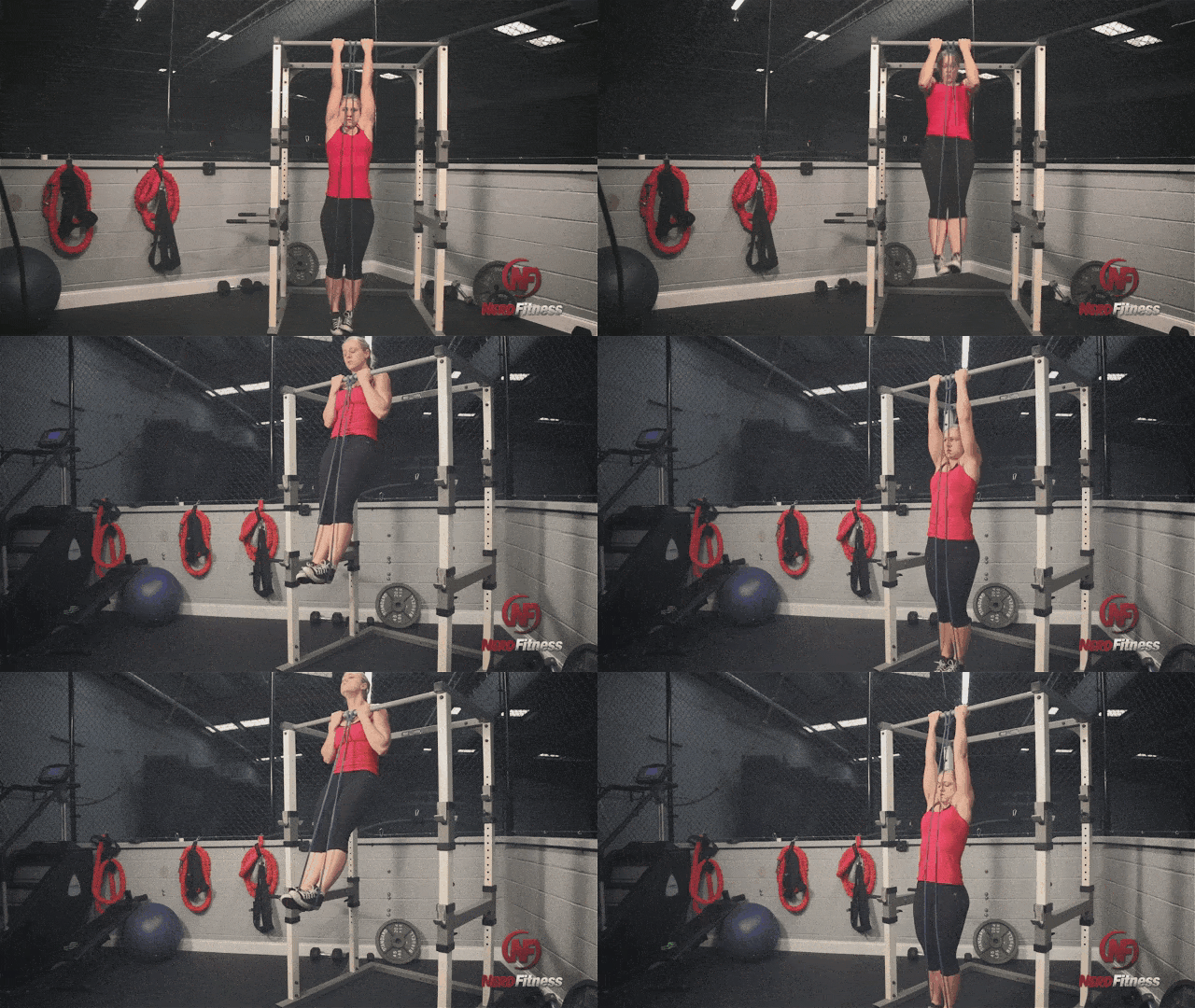
A New Year brings with it the whole New You trope, but there’s one element of fitness that really isn’t just for a New Year, and that’s strength. Incase you missed my announcement on social media, I officially joined the…
As you might know from our “How to lose weight” guide, the key to sustainable weight loss is getting ourselves to consume fewer calories in a way that doesn’t make us miserable.
Because our brains and bodies are complicated emotional disasters, there are some tips and tricks we can implement to protect us from…ourselves.
4 Strategies for Portion Control:
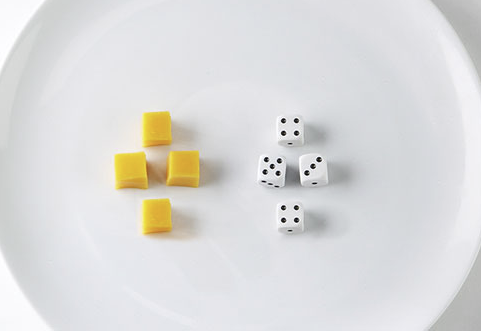
Use smaller plates. Folks will often eat what’s placed in front of them, so using smaller dinnerware has been shown to help people eat less.[1]
Drink a glass of water before your meal. If you chug a glass of water 30 minutes before you plan on eating, the H20 will take up some room in your stomach. This might help you eat less.[2]
Take it slow. It can take about 20 minutes for your body to come around to the fact that it’s full, so slowing down your meals can help you eat less.[3]
Use a food journal. Recording everything you eat and drink is a great way to become aware of portions, which can help you control them.[4] In fact, one of the first missions we have Nerd Fitness Prime members complete is creating a food journal.
All of these methods will work to some extent, and they’re good to keep in mind and also practice.
However, nothing will get more consistent results than actually learning the number of calories in the food you eat (Portion Control Tip #5)!
Study[4] after study[5] after study[6] shows that our bodies obey the laws of thermodynamics and that in order to lose weight, we need to burn more calories than we consume regularly.
When you consume more calories than you burn, your body tends to store those extra calories as fat (weight gain).
When you burn more calories than you consume, your body will pull from fat stores for energy (weight loss).
However, as we point out in our Calories In, Calories Out guide, determining your exact “calories in” can be a real pain. Not only that, but many people with certain personality traits can become neurotic about tracking every single calorie. They worry if they go 1 calorie over their daily allotment.
So, what’s a nerd to do?
Unless you’re going to weigh out all your food (something I’ve done before) and be militant about tracking, is it possible to “track” your food with a high level of accuracy without having it take over your life?
The answer: yes, by getting darn good at estimating!
Portion Sizes: How to Portion Control (The Best Method)
You already carry with you the best method for portion control.
Your hands!
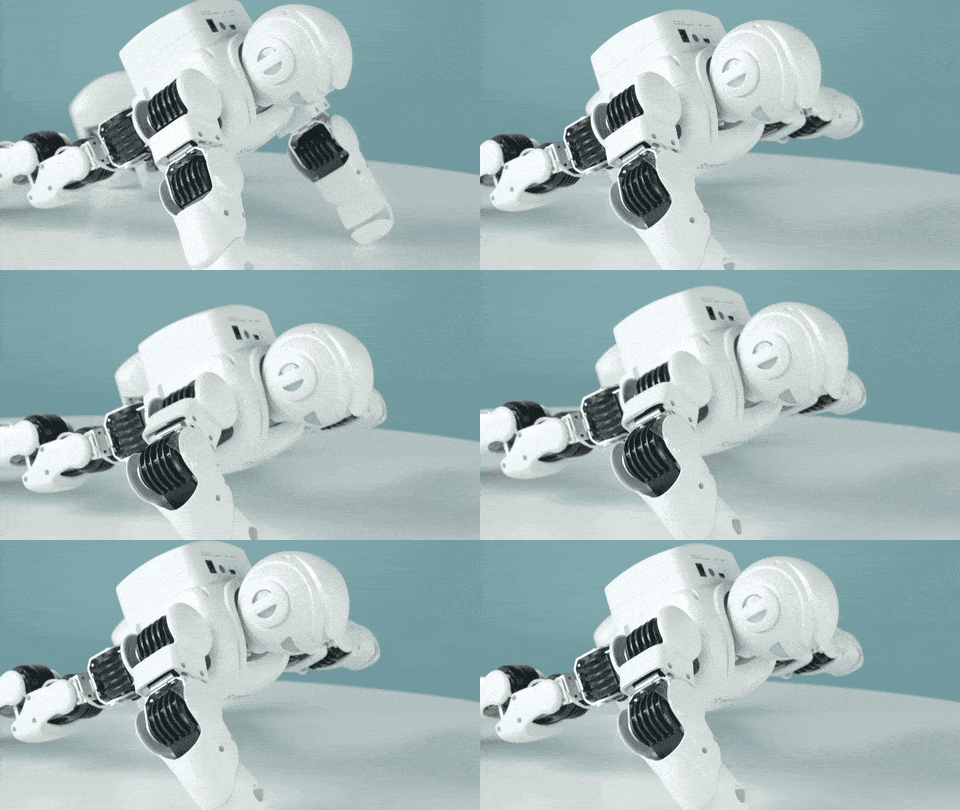
Even if you have robot hands.
We’re going to use them to build a healthy plate, as shown above.
However, using your hands as a tool for portion control provides a “good enough” strategy that can help your food intake:
As you can see, we’re going to focus our portion control strategy on:
Protein
Vegetables (technically carbs, but important enough to deserve their own category)
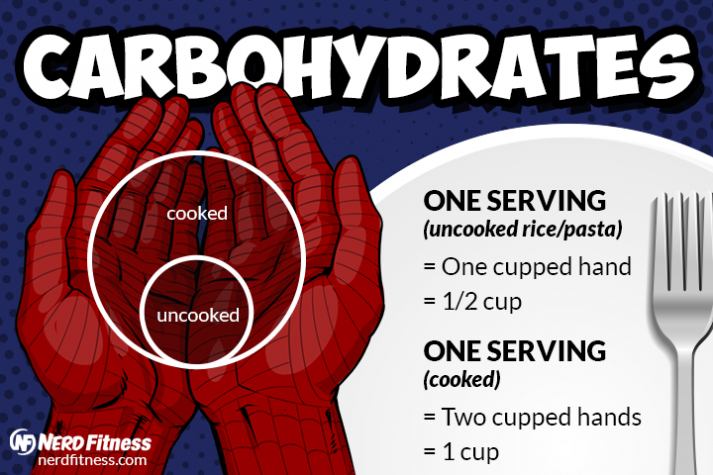
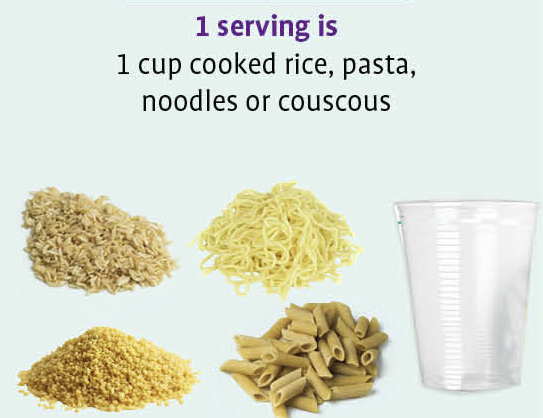
Carbohydrates (think starches and fruit)
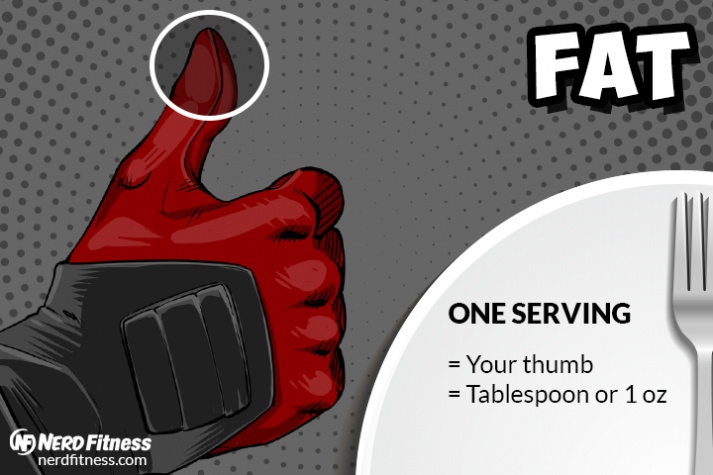
Fat
Each macronutrient will correspond to an area of your hand, to give you a sense of what a proper portion size should be.
We’ve learned that using your hand as a guide is the most helpful strategy for portion control:
You might not always have access to small plates.
You might forget to drink water before each meal.
You might have a short lunch break without the luxury of eating slowly.
You might grow tired of logging all your food intake.
However, having an intuitive sense of what foods should be eaten in what portions will help you level up your healthy eating.
When in doubt, match the food in front of you to your hand and carry on.
Let’s break this down a little by talking about protein and veggies.
What is the Correct Portion Size Part 1: Protein and Vegetables
The above video is taken from Nerd Fitness Prime, as part of our NF Kitchen series.
In it, Coach Lauren and Justin discuss the two most important parts of every meal:
Protein
Vegetables
Here’s something that might seem counterintuitive: our #1 recommendation for portion control isn’t about limiting food. Instead, make sure you get a proper serving of protein and vegetables every time you sit down to eat.
In other words, when you begin your healthy eating journey, don’t even worry about nixing any specific food. Just make sure you are leaving plenty of room for protein and vegetables.
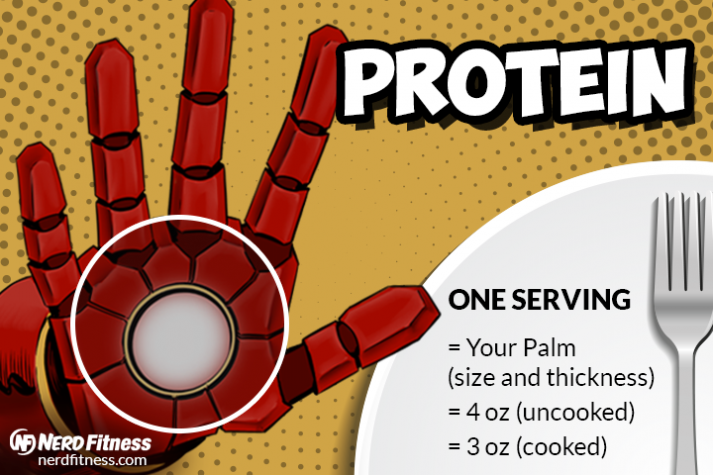
A serving of protein is about the size and thickness of your palm:
Protein can come from any number of sources, including:
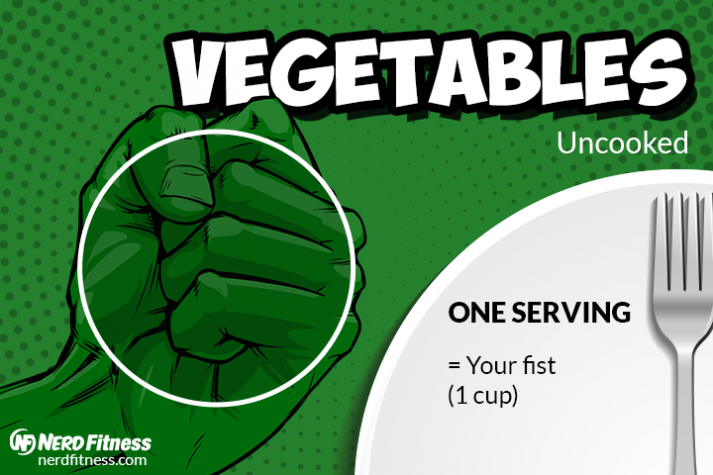
A serving of veggies is about the size of your fist:
Here’s a quick, non-complete list of veggies that can fill half your plate:
Broccoli
Broccolini
Cauliflower
Spinach
Kale
Spaghetti squash
Brussels sprouts
Zucchini
Cucumber
Carrots
Onion
Asparagus
When it comes to learning portion control, start by making sure you eat enough protein and vegetables.
How much?
As we discuss in our protein guide, when building a plate aim for the following amount of protein:
Dudes: 1-2 servings (6-8 oz or about 170-228 g): two palms
Dudettes: 1 serving (3-4 oz or about 85-114 g): 1 palm.
For vegetables, in practice you can probably eat as much as you can stomach (the fiber will likely slow you down), but aim for about 2 fist fulls at most meals, or about half your plate.[9]
Here’s why you should prioritize protein and vegetables if you’re struggling with portion control:
Protein. Eating enough protein will assist your health as you age.[10]Plenty of protein will also help you retain and grow muscle.[11] Plus, prioritizing protein will help you stay full and satiated between meals.[12]
Vegetables. Veggies are both high in nutrients and low in calories, which makes them ideal for a healthy plate. Plus, the fiber will not only help your health, it’ll also keep your indoor plumbing in proper order.[13]
In the video that kicks off this section, Coach Justin makes a great point: aim for a little better than you are today.
Meaning if you don’t really plan your meals at all, start by having ONE meal include a good protein source and some veggies.
You also want to make sure you’re including healthy fat in your diet too.
Fat is actually the most calorically dense macronutrient, so comparatively it’ll take up less room on your hand.
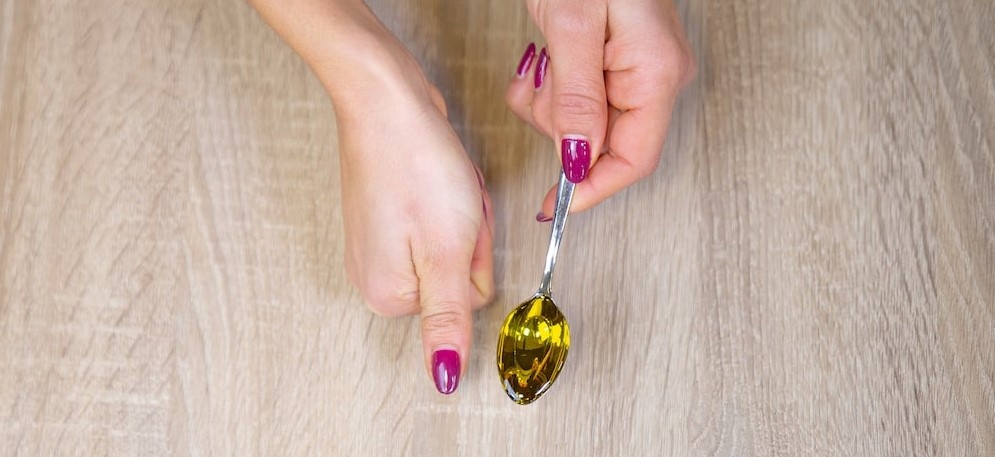
Here is a serving of fat, roughly the size of your thumb!
Healthy fat can be found in foods like:
Avocado
Almonds
Walnuts
Macadamia nuts
Olive oil
Almond butter
Peanut butter
The reason people call it “healthy” is because the fat is unsaturated, although science has recently come around on saturated fat too in the correct amounts.[14]
When it comes to portion control, we need to pay close attention to carbohydrates and fats, because this is where people have the tendency to overeat.
However, that doesn’t mean we want to completely ditch both food groups either.
Here’s why you need to eat these two macronutrients:
Carbohydrates. Did you know fiber is a type of carbohydrate? Yep. As we mentioned earlier, you need plenty of fiber for good health.[15] Carbs are also a great source of quick energy, especially fruit.[16]
Fats. Some nutrients like Vitamin A are fat-soluble, meaning they are best absorbed alongside some fat.[17]Fat will also help you feel full, which can help with overall portion control for the day.[18] While a little goes a long way, you wouldn’t want a “zero fat” diet.[19]
An area of concern when attempting to portion control is dining out.
It seems like restaurants serve you twice the amount of food that you need.
Here’s what Coach Justin does in the situation: ask for a to-go box as soon as you place your order.
Yeah, it’s a little weird, but as soon as you get your food, place half of it in the container.
Boom! An extra meal for later.
Another thing to consider: restaurants want you to leave feeling full.
They often do this by piling on the carbs. Think extra bread, lots of rice, plenty of pasta, etc.
So it might make sense to split these portions in two, and you’re set for lunch the next day.
Also, if you get hungry after eating only half your meal, no problem. Just eat the other half. Even if you’re still at the restaurant.
The point is to consciously think about how much you’re eating. A break halfway through can be used as a decision tree:
Should I keep eating?
This question alone can help with portion control.
One last thing: we know eating out at restaurants is often a family or friend bonding experience, so we’d prefer you ENJOY the night. Food is more than just calories.
Just plan for it! If you eat a really large dinner for a celebration, eat slightly smaller portions for the next day or so and your body will be right back on track.
How to Portion Control for Weight Loss (Next Steps)
In the video above, Coach Lauren and Justin walk you through eating a Nerd Fitness Healthy Plate IRL (In Real Life).
It’s all well and good to build a healthy plate at home, but…
What if you’re at a restaurant?
What if you need to order a sandwich?
How about pizza?
Here are some tips from the Coaches for portion control IRL:
#1) How to Portion Control a Sandwich
The trick here is to pack in as many vegetables as you can. Yeah, you’re probably not going to get two fist fulls in, but you can squeeze in a lot of spinach, onion, sauerkraut, and tomato (yeah, it’s technically a fruit, whatevs) on your sandwich.
Your carbs can be some type of whole grain bread (you can do an open face sandwich if you want to limit this).
Your protein can come from some turkey.
Your fat can be a little avocado.
Boom.
You now have a turkey sandwich that matches our healthy plate strategy.
#2) How to Portion Control Chili or Soup
This can be a little tougher when everything is mixed together.
If you’re making it yourself, perhaps you measure out your hand portions as you cook.
Put a palm-size portion of ground beef in.
Your vegetables can be onion, garlic, and tomatoes (again a fruit, but who cares).
Your carbs can be pinto and/or kidney beans.
Your fat can be a little bit of cheese sprinkled on top.
Sure, maybe you’re doing less than two fistfuls of vegetables, and more than a cupped hand of carbs (beans).
It doesn’t matter. Again, the point is you’re putting a little thought into proper portions.
If you’re eating out and ordering soup or chili, maybe just think of the end product in mind:
“After portioning everything out, it should be about two fistfuls of food. So that’s what I’ll eat. Everything else I’ll take home.”
#3) How to Portion Control Pizza
This is a little trickier because pizza is mostly bread (carbs).
But Coach Justin has a solution for this.
First, he eats something he’s proud of, like a salad.
Then he portions out his pizza, which if he uses his hand strategy, would be about two slices:
Is it perfect?
Nope.
Does it help Coach Justin reach his goals and allow him to still enjoy life?
Yep!
So experiment a little by creating some rough guidelines, see how you feel, and course-correct as you go.
Remember, any step you take on leveling up your nutrition is great.
If you don’t know where to start, I actually recommend you begin by not worrying about what to take OFF your plate, but instead what to add!
Make sure every meal you eat has a healthy protein source and a vegetable. Once you have that dialed in, THEN you can worry about portion controlling your carbs and fat.
If you need help along the way, we got you.
Here are three ways to continue your journey with Nerd Fitness.
#1) Our Online Coaching program: a coaching program for busy people to help them make better food choices, stay accountable, and get healthier, permanently.
As I said before, we teach portion control to our clients who struggle with overeating, so we’ll provide a non-judgmental expert to help you reach your goals.
You can schedule a free call with our team so we can get to know you and see if our coaching program is right for you:
#2) If you want an exact blueprint leveling up your nutrition, check out Nerd Fitness Journey! Our fun habit-building app helps you exercise more frequently, eat healthier, and level up your life (literally).
If you follow our Nutrition missions, you’ll learn to portion control while earning XP! Sah-weeeet.
Try your free trial right here:
#3) Join the Rebellion! We need good people like you in our community, the Nerd Fitness Rebellion.
Sign up in the box below to enlist and get our Rebel Starter Kit, which includes all of our “work out at home” guides, the Nerd Fitness Diet Cheat Sheet, and much more!
Get your Nerd Fitness Starter Kit
The 15 mistakes you don’t want to make.
Full guide to the most effective diet and why it works.
Complete and track your first workout today, no gym required.
Alright, I want to hear from you:
Do you have any tips or tricks for portion control?
Do you use the hand strategy that we covered today?
What’s your biggest challenge with portion sizes?
Let us know in the comments!
-Steve
PS: If you’re just starting your weight loss journey, make sure you check out:
If the sight of a plate of broccoli makes you gag, this post is for you!
We’ll turn any “Veggie Hater” into a “Vegetable Lover” by showing you how to make a plate full of greens not taste like a wet gym sock [1].
If you’ve been a picky eater your whole life (I didn’t eat veggies until 22!), our guide today will help level up your taste buds!
We work closely with our Online Coaching Clients to help them find their gateway vegetables, and I even picked our coaches’ brains to get their favorite tactics in this guide too.
By the end of this guide, I’m going to have you excited to eat vegetables, and ready to take the “NF Veggie Challenge”:
As Coach Staci mentions above, eating a vegetable once a day is something we recommend all our coaching clients do.
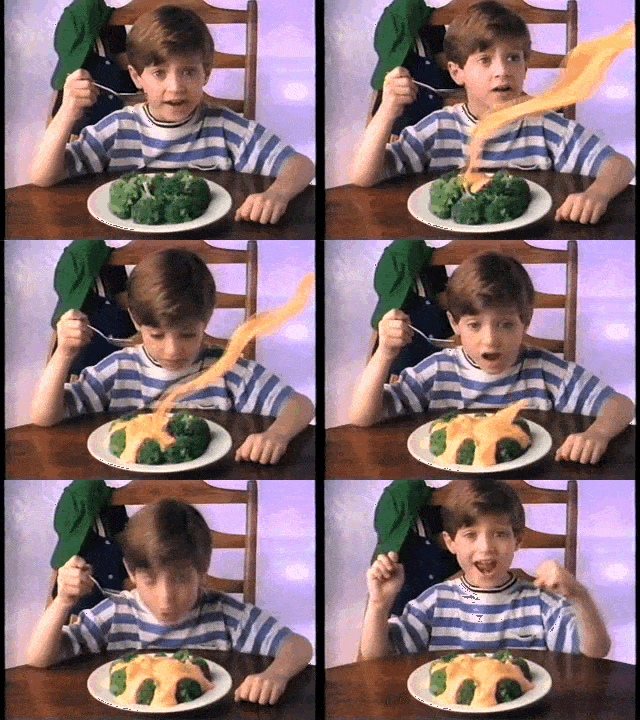
Yeah, I know…you’ve probably been told since you were a toddler to “Eat your vegetables! They’re good for you.”
But do you really know WHY veggies are good for you?
Let me jump into a few reasons why they kick ass.
Here’s why you prioritize eating vegetables:
1) Vegetables are nutrient-dense. It should be no surprise that Popeye turned to a vegetable when he needed a power-up.
Think of vegetables as one of our body’s most efficient fuel sources: they are packed full of vital macro and micronutrients.
Just take a look at our article on how to eat healthy – it should be no surprise that vegetables take up half the plate in our “healthy plate” strategy.
Simply put: vegetables are the backbone of any solid diet.
2) They fill you up, without “filling you up.”
Ever seen what 200 calories worth of broccoli looks like (courtesy of WiseGeek)?
It’s the size of a grocery bag compared to 200 calories of a Snickers:
If you are feeling hungry but don’t want to overeat, choose a vegetable.
Kind of hard to overeat when you’re eating carrots or celery!
3) Veggies keep your body operating at max efficiency. Vegetables are a great way to keep your…um…indoor plumbing…functioning properly.
Adding a vegetable or two to each meal (or blending them up in a smoothie) is a great way to keep things working right.
Seriously: you will notice a considerable difference after adding veggies to your diet regularly.
4) They CAN be delicious! It’s all in how they are prepared. As a former veggie hater, I am now firmly on “Team Vegetable.”
A plate full of veggies used to make me want to gag, and now I’m thrilled at the idea of a plate covered in a cornucopia (what a great word, right?) of multicolored fruits and veggies.
“Ok, Steve, I know vegetables are good for me, but I just don’t like them. HALP!”
Here’s how you can get over your vegetable-aversion and get started.
How to Start Eating Vegetables: Finding Your Gateway Veggie
When I was 22 I proudly proclaimed that I was mostly “carnivore” and boycotted veggies.
Essentially, I ate things like chicken, hamburgers, pizza, pasta, french fries, rice, and not much else.
In my mind, all vegetables were disgusting, but the reality was that I hadn’t really tried many.
Don’t be like me.
We’re going to stop saying “I don’t like vegetables!”
Instead, we’ll say: “I haven’t found a vegetable that I LIKE…yet.”
HOW I FOUND MY GATEWAY VEGETABLE: I started using “20 Seconds of Courage” to try a new vegetable whenever the stakes were low, even if it was a TINY amount:
I went into any new vegetable experience with an open mind and positive mindset.
Trying any vegetable was considered a victory, even if it was a tiny amount and I hated it.
If I went out to dinner with friends, I would ask to try a veggie from their plates. Restaurant prepared veggies were my best chance to find one I liked!
MISSION #1: Commit to try and find your gateway vegetable.
Before any new vegetable experience, clear your mind, Neo.
Instead of ALREADY expecting to hate it, change your mindset.
Instead of “This is gonna be gross,” I said, “Let’s see!”
If you’re out to dinner with family and you see a veggie you want to try on your significant other’s plate, ask and try a small bite!
Want to try and prepare a new vegetable at home? See the next section.
What if you try a vegetable and it makes you gag? Who cares! You found a veggie you don’t like. I’m proud of you for TRYING it. On to the next one!
My gateway vegetable: Asparagus.
After trying some bacon-wrapped asparagus while out at a fancy steak dinner, I realized “hey, this is one vegetable that actually doesn’t taste terrible!”
Of course, it didn’t hurt that it was literally WRAPPED IN BACON!
Next, I tried crunchy asparagus without the bacon wrapping, and it was STILL delicious to me.
And thus, I had found my gateway vegetable.
For my first year as an omnivore, asparagus was the only vegetable I ate.
Once I had gotten over the mental block that “all vegetables are gross,” it was time to branch out and repeat the process with other vegetables.
Let’s do the same for you.
How to BUY Vegetables. How to Discover New Vegetables.
First and foremost, buying vegetables can be daunting:
How can I tell if a vegetable is fresh or not?
How long can I leave the vegetable in my fridge before it goes bad?
Which ones should I buy?
For starters, here are just some of the vegetables that are Nerd Fitness approved.
MISSION #2: Pick ONE of these 25 vegetables and bring it home with you.
Who cares if you don’t know how to cook it yet. Pick one, and bring it home. Baby steps!
broccoli
collard greens
kale
romaine lettuce
spinach
artichokes
asparagus
beets
brussels sprouts
cabbage
cauliflower
celery
cucumbers
eggplant
green peppers
mushrooms
okra
onions
zucchini
acorn squash
butternut squash
carrots
red peppers
green peppers
bok choy
NOTE: we’re not counting tubers (potatoes and sweet potatoes), legumes (beans), or corn.
Those foods do have a place on our healthy plate (shown below), but today is all bout finding low-calorie, high-energy leafy vegetables.
1) PICK A FRESH VEGETABLE: Use this wonderful guide on how to select fresh and tasty veggies at the grocery store.
Don’t overthink this or panic: you’re more likely than not going to pick out good veggies (provided you’re going to a reputable grocery store), but having a bit of confidence in what you’re doing can help too.
Here are a few examples of what to look for:
Asparagus: Choose firm, smooth, and brightly-colored stalks with compact tips. Avoid limp stalks. Choose stalks of equal thickness to ensure even cooking times.
Broccoli: Choose broccoli with firm stalks, tight florets, and crisp green leaves. Avoid yellowed or flowering florets.
Brussels Sprouts: Choose firm, compact, bright green heads. Avoid sprouts with wilted or loose outer leaves.
Noticing a trend? You want FIRM vegetables, not soggy or squishy ones. Just start there, and look for the veggies that seem healthy to you. You can always get better at judging vegetable quality later.
2) CONSIDER PRE-CUT VEGGIES:If you’re worried about picking out fresh vegetables – I know this can be intimidating – look into buying pre-cut bags of vegetables! I personally love buying pre-cut broccoli and cauliflower, and bags of Brussels sprouts.
These are generally on the wall next to the fresh veggies, and might cost slightly more than the produce you bag up yourself.
That’s because a lot of the work is DONE FOR YOU!
I’m all for anything that reduces the number of steps between you and “veggies in your tummy:”
3) LEARN HOW LONG YOU HAVE TO EAT THE VEGGIE:
Once you’ve bought your veggies, use StillTasty.com, to figure out how long you can leave them in your fridge:
Generally speaking, you’ll be good if you cook a vegetable within 3 days of bringing it home: you can batch cook large quantities and then you’ll have MANY more days before the food goes bad.
If you’re NOT sure if you can still cook a veggie, or if it’s gone bad…give it a smell. If it smells funky, or you’re not quite sure…
Here’s a sentence my mom taught me when I started cooking for myself: “When in doubt, throw it out.”
Next time, just cook it sooner!
I can tell you eating rotten vegetables is NOT the path to liking them more.
4) CONSIDER FROZEN VEGETABLES: I always have multiple bags of frozen spinach on hand in my freezer, but it’s not because I prepare spinach regularly – I hide frozen spinach in my daily smoothies and I can’t even taste it!
In addition to frozen spinach, I also keep a few bags of microwaveable frozen veggies on hand too in case I need to quickly add a veggie to my healthy plate but don’t want to actually cook a vegetable.
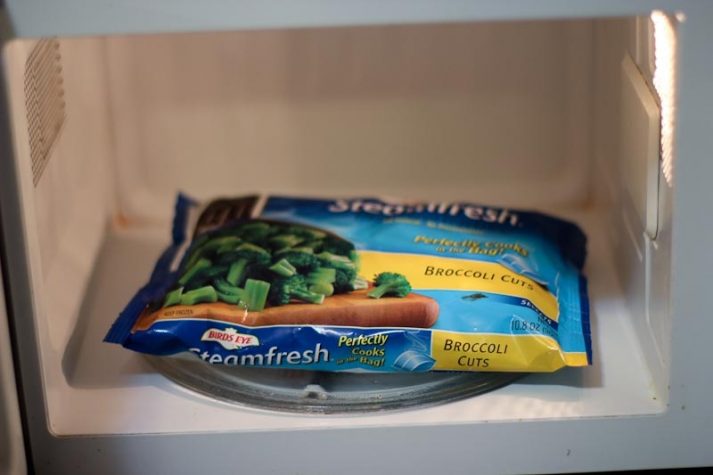
I’m a huge fan of “steamfresh” bags or similar because preparing them is easy as hell:Most of these only require you throwing the bag into the microwave, opening it, and putting it on your plate.
5) CHECK OUT CANNED VEGETABLES!
They might not be as fresh as regular veggies, and there might be preservatives added to keep them from going bad, but I’d prefer you trying out canned vegetables to no vegetables at all!
Popeye eats canned spinach and he turned out okay.
Honestly, I don’t care WHICH path you pick, or which vegetable you pick…as long you commit to picking one and bringing it home with you from the grocery store.
10 Ways to Make Vegetables Taste Good
Even if you’re committed to trying more veggies (and I’m proud of you for that), it still might not solve the problem that you dislike the taste or texture.
This is the problem we encounter with many of our Online Coaching Clients: they are committed to eating vegetables, but they’re struggling with taste and texture.
Fortunately, we have a TEAM of Coaches with dozens of success stories from their clients who have learned to like vegetables with some clever tactics:
Essentially, it comes down to “hide them, blend them, pair them, or cover them!”
Here are our Coaching Staff’s 8 Favorite Ways to Make Vegetables Taste Good:
1) Change their state! I don’t enjoy raw broccoli nearly as much as I do steamed broccoli.
And that’s not even it’s final form! Give me a plate full of roasted broccoli covered in “Everything but the Bagel” seasoning from Trader Joes, and it’s Veggie Valhalla.
If you don’t like a particular vegetable yet, try preparing it a different way! From raw to steamed to baked to grilled to sautéed in bacon grease (see #4) to blended, you have so many options!
2) Blend them up! Add frozen spinach or kale to your protein shake smoothies. This is my personal favorite, and is part of the reason I get so many servings of vegetables every day.
Here’s my post-strength training workout smoothie:
12 oz of water.
2 scoops of whey protein.
1/2 cup of Quaker Oats.
1 cup of frozen mixed berries.
1 cup of frozen spinach.
Believe it or not, adding frozen spinach (or kale) doesn’t really change the taste AND you can get an extra serving of vegetables without trying.
That’s one extra daily serving of a super veggie!
3) Make a combo bite with a food you like: If you can learn to cook something like chicken stir fry, you can make sure that every vegetable bite also has plenty of rice and chicken.
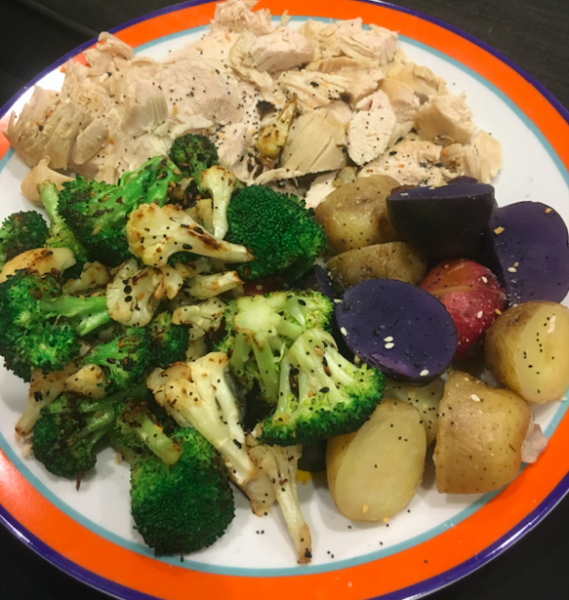
You can do the same if you make mini potatoes, chicken, and broccoli. Get some of each on the fork with each bite for a really healthy plate!
Then, over time you can reduce the amounts of the other foods and increase the amount of the vegetable until you actually enjoy the taste of JUST the vegetable!
Here are some ideas to try to squeeze in some extra veggies with every mouthful of food:
a single broccoli crown and a big chunk of chicken.
Want to learn to like asparagus? Wrap it in bacon (see #5)!
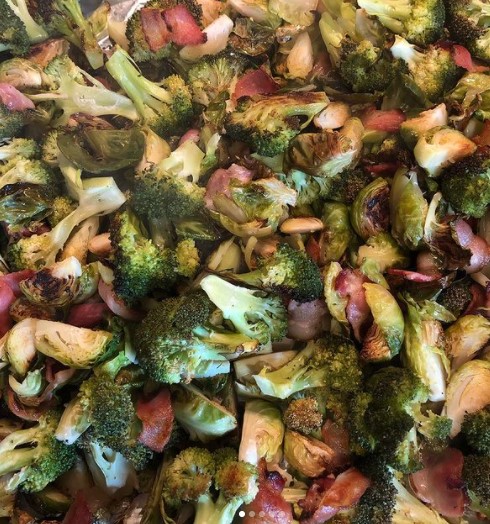
Here’s another great way to eat some veggies add bacon (courtesy of Team NF Coach Staci):
6) Spice it up! You don’t need to just eat plain boring broccoli and steamed asparagus. Try adding some spices or hot sauce to your foods to change the taste.
Here are some of our favorites:
Steamed cauliflower covered in Old Bay seasoning, dipped in cocktail sauce.
Northwoods seasoning by Penzeys on baked or grilled vegetables.
“Everything but the bagel” seasoning on baked or grilled vegetables.
Olive oil, salt and pepper. A classic that never fails.
Make carrot “fries.”Cut some carrots into fry shapes, toss them in olive oil, put them on a baking sheet, sprinkle with salt and pepper, and roast them in the oven at 450 degrees F (230 degrees C) for 10 minutes. Tada!
Buy “cauliflower rice” or “mashed cauliflower.” With butter and salt, and on a plate with the right foods, cauliflower can taste like rice or mashed potatoes.
8) Dunk them! Who needs chips? Pssh. You can dunk broccoli florets, cauliflower florets, or carrot sticks in hummus or guacamole.
Think of the vegetable as the delivery vehicle for your favorite dunking food!
9) Add small amounts of spinach, chard, or kale to your homemade chili or guacamole. You won’t notice the difference in the taste, and you’re sneaking extra vegetables into your meals.
I know a coaching client who got started with vegetables by adding them to low carb soups and his homemade chili.
10) Douse them in something you do love. Whether it’s ranch dressing, blue cheese, buffalo sauce, or any other sauce or condiment you enjoy, dunk those veggies and get those greens in your system!
Sure, If the sauce you’re using is really high calorie then this isn’t a long-term strategy, but we can work on that.
For now, we’re building the habit of eating vegetables. Use less sauce each week moving forward.
You can also consider lower-calorie dressings, sauces, and dips to spice things up. And you can never go wrong with hot sauce.
All of the above examples accomplish the same goal:
Getting more vegetables into your system.
This makes your stomach happy, your mother happy, and Popeye happy.
Want to work hand-in-hand (virtually) with a coach that will actually get you to eat your vegetables?
Need a brainstorm partner to find clever ways to “Trojan Horse” some veggies into your stomach?
How to Start Liking Vegetables (It’s All in the Preparation)
“Okay Steve, just give me some options and tell me what to do!”
FINE!
Here are some easy and delicious options for getting started with your first vegetable:
#1) Steamed broccoli
Level 1: Steamfresh bag in the microwave: Steamfresh veggies come in a package that you can throw in the microwave for five minutes, add seasoning, and that’s it.
Add butter or any seasoning like salt and pepper, and eat it with a protein for a healthy meal!
Level 2: Steam broccoli yourself in the microwave:
Plop those florets (the “tree” minus the “trunk”) in a microwave-safe bowl with a few tablespoons of water
Cover with a microwave-safe lid or dish
Cook for 3-4 minutes. If the broccoli isn’t soft and warm, put it back in for a minute or two
Level 3: Steam broccoli on the stove:
Plop about a 1/2 cup of water in the bottom of a pot
Separating the broccoli florets from the stem
Plop them in the water and cook over medium heat for 10-15 minutes
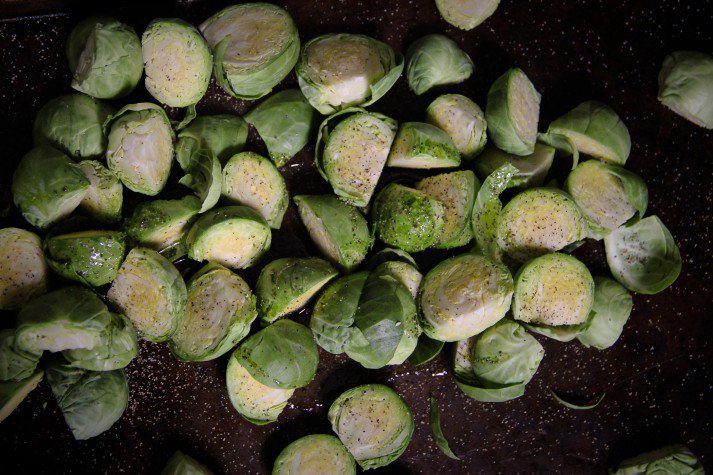
2) Roasted vegetables. Works with bell peppers, asparagus, carrots, onions, broccoli, cauliflower, zucchini, Brussels sprouts, etc:
Roasted veggies can taste very different from steamed and raw veggies (they get crispier and a little sweeter because they caramelize in the oven).
Take your pick of vegetable:
And make roasted veggies:
Cut them up literally however you want (bite-sized pieces work best).
Drizzle/toss them toss in olive oil, sprinkle salt and pepper.
Put them on a foil-lined pan in the oven at 400 degrees F (200 degrees C) for 20-30 minutes.
Once they look like they’re cooked (a deeper color and slightly brownish edges), take them out of the oven.
Write down how long they were in for, and eat them!
Don’t overthink this: You can use more olive oil or use less. You can use more salt or use less. You can leave them in there a few minutes longer. Just cut them up, drizzle, and plop them in!
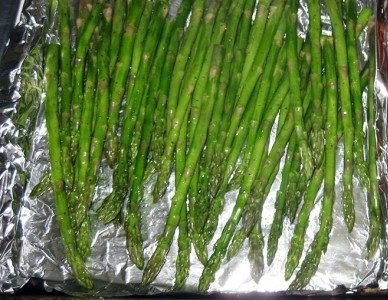
Here’s my recipe for stupidly simple roasted asparagus:
Put them on a cookie sheet lined with aluminum foil.
Drizzle each asparagus stalk in olive oil.
Sprinkle salt and pepper on them.
Stick them in the oven at 375 degrees F for 12 minutes.
DONE. Crunchy, delicious, and nutritious.
Plus, I felt like a 5-star chef!
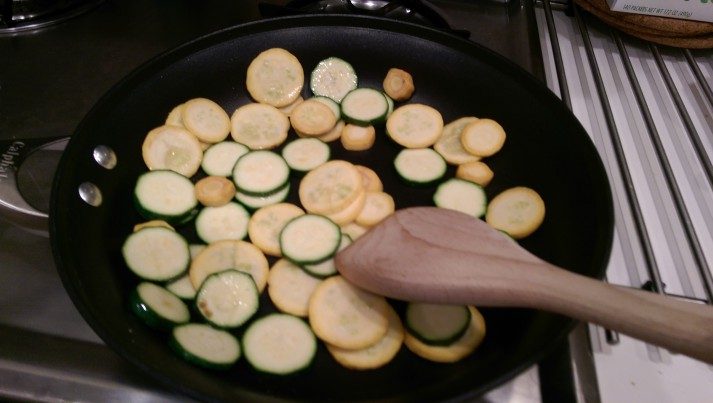
#3) Sautéed Vegetables: Cooked on the stovetop! Simple, delicious.
Zucchini and squash both taste great with just a little oil and salt, and are super easy to prepare.
Throw the slices into a pan with some olive oil on medium-high heat for about five minutes until they become soft and lighter in color.
All of these options can be paired with basically any protein for a delicious and healthy meal (or eaten as a healthy, stand-alone snack!).
If you attempt to cook a vegetable and burn them to a crisp and “fail,” I’ll still be proud of you. We all suck at stuff the first time, so the sooner we get those first few attempts out the way, we can get to “not sucky,” and then…
One day…
We’ll actually get pretty good at preparing vegetables!
What are the Best Tasting Vegetables? (The NF Veggie Challenge)
“Steve! What are the best-tasting vegetables!?”
Great question.
You’re a unique snowflake, and so are your tastebuds.
They will evolve and change as you evolve and change.
So the best advice I can give you is to try lots of veggies, prepared lots of different ways.
Microwaved Brussels sprouts might be soggy and unappetizing, but take the same veggie, cooked in bacon fat and roasted in the oven?
MMMMMM!
So try multiple veggies, in multiple ways, as part of multiple meals. Keep trying until you find a variation you like!
A final note: the point of eating more vegetables is to fill your plate with low-calorie but nutrient-dense food. It’ll make you a healthier nerd, I promise.
If you’re still overwhelmed at the thought of eating veggies, or you’ve always struggled to stick to a diet for any meaningful amount of time, you are NOT alone.
It’s why we’ve created three key services that help people lose weight, get stronger, and live better:
#1) Our 1-on-1 Online Coaching Program: Get personalized nutrition advice that won’t scare you and handcrafted workouts from a coach that gets to know you. We’ve heard “this program is the first time I’ve ever been 100% honest with another human being about my struggles with food.”
#2) If you want an exact blueprint for eating more vegetables and upgrading your nutrition, check out Nerd Fitness Journey! Our fun habit-building app helps you exercise more frequently, eat healthier, and level up your life (literally).
If you follow our Nutrition missions, you’ll learn to eat more greens while earning XP! Sah-weeeet.
Try your free trial right here:
#3) Join the Nerd Fitness Rebellion!
We have a free email newsletter that we send out twice per week, full of tips and tricks to help you get healthy, get strong, and have fun doing so.
I’ll also send you tons of free guides that you can use to start leveling up your life too:
Download our free weight loss guide
THE NERD FITNESS DIET: 10 Levels to Change Your Life
Follow our 10-level nutrition system at your own pace
What you need to know about weight loss and healthy eating
3 Simple rules we follow every day to stay on target
NOW, Are you up for the Nerd Fitness Veggie Challenge?
For the next four weeks, I want you to try ONE new vegetable each week:
Use 20 seconds of courage to try a new vegetable as a side when you go out to dinner.
Buy a new vegetable at the grocery store and learn to prepare it.
Add vegetables discreetly to your favorite meals (mix in with your smoothies, add to your omelets, etc.).
Learn to prepare a vegetable in a new way. Whether it’s roasting them in the oven or grilling them on the bbq, try a different way to prepare a vegetable and level up your cooking skills.
Leave a comment and let us know!
We’d love to hear from you:
If you hate vegetables, what are you taking away from today’s post?
Do you have a clever way to get more vegetables into your diet? Share please!
What’s keeping you from starting to eat vegetables, and how can we help?
-Steve
PS: Make sure you read the rest of our healthy eating content!
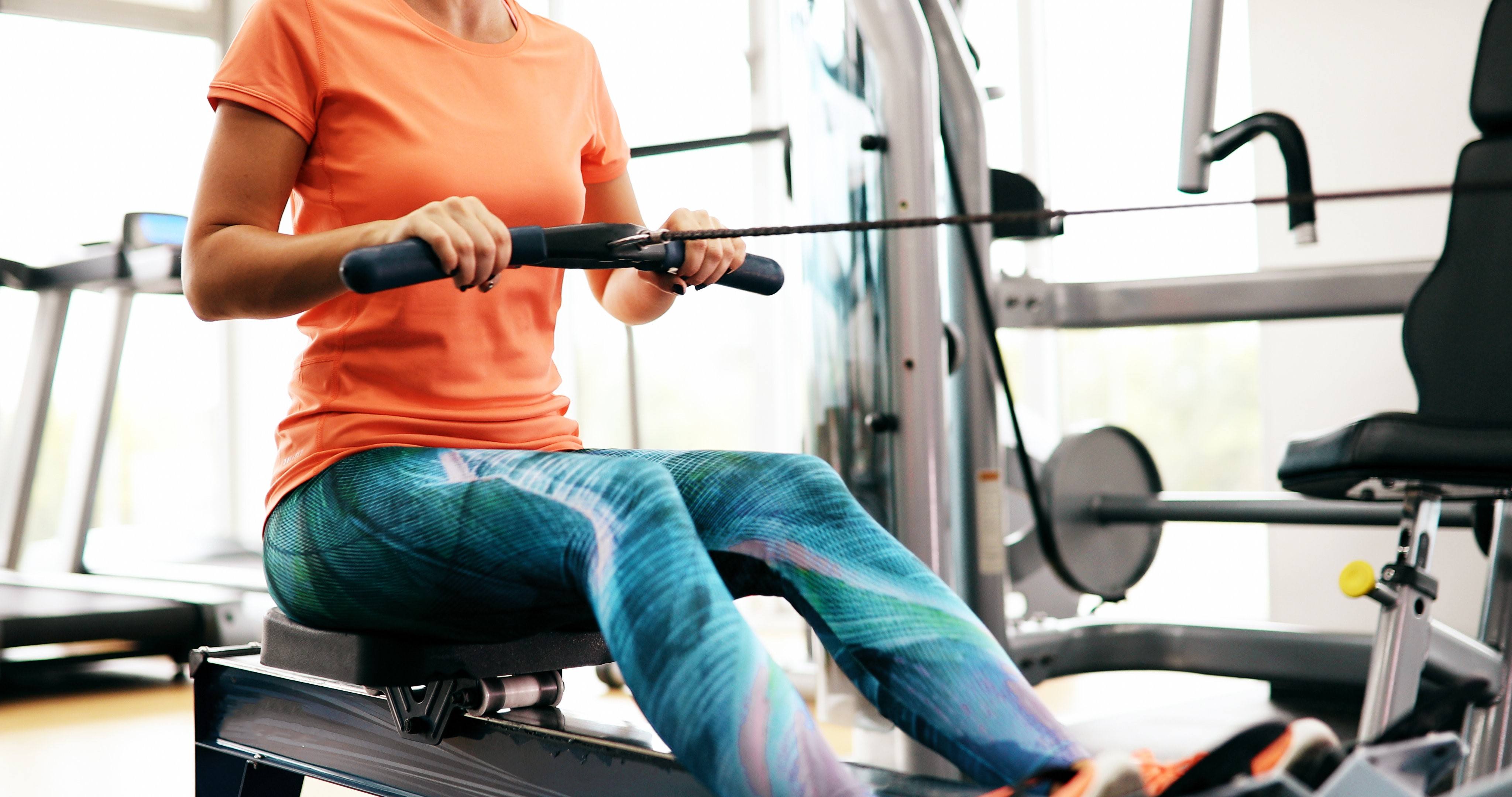
Rowing classes are everywhere. It’s easy to find professional and Olympic athletes hyping up the machine’s ability to provide a full-body workout.
All well and good…but how do you actually use the thing?
Well my friend, you’ve come to the right place to find out.
Many clients in our Online Coaching Program tell us they want to start rowing, but they don’t know how. Today, we’ll explain how we get them going with row machine workouts.
She also knows a thing or two about using a rowing machine, since she’s gotten several CrossFit certs (they love the rowing machine at CrossFit).
If you’re going to learn about using a rowing machine, she’s not a bad person to talk to.
But first, let’s back up here a bit…
What Are the Benefits of Using a Rowing Machine?
The rowing machine was originally invented for water rowers to train offseason.
You might hear the indoor rowing machine called an ergometer, or “erg” or “ergo.” They get this name since rowing machines often measure the energy produced from the workout in units of ergs.
They’ve grown in popularity, because of the many benefits offered by this one stationary machine.
For example, the rowing machine offers:
A Full-Body Workout. If we use proper rowing technique, we’ll hit every major muscle group in our body. Upper, lower, core, we’ll work it all. This is one of the main reasons they’ve become so popular.
Low-Impact. While a workout from a rowing machine can get intense, it’s considered to be little to no impact. That’s why it’s sometimes recommended to patients with osteoarthritis.[1]
Versatility. We can do a lot with an ergometer. We can train for duration and/or intensity. We even do a HIIT workout. Or we can combine it with bodyweight movements in a circuit. Plus, since some of them fold up, they’re perfect for those who need to train in small spaces.
Alright, let’s now go over some terminology so you know what’s what with the ergometer.
Rowing Machine 101: Terms to Know
When it comes to the rowing machine, there’s some vocabulary that would be worth discussing quickly.
First, let’s chat about the rower itself.
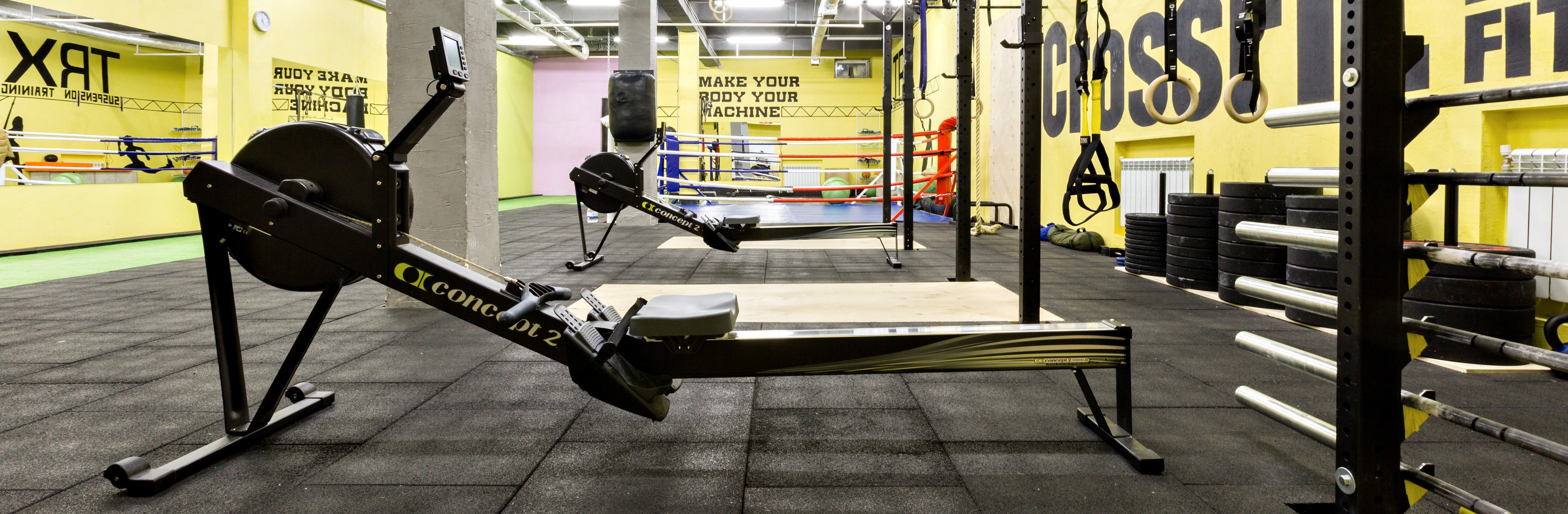
Here Are the Parts of the Rowing Machine:
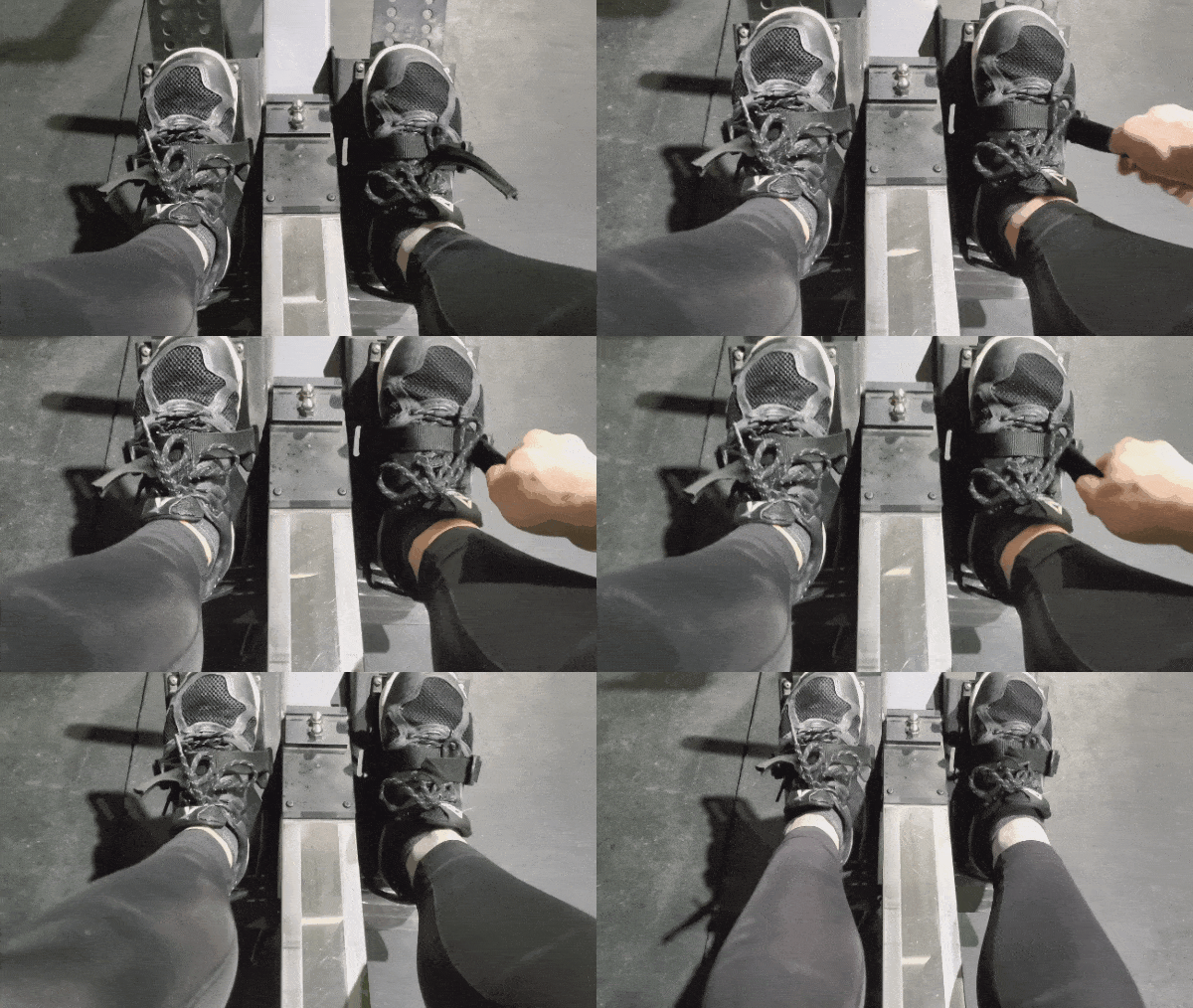
#1) Foot Plate – no matter the rower, there will be a place for you to strap your feet in.
You’ll want to set your feet so that the strap goes over the ball of your foot. This will allow you to have the most powerful stroke.
You should be able to lift your heel in this position.
#2) Handle – also called “the bar.” This replicates the handles of an oar.
Your hands should be approximately shoulder-width apart.
#3) Rail – the central beam of the rower, which allows the seat to roll forward and back.
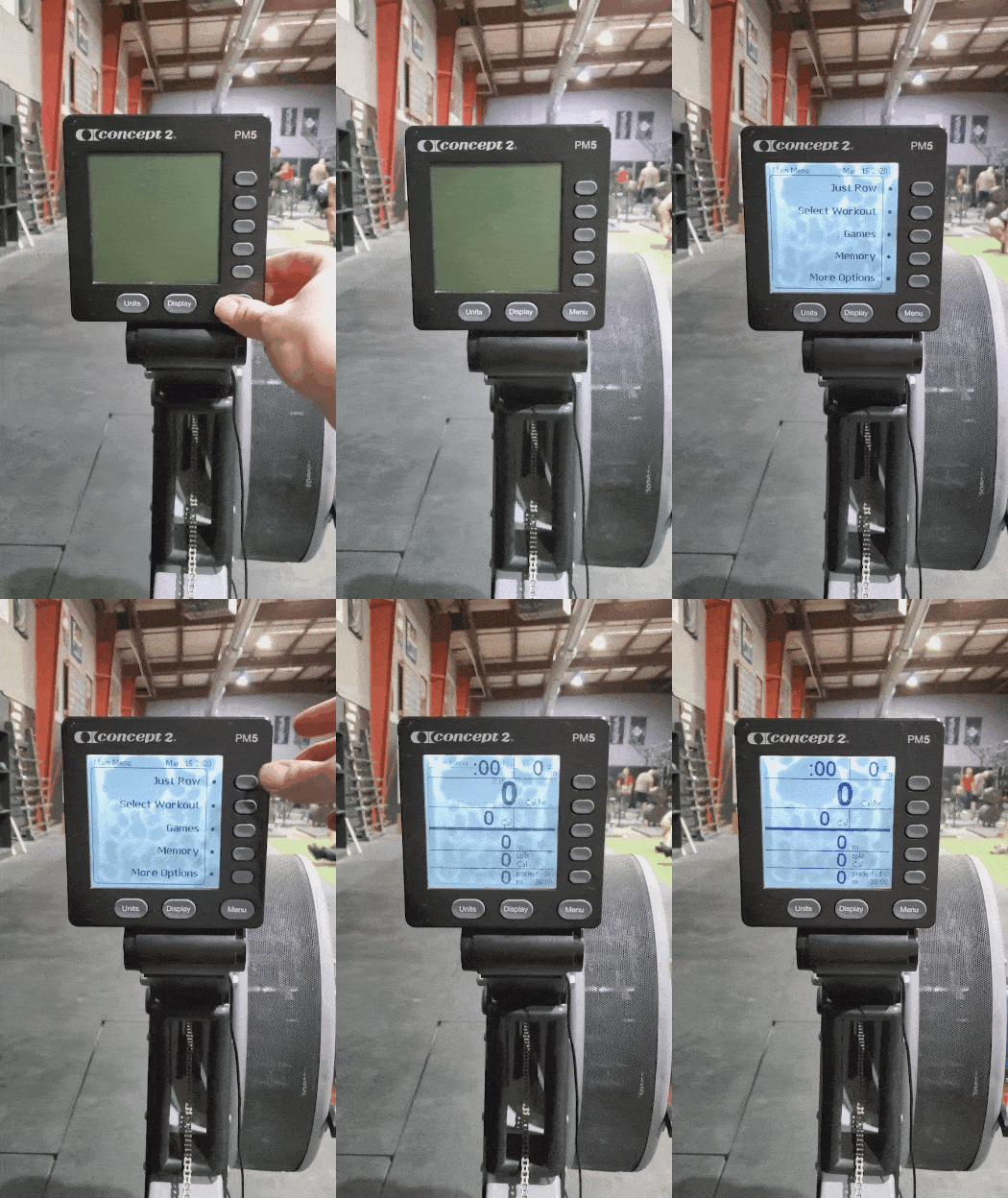
#4) Display Monitor – while these will differ from model to model, the rower will normally have a screen to show some basic info:
Strokes per minute (Stroke Rate)
Split Time (more on this momentarily)
Duration of workout
Etc.
For the Concept2 model – the rower Coach Staci demonstrates above – you can hit any button and select “Just Row.”
This will be the easiest way to get going.
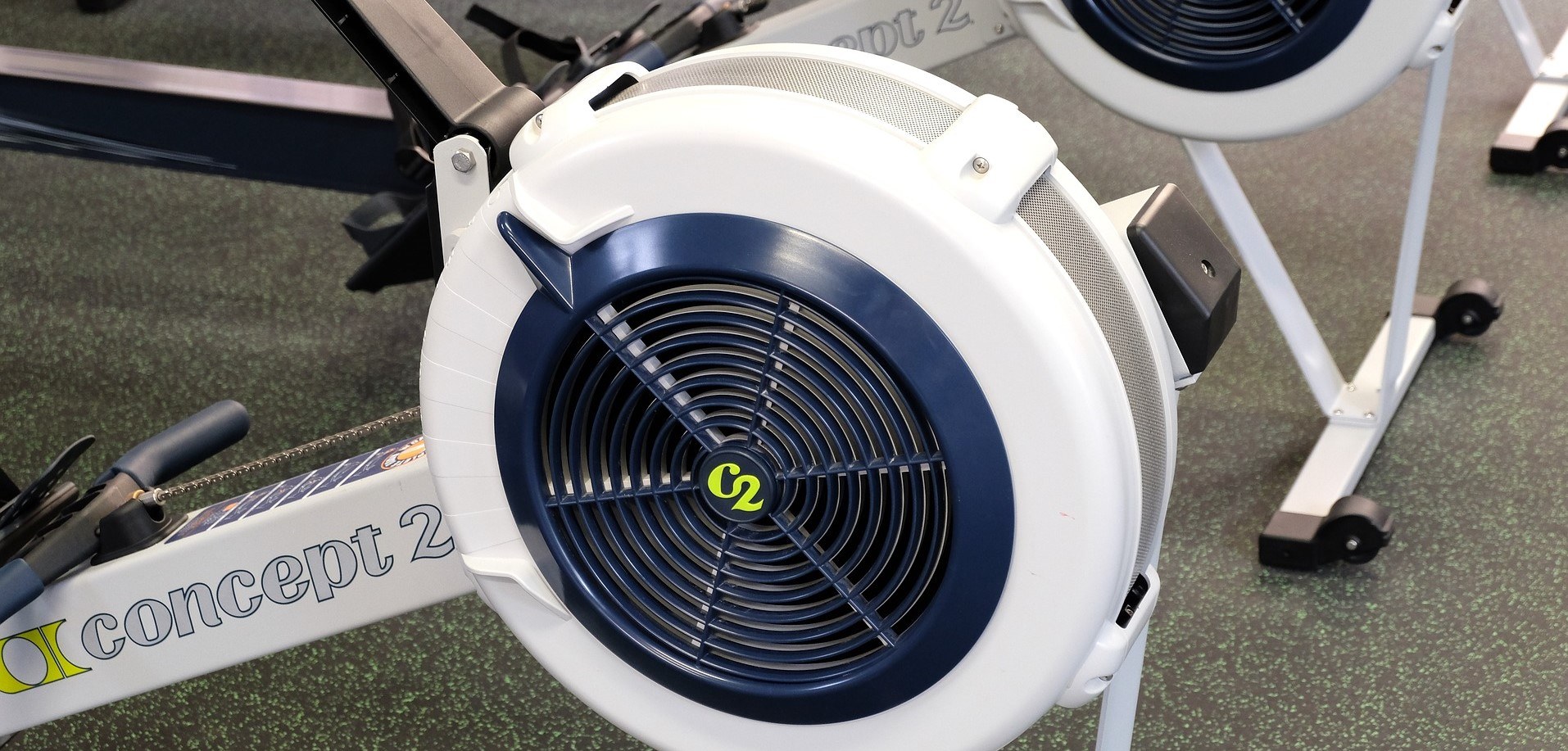
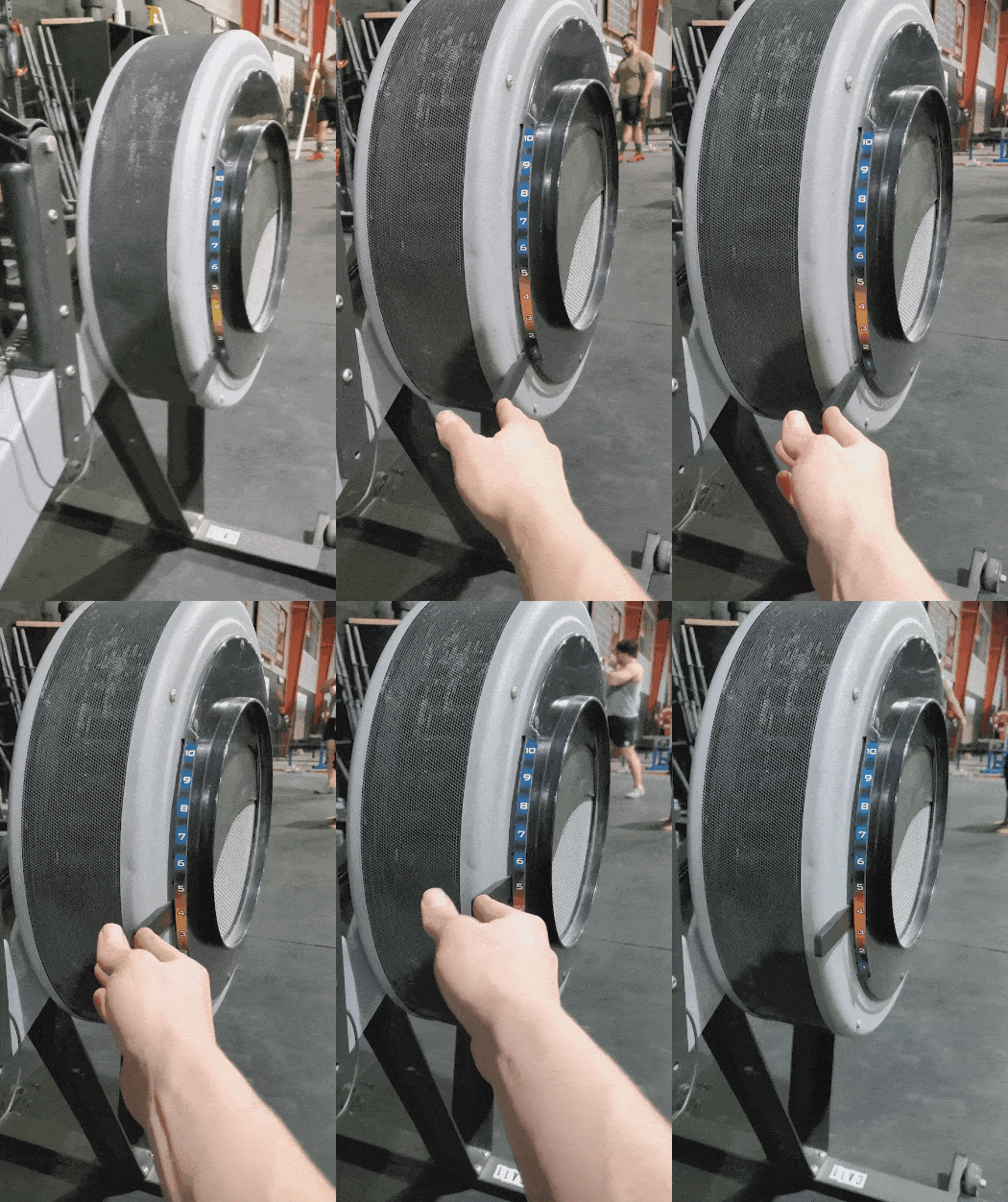
#5) The Damper – The lever on the side of the flywheel housing (or fan cage) that controls airflow.
The difference in Damper settings:
The higher the setting, the more air is allowed to flow. This requires more work to spin the flywheel.
The lower the setting, the less air is allowed to flow. This requires less work to spin the flywheel.
Think of this sort of like bicycle gears – it affects how the rowing feels but does not necessarily reflect the resistance:
A setting of one will feel fast and easier to pull, but you’ll need to move quickly to generate power.
That said, cranking the damper up to ten doesn’t mean a better workout either. It just means a tougher pull – like trying to move a rowboat.
We recommended you aim for a Damper setting between 3 and 5 (which is also where most competitive rowers have it).
Note: some indoor rowers use a water tank to create resistance, so any similar Damper setting controls the amount of water moving through the system. You can still use the same recommendations for damper numbers.
More on that here:
Next, let’s talk about some terminology for the sport of rowing itself.
Rowing has been around for centuries and a lot of the vocabulary has carried over to the indoor sport.
Rowing Terms to Know:
#1) Split
Split time refers to the time it takes to row 500 meters, also known as the “split per 500.” This will likely be shown prominently on your Display Monitor.
If the number goes down, it means you’re going faster! Woot.
#2) Strokes Per Minute (SPM)
This is also called Stroke Rating and it’s exactly what it sounds like: the number of strokes you take per minute.
A higher SPM doesn’t necessarily mean you’re going faster – you can also go faster by putting more power into each stroke.
#3) Paddle (or Rest)
Normally in the sport of rowing, you never stop completely. You just row or “paddle” a little bit easier.
However, if you need to stop completely in your workout, don’t stress it. It’s fine to even get off the rower from time to time…it’s not actually a boat.
You do you.
Next, we need to discuss the four parts of the rowing stroke, but we’ll jump to a new section for that.
The Four Parts of the Rowing Stroke
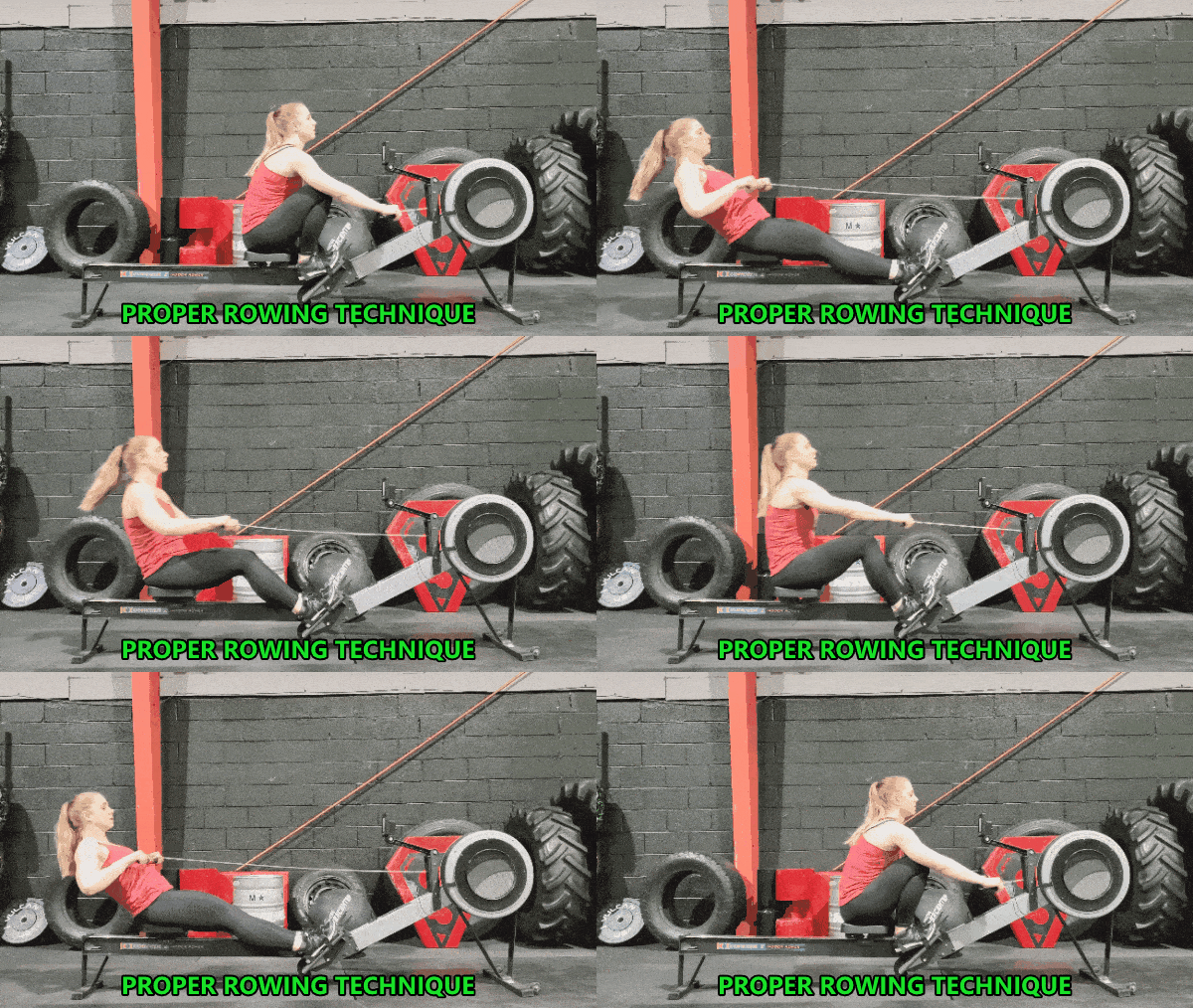
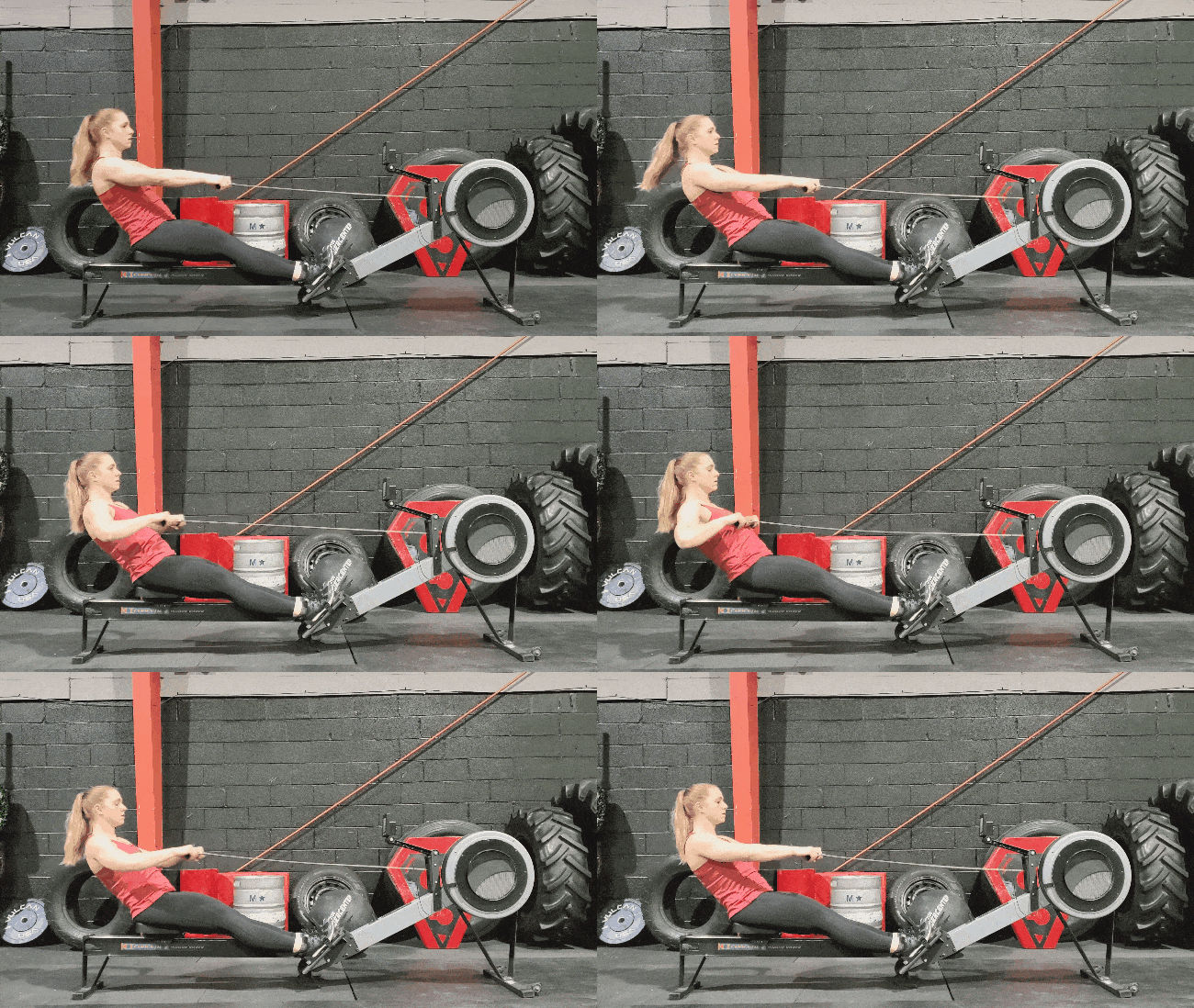
The rowing stroke is broken out into four parts:
The Catch
The Drive
The Finish
The Recovery
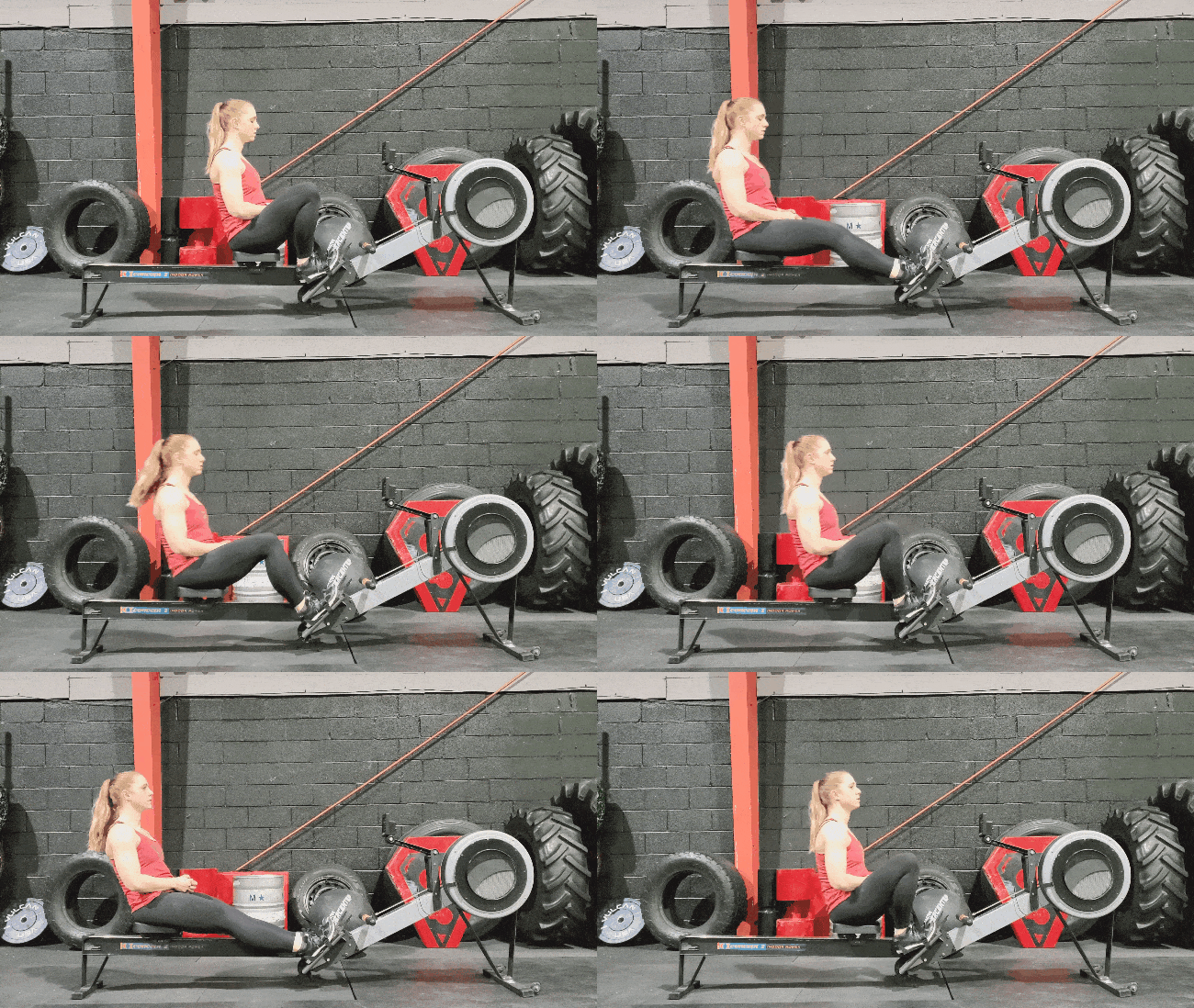
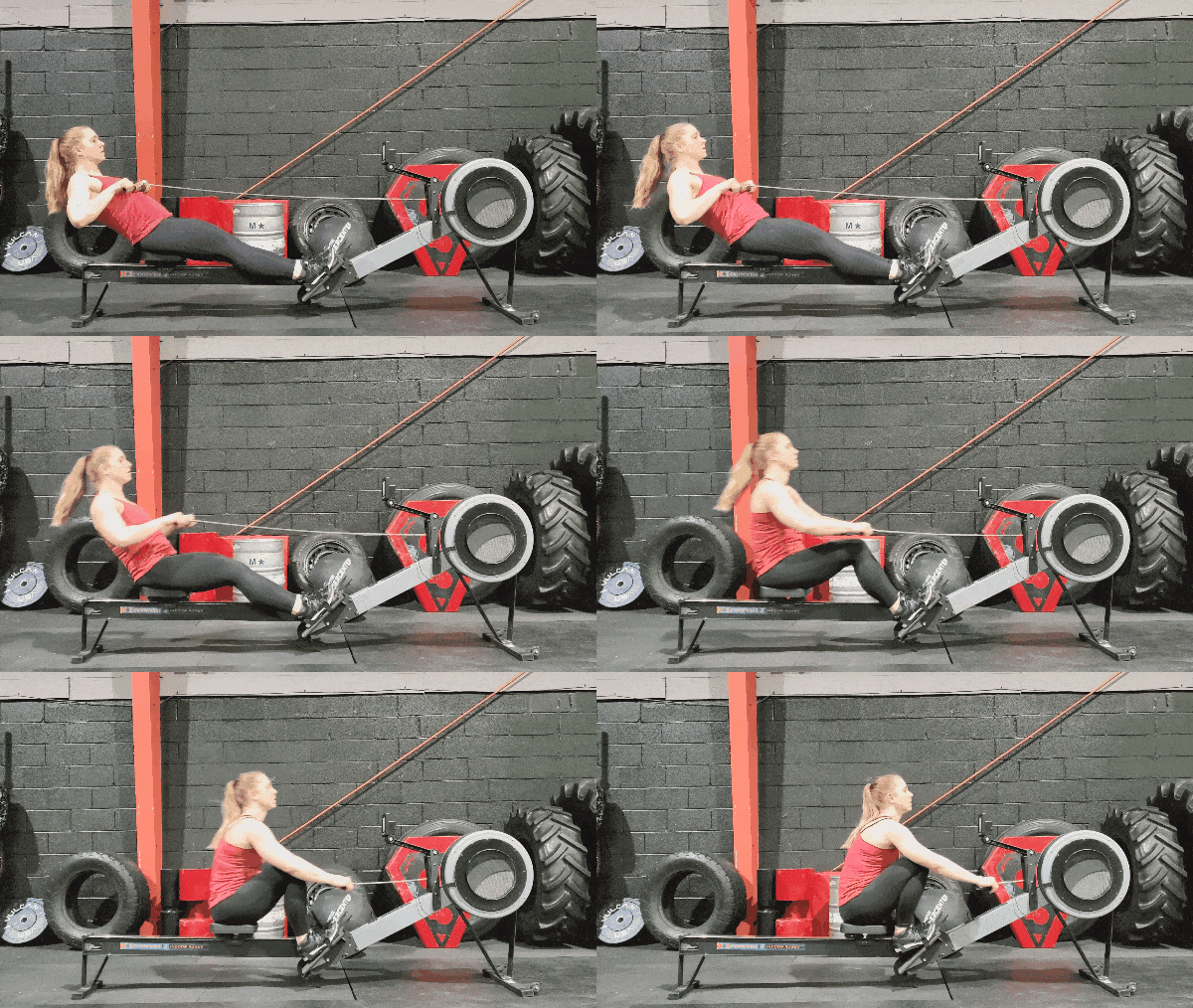
It’ll look like this:
Let’s cover each.
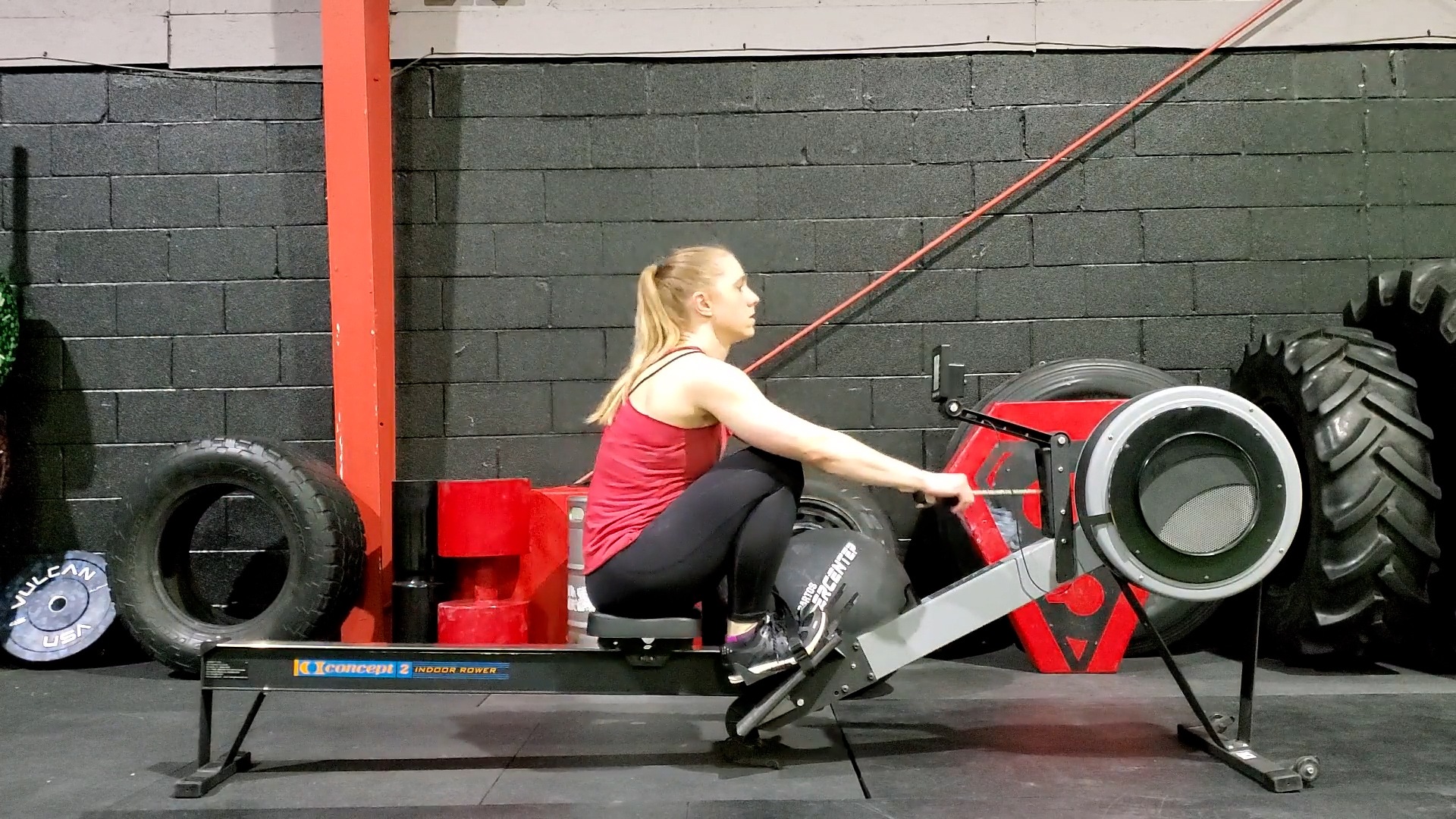
#1) The Catch
This is the start of the stroke:
Our knees are bent and our shins are roughly vertical.
Our body leans forward slightly to about a 1 o’clock position and our arms are straight.
Like so:
This puts us in the ideal position to generate power.
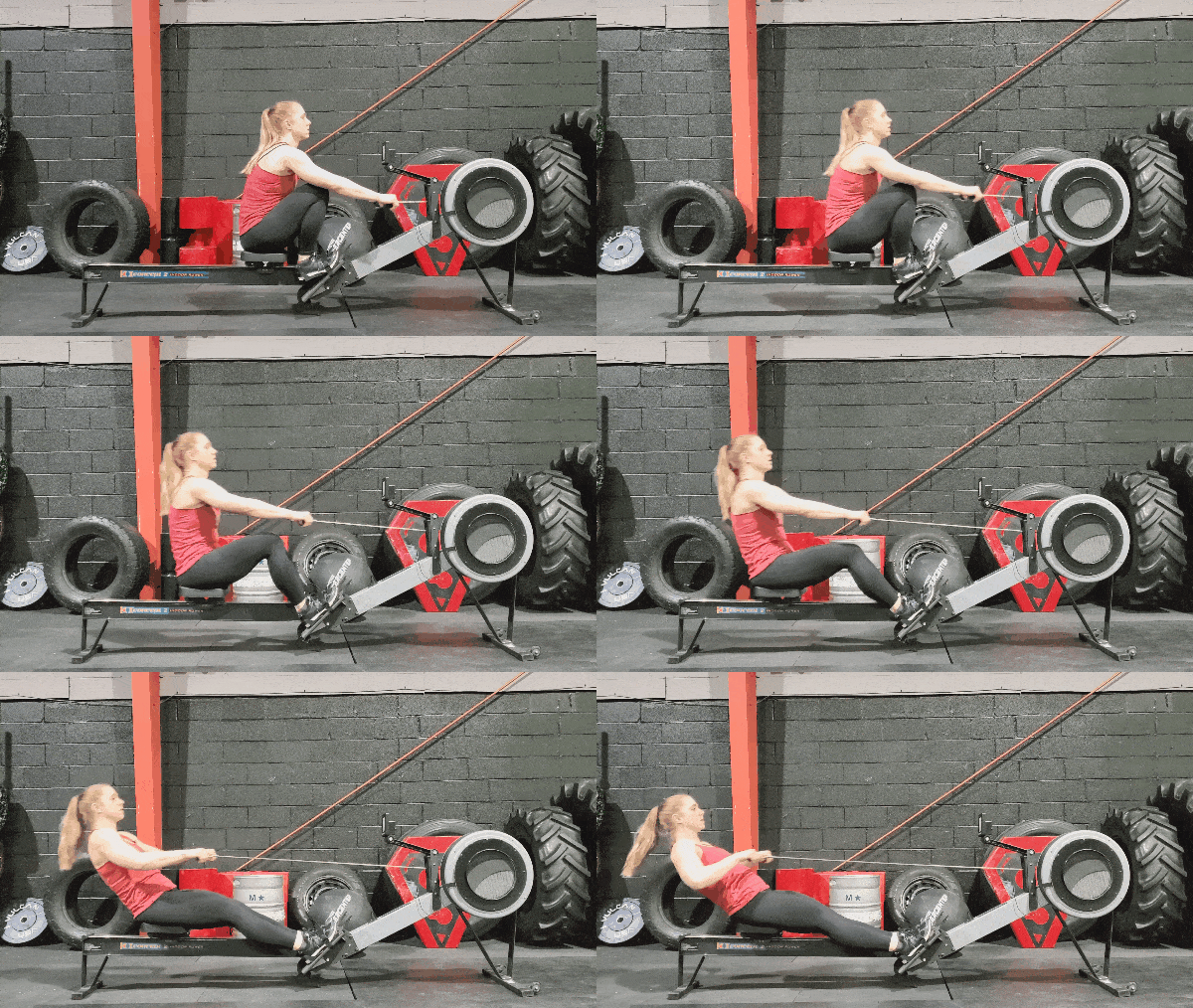
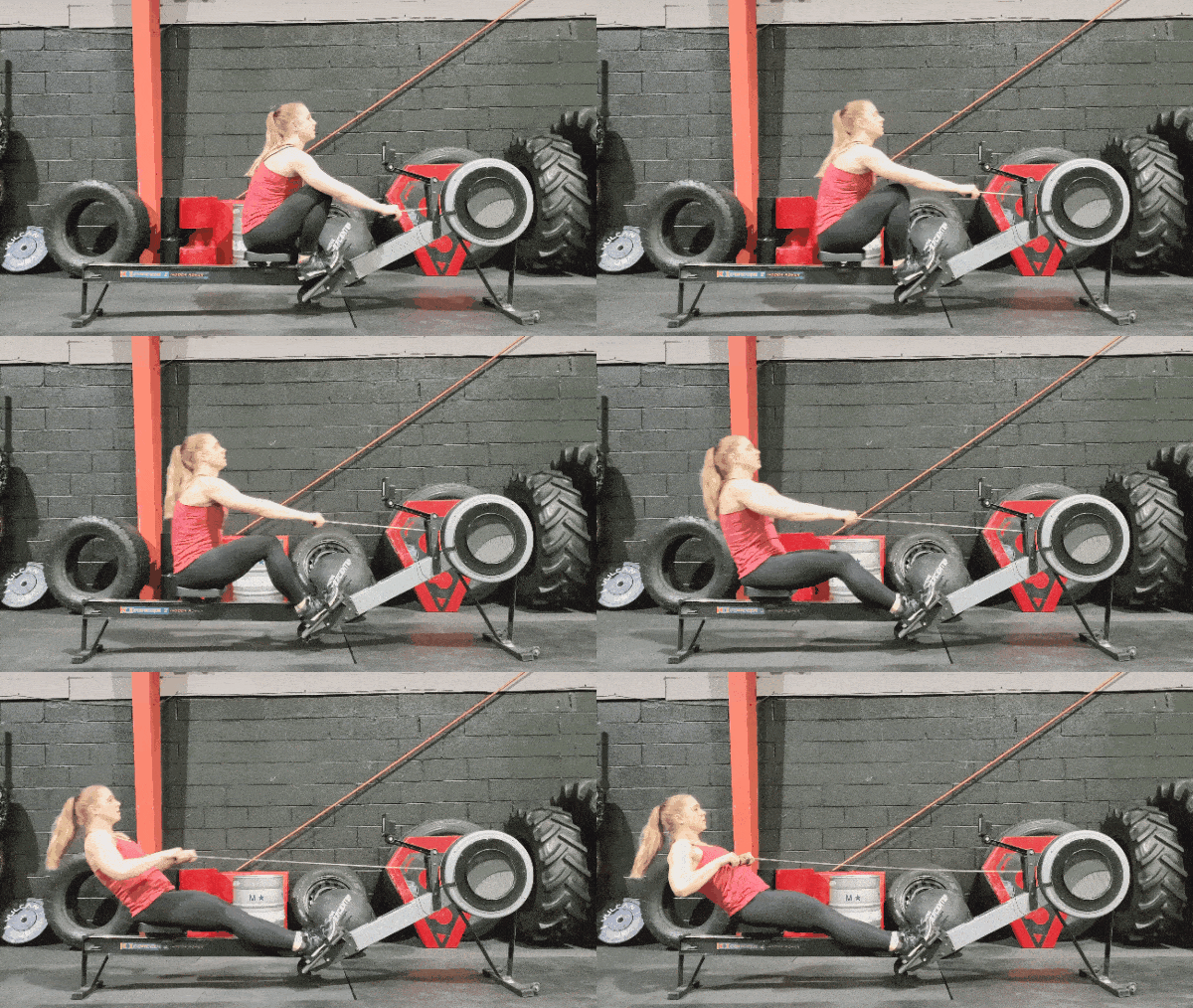
#2) The Drive
As the name would suggest, this is where we’ll be driving and generating power for the stroke.
The order in which we generate power is key:
It should go legs first
Then lean back with the body
Then pull with the arms
It’ll look like this:
They should blend smoothly right into each other, so a good reminder is:
Legs
Body
Arms
A great drill to practice the Drive:
Start with JUST the legs:
THEN the legs and a slight backward lean with the body:
FINALLY, the legs, body, and arm pull together:
This can be done with or without the rowing handle.
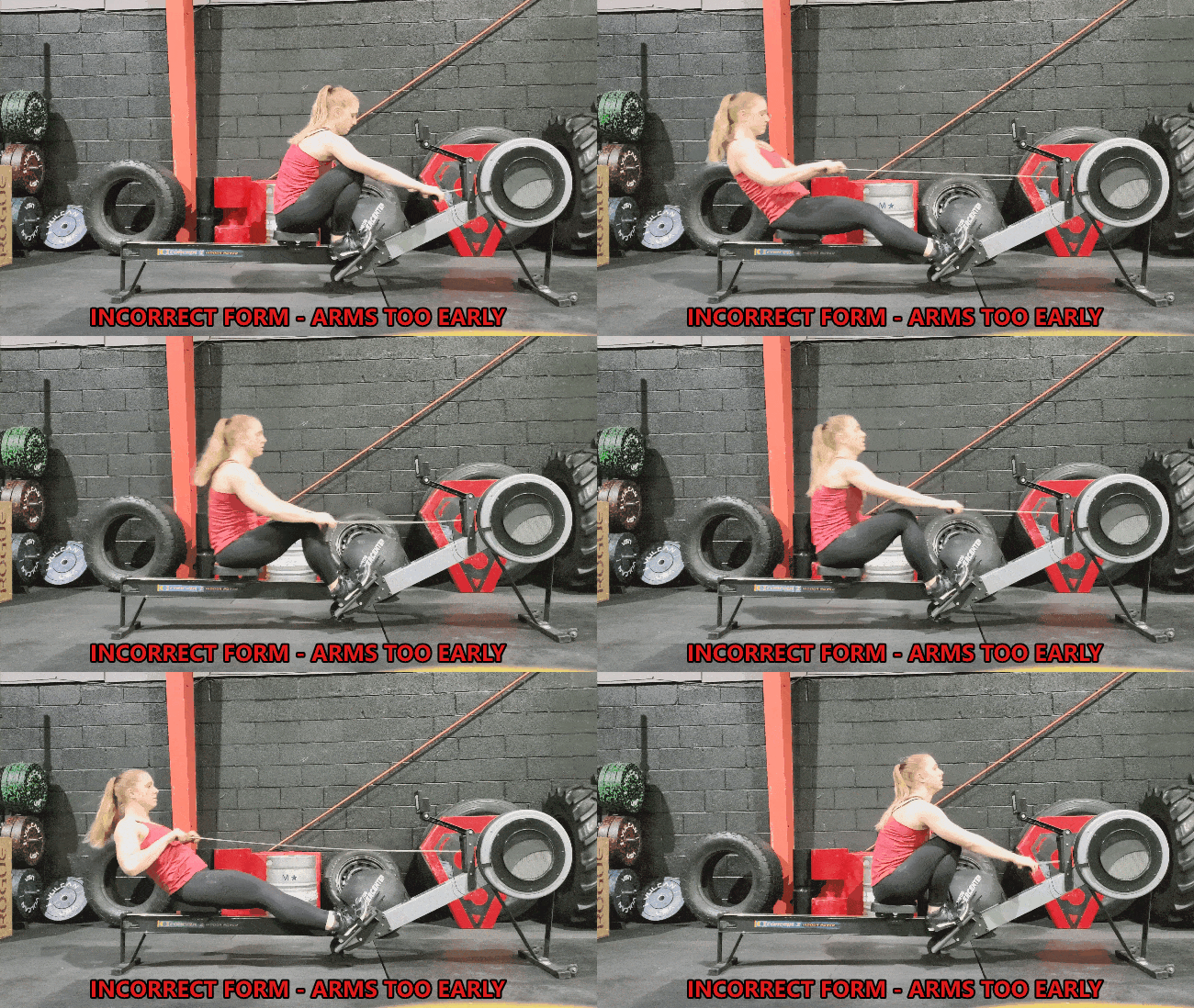
Common mistakes with the Drive:
A) Pulling hard with the arms first. We’ll see the elbows bend early. This greatly decreases the amount of power we can put into the stroke.
We want to keep the arms straight and wait until the handle passes the knees BEFORE we first bend the arms.
B) Letting the body pull forward while we’re driving with the legs.
Instead, we want to keep a strong and stable midsection so that we can go smoothly from the leg drive to the body lean.
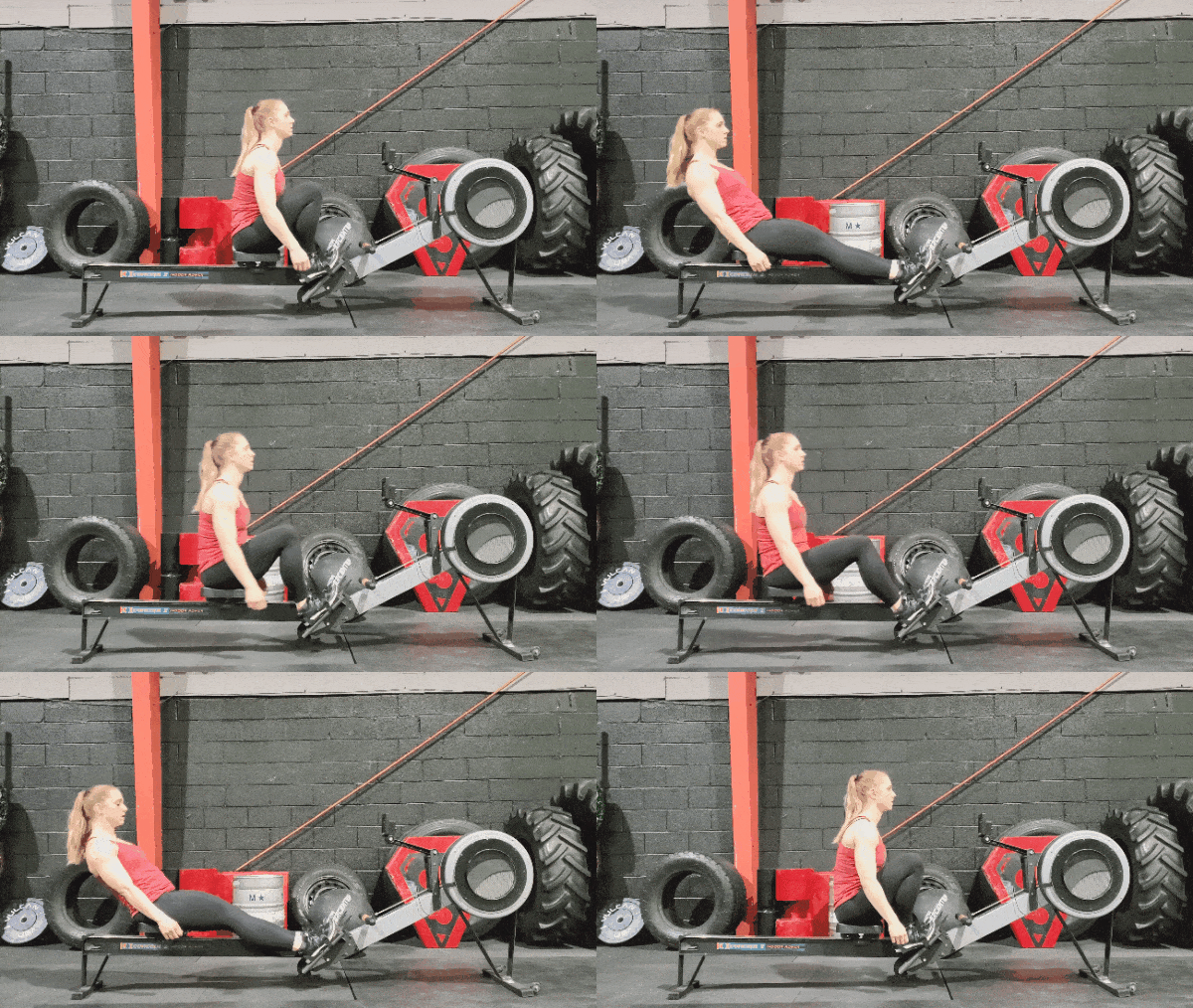
#3) The Finish
This will be our position after the Drive:
Our legs are extended and our body is leaning back slightly.
The handle is about at our solar plexus.
Our shoulders are down and our wrists are straight.
It’ll look like this:
A great drill to practice the Finish: just work on the arm motion.
Keep the legs extended and lean back slightly. Then pull with just the arms.
Common mistakes with the Finish:
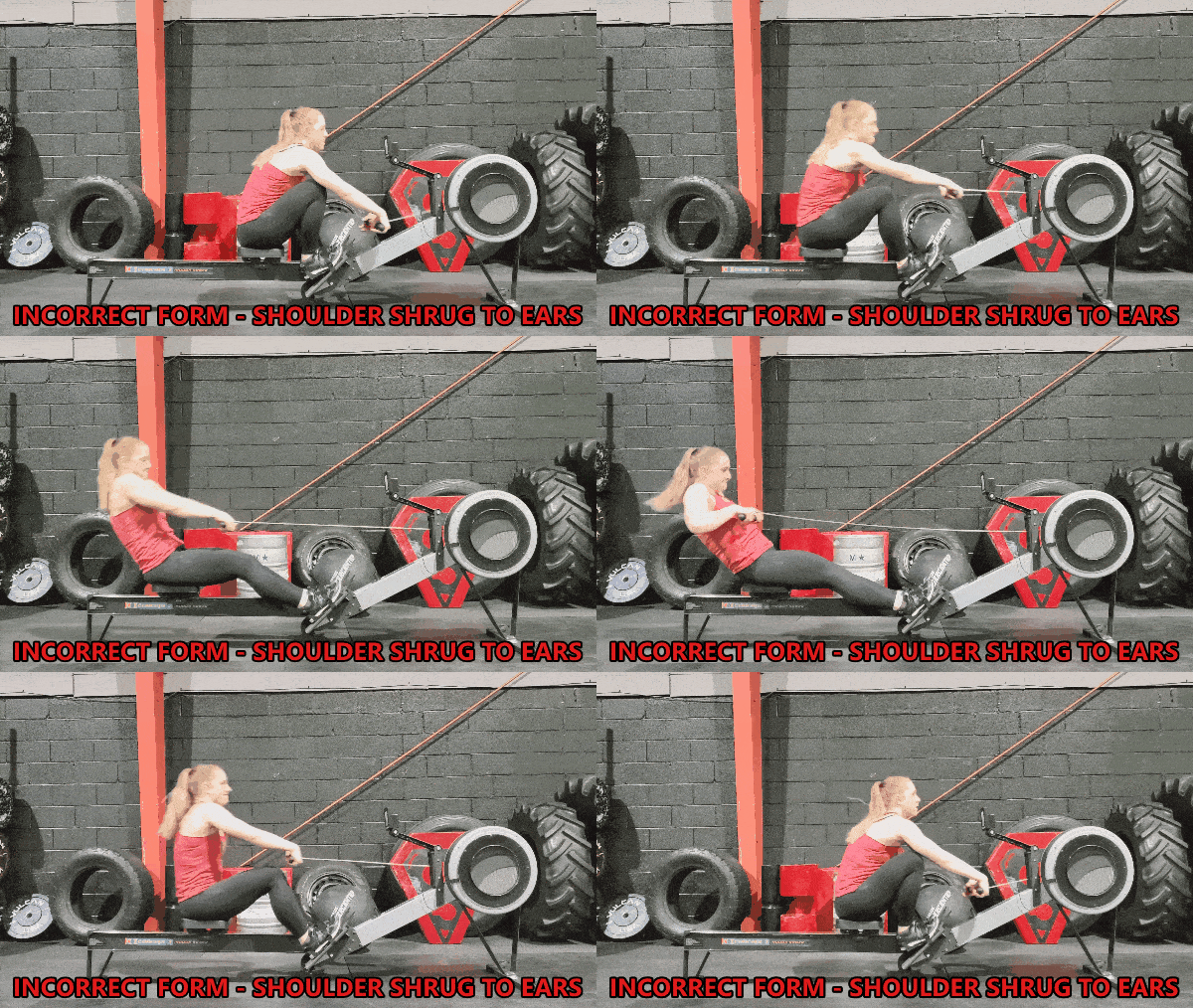
A) Shrug the shoulders up by the ears.
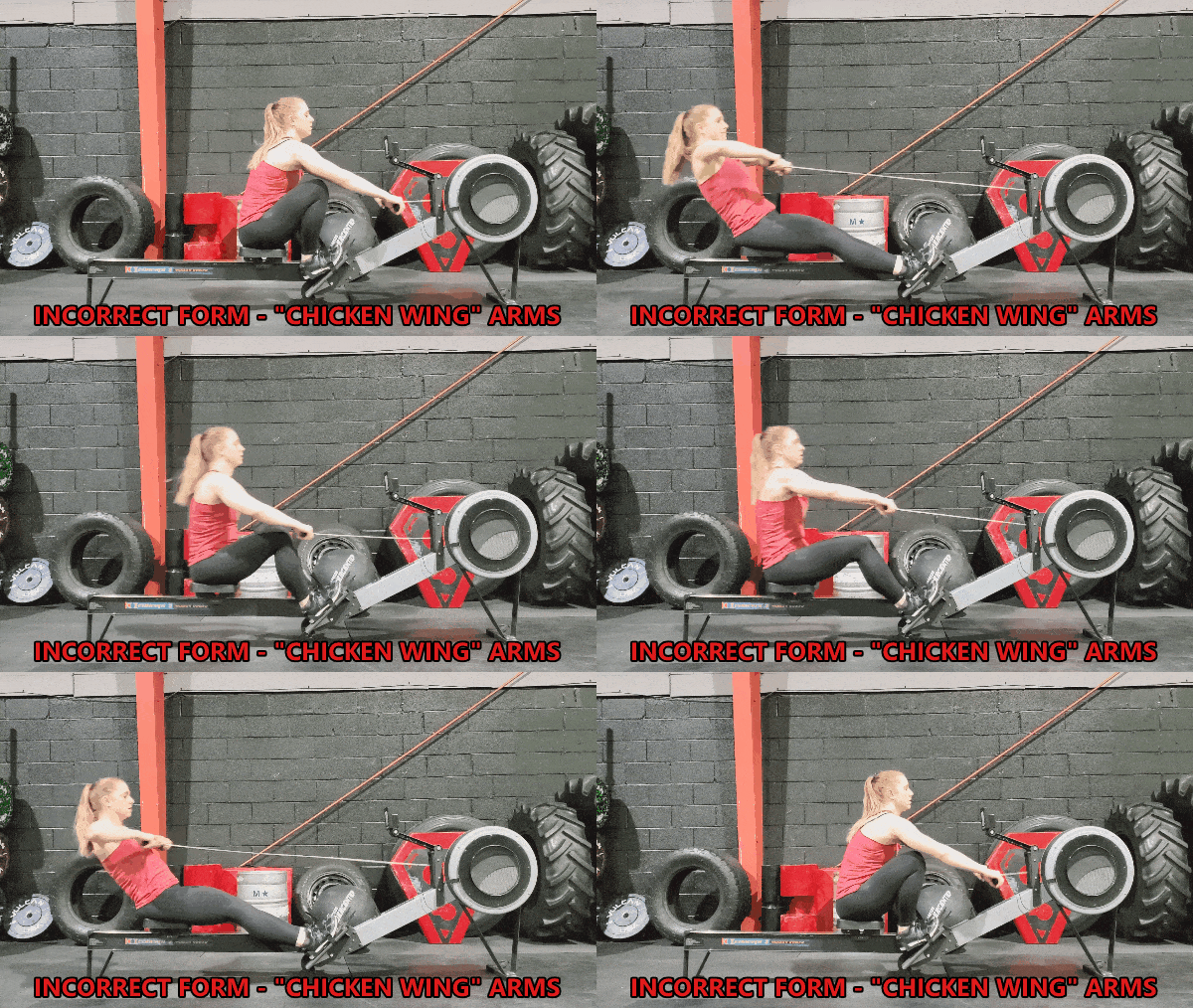
This is often accompanied by bent wrists and chicken wing arms.
Instead, we want the shoulders down and the elbows closer to the sides, with enough space between the arms and body for a grapefruit to fit.
B) Pulling the handle too high – to the neck or face.
We want the handle down at the solar plexus, not up orbiting in the solar system!
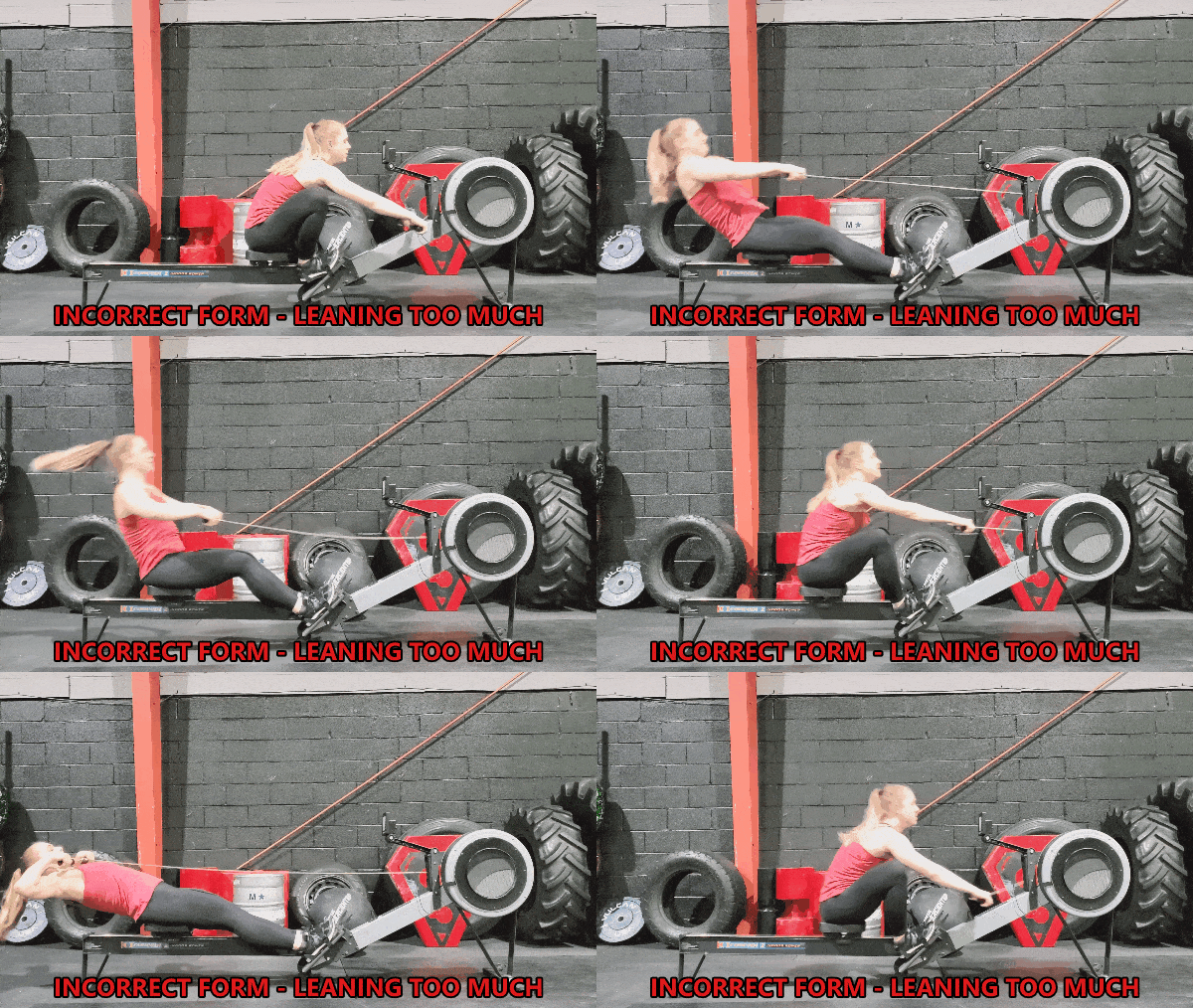
C) Leaning back too far – we’re not trying to perform the one-person luge here!
We only need to lean back slightly, at about an 11 o’clock position.
#4) The Recovery
This is how we return back to the starting position.
Just as we had a proper order for the Drive – legs, body, arms – we’ll have a proper order for the recovery by reversing it – arms, body, legs.
Straighten the arms, then lean the body forward slightly, and finally bend the legs to head back to the Catch.
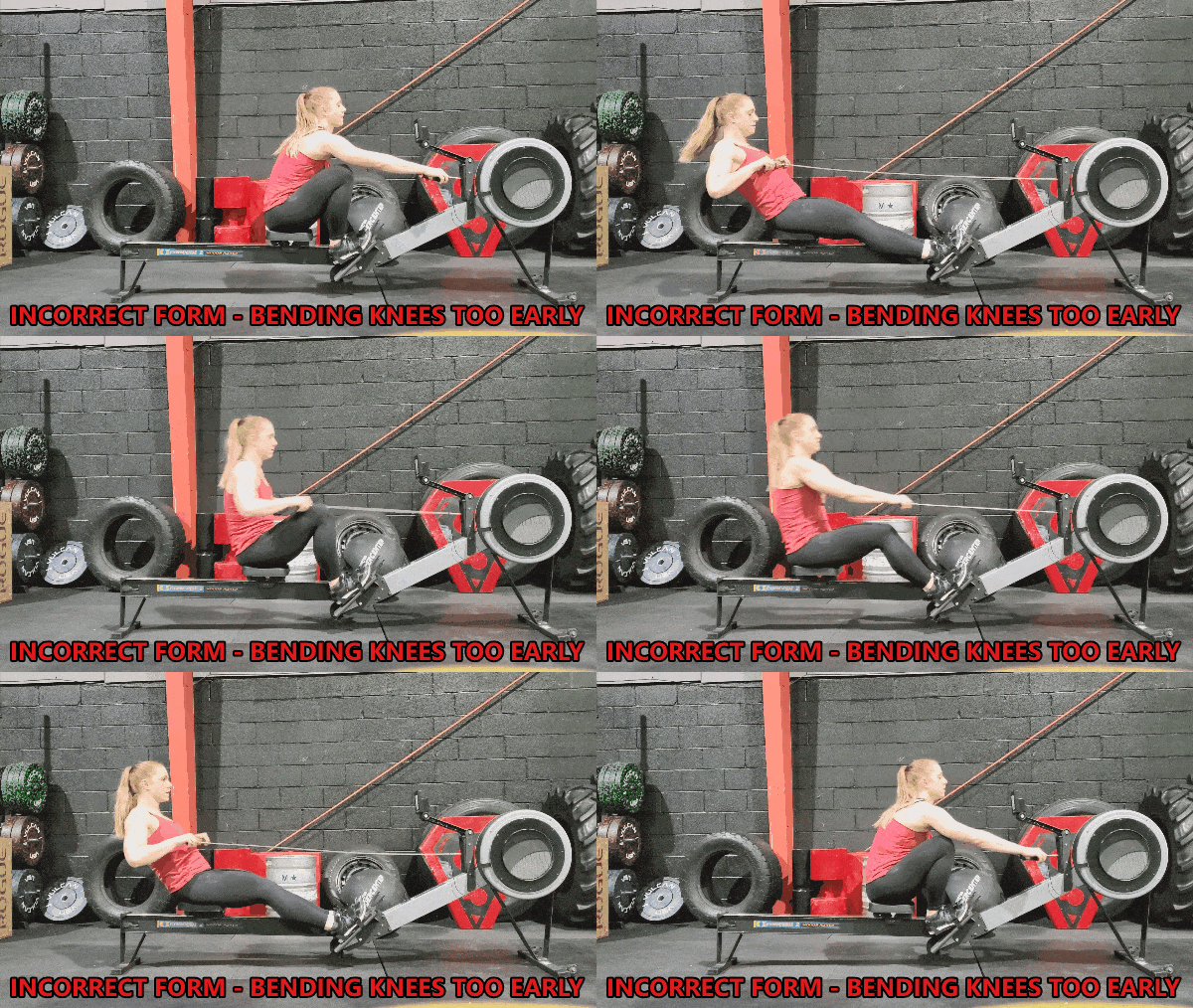
Common mistakes with the Recovery: Bending the legs too early when recovering from the stroke. You’ll know you’re doing this when you have to lift the handle up and over the knees.
Instead, wait for the handle to PASS the knees before fully bending the legs.
There you have it, the four parts of the rowing stroke.
You’ll get better at this as you go, I promise.
Rowing is like golf: the relentless pursuit of the perfect stroke.
One way to check your form would be to record yourself doing a rowing stroke.
If it looks close to the gifs and videos found in this guide, you’re doing great!
Oh, and if you want an expert to review your form, you can do so in our snazzy Coaching app.
You can learn more here:
When to Add the Rowing Machine to Your Workout
A rowing machine can fit into our workout in all sorts of ways.
If you want to give the rowing machine a whirl, including it as part of your warm-up wouldn’t be a bad idea. Since it’s a full-body exercise, it’s a great way to prep our body for the workout ahead.
To warm up with the rower, aim for about 5-10 minutes at a steady pace.
Once you get the hang of the rower, you can look to incorporate it with some of these ideas:
#1) Interval Training
Interval training or HIIT is all about flipping between intensity.
Going hard one moment, then resting another.
So after your warm-up, you could row intensely for two minutes, rest or “paddle” for a minute or two, then back to intensity.
A fun way to do this is to build up the duration and then pull it back with a “Meter Pyramid.”
To Row a Meter Pyramid:
One minute of intensity, followed by one minute of paddle.
Two minutes of intensity, followed by two minutes of paddle.
Three minutes of intensity, followed by three minutes of paddle.
Four minutes of intensity, followed by four minutes of paddle.
Three minutes of intensity, followed by three minutes of paddle.
Two minutes of intensity, followed by two minutes of paddle.
One minute of intensity, followed by one minute of paddle.
If you start this off with a 5-minute warm-up, it’ll take about 37 minutes.
We could aim for 3-4 circuits here, but even 1-2 is a great start.
#3) Steady State
This is exactly what it sounds like: rowing at a constant pace.
After a warm-up, find a pace that you can stay with. Then stay with it.
A good frame of mind here would be about 50% of your effort, but don’t overthink this.
Put on a good podcast or your favorite playlist, find a Stroke Rate you can maintain for 10-30 minutes, and get rowing.
You can pretend you’re in a competition if it helps!
Also, mix and match! The important thing is that you’re doing some type of workout. Don’t fret if it doesn’t fit into the exact format you find here or on other websites.
Should a Beginner Use a Rowing Machine? (Next Steps)
There you have it, my friend.
You now have everything you need to get started rowing.
Don’t overstress if you’re not doing anything 100% right as you start.
Like anything, you’ll get better at it as you go.
Plus, it’s not like you’ll be ejected into the water from an indoor rower.
But, if down the road you do want to take it outside, there are all sorts of leagues and clubs you can join.
It could be a great way to get out and make friends!
Granted, you’ll need SOME type of body of water around you, but if you live next to a lake or large river, there’s likely a team out there that would love to meet you.
Practice indoors for a bit, then take 20 seconds of courage to put yourself out there.
What’s 20 seconds of courage?
We explain it all to you in this video:
Oh, and if you want to continue having Nerd Fitness propel your journey, here are three ways we can help:
#1) Our Online Coaching Program: a coaching program for busy people to help them make better food choices, stay accountable, and get healthier, permanently.
If ever you come across a snazzy piece of equipment and what to learn how to use it, your very own coach can help you!
Plus, they can guide your nutrition and help you level up all areas of your life.
You can schedule a free call with our team so we can get to know you and see if our coaching program is right for you. Just click on the image below for more details:
#2) If you want an exact roadmap for building a full-body workout, check out NF Journey. Our fun habit-building app tells you exactly what days to exercise, what days to rest, and helps you track it all so you know if it’s working for you.
Interested?
Try your free trial right here:
#3) Join the Rebellion! We need good people like you in our community, the Nerd Fitness Rebellion.
Sign up in the box below to enlist and get our Rebel Starter Kit, which includes all of our “work out at home” guides, our Strength Training 101 eBook, and much more!
Get your Nerd Fitness Starter Kit
The 15 mistakes you don’t want to make.
Full guide to the most effective diet and why it works.
Complete and track your first workout today, no gym required.
If you want to lose weight, gain muscle, and/or just look and feel better, strength training will do just that.[1]
In this comprehensive series, we’re going to cover EVERYTHING you need to know about getting strong.
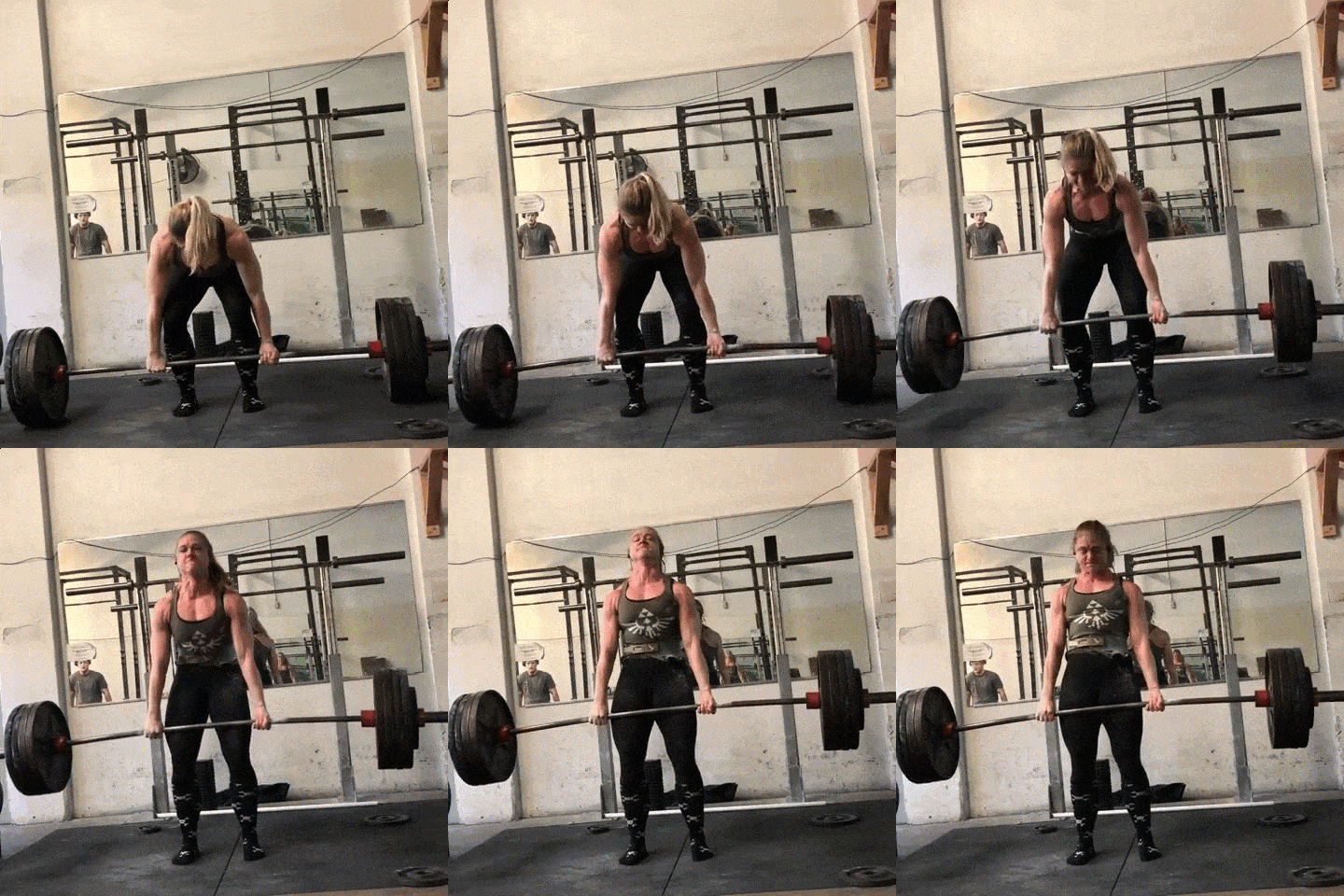
By the way, hi. I’m Staci Ardison,Senior Coach for Team NF, with a 455 pound deadlift, and strength training has changed my life.
Here’s that deadlift by the way (at a bodyweight of 150 lbs):
I help men and women get strong with our 1-on-1 Online Coaching Program, and in addition to this strength series, I’d love for our team to help you get strong too:
In this introduction to Strength and Resistance Training, we’ll cover:
This is also quite a lot to absorb, so we’ve combined this article along with the rest of our strength articles into a “Strength Training 101: Everything You Need to Know” guide.
Grab it free when you join the Rebellion by putting your email in the box below.
Download our comprehensive guideSTRENGTH TRAINING 101!
Everything you need to know about getting strong.
Workout routines for bodyweight AND weight training.
How to find the right gym and train properly in one.
#1) Halt and even reverse sarcopenia: As we age our skeletal muscle deteriorates, which is a condition known as sarcopenia. Strength training has been found to reduce the negative effects of sarcopenia allowing us to maintain an independent lifestyle (and out of a nursing home) and live longer.[3]
#2) Prevent disease and degenerative conditions:[4a] Heart disease is the leading cause of death for both men and women.
Strength training helps correct issues relating to cholesterol, high blood pressure, obesity, diabetes, and inactivity – all factors for heart disease.
Cardiologists are even starting to recommend strength training for people who have suffered a heart attack as little as three weeks after the attack.[4b]
#3) Improve the quality of life for people with: arthritis,[5] osteoporosis,[6]Parkinson’s Disease,[7]Down Syndrome,[8] lymphedema,[9]fibromyalgia,[10]who have recently had a stroke,[11]have had a spinal cord injury,[12]cancer survivors[13] and clinical depression.[14] Clinical exercise physiologists working with these special populations listed above strongly recommend incorporating strength training to slow down the progression of their disease or disorder, decrease their risk for other comorbidities, and decrease their risk for premature mortality.[15]
Now, in addition to making life easier LATER, strength training has a lot of great benefits right now.
How Strength Training Will Help You Today:
#1) Lose weight, look good naked: You can find study[16] after study[17] after study[18] that shows you the benefits of strength training for weight management when combined with “calorie restriction.”(eating fewer calories than you burn every day), such as greater fat loss and improvements in muscle mass. Additionally, the combination of these two behaviors also decreases one’s risk for the development of chronic diseases (e.g., CVD) and premature mortality.[19]
#2) Strength training can help increase your metabolism by speeding up your Resting Metabolic Rate (RMR).[20] It takes your body more calories to maintain muscle than it does to maintain fat!
#3) Strength training has a much greater level of excess post-exercise oxygen consumption than aerobic exercise.[21]
What does this mean?
When you finish a workout, your body needs to do a lot of work to replenish itself in order to bring itself back to a normal state (the way it was before you worked out). This takes a lot of energy, and some studies have shown that it can boost your metabolism for up to 38 hours after you finish your workout. If you do your resistance training quickly, minimizing rest intervals in-between sets, you can actually increase this effect.[22]
This is why it’s important to stay off of the phone in-between sets!
In addition to physical improvements, strength training will improve your next doctor’s visit.
How Strength Training Can Make You Healthier:
#1) Strength training increases bone density, builds a stronger heart, reduces your resting blood pressure, improves blood flow, halts muscle loss, helps control blood sugar, improves cholesterol levels, and improves your balance and coordination.[23] This is all great news because this will decrease your risk of developing conditions such as osteoporosis, hypertension, and type 2 diabetes.
#2) Strength training will make you FEEL better: Not only will you find yourself with more energy and confidence, less stress and anxiety,[24] and a better overall mood,[25] but you’ll actually begin to think better (resistance training has been proven to help increase cognitive function[26]).
You may be asking how this is possible?
Strength training allows for neurogenesis and neuroplasticity to take place, which is the process of creating new neural pathways in the brain.
Plus, strength training also allows for certain neurotransmitters (e.g., dopamine) to be released that plays a role in brain health.[27]
And while training too close to bedtime can be a bad idea, exercising earlier in the day has been proven to help prevent sleep apnea and insomnia.[28]
But wait, there’s more!
I even improved my posture from strength training – when I started lifting, I was 5’4”. Now I’m 5’5.5”.[29]
This is also a major concern for today because of prolonged cell phone use, which finds people constantly tilting their head forward and down resulting in neck pain and faulty posture.[30]
#3) Last but not least, strength training is fun! Whether you are looking for the most effective 20-30 minute workout (to stay fit and look great naked), or are looking for a competitive sport that you can really get into, strength training can help you meet your goals.[31]
It’s easy and fun to see progress as you strength train, almost like leveling up (“You gained 100xp and +1 STR with your deadlift today”).
If you’re looking to improve in other areas (a sport, traditional cardio, or an activity like rock climbing), strength training is an easy choice! Strength training will help keep you injury free too.[32]
We have coaching clients from 18 to 80+, and we work on strength training with practically every single one of them due to just how many benefits it provides! We’d love to work with you too:
Who SHOULDN’T strength train?
Trying to be balanced, I wanted to find studies of a single group of people who should not strength train.
But it didn’t go so well…
I found studies on how strength training can be beneficial for paraplegics.[33]
There are also studies that show the benefits for children and adolescents.[34]
You can also find plenty of studies that explain the benefits of strength training for pregnant women.[35]
And thus I’ve decided, not knowing you, you should probably strength train.
IMPORTANT CAVEAT: if you do fall into any of these special populations (e.g., paraplegics, children, pregnant women, etc.) it is imperative that you work with a qualified professional (e.g., clinical exercise physiologist, strength and conditioning coach, etc.).
These qualified professionals will perform a risk stratification and pre-assessments so they can start you off with the perfect training program that will improve your physical and mental health, and will decrease your risk for injury and prevent your condition from progressing to a more severe state.
Oh, and if you are already injured, you should check with a doctor[36]or physical therapist before strength training.
Long story short: EVERYBODY should strength train.
Robots too…probably.
It’s what we’re genetically designed to do: move around, push, pull, jump, and carry things.
What Is Strength Training? The Basics You Need to Know.
“Strength training” of any kind can be explained by two things:
Movement of any weight (including your body weight) – Doing ANY exercise that pushes your muscles outside of their comfort zone, forcing them to rebuild stronger to prepare for the next challenge.
Progressive overload: exerting slightly more effort than last time (lift heavier weight or do 1 more rep) consistently. Your muscles will constantly have to adapt and will constantly be rebuilding themselves to get stronger.[37]
That’s strength training!
If you want 7 different ways to achieve progressive overload, watch this video:
All this means if you do 10 squats and 10 knee push-ups right now, you have completed a strength training workout.
Feel free to do this right now to give yourself a quick win.
And we’re back!
So what’s actually happening to our bodies when we strength train?
Let’s get on our magic school bus and learn about the wonders of muscles!
Here’s what you need to know your muscles and strength training:
We’ve got 642 muscles in our bodies (but who’s counting), and they all work together to help our bodies move, stand, and exist.
When you bend your arm, your biceps contract and your triceps do the opposite (elongate) in order to let your elbow bend.
Every muscle in your body works alongside other muscles to let you move and do things. In this particular example, the biceps is known as the agonist muscle and the triceps is the antagonist.
Strength training starts when you move your bodyweight (doing 10 push-ups), or pick up a weight (a 100 pound deadlift) that is beyond what your body is normally used to.
In other words:
Strength training finds you pushing your muscles outside of their comfort zone.
They “break down” and tear slightly during this workout, and then over the next 24-48 hours they rebuild themselves stronger and more resilient.[38]
This is the foundation of strength training, and it’s called hypertrophy, in which the individual muscle fibers packed into your muscles are growing larger in size.[39]
There are a few types of hypertrophy,[40] which you can nerd out about here (don’t worry, this won’t be on the quiz):
Sarcoplasmic hypertrophy focuses on increasing the amount of sarcoplasm, the non-contractile fluid found in your muscle. This type of hypertrophy helps build overall size.
Myofibril hypertrophy focuses on strengthening the myofibril, the contractile part of the muscle. You are strengthening the actual muscle fiber so it helps you build super dense, strong muscles.
Transient hypertrophy is the temporary increase in muscle size that happens during and immediately after weight training due to fluid accumulation in the intracellular space, that you might know as “the pump”.
“Staci, what does this mean for me?” You might be wondering.
We cover exact strategies in our “How many sets and reps?” guide, but here’s what you need to know:
If you want dense muscle and strength (myofibrillar hypertrophy), keep the reps low and the weight heavy (in the 1 to 5 rep range).
If you’re looking to build muscle size, (sarcoplasmic hypertrophy), do more reps with a lighter weight (in the 8-12 range).
If you’re looking to build cardiovascular health and muscular endurance, hang out in the 12-20 reps per set range.
Please note: each of these rep ranges are NOT exclusive – when you train in a higher rep range you’re not JUST getting size, you’re also getting strength.
And if you get really strong, it can also help you with size and endurance.
#2)Recovery: The general rule is to wait 48 hours before working the same muscle group again. For example, if you trained your biceps and triceps today, then you should wait 48 hours before hitting them again. However, recovery is different for everyone depending on many different factors such as what the actual workout is, how old you are, your sleep quality, diet, and other recovery elements (such as massage, including the popular massage guns, foam rolling, and stretching).[42]
#3) Soreness after a workout: The day after an intense strength training workout – or 2 days after – you’re going to be VERY sore. This is called “Delayed Onset Muscle Soreness(DOMS)”. It’s a normal part of the process of repairing your muscles from the damage to the fibers you created while exercising. More recently, research evidence has found that the eccentric part of a lift, or the part of the lift in which the muscles are lengthening and stretching, produces the greatest degree of soreness.[43]
Expect to be more sore after doing an exercise for the first few workouts. As your muscles get used to that movement (and adapt to being put under stress), they will get less and less sore every time.
If you are sore, don’t skip the next workout!
That’s because:
The best way to alleviate soreness is to continue exercising.
This increases blood flow to the muscles and helps them heal.[44]
Already overwhelmed and just want to be told what to do? I hear you. It’s why we created our coaching program:
Can I strength train to lose weight?
We get questions relating to weight loss and strength training all the time, and it’s a BIG part of this entire Strength 101 series.
Let me quickly address it here:
Fat and muscle are two different things – one can’t transform into the other.
We all have plenty of muscle right now (otherwise we wouldn’t be able to move, walk, sit up, etc.), the muscle is just hiding underneath a layer of body fat.
In order for us to lose weight and look better, we want to do two things:
Build our muscles stronger and tighter.
Burn the fat on top of it!
And luckily, both of those things happen simultaneously through strength training!
So NO, you don’t need to lose weight first before you start strength training.
You will lose weight BY strength training (and keep the muscle you have).
You do NOT need to do hours of cardio for weight loss – weight loss is 90% a result of your nutrition. So honestly, you don’t need to ever set foot on a treadmill again (unless you WANT to).
Strength training will help you lose weight and look better IF you do two key things for effective weight loss:
As we cover in our “Why can’t I lose weight” article (full of fun Harry Potter references), combining a caloric deficit and strength training is magic:[45]
You’re not consuming enough calories to carry out your body’s daily functions. Our bodies require enough calories to support normal physiological functions such as heart rate and breathing. Additionally, enough calories are needed to help maintain our blood glucose, which is the major energy source for our brains.[46]
Your body needs to use lots of calories to rebuild the muscle that was broken down during the strength training workouts. Our bodies use calories to facilitate a process known as protein synthesis, which is the process of muscle hypertrophy.[47]
Your body has no choice BUT to pull from fat stores to get stuff done! As mentioned earlier, higher-intensity strength training results in a greater post-exercise oxygen consumption, resulting in greater caloric expenditure post-exercise.[48]
Just by doing those two things (get strong, reduce calories), all sorts of wizardry and witchcraft takes place in your body:
Get stronger and keep the muscle you have.
Build tight dense muscle.
A revved up metabolism while rebuilding muscle.
Burning of body fat to get things done.
Yeah, you’re hearing me correctly.
Lose the body fat that sits on top of your muscles and you’ll make your muscles tighter and denser = look better without clothes on.
Oh, what’s that? You just want somebody to tell you exactly how to train for your body, and how to eat for your goals?
Fine!
Check out our 1-on-1 Coaching Program– it’s helped thousands of people lose weight through strength training – and proper nutrition. We work with you on habit building and lifestyle design to actually get stuff done!
I cited dozens of studies above that show strength training is beneficial for people of all ages. And even for the frail elderly, studies have shown that drastic resultsare possible in just 10 weeks of weightlifting (for both men and women in their 70s through their 90s).[49]
In fact, weight training has also been shown to delay Alzheimer’s and stave off dementia.[50] As mentioned earlier, strength training allows for neurogenesis and neuroplasticity to take place, which is the process of creating new neural pathways in the brian. And, strength training also allows for the dopamine (i.e., neurotransmitter) to be released that plays a role in brain health.[51]
Research has also shown that older adults can safely engage in higher-intensity strength training resulting in improvements in strength, body composition, disease status, and independent lifestyle.[52]
So, if you think you might be “too old,” you’re probably the exact type of person that SHOULD be strength training!
Team NF’s Steve’s gramma is 89 and she strength trains. You are not too old!
We have plenty of coaching clients who are retired and just STARTING to strength train now in their 50s or 60s+. In fact one of our coaches, Kerry, is certified as a Functioning Aging Specialist, and you better believe she has her clients strength training!
By the way, if you are 90+ and reading Nerd Fitness, please email us at contact@nerdfitness.com – I’d love to hear from you 🙂
Will Lifting Weights Make Me Bulky?
No (unless you are TRYING to get bulky).
Let me first address this from a women’s point of view, then I’ll get to the men.
Or Christina, who got strong as hell, lost 31 total inches, and now crushes sets of pull-ups!
That “bulky” look in women does not happen by mistake or overnight – we simply do not have the hormones necessary to get there on our own.
To achieve this look, women have to eat incredible amounts of food and consume incredible amounts of drugs.
When we strength train normally, without these supplements, we end up looking like athletes.
And for the men: if your fear is getting too bulky, you can rest easy. Steve, creator of Nerd Fitness, has spent his entire life trying to get “too bulky.” It was only after fixing his diet (and hiring an online coach) that he went from Steve Rogers to Captain America.
That’s right, strength training is only 10% of the “slim down or bulk up” equation. The other 90% is nutrition and total calories consumed.
Want to lose weight? Strength train + caloric restriction. It is recommended that you seek a calorie deficit by consuming 250-500 less calories per day below your typical calorie intake. This will result in a realistic weight loss goal of 1-2 pounds per week.[53]
Want to get bigger? Strength train + caloric surplus. It is recommended that you seek a calorie surplus by consuming 250-500 additional calories above your typical calorie intake. This will result in a realistic gain in lean muscle mass of about 0.5 pounds per week.[54]
“My focus is on running/basketball/quidditch and I need to stay slim! How do I strength train for this scenario?”
Studies have shown that strength training increases the endurance of your muscles.[55]
In fact, resistance training and weight training not only help to tune up an out of shape nervous system and increase the activation of motor units within your muscles, but also helps increase their overall endurance. More specifically, strength training can result in improvements in how much force muscles can generate and also how much fatigue they can resist leading to better exercise economy.[56]
You just have to keep challenging your muscles and get strong as heck.
Look at any gymnast, male or female – those physiques are built through bodyweight training!
To progress in bodyweight exercises, you need to start, so you have something to advance from. You can begin by trying our beginner bodyweight routine RIGHT NOW:
It’s super fun building your own program, but many people just want to follow a plan that they know is aligned with their goals. If you hate gyms and still want to get strong, let us help!
How to Start Strength Training Today: Next Steps
If you’re ready to start, fantastic.
We’d recommend a simple program to get your feet wet.[57] You know, to learn the movements, build some confidence and prove to yourself that you can DO this!
If you want to take the Next Step, here’s how Team Nerd Fitness (that’s us!) can help you:
1) Work with a professional Yoda! If you want confidence that you’re following a program that is tailor-made for your busy life, situation, and goals, check out our popular 1-on-1 Coaching Program.
You’ll work with a certified NF instructor who will get to know you better than you know yourself, keep you accountable, and help you reach your goals.
2) Join our amazing free community, the Nerd Fitness Rebellion! It’s free to join, and we provide you with free goodies like our Strength Training 101 ebook when you sign up:
Download our comprehensive guideSTRENGTH TRAINING 101!
Everything you need to know about getting strong.
Workout routines for bodyweight AND weight training.
How to find the right gym and train properly in one.
3) Read ALL of the other amazing resources on Nerd Fitness. We’ve published millions of words over 800+ articles at Nerd Fitness that you can read, but these are the guides that will be the most helpful to you on your journey:
Portugal EM, Vasconcelos PG, Souza R, Lattari E, Monteiro-Junior RS, Machado S, Deslandes AC. Aging process, cognitive decline and Alzheimer`s disease: can strength training modulate these responses? CNS Neurol Disord Drug Targets. 2015;14(9):1209-13. doi: 10.2174/1871527315666151111121749. PMID: 26556087
A look at strength training and sleep apnea is right here.
For more on strength training and posture, read “Effects of a Resistance and Stretching Training Program on Forward Head and Protracted Shoulder Posture in Adolescents.” Source, PubMed.
Al-Hadidi F, Bsisu I, AlRyalat SA, Al-Zu’bi B, Bsisu R, Hamdan M, Kanaan T, Yasin M, Samarah O. Association between mobile phone use and neck pain in university students: A cross-sectional study using numeric rating scale for evaluation of neck pain. PLoS One. 2019 May 20;14(5):e0217231. doi: 10.1371/journal.pone.0217231. PMID: 31107910; PMCID: PMC6527223
The important thing to keep in mind is that you have to find the exercises that are most enjoyable to you. Research has found that when you find something to be more enjoyable you are likely to adhere to it.
Zwolski C, Quatman-Yates C, Paterno MV. Resistance Training in Youth: Laying the Foundation for Injury Prevention and Physical Literacy. Sports Health. 2017 Sep/Oct;9(5):436-443. doi: 10.1177/1941738117704153. Epub 2017 Apr 27. PMID: 28447880; PMCID: PMC5582694
A look at strength training during pregnancy is right here.
“I went to the doctor. All he did was suck blood from my neck. Do not go see Dr. Acula” – RIP Mitch Hedberg. ”
In other words, in order to achieve your training goals or to see improvements, your training must gradually and constantly increase. Keep in mind that if the overload increases too quickly, poor technique and injury may result. And if the overload progresses too slowly, improvements will be minimal or non-existent. Rest and recovery must also be included in the progression, as training hard all the time could result in chronic fatigue, a decrease in performance, and eventually injury. Soucre: Haff G, Triplett NT. (2016). Essentials of strength training and conditioning. Fourth edition. Champaign, IL: Human Kinetics
Don’t worry though, this “break down” and tearing does not hurt and the only thing you may experience is muscle soreness.
This totally sounds like something you’d win in Super Smash Bros.
Powers SK, Howley ET. (2011). Exercise physiology: Theory and application to fitness and performance. New York: McGraw-Hill Humanities/Social Sciences/Languages
Powers SK, Howley ET. (2011). Exercise physiology: Theory and application to fitness and performance. New York: McGraw-Hill Humanities/Social Sciences/Languages
Powers SK, Howley ET. (2011). Exercise physiology: Theory and application to fitness and performance. New York: McGraw-Hill Humanities/Social Sciences/Languages
Remember what we said earlier, incorporating both strength training and calorie restriction (i.e., eating less) has been found to result in greater fat loss and improvements in muscle mass. Additionally, the combination of these two behaviors also decreases one’s risk for the development of chronic diseases (e.g., CVD) and premature mortality. For more, read “A carbohydrate-restricted diet during resistance training promotes more favorable changes in body composition and markers of health in obese women with and without insulin resistance.” Source, PubMed.
Spano MA, Kruskall LJ, Thomas DT. (2018). Nutrition for Sport, Exercise, and Health
Spano MA, Kruskall LJ, Thomas DT. (2018). Nutrition for Sport, Exercise, and Health
It should also be noted that when our bodies pull from fat stores to get things done, a few things happen that results in less caloric expenditure: first, we are forced to exercise at a lower-intensity resulting in a lower caloric expenditure, and second, we have a lower post-exercise oxygen consumption resulting in less caloric expenditure post-exercise. So, we need to consume enough calories so we can engage in higher-intensity exercise and have a greater caloric expenditure.
Moro T, Tinsley G, Bianco A, Gottardi A, Gottardi GB, Faggian D, Plebani M, Marcolin G, Paoli A. High intensity interval resistance training (HIIRT) in older adults: Effects on body composition, strength, anabolic hormones and blood lipids. Exp Gerontol. 2017 Nov;98:91-98. doi: 10.1016/j.exger.2017.08.015. Epub 2017 Aug 15. PMID: 28821429
Spano MA, Kruskall LJ, Thomas DT. (2018). Nutrition for Sport, Exercise, and Health
Spano MA, Kruskall LJ, Thomas DT. (2018). Nutrition for Sport, Exercise, and Health
One such study on strength training and endurance is right here.
Over the years, I’ve learnt a lot about myself and how I deal with training for events – both cycling and running. I usually have an active and busy schedule which can make it hard to fit in training. And…
Although Autumn and Winter fall the same time each year, somehow they always seem to creep up on us. Since I’m not the biggest fan of heading outdoors when it’s cold outside, I’ve had to learn what to wear for…
Whether we try popular diets like the Paleo Diet to Keto, or Plant-Based, to Intermittent fasting (I do it), to terrible diets like the Military Diet, juice cleanses, or the Cabbage Soup Diet, we’re all looking for that master key that unlocks effortless weight loss.
Some of these diets are certainly more effective/healthy than others, but they all come down to two truths for losing weight:
Truth #1: Nearly every diet works in the short term.
Truth #2: Nearly every diet fails in the long term.
So why does every diet work in the short term?
Every diet you have ever tried has a clever way of restricting calories which leads to weight loss[1]:
Paleo Diet: Eliminate everything but veggies, meat, fruit, and nuts.
Keto Diet: Remove an entire macronutrient from your diet (carbs).
99% of the reason why these diets result in short-term weight loss is that they get us to eat fewer calories.
The problems arise when we get to Truth 2:
“Nearly every diet fails in the long term.”
Put another way: “Temporary changes create temporary results.”
If somebody “goes Keto” for 60 days, they’ll probably lose weight, and might even feel healthier.
This is cool.
HOWEVER.
If they spend those 60 days dreaming of carbs, counting down the days until they can “go back to eating like normal,” they will put all of the weight back as soon as they stop their diet.
This is why I hate the term “diet” or “going on a diet”: In order for a diet to create permanent results, the diet needs to be adopted PERMANENTLY!
You’ll lose weight in the short term with any diet, so long as you reduce your calorie intake.
Today, we’re going to focus on weight loss that’s:
Permanent: No more yo-yo dieting. No more rollercoaster on the bathroom scale.
Enjoyable: We’re not miserable and hating our lives while making these changes.
So, as you read about the 5 rules of weight loss below, I want you to be honest with yourself. You need to make changes you can stick with for at least a year.
If a change seems too drastic or too scary, start small.
Here’s how we help our coaching clients: we work with them to pick ONE change per week that we can implement: one less soda, try one new vegetable, etc.
In other words, we STOP thinking about “How many pounds can I lose in a month?” and instead “What can I do today that isn’t scary, but will make me better off a year from now:“
Rule #1: Lose Weight Without Dieting
There’s only ONE big-ass rule you need to follow when it comes to weight loss:
Eat fewer calories than you burn.
(Yes, I realize this article has 5 RULES, but the other 4 all build on this one.)
Study[2] after study[3] after study[4] shows that our bodies obey the laws of thermodynamics and that in order to lose weight, we need to burn more calories than we consume regularly.
Every day, our body needs a certain number of calories to carry out its daily functions: making your heart beat, your brain function, getting your body to move, and all sorts of other stuff.
When you consume more calories than you burn, your body tends to store those extra calories as fat (weight gain).
When you burn more calories than you consume, your body will pull from fat stores for energy (weight loss).
So, in order for us to lose weight, we need to find a way to tip the energy balance in favor of “burn fat, sucka!”
Simplifying this really complex topic, we need to eat less and/or move more to get our bodies to start using our fat stores for energy.
Unfortunately, that’s where the problems start.
We humans are REALLY good at:
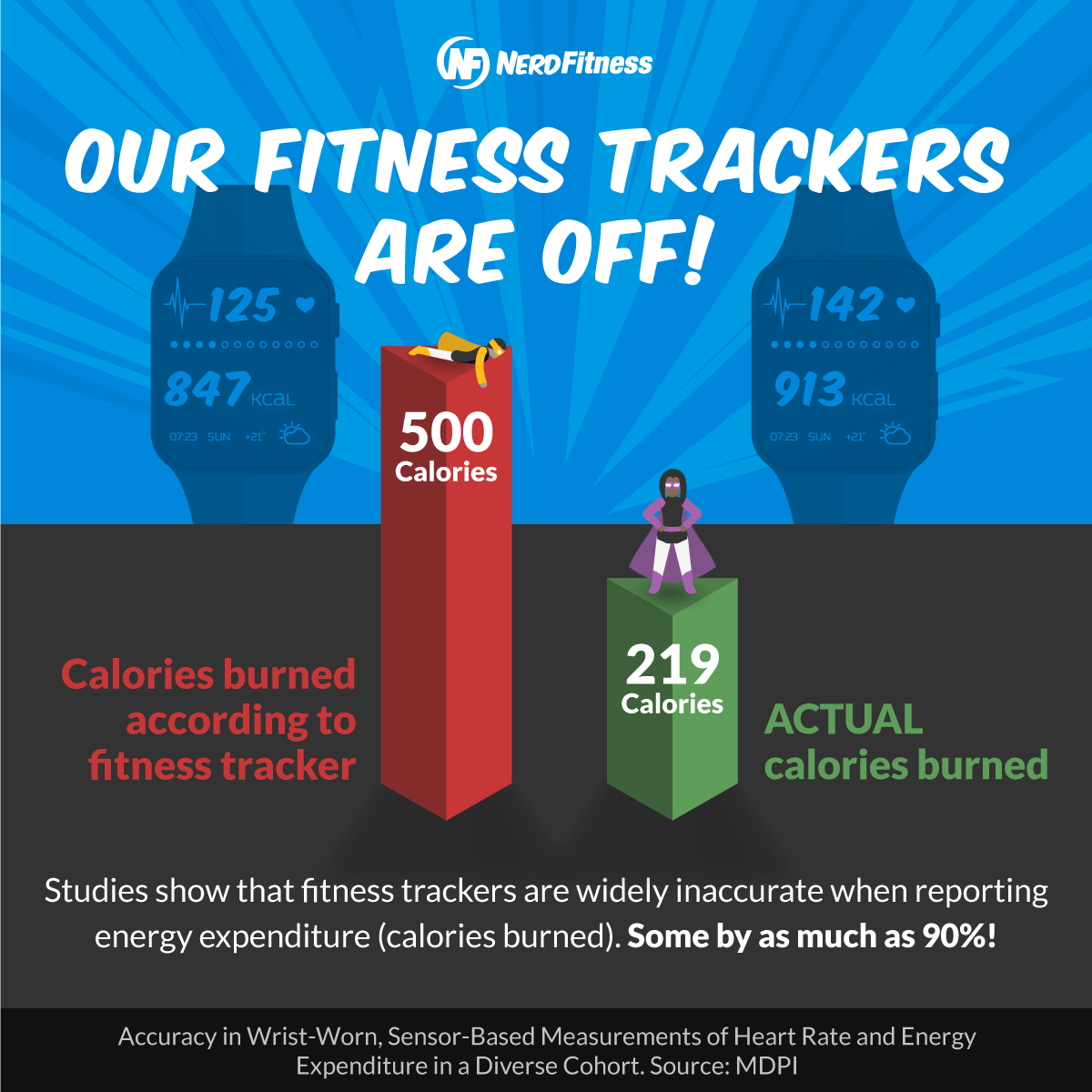
UNDERestimating how much we eat.
OVERestimating how much we burn.
When we accidentally eat more calories than we realize, and then burn fewer calories from exercise than we assume, we think we “can’t lose weight” because of our metabolism or genetics.
Nope.
It’s because we are eating too much.
And as we lay out in our MASSIVE Healthy Eating Guide, the most important factor in fat loss is eating fewer calories than you burn on a regular basis.
The best way to do that is to focus on the right kind of food:
Protein (meat, low-fat dairy, eggs, and legumes)
High-fiber fruits and vegetables.
Healthy carbohydrates like rice and quinoa.
Healthy fats like almonds and olive oil.
These foods are full of vitamins and minerals while also lower in calories, compared to ultra-processed foods that are easily overconsumed.[6].
They fill us up but aren’t overly calorie-dense.
Which means we feel full while reducing our calorie intake.
If we can do this consistently and sustainably, we will lose weight.
To drive this point home, compare 200 calories worth of these two foods (courtesy of wiseGEEK):
200 calories worth of a bagel:
…and 200 calories worth of broccoli:
Which one do you think you’ll be more likely to accidentally overeat?
The bagel, duh. Who eats only 2/3rds of a bagel? Literally zero people.
So here’s how we’re going to lose weight: eat fewer calories without realizing it, and then burn extra calories without being miserable:
Prioritize protein and vegetables on your plate: target 2 fist-sized servings of vegetables, and 1-2 palm-sized portions of protein on the plate.
Learn portion sizes of fat and carbs:If you aren’t losing weight, these are the culprits. Cut back on the one you’re eating more of.
Exercise for weight loss: Strength training is the most efficient way to lose fat. Strength train 3x per week, and then mix in fun cardio and move as much as possible.
Let’s dig into these 3 things next:
Rule #2: Prioritize Protein and Vegetables
If we want weight loss that doesn’t suck, we’ll want to build meals with foods that fill us up and make us feel good!
PART A) PRIORITIZE PROTEIN FIRST: Protein is fuel for our bodies to rebuild muscle. It’s also nutritious, delicious, and satiating.
How much protein should you eat? As we cover in our Protein Guide, aim for 1g per lb of bodyweight (2g per kg) every day (with an upper limit of 250g).
Protein can come from any number of sources, including:
A serving of protein is about the size and thickness of your palm.
*The 4 oz serving is for an uncooked piece of meat. Cooking reduces about 25% of the weight, bringing it down to about 3 oz.
When building a plate, aim for the following amount of protein:
Dudes: 1-2 servings (6-8 oz or about 170-228 g): two palms
Dudettes: 1 serving (3-4 oz or about 85-114 g): 1 palm.
PART B) HALF OF YOUR PLATE SHOULD BE VEGETABLES: When it comes to weight loss, veggies can make the difference between success and failure.
Vegetables are nutrient-dense and low in calories. So you can eat lots of them and feel full without overconsuming calories (remember that mountain of broccoli was only 200 calories!).
A serving of veggies is about the size of your fist, and 2 servings of veggies should take up ½ the plate!
Here’s a quick, non-complete list of veggies that can fill your plate:
RECAP: In our quest for weight loss that doesn’t suck, we should focus on foods with fewer calories that still make us feel full, satisfied, and happy.
Always start with protein and vegetables, and then the rest of your plate can have fats and carbs.
Speaking of which…
Rule #3: Know Your Carbs and Fat Portion Sizes
If 3/4ths of our healthy plate is occupied by protein and vegetables, where do fats and carbs fit in?
You can still lose weight while consuming fats and carbohydrates, as long as they’re consumed in the right quantities.
Remember how I said earlier “we UNDERestimate how many calories we eat every day?”
Fat and/or carbs are almost ALWAYS the culprit.
Let’s discuss.
PART C) HEALTHY CARBOHYDRATES FOR THE WIN. Everybody loves carbs, but most people overeat this macronutrient without realizing it.
Here are some examples of healthy carbohydrates that are less likely to be overconsumed:
This is a list of REAL foods, minimally processed, that also have plenty of fiber[9].
This then puts them in the “healthy carbs” category: when consumed in appropriate amounts, these foods can help you feel full and give you energy and all that jazz.
Just make sure you know your portion sizes!
EVERYBODY accidentally overeats carbohydrate-heavy foods, even healthy ones, and then wonders why they aren’t losing weight.
To help you get better at eyeballing carb serving sizes:
1 serving of a starchy carbohydrate is 1 cupped hand (uncooked), or two hands forming a cup (cooked).
Here are some images to help you learn proper portion sizes (thanks to SafeFood):
PART D) DON’T FORGET ABOUT FAT!
Dietary fat used to be vilified, but now it’s considered a superfood by many.
Here’s the truth: dietary fat is neither a superfood nor evil.
It’s just a macronutrient that we can eat that can help us lose weight when consumed in the right quantity, or keep us from our goals if we eat too many calories of it.
Healthy fat can be found in foods like:
Avocado
Almonds
Walnuts
Macadamia nuts
Olive oil
Almond butter
Peanut butter
Saturated fats – consumed in moderate quantities[10] – can come from things like:
Whole milk
Full fat dairy
Coconut oil
Grass-fed butter
Lard
Fatty cuts of meat
To help you gauge: a serving size of fat is roughly the size of your thumb!
THIS is a single serving of almonds (162 calories):
THIS is a serving of olive oil (119 calories, taken from Runtastic):
What about cheese? Cheese is fine, provided you consume a proper sized portion of it!
This is a portion of cheddar cheese (116 calories):
So bringing them all together, here’s the healthy plate for weight loss (from our Healthy Eating Guide):
If you prioritize protein and vegetables, while consuming appropriate amounts of fats and carbs, you’ll likely lose weight.
“But Steve, what about low-fat diets? Low-carb diets? No-carb diets?”
Low carb diets like Keto and Paleo are all the rage right now, but are they healthy and will they help you lose weight?
Maybe!
It depends on how your body regulates glucose (blood sugar)[11]:
Studies show that people who follow EITHER a low-fat OR a low-carb diet will lose weight, as long as they are in caloric restriction and can adhere to the diet for at least a year[12].
So, it comes down to: “which strategy are you more likely to stick with for a year or longer?”
If you think you can go Paleo or Keto or follow another low carb/low fat strategy for over a year, go for it.
Otherwise, make small changes!
MY ADVICE: Stick with changes that aren’t too scary. Work on reducing portion sizes or adding a new vegetable each week, and don’t get dogmatic, all-or-nothing about your diet!
If you can find a way to reduce your total calorie intake without being miserable, you WILL lose weight over time, AND keep it off.
There’s one other piece of the puzzle I HAVE to address.
Rule #4: Exercise for Weight Loss (Strength training and Cardio)
Although exercise isn’t necessary for weight loss (nutrition being the most important part), I would HIGHLY recommend you exercise.
There are three forms of exercise that I’ll cover when it comes to weight loss, and ALL three of them are important:
Fun cardio: movement of any kind that gets your heart pumping (good).
#1) Fun cardio is doing any sort of exercise that gets you off your butt and moving.
It makes our heart healthier, AND it can serve as a reminder that we’re doing things differently now, and that we need to eat better so we don’t ruin our efforts!
(Whatever you do, DON’T say: “Welp, I exercised – and thus I earned this donut and Coca-Cola” – you’d have been better off NOT exercising and skipping the donut and Coca-cola).
Both of these activities can help tip the energy balance in favor of “weight loss” when combined with calorie restriction.
When you’re in a “caloric deficit” for weight loss, the hope is that your body will mostly pull from fat stores, though depending on how you are exercising it will also break down muscle too.[13]
Said again: when you are eating a caloric deficit, your body will pull from both its fat stores AND existing muscle for energy.
From a physique and health standpoint, obviously we’d prefer that we don’t break down muscle when in a caloric deficit, and instead get our body to use ONLY fat stores.[14]
Your goal in fitness shouldn’t only be “weight loss,” despite the common vernacular used.
Which brings me to the most important form of exercise for weight loss:
Rule #5: Strength Training For Weight Loss
#3) Strength training is the prizefighting champion when it comes to weight loss.
You can find study[15]after study[16]after study[17]that shows you the benefits of strength training for weight management, when combined with calorie restriction.
Let me explain it here quickly, borrowing from Harry Potter:
(You know, the wizard.)
At the Hogwarts School of Witchcraft and Wizardry, when each student arrives they put on the “Sorting Hat,” an actual hat that determines which House (group) that child will join for his/her time at Hogwarts.
The hat acts like a traffic director:
“Harry, you will go to Gryffindor! Draco, you will go to Slytherin!”
Your body operates in a VERY similar fashion: every day, it receives new calories (when you eat), and it needs to decide what to do with them!
It’ll sort those calories into one of three Houses:[18]
A: Burn for Fuel.
B: Rebuild Muscle.
C: Store as Fat.
There’s a number of calories your body burns each day just existing: to keep your liver functioning, your heart pumping, your brain operating, and so on – it burns a good chunk of calories just keeping the lights on.
A 6’, 34-year old male weighing 250 pounds burns 2,300 calories a day just by existing.
A 5’5”, 40-year old female weighing 140 pounds burns 1,350 calories a day just by existing.
When you start strength training, actual wizardry starts to happen.
When you do push-ups and pull-ups or do a strength training workout, your muscles are “broken down” during the exercise itself, and then they rebuild themselves stronger over the next 24-48 hours.
Guess what happens during those 24-48 hours?
Your body diverts as many calories as possible to “Rebuild Muscle!”
It also diverts additional calories to “Burn as Fuel” to handle this increased “muscle rebuilding” activity.
Which means two amazing things:
Rebuilding muscle is a calorie taxing activity!
Your metabolism is revved up for this period of time, burning more calories than normal.
There are significantly fewer calories available for “Store as Fat.”
AND THEN IT GETS BETTER.
When you consume fewer calories than your body burns each day, strength training will cause your body to get even more efficient.
Your body can pull from “Store as Fat” to make sure all the work still gets done, including your daily functions as a human, and rebuilding the muscle.
This is the Tri-wizard cup[19] of physical transformation victory:
You get stronger and keep the muscle you have.
You burn through the fat you’re trying to get rid of.
BRINGING IT ALL TOGETHER: Regular strength training is the most efficient type of exercise to do for losing fat and looking great naked
Adding in intervals or fun exercise on your off days is a fantastic supplemental activity to strength training.
Want help learning how to strength train? You can absolutely build your own workout, or you can work with one of our coaches who can create a custom program that’s specific to your goals and lifestyle.
We’ll even make sure you’re doing the movements correctly via video, because we’re nice like that 🙂
25 Tips to Supercharge Weight Loss
The 5 Rules above gives you the best chance to lose weight in a way that doesn’t suck.
Changing your nutrition is like playing a video game: if you attack too many high-level bad guys at once, you’re going to lose.
Instead, you’re better off picking 1-2 smaller bad guys (changes) that you know you can win, and level up slowly.
THAT’S how you make changes that stick.
No more temporary dieting for temporary results!
Permanent changes create permanent results.
Here are 25 other quick tips that are supplementary to the above important ones!
1) Consider low-carb OR low-fat diets. Studies show BOTH low-carb and low-fat diets will result in weight loss, IF you can stick with it.[20]
Lots of people lose weight quickly on low carb, but they also tend to abandon the diet. You don’t need to do Keto or Paleo if you don’t want to.
2) Consider intermittent fasting. Fasting helps you reduce your calorie intake by limiting your daily eating window – it entails simply skipping meals or occasionally fasting for 24 hours.
It affects men and women differently, but has tons of benefits and is backed by science. Read our Guide on Intermittent Fasting. I’ve been skipping breakfast since 2014!
3) Minimize liquid calories. Beverages with calories in them are probably sabotaging your weight loss efforts.
Cut out the sodas and lattes and high-calorie smoothies (unless you account for them in your calorie goal!). Stick to sparkling water, black coffee or tea, or other zero-calorie beverages.
4) Cut back on alcohol. Yes, you can still drink alcohol and lose weight, but you still need to account for the calories, of which there might be many!
And if you make poor food choices while drunk, it’s going to be tough to lose weight. Read our guide on alcohol and stick to low-calorie beer, whiskey neat, or vodka with club sodas.
5) Know your condiments and cooking oils. Just because you’re eating grilled chicken and vegetables doesn’t mean you’re guaranteed to lose weight!
If those foods are smothered in sauces or covered in 1000 calories of healthy olive oil, the calories still count! Keep an eye on the sauces and oils you use to cook with.
6) Know your next meal. Most of our coaching success stories plan in advance what their next meal is.
Because it’s a pre-made decision, it removes emotion and makes them less likely to make a bad choice while hungry, sad, or angry.
Think of it this way: you can still eat unhealthy foods with this strategy because you plan ahead and can eat a healthy meal before and after. No harm done!
7) Look at restaurant menus before going. Restaurants serve notoriously large portions of food, often with hundreds of hidden calories.
Give yourself the best chance to succeed by looking up the menu online before going and decide BEFORE you get there.
Also, consider taking HALF the entree and boxing it up for an additional meal (a tip we mention in our Guide to Portion Control).
8) Eat the same foods over and over. The healthiest, most successful coaching clients we have tend to eat the same handful of meals over and over.
Once you learn portion sizes and calorie counts of your favorite meals, you’re much more likely to eat within your goals for the day.
9) Learn to batch cook. Read our guide on batch cooking! If you can prepare all your healthy meals ONCE at the start of the week, you’ll set yourself up for success.
Why? Because now your default, easiest, laziest option is to simply reheat and eat the food you have at home – much less work than ordering takeout or driving to fast food! Win-Win-Win.
10) Employ the “Never 2 in a Row” rule. If you ever eat an unhealthy meal, simply make the next one healthy.
One bad meal doesn’t ruin a day, so letting an unhealthy breakfast derail you for the rest of the day isn’t smart.
Simply eat a healthy lunch and get right back on track.
11) Ask “What would Batman do?” If you’re not sure what you should eat, ask what would Batman do.
A study showed that children were more likely to pick an apple instead of candy when instructed to ask this question.[21]
And we’re all kids at heart, right?
12) Track your calories. If you can’t lose weight, it’s most likely because you’re accidentally eating more calories than you realize. Use an app or spreadsheet and track your food for a week.
14) Eat more slowly! If we’re not careful, we can eat more than we realize because we eat too quickly for our body to understand it’s full!
Tactics to help with this include consciously working on chewing your food more frequently before swallowing.
Studies show eating slowly can help reduce calorie intake.[22]
15) Use smaller plates and forks! If we have big plates and big utensils, we’re more likely to pile more food on our plate AND consume it more quickly.
Throw out your big plates and get smaller ones. Get smaller utensils, and you’ll trick yourself into eating smaller portions without realizing it.
16) Don’t “Eat AND [activity].” Just “eat.” We eat more food if we’re eating while doing something else (watching TV, scrolling through our phones, etc).[23]
Why don’t you try JUST eating? Enjoy each bite. Savor the food. Make it an experience. You’ll tend to eat less.
17) Stop snacking. All calories count. Instead of snacking throughout the day, why not eat 3 regular sized meals that you truly enjoy?
As we cover in our Guide to Intermittent Fasting, it doesn’t matter WHEN you eat, it only matters HOW MUCH you eat. Not snacking between meals gives you more leeway during your actual meals!
18) Seek professional help if necessary. If you struggle with your relationship with food, consider reaching out to a therapist or doctor.
19) Fidget more! From tapping your toes to getting up frequently, fidgeting (small micromovements) can burn hundreds of additional calories per day.[24] It all counts. So get wiggling!
20) Move more. From parking farther away at the grocery store to taking the stairs instead of the elevator, do whatever you can to MOVE MORE!
Dance, yoga, wrestling with your kids, rock climbing, hiking, it all counts! Just like your parents told you when you were a kid, “Go outside and play!”
Increase the steps between you and the activity you’re trying to avoid (eat junk food), and decrease the number of steps between you and the NEW activity you want to do more of (eat healthily):
Throw out your junk food so you don’t need to waste willpower not eating it.
Put a bowl of fruit on the counter so your default activity becomes “eat fruit!”
However, we can discuss some of the big variables.
How fast you lose weight will depend on:
How much weight do you need to lose? Somebody who needs to lose 250 lbs will be able to lose weight more quickly than somebody who needs to lose 10 lbs.
How big is your calorie deficit?If somebody normally eats 5000 calories per day and switches to 1500 calories per day, they’ll lose weight faster than if they switched to 4500 calories per day. Now, reducing calories significantly can create all sorts of “I’m miserable and hate everything” feelings as our body learns to stop expecting a ready supply of food and has to start burning fat instead.
Are you going low-carb like Paleo or Keto?As you’ll see below, cutting out carbs can create significant weight loss in the first weeks due to a reduction of ‘water weight and bloat.’ But cutting out carbs might also make you miserable!
First Week Weight Loss Expectations: Depending on how poorly you eat now, if you swap out unhealthy food for protein and veggies – reducing your calorie intake significantly – you might lose as much as 10 lbs (5 kgs) in your first week.
It’s awesome to see the scale drop by that much in the first week, but it’s important to note that this type of weight loss won’t be typical week to week.
If you normally eat a lot of carbs and sodium, your body is carrying a lot of extra bloat and water weight. When you switch to mostly protein and veggies, you’ll lose TONS of water weight and some fat initially.
We’ve seen many Coaching Clients lose 5-10 pounds in their first week, again mostly due to the reduction of water weight with SOME fat loss.
First Month Weight Loss Expectations: Depending on how strict you are with your nutrition – you can lose 1% of your body fat, or 0.5-3 pounds per week after that (heavily dependent on how much weight you have to lose).
We have seen people (who have a lot of weight to lose) lose 20 pounds in their first month, mostly due to large water weight reduction in the first week, with a steady consistent drop after that.
There’s nothing wrong with losing weight quickly, provided you’re doing it in a healthy, SUSTAINABLE way – like following the rules and strategies laid out in this article.
Quick weight loss doesn’t guarantee long-term success.
It comes down to making PERMANENT changes!
If somebody reduces their calorie intake by 1000+ calories a day, they might be so damn hungry and angry all the time that they abandon their journey after a week or two.
This is bad news bears.
They would have been better off reducing their calories by 200 calories a day for 6 weeks, and then by another 200 6 weeks later, and so on.
We want sustainable, permanent weight loss.
So it doesn’t really matter how much weight you lose in your first week or first month, but rather how much weight you have lost after 1 year, and how you feel after that year.
As we cover in our “Why can’t I lose weight?” guide, this is a lifelong journey. You should think of this as a lifestyle adjustment – not a temporary diet change
Put your focus on building the habits and fixing your environment. Focus on the changes you can make on a day to day basis, and with each meal.
And over time, your weight WILL drop in a way that’s sustainable and healthy.
How to Lose Weight Quickly
“STEVE JUST TELL ME EXACTLY WHAT TO DO TO LOSE WEIGHT QUICKLY.”
Fine! But you don’t need to yell at me like that!
Here’s what I would do if I needed to lose weight quickly but ALSO didn’t want to hate life:
I’ll leave you with some final words of wisdom: this is NOT all or nothing.
If you can implement just ONE change and stick with it, that’s a victory. That’s better than doing 10 things and giving up after a month.
I know I just threw a LOT of information at you. But I hope that you can implement this stuff in your day-to-day routine, because it WILL lead to sustainable weight loss ad change your life.
If you are looking for more guidance, support, and instruction, we have 3 options for you to level up:
#1) JOIN OUR COACHING PROGRAM: We provide nutritional guidance, constant feedback and support, customized workouts for your goals, and keep you accountable wherever you are.
We are really good at this stuff and would love to help you reach your goals.
#2) If you want an exact blueprint for how to eat better and get in shape, check out NF Journey. Our fun habit-building app helps you exercise more frequently, eat healthier, and level up your life (literally).
Try your free trial right here:
#3) Join The Rebellion (it’s free)! Sign up for our biweekly newsletter and join the Nerd Fitness Rebellion!
I’ll send you tons of free nutritional guides and bonuses to help you get started on your journey today.
Sign up below:
Download our free weight loss guide
THE NERD FITNESS DIET: 10 Levels to Change Your Life
Follow our 10-level nutrition system at your own pace
What you need to know about weight loss and healthy eating
3 Simple rules we follow every day to stay on target
If you were just trying to start building healthier habits and lose weight sustainably, instead here’s what I would do:
Make 1 change per week.
Change ONE meal a week, or cut back on ONE soda. Make a change that’s so small that it doesn’t make you sad or scared.
And then repeat.
What’s the ONE change you’re going to make this week to make your weight loss journey SLIGHTLY easier?
-Steve
PS: Make sure you check out the rest of our Sustainable Weight Loss Content:
Fiber is a carbohydrate that can’t be broken down by the body, so it travels through you relatively intact. However along the way it can do all sorts of good stuff! For example, increased fiber intake can help reduce blood glucose levels.
In case you’re worried about saturated fat, here’s a systematic review that found no link between saturated fat intake and a greater risk of all-cause mortality.
Low-Fat or Low Carb for Weight Loss? It Depends on Your Glucose Metabolism: Pubmed
This study looked at kids watching TV and the risk of obesity. This study found that kids who watched TV during lunch or dinner had increased odds of being overweight.
You’ve probably heard of the regular barbell row. You pick up a barbell, bend over at the waist (keeping your back straight), and pull the weight up towards your chest.
It looks something like this:
This can be a great exercise, but improper form could cause complications or you might not have access to a barbell and plates.
Luckily, the bodyweight row (or inverted row) takes care of all of that.
By the way, I’ll be using “bodyweight row” and “inverted row” interchangeably in this article.[1]
When doing this movement, you only need a bar to lean back from and your body weight. There’s also no extra stress on your back, like with a traditional barbell row.
As an added bonus, you get a decent core workout too.
I know, that’s worth celebrating…
Think of it like this: “bench press” is to “pushing” as “inverted row” is to “pulling.”
Balance FTW!
Why the inverted bodyweight row is so great:
I’m a huge fan of compound exercises (like the squat and deadlift, pull-ups and push-ups), and I’m also a huge fan of exercises that don’t require expensive machines or lots of extra bells and whistles.
Set the bar (or your rings) around waist height. The lower the bar, the more difficult the movement becomes.
Position yourself under the bar lying face up. Lie on the floor underneath the bar (which should be set just above where you can reach from the ground).
Grab the bar with an overhand grip, slightly wider than shoulder-width (palms facing AWAY from you).
Contract your abs and butt, and keep your body a completely straight line. Your ears, shoulders, hips legs, and feet should all be in a straight line (like you’re doing a plank).
Pull yourself up to the bar until your chest touches the bar.
Lower yourself back down with proper form.
If this movement is TOO difficult, no big deal, we just need to back up a few steps.
Set the bar higher so that when you lean back, your body isn’t down on the ground; maybe it’s only at a 45-degree angle.
We’ll walk you through a row progression right here.
Here’s Staci again demonstrating it at a higher angle:
By setting the bar higher, it takes more of your body’s weight out of the equation.
As you get stronger (and/or lose weight), you’ll be able to drop the bar until you’re parallel when pulling yourself up.
I grabbed a video of Senior Coach Staci from Team NF demonstrating a bodyweight row with gymnastic rings, but the instruction you’ll get in the video will really be helpful too.
How to do a bodyweight row (with video explanation):
To keep proper form when doing an inverted bodyweight row:
Don’t let your butt sag (squeeze your buttcheeks, flex your stomach, and keep your body rigid from head to toe).
Don’t flail your elbows. Grab the bar with your hands a little closer than you would if you were doing a bench press, and keep your elbows at that angle from your body.
Pull the bar towards the middle of your chest. Don’t pull the bar up towards your throat, or down towards your belly button. Right in the middle!
Keep your abs tight. Keep your abs tight throughout the whole routine. Your body should be a straight line the whole time, and the only thing moving is your arms.
Pull your shoulder blades down and back towards each other through the movement. Don’t shrug your shoulders. Imagine you’re trying to pinch a pencil between your shoulder blades to keep it from falling!
GO all the way. Don’t half-ass it. Lower yourself until your arms are completely extended, and raise yourself until your chest touches the bar.
How to Progress with Inverted Bodyweight Rows (6 Variations)
Let’s provide a blueprint on how you can level up your inverted bodyweight rows.
#1) Doorway Rows
At first, just start doing some rows in your doorway:
This will help you start training your “pull” muscles.
#2) Towel Rows
Still utilizing your doorway, you can use a towel to lean back even further to increase the challenge here:
Coach Jim walks you through setting up your towel row in this video, “No chin-up bar?? No problem!“
Next, try doing an inverted row, but set the bar high so it’s easier to perform:
#4) Inverted Row (Low)
Once your inverted rows become easy, lower the bar to increase the challenge:
#5) Elevated Inverted Row
If you place your feet in the air, you’ll make this exercise even tougher:
#6) Inverted Row (Weighted)
If you really want to up the difficulty of your inverted rows, try doing it with a little bit of weight attached to you:
When Should I Do Inverted Bodyweight Rows?
If you are building your own workout plan, you can mix in bodyweight rows wherever you normally do your pull exercises (pull-ups, pull-downs, rows, etc.).
Both days work my full body, I can do a full routine in less than 40 minutes, and I’m building strength.
If you can’t do dips on Day 1, you can do push-ups.
If you can’t do pull-ups on day 2, you can substitute assisted pull-ups.
On the rows, aim for 3 sets of 10. We cover this in our “sets and reps” article, but you can never go wrong with 3 sets of 10!
If you can’t do that, do 3 sets to however many reps you can do, and build your way up to 3 sets of 10.
Once you can do that, put your feet up on a chair, throw some weights in a backpack, put it on reverse (so the bag is hanging in front of you), and then do the rows.
Are you doing your moves correctly? Should you be lifting more weight or less? What do you eat to reach your goals?
We created the Nerd Fitness Coaching program to tackle these questions directly. Your own coach will get to know you, build a program based on your experience and goals, and check your form on each movement (via video):
How to Do Inverted Bodyweight Rows at Home
Just because you don’t have access to a gym doesn’t mean you can’t work out your back, you just need to get VERY creative.
Here’s how you can do Inverted Bodyweight Rows at Home:
PATH ONE: Use your kitchen table. Or your desk. Be very careful with this one.
Lie underneath your table so your head and shoulder are sticking out above it.
Grab the table edge with an overhand grip, and pull yourself up (just like it’s explained above).
Warning, don’t pull the table over with you, and make sure you don’t break the thing!
PATH TWO: Get a really thick wooden dowel or pipe, something strong enough to support your weight. Lie it across two of your kitchen chairs, and then lie down underneath it.
Make sure it’s sturdy, and the bar isn’t going to break/move on ya, and pull yourself up.
Don’t forget, you want to stay in balance.
If you don’t have a pull-up bar and gymnastic rings, find a way to do some bodyweight rows whether it’s between two chairs or under a table.
Any more questions about the inverted bodyweight row?
Leave em below!
-Steve
PS: Our new app Nerd Fitness Journey will walk you through doing simple rows, all the way up to a full pull-up! Instead of worrying about what to do next, simply follow the workouts built into the app!
PPS: Be sure to check out the rest of the Strength Training 101 series:
Whether you got exercise bands in the mail from Amazon, or they’ve been sitting in your closet since the 80s, you’ve finally decided it’s time to learn how to use the darn things.
Either way, you’re in the right place!
That’s because we specialize in home workouts. Our Coaches build custom training programs for whatever equipment you might have available (or even “no equipment”).
If you have a set of resistance bands, today we’ll show you how to put them to good use.
The Nerd Fitness Resistance Band Workout (With Video Tutorial)
After you watch the video above (featuring Matt Shortis, a lead trainer in our 1-on-1 Online Coaching Program), here’s a quick recap with the repetitions of the workout here:
That’s just a fancy term for doing a workout like so:
1 set of exercise A, go immediately to
1 set of exercise B, go immediately to
1 set of exercise C, and so on…
Repeat from the top!
Your long-term goal should be to do 3 full circuits back to back for a complete workout.
If you can only go through it once or twice, that’s okay too!
And if you need to take a break at any time between sets or after a circuit, do it! You do you.
Whatever you do, don’t skip your warm-up. Even if you don’t do the sequence above, make sure you get your heart rate up a little before jumping in.
Here’s another short sequence you can do to warm up:
Next, let’s go over each move covered in our resistance band workout (and warm-up) in detail.
The 10 Best Resistance Band Exercises
Here’s each exercise covered in the Beginner Resistance Band Workout:
#1) BAND OVER AND BACK
Grab the band in front of you, with both hands, about shoulder-width apart. Start at about waist height.
Pull the bands apart.
While keeping your arms and elbows straight, lift upward, eventually reaching above and over your head.
Continue this motion down your back, keeping your arms as straight as you can.
When your shoulders won’t let you come down any further, reverse the movement and come all the way back to your starting position.
Repeat.
Tip from Coach Matt: If it’s too difficult to keep your arms straight, loosen and widen your grip on the band so it becomes less taut.
#2) OVERHEAD BAND PULL-APART
Start with the band overhead, gripping a little wider than shoulder-width apart.
Bring the band down by slowly pulling apart, pinching the shoulder blades as you go.
The arms will sink until about shoulder height.
Pause, then slowly rise back up.
Repeat.
Tip from Coach Matt: Resist the urge to have the resistance band “snap” you back up. Do this by slowly controlling the movement.
#3) HORIZONTAL BAND PULL APART
Grab the resistance band about shoulder-width apart and place it right in front of you, about chest height.
Pull the band apart, pinching your shoulder blades back as you go.
Slowly reverse to your starting position.
Repeat.
Tip from Coach Matt: Make sure you stand up straight during this movement. Over time this exercise will help improve your posture.
#4) BAND SQUATS
Step on the band, about shoulder-width apart.
Pull the resistance band up so the top reaches above your shoulder, with the band resting on the back of your arm.
Complete a squat, by having your hips push back while your chest stays up.
Reverse the movement to come back down, making sure to keep your heels down.
Repeat.
Tip from Coach Matt: If this seems too easy, you could use two exercise bands, increasing the resistance.
#5) BAND OVERHEAD PRESS
Step on the band, about shoulder-width apart.
Pull the resistance band up so the top reaches above your shoulder, with the band resting on the back of your arm (just like in your band squat).
While holding the band with palms faced forward, press your arms upward as you would in a normal overhead press. Keep your vision forward during the press.
Reverse to bring the band back down.
Repeat.
Tip from Coach Matt: Stand up straight and push up as tall as you can. Reach high during the movement and try to take up space.
#6) BAND DEADLIFT
Step on the band, about shoulder-width apart.
Push your hips back to lower and grab the band. Your palms should be facing each other and your shins should be mostly vertical.
While holding the band, hinge your hips forward like you would in a normal deadlift to stand up.
When standing, push your hips back, lowering back down.
Repeat.
Tip from Coach Matt: Make sure you pull with your arms during the movement, which will engage your back.
#7) BAND ONE-ARM ROW
Anchor your band on a sturdy door or pole.
Stand in a quarter squat position and place the non-pulling arm across your lower chest for support.
With the other arm, pull the band back until your elbow reaches the side of your torso. Don’t flare out your arm during the movement, instead, keep it tucked along your obliques.
Slowly release the band back to your starting position.
Repeat.
Tip from Coach Matt: Keep your chest up and tall. You want the band to pull with your arm, not your entire body (resist the urge to rotate your torso).
#8) HIGH TO LOW BAND ROW
Anchor your band to a pull-up bar or the top of a sturdy door.
Sit on the floor, with your legs flared out. Lean back ever so slightly and grab the resistance band with both hands (it should have a little bit of tension at the top of the movement).
To pull the band down, drive both elbows back towards your torso.
Reverse the movement to release tension in the band.
Repeat.
Tip from Coach Matt: Keep your chest up, towards the anchor point of the resistance band.
#9) SINGLE-ARM BAND CHEST PRESS
Anchor your band to a sturdy door or a structurally sound pole.
Begin with one leg in front (the opposite of the side you’re pushing with), then grab the band with one arm.
Start with your elbow close to your torso and push your arm forward. You’ll rotate your torso a little to complete the movement.
To reverse, slowly pull your elbow back to its starting position.
Repeat.
Tip from Coach Matt: Make sure the band has some tension in it during the start. You want resistance from the band during the entire movement.
#10) PALLOF PRESS
Anchor your band to a sturdy door or a structurally sound pole.
Have the side of your body face your anchor, then pull the band in front of you until you have some tension.
Holding the band with both hands from the center of your chest, push straight out. Pretend there’s an arrow coming directly from your chest, like the Care-Bear Stare.
When returning, keep your elbows down and to your side.
Repeat.
Tip from Coach Matt: The point of this exercise is to feel it along the obliques (side torso), so make sure there’s enough tension in the band during the entire movement.
What Are the Best Resistance Bands? (Types and Product Recommendation)
In the Resistance Band Workout above, Coach Matt showed you how to handle two types of resistance bands: loop bands and tube bands.
Let’s go over these and other resistance bands you may come across.
#1) Loop Bands
Much like the name would suggest, loop resistance bands consist of one single band formed in a loop.
They don’t have handles and are more strap-like than chord-like.
Not only can you use these in the exercises covered above but you can also use them to help perform bodyweight exercises like assisted pull-ups or assisted bodyweight dips.
Tube resistance bands will often have handles or carabiners at the end (which you can attach a handle or anchor to). You might also hear these called “fit tubes.”
As Coach Matt showed you, every exercise in our Resistance Band Workout can be done with a tube band, so they’re ideal for creating a home gym.
The other cool thing about these bands: you can attach two of them to the same anchor and handle, increasing the amount of resistance. There’s really nothing stopping you from doing a third band either, which means they can really help increase your strength.
#3) Mini-Bands (Circle Bands)
Mini-bands are like loop bands, but smaller, thinner, and wider.
They are often used for lateral movements, by placing them above your knees or ankles.
This offers more resistance to the movement, further activating your hips and glutes.
Therapy bands are long (up to 6 or 7 feet) and thin, almost like a sheet.
They do not loop, although they can be tied together to form a loop.
Like the name would suggest, therapy bands are often found in rehabilitation centers, used to help strengthen muscle after someone has gone through an injury.
They’re generally “light” on the resistance offered, making them ideal for someone looking for a low-impact exercise.
No surprise here: these bands look like a figure 8, with handles on top and bottom.
These bands are great for many of the pull-apart exercises we covered earlier, and can also be used like the mini-bands to activate your hips and glutes, by placing each leg through one of the loops.
Let’s discuss a few tips so you can make the most of your resistance band workout.
#1) Do not use the band if you notice cracks or tears.
Seriously, just buy another one. You do not want a resistance band snapping on you while in use.
#2) If you need more resistance, add another band.
The tube resistance bands with carabiners are great for this because you can pretty much always add another band between your handle and anchor.
#3) When anchoring your bands to a door, make sure the door pulls away from you.
You don’t want to accidentally force the door open, which could result in injury or hurt feelings.
#4) Maintain band tension throughout the exercise.
When starting every exercise covered here, you want a little tension at the start of the movement. This will help keep your muscles engaged during the entire exercise.
#5) Be careful what you anchor your bands to.
While a band may fit around a tree, the rough surface could wear down your band, causing it to snap. Check the surface, and if your bands come with anchors, use those.
How to Do Assisted Exercises with a Resistance Band
In the video above, Coach Matt walks you through using a resistance band to do pull-ups.
It’s not the only exercise where a band might prove helpful.
Here are some “assisted” exercises where a resistance band may prove helpful:
So will you lose weight training with resistance bands?
Maybe!
If you fix your diet AND begin to incorporate our resistance band routine a few times per week, you’ll find yourself building muscle, losing fat, and getting stronger!
If your goal is weight loss, you have to eat less than you burn each day. This can be through eating less and burning more (from the resistance band workout above)
Processed foods and junk food make it really tough to lose weight: They have lots of calories and carbs, low nutritional value, don’t fill you up, and cause you to overeat.
Liquid calories are sabotaging your efforts. Soda, juice, sports drinks: they’re all pretty much high-calorie sugar water with minimal nutritional value. Get your caffeine from black coffee or tea, fizzy-drink fix from sparkling water.
Eat more protein! Protein helps rebuild muscle and can help you stay under your calorie limit because it’s satiating and filling. Here’s exactly how much protein you should be eating every day.
Those tips should get you started, but if you want more specific instruction and guidance, check out the NF Coaching Program– Your Coach will build a routine tailored to your individual needs and what equipment you have available:
When Should I Do a Resistance Band Workout? (Next Steps)
The only question left to answer here is this: when should you do your resistance band workout?
As I discuss in our guide, How to Build Your Own Workout Routine, I generally recommend newbies complete a full-body workout two to three times a week.
When we say “full-body,” we want a sequence that will hit the following:
Quads (front of your legs): the band squats have you covered here.
Butt and hamstrings (back of your legs): the band deadlifts will hit this muscle group.
Chest, shoulders, and triceps: (“push” muscles):your chest press and pallof press will engage your push muscles.
Back, biceps, and grip ( “pull” muscles): all of the band rows will train your back and biceps.
Core (abdominals and lower back): The pallof press is really going to challenge your core (try it if you don’t believe me).
As you see, the Resistance Band Workout covers all these, so feel free to run through this sequence a few times a week. Just make sure you don’t train on consecutive days (you build muscle while resting).
Here are some options for next steps with Nerd Fitness:
Option #1) If you want a professional coach in your pocket, who can do video form checks, provide feedback, and adjust your workouts based on the equipment you have available, check out our 1-on-1 Online Coaching Program!
For example, let’s say you find yourself stuck indoors during a pandemic, and you want somebody to custom-build you a workout program based on the equipment and furniture you have. That’s where an online coach is a game-changer!
Personally, I’ve been working with the same online coach since 2015 and it’s changed my life. You can learn more by clicking on the box below:
Option #2) If you want an exact roadmap for getting fit, check out NF Journey. Our fun habit-building app helps you exercise more frequently, eat healthier, and level up your life (literally).
Plus, we have Missions specifically designed to help you train with your resistance bands!
Try your free trial right here:
Option #3) Become part of the Rebellion! We need good people like you in our community, the Nerd Fitness Rebellion.
Sign up in the box below to enlist and get our Rebel Starter Kit, which includes all of our “work out from home” guides.
Get your Nerd Fitness Starter Kit
The 15 mistakes you don’t want to make.
Full guide to the most effective diet and why it works.
Complete and track your first workout today, no gym required.
Alright, I want to hear from you and your experience with Exercise Bands!
Do you rock resistance bands in your workout?
Any band exercises that I’m missing?
Any product recommendations that need to be shared?
Let me know in the comments!
-Steve
P.S. If you are trying to stay at home, check out:


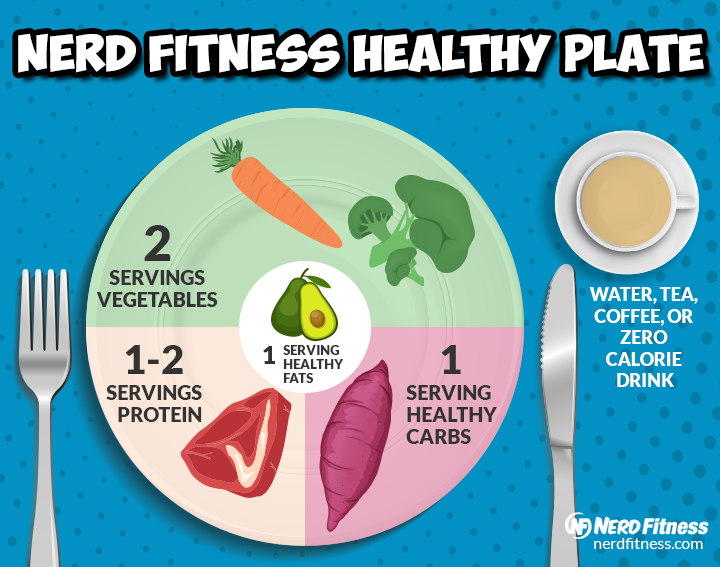
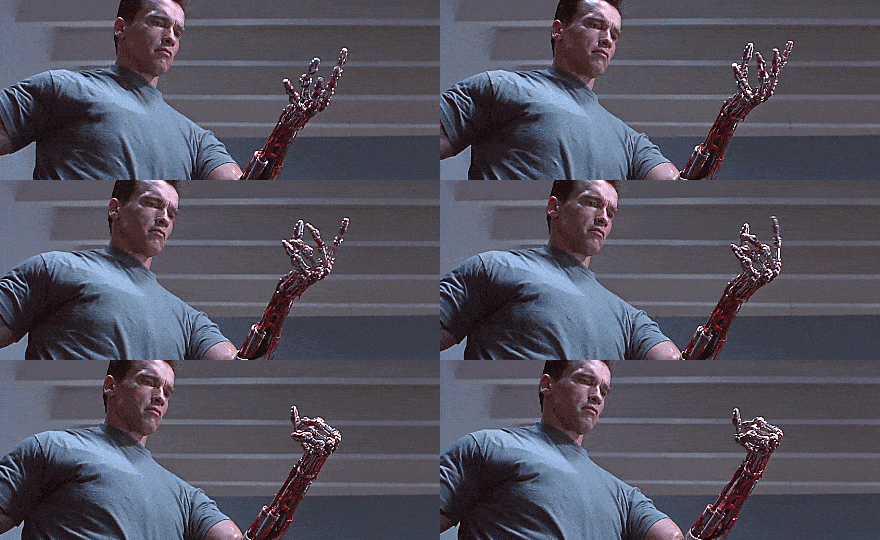
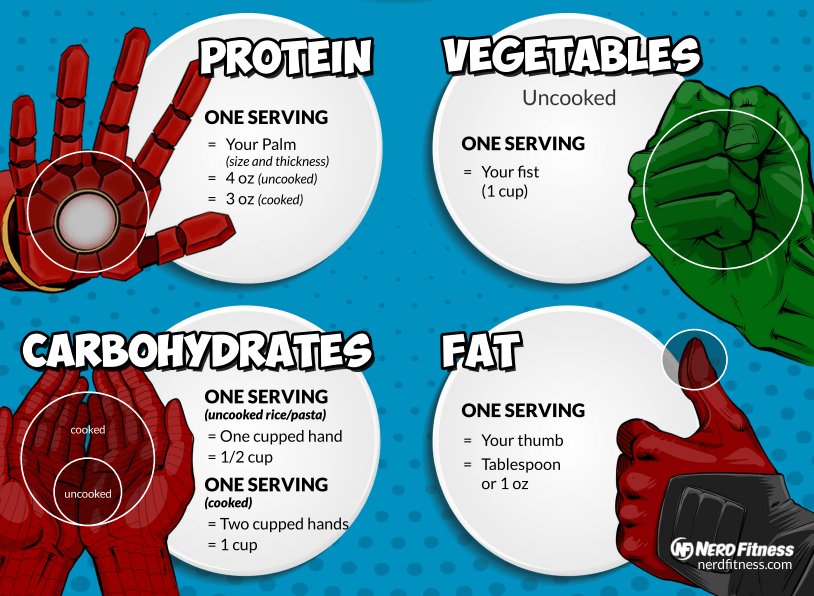
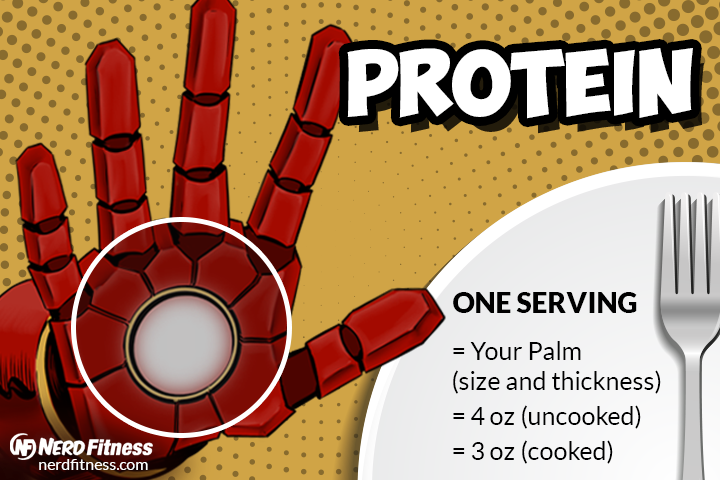
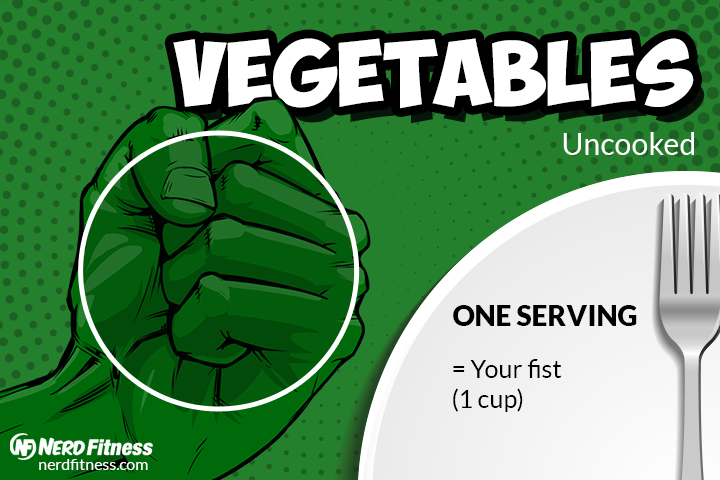
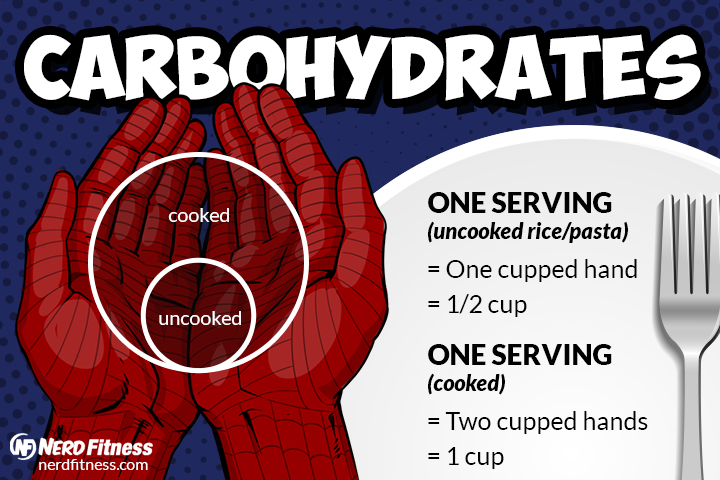
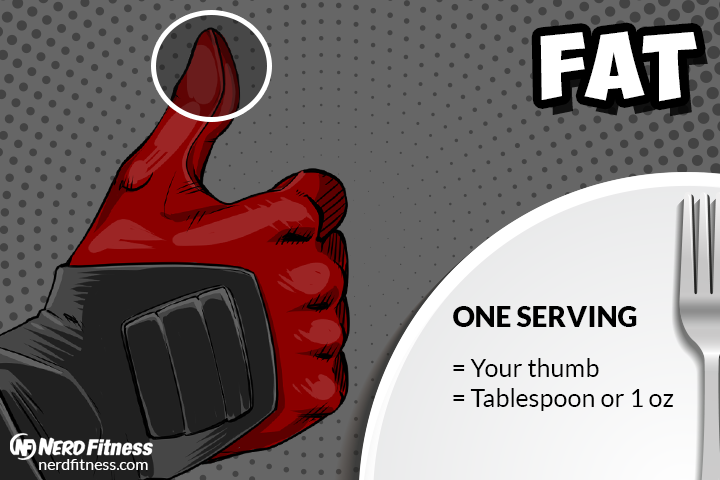



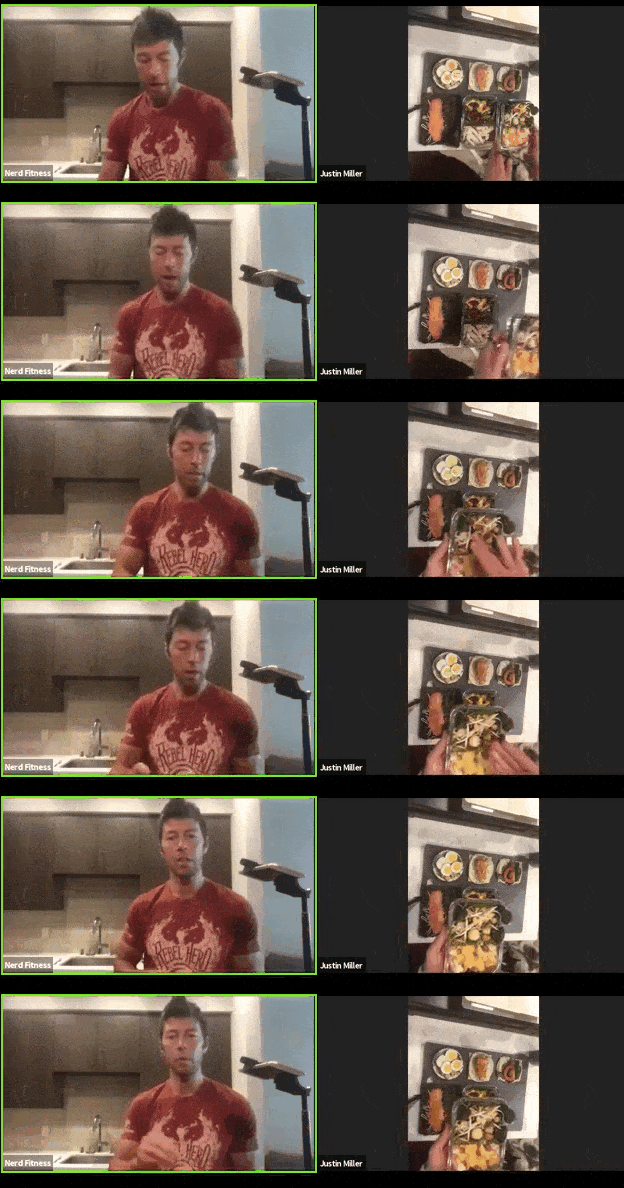







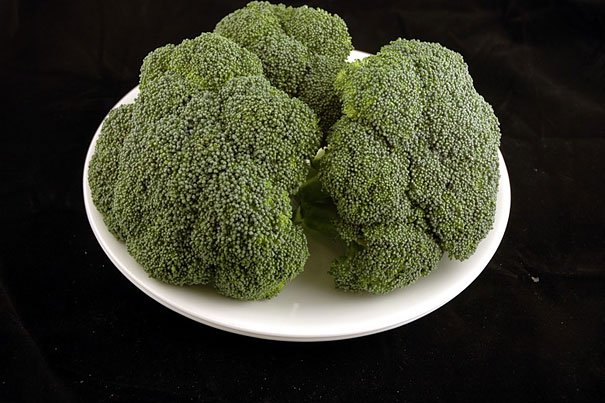
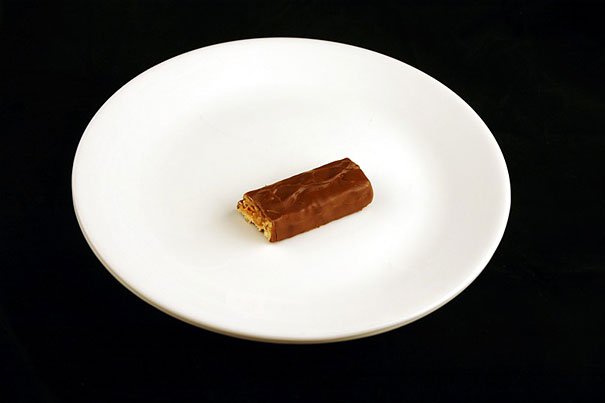
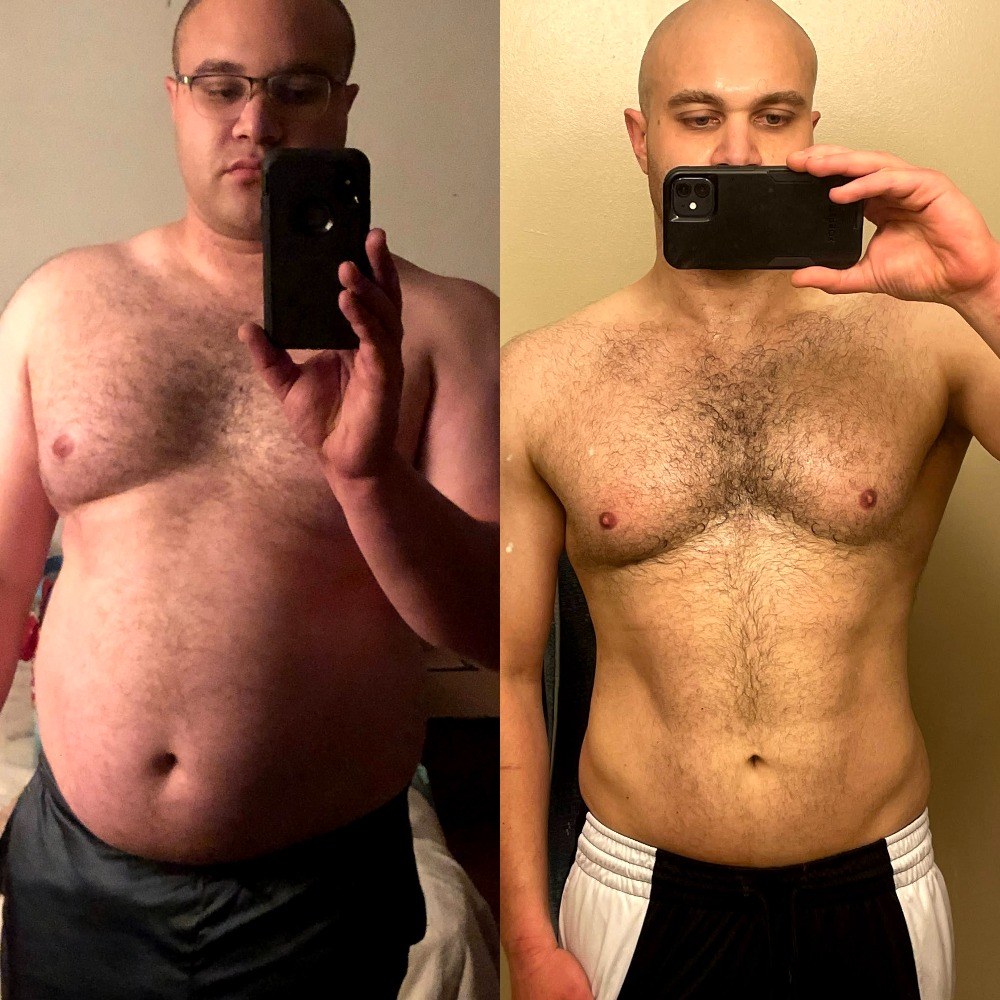





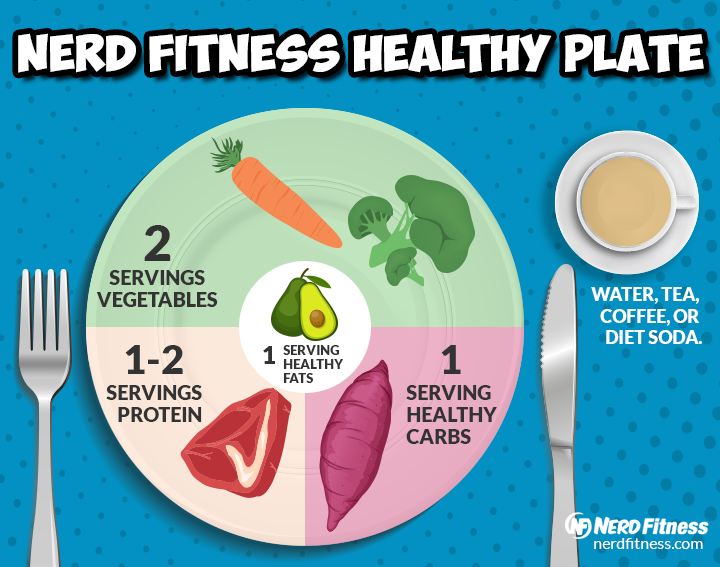


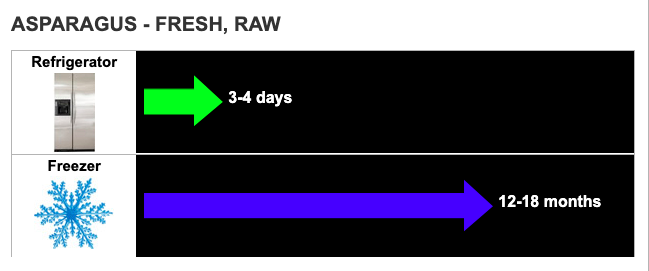
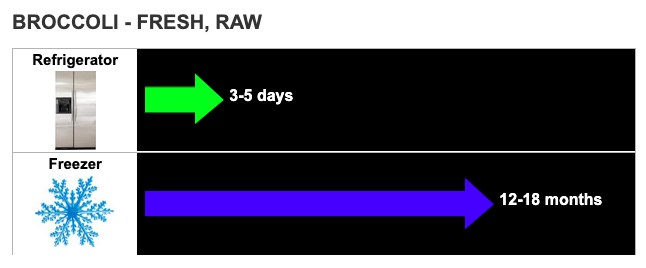

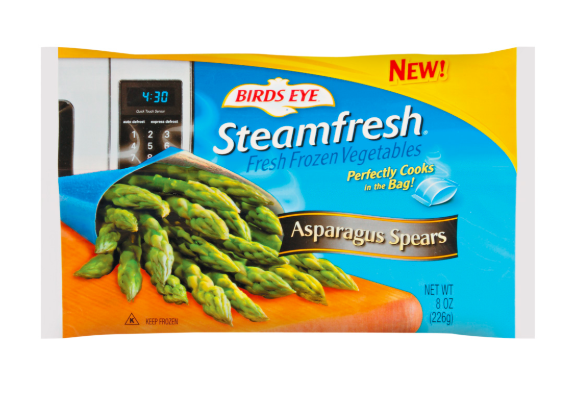 Most of these only require you throwing the bag into the microwave, opening it, and putting it on your plate.