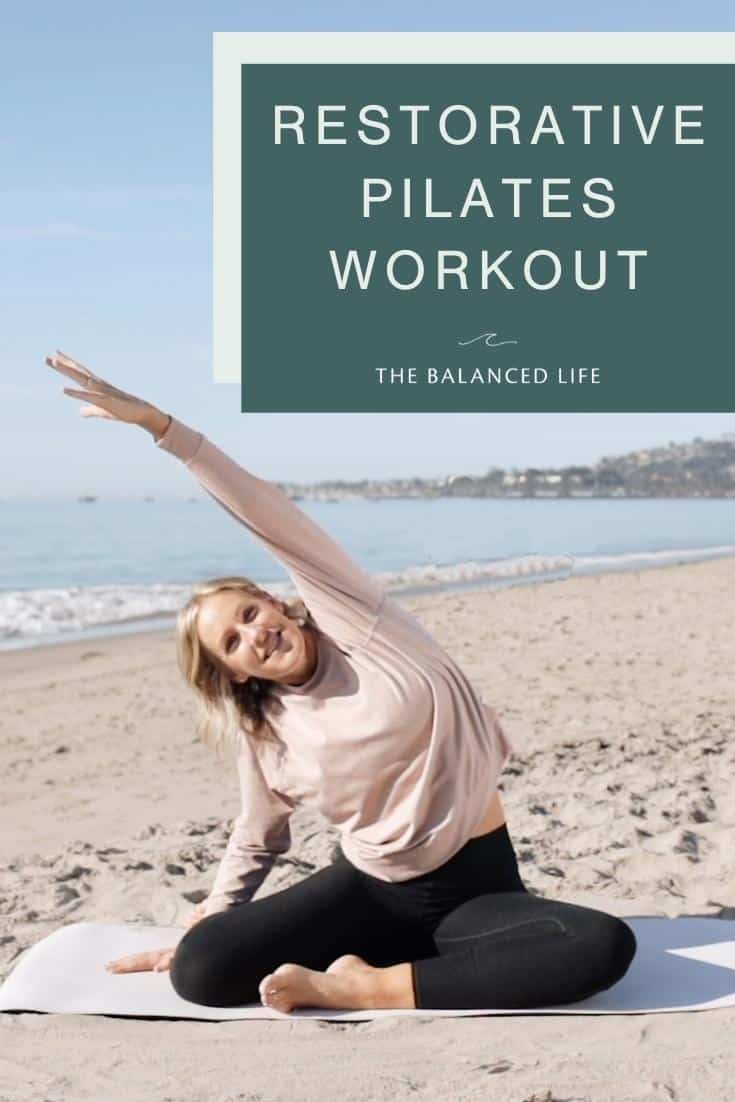
This quick and gentle, restorative Pilates routine is perfect for any time you are recovering from sickness, not feeling a hundred percent and don’t really want to push yourself, but you know a little movement will help you to feel better. You’re going to flow through a couple of classic Pilates exercises. breathe, stretch, and at the end, you’ll feel refreshed and ready to take on the rest of your day.
Come back to this workout anytime you’re looking to feel a little better and could use some good stretching + a boost of energy!
We all (should) know that sleep plays an essential role in optimising our health and well-being, which means that poor sleep or a lack thereof can cause a heap of negative mental and physical side effects. There can be a…
Today, in honor of Women’s History Month, we continue with our theme of women who move us to move!
Sometimes, taking a Pilates class from a new instructor can help us connect with our body differently and assist us in moving forward on our Pilates journey! Robin is excited to have fellow Pilates instructors, Becca, Kaita, and Sheri, joining her on the show today.
In this episode, Robin, Becca, Kaita, and Sheri dive into what brought them to Pilates and talk about the transformation they have seen in themselves and the people with whom they work. They also share inspiring stories about the women who have moved them to move in their lives and discuss ways to let more people know about Pilates and make it accessible to people from all walks of life. Stay tuned to draw wisdom and motivation from these incredible women.
Show highlights: what you can look forward to in this episode!
Kaita, Becca, and Sheri talk about how they found Pilates and discuss their specialties.
For Kaita, Pilates exercises are a container for seeing how you are doing in your body day-to-day in a non-judgmental way.
Sheri loved seeing her client use Pilates to get stronger in her pregnant body than she was before.
Growing as a Pilates teacher helped Becca open her mind and become less judgmental.
Sheri, Becca, and Kaita share their thoughts on how to make Pilates more accessible and inclusive to different types of people.
Kaita, Becca, and Sheri talk about the women who moved them to move.
What Is the Flexitarian Diet? (Exploring “Semi-Vegetarians”)
The Flexitarian Diet is a plant-based or vegetarian style of eating that allows for some animal products in moderation.
“Flex” comes from “flexible” and “tarian” comes from “vegetarian,” so a flexitarian is more or less a “flexible vegetarian.”
In 2012, the term “flexitarian” actually entered the Merriam-Webster Dictionary as:
One whose normally meatless diet occasionally includes meat or fish.
Another way to think of flexitarians would be as “semi-vegetarians.”
This version of semi-vegetarianism was first formulated by dietitian Dawn Jackson Blatner, in her book The Flexitarian Diet.
In Blanter’s word:
“You can think of this diet as a ‘vegetarian-ish’ way of eating since this plan touts the basic principles and benefits of a plant-based diet, along with the inclusion of some animal proteins to a lesser extent.”
The goal of the Flexitarian Diet would be to minimize or reduce the frequency of eating meat, without removing it completely.
This is what separates flexitarians from normal omnivores: the former are actively trying to limit meat consumption.
Flexitarians just don’t want to eliminate meat 100% (for health or personal reasons), so they allow some into their diet.
What Do Flexitarians Eat? (The Flexitarian Diet Plan)
Since the Flexitarian Diet actively tries to reduce the consumption of meat, the meal plan will be predominantly plant-based.
Plant-based food choices on the Flexitarian Diet plan include:
Whole grains. Rice, oats, barley, and buckwheat would all be examples of whole grains. Most plant-based diets include a sizable amount of whole grains as their base.
Vegetables. Of course, even semi-vegetarian diets are going to include lots of vegetables! And they should because vegetables are great for you! They’re packed full of nutrients, fiber, and generally low in calories. Most people could stand to eat more veggies. If you find yourself not being able to stomach greens, I got you. Check out this post for tips on how to turn around any vegetable hater.
Legumes. Beans, lentils, and soy make up the legume family. When cutting out meat, legumes would be a great way to get protein (more on this to follow).
Fruit. Bananas, apples, and oranges all come from plants, so all are vegetarian-friendly. While high in fructose (sugar), they are also nutrient-dense. Our general stance on fruit around these parts is to eat “stick to whole fruit, avoid fruit juices.”
Nuts and seeds. Again, they come from plants, so almonds, cashews, and pumpkin seeds are good to go on any vegetarian plan you pick. So is quinoa, which although is often thought of as a grain, is actually a seed. Mind=blown. Nuts and seeds, although high in fat and calories, are another great way to get protein on a semi-vegetarian diet.
I know you’re curious about meat consumption and the Flexitarian Diet
We’ll devote our entire next section to it.
Before we get there, let’s talk about foods that you might NOT want to build your flexitarian meal plan around.
Since the Flexitarian Diet is an attempt to eat nutritiously, it not only encourages the consumption of whole plants but also discourages the consumption of certain foods too.
When following a Flexitarian Diet, try to minimize:
Processed meat: bacon, sausage, and bologna. Proponents of flexitarianism advocate for unprocessed meat like grass-fed beef, pasture-raised chicken, fresh fish, etc. More on this next section.
Refined carbs: white bread, bagels, pasta, etc. These foods have much of their fiber destroyed during the refinement process, making them more like sugar during digestion.
Added sugar: soda, donuts, cookies, etc. Also known as “junk food.” Delicious, of course. But these foods are high in calories and low on nutrients, so they belong in the “rare treat” category.
The above list likely isn’t too shocking. Most health sites (and us in our healthy eating guide) recommend these foods be eaten sparingly.
Now, it’s time to talk meat!
How Often Do Flexitarians Eat Meat? (The “Flex” in “Flexitarian”)
The answer to “How much meat can you eat on a flexitarian diet?” depends on who you ask.
There are lots of variations of semi-vegetarianism, meaning there are a lot of different answers to this question.
Dawn Blatner discusses different levels of meat restriction in her book The Flexitarian Diet, which we’ll review below.
Here’s the progression plan for The Flexitarian Diet:
Beginner Flexitarian:
Two meat-free days a week
No more than 26 ounces of meat the remainder of the week
Advanced Flexitarian:
Three to four meat-free days a week
No more than 18 ounces of meat the remainder of the week
Expert Flexitarian:
Meat-free five days a week
9 ounces of meat allowed the remaining two days
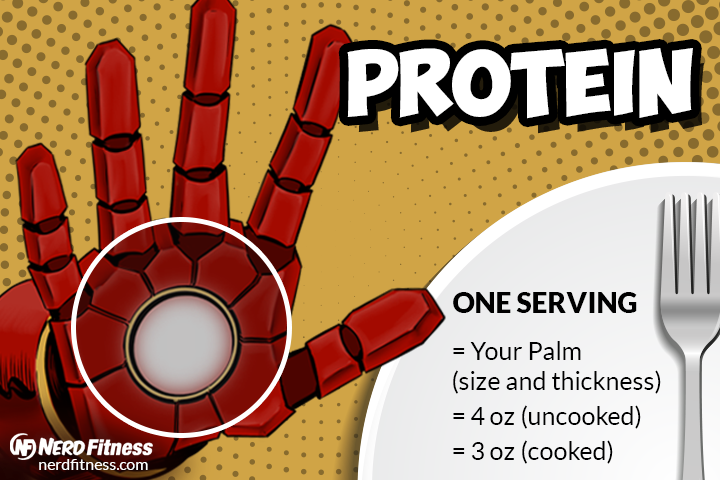
For reference, a three-ounce piece of chicken breast is about the size of your palm:
Another popular form of flexitarianism comes from VB6 (Vegan Before 6:00) which is exactly what it sounds like: follow a vegan meal plan until dinnertime.
Like Blatner, Bittman encourages the consumption of whole plants and discourages the consumption of junk food.
That’s not too surprising, because every diet encourages the consumption of whole plants and discourages junk food (well, not the Carnivore Diet or the Military Diet).
Other than following a 100% plant-based diet until 6pm, Bittman offers no specific rules for VB6.
You do you.
This is going to lead us to a larger point: “flexitarian” is up to interpretation.
Since there are multiple plans for semi-vegetarianism, how much meat you eat will really depend on your goals and motives.
Does Cutting out Meat Help You Lose Weight?
Many proponents of flexitarianism will claim it can help with weight loss:
Mark Bittman created VB6 (Vegan before 6) after his doctor told him to lose some weight.
Dawn Jackson claims her Flexitarian Diet can help those struggling with obesity.
However, anyone selling a diet book is gonna tell you it can help with weight loss.
What does the science say?
Since there’s no set-in-stone interpretation of what makes a “flexitarian” a flexitarian, it can be hard to prescribe any specific benefits to the diet.
This is a concern Emma J. Derbyshire brought up in a review of semi-vegetarian diets in Frontiers of Nutrition.[1] Derbyshire states that before any formal recommendations can be done on flexitarians, “official definitions of these diets are needed.”
You need to know exactly what you’re researching before you can make heads or tails of what’s going on.
However, weight loss itself has been studied a lot, so we aren’t completely stumbling in the dark here.
To lose weight, we need to burn more calories than we consume regularly.
It’s about as close to fact as we can get in nutrition science.[2]
Here’s the thing about meat: it’s actually pretty calorically dense, especially when you compare it to fruits and vegetables.
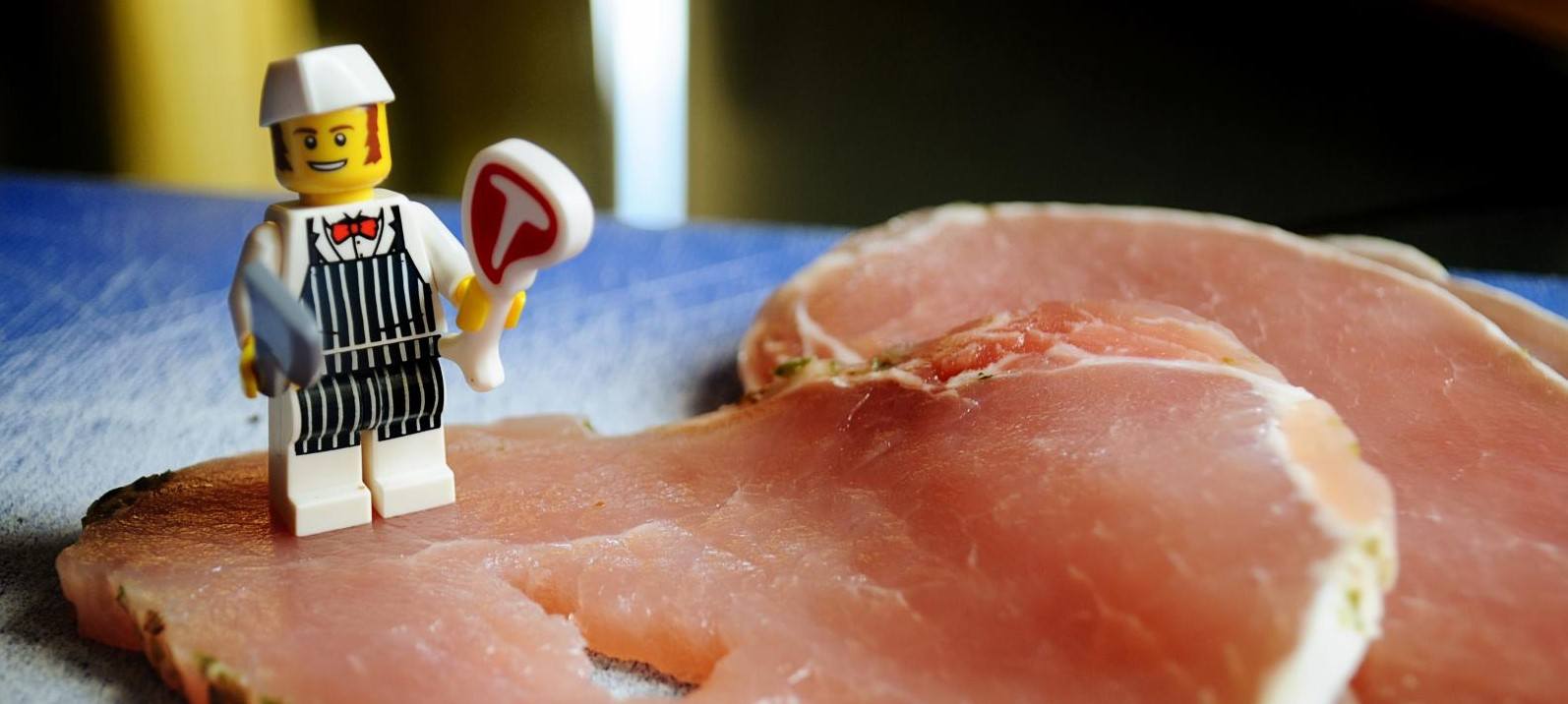
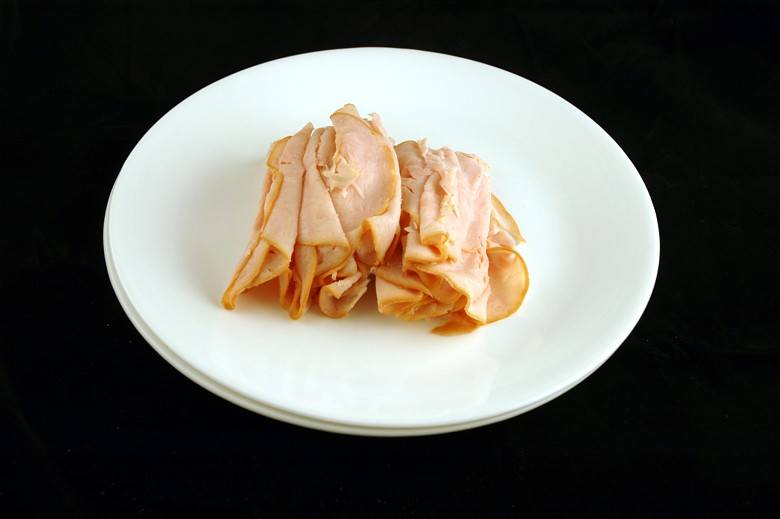
This is 200 calories worth of sliced turkey (thanks to wiseGEEK):
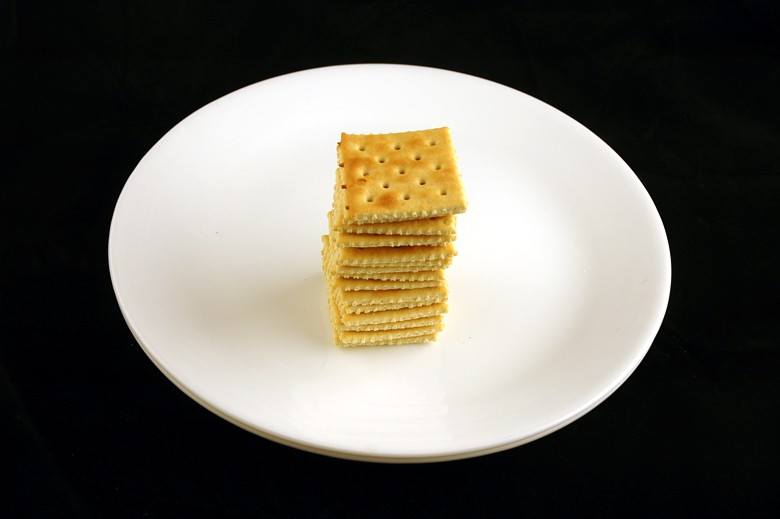
Here is 200 calories worth of Saltine crackers (which are vegan):
When comparing a plate of meat to a handful of crackers, you might think: “Steve, there’s no way those crackers will satisfy me, I’ll need to eat more food,” then you’d be right.
It’s why focusing on foods that fill you up without being overloaded with calories can help with weight loss.
Let me share one more example:
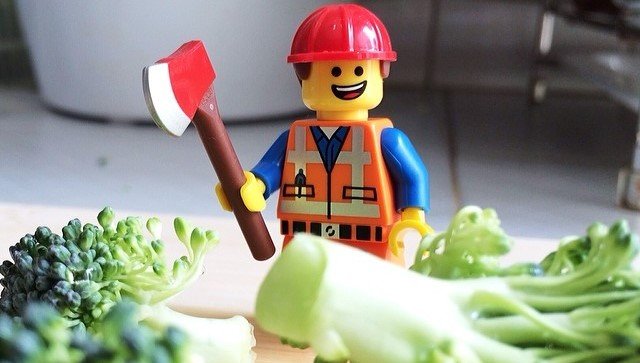
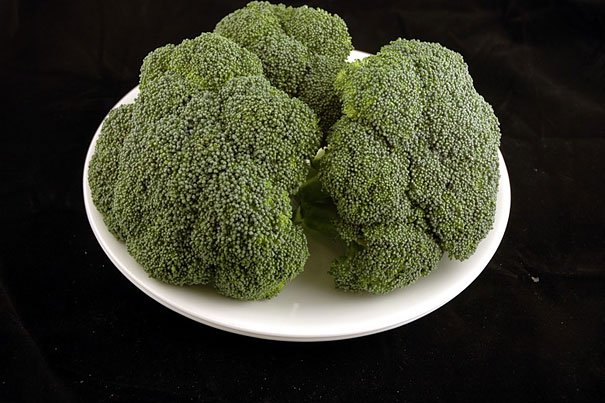
This is what 200 calories worth of broccoli looks like:
So, YES, if you replace your meat lovers pizza, chicken parm with pasta, and bacon cheeseburgers with mostly fruits, vegetables, and other whole plants, you’ll most likely lose weight.
It comes down to total energy (calories) consumed!
This is something we bring up throughout our Guide for Plant-Based Diets: be careful about replacing calorie bomb meat products with heavily processed junk food.
You might end up with the same amount of calories (if not more), which means you’ll have no weight loss.
Because from a protein perspective, meat can be a great source of nutrients.
Let’s compare chicken against black beans, since legumes (beans) are some of the most protein-dense plants you can eat:
100 grams of black beans:22 grams of protein, 339 calories, 63 grams of carbohydrates (16 grams of which are fiber).
100 grams of chicken breast:30 grams of protein, 165 calories, 0 grams of carbohydrates.
The same size serving of black beans has less protein, twice as many calories, and more carbs compared to chicken.
This isn’t to say you can’t get adequate protein from plants (we tell you exactly how to do it in our guide to vegetarianism), it’s just something you have to appropriately plan for!
All this to say: you can lose weight on a flexitarian diet as long as you burn more calories than you eat consistently.
If semi-vegetarianism actually helps with that, great!
Let me say that if you’re trying to lose weight and wondering if a flexitarian diet is the solution, I’m proud of you for at least THINKING about different nutritional strategies that might align with your lifestyle and goals.
Lots of our coaching clients come to us with all sorts of different fitness questions, like what to eat and how to exercise, proving we all start from unique situations. The important thing is that you’re beginning to ask questions and looking for answers.
If you want help on your journey, we’re here for you. Our 1-on-1 Online Coaching Program partners busy people just like you with a coach who will get to know you better than you know yourself.
What Are the Benefits of Being a Flexitarian?
There are all sorts of benefits from eating lots of plants.
Now granted, I’m on the record for stating I don’t buy into the claim that meat is inherently bad for you (we dig into it in this article).
However, I’m also on the record for stating you should eat your fruits and veggies (scope out our Guide to Healthy Eating).
Let’s rap about the good things found in the plant kingdom:
Fiber: studies have shown that eating dietary fiber (found in plants) can have loads of health benefits. Fiber from plants can help lower raised blood pressure, improve insulin sensitivity, and help with digestive issues.[3]
Vitamins and minerals: plants contain vitamins E, C, K2, and calcium, to name just a few. You need these things to survive.
Antioxidants:there are all sorts of toxins in the modern world (air pollution, BPA in plastic, etc). Plants, and the antioxidants in them, can help defend against some of these pollutants.[4]
When you start to factor this together, it makes sense to eat a lot of plants.
It also makes sense that people who eat a lot of plants, like flexitarians, tend to be in good shape.[5]
Whole plants are high in nutrients and low in calories, making them ideal for creating an energy deficiency.[6] Again, this is needed for weight loss.
Here’s where the debate rages on the internet: are people who follow a plant-based diet generally healthier than omnivores because meat is bad for you, or because vegetarians tend to eat more fruits and vegetables and less processed foods?[7]
It’s hard to say.
More studies are rolling in every day, so I’m not going to declare a winner over the other.
I will say that I actually resonate with a “flexitarian” lifestyle, though I just call it “mostly healthy eating” = eat mostly plants, healthy sources of protein, and keeping total calorie intake under control.
The moral of the story: eat lots of plants…and maybe a little meat.
Should I Try the Flexitarian Diet? (Next Steps)
Sure!
Why not?
There are worse ways to eat than tons of plants with a little bit of meat.
Being a flexitarian is actually not too different than following the Mediterranean Diet.
It’s the same way of eating, just with a new name.
Author Michael Pollan summed it up years ago with “Eat food, not too much, mostly plants.”
Truth be told, healthy eating is more or less the same no matter what you call it.
They just label it with different names to sell books.
Minimize the consumption of processed food or junk food
We lay all this out in our Guide to Healthy Eating, which I would encourage you to check out.
If this is the first time you’ve tried to “eat right,” or the 17th, it’ll help you make small lifestyle changes towards a healthy diet.
This is our preferred approach here at Nerd Fitness.
That will bring me to my one concern on adopting The Flexitarian Diet or any other strict form of semi-vegetarianism: if you change too much at once, it might be overly difficult and you’ll grow frustrated.
Frustration can lead to abandoning a new way of eating.
We see it all the time here: people go Paleo or Keto for 21 days, hate it, then go right back to where they started.
Since they’re now demoralized from the experience, they don’t even try anymore, which is where the real harm comes in.
So try a small step today:
Make dinner this week.
Try eating one new vegetable.
Hell, make it exercise-related and just go for a walk.
This might be better than changing everything at once giving up meat for most of the week.
Want some help along the way? The perfect path on where to go from here and what to change?
You got it!
#1) Our 1-on-1 Online Coaching Program: a coaching program for busy people to help them make better food choices, stay accountable, and get healthier, permanently.
You can schedule a free call with our team so we can get to know you and see if our coaching program is right for you. Just click on the image below for more details:
#2) If you want an exact blueprint leveling up your nutrition, check out Nerd Fitness Journey! Our fun habit-building app helps you exercise more frequently, eat healthier, and level up your life (literally).
If you follow our Nutrition missions, you’ll learn to eat healthier while earning XP! Sah-weeeet.
Try your free trial right here:
#3) Become part of The Rebellion! We have a free email newsletter that we send out twice per week, full of tips and tricks to help you get healthy, get strong, and have fun doing so.
I’ll also send you tons of free guides that you can use to start leveling up your life too:
Download our free weight loss guide
THE NERD FITNESS DIET: 10 Levels to Change Your Life
Follow our 10-level nutrition system at your own pace
What you need to know about weight loss and healthy eating
3 Simple rules we follow every day to stay on target
Alright, I think that about does it for this article.
Now, your turn:
What are your thoughts on the Flexitarian Diet?
If you follow it, when do you eat meat?
Any tips or tricks to make it sustainable?
Let me know in the comments!
-Steve
PS: If you’re just starting to explore vegetarianism, make sure you read our Beginner’s Guide to Plant-Based Diets so you do it safely and effectively!
Read, “Health benefits of dietary fiber.” Source, PubMed.
Read, “The Protective Role of Antioxidants in the Defence against ROS/RNS-Mediated Environmental Pollution” Source, PubMed.
Read, “Comparison of nutritional quality of the vegan, vegetarian, semi-vegetarian, pesco-vegetarian and omnivorous diet.” Source, PubMed.
As this study references, fully plant-based diets tend to come in the lowest for energy provided, compared to omnivores. This makes sense, since meat can contain a decent amount of calories.
Here’s another indicator following a semi-plant-based diet would be good for you: “Vegetarian dietary patterns are associated with a lower risk of metabolic syndrome: the adventist health study 2.” Source, PubMed.
If your goal is to engage more people, then running a fitness business that combines in-person and online can help you reach a wider audience, add resilience to your business, and grow a bigger community. Typically, you’ll be in a…
March is Women’s History Month and in honor of that, we will be spending this month focusing on and appreciating the women who move us to move.
The women in Robin’s family had a very profound influence on her direction and purpose in life. They moved her to move, motivated her to live an active and purposeful life, and helped shape and create the woman she is today.
In today’s episode, Robin shares seven life-changing lessons she learned from the women in her family. She dives into the power of unconditional support. She talks about the power of living an active lifestyle and the value of keeping a sense of humor in tough times. She also discusses the women who paved the way for her generation and explains why we should never take our health for granted or let stigma and shame define us.
Robin hopes that acknowledging and celebrating those women and sharing some of the lessons they taught her helps motivate you to take action toward becoming the woman you would like to be. Stay tuned today as Robin highlights some of the transformative lessons she learned from the women in her family!
Show highlights: what you can look forward to in this episode!
The practical ways in which Robin’s mom showed her what it means to be supported, even when it made her uncomfortable or was something she would not have done herself.
How the unconditional support Robin received from her mom helped her kickstart her Pilates career.
The way that Robin’s mom taught her that she could work and follow her dreams and still be an excellent mom.
The powerful lesson Robin remembers learning from her late Aunt Judy.
How her Aunt Judy modeled what it looked like to live an active lifestyle through all seasons of life.
The lessons Robin learned from her remarkable grandma, Linda.
How keeping a sense of humor can help you through the most challenging times.
How Robin learned never to take her health for granted.
Why you should never let stigma and shame define you.
The power in bringing issues of mental health or addiction to light.
Robin talks about the brave and strong women who paved the way for future generations.
Try this short and effective upper body workout for cyclists taken from the Beyond CC strength training programme. It can be completed in as little as 15 minutes – with a short warm up and cool down. When most people…
As we mention in our Guide to Bodyweight Training, you really don’t need any equipment to get a full-body workout in. You just need the right plan.
Let me show you what I mean.
The Batman Workout DAY 1
The Batman Workout Day 1:
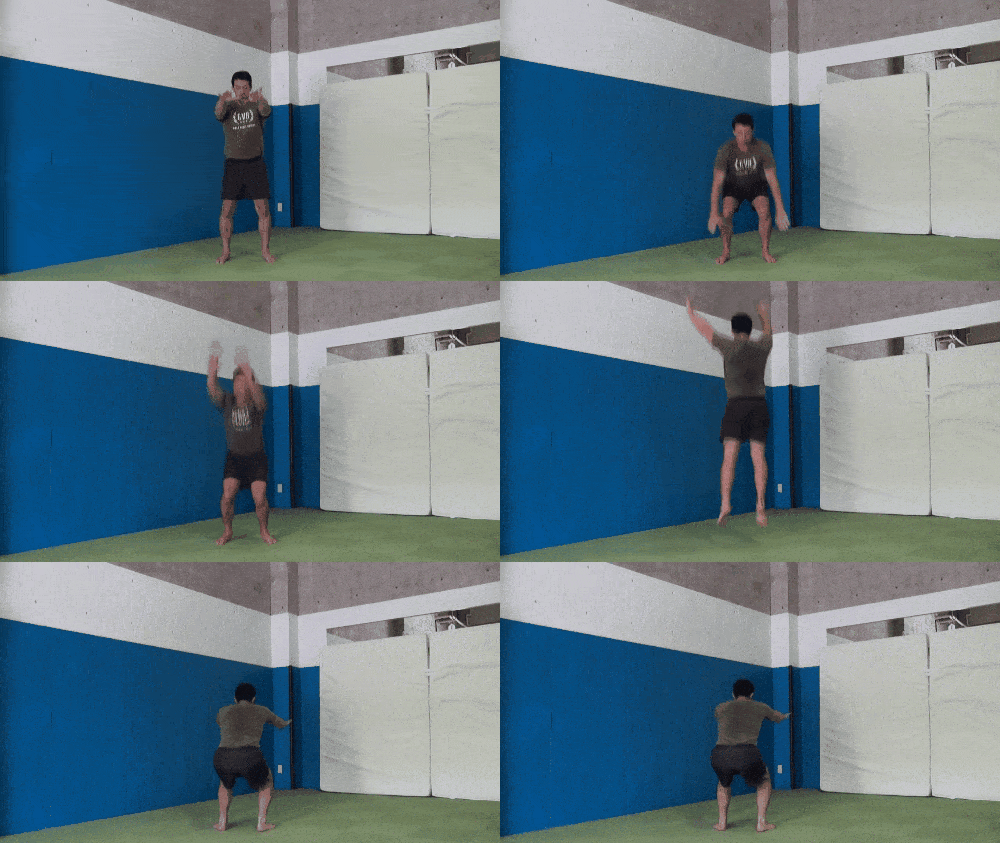
Squat Jump
Push-Ups
Headstand Push-ups
Pull-ups
Handstand
Depending on your experience level, we can go with a Beginner or Advanced variation.
Day 1 – Beginner:
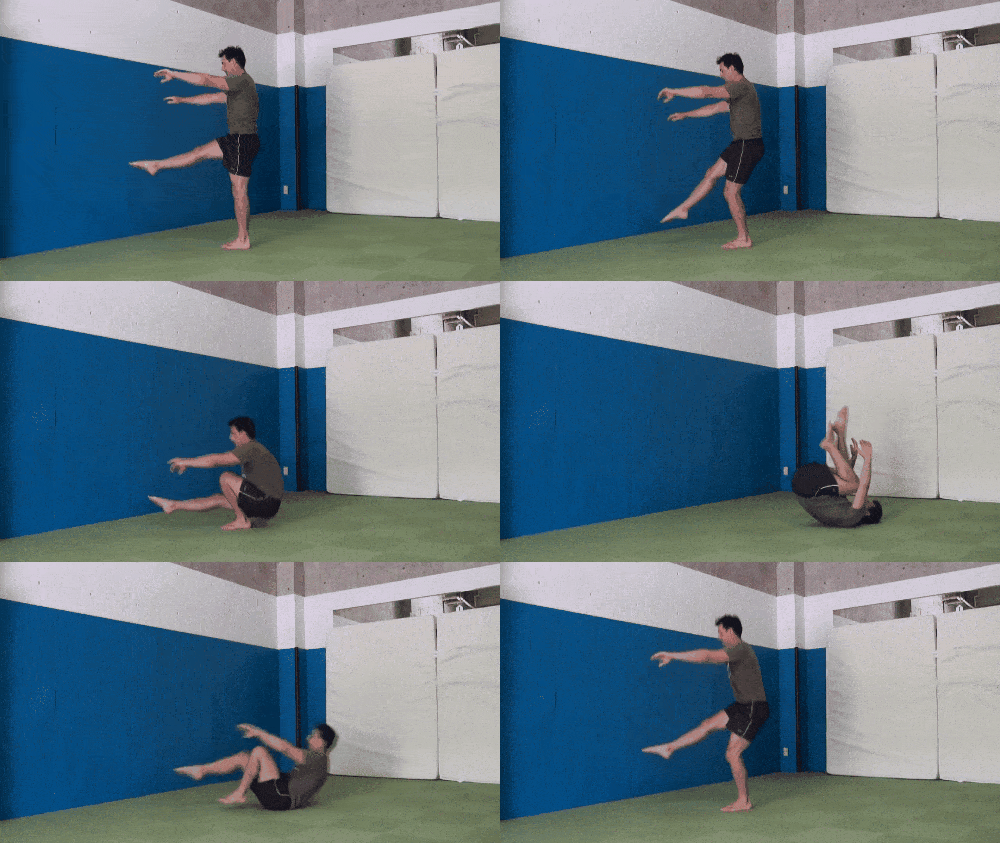
Rolling Squat Tuck-up Jumps
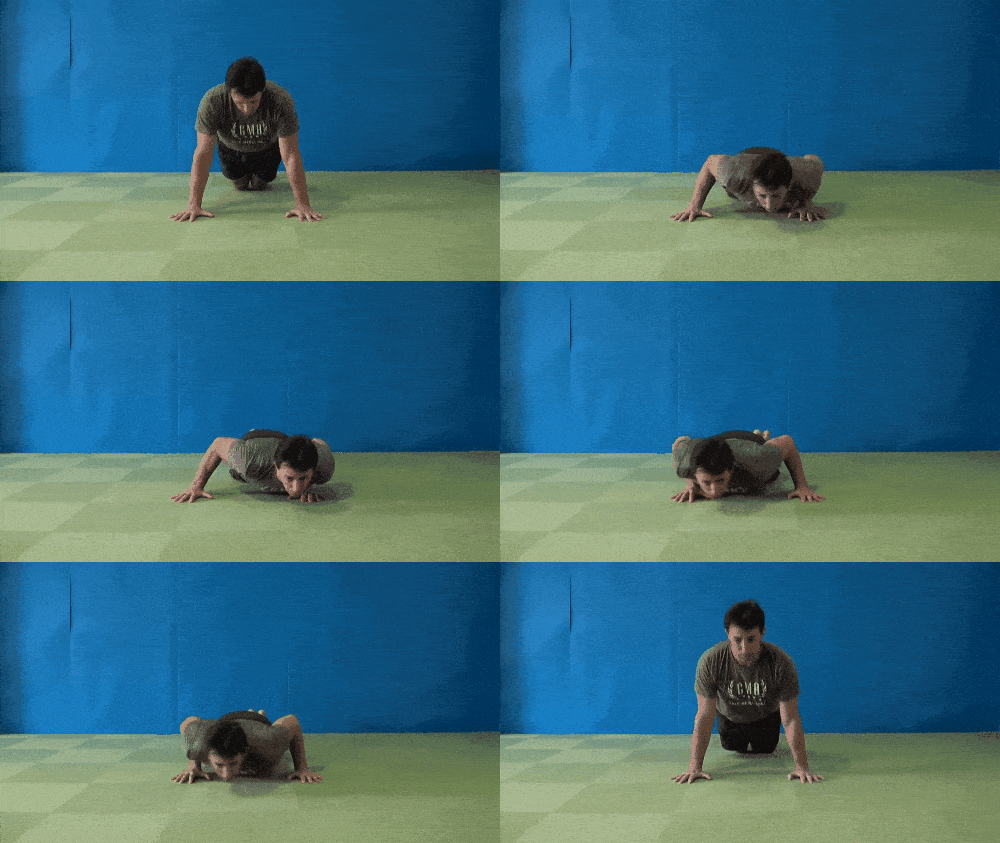
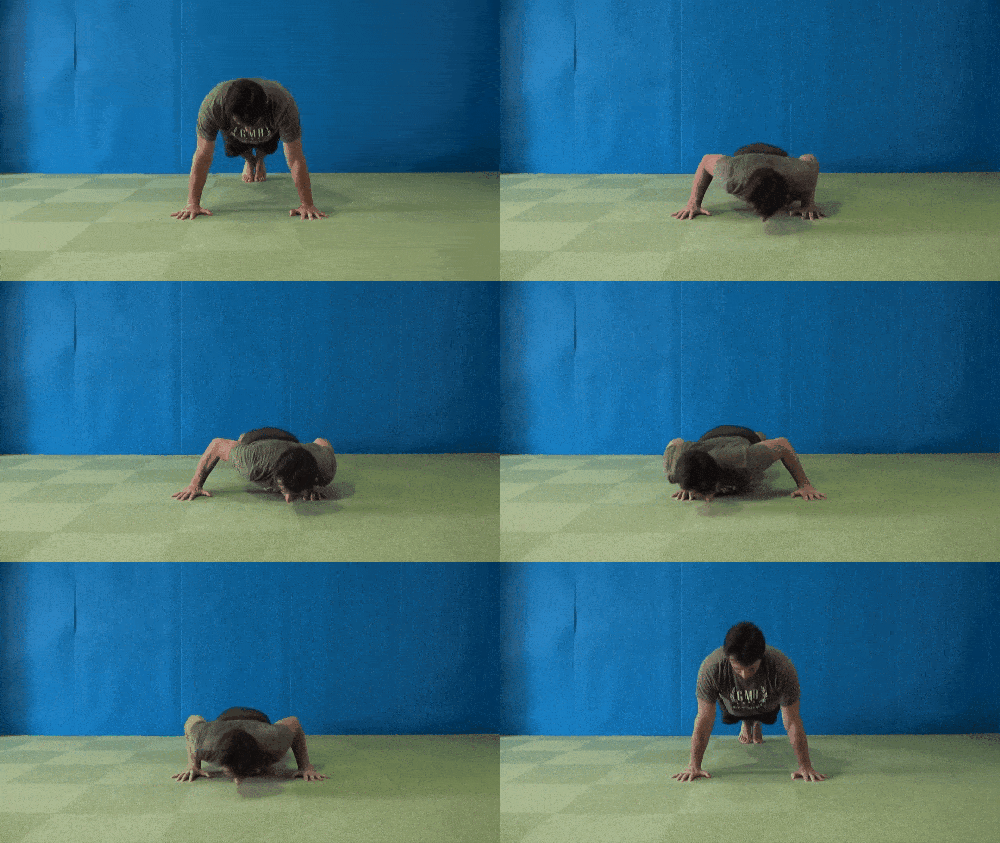
Side-to-Side Push-ups
Modified Headstand Push-ups
Jump Pull-Up with Tuck
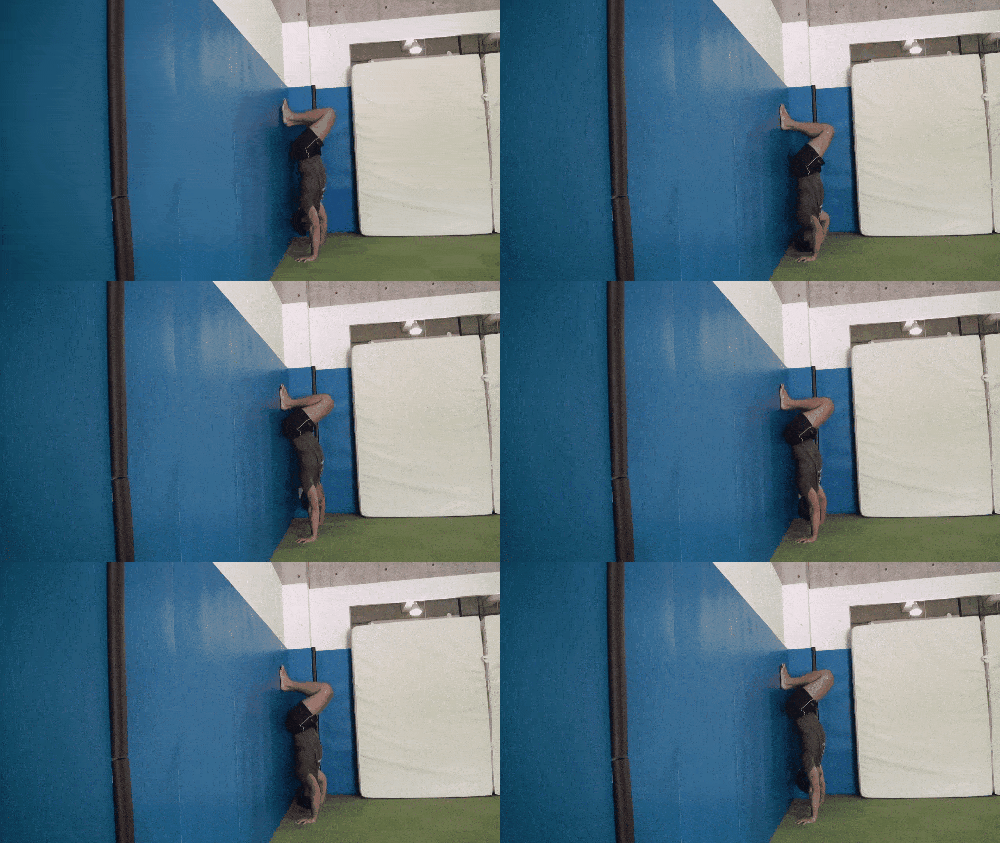
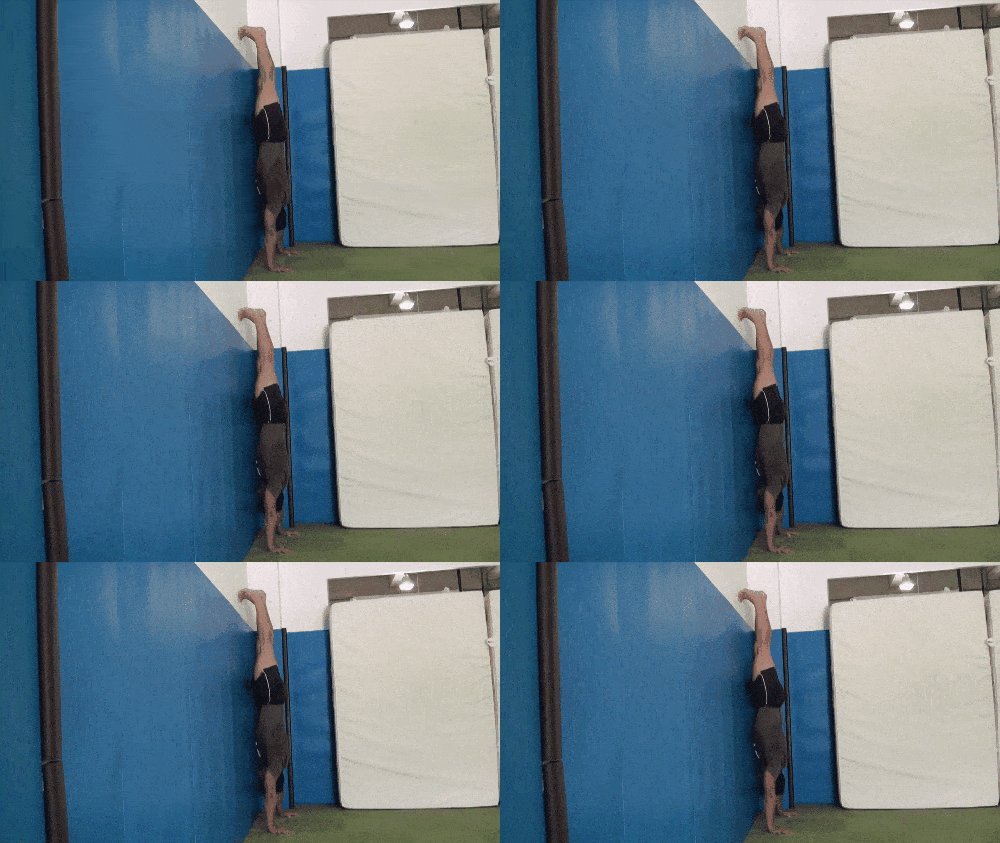
Handstands Against Wall
Day 1 – Advanced:
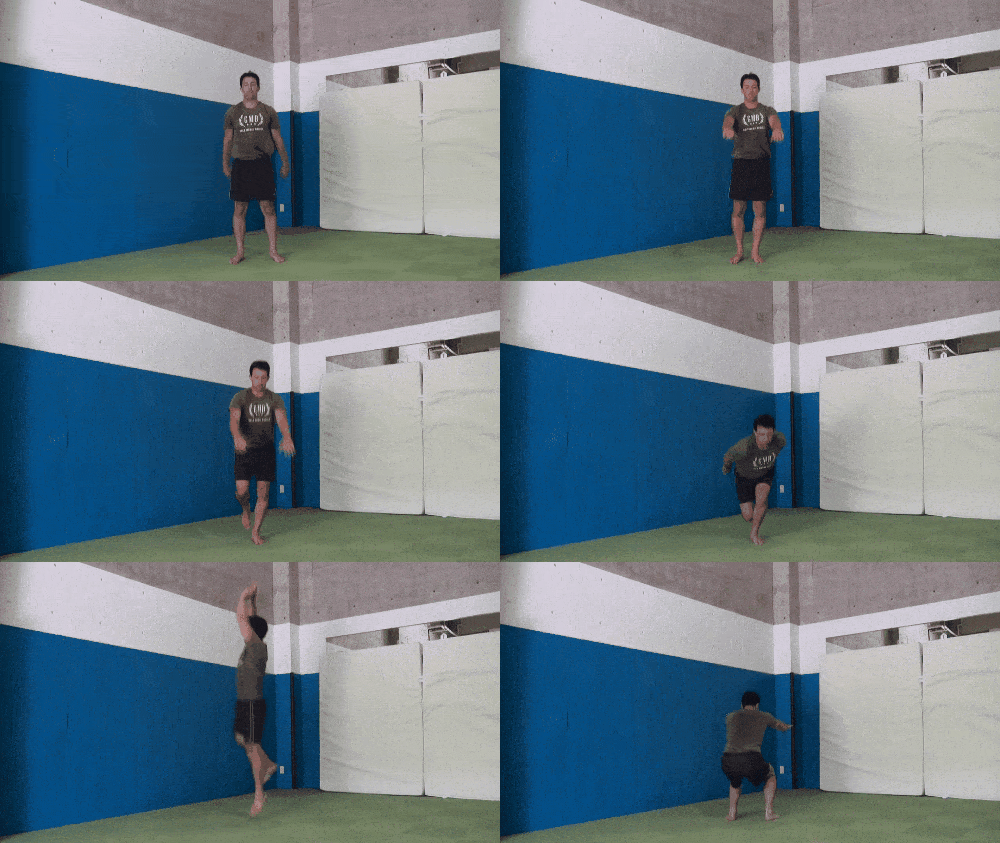
Rolling Single-Leg Tuck-up Jumps
Exploding Push-ups (Standard to Wide to Right Front/Left Back to Left Front/Right Back)
Headstand Push-Ups
Ice Cream Makers
Free Standing Handstands
The Batman Workout DAY 2
The Batman Workout Day 2:
180-Degree Jump
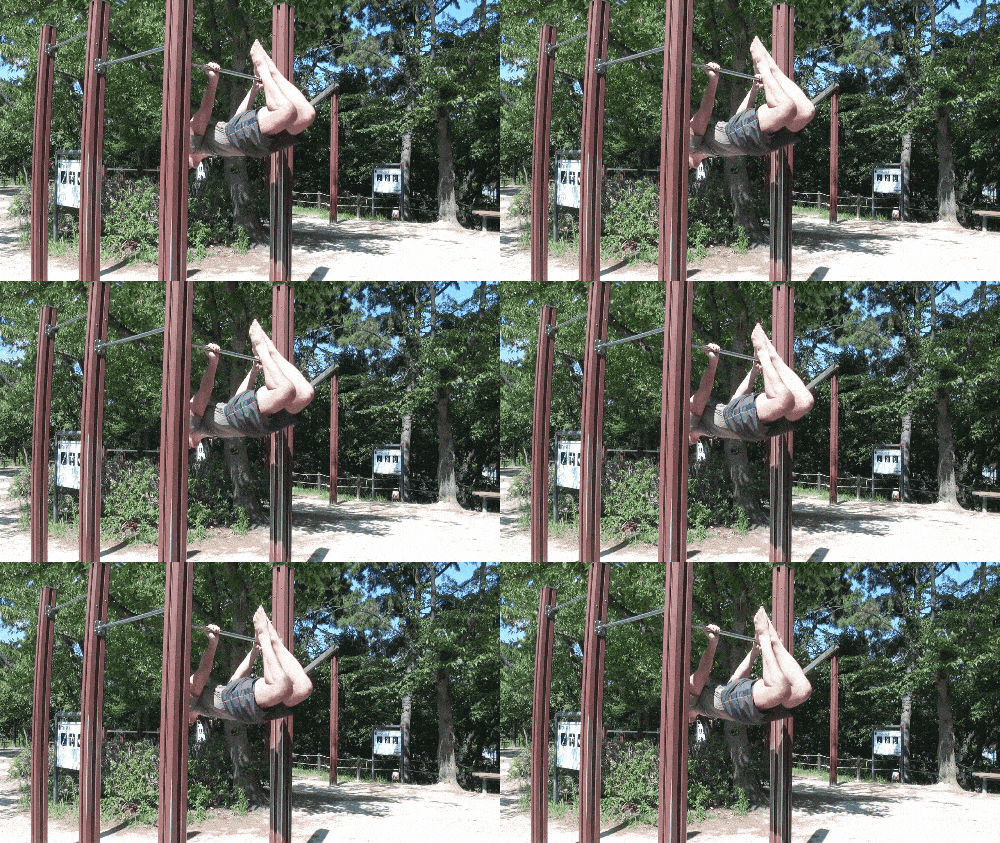
Front Lever
Back Lever
Planche
Again, we can roll with a Beginner or Advanced variation.
Day 2 – Beginner:
180-Degree Jump Turns
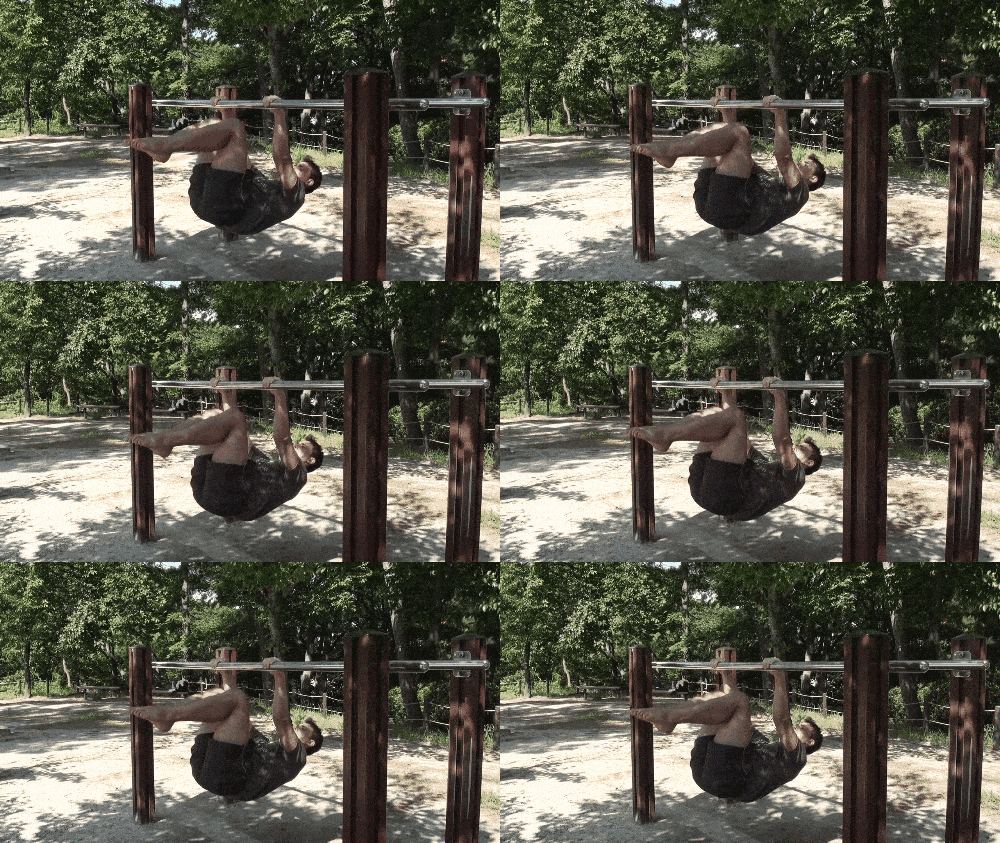
Front Lever Hold with Tuck
Back Lever Hold with Tuck
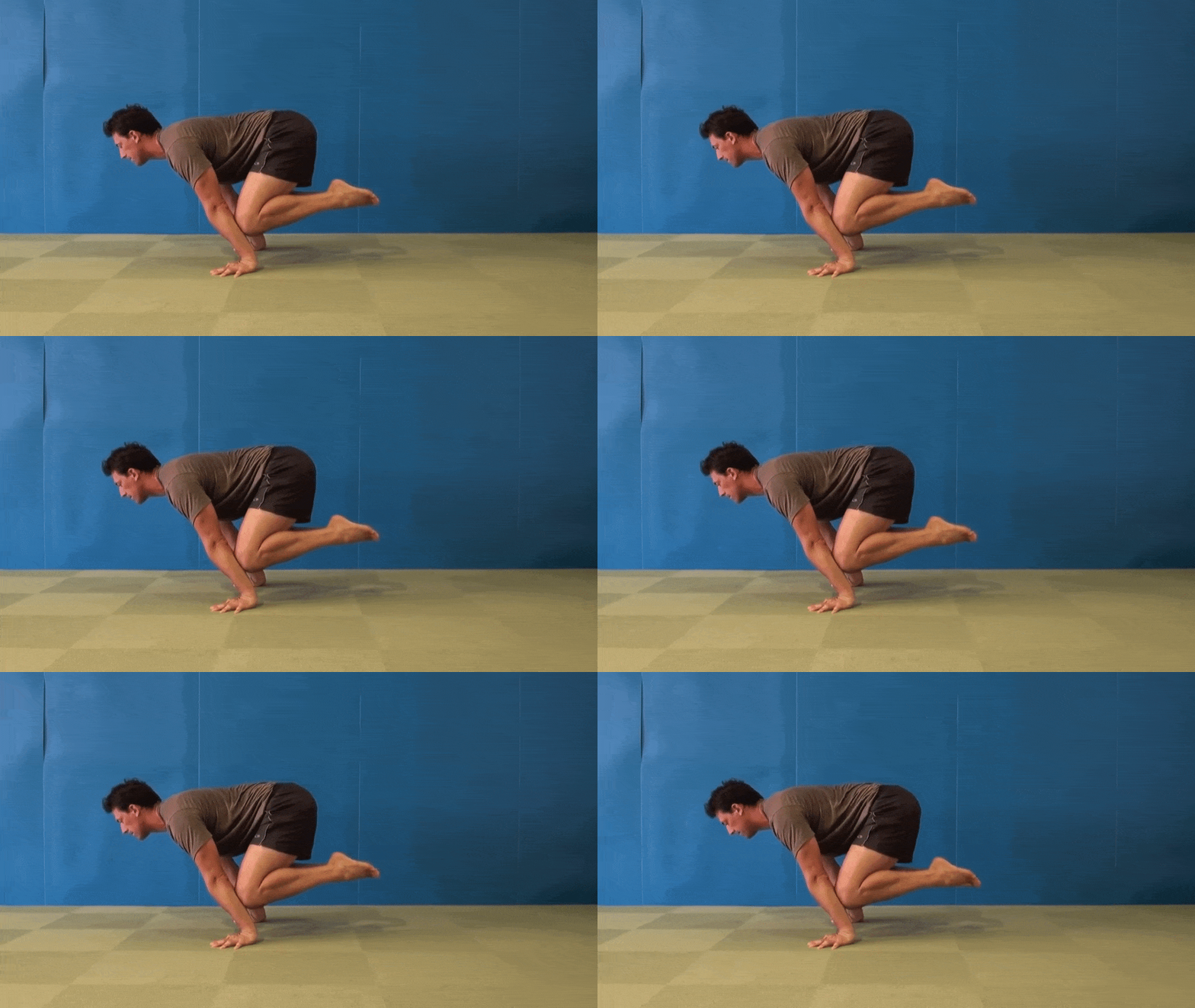
Low Frog Hold
Day 2 – Advanced :
Single-Leg Jump 180 Degree Turn
Front Lever Hold
Back Lever Hold
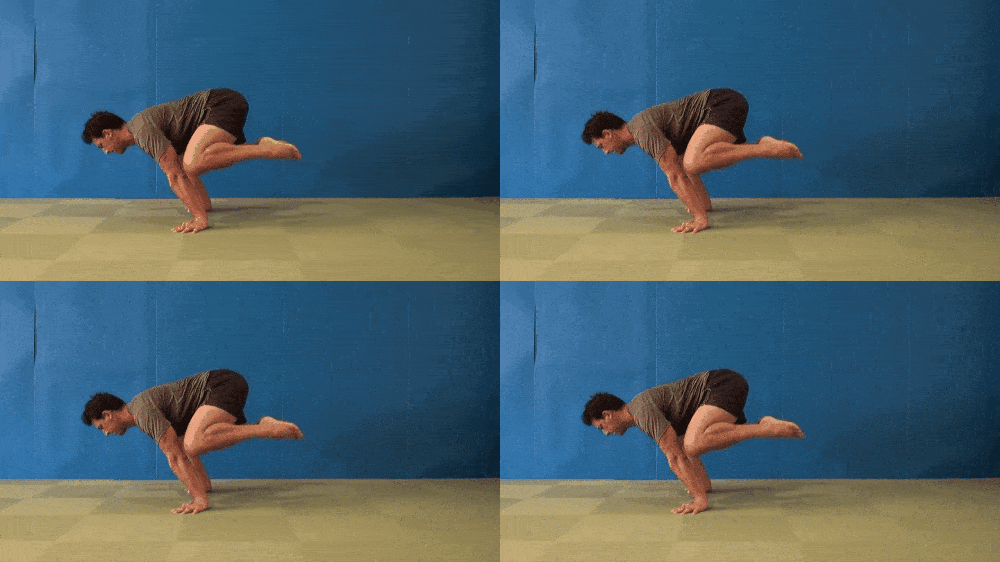
Floating Frog Hold
Exercises Covered in the Batman Workout
Let’s now cover the exercises in the workouts found above.
#1) Squat Jump
#2) Single Leg Squat Jump
#3) Side-to-Side Push-up (Knee)
#4) Side-to-Side Push-up
#5) Exploding Push-ups
#6) Modified Handstand Push-up
#7) Handstand Push-up
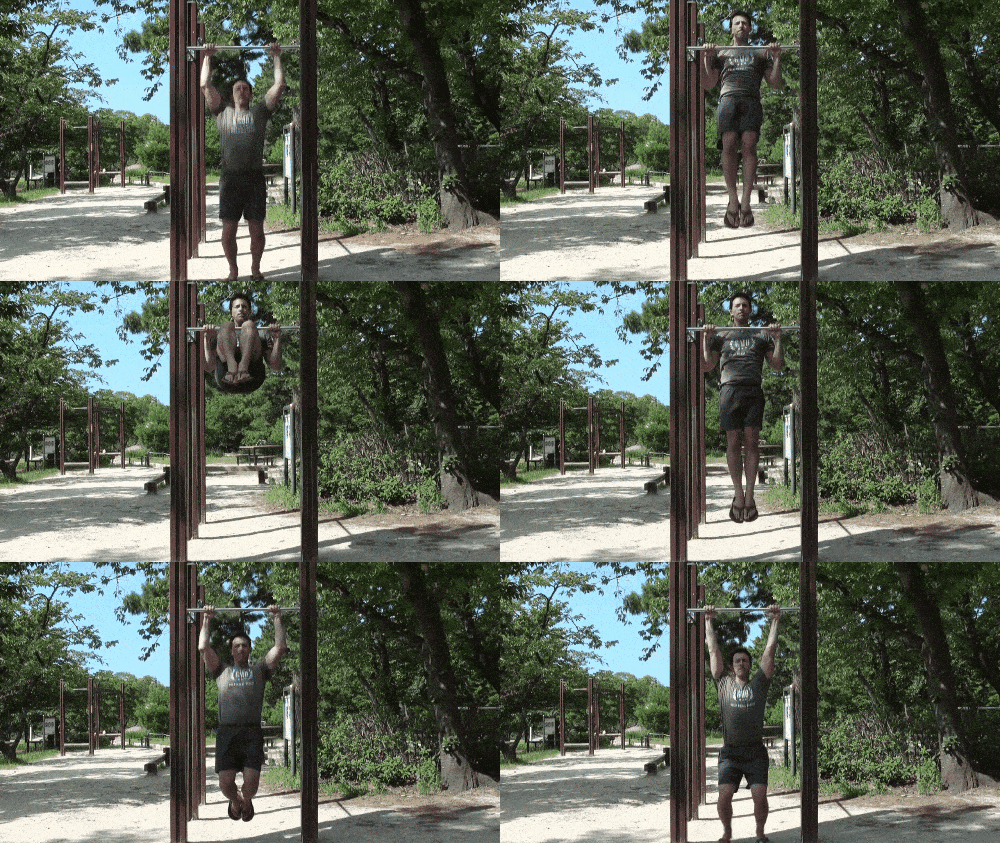
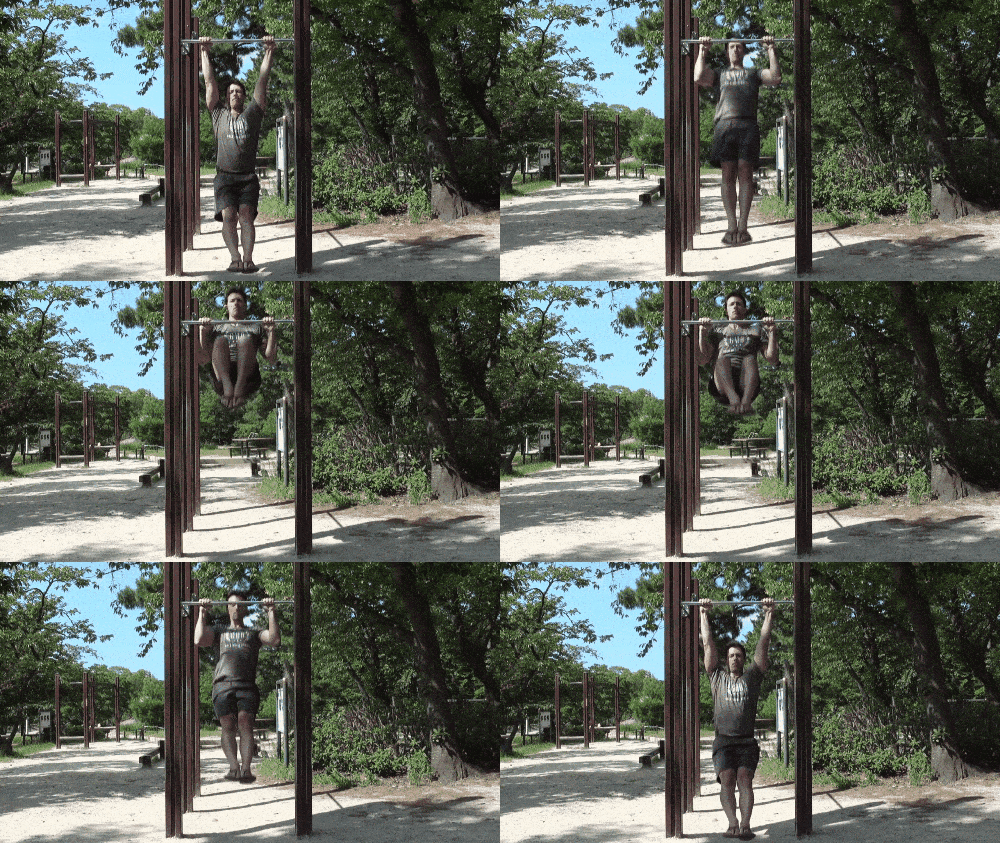
#8) Jump-up Pull-up with Tuck
#9) Pull-up with Tuck
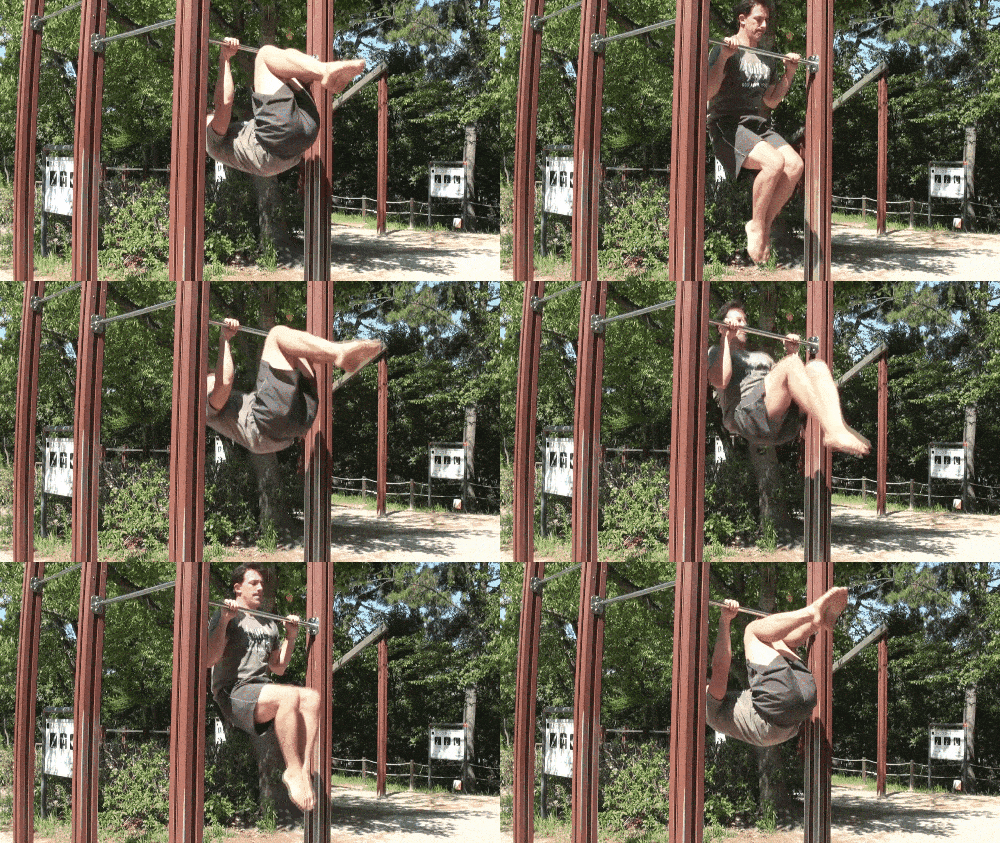
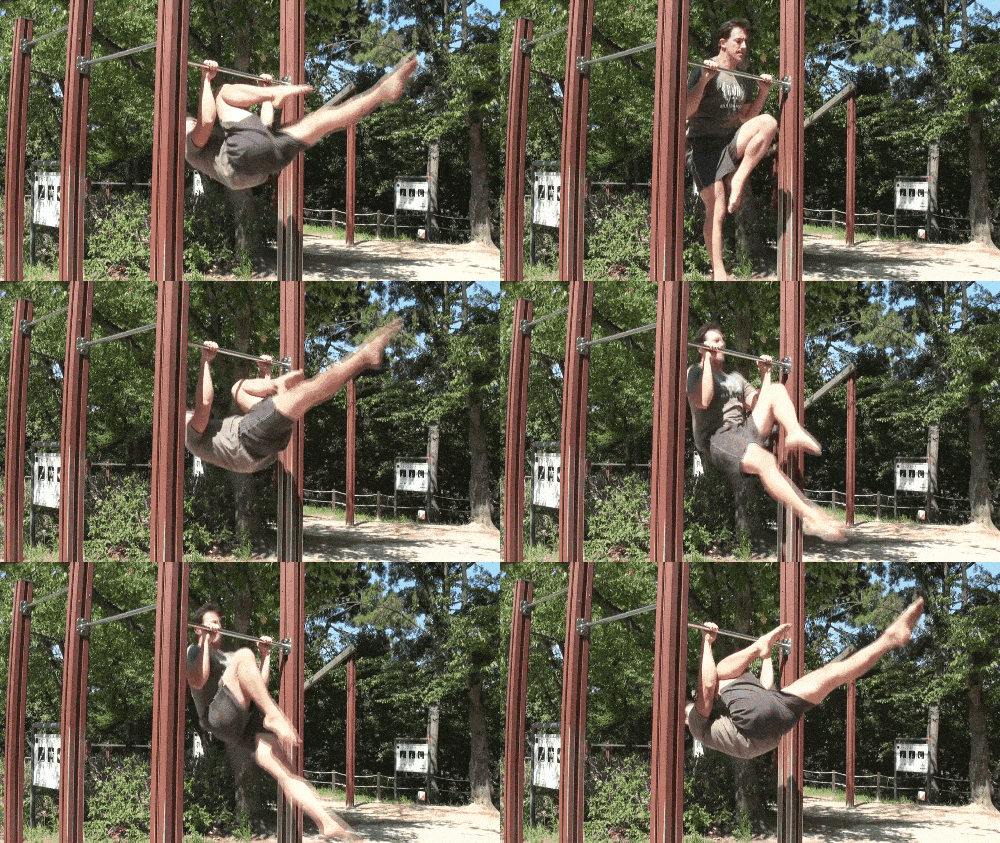
#10) Ice Cream Maker – Tucked
#11) Ice Cream Maker – Can Opener
#12) Ice Cream Maker – Front Lever
#13) Handstand (In)
#14) Handstand (Out)
#15) 180-Jump Turn
#16) 180-Jump Turn – Single Leg
#17) Front Lever – Tuck
#18) Front Lever – Can Opener
#19) Back Lever – Tuck
#19) Back Lever
#20) Low-Frog Hold
#21) Floating Frog
FAQ on The Batman Workout
Let’s answer some of your questions on the Batman Workout.
#1) When should I advance on with the workout?
Once you get proficient at a level, go up one level for that exercise and work on mastering that within the workout.
Don’t try and jump up to the next progression too quickly. Focus on form and performing each rep as cleanly as you can. That is what will get you strong and help you master the moves. Be sure to:
#2) How many reps should I do? How long should I perform the holds?
Perform no more than 5 reps per movement for up to 3 sets.
Work on performing holds for 5 to 8 seconds per set.
Perform all sets of one exercise before moving on to the next exercise.
#3) How often should I do the Batman Workout?
Give yourself at least a day of rest in between the workouts.
You can even add in sprints or intervals on your off days for extra stamina work if you would like.
#4) What if I don’t have a bar?
In the video below, Coach Jim walks you through what to do if you don’t have a pull-up bar:
#5) Can I wear a cap while doing the Batman Workout?
Yes.
Get strong without picking up a weight
Maybe you hate gyms. Maybe you travel like crazy. Maybe you just enjoy exercising outdoors.
No matter your reason, You CAN build muscle and size or simply lose weight and get in shape with only bodyweight exercises.
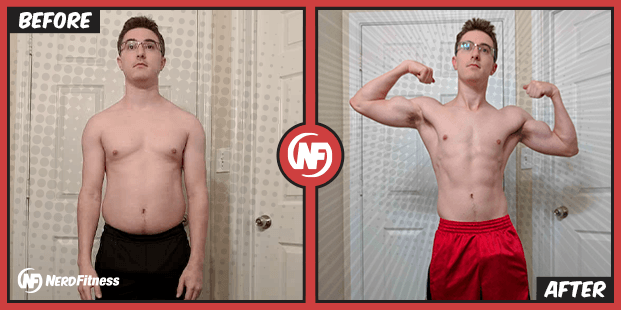
Just ask Jimmy here:
Jimmy didn’t want to leave his home to train, so we helped him build a plan to do just that.
Want some help from us too?
No problem!
Here’s how Nerd Fitness can get you ready to fight crime:
1) If you want step-by-step guidance, a custom bodyweight training program that levels up as you get stronger, and a coach to keep you accountable, check out our killer 1-on-1 coaching program:
2) If you want an exact blueprint for working out at home, check out NF Journey. Our fun habit-building app helps you exercise more frequently, eat healthier, and level up your life (literally).
Try your free trial right here:
3) Join the Rebellion! We need good people like you in our community, the Nerd Fitness Rebellion.
Sign up in the box below to enlist and get our guide, Strength Training 101: Everything You Need to Know. It’ll help you start incorporating bodyweight moves into your training.
Download our comprehensive guideSTRENGTH TRAINING 101!
Everything you need to know about getting strong.
Workout routines for bodyweight AND weight training.
How to find the right gym and train properly in one.
Theses exercises are a quick and effective way to improve posture. Minimal or no equipment needed for reduction in back pain & shoulder aches. After spending the last couple of years working from home even more than usual, I’ve found…
What makes me so confident you’ll be able to reach your little piggy wiggies?
Because we teach even the most “inflexible” of folks how to touch their toes in our 1-on-1 Online Coaching Program, and we’ll share with you all our secrets below.
Here’s what we’ll cover in our guide, How to Touch Your Toes:
If you want to increase your flexibility, you’re gonna need to stretch.[1] It’s how you make your muscles elastic and strong.
Why bother though? What’s the big deal about being able to touch your toes?
The benefits of stretching include:
Increase range of motion. If you can move a joint through its full range of motion, you’re gonna have more freedom of movement. Confidently navigating the physical world is a sign of a healthy nerd, which is why flexibility shouldn’t be overlooked. One of the best ways to become more flexible is to stretch.[2]
Improve posture.If you want to stop slouching so much, regularly stretching may help.[3] Stretching works to improve muscle imbalances, which in turn might help your posture.
Alleviate back pain.If you suffer from back pain, it might be worth starting a stretching routine .[4] The muscles in your back might be tight, restricting your range of motion, which causes pain. Stretching can help loosen up the area, plus strengthen the muscle. This might help prevent future injury.
Stretching, and the flexibility that comes with it, should not be overlooked when building a workout routine.
While there are many indicators of good flexibility, one of the most popular is undoubtedly being able to touch your toes.
After all, it was so important the President had all American schoolchildren perform the “Sit and Reach” test to see if they could grab their feet.[5]
Touching your toes might have been a struggle for you then. It might still be a struggle for you now.
What’s going on?
Why Can’t I Touch My Toes?
If you are unable to touch your toes, it’s most likely because of one of these four major reasons:
#1) Shortened/tight posterior chain muscles. Although most people think not being able to touch our toes just means your hamstring muscles are inflexible, in reality our whole system (including the lower back) can play a huge role as well! As Mark Rippetoe explains in this video about the Romanian deadlift, what you may think is a lower back issue is also a hamstring issue (and vice versa):
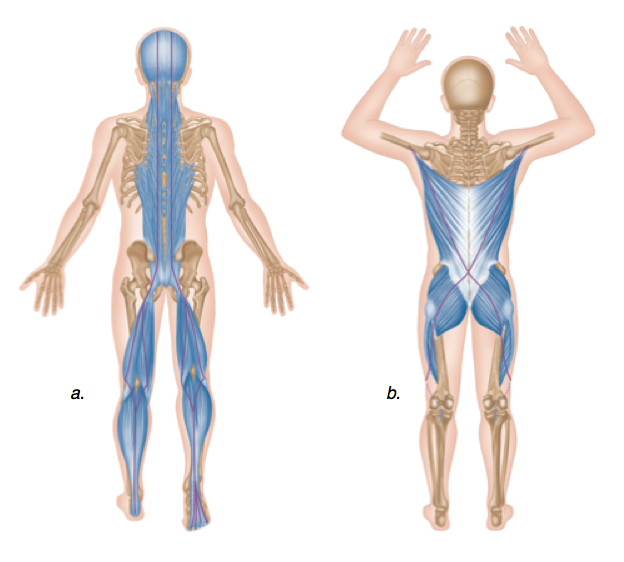
You see, the posterior chain is an interconnected series of muscles that includes our back muscles, erector spinae (muscles along our spine), lower back muscles, butts, and hamstrings.
The posterior chain is shown here:
Weak mobility points in one place in the system can become debilitating (and often easy to spot) when we do compound movements like the deadlift.
If you’re somebody who sits at a desk all day and struggles to touch your toes, you probably aren’t strengthening or lengthening these muscles because the chair is doing all of the work for you.
#2) You have relatively long legs compared to your torso and arms. People with long legs and short torsos will have a greater challenge than people who have short legs and long torsos and arms.
But fear not, you too can level up and get those toes touched.
#3) You have too much body fat. If you are overweight and happen to have a big stomach, it can certainly make touching one’s toes more challenging. Because you already know that diet is 90% of the battle when it comes to weight loss, focus on nutrition to begin losing weight (here are the 5 rules of weight loss to help you begin). This may be a factor in making it easier to touch your toes.
#4) You’re not warmed up yet. If you JUST woke up or spent all day in a car, you’re familiar with the rigidity that makes you feel like a steel girder. Your muscles act like rubber bands; the more they are used, the more they are warmed-up, and the further they can stretch. This is why we encourage people to go through a mobility warm-up before exercise!
Let’s put a plan in place to finally touch our toes!
Determining Your Initial Flexibility (We All Start Somewhere)
Before we can implement a strategy to develop more flexibility that allows you to touch your toes, we need to know your starting point.
As Peter Drucker said, “That which gets measured gets managed.” Or in this case, that which gets measured gets more flexible!
Stand straight with your legs about hip-width apart. You want your legs to be straight, but don’t aggressively lock out your knees either (this feels like a “microbend” to a lot of people).
Begin by bending and leaning forward towards the ground with your quads (front of your legs).
Let your body rest naturally, as if you were a ragdoll. Keeping your hands relatively close together, straighten your fingers and begin to stretch down slowly to the ground.
Do this 2-3 times to get warmed up. Try to keep your legs straight by flexing or activating your quads; keep your legs straight, without locking your knees.
Other than the microbend, don’t bend your knees to help you get closer to the ground! I’m watching you. If you’re videotaping yourself on these to track your progress, note that depending on your body (and your hamstrings) your legs may not look 100% straight.
When you are ready, reach towards the ground and hold it for a few seconds. Measure the distance in one of the following ways:
If you aren’t touching the ground, have a friend measure the distance from the tip of your fingers to the ground. If you don’t have a friend with you, place your hands on your legs and note where the tips of your fingers end up.
If you can touch the ground, you’ll want to flatten your hands as much as possible, and record the distance from the top of your head to the ground. As you can stretch further, the top of your head will actually get closer and closer to the ground.
If this seems easy, try hugging your calves and pulling your head in towards your body.
Record your measurement in a document or on a piece of paper (if you’re part of the flexibility challenge, we have a document you can print out), and/or save the photo/video to show how far down you are reaching.
The 4 Best Stretches to Touch Your Toes (Improve Your flexibility)
There are two key factors that will determine whether or not you are successful in gaining the ability to touch your toes as you practice over the next few weeks:
Actively stretching your muscles JUST past the point of comfort. Like strength training by adding 1 rep or a few pounds to an exercise, we want to stretch just beyond the point where we stretched last time so our muscles have to elongate.
Consistent practice and effort! You can’t improve your flexibility by stretching for 5 minutes once a month. You’d be better off stretching for 30 seconds spread out 10 times throughout the month.
That’s right. Studies confirmed that actively focusing on touching your toes for 30 seconds, 3 times per week was enough to lengthen hamstring muscles in 4 weeks. [6]
I‘m sure there’s an inappropriate joke to be made here about 30 seconds of effort, but I’m better than that (I think).
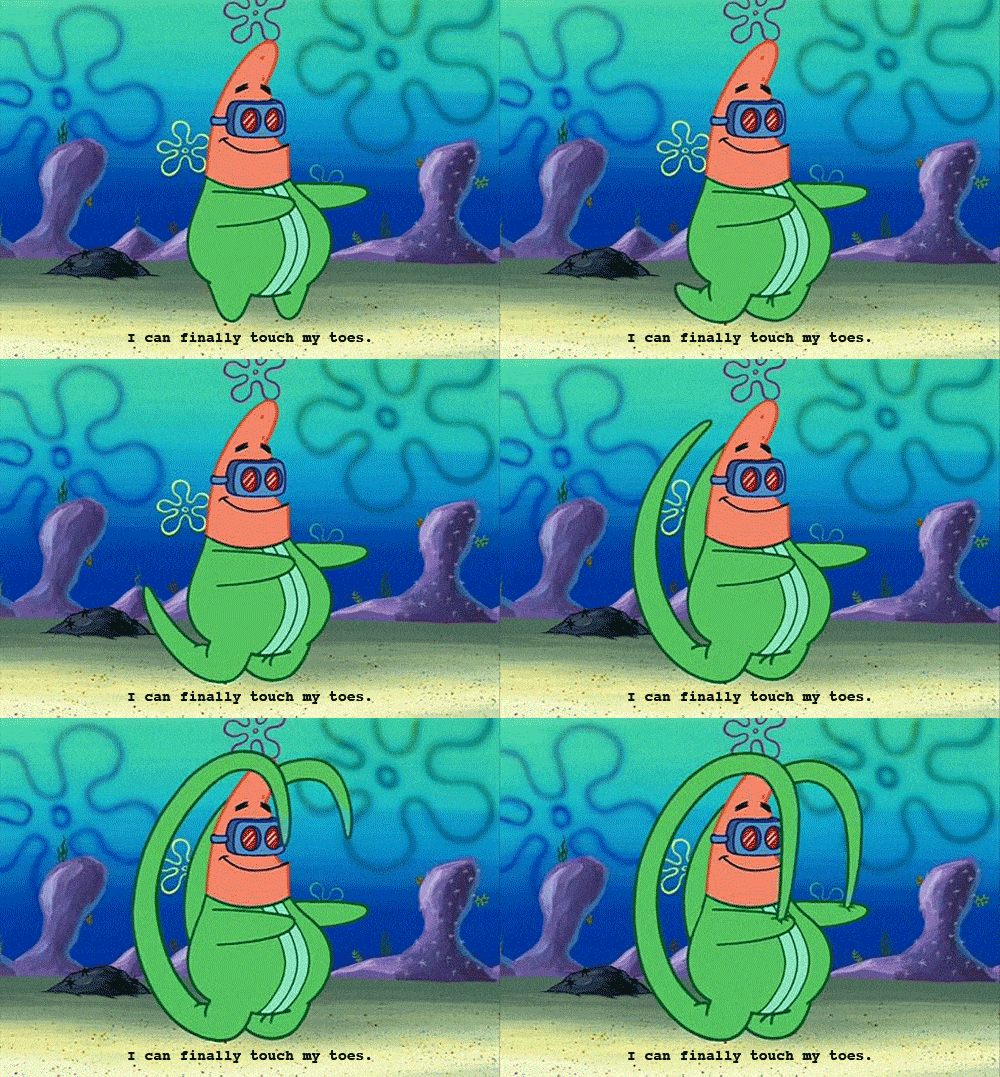
In less time than it takes to update your Facebook status, you could be touching your toes and make Gumby proud.
HOW TO TOUCH YOUR TOES (CONSISTENT FLEXIBILITY PRACTICE):
All I’m asking for is 2 minutes. 2 minutes! You can even spread these movements out throughout your day – I like to do them after I work out. After a long day at a desk, after driving, or upon waking up are all good times to work on flexibility!
Through each of the movements below, make sure you are breathing slowly and steadily.
You can follow along with all of the movements below that come from our really fun online course, Nerd Fitness Yoga (part of NF Prime). It’s essentially yoga for people that don’t do yoga.
THE 4 BEST STRETCHES TO TOUCH YOUR TOES:
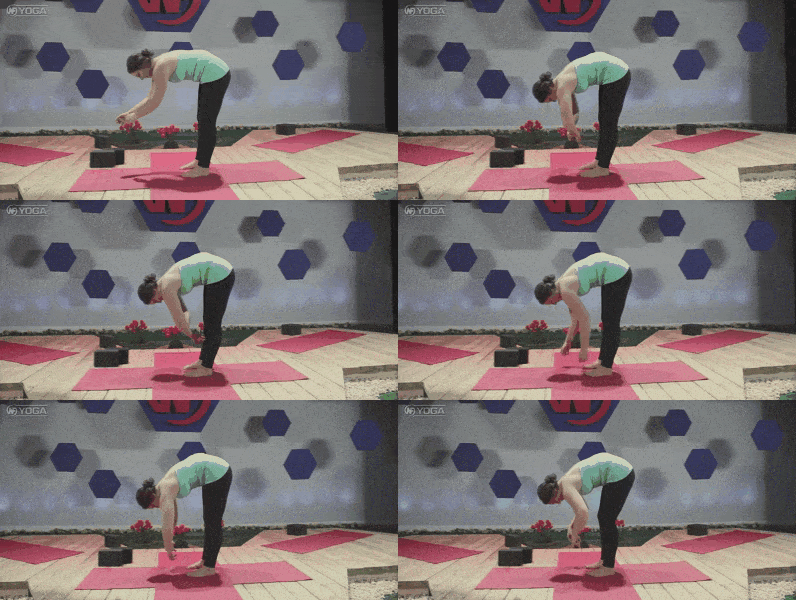
Standing toe touch stretch – 30 seconds
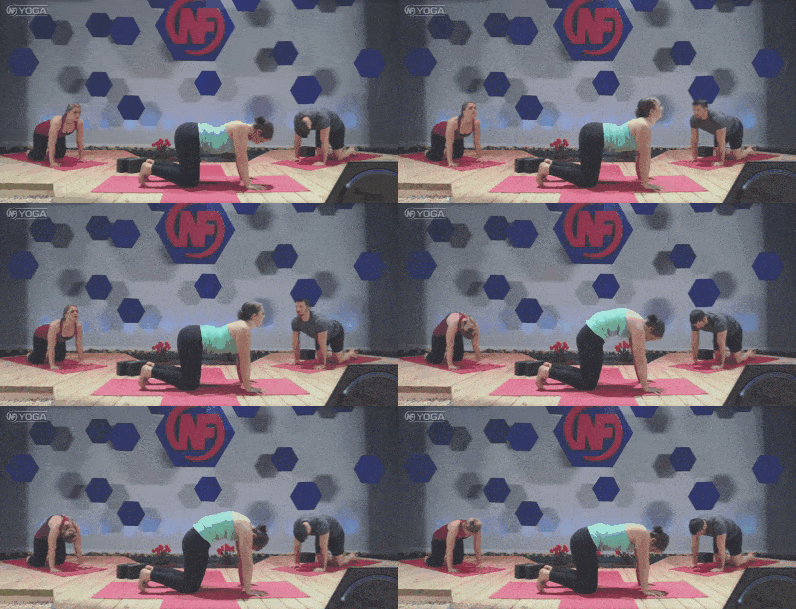
Cat/Camel – 30 seconds (switch positions every 5 seconds)
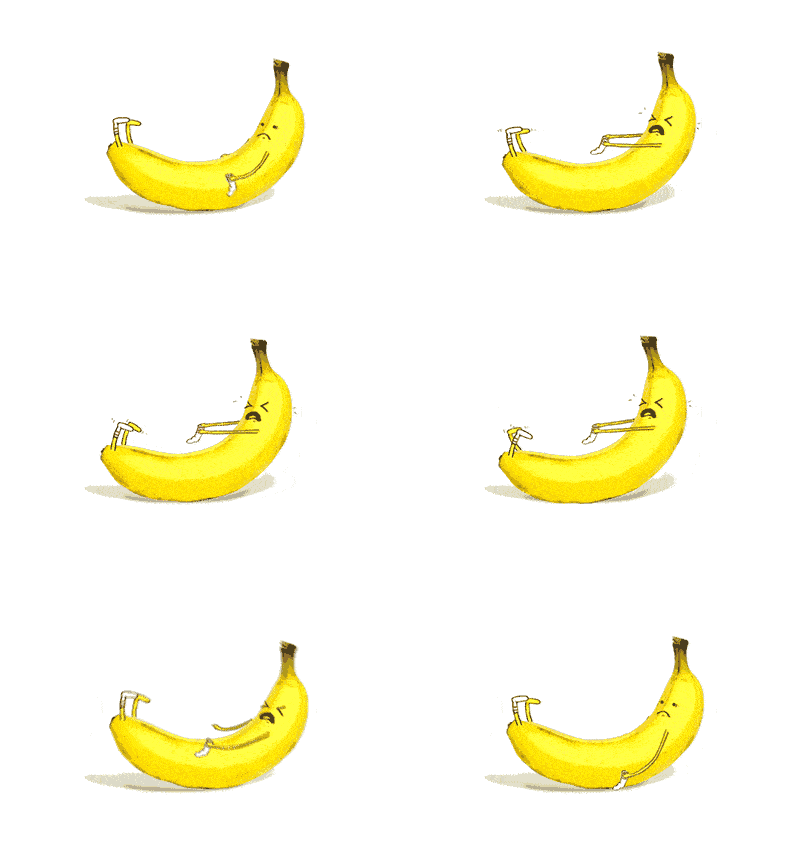
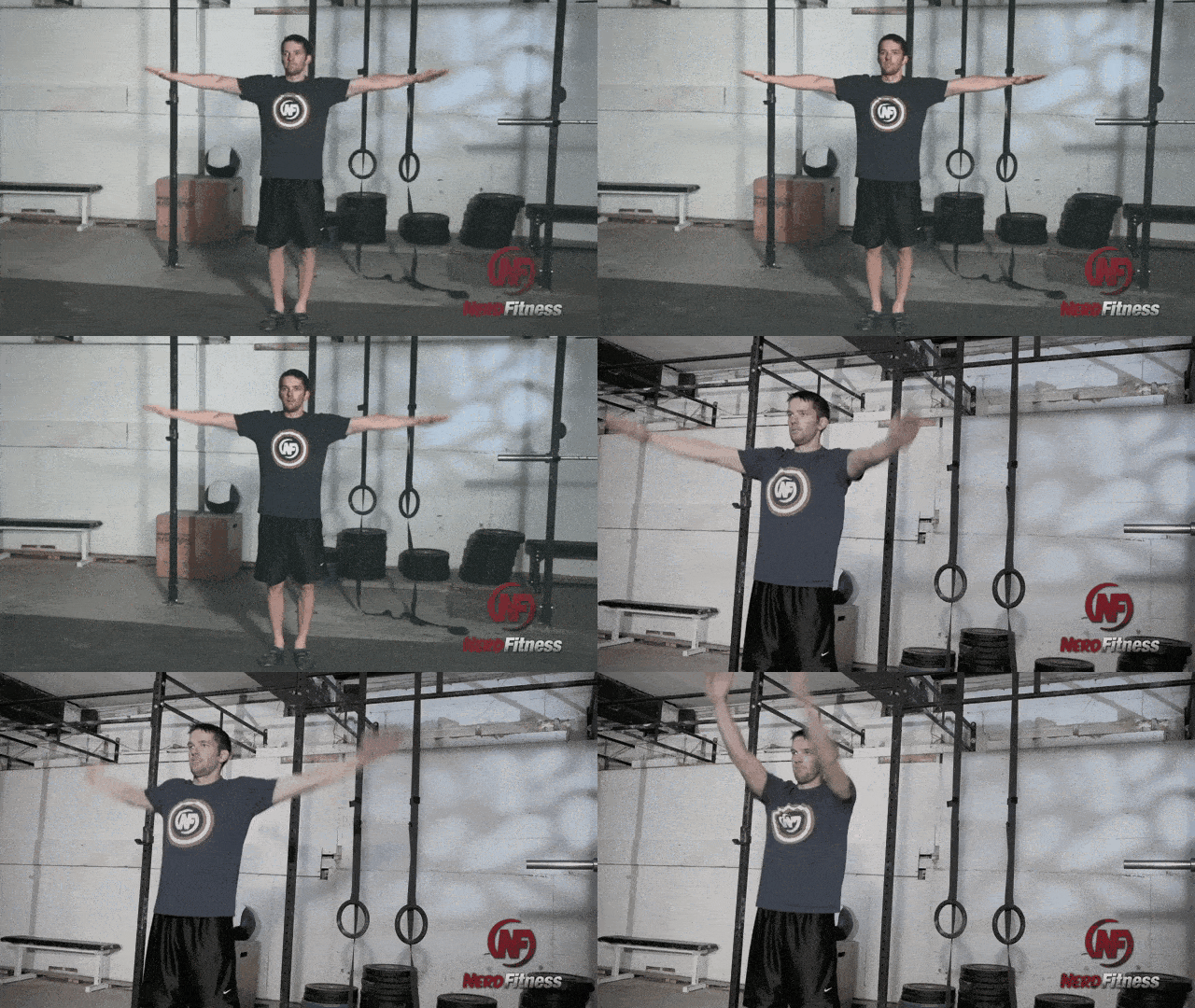
Star stretch – 30 seconds (as many slow reps as you can)
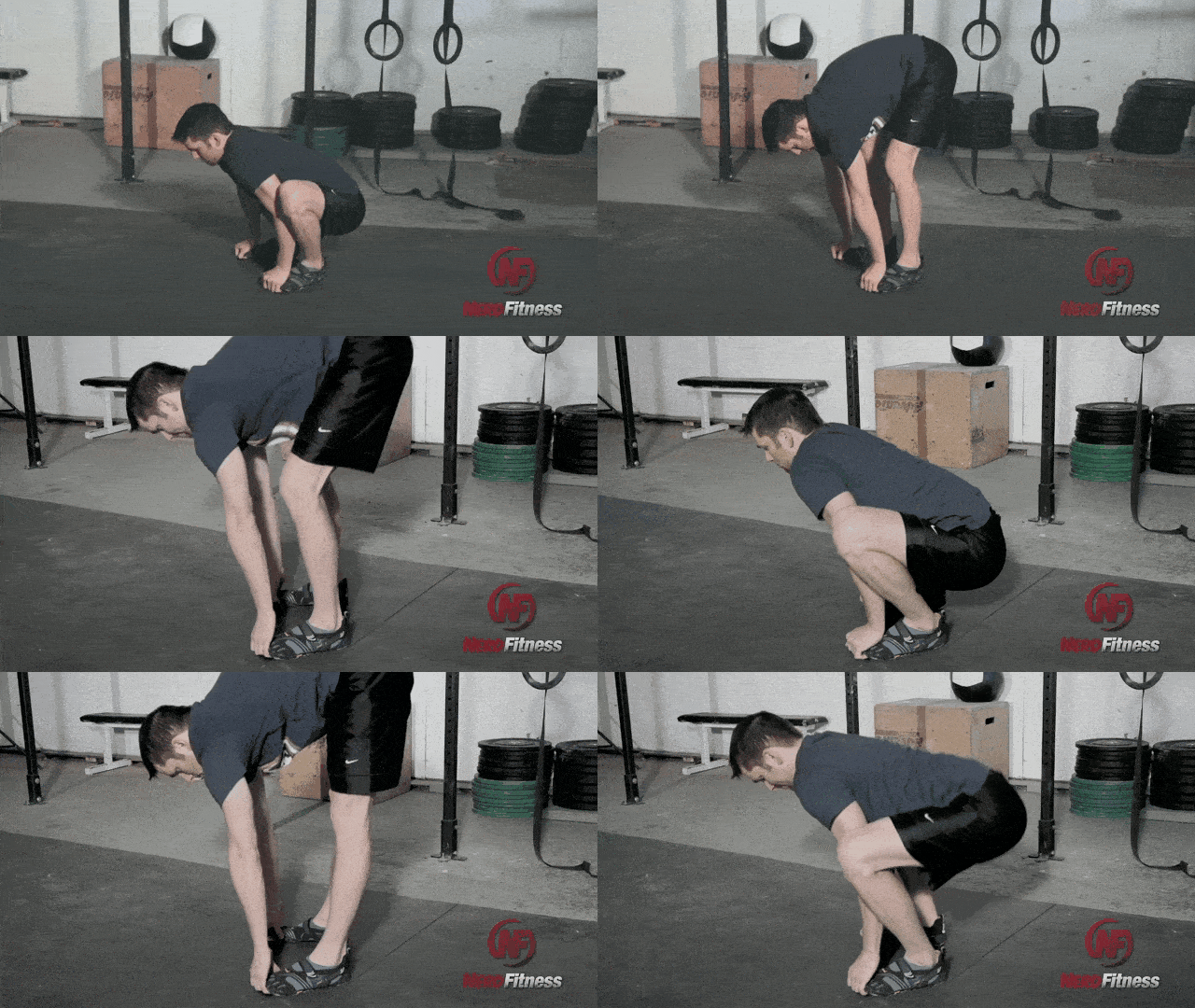
Moon the sky – 30 seconds (as many slow reps as you can)
1) Standing toe touch stretch: Flex/activate the front of your legs, keep them straight, and bend over at the waist juuuust past the point of discomfort; hold that position for 30 seconds. Repeat this process every other day and hold it for 30 seconds.
2) We can loosen up a tight lower back by doing 30 seconds of moving back and forth every few seconds by doing a “cat” and then a “cow”:
3) You can also do what we call a star stretch to help stretch those legs out! Stand with your legs spread wide, and arms extended (hence the term Star!), and then reach down with one hand to your opposite leg; hold for five seconds, back to start, and repeat with the other leg.
4) Here’s another favorite movement of mine that helps improve my flexibility and mobility: the “Moon the Sky” stretch!
This is a great stretch to mix into your pre-workout warmup to get your legs, butt, and back prepared for work:
Squat down and put your hands under your feet
Slowly move your butt up with your hands remaining under your feet.
Raise your butt and try to straighten your legs
Go a TEENY bit higher each time until you can fully straighten your legs!
For any of the above moves, a good way to check your form would be to record a video of yourself and match it against the videos and gifs here. If they look close, you’re doing great!
If you want to have an expert review your stretches, our coaches can do just that in our snazzy app!
How to Become More Flexible (Next Steps)
It’s now time to train to touch your toes!
Test your toe-touching abilities before and after doing the 2-minutes of exercise above, and I bet you’ll notice a difference right away – just wait to see what you can accomplish in a few weeks!
The cool thing about flexibility is that any combination of the stretches above will help you improve your flexibility as long as you consistently work on it a tiny bit every day.
At the end of my day for a minute or two before bed
All added up, it’s less than 5 minutes of time, but it’s enough to show me some results!
If you follow our guide above, you’ll be well on your way to increasing your flexibility and touching your toesie wosies.
You just need to start!
Want some help getting going? A little extra push out the door?
We built three perfect next steps for increasing your flexibility!
#1) Work with a professional Yoda! If you want confidence that you’re following a program that is tailor-made for your busy life, situation, and goals, check out our popular 1-on-1 Coaching Program.
Many of our clients have “increased flexibility” as one of their fitness goals, and they take comfort knowing a certified NF instructor is guiding them there.
#2) Exercising at home and need a plan to follow? Check out Nerd Fitness Journey!
Our fun habit-building app helps you exercise more frequently, eat healthier, and level up your life (literally).
Try your free trial right here:
#3) Join our amazing free community, the Nerd Fitness Rebellion! Not only is it free to join, but we’ll provide you with loads of free goodies when you sign-up:
Get your Nerd Fitness Starter Kit
The 15 mistakes you don’t want to make.
Full guide to the most effective diet and why it works.
Complete and track your first workout today, no gym required.
That should just about do it for our guide on How to Touch Your Toes.
Now, your turn:
Can you touch your toes?
Does attempting to “sit and reach” bring back horrors from grade school?
Any other tips or tricks for mobility training?
Let us know in the comments!
-Steve
PS: Make sure you check out the rest of our Mobility Training series:
Read, “Effect of an exercise program for posture correction on musculoskeletal pain.” Source, PubMed.
Read, “Stretching and strengthening are key to healing and preventing back pain.” Source, Harvard Health Publishing.
A practice that has now been discontinued.
Read,“The effectiveness of 3 stretching techniques on hamstring flexibility using consistent stretching parameters.” Source, PubMed. Here’s another study that shows 30 seconds of effort results in a more flexible frame!