Categories
Uncategorized

#holistic #getfit #nutrition The 3 Best Flexibility Exercises: The Ultimate Guide for Improving Flexibility in 30 Days

Spider-Man in a flexible position

You’re here because you want to learn how to improve your flexibility.

Well, you’ve arrived at the right place!

We’ve been hosting flexibility challenges in our app, Nerd Fitness Journey. Today, we’ll share with you the same exercises we use to improve general mobility.
If you’ve always considered yourself “inflexible,” you need this guide!

Here’s what we’ll cover today:

I promise you, if you follow the videos in our guide, you will be more flexible in 30 days.

Let’s get bendy!

What Are the 3 Best Flexibility Exercises? (Intro and Benchmark Test)

The above video comes from Nerd Fitness Prime, kicking off our 30-day challenge “Flexibility for the Inflexible.”

In it, Nerd Fitness Coach Matt discusses the three best exercises for improving flexibility, which are:

  1. The Toe Touch
  2. The Back Scratch
  3. The Butterfly Stretch

Let’s go over each of these moves now.

#1) Toe Touch
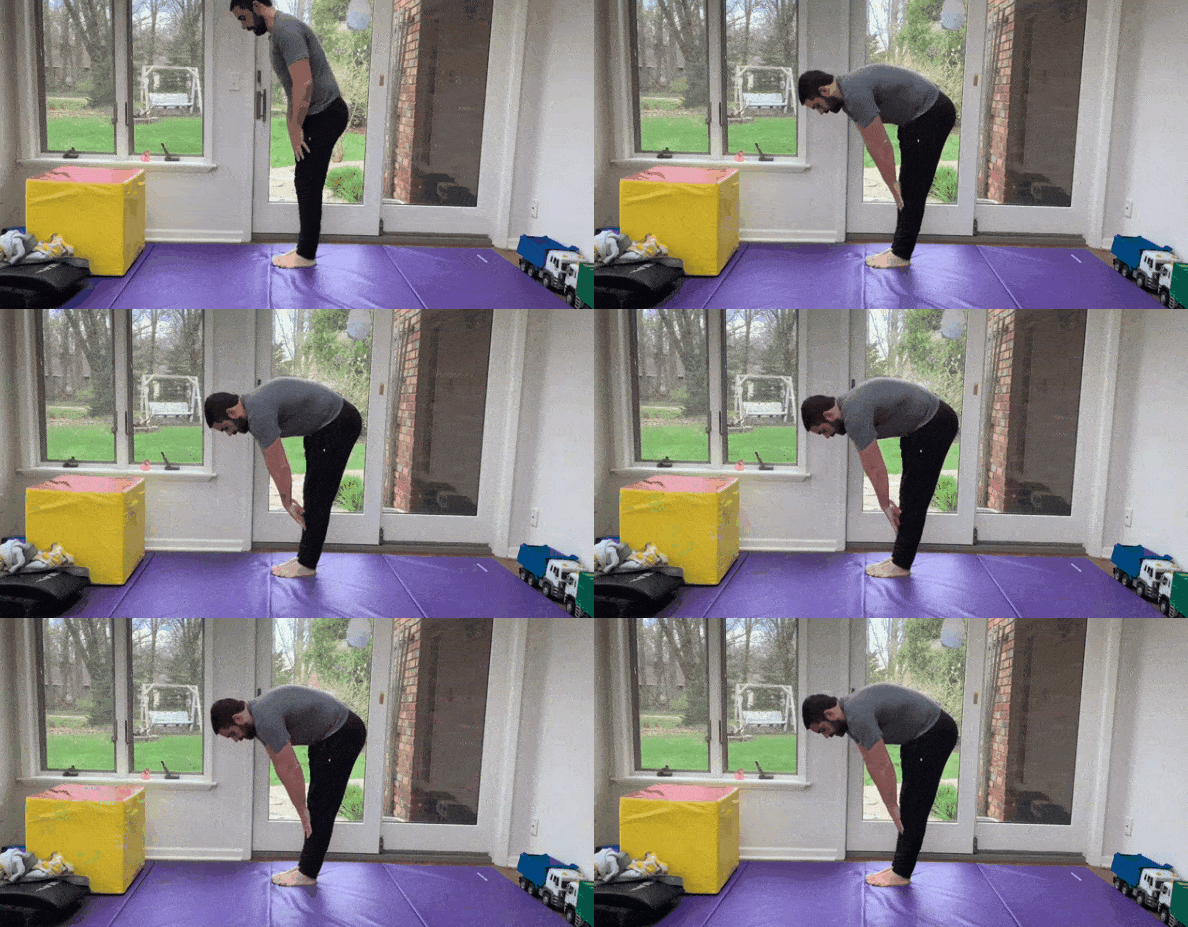
While standing, Coach Matt reaches for his toes, which is a great flexibility exercise.

To perform a standing toe touch:

  • Stand straight with your legs about hip-width apart. You want your legs to be straight, but don’t aggressively lock out your knees either (this feels like a “microbend” to a lot of people).
  • Begin by bending and leaning forward towards the ground with your quads (front of your legs).
  • Let your body rest naturally, as if you were a ragdoll. Keeping your hands relatively close together, straighten your fingers and begin to stretch down slowly to the ground.

The goal here, ultimately, will be to touch your toes. 

We also have a complete guide on How to Finally Touch Your Toes for more. 

#2) Back Scratch
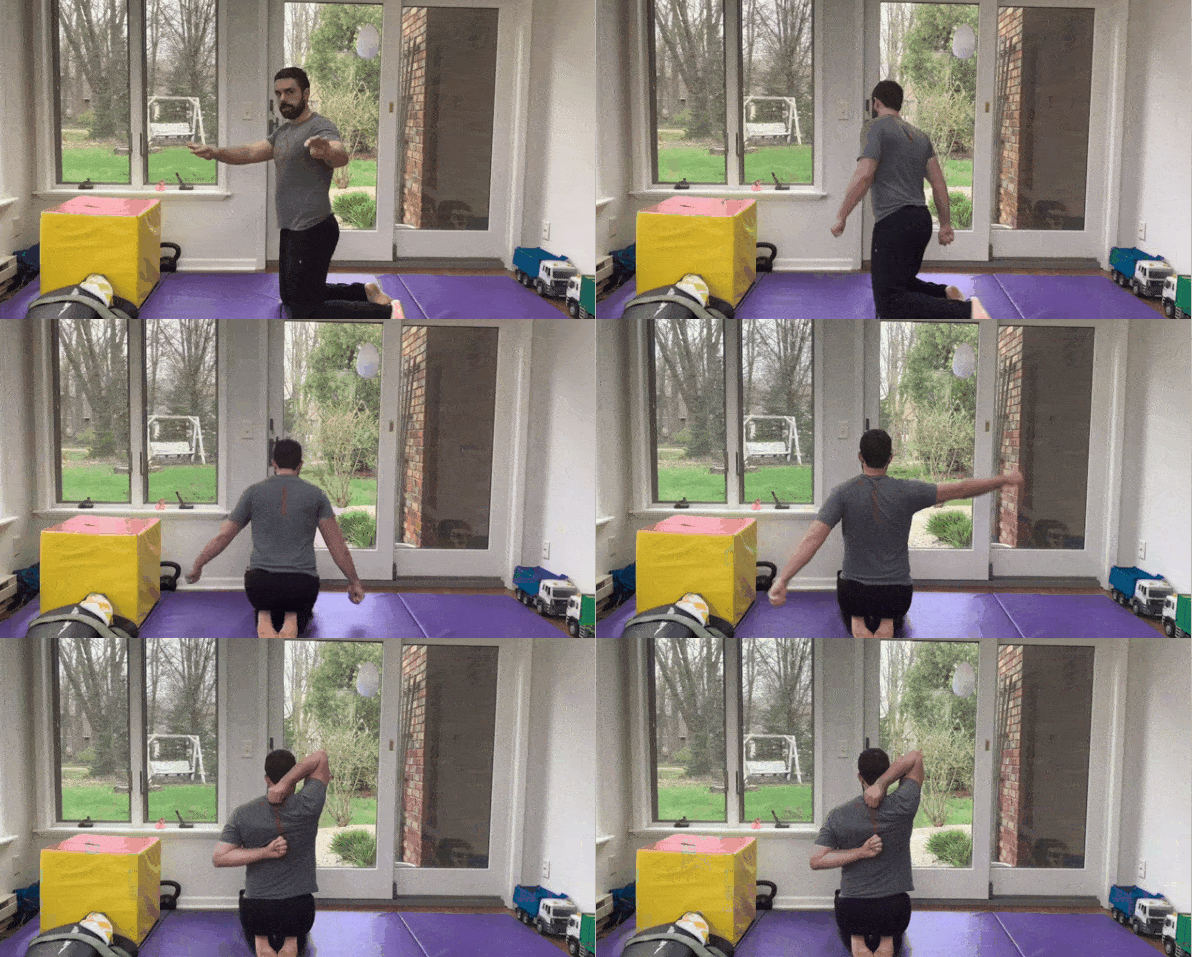
Coach Matt taking his left arm "low " behind him, and his right arm "high" behind him, for this flexibility exercise.

To perform a back scratch:

  • Take a comfortable seat (or stand), with your torso and back tall.
  • Tuck your thumbs inside of your fist.
  • Place your right hand behind your head, down back over your shoulder. Reach as far down the middle of your back as possible, palm facing you. 
  • Your other arm (left) is going to go behind and up, with your palm facing away. Reach this hand toward your upper hand (don’t strain).
  • Switch arms and reverse the moment. 

Over time, we are going to work to bring your hands closer together.

#3) Butterfly Stretch
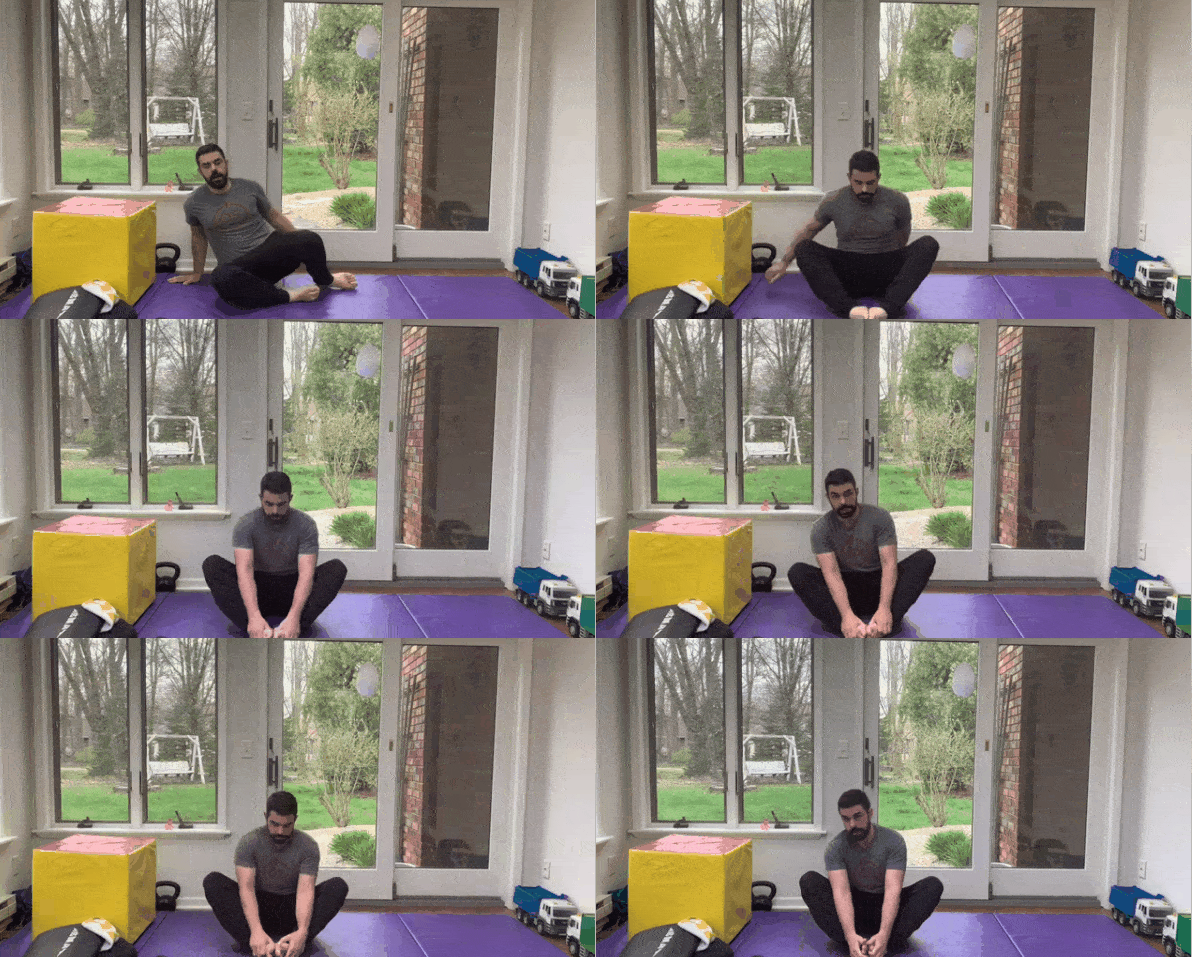
In this flexibility stretch, shown by Coach Matt, you sit down with your feet facing you in front. Try to keep your knees down.

To perform a butterfly stretch:

  • Take a seat, with your legs facing out in front of you.
  • Bring both of your front feet together, with the bottoms touching, by bending your knees away from each other.
  • Grab both feet with your hands, with your elbows coming down toward your knee (they don’t have to touch). 
  • Keep your back straight, and allow your knees to come down (if they can, don’t force it).

The goal here will be to bring your knees lower and feet closer to your groin, but don’t fret if this is challenging. Even Coach Matt has trouble with butterfly stretches. 

Why these three exercises?

Coach Matt refers to the toe touch, back scratch, and butterfly stretch as “benchmarks.”

If you have decent mobility in these three exercises, you’re probably pretty flexible.

This dog appears to be more flexible than this woman, which is hilarious.

Improving these will be our mission for the next 30 days! 

Each week, Coach Matt will provide three different video routines with exercises designed to target these specific benchmarks. 

So in Week 1, you’ll find a video for:

  • Toe Touches
  • Back Scratches
  • Butterfly Stretches

You can do these videos all at once if you want, or break them up throughout your week.

Maybe you do a routine Monday, Wednesday, and then on Friday.

We’ll end this guide with some tips on starting a recurring practice.

At the end of our 4-week series, we’ll check-in, to see how everything is coming along.

Here’s what we need you to do right now: record where you are with these moves.

  • How far down can you reach with your toe touch?
  • How far apart are your hands during the back scratch?
  • How close are your feet and how high up are your knees during the butterfly stretch?

Coach Matt recommends a few ways to measure these benchmarks in the introductory video above, but even some subjective tracking would be useful:

“On a scale of 1 to 10, this move was tough, so I’d give it an 8.”

Don’t forget about this initial tracking, even if you don’t have a measuring tape. Just go through the initial benchmark tests the best you can.

Before we jump into the series itself, let’s discuss some general tips and tricks for improving flexibility.

Tips and Tricks for Increased Flexibility
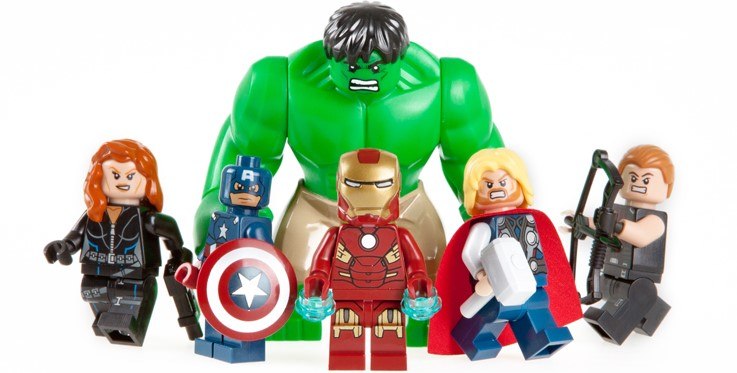
A pic of the Avengers as LEGOs, and I would imagine, the Hulk is the least flexible of the bunch.

First and foremost, all bodies are different.

You might have a great range of motion in your back scratch, but can’t get much range on your toe touch. Or maybe you’re like Coach Matt, where butterfly stretches are challenging. 

Our goal here is to improve YOUR flexibility. We’ll all have different mobility ranges on Day 1.

All of us have to start somewhere, so don’t stress if you feel inflexible…
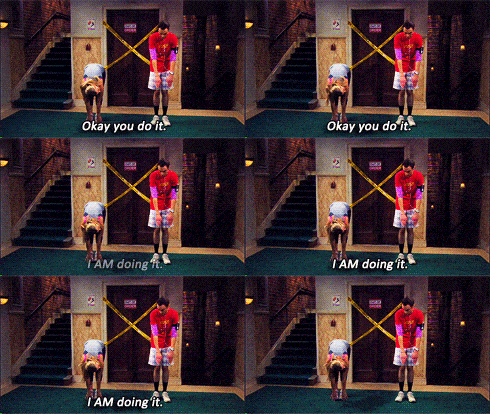
This gif from the Big Bang Theory shows Sheldon not being able to touch his toes.

…that’s why you’re reading this guide.

No matter what, by going through this process, you’ll learn more about your body and develop tools for increasing your range of motion.

Next up…

Coach Matt highlights two general ways to increase your flexibility:

  1. Function. This is your technique and awareness of your flexibility. Think of this as maximizing the potential of your current body.
  2. Structure. This would be your body itself, and the range of motion of muscles, tendons, etc. Structure is about changing your body itself through these flexibility exercises.

You’re probably not going to increase the structural flexibility of your body after one stretching session. These things take time

However, you very well may increase your flexibility by improving your function or technique. As you go through the videos, Coach Matt will offer instructions on how to position your body for proper stretching. 

This alone may very well increase your range of motion.

We’ll also be using three specific movement tools for improving flexibility:

#1) Active Range of Motion

This would be doing the complete movement of an exercise, fluidly.

So a normal bodyweight squat would be an active range of motion if you did the entire movement:
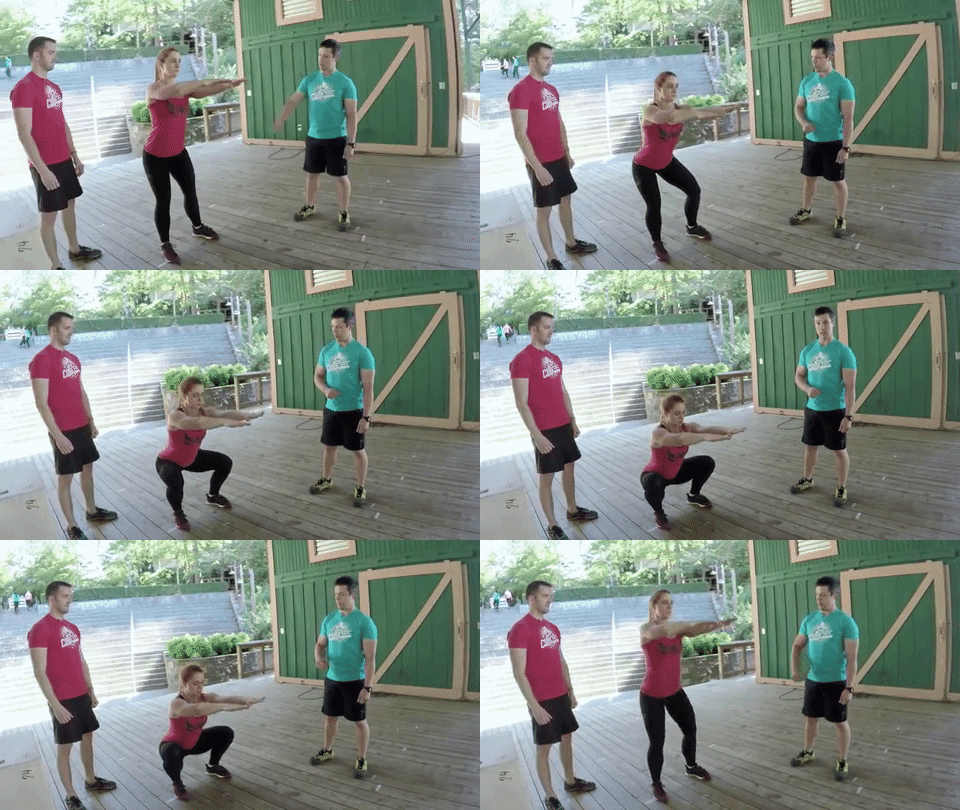
Do a proper bodyweight squat to work out your legs

By going all the way down and back up with your squat, your muscles are engaged evenly throughout.

#2) Pulses

This movement has you stopping at a particular point of an exercise, like the bottom of a squat, and slowly and in control, pulsing slightly up and down:
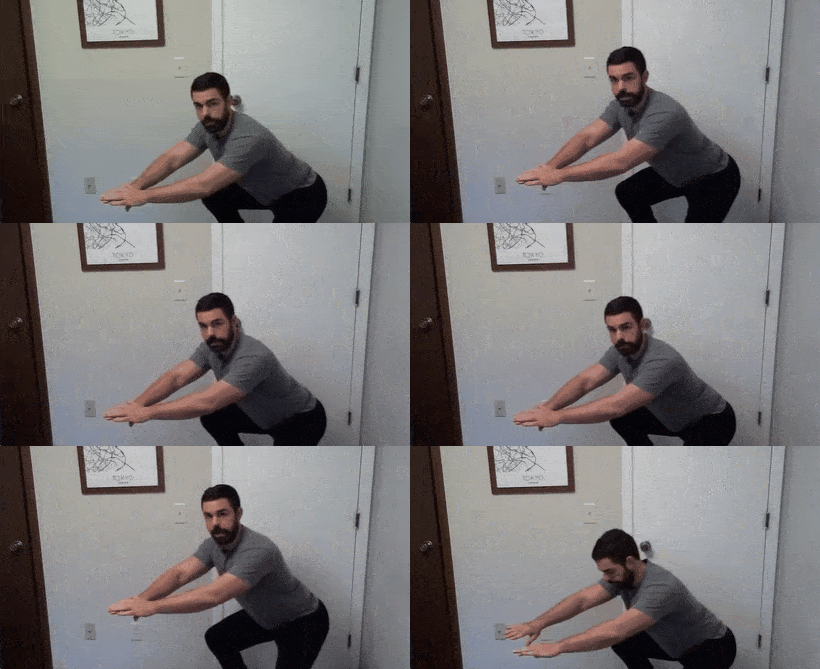
Shifting up and down during your squat, ever so slightly, is a pulse, which will help improve flexibility.

You’re really only moving about an inch here for your pulses.

This will help you gain control of that particular area.

#3) Holds

As the name would suggest, here you’ll hold the position at a specific point of the exercise. 

For example, for your squats, you may pause at the bottom of the movement:
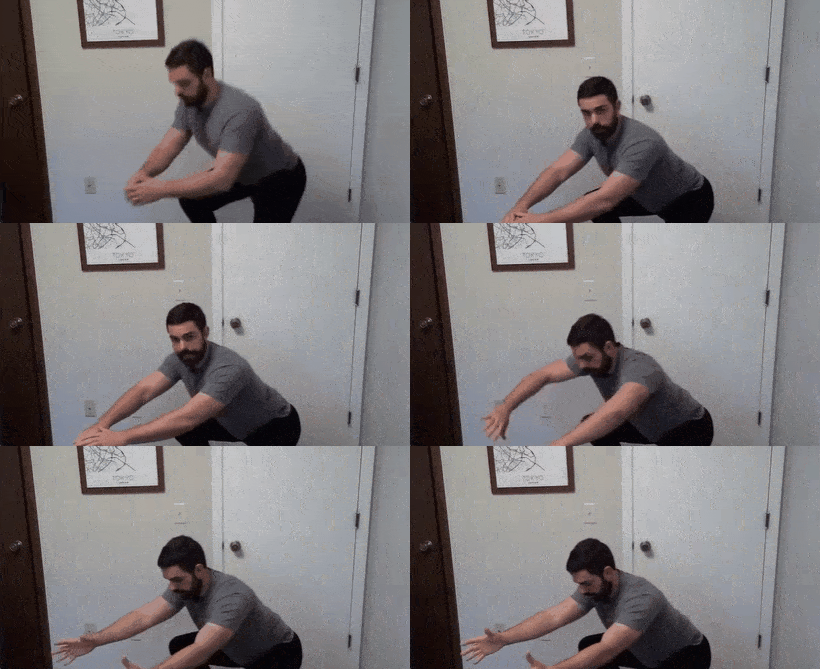
Here, Coach Matt pauses at the bottom of his squat, which will help improve flexibility.

This can help you grow stability during a particular stretch.

During the course of the next four weeks, we’ll be utilizing a combination of active range of motion, pulses, and holds, to increase your flexibility.

And with that, onto week 1!

How to Improve Your Flexibility: Week 1

This is a mix and match photo, of a stormtrooper and ninja turtle, which probably makes him pretty flexible.

For our first week, Coach Matt is going to start us off slow.

Here, it’s all about learning the foundations of the movement. 

To increase flexibility, it often comes down to properly setting up the stretch.

We’ll begin by teaching you the basics. 

Toe Touch Week 1:

Back Scratch Week 1:

Butterfly Series Week 1:


How to Improve Your Flexibility: Week 2
For this LEGO to look over the edge like this, he's probably a little flexible.

This week, we’re going to identify the edge of your flexibility.

We won’t push or strain ourselves too much, but we’ll use our breath as a sign of difficulty.

The goal here is to understand how flexible you may actually be (you might be able to reach farther than you think). 

However, as Coach Matt will continuously remind you, if it feels unsafe, DON’T DO IT!

Toe Touch Week 2:

Back Scratch Week 2:

Butterfly Series Week 2:


How to Improve Your Flexibility: Week 3

Two LEGOs are together, one flying away. Is the other flexible enough to catch him?

In Week 3, it’s all about exploring and expanding your flexibility exercises.

We’ll be testing your movements and begin thinking about ways to “go off the rails” a little here and there.

In our third round of exercises, you’ll begin changing, adapting, and remixing the moves to increase your range of motion.

With flexibility, some creativity can be a good thing, which will be your focus for this stage.

Toe Touch Week 3:

Back Scratch Week 3:

Butterfly Series Week 3:


How to Improve Your Flexibility: Week 4

I imagine the Monkey King shown here can touch his toes pretty easily.

In the last week of “Flexibility for the Inflexible,” it’s all about building strength.

Muscle will help you hold and expand mobility positions, so this week Coach Matt covers exercises designed to couple strength with your flexibility.

We’ll even mix in some weights into your routine here.

Toe Touch Week 4:

Back Scratch Week 4:

Butterfly Series Week 4:


Next Steps for Becoming More Flexible

The video above is a “re-cap party” with Coach Matt, ending the 30-day Flexibility for the Inflexible challenge we ran for Nerd Fitness Prime members.

Let’s go over some highlights.

#1) Continue to test and retest your flexibility benchmarks. 

That which gets measured gets improved, so continue to track your toe touch, back scratch, and butterfly stretch. 

Remember, these tests don’t need to be some precise measurement rounded to the nearest millimeter (although if you want to do that, have at it). 

Instead, they can be subjective: 

“This is really tough, I can’t bring down my knees at all.” 

to…

“I could probably sit like this for 15 minutes.”

This cat here, for sure practices flexibility.

Don’t stress out over how precise your measurements are, but do keep a record of how these stretches feel. It’ll help us know if you’re improving. 

#2) Use your breath as a guide.

Breathing can often be a signal of excretion levels:

  • If your breath is calm and normal, what you’re doing is within your comfort range.
  • If you’re huffing and puffing a lot, or even holding your breath, you’re probably exerting yourself too much.

As Coach Matt highlights, during your flexibility exercises, don’t push too far past your comfort zone.

Yes, we should find your edge, but we also want you to feel in control during your stretches so you can really “own” the movement. 

If you find yourself having to catch your breath, it could be a sign you’ve gone too far. 

If you end up panting and sweating like this, you may have gone too far with your flexibility exercises.

Be mindful of your breathing during our flexibility exercises. 

#3) You don’t have to stretch every day.

You probably noticed that we provided three 20 minute videos per week to help improve your flexibility.

This was intentional, because you don’t have to stretch every day to increase your range of motion.

Truth be told, you don’t even need to do 20-minute sequences three times a week to improve flexibility. Even just 10 minutes of flexibility exercises a couple of times per week could improve your mobility.

Just make it habitual.

To do so, you can continue to follow the videos in this guide, or I have some other resources for you to check out.

Here are three more guides for improving your flexibility:

  • 21 Yoga Poses for Beginners. Yoga can be a great practice to improve your flexibility. If you’ve never tried it before, check out our guide. We’ll provide video sequences designed for beginners, so don’t worry if you have no clue what a downward dog is. We’ll teach you.
  • Three Full-Body Stretching Routines to Cool Down. After a workout, a good stretch can be the perfect way to lower your heart rate. Our guide will offer you three different routines to perform after your workout (or whenever) so you can start improving your flexibility.
  • How to Touch Your Toes. Since the toe touch is the go-to benchmark to see how flexible you are, we have a complete guide on getting you there. If you’ve always dreamed of being able to reach your little piggy wiggies, start here.

The most important thing you can do now?

Get to it!

If you wanna win a race, you need to start it!

You’re not going to get any more flexible by reading articles online, so pick a sequence from today and get going! 

Start with the Flexibility for the Inflexible Week 1 videos if you’re unsure where to begin.

If you like our style here at Nerd Fitness, I have three great options on how you can continue your journey with us:

Option #1) If you want a professional coach in your pocket, who can do video form checks, provide feedback, and adjust your workouts based on your experience level, check out our 1-on-1 Online Coaching Program

For example, let’s say you have an old injury and couldn’t perform one of our flexibility exercises. A Nerd Fitness Coach can work with you to create a customized routine for your exact situation. 

Personally, I’ve been working with the same online coach since 2015 and it’s changed my life. You can learn more by clicking on the box below: 


Option #2) Exercising at home and need a plan to follow? Check out Nerd Fitness Journey!

Our fun habit-building app helps you exercise more frequently, eat healthier, and level up your life (literally).

Plus, you can take part in flexibility challenges alongside a group of nerds who are all trying to better themselves!

Try your free trial right here:

Option #3) Become part of the Rebellion! We need good people like you in our community, the Nerd Fitness Rebellion.

Sign up in the box below to enlist and get our Rebel Starter Kit, which includes all of our “work out from home” guides.

Alright, now I want to hear from you! 

Did you try our “Flexibility for the Inflexible” series?

Did you find any of the exercises easier or harder than the others?

Any tips or tricks to help the “inflexible”?

Let me know in the comments!

-Steve

P.S. Personally, I’ve found a yoga practice to be incredibly helpful in improving my mobility. We have an entire course on starting home yoga as part of Nerd Fitness Prime.

I’d love for you to check it out. 

###

Photo Source: Evgeniy Pavlovski © 123RF.com, LEGO Marvel Avengers, Teenage Mutant Ninja Trooper, Maybe the droids we’re looking for are at the bottom of this pool, Hold onto your hat, Monkey King

The post Blog first appeared on Nerd Fitness.

from Nerd Fitness: Helping You Lose Weight, Get Stronger, Live Better. https://ift.tt/2WZhGiS
via IFTTT

Categories
Uncategorized

#healthyliving #holistic #nutrition Seeing Progress Beyond the Scale

Working out just to lose weight can leave you feeling discouraged, unmotivated, and burnt out. However, taking a wider approach from the perspective of your health and fitness journey can change that. 

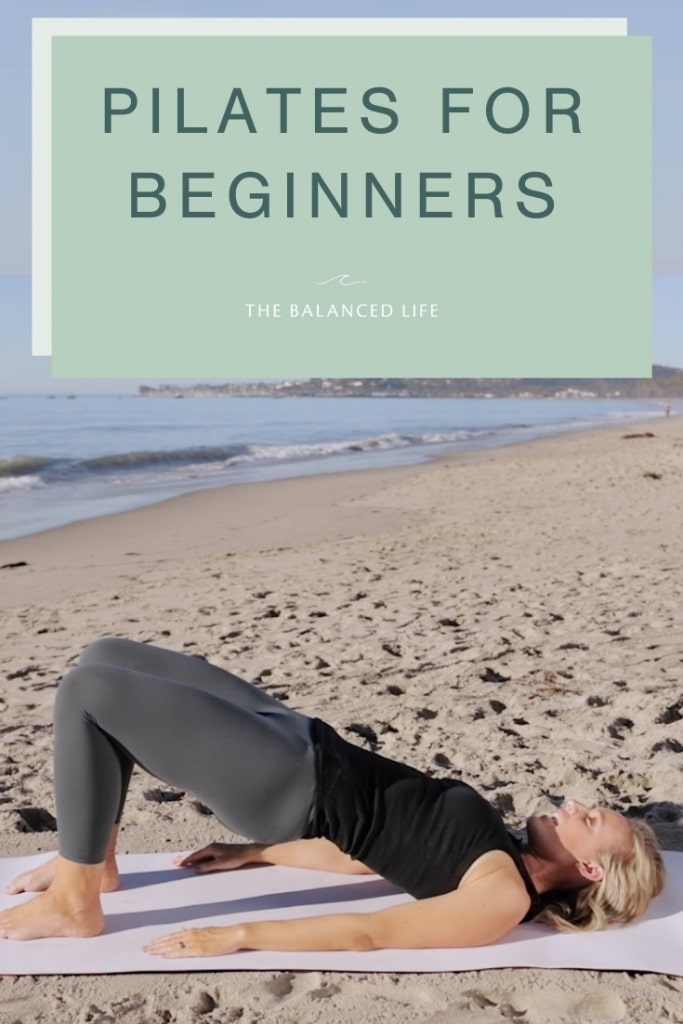
Today, Robin shares the vast array of benefits that comes with practicing Pilates and these benefits go far beyond the scale.

If you want to be proud of your health and fitness journey, and to find a routine that leaves you feeling strong, energized, and less stressed, join Robin Long in this episode to hear of the benefits Pilates has for you.

Show highlights: what you can look forward to in this episode!

  • Robin shares what the real purpose behind The Balanced Life is 
  • Why before and after photos can be deceiving 
  • Why it’s more important to focus on how you feel than a number on the scale
  • Taking a wider look at your progress – beyond the size of your jeans
  • Robin shares results from members in The Sisterhood
  • Taking a deeper look at health and fitness 

Links in this episode:

Share this podcast episode!

The post Seeing Progress Beyond the Scale appeared first on The Balanced Life.

from Blog – The Balanced Life https://ift.tt/3bDeuAP
via IFTTT

Categories
Uncategorized

#healthyliving #holistic #nutrition This approach to wellness might surprise you

If nothing changes, nothing changes. When you look at the bigger picture, all life changes are built up of small steps and actions. It can be easy to get overwhelmed when you try to take on too much at full-force, but that’s why taking a less-is-more approach is powerful. 

In today’s episode, Robin discusses what it means to take a less-is-more approach and how to make those small steps. She explains the importance of consistency and following through with habits so they compound over time. Join Robin in this inspiring episode to learn more. 

Show highlights: what you can look forward to in this episode!

  • Robin shares how she uses her vision board to ground herself 
  • How to take a less-is-more approach in your fitness 
  • The impact 15 minutes a day can have on your fitness
  • The power of consistency 
  • The compound effect of daily habits 
  • Robin shares success stories from women in the sisterhood 
  • How to make healthy habits and set yourself up for success 
  • 4 small steps you can do today for future you  

Links in this episode:

Share this podcast episode!

The post This approach to wellness might surprise you appeared first on The Balanced Life.

from Blog – The Balanced Life https://ift.tt/3d6JQls
via IFTTT
Categories
Uncategorized

#holistic #getfit #nutrition Mason lost 70 pounds. Here’s how:

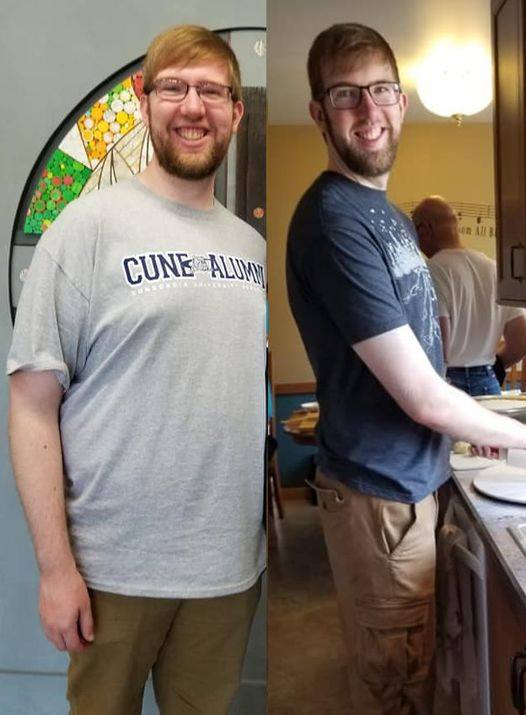
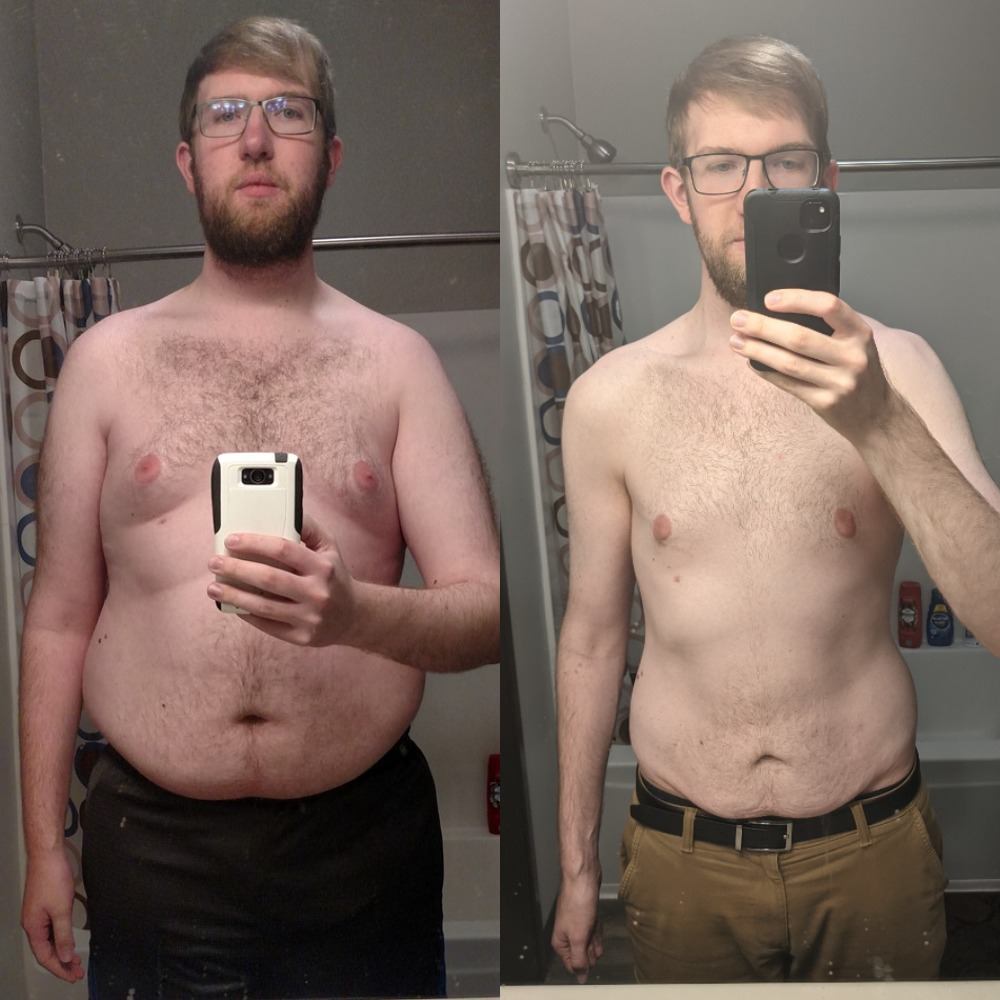
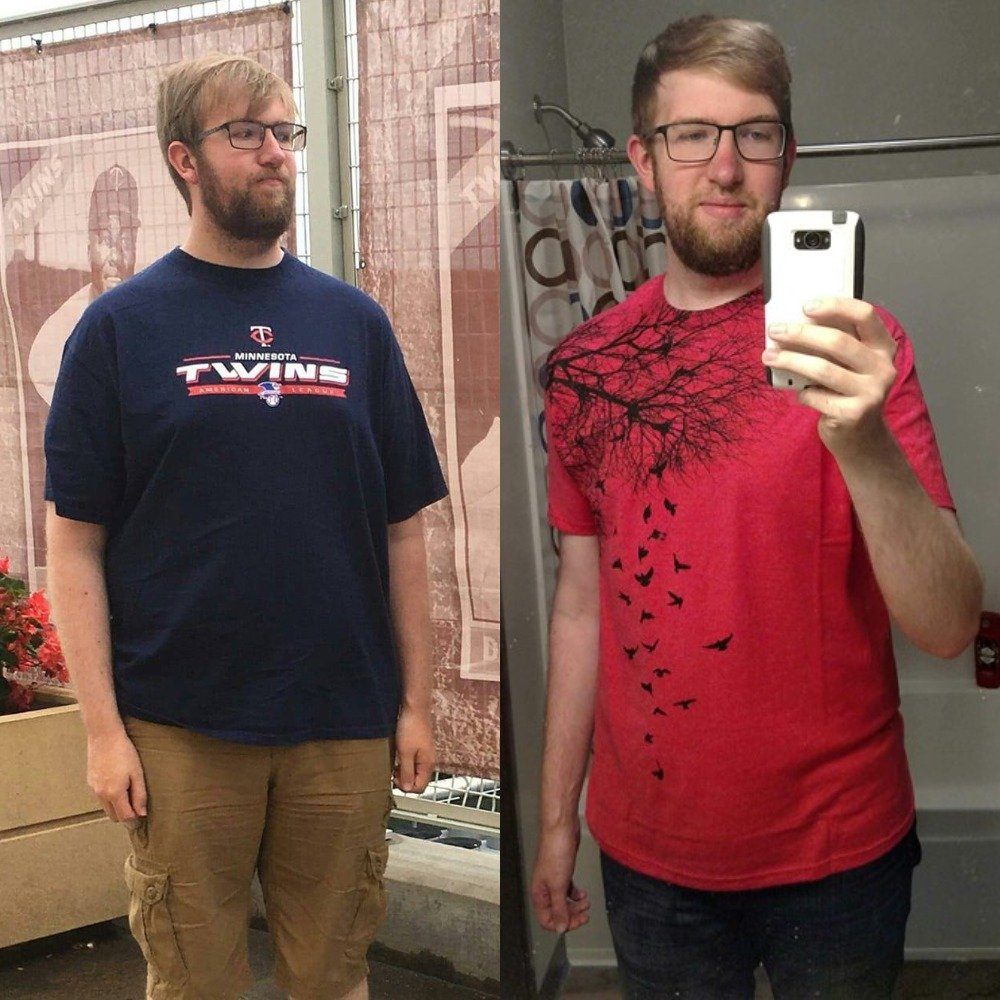
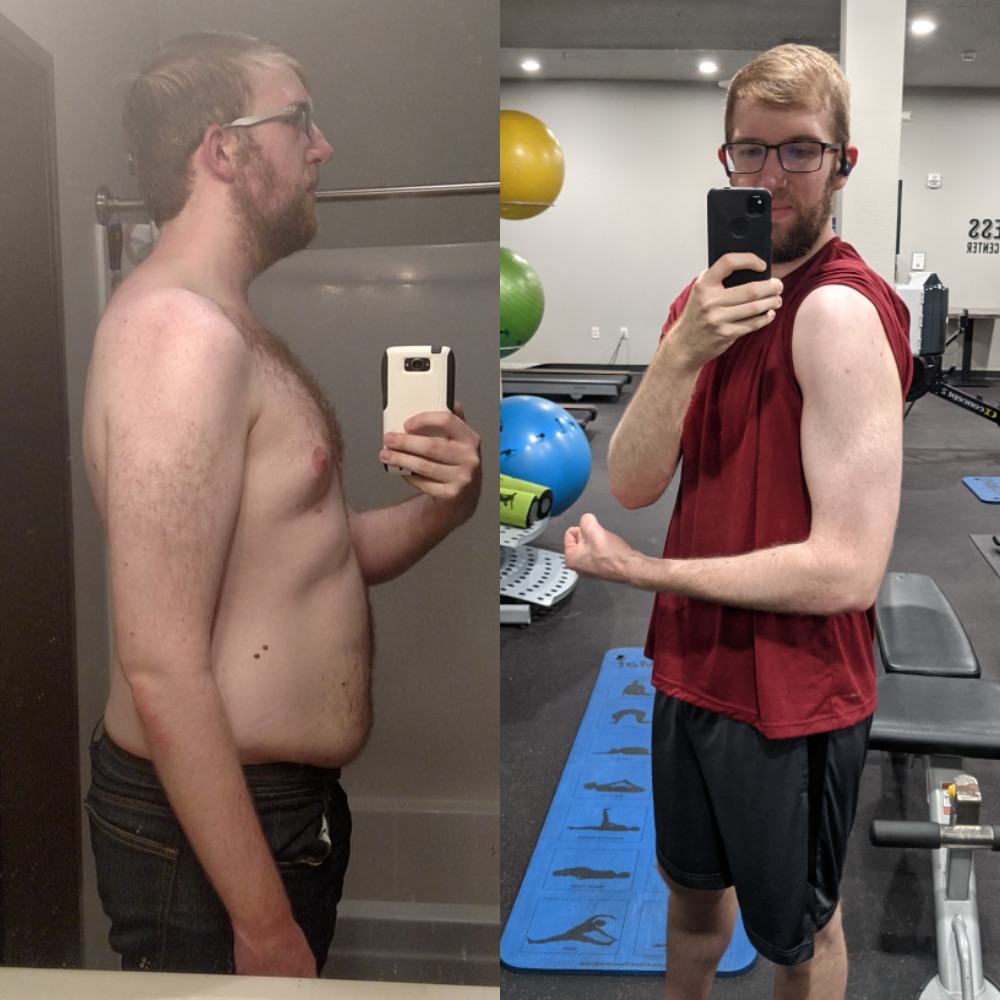
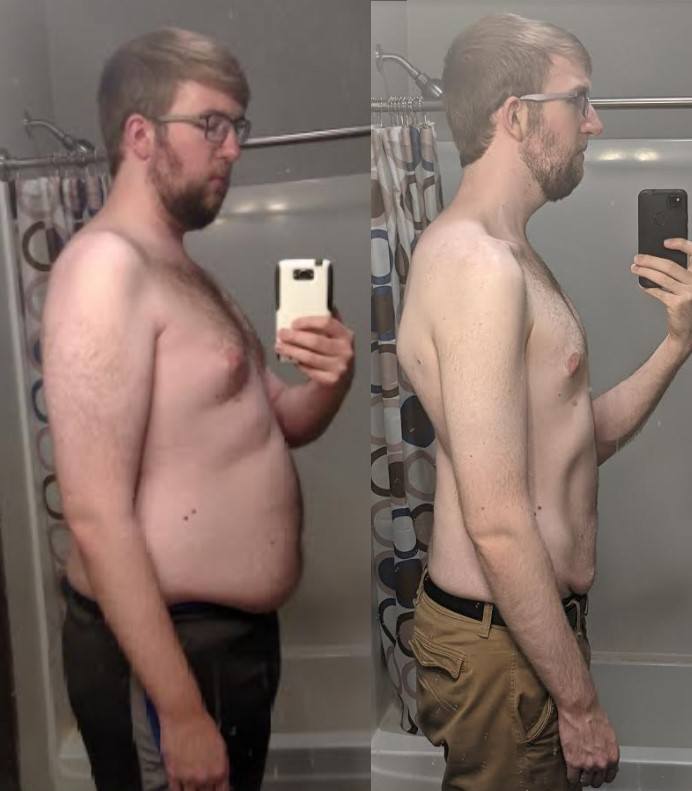
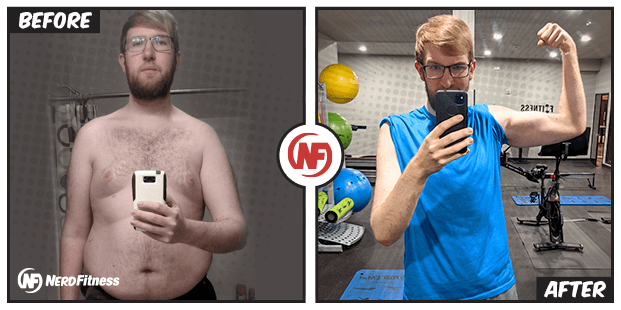
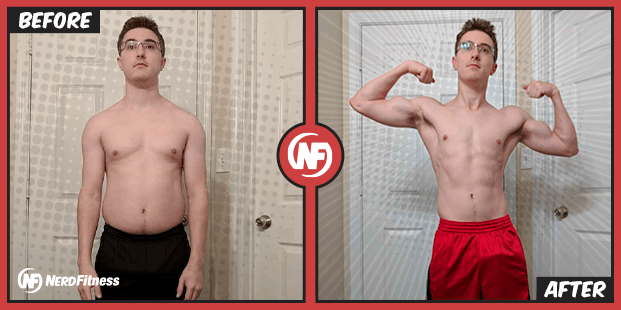
Mason before and after

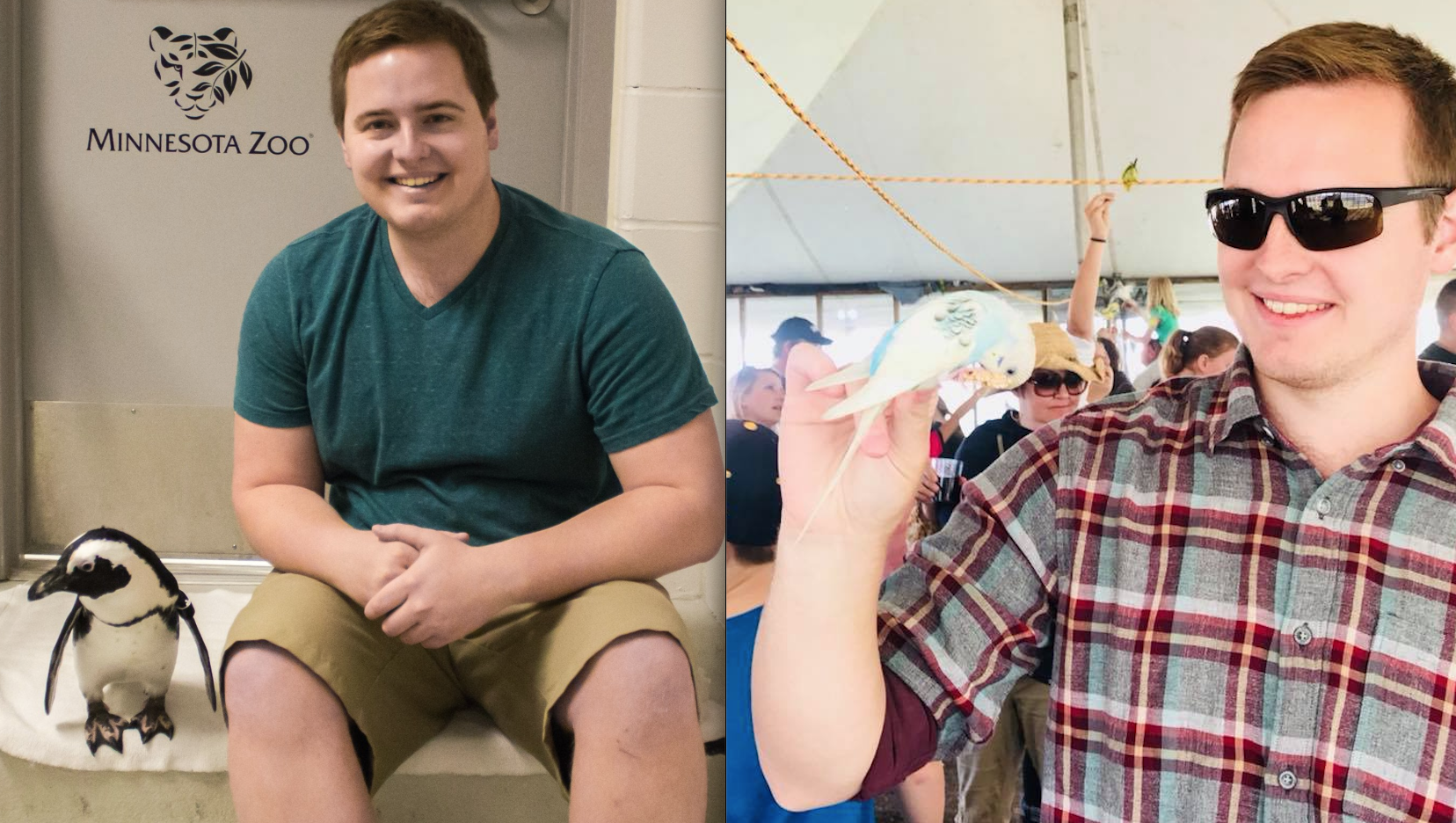
Meet Mason, a chemist from Minnesota who is currently celebrating losing over 70 pounds as a member of our Online Coaching Program.

As you can see, Mason has gone through quite the transformation.

Here’s what’s truly remarkable about this story: the time frame!

Mason found Nerd Fitness a year ago, after googling “how to make fitness like a video game” in January 2020.

The fact that THIS is the search that led Mason to us makes me so dang happy.

Like many in the NF Rebellion, Mason felt right at home amongst a group of nerds trying to better themselves. After going it alone for a bit, Mason decided a NF Coach could help him reach his goals.

He recognized he had some challenges, including:

  • A love of baked goods – “The THOUGHT of cutting out all desserts and sweets made me miserable.”
  • Workout programs that were too advanced – “I was always told that knee push-ups were the easy variation…but I couldn’t even do those.”
  • No idea on how to get going – “There’s an overwhelming amount of information when it comes to fitness. I wasn’t sure where to begin.”

Luckily, Mason decided to pick a path and course correct along the way.

365 days later, Mason feels like a new person.

Let’s dig into Mason’s journey and see what allowed him to crush life…during a pandemic!

THE 5 KEYS TO MASON’S SUCCESS

Mason before and after

#1) MASON TOOK ACTION

At the end of 2019, Mason knew something had to give:

“After gaining another 10 lbs over Christmas, I wanted to make a change in the New Year.”

The problem?

Mason wasn’t sure what to do!

He started asking himself:

  • Where do I begin?
  • What diet should I follow?
  • How do I start exercising?

Like many of us, Mason started googling for answers.

We’ve all been down this rabbit hole…

A man at a computer

Luckily, Mason eventually stopped searching the internet for more information and got to work.

This is an important point: research is great, but action is more critical.

Reading books on working out is for sure helpful. However, no book will ever surpass the benefit of actually trying a work out yourself.

Takeaway: I’m glad you’re here reading Nerd Fitness to level up your life, but don’t forget the most important step: you gotta get going!

Otherwise, you may spend your time endlessly collecting underpants.

#2) MASON EMBRACED HIS EXPERIENCE LEVEL

Mason before and after

In Mason’s own words: “Nerd Fitness was the first program that came down to my level of workouts.

When I started, my biggest struggle was doing a push-up.

I was always told that knee push-ups were the easiest variation…but I couldn’t even do those.

Even the incline push-ups were too challenging. My coach didn’t flinch at any of that though, and programmed wall push-ups first.

A few weeks later, I upgraded to an incline push-up. It then took a couple of months before I achieved my first knee push-up. That was the sweetest feeling.”

Pirates shouting hooray

“It was the first indication that the program was working and I was making actual progress!

After two more months of training, I achieved my first full push-up.

Now, I’ve started doing diamond push-ups.”

Takeaway: All of us start from a different experience level. That’s okay! Don’t freak out if you can’t do a push-up (or even a knee push-up).

You’re going to have to beat Level 1 before going to Level 2. That’s how any decent game (or fitness program) works. However, if you put in the time, you will get to the next level.

Or as Mason says, “Understand that this is a marathon. It takes time, but consistency is key.”

#3) MASON CREATED SYSTEMS (INSTEAD OF RELYING ON MOTIVATION)

Mason before and after

Speaking of consistency, Mason knew he didn’t want to depend on “January motivation” to make his goals.

So he created systems.

“I tried to turn fitness into a habit. That’s helped me stay consistent for the past year. I tell myself ‘Today is Monday. I work out on Mondays whether I feel like it or not.’”

A coach has also been helpful for Mason’s new system too.

“Coaching made me feel accountable to my schedule. Someone else would know if I didn’t do my workout for the day.

But I never was made to feel ashamed or guilty. It was only non-stop encouragement.”

Takeaway: When you make a goal, create a plan or system on how to get there.

Then, ask yourself, “am I doing what I set out to do?”

This course of action will propel you far longer than a single spurt of motivation ever could.

#4) MASON DIALED IN HIS NUTRITION (WHILE STILL EATING BAKED GOODS)

Mason before and after

Like many of us, Mason LOVES cookies.

He knew that any program that would forbid them completely was doomed to fail.

So Mason makes them part of his plan:

“Learning balance and intention has been important. For example, I’ve discovered that it’s ok to have a cookie. Just not ten. Each treat is an intentional choice, instead of mindless eating.”

But it hasn’t all been “eat less of that.” On the flipside, Mason has also had to make room on his plate for other nutritious foods.

“I’ve been trying to eat more protein. It’s a big mindset shift where I’m actually trying to eat more instead of less.”

Takeaway: When someone tells us they are trying to eat healthier, generally, we don’t tell them to stop eating anything specific right away. Instead, we tell them to eat more protein (chicken/legumes) and fiber (found in vegetables, fruits, and whole grains).

As Mason says, this is a big mindset shift, as most dieting advice boils down to “stop that.”

#5) MASON ASKED FOR HELP

Mason before and after

Here’s how Mason tells it:

“I wanted to join Nerd Fitness Coaching in order to get some structure in my fitness journey.

On my own, I was trying to piece together a plan from a ton of different sources. It was a little overwhelming.

Having a coach who can put together a workout and answer all my nutrition questions has helped me maximize my progress. They took my year-long goal and broke it down into bite-sized chunks.

When I started, my ‘big, impossible, never going to achieve this’ goal was to get under 200 lbs…

Well, I’m currently at 198 lbs and happily maintaining.”

Takeaway: It’s 100% possible to use free articles and videos to help you reach your goals! We’ve seen millions of Rebels achieve amazing feats using nothing but the free guides on Nerd Fitness as a roadmap to move forward.

However, there are also limitations on going alone. You might not even appreciate that you’ve been struggling or stalling.

So learn to ask for help when in doubt.

It could be from a trained professional like a coach. Or even just a friend who knows the way.

The important point is recognize when you’ve exhausted progress on your own.

2021 IS UP AND ROARING

Mason before and after

I’m super proud of Mason and what he’s accomplished.

If you personally didn’t meet your fitness goals last year, don’t beat yourself over it.

Most of us felt lucky to just tread water, thanks to the Apocalypse Simulator 2020.

It seems like we’re living through the sequel too…

Regardless of what 2021 brings, if you have large goals this year, think about how you can strive for “consistency” with them.

How can you move forward, even just a little bit, each and every day?

This strategy is what allowed Mason to gain his incredible results.

Should you want some one-on-one help for some consistency in 2021, chaos is where our coaching program thrives.

We’ve found that having a plan that adapts to constantly changing situations is really valuable in times like this!

So if you think having a personal Yoda on your side can help with the challenges you’re facing (and the challenges you don’t even know about yet!), we’re here for you.

Power Rangers supporting each other

With Nerd Fitness Coaching, you’ll gain:

  • Confidence on exactly what to do. No guesswork needed, you’ll simply log into our coaching app and follow the plan laid out for you.
  • A program tailored to your needs. We won’t just say “do this workout” or “eat broccoli.” You can get that for free on the internet. We’ll find out what works best for you as an individual. Plus, if it’s not working for whatever reason, NBD. We’ll absorb that information like a non-judgemental scientist would, and together we’ll create a new path forward.
  • A partner to help you make your goals. Many people can set goals and hit them by themselves. But some of us can’t (I personally needed a coach to hit my fitness goals too). If you’ve been struggling by yourself, know that it’s okay to seek help from an expert who knows the way.

If you want to make the most out of 2021, we’d love to be a part of your journey.

You can schedule a call to see if we’re right for each other right here:


If you decide not to try coaching, no problem. I’ll still be here offering free guides and corny jokes to help you level up your life.

But if you do decide to join, maybe it’ll be your success story I’m sharing at the end of 2021.

A similar thing happened to our friend Mason.

For the Rebellion,

-Steve

###

The post Blog first appeared on Nerd Fitness.

from Nerd Fitness: Helping You Lose Weight, Get Stronger, Live Better. https://ift.tt/3q6H3g3
via IFTTT
Categories
Uncategorized

#holistic #getfit #nutrition The 12 Best Compound Exercises for Beginners (How to Train Efficiently)

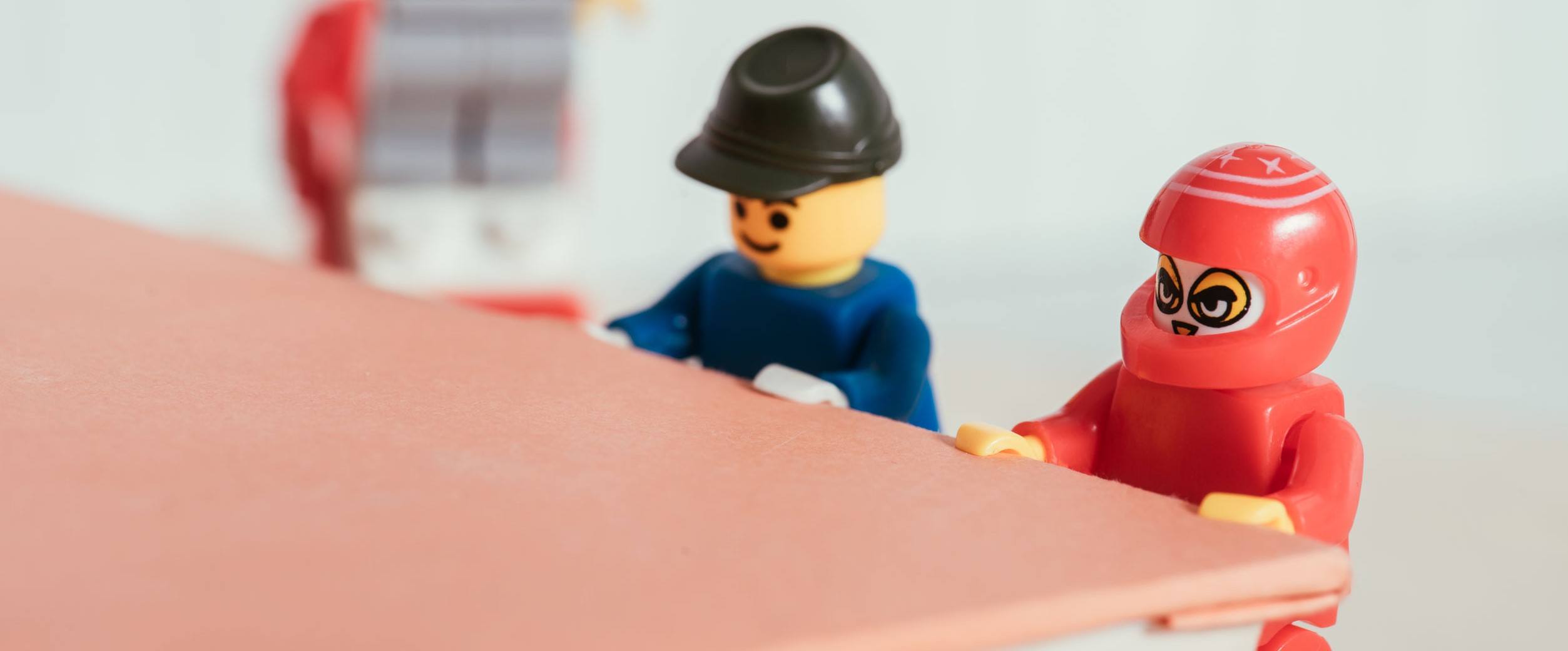
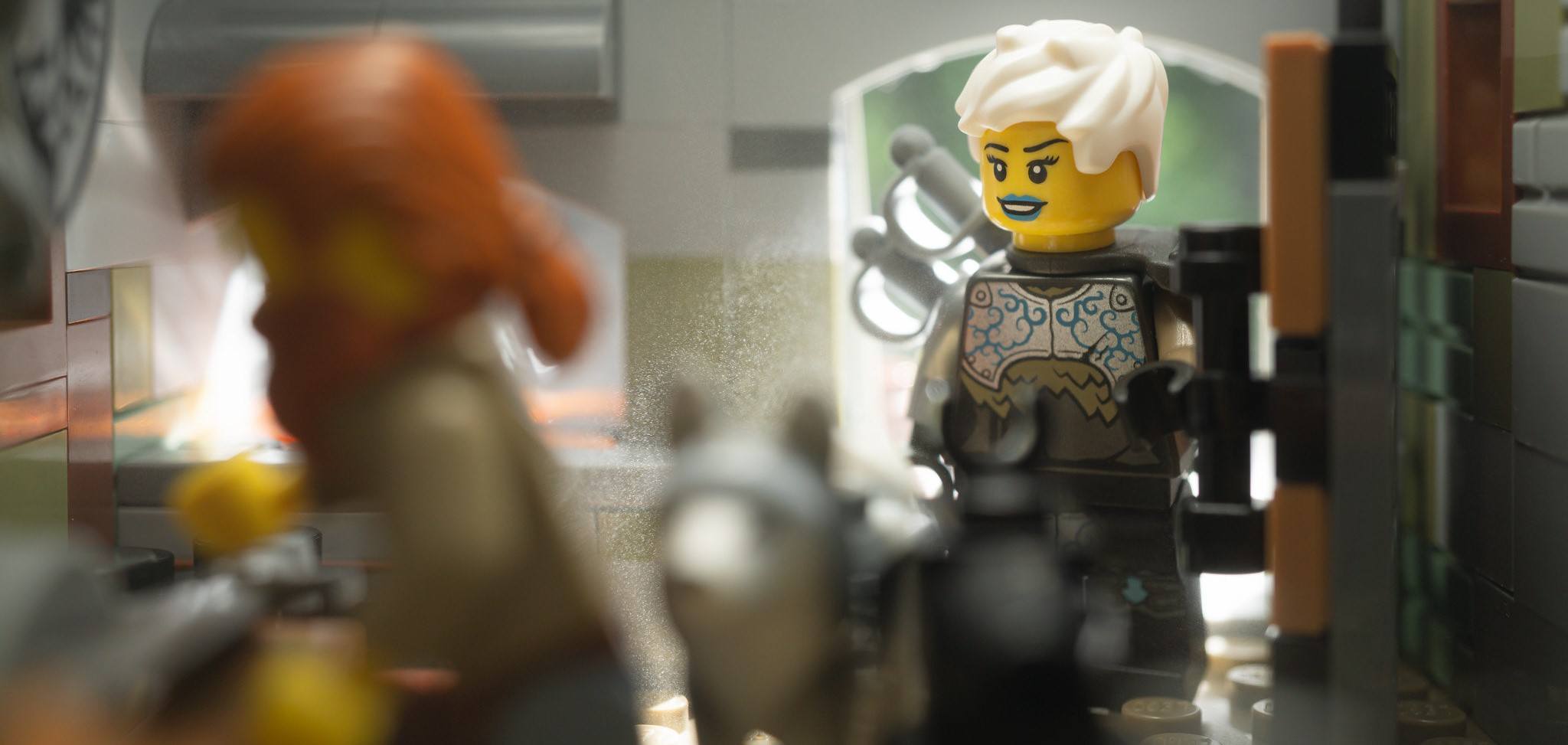
Two LEGOs doing bodyweight training on a book

It’s time to discover the best compound exercises for beginners!

Compound exercises are the most “bang for your buck” when it comes to working out, so I’m super excited you want to learn more about them!

In our 1-on-1 Online Coach Program, we prioritize compound exercises when building workout routines for our clients. We’ll explain why today.


Here’s what we’ll cover:

Also, if you’re in a hurry, we’ve compiled all our strength and weight training content into one handy guide called (appropriately): Strength Training 101: Everything You Need to Know

Grab it for free when you join the Rebellion (that’s us!) below:

Alright, cue the music. Let’s do this thang.

What are Compound Exercises?

These LEGO characters are on a mission to grow some muscle.

Let’s compare “compound exercises” to “isolation exercises”:

  • Compound exercises require more than one muscle group working together to complete the movement. This replicates the way your body naturally moves.
  • Isolation exercises more or less train one specific muscle group. For example, the leg extension machine focuses on your quads, so it “isolates” training that muscle.

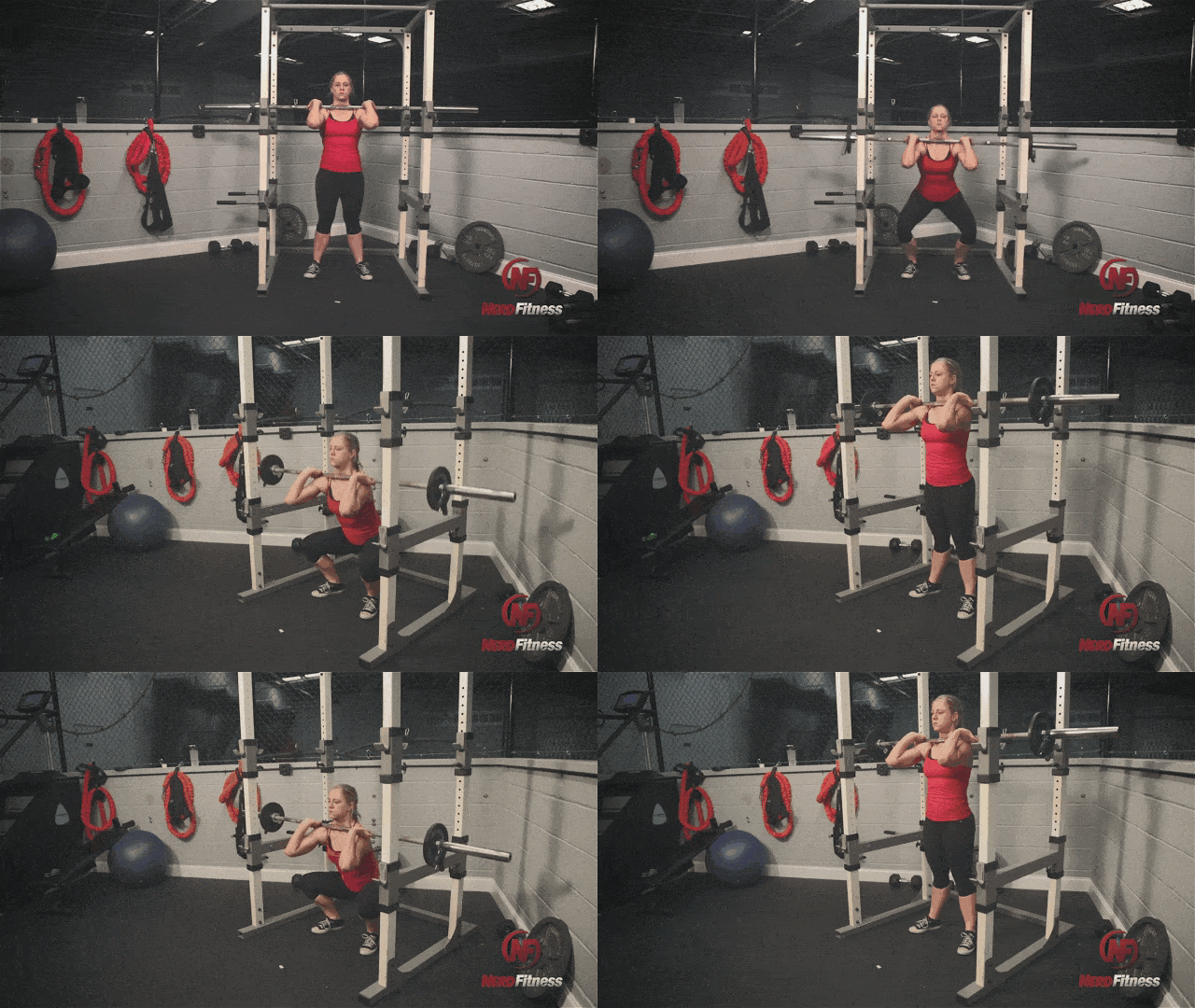
Front squats would be an example of a compound exercise, because it engages your entire  lower body and core, and quite a bit of your upper body too, as you perform the movement:

Coach Staci performing the barbell front squat

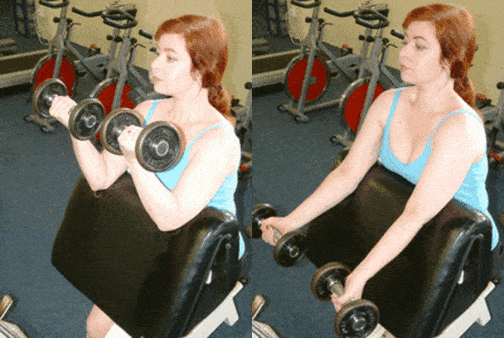
As opposed to biceps curls, which more or less just trains your biceps:

This would be an example of an isolation exercise.

As we explain in our Guide to Functional Fitness, whenever possible you want to focus on compound exercises.

Why?

Because in everyday life, you don’t use your muscles in isolation!

When you’re placing luggage in the overhead bin, hoisting a bag of dog food from the floor, or hauling your kid to bed, you’re using your muscle groups together. 

Just like you would with a compound exercise.

Plus, since you’re using multiple muscle groups at once, you’re taxing your body more when training. This can provide more efficient use of your time in the gym

In other words, why do three different exercises when you can just do one?

A classic scene from SNL

Now that we’ve got that out of the way, let’s get to working out.

The 5 Best Compound Exercises (Bodyweight)

Actually, you probably shouldn't waste your time with sit-ups.

1) The Push-up: The best exercise you could ever do for yourself when it comes to using your bodyweight for “push muscles.”

Muscles trained with the push-up:

  • Pectoral 
  • Triceps
  • Deltoids
  • Abs

Here’s our video on how to do a proper push-up:

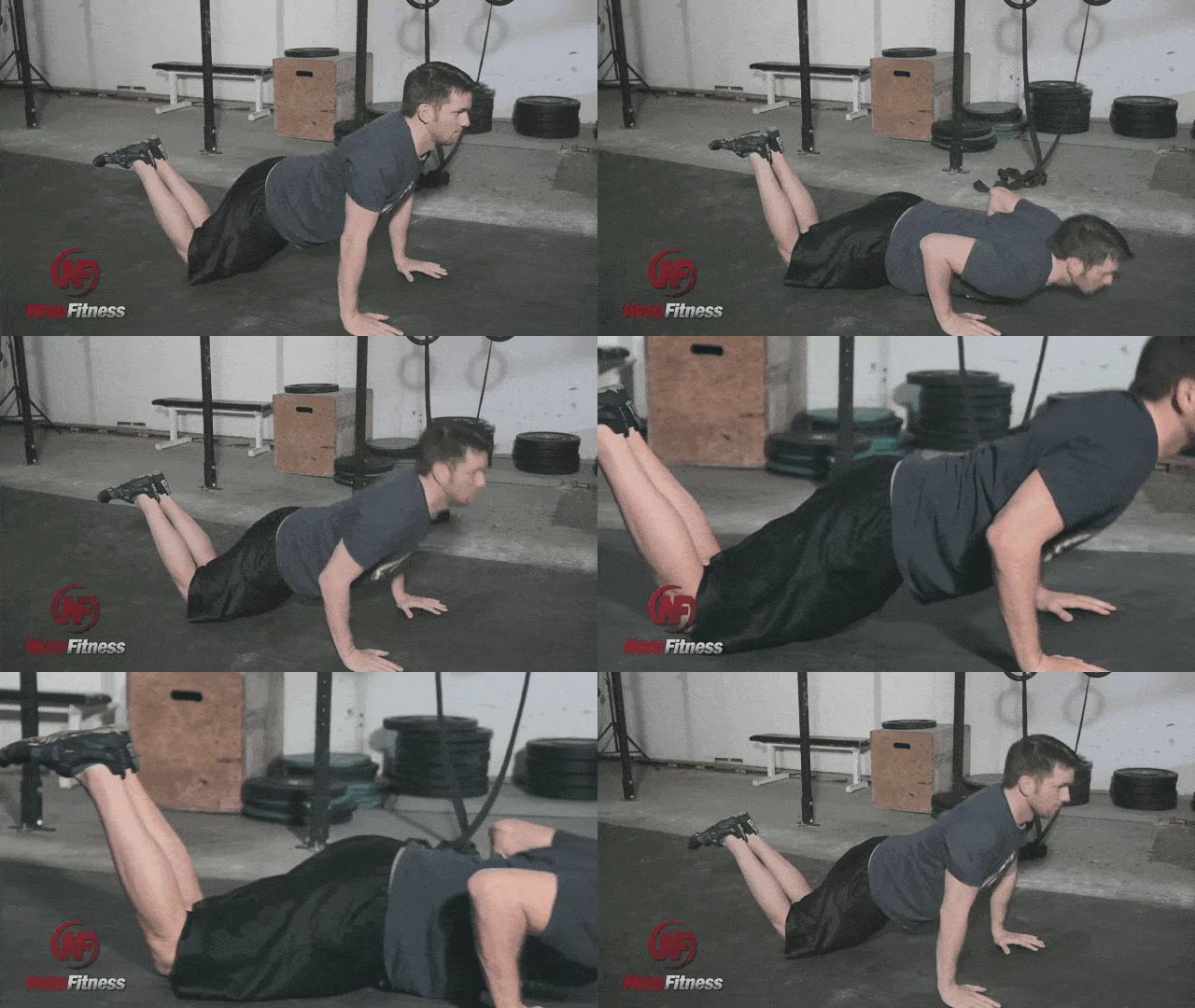
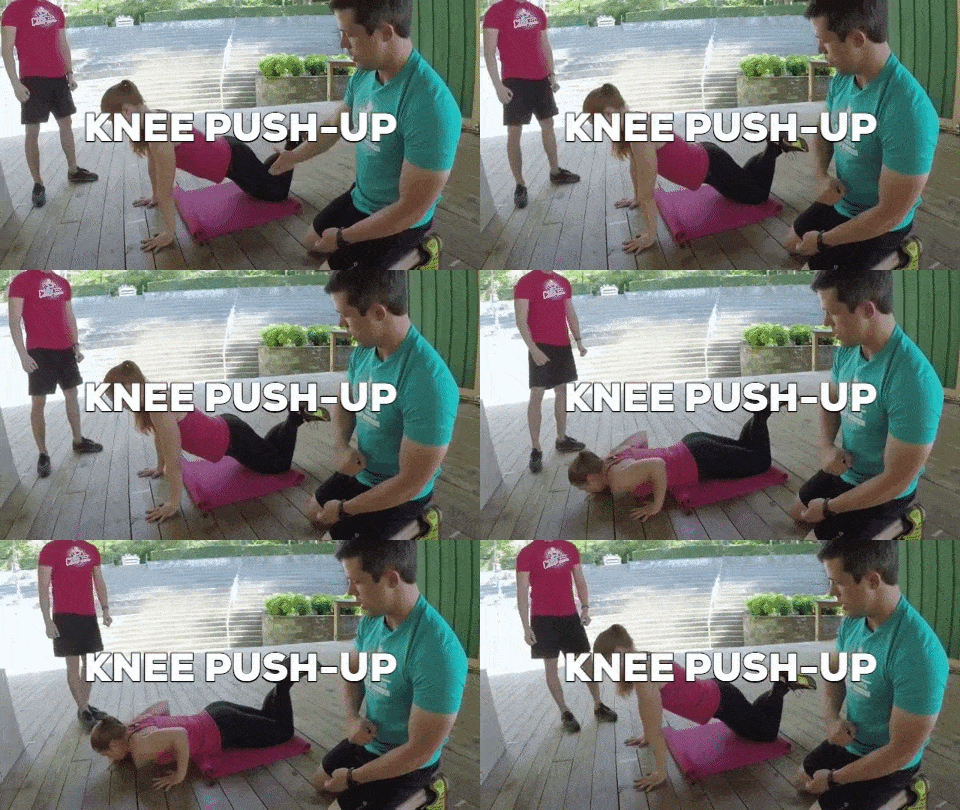
Easier Variation: Knee Push-up

Rebel Leader Steve doing knee push-ups

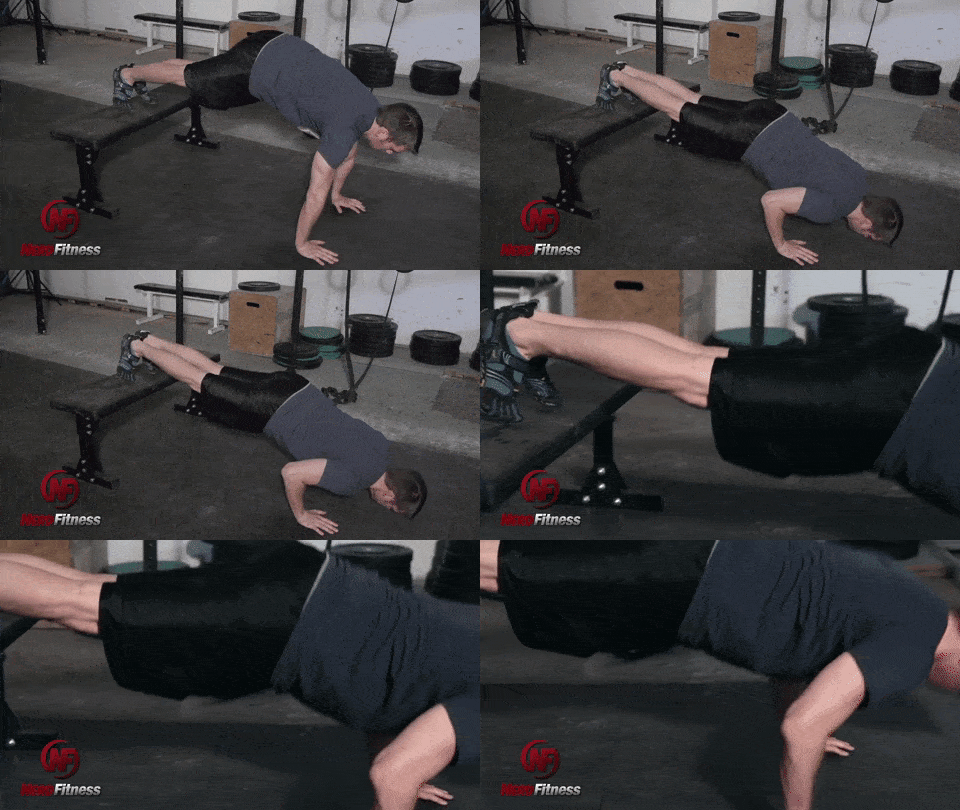
Tougher Variation: Decline Push-up

Decline push-ups like this are a great way to progress your bodyweight exercises.

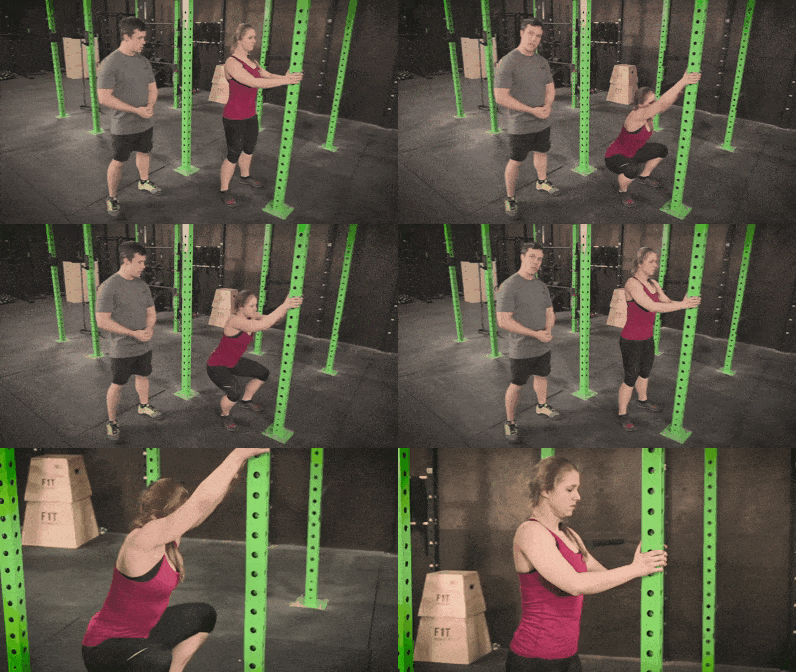
2) The Bodyweight Squat: This exercise serves a dual purpose – it is the foundation for building strength AND helps build proper mobility. If you are going to ever do barbell squats, you need to work on hitting proper depth with a bodyweight squat first! 

Muscles trained with the squat:

Easier Variation: Assisted Bodyweight Squat

Coach Staci showing you the an assisted bodyweight squat

Tougher Variation: Goblet Squat

The goblet squat is a great way to build muscle for women.

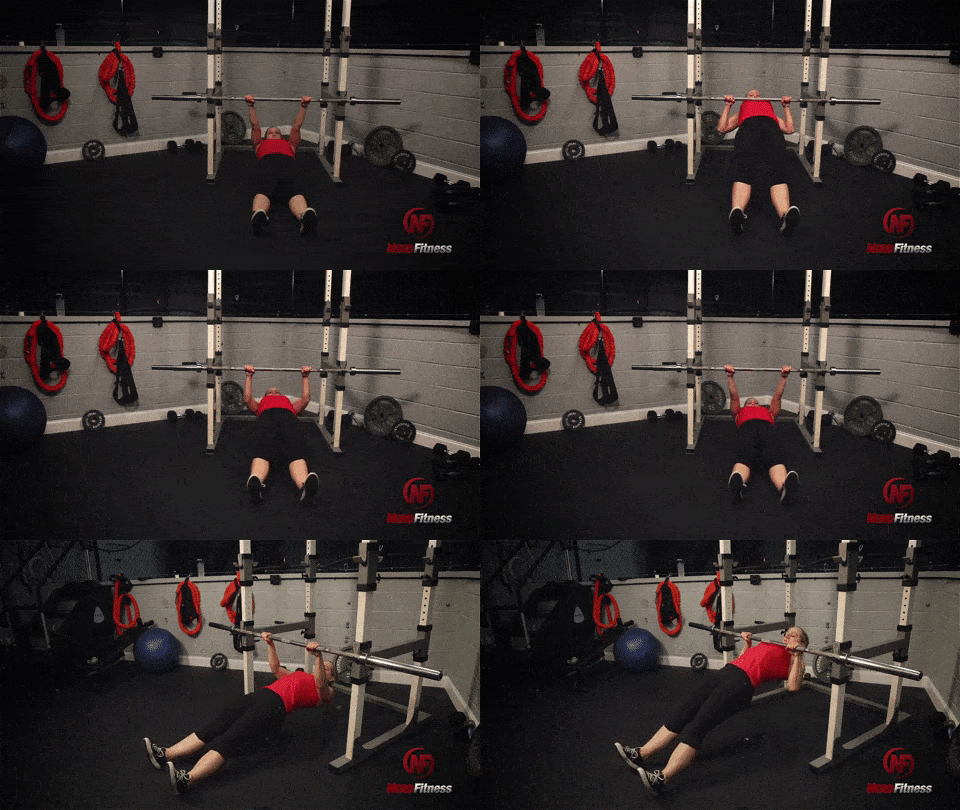
3) The Inverted Bodyweight Row: Until you can get your first pull-up or chin-up, these exercises are GREAT to start building your pull-muscle strength.

As you get lower, like this, the row will be harder to do. Great way to progress into a pull-up.

Muscles trained with the inverted row:

  • All of your back muscles (Latissimus dorsi, rhomboids, trapezius)
  • Biceps
  • Forearm muscles (dorsal, ventral)
  • Your grip

Easier Variation: Incline Inverted Row

A bodyweight row like this is a great "pull" exercise you can while building up strength for pull-ups.

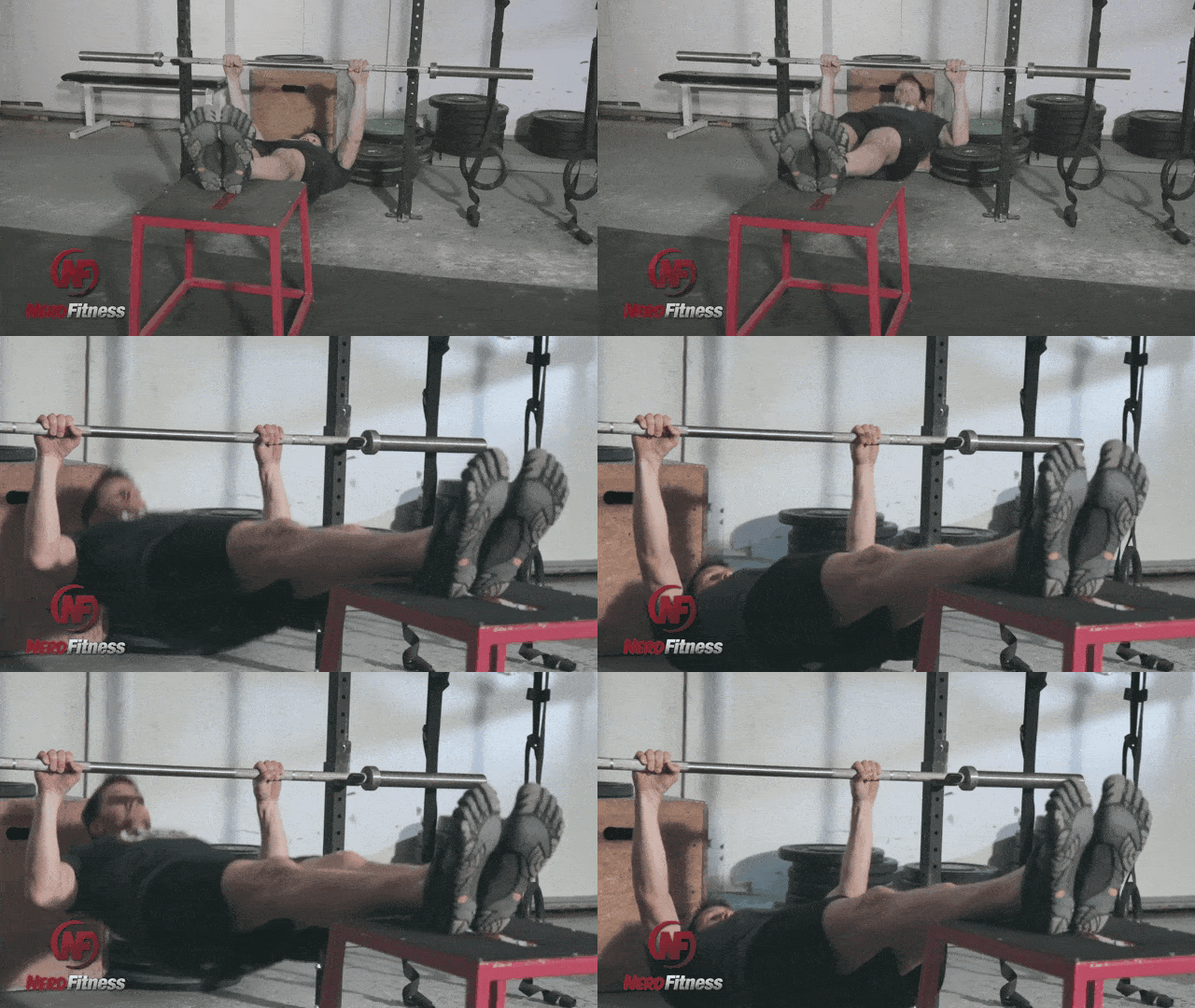
Tougher Variation: Elevated Feet Inverted Row

Raising your feet will make rows more challenging.

4) The Pull-up and Chin-up: Once you can support your body’s weight above the bar, the world becomes your playground. No strength training routine should be without pull-up or chin-up work! (Can’t do a pull-up yet? We got you.)

Muscles trained with the pull-up:

  • All of your back muscles (Latissimus dorsi, rhomboids, trapezius)
  • Biceps
  • Latissimus dorsi (Lats)
  • Trapezius (Traps)
  • Abs
  • Your grip

Here’s how to perform a proper pull-up:

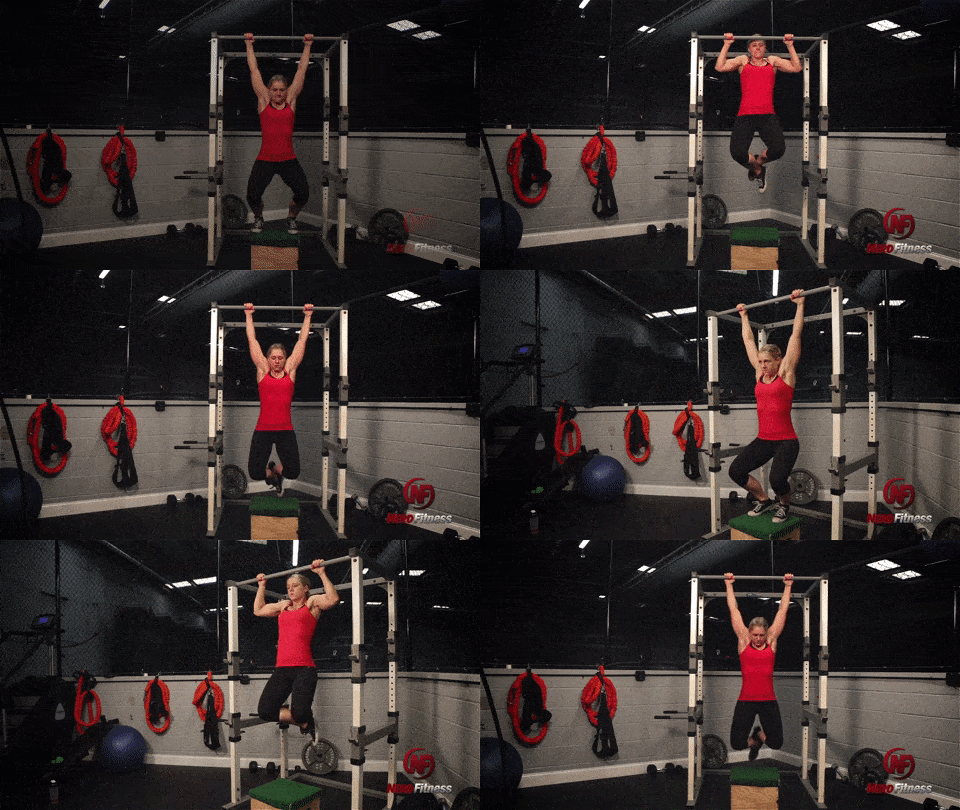
Easier Variation: Negative Pull-ups

Staci jumping up to do a negative pull-up., a great movement until you can bring regular pull-ups into your circuit.

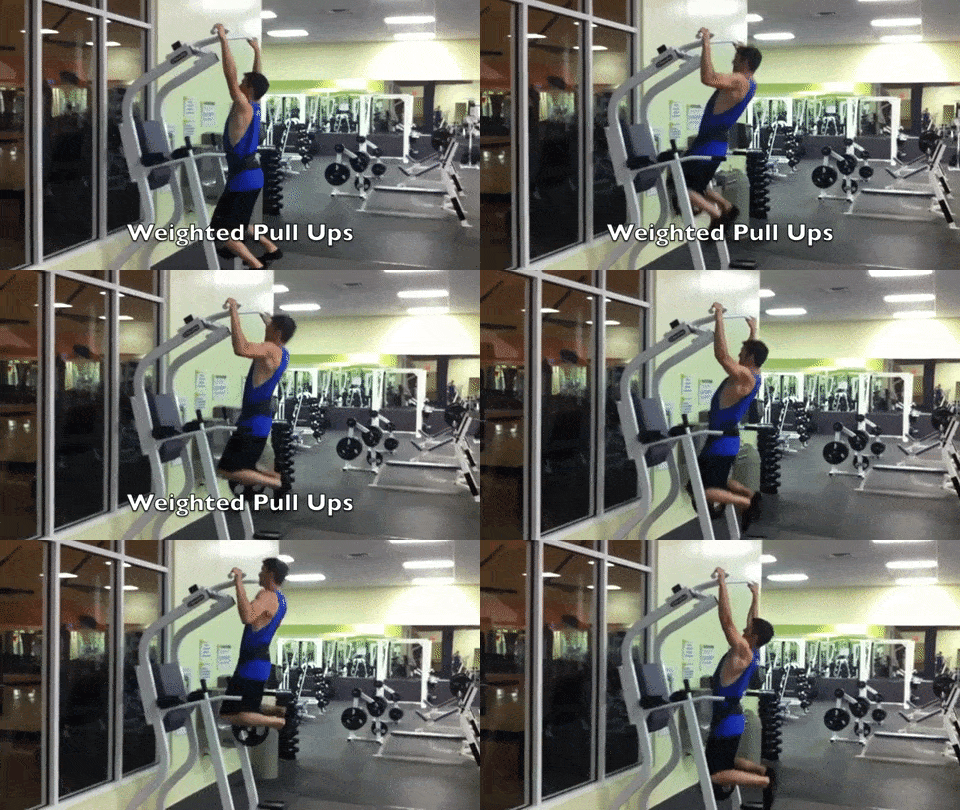
Tougher Variation: Weighted Pull-ups

A weighted pull-up is great for progressive overload on your muscles.

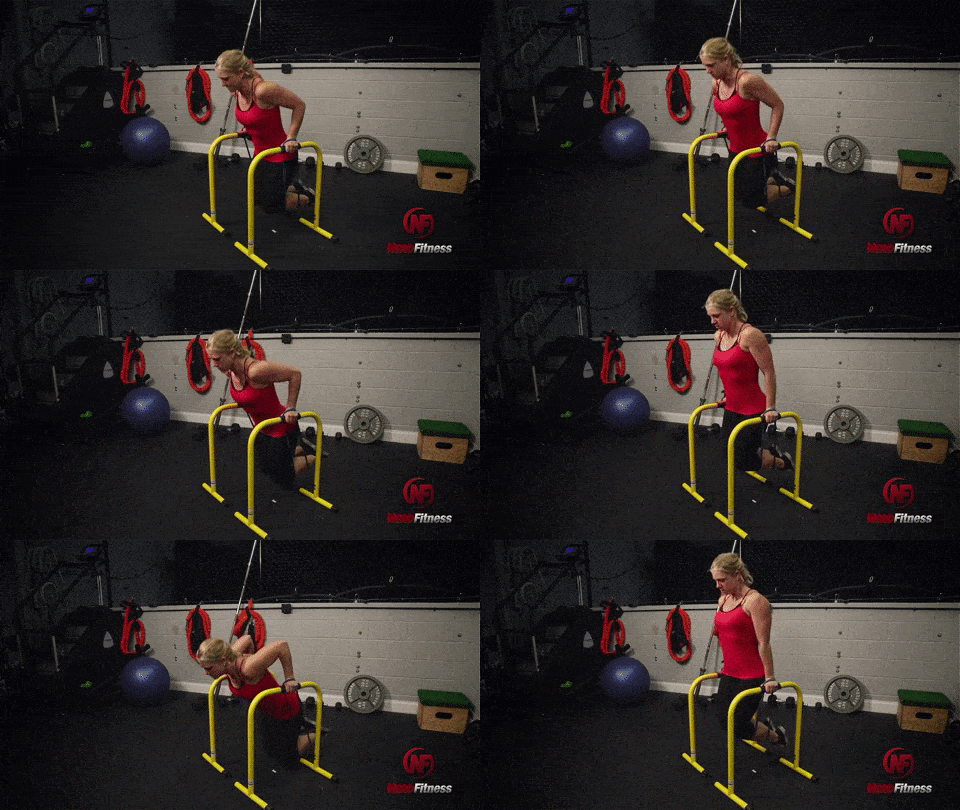
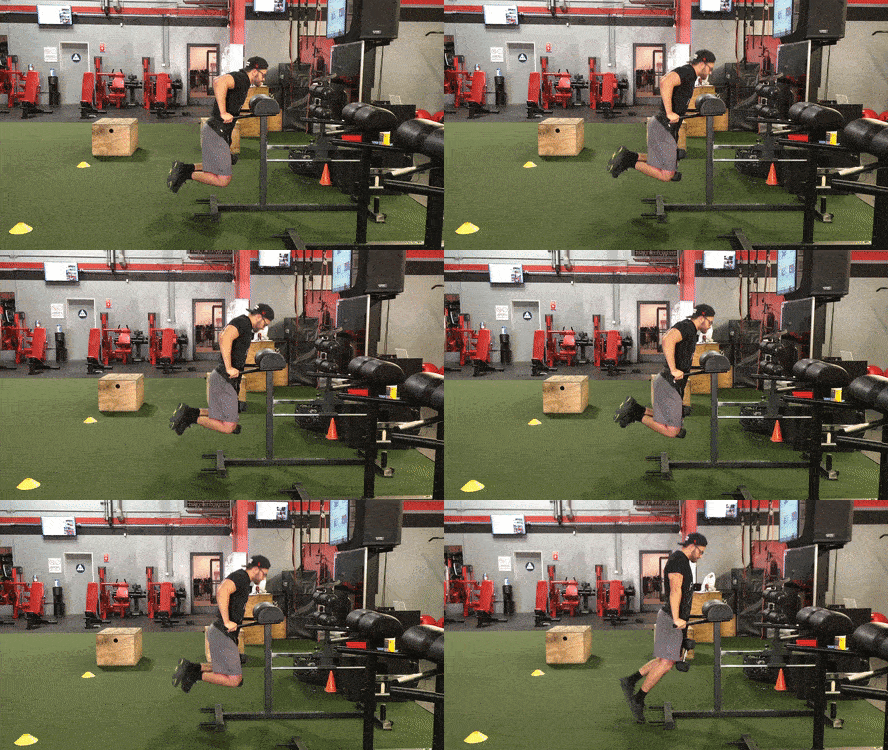
5) The Bodyweight Dip: As you start to get stronger with push-ups and need to find a way to increase the challenge, consider doing dips.

Warning: these are very advanced, but are incredible strength-building exercises. 

Bodyweight dips are a great exercise to include in an strength training practice.

Muscles trained with the dips:

  • Pectoral 
  • Triceps
  • Deltoids
  • Rhomboid (Back muscles)
  • Abs

Easier Variation: Assisted Dips

A resistance band is a great way to get started with this bodyweight exercise.

Tougher Variation: Weighted Dips

My favorite method for doing weighted dips includes a special belt (shown here).

These 5 compound exercises will propel you into the world of bodyweight training. 

For more ideas on how to train without a gym, check out The 42 Best Bodyweight Exercises (Work Out Anywhere).

Now, it’s barbell time![1]

The 7 Best Compound Exercises (Barbell)

These LEGOs are working the bench and doing some deadlifts. Nerd Fitness approves.

After getting comfortable moving your own bodyweight around, it’s time to start training with barbells!

To up the difficulty with these compound exercises, simply add more weight. 

The fun thing about barbells: you can almost always add more weight (disclaimer: provided you do it safely). 

Here are The Best Barbell Compound Exercises

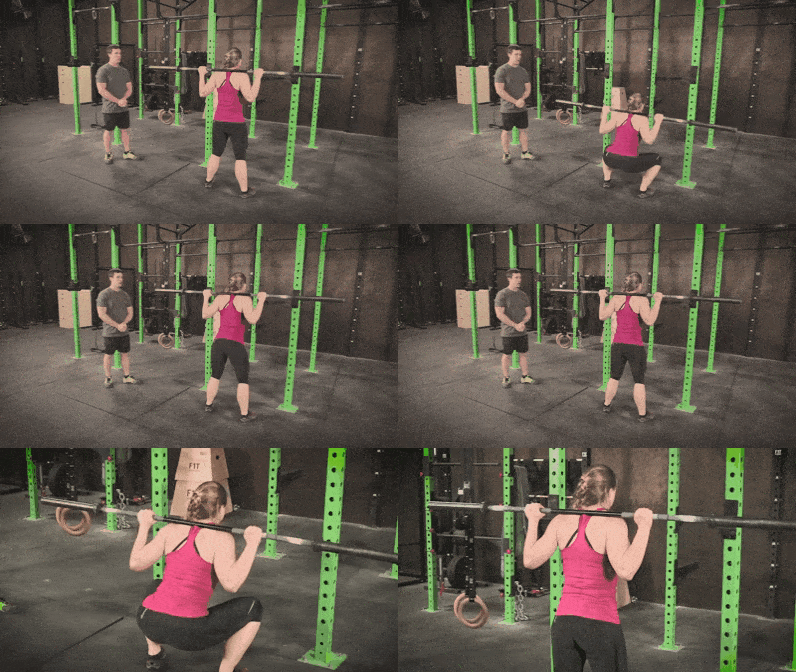
6) The Barbell Squat: Probably the best compound exercise when it comes to building strength and muscle throughout your whole body. 

The back squat will help you transform into a superhero.

Show me somebody who squats heavy and I’ll show you a great physique. This is a MUST.

Here’s how to perform the barbell back squat:

Muscles trained with the barbell squat:

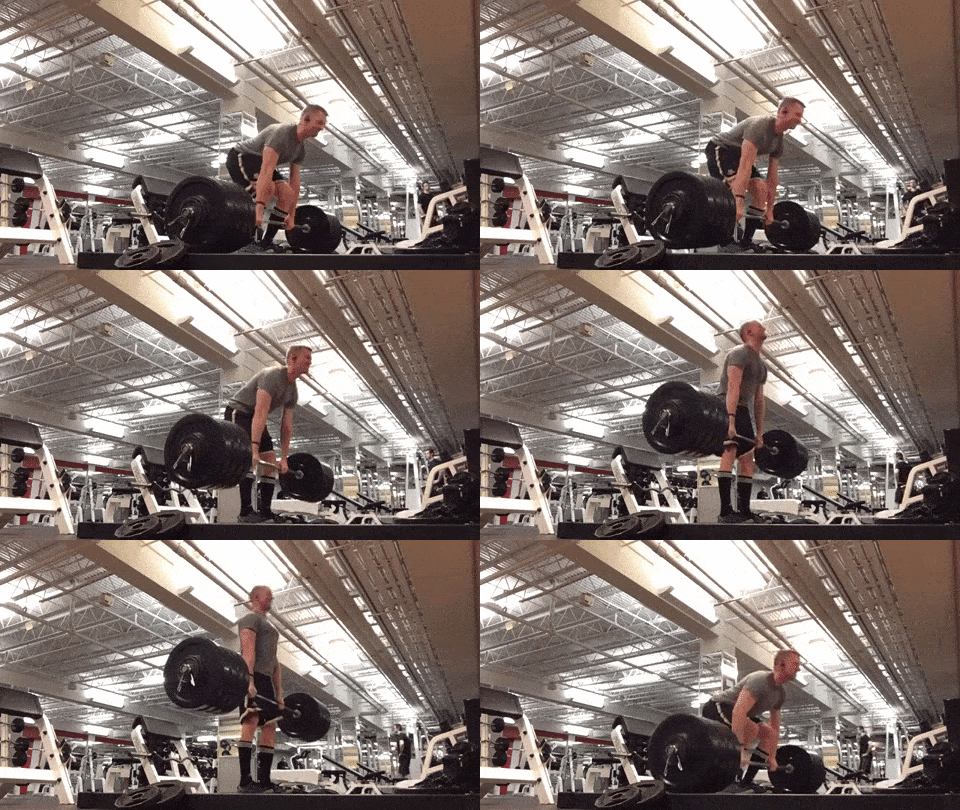
7) The Barbell Deadlift: Maybe the best exercise of all time. 

Rebel Leader Steve showing how to do a 420 lb deadlift at the gym.

It’s certainly the most primal: “pick the weight up off the ground. Done.” 

Here’s how to perform the deadlift:

Muscles trained with the barbell deadlift:

  • Glutes
  • Erectors (Spinal muscle)
  • Hamstrings
  • Pretty much every muscle in your body

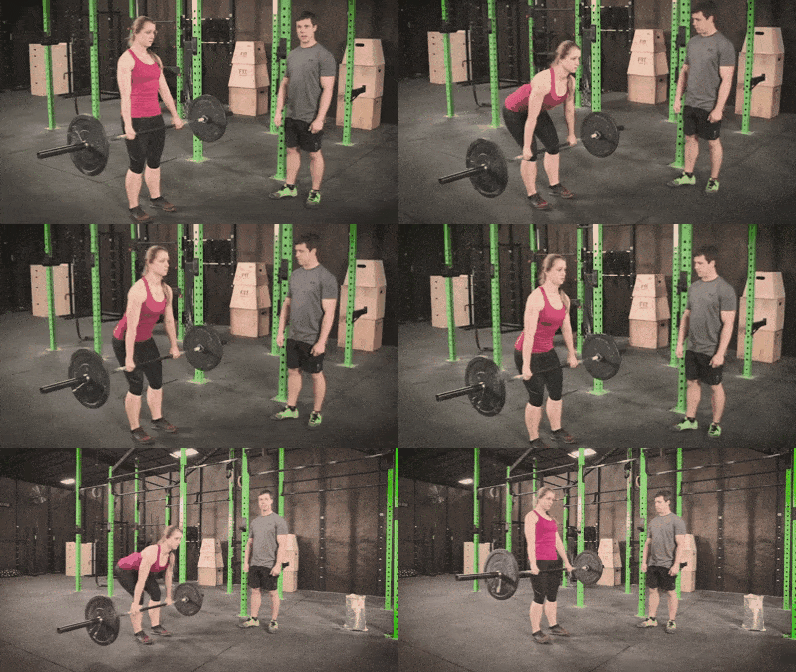
9) The Barbell Romanian Deadlift: Think of this as the top half of a conventional deadlift (imagine you’re a “drinking bird” bending over at the waist):

Coach Staci showing the Romanian deadlift

Here are step-by-step instructions on how to perform the Romanian deadlift:

Muscles trained with the Romanian deadlift:

  • Hamstrings
  • Glutes
  • Erectors (Spinal muscle)
  • Rhomboid (Back muscles)

10) The Barbell Overhead Press: Press a barbell above your head. 

Staci performing the overhead press.

Muscles trained with the overhead press:

  • Pectoral 
  • Triceps
  • Deltoids
  • Rhomboid (Back muscles)
  • Abs

All the muscles in your chest, shoulders, and arms are engaged in order for you to lift the weight over your head. As a bonus, you need to really flex and brace your core, which gets those muscles working too.

Here are step-by-step instructions on how to perform the overhead press:

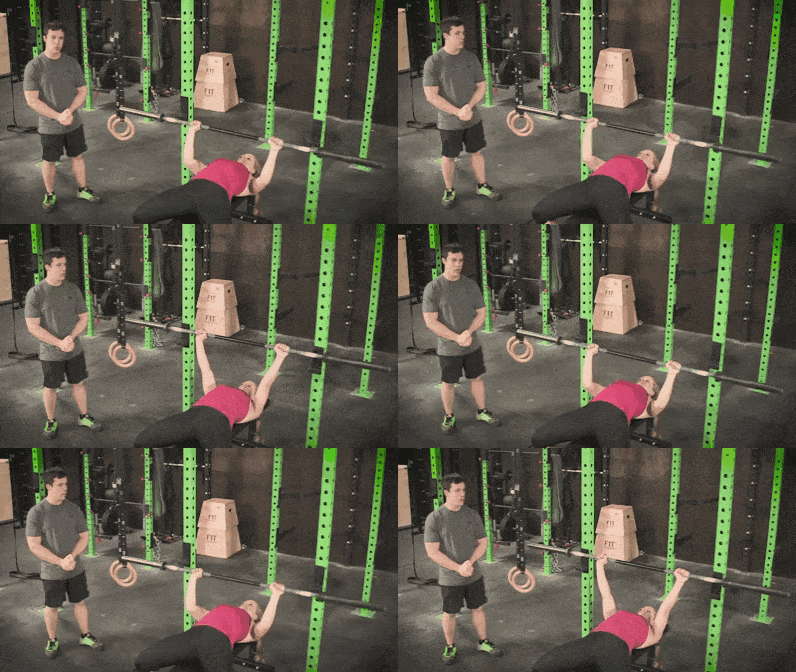
11) The Barbell Bench Press: Lie on a bench, and lower a barbell until it almost touches your chest. Pause, and then press it back up towards the sky. 

As Staci shows here, keep your arms vertical (as much as you can).

Repeat! And get strong. 

Here are step-by-step instructions on how to perform the bench press:

Muscles trained with the benchpress:

  • Pectoral 
  • Triceps
  • Deltoids
  • Rhomboid (Back muscles)
  • Abs
  • Pretty much every muscle in your upper-body

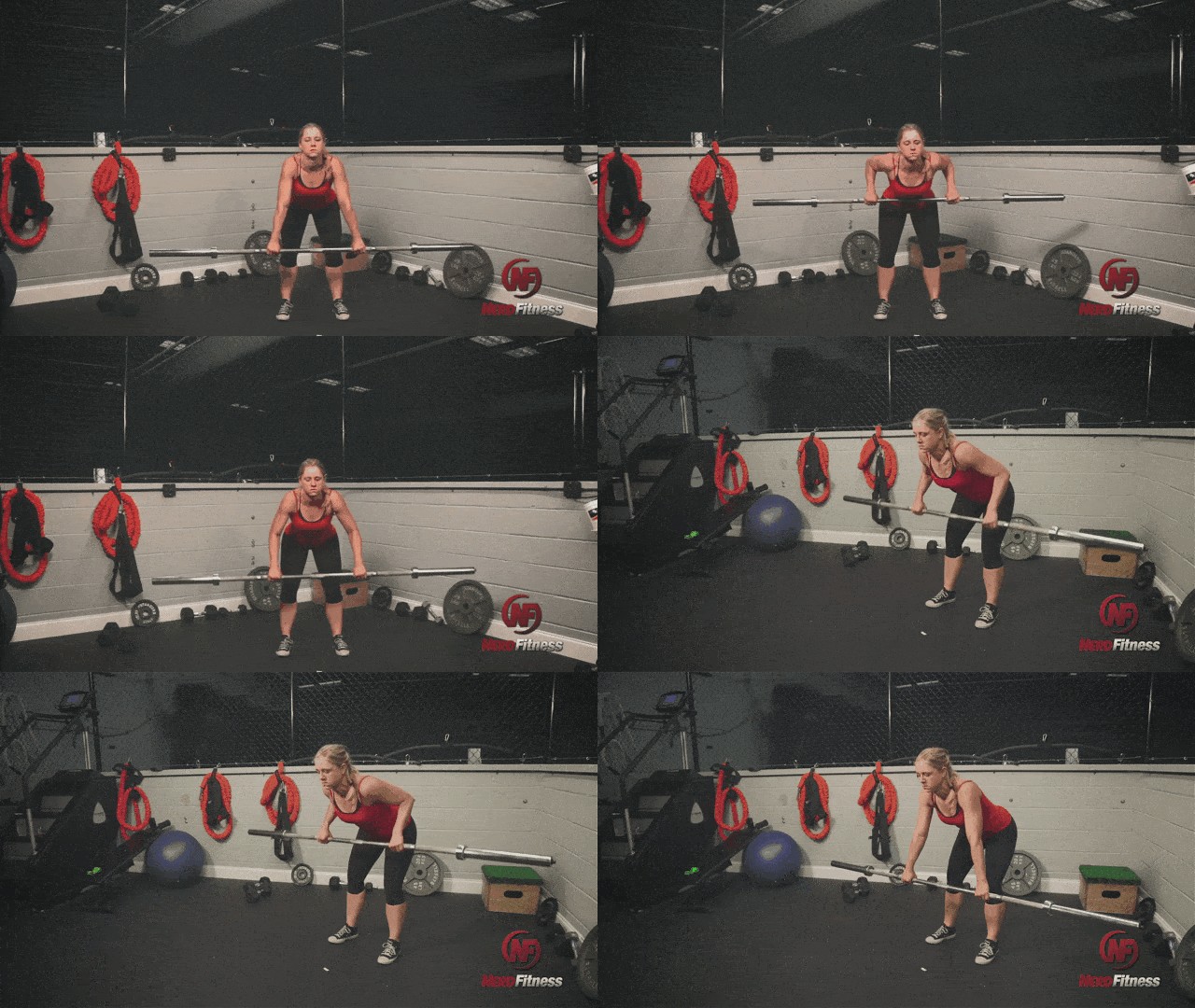
12) The Barbell Bent-Over Row: Bend your torso over and hoist a barbell up.

If you've been following along at home, it's now time for performing the row with a barbell!

Muscles trained with the bent-over row:

  • All of your back muscles (Latissimus dorsi, rhomboids, trapezius)
  • Biceps
  • Forearm muscles (dorsal, ventral)
  • Your grip

Here are step-by-step instructions on how to perform the bent-over row:

Note: The above might be tough if gyms are closed around you. If that’s so, here’s how to build a gym at home (using household equipment).

Start Performing the Best Compound Exercises (Next Steps)

A woman pressing as against a beautiful sky.

Your mission, should you choose to accept it: commit to trying ONE of these compound movements in the next week. Use 20 seconds of courage, recruit a friend who has lifted or trained before, and try your best. 

We all start somewhere! 

Speaking of starting out…

Have you yet to do ANY of these compound exercises?

Always start out with bodyweight moves and make sure your form is correct!

If it’s a barbell movement, use a broomstick (or PVC Pipe). 

When it comes to movements like squats, deadlifts, pull-ups, bench press, etc. – your form is crucial.  Develop good habits with lighter weight and you will save yourself months of frustration later and will protect you from injury.

If you’re struggling with certain elements of a movement, don’t get frustrated! Just understand that you’ll have areas in which you can improve.

When I started, I really liked practicing all of the movements at home because I could watch a video online at the same time as I was watching myself do it in a mirror.

Film yourself and compare it to our videos, or post it to the form check section of the Nerd Fitness Forums.

Still uncomfortable with the movements after that? Look around at some local strength and conditioning gyms and see if you could hire a coach (here’s how to find a good trainer) for one or two sessions just to go over the basic movements (or consider working with an online coach).

No matter what path you take, the most important thing you can do: START NOW!

If you wanna win a race, you need to start it!

Don’t overthink it. Just pick a compound exercise and learn how to do it. We can add more exercises to your routine down the road.

Want a little help getting going? The perfect next step to start your strength training journey!

You got it. 

Option #1) If you want a coach in your pocket, who can do video form checks, provide feedback, and adjust your workouts based on your progress, check out our 1-on-1 Online Coaching Program

I’ve had an online coach since 2015 and it’s changed my life. You can learn more by clicking on the box below: 


Option #2) If you want a daily prompt for doing compound exercises at home, check out NF Journey. Our fun habit-building app helps you exercise more frequently, eat healthier, and level up your life (literally).

Plus, you get to build an awesome superhero in the process!

Try your free trial right here:

Option #3) Join the Rebellion! We need good people like you in our community, the Nerd Fitness Rebellion.

Sign-up below and receive our free guide Strength Training 101: Everything You Need to Know. It includes step-by-step instructions for the Best Compound Exercises covered in today’s guide. 

Alright, enough from me. Your turn:

Do you agree with my list of best compound exercises?

Am I missing any?

Any tips or tricks for a newbie just getting started?

Let me know in the comments!

-Steve

PS: Make sure you check out the rest of our Strength Training 101 series:

###

GIF Source: Weighted Dips, Biceps Curl, Will Ferrell,

Photo Source: lightfieldstudios © 123RF.com, Workout, LEGO bench pressLance Cpl. Tayler P. Schwamb, 101, 102, 103

The post Blog first appeared on Nerd Fitness.

from Nerd Fitness: Helping You Lose Weight, Get Stronger, Live Better. https://ift.tt/3oUGu7D
via IFTTT

Categories
Uncategorized

#holistic #getfit #nutrition The 12 Best Compound Exercises for Beginners (How to Train Efficiently)

Two LEGOs doing bodyweight training on a book

It’s time to discover the best compound exercises for beginners!

Compound exercises are the most “bang for your buck” when it comes to working out, so I’m super excited you want to learn more about them!

In our 1-on-1 Online Coach Program, we prioritize compound exercises when building workout routines for our clients. We’ll explain why today.


Here’s what we’ll cover:

Also, if you’re in a hurry, we’ve compiled all our strength and weight training content into one handy guide called (appropriately): Strength Training 101: Everything You Need to Know

Grab it for free when you join the Rebellion (that’s us!) below:

Alright, cue the music. Let’s do this thang.

What are Compound Exercises?

These LEGO characters are on a mission to grow some muscle.

Let’s compare “compound exercises” to “isolation exercises”:

  • Compound exercises require more than one muscle group working together to complete the movement. This replicates the way your body naturally moves.
  • Isolation exercises more or less train one specific muscle group. For example, the leg extension machine focuses on your quads, so it “isolates” training that muscle.

Front squats would be an example of a compound exercise, because it engages your entire  lower body and core, and quite a bit of your upper body too, as you perform the movement:

Coach Staci performing the barbell front squat

As opposed to biceps curls, which more or less just trains your biceps:

This would be an example of an isolation exercise.

As we explain in our Guide to Functional Fitness, whenever possible you want to focus on compound exercises.

Why?

Because in everyday life, you don’t use your muscles in isolation!

When you’re placing luggage in the overhead bin, hoisting a bag of dog food from the floor, or hauling your kid to bed, you’re using your muscle groups together. 

Just like you would with a compound exercise.

Plus, since you’re using multiple muscle groups at once, you’re taxing your body more when training. This can provide more efficient use of your time in the gym

In other words, why do three different exercises when you can just do one?

A classic scene from SNL

Now that we’ve got that out of the way, let’s get to working out.

The 5 Best Compound Exercises (Bodyweight)

Actually, you probably shouldn't waste your time with sit-ups.

1) The Push-up: The best exercise you could ever do for yourself when it comes to using your bodyweight for “push muscles.”

Muscles trained with the push-up:

  • Pectoral 
  • Triceps
  • Deltoids
  • Abs

Here’s our video on how to do a proper push-up:

Easier Variation: Knee Push-up

Rebel Leader Steve doing knee push-ups

Tougher Variation: Decline Push-up

Decline push-ups like this are a great way to progress your bodyweight exercises.

2) The Bodyweight Squat: This exercise serves a dual purpose – it is the foundation for building strength AND helps build proper mobility. If you are going to ever do barbell squats, you need to work on hitting proper depth with a bodyweight squat first! 

Muscles trained with the squat:

Easier Variation: Assisted Bodyweight Squat

Coach Staci showing you the an assisted bodyweight squat

Tougher Variation: Goblet Squat

The goblet squat is a great way to build muscle for women.

3) The Inverted Bodyweight Row: Until you can get your first pull-up or chin-up, these exercises are GREAT to start building your pull-muscle strength.

As you get lower, like this, the row will be harder to do. Great way to progress into a pull-up.

Muscles trained with the inverted row:

  • All of your back muscles (Latissimus dorsi, rhomboids, trapezius)
  • Biceps
  • Forearm muscles (dorsal, ventral)
  • Your grip

Easier Variation: Incline Inverted Row

A bodyweight row like this is a great "pull" exercise you can while building up strength for pull-ups.

Tougher Variation: Elevated Feet Inverted Row

Raising your feet will make rows more challenging.

4) The Pull-up and Chin-up: Once you can support your body’s weight above the bar, the world becomes your playground. No strength training routine should be without pull-up or chin-up work! (Can’t do a pull-up yet? We got you.)

Muscles trained with the pull-up:

  • All of your back muscles (Latissimus dorsi, rhomboids, trapezius)
  • Biceps
  • Latissimus dorsi (Lats)
  • Trapezius (Traps)
  • Abs
  • Your grip

Here’s how to perform a proper pull-up:

Easier Variation: Negative Pull-ups

Staci jumping up to do a negative pull-up., a great movement until you can bring regular pull-ups into your circuit.

Tougher Variation: Weighted Pull-ups

A weighted pull-up is great for progressive overload on your muscles.

5) The Bodyweight Dip: As you start to get stronger with push-ups and need to find a way to increase the challenge, consider doing dips.

Warning: these are very advanced, but are incredible strength-building exercises. 

Bodyweight dips are a great exercise to include in an strength training practice.

Muscles trained with the dips:

  • Pectoral 
  • Triceps
  • Deltoids
  • Rhomboid (Back muscles)
  • Abs

Easier Variation: Assisted Dips

A resistance band is a great way to get started with this bodyweight exercise.

Tougher Variation: Weighted Dips

My favorite method for doing weighted dips includes a special belt (shown here).

These 5 compound exercises will propel you into the world of bodyweight training. 

For more ideas on how to train without a gym, check out The 42 Best Bodyweight Exercises (Work Out Anywhere).

Now, it’s barbell time![1]

The 7 Best Compound Exercises (Barbell)

These LEGOs are working the bench and doing some deadlifts. Nerd Fitness approves.

After getting comfortable moving your own bodyweight around, it’s time to start training with barbells!

To up the difficulty with these compound exercises, simply add more weight. 

The fun thing about barbells: you can almost always add more weight (disclaimer: provided you do it safely). 

Here are The Best Barbell Compound Exercises

6) The Barbell Squat: Probably the best compound exercise when it comes to building strength and muscle throughout your whole body. 

The back squat will help you transform into a superhero.

Show me somebody who squats heavy and I’ll show you a great physique. This is a MUST.

Here’s how to perform the barbell back squat:

Muscles trained with the barbell squat:

7) The Barbell Deadlift: Maybe the best exercise of all time. 

Rebel Leader Steve showing how to do a 420 lb deadlift at the gym.

It’s certainly the most primal: “pick the weight up off the ground. Done.” 

Here’s how to perform the deadlift:

Muscles trained with the barbell deadlift:

  • Glutes
  • Erectors (Spinal muscle)
  • Hamstrings
  • Pretty much every muscle in your body

9) The Barbell Romanian Deadlift: Think of this as the top half of a conventional deadlift (imagine you’re a “drinking bird” bending over at the waist):

Coach Staci showing the Romanian deadlift

Here are step-by-step instructions on how to perform the Romanian deadlift:

Muscles trained with the Romanian deadlift:

  • Hamstrings
  • Glutes
  • Erectors (Spinal muscle)
  • Rhomboid (Back muscles)

10) The Barbell Overhead Press: Press a barbell above your head. 

Staci performing the overhead press.

Muscles trained with the overhead press:

  • Pectoral 
  • Triceps
  • Deltoids
  • Rhomboid (Back muscles)
  • Abs

All the muscles in your chest, shoulders, and arms are engaged in order for you to lift the weight over your head. As a bonus, you need to really flex and brace your core, which gets those muscles working too.

Here are step-by-step instructions on how to perform the overhead press:

11) The Barbell Bench Press: Lie on a bench, and lower a barbell until it almost touches your chest. Pause, and then press it back up towards the sky. 

As Staci shows here, keep your arms vertical (as much as you can).

Repeat! And get strong. 

Here are step-by-step instructions on how to perform the bench press:

Muscles trained with the benchpress:

  • Pectoral 
  • Triceps
  • Deltoids
  • Rhomboid (Back muscles)
  • Abs
  • Pretty much every muscle in your upper-body

12) The Barbell Bent-Over Row: Bend your torso over and hoist a barbell up.

If you've been following along at home, it's now time for performing the row with a barbell!

Muscles trained with the bent-over row:

  • All of your back muscles (Latissimus dorsi, rhomboids, trapezius)
  • Biceps
  • Forearm muscles (dorsal, ventral)
  • Your grip

Here are step-by-step instructions on how to perform the bent-over row:

Note: The above might be tough if gyms are closed around you. If that’s so, here’s how to build a gym at home (using household equipment).

Start Performing the Best Compound Exercises (Next Steps)

A woman pressing as against a beautiful sky.

Your mission, should you choose to accept it: commit to trying ONE of these compound movements in the next week. Use 20 seconds of courage, recruit a friend who has lifted or trained before, and try your best. 

We all start somewhere! 

Speaking of starting out…

Have you yet to do ANY of these compound exercises?

Always start out with bodyweight moves and make sure your form is correct!

If it’s a barbell movement, use a broomstick (or PVC Pipe). 

When it comes to movements like squats, deadlifts, pull-ups, bench press, etc. – your form is crucial.  Develop good habits with lighter weight and you will save yourself months of frustration later and will protect you from injury.

If you’re struggling with certain elements of a movement, don’t get frustrated! Just understand that you’ll have areas in which you can improve.

When I started, I really liked practicing all of the movements at home because I could watch a video online at the same time as I was watching myself do it in a mirror.

Film yourself and compare it to our videos, or post it to the form check section of the Nerd Fitness Forums.

Still uncomfortable with the movements after that? Look around at some local strength and conditioning gyms and see if you could hire a coach (here’s how to find a good trainer) for one or two sessions just to go over the basic movements (or consider working with an online coach).

No matter what path you take, the most important thing you can do: START NOW!

If you wanna win a race, you need to start it!

Don’t overthink it. Just pick a compound exercise and learn how to do it. We can add more exercises to your routine down the road.

Want a little help getting going? The perfect next step to start your strength training journey!

You got it. 

Option #1) If you want a coach in your pocket, who can do video form checks, provide feedback, and adjust your workouts based on your progress, check out our 1-on-1 Online Coaching Program

I’ve had an online coach since 2015 and it’s changed my life. You can learn more by clicking on the box below: 


Option #2) If you want a daily prompt for doing compound exercises at home, check out NF Journey. Our fun habit-building app helps you exercise more frequently, eat healthier, and level up your life (literally).

Plus, you get to build an awesome superhero in the process!

Try your free trial right here:

Option #3) Join the Rebellion! We need good people like you in our community, the Nerd Fitness Rebellion.

Sign-up below and receive our free guide Strength Training 101: Everything You Need to Know. It includes step-by-step instructions for the Best Compound Exercises covered in today’s guide. 

Alright, enough from me. Your turn:

Do you agree with my list of best compound exercises?

Am I missing any?

Any tips or tricks for a newbie just getting started?

Let me know in the comments!

-Steve

PS: Make sure you check out the rest of our Strength Training 101 series:

###

GIF Source: Weighted Dips, Biceps Curl, Will Ferrell,

Photo Source: lightfieldstudios © 123RF.com, Workout, LEGO bench pressLance Cpl. Tayler P. Schwamb, 101, 102, 103

The post Blog first appeared on Nerd Fitness.

from Nerd Fitness: Helping You Lose Weight, Get Stronger, Live Better. https://ift.tt/3oUGu7D
via IFTTT
Categories
Uncategorized

#healthyliving #holistic #nutrition Side Plank for Beginners

Do you struggle with side plank?

If you do, you are NOT alone.

There’s a reason it’s become the “unofficial” exercise of The Balanced Life Sisterhood and why we see so many side plank photos from members sharing their excitement when they finally reach their goal of doing a full side plank!

Side plank is a challenging exercise that requires your whole body and a lot of strength – which is why you’ll find it in many of my workouts. It’s so efficient!

It’s an exercise that many people who are new to Pilates struggle with in the beginning and work towards building up to – so be patient with yourself, trust the process, and you will get stronger the more you do it.

Also, remember that modifying is NOT CHEATING. Modifying is a way of working with your body where it’s at and building strength.

To be honest, there are days I modify as well – and I’m definitely not a Pilates beginner. So no guilt if you aren’t a beginner and choose to modify when doing side plank. It’s an amazing exercise in every progression and sometimes it’s good to go back to the basics!

So let’s dive in…

How to do a side plank

To get started, prop yourself up on your forearm, making sure your shoulder is right over your elbow. You want to create a base of support for your shoulder so be careful to not draw your arm in too close. Then lift your rib cage away from your mat to lengthen and align your spine.

how to do a side plank

To take it to the next level, straightening your top leg, but keeping your bottom leg bent for support. In both positions you’ll get great work for your full body, with an extra focus on the core!

side plank for beginners

Once you feel strong in this position, the next step is to take both legs up and into a full side plank! Continue to keep your shoulder stacked right over your elbow, lifting from the underside of your body, and pushing down into your bottom leg to keep your legs active and strong!

pilates side plank

Feeling really strong and ready for more? For an extra challenge, take that top left and LIFT!

pilates side plank how to

The side plank is a true full body exercise, you’ll work your entire body just by holding it for 10 seconds – no matter which level you are at!

Remember, wherever you are in your Pilates journey and which ever version of side plank you choose today, you’re right where you need to be.

Be patient with yourself, remember to breathe, modify when you need to (some days you’re going to feel stronger than others and that’s totally normal), and trust the process.

And if you have any questions about the side plank, leave them for me below!

xo,

PS – Looking for more Pilates modifications and progressions? Check out my Pilates exercise breakdowns for more details on popular Pilates exercises!

The post Side Plank for Beginners appeared first on The Balanced Life.

from Blog – The Balanced Life https://ift.tt/3cNqIc2
via IFTTT
Categories
Uncategorized

#holistic #getfit #nutrition The Beginner Bodyweight Workout: Try this 20 Minute Routine At Home or Anywhere!

A Lego Yoda

So you want to lose weight and get in shape, but you don’t want to leave your house?

Well, as your fitness Yoda, I will teach you this great bodyweight workout routine that you can do anywhere: 

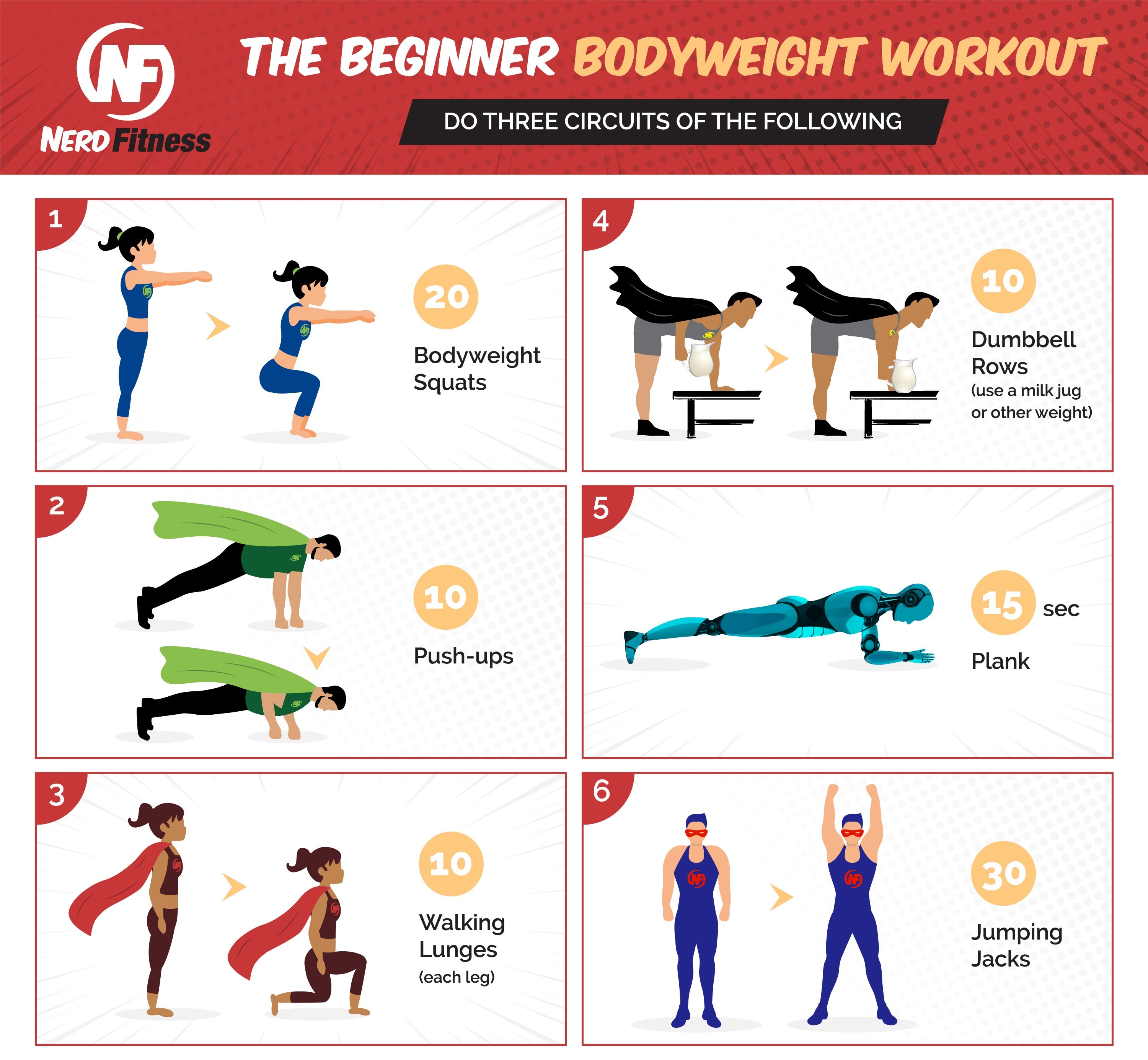
An infographic of the Beginner Bodyweight Workout

In your living room, at a park, or in a galaxy far, far away….

These are the types of workouts we build for our busy Online Coaching Clients, and I’m pumped to share it with you today! 


Here’s how we’ll dig into the different parts of this workout and get to the action:

Make sure you also download the Beginner Bodyweight Workout PDF so you can track your progress and level up at home.

I’ll send it on over when you join the Nerd Fitness Rebellion in the box below:

Note: If you’re here because your gym is shut down due to the outbreak of Covid-19, check out our guide “How to Stay In Shape (While Staying Inside).”

Can You Build Muscle Mass With Bodyweight Exercises?

This runner definitely has a strong core!

You want to know:

Can you build muscle mass with bodyweight exercises?

Yep, bodyweight exercises can build muscle mass, as long as continuously challenge your muscles by:

  • Increasing reps.
  • Decreasing your rest periods.
  • Performing more difficult variations.
  • Increasing your time under tension (by going slower).

Just ask our friend Jimmy here, who got in great shape using bodyweight exercises in his apartment:

Jimmy before and after he did bodyweight training

You just need to make sure you have the right program to follow.

Enter the Beginner Bodyweight Workout.

I’m going to take you through a basic home workout today that can be completed anywhere – in your house, apartment, out at a park, in your basement, on the moon, wherever.

Beginner Body Weight Workout Video & exercises

This is the Beginner Bodyweight Workout (3 Circuits): 

  • 20 Bodyweight squats.
  • 10 Push-ups.
  • 10 Walking lunges (each leg).
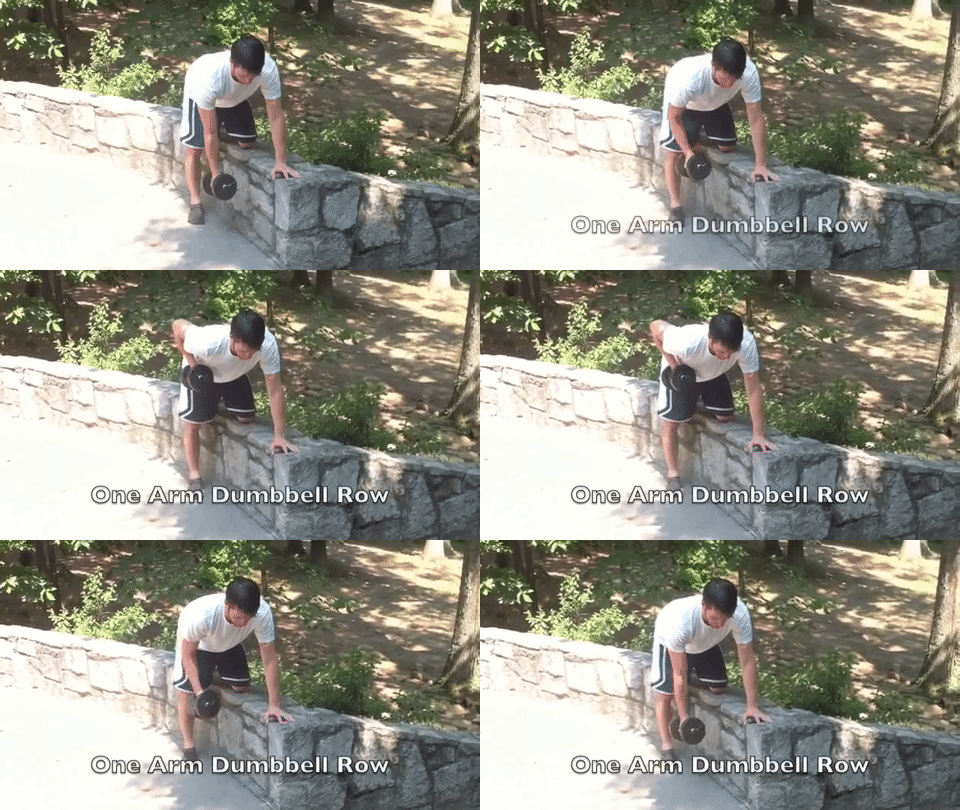
  • 10 Dumbbell rows (use a milk jug or other weight).
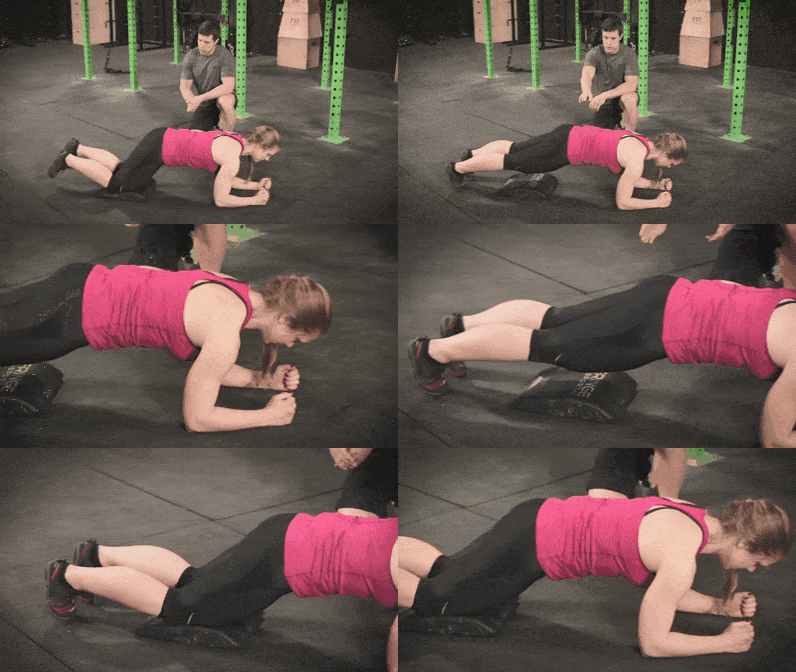
  • 15 Second Plank.
  • 30 Jumping jacks.

See our section below on best bodyweight exercises to see how to do each of these exercises!

In a circuit routine, you’ll do each exercise in succession without a break in between (if you’re able).

  • Once you’ve finished all exercises in the circuit, do it again.
  • If you’re still able after the 2nd run through, go for a third.

Because all of these exercises come one after another, you’re bound to get tired – and that’s okay!

It’s better to stop and take a break than to do an exercise incorrectly.

Before you start, don’t forget to do a Dynamic Warm-Up – Make sure to get your heart rate pumping and get your muscles warmed or you’re just asking for injury.

You can run in place, jump rope, do a few push-ups, pedal on a stationary bike, do some punches and kicks, jog up and down your stairs, and/or twist and swing your arms and legs to get them moving!

Here’s a beginner warm-up you can try:

After you’ve completed your workout at home, feel free to cool down and stretch

“HOW OFTEN SHOULD I DO THE BEGINNER BODYWEIGHT WORKOUT?”

Do this routine 2-3 times a week, but never on consecutive days.

You don’t build muscle when you’re exercising, you build muscle when you’re resting, so try not to do a strength training routine (of the same muscle groups) two days in a row.

I like to follow a training pattern of:

Alternatively, pick one of these fun exercises to do on your off days instead!

In addition to checking out our Online Coaching Program, make sure you download the worksheet for this workout by joining the Rebellion (our free online community)!

I’ll send it to you right away when you sign up in the box below:

The 12 Best Bodyweight Exercises For Beginners

Another angle of showing how to setup a proper push-up.

As laid out above in our Beginner Bodyweight Workout video, there are some key movements you can work on to help you get started strength training

Here’s how to do every bodyweight exercise covered today:

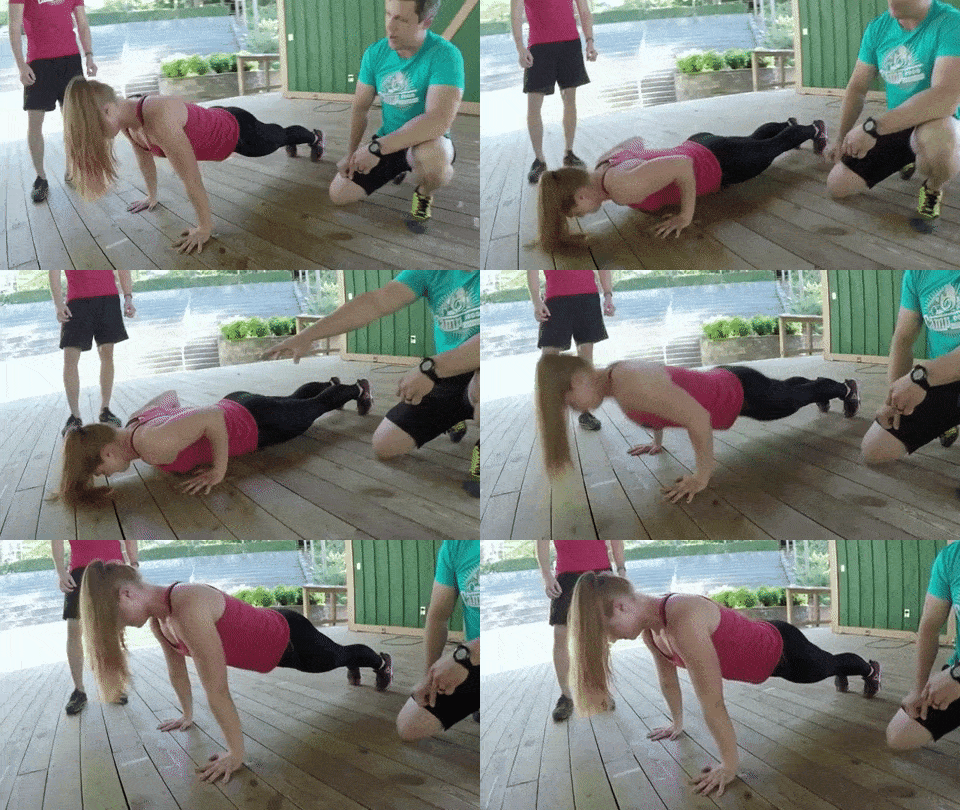
1) KNEE PUSH-UP

Knee push-ups like this are a great way to progress to a regular push-up!

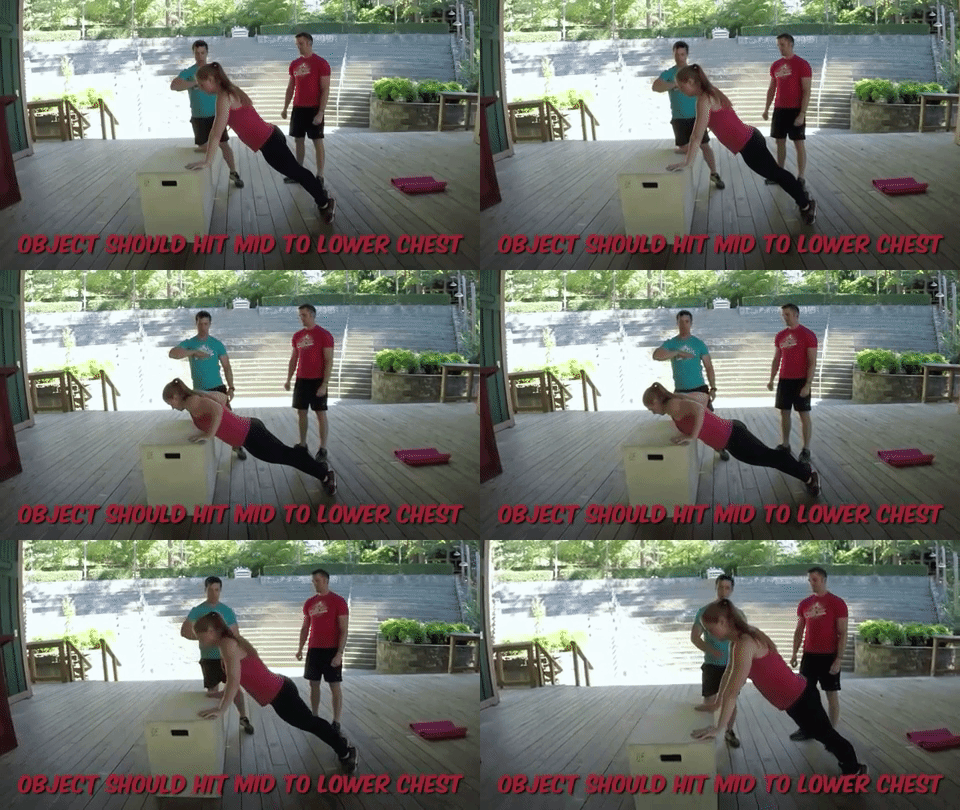
2) ELEVATED PUSH-UP

Do elevated push-ups to work up to regular push-ups

3) REGULAR PUSH-UP

This gif shows Staci doing a push-up in perfect form.

We have a whole article on how to do a proper push-up, but we also cover it extensively in this 5-minute video:

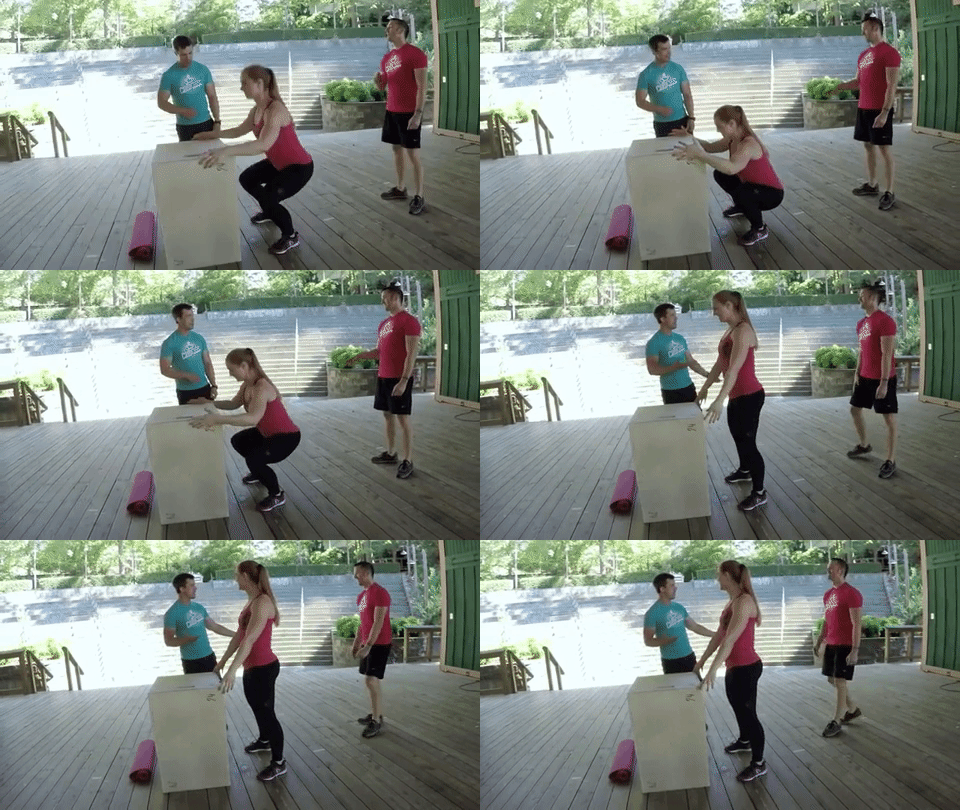
4) ASSISTED BODYWEIGHT SQUAT (if you can’t do regular bodyweight squats):

Doing assisted bodyweight squats is a great step towards regular bodyweight squats 

5) PROPER BODYWEIGHT SQUAT:

Do a proper bodyweight squat to work out your legs

If you want even more instruction, here’s how to do a proper bodyweight squat:

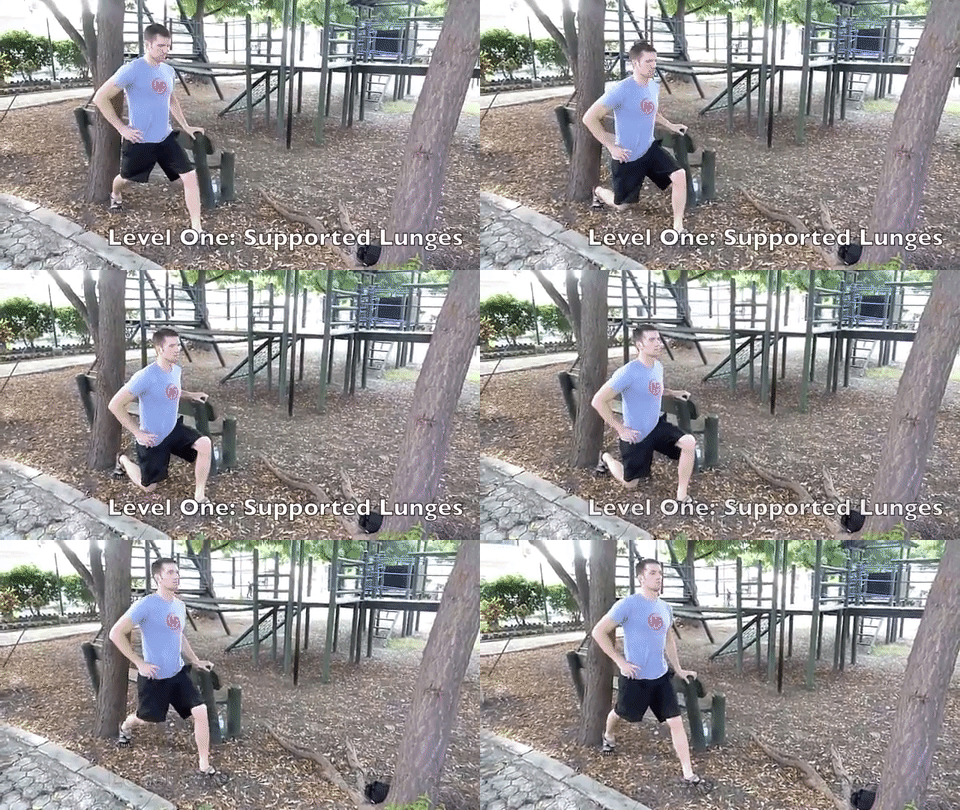
6) SUPPORTED LUNGES:

Do the assisted lunge until you can do regular lunges

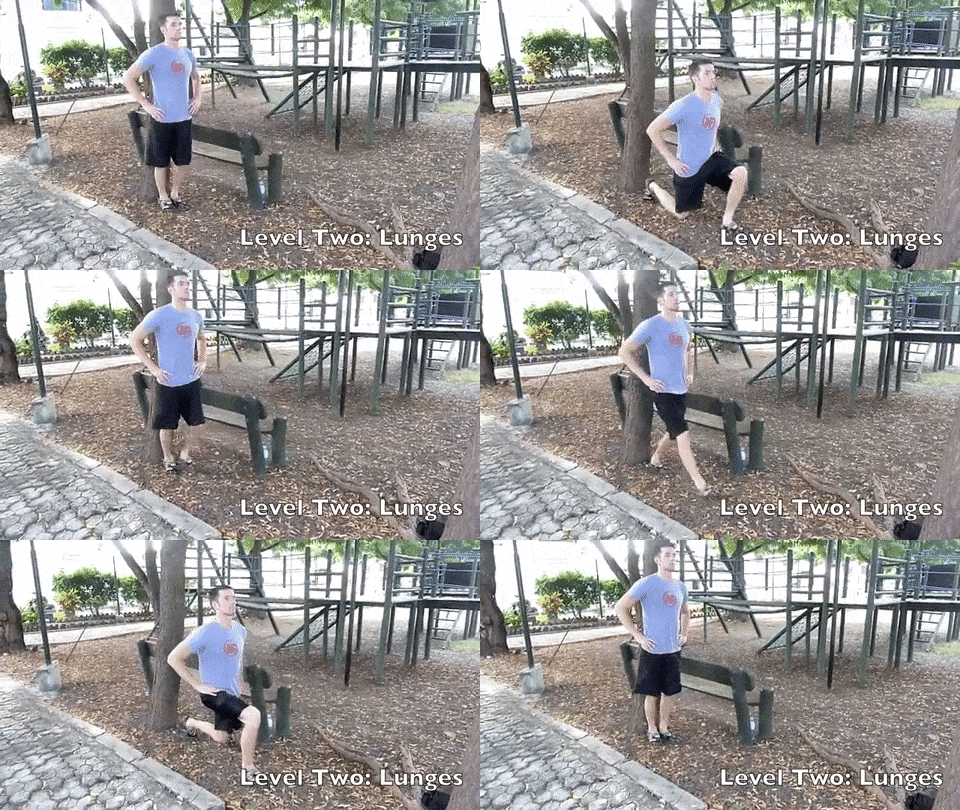
7) REGULAR LUNGES:

Do Lunges to strengthen your legs for the beginner bodyweight exercises!

Here’s how to properly perform lunges

8) ONE ARM ROW (Use a milk jug, suitcase, or actual dumbbell):

Do a dumbbell row as a great beginner exercise to get strong

9) PLANK

Coach Staci showing you the front plant

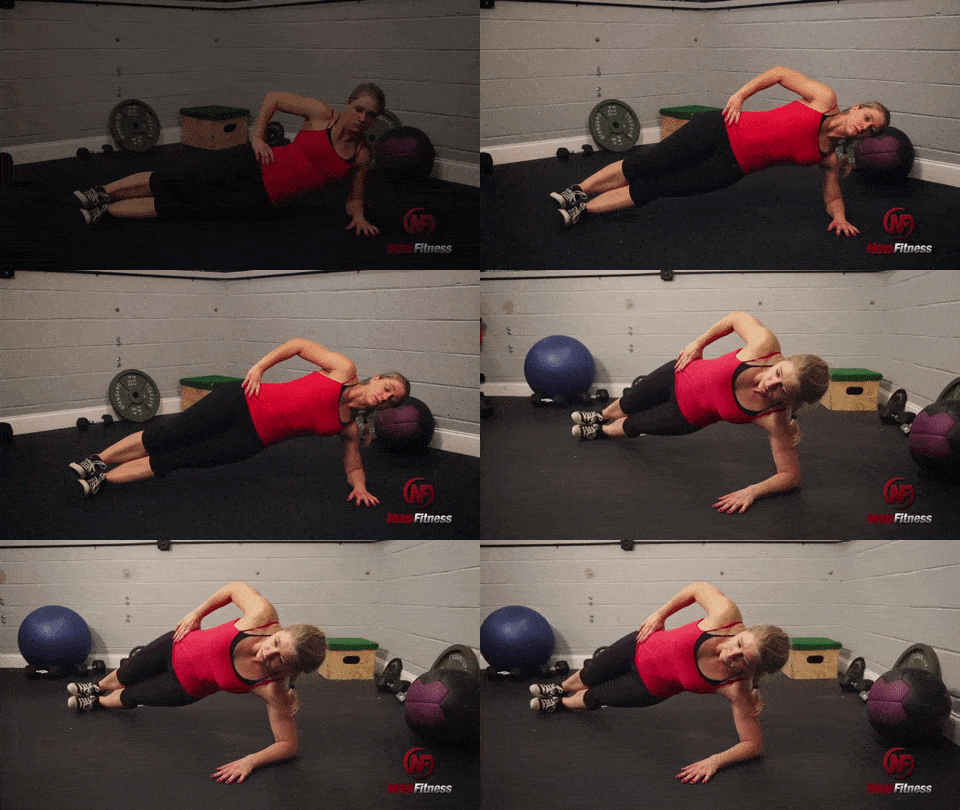
10) SIDE PLANK

Doing a plank on your side is a great way to progressive this bodyweight movement.

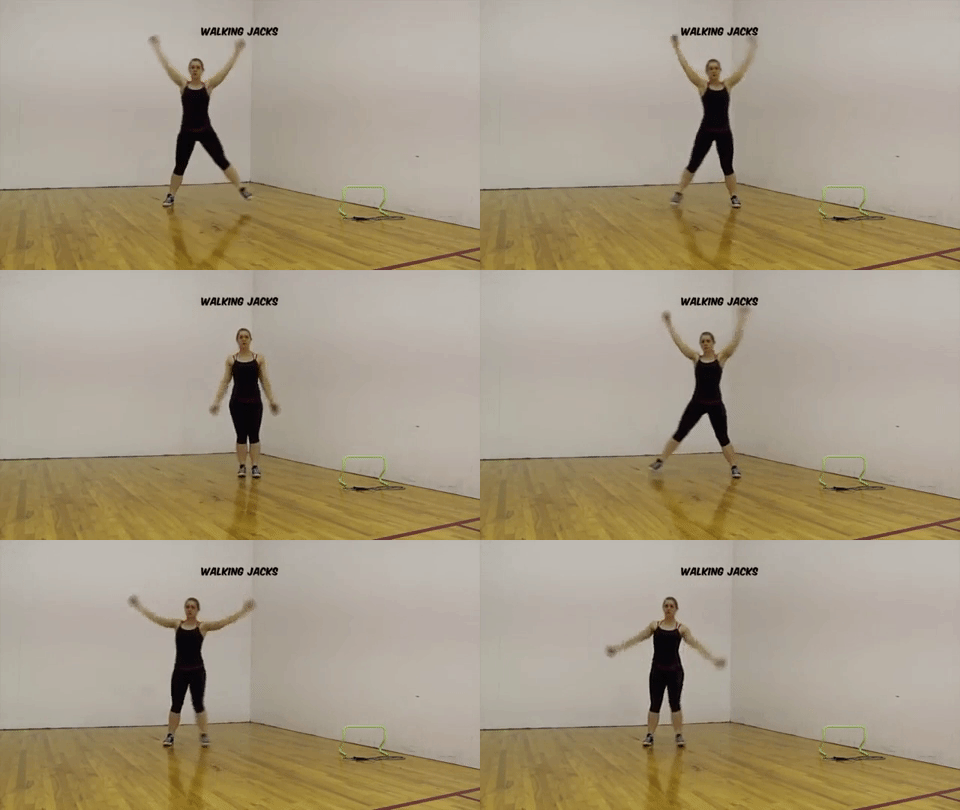
11) WALKING JACKS (if you can’t do jumping jacks)

Do walking jacks if you can't do jumping jacks!

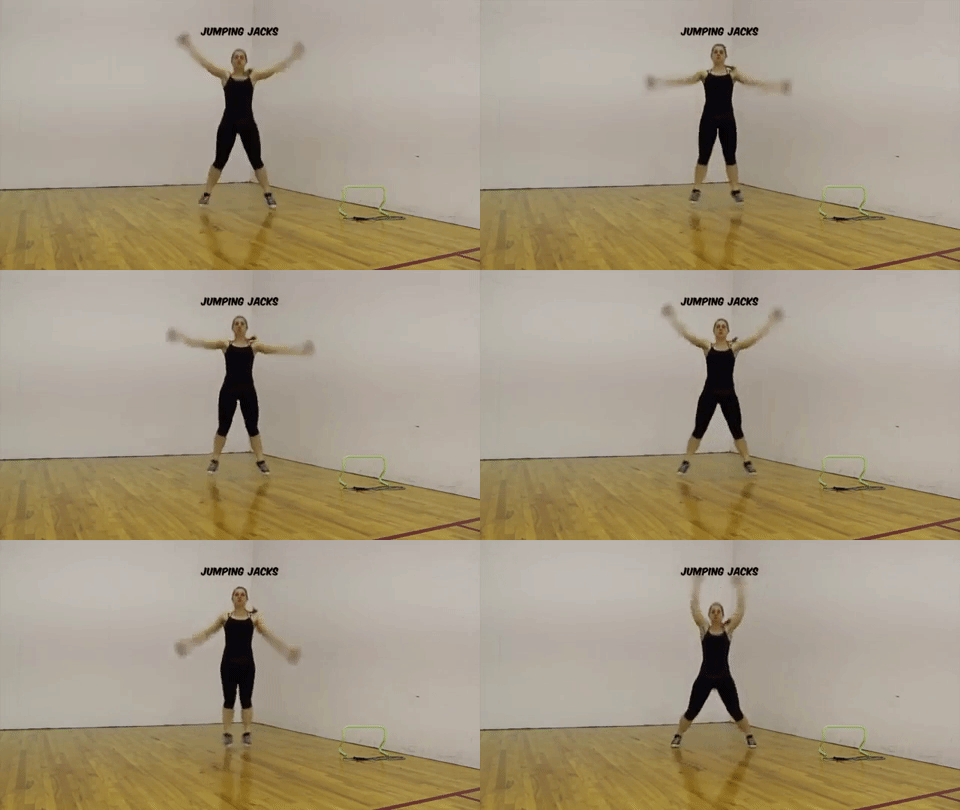
12) JUMPING JACKS

Jumping Jacks are a great cardiovascular bodyweight exercise

If you are looking for even MORE bodyweight exercises you can use in your workouts, make sure to check out our mega-resource:

 “The 42 Best Bodyweight Exercises You Can Do Anywhere.

Note: We have helped hundreds of 1-on-1 Coaching clients get started with strength training and other awesomeness – but EVERYBODY starts with bodyweight training like these movements and this workout!


Is Bodyweight Training Effective for Weight Loss?

Lego Red Suit Brick Guy minifigure on gray baseplate background.

The question of the day is:

Is bodyweight training effective for weight loss?

Yep! Bodyweight training can be great for weight loss, as long as you have your nutrition dialed in.

If you don’t…then no, it won’t be your magic bullet.

That’s because a good workout and a crappy diet won’t help you lose weight.

After all, one of the Rules of the Nerd Fitness Rebellion is “you can’t outrun your fork” and you can’t out-train a bad diet!

This means if you don’t ALSO fix your relationship with food, then all the exercise you do won’t help you get in shape.

It’ll just make you frustrated…

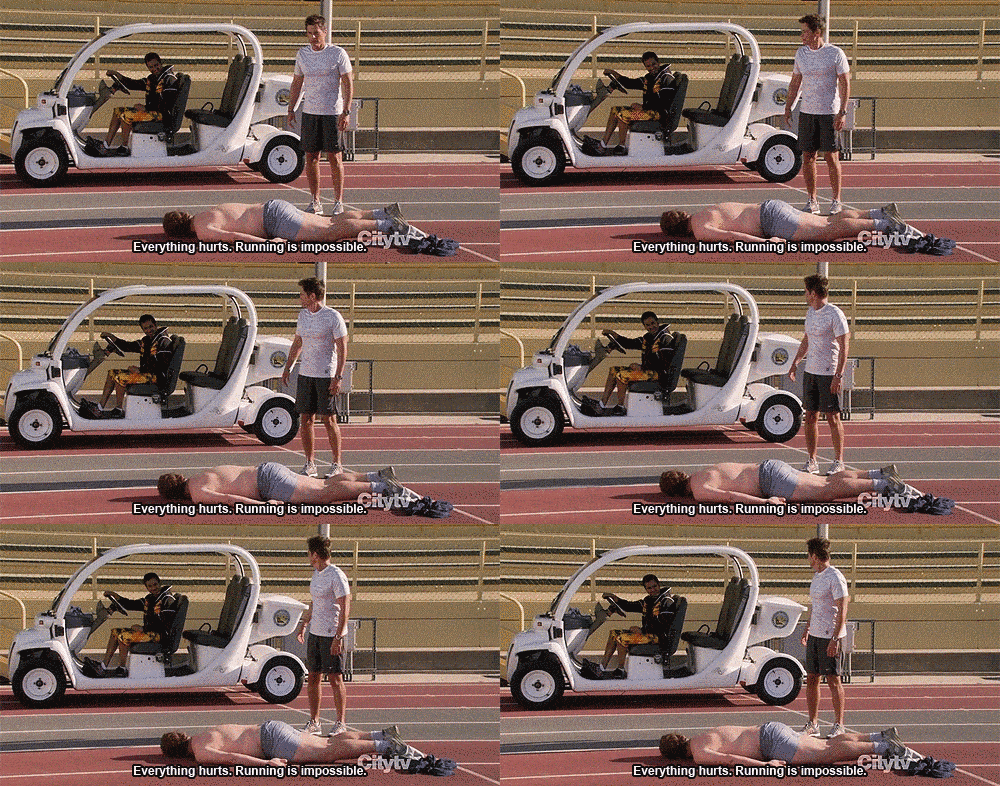
"Everything hurts, running is impossible" from Andy

So if you are trying to lose weight, then you need to fix your nutrition first and foremost.

Remember, when it comes to fitness, eating healthy is key!

You have two options here to dial in your nutrition:

We’ve actually developed our own 10-level nutrition system and mindset blueprint in Nerd Fitness Prime, but let me break this down into some basics:

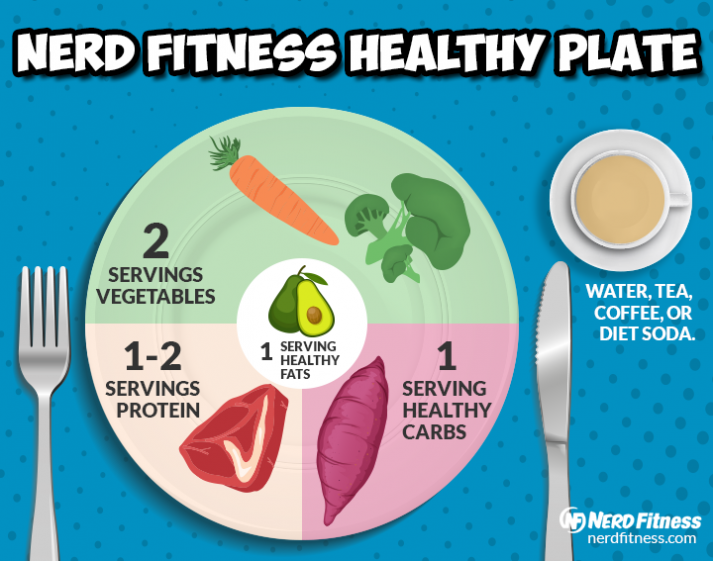
  • Eat natural, whole foods whenever possible.
  • Leave the soda, candy, and junk food out of your system.
  • Cut back on sugar and liquid calories wherever you can. The stuff is in everything!
  • Swap out the grains on your plate for vegetables when you can.
  • Make sure you get enough protein each day (meat, chicken, fish) – this helps with rebuilding muscles and things like that.

You can download a Free 10 Level Diet Guide too when you join the Rebellion and sign up in the box below:

The raw honest truth: how you eat will be responsible for at least 80% of your success or failure.

If you’re doing bodyweight workouts because you’re interested in losing weight, know that training is only 10-20% of the puzzle!

If you need help figuring this all out, or you just want your own Yoda to tell you what to do, you’re in the right place!

We’ve been helping busy people like you train at home and make better food decisions without hating life! It’s our 1-on-1 Online Coaching Program, and it might be a great fit for you.

Schedule a call with us to learn more by clicking on the image below:

After the Beginner Bodyweight Workout: Next Steps!

A yoga mat for beginner bodyweight training

Do this Beginner Bodyweight Workout for the next 4-6 weeks and focus on getting better.

If doing just one circuit of the workout was really challenging, no big deal!

Write down how you did, and try to do just 1 more rep or exercise next time through.

The whole point is “do a bit more than last time.”

I also have MULTIPLE options for you to take for your next step too. Pick the option below that best aligns with your goals and timeline:

1) If you want step-by-step guidance on how to lose weight, eat better, and get stronger, check out our killer 1-on-1 coaching program:


2) If you want a daily prompt for doing workouts at home, check out NF Journey. Our fun habit-building app helps you exercise more frequently, eat healthier, and level up your life (literally).

Try your free trial right here:

3) Join the Rebellion! We need good people like you in our community, the Nerd Fitness Rebellion.

Sign up in the box below to enlist and get the Beginner Bodyweight Workout sheet so you can print out the sheet and train at home!

I’d love to hear how this workout went for you, and how else we can help!

This is what we’ve dedicated our lives to, and you’re now part of a killer community.

Welcome to the Nerd Fitness Rebellion!

You can do this, we got your back!

-Steve

PS: If you’re looking for more workout routines to follow, I got you covered:

PPS: As a reminder, today’s workout looks like so:

An infographic of the Beginner Bodyweight Workout

###

PHOTO SOURCES: Four Bricks Tall: “Follow or follow not. There is no follow for follow.” and “Morning run with the Fitbit“, Ekaterina Minaeva © 123RF.com, parilovv © 123RF.com.

INFOGRAPHIC SOURCES: superhero costume, male graphic, female graphic, various graphics, icon, milk jug, robot, comic background.

from Blog – Nerd Fitness https://ift.tt/2gMahOi
via IFTTT
Categories
Uncategorized

#holistic #getfit #nutrition The Ultimate Guide for Restarting Your Fitness Journey (5 Steps to Respawn Today!)

LEGO Star Wars characters, with one on the floor.

Today we’re going to tell you exactly how to restart your fitness journey.

Whether this is the first time you’ve had to “respawn” or the 50th, you’re in the right place.

We help folks restart their exercise or nutrition routines as part of our 1-on-1 Online Coaching Program…and we’re really freaking good at it! Today, we’ll share with you the same strategies we deploy with them.


Here’s what we’ll cover:

Let’s do this.

Why It’s Okay to Start Again

The Iron Giant with a flower

So you fell off the wagon already.

Welcome to the club.

It’s called “being human!”

There are like 7 billion of us.

A gif saying "Welcome to the Club"

So how did I know you probably fell off the fitness wagon already?

Because statistically speaking, MOST people have already abandoned or missed out on a lot of the resolutions they’ve set for 2021.[1] Seriously.

However, have no fear. Since we treat life as a videogame around these parts, we’re all very comfortable with restarting or “respawning.”

First, we must…

STEP 1: FORGIVE YOURSELF

A LEGO and her dog

I heard a podcast interview recently about a man who had made a huge realization through seeing a therapist.

Specifically, their therapist asked them “Would you talk to somebody the way you talk to yourself?”

I bet the answer is a RESOUNDING “No.”

Nobody deserves that kind of abuse.

We’re often our own worst critic and our own worst enemy:

"I'm kicking my ass" from Liar Liar

Do you know that voice in your head, that one calling you a loser or a failure?

Treat it like a different person.

You’re under no obligation to listen to it! It’s not you.

“Oh you think I’m a piece of s** and that’s why I can’t stick with a workout routine? I disagree strongly. I might have some faults, but I’m here, and I’m still trying. So shut up and get out of my way.”

You’re reading this, which means you’re trying. Forgive yourself. Then move on.

STEP 2: ASK WHAT WENT WRONG?

A LEGO scientist

Your goal of working out 2 hours a day and only eating Keto failed after three weeks.

Congratulations!

You conducted an experiment that did not have the results you expected.

That’s neither a good nor a bad thing. Like any other experiment, it just… IS.

So write down specifically what your experiment entailed. 

What did you try to do?

  • I was going to exercise every day.
  • I was going to run a mile each morning.
  • I was going to eat strictly Paleo every day.

Look at your list: this is a combination of variables that don’t work for your lifestyle.

SIDENOTE: Learning from the millions of people that have come through Nerd Fitness over the past decade, my guess is that your experiment didn’t work out for one of two reasons:

  1. Your goals were too vague: “I should exercise more this year” – For how long? How often? What kind of exercise?
  2. You tried to change ALL the things: eat 1,800 calories a day (instead of your normal 3,000), go running 5 days a week (when you don’t exercise at all now), and get 8 hours of sleep a night (normally you get 5).

STEP 3: CHANGE A VARIABLE IN YOUR EXPERIMENT

You’re reading this guide, which would lead me to believe you’re interested in trying again to lose weight and get in shape.

To avoid getting the same results, we need to change the variables in the experiment to try and get different results.

You know…

For your next attempt consider adjusting one of the following variables.

Remember, any good experiment has accurate measurements for their changing factors! You don’t just put “some uranium” in a nuclear reactor. You know the exact amount.

We need to be exact with your variables.

Let me give you some suggestions:

  1. Change the exercise variable: Did you actually enjoy the exercise you attempted? If you discovered that you hate running, great! Never do that again. “Exercise sucks,” so I would pick something you actually enjoy.
  2. Try a substitution rather than additionADDING a brand new exercise routine into a busy schedule can be really challenging. Fortunately, you can focus on substituting or adding in a way that doesn’t take up more time: nutrition! How you eat is 80-90% of the weight-loss equation, and you’re already eating every day. So focus on substituting a vegetable for fries once a week, or swapping sparkling water for soda. You can also keep a food journal and change up your breakfast twice a week.
  3. Adjust your “win scenario”: I get it. You were able to train in your home gym for the first few weeks of this year, going for at least an hour. But THEN…work got busy. And you only had 30 minutes, which wasn’t enough time to get through your workout. So why not set the win scenario at “30 minutes,” or “15 minutes,” or just “1 exercise”? Lower the bar!

This is a 10-year journey we’re on here, so the exercise itself is not nearly as important as building a routine of working out that fits into your life. Lower the bar for what a “win” scenario is.

Example: if you roll out your yoga mat for 1 set of 1 exercise, it counts as a win. Doesn’t matter if did a full hour workout or just a 5 minute set of push-ups. It all counts.

STEP 4: RESPAWN, GET BACK IN THE FIGHT

A LEGO at Blacksmith

When you play a challenging video game, you’re going to die. A lot. (I died literally thousands when playing Hollow Knight, one of my favorite games in recent memory).

What happens after you die in a game?

You respawn, and try again!

You’ve learned a new tactic or pattern. You have a new technique. You’ve uncovered a secret. Or you’ve just gotten better. So you try, again.

And again.

And again.

And when you finally succeed?

Nirvana. Adulation. Pure joy.

A gif of fireworks from Mario

There’s no shame in failing when it comes to weight loss. We have hundreds of stories of people who kept failing, but kept reading and trying, and then finally – something clicked.

And that next attempt is the one that changed their life’s path. Like Joe, who made like a dozen weight-loss attempt until he changed the right variable and got results:

Joe's before and after

So try again today.

Keep these things in mind when restarting your fitness journey:

  1. Change your nutrition variable – try calorie counting instead of Paleo or vice versa.
  2. Change your workout variable – try strength training instead of running.
  3. Focus on building the routine by making the ‘win scenario’ super small.

Write down your plan, and start executing.

STEP 5: SUPERCHARGE YOUR RESULTS

A LEGO Blacksmith

I know hacking your experiments to get better data isn’t exactly “scientifically smart” or “morally responsible,” but I’m the one writing this email and I have more important stuff to say. So you’re just gonna have to deal with it.

Once you start your new experiment, here’s how you can stack the deck in your favor:

#1) Write everything down. Write down your workouts. Write down what you eat. Treat it like a science experiment, and you’re collecting data! Plan ahead. Be PRO-active (“I will do Strength Training Workout A at 4pm and tonight I’ll have roasted chicken and bacon-wrapped asparagus) instead of RE-active (“What should I do for exercise right now?” and “Ah, what’s for dinner? Oooh, Burger King!”)

#2) Recruit allies to your team. Don’t go this alone, as you’re more likely to succeed based on the people you spend time with and hang around. So recruit allies. Start spending more time with healthy people that empower you (even virtually), rather than unhealthy people that enable you and drag you down. Join a running group online. Find a lifting “accountabilibuddy,” or someone you can check in with.

#3) Hire a professional. There are two types of coaches worth the investment:

  • An in-person trainer if you are looking to supercharge your form on specific exercises like Olympic lifts, squats, deadlifts, etc. An in-person trainer can be good for people that need the accountability of somebody they’ve paid to meet them in the gym. Although to be honest, with the ongoing pandemic, gym availability and safety can be hit or miss.
  • An online coach that represents mobile, worldwide accountability. I’ve had a coach for 6 years and it’s changed my life. Knowing that I have a workout and nutrition strategy to follow each day is game-changing.

GET BACK IN THE FIGHT

An old mandrill named Rafiki once taught me: “Yes, the past can hurt. But you can either run from it, or learn from it.”

Okay maybe he taught that to Simba in The Lion King, but I too learned the same lesson:

"The Past Hurts" from Lion King

TO RECAP:

Forgive yourself. You wouldn’t talk to somebody else the way you talk to yourself, so have some freaking compassion. You’re trying.

Identify what experiment you JUST tried. Write down what you believe went wrong over the past few weeks. Congrats – you found a strategy that doesn’t work.

Pick a new path, try a different variable. A good scientist meticulously tracks their data and writes down their hypothesis. I would change one of the following:

  • Exercise: do less – focus on building the routine and doing it consistently.
  • Nutrition: change less. If you couldn’t stick with a diet for 3 weeks, it was too restrictive. Try a different path.
  • Win scenario: don’t let “perfect” be the enemy of “good.”

And then try again.

You and this sheep both now know how to follow a plant-based diet. But you'll have to eat more than grass.

If you want help here, I have two perfect ways to respawn today.

#1) If you want step-by-step guidance on how to lose weight, eat better, and get stronger, check out our killer 1-on-1 coaching program.

Many of our clients kept respawning for years, and it was only when working with a trained professional that they finally learned how to maintain progress.


#2) If you want an exact blueprint for getting in shape, check out NF Journey. Our fun habit-building app helps you exercise more frequently, eat healthier, and level up your life (literally).

Plus, there’s a nice shiny button you can press so you can respawn in our app whenever you want! No judgement, restart whenever.

Try your free trial right here:

Alright, that does it for me today.

For the Rebellion!

-Steve

PS: If you want more tips and tricks on how to stick to your goals this year, check out 5 Hacks to Effortlessly Build Healthy Habits in 2021.

###

Photo Citation: Oh My Goodness! Shut Me Down, The Iron Giant, “Hello, old friend. Is he ready for me?”, Happy Halloween!!, At the blacksmith’s (Part 2), Medieval Blacksmith

from Blog – Nerd Fitness https://ift.tt/2mUguwh
via IFTTT

Categories
Uncategorized

#healthyliving #holistic #nutrition Pilates for Beginners Workout

Looking for a Pilates for Beginners workout that’s quick and effective? Look no further!

In this workout, we’ll start out slow with some breathing warm-up exercises, and then I’ll lead you through a series of strength-building Pilates exercises – modifications included!

You’ll end this workout feeling more centered, energized, and aware of your body and breath.

Pilates for Beginners Workout

Come back to this workout any time you want a simple but effective routine; anytime you want to fit in a workout but are short on time; or you can even add it on to another workout for an extra kick!⁠

If you’re new to Pilates, this routine will help you become familiar with many Pilates exercises that you’ll also find in a range of our other Pilates workouts; and if you’ve been doing Pilates for a while, you can use this routine to bring things back to basics and slow down a bit to give a little extra focus on form or breathing.⁠

CLICK HERE to view the workout directly on YouTube and let me know how it goes!

xo,

PS – Looking for more Pilates for Beginners workouts? Click here for more!

The post Pilates for Beginners Workout appeared first on The Balanced Life.

from Blog – The Balanced Life https://ift.tt/2YAguU6
via IFTTT