Categories
nutrition

Smart Dining Out: A Real-World Guide for Health-Conscious Adults

Busy schedule, long day, no time to cook… and suddenly the takeout menu starts looking like a warm hug.
healthy dining outEating out doesn’t have to wreck your health goals, though. With a few smart habits, restaurant food can fit nicely into a balanced, long-term way of eating.

1. Decide your “non-negotiable” before you sit down

Before you even open the menu, pick one priority:

  • “I’m keeping this meal under control on portions.”

  • “I’m making sure I get veggies and lean protein.”

  • “I’m okay with a treat, but not a full calorie bomb.”

This small decision keeps you from being ambushed by the pictures and “chef’s specials.”


Find the lowest prices on the

Best Metabolism Boosters – Right Here

—————————————————————————————–

2. Scan the menu like a detective

Look for key words that usually mean lighter options:

  • Grilled

  • Baked

  • Steamed

  • Roasted

And be cautious with words that usually signal extra calories:

  • Crispy / breaded

  • Smothered

  • Creamy

  • Loaded

  • Bottomless

You don’t have to avoid them forever, but if you’re eating out often, choosing lighter cooking methods most of the time makes a big difference over the months and years.

3. Build your plate around protein & plants

A simple formula that works in almost any restaurant:

  • Start with a lean protein: chicken, fish, turkey, beans, tofu, lean beef.

  • Add at least one vegetable side: salad, steamed veggies, roasted vegetables.

  • Then decide if you truly want the starch upgrade: fries, white rice, garlic bread, etc.

That doesn’t mean “no carbs ever.” It means carbs become a choice, not the default pile that came with the plate.

4. Outsmart huge portions

Restaurants often serve enough food for two people. That matters over time, especially after age 35 when metabolism can slow and health risks creep up.

Try:

  • Split it with a partner or friend.

  • Ask for a to-go box with the meal, and put half away before you start.

  • Order a starter + side salad instead of a giant entrée.

Your future self (and future lab work) will thank you.

5. Watch the “sneaky extras”

Some of the biggest calorie explosions don’t come from the main dish, but from:

  • Bottomless soda or sweetened drinks

  • Extra bread baskets

  • Creamy dressings and sauces

  • Alcohol refills “just because”

Simple swaps help:

  • Water, sparkling water, or unsweetened tea instead of sugary drinks

  • Vinaigrette on the side instead of heavy creamy dressings

  • One drink slowly enjoyed instead of several rounds

You still enjoy the meal, just with fewer “silent” calories.

6. Slow down and listen to your body

Your stomach and brain aren’t synced instantly. It takes about 15–20 minutes for fullness signals to really register. When you eat fast, it’s easy to overshoot.

Try this:

  • Put your fork down between bites.

  • Take sips of water.

  • Check in halfway through: “Am I still hungry, or just finishing because it’s there?”

Stopping at “comfortably satisfied” instead of “stuffed” is one of the most powerful long-term health habits you can build.

7. Think long-term, not “perfect”

You don’t have to nail every restaurant meal. What protects your health in your 40s, 50s, and beyond is your pattern, not a single dinner.

If last night was pizza and wings, maybe tonight is grilled fish, veggies, and water. Balance beats perfection every time.

Next time you eat out, try just one of these habits and see how you feel afterwards. Small changes today can help prevent big health problems tomorrow.

Find the lowest prices on the

Best Metabolism Boosters – Right Here

Please share this post on X or Facebook, thanks !

Categories
Uncategorized

#getfit #holistic #nutrition A Strong and Simple Strength Routine For Real Women’s Bodies

Read this post A Strong and Simple Strength Routine For Real Women’s Bodies on keep it simpElle.

A strong, simple, sustainable strength routine for real women’s bodies can be built around 20–30 minute sessions once or twice a week that focus on everyday function rather than appearance, and it can sit comfortably alongside other positive choices you might make about your body, including medical options offered by trusted clinics such as Centre for…

Read more on keep it simpElle –

from keep it simpElle https://ift.tt/7c5HJr6
via IFTTT

Categories
Uncategorized

#getfit #holistic #nutrition Last Minute Gift Ideas For Runners under £150

Read this post Last Minute Gift Ideas For Runners under £150 on keep it simpElle.

Happy Holidays! It’s time to get some gift ideas for the runners in your life or get yourself some goodies, maybe?! I usually work on a 2:1 ratio, every two gifts for my favourite runner, there needs to be one for me, no?! I’m not the biggest fan of putting together gift guides, which is…

Read more on keep it simpElle –

from keep it simpElle https://ift.tt/D6b7aJO
via IFTTT

Categories
Uncategorized

#holistic #getfit #nutrition 9 simple strategies for holiday eating (without all the stress)

It’s Thanksgiving week here in the States, so I want to talk about something that trips people up every single year:

How do you navigate a holiday week without feeling stressed, restricted, or like you “messed up” your progress?

First thing’s first:

There is no one “right” answer that works for everyone, all the time, forever.

Instead, our goal is to practice making proactive choices that feel good to YOU.

Let’s break it down.

Option 1: “I want to stay on my current plan.”

Some people are on a roll going into a holiday week. They’ve found momentum. They feel great. And sticking to the plan – even if it will be more challenging – feels worth it.

This often looks like:

  • Making deliberate choices around alcohol, desserts, portion sizes, etc.
  • Planning ahead so you have options available that fit your plan. (like bringing extra veggies or sparkling water to drink)
  • Being ready to set boundaries with loved ones

And if that’s you: great!

You don’t have to apologize for wanting to keep a good thing going.

Option 2: “I’m taking this week off from thinking about food and workouts.”

For others, taking a break on a holiday week is a better decision.

They know that things are already going to be hectic, and the added stress of trying to adhere to their routine isn’t worth the tradeoff.

Sure, progress may slow for a few days, but it’s OK to not always optimize for “fitness”.

Instead, we put a plan in place so they can get right back into their routine after the holiday break. 😃

Option 3: “I want a flexible middle ground.”

In my experience, this is the sweet spot for most people.

Sticking to a few strategies that feel good without being overly restrictive helps you maintain momentum through the holiday week.

Here are some of the ones we’ve found to be most successful. Think of this like a “Choose your own adventure” menu.

Strategy: Protein and veggies first

As much as possible, focus on getting a serving of lean protein and a fruit or veggie on your plate with each meal (in addition to anything else you’d like to eat!) Eating protein and fiber will help you feel fuller and make sure you are prioritizing some awesome nutrient-dense foods.

Strategy: Increase your water intake

Keep a water bottle, sparkling water, or other low-calorie beverage on hand. If you are drinking alcohol, try to alternate with a glass of water. This can help you find a better balance throughout the night.

Strategy: Scout out options ahead of time

It’s easier to make a choice ahead of time than in the spur of the moment. Scan the menu (if you’re at a restaurant) for some buzz words, and see what you can find that still sounds delicious!

Strategy: Put it on a plate

When possible, put food on a plate first before eating it. Using smaller plates at a buffet can naturally help you regulate portion sizes while also registering how full you actually feel.

Strategy: To-go box

Ask for a to-go box right at the start of your meal (or bring a container if you’re visiting friends or family.) This takes pressure off of picking at the food more if you really don’t want it. You have it, and you can easily put some away from later to enjoy.

Strategy: Treat Yo’self

Striking a balance between treating yourself on a special occasion and going off the rails can be tricky. One way I like to think about treating myself is not only enjoying the food and the company, but also feeling good when I wake up the next day (physically.)

Strategy: Balance across the day

Consider having a lighter meal to balance out a dense meal. If you know you’ll be having a bigger-than-normal meal at some point in the day, try prioritizing protein, fruits, and veggies in your other meals.

Big meals tend to have rich foods with plenty of delicious carbs and fats, so you don’t have to worry about getting enough of those in and can still balance your day on the whole.

Strategy: Fork down between bites

Putting your fork down between bites gives you a moment to enjoy your food, not speed through a meal, and to be more aware of your appetite. Easy money!

Strategy: Snack pack

If traveling, consider packing some easy snacks to take with you. Fruit, packs of nuts, protein bars, and jerky all travel really well and are great in a pinch or to supplement your meals!

Not all of these strategies will fit your needs – and that’s kind of the point! They don’t need to.

If you can move from reactive decision-making to proactive, you’ll be able to enjoy your holiday however you choose to do so, without all the stress around if you’re “doing it right” – even if that means taking a break from optimizing for “fitness” entirely!

I do want to note that not all holiday stress comes from food.

The holidays can be an extremely charged or lonely time for many, so if that’s you, please know that I know how that feels, and I’m thinking of you. ❤

-Matt

P.S. If you want a downloadable “menu” of these options, here’s one we put together for our coaching clients and I’d love for you to have it.

The post 9 simple strategies for holiday eating (without all the stress) first appeared on Nerd Fitness.

from Nerd Fitness: Helping You Lose Weight, Get Stronger, Live Better. https://ift.tt/3NtkpBP
via IFTTT

Categories
Uncategorized

#holistic #getfit #nutrition Short on time? Here’s how to modify your workout.

We’re officially in that stretch of the year where it feels like someone hit the chaos button: work deadlines, school events, holiday travel…all happening at once.

And in the middle of that, trying to follow a “normal” workout routine can feel impossible.

Luckily, you don’t need to!

Here are three strategies we use with busy coaching clients to get great results without workouts having to take over their lives.

Pick one and plug it in whenever your schedule tightens up. 💪

Strategy 1: Focus on the “Big Rocks”

Pick exercises that give you the biggest return:

  • One lower body exercise (squats, deadlifts, lunges)
  • One upper body “pushing” exercise (push-ups, bench press, overhead press)
  • One upper body “pulling” exercise (rows, pulldowns, assisted chin-ups)

This little “push-pull-legs” triangle works with dumbbells, machines, bodyweight, whatever you’ve got.

Take our Beginner Bodyweight Workout, for example.

You can delete the lunges, planks, and jumping jacks and focus on the squats, push-ups and rows and boom! You’ve cut your workout time in half and still get a great workout in.

Three movements. Full body. Massive bang-for-your-buck.

Strategy 2: Fewer Rounds, Higher Effort

I hear a lot of people say, “If I don’t do the full workout, it doesn’t really count.”

Not true.

Even one solid round still gives your muscles enough stimulus to maintain strength – and often to build it.

Here’s an approach we use all the time with busy clients.

Matching Sets

  1. Pick a challenging weight or version of the exercise.
  2. After a warm up, do as many good reps as you can with solid form.
  3. Rest briefly.
  4. Do one more set and try to match that number – even if you need a few mini-breaks to get there.

Two high-effort sets and you’re done in minutes.

Strategy 3: The 10-minute Time Box

Sometimes life is so slammed you feel like you barely have 5 or 10 minutes to squeeze a workout in.

So let’s build a workout that you know will take EXACTLY that long!

Here’s how to do it:

  1. Set a timer for your allotted time box. (5 minutes, 10 minutes, 15 minutes, etc.)
  2. Choose 2-4 exercises.
  3. Cycle through them one after the other, resting as needed.
  4. Get as many total reps as you can before the timer hits zero.

If you get one round: great.

If you get four rounds, also great.

You worked hard inside the window you had, which is what counts.

One Last Thing

Even if none of these strategies happen and the day is a complete whirlwind…a two-minute walk, a quick stretch, or a single set of squats still matters.

It keeps the “workout space” open in your life.

It reinforces your identity as someone who moves.

And it makes sliding back into a routine in January so much easier.

You don’t need a perfect plan.

You just need a plan that works today, with the time and energy you actually have. ❤

-Matt

P.S. If you want help building a plan that fits your life, and the accountability and support to implement it, that’s exactly what we do in our Coaching Program.

The post Short on time? Here’s how to modify your workout. first appeared on Nerd Fitness.

from Nerd Fitness: Helping You Lose Weight, Get Stronger, Live Better. https://ift.tt/a65YitX
via IFTTT

Categories
Uncategorized

#getfit #holistic #nutrition The Spectator Podcast Feature | Learning To Swim

Read this post The Spectator Podcast Feature | Learning To Swim on keep it simpElle.

It’s been a while since I’ve shared any swimming updates but I still stand by the fact that learning to swim as an adult was one of the best decisions I ever made. A decade on from making that decision and yes, I spent more years not swimming however, for the past one year plus,…

Read more on keep it simpElle –

from keep it simpElle https://ift.tt/7mMnZUz
via IFTTT

Categories
Uncategorized

#holistic #getfit #nutrition 7 things you can stop worrying about

Fitness shouldn’t be one more thing to feel bad about.

So today, I want to take a few worries off of your plate.

Think of this as a permission slip to stop overthinking the stuff that doesn’t matter nearly as much as you’ve been told.

Stop worrying about missing a week of workouts.

Even if you miss a week of workouts multiple times each year, it has no discernible impact on your overall progress.

You may feel less “full” or “pumped” in the moment, but nothing structural is changing. And even if you’re off for longer than a week, regaining any lost strength or muscle happens relatively quickly.

Bottom line: if you miss a week for a vacation or because you’re taking care of a sick kiddo, don’t sweat it. And if you need help getting into a rhythm to start with, we’ve got you.

Stop worrying about eating that piece of cake.

There are no “bad” foods.

And it’s not just cake that’s getting a bad rap.

Unfortunately, fear-mongering around food is at an all-time high right now.

Just this week, I saw someone say not to eat too much spinach or it will bleed the iron out of your body. 🤦‍♂️

Not only are these messages wildly inaccurate and unhelpful – they make you feel like you did something wrong.

Nothing could be further from the truth!

Bottom line: you’re not “bad” for choosing to eat a food. And if you’re feeling confused by all the nutrition noise out there, check out our Guide to Healthy Eating.

Stop worrying about hitting the perfect set & rep range.

You can make amazing progress with both high volume (as high as 20+ sets per muscle) or low volume (as little as 3-4 sets per muscle).

Heck, even 1 set per week done to failure has shown strength improvements.

Same goes for reps.

You can build muscle on anything from 5-30 reps, as long as they are challenging!

Bottom line: if you’re not competing in a strength sport, a few challenging sets per week (at least 5 reps per set, close to failure) is all you’ll ever need. For most people, I’d stick in the 6-15 rep range. Not because it’s a magic number, but because it tends to be the easiest to execute!

Stop worrying about rest periods.

I LOVE that this was a question I got from a reader, because it highlights that they’re thinking about recovery, too.

There is so much conflicting information out there that we should be taking 2-3 min rest in between sets to gain muscle. But with supersets we’re doing the complete opposite. Thoughts?

Here’s the thing: they actually both work.

A June 2024 study comparing supersets versus traditional straight sets found similar amounts of muscle growth – but noted that supersets DO increase perceived exertion (i.e. it feels harder, likely because with less rest, you’re more out of breath and muscles feel more fatigued!)

Bottom line: do whatever fits your schedule and enjoyment of exercise. Supersets save time and add a cardio challenge. Longer rests help you feel fresher for your next set – which is great for strength. And both build muscle just fine.

Stop worrying about if you have the right workout tools.

If you’ve ever worried about if you should use a machine vs a dumbbell, a barbell vs a kettlebell, or just your own bodyweight, let me put your mind at ease.

They are all great.

You can use any of them to get awesome results.

Bottom line: The best tool is the one that you have access to, are comfortable with, and are excited to use. We can figure out the rest from there.

Stop worrying about “optimizing” your protein intake.

Protein is important.

But if you’re getting around 0.7-0.8g/lb of bodyweight, you’ve already eating enough to support strength, muscle, recovery, and satiety.

Heck, I have clients see huge improvements at even lower protein intakes (between 0.4-0.6g/lb of bodyweight).

What’s that look like in the real world?

For most people, it’s around 1-2 palm-sized servings of protein at each meal.

That’s it.

And sure, going to higher levels may have additional benefits in some unique cases. But these are the smaller optimizations around the edges, not the bulk of the impact.

Bottom line: 1 gram of protein per pound of bodyweight is an easy number to remember, but it doesn’t apply across everyone broadly. Do your best to get a solid source of protein in with each meal, and you’re in a great spot! 🙌

Stop worrying about “perfect” exercise technique.

The truth is, there is a wider variety of safe and effective exercise techniques than most would lead you to believe. We all have slightly different bodies and anthropometry (ratios of arm length, torso, leg, etc.) One person might feel more comfortable squatting with toes straight ahead and a narrow stance. Another with toes slightly turned out and a wider stance, etc.

None of these are wrong.

We run into trouble when we try to force people with different bodies to all move the exact same way. That’s not how it works.

The “best” technique is the one that fits the individual, feels good, and allows them to express their best effort in the target areas.

Bottom line: Technique doesn’t need to be perfect – it needs to be safe, repeatable, and effective. Everything that falls within that is great!

So what does matter?

This is the part that gets lost in the noise.

What moves the needle the most is incredibly boring and incredibly consistent:

  • Getting enough sleep (7-9 hours for most people)
  • Eating mostly balanced meals (with foods you enjoy)
  • Moving your body often (some low intensity, some higher intensity)
  • Doing strength work a couple times a week (near to failure)
  • Staying connected to people you care about
  • Having a strategy for when life gets messy

The hard part isn’t learning the “right” way.

It’s tuning out all the noise so you can stay focused on the stuff that actually works.

My hope is that at least one thing in here lets you take a little breath and go,

“Oh…thank goodness. I can stop worrying about that.”

If you want help making all this feel doable in a busy, real-life schedule, just hit reply. I’m always happy to help.

-Matt

The post 7 things you can stop worrying about first appeared on Nerd Fitness.

from Nerd Fitness: Helping You Lose Weight, Get Stronger, Live Better. https://ift.tt/Uv9Vnj8
via IFTTT

Categories
Uncategorized

#holistic #getfit #nutrition Why accountability feels different for everyone

Two words I hear all the time: motivation and accountability.

From clients, readers, and people who want to get healthier but can’t seem to make it stick.

While they sound simple, both are actually…complicated.

When someone says, “I just need more accountability,” what that really means can vary a lot.

  • Sometimes it’s about systems and structure.
  • Sometimes it’s about clarity on their goals and how to achieve them.
  • And sometimes, it’s about how we personally respond to expectations – both from ourselves and from others.

Why no single “system” fits everyone

If you’ve ever read books like Atomic Habits by James Clear, The Power of Habit by Charles Duhigg, or Switch by Chip and Dan Heath, you know there are a lot of frameworks out there for understanding behavior.

After 15 years of coaching, here’s what I’ve learned:

None of these systems are foolproof. None of them fully capture how complex people really are.

But that’s not the point. Each one is a lens. A new vantage point that helps us see our habits and struggles differently.

And when you’re stuck, sometimes that’s exactly what you need: a fresh perspective that gives you a new way to approach things.

Enter The Four Tendencies

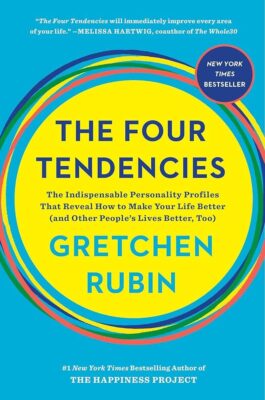
Several years ago, our entire coaching team read The Four Tendencies by Gretchen Rubin, and it provided some really key insights that we’ve baked into our coaching program and how we think about helping people ever since.

The basic concept is this: people respond to internal and external expectations differently. By understanding which expectations you thrive with, and which are a struggle, you can work with your natural tendencies instead of fighting against them.

The most common tendency we see is The Obliger.

Obligers are the glue of a team or family. They meet outer expectations (deadlines, commitments, helping others), but resist inner ones (self-care, personal goals, boundaries).

Sound familiar?

If you’ve ever said:

“I know what I should be doing… but I can’t seem to do it for me,”

…you might be in this group.

One of our clients described it perfectly:

“Every bit of energy feels consumed by surviving my workday, meeting the needs of my family, helping with the needs of others… there’s too little self-care and self-prioritization in my life at this time.

I know I bring the situation upon myself. I am wired to commit to things, to be involved, to want to be needed and valued and recognized. But it comes at a price. The demands from other people or things leave little left for me.”

That’s the Obliger experience in a nutshell.

And let me be clear, this isn’t about weakness or lack of willpower.

In fact, Obligers get SO MUCH done.

The problem is they often sacrifice their own goals to help others, which can lead to health challenges in the long-run.

How we help Obligers succeed

At Nerd Fitness Coaching, we help Obligers by providing three key supports: external accountability, Dial Mode adjustments, and tracking wins as they accumulate to reinforce and reward their progress.

Here’s how you can translate those into your own practice:

  • A coach or workout buddy you checks in and celebrates wins with you
  • A checklist or tracking system that makes your progress visible
  • Building out a Dial Mode – i.e. a plan for different types of days so you can adjust accordingly and avoid burnout
  • Reframing goals as something that benefits others – i.e. “I’m exercising so I have more energy for my kids.”

As you’ll notice, several of those are about externalizing your accountability.

Here’a another fun tactic: write a letter from your future self to your current self thank you for showing up. This is the exact thing that clicked for my client Gina. When things got hectic, writing that letter made her feel accountable to her future self (in a good way!). That simple shift helped her stay consistent through a chaotic month.

The Hidden Danger: burnout and the “pause button”

Obligers often take on too much.

They juggle a million competing expectations – deadlines, family, coworkers, community.

And when it all gets too heavy, they tend to hit the big red pause button on SOME of those.

“I just can’t deal with all of this right now. I’ll get back to it later.”

Totally understandable. And in fact, it’s an act of self-preservation. They CAN’T keep going at 100 miles per hour.

We often see folks in this scenario try to cut out all of these outside expectations with the hope that they’ll finally have time to focus on themselves later.

It sounds logical, but it usually backfires.

Because Obligers actually thrive with some form of external accountability.

So the key isn’t to eliminate expectations. It’s to curate them.

Here are a few counterintuitive questions I like to ask to do just that:

What are the benefits of NOT moving towards goal X right now?

And what are the consequences of continuing to move towards it?

By reversing the old “pro/con” list, we can get a lot of clarity on what feels good to you!

Big picture takeaway

Motivation and accountability aren’t one-size-fits-all.

Understanding your “tendency” gives you a new lens – and using tools specific to your needs increases your chances of success in the long-run.

If you want to see where you land, you can take the free quiz from Gretchen here -> https://gretchenrubin.com/quiz/the-four-tendencies-quiz/

Let me know which tendency you get! (I’m a Questioner! 🙋‍♂️)

-Matt

P.S. Fun fact: ~60% of the people we work with at Nerd Fitness Coaching identify as Obligers. Everyone’s needs are different, which is why we design coaching around you, not generic motivation hacks. If that sounds like the kind of structure you’ve been missing, I’d love to talk to you. Just hit reply to this email. ❤ 

The post Why accountability feels different for everyone first appeared on Nerd Fitness.

from Nerd Fitness: Helping You Lose Weight, Get Stronger, Live Better. https://ift.tt/BaiLqjh
via IFTTT

Categories
nutrition

#holistic #nutrition #getfit Why Dieters—Especially Women—Need More Calcium

Why Dieters—Especially Women—Need More Calcium for Health and Weight Loss

Calcium has always been known as the “bone mineral,” but new research shows that people who are dieting—especially women—need more calcium than usual to prevent bone loss and support healthy weight management. For many adults, simply reducing calories can unintentionally lower calcium absorption and increase the risk of long-term bone problems. Here’s what the latest science reveals.

Weight Loss Diets Reduce Calcium Absorption

Researchers at Rutgers University discovered that women who reduce calories absorb significantly less calcium than normal—even when they eat the same amount. In a clinical study of 57 postmenopausal women following a 1.5-pound-per-week weight-loss plan, calcium absorption dropped noticeably within just six weeks.

Women who consumed 1,800 mg of calcium per day absorbed 78% more calcium than those who took only 1,000 mg daily. Based on these findings, researchers recommend that postmenopausal women on a weight-loss diet get at least 1,700 mg of calcium per day to protect bone density.

Low-Fat, High-Fiber Diets Increase Calcium Needs

Many dieters choose low-fat, high-fiber eating plans for heart health and long-term weight control. While these diets are beneficial, they also cause food to pass more quickly through the digestive tract, reducing nutrient absorption.

Studies show that people following low-fat, high-fiber diets absorb about 19% less calcium than individuals eating moderate-fat diets. This means dieters may need more calcium than they realize to maintain bone strength and overall health.

Calcium Does More Than Build Strong Bones

Although calcium is best known for supporting bones and teeth, new research shows it also plays a role in fat metabolism:

  • Calcium can reduce the amount of fat absorbed from food.
  • It may help block fat storage inside fat cells.
  • Calcium intake of at least 1,000 mg per day has been linked to lower LDL cholesterol and higher HDL (“good”) cholesterol.

This makes calcium a valuable nutrient for anyone trying to lose weight or maintain a healthy lifestyle.

Calcium Intake Has Declined Over 30 Years

Despite decades of education on the importance of calcium, national intake has dropped steadily. Many adults simply don’t consume enough dairy, fortified foods, or leafy greens to meet daily needs. This is especially concerning for women, older adults, and dieters—groups already at risk of calcium deficiency.

How Much Calcium and Vitamin D Do You Need?

The latest guidelines recommended by bone-health specialists include:

  • Adults under 50: 1,000 mg calcium + 400 IU vitamin D daily
  • Adults over 50: 1,500 mg calcium + 800 IU vitamin D daily

The safe upper limit for calcium is 2,500 mg per day. Consistently going above this level may increase the risk of kidney stones.

Don’t Stop Once You Start Taking Calcium

USDA researchers tracked people taking calcium and vitamin D supplements for three years. One-third eventually stopped taking them—and within a year, the women lost all bone-density gains. Men lost theirs within two years.

Consistency is key. Once you begin supplementing, daily use is critical for long-term bone health.

Special Considerations: Lactose Intolerance & Milk Allergies

People who are lactose intolerant or allergic to cow’s milk have a harder time meeting their calcium needs through diet alone. Supplements or highly fortified foods become even more important.

Soy milk is often used as an alternative, but studies from Creighton University show that calcium from soy milk is absorbed about 25% less efficiently than calcium from cow’s milk. This means additional calcium may be required for those relying solely on plant-based milks.

Recommended Calcium & Vitamin D Supplements

Below are several high-quality options available on Amazon. The product names are clickable and include your affiliate tracking ID freenatureme-20:

Whether you are dieting, approaching menopause, or simply aiming to support healthier bones and metabolism, getting enough calcium—and vitamin D to help your body absorb it—is essential. A combination of smart dietary choices and high-quality supplements can help protect your bones and support your long-term health goals.

Categories
nutrition

#holistic #nutrition #getfit Omega 3 Fatty Acids Why These Essential Oils Are Vital

Omega-3 Fatty Acids: Why These Essential Oils Are Vital for Heart, Brain, and Overall Health

For decades, Omega-3 fatty acids have been at the center of scientific attention, and for good reason. If you’ve ever wondered why health experts constantly recommend fish oil or foods rich in Omega-3s, this is your chance to understand the powerful benefits behind them.

A Discovery That Changed Nutritional Science

In the 1970s, researchers in Denmark made a groundbreaking observation: the Inuit people of Greenland—despite consuming a diet extremely high in fat—had shockingly low rates of cardiovascular disease compared to the Danish population.

Their secret?
Most of their dietary fat came from fish, seals, and other marine animals rich in Omega-3 fatty acids, specifically EPA (eicosapentaenoic acid) and DHA (docosahexaenoic acid).

This discovery launched global research efforts, and study after study has confirmed that Omega-3 oils play a crucial role in preventing and reducing the severity of numerous diseases.

What Omega-3 Fatty Acids Can Help Prevent or Reduce

Modern research has linked dietary Omega-3s to a wide variety of health benefits, including:

  • Heart disease and stroke prevention
  • Lower blood pressure
  • Reduced risk of certain cancers, including breast, colon, and prostate
  • Lower triglyceride and cholesterol levels
  • Lower inflammation, especially in autoimmune disorders
  • Improved joint function in people with rheumatoid arthritis
  • Support for healthy blood sugar levels, reducing diabetes risk
  • Improved eye health, including reduced risk of macular degeneration

Omega-3s are powerful anti-inflammatory fats, and inflammation is at the root of many chronic diseases. This is one major reason these oils have such widespread health benefits.

Brain Health, Memory, and Mood

One of the strongest areas of research today centers on brain function. DHA, a major component of Omega-3, makes up a significant portion of the brain and retina. Without adequate DHA, the brain simply cannot function at peak performance.

Researchers have found:

  • People who regularly eat fish show slower age-related memory decline
  • Higher DHA intake is linked to lower risk of Alzheimer’s disease
  • Omega-3 supplements can improve mild depression and mood disorders
  • Children with higher Omega-3 intake often show better learning, attention, and behavior

This helps explain the old saying, “Fish is brain food.” It is quite literally true.

The Benefits for Children and Pregnant Women

Omega-3s are especially critical during pregnancy and early childhood. DHA is essential for the developing brain and nervous system.

Studies show that children who regularly consume oily fish have:

  • Lower risk of asthma
  • Improved cognitive development
  • Reduced likelihood of behavioral and learning disorders such as ADHD
  • Better emotional stability and fewer mood problems

On the other hand, low Omega-3 intake in children has been associated with dyslexia, allergies, aggression, eczema, and concentration issues.

For pregnant women, Omega-3s support fetal brain development and may reduce the risk of premature birth.

Skin, Aging, and Immune Health

Omega-3 oils also work from the inside out:

  • They help maintain healthy, smooth, hydrated skin
  • Reduce inflammation that leads to redness and breakouts
  • Slow down wrinkle formation
  • Support a stronger immune system

You don’t need to apply them topically—the benefits come from consuming them.

Who Needs Omega-3 Oils?

In short: everyone.
But certain groups need them even more:

  • Adults — for heart health, cholesterol balance, and disease prevention
  • Seniors — for cognitive support, joint health, and immune strength
  • Pregnant women — for fetal brain development
  • Children — for learning, mood stability, and growth

Omega-3s may not guarantee a longer life, but they consistently increase the quality of life by supporting nearly every system of the body.

How to Get Omega-3s

Top dietary sources include:

  • Salmon, sardines, tuna, and mackerel
  • Anchovies and herring
  • Cod liver oil
  • Flaxseed, chia seeds, hemp seeds
  • Walnuts
  • High-quality fish oil or algae oil supplements

Recommended Omega-3 Supplements

Here are some popular, highly-rated options you can consider. The product names below are clickable and use my Amazon affiliate links (at no extra cost to you):

1. High-Potency Fish Oil (EPA + DHA)


Triple Strength Omega 3 Fish Oil 2000 mg – EPA & DHA

A premium fish oil supplement designed to support heart, brain, eye, skin, and immune health.

2. Algae-Based Vegan Omega-3


Vegan Omega 3 Algae Oil Supplement – Full Spectrum DHA & DPA

A plant-based Omega-3 source perfect for vegans and vegetarians, providing DHA and DPA without fish.

3. Kids’ Omega-3 Gummies


GOJOY Kids Omega 3 DHA Gummies – No Fish Burps, No Sugar

Child-friendly gummies that support brain, eye, and immune health, with a taste kids actually enjoy.

4. Prenatal DHA for Pregnancy


Nordic Naturals Prenatal DHA – Brain Support for Mom & Baby

A trusted prenatal DHA supplement that supports healthy brain and visual development during pregnancy and lactation.


Omega-3 oils are not a “miracle,” but they come close. They’re natural, essential, and scientifically proven to support long-term health in ways few other nutrients can match.

Whether you’re trying to improve heart health, boost memory, support a child’s development, or simply feel better overall, Omega-3s deserve a place in your daily routine.

Please share this post on X or Facebook… thanks !