Categories
Uncategorized

#holistic #getfit #nutrition 40 Fun Ways to Exercise (Without Realizing It)

Have fun while exercising!

I know plenty of people who hate exercise but WANT to find a way to like it.

And that’s what today’s post is all about:

Exercising in a way where life doesn’t suck AND helps you reach your goals.

Luckily, this is exactly what we do for a living!

I know what it’s like to hate exercise, and ALSO want to lose weight and see results. Ugh.

We’ve built an entire company and community around helping people overcome these obstacles – our Online Coaching Program helps people find exercises they love, and also how to make the right nutritional choices.

We are all on a unique journey and we’d love to help you with yours!


ExercIse Sucks. Do This Instead.garfield

“But Steve, I don’t like to exercise!”

While some are like Odie and love to run around all day, others are like Garfield and feel like they must be allergic to exercise.

I hear this every day, and I’m not surprised.

After all, I think “exercise” sucks too.

Which is why we’re gonna focus on exercise that doesn’t feel like exercise!

Will Ferrell thinks having fun while exercising is important too!

After all, nutrition is like 90% of the equation

Exercise is merely a supporting actor, which is why we don’t ever NEED to spend time doing exercise we hate.

We’ve already talked extensively on Nerd Fitness on how to eat better, so I won’t hash that out here.

So let’s talk about exercise.

Sure, it would be great if we all strength trained 5 days a week and got super strong, but the reality is most of us don’t have that time – or the desire – to hit the gym.

And more importantly – the best exercise program is the one you actually do!

And thus today we’re going to focus on TWO key elements of getting more exercise in our lives:

#1) FIDGETING: Did you know ‘fidgeting’ (aka “small micromovements”) can account for up to 350 additional calories burned per day?

Per the New York Times:

Overweight people have a tendency to sit, while lean ones have trouble holding still and spend two hours more a day on their feet, pacing around and fidgeting, researchers are reporting in findings published today.

The difference translates into about 350 calories a day…

350 extra calories burned per day ain’t no joke!

As we cover in our “How many calories should I eat every day?” guide, burning an extra 350 calories per day can result in sustainable weight loss and maintenance over time for many.

Not only that, but when you factor in inertia (an object at rest tends to stay at rest, and object in motion tends to stay in motion), it paints a pretty interesting picture:

We spend our lives trying to be more “efficient.” What if the key to weight loss is to be LESS efficient?

From standing up more frequently to parking FARTHER away from the grocery store, every additional step or movement counts. Today’s guide shares TONS of ways to get yourself used to moving more frequently.

I’m actually air drumming and shuffling my feet as we speak!

Play the air drums like the Foo Fighters - it counts as fun exercise

#2) FUN EXERCISE: Who cares what the optimal workout is?

Unless you have a very specific physique you’re trying to build, ANY exercise is good exercise.

From dancing to yoga to climbing to roughhousing with your kids, it all counts.

This brings me to today’s point:

Exercise is a bonus. Exercise helps your heart get stronger, can help build muscle, usually gets you outside the house and absorbing vitamin D, and brings you a litany of other health benefits. Also, any additional calories burned is a bonus!

Exercise can help us make fewer unhealthy food choices. Instead of “I earned this” you can start telling yourself: “If I’m going to exercise regularly, I might as well make it worth it by eating right too.”

Daily exercise is a constant reminder that we are leveling up our lives – that we should continue to make other good choices or we’re practically wasting our time.

This is the type of stuff we focus on – with personalized instruction, with each of our online coaching clients.

Some clients are learning Olympic lifting, while others are simply focusing on taking the stairs more and tracking their food.

We are all on a unique journey and we’d love to help you with yours!


40 Ways to Exercise Without Exercising

A border collie dog playing with a frisbee

#1) Hiking, especially with friends – Strap on a pair of shoes, get out of the comfy confines of your hobbit-hole, and go explore the world around you!

Make sure you follow our Beginner Hiking Guide on how to find a hiking spot near you, what shoes to wear, what to bring with you, and more.

#2) Walking – No time to hike? Go for a simple walk. Even a 15-minute brisk walk is enough time to get close to a mile walked, which gets you one step closer to Mordor.

Sam and Frodo walked to Mordor, why not go for a walk too?

Do you have a 30-minute meeting at work? Have a walking meeting instead. Steve Jobs was known for doing this.

You should know Tim, a member of our Nerd Fitness community who lost 50 pounds – while injured – just by fixing his nutrition and going for long walks every day!

I’m proud that Tim used the philosophies laid out in our online courses under Nerd Fitness Prime to get his results!
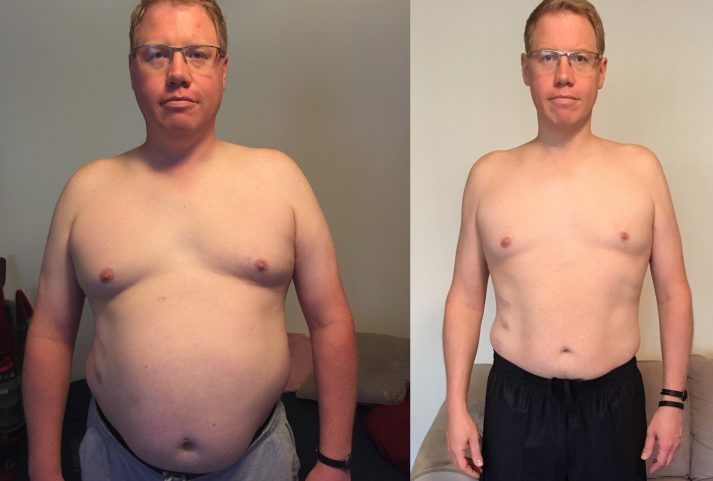
Tim lost 50 pounds with the Nerd Fitness Academy

#3) LARP – Live Action Role Playing. Might seem silly to those on the outside, but to those playing, it’s an amazing adventure that reminds us how awesome our imaginations are.

Also, depending on the game, you could be wearing a heavy costume, swinging heavy weaponry, and running for your life!

#4) Rock Climbing – I love rock climbing. It’s one of the best arm/back/forearm workouts in existence, you get to feel like a badass when you reach the top of the wall, and all climbing routes are graded so you can level up the challenge as you get stronger/fitter/better.

It’s a fit nerd’s dream!

#5) Geocaching – If rock climbing is a fit-nerd’s dream, then geocaching is an adventure nerd’s dream brought to life. Become a real-life treasure-hunter (Lara Croft? Nathan Drake? You decide!), and get a great workout in while you’re at it.

Or, if you’re truly nerdy, you can do some Digital Geocaching with Pokemon Go or Harry Potter: Wizards Unite.

#6) Dancing – Ever tried serious swing dancing? You’ll be sweating within ten minutes. How about hip hop? Drenched in sweat, and sore as hell the next day.

Zumba? Tango? Flamenco? You’d be surprised at what you can sign up for and what will elevate your heart rate.

#7) Roughhousing with your kids. I don’t have kids, but when I do, you can bet your ass I’ll be the dad out rolling around in the back yard with them. Don’t forget what it’s like to be a kid – it keeps you young.

I really enjoyed this article from Art of Manliness on the importance of roughhousing!

#8) Climbing on stuff – A few years back, I attended a great conference, Midoricon, and I was walking through the woods with NF Rebel Joe (No, not THAT Joe).

It was awesome to see this guy, having lost 100 pounds since finding Nerd Fitness, explore the woods like it was no problem: climbing on stumps, balancing on fallen trees, climbing trees, and more. 

We work with LOTS of Coaching Clients to get them outdoors and help build them “fun climbing programs” that burn tons of calories but don’t really feel like exercise.


#9) Martial arts – Be honest. You watched The Matrix, you heard Neo go “I know Kung Fu” and you wanted to be able to one day say the same thing.

Whether it’s Kung Fu, Muay Thai, Tae Kwon Do, Karate or Capoeira (breakdance fighting, seriously), there’s a martial art out there that will make you feel like a badass.

And might help you defeat your archenemy. 

#10 Consider a standing desk – Although we all know that correlation does not prove causation, it’s no surprise that there’s a strong correlation between sitting all day and an unhealthy lifestyle.

Why not fix your posture, strengthen your legs, get more “fidget time” in, and spend the day being more productive with a standing desk? I have THIS desk and it allows me to switch between sitting and standing.

If you don’t want to stand all day, make sure you read up on our guide, “how to survive sitting all day in an office.”

#11) Have an active meeting – Hat tip to Charlie Hoehn on this one. If somebody wants to meet up with you for coffee, suggest something active: throwing a baseball, tossing a frisbee, going for a hike – anything that gets you up and moving.

I say yes to pretty much anybody that invites me to play golf. Wink wink.

Golf is a fun form of exercise, even if you stink at it!

#12) You know… that thing that consenting adults do?

Yeah. Do that.

Self-explanatory.

Moving on…

#13) Clean! – Ugh, nobody likes to clean the house/apartment. It’s not my favorite thing to do. So I instead make a game out of it.

I see how much I can accomplish with a single song blasting at max volume, while probably also dancing. I also CRUSH podcasts while doing the dishes.

Of course, after getting through one song, I figure “welp, I’ve already started, might as well keep going.”

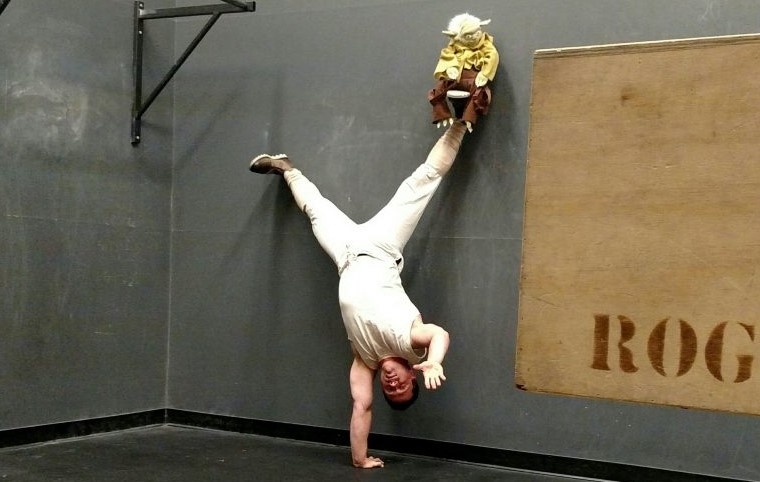
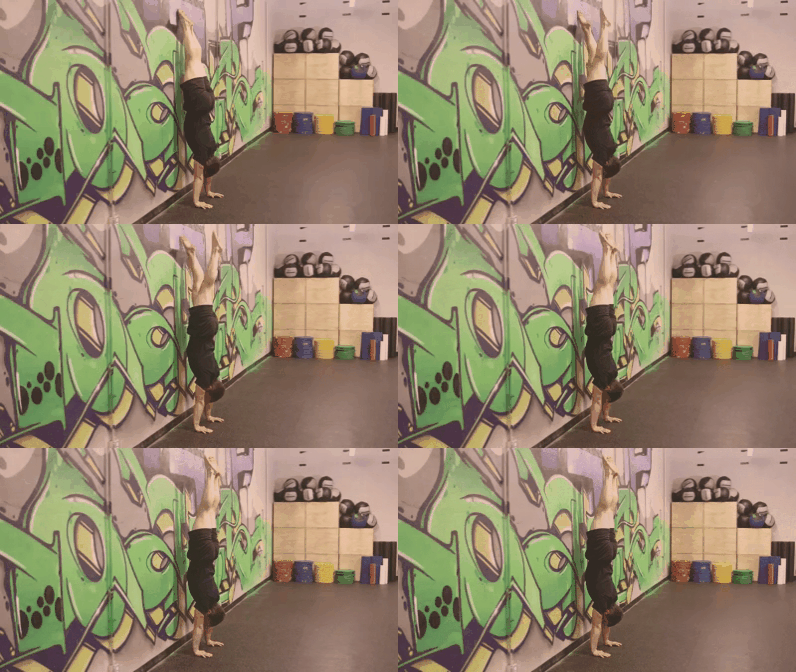
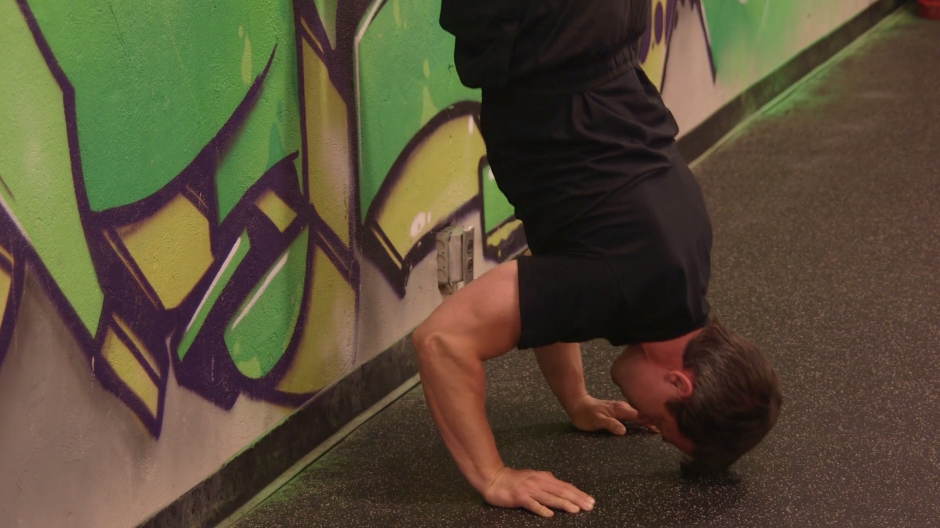
#14) Try handstands – This is a fun activity that builds up some serious arm and core strength and will leave you sweating bullets after even a few minutes.

Rebel Leader Steve showing you how to kick up to a handstand.

So go find a park, go do handstands, cartwheels, somersaults, and whatever else makes you feel young again.

Here’s our guide on How to Do Handstands.

#15) Parkour – Our Beginner’s Guide to Parkour is one of the most popular on Nerd Fitness. I don’t care how old you are, there’s no reason you can’t get started with rolling around in your yard and vaulting over picnic tables and bike racks.

Or, you can do it in your office:

#16) Playout – Is Parkour too serious for you? Try a playout! Spiderman was on to something – climbing walls, swinging from skyscrapers, and popping flips around the bad guys.

You might not be able to swing between buildings, but you can definitely visit a playground in your area and get creative!

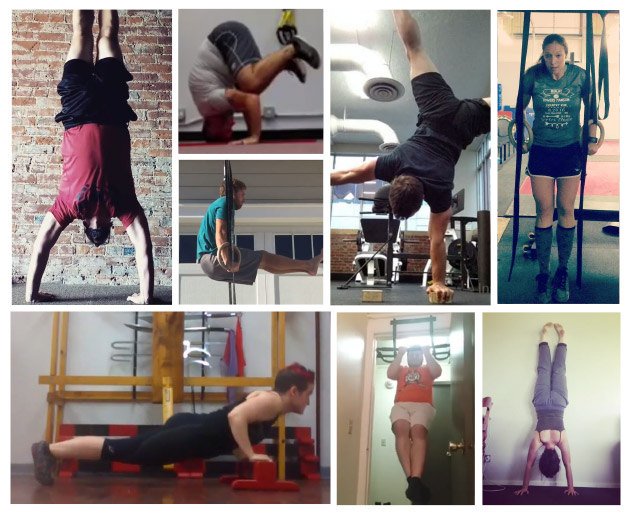
#17) Adult gymnastics – In the same vein as parkour, gymnastics will help you build some of the BEST real-world strength you can get with any type of exercise, and it’s all done in a playful way without a single weight being picked up.

Swing from rings, somersault, flip onto pads, and more.

There are gyms all over the country.

#18) Yoga – Build flexibility and strength, plus learn to freaking relax.

There are a million kinds of Yoga, including awesome stuff like Acro-Yoga, baby goat Yoga (not kidding), and Yoga with beer.

Sign up for a few different kinds and see which one lines up the best with what you’re looking for.
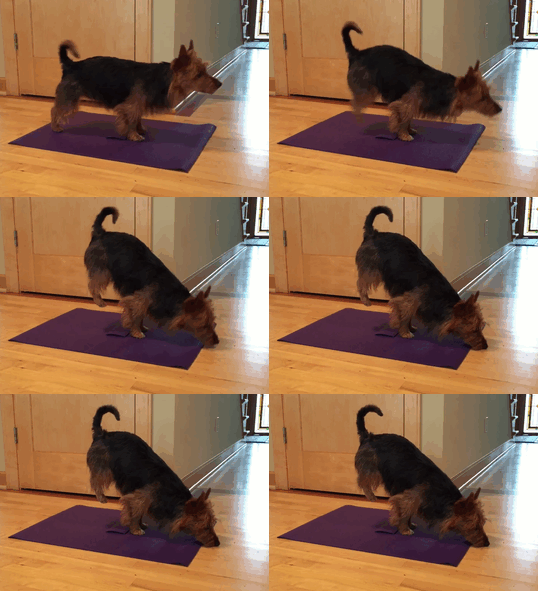
#19) Play video games that make you be active – Beat Saber. DDR (Dance Dance Revolution) counts too. Just Move. Anything that gets you off your ass and moving!

Oh, what’s that? You’re playing a normal game like Grand Theft Auto V? Make a rule that you can only play while standing up, or that you have to do 10 push-ups every time you die.

That’s what I do to keep myself from spending twelve hours on the couch in marathon gaming sessions!

#20) Play on a playground – Go down the slide, swing across the monkey bars, climb the rope all, balance on the balance beam.

Create an obstacle course for yourself and see how quickly you can get through it.

You can even work out on a playground too:

#21) Play a musical instrument – Did you know playing musical instruments can burn a boatload of calories too?

I imagine this is doubly true if you’re dancing around like Taylor Davies playing the violin.

#22) Join a Rec League – New in town? Want to be active and meet people? Join a co-ed kickball, softball, or tennis league.

You get to exercise AND it’s a great way to meet new people through exercise!

#23) Bike to work – I know there are a lot of Rebels in our community who dropped a bunch of weight by making one change: they biked to work, or biked to their friend’s house, or started biking generally.

You get from Point A to Point B, you save money on gas, and you get a workout.

Plus, you can do it with friends!

a gif of the biking scene from the Muppet movie

Here’s our Guide to Biking if you want some help getting started. 

#24) Play a childhood game – What games did you play as a child? Capture the flag? Kick the can? Simple tag?

Get a few friends together and give it a try – it will be the most fun you’ve had in a while!

#25) Park at the far end of the parking lot – Every step counts.

Every tiny decision that is slightly different than the “OLD you” counts.

IT ALL COUNTS when it comes to burning more calories than you consume every day.


#26) Take the stairs. It’s only two flights! And we are designed to move. You can do this.

Sure, you’ll get winded the first handful of times. But it eventually becomes routine.

And it all counts! Make a game out of it.

#27) Crush audiobooks while “exercising.” This is called ‘temptation bundling.‘ Pair something you love with an activity you’re trying to do more of.

But I bet if you could only listen to Harry Potter (for the 600th time) while walking on a treadmill, you’d be more likely to get to the gym.

#28) Build stuff. Whether you’re building a fort with your kid in the backyard, or trying to figure out why you have 5 extra screws in that IKEA dresser you’re putting together, building stuff involves lots of moving and bending and picking up and maneuvering.

Warning: you’ll swear no less than 100 times building furniture. Earmuffs! 

#29) Sit in a squat, or pike position on the floor while watching TV. No, not leaning against the couch. Sitting up actively engaging your core!

You can also do some sort of stretch or movement like these bodyweight exercises during commercials (or in the 15 seconds between Netflix episodes!)

#30) Impromptu dance parties. Kids or no kids, I find that great Disney songs are fantastic for bringing out your inner child.

Blast the tunes, dance around the house, and be absurd. WHO CARES! As a wise woman once said…”Let it gooooooo.”

Napoleon spontaneously busts into dance for fun exercise

#31) Go for a walk while on the phone. What if you just decided you had to stand for all of your phone calls?

For starters, I know many people who do phone interviews while standing because it makes them more alert and a better guest.

Next: you’re gonna get so many steps in while on the phone without realizing it!

#32) Having an impromptu picnic. Instead of sitting and gorging yourself at the dining room table, why not eat on the floor?

Grab a blanket or a towel, eat in your living room or head out into the backyard, and make it a picnic!

You’ll need to adjust your posture and seating style constantly.

#33) Sit in a squat. We cover this in our “How to squat” guide, but sitting in a deep squat – often for long timeframes – is built into us as a species! We’ve just become soft from sitting in chairs all day long.

I try to accumulate 15 minutes of “squat time” each day – sitting in a squat while reading a chapter in a book, or journaling, or answering an email with my laptop on the ground.

Here I am sitting in a squat while reading Level Up Your Life (available online and in bookstores nationwide!)
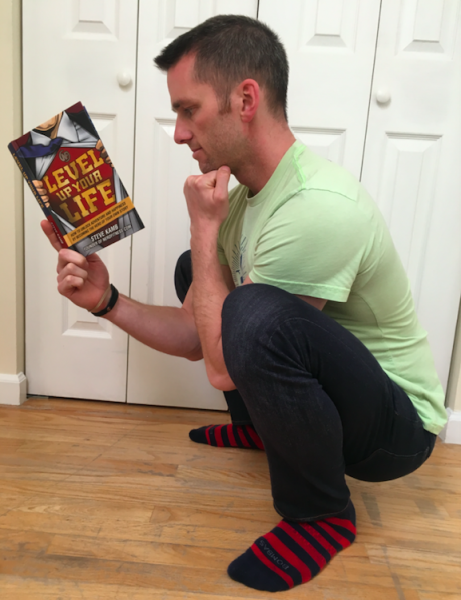
Steve sitting in a squat reading the book, Level Up Your Life

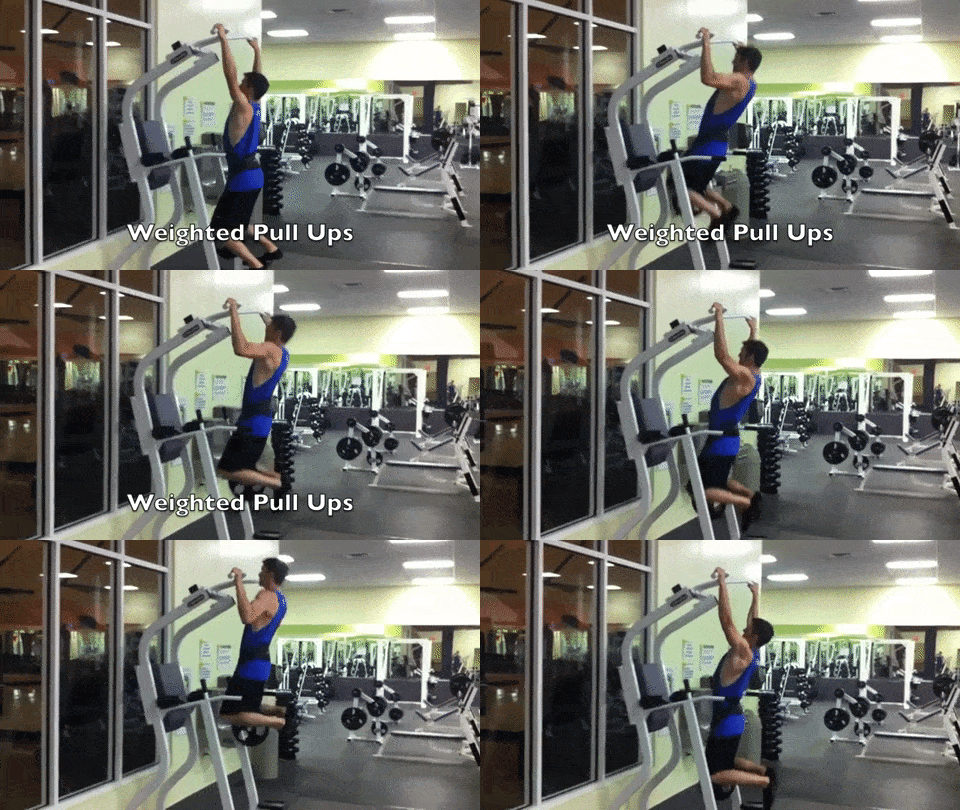
#34) The “Pull-up bar Tax”. Get yourself a door-frame pull-up bar. Put it on a door that you have to cross through regularly.

And every time you go through, you have to do either 1 pull-up, 1 negative pull-up, or 10 seconds of hanging from the bar.

Can’t do a pull-up yet? Learn how to get your first pull-up or chin-up.

#35) Lasers around the house. Set up colored string pulled tightly across your kid’s rooms or in certain hallways, and you have to go over and under the lasers each time you traverse the hallway.

Kids walking through a lazer hallway

Don’t touch the lasers!

#36) Climb a tree. Your level of safety and ability on this will be dependent on your experience here, but I remember climbing trees like a monkey as a kid and loving every minute of it.

Even if it’s just hanging from a tree branch or trying to scramble up to a low branch, it can be a great way to “exercise.”

#37) The floor is lava. This is both great for exercising around your apartment, for a fun date night or night with the kids, and for playing True American. Though one is slightly more healthy than the other.

#38) Casual Parkour. From avoiding cracks on the sidewalk to balancing on curbs, or jumping from tile to tile, or hopping up onto a bench and then back down, it all counts!

Just get yourself to move differently than you would have otherwise! We are currently working with a woman who has lost 100-pounds through our Coaching Program, and her exercise is all “fun parkour in the woods behind the house!”


#39) Literally fidget more! Yes, from tapping your toes to music and twitching your legs to the beat of the music. Getting up and sitting back down. Doing laps around your office.

You don’t need to get a standing desk or treadmill desk, but there’s a definite correlation between those that can’t sit still and body composition.[1]

#40) Your kid is a backpack! From piggyback rides to playing horsey, staying active with your kids is really powerful in instilling a love of fitness in them.

If you’re a badass mom like Brownwyn – a success story from Nerd Fitness Prime, you can even do pull-ups while your kid holds on!

Here are more tips on how to work out as a whole family.

Challenge yourself to Have fun: Next Steps!

Legs walking on steel pipe with balance

If you are looking for more guidance beyond the 40 Fun Exercise Suggestions above, we have three options to continue your journey:

1) Join our epic Online Coaching Program! We create personalized programs for each customer based on their lifestyle, goals, and personality. From parkour in the park to just walking more with your children, or even “becoming a badass powerlifter,” we cater each experience to each person.


2) If you’re looking for a bunch of fun ways to exercise, check out NF Journey. Our fun habit-building app helps you move more frequently, eat healthier, and level up your life (literally).

We assign fun missions daily to get you to exercise in a way that doesn’t feel like exercise…because it’ll feel like a side quest instead.

Try your free trial (no credit card needed) right here:
3) Enlist in The Rebellion (it’s free)! Sign up for our biweekly newsletter and join the Nerd Fitness Rebellion!

I’ll send you tons of free guides and bonuses to help you get started on your journey today.

Sign up below:

No matter which path you pick above, I want you to commit to trying something new, or doing something different, at some point in the next week:

  • Say yes before you can say no. Stop saying “I don’t have time” and realize you do. Stop saying “I can’t afford it” and find a way to make it a priority. Do all of this before you can talk yourself out of it. The best way to do that?
  • Commit in advance. Put down a deposit and make an investment in yourself. I pre-paid 6 weeks of swing dance lessons. Having already paid for it, I knew I’d be just throwing my money away if I didn’t attend.
  • Go with a friend. I went to my swing classes alone, which forced me to further develop my social skills, but if you happen to be TOO afraid to attend a class, get a friend to drag you there.
  • Expect to suck. If you are learning a new skill, expect to suck at it. You’ll get better as long as you remember to…
  • Have fun. Remember, we could get hit by a bus tomorrow. Every day above ground is a blessing, so enjoy it!
  • When in doubt, move more.

That one thing you always wanted to try but have been putting off?

Today’s a good day to get started. Just take that FIRST step.

Google classes in your city. Find a site that focuses on beginners, and read about it. If there’s a place to pre-pay or make a deposit, do it.

And then go.

Use 20 seconds of courage if you have to.

What’s the one new thing you’re going to try this month?

-Steve

###

photo credit: Reiterlied 02/52 – Confidence, JD Hancock Garfield, treadmill fall, Denes Paragi © 123RF.com, It’s Always Autumn: Lazer Hallway, lzflzf © 123RF.com

The post Blog first appeared on Nerd Fitness.

from Nerd Fitness: Helping You Lose Weight, Get Stronger, Live Better. https://ift.tt/2kBetFe
via IFTTT


Categories
Uncategorized

#holistic #getfit #nutrition The Top 10 Keys to Losing Weight (How Can I Be Successful with Weight Loss?)

Miniature people enjoy riding a bicycle. Cycling for health Concept.

It’s time to learn what separates those who successfully lose weight (and keep it off) with those who don’t.

Getting in shape is tough stuff, so how exactly do people achieve sustainable weight loss?

This isn’t a rhetorical question, we actually know the answer!

We help folks lose weight as part of our 1-on-1 Online Coaching Program, and today we’re going to share with you the keys to success.


Here are The 10 Key Differences Between Weight Loss Success and Failure:

  1. Have a Groot Mindset (Be Realistically Optimistic)
  2. Know Your “Big Why”
  3. Don’t Go on a Diet (Adjust Your Nutrition)
  4. Know What’s in the Food You Eat
  5. Use Blueprints and Blocks to Create Goals
  6. You Don’t Have to Exercise (You Get to Exercise)
  7. Invest in Your Health like a 401(k)
  8. Go All-in on Momentum (“Never Two in a Row”)
  9. Know Your Kryptonite
  10. Surround Yourself with Supporters, Not Anchors

It’s a lot to cover, so let’s jump right in!

1. Have a Groot Mindset (Be Realistically Optimistic)

Baby Groot holding an awesome mixtape.

Losing weight is tough stuff and it’s not going to happen overnight.

But that’s okay. Sometimes it takes years to become the superhero version of ourselves. 

Just ask Groot:

Any reason to include Groot in an article.

Let’s get nerdy for a second (you’re reading Nerd Fitness after all). I assume you’re familiar with Groot, the tree-like superhero from Guardians of the Galaxy

Groot, like most trees, starts off small. Even after quite a few different Marvel movies, he still hasn’t regrown into his full badass superhero potential.

That’s because growing and changing takes time. Even if you’re not a tree.

Those who successfully lose weight know this to be true and prepare their mind for the road ahead. They know if it took them years to gain their current weight and they’re not going to lose it in a matter of days.

So they develop a “Groot Mindset” and understand if they’re patient and do the work, results will follow

Key Takeaway #1 - Have a Groot Mindset

Prepare yourself for the road ahead. While we want you to be optimistic, we also want you to be realistic. If you’re starting your journey in January, you may not hit your goals by March.

That’s okay. We can learn from Goot and simply dance while the process takes its time:

So cute.

Trees don’t grow overnight and people don’t get in shape overnight either. 

If you’re interested in how long the road ahead might be, we have a guide that answers What is the Fastest Way to Lose Weight? Check it out for some realistic expectations for getting in shape.

But, we’re not quite done with adjusting our mindset for losing weight. Next…

2. Know Your “Big Why”.

Question mark from gears

The road to perpetual weight loss and healthiness is fraught with peril.

Even the best-laid plans and New Years Resolutions will end up in a ditch on the side of the road unless you have a damn good reason.

After all, life gets busy and it’s Taco Tuesday and a new video game just came out and you just don’t feel like exercising and it’s cold.

There will ALWAYS be something.

You will never NOT be busy.

We all more or less live like this cat.

That perseverance will form from a damn good answer to the question: “Why?”

Not just “Because I need to lose weight,” but 2-3 levels deeper:

  • WHY do you want to lose weight?
  • What will losing weight mean for your life or happiness?
  • What will you be able to do thanks to that weight loss?

That’s the motivation and answer you need to be reminded of to persevere over the next few months.

If your answer is: “I’m here because my doctor/wife/husband thinks I should lose weight. I know I should exercise more and do more,” you are doomed. You will give up at the first sign of adversity.

Compare this to the raw, deep, honest answers we get from NF Coaching Clients when we ask about their “Big WHY”:

  • “I’m here because my dad died of a heart attack at age 45, and I don’t want my kids growing up without a father like I did.”
  • “I’m here because I want my husband/wife to look at me the way he/she used to, and I want us to grow old together.”
  • “I’m here because I just got dumped and I want to get healthy so I can start dating again. I don’t want people swiping left on my photos anymore.”
  • “I’m here because I want to look in the mirror and be proud of what I see. I want to stop hiding behind others in photographs.”

Find Your Big Why

Why are you here? Why do you want to build healthy habits?

Write down your Great Big Why and go deep, my friend. Way down. And ask yourself “Why?” to the answer of each of your questions until you get to the root of your reason for being here.

Once you write that answer down, hang it up somewhere you can see it every day: fridge, home office, bathroom mirror. Accept responsibility for your current situation, be compassionate that you’re in a tough spot, and then ALSO accept that you CAN change, and your identity can change with small wins that prove it.

3. Don’t Go on a Diet. Adjust Your nutrition.

Time to talk about the kitchen.

People who struggle to lose weight often have a love/hate relationship with diets.

Mostly hate.

They go on diets all the time – especially in early January, and then they go off diets. And then they go on another diet. And then they find another diet that’s supposed to promise even faster, easier weight loss, so they switch to that one.

They get dieting wrong from the start, and this is what dooms them.

They go on a diet for a month or two, and then can’t wait to go back to “eating normally.”

Diets can make you feel like this.

The problem is that their “eating normally” is the reason likely why they’re overweight in the first place.

They go Keto for a month and have success, then fall off…then go Paleo for 6 weeks and lose 40 pounds, and then fall off…then they do a cleanse for 30 days and drop 2 pant sizes, and then fall off…

Temporary changes to one’s eating results in temporary results to one’s weight and physique.

Like an addict chasing the next high, somebody consistently has to chase the next diet because their normal eating is the problem in the first place!

And yup, dieting sucks.

Starvation, eliminating favorite foods, and trying to use willpower to avoid candy and sweets is a terrible strategy. So stop doing it.

No wonder people abandon diets as soon as they start them; they think, “If this is what it takes to be skinny, I’d rather stay out of shape and happy.”

This year, make a pledge to NOT go on a diet.

Instead, come to terms with this: “My concept of ‘normal eating’ isn’t working, which means that needs to change permanently in order for me to get healthy permanently.”

Think about that for a second.

If you “never get to be done” with your nutrition, and you can’t go back to how you were eating before, then the ONLY way permanent success happens is if you actually enjoy your new “normal.”

Don't do diets, adjust your nutrition

Stop going on diets!

No more diet pills, cleanses, or crazy 30-day strategies.

Nothing you do can be temporary, or the results will be temporary.

Instead, you are going to make deliberate, incremental permanent changes to your daily nutrition, slowly, over a period of many months.

Eat to line up with your goals.

If you are afraid of giving up something, don’t! Make unhealthy foods more of a treat and less of a daily indulgence:

When you think about getting healthy this year, think in terms of days and years, not weeks and months:

Know that it took years to get your current physique, and it’s going to take months if not years to correct it. This means you HAVE to enjoy the journey.

Once you accept that you never get to be “done,” you can start picking small adjustments or changes that won’t scare you away from adhering to your plan.

4. Know What’s in the Food You Eat.

Lego chef with hot dog against blue baseplate backgrounds.

Did you know that when it comes to weight loss, your nutrition choices will account for 90% of your success or failure?

In the Nerd Fitness Rebellion, we refer to this as the “you can’t outrun your fork” rule.

Seriously. 90+ PERCENT of the equation

Tattoo this on your forehead. Hire somebody to skywrite it above your home every day. Pay somebody to call you every morning and remind you of this fact.

Whatever it takes to get you to realize that changing your eating habits will be the fastest (and only) path to weight loss in 2022.

And it starts by educating yourself about food.

Make a habit of knowing what’s in the food you eat! 

Whether it’s portion control, calorie counting, tracking macros, or even keeping a food journal, it’s important to have a rough idea of the total calories and nutritional breakdown of the food you consume regularly.

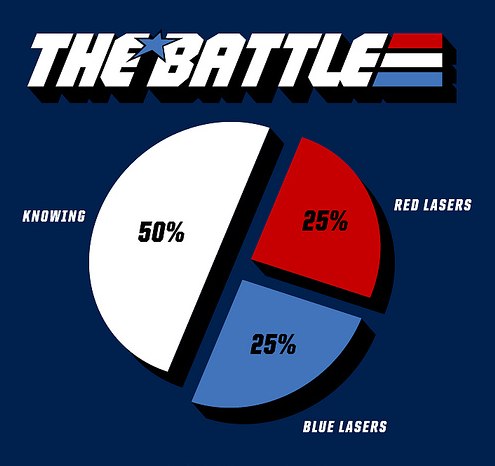
After all, GI Joe tells us that “Knowing is half the battle!”

The other half is lasers:Knowing is half the battle, lasers is the other half

With each meal tracked, these habits add up to knowing what needs to happen every day for you to get healthy.

Once you know how many calories you should be eating every day, you can start to make more informed decisions on foods that fill you up but are low in calories:

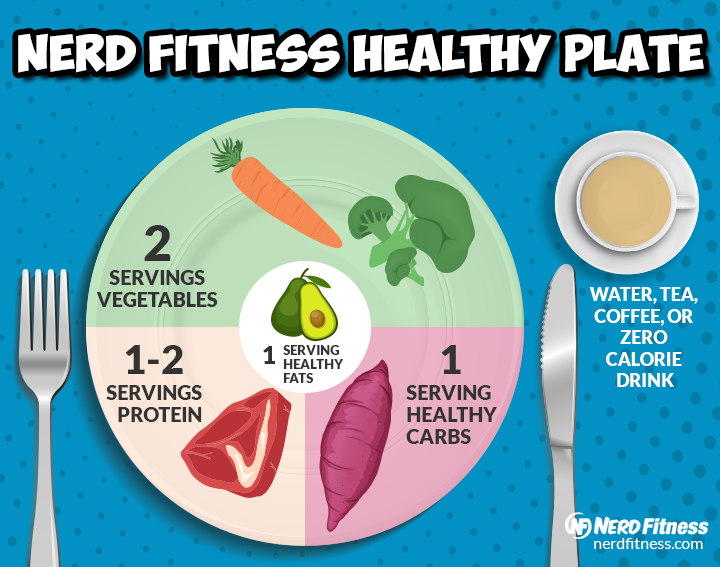
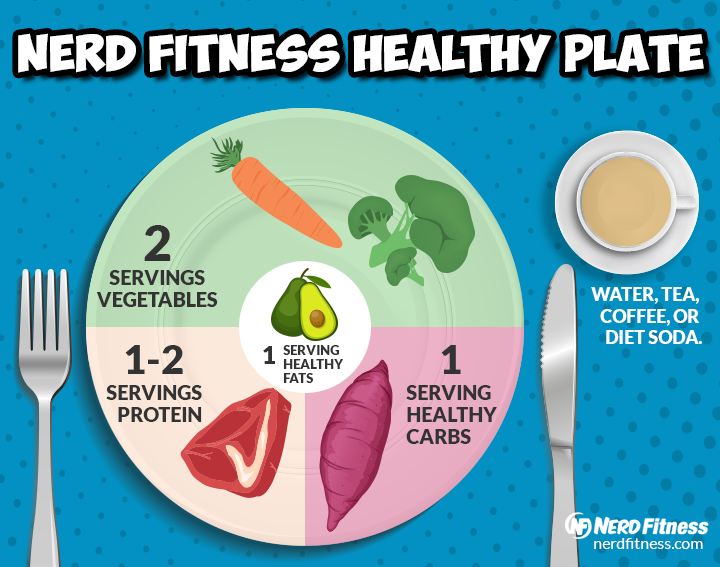
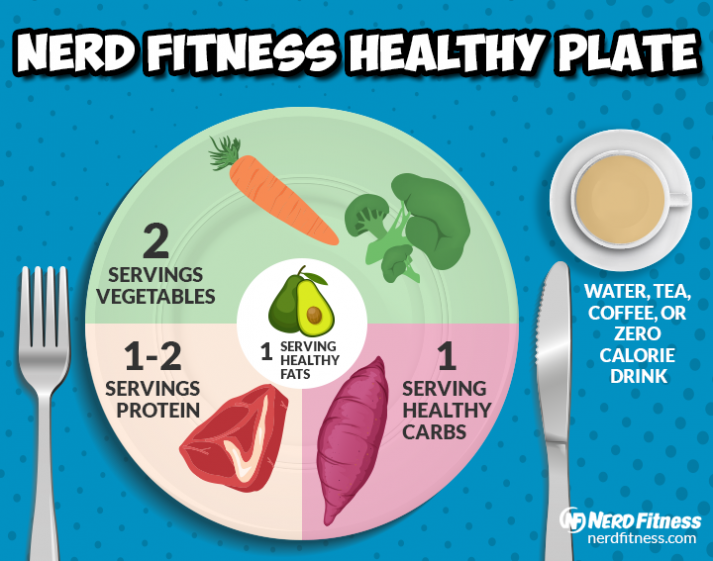
Spoiler alert: as we point out in our healthy eating guide, it’s healthy protein, fruits, veggies, and correct portions of healthy carbs.

It’ll come together and look sort of like this:

If your meal plate looks like this, you're doing a lot of the heavy lifting for weight loss.

Plus, once you learn to read a nutrition label, you can start to avoid marketing hype and buzzwords and focus on the actual product!

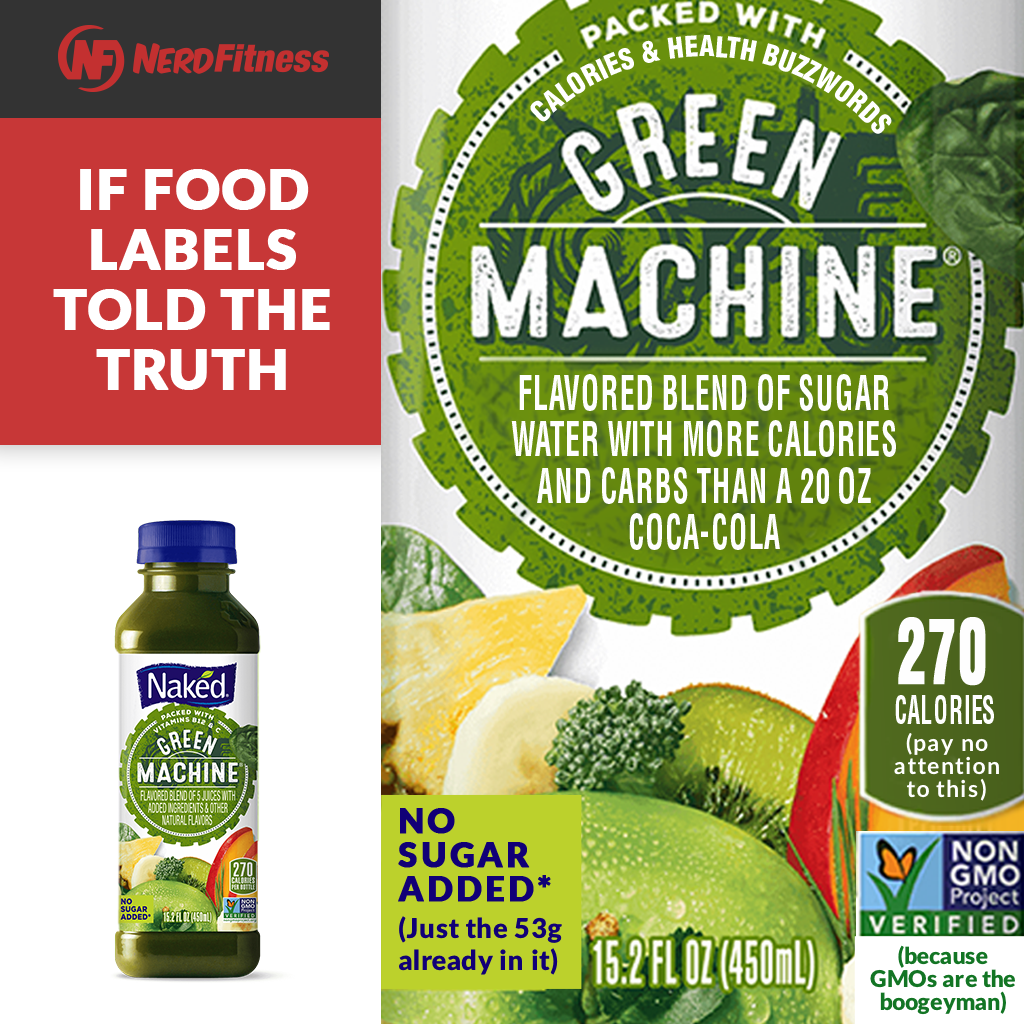
For example, here are two different beverages:

  • Coca-Cola (20 oz): 240 calories, 65 g of carbs (65 g of sugar)
  • Naked Juice Green Machine (15 oz): 270 calories, 63 g of carbs (55 g of sugar)

Look at those two things above: one is a can of cola that you know is bad for you, the other is marketed as a “healthy beverage.”

Neither one is great for you, and the calories must be accounted for in your daily intake.

Having some fun, we decided to make this:

The Green Machine is more or less just a bottle of sugar.

Don’t fall for the hype: read the label, count your calories, and break free of the Matrix!

This Takeaway, know what your food is made of.

Learn about the food you’re eating. You’re an adult, you can take 3 minutes and Google it.

Once you know the composition of your meals, you can start to make subtle adjustments or change quantities over time as you start to approach a healthier weight.

Be okay with “good enough” to start, and get more accurate as time goes on.

What’s that? You don’t know how to eat healthy? I got you, boo: “A Beginner’s Guide to Healthy Eating.

For each food, learn the following:

  • Total calories
  • Serving size
  • Fat
  • Protein
  • Carbs

Don’t overthink this: Write down what you eat every day for a week. If your weight isn’t changing, adjust down total calories and see how your weight changes.

Here are 5 nutrition tips that have great success with our coacing clients:

5. Use Blueprints and Blocks to Create Goals.

One brick at a time is how you build a house like this.

People who struggle to lose weight often say things like “I’m going to exercise more this year!”

Goals like this are cloudy with no real markers for success.

It’s a point that Coach Matt brings in the video “10 Tips for Making New Year’s Resolutions Stick.”

With no beacon guiding them, people who struggle to lose weight often don’t know if they’re on track, and there’s no accountability if they don’t succeed. These goals get tossed in the abandoned pile next to goals like “I’m gonna start flossing!”

Compare this to what you’re going to do in 2022:

  • Pick a reachable blueprint to follow: an outcome-based goal.
  • Place the blocks to build that blueprint: a habit-based goal.

Let’s see this in action: “I want to lose X amount of weight by X date.”

With a very specific goal and a specific timeline, we can work backward to calculate how much weight we need to lose each week to build that blueprint: our target weight.

Once you know where you want to be a year from now – you can then just focus on what you need to do TODAY.

EXAMPLE: I want to lose 50 pounds by December 31st, 2022.

Okay, if it’s January 1st, that’s roughly one pound per week. So then, what needs to happen each day to help us reach that goal? Let’s focus there.

Focusing on the habit (“today I’m going to drink only one soda instead of 3, and have one vegetable“) allows you to not get overwhelmed at the big picture.

In Minecraft terms, once you have the blueprints for a replica of Rivendell from Lord of the Rings, all you have to focus on is placing the next block in the right place. And then repeat!

Eventually, you’ll have Rivendell:

This Takeaway, pick a blueprint and start placing blocks.

Here’s a real-life example of this block-placing mentality:

“My goal is to reach my goal weight of 150 pounds by December 1st, 2022, so I will eat one vegetable every day, and I will strength train for 30 minutes, two days per week. On other days, I’ll go for a 10-minute walk.”

What happens when you do this: you stop worrying about the outcome, and instead JUST focus on the habit you have to do today.

It allows you to very easily answer the question: “Yes, I placed the block” or “no, I did not place the block.”

  • You either ate a vegetable today or you didn’t.
  • You either exercised for 30 minutes today or you didn’t.

Make sure you are picking a blueprint that you can build (it’s not TOO unrealistic), and keep things simple. A target weight loss goal of 1 pound per week is reasonable and sustainable. Remember that the focus should be on SUSTAINABLE progress – not “progress at any cost.”

Once you start reaching goals, you can create more complex plans.

Or in fantasy terms, after you finally slay the dragon, go find a bigger one!

6. You don’t HAVE to exercise, You GET to exercise.

A picture of a mouse working out in a small space.

People who struggle to lose weight often treat exercise as a miserable means to an end:

“I’ll exercise until I reach my goal weight and then I can stop this exercise stuff and go back to what I was doing before.”

Temporary changes, miserable strategy, temporary results… sound familiar?

They run on a treadmill because they think they should, but they hate it, and they never want to go back. Or they get dragged to some virtual fitness class and pretend they lost their internet connection to turn it off.

Hey, at least they're moving!

While they do their best to build the habit, they’re so unhappy and unexcited about the exercise that the habit never sticks. They only exercise until they reach a goal and then they stop. Ugh. Temporary changes = temporary results!

Look, here’s the truth: “exercise” sucks.

So you’re going to stop doing “exercise.”

I’ve heard from Nerd Fitness Clients time and time again: “I can’t believe it, but I actually look forward to exercising now. How did THAT happen?”

What’s going on here?

Because nutrition is 90% of the battle, building a habit of exercise and movement is more important than what specific type of exercise you choose.

Here are 40 ways to exercise without realizing it:

This Takeaway, remember that you GET to exercise.

You don’t have to exercise in a way that you hate.

Pick the kind of exercise that makes you come alive. Don’t have that form of exercise yet? Try new things!

Especially the stuff that doesn’t feel like exercise.

Nutrition is 90% of the battle, so the exercise can be something that you enjoy, that reminds you to make better food choices so your efforts don’t go to waste.

Desperate to lose weight faster? In addition to fixing your nutrition, try temptation bundling to get you to go to the gym.

Have a specific physique in mind (six-pack, toned arms, a better butt, broader chest, etc.)? Build the body you want and get hooked on improvement: “I can’t wait to go work out and find out how much stronger I got today compared to last week.”

You are a video game character increasing your strength attribute with each training session.

7. They invest in their health like a 401(k).

 I've always liked these candy coins too.

When it comes down to our health, we can invest in three ways:

  • Time
  • Effort
  • Money

Healthy habit-building badasses know this and prioritize accordingly: they know investing in their health is the best decision they can make for the long term. So they decide what’s the correct balance of time, effort, and money to use for that investment.

Your health is an investment, just like your net worth:

  • If you want to devote your effort and time to building your own workouts, crafting your own meal plans, and keeping yourself accountable, that’s awesome! I did this for myself for years.
  • You might decide to outsource your programming to a coach, recruit an accountability partner, or buy into a program that creates your workouts and nutrition for you.

Either way, this is a months or years-long process that requires discipline! Every day you get a tiny bit better compounds upon the day before and builds you a big nest egg (read: a great physique) that will keep you wealthy (read: healthy) for decades and decades.

We’ve had thousands of people who read all the free content on Nerd Fitness for years with no results, because they never invested in themselves.

However, the second they finally invested in themselves by hiring a 1-on-1 coach, they took action and lost weight within months.

Why?

Because we VALUE what we pay for and invest in, making us more likely to actually do the damn thing. And we don’t value what we get for free or take for granted.

Some folks don’t look at all of this stuff rationally – they complain about spending 99 cents on an iPhone app that could dramatically improve the quality of their life, and then gladly spend $6 on a sugary Starbucks beverage each morning without a second thought.

I don't get it either

People email me all the time asking, “Why should I pay for a course when there is free information online?”

Welp, there has been free information online for decades – has it gotten you in shape yet? Maybe there’s a point to investing in yourself!

Many people – myself included – will gladly pay for somebody to cut through all of the noise and bad information to deliver ONLY the right information that they need to read or hear.

Your money, your time, and your effort are all limited resources: how you choose to spend each of them tells me a lot about your priorities.

Personally, I gladly pay hundreds of dollars every month for my own online fitness coach, and have done so since 2014.

Many probably think I’m crazy and that this is a waste of money (“just do your own workouts!”), but I feel that it’s the best money I spend every month, and it’s why I’ve prioritized it over other expenses.

I’m not just paying for a workout plan in an excel document.

I am paying for accountability from somebody who is checking in on me, expertise from a trained professional who can spot my weaknesses, and the knowledge that I’ll actually do the workout because I’m spending my hard-earned money on it.

And it got me the results that had eluded me for a decade.

This Takeaway, treat your health like a 401k.

It’s not what you say is a priority, it’s what you spend your time or money on that’s a priority.

Prioritize your money and time on the best stuff, even at the expense of other creature comforts, and you’re more likely to get in shape because you’ll actually care about it.

Answer these questions:

How much money do you spend on your health?

How much time and effort do you devote to creating your workouts or fine-tuning your nutrition?

Have you ever hired a coach or paid for an online course?

Do you buy apps or software that makes your life easier, or do you try to get by with free stuff that you know you won’t actually use?

Sometimes spending money is the best investment you can make in yourself – because you KNOW that the free option is something you won’t stick with! 

  • Although you have a small room with weights in your apartment complex, pay money to join an outdoor class in a park because you hate working out alone. If you know people are counting on you to show up, you’ll more likley work out.
  • Pre-pay for 20 personal trainer sessions (virtual is okay) – if you’ve already paid for it and scheduled the workouts, you’ll actually DO IT.
  • Don’t have time to cut up vegetables? Buy them pre-prepared. Expensive? Maybe, but worth the price if it gets you to eat more veggies.
  • Decide what to sacrifice. It might mean you have to skip movies out or cancel your cable to prioritize a healthy meal service or buy more cookbooks so you never get bored with cooking new healthy meals.

Start thinking about this from a different perspective:

You’re not buying a fitness course or a trainer or an overpriced salad (that you would never make for yourself anyways).

You’re not just hiring a coach that prescribes you a workout that you could have found for free on the internet.

You’re investing in your future and purchasing accountability and expertise and momentum.

If you are looking for that expert guidance, accountability, and peace of mind that you’re training the right way for your goals, schedule a free consultation with Team NF to learn about our coaching program today!

8. Go All In On Momentum.

I can watch these things all afternoon.

Remember that Isaac Newton guy?

“An object at rest tends to stay at rest, and an object in motion tends to stay in motion, unless acted on by another force.”

This is called “inertia,” and nothing could be more applicable when it comes to your health.

People who struggle to lose weight often have a LOT of inertia to overcome when they are trying to build healthy habits and get in shape:

Their body is used to sitting on a couch and eating junk food, which means the habit of exercise is agonizing. They have to convince themselves to get off the couch and go out into the wilderness. Eating vegetables and healthy food sucks compared to their normal comfort food.

But they use max effort to do these things a few times, and momentum starts to shift away from unhealthy and towards healthy.

And that’s when things fall apart.

Literally "falling apart" in this case

Their kid gets sick or they work late and they miss a workout. Not the end of the world, right? But then it snows the next day, and one missed workout day becomes two, which becomes a month in the blink of an eye.

And they’re back to square one.

We are going to focus instead on cultivating and protecting momentum.

Perpetual health doesn’t happen in days, or with a few decisions. It takes months (or more likely, years) of consistent effort.

And shit happens.

Pandemics. Kids. Work. Life.

It’s more than just “missing a workout.” It’s killing your momentum, and momentum is crucial to long term health.

So focus on doing whatever you can to build momentum quickly and maintain it.

This Takeaway, go all-in on momentum.

Momentum is crucial to being perpetually healthy. So you need to protect it with your life.

To build momentum until it becomes autopilot, try:

  • Exercising 4 days per week without fail. Yes, even on holidays. Yup, even if it’s only push-ups for 5 minutes.
  • Going for a morning walk every single day, even when it’s snowing.
  • Scheduling workouts for early Saturday morning with a virtual trainer so you won’t drink like a fish Friday night.
  • Putting your workouts in your calendar. Have a friend give $50 of your money to a cause you hate every time you miss a workout.

Which means you should be following my favorite rule: never miss two in a row.

Two missed workouts quickly becomes 30 in the blink of an eye. Two bad meals quickly becomes a week of pizza and Chinese food.

So “never two in a row!” – never eat two bad meals in a row, never miss a workout two days in a row.

If you miss a workout, that next day is suddenly the most important workout of your life. Do whatever you need to do to get to the gym!

If you eat a bad meal, that’s fine! Enjoy it. But that next meal is suddenly the most important meal of your life! Do whatever you need to do to eat a dang vegetable!

9. Know Your Kryptonite.

Emerald gem stone mineral. Green gemstone of precious rock isolated on white background. Transparent shiny raw brilliant gem

I want to share an important quote from the late, great physicist Richard Feynman:

“The first principle is that you must not fool yourself – and you are the easiest person to fool.”

Some folks might be aware of their Kryptonite, but they just hope and pray they have enough willpower to overcome it every day.

They eat a single Oreo, and then spend an hour thinking about cookies until they go eat a whole sleeve of Oreo cookies and then berate themselves for not having more willpower to avoid the temptation.

The truth is that we are all flawed superheroes.

We've all felt like this..minus the pizza maybe.

People who struggle to lose weight often try to fix their flaws through sheer willpower and then feel deep shame when they can’t stop their behavior.

Permanently healthy people recognize their Kryptonite, and have a plan to avoid or protect against it:

If they know grains make them unhappy and bloated, they follow a Paleo diet and remove those foods completely so there’s no attempt to only eat half a serving of something.

If they know they struggle with portion control, then maybe they try skipping a meal with Intermittent Fasting.

They also ask the questions that get to the heart of their Kryptonite with regards to weight gain:

  • Maybe they eat when they’re bored.
  • Maybe they eat when they’re upset.
  • Maybe they eat when they’re nervous.
  • Maybe they eat when they’re watching TV.

They KNOW these things about themselves, and they know unhealthy food has been designed to be addictive.

So they plan for it!

This Takeaway, know thy Kryptonite.

Know thyself, my dear friend, and know what your triggers are.

We’re all flawed; plan for your flaws instead of trying to fight them. These triggers can be environmental or situational or emotional. Know it will happen, and build a Kryptonite-proof plan so you don’t have to worry about avoiding it.

Stop relying on motivation and willpower to tackle your Kryptonite.

Add accountability, punishments, and rewards into your life to stay on track and avoid your Kryptonite:

  • Check-in with someone every day to make sure they ate their vegetables.
  • Instruct your friend to donate your $50 to a politician you hate if you miss a workout check-in.
  • Reward yourself with new running shoes (a reward that rewards you back with more momentum) if you complete 20 runs in a single month.
  • Build your Batcave (your environment) so it’s tougher to make unhealthy decisions and easier to make healthy ones.
  • Don’t order out from unhealthy restaurants, and schedule early workouts on Saturdays so you won’t drink yourself silly on Friday.

You don’t need to be flawless. You don’t need a perfect plan. What you do need is to have an honest conversation with yourself about things you need to avoid while you’re trying to make healthier choices.

That might be certain restaurants, certain aisles of the supermarket, or even certain people….

10. Surround Yourself with Supporters, Not Anchors

Two characters from Mario Kart

You are the average of the 5 people you associate most with.

Are they banana peels?

Or are they Lakitus?

Banana peels need no introduction: drive over one in Mario Kart and they’ll ruin a perfectly good race by crushing all of your momentum.

The bane of any Mario Kart racer

Compare that to Lakitu. If you’re not familiar, he’s the little guy on the cloud in Mario Kart that picks you up when you fall off the track and puts you back on course.

He's not too bad when he isn't throwing spike shells at you.

People who struggle to lose weight often get spun out by the banana peels in their lives:

  • “What do you mean you don’t want to eat my lasagna anymore? You love my cooking.”
  • “Everybody is coming over to play D&D and eat pizza, you can’t miss this.”
  • “You don’t need to lose weight. You look fine. Live a little. Come on.”

Questions and comments like these subtly influence our behavior every day. Which is how you end up looking like and acting like the 5 people you associate most with. 

Compare this to Lakitus: the people who want you to succeed, who hold you accountable and make you want to be better.

I recently asked our private community from Nerd Fitness Prime what the group meant to them.

This response jumped out at me:

Dave here knows it's about who you surround yourself with.

You need to be surrounded by people that pick you up, not slow you down.

Healthy people know this, and they make the hard decisions about who is worthy of their time and attention.

They often fire their unhealthy friends and family – even if only temporarily – because they can’t be around negative influence as they’re trying to build momentum.

I’ve heard of tons of stories where unhealthy relationships have ended because a newly healthy individual was dating an unhealthy person who didn’t want them to be healthy and was actively sabotaging them.

Why does this happen? Because it’s often easier to drag other people down than it is to look honestly in the mirror and address one’s shortcomings or unhealthy. 

If you are trying to get healthy, minimize your time around banana peels and MAXIMIZE your time with Lakitus.

This Takeaway, surround yourself with Lakitus not banana peels.

You are influenced dramatically by the people around you whether you realize it or not. How are these people influencing you?

Take exercise:

  • Banana Peel: You want to exercise, but your friends are mad at you for skipping Among US or a World of Warcraft raid… you’re going to skip the workout.
  • Lakitu: You want to exercise, and your friends are currently doing yoga in the park… you’re gonna find your mat!

Food:

  • Banana Peel: Your family orders take out and everyone wants pizza. You’ll likely order junk food to fit in, rather than order a salad and endure the scorn.
  • Lakitu: You decide on delivery and the 4 people in your house want salads – I’d bet $1000 you’re going to order something healthy too.

Mental health:

  • Banana Peel: You have 5 friends who never talk about anything serious: how are you supposed to tell them about your depression medication or that you’re thinking about going to see a therapist?
  • Lakitu: You have 5 friends who are not only accepting of your flaws, but share theirs too and have advice for you.

Decide who is worthy of your attention, and work on putting yourself in situations with people who make you want to be better.

This might mean a serious conversation with your significant other that “likes you more full-figured” if your goal is to be healthier and happier.

Or diving deep into deflection strategies if you have to constantly deal with unhealthy family members you can’t fire.

If they are worth your time, they will change their tune to be more supportive and helpful and less of an anchor.

And then start spending time around people who are stronger, healthier, happier, and more successful than you. And do what they do.

  • Use 20 seconds of courage to strike up a conversation with someone at the bicycle shop and make plans to go bike ride together.
  • Join a running club at work, or start a running club if one doesn’t exist yet (when it’s safe to do so).
  • If you don’t have people in real life cheering you on, find an online group that pushes you to be better.

How is NEXT YEAR Going to Be Different?

Empty asphalt road and New year 2019, 2020, 2021 concept. Drivin

Phew! Okay, let’s see how many of these you can actually check off:

  1. I have a Groot Mindset
  2. I know my Big Why
  3. I don’t go on diets. I adjust my nutrition.
  4. I know what my food is made of.
  5. I have blueprints and blocks.
  6. I don’t have to exercise; I GET to.
  7. I invest in my health like a 401(k).
  8. I go all-in on momentum.
  9. I know my Kryptonite.
  10. I seek out Lakitus, not banana peels.

Give yourself a score, and let me know which ones are the toughest for you to follow through on.

If you checked 6 or fewer boxes, pick ONE of the habits and work on it for the next month. Internalize it. Make it part of your new identity. And then move onto the next one.

You’re overcoming inertia and building momentum!

And NEVER underestimate momentum. Once you build it, it can be hard to stop!

We have three great ways to start the ball rolling, right here in our own community. Pick the path that best aligns with your goals:

#1) Our 1-on-1 Online Coaching Program: a coaching program for busy people to help them make better food choices, stay accountable, and get healthier, permanently.

You can schedule a free call with our team so we can get to know you and see if our coaching program is right for you. 


#2) Exercising at home and need a plan to follow? Check out Nerd Fitness Journey!

Our fun habit-building app helps you exercise more frequently, eat healthier, and level up your life (literally).

Try your free trial right here:

#3) Join The Rebellion! We have a free email newsletter that we send out twice per week, full of tips and tricks to help you get healthy, get strong, and have fun doing so. 

I’ll also send you tons of free guides that you can use to start leveling up your life too:

Alright, now it’s your turn:

Agree with my 10 traits? Disagree?

Anything missing?

Leave that in the comments too!

-Steve

PS: Make sure you check out the rest of our Sustainable Weight Loss Content:

###

photo credit: Rattana Rueangha © 123RF.com, Dmitriy Shpilko © 123RF.com, Mark Bonica Paleo Diet – Day 14, post-apocalyptic research institute 3mm model, Petro Perutskyi © 123RF.com, evoo73 balance, Ruslan Gilmanshin © 123RF.com, Liubomir Paut-Fluerasu © 123RF.com.

The post Blog first appeared on Nerd Fitness.

from Nerd Fitness: Helping You Lose Weight, Get Stronger, Live Better. https://ift.tt/3qSu6ba
via IFTTT

Categories
Uncategorized

#holistic #getfit #nutrition How “starting small” helped this Rebel lose 80 pounds.

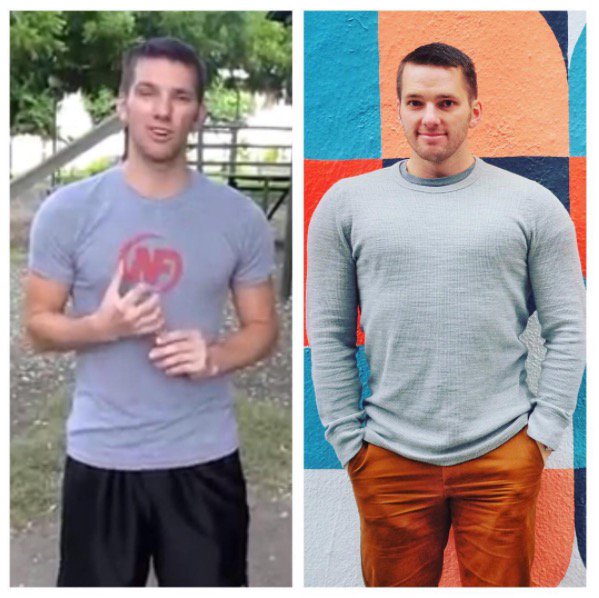
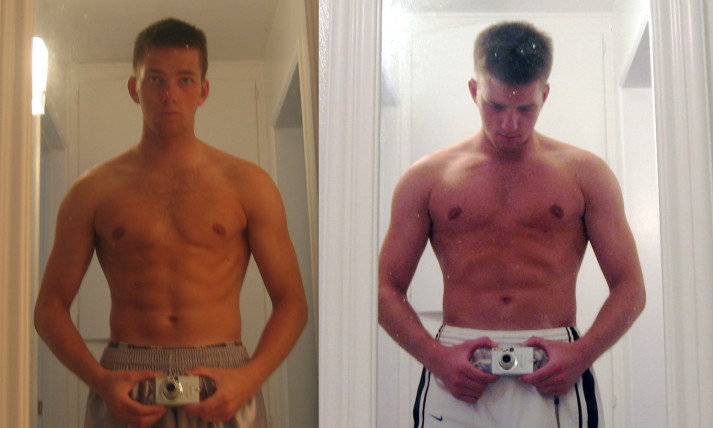
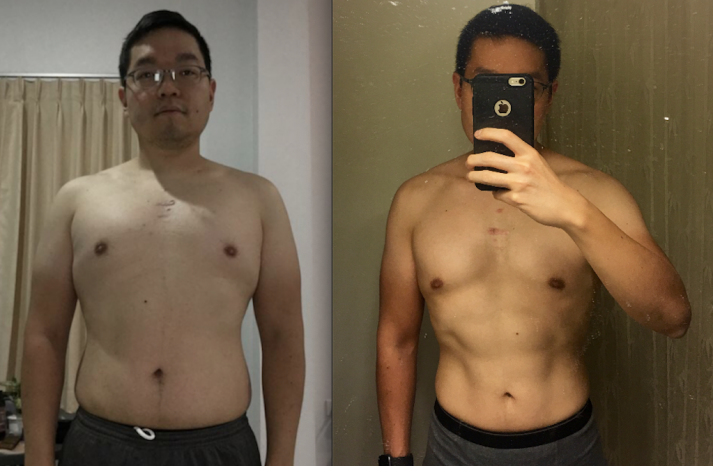
Jason before and after

“Progress has a best friend, named consistency.” – Jason

Meet Jason, a longstanding member of the Rebellion and a current client in Nerd Fitness Coaching.

He’s accomplished A LOT during the last year.

For example, Jason now:

  • Runs three miles like it ain’t no thing.
  • Falls asleep like a baby and wakes like a lark.
  • No longer needs his hypertension medication.

Amazing!

But, it’s been a long road for Jason, with many ups and down:

  • One “up” is when Jason lost 80 pounds after joining the Nerd Fitness Academy (he discovered NF after seeing a shirt at comic-con!).
  • But a “down” is when his job ramped up and the stress piled up, making all his fitness habits start to feel like a burden.

Jason also suspected he might be suffering from orthorexia. 

Orthorexia is a condition where someone focuses on healthy eating to the point where it actually becomes unhealthy.

For example, someone with orthorexia might develop anxiety even at the thought of eating something fried or with added sugar in it.

It became so much that Jason realized he needed help. He remembered the success he had with the NF Academy and decided to see if the Coaching experience could be the answer.

So without further ado, let’s find out more about this inspiring Rebel.

The post Blog first appeared on Nerd Fitness.


from Nerd Fitness: Helping You Lose Weight, Get Stronger, Live Better. https://ift.tt/3EZN3hh
via IFTTT

Categories
Uncategorized

#holistic #getfit #nutrition A Beginner’s Guide to CrossFit: 8 Things to Know Before Your First CrossFit Workout

Today we teach you everything you want to know about CrossFit.

This guide will tell you everything you’ve ever wanted to know about CrossFit but were too afraid to ask (Including Is CrossFit good for losing weight?).

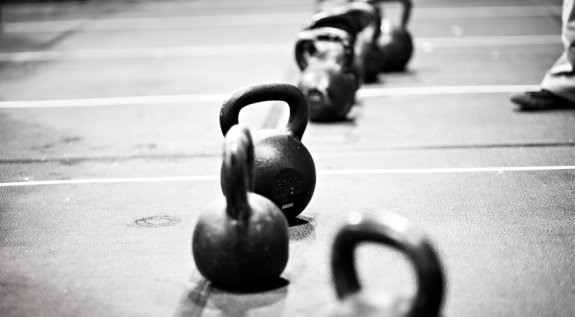
If you’ve ever questioned why people run around parking lots with sandbags, you’re in the right place.

Many of the coaches in our Online Coaching Program have been CrossFit instructors or gym owners, so this is what we do best: help people start strength training confidently and without injury.


CrossFit can be AMAZING…for the right person…with the right CF coach.

Luckily, this guide is going to help you figure out both of those things!

In this Beginner’s Guide to CrossFit, we’ll cover:

Let’s jump right in!

What is CrossFit?

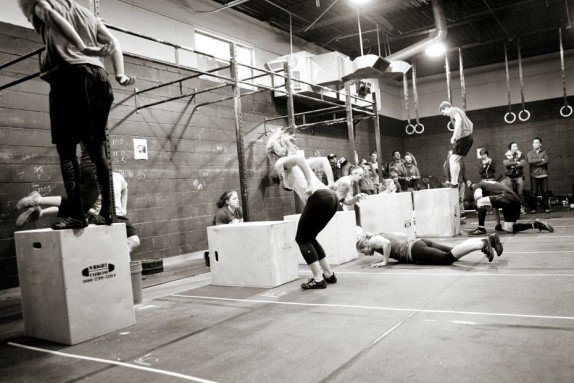
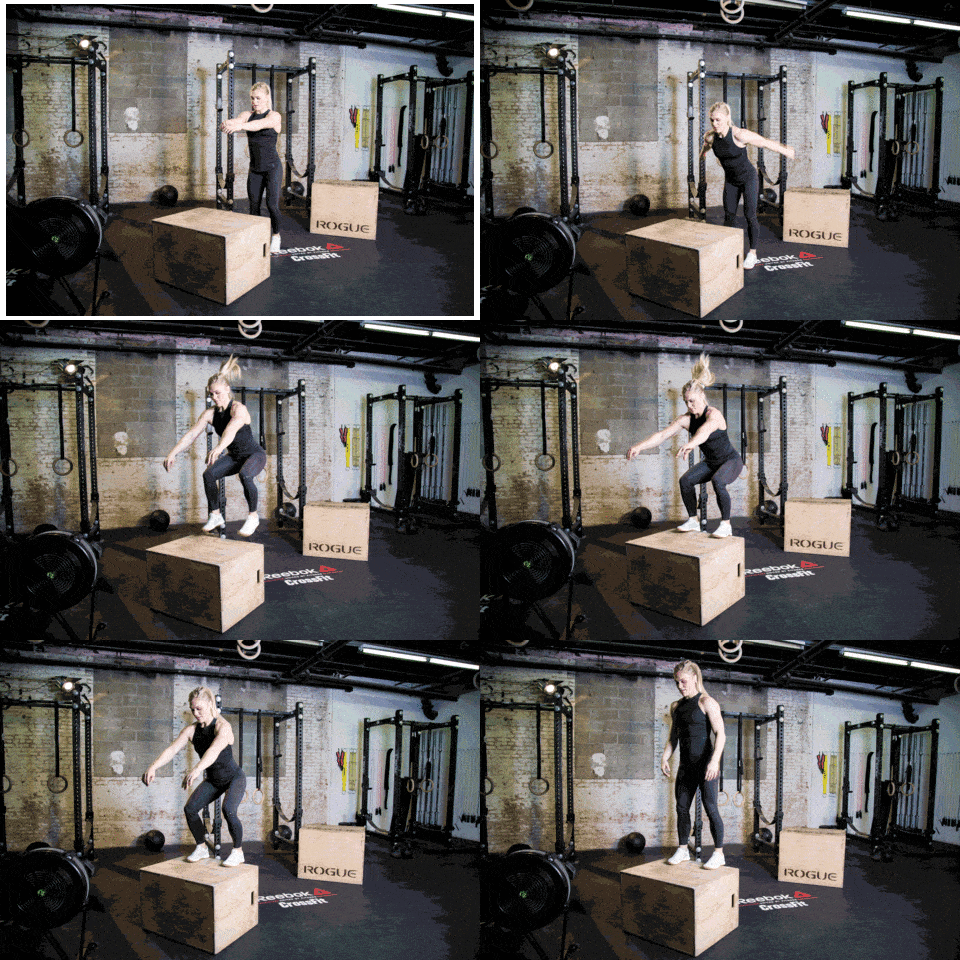
These people are doing box jumps as part of CrossFit.CrossFit is advertised as “the sport of fitness.” 

With constantly varied, high-intensity functional movements, CrossFit is a training philosophy that coaches people of all shapes and sizes to improve their physical well-being and cardiovascular fitness in a hardcore yet accepting and encouraging environment.

Here’s the definition of CrossFit from the official site:

CrossFit is the principal strength and conditioning program for many police academies and tactical operations teams, military special operations units, champion martial artists, and hundreds of other elite and professional athletes worldwide.

Our program delivers a fitness that is, by design, broad, general, and inclusive. Our specialty is not specializing.

Combat, survival, many sports, and life reward this kind of fitness and, on average, punish the specialist.

CrossFit contends that a person is as fit as they are proficient in each of ten general physical skills: cardiovascular/respiratory endurance, stamina, strength, flexibility, power, speed, agility, balance, coordination, and accuracy.

Or, in nerd speak – CrossFit is a training program that builds strength and conditioning through extremely varied and challenging workouts.

Each day the workout will test a different part of your functional strength or conditioning, not specializing in one particular thing, but rather with the goal of building a body that’s capable of practically anything and everything.

I guess this would fall into a CrossFit like workout.

Like moving boulders. 

CrossFit is extremely different from a commercial gym…and not just because you won’t find any ellipticals, weight machines, or Zumba.

Not that there’s anything wrong with some of those things. We work with our coaching clients to find the style of exercise that works best for them.

If you want to mix up strength training with other fun exercises…


Can Beginners Do Crossfit? (8 Things to Consider)

Running around the gym with sandbags is common at CrossFit gyms.

According to the CrossFit site:

This program “is designed for universal scalability, making it the perfect application for any committed individual regardless of experience.

We’ve used our same routines for elderly individuals with heart disease and cage fighters one month out from televised bouts. We scale load and intensity; we don’t change programs.”

What that means is that every day there is a particular workout prescribed (you’ll often see this written as “Rx’d”) for everybody that comes to CrossFit. 

Rather than having one workout for older women and another for hardcore athletes – there’s ONE workout each day that is completely scalable based on your skill.

A box jump at CrossFit

For example, if the workout calls for barbell squats with 135 pounds but you can only do squats with the bar (45 pounds), then that’s where you’ll start.

If you’re injured and can’t do squats at all, a similar movement will be substituted, and if the number of reps is too many for your current ability, that will be reduced.

As you get stronger and more experienced you’ll work your way towards eventually doing the workouts as prescribed.

Now, although CrossFit can be for everybody, it certainly ISN’T for everybody. In this blogger’s humble opinion, CrossFit is perfect for a few types of people:

#1) Beginners to weight training  If you have NEVER weight trained before (or trained only on machines), CrossFit is a great place for you to start (provided you have a great coach, which I’ll cover shortly).

You’ll learn how to do all of the important lifts in a super supportive and nonjudgmental environment. You might even find that…GASP…you love strength training!

#2) People looking for support and community – This is the appeal to CrossFit for me: every CrossFit gym has a really tight-knit community feel to it.

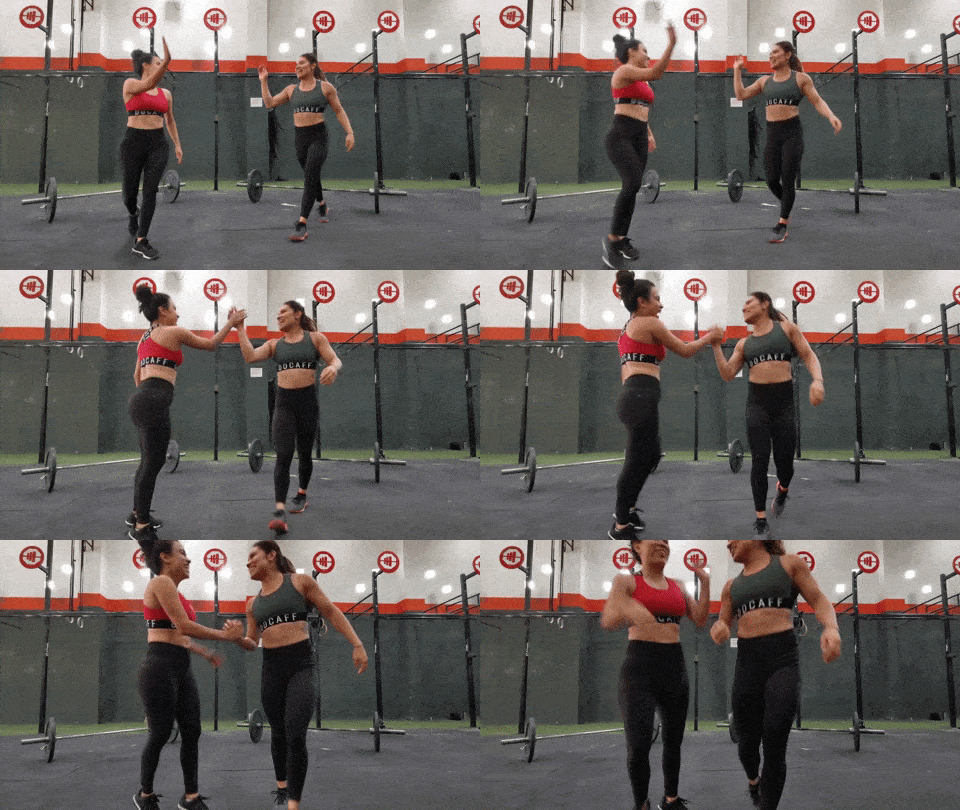
Two women high fiving at crossfit

You’re not just a membership payment to them; you’re a person that needs support.

When Nerd Fitness gyms start popping up (don’t think it won’t happen!), I’ll be drawing a lot of inspiration from CF as to how members are so supportive and inclusive of each other.

#3) Fitness fanatics – You know those people that love to work out every day and feel like something is missing if they don’t?

The way CrossFit is structured, you are working out with regular consistency.

The general protocol is 3 days on, 1 day off, but many CrossFitters end up at the gym more frequently. It’s addicting.

#4) Masochists – I mean that in the nicest way possible. CrossFit often rewards people for finishing workouts in the least amount of time possible.

This means that you’ll often be in situations where you are using 100% of your effort to finish a workout, exhausting yourself, and forcing yourself to push through the struggle.

#5) Former athletes – CrossFit has built-in teamwork, camaraderie, and competition.

Almost all workouts have a time component to them, where you either have to finish a certain number of repetitions of exercises in a certain amount of time, or the time is fixed and you need to see how many repetitions you can do of an exercise.

You get to compete with people in your class, and go online to see how you did against the world’s elite CrossFit athletes. There is even an international competition for those that become truly dedicated.

There are a few people for whom I don’t think CrossFit would be as beneficial, but this doesn’t mean they won’t enjoy it:

#1) Specialists – CrossFit prides itself on not specializing, which means that anybody who is looking to specialize (like a powerlifter) will not get the best results following the standard CrossFit workout schedule.

If you want to be good at a specific activity, that’s where your focus should be.

#2) Sport-specific athletes – Like the specialists, if you are an athlete training for a sport, you’d be better off finding a coach that is trained in getting great performances out of athletes in your specific sport.

Every sport has special movements that require certain types of power in specific muscles.

CrossFit prepares you for everything, but won’t improve your specific sport skills unless you are training for those specific sport skills! Many athletes choose to combine CrossFit with sport-specific workouts (see things like CrossFit Football) in their off-season for conditioning, but that’s up to each sport’s coach.

#3) Solo trainers – Some people, myself included, love to work out alone: my training is my meditative time each day. CrossFit is group training, which means you won’t have that opportunity to get your stuff done on your own.

If you are somebody that likes the IDEA of CrossFit, but you like to train on your own and you still want expert guidance and accountability…

I have a great solution for you!

Our 1-on-1 Coaching Program helps people EXACTLY like you! We create custom workouts and nutritional guidance based on your personality, the equipment you have access to, and your busy life. Let us help you get strong.


How Dangerous is CrossFit?

Is CrossFit safe?

In short, yes, CrossFit can be dangerous. 

But that could be said of literally any sport or exercise.

Or driving a car.

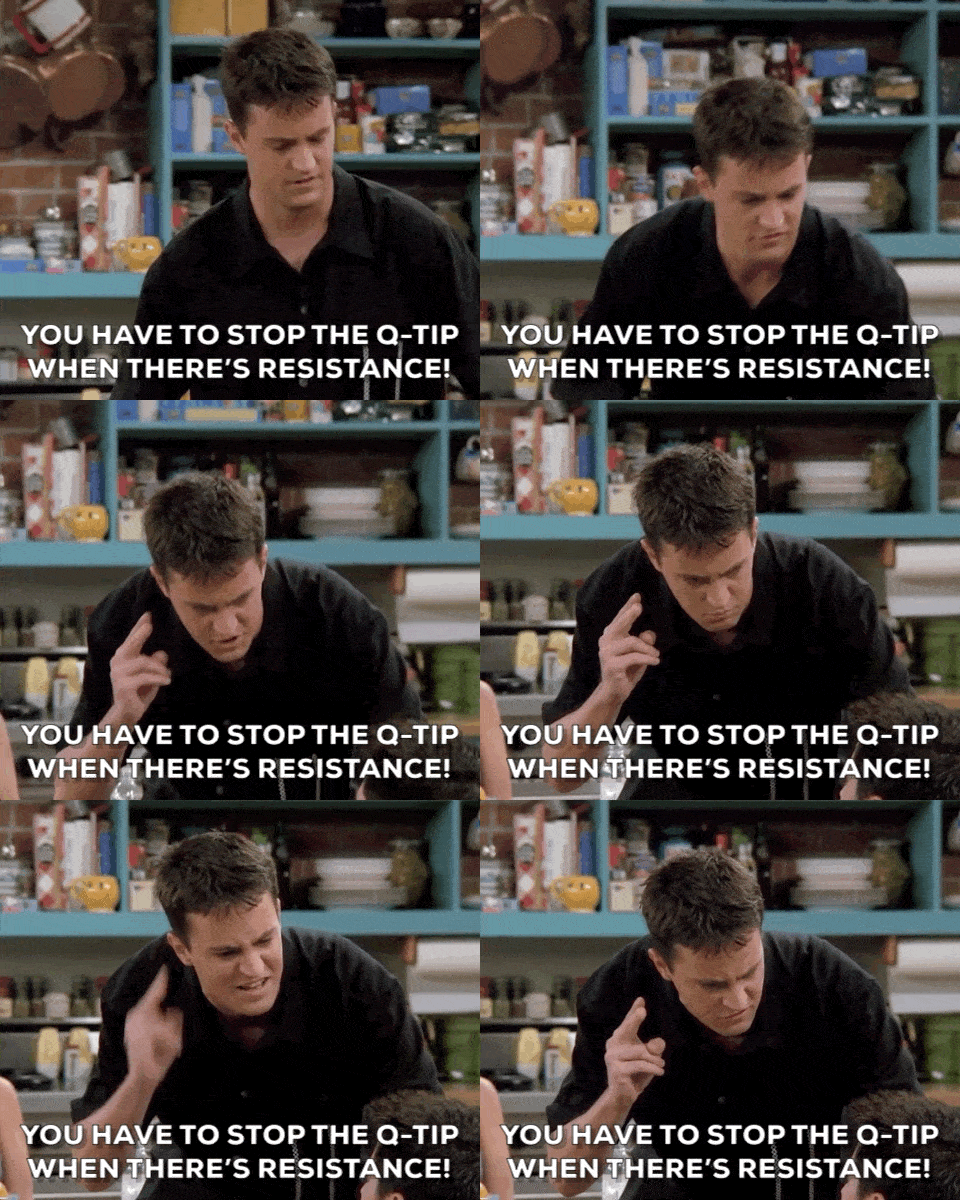
Or using a Q-tip.

Yeah, don't just stab your ear with a Q-Tip.

In the wrong situations, with the wrong coaches, and for a person with the wrong attitude, CrossFit can be dangerous:

1) During a CrossFit workout, you’re often told to complete a number of strength training or endurance exercises as fast as possible, or complete as many repetitions as possible in a certain amount of time. 

For that reason, it’s REALLY easy to sacrifice form in exchange for finishing the workout quicker. If you don’t have somebody spotting you or telling you to keep your form correct, then you’re in trouble.

When it comes to strength training, improper form (especially at high speeds with heavy weights) is the FASTEST way to get seriously injured.

If a CrossFit gym is run by inexperienced and unproven coaches – which definitely happens – then things like this happen and they happen frequently.

2) CrossFit attracts a certain type of person – namely folks who push themselves so hard they actually do bodily harmAsk any CrossFitter if they’ve met “Pukey the Clown” and they’ll probably tell you yes.

Due to the nature of competition, the motivating atmosphere, and people’s desire to do well, many people in CrossFit often push themselves beyond their personal limitations (which can be a good thing)…but oftentimes they push themselves too far.

I totally get it.

In my first CrossFit experience a few years ago, I almost made myself puke because I wanted so badly to finish with a good time.

Later, I did another CrossFit workout that I hadn’t properly prepared for and cranked out 100 pull-ups quickly…and I ended up walking around with T-rex arms for a WEEK because I physically could not straighten them.

A T-rex with short arms

Not kidding.

3) In some extreme cases with a VERY small portion of CrossFitters (or similar types of workout programs), an incredibly serious medical condition called rhabdomyolysis can take place.

When people push themselves too hard, too much, too fast, their muscle fibers break down and are released into the bloodstream, poisoning the kidneys.

At CrossFit, some coaches refer to this as “Uncle Rahbdo,” though it’s not something funny or enjoyable.

You can read all about the condition and issues it can cause here. This typically occurs with ex-athletes who have not exercised for a while and come back trying to prove something, and end up working at a higher intensity than their body can handle.

So, like with any activity, you can have people that like to push themselves too far, too hard, too fast, and too often.

Unfortunately, due to the nature of CrossFit (where this behavior can be encouraged and endorsed by the wrong coach), you can end up in some serious danger if you don’t know when to stop or have a coach that will tell you when to stop.

Personally, I find these issues to be more with individual people than with the CrossFit system as a whole, but it is the nature of CrossFit that attracts these people and encourages them to behave dangerously.

If you like the idea of strength training, but are a bit worried about starting with CrossFit, I hear ya.

We help people like you with our 1-on-1 Online Coaching Program. We create workout programs that are tailored to your experience, and adjust them based on your progress.

We do video form checks, you can text back and forth any questions with your coach, and more.


We also have our massive Strength Training 101 guide so you know exactly how to get started and even provide you with specific workouts to follow! Get it free when you sign up in the box below and Join the Rebellion!

What’s a CrossFit Class Like?

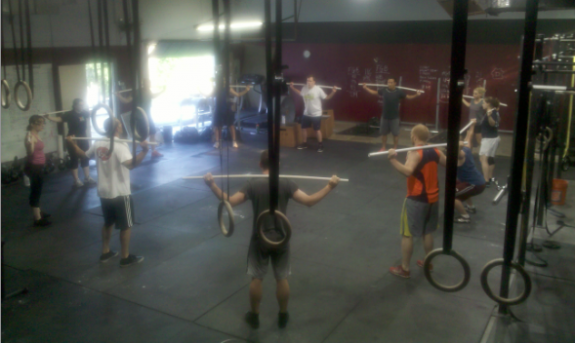
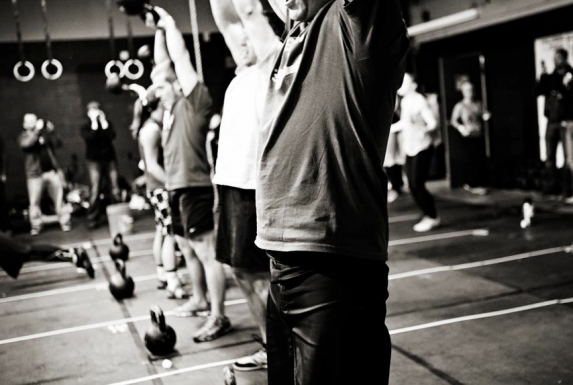
These people are in the middle of their workout for CrossFit.

Let’s say you’re interested in joining a CrossFit class, but you don’t know what you’re getting into!

Practically every CrossFit gym around the world will let you come in and try out a class for free, so contact your local gyms and find out what dates and time they’re having newbie sessions.

This is how CrossFit classes are usually structured:

  1. Introduction class – For people who have never tried CrossFit before. Usually, there’s a quick overview, and then a basic bodyweight movement workout, and then they talk to you about joining. These are usually free.
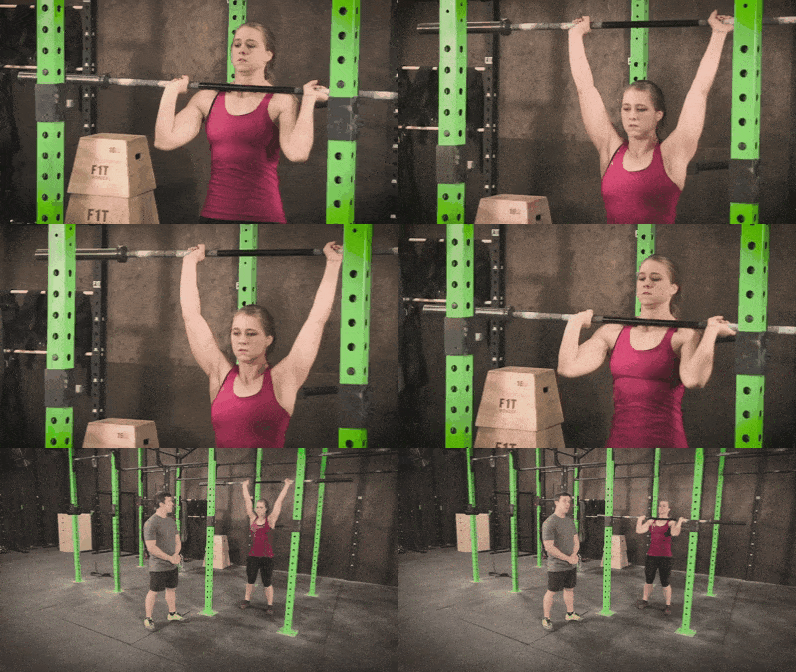
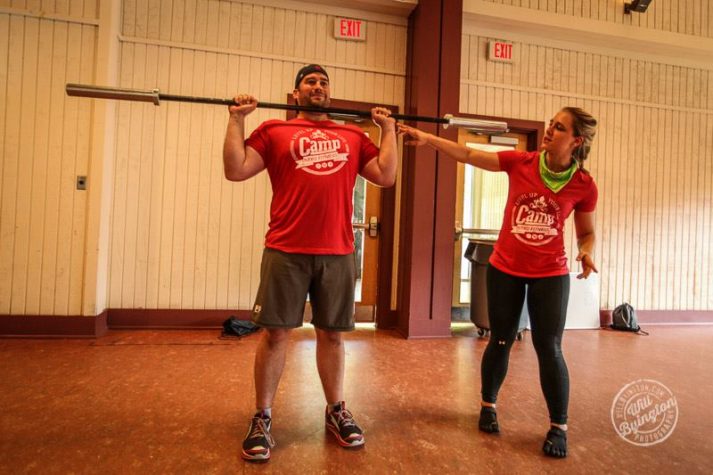
  2. On Ramp/Elements – If you’re interested in joining the regular CrossFit workout, you’ll most likely be required to go through the On Ramp/Elements course. The purpose of these is to teach you the nine foundational movements of CrossFit and all about proper form. No matter how experienced you are, these are valuable and worth the time and money. Even if you think you have perfect form on your squats, deadlifts and/or overhead presses:Here Staci is pressing just the bar, a could practice for warming up.
    It’s amazing what can be fixed when you have a trained set of eyes watching you do them.
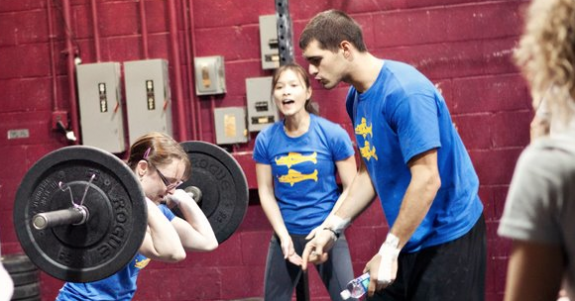
  3. Regular classes: This is what you’re probably used to seeing or hearing about. A regular CrossFit class takes anywhere from 45 minutes to an hour. Everybody starts at the same time, there are instructors walking around helping out and keeping track, and everybody is supporting each other and probably swearing a lot.

Most CrossFit gyms will split their classes into three or four sections:

  1. Dynamic warm-up – Not jogging on a treadmill for 5 minutes, but jumps, jumping jacks, jump rope, squats, push-ups, lunges, pull-ups. Functional movements, stretches, and mobility work that compliment the movements you’ll be doing in the workout that day.

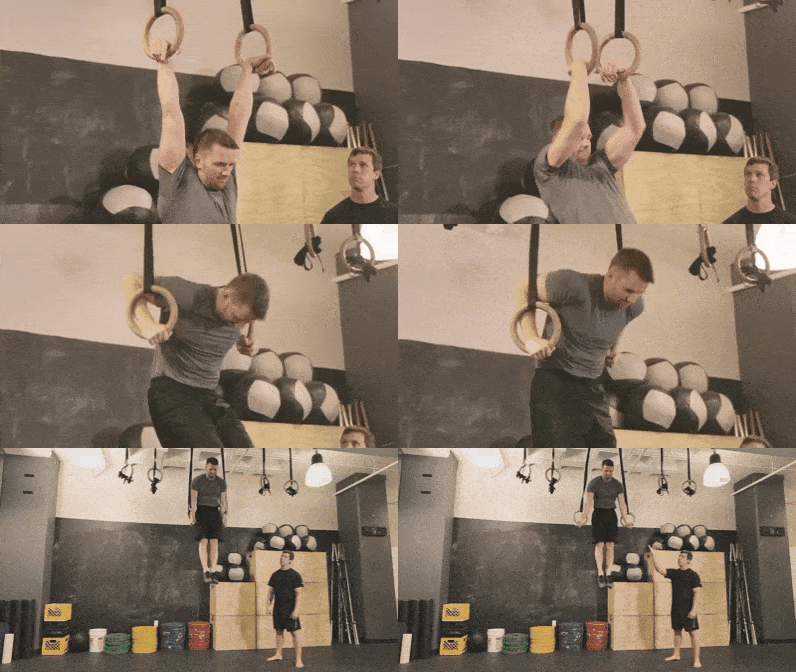
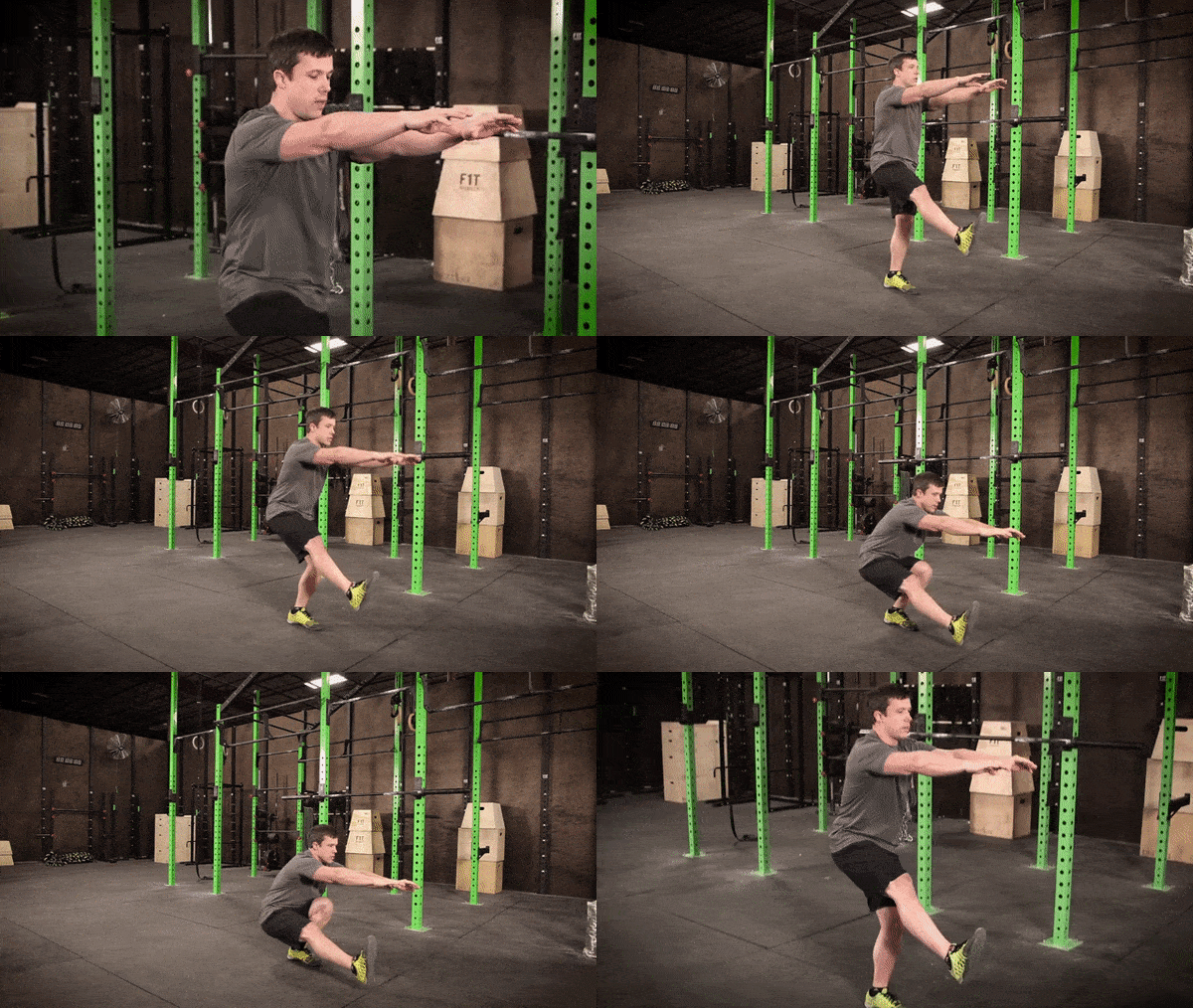
  2. Skill/Strength work – If it’s a strength day, then you’ll work on a pure strength movement (like squats or deadlifts). If it’s not a strength day, then you’ll work on a skill and try to improve, like one-legged squats or muscle-ups:The muscle-up is one of the most badass exercises you can do!
  3. WOD – the workout of the day. This is where you’ll be told to do a certain number of reps of particular exercises as quickly as possible, or you’ll have a set time limit to do as many of a certain exercise as possible.
  4. Cooldown and stretching – Either as a group, or you’re allowed to stretch out on your own. This would also be the time for people who pushed too hard to go puke in a trash can and stretch their stomach muscles.

How to Find a CrossFit Gym

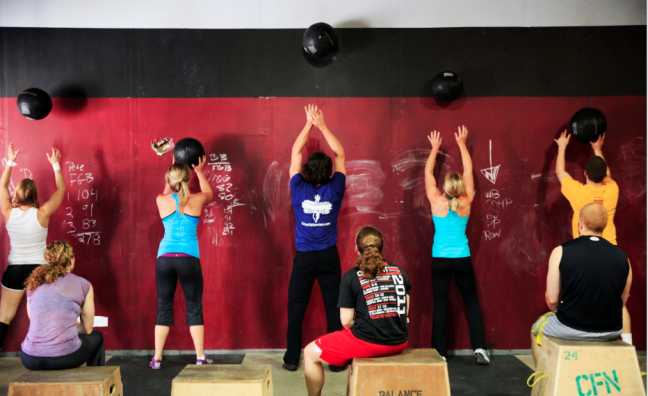
A common scene of a CrossFit gym.

So, let’s say you’re interested in trying out a CrossFit class or maybe joining a CrossFit gym.

If you happen to live in a city, there are probably more than a dozen CrossFit “boxes” in your area.

Other than picking the one that’s closest to you, why not put a bit more thought into it? This isn’t like picking a commercial gym – the community and coach are so freaking important.

First and foremost, you need a gym with competent, experienced coaches.

You should be able to see through that particular CrossFit gym’s website – not the main CF site – who the coaches are and how long they have been teaching, including their certifications.

Here’s a quick breakdown of what you might see from coaches:

  1. CrossFit Level 1 – an ANSI-accredited certification. This means the person went to a weekend-long course and passed the exam.
 You’re taught the basic movements, how to scale each movement, but not really much more. There are no specifics on how to deal with injuries, anatomy, etc.
  2. CrossFit Level 2 This is the next level up from Level 1, and involves far more in-depth training in coaching.
  3. Certified CrossFit Level 3 Trainer – This is for coaches who have passed both the Level 1 & Level 2 certification courses as well as a CrossFit-specific exam.
  4. Certified CrossFit Level 4 Coach – Given after an assessment/evaluation of a coach’s abilities, and the highest certification level available.
  5. Specialty Seminars – These are one- to two-day courses on specific topics like gymnastics, Olympic lifting, and running.
  6. Other non-CrossFit certifications from personal training organizations, powerlifting programs, kettlebell programs, etc.

There’s big money in CrossFit these days, which is why so many gyms are opening up all over the country. Make sure to do the research on who your coaches are, and if they have actual coaching experience.

The other important thing to check out is PROGRAMMING

CrossFit programs can be truly random, and an inexperienced coach can accidentally program back-to-back workouts that use the same muscle groups in the same way, not giving you enough time to recover.

On every CrossFit gym’s website, there’s usually a blog where they post the workout of the day.

Look over this for the gym you want to check out and see what they typically do. If they do high-rep cleans three days in a row, they obviously don’t program well.

Or if you see every day for a week with heavy shoulder movements, be wary!

Remember, most CrossFit gyms will let you attend one class for free. If you have a few in your area, try out each of them once before making your decision.

Go to each one and make note of the other members:

  • Are they supportive of each other?
  • Did they introduce themselves and welcome you?
  • Were the coaches nice and hands-on with their advice during the workout?

A good community can be absolutely critical for success, so picking the right gym that fits your personality and situation is super important.

If you’re not sure how to find the right gym, or you want nutritional help and form checks as you’re trying to figure this stuff out…


Can I Do CrossFit at Home?

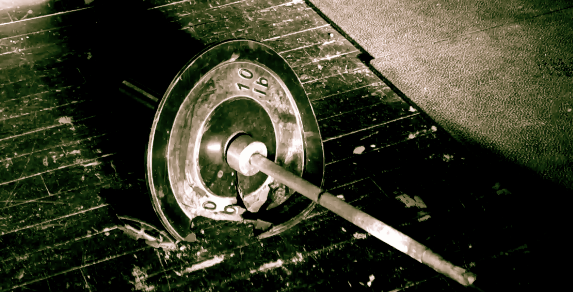
Common equipment at a CrossFit gym.

Every day, CrossFit.com puts out the workout of the day (or WOD), which can be done at home, in a commercial gym, or in a CrossFit gym. 

Every CrossFit gym will put out their own WOD as well, which can be different from the CrossFit.com site – if you happen to find a local CrossFit site that you enjoy but don’t attend full-time, it’s more than okay to follow their workouts.

The best news about this is the workouts are posted free of charge to anybody that is interested in doing them.

Fighting crime is sort of like CrossFit.

CrossFit gyms can be prohibitively expensive, so if you love CrossFit but are looking to save money, you can follow along at home or in your office gym provided you have the right equipment.

Many times, you’ll run into situations where you can’t complete a particular workout because you don’t have the right equipment. Do the best you can with what’s available to you, and keep track of how you made your modification for tracking purposes.

Now, there are a few challenges with following CrossFit at home or by yourself in a gym:

  1. Nobody is checking your form – CrossFit requires many incredibly specific movements; if you start by yourself at home, you’ll never know if you’re doing them incorrectly and could severely hurt yourself as you increase the amount of weight with which you work.
  2. Lack of communal camaraderie A HUGE part of CrossFit is the supportive community aspect that comes with each gym. I guarantee you’d finish a workout a few seconds (or minutes) faster if you had 50 people screaming your name and cheering you toward the finish line.
  3. You probably don’t have all of the equipment – If you’re working out at home, you probably don’t have a full squat rack, bumper plates, kettlebells, medicine balls, and so on….so you’ll often be creating your own workouts that are modified versions of the online versions. You might also not be able to bounce and throw your weights around like CrossFitters tend to do 🙂
  4. You will want to buy all of the equipment The more you do it, the more you’ll want to do it properly. This might not cost as much as an actual box, but it will cost you.

Even with all of these negatives, it could save you quite a bit of money each a month by not joining a gym, so I don’t blame you – just be smart about it.

If you’re somebody that does want to train at home or doesn’t have access to a CrossFit gym you can trust, there are two things to consider:

  1. Making sure you’re doing your exercises correctly so you don’t develop bad habits.
  2. Personal accountability (somebody to check in on you and cheer you on)

We’ve focused on both challenges with our 1-on-1 Online Coaching program. 

Our coaches work with clients to build workout programs specific to their situation and goals and do form checks on each exercise with their clients via video (to make sure they don’t hurt themselves). Plus, your coach comes with you no matter where you are in the world!


What is a CrossFit Workout I Can Try?

These CrossFitters are doing the Workout of the Day

One of my favorite “first time” CrossFit workouts is a benchmark workout named Cindy.

It’s a simple bodyweight circuit (we love workout circuits at NF) and can be done practically anywhere – the only equipment you need is a pull up bar. It’s a favorite for travelling, and shorter versions of it (3 rounds) is often used as a warm-up.

Cindy is 20 minute AMRAP (“as many rounds as possible”):

What this means is that you put 20 minutes on the clock and then do as many rounds as possible (AMRAP) of 5 pull-ups, 10 push-ups, and 15 squats before the time runs out. There is no scheduled rest in between rounds – as soon as you finish your 15 squats you start on the pull ups again.

Now, let’s look at each movement and how to scale it down if necessary.

5 pull-upsYou’re allowed to kip these (which is a useful skill any time that your goal is not pure strength).

We would advise you against this type of pull-up for now.
If you can’t do regular pull ups, you can do banded pull ups, chair assisted pull ups, or jumping pull ups instead.

Don’t have a pull-up bar? Do bodyweight rows.

10 push-ups The standard CrossFit push up is chest to the deck, but if you can’t do that, you can substitute knee push-ups or wall push-ups.

15 squats – this is a basic air squat, with no weight.

There are also other variations of this workout for beginner athletes. Some examples are:

AMRAP 20min:
3 Pull-ups
6 Push-ups
9 Squats
AMRAP 12min
5 Pull-ups
10 Push-ups
15 Squats
AMRAP 12 min
1 Pull-ups
4 Push-ups
7 Squats
AMRAP 10 min
1 Pull up
4 Push-ups
7 Squats

Sound too easy? Go faster.

While you are getting strength benefits from this workout, the goal of this workout is more metabolic conditioning, so making the movements harder (like switching to divebomber push-ups) isn’t something you would want to do here.

You can find some of the other benchmark workouts here.

And if you want a fun series of workouts you can follow along with at the gym or home, let us create a custom workout solution for you! We’ll even help you start eating better too so you can reach your goals:


Frequently Asked Questions on CrossFit:

A typical scene at a CrossFit gym.

#1) “Why is CrossFit so expensive?”

CrossFit has group classes. Think of yoga classes – they are typically $10-20 each. It’s not like a normal gym where there are hundreds of members who come in, use the elliptical for 20 minutes and go home – there is a coach teaching the class.

#2) “Is CrossFit just classes? If I want to workout in addition to my CrossFit classes, would I need a separate gym membership?”

At most CrossFit gyms, yes – it’s just group classes. Some CrossFit gyms have “open gym” hours – but not many are open for use 5am-11pm like your local commercial gym.

#3) “Do I have to eat Paleo Diet if I do CrossFit?”

Absolutely not. Paleo is the diet recommended by CrossFit and a lot of CrossFit gyms have paleo challenges – but you don’t have to (and I’ve never had it pushed on me).

#3) “What is a kipping pull-up? Isn’t that cheating?” 

A kipping pull-up is a form of pull-up where you swing your body and use the momentum and a hip drive to get your body to the bar.

A kipping pull-up which you'll see at crossfit

It’s not cheating because it’s not meant to be the same exercise as a dead-hang pull-up.

Some workouts call for a dead-hang pull-up – and in those you would not be allowed to kip.

#4) “Will CrossFit make me lose weight?”

If you work hard and change your diet. Diet will be 80% of success or failure, but combine a healthy diet with CrossFit and I’d bet anything you start to look better, get stronger, and feel better within 30 days.

However, if you eat like garbage and do CrossFit, your results will vary. It’s why we preach focusing on your nutrition above all else!

#5) “What’s with the girls’ names for workouts? Why do people say things like ‘We’re doing Mary at CrossFit today!’?”

CrossFit has what are called “benchmark workouts” with female names (they also have “Hero WODs” named for fallen military/police/fire personnel).

CrossFit’s reasoning is this: “…anything that leaves you flat on your back and incapacitated only to lure you back for more at a later date certainly deserves naming.” (CF Journal – Issue 13, September 2003)

Here’s the list of the ladies and what their workouts are.


Is CrossFit Right for Me? (Pros and Cons)

Being cheered on is a benefit of CrossFit.

The Benefits of CrossFit:

  1. GREAT community aspect. Unlike a commercial gym, you actually get to know the people at your box. Most gyms will have outings that a LOT of people show up to. There’s always that feeling of teamwork and camaraderie.
  2. Constant coaching and support – In a commercial gym you have no clue if you’re doing an exercise right or not. While it’s not 1:1 training, you have a coach with you during every workout to help out.
  3. If you don’t show up, not only do people notice, but they call you and ask where you’ve been. The only time that happens in a commercial gym is when you miss a session with your overpaid trainer.
  4. Leveling up – Because you get to keep track of how much you’re lifting, and you know how many reps and sets you’re doing, you get to see constant improvement. You also get to advance at your own pace, slowly working your way up towards doing the workouts as prescribed.
  5. Humbling yet encouraging – Yeah, you might end your workout lying on your back, but you have a sense of accomplishment when you finish a workout faster than last time.
  6. Competition – It’s amazing how much further you’ll push yourself when surrounded by other people cheering you on and competing with you.
  7. It introduces SO MANY people to weight lifting, especially women who would have never ever attempted to get off the treadmill and strength train. It’s like a gateway workout – you learn what you love and can specialize further from there.
  8. It’s a good outlet for former athletes who like to compete. After playing competitive sports through high school and college, all of a sudden there’s nothing left to compete in – CrossFit gives people that outlet.
  9. You get to find out what you’re made of. CrossFit can be miserable, but it can also teach you how to push through mental barriers, build mental toughness and more.
  10. It builds great physiques (look good naked). While so many women say they want that “toned” look and try to get it with hours of cardio, those bodies are being built every day in CrossFit gyms. Seriously, while their goal is performance rather than aesthetics, take a look at any serious CrossFit female athlete and tell me she doesn’t look incredible!
  11. It builds good muscular endurance and all-around fitnessyour body is prepared for pretty much any athletic situation through smart CrossFit programming.

The Negatives of CrossFit:

  1. Not great for specialization – You kind of get good at a lot of things, but not great at any one particular thing. If you want to be a great powerlifter or athlete, you’d be better suited finding a sport-specific coach.
  2. Lack of consistency – You rarely do the same workout twice, which makes it incredibly difficult to track your progress. You might go down one week on squat strength and be disappointed, but it’s because you destroyed your legs two days earlier with 150 “wall balls.”
  3. Odd programming – As you’ll read in another critique later in this article, I don’t agree with some of the workouts that are prescribed at some CrossFit gyms. For example, some workouts might call for high reps of snatches; these are an Olympic lift that require perfect form in order to be done successfully. Doing 30 reps of them is a sure-fire way to sacrifice form and dramatically increase the risk for injury.
  4. Price – CrossFit boxes can be two or three times the monthly cost of a commercial gym, and this is just for the group classes, not use of the facilities any time you want.
  5. A bad coach can REALLY cause problems – You’re doing advanced moves that often take months of learning to do right; with heavy weights, this can lead to horrible injuries. Make sure you have a great coach that doesn’t rush you into anything!
  6. Almost everything is for time or most reps possible, which means form starts to slip in order to finish quicker. This can be fixed with a coach…but I still find it to be an issue.
  7. You start to talk a language nobody understands talking to a CrossFitter is like talking to somebody in a foreign language. CrossFit people oftentimes forget that nobody outside of CF understands what half the stuff they say means, so they shout out achievements or accomplishments and explain how quickly they did specific exercises…but they don’t realize nobody really cares!
  8. You can get addicted! This can go in either Pro or Con depending on how you look at it, but I know many people that started going to a CrossFit and now all they do or talk about is CrossFit. After a month or two, for better or worse, you might find yourself married to your CrossFit gym and community.
  9. Some CrossFitters drink WAYYY too much “kool-aid.” You’ll run into CrossFit people who think CrossFit is the be-all, end-all training solution, and anybody that doesn’t do CrossFit is a wuss. If you can do 20 pull ups, they can do 22, and do them faster than you, after doing 25 handstand push ups and running 400 meters. I tend to dislike elitists no matter what they are elitist about, and CrossFit is no exception.

Depending on where you fit on that Pro vs Con list, you probably are starting to make your mind up about whether CrossFit is for you.

If you like the IDEA of CrossFit but aren’t sure it’s for you, we help people like you through our 1-on-1 Coaching Program. We create custom workout programs, offer video form checks, and provide nutritional guidance to help you reach your goals safely!


Other Critiques and Articles on CrossFit

Barbells will be all over a CrossFit gym.

If you’re new to CrossFit, you might not know that it is an INCREDIBLY polarizing topic.

If you have 15 minutes to kill, a quick look at this anti-Crossfit timeline (created by a person who truly dislikes CrossFit) will explain why so many people are pissed off about it.

We’ve tracked down a few other articles, some biased, some not, that explain a lot of the background and why CrossFit is the way it is.

I LOVED this critique of CrossFit by 70’s Big, which I found to be incredibly fair and very objective. The fact that the author starts with “Note: Read ALL of this before attacking me” goes to show you how hardcore some CrossFitters can be.

Although long, this article does a GREAT job explaining why CrossFit is the way it is, coming from a guy who has a CrossFit II certification and spent a few months following the main site workouts. This paragraph sums up the appeal of CrossFit:

CrossFit can be fun, especially if you’re a person who hasn’t done anything physically challenging since playing sports, or ever.

Athletes enjoy it because it because it provides that difficulty that their training did. Unathletic people like it because it makes them feel athletic.

People who never had good social group experiences like it because, even if they are crazy, CF communities are always positive, supportive, and good-natured.

CF brings people together and makes them compete every day in a society that shies away from competition. The challenge creates a heightened sense of self worth that develops into being an elitist..

…The forum addicts are proud of the fact that they think other populations can’t do what they can do. They revel in the fact that they got injured doing CF. They want to push so hard that they vomit.

This only reflects a certain percentage of the CF population, yet the worst part of any population will create the stereotype.

I have a few problems with CrossFit. The conditioning often doesn’t apply an optimal stress and it’s superfluous.

It doesn’t have any real element of consistent strength training…It has entirely too much frequency at high intensity and almost always results in injury.

It doesn’t follow a logical application of stress to induce adaptation…but CrossFit gets people to do something rather than nothing.

It also gets the exercising population to do something better than 45 minutes on the elliptical.

…It’s a nice gateway into other forms of training and the people are always great.

This T-Nation article also does a solid job of explaining the potential pitfalls of CrossFit and tracks down some big names to give their input:

Alwyn Cosgrove notes that this “all over the place” programming can be dangerous: “A recent CrossFit workout was 30 reps of snatches with 135 pounds.

A snatch is an explosive exercise designed to train power development.

Thirty reps is endurance. You don’t use an explosive exercise to train endurance; there are more effective and safer choices.

Another one was 30 muscle-ups. And if you can’t do muscle-ups, do 120 pull-ups and 120 dips.

It’s just random; it makes no sense.

Two days later the program was five sets of five in the push jerk with max loads. That’s not looking too healthy for the shoulder joint if you just did 120 dips 48 hours ago.”

Mike Boyle adds, “I think high-rep Olympic lifting is dangerous. Be careful with CrossFit.”

Turned off from CrossFit after reading all of that? 

I hear you – it really comes down to having a GREAT CrossFit gym being the difference maker.

If you’ve had a bad experience, or you just want to know you’re going to start strength training on the right foot and you like our style here at Nerd Fitness…


Final Thoughts on CrossFit

CrossFit is known to be "intense."

Staci from Team NF, who did CrossFit for many years, wrote our Strength 101 series, and now is a competitive powerlifter (and NF Coach):

First, I’m obviously a fan of CrossFit. I do it on a regular basis and have my CrossFit Level 1 Trainer Certificate, but I didn’t start out with CrossFit and it’s not all I do – so don’t think I’m completely biased here 🙂

I think if you find the right box, CrossFit is an awesome choice for a lot of people.

It’s different every day, so it’s never boring, someone is writing your workouts for you so you don’t have to think about it, and it’s fun.

When I don’t show up, people notice and ask where I was.

It gets you to do things you wouldn’t do on your own. I would never go running or rowing on my own – but if it’s in the WOD, I don’t have a choice.

Also, I’ll go and do things that I would never do before (such as yoga classes, or spending a Saturday afternoon doing hill sprints) because I know it will help me get a better time on a WOD later on.

My biggest issue with CrossFit is that it has no quality control across the boxes – all you need to start an affiliate is to pass the CF-L1 course and pay a $3000 affiliate fee, and once you are affiliated there are no check-ins or anything; you just have to pay the fee every year.

I have now been to 13 CrossFit gyms in my travels and while most of them were great, the quality of a few of them scared me.

I would absolutely love to see CrossFit take some of the money they are making now that it’s becoming more mainstream and invest in a quality control system.

I personally struggle on a regular basis because I’m much more interested in heavy strength training than anything else – and I’m one of those people who really likes seeing very linear graphs and results to my training, and I do want to specialize.

I have a very hard time creating workout plans because with CrossFit, you never know what’s coming next.

I’m lucky enough to have a coach that will work with me and will also let me do my own strength training and work the WODs around that.

Does it work? Well, what’s your goal? If it’s to get in better shape or to lose weight, then yes, it works. However, it’s not some cure-all magic pill – as with any other training program, you will get out of it what you put into it.

So do I think you should try it? Of course, if you want to and aren’t afraid of putting in a little work to get what you want.

And here are my thoughts. I’m just a nerd who happens to love strength training and is the goofball who wrote this article:

I understand the appeal, and I love the community aspect of it…but it’s just not for me.

I like feeling like I just had a great workout, but I don’t enjoy feeling like I want to die at the end of each workout – I know that’s how I’d feel at the end of each CrossFit workout because of my competitiveness.

The biggest reason for me why I’m not a CrossFitter? Well, other than my crazy travel schedule… I LOVE working out alone.

I know at CrossFit I’d be part of a team workout and constantly ripping myself for not being as good as the guy next to me.

From a programming standpoint, I don’t agree with some of the workouts (mostly the high-repetition Olympic lifting), but I understand that there are GREAT CF trainers that create amazing programs.

I love that it gets people started with barbell training and heavy lifting, because nothing makes me happier than watching guys doing proper squats and women doing deadlifts 🙂

Like with anything related to fitness, a good coach can be the difference between a great CrossFit experience and a dangerous one.

I think everybody should try it (your first trip will be free) and decide if it’s for you. If you decide it isn’t for you – that’s okay!

I’ll admit that CrossFit isn’t for me and I have no intentions of ever joining a CrossFit gym, but I don’t have any problems with others doing it if they enjoy it and they’re safe.

However, when the day comes that I open Nerd Fitness gyms (and it’ll happen), I’m going to be taking a LOT from CrossFit on how to build a great, supportive gym environment and community…something you won’t find at any commercial gym.

My final advice: If you’re interested, give it a shot. If you can afford it, and you enjoy it, keep doing it. If you don’t or can’t afford it, don’t. And don’t feel like less of a person because of it 🙂 I’ll still like you.

If you’re somebody that thinks similarly to Staci and I, and you’re looking for a Yoda to help you get strong without needing to join a specific gym or attend classes at certain times, check out our 1-on-1 Coaching Program!


Any More questions about CrossFit?

You may come across deadlifts as part of CrossFit.

Good lord that took a while.

Thanks for taking the time to get through it, as it took Staci and I a few weeks of research, hours of writing, and LOTS of back and forth conversations to put this post together.

I’ll throw one final mention in there for our Nerd Fitness Coaching Program, where we pair NF Coaches with busy people like you:

  • We create your workout programs and adjust the intensity based on your progress.
  • We provide video form checks to make sure you’re doing each movement correctly.
  • We help you get your nutrition in order to line up with your goals.

Nerd Fitness Coaching Banner

If you have read this far, I commend you.

You just read 6,500 words about CrossFit which means you’re probably serious about taking your physical fitness into your own hands.

Now, you just need to act.

Let’s go! Go do a workout RIGHT NOW, CrossFit gym or no CrossFit gym.

If you don’t know where to start, start here. You can do it right in your living room.

-Steve

###

Special thanks to CrossFit Newton and Mandy Baker Photography for letting us use their photos.

Gif Source: Kipping Pull-up

The post Blog first appeared on Nerd Fitness.

from Nerd Fitness: Helping You Lose Weight, Get Stronger, Live Better. https://ift.tt/3pY2and
via IFTTT

Categories
Uncategorized

#holistic #getfit #nutrition How to Do a Handstand: Get Your First Handstand in 30 Days

Today we teach you how to do a handstand!

A handstand is one of the coolest exercises ever, but it’s also one of the most advanced moves to learn.

Fortunately, you’ve come to the right place.

Today you start your journey to the Upside-Down!

We'll start your journey to the Upside-Down with Handstands today!

Ah, not that Upside-Down…we’ll keep you in this dimension.

We’ve helped many of our coaching clients achieve their first handstand and today we’ll share with you how it’s done with this guide!


We’ll treat it like a video game, progressing you from complete noob to Level 6: Handstand Master. 

We’ll go over the following (click to flip to that section):

The tutorials ahead are from our premium course Nerd Fitness: Handstands, which you gain access to under a Nerd Fitness Prime membership. I would encourage you to check out if you like what you see here.

Alright, brace yourself to get flipped-turned upside down.

Are Handstands Good for You? (3 Reasons Why Handstands Rule)

Jim pretending like he's Luke doing a handstand.

At Nerd Fitness we LOVE handstands like Eleven loves waffles.

Eleven is determined to start doing handstands. But she needs to get her grub on first.

Here are 3 reasons why handstands rule:

#1) Like other bodyweight training, there’s no excuse. If you have room to stand up, you have room to practice handstands.

#2) It recruits DOZENS of muscles in your body.

From arm strength to wrist mobility to core strength to shoulder mobility and muscular endurance, handstands do it all.

Rebel Leader Steve showing you how to kick up to a handstand.

When you are trying to balance, it makes your body work as one complete unit.

#3) It scares you – yes, that’s a positive. We grow outside our comfort zone and for many people, just the thought of a handstand is enough to make their palms sweaty, knees weak, arms are heavy, vomi…

Whether you have to perform in a rap battle or do a handstand, confidence is key.

…nevermind.

The point is that the handstand is just as much of a mental challenge as it is a physical one.

How scared do you think this guy gets on a regular basis?

Whatever you do, don't try a handstand like this your first time. Or maybe ever...

That’s Coach Jim!

Master of the NF Fitness Universe, and our lead trainer for our Handstands Course and Nerd Fitness Coaching. You’ll be seeing a lot of him in today’s article because Jim can do handstands in his sleep.[1]

The Secret to Performing a Handstand

The hardest thing about handstands is actually the mental component.

Sure, we need to build strength to support ourselves upside-down, but even that hurdle is overblown.

A proper handstand actually starts to feel easy. 

That’s because once you’re balanced and aligned, it becomes uber efficient. Just as you don’t exert yourself much if you stand straight with good posture, a good efficient handstand is the same way… it will soon start to feel effortless.

Actually, the biggest hurdle to overcome – especially at the beginning – is the mental fear.

Don't be scared of handstands. It's not like anything spooky from ST.

The voice/feeling in the back of your head that says “you could get hurt doing this!” SCARY!

And I won’t sugar-coat things, you CAN hurt yourself working on these skills… but it’s no different than if you walked into the gym first day, slapped 315 lbs on the bench press, and gave it a go.

Or went out and tried to run 13 miles without training.

The exercise itself isn’t dangerous, unless you attempt TOO much, too quickly.

If you wouldn’t load up a bar to deadlift 500 lbs on your first day in the gym, why do so many people just kick and fling themselves up into a handstand, failing repeatedly, hoping one day they’ll “get” it?

So…

Don't try to do a handstand your first day practicing! Work up and progress as directed by this guide.

There’s a smarter way!

How do we overcome this fear and keep ourselves safe? Just like learning any other fitness skill: slow, easy, successful steps!

These small victories accumulate over time to bring us to our goals safely while having a lot of fun.

Are you ready to learn?

I'm glad Jack here wants to do handstands. But maybe he could be more chill about it.

Sweet, we’ve got you covered. Read on for ways to safely progress to handstand mastery!

Handstand Progression Warm-Up Routine

Folks from all over the NF Rebellion do handstands!

For any handstand exercise, there is going to be a significant amount of stress on the hands and wrists. So, it’s important you stretch and warm things up.

Here is a video from our NF Handstands course going over some of our favorite wrist stretches to prepare to get upside-down. Go through each stretch about 10 times.

Let’s spotlight a few of these Handstand Warm-Up exercises:

#1) Forward and Back Wrist Stretch:

Rocking can help gain wrist strength, critical for doing handstands.

#2) Lifted Palms Wrist Stretch:

Simply lift your palm off the ground for this stretch.

#3) Reverse Palm Stretch:

Reverse your palms like so for this handstand stretch.

#4) Backhand Palm Stretch:

Do this stretch with your backhand facing the ground.

#5) Upside Down Wrist Stretch:

Another stretch for your handstand progression.

The trick with wrist stretches is to move in as many different ways as feels comfortable. Feel free to make the warm-up your own!

The shoulders are another stressed area in the handstand. There are several ways we can prepare them for work

A few rounds of jumping jacks:

Jumping Jacks are a great cardiovascular bodyweight exercise

Or arm circles

Arm circles are a great way to warm-up for your handstand!

That will get the blood moving and the area ready.

From here, we’ll begin our journey leveling up your Handstand Progression.

We’ll start by having you work with some balance drills and some positional drills.

Nothing too crazy, and in fact some of these might seem TOO EASY. That’s fine! That’s what we want, remember?

We’re using small victories to motivate us. Landing on your head is not a great way to motivate anyone.

Don't progress so quickly that you hurt yourself in a handstand.

Ouch.

Want someone to build you a custom made progression plan for doing your handstand? Our 1-on-1 Online Coaching Program will do just that, plus your coach can review your movements through our app so you’ll know your training correctly and safely.


Level 1 Handstand Progression: Quadruped Rocking

You may be thinking that feeling the balance of a handstand is going to be brutally difficult.

Not so!

We can start quite easily on our hands and knees in the quadruped position.

Steve showing you how to do quadruped rocking, a great workout for doing a handstand.

From here, we will simply rock forwards and backwards on our hands.

Seem familiar?

If you did the wrist mobility we described above, it’s the same motion!

Rocking can help gain wrist strength, critical for doing handstands.

Isn’t that handy?[2]

As you are rocking back and forth, feel where the weight rests in your hands.

  • When you rock back, it sits more in the heel of your hands. 
  • When you rock forward, you’ll feel it in your knuckles and fingertips.

Where do we want it in the handstand?

Right around the knuckles.

This is a balanced spot – similar to the balance you find when standing. You don’t sit all your weight on your heels, and you don’t lean all your weight forward, gripping your toes hard into the ground, do you?

Find and feel that balance when you rock.

When should you move on to Level 2 Handstand Progression? 

Now would work!

Level 2 Handstand Progression: Hollow Body

The hollow body is one of the best ways to engage the midsection and stabilize the body. It will help to give your handstand a good shape.

The hollow body is a great exercise to practice doing a handstand.

Do you need to master the hollow body to master the handstand?

Not necessarily, as there are plenty of handstands out there that are a bit banana-shaped.

The one and only Jim doing a banana shaped handstand

But the hollow body will help you create a more efficient position.

#1) Start by laying down a yoga or exercise mat on the ground and laying on the ground face up.

Start by lying on your back like so.

#2) Think about pressing your lower back down into the ground and engaging your midsection like you’re coughing. You should still be able to breath!

#3) Once the midsection is set, tuck your knees to your chest and hold your shins like you’re getting ready for a wicked cannonball.

Grab your legs like you are doing a cannonball.

#4) Holding the shins will help you maintain that lower back and midsection position.

Still feeling good? 

Then try rocking!

Try rocking your hollow body once you get comfortable.

  • Rock your body forward and back slightly from the upper back to the lower back, like a rocking chair. 
  • Head and feet stay off the ground. 
  • If you are stable then you should move as one unit.

If you need more of a challenge, reach your arms by your ears, keep the knees tucked, and rock some more.

Extending your arms will up the difficulty of this handstand workout.

Without the hands holding the shins, the midsection really has to keep engaged in order to give you a smooth rock.

With any of these positions, work to rock for a full 15 seconds under control. 

Once you can do so with arms extended, progress up to Level 3.

Level 3 Handstand Progression: Crow Pose

To enter Crow Pose, move forward from the Quadruped Rock position so that your knees are on the outside of your arms. You can even bend the elbows a little and rest your legs on them.

The crow pose can help with wrest strength for doing hand stands.

Rock forward in the same manner as before, putting a little more weight on the hands and a little less weight on the feet.

Start by barely lifting your feet off the ground for crow pose.

Important: this isn’t Assassin’s Creed… We are not making a leap of faith here!

Don't make this crazy of an attempt when doing your crow pose. Start easy.

Don’t jump!!! 

We are simply looking for less and less weight on the feet.

Take things slow and easy – rising up on the toes when you can. When you are ready to pick the feet up and hold yourself off the ground on just your hands, it should come naturally.

The lift in crow pose will help you gain strength for a handstand.

Be sure to grab into the ground hard to hold and control yourself, and feel free to put down a pile of pillows or mats in front of you if you should fall!

Once you’re able to get both feet off the ground comfortably and safely, it’s time for Level 4 Handstand Progression.

If you find yourself stuck at the crow position or any other level, we are here to help! 

Our coaches can review your progression and form to help you advance onto the next level!


Level 4 Handstand Progression: Wall Walk

In this level, we’ll get started working toward something that actually looks like a handstand!

The wall walk will help you build strength for a handstand. Be careful here.

All we’re trying to do with this exercise is support our bodyweight on our straightened arms (just like the front plank or push-up).

You'll start a wall walk by first getting comfortable in a plank position.

So, the first level of this exercise is to simply get yourself up into the top of a push-up and hold. If that’s too hard, put your hands up on an elevated surface and/or rest on your knees and hands instead.

Once this is mastered, level up by simply lifting your hips in the air into a down dog position!

Before getting on the wall for our handstand, we'll do a downward dog.

From here, it’ll be a matter of getting your feet onto a higher and higher surface.

Note: putting your feet up something even a few inches off the floor counts – small steps!

You can use something as simple as bumper plates:

Bumper plates can help you raise your feet for handstand prep.

As you progress, add more bumper plates (or whatever you’re using) so your feet are higher and higher.

Once you are supporting yourself with your feet on a high box, try walking your feet up the wall. (Think of it like a really tall box!)

Steve doing a wall walk as part of his handstand progression workout.

Be careful at this step: Be sure you have enough energy to walk back down safely and second, that you don’t walk too close to the wall and risk flipping onto your back!

See the next section on pirouettes to safely exit these wall walks if you happen to “go over!”

With each of these variations, we’re looking to build up to a solid 15 seconds under control before moving forward.

Once you’re at the point of lying vertically against the wall, you’re on your way to leveling up to a full handstand! 

But first, we need to talk about how to bail safely.

Level 5 Handstand Progression: How to Bail out of a Handstand

As you start to get better with Wall Walks, and you practice getting closer and closer to completely vertical while upside down, there’s going to be instances where you start to “tip over.”

In order to safely return your feet to the ground, you’re going to want to do what we call a pirouette:

It's very critical you practice this bail as you progress in your handstand work.

How to bail out of a handstand:

  • Get into a wall handstand.
  • Shift your weight to one arm (the planted arm), allowing the other arm to move.
  • Drive one leg into the wall (the one that’s on the same side as the planted arm), and lean the opposite leg forward.
  • Gravity pulls you around, and lets you lower your feet to the floor safely.

Steve showing you the "pirouette" so you can bail out of your handstand safely.

This is one of the most important skills you can learn as you develop your handstand practice, as it will allow you to safely exit any handstand without any risk of injury as you develop your balance!

Once you feel comfortable bailing out of a handstand, my dear rebel, it is time for Level 6!

Level 6 Handstand Progression: How to Do a Handstand

We are now ready for you to try a handstand!

It’s going to come down to you slowly but surely leaving the safety of the wall.

First, just try to take one leg off the wall during your wall walk:

Lifting one leg during a wall walk is how we'll start our full handstand.

When you’re comfortable taking one leg off, trying switching them!

Once one leg feels comfortable, the trick will be switching legs like so!

The objective is now is to switch your legs in a slow, smooth manner – one lifts off the wall while the other simultaneously moves back to the wall. 

Once you get comfortable with this, it’s time to take both legs off the wall!

When you have both legs off the wall, you are doing a handstand! Woot!

BOOM! Your first handstand!

Are you doing it right?

A good way to tell would be to record your handstand practice and review it against the videos here to check your form.

Want to have an expert review your form? Check out our 1-on-1 Online Coaching Program! Our spiffy mobile app lets you send a video of your handstand directly to your coach, who will provide feedback so you can perfect your technique.

They’ll also build a workout program that’s custom to your situation, which will have you doing handstands like Luke Skywalker in no time!


4 Tips and Tricks for Doing Handstands

It's now time to share with you some handstand tips and tricks.

Nothing beats patience and hard work, but there are a few tips and tricks we can provide that will allow you the best chance for success.

#1) Make sure you go through a proper warm-up: We’ve given you several options for the wrists and shoulders. Not only will a warm-up help prevent injury, but it will get the muscles and joints properly prepared to get the most out of your training.

#2) Prioritize Your Handstand: You can work the skill on its own time, and it won’t interfere or be interfered by anything else, but what if you’re doing other exercises during your workout?

When do you do your handstand? When you’re training in a swamp?

Luke rocks one arm handstand, but he also has the force. And yoda.

The best time to work the balancing drills (like your wall walk) is at the beginning of your workout, after you’ve warmed up.

These skills require concentration and a fresh focus to really benefit and progress with them.

Trying to balance after you’ve exhausted yourself with a tough cardio session is an exercise in futility (pun intended).

The best time to work the positional drills (like your quadruped rock) would be sometime during your strength session, and before your cardio.

These drills are not as dependent on completely fresh muscles, but we still don’t want to try and hold ourselves upside-down after a grueling workout.

#3) Don’t do too much, too soon.

We’ve mentioned this a million times because it’s so important. Taking on too much too soon is a way to develop bad habits and possibly injure yourself.

Don't go too quickly or you may end of bashing your head against the wall.

Ouch again.

Take your time! Enjoy and really master each step!

#4) Take it Easy: In the same vein, we want to look for success.

What do I usually see when people practice handstands: Someone kicking up 100 times and kinda getting a handstand once or twice.

How much sense does that make?

While we might not be batting 1,000 with all our attempts, but we should be looking to successfully complete around 8 out of 10 attempts. If we’re not? Then we might have taken on too much, too soon!

Let’s wrap up this guide and give you some next steps for your handstand practice.

The 5-Minute Rule: Practice Handstands Every Day and Be Amazed at What Happens

Now you know how to progress into a full handstand!!!

Commit to 5 minutes a day. That’s it. But do it every day.

I’ll see a lot of people go all-in for a single handstand session, and then not touch the skill for a week or more.

Dan Gable once said”

“If it’s important, do it every day.”

Now, this is a simplification, but with handstands, this is ESPECIALLY important.

When you first start out, your arms and shoulder may only be able to do 5 minutes before they are DONE.

Doing them for a short time each day is the best strategy to improve strength, endurance, and balance.

Wayne is stoked that he learned to do a handstand today!

Want help progressing with handstands from here? I’ve got 3 great options for you!

#1) If you want step-by-step guidance on how to complete handstands, get stronger, and even eat better, check out our killer 1-on-1 coaching program:


#2) Exercising at home and need a plan to follow? Have questions you need answered? Join Nerd Fitness Prime!

Nerd Fitness Prime contains at-home exercise routines, live-streamed workouts with NF Coaches, a supportive online community, and group challenges.

Plus, you’ll gain access to all our online courses, including Nerd Fitness: Handstands, which will help you become a master at flipping upside down!


#3) Join The Rebellion! We have a free email newsletter that we send out twice per week, full of tips and tricks to help you get strong, get healthy, and have fun doing so. 

I’ll also send you tons of free guides that you can use to start leveling up your life too:

Alright, your turn:

Have you ever tried to kick up into a handstand?

What’s the one thing holding you back?

What questions can I answer?

-Steve

PS: One day I’ll be able to type articles like this while doing a handstand. 

Jim, our lead trainer for Nerd Fitness Coaching, makes it look so easy:

Jim really does make handstands look so easy.

###

Photo sources:[3]

The post Blog first appeared on Nerd Fitness.

from Nerd Fitness: Helping You Lose Weight, Get Stronger, Live Better. https://ift.tt/32QOrWo
via IFTTT

Categories
Uncategorized

#holistic #getfit #nutrition Want to Get Bigger? Avoid These 9 Mistakes Skinny Guys Make Trying to Bulk Up!

A man struggling against a jar.

If you’re here because you want to go from skinny to muscular, you’ve come to the right place!

I know exactly how you feel.

I was once a very thin guy struggling to put on muscle! Hell, my “before photo” below on the left below is after a decade of training and “eating a lot.”

Before and after photo of Steve.

It took me 10 years of struggle to crack the “bulk up” code, so don’t beat yourself up if you’re really struggling to put on mass.

We’ve helped people just like you get bigger in our Online Coaching Program: we use the same tactics and strategies I’ll discuss below!


Okay, let’s get into it! Click any of the links below to learn about the 9 key mistakes skinny guys make when trying to bulk up:

  1. Not eating enough (What to eat to grow big)
  2. Setting unrealistic expectations (How fast can I grow muscle?)
  3. Not having a solid plan (How to go from skinny to muscular)
  4. Not doing enough (How to grow muscle)
  5. Going too quickly and getting injured (Being safe)
  6. Not following a sustainable strategy (Consistency)
  7. Not making it a priority (Remember your training)
  8. Sweating the small stuff (Keep it simple)
  9. Not recovering enough (Get sleep)
  10. How I put on 25 Pounds of Mass

Let’s get right to it!

Mistake #1: Not Eating Enough (What to Eat to Grow Big)

This lego wants you to eat enough.

If you’re not getting bigger, you are not eating enough.

This one solution will account for 95% of most skinny men and women who are looking to get bigger.

When I started lifting weights, I spent 5-6 days a week in the gym following a bodybuilder workout routine from various fitness magazines.

Over the next 6 years, I put on maybe five pounds total, even though it felt as though I was eating a lot.

Turns out, I was eating 500-1000 less calories per day than I needed to stimulate muscle growth.

It wasn’t until after college that I simplified my workouts (lots of barbell lifts), doubled the amount of calories I consumed, and I was able to put on about 18 pounds in 30 days.

This is back in 2006:

A before and after of Steve in 2006.

I didn’t put the weight on a necessarily healthy or sustainable way, but after 6 years of struggle, this experience solidified the connection between diet and getting bigger.

It finally made sense.

If you don’t eat enough calories, you won’t get any bigger.

So if you are not getting bigger and more buff, then you are not eating enough.

It’s science.

Even bill Nye knows you need to eat more to get bigger

If you’re trying to gain weight: when in doubt, eat.

Some of my favorite techniques are in my “How to Bulk Up Fast” article.

YOUR GOAL: Add 200-300 more calories per day until your stomach gets used to it, and see how the scale changes.

What should you be eating?

Depending on how skinny you are, you can get away with eating junk food as long as you’re getting enough protein and calories.

Liquid meals are your friend too for squeezing in extra calories every day – here’s my favorite high-calorie protein shake recipe!

A blender can help you obtain more calories for weight gain.

Here are some high quality, high-calorie foods:

  • Sweet potatoes, regular potatoes, and yams.
  • Rice or quinoa of any variety.
  • Oats, instant or steel-cut.
  • Peanut butter, almond butter.
  • Walnuts, almonds, brazil nuts, cashews.
  • Cheese, milk, eggs.

Eat lots of high-calorie foods, get plenty of protein, and don’t forget the veggies!

I know how overwhelming this stuff can be, which is why we have a Coaching Program that kicks ass.

We also have a printable “Get Bigger” Shopping List and Bulk Up Cheatsheet when you join our email list in the yellow box below.

Mistake #2: Setting Unrealistic Expectations (How Fast Can I Grow Muscle?)

A man standing next to a painting with big arms

We live in a world of instant gratification.

People have unrealistic expectations thanks to marketing when it comes to weight loss (“Lose 30 pounds in 30 days!”).

There's no way this sauna belt will help you get skinny.

Unsurprisingly, people also have unrealistic expectations when it comes to NATURALLY building muscle as well. This is why we get served ads like this:

“Scientists don’t want you to learn this trick to pack on 40 pounds of muscle!”

These ads are designed to sell supplements, not make you bigger or get you results.

Most supplements are garbage.

The only supplements I recommend taking: protein and creatine.

We cover this extensively in our “How Do I Build Muscle Fast?” article:

Under optimal conditions, you’ll most likely be able to put on 1-2 pounds of muscle per month.

Now, this doesn’t mean you can’t make tremendous strength gains – you’re just not going to build 50 pounds of muscle in 6 weeks.

So start by having proper expectations: don’t try to “Put on 50 pounds” by the week or month. It’s time to think in terms of days and years to make your progress permanent:

Rome wasn’t built in a day, and muscle isn’t built in a matter of days either. It’s going to take months of sustained effort, and it’s going to take consistency and patience.

But you can get there.

If you struggle with not seeing results, and you want a Yoda in your pocket (that sounds weird…) to help you bulk up fast, our online coaching program fits that exact scenario


Mistake #3: Not Having a Solid Plan (How to Go from Skinny to Muscular)

Make sure you have a plan to grow big and strong.

If you want to go from skinny to buff, you need a plan.

A plan that is balanced, and provides you with big movements that stimulate growth all over your body.

If you just wander into the gym without a strategy, you’re going to struggle to get bigger.

Then you’re gonna have a bad time…

It’s better to pick a basic plan and stick with it for months and months and months, than jump around from week to week chasing the newest shiny object.

As we lay out in our Strength 101 series

Get freaking strong at the following movements, eat enough, and you will get bigger:

  1. SquatsA squat is a life changing exercise
  2. DeadliftsI promise you, learning how to deadlift will change your life.
  3. Overhead PressesAs shown here, a slight lean back will get your head out of the way for your overhead press.
  4. RowsRaising your feet will make rows more challenging.
  5. Pull-ups (can be weighted)A weighted pull-up is great for progressive overload on your muscles.
  6. Dips (can also be weighted)Bodyweight dips are a great exercise to include in an strength training practice.

What plan to follow?

  1. No idea where to start? Read our free Strength 101 series, and pick a workout program from our Beginner Strength Training Workouts.
  2. Work with our coaching staff! We’ll build a program and offer nutrition guidance so that you actually start to see results right away.
  3. Pick one of the 6 levels of workouts in our Beginner’s Gym Guide article to get you comfortable and in a routine.
  4. If you’re not ready for barbell workouts, start with bodyweight training!
  5. Other great barbell-based programs are Stronglifts 5×5, Wendler’s 5/3/1 program, and Mark Rippetoe’s Starting Strength program.
  6. I started with basic barbell training, then moved into more of a hybrid barbell/bodyweight program (thanks to my Online Coach).

Which should you pick?

Honestly, any of them will work – you just need to start, and stick with it for months at a time, focusing on getting stronger with each movement.

You can also download our Strength 101 Guide when you sign up in the box below:

Mistake #4: Not Doing Enough (How to Grow Muscle)

These LEGO characters are on a mission to grow some muscle.

If you are trying to get bigger, you might not be doing a tough enough workout in the gym or in the park to stimulate muscle growth.

No matter what, you need to be doing heavier weight, or doing more repetitions in order to challenge your body, breakdown muscle fiber, and force your body to rebuild stronger.

This is called “progressive overload,” and it’s the only way you’re going to build size in the right places.

Coach Jim breaks down different strategies for progressive overload in this video:

As Jim mentions above, yep, you can indeed get bigger doing just bodyweight exercises.

Take one look at gymnasts – these dudes have built their muscle through years of intense bodyweight training like handstands and muscle-ups on the gymnastic rings:

Proof that you can get big and bulky with just lifting yourself up.

However, you must be scaling these exercises constantly to make them increasingly more difficult, which many people struggle to do.

Just doing more regular push-ups, bodyweight squats, and pull-ups is a good way to get conditioned, but after a certain point, it most likely won’t produce muscle growth without increasing the challenge.

That’s when you need to progressively overload your muscles with a more difficult movement.

I detail this during my “stay in shape while traveling” post, in which I packed on a few pounds of muscle while ONLY doing bodyweight exercises.

I started by doing just pull-ups and dips.

Now I’m up to doing pull-ups with 60 pounds on a weight belt, and dips with 70 pounds on a weight belt.

I used to just do push-ups and pull-ups, now it’s parallette gymnastic complexes:

Steve doing gymnastics on a pair of dumbbells

And muscle-ups on gymnastic rings:

Steve always travels with rings, so he can do his training from any part of the world.

So, YES it can be done!

You just need a solid plan that allows you to consistently push your muscles further.

Looking for a plan to gymnastics mastery? Outside of our coaching program, our new app will show you exactly how to start training with rings.

You can try out your free trial right here:

Mistake #5: Going Too Quickly and Getting Injured (Being Safe)

Don't get hurt when you're trying to grow big.

In the age of instant gratification, we always want more, now now now.

Over the past decade, I followed a terrible cycle of setbacks and injury:

  1. Try to get bigger. Eat lots of food, and put on some weight.
  2. Ramp up my workouts too quickly.
  3. Sustain some sort of injury from trying to do too much.
  4. Take a month off to recover.
  5. Start back at #1.
  6. Repeat the process.

Don't act like Homer and move too quickly to bulk up. It's better to have patience and grow muscle safely.

Have patience.

Start out with easy weight, and get a teeny tiny bit better every single day.

In fact, it wasn’t until I stopped chasing fast goals and instead focused on tiny habits that I went from Steve Rogers to Captain America.

Back when I started deadlifting again, I kept thinking “I can do more! I can go heavier!” – but I patiently forced myself to go just a tiny bit further than the week prior.

Live to train another day, and just focus on the process:

“Hit the gym 3-4 times per week, get a tiny bit stronger. Then go home and eat!”

As bodybuilder Lee Haney says:

“Exercise to stimulate, not to annihilate.”

Getting yourself to slow down and put faith in the process is really difficult. It’s why everybody fails at diets, and why nobody can get results that stick.

They try to do TOO much, TOO soon, and keep falling back to square one.

If you are tired of falling back to square one and want somebody to help you make sustainable, permanent progress towards bulking up, check out our coaching program!


Mistake #6: Not Following a Sustainable Strategy (Consistency)

As Coach Jim mentions in the video above (where he documents his journey on gaining 50 pounds), you need to be consistent with your workouts and nutrition.

For me personally, I’ve found sustained success by doing the following:

  • Eating roughly the same meals every single day.
  • Getting enough sleep by going to bed at the same time each night.
  • Training 4 days a week for about an hour.

As a result, I’ve been able to make consistent progress for the past 4 years, and my new “normal” is progress and strength improvements!

What I’m trying to say: be honest with yourself.

If you can’t work out six days a week for the next year, DON’T train that way!

Start with twice a week, doing a basic weight training program, and dump the extra time you would have spent training into eating more or getting more sleep.

If you can train three days a week, that should be plenty to make you bigger: muscles are made in the kitchen, after all!

Remember, if you’re not getting bigger, you’re not eating enough!

Eat more.

If you're not getting bigger from your training: eat more!

It might take you 6+ months longer than if you went all-in and did nothing but eat and lift all day every day, but you’ll actually KEEP the progress you’ve made rather than giving it all back.

This was a brutal lesson I couldn’t learn until I hired an online personal trainer who helped me get my mindset right, and put the right systems in place!


Mistake #7: Not Making It a Priority (Remember Your Training)

When Rebels get together like at Camp, we build workouts that include deadlifts.

After telling myself “I want to get big and strong,” I realized that for much of the past decade, it wasn’t really a priority.

I put work, messing around on the internet, video games, and going out and drinking ahead of my training on my list of priorities.

Since 2014, I’ve made it a point to see what I could accomplish if I made getting bigger and stronger a priority in my life.

Most importantly, I started taking this seriously and hired an online trainer that I’ve been working with for 5+ years.

It’s what allowed me to deadlift 420 pounds at a bodyweight at 172 pounds:

Steve rocking a 420 pound deadlift.

Here’s what I did to prioritize my transformation and training:

  • I ate extra meals even when I wasn’t hungry.
  • I rearranged my training schedule so work would NEVER be an excuse.
  • I said “no” more often to staying out really late and drinking.
  • I programmed my workouts into my calendar.
  • I had my coach keep me accountable.
  • I scheduled Saturday morning workouts so I wouldn’t go out drinking on Friday.
  • I made fitness a priority.

Is this goal of going from skinny to buff truly a priority for you? If it’s not, you’re going to give up when you’re tired, or not hungry, or don’t want to exercise.

As we talk about in our “How to Get in Shape” article, you need to have a BIG WHY: the reason you’re doing this!

I wanted to get bigger so I could be more confident when going on dates.

What about you? Why are you here?

Write down your reason, stick it on your bathroom mirror or laptop, and use it as a reminder.

Someone placing a sticky note to a forehead

Because this isn’t going to be easy!

If you always do what you’ve always done, you’ll always get what you’ve always got.

And if you want to GET bigger permanently, you need to do things differently, consistently, and permanently.

Never forget why you are doing this! 

I did this journey alone for a decade before I finally got some help in staying accountable and keeping me on track.

If you’re looking for somebody to keep you accountable, tell you exactly what to do in the gym, and tell you how many calories you should eat, we can help there too.


Mistake #8: Sweating the Small Stuff (Keep It Simple)

Don't sweat the small stuff like this ladybug.

Bicep curls! Forearm curls! Calf raises!

“Should I target all three heads of the triceps muscle?”

“I see the big guy over there doing 8 types of bicep exercises – should I do what he’s doing?”

“Does chest day need to be bench, incline bench, decline bench, cable chest flys, dumbbell flys?”

How many sets and reps should I do? Should I do 6 sets of 8 reps or 5 sets of 5 reps?”

Forget all of that stuff!

If you want to get bigger, focus on getting stronger in one of the few big, basic movements.

Once you have a solid foundation, then we can start targeting specific isolated muscle groups like the bodybuilders do.

Always start your workout with the basics of strength training (noticing a theme here?):

  1. Squats
  2. Deadlifts
  3. Bench Press
  4. Overhead Presses
  5. Rows
  6. Pull-ups (weighted)
  7. Dips (weighted)

“But where’s my bicep curls, tricep extensions, ab work, etc.!?!?!”

ALL of those muscles get worked incredibly well with the above exercises, so don’t worry about isolating.

Instead, just get strong.

Lifting boats will definitely help you get big.

When you can lift heavy things or complete intense bodyweight exercises, your body needs to adapt.

If you want to do things like bicep curls or triceps extensions, great.

Just do them AFTER doing the big important workouts.

As long as you are eating enough to fuel your recovery and following the Bulk Up Like the Hulk Axioms, you’ll be good to go! (Covered in the free download when you join our email list in the box below!)

Mistake #9: Not Recovering Enough (Get Sleep)

This cat prioritizes sleep so it can grow strong after its training.

I used to pride myself on not needing a lot of sleep.

I also used to be dumb, apparently.

Since putting a focus on getting bigger and stronger, I’ve had to considerably up my sleep time.

When you strength train, your muscles break down and need to rebuilt over the next 24-48 hours.

Sleep is a key part of this process.

Make sure you prioritize rest like Jiminy here if you're trying to bulk up and grow muscle.

Without it, your body can’t recover, and you can’t grow.

I find I am exhausted the day of really heavy max deadlifts, so I prioritize more sleep on those days!

Muscles aren’t made in the gym, they’re made while you’re resting.

So make sleep a priority

How I Put on 25 Pounds – My Last 18 Months

A more recent before and after of Steve.

I’m really proud of what I’ve been able to pull off over the past few years, and I’m excited to see what the next 18 months bring.

Here are two recent photos to highlight how I’ve transformed in 6 months:

  • Photo on the left: 171 pounds
  • Photo on the right: 194 pounds

The best part is that it was all done in a healthy, sustainable, natural way.

Since then, I’ve actually worked on leaning out too (while getting much stronger).

This was all done under the supervision of my Online Personal Trainer and Coach, Anthony

If you are somebody who wants to get bigger, and go from skinny to buff, make sure you don’t make the 9 mistakes I used to make!

And if you want results, here are 3 options we offer:

1) If you’re tired of the guesswork and just to be told exactly what to do, consider checking out our 1-on-1 online coaching program! We create custom programs and nutritional guidelines for people like you struggling to put on size.


2) If you want a roadmap for home workouts, check out NF Journey. Our fun habit-building app helps you exercise more frequently, eat healthier, and level up your life (literally).

Try your free trial right here:

3) Join the Rebellion! We have a free newsletter that we send out twice per week with new content helping you build muscle and level up your life.

Sign up the box below and I’ll send you a bunch of free guides!

I’d love to hear from you in the comments below:

What are your biggest struggles when it comes to bulking up?

Have you had success as a skinny dude or lady and made great progress?

Have you struggled your whole life with being skinny and still can’t seem to crack the code?

Let me know how I can help!

-Steve (former Steve Rogers, current Captain America)

PS: Check out these other articles in our “Build Muscle Fast” Series:

All photo sources can be found right here: [1]

The post Blog first appeared on Nerd Fitness.

from Nerd Fitness: Helping You Lose Weight, Get Stronger, Live Better. https://ift.tt/3EW0wXh
via IFTTT

Categories
Uncategorized

#getfit #holistic #nutrition Achilles Tendinitis, Symptoms & Treatment for Runners

Read this post Achilles Tendinitis, Symptoms & Treatment for Runners on keep it simpElle.

Whilst doing my usual scrolling through Facebook, I’ve noticed an increased number of posts asking about Achilles tendon pain. And it seems like once it strikes, it’s pretty tough to get rid of! But there is hope. Here’s a typical…

Read More

Read more on keep it simpElle –

from keep it simpElle https://ift.tt/34pdy31
via IFTTT

Categories
Uncategorized

#holistic #getfit #nutrition How To Build Your Own Workout Routine: Plans, Schedules, and Exercises

How do you become like this perfect man? Building your own workout will help!

I get multiple emails and messages per day asking:

“Steve, what should I do for a workout?”

Well, partner, today is your lucky day.

I’m gonna help build you a custom workout program, step-by-step! 

After all, a workout should be developed around a person’s age, goals, nutritional strategy, free time, etc.

Not only that, but it’s easy to overcomplicate this process – there are an infinite number of exercises, sets, reps, and programs to choose from.

Now, if you’re somebody that wants to skip all of that, and JUST want to be told what exactly to do: 

We build customized workouts for our Online Coaching Clients and would love to have you. We get to know your story and struggles, your goals, and your lifestyle, and develop a workout plan that fits your schedule.

Your coach can build a workout for you!


Now, if you’re more of a “figure this stuff out on my own” kind of person – we’re going to dig into how to build your own workout plan today!

We’ve also created a free resource for folks who want to build their own workout but would love some more specific direction and instruction.

You can download our free guide, Strength Training 101: Everything You Need to Know, which covers all of this stuff in a single guide:

OKAY! Are you ready to start building your own routine and want to know how it’s done?

Great! Let’s do this:

Step #1: Determine Your “Get in Shape” Situation

As Coach Staci lays out in the video above, we need to answer a few key questions when designing a workout:

QUESTION 1: What are your goals?

Whatever your goals are, it’s good to write them down and be aware of what you’re trying to accomplish.

These goals will shape HOW you build your workout.

An effective way to create goals is by using the SMART method, which stands for specific, measurable, attainable, relevant, and timely.[1]

  • SpecificYour goals must specifically state what is to be accomplished.  They must be clear and easy to understand.
  • MeasurableYour goals must be measurable so you can tell if you’re making progress or not.  For example, I want to gain 5 pounds of muscle.  To track your progress you will need body composition equipment that is designed to assess your fat and muscle mass.
  • AttainableYour goals should be realistically attainable.  Remember, a realistic amount of muscle mass to gain per week is about 0.5 pounds.  For example, gaining 5 pounds of muscle should realistically take about 10 weeks
  • RelevantYour goals must be relevant to your particular interests, needs, likes/dislikes, and abilities.  Another thing to remember is that your goals need to be generated by you and you alone!
  • TimelyYour goals must have a timeline for completion.  If your goal is to gain 5 pounds of muscle then a reasonable end-point should be at minimum 10 weeks.

A SMART goal is a good goal.

QUESTION 2: How much time can you devote to exercise?

If you can do an hour a day, that’s fantastic.

But maybe you have a wife or husband, three kids, a dog, two jobs, and no robot butler…then maybe you only have thirty minutes, twice a week.

If you're swamped like Sponge Bob here, a 30 minute workout here and there is a great way to start.

That’s fine too!

Also, break up your workout! According to the American College of Sports Medicine (ACSM), if you accumulate three 10-minute bouts of exercise throughout the day to total 30-minutes of exercise, then that is as effective as someone who does one 30-minute bout of exercise.[2]

Now, no matter how much time you have, developing the most efficient workout is crucial.

Why spend two hours in a gym when you can get just as much accomplished in 30 minutes, right?

Here’s the good news: weight training is the fat-burning prize fight victor, and efficiency rules all.

As Staci shows here, keep your arms vertical (as much as you can).

So whether you are building muscle or looking to lose weight, a strength training workout will get you the results you’re after (when combined with the right eating strategy!)

While we’re talking about time, let me quickly mention something important:

Proper expectations!

As we cover “How Fast Can I Get the Body I Want,” make sure you are thinking about your journey with a realistic timeline:

As we mention in that guide, here are some realistic timeframes for weight loss or muscle gain:[3]

  • If you are trying to lose weight it is recommended that you seek a calorie deficit by consuming 250-500 fewer calories per day below your typical calorie intake.  This will result in a realistic weight loss goal of 1-2 pounds per week
  • If you’re trying to gain muscle mass, then it is recommended that you seek a calorie surplus by consuming 250-500 additional calories above your typical calorie intake. This will result in a realistic gain in lean muscle mass of about 0.5 pounds per week.

QUESTION 3: WHERE do you want to work out?

Where you work out will largely determine if you are going to train with your body’s weight, or if you can start doing gym strength training.

If you’re paying attention here, you may notice I’m setting you up to work out no matter what your current situation is.

Why?

Because according to ACSM, the #1 reason people don’t exercise is:[4]

They don’t have time for it.

The White Rabbit being late

BUT, with the information I’m hitting you with, technically you should have no excuse for not exercising unless (you’re injured or sick).

After all, your workout:

  • Can be accumulated with just 10-minute bouts of exercise throughout the day.
  • Doesn’t need to be done with a gym membership.
  • Can be done with exercises in the comfort of your own home or while outside (weather permitting).

Cool?

Cool.

RECAP OF QUESTIONS – At this point, we should have:

  • Determined your “get in shape” goals.
  • Decided how much time you have to train.
  • Picked WHERE you want to work out.

We can now start to build your workout routine, your daily workout plan, and your monthly workout schedule!

Let’s do it.

Step #2: What Exercises Should I do to lose weight (or build muscle?)

A coach checking your form like so can help when designing and building a workout.

I like to follow the motto of “Keep it simple, stupid.”

(Note: I am not calling you stupid. You’re reading Nerd Fitness, which means you’re intelligent, good-looking, really funny, and most of all, modest.)

The best workout is the one that you actually stick with, and people make things FAR too complicated and try to target a bazillion different individual muscles with six types of exercises for each body part.

It’s exhausting, unnecessary, inefficient, and intimidating.

So keep it simple!

We’re going to pick 5 exercises, and get really strong with those movements.

This Muppet knows strength training will help him gain muscle and lose weight.

This is the ENTIRE philosophy behind our Strength 101 series.

Unless you’ve been strength training for years and know what you’re doing, we recommend that you pick a full-body routine that you can do 2-3 times a week.

You want a workout routine that has at least one exercise for your:

  • Quads (front of your legs).
  • Butt and hamstrings (back of your legs).
  • Chest, shoulders, and triceps: (“push” muscles).
  • Back, biceps, and grip ( “pull” muscles).
  • Core (abdominals and lower back).

I have a trick for you: by targeting compound movements that recruit multiple muscles at the same time, you can build a full-body routine that uses only four or five exercises.

How’s THAT for efficiency!

A compound exercise would be the yin to the yang of the isolation exercise.

Think a push-up (compound):

Here Rebel Leader Steve shows you the classic push-up.

Compared to bicep curls through a machine (isolation):

A man doing biceps curls on a machine

Compound exercises have been found to result in improvements in aerobic endurance, muscular fitness, and flexibility, since you’re recruiting all sorts of muscle groups at once.[5]

Where an isolation exercise would be a single-joint movement involving only one single muscle group, like the biceps, in our example above.

I will say, there is a time and place for implementing compound and isolation exercises.

We cover all this in our The 12 Best Compound Exercises For Beginners (How To Train Efficiently) guide.

Here is a quick breakdown of which compound exercises will work for each of those muscle groups:

Not sure how to do any of these movements? Want more examples?

Check out:

The 42 Best Bodyweight Exercises You Can Do Anywhere!

Pick one exercise from each category above for your workout, and you’ll work almost every single muscle in your body. 

Doing a plank on your side is a great way to progressive this bodyweight movement.

Get stronger with each movement each week, and you have yourself a recipe for a great physique.

Here is an example of a great, effective simple gym workout:

You don’t need to make things more complicated than this!

(Not that we humans have a tendency to overcomplicate things to the point of paralysis and inaction…)

Don't make building your own workout overly complicated like this man is doing.

Ahem.

If you’re not sure how to do any of the movements above, click on their links for thorough write-ups and video demonstrations.

Pick one exercise from EACH category above, specifically ones that scare you the least, and that will be your workout every other day for the next week.

The great news: the above workout routine will work whether you’re looking to bulk up and build muscle OR if you’re trying to lose weight.

You simply adjust your calories consumedwhich is 80% of the equation – and that’s how you’ll start to change your physique.[5]

Oh, and you’ll also need to think about macronutrient breakdowns (carbs, fats, proteins), like in our Nerd Fitness Healthy Plate:

If your meal plate looks like this, you're doing great!

But you can check out our Guide to Healthy Eating for more info on that.

STEVE’S BIG PIECE OF ADVICE: GET STRONG.

Get really good at these basic movements and focus on getting stronger each week (I’ll cover how below).

If you get really strong at squats, deadlifts, pull-ups, and push-ups, you will build an incredible physique to be proud of.

Plus, building strength with these exercises will also help in other areas such as improving your performance in sports, decreasing your risk of chronic diseases (e.g., CVD) and premature mortality (an early death).[6]

*mic drop*

**picks up mic**

Then, once you get confident in those movements, feel free to add some variety.

Why?

If you do the same exact routine, three days a week, for months and months, you might get bored, and start slacking…

Someone on their phone at gym

Or you might hit a workout plateau.[7] 

So if you find yourself getting bored, feel free to stick with the above ‘formula,’ but change the ingredients:

If you hit a plateau or find yourself getting bored, pick a different exercise to improve so you’ll stay challenged, and you’ll actually DO the workout!

Then, focus on getting stronger![8] (You are writing down your workouts, right?).

I know it’s really easy to overcomplicate this process as there’s an infinite number of exercises, sets, reps, and programs to choose from.

And yes, we have a solution for people that JUST want to be told what exactly to do: our uber-popular 1-on-1 coaching program pairs you with your own Nerd Fitness Coach who will get to know you, your goals, and your lifestyle, and develop a workout plan that’s specific to not only your body, but also to your schedule and life:


Step #3: How Many Sets And Reps Should I Do?

How did Batman get so ripped? How do you build a workout to get those abs?

SIMPLE ANSWER: Not including a warm-up set or two, I recommend:

  • 3 to 5 sets per exercise.
  • 8 to 10 reps per set when starting out.[9]

LONGER ANSWER – watch this video:

As we cover in our “How Many Sets and Reps?” guide, a “set” is a series of repetitions that you complete without stopping.

For example, if you drop down and do 10 push-ups right now, you just did 1 SET of 10 REPETITIONS (or REPS) of push-ups.

Got it? Cool.

Some general rule on repetitions you can follow as you’re starting to build your workout plan:

  1. If you’re looking to burn fat while building muscle, keep your number of repetitions per set in the 8-15 range per set.
  2. If you can do more than 15 reps without much of a challenge, consider increasing the weight or the difficulty of the movement. This is true for things like lunges, bodyweight squats, push-ups, pull-ups, etc.

There are some other generally accepted ‘rules’ – as pointed out in Starting Strength – about how to determine how many reps you should target per set, based on your goals:

  • Reps in the 1-5 range build super dense muscle and strength (called myofibrillar hypertrophy).
  • Reps in the 6-12 range build a somewhat equal amount of muscular strength and muscular size (this is called sarcoplasmic hypertrophy).
  • Reps in the 12+ range build muscular endurance.

A 2015 study [10] called into question the best rep strategy for building muscle or size:

“It appears that high-intensity resistance (sets of 3-5 reps) training stimulates greater improvements in some measures of strength and hypertrophy in resistance-trained men during a short-term training period [compared to sets of 8-10 reps].”

What this means: Do not freak yourself out by worrying if you should do 4 sets or 5 sets of 8 reps or 10 reps. 

Our advice would be to START with lighter weight and more reps as you learn the movement, and then decide if you want to stay at higher reps and lower weight or vice versa.

You do you, because either way will get you results!

The only thing you need to worry about: get stronger the next time you do that movement.

Either pick up a heavier weight, or do 1 more repetition than last time.

Even Marshall knows to go for One More each time you try your workout

“JUST GIVE ME THE ANSWER!”

Keep your TOTAL (all exercises combined) workout number of sets for all exercises in the 15-25 set range, with 8-10 reps per set:

5 exercises total, each with 4 “work sets” is a good start.

Remember, the most important part is to get started – you’ll learn how your body responds and you can adapt as you go.

What you DON’T need to do: multiple exercises for each body part with 10 sets.

This will result in significant fatigue during your workout increasing your risk for sustaining an injury. It can also result in overtraining, in which you will experience a decrease in performance and plateauing (will not see muscular improvements).[11]

So calm down you eager beaver.

This beaver is ready to start his at home training.

A BIG CAVEAT: How you eat will determine if you get bigger or strongerNutrition is 80-90% of the equation. So pick a range that feels good, and then focus on nutrition.

And if you don’t want to figure any of this out and just want to be told exactly how what exercises, sets, and reps to do, our online coaches can take care of that for you.


Step #4: How Long Should I Wait Between Sets?

A stopwatch like this can help when timing and building your workout.

Keep it simple, you “smart, good looking, funny, modest person” you.

Below is a basic formula for you to determine how long you should wait between sets, but this can be adjusted based on your level of health.

The goal is to wait the least amount of time you need, but still rest enough that you can perform all reps of the next set safely and properly!

Here’s why that’s important:[12]

Adequate rest in-between sets will allow your body to regenerate energy, so you can execute the next set of reps with good form and technique, therefore, decreasing your risk of injury.

I’ll provide some guidelines for how long to rest based on how heavy you’re lifting (not rules set in stone!):

  • 1-3 Reps (lifting heavy for strength/power): Rest for 3 to 5 minutes between sets.
  • 4-7 Reps (lifting for strength): Rest for 2 to 3 minutes between sets.
  • 8-12 Reps (lifting for size/strength): Rest for 1 to 2 minutes between sets.
  • 13 Reps+ (lifting for endurance): Rest long enough to recover to allow you to do the next long-ass set!

If you need more or less rest than the above recommendations, that’s fine.[13]

Do the best you can, record how long it takes you to rest between sets, and try to rest for shorter periods in the future.

Keanu is stoked he now has his own bodyweight workout routine!

Your body will adjust as you get stronger and healthier!

If you want more information on how much you should lift, how many reps, and when to scale certain movements or adjust your workout, check out our Strength 101: Everything You Need to Know.

It’s free when you join the Rebellion with your email in the box below:

Step #5: How Much Weight Should I Lift?

When Rebels get together like at Camp, we build workouts that include deadlifts.

We have a FULL resource on how to determine your starting weight for lifting, but I’ll give you the gist here.

The simple to learn but tough to implement answer:

“Lift enough so that you can get through the set, but not too much that you have NO fuel left in the tank at the end.”

How do you determine how much that is?

Trial and error.

ALWAYS err on the side of “too light” versus “too heavy” when starting out.

It’s better to say “I bet I could have done more!” instead of “that was too much, and now I need to go to the hospital!”

Don't act like Homer and do a workout that you can't handle.

Plus, when you start working out, you’re actually programming your neuromuscular systems to do the movement correctly.[14] You can’t rush this, so it’s best not to start off too heavy.[15]

When is it time to move up in resistance?

The NSCA has a 2-for-2 rule that recommends:[16]

If a person can do two reps (or more) over their set goal, then they should increase the load.

How much should you increase weight by?

  • For less trained people (i.e., beginners), it is recommended that for upper body exercises you increase the load by 2 – 5 pounds and by 5 – 10 pounds for lower body exercises.
  • For more trained people (i.e., advanced), it is recommended that for upper body exercises you increase the load by 5 – 10 pounds or more and by 10 – 15 pounds or more for lower body exercises

I will say, if you’re doing exercises with just your body weight, you need to make each exercise more difficult as you get in shape – once you get past 20 reps for a particular exercise and you’re not gassed, it’s time to mix things up.

That’s the key to “Progressive Overload,” as Coach Jim explains in this video:

Can you do 20 push-ups no problem? It’s time to start mixing them up to be more challenging. Pick a variation from this article and make yourself work for it!

20 bodyweight squats too easy? Hold some weights high above your head as you do the next set. Eventually, you can scale up to do exercises like the pistol squat:

The one legged "pistol" squat is a great advanced bodyweight movement.

Looking for more bodyweight exercises? Check out the list of our favorite 42 bodyweight exercises you can do anywhere.

And if you’re not sure how to scale bodyweight movements, or you are interested in mixing things up and want guidance…


Step #6: How Long Should I Exercise For? How Long Should My Workout Be?

What workout does this LEGO do? Does he have a coach build him his workout routine?

Easy answer: 45 minutes to an hour.

Longer answer: If you’re doing 15-25 sets of total exercise (3-5 sets for your 5 exercises), you should be able to get everything done within that 45-minute block.[17]

Now, factor in a five or ten-minute warm-up, and then some stretching afterward, and the workout can go a little bit longer.[18]

If you can go for over an hour and you’re not completely worn out, try increasing the intensity.

Less time, more intensity, better results.

What if you don’t have 45 minutes?

Do the best you can![19]

What’s that? You want to build some cardio into your weight training.

That’s where this next section comes in.

Step #7: How to Create Supersets and Circuit Training Workouts

Kettlebells can be used in circuits to help build a perfect workout.

Strength training in a circuit training workout is the most efficient way to burn fat when exercising:[20]

  • You’re getting a cardiovascular workout by consistently moving from exercise to exercise.
  • You’re exercising different muscles back to back, giving each muscle group a chance to recover, but in a condensed amount of time. Efficiency for the win!

If you’re familiar with CrossFit, many of the workouts are built on circuit principles.

This is also the most effective way to make you involuntarily swear at inanimate objects because you’re so tired and beat up.

We’re going to cover TWO things here:

  • Supersets (or alternating sets).
  • Workout circuits.

#1) SUPERSETS

The NSCA defines it as:[21]

A superset is performing two exercises in a row on two different muscle groups.

For example, you perform a set of squats, wait one minute, then do a set of dumbbell presses, wait one minute, then do your next set of squats, and so on.

Because you’re exercising two completely different muscle groups, you can exercise one while the other is “resting.”

You’re now getting the same workout done in half the time.

Captain Marvel is pumped she has a plan to build muscle.

Also, because you’re resting less, your body has to work harder so your heart is getting a workout too. Jackpot.

Let’s see how this would play out in a sample workout:

  • Lunges alternating with incline dumbbell presses, four sets each, one minute between sets.
  • Wait a few minutes to catch your breath and get set for your next two exercises.
  • Straight leg deadlifts alternating with wide-grip pull-ups, four sets each, one minute between sets.
  • 3 Sets of planks, stretch, and get the hell out of there!

#2) CIRCUIT TRAINING:

A circuit requires you to do one set for EVERY exercise, one after the other, without stopping.

After you’ve done one set of each exercise in succession, you then repeat the process two, or three, or four more times.[22]

I’ve written about multiple bodyweight circuits here on the site:

You can download our Beginner Bodyweight Worksheet too to help you get started:

We have also 15 FREE circuits you can follow in our big Circuit Training roundup guide!

And lastly, we love building circuit training routines for our Coaching Clients – and we’d love to build them for you too:


Step #8: How Many Days per Week Should I Train?

Deadlifts make a great addition when you build your own workout.

We get this question quite a bit, usually from overeager beavers who decide they are going to go from “sitting on the couch watching The Office on repeat” to “exercising 7 days per week.”

I would advise something different.

I mean you can still watch The Office…

You can build muscle while watching the office!

…but you don’t need to be training 7 days a week!

We don’t want you burning out quickly and falling back to square one, a concern we mention in our guide “How Often Should I Work Out?

Instead, focus on building proper habits and set a goal of 2-3 full-body workouts per week.[23]

For starters, your muscles don’t get built in the gym.

They actually get broken down in the gym, and then get rebuilt stronger while you’re resting…watching The Office.[24]

By giving your muscles 48 hours to recover between workouts, especially when training heavy, you’ll stay injury-free and get stronger.[25]

A Monday-Wednesday-Friday workout routine works well to ensure enough time to recover, especially when you are just getting started.

If you want to do Tuesday-Thursday-Saturday, or Sunday-Tuesday-Thursday, great.

Personally, I stuck with a Monday-Wednesday-Friday full day routine for nearly 10 years and just focused on getting stronger with each movement.

These days, I train on Monday-Wednesday-Thursday-Saturday (my workouts on Wednesday and Thursday don’t work the same muscles!)

“But Steve, what if I WANT to exercise on my off days?” That’s fine!

Just pick “exercise” that’s fun for you, that won’t exhaust your muscles.[26][[26]]However, don’t forget that recovery is key to preventing injuries and allowing the body to rebuild itself after the stress of exercise. If you are looking to exercise on your off days we suggest that you cross-train. Cross-training involves engaging in a training routine or exercises that are different from what you normally would do. For example, if you always run for cardio, we would suggest that you change things up and go on the elliptical or bike. This allows you to stay active on your off days while also allowing the muscles that are always stressed from running to rest and recuperate. (Haff G, Triplett NT. (2016). Essentials of strength training and conditioning. Fourth edition. Champaign, IL: Human Kinetics).[[25]] 

Also, here’s a lifehack: Program your workouts INTO your Google calendar (or Outlook).

You’re much more likely to do a workout that has been planned for in your work week!

Alternatively, you can hire a coach to program your workouts for you, so every day you know exactly what you need to do!

Learn how our NF Coaching Program can help you reach your goals

Step #9: Keep Track Of Everything!

A photo of someone journaling their fitness progress.

Last but not least, keep a workout journal!

As they say, that which gets measured gets improved.

You should be getting stronger, faster, or more fit with each day of exercise.

Around these parts, we say “Level up your life, every single day.

So track and measure your progress!

Things to record for your workout:

  • Can lift more weight?
  • Can you lift the same amount of weight more times than before?
  • Can finish the same routine faster than before?

If you see your numbers improving (more weight, faster times, etc.), then you’re getting stronger and gaining more lean muscle mass![27]

Woot.

Personally, I track all of my workouts in Evernote.

I note the sets, reps, weight, and date.

I have over 1,000 workouts in my folder, which makes it super simple to see what I did last month, or even last year, and to make sure I’m improving!

Evernote can be great to track the workout you build.

You can use an actual notebook, a bullet journal, an Excel spreadsheet, a workout app, or a Word document.

Don’t overcomplicate it:

  1. Write down the date and your sets, reps, and weight for each exercise.
  2. Compare yourself to your previous workout with those exercises.
  3. Focus on getting stronger (more reps, heavier weight, an additional set, etc.)
  4. Repeat.

Do this with a workout you’ve built, and you WILL get results. I promise.[28]

Here’s how to properly track your progress and set a new personal best every time you train.

Steve, Just Build a Workout For Me!

Inverted rows, like shown here, can make a great addition to a workout. If you build your own workout, make sure to include a pull exercise like this.

If you’re looking for sample workouts to build off of, take one of the 6 Workouts in our “Gym 101” guide.

Or if you want a plan to follow, pick one of our 15 Circuit Training Routines!

If you want to build from scratch, great! Let’s break it down into easy chunks with this recap:

  • ALWAYS warm up – 5-10 minutes on a bike, rowing machine, jumping jacks, run up and down your stairs, etc. Get the blood flowing and your muscles warm.[29]
  • Pick one exercise for each big muscle group – quads, butt and hamstrings, push, pull, and core.[30]
  • Do 3-5 sets for each exercise.
  • Do 5-10 reps per set for each exercise.
  • Determine how many reps and how long you’ll wait between sets for each exercise. Keep it simple. 60 seconds.[31]
  • Increase your efficiency and work your heart by doing supersets or circuits. This results in a higher EPOC meaning greater caloric expenditure and weight loss!
  • Keep your workout to under an hour.[32]
  • Stretch AFTER your workout.[33]
  • Write everything down![34]
  • Give yourself permission to mess up, learn a little, and keep improving as you train more regularly!

More often than not, when I email people back and tell them how to build their own workout, they generally respond with:

“Steve, can’t you just TELL me what to do? I’m afraid of building a crappy workout.”

Why we built THREE options for people like that:

1) If you are somebody that wants to know they are following a program that is tailor-made for their life and situation and goals, check out our Online Coaching Program.

You’ll work with our certified NF instructors who will get to know you better than you know yourself and program your workouts and nutrition for you.


2) Exercising at home and need a plan to follow? Check out Nerd Fitness Journey!

Our fun habit-building app helps you exercise more frequently, eat healthier, and level up your life (literally). Plus, NF Journey will build a workout for you!

Try your free trial right here:

3) Join the Rebellion (our free community) and I’ll send you free guides, workouts, and worksheets that you can read at your leisure.

We need good people like you!

I certainly encourage you to try and build your own workout routine.

It can really help you develop a sense of excitement and pride when you start to get in shape based on your workout!

If you have more questions, or have a workout program you’re really proud of, share it in the comments below!

-Steve

PS: Check out the rest of our beginner content. I promise, it kicks ass 🙂

###

Photo Sources: mdwombat, joshtasman: Question Finger 6black.zack00: Yeaaaah…. Surprise ladies!!, Sterling College: Sterling Gym, ako_law: Stopwatch, black.zack00: Boxing a gentleman’s sport, Photographing Travis: Kettlebells. ahockley: DDC Stuff Sheath and EEEK Field Notes, Ivan Kruk © 123RF.com

The post Blog first appeared on Nerd Fitness.

from Nerd Fitness: Helping You Lose Weight, Get Stronger, Live Better. https://ift.tt/2htaetl
via IFTTT

Categories
Uncategorized

#holistic #getfit #nutrition The Ultimate Skinny Guy’s Guide to Bulking Up Fast: How to Bulk like the Hulk

Hulk knows how many reps and sets to do.

Want to go from a skinny guy to building muscle quickly? I got you.

I’ve spent my entire adult life trying to pack on muscle, and after years and years of trial and error, I finally cracked the code.

Today, I share that code with you!

This is a topic that is near and dear to me, because I’ve spent my life devoted to this stuff:

How fast can it take to grow muscle? It took Steve years of trial and error.

These are the exact tactics I’ve used, and the same strategies we use with our Online Coaching Clients.


This free guide is gonna get you started off on the right foot!

Here’s what we’ll cover in this ultimate guide (click to jump to that section):

INTRO:

NUTRITION:

STRENGTH TRAINING:

RECOVERY, TIPS AND TRICKS, NEXT STEP:

How I Bulked up After Years of Struggling as a Skinny Guy

Steve dressed up as Superman.Growing up, I was always the scrawny, skinny weak kid.

There was a reason I dressed up like superman every other day for the first six years of my life:

Superman was strong, big, and powerful…and I wasn’t.

To this day, it’s still a big challenge for me to gain weight or build muscle.

When people tell me “must be nice to have been skinny growing up,” I explain that a killer flat top, my height (5’2″ until I was 16), four years of braces, and two Acutane treatments made sure I still got the full adolescent experience 🙂

When I was cut from the high school basketball team (which I thought was the end of the world), I signed up for a gym membership to get big and strong.

Within five minutes I had almost killed myself when loading up way too much weight for a set of bench presses.

When you start bulking up, be careful you don't try too much too soon.

Fortunately I survived, and thus began my love affair with strength training.

I spent the next six years training in a gym, reading every muscle and fitness magazine I could find, drinking protein shakes religiously…and had about 3 pounds of muscle gain to show for it.

I just assumed “I’m one of those people who can’t gain weight.”

It turns out, I was doing it all wrong.

Deadpool needs to be bulky so he can do mercenary work, plus tell witty jokes.

After graduating college I moved to California, signed up for a gym membership, and received a few free personal trainer sessions. 

Although I thought I had known it all (I had been training for 6 years in a gym! I read the muscle mags! I was in good shape already!), I still took the free sessions for the hell of it.

The trainer drastically simplified my workout and DOUBLED the amount of food I was eating.

I thought he was crazy, but I stuck with it.

In 30 days, I had put on 18 pounds (pictured below), increased the strength in ALL of my lifts, and felt more confident than I ever had before in my life. 

That’s when the lightbulb when off in my head: there’s a better way.

A before and after picture of Steve.

And thus began a radical redefinition of how I thought the human body worked, how muscle was built, and where I needed to put my priorities.

Since then, I’ve spent seven years learning everything I can about how muscle is built.

A few years back, I took an epic 35,000 mile trip around the world, and despite not having access to a gym for 6 months, I managed to once again pack on even more muscle and get myself in great shape without once picking up a weight (pictured below):

Another picture comparing a "before" and "after" of Steve.

Again, my world was turned upside down.

I learned that gyms are not a requirement to build muscle and get stronger, though a great gym workout can certainly speed up the process.

And after a few more years of up and down challenges, I had finally – jokingly – changed from Steve Rogers to Captain America (there’s a story behind this):

Steve Kamb turning into Captain America.

I’m still not the biggest guy in the world, nor will I ever be. I’m okay with that!

I’ve learned that anyone can pack on muscle, even skinny nerds like me. 

If you’re skinny and want to get bigger, you’ll be fighting genetics the whole way, but do not let that deter you.

Anything is possible.

Today’s article outlines everything I’ve learned over the past 13 years of mistakes, successes, failures, and adventures.

The Most Important Thing for Putting on Muscle: Eat More Food.

Someone eating a healthy breakfast

As they say, muscle isn’t made in the gym, but in the kitchen:

If you want to bulk up, you’d be better off working out twice a week for 30 minutes and eating right, than working out 6 days a week and not eating properly.

I learned this the hard way.

I spent four years of college working out five days a week for 90 minutes a day trying to get bigger.

I drank protein shakes like I thought I was supposed to. I got a little stronger, but never bigger.

Why?

BECAUSE I DIDN’T EAT ENOUGH CALORIES.

Homer just realized his friend Steve didn't eat enough calories to bulk up.

When I get emails from people who lament the fact that they can’t gain weight, I always first ask about the person’s diet.

More often than not, that person thinks they are eating enough, but are definitely not.

Here’s the truth:

If you are not getting bigger, you are not eating enough.

Your body can burn 2000+ calories every day just existing (and then factor in exercise and, gulp, cardio – I’ll get to that in a minute), and you need to overload your system with calories in order for it to have enough fuel for the muscle building process.

Want to know how many calories you burn every day just existing?

Plug your stats into our TDEE (Total daily energy expenditure) calculator:

Total Daily Energy Expenditure Calculator


Male/Female

Use age in years.

Use pounds (lbs). If using metric system, multiple kg times 2.2 for lbs.

Use inches. If using metric system, divide cm by 2.54 for total inches.

Your BMR is an estimate of the total calories burned a day, while in a state of rest.

For “Activity Level,” veer toward the side of less active. Studies consistently show that people are not as active as they self-assess.

Your TDEE is an estimate of the total calories burned during a single day, when exercise is factored in.


Click right here for our Metric calculator.

Note: we have used The Mifflin-St Jeor Equation to create this calculator! [1]

For every person, the number of required calories for bulking up daily is different, especially when you factor in how much you move, fidget, and how much weight you need to gain:

  • For some people, it might be 2,500 calories a day.
  • For others, it might be 3,500 calories a day.
  • For others, it might be 5,000 calories a day.

I don’t love calorie counting (I prefer a “healthy plate” approach), but I think for a newbie starting out, tracking calories for a few days is a great place to begin.

So, track your calories using something like MyFitnessPal over a few days and get an average.

I bet you’ll discover you’re eating significantly less than you thought you were.

LEARN HOW MANY CALORIES YOU NEED TO EAT FIRST.

And then eat MORE!

If you're not bulking up, eat more, like Kirby here!

Spend the next two weeks eating an additional 300-500 calories per day above your TDEE (which you calculated above) and see how your weight adjusts (and how you look in progress photos!).

If you are not getting bigger, add an additional 300-500 calories per day and repeat the process.

Depending on your training, genetics, how skinny you are, and how much muscle you need to gain, you can decide how much weight you want to gain each week.

Everybody’s results will vary, and thoughts are mixed on how quickly we can build muscle:

  • Under optimal conditions, some say you can expect to gain 1 pound (.5 kg) of muscle per week,
  • My results have shown that 2 lbs (1kg) per month is more realistic.
  • A 2016 study[2]revealed that strength training produced a 2.2 lb increase (1kg) increase in lean mass in 8 weeks.

Regardless of how fast you bulk up, it might be helpful for you to gain weight by putting on some fat with your muscle!

Here are things to consider if you overeat WHILE strength training: extra glycogen, some fat, and water stored in your body can be a good thing for your confidence and get you headed down the right path.

So, don’t listen to the sites or programs that say “gain 40 pounds of muscle in two months!”

Unless you’re on the juice (‘roids, not Hawaiian Punch), it’s going to be a slow, long process.

Yes, it is possible to have incredible transformations in a short amount of time, like when I gained 18 pounds (8.1kg) in 30 days

This was due to strength training, overeating, protein, and extra water weight (from supplementing with creatine):

I put on 18 pounds of weight in 30 days

My advice: Rather than massive weight gain over a month, you’d be much better off gaining .5-1.5 lbs. (.25-.75 kg) a week, every week, for six months…and keeping the weight on!

Now, I know this stuff isn’t easy.

There’s nothing worse than spending 6+ months in a gym and doing what you think you SHOULD be doing, only to step on the scale and realize that you haven’t made any progress!

If you’re somebody that’s worried about wasting time, or you want to have an expert guide your nutrition based on your current situation, consider checking out our Online Training Program!


What Food Should I Eat to Bulk Up?

various paleo diet products on wooden table, top view

Let’s go through how you should be prioritizing your nutrition, nutrient by nutrient:

  • Protein: rebuilds muscle after you break it down.
  • Carbohydrates: provides your muscle with fuel and body weight with energy
  • Fat: helps your bodily functions and can also be burned as fuel in the absence of carbs.

Let’s look at each of these individually:

PRIORITY #1: PROTEIN

Protein can come from any number of sources, including:

  • Meat (steak, bison, pork).
  • Fowl (chicken, turkey, duck).
  • Eggs![3]
  • Cheese and dairy.
  • Fish and shellfish (salmon, tuna, shrimp).
  • Legumes (black beans, chickpeas).
  • Other vegetarian protein sources here.

As we cover in our “How much Protein do I need?”, claims for the amount of protein needed vary wildly from source to source (and athlete to athlete).

Here is our recommendation for protein consumption:

If you’re of healthy weight, active, and wish to build muscle, aim for 1 g/lb (2.2 g/kg).

If you’re an experienced lifter on a bulk, intakes up to 1.50 g/lb (3.3 g/kg) may help you minimize fat gain.

Let me simplify it for you: target at least 1 gram of protein per pound of bodyweight (2.2 grams per kg). 

If you’re curious, from our healthy eating article, this is what a portion of protein looks like:

A serving of protein should be about the size of your palm, like so.

Also, here’s how much protein is in a serving of food:

  • 4 oz (113 g) of chicken has around 30 g of protein.
  • 4 oz (113 g) of salmon has 23 g of protein
  • 4 oz (113 g) of steak has 28 g of protein.

Want to get more protein? Consider protein shakes, like so:

The Powerbomb Protein Shake Recipe

PRIORITY #2: CARBS

After protein, in order for you to get bigger, you need to eat enough calories, and those calories should come from sources composed of carbs and/or fats.

Here are foods full of carbohydrates you can prioritize for bulking up:

  • Rice
  • Quinoa
  • Oats
  • Legumes and lentils
  • Sweet potatoes
  • Yams
  • Regular potatoes
  • Whole grain pasta
  • Whole grain bread

To help you get better at eyeballing serving sizes:

Showing you a serving of carbs

1 serving of a starchy carbohydrate is 1 cupped hand (uncooked), or your two hands forming a cup (cooked).

Here are some images to help you learn proper portion sizes (thanks to SafeFood):

This picture will help you determine proper serving sizes for carbs!

In addition to consuming carbohydrates from these sources, it’s okay to consume plenty of fruit while trying to bulk up!

You can read our full “Is fruit healthy” guide to learn more.

PRIORITY #3: FAT! 

Fat is a macronutrient that you can eat that can help you reach your goals in the right quantity, as fat can be higher calorie and you can eat lots of it without feeling full.

Healthy fat can be found in foods like:

  • Avocado
  • Almonds
  • Walnuts
  • Macadamia nuts
  • Olive oil
  • Almond butter
  • Peanut butter

Science has recently come around on saturated fat too [4]. Once completely vilified, but now considered okay for moderate consumption.

Saturated fats can come from things like:

  • Whole milk
  • Full fat dairy
  • Coconut oil
  • Grass-fed butter
  • Fatty cuts of meat
  • Lard

To help you gauge: a serving size of fat is roughly the size of your thumb!

A serving of fat should be about your thumb!

For reference, this is a single serving of almonds (162 calories):

Knowing the correct amount of almonds to eat can help you with your calorie goals.

THIS is a serving of olive oil (119 calories):

This shows the serving size of olive oil, which is very dense calorie wise.

As you can see, you can eat an extra 500 calories of “healthy fats” by eating lots of “heart-healthy” fats like nuts or adding more olive oil to your meals.

PRIORITY #4: VEGETABLES!

Last but not least, you need vegetables in your diet.

If you start to eat a lot more food, your “indoor plumbing” is going to really benefit from eating some high-fiber veggies with each meal:

A serving of veggies is about the size of your fist.

A serving of veggies should be the size of your first (or greater).

Here’s a quick, non-complete list of veggies that can fill your plate:

  • Broccoli
  • Broccolini
  • Cauliflower
  • Spinach
  • Kale
  • Spaghetti squash
  • Brussels sprouts
  • Zucchini
  • Cucumber
  • Carrots
  • Onion
  • Asparagus

BRINGING IT ALL TOGETHER:

If your meal plate looks like this, you're doing a lot of the heavy lifting for weight loss.

This plate and serving size stuff above is just to help you get started thinking about healthy food differently and in proper portion sizes.

TO RECAP, HERE’S HOW TO EAT TO BULK UP:

  • Calculate your (Total daily energy expenditure) and add +500 cal over your number.
  • Consume 1-1.5g per pound (2.2-3.3g per kg) of bodyweight in protein every day.
  • Consume the rest of your calories from foods composed of carbs and fats.
  • Always eat vegetables so that your body can actually PROCESS all this extra food.
  • If you are not gaining weight, add more carbs and/or fats to your meal.

It really does come down to the following:

If you are not gaining weight fast enough, you’re not eating enough. Increase your portions of carbs and fats!

Whenever we work with coaching clients who struggle to bulk up, this is the area we target: adding more carbs and fats to each meal.


What are the Best Popular Bulk Up Eating Strategies?

Lego chef with hot dog against blue baseplate backgrounds.

If you read the previous section, you know that we have some pretty specific “best practices” on how to bulk up. 

However, there are multiple strategies that can also work, and I’d like to cover each of those here too.

Depending on your budget, your taste in food, and your goals, these strategies will work better for some than others.

#1) The “Healthy” Bulk

I have followed this method to great success multiple times (including right now).

Ultimately, I follow the “real food” principles whenever possible (good sources of quality meat, tons of vegetables, minimal amounts of gluten and processed carbs), but mixing in some specific items that are calorie/carbohydrate dense to reach my calorie goals for the day.

These image shows some real food, critical if you're trying to lose body fat.

This is the exact strategy we lay out in the previous section of this article.

Speaking of quality calories – how I recommend doing this – receive your Get Bigger Shopping List and Bulk Up Cheat Sheet by putting your email in the box below:

#2) The “See Food” Diet

This is the diet I used to put on 18 pounds in 30 days.

Looking back at how I ate, I’m now grossed out.

Lloyd is grossed out on how Steve use to eat to bulk up.

But for me at the time, it worked (and got me interested in diet research).

If you are super skinny and on a tight budget, this might be your only option, and that’s okay!

Foods that are high in calories include:

  • Whole milk
  • Cottage cheese
  • Cereal
  • Pasta
  • Rice
  • Potatoes
  • Ice cream
  • Juice
  • Peanut butter sandwiches
  • Meatball subs from Subway
  • Pizza
  • Burgers

Etc.

Whatever gets you to your caloric intake goal for the day.

When I put on my 18 lbs, I used to drink 3 CytoGainer shakes a day, because it was the easiest way for me to stay on target.

If you are training properly, a majority of these calories will go towards building muscle instead of putting on a lot of fat.

Steve’s thoughts: I’m not a big fan of this method much, as I’ve come to learn the quality of food is as important (if not more so) than quantity when it comes to your overall health, and we’re aiming for bigger AND healthier.

#3) GOMAD 

Drink a gallon of whole milk every day along with your meals.

GOMAD will for sure help you gain weight, as this kid can attest to.

Sounds crazy, yup, but it works.

A gallon of whole milk is full of enough sugar, carbs, fats, and protein that when all said and done, results in 2400 calories consumed in liquid form.

Mix in vegetables and meat for healthy meals and you got yourself a simple to follow diet.

I’ve attempted this diet back in my younger days, and although my stomach hated me, I certainly had success with it, mostly because it was simple to follow and easy to understand.

#4) Paleo Bulk or Keto Bulk

Bulking up while following the Paleo Diet, or bulking while following a Keto Diet

Yes, it’s possible to bulk while following either of these diets:

If you are eating Paleo, you’ll want to eat LOTS of carbs and fats from calorie dense foods like fruit, sweet potatoes, and nuts.

If you are going Keto, you’ll want to eat LOTS of fat from cheeses, nuts, oils, and so on.

If you have the budget and want to try it, go for it. You’ll be eating truckloads of nuts, avocados, and meat.

“WHICH STRATEGY IS BEST FOR ME?”

In our opinion, we’ve had the most success with Coaching Clients who adapt a “healthy bulk” strategy, #1 above. 

It’s a focus on real food, sustainable increase in calorie intake, and can be adjusted easily by adding or reducing total portions of carbs and fats.

But hey, you do you, boo.

What Supplements Should I take to Bulk up? How to eat more calories.

This smoothie can help you grow big and strong.

If you are struggling to consume enough whole foods every day, then here are some tips to help you reach your caloric goals to bulk up:

“WHAT SUPPLEMENTS SHOULD I TAKE TO BULK UP FAST?”

Most supplements are garbage

Most supplements are garbage and deserve to be tossed out.

Plus, you should ALWAYS prioritize consuming real food over shakes and powders.

HOWEVER, if you are interested in bulking quickly, there are two I would recommend:

  1. Protein Powder. A great solution for getting extra protein and calories in your diet and building muscle.[5] As we point out in our article on protein and protein shakes, mix and match your own ingredients and see how many calories you can get into a smoothie without breaking your blender.
  2. Creatine supplement. It helps your muscles retain more water [6], and has been shown to increase the hormone IGF-1, which is needed for muscle growth[7]. It’s one of the only two supplements (along with protein) that I take regularly.

Outside of these two supplements, you really don’t need to prioritize supplementation, despite what the muscle magazines tell you! Hell, many of these muscle mags are OWNED BY SUPPLEMENT COMPANIES.

Pikachu is not excited that supplement companies own muscle magazines.

I’ll leave you with two more big suggestions on how to bulk up in this section: 

#1) Liquid calories are your friend. Liquid calories can give us lots of calories without ‘filling us up,’ which is an easier way to consume enough calories every day without feeling overly full.

I personally get a huge chunk of my calories every day from making my own ‘Powerbomb Shake – from our Protein Guide

  1. Water: 16 oz.
  2. Quaker Oats: 3 servings (120g)
  3. Frozen spinach: 1.5 servings (120g)
  4. Frozen mixed berries: 1.5 servings (120g)
  5. Protein powder: 2 scoops of Optimum Nutrition Vanilla Whey

And here is the macronutrient breakdown:

  • Calories: 815 cal
  • Protein: 70g
  • Carbs: 107g
  • Fats: 12g

I put all of this into a Vitamix Blender – yep, it was expensive, but worth the investment. This blender has been used twice a day for 8 years without a single issue.

If you need even more calories consider adding whole milk, coconut milk, or almond milk instead of water.

You can also add a shot of olive oil to add calories/fats to a shake in the quest for MOAR MUSCLE!

#2) Train your Body to Eat More: If you are cooking rice, each week try adding in an extra quarter cup when you cook it.

And yeah, you have to FORCE your stomach to accept more food, even when you’re not hungry.

This is not enjoyable, as you often feel like you’re going to explode.

You'll often feel like you ate too much when trying to bulk. Hang in there!

However, just like it’s necessary to force your muscles outside of your comfort zone to get bigger, you need to force your stomach outside of its comfort zone until it adapts to accepting more calories.

So, start by adding a little bit more food each day and soon enough your stomach will expand. 

How to Grow Bigger Muscles: Get Stronger

Man doing exercises with barbells. Weightlifting.

When you strength train, your muscles are broken down and then get rebuilt stronger to adapt to the stress you have applied to it.

So every time you pick up a slightly heavier weight, you are increasing the challenge and forcing your muscles to adapt and get more resilient.

What I’m trying to say:

If you want to get bigger, focus on getting stronger.

This Muppet knows he needs to eat plenty of protein to meet his goals.

As long as you are continually increasing the weights or increase the sets and reps you are lifting, your muscles will continually adapt to get stronger.

This is called “progressive overload” and it. is. everything.

Coach Jim walks you through the ins and outs of progressive overload in this video:

If you want to dive in more, check out our guide “What is Progressive Overload?

Follow a progressive overload strategy and eat enough calories, and you will get bigger.

You have two approaches to consider while bulking up: 

PATH A: BODYBUILDER BULK. Follow a bodybuilder-type routine that focuses on isolation exercises that chops your body into different segments and works each of them out once a week.

You may have seen something like this:

  • Monday: Chest
  • Tuesday: Legs
  • Wednesday: Shoulders
  • Thursday: Back
  • Friday: Arms and Abs

I think these routines are fine, and you might even enjoy them.

However, they do require a fairly large time commitment at the gym, and you’ll be training 5-6 days per week.

PATH B: STRENGTH AND MUSCLE. Focus on full-body routines that contain compound exercises like squats and deadlifts that give us the most bang for our buck.

Every time you train, most of the muscles in your body are getting worked out.

Specifically, this path has you focusing on getting really strong at these movements:

If you can focus on getting really strong with the above exercises, and eat enough calories, you will also get bigger in all of the right places.

Rebel Leader Steve showing how to do a 420 lb deadlift at the gym.

Path B is something we’re bigger fans of compared to Path A, and it’s what we recommend to our Coaching Clients.

Specially, we find it to be safer and also more time-efficient: you’ll be training just 2-3 days per week on this path (instead of 5-6 days per week with Path A).

Mark Rippetoe (author of Starting Strength, a must-read for anybody interested in the above exercises) lives for old school barbell training (path B):

Why?

Because it works.

Just. Keep. Eating. And. Lifting.

Skinny Guy Workout Plans for Bulking Up

This runner definitely has a strong core!

As we cover in our “How to build muscle” article, here’s a sample routine you can follow NOW to start bulking up.

After you do your dynamic warm-up, do the following workout:

MONDAY BULK UP WORKOUT:

  1. Squats: 4 sets of 5 reps
  2. Bench press 4 sets of 5 reps
  3. Wide Grip Pull Ups: 3 sets of 10 reps
  4. Planks 3 sets of 60 seconds

WEDNESDAY BULK UP WORKOUT:

  1. Deadlift: 3 sets of 5 reps
  2. Overhead Press: 3 sets of 5 reps
  3. Inverted Bodyweight Rows: 3 sets of 10 reps
  4. Hanging Knee Raises: 3 sets of 10 reps

FRIDAY BULK UP WORKOUT

  1. Front Squats: 3 sets of 5 reps
  2. Weighted Dips: 3 sets of 10 reps
  3. Weighted Chin-Ups: 3 sets of 10 reps
  4. Reverse Crunches: 3 sets of 15 reps

Get stronger and the rest will take care of itself.

Gonzo knows he has to eat protein to match his strength training goals, but he doesn't eat chicken, for obvious reasons.

NERD FITNESS RECOMMENDATION: Feel free to pick WHATEVER workout program you want from wherever. If you don’t want to follow the workout above, consider these sources:

If you’re curious, here are some commonly accepted strategies based on your goals for how many sets and reps you should do:

  • Strength and power: 1-5 reps
  • Strength and some size: 5-8 reps
  • Size and some strength: 8-12 reps
  • Muscular endurance: 12+ reps

Now, don’t worry too much about which path is best.

Nutrition plays the most important role in bulking up, and any strength training plan will help you get bigger.

There are 3 studies I want to point out:

  1. A recent study showed that a higher intensity workout (heavier weight for low reps) created more muscle mass than a higher volume (lower weight for more reps).[8]
  2. Getting more volume (more sets of exercises) per week resulted in more mass compared to less volume (fewer sets of exercises), in this study[9].
  3. Studies show that weight training creates superior “bulk up” results compared to bodyweight training,[10] but that doesn’t mean bodyweight training isn’t beneficial. Studies show that bodyweight training exercises can build muscle, but require a LARGE number of sets per rep, and pushing oneself to absolute failure.[11]

What this means: Don’t overthunk it. 

  1. Pick up heavy stuff for 3-4 sets of 5 reps. Pick up a weight that is heavy enough that you can only complete your specified number of reps.
  2. Challenge yourself on bodyweight exercises, either by making them more difficult, adding weight, or doing high reps to failure.
  3. And then do more next time.

What’s important is that you pick a plan and follow through with it while focusing on eating enough.

After a few months, you can reevaluate and then adjust based on how your body has changed.

On any of these days, feel free mix in bicep curls or tricep extensions or calf-raises at the END of your workouts.

Focus on the big lifts first and get stronger with them.

How much weight should you lift? For every one of the barbell movements above, I start with just the bar, and then add weight in 5lb increments each week.

It’s important to get form right and get your body used to the movement for when you start to lift heavy weight.

How long should you wait between sets? Again, don’t overthink it. Waiting 2-3 minutes allows you lift heavier weight, and thus makes you stronger.

Stay consistent like this mouse and you'll bulk up. Maybe eat a little cheese too.

Waiting 60-90 seconds puts more of an emphasis on muscular size and endurance (as you’re resting for a shorter period)…but don’t overthink it. Do the next set when you’re ready.

A piece of advice from 8-time Mr. Olympia, Lee Haney: “stimulate, don’t annihilate.”

Don’t destroy yourself for the sake of destroying yourself; stopping one or two reps short of maximum effort can save you from overtraining and potential injury – remember that muscles are built in the kitchen!

If you’re already overwhelmed and just want somebody to tell you what to do, you’re not alone.

I’ve had a coach since 2014 and it’s the best investment I make in myself every month.


Can Bodyweight Training Help Me Bulk Up?

Muscular man doing workout on the street with cityscape of skyscrapers on background in Dubai. Concept of healthy lifestyle and modern

Yes, you can get bigger and stronger doing exclusively bodyweight exercises.

Take a look at any Olympic gymnast: he is jacked, with giant muscles, all built with bodyweight exercises:

Proof that you can get big and bulky with just lifting yourself up.

HOWEVER, it requires a very specific type of training regiment to see those results.

Studies show that weight training creates superior “bulk up” results compared to bodyweight training,[12] but that doesn’t mean bodyweight training isn’t beneficial.

Studies show that bodyweight training exercises can build muscle, but require a LARGE number of sets per rep. In other words, you’ll need to push yourself to absolute failure.[13]

So, here’s where the challenges arise:

Like with weight training above, you need to increase the difficulty in order for your muscles to adapt.

Because it’s often more challenging to add a few pounds to a bodyweight exercise to make it tougher – compared to putting a weight on a bar, you need to increase the difficulty of the bodyweight movement itself.

If you are trying to build size, you can also do sets where your rep ranges are in the 25-35 reps per set, and you are pushing your muscles to failure (woof):

  • If you can do 4 sets of 15 push-ups, consider making them harder to progress. Do 4 sets of 15 push-ups with your feet on a bench. 

Decline push-ups like this are a great way to progress your bodyweight exercises.

  • Body weight squats too easy? Work your way up to pistol squats (one legged squats).The one legged "pistol" squat is a great advanced bodyweight movement.
    4 sets of 12 pull-ups not a challenge anymore? Great. Make them tougher. Go for a wider grip, an uneven grip, or weighted pull-ups.

Maintaining a wide grip is a great advanced pull-up.

I highly recommend beginners start to take a serious look at strength training with free weights; it’s much easier to record one’s progress, easy to add more difficulty (just add more weight!), and very structured.

You can ALSO mix in bodyweight training, which is what I prefer to do!

In fact, I personally believe the best routine mixes both weights and bodyweight training. I have been working with my online coach for 4 years, and I’ve packed on size by following a barbell + bodyweight training routine.

Weight training for my lower body, advanced bodyweight movements for my upper body.

Every day starts with either a squat, front squat or deadlift.

Here I am pulling 420 pounds at a bodyweight of 172 pounds:

Rebel Leader Steve showing how to do a 420 lb deadlift at the gym.

Each workout also contains a lot of Olympic/gymnastic style movements and holds to build upper body strength.

If you own some rings you can use them like so for some advanced pull-ups.

Handstands too (read our guide on handstands):

Rebel Leader Steve showing you how to kick up to a handstand.

And I just try to get stronger.

What it really comes down to is this: no matter what you have access to (a gym, barbell, dumbbells, or just a pull-up bar) you can find a way to build strength and muscle if you follow a plan and eat enough calories.

If you’re trying to bulk with just bodyweight, it might be worth enlisting the help of a coach to help you scale your bodyweight exercises correctly and in the proper sequence!


I am Skinny Fat: Should I gain or lose weight first?

A picture of a scale and tape measure, tools for fast weight loss.

If you are skinny fat (you have skinny arms and legs but have a gut), there are three paths available to you:

  1. Bulk up and build muscle, then lean out.
  2. Lean out, then build muscle.
  3. Build muscle and lean out at the same time.

We all want Door #3, right?

Here how to do accomplish both goals at the same:

If you follow a program with the right calories and strength training, you can both lose weight AND build muscle at the same time.

Keanu is stoked he can lose fat while completing his bulk.

It’s how we helped NF Coaching Client Jimmy (these photos are 5 months apart):

Jimmy lost his gut and built muscle at the same time with NF Coaching

Our advice: Get strong and eat a SLIGHT caloric deficit while consuming enough protein every day.

Get yourself down to roughly 12% body fat (~20% for women), and then start to increase the size.

By slimming down first, while building muscle, you don’t have to worry about buying BIGGER clothes first, only to then need smaller clothes once you start cutting the fat.

Then, once you decide to eat more and get bigger, if you notice your body fat percentage start to creep up, you can simply adjust until your body fat gets back in the acceptable range. Then keep building!

To recap, here’s what to do if you are skinny-fat:

  1. Eat a caloric deficit while heavy strength training to build muscle while leaning out.
  2. Prioritize protein intake: 1.5g per pound (.75g per kg) of bodyweight.
  3. Get strong as hell with big lifts and low reps (this will build muscle even in a deficit).
  4. Once you reach a certain body fat percentage you’re happy with (probably 10-12%), then you can increase your caloric intake to build more muscle without putting on too much fat.


Proper Sleep and Rest for Putting on Muscle

Cat and dog sleeping together. Kitten and puppy taking nap. Home pets. Animal care. Love and friendship. Domestic animals.

Last but not least, the other important piece to this Triforce of muscle building:

Strength training, eating enough, and RECOVERY.

Your body builds and rebuilds its muscles during RECOVERY.

Our muscles generally need 48 hours or so to recover from its previous workout, so I do not recommend you do any serious strength training of the same muscle group on back to back days.

Feel free to do dynamic warm-ups or fun exercise if you feel like it doing some active recovery on off days, but I tend to take my off days OFF.

I might go for a walk (to Mordor!), but that’s about it.

A word about cardio: if you are serious about getting bigger and stronger, lots of long-distance cardio will work against you.

It’s something Coach Jim brings up in the video “7 things I learned adding on 50 lbs of muscle”:

Your body has to burn so many calories for your runs that it doesn’t get to use any of these calories in the muscle-building process.

If you do long distance cardio, it might be stalling your progress on bulking up.

If you love to run/bike, that’s cool, as long as you know it’s slowing (or halting) your progress.

So, cut back on the running or cut it out completely.

Try mixing in sprints and interval training if you want to keep the cardio up without having to do all of the crazy distance. You can always add it back in once you accomplish your weight gain goals.

A few words on SLEEP: You need more of it when you are building muscle.

It’s that simple.

Make sure you prioritize rest like Jiminy here if you're trying to bulk up and grow muscle.

Don’t be surprised if after a heavy deadlift day you find yourself wanting to sleep for 10 hours.

It might mean less TV or less video games.

Again, if you are serious about getting bigger and stronger, don’t neglect sleep.

FAQ for Skinny Guys Trying to Bulk Up

Lifting this will help you grow strong.

QUESTION #1: “But I just want to get toned, I don’t want to get too bulky.” 

That’s not a question, but I hear it all the time. Do NOT worry about getting too bulky. I’ve been trying to get “too bulky” my entire life – it takes years of concerted effort to pull that off.

I’m gonna guess you have 30+ pounds to gain before you’d ever even be considered “bulky.”

That means that if you struggle with weight gain, getting to the point where you are TOO bulky would actually be a good problem to solve.

Kermit understands he won't get bulky easy since he's so skinny.

As you start to put on weight if you ever find yourself getting a tiny bit too chubby, simply eat less at that point!

So, when in doubt, always err on the side of too many calories than not enough. If you’re not sure if you should eat or not, etc.

QUESTION #2: “But I don’t want to do that stuff, so I’m gonna do _____ instead.”

Again not a question. But hey, go for it. Give it a month, and see how your body reacts. If you’re getting bigger, stronger, and healthier, keep doing it.

As this gif explains, you do you when it comes to bulking up.

If not, come back to this article and apply the lessons in here!

QUESTION #3: “I’m a vegetarian/vegan, can I bulk up?”

Absolutely. You just need to make sure you’re getting enough calories and enough protein in your system to promote muscle growth.

Beans and nuts have lots of protein; if you’re vegetarian you can still use dairy to your advantage (whey protein, whole milk, cheese, etc.).

If you’re vegan, then it’s slightly more of a challenge to get enough protein, but it can be done: almond butter is your friend 🙂

Check out our plant based protein suggestions.

QUESTION #4: “Should I do ___ reps and sets or _____ reps and sets?

Either plan will get you there. It’s 90% diet anyways.

What’s important is that you pick a plan, you progress, you keep track of your results, and you consistently progressively increase the load that you are moving (be it your body’s weight or an actual weight).

QUESTION #5: “I want to get bigger and faster and have more endurance and flexibility ALL at the same time, can I do that?” 

I hate to say it, but building endurance and getting bigger simultaneously is brutally difficult.

Hugh is frustrated it's hard to run and go from skinny to bulky. Hang in there Hugh.

As I point out in “How to build any physique,” compare a marathon runner’s body with that of a sprinter or gymnast. Put the running on hold for a while, and focus on getting bigger: you’ll get there faster.

When you decide to mix running back in, keep your calorie consumption high and don’t forget to keep strength training!

You can still go for walks, and still get a good cardio workout by lifting quickly with minimal breaks between sets.

QUESTION #6: “Do I need to eat every three hours?”

Nope, you don’t have to:

  • The TOTAL number of calories you consume over the course of a day is more important than the timing of the meals.[14]
  • The same is true with protein intake: studies show it doesn’t matter WHEN you eat your protein. HOW MUCH you consume in a day is more important.[15]

In fact, there are actually some scientific benefits that can result from not eating all day and instead condensing it into a smaller window.

But eating more frequently might help…

If you struggle to get enough calories in your system, spacing out your meals might help you feel less full, or give you more opportunities to reach your calorie goal for the day.

I eat all of my calories between 12pm and 8pm, and still get bigger despite only eating 2 MASSIVE meals each day.

QUESTION #7: “But what about this other article? And this other thing I read? Which workout is the best workout?

Don’t overwhelm yourself. Keep it simple. Get stronger, eat more food, sleep. Break this down into simple steps and goals that aren’t scary, and get started.

The best advice I can give you is to start and make adjustments along the way.

Track your progress, track your calories, and track your workouts.

If you are getting bigger and stronger, keep it up!

I know this stuff can be overwhelming, as I struggled with this stuff for YEARS before getting results.

It why after I started Nerd Fitness, I eventually launched a coaching program: to help people skip the years of mistakes I made!


More Resources for Skinny Guys Looking to Bulk Up

Yep, clearly this boxer's jump rope skills lead him to victory.

This is a monster of an article, and your head probably hurts at this point.

If I can narrow it down to three main points:

  1. Get stronger by picking up heavy stuff or doing more challenging bodyweight movements.
  2. Get bigger by eating enough.
  3. Recover faster by sleeping enough and giving your muscles days off to rebuild.

Vada is ready to start bulking up!! And torment her Dad's GF.

If you made it this far, and you want more specific instruction and guidance, we have a few options for you:

1) If you are somebody that wants to follow a tailor-made program that’s designed around their life and goals, check out our popular 1-on-1 Online Coaching Program.

You’ll work with our certified NF instructors who will get to know you better than you know yourself, check your form, and program your workouts and nutrition for you.

Nerd Fitness Coaching Banner

2) If you want a roadmap for home workouts, check out NF Journey. Our fun habit-building app helps you exercise more frequently, eat healthier, and level up your life (literally).

Try your free trial right here:

3) Download our free Bulk Up Guide, which you can get when you sign up in the box below:

Lastly, I’d love to hear from you!

PLEASE leave your questions, eating or strength or otherwise below so we can answer them and become best friends and practice karate kicks in the garage:

How can I help you get bigger and stronger?

What part of this journey are you still struggling the most with?

What are your favorite bulking up foods!?

Share with your friends in the comments so we can all go buy it in bulk at Costco.

-Steve

PS: Make sure you check out the rest of our Bulk Up guides:

###

photo source: Not Happy, Marina Pissarova © 123RF.com, magone © 123RF.com, Ekaterina Minaeva © 123RF.com, Morning run with the Fitbit, Inna Vlasova © 123RF.com, Viktor Hladchenko © 123RF.com; Olga Yastremska © 123RF.com; famveldman © 123RF.com; 167/366

The post Blog first appeared on Nerd Fitness.

from Nerd Fitness: Helping You Lose Weight, Get Stronger, Live Better. https://ift.tt/3sY3okc
via IFTTT

Categories
Uncategorized

#holistic #getfit #nutrition How to Find a Good Personal Trainer or Coach: 5 Mistakes to Avoid!

Two Legos about to workout together.

Before you fork out some cash for a personal trainer, read this guide!

It’ll help you spot the difference between a bad personal trainer and an AMAZING trainer. 

And trust us, having the right trainer can make ALL the difference in the world.

There’s nothing worse than spending 6+ months in a gym (and thousands of dollars) with a trainer, only to step on the scale and realize that you haven’t made any progress.

It’s the worst.

A bad personal trainer is the worst

I’ve worked with good trainers and bad trainers over the past 16 years, have worked with the same online personal trainer since 2014, and we have a team of 15 personal trainers on Team Nerd Fitness.

Long story short, we know our stuff, and we’ll give it to you straight.

Whether or not you want to check out our 1-on-1 Online Training Program, this guide is going to help you with all the details.


In this guide we’ll cover the good, the bad, and the ugly when it comes to personal trainers – both in-person and online:

What do you need from a personal trainer

As Coach Matt explains in the video above, the first question you need to ask when hiring a personal trainer: do they match up with your goals?

And yep, that means we’re going to have to pick some goals in the first place!

So start by picking your goals and then determine if the trainer you’re paired up with is the right fit for you. Like dating, you can meet somebody who’s amazing but not right for you.

A gif of Chandler saying "kill me"

If somebody is a competitive marathon runner, they might not be a great powerlifting coach, and vice versa.

So, start with your goals for finding a personal trainer:

  1. Are you trying to lose 300 pounds? 20 pounds? Get to 10% body fat?
  2. Are you trying to get stronger or hold your first handstand?
  3. Do you want to become a competitive powerlifter?
  4. Are you looking to run your first 5k?
  5. Do you just want to get in shape, feel better, and enjoy exercise?

These goals will largely determine the type of trainer you’re looking for.

MISTAKE #1: Not making sure your trainer has expertise in the area you want to train in.

Expertise in one area does not necessarily make them a good fit in another!

After that, you’ll want to think about what you NEED from your personal trainer:

  1. Are you looking for a powerlifting coach to show you the basics (squat, deadlift, bench) so your form is right? Just a few sessions up front and a few later down the line to confirm you’re on the right path might suffice.
  2. Are you new to working out or looking to kick start your first 2 months of training with 2 sessions per week to keep you disciplined?
  3. What type of person are you? Do you need more hands-on guidance throughout your workouts, or more space to take ownership and thrive on your own? Do you need somebody who will cheer you on or do you need tough love from somebody to call you on your bullshit?

Once you set proper expectations with what you want and how long you need a trainer for, then you can pick out one that hopefully will work for you.


How to find a good personal trainer

A personal trainer stretching out a client.

Once you find a trainer you are considering working with, the next step should always be an in-depth conversation.

MISTAKE #2: Blindly accepting what your trainer tells you without making sure you fit together! 

They SHOULD be listening to you completely and hear your full story.

They SHOULD ask about any past issues with injuries or experience with exercise. If you’re injured or have any deficiencies, they should know this so they can create a great program for you.

They SHOULD ask you about your nutrition. If they don’t ask about your nutrition, you’re going to be wasting your time.

They SHOULD practice what they preach. They don’t have to be an Olympian, but should have a healthy lifestyle.

They SHOULD tell you about their expertise and how they can help you. They should be able to share past successes of clients with you or point to their credentials and history of success.

They SHOULD set proper expectations. You won’t get ripped in a month, but they can let you know it could take many months to get in shape or build the right kind of habits.

That’s what to look for. These are the things we specifically focus on with our 1-on-1 online coaching program. We love helping people in a way that fits their lifestyle, at a pace that they feel great about, while actually having fun.


What are the Signs of a bad personal trainer?

Our Lego friend is terrified of bad personal trainers.

Beware the “entertainment exercise” trainers with a routine that isn’t catered to your goals.

MISTAKE #3: Thinking a workout is more effective because it’s confusing.

Many trainers just try to confuse you with needlessly complex movements, and put all their clients through roughly the same cookie-cutter plan.

Why? because they know it makes them look knowledgeable without actually needing to do something effectively:

“Now balance on this bosu ball while doing these dumbbell squat lunge curls and standing on one foot with your tongue out! Muscle confusion!

I hope you saved some energy for the row machine.”

Make sure the training from your PT matches your goals!
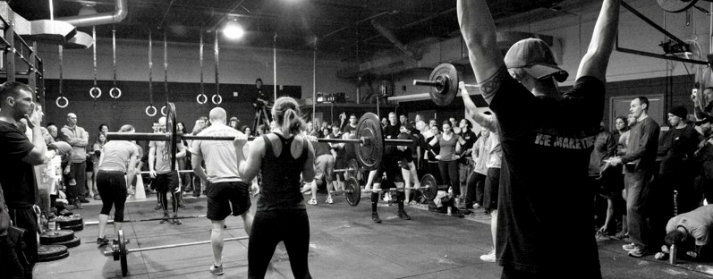
Tough workouts are great, but remember that while it’s easy to get someone tired (“go do 100 burpees!”), it’s harder to help someone slowly improve and build momentum.

Sure, it might elevate your heart rate and tire you out, but if it’s not building towards your goals in a way that you couldn’t do at home, what are you paying for?

They might also have just obtained a basic certification and stopped their education there, relying on ‘conventional wisdom’ rather than doing the research and building the experience.

If your trainer says any of the following phrases, run for the high hills:

  • Yeah you don’t want to squat too low – it’s bad for your knees.”

  • “Use this machine; it’s safer for you than free weights” (unless you have an injury)
  • “Yes, you should be using mostly your back. That’s why it’s called the back squat”
  • “These (ab) exercise will burn fat from your stomach in no time” (You can’t spot reduce fat.)

I have overheard all of these sound bites from real trainers in real gyms, and it made me weep like the Native American in the 1970s pollution ad:

Your trainer should be results-focused, not focused on scheduling you a new session and keeping you around.

I often see clients working with trainers for months and months and that client never looks any different.

The trainer is just interested in cashing another check.

Remember, your personal trainer works for YOU: Don’t let them build a program that doesn’t actually fit your needs!.

Do they adjust your workout to take care of any pre-existing injuries you may have, or do they just give you a cookie cutter workout?

Are they encouraging or helping you succeed in the way you want to be encouraged, or are they scrolling through Instagram models on their phones while you’re doing your sets?

Are they putting in the time so they can see you get results, or are they putting in the time so they can check the box and collect your money?

You’re paying money for this person’s expertise and attention – it’s not too much to ask to find somebody who takes those things seriously.

Getting in shape requires you to go when you don't feel like going

What certifications should a personal trainer have?

A personal trainer high-fiving a client.

There are a wide variety of personal trainer certifications and other “credibility indicators.”

The more traditional path – a degree in exercise science or kinesiology may mean the trainer in question is knowledgeable about the human body.

However, that doesn’t speak to any experience they may or may not have coaching in real-world circumstances.

6 of the most popular personal trainer certifications are:

  1. NSCA: National Strength and Conditioning Association
  2. ACSM: American College of Sports Medicine
  3. NASM: National Academy of Sports Medicine
  4. ACE: American Council on Exercise
  5. NPTI: National Personal Training Institute
  6. CrossFit

T-Nation provides a rundown of the pros and cons from a trainer’s perspective that we feel is also useful insight from a client’s perspective. Be sure to check them out if you want to learn more about what’s behind your trainer’s certification.

CrossFit certifications are completed in a single weekend. While a CrossFit certification does not make a trainer bad (there are plenty of excellent CrossFit coaches out there!), it does not guarantee excellence either.

Here are our thoughts on CrossFit.

A certification from NPTI – the National Personal Training Institute – is a credential gained from going to a full school on personal training (rather than attending a class or taking a test).

While no certification can fully promise excellence, we believe trainers with NPTI certifications are worth your consideration.

CAVEAT TO ALL OF THIS: Plenty of trainers who have NO certification are incredible, and plenty of other trainers have the most elite certifications and are terrible trainers.

MISTAKE #4: Blindly accepting a trainer’s credentials or discounting a trainer without certain credentials.

Certifications can be a starting point, but it shouldn’t be the determining factor.

One of the most important things to look for in your trainer isn’t a credential or certification at all, but real experience and an enthusiasm for helping you reach your goals.

For example:

Looking to powerlift or get into Olympic lifting? Look for someone who has successfully competed in their fields, or someone who actually coaches athletes who do compete!

Need to lose a lot of weight? Ask a trainer to share with you success stories from people who are like you.

In our view, finding a trainer with proven experience and a track record of performing or coaching (or both) in the area of your goals is the most valuable step you can take to ensure quality.

The credential is only a starting point.

Trainers aren’t cheap, but the benefits can be priceless.

Remember, you aren’t paying simply for their time with you. You’re paying for the years and years they’ve spent learning, training, and coaching.

It’s the years behind the certification that makes their time so valuable, so expect the cost of a trainer to be significantly more than the cost of a basic membership at your gym.


How much does a personal trainer cost? Are Personal Trainers Worth it?

This Lego wants to know how much personal training costs.

The cost of a personal trainer can vary dramatically depending on:

  • Where you live (in an expensive city, small town, etc.).
  • The quantity and duration of your training sessions.
  • What kind of training you are looking for.

But you want specifics.

The average North American trainer charges $55 for an hour session.[1]

That’s an “average” so let’s break it down a little.
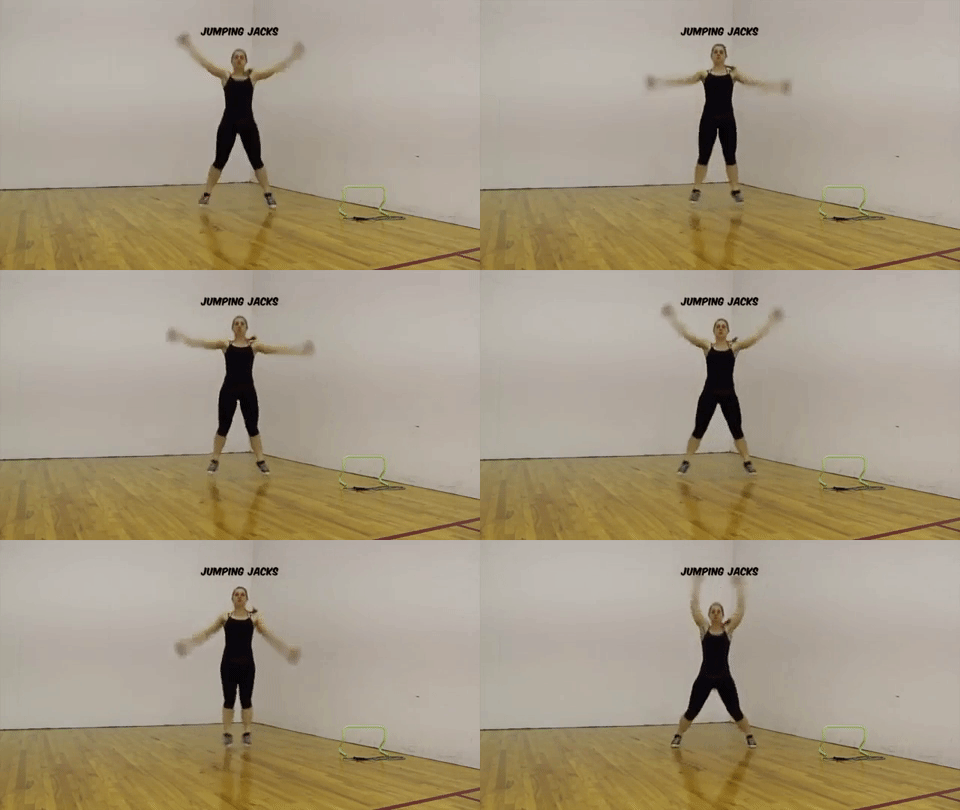
Here are the prices for working with a trainer in various capacities at my generic commercial gym in the NYC area (definitely on the more expensive end):

  • 4 sessions per month: $95 per session = $380/month
  • 8 sessions per month: $85 per session = $680/month
  • 12 sessions per month: $79 per session = $948/month

This is what one can expect to pay for personal training near NYC.

Is this pricing more or less than you expected?

Here is how much a personal trainer costs at:

  1. Global Gyms: Most big box gyms offer personal training:
    • LA Fitness: you can expect to pay about $60 per session.
    • 24-Hour Fitness: it’ll be about $80 per session.
    • Anytime Fitness: as little as $35 a session.
  2. Luxury Gyms: If you go to a more upscale gym like Equinox, expect to pay “luxury” prices of $110+ an hour.
  3. In-Home Personal Training. If you don’t want to head to the gym, you can actually have a personal trainer come to your home. The cost on this could be all over the place, but a rough average would be about $65 for an hour session.

Different trainers will have different qualifications and expertise, leading to vastly different training experiences.

This can be really important.

MISTAKE #5: Thinking “more expensive” automatically means “better results.” 

Cost is not the right metric. VALUE is the right metric!

Depending on your goals and the results you’re after:

  • $30 per session might be overpaying for a crap trainer who gives you a generic workout and doesn’t care about you. 
  • $100 per session might be a STEAL if it’s an amazing trainer that gets to know your life and your personality, motivates you in the way you need to be motivated, and helps you get past a plateau when you stall.

That’s why remembering your “get in shape” goals is critical when buying a personal trainer.

If you’re looking to do 5 sessions to improve your powerlifting technique, that’s different than hiring a trainer to be with you in person 3x a week to get you to the gym.

HOW TO THINK ABOUT HIRING A TRAINER

You’re not just paying for an hour of somebody’s time.

You’re paying for their years of experience, schooling, training, and expertise.

You’re paying to outsource ALL of your fitness questions to somebody who knows what they’re doing.

Somebody who gives you the confidence you’re training correctly.

This Muppet knows strength training will help him gain muscle and lose weight.

So instead of “I am paying this trainer for 1 hour, this is too expensive,” what you’re really paying for is confidence, momentum, and (hopefully) results.

As somebody who has worked with an online trainer since 2014, I would pay any amount of money to my coach (just don’t tell him that) because I love getting results after years of struggle.

How does an in-person trainer compare to our online coaching program?

Our pricing comes in at a less-expensive price than 4 sessions per month with a trainer.

In addition to building you a workout program for the month, we also help you with your nutrition, mindset, and goals, and answer all the questions you have.

There are very real pros and cons to hiring an online personal trainer, so make sure you read that next section.

So a trainer can be AMAZING and worth every penny, IF you have the right one who also takes an active role in your nutrition.

After all, workouts only make up 1-3 hours per week.

What about the other 165? That’s where the progress happens! And your coach should be helping you there too!


SHOULD I HIRE AN ONLINE PERSONAL TRAINER? WHAT ARE THE PROS AND CONS OF AN ONLINE PERSONAL TRAINER?

This Lego athlete is ready for his personal training.

Warning: I’m going to be slightly biased in this area, but I’ll share the honest pros and cons of online training:

As I’ve mentioned, I’ve been working with an online trainer since 2014, and it’s allowed me to prove an internet troll wrong and then lose 22 pounds in 6 months while getting super strong!

Here are the Pros to Online Personal Training:

#1) Freedom to fit your schedule. With an online personal coach, you can train when and where you want to fit your schedule – your coach builds the workout program for you ahead of time, so you can fit it in at your convenience.

Compare this to a traditional coach, and you’re at the mercy of their busy schedule. If they only have time Friday morning at 8am, and you’re not a morning person, conflict ensues.

#2) Persistent worldwide accountability. I’m borrowing this phrase from a NF Coaching Client, Jeff (his success story is great). No matter where in the globe you are, your online trainer comes with you.

Which means the accountability never stops. If you travel for work, your coach can plan for that and build you a special travel routine. Getting relocated for work? No problem – your coach will still be there.

#3) Nutritional guidance. With most traditional personal trainers, you engage with them only during your scheduled visits: they help you work out and that’s about it.

With an online personal trainer, you’re connected whenever you have access to the internet. And I would imagine that MOST online coaching programs, work with you on the most important part of the equation: eating healthier!

AKA everything that happens in the 23 hours outside of the gym.

#4) More cost-effective. Most in-person personal trainers are expensive, especially if you work out with them two or three times a week.

That’s because if your trainer is working with you, they can’t work with anybody else at the same time.

When you work with an online coach, because you aren’t training with them 1-on-1 in the gym, they can provide more cost-effective guidance.

When you factor in their availability via chat and their help on habits and your nutrition, you’re looking at a life-changing experience if you find a coach that fits your personality.

#5) It might be the only option. With so many gyms closing because of the pandemic, you might not even have much of a choice here. Here’s our guide to staying in shape (while staying inside) if you need to train from home. 

When comparing online coaches versus regular coaches, I’m going to share the cons as if you have the option between a GREAT online coach and a GREAT in-person coach.

Neither of those is guaranteed.

Here are the cons of an online coach when compared against a real-life equivalent:

#1) Your coach can’t do the work for you. There’s nothing stopping you from skipping your workout and lying to your online coach that you did it. Nobody wins in this scenario, but I can totally see it happening.

So yeah, an online coach can’t pick up the weight for you, and they can’t yell at you to put down the donut. You have to do the work!

#2) No real-time feedback and instant form check. If you’re learning how to powerlift, or you’re going for a particular heavy lift, having a coach right there is HUGE.

They can tell you to move your squat slightly wider. They can guide you through the movement and consistently remind you – even when tired – to keep great form.

Although we do form check videos, where we have coaches and clients send clips back and forth to each other, it’s not the same as having somebody critique you in real-time.

If you’re looking to nail a particularly challenging lift, or learn a dangerous gymnastics move, working with a trained professional in person is invaluable.

#3) The value of sunk cost. If you pay for a month of online coaching, there’s nothing inherently motivating you to go to the gym when it’s cold and you’re tired – your coach can’t yell at you, and you’re not letting anybody down in the moment when you don’t make it.

Compare this to working with a real coach in person.

You paid $100 for a session, and if you don’t show up, that money is *POOF* gone. So you tell yourself, “I already paid for this, and my coach is gonna be mad, I should probably go.”

And then you go. And you’re so glad that you did.

Wayne stoked he made it to the gym today to meet his personal trainer!

Although your online coach can notice that you haven’t signed in on your app, and they can ask what’s going on, this is after the fact compared to an in-person coach getting stood up.

There’s a lot to consider when debating in-person training vs. an online personal trainer.

I wouldn’t say one format is clearly better than or superior to another. It really depends on what you’re after and the circumstances of your situation.

MY PERSONAL EXPERIENCE: I’ve been working with an online trainer since 2014, and it’s truly been life-changing for me.

I had some goals that had evaded me despite a DECADE of effort, and it took a great coach to coax out the right strategy. It’s how I say (jokingly) that I went from Steve Rogers to Captain America.

And it was my coach’s programming that got me a 420-pound deadlift at a bodyweight of 172 pounds:

Rebel Leader Steve showing how to do a 420 lb deadlift at the gym.

I’m not gonna set any powerlifting records, but I’m healthier, happier, and stronger each and every month, and I’m damn proud of that.  

For somebody that can’t afford a top-of-the-line professional coach for each session, having an online coach to build your programming and guide your food choices is a verrrrry close second.


How to hire a personal trainer

It's now time to buy stuff!

HERE’S MY ADVICE: Give your new personal trainer 5 sessions before making a decision that things aren’t working out (sessions are often sold at a discount in a package).

The first session is often exploratory, explanatory, and introductory, and the trainer needs to test your limits and movements to build upon that.

This isn’t a “get fit quick” strategy, but rather one that could take months and months for you to find the right person to aid you on your journey.
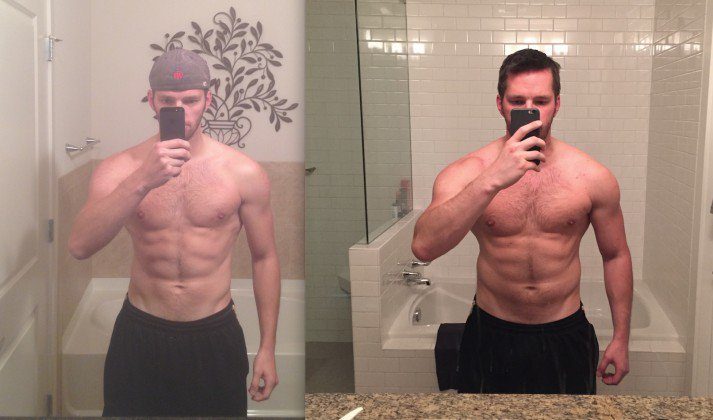
Don’t expect miracles in a day!

A few words of wisdom if you do hire a trainer:

DO NOT USE YOUR TRAINER AS AN EXCUSE: Too many people will hire up a trainer and give no effort in the gym or the kitchen.

Then, when they fail to see results they can turn to their friends and say “man, my trainer is terrible, THAT’S why I’m not losing weight/getting stronger/etc.”

This happens so much more often than you’d think. A trainer is a guide, like Morpheus.

Morpheus is kind of like a personal trainer, he'll show you the way but you have to do the work.

You have to take the pill and walk through the door yourself.

MAKE CRITICISM CONSTRUCTIVE CRITICISM: Often when the trainer asks them to do something (walk every day, throw away junk food, eat a vegetable), the client/trainee comes back with 1,001 reasons why they can’t do that.

No compromise or discussion of possible solutions. This stinks.

Instead of saying “no,” offer an alternative solution and negotiate a plan: “I don’t really like broccoli, do you have a way to make vegetables taste better?”

In other words, don’t look for problems, look for solutions.

IF YOU ENJOY WORKING WITH YOUR TRAINER: Let them know and continue working with them.

The more information you can give them on your progress, the easier it will be for them to alter your program as you go on.

IF YOU DON’T ENJOY WORKING WITH YOUR TRAINER: That’s okay too. Not all relationships end in marriages.

Some first dates suck, and some trainers aren’t what you need.

I think you can be honest with them and let them know that it’s not a good fit and you will not be continuing to work with them.

Good trainers at this point will ask what they could have done better.

Trainers who are simply after your money may guilt trip you or beg you to stick around. Try somebody new and keep the search going.

REMEMBER: this is a lifelong quest, and you’re on the hunt for a great guide to help you on your journey.

They won’t do the work for you, and they can’t work miracles.

Have proper expectations, do what you’re told, and this could be the best investment you’ll make in your entire life!

Trainers in the Rebellion, what did I miss?

Those who have had experience working with Trainers, any wisdom to share from your experience?

One final note: Going to a gym is intimidating, especially if you’re starting out.

If you are in a location where there aren’t any great trainers, you don’t have access to a gym, or you’re just not ready to work with somebody in person, consider checking out our Online Coaching Program!

Schedule a free call to learn more by clicking on the image below:

Nerd Fitness Coaching Ad

If you have questions about what you need to look for when it comes to training with a coach in person, or even questions about working with an online trainer, leave them in the comments below so I can chime in!

-Steve

###

photo: Decathlonwikimedia: high five, BicycleWikimedia: stretching, Amazing playground: bicycles and football

The post Blog first appeared on Nerd Fitness.

from Nerd Fitness: Helping You Lose Weight, Get Stronger, Live Better. https://ift.tt/2m9IrAJ
via IFTTT