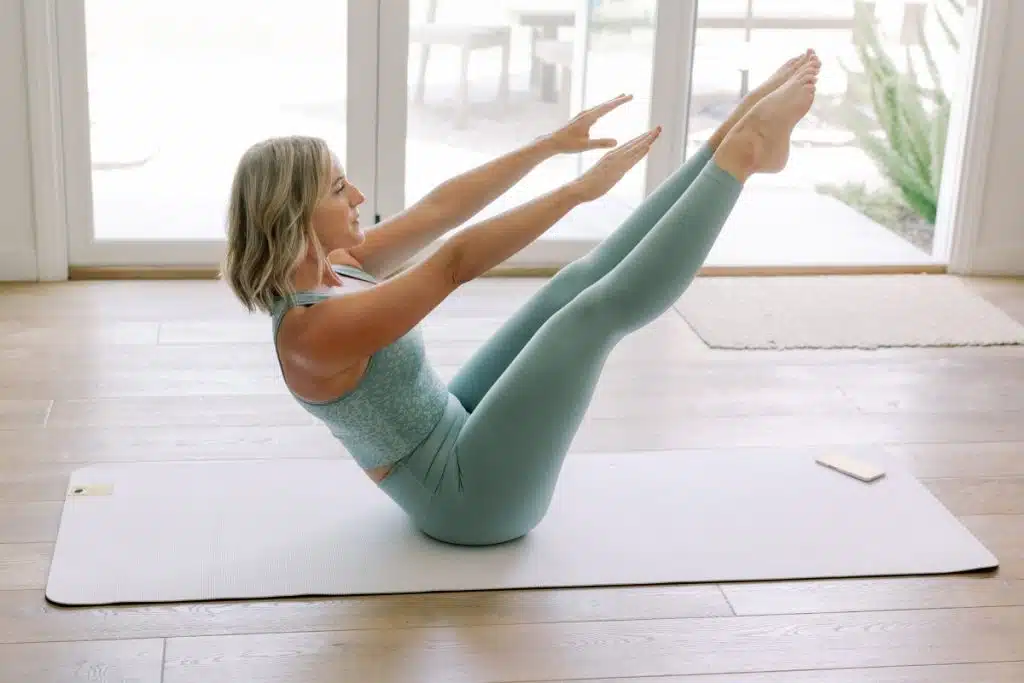
Despite what we have been taught to believe, a great functional core workout has nothing to do with aesthetics. A strong and stable core is about so much more than visibly toned abs. As the body’s main center of gravity, this muscle group allows you to stand, reach, twist, bend, lean, squat, and perform other basic moves without losing your balance. You cannot live your life without your core—and life is much easier and more enjoyable when it’s strong!
Even more importantly, your core is important in all stages of life, especially for women. If you want to age joyfully—and with strength—you can’t overlook this aspect of strength-building. Luckily, this is a critical aspect of what we do at Lindywell. We say that your core is at the heart of ours because we know how important the core is to living a happy and functional life.
Before you do another random “ab workout” from YouTube, take a few minutes to learn about your core and how to keep it (truly) strong, so you can enhance mobility and function in everyday life. Don’t miss our functional core workout at the end.
The Health Benefits of Core Strength and Stability
The core muscles include your front abdominals, obliques, diaphragm, pelvic floor, and lumbar spine. Increased strength and stability in these muscles will lead to a wide range of physical benefits, including:
- Postural alignment
- Muscular endurance
- Flexible range-of-motion
- Lower risk of injury
- Balance control
Core stabilization exercises, like the ones you’ll find in the work below, can also help reduce non-specific lower back pain, which could improve mobility. Pilates was key for managing and living with my scoliosis while still enjoying life and movement. I shared about in my blog post, Pilates for Scoliosis: How to Find Relief with Movement. Please check this out if you’re struggling with scoliosis too.
The problem is, most people associate a core workout with a series of boring, repetitive crunches. Crunches only activate the abdominals and obliques with one back-and-forth spinal motion. This creates pressure on the lower back and hip flexors, which can lead to chronic pain or injuries over time. It also ignores all other areas of your core, which are just as important. The most beneficial core exercises recruit all the deep core muscles—not just your abs—for a more holistic, functional movement.
Learn more about the connection between your abs and your pelvic floor in my podcast episode, Abs, Core, and Pelvic Floor: What You Need to Know to See Progress.
Core Strength and Pilates
The gentle, whole-body approach of Pilates is the perfect way to build core strength, flexibility, and balance—without adding pressure or discomfort to your spine.
I don’t just believe this as the founder of Lindywell; science tells us this too. The European Journal of Investigation in Health, Psychology, and Education found that Pilates is a more efficient way to promote core balance, maintain functional autonomy, and lower the risk of age-related falls than traditional resistance training.
No matter what season or phase of life you’re in, Pilates is a simple and effective way to strengthen this key area of your body.
5 Functional Pilates Exercises for Optimal Core Strength
If you’re ready to build core strength (for real—not just do a bunch of crunches!), you’ve come to the right place. I have a free workout for you below to get started with. If you want more workouts like this, start your free trial of our Pilates app, Lindywell. You’ll get instant access to 300+ workouts, guided breathwork sessions and more.
1. Pelvic Floor Lift
As you do this, imagine there’s a corset around your waist, causing the pelvic floor muscles to draw in and lift. Keep that corset image in mind as you continue to perform this subtle movement.
2. Single Leg Toe Taps
As your leg hinges and your toes tap down, the pelvic floor should remain stable. Don’t let your back arch up and keep your collarbone open. If you can’t stop the arching, make your movement a little smaller.
3. Single Leg Stretch
Make sure your core stays activated while drawing the belly button in and lifting your legs into the tabletop position. Aim to keep your shoulder blades up off the mat during the entire workout; you can also lay flat between movements if that’s easier for you too.
4. Chest Lift
As you lengthen the head, neck, and chest, focus on keeping your waits in the corset and your pelvis strong and stable. As you lift, think of lifting the pelvic floor as well to stay connected to your core.
5. Double Leg Toe Taps
Lie on your back with a neutral spine and flat pelvis. Maintain the corset feeling around your waist as you lift both legs into a tabletop position. Open the collarbone, then draw the belly button in. If your back arches during this exercise, make the movement smaller again, as you did during the single-leg toe tap.
Harness the Power of Pilates to Build a Strong and Stable Core
Having visible abs doesn’t mean someone has a strong core—this goes much deeper than that (literally). The core is one of the most important areas of the body, making it easier and more comfortable for you to go about daily life. Whether you’re bending down to pick a flower or reaching up high on one foot to get something at the top of a cabinet, your core is always working for you. That’s why this functional core workout, and those similar to it in the Lindywell app, cannot be overlooked if you want to live a long, healthy life!
The post Functional Core Workout: 5 Pilates Exercises for a Stronger Body appeared first on Lindywell.
from Blog – Lindywell https://ift.tt/E7z6HMj
via IFTTT