Please bear in mind that I am not a dietician, or a physician, and my opinions are those of a Yoga teacher and life-long student of Ayurveda. Always consult your family physician before changing your diet.
It may be generally agreed that eating wisely and weight loss do not often agree. Just look back that the parade of “fad diets” that didn’t seem to work over the long term and, in retrospect, were not wise from the onset.
This article will be a “union” of ideas from Ayurvedic principles, modern fitness concepts, and overall strategies for better health.
It goes without saying that a vegetarian diet is healthy. Only a decade ago, there were many reservations, among local physicians in New England, in regard to this concept. How rapidly knowledge, insight, and opinions change.
Marie, my wife, exposed me to the vegetarian diet. Before that, I ate what is now called the “Mediterranean Diet.” The diet I eat, to this day, is a combination of the two. The combination of these two, “classic” diets, are easy for me to live with and it is not an effort, at all, for me.
That is the biggest hurdle for most people. Many of us take on a radical dieting change that we cannot live with. Most of us can afford to make a few small changes at a time, instead of changing everything at once – unless you are dieting under the guidance of your doctor or dietician.
Therefore, I propose a few small changes to your eating habits that will make sense. You do not have to change them all at one time.
Sit down and focus on eating your meal.
Avoid television, reading, heated conversations, etc.
Thoroughly chew your food at a slow pace and do not put more food in your mouth until you have swallowed the previous bite.
Be aware of how hungry you are before your meal.
Try to avoid too much time between meals, as this leads to over consumption and your stomach should never be more than three quarters full, after a meal.
Exercise tip: Some of you practice Yoga and understand the many benefits of Sun Salutations, but have you ever tried weight resistance?
Strength training increases energy expenditure during a weight resistance training session. The high intensity of strength training indicates a high utilization of carbohydrates during a training session.
During the post-exercise recovery period, energy expenditure is elevated for a period ranging from two to fifteen hours (1). The increased energy demands are obtained by burning more calories, and a good portion of the calories are coming from fat stores.
Reference (1) – Melby C, Scholl C, Edwards G, Bullough R. Effect of acute resistance exercise on post exercise energy expenditure and resting metabolic rate. Journal of Applied Physiology 75(4): 1847-1853, 1993.
Even if you work every body part just once a week, this method of cross training will effectively burn calories. When you combine this with any aerobic activity, you have a powerful combination. Rowing and bicycling are good substitute forms of resistance too.
Strategies for results: Get help from a qualified Personal Trainer, Dietician, or a Life Coach. You could do it all yourself, but how much time do you have to “spin your wheels.” without any progress? These services exist for those who don’t want to waste time and want solutions now.
Did you know that simply eating breakfast raises your metabolism by 10 percent ?
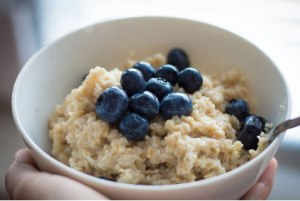
Oatmeal is one of the most powerful breakfast foods of them all. If you are looking to get your body in great shape, you should incorporate this as a staple food in your diet.
Oatmeal is the perfect meal to start your day because it boosts your energy and has plenty of fiber to keep you full and satisfied. Oatmeal breaks down slowly in the stomach, giving you long-lasting energy. It is also full of water-soluble fibers, which play a crucial role in making you feel full over a longer period of time. Studies have also shown that oatmeal reduces cholesterol, maintains blood sugar levels and fights against heart disease, diabetes, colon cancer, and obesity.
If you want to add some powerful antioxidants to your oatmeal, simply throw on some blueberries and raspberries. These delicious fruits are packed with antioxidants that fight against heart disease, cancer, and a multitude of other ailments. Blueberries have also been proven to preserve vision. This powerful fruit rated highest in antioxidants among over 40 fruits and vegetables.
What more could you ask out of the first meal of your day? However, oatmeal doesn’t just have to be for breakfast. You can use it a couple hours before you exercise to energize your workout. You can even include oatmeal in your smoothies. It is also a wonderful addition to muffins and even as a covering for chicken breasts.
Keep in mind that you must buy the unsweetened, unflavored variety. To spice it up a little, you can use bananas, berries, or milk. The downfall of pre-flavored oatmeal is that it often comes loaded with sugar calories. So, stick to the good stuff.
If you’re looking for oatmeal with a little more texture, you can try out the steel-cut oat variety. Although this type does take a little longer to cook, I find that it is well worth the wait. They have a somewhat chewier texture and heartier flavor than rolled oats. Once you try this variety, you may never go back.
If your having trouble with late night binges, have a bowl of oatmeal instead. This will help squash your cravings. Not to mention, you’ll be avoiding any junk food or empty calories.
If your looking to get in the best shape of your life, I suggest your alternate your morning meals between oatmeal on one day and have eggs and meat on another. This will put your fat-burning into overdrive.
Wouldn’t it be great to be able to eat as much as you want as often as you want and have body fat melt away while you sleep, watch TV, or sit behind your desk at work ? I’d certainly go for that – being able to be fit with very little or no effort at all.
Turn on the TV and what do we see ? Television ads promising you weight loss and fitness with no effort. Want to lose that extra fat around your belly? Just take these pills. Walk into the bookstore and browse through the rows and rows of books advocating one diet fad or the other.
The problem is that most of them offer conflicting information. I’ll be straightforward in telling you that rather than separating the fat from your body, most of these people are more interested in separating your money from your wallet.
I’ve tried many of these diet and exercise fads and can tell you that most of them flat out do not work. Some of the diets will work, but will force your body to do things that it was designed to not do, therefore your body thinks it’s deathly ill and starts burning fat as an energy source. Losing fat is not a bad thing at all, but tricking your body into burning fat by responding with a survival mechanism is. What are the long term effects of these fad diets? Who really wants to live the type of restrictive lifestyle that these diets push on you? Who really wants to work hard and suffer for something that in 20 years from now will be the laughingstock of the fitness community? There has to be a better way…
The true path to fat loss is so simple, yet no diet book author would ever admit it. The secret is this:
Burn more calories than you eat.
That’s all. There’s really nothing more to it than that, and you probably already know this! There is no more effective way, no special fruit from the amazon jungle, no machine that you can use that will give you better results.
Unfortunately there are plenty of people who would like to pull the wool over your eyes about what to eat, how to starve yourself, what machine to use to get the perfect body. Next time you reach for the next diet fad book, brochure on an ab exerciser, or pick up the phone to dial a number you got off of an infomercial, think about this – they didn’t work in the past, and they won’t work again because you’re still not burning more calories than you’re taking in.
After scouring the internet, bookstores, and trying just about any diet I could find to lose that extra 30 pounds I’ll tell you what’s worked for me:
Keep a food journal, tracking all of the calories that you take in. Be detailed. You’ll be surprised at how much stuff you can cut out if you just write it down. Personally, I was disgusted at the amount of sugars and junk foods I was ingesting on a daily basis. I didn’t eliminate them, only cut back a little.
Find out how many calories you burn in a day. You burn most of your calories just by existing. This is called basal metabolism. Find a chart to see how many calories are burned for certain activities for your weight class.
Exercise regularly. It doesn’t take much, only around 20 minutes a day 3-5 days a week. Regular exercise will increase your metabolism and cause your body to burn even more calories even while you’re not active.
Being fit is a lifestyle. It doesn’t have to be severely limiting and it doesn’t even have to be painful. Being fit is always easier in the long run than putting yourself through the ringer with limiting or starvation diets.
My search for the perfect diet and exercise program took me 8 years and ironically the one thing that worked for me was the easiest and least expensive thing out of all of the others I tried.
Please share this post on Facebook, Twitter or Pinterest. Thanks !
With each day comes a new array of things to do, choices to make, and blessings to count. Today’s guest, Robyn Downs shares how she’s become “brilliant at the basics” and applied her systems to organize and prioritize her life. Robin Long and Robyn Downs discuss the benefits of “exercise snacking”, the inspiration for Robyn’s new book, and overcoming the pressure of the fitness and wellness industry. Join Robin in this episode full of tangible tips you can apply to your daily practices.
Show highlights: what you can look forward to in this episode!
What a day in the life looks like for Robyn
The benefits of “exercise snacking”
How Robyn had to shift her mental approach to wellness
Robyn shares how she practices the 80/20 rule in her life
How to make anchors of priorities and knowing when to stay no
How to limit unnecessary decisions and decision fatigue
How Robyn and her husband manage childcare
Why you shouldn’t try to take everything on alone
How the wellness industry has put pressure on body image
As reported in the U.S. Food and Drug Administration’s recently published “Calories Count – Report of the Working Group on Obesity”, people who are overweight is a serious public health problem in the United States. Since the late 1980’s, adult obesity has steadily and substantially increased in the United States. Today, 64 percent of all Americans weigh too much and over 30 percent are obese; in 1988 through 1992, fewer than 56 percent were overweight and fewer than 23 percent of American adults were obese.
The trends for children are even more worrisome. Recent research by the U.S. Centers for Disease Control and Prevention shows that 15 percent of children and adolescents aged 6 to 19 are overweight – double the rate of two decades ago. As Americans get heavier, their health suffers. Overweight and obesity increase the risk for coronary heart disease, type 2 diabetes, and certain cancers. According to some estimates, at least 400,000 deaths each year may be attributed to obesity.
What people must know is that you can improve your health quickly with just a small amount of weight loss. “We know that physical activity along with reduced calorie consumption can lead to the 5 to 10 percent weight loss necessary to achieve remission of the obesity-associated complications,” says William Dietz, M.D., Ph.D., director of the Division of Nutrition and Physical Activity at the Centers for Disease Control and Prevention (CDC).
Losing one to two pounds a week is safe and recommended by most doctors for most people. This breaks down to 250 to 1,000 calories per day. You can achieve this easily if you follow some or all of the following guidelines :
1. Use skim milk instead of whole milk or cream in your coffee.
2. Eat low fat yogurt instead of ice cream.
3. Eat more bright colored (green, yellow, orange, red) fruits and vegetables.
4. Eat more lean fish, chicken, or turkey, instead of red meats.
5. Eat whole wheat or multigrain bread, instead of white bread.
6. Use a sugar replacement instead of sugar (avoid Aspartame).
7. Drink water instead of soft drinks.
8. When you eat out, avoid fried foods.
9. Walk or do similar exercises (e.g. Golf, Tennis) at least 20 minutes a day.
If you do even just a couple of these every day for the next month, you’ll feel much better and you will lose weight (10 lbs. or more in 6-8 weeks).
And if you are concerned about getting hungry all the time, or losing your energy, try taking a safe appetite suppressant, like Herbal Phentermine. This supplement is not to be confused with the drug Phentermine, which has side effects like stomach upset, dry mouth and sleeplessness. The herbal variety is a non-prescription medication and has been tested for years to be safe for most people.
It contains ingredients like green tea, acetyl L-carnitine, alpha lipoic acid, biotin and others, that control your appetite, yet increase your metabolism and energy.
However, do not take any herbal supplement without checking with your Doctor first, if you are on any prescription medications, due to possible interactions between the two, or if you have a special medical condition.
If you follow these simple steps, you will surely reach your weight loss goals and become a much happier, healthier, and oh yes, lighter person.
Now, this guide is SUPER long, so we took the liberty of converting it into a nicely designed guide for easy consumption (not literal consumption, unless you print it on bacon).
Grab your Beginner’s Guide to the Paleo Diet free when you sign up in the box below:
Get the FREE eBook! The Ultimate Beginner’s Guide to Paleo!
Discover if Paleo is for you
The one simple trick to know if your food is Paleo-friendly
Easy Paleo recipes for beginners to get you started
If you can actually apply the rules of the Paleo lifestyle, you can get some pretty solid results.
As the great Mr. Flintstone once said, “Yabadabadooooo!”
What is the Paleo Diet and How does it Work?
Oh lord, another “diet.”
I know, it sounds like a fad/marketing ploy, but The Paleo Diet isn’t really a “diet,” and it’s actually quite logical when you think about it.
It’s also the most time-tested diet ever.
Here’s the ENTIRE diet in a nutshell:
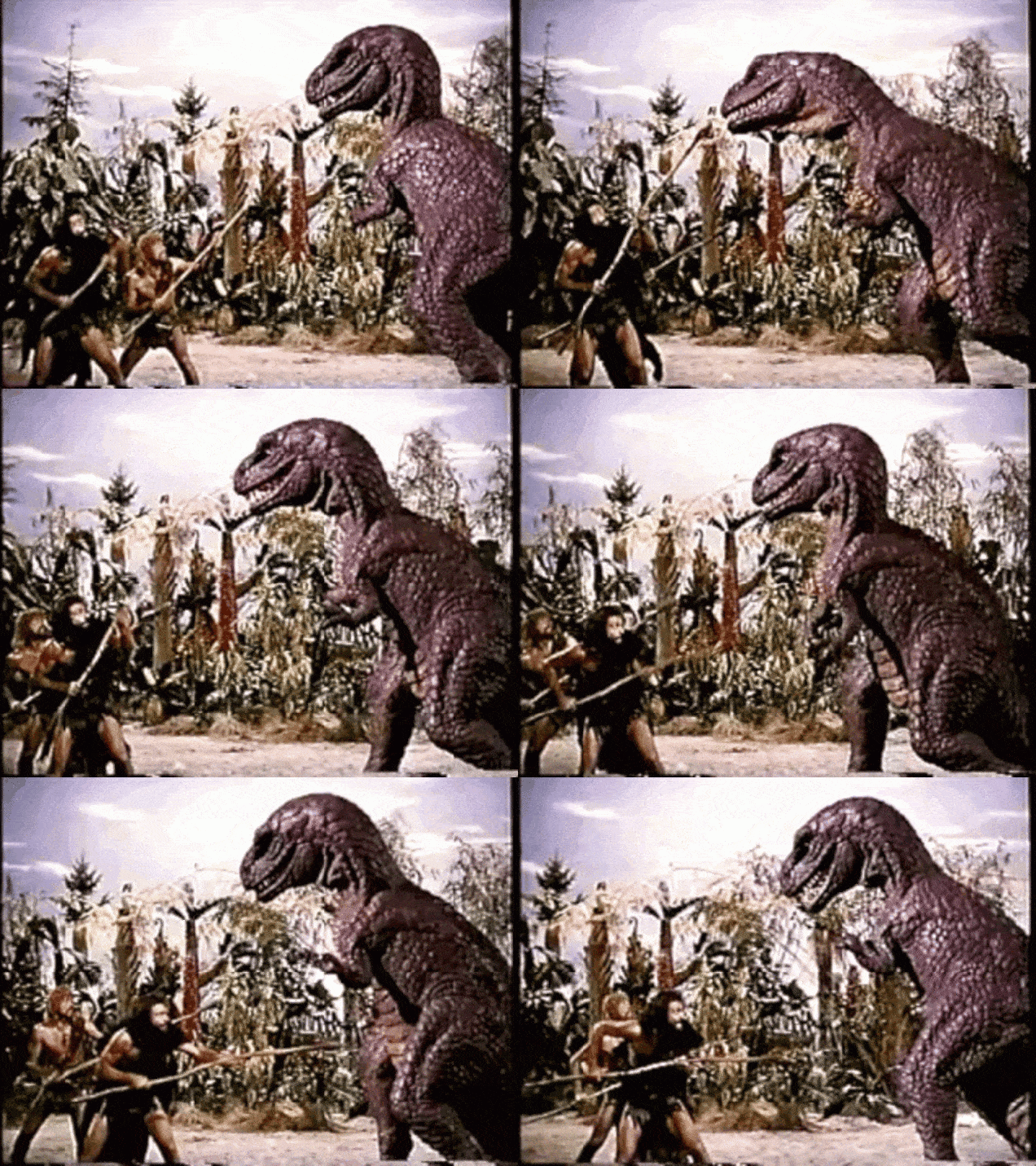
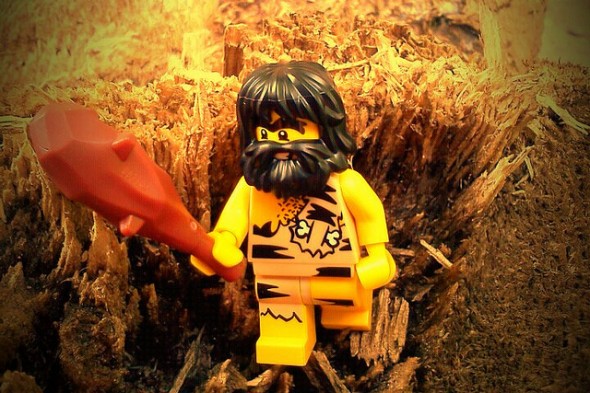
“If a cave person didn’t eat it, neither should you.”
As the theory goes, tens of thousands of years ago, before Nike, Cap’n Crunch, and Healthy Choice meals, our ancient ancestors thrived as hunter-gatherers.
Although it’s been a really long time, our genetics haven’t changed that much since then.
And yet…these days we’re overweight, out of shape, stressed out, unhappy, sleep-deprived, and dying from far too many preventable diseases due to lifestyle choices.
So what the hell happened?
Agriculture!
And then delivery and Netflix.
A few thousand years ago, humans discovered farming, the agricultural revolution took off, and we advanced from hunter-gatherers to farmers.
We settled down, formed societies, and the human race progressed to what we are today. Which is obviously great for a number of reasons:
Not getting eaten by wild animals
Electricity
Automobiles
Nintendo
The problem is that our bodies never adjusted properly to eating all the grains and sugar that we’re now consuming.
As paleo guru Robb Wolf puts it, think of a 100-yard football field:
The first 99.5 yards are how long Homo-Sapiens spent as hunter-gatherers. As they became REALLY good at hunting and gathering our bodies adapted to that lifestyle over thousands of years.
That last half-yard represents our species after the agricultural revolution, where our diet has shifted (but our genetics haven’t).
So, instead of loading up on meat, vegetables, and seasonal fruits, we’ve become a species “dependent” upon grains – bread, pasta, rice, corn, and so on.
66% of us are overweight, 33% are considered obese, and those numbers are only getting worse.[1]
Clearly, something’s not right, and we need to fix it.
The Paleo Diet is an effort to go back to our ancestral roots.
To start eating how we’re biologically designed to eat, allowing us to tap into our genetic potential and start living healthier immediately.
While this video is pretty hyperbolic, it does a pretty good job of explaining the Paleo Diet in a few minutes:
To recap the rules of the Paleo Diet:
Only eat foods a caveman would eat
See Rule #1
Note that it doesn’t mention calorie counting or meal timing or macro tracking. That’s part of the popularity of this diet: eat paleo-approved foods when you’re hungry, and that’s it.
Will I Lose Weight on the Paleo Diet?
This is the question we get above all else:
“Will the Paleo Diet help me lose weight?”
Probably. If you can actually apply the rules of the Paleo lifestyle, you can get some pretty solid results.
The Paleo Diet will work for you, if you do it right.
You need to have the right mindset, you need to focus on the right foods, and you need to structure your environment so that you’re not tempted to backslide and abandon the Paleo Diet after a few days.
However, it has nothing to do with what Fred Flintstone ate or didn’t eat.
Add #3: Do those two things consistently for a decade.
Here’s WHY you’ll lose weight on the Paleo Diet:
You’re only eating meat, fish, veggies, fruits, and nuts. These are foods that are full of nutrients, will make you feel full, but don’t have nearly as many calories as junk food.
You are completely eliminating calorie-dense, often nutritionally deficient, unhealthy foods. This means no grains (pasta, bread, rice), no dairy, no beans. It also means no soda, no candy, no sugar.
And yup. When you only eat real food and avoid all unhealthy food, you’re more likely than not going to run a caloric deficit – and thus lose weight.
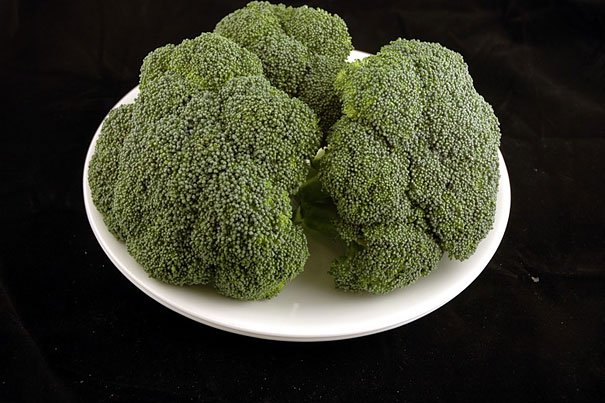
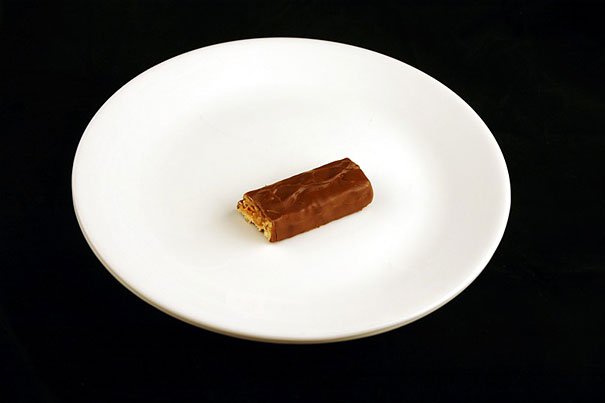
Or… 200 calories will get you exactly 1/2 a Snickers bar:
Look at that: nobody can eat that much broccoli, and nobody only eats half a candy bar!
My point is this: by eating Paleo-approved foods, you’re more likely than not to eat fewer calories than you did in the past automatically, which can lead to weight loss.
So YES, the Paleo Diet MIGHT help you lose weight.
You just need to eat fewer calories than you burn every day (Here’s how to calculate your Total Daily Energy Expenditure). And that is easier when you are eliminating foods that people tend to overeat:
Candy
Soda
Pasta
Bread
Dairy
But that’s all about what we’re eliminating. What are we keeping!?
what Can I eat on The Paleo diet?
In order to follow the Paleo Diet Lifestyle, here are the foods that are Paleo-approved:
Meat* – steak, ham, pork, bison, boar.
Organs – liver, kidneys, heart.
Marrows – seeing a theme here? Eat ALL parts of the animal!
Fowl – chicken, duck, hen, turkey…things with wings that (try to) fly.
Fish – cod, tuna, salmon, and so on.
Eggs – Look for omega-3 enriched cage-free eggs.
Vegetables –spinach, broccoli, kale, carrots, peppers, zucchini, onions, etc.
Nuts – almonds, walnuts, cashews, and their respective butters (almond butter is so good!)
Tubers – Sweet potatoes and yams.
*If you can, aim for grass-fed beef and organic fruits and vegetables. But don’t go break the bank with your food purchases. Just do the best you can.
As the Paleo Diet explains: Pick any of the foods from that list and eat as much as you want of them.
You might have noticed that a lot of the foods above are loaded with fat. And depending on what your mom told you growing up, you might think fat is the devil.
So let me address that right away…
Does Eating Fat Make You Fat?
If you’re cutting back on carbs, that means you’ll need to fill the void in your diet with the most controversial macronutrient:
Fat!
It’s gotten a bad rap over the past number of decades, so companies have been doing everything possible to make everything low fat and “healthy!” (while adding all sorts of preservatives, chemicals, and sugar).
Yup…cut out the fat, increase the carbs….and look where THAT has gotten us.
Why has fat been vilified? Rather than get into the politics of it myself, I’ll let Gary Taubes, author of the incredibly thorough and well-researched Good Calories, Bad Calories take over.
As he discusses in an article he wrote for the New York Times a decade ago:[2]
These researchers point out that there are plenty of reasons to suggest that the low-fat-is-good-health hypothesis has now effectively failed the test of time.
In particular, that we are in the midst of an obesity epidemic that started around the early 1980’s, and that this was coincident with the rise of the low-fat dogma. (Type 2 diabetes, the most common form of the disease, also rose significantly through this period.)
They say that low-fat weight-loss diets have proved in clinical trials and real life to be dismal failures, and that on top of it all, the percentage of fat in the American diet has been decreasing for two decades.
Our cholesterol levels have been declining, and we have been smoking less, and yet the incidence of heart disease has not declined as would be expected. ”That is very disconcerting,” Willett says. ”It suggests that something else bad is happening.”
“Low fat” foods were created to follow conventional wisdom that fat made you fat (which as stated in the above article doesn’t stand up to scrutiny).
When a company makes a low-fat food, they remove the fat and have to replace the flavor with something.
That “something” is usually sugar (and often more calories).
Crap.
So, according to Taubes and Paleo folks, fat has been vilified and the real focus should have been on sugar and carbs all along.
Because healthy fats are valuable additions to our diet.
Here are some examples of Paleo-Approved Healthy Fats:
Avocados
Almond (and almond butter)
Fatty cuts of meat
Walnuts
Coconut oil
Olive oil
In the Paleo Diet, fat makes up a large portion of one’s diet.
If you’re worried about consuming fat and how it will affect your cholesterol, read our Full Guide to Cholesterol.
WhAT Foods Can’t I eat On the Paleo Diet?
If you are looking to strictly follow the Paleo Diet, then you can’t eat foods that did not exist back in “Caveman times.”
Why?
Because – as advocates of the diet point out – cavemen couldn’t eat those foods because they didn’t exist. There was no way to create cereal and candy – you could only eat what you found or hunted.
So, that’s what the Paleo Diet advocates as the reason for avoiding these foods. And it serves as a good mental model to check with yourself: “Could a caveman have eaten this meal?”
And when you start to answer this question, you identify the foods that you’re not allowed to eat on the Paleo Diet:
Grains like pasta, cereal bread, and rice
Dairy like milk and cheese
Candy, cookies, ice cream, and other processed foods
The Paleo Diet also almost completely eliminates sugar outside of fruit. No candy. No soda. No powdered donuts. Yup, even the mini white ones from the grocery store where you can eat like 100 of them (accidentally, of course).
Many studies have shown that an incredible number of diseases and lifestyle issues can be reversed by cutting out sugar and processed foods.[3]
But I understand grains and dairy are a bit more complex.
Let me explain:
Can I Eat Grains on the Paleo Diet?
Unfortunately, nope.
The Caveman reason why: Grains require some amount of processing, and thus Cavemen would not have eaten them.
The science and psychological reason why: we have a tendency to overeat grains and the other “no-no” foods on the Paleo Diet. They are calorically dense, nutrient deficient, and they can wreak havoc on some people’s blood sugar levels.
This leads to a sugar rush followed by a crash, which can lead to more emotional or hungry overeating…and the process starts again.
Rather than me explain that part with thousands of words, just watch this three-minute video – “Why You Got Fat:”
Let’s get into some more reasons Paleo advocates suggest avoiding grains: most contain gluten and lectins.
What are they and what’s wrong with them? I’m so glad you asked:
Gluten is a protein found in things like rye, wheat, and barley. It’s now being said that much of our population may be gluten-intolerant (hence all the new “gluten-free!” items popping up everywhere). Over time, those who are gluten intolerant can develop a dismal array of medical conditions from consuming gluten: dermatitis, joint pain, reproductive problems, acid reflux, and more.[4]
Lectins are natural toxins that exist in grains to defend against consumption! Yup. Grains have evolved to keep themselves from being eaten by us. These lectins are not a fan of our gastrointestinal tract, and they prevent the tract from repairing itself from normal wear and tear. This can cause all kinds of damage.
Long story short: many people cannot process grains properly, and they are usually the food that causes people to eat too many calories. So by eliminating grains from your diet, you’re more likely than not going to eat fewer calories without counting calories.
That’s a Paleo win!
Do I Need to Avoid Carbs on the Paleo Diet?
Not necessarily.
That depends on your goals and your body – you are a special snowflake!
Some people function well on a high fat, low carb diet.
Others function better on a high-carb, low-fat diet.
I will say the Paleo Diet is USUALLY a Low Carb diet, and large quantities of carbs are not required for somebody to be healthy on a regular diet.[5]
After all, carbs aren’t evil – they’re just…carbs.
Here is the logic and psychology behind why the Paleo Diet is low carb:
On a typical Western diet, we consume plenty o’ carbs, and our bodies convert those carbs to a sugar called “glucose.” This is our body’s preferred method of fueling itself.
In the absence of carbs to create glucose to fuel our bodies, we have to do a few other things instead:
Transform stored fat into glycerol and fatty acids (this process is called lipolysis).
Burn fatty acids for energy or transform the fatty acids into glucose for energy (this is called gluconeogenesis)
In the absence of glucose (through fasting or following a Keto Diet), your body can create ketones for fuel (called “ketogenesis”).
We’re going to focus on the forms of weight loss NOT related to “ketogenesis.” Unless you are avoiding all carbohydrates while going Paleo, or you are doing long fasts, you most likely won’t be in ketosis while going Paleo.
Back to weight loss and Paleo: when you cut back on carbs, and thus most likely ALSO cut back on total calories consumed, you are creating a caloric deficit in your body.
And eat a consistent deficit over a long enough time period, BOOM caveman weight loss.
So, fewer carbs = less glucose in your system, less sugar crashes, less “hangry” moments, and smaller chance of overeating = fewer calories consumed on average.
If you’re worried about adherence to the diet, I understand – it’s the toughest part of Paleo – sticking with it!
Knowing what to eat is part of it, but following this fairly restrictive lifestyle in a modern environment surrounded by cookies and candy and bagels and pasta is really difficult!
If this whole “Paleo, Carbs, and Weight Loss” thing is stressing you out, you’re not alone!
We work with busy people like you to structure a complete life overhaul: handcrafted workout routines, accountability, mindset changes, and nutritional strategies.
Can I eat Dairy on the Paleo Diet? Can I eat Cheese On the Paleo Diet?
This also depends. Strict Paleo folks tend to stay away from it – a portion of the world is lactose intolerant, and those that aren’t usually have at least some type of an aversion to it.
Why? Because hunter-gatherers didn’t lug cows around with them while traveling – milk was consumed as a baby through breast milk from their mother, and that was it.
So as Paleo-stans will tell ya, our bodies weren’t designed for massive dairy consumption.
There is evidence that some adaptation to dairy has taken place throughout the years, specifically with people with ancestry in herding cultures, but this is not the majority of the population.[6]
Paleo purists will avoid dairy like the plague, while other paleo-ish people have found that consuming dairy in its various forms work for their genetics, goals, and lifestyle.
“What about Cheese? Can I eat cheese on the Paleo Diet?”
You do you, boo. But if you’re going Strict Paleo, then unfortunately cheese is OUT too.
If you’re just looking to lose some weight while following a “mostly Paleo” lifestyle, then adding some high-quality cheese into some of your meals can be okay.
Some cheeses will tend to have lower amounts of lactose or casein – the parts of dairy that can cause digestion challenges.
So, if you’re not sure your body is processing dairy properly, remove dairy from your diet and only introduce it back in when you’re ready to see how your body responds.
If you’re not losing weight while eating a “Paleo + Dairy” Diet, you’re still eating too many calories.
Consider cutting out dairy and see how your body responds.
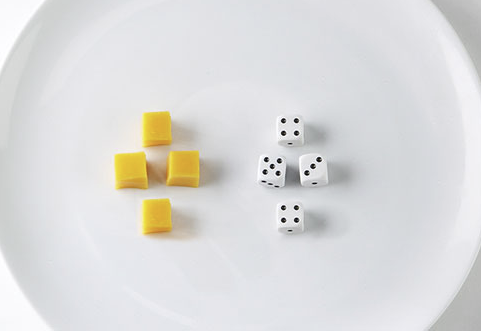
For reference, this is a portion of cheddar cheese (116 calories):
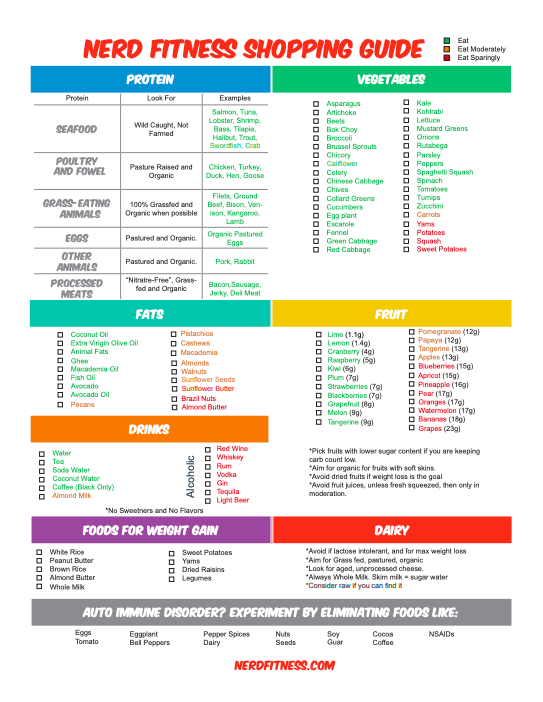
Paleo Diet Shopping Guide: List of Foods on the Paleo Diet
Because I like you as a person, I’ve created a printable Paleo Diet Shopping List PDF you can bring with you to the grocery store to help you decide what to buy and what to avoid.
Simply right-click on the image below and save as:
Feel free to print this out and bring it with you to the grocery store. If you happen to run into somebody else who has ALSO printed out this sheet, feel free to high five each other while singing Baltimora!
What is a Typical Day Like on the Paleo Diet?
Here is an example of a typical day on “The Paleo Diet”:
Breakfast: Omelet with spinach with fresh fruit.
Lunch: Grilled chicken, kale, and avocado salad with vinegar and olive oil.
Snack: Apple slices and almond butter.
Dinner: Steak with asparagus and sweet potato fries.
Dessert: Strawberries and a piece of 85% dark chocolate.
Start with a good protein source with each meal (eggs, steak, chicken, fish, pork), and then add a vegetable or fruit.
That’s it.
If you feel hungry constantly, understand that changing up a diet can cause a body a few weeks of adjustment.
Remember, your body is learning to operate on both fewer calories AND fewer carbs – depending on how low carb you go this could be a DRAMATIC change.
And this is often referred to as “carb flu,” and it can be miserable! Your body might take multiple weeks to adjust to these new habits.
Going from a processed, high sodium diet to a paleo diet you will very often end up eating too little sodium, which is an essential nutrient.
So if you’re feeling tired all the time, try adding some salt to your food or consider an electrolyte supplement – this is what we recommend with our Keto readers too.
Is the Paleo Diet Dangerous?
The dismissive criticisms of the Paleo Diet generally fall into one of three categories:
Cavemen had short lifespans. So there.
A recent article said that cavemen ate grains. So there.
Eating that much meat is unhealthy. So there.
As I said at the beginning of this article, it doesn’t matter what cavemen or cavewomen ACTUALLY ate.
The reason this diet works has nothing to do with what our bodies are designed to eat or what cavemen ate 1,000s of years ago.
The Paleo Diet CAN help you lose weight because it gets you to cut out junk food, focus on eating real food, and gives you a framework to evaluate quickly every food choice:
“Did a caveman eat this? Yes or no.”
That’s it!
By following this ONE rule, you’re likely to eat fewer calories than you used to, and thus you’re likely to end up healthier than before.
I personally don’t follow a Paleo Diet, but I do appreciate the fact that it’s easy to comprehend and gets people to take a more active approach in their food!
So, disregarding the fear-mongering, dogma, and anthropological criticisms of what cavemen actually ate, what are the ACTUAL critiques of the Paleo Diet?
#1) “Why is the Paleo Diet expensive?”
Admittedly, while I recommend eating organic fruits and veggies, free-range chicken, and grass-fed beef whenever possible, these products can be more expensive in conventional stores due to the processes needed to get them there.
However, farmers’ markets often have well-priced meats, eggs, fruits, and vegetables that are locally grown and incredibly healthy.
Even if you’re spending a little more money than before, when you factor in your overall health, spending a few extra bucks on healthier food now is a wiser investment than thousands later on costly medical expenses.
Also, if you’re really short on cash, eating the non-organic or grain-fed version of meat, vegetable, or eggs is still better than eating breads, pasta, fast food, and the like.
Most people simply compare the cost of a paleo meal with ramen noodles or pasta and bread and determine Paleo is prohibitively expensive.
Sure, it’s more expensive than those foods, but if you are smart with your money you can eat a much healthier meal and do so pretty inexpensively. Check out this guide on “How to Eat Healthy Without Breaking the Bank” for some tips and tricks.
(This doesn’t even factor in the whole “if you eat cheap unhealthy food now, you’ll pay thousands in medical bills and hospital visits and medications later” argument, which is valid too).
#2) “But cavemen had short lifespans! Of course they don’t have the diseases we do. We live way longer now.”
I agree with you here, but only because you don’t have to deal with the dangers of living back then.
Again we don’t really care to live like cave people!
This is SIMPLY a construct that can help many make more informed food choices.
#3) “Plenty of societies around the world consume grains and aren’t fat and unhealthy like us.”
Awesome – it seems like those people have found a solution that works for them. Have you read our big ass guide to eating a Plant-Based Diet?
The China Study is frequently cited when criticizing the Paleo Diet – focusing on a vegetarian diet and consuming rice is healthier than the Paleo Diet. I respectfully disagree with the conclusions drawn from that book but that’s awesome if you want to go plant-based! [7] I’ll leave you to make your own conclusions based on your own self-experimentation.
You’re here to learn about the Paleo Diet though, so let’s keep the focus there.
#4) “But this is just a meat diet, and eating all meat is bad!”
First of all, consider your sources and do your research before jumping to the conclusions.
Every meal in a true Paleo diet has a moderate amount of healthy (properly raised chicken, grass-fed beef, hormone free, etc.) meat combined with nutritious veggies or a moderate amount of fruit.
#5) “The Paleo Diet is too restrictive and I can’t live like this.”
This is the most valid criticism I personally have of the diet, as the best diet plan is the one you actually stick with and follow through on! The goal shouldn’t be to go “full paleo” for a few weeks only to go back to how you were eating before.
Instead, the goal here should be to rethink your relationship with food and develop a strategy that you can live with permanently.
There’s nothing worse than going on diets and gaining and losing the same 20 pounds over and over. The Paleo Diet, like other diets, WORKS ONLY IF YOU STICK WITH IT PERMANENTLY!
This makes sense after all: make temporary changes, get temporary results, right?
#6) “Steve, I hate vegetables. How do you make vegetables taste better? HALP.”
We know this all too well, and we have helped thousands of people slowwwwly transition their diet over a long period of time to make change less scary, more permanent, and thus make the weight loss permanent too!
If you’re overwhelmed or scared of changing too much, or maybe you’re just sick of dieting and want to find a solution that works for your busy lifestyle and situation, schedule a call with us to learn more about our 1-on-1 coaching program:
I’ve also compiled a list of my favorite sites and recipe books around the internet that can help you get started:
#1) Nom Nom Paleo – Michelle Tam and her husband Henry are amazing people, and their Paleo Blog is absolutely phenomenal. Great photos. Well written. Organized intelligently.
Their “Nom Nom Paleo” cookbook is a fun resource too, and a great place to get started with cooking for your Paleo lifestyle. Oh, what’s that? You have kids and a spouse and you’re all trying to eat healthier too? This book is perfect for that as well!
#2) Mark’s Daily Apple – Easily the most comprehensive resource on the internet for the Paleo Diet – Mark writes an article every weekday about everything Paleo, and it usually blows me away. Some of the posts can get overwhelming, so I suggest starting with his Primal Blueprint 101.
The Primal Blueprint – If you want to read about this stuff in a book rather than on a computer screen, Mark’s book The Primal Blueprint is a great place to get started on not only what to eat, but why you should be eating it.
It’s educational, funny, real-world applicable, and teaches you how to primalize (just made that up) the rest of your life too.
#3) Robb Wolf– Another great resource, and a guy I’ve already referenced in this article multiple times. Check out his site for a comprehensive FAQ on all things Paleo, a shopping list pdf (right-click and save), and plenty of humor.
The Paleo Solution – This article would have been finished 3 hours earlier, but before I wrote it, I read ALL of Robb’s new book. It seriously had me laughing out loud at certain points – not bad for a book on diet!
This book is a little less forgiving than Mark’s book above, but it’s still a great read.
#4) Loren Cordain – Loren is considered the leading expert on the Paleo Diet – Robb is actually one of his students/disciples/Padawans.
Dr. Cordain is probably the foremost authority on this type of eating, which is why I really enjoyed reading both of his books.
MORE RECIPE RESOURCES:
Ready or Not! 150 Make Now Recipes – The newer book from Michelle Tam of Nom Nom Paleo. It’s super fun. Plus she’s wearing a Nerd FItness t-shirt in some of her photos in the book, so I might be sliiiightly biased 🙂
Mark’s Daily Apple – Although he sells the cookbook on Amazon, Mark also lists over 100 free primal recipes on his site. Pick something on the list, go buy the ingredients, and follow the instructions! So easy even a caveman can do it.
Everyday Paleo – Great pictures, easy to follow recipes, and pretty interesting combinations. Click on FOOD in the Nav bar, and the meals are broken down into breakfast, lunch, and dinner.
If you’re curious about The Paleo Diet’s recent popularity and thus it’s criticisms, we’ve written two other pieces on Nerd Fitness that might be of interest:
“The Paleo Diet Debunked??” where I address a few of the more recent criticisms that have popped up.
“In Defense of a Paleo-Ish Diet” where I cover how to live a mostly Paleo lifestyle but still enjoy the modern benefits of society.
Who Should and Who Shouldn’t Do the Paleo Diet?
I’m a fan of the Paleo Diet for the RIGHT person:
I love mental models that help us make sense of the world, and I think for SOME people, the Paleo Diet will really help them cut down on overeating.
Do whatever makes you happy and fits in your schedule. I like this kind of stress-free eating.
Regardless of whether or not grains should be vilified, I love this diet because I know it WORKS. I know people that have lost incredible amounts of weight and changed their lives within a matter of months.
If you want to lose weight and keep it off, you need to make permanent adjustments to your nutrition.
If you don’t see yourself being able to permanently follow a Paleo Diet, I would advise a more ‘wade in from the shallow end‘ approach to dietary change!
How to Do the Paleo Diet Safely
Maybe you’re ready to try out this Paleo lifestyle, but you can’t commit fully. There are certain foods you refuse to give up, or you can’t afford to buy grass-fed beef at the moment.
That’s okay!
If you can even make a few small changes here and there (cut out liquid calories, switch out your rice for steamed vegetables, cut back on bread, etc.) you’ll start to see some changes.
Remember, 20% healthier is better than 0% healthier – as you get more comfortable with the changes you can increase that percentage.
After all, I know how tough it is to stay loyal to a strict diet, especially without a plan to follow. It’s why we created free resources that can help you reach your goals faster without you also going crazy.
Get rid of the temptation: if you’re gonna go at this thing with a full head of steam, remove all the junk food from your house.
It’s going to take a few weeks for your body to adjust to burning fat instead of glucose, and you might want to eat poorly here and there. If there’s no food in your house to tempt you, it will be much easier to stay on target.
Now, it’s your turn.
Have you tried the Paleo Diet yet?
What was your experience like?
Have a criticism of the diet that I didn’t cover before?
I hope this article gives you some food for thought (terrible pun, I know), and gives you permission to question conventional wisdom and start addressing the issues in your diet!
In addition to this Beginner Paleo Guide, I hope you consider checking our 1-on-1 Coaching Program as well.
We have designed this program from the ground up to help people like you change their lives and fix their nutrition in a way that doesn’t suck.
Now, go forth. And eat like a caveman.
-Steve
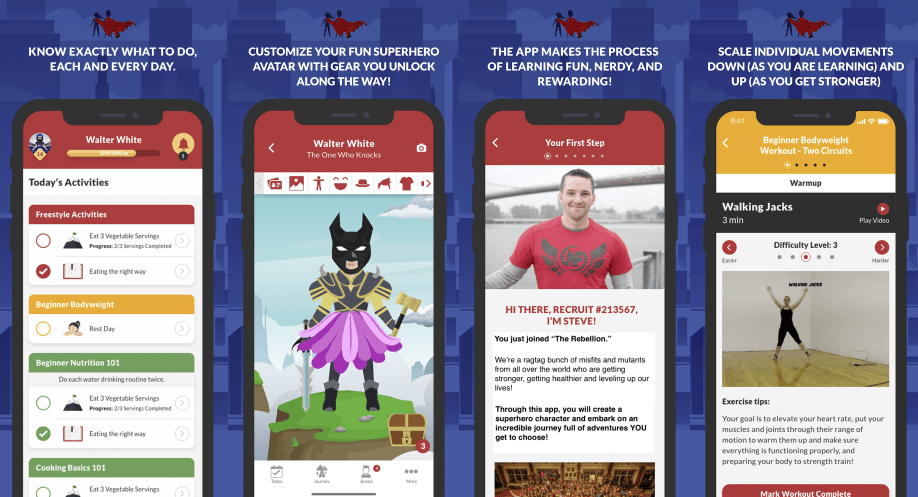
PS: If you want to continue your adventures with us, check out NF Journey, our fun habit-building app that helps you exercise more frequently, eat healthier, and level up your life (literally).
Oh dear, oh dear, it’s that time of year but yet again! The holidays are coming, which means lots of tempting food !
I must confess that at the moment, even the thought of a holiday horrifies me, because after my over-indulgence during the festive season, the last thing that I want to be doing is even more eating and drinking.
Here’s one thought for you, start right now and get fit. I suggest that not only will that make you feel heaps better, after a few weeks, you will even start to look forward to that summer vacation. Let me give you another more serious and compelling reason for this, and that is that we all shoud start to take our long term health much more seriously than we do at present.
At least that is my humble opinion.
Did you know for instance that current statistics reveal that at least 60 to 75% of Americans are overweight and 40% are obese ? That is just in the US, and I am prepared to hazard an educated guess that the rest of the developed world is not far behind.
For those who desire to lose weight and obtain optimal health therefore, it can be overwhelming trying to figure out where to start.
From the Atkins Diet to the South Beach Diet, from low fat to low carb diets, there are numerous weight-loss plans to choose from. In addition, given conflicting information as to what works best, it can be difficult deciding what to do.
For those who have tried many diet plans with no success, it becomes more difficult and frustrating. Many people forget that a diet might work wonders for their friend but won’t work well for them. This is not necessarily because the diet is “bad”, but because each body reacts differently.
However, there is a way to lose weight that is easy, fast, and doesn’t involve deprivation or calorie counting.
It is important to address some background information about body genetics and why weight loss can be difficult before I start to discuss weight loss tips.
At the start of any diet, it is important to note that each person has a different body build. Some people are short and stout, while others are tall and thin. Some have big hips and shoulders, and others are short and very muscular. Genetics can determine body shape and a person’s natural build just as it can do eye color, hair color, skin color, and so on.
The good news is that genetics do not determine whether or not one will be fat, but will determine one’s body shape.
This means that not every woman can expect to be tall and thin like a Hollywood actress or supermodel such as Tyra Banks. Not every man can expect to be defined and muscular like The Rock. The goal really, in my opionion, is to be at a comfortable weight for one’s body shape and to feel good about it.
Having said all that, why is it that people are overweight! I have listed ten of the most common reasons below:-
1. Slow metabolism – People who are overweight have a hard time “burning off” their intake of food. As a result the fat is stored up in the body, rather than used.
2. Emotional eating – Those who struggle with weight often eat when stressed, or when other emotional upheavals are happening in their life.
3. Hormonal imbalances – This does mainly apply to the ladies, (complex creatures that we are!).
4. Eating portions – We can all be guilty of the syndrome that I like to call “greed not need”. So watch out for those portion sizes.
5. A build up of toxins in the body – This can be due to too much junk food, candies, sodas, too much coffee, these can all contriubute to this.
6. Eating too late – Late-night eating can cause food to convert to fat a lot more easily, as well as making sleep more difficult.
7. A high susceptibility to growth hormones – These are the hormones which are given to animals to help them grow faster and larger. Some meat and dairy can have some residual growth hormones. These hormones can sometimes result in increased fat storage.
8. Not eating breakfast – This really does make your metabolism slow and sluggish.
9. Numerous diets – Going from diet to diet has a negative impact on the metabolism and causes weight loss to be much more difficult.
10. Food ingredients – The reasons why are amazing and beyond the scope of this article.
Here Are Seven Simple Steps For Easy Weight Loss
Now that there is a better understanding of body genetics, and why people have a tendency to be overweight, here are my tips for fast easy weight loss.
#1: Drink some water first thing in the morning. Ideally you should drink eight ounces of distilled water, bottled water, or filtered water (not tap water).
#2: Eat a big breakfast. Suggested foods to choose from are apples, bananas, rye bread with no sugar, plain yogurt, tuna, tomatoes, carrots, peppers, raw honey, and such like.
#3: Drink distilled water throughout the day: I recommend that you try and drink at least eight glasses per day.
#4: Walk non-stop one hour each day. This doesn’t have to be power walking, just walk at your own pace. Walking is one of the best forms of exercise you know!
#5: Try and stop eating after 6:00 PM. This is very hard for many people, but do the best you can. You will be surprised at how much you benefit from this.
#6: Do a candida cleanse. Candida is yeast overgrowth in the colon that can cause all kinds of health problems. Check online for “Candida Cleanse” or go to your local health food store.
#7: Do a colon cleanse: This cleanse cleans out the digestive system, which is clogged and sluggish in many overweight people. Once again, check online or go to your local health food store.
More and more people worldwide are becoming overweight. Extra weight can result in many health issues and negatively impact your emotional state and self-esteem. However for those struggling with this problem, there is hope, because you can lose it and keep it off if you really want to.
Now that you have a understanding of body genetics and why you might be overweight, why not take some positive action today!
Commit to trying at least a few of the steps, you will be glad that you did.
Halloween is just around the corner, which means candy season is in full swing. The end of year holiday season brings a lot of sweets and treats, probably more than you encounter during the rest of the year.
To help you be more mindful around sweet treats and sugar intake this time of year in order to nourish your body and feel your best, I wanted to share 3 simple strategies I come back to each year!
And stay tuned till the end for a Spooktacular Halloween Snack Platter that’s full of healthy snacks, but is still festive and fun!
3 ways to survive the Halloween candy rush
Don’t start the party early.
Wait until the actual holiday to buy candy for your home. There’s no need to have it before then – unless you’re incredibly self-controlled and can trust that you won’t break open the bag before the trick-or-treaters arrive.
On Halloween – eat the candy!
One day of indulgence is not going to destroy your health, make you gain weight, or ruin all your hard work. One day is one day – it matters more what we do the other 364 days of the year. So, enjoy a day of holiday treats…guilt-free!
Give it away.
We all know what happens when we have bowls of leftover candy in the house, right? So, after the holiday, the best thing we can do to prevent forming a bad habit of late-night candy snacking is to get it out of the house. Donate the candy to a teacher to pass out in class or find a dental office that is hosting a give-back program.
Spooktacular Halloween Snack Platter
Ingredients:
2 oranges, peeled and sliced
¼-½ cup gluten-free pretzel sticks
½ cup Halloween chips or blue corn chips (you can find fun Halloween chips at stores like Whole Foods and Target!)
½ cup Terra chips
A mix of red and green grapes
1 sliced apple
½ cup hummus of choice
3 gluten or grain-free tortillas cut into spooky shapes (Siete brand is great and if you don’t have Halloween cookie cutters, simply cut into triangles)
Coconut or avocado oil for cooking
Instructions:
Start by adding the orange slices, pretzel sticks, Halloween chips, Terra chips, grapes, and apple slices to a platter.
Add the hummus to a serving dish in the middle of the plate.
Next, using cookie cutters, cut tortillas into Halloween shapes. Fry in coconut or avocado oil for 2-3 minutes or until crispy.
Serve on the platter and dip in hummus.
Enjoy as a fun Halloween snack that both kids and adults can enjoy!
If you have any tips for how you deal with the holiday candy rush or nourishing snacks you make this time of year, I’d love to hear in the comments!
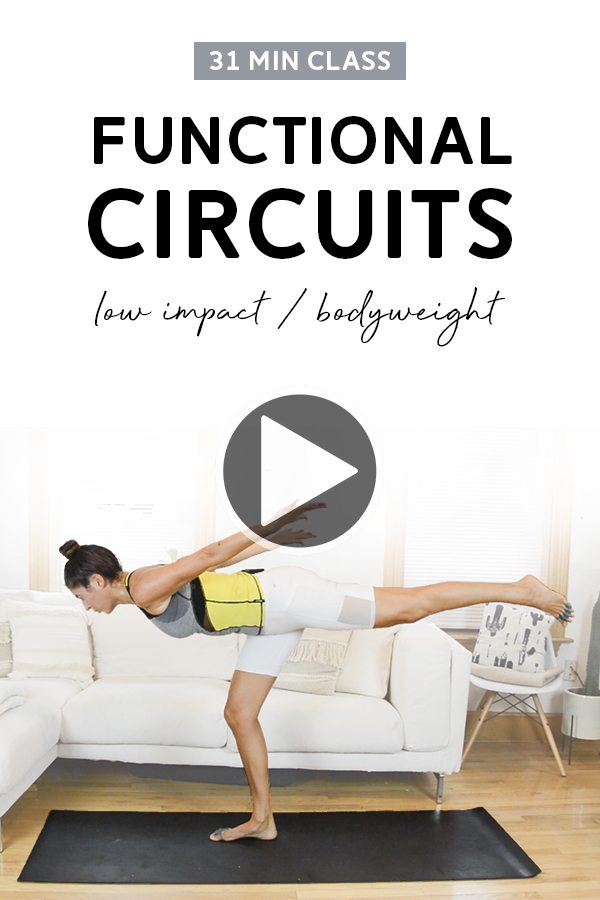
This Functional Circuits low impact class is just about 30 minutes long. I got a request for a workout incorporating some balance work, so we’ll gradually build up to that throughout the two circuits.
If you love it, I have a bunch more Functional Circuits classes available to Patreon members!
Functional Circuits Low Impact Class
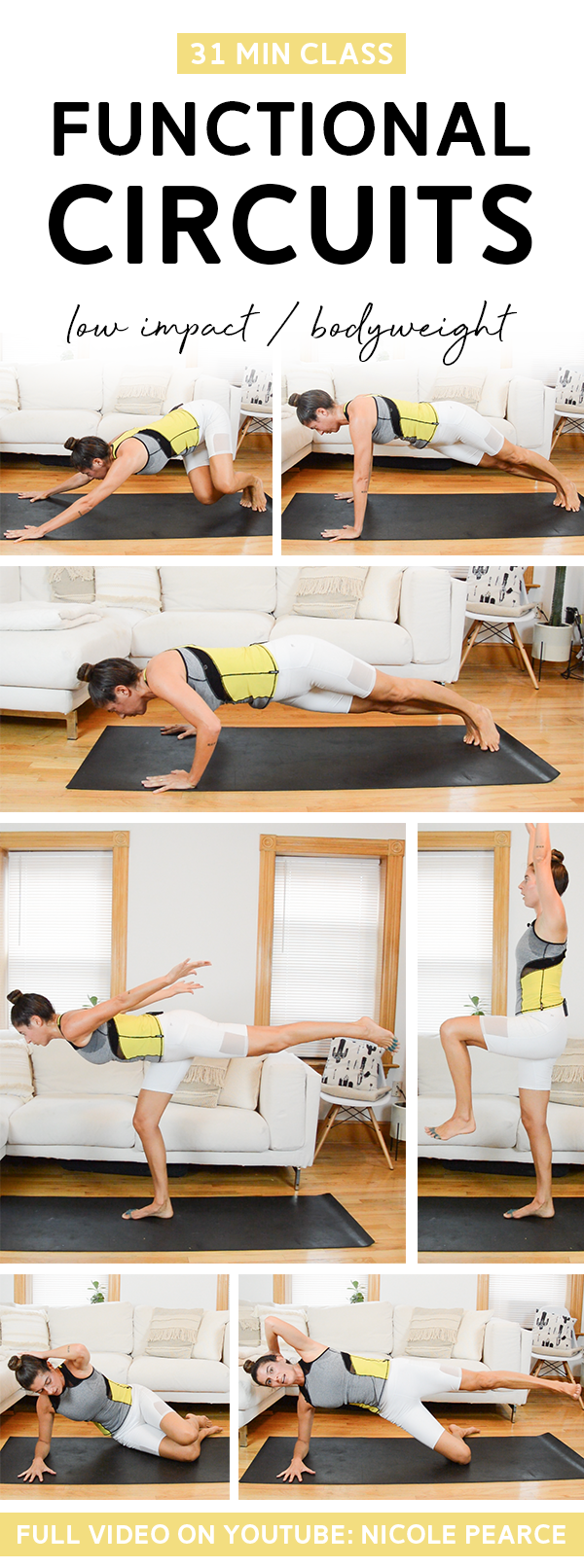
In this class, we start with a guided warm up, focusing on mobility and (low impact) dynamic movement. We then move onto our functional circuit work. In each of the three circuits, you’ll preform four exercises, back to back, for 30 seconds each. You then rest 30 seconds before repeating. So that’s 2 mins of work, 30 sec rest.
We’ll do some unilateral work so we’ll complete 4 sets of the circuits, twice on the right and twice on the left.
Between circuits, you get a minute to recover, but pause the video and take more time if needed. Always listen to your body, modifying or stopping as needed.
We finish class with a guided cool down and stretch.
Workout Breakdown
See times in the above video to jump to that part.
(01:08) Warm Up & Mobility
(06:39) Functional Circuits Workout
Circuit 1
Modified Side Plank Lift + Kick
Modified Side Plank Hold with Leg Lift
Side Plank Adduction
Twisted Push Up to Hip Slide
Circuit 2
Side Lunge to Calf Raise
Skater Step x2 Knee Drive
SL Deadlift to Knee Drive
SL Deadlift Kicks with Rev Fly
(28:00) Cool Down & Stretch
If you like this class, I have another Functional Circuits class on YouTube that’s also bodyweight only and low impact. And for more, check out Patreon!
There’s an ABSURD amount of horrible advice out there for quick weight loss.
I’m looking at you “Weight Loss Tea” and “Fat Burner Cookies.”
Fortunately, us nerds at Nerd Fitness actually help people get healthy with things like “science” and “proven strategies that last.”
We have thousands of success stories from our community and 1 million+ people tune in each month for our advice on getting in shape.
Below, we’ll share with you our 9 strategies for safe, sustainable weight loss. We use these as part of our Online Coaching Program and today you’ll learn them too.
What Is the Fastest Way to Lose Weight? (4 Common Methods)
At some point in this guide, I’m going to try and talk you out of trying to lose weight as fast as possible.
But now is not that time.
If you are trying to lose weight quickly, there are 4 common ways of going about it. Each will have some pros and cons, so let’s discuss.
#1) Very Low-Calorie Dieting
This is probably the most common way to quickly lose weight: don’t eat much.
A very low-calorie diet (VLCD) is defined as any diet ranging from 450-800 calories a day.[1]
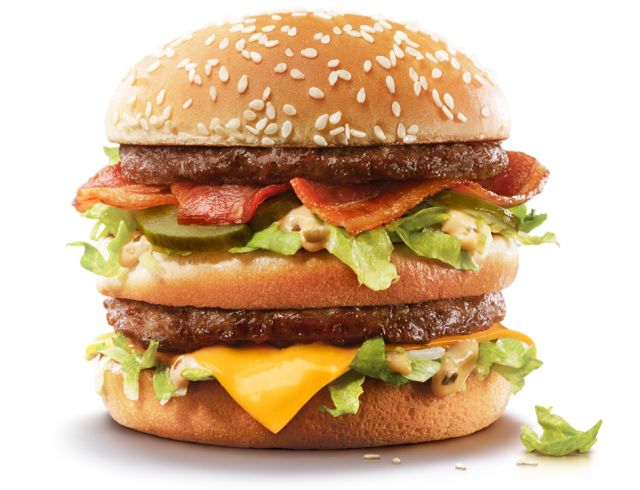
For reference, there are about 550 calories in a McDonald’s Big Mac.
So we’re talking about a hamburger and maybe an apple to eat for a day. That’s it.
Unsurprisingly, starving oneself by going on a VLCD will create fast weight loss.[2] However, these diets should only be done under medical supervision because you can run into some serious nutritional deficiencies and other health complications if you don’t know what you’re doing.[3] Additionally, as you’ll soon learn: “temporary changes create temporary solutions.” So, following a VLCD to lose a few pounds will only work for as long as you eat in this fashion.
Not great!
Verdict: Talk to a doctor before trying this.
#2) Protein-Sparing Modified Fasts
A protein-sparing modified fast (PSMF) is much like a VLCD, but the calories you eat more or less come from protein sources.[4]
With a PSMF, you eat:
About 0.68 grams of protein per pound you weigh (1.5g/kg). So if you weigh 250 pounds, you would target 170 grams of protein.
Typically a total of 12-17 oz in the form of lean meat, poultry, fish, seafood, eggs, low-fat cheese, or tofu.
Less than 20g of carbohydrates a day (about 2 servings of low-starch vegetables, with unlimited lettuce salad).
No fats outside of those in protein sources (no butter, oils, nuts, or seeds).
As we discuss in our Protein 101 guide, eating plenty of protein is critical when you’re losing weight, to ensure you’re losing the right kind of weight.
When you’re in a caloric deficit, your body needs to pull from current stores to function, which means it might pull from both body fat AND muscle.
Obviously, from a health and physique standpoint, that’s not good.
This explains why a PSMF prioritizes protein: it can help maintain muscle during a drastic calorie deficit.
I already know your next question: is this safe?
In the short term? Probably.
In the long term? Ehhhh.
A two-week study found the PSMF to result in safe and effective weight loss.[5]
However, a three-month study found nutritional deficiencies were developing in those following a PSMF, even with the added multivitamin and supplements.[6]
Verdict: In the short term (a week or two), this is fine. In the long term, I would check in with a doctor.
Your co-worker, their spouse, and their dog walker’s nephew have all (probably) tried a low-carb diet recently.
Out of all the low-carb variations out there, the Ketogenic or Keto Diet is one of the more strict versions, as you basically cut out all or most carbohydrates.
While the exact prescription of a Keto Diet will vary depending on who you talk to, generally a Keto Diet has you:
Keeping carbs to about less than 30-50 grams a day. For reference, a banana has about 27 grams of carbs.
Consuming protein at about 0.6 grams for every pound you weigh (about 1.35g per kilogram).
Eating the rest of your calories from fat.
If you’re interested in learning more, I recommend you check out our GIANT eBook, The Beginner’s Guide to the Keto Diet. Grab it for free when you sign up in the box below:
Weight loss can occur on a low-carb diet (as long as you can stick with it), since you’re cutting out an entire macronutrient and most likely reducing total calories consumed.[8]
Your results may vary.
Verdict: If you want, go ahead and try the Keto Diet. Lots of people have had success with it. Just know that it’s pretty tough to stick with, which we’ll come back to later.
#4) Weight Loss from Dehydration
If an athlete needs to drop weight quickly for a match or competition, they’ll often do so by dropping water weight.
Think of someone in MMA or bodybuilders, who need to reach a certain weight temporarily to stay in or make a certain weight class.
If today they’re 160 pounds, but in three days they need to be 150, they’ll often dehydrate themselves to get there.
Some tricks to lose water weight include:
Jogging around in full sweatsuits.
Sitting in hot saunas.
Removing all salt from the diet (since it helps you hold water).
Going super low-carb (carbs also help with retaining water).
Not drinking any water the day of the weigh-in.
While these tips might help someone qualify for a competition, we’re not talking about fat loss here, so avoid playing with dehydration to get in shape. Plus, many of these strategies could potentially impact your health if you’re not careful.[9]
Verdict: Don’t bother.
If you’re wondering if there’s a better strategy for fast weight loss than these 4 protocols, we can help! If you’re interested, we’ll set you up with your very own NF Coach who will create a weight loss plan that isn’t so drastic (or soul-crushing):
How Much Weight Can I Expect to Lose?
We’ve all seen advertisements that say:
Lose 5 pounds in a week.
Ditch the stubborn “belly fat.”
Get that bikini body by the summer!
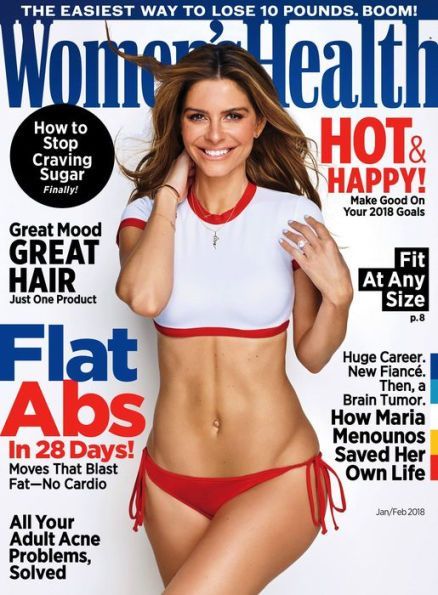
Walk down any magazine aisle and you’ll see:
Flat abs in 28 days? 10 pounds lost easily? Wha…
It’s no wonder that many think weight loss can be done quickly .
Here’s the truth: no one can tell you exactly how much weight you’ll lose in any given time period.
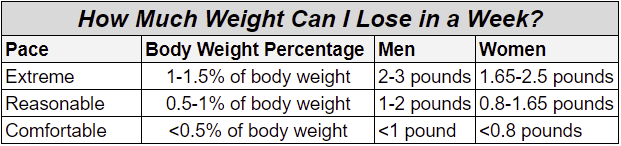
However, we can talk about some realistic expectations as pointed out below by my friends at Precision Nutrition:
By “pace,” we mean consistency:
Extreme. You need to follow your program 100% of the time.
Reasonable.This is about 70-80% consistent with the program.
Comfortable.You’re consistent about 50-60% of the time.
More on this in our next section.
I should also say, your weight loss progress will not be linear.
You’ll lose fat faster when:
You first begin your weight loss journey.
You have more fat to lose.
Why?
Think of it this way: suppose you normally eat 3,000 calories per day and you maintain your current body weight.
Let’s imagine you bring this down to 2,000 calories, a deficit of 1,000 calories per day. With this new approach, you’ll start to lose weight.
But as you begin to lose weight, your calorie requirements will go down.
Simply put, there is less of you that needs “fuel.”
Yep, the bigger you are, the more calories you need. The smaller you are, the fewer calories you need.
In other words: your metabolism doesn’t have to work as hard to fuel all of your bodily functions, has less weight to carry, and thus it will burn fewer calories compared to when you were much bigger.
Here is the estimated daily resting calorie burn (“sit on your ass all day”) of a 35-year old male nerd at 3 very different weights – which you can learn from our Calorie Calculator:
300 lbs: 2,600 calories.
250 lbs: 2,300 calories.
200 lbs: 2,000 calories.
WHAT THIS MEANS: Unless you adjust your calorie intake as your weight decreases… your previous calorie intake amount becomes less and less effective at losing weight, until you hit an equilibrium.
Another piece of the equation: your body will become more efficient at the exercise you do.[9]
Here’s an example: if you burn 100 calories running a mile, if you continue to run this same distance at the same speed, eventually you’ll only burn 95 calories running that same mile. Then 90. And so on.
At this point, we need to talk about ALL the problems with “losing weight as fast as possible.”
How Do You Maintain Your Weight Loss? (Real Talk)
I’m going to make an assumption about you:
This probably isn’t your first rodeo, nor is it the first time you’ve looked into fast weight loss.
How’d that turn out the last time you tried it?
I’m not asking this to be a jerk, but rather to make a point:
I like you, your friends like you, and the world needs you to be the healthiest superhero version of yourself you can be.
The problem with the four strategies we talked about earlier (and the other diets that you’ve probably tried), is they generally aren’t sustainable.
Can you live off 500 calories for a few days?
Probably.
Can you do it for a whole year?
Nope.
As we mention in The 5 Rules of Weight Loss, any benefit you get from a diet is only going to last as long as you do the diet.
Said another way:
Temporary changes create temporary results.
Permanent changes create permanent results.
Sure, it’s great when people try the Keto Diet and lose 20 pounds. But as soon as they ditch low-carb, they generally regain the weight back.
We want sustainable changes and permanent weight loss.
It doesn’t really matter how much weight you lose in your first week or first month, but rather how much weight you have lost after 1 year, and how you feel after that year.
That’s why in our Online Coaching Program, we don’t focus on losing weight as fast as possible. We focus on slowly developing 9 skills that help our clients level up permanently.
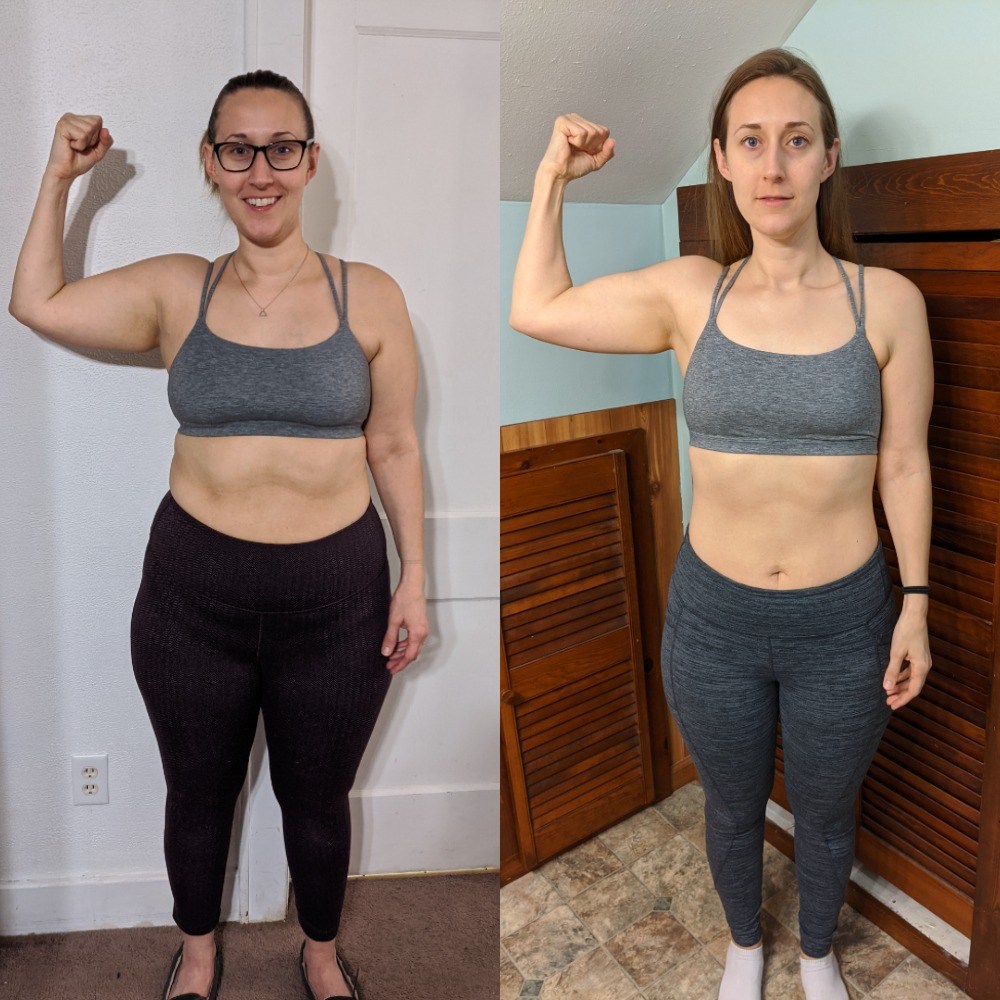
Although we focus on long-term behavior change and permanent progress, many of our clients end up losing weight pretty quickly, like Sarah the supermom here, who lost 30 pounds in six months.
This might seem counterintuitive, but after years of running Nerd Fitness, I’ve learned it to be true:
Small changes, consistently taken, create the fastest path to lose weight.
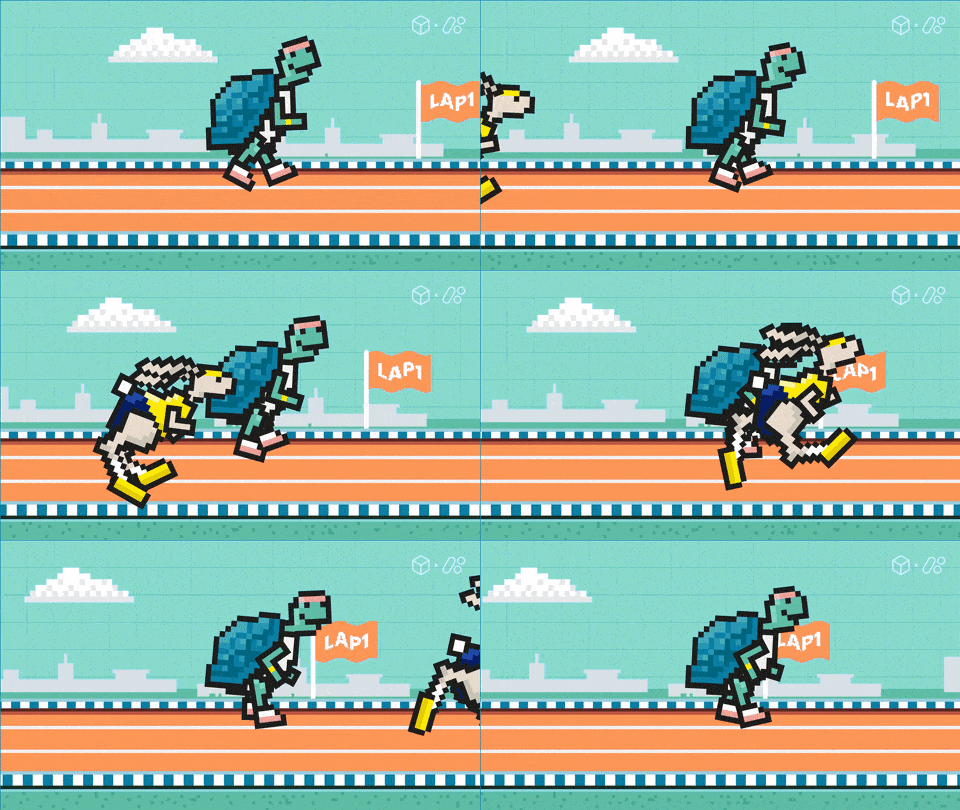
Think of the classic story of the Tortoise and the Hare.
The fast-starting hare becomes bored and decides to take a quick nap, while the slow-but-consistent tortoise keeps its pace. When the hare wakes up, it’s too late. The race has been won by the tortoise.
The morale here: the race is not always won by the swiftest.
Make a small change. Once it becomes a normal part of your life, make another. Then another.
That’s how the tortoise would do it.
This is a message I really strike home in the video on “How to Get in Shape,” which is right here for you:
Now, let’s talk about what small changes you can make.
9 Habits for Successful Weight Loss
Here are 9 skills to help you achieve fast and sustainable weight loss:
#1) Plan and Take Action
If you’re going to embark on a weight loss journey, you’re gonna need to do some preparation.
You can’t just open your fridge and expect there to be healthy food ready to go.
That would be a magic fridge.
Our first step in helping someone get healthy, whether through our Coaching Program or in NF Prime, is by outlining a plan.
Then, we need to act on it.
There are two ways we go about this:
Make time on your calendar. This can be a reminder to buy food, prep dinner, or go for a walk. It doesn’t have to be a huge block of time, but we need to get you in the habit of making space for your goals, otherwise they won’t happen. Step number here one is to make time.
Have “Daily Wins” in the direction of your goal.What we do every day will end up defining us, so daily adherence is important. However, this can be a small action, even just 5-minutes. We call this our “Daily Win.” It could be to drink a glass of water or go do some jumping jacks. The point here is to be able to crush this goal, no matter what it is. It’ll help us build momentum.
When you start a weight loss journey, take some time to plan and prepare. Don’t just say “I’m gonna start tomorrow.” Think of when you’re going to make a change, what you’re going to change, and why.
Then create a path where you can take a step in that direction every single day, no matter how small it may seem.
This will add up quickly, I promise.
#2) Develop Healthier Eating Behavior
So many people ask us “what” to eat.
But we rarely get people asking us “how” to eat.
Both are super important for losing weight.
There are a few things we can work on to develop this “how” skill:
Eat mindfully and slowly. Your body takes a while to recognize it’s full, so slowing down and concentrating on your meal can help with overeating. Some of our Daily Wins here could include using a meal timer, putting your fork down between bites, and eating without the TV or your phone around (no distractions).
Recognize hunger and fullness cues.Sometimes, we eat just to eat. Maybe we’re actually more bored than hungry. To help fight this, a Daily Win could be to keep a “Hunger and Fullness Journal.” Here, you rate your hunger from 1 to 10 before you eat anything. If it’s less than 6 or 7, maybe pause for 30 minutes or so and check back in later. It’s the same idea for our fullness. Pause during the meal, and ask yourself “how hungry am I still?” If your hunger has subsided, maybe save the rest of your food for later. The goal here is to eat (and continue eating) only when you’re hungry.
Create a schedule for meals.Most people do best with eating on some type of routine. Breakfast, lunch, and dinner at roughly the same time. Your body will pick up on this and naturally get hungry at the times you normally eat. Predictable meals can help with weight loss.
#3) Balance Energy Intake to Your Goals.
You’ll hear us talk about “energy balance” throughout Nerd Fitness.
As we point out in The 5 Rules of Weight Loss, study[10] after study[11] after study[12] shows that our bodies obey the laws of thermodynamics and that to lose weight, we need to burn more calories than we consume regularly.
So it’s important to have a sense of how many calories you need to hit your goals.
Some actions we can take here:
Calculate your calorie requirements. We don’t need you to be exact, but we need a rough ballpark on how many calories you need given your body composition, activity level, and goals.
Determine the calories in the food you eat. Next, we need to figure out how many calories you’re actually eating. Apps can be helpful here, but you can also use the “Hand Portion” tool found in our ““How to Portion Control” Guide.
Track your progress. There’s a lot of educated guesswork in matching calories in to calories out, so the most important thing we can do is track the results. If you’re seeing progress, great! Keep going. Not seeing progress? No problem. We’ll take that information like a scientist would and adjust our experiment.
This is one of the more difficult steps in our 9 Skills to Lose Weight, so if you want a Nerd Fitness Coach to give you a hand, we got you:
You don’t have to completely give up the food you love like pizza, cheeseburgers, or ice cream. These can be eaten “SOMETIMES.”
Foods of “higher quality” should be prioritized and eaten more often. We place these in our “YES” category.
We find this “eat more of” and “eat less of” stance to be less overwhelming to our coaching clients than providing hard and stringent rules about food.
Less overwhelming = more sustainable = win.
I’m sure you now have some questions:
What foods should be “SOMETIMES”?
How often is this?
What foods should be “YES”?
The answer: it’s actually up to you to help figure that out!
That’s not meant to be a cop-out, so let me explain:
Our goal here is to move you to “higher-quality food” over time.
We can get there by working on the following:
Set criteria for “better” or “worse.” If we’re going to adjust your eating habits, we need to define our goals. For example, whole wheat bread will typically contain more nutrients than white bread, so it would be “better.” French fries often have more calories than a boiled potato, so it would be “worse.” I put these in quotes because if you want french fries right now, it’s “better,” even if it contains more calories. This goes back to our “SOMETIMES” discussion.
Eat more whole, minimally processed food.You know the drill here: we’re after fresh fruits and vegetables, whole grains, fresh meats, raw nuts, etc. These foods will generally have more nutrients intact. Plus, we want you to eat a variety of them (berries and oranges instead of only eating apples) so you get more nutrients that way. These foods are often “better” than their processed counterparts.
Eat less processed foods.While you can totally eat pizza and drink beer and still be healthy (I do and am), we want these to be “SOMETIMES” meals instead of “ALL THE TIME” meals. If you eat pizza twice a week, maybe we get it down to once a week.
If you’re interested in losing weight fast, a key skill will be to eat higher quality food more often.
#5) Obtain Proper Nutrients.
This one builds up from our last skill: choose higher-quality food more often.
That’s because higher-quality food will provide your body with more nutrients.
But we can get more specific than that.
Here are some actions to ensure you’re getting proper nutrients throughout your day.
Eat lean protein at most meals. This would include lean cuts of beef or chicken, greek yogurt, or beans and lentils. Protein is one of the most critical macronutrients for your health, so it’s critical to prioritize it at every meal.
Eat colorful fruits and vegetables.The color of produce generally signifies the nutrients it contains (green veggies will have vitamin K), so it’s important to eat the whole rainbow when it comes to your fruits and veggies.[13] Try to include some colorful produce at most meals.
Choose high-fiber carbohydrates.Think fruits, tubers, legumes (beans/lentils), and whole grains here. The fiber will help slow digestion and provide long-lasting energy.
Pick healthy fats.Foods like avocados, nuts, and olive oil. These will help you stay full and help regulate inflammation.[14]
Stay hydrated.You need to be properly hydrated for all the nutrients you consume to work well.[15] Plus, drinking plenty of water can help you stay full between meals.
#6) Move Your Body.
Our bodies evolved to move regularly. Yet for those of us in industrialized countries, we often only move to get from our homes to our car, to an office where we sit all day, then back home.
That’s why we often need to plan regular movement.
While we’re big fans of strength training around these parts, it doesn’t have to be that intense to get started. At first, it can literally be anything that gets your body moving. Even just taking the stairs instead of the elevator.
We want the things around us to promote our fitness goals.
This could include healthy snacks in the fridge or weights in the basement for our home gym.
However, it’s not just material things here, because we also need to look at the people we surround ourselves with or “our squad.” Having people who support your efforts, or are themselves working towards a similar goal, can be critical for weight loss.
Any way that you can adapt your environment to match your weight loss goals, the better.
#9) Balance Emotions without Food
It’s perfectly normal and okay to use food to match emotions.
Celebrating a promotion? A dinner out can be the perfect reaction.
Tough day at work? Maybe a glass of wine will help you relax.
As we point out in our Guide to Stress Eating, the problem arises when we are no longer in control of food because of our emotions.
Coach Justin does a great job of explaining why here:
Food can be fine as a reward or as a relief, as long as it’s us controlling the behavior and not the food itself. Developing this skill will be important for sustainable weight loss.
If you find yourself “stress eating,” know that you are not alone here.
One of the top issues faced by clients in our1-on-1 Online Coaching Program is emotional or stress eating. With the eruption of the pandemic, these episodes have only increased.
How to Lose Weight Fast (Next Steps)
I’m going to be real with you: developing and mastering all 9 weight-loss skills is going to take a while.
And that’s okay!
This is the fastest way to lose weight permanently.
Here’s the thing though: you don’t actually need to master all 9 skills to see progress.
As we discussed earlier, even if you just develop 4 or 5 of them, you’ll see results.
It’s something I discuss with Coach Matt in our video from Nerd Fitness Prime, on thinking of fitness as a “Dial,” not a “Light Switch.”
Because we’ve found that even if people are only consistent with their goals 50% of the time, it’s enough to make some progress and build momentum..
So here’s your new mission: work on ONE of these skills by taking ONE action.
That’s it. Don’t overwhelm yourself, but do take action today.
Which one should you pick?
Start with the first one, “Plan and Take Action.”
Make some time on your calendar for a 5-minute Daily Win tomorrow. Go for a walk, or prepare ONE healthy meal.
Make it something that doesn’t overwhelm you..
The win isn’t as important as following through, because that will help us build momentum in the right direction.
If you want some help getting going, I got you.
Here are three ways to continue your journey with Nerd Fitness.
#1) Our Online Coaching Program: a coaching program for busy people to help them make better food choices, stay accountable, and get healthier, permanently.
You can schedule a free call with our team so we can get to know you and see if our coaching program is right for you. Just click on the image below for more details:
#2) Check out NF Journey, our fun habit-building app that helps you exercise more frequently, eat healthier, and level up your life (literally).
Option #3) Join the Rebellion! We need good people like you in our community, the Nerd Fitness Rebellion.
Sign up in the box below to enlist and get our Rebel Starter Kit, which includes all of our “work out at home” guides, the Nerd Fitness Diet Cheat Sheet, and much more!
Get your Nerd Fitness Starter Kit
The 15 mistakes you don’t want to make.
Full guide to the most effective diet and why it works.
Complete and track your first workout today, no gym required.
Alright, I want to hear from you:
Any skills for weight loss that I’m missing?
What have you had success with?
What are you still having trouble doing?
You’re not the only one trying to lose weight, so share with us your journey in the comments so we can support each other!
-Steve
PS: If you’re just starting your weight loss journey, make sure you check out:
 Oatmeal is one of the most powerful breakfast foods of them all. If you are looking to get your body in great shape, you should incorporate this as a staple food in your diet.









 Oh dear, oh dear, it’s that time of year but yet again! The holidays are coming, which means lots of tempting food !