Categories
Author: tom44

It’s time to learn how to touch your toes!
What makes me so confident you’ll be able to reach your little piggy wiggies?
Because we teach even the most “inflexible” of folks how to touch their toes in our 1-on-1 Online Coaching Program, and we’ll share with you all our secrets below.
Here’s what we’ll cover in our guide, How to Touch Your Toes:
- The benefits of being able to touch your toes.
- Why can’t I touch my toes?
- Determining your initial flexibility (We all start somewhere)
- The 4 best stretches to touch your toes (Improve your flexibility)
- How to become more flexible (Next steps)
It’s time to become bendy like Gumby!

Let’s get started.
The Benefits of Being Able to Touch Your Toes

If you want to increase your flexibility, you’re gonna need to stretch.[1] It’s how you make your muscles elastic and strong.
Why bother though? What’s the big deal about being able to touch your toes?
Here are some of the benefits provided by stretching:
- Increase range of motion. If you can move a joint through its full range of motion, you’re gonna have more freedom of movement. Confidently navigating the physical world is a sign of a healthy nerd, which is why flexibility shouldn’t be overlooked. One of the best ways to become more flexible is to stretch.[2]
- Improve posture. If you want to stop slouching so much, regularly stretching may help.[3] Stretching works to improve muscle imbalances, which in turn might help your posture.
- Alleviate back pain. If you suffer from back pain, it might be worth starting a stretching routine .[4] The muscles in your back might be tight, restricting your range of motion, which causes pain. Stretching can help loosen up the area, plus strengthen the muscle. This might help prevent future injury.
Stretching, and the flexibility that comes with it, should not be overlooked when building a workout routine.
While there are many indicators of good flexibility, one of the most popular is undoubtedly being able to touch your toes.
After all, it was so important the President had all American schoolchildren perform the “Sit and Reach” test to see if they could grab their feet.[5]
Touching your toes might have been a struggle for you then. It might still be a struggle for you now.
Why Can’t I Touch My Toes?

If you are unable to touch your toes, it’s most likely because of one of these four major reasons:
1) Shortened/tight posterior chain muscles. Although most people think not being able to touch our toes just means your hamstring muscles are inflexible, in reality our whole system (including the lower back) can play a huge role as well! As Mark Rippetoe explains in this video about the Romanian deadlift, what you may think is a lower back issue is also a hamstring issue (and vice versa):
You see, the posterior chain is an interconnected series of muscles that includes our back muscles, erector spinae (muscles along our spine), lower back muscles, butts, and hamstrings:
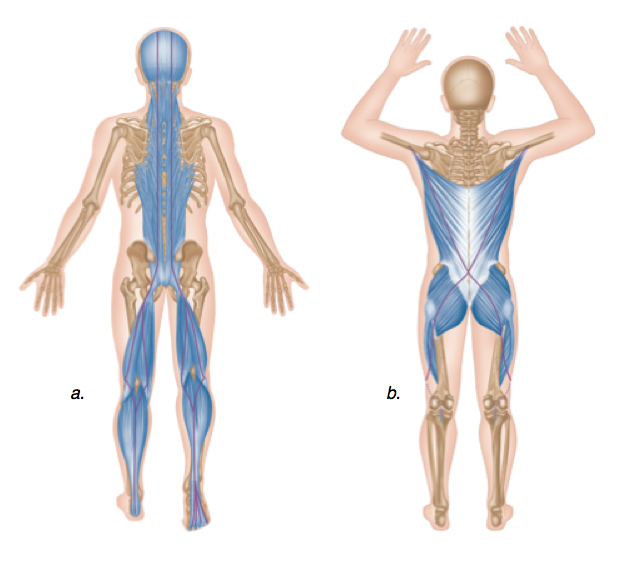
Weak mobility points in one place in the system can become debilitating (and often easy to spot) when we do compound movements like the deadlift.
If you’re somebody who sits at a desk all day and struggles to touch your toes, you probably aren’t strengthening or lengthening these muscles because the chair is doing all of the work for you.
2) You have relatively long legs compared to your torso and arms. People with long legs and short torsos will have a greater challenge than people who have short legs and long torsos and arms.

But fear not, you too can level up and get those toes touched.
3) You have too much body fat. If you are overweight and happen to have a big stomach, it can certainly make touching one’s toes more challenging. Because you already know that diet is 90% of the battle when it comes to weight loss, focus on nutrition to begin losing weight (here are the 5 rules of weight loss to help you begin). This may be a factor in making it easier to touch your toes.
4) You’re not warmed up yet. If you JUST woke up or spent all day in a car, you’re familiar with the rigidity that makes you feel like a steel girder. Your muscles act like rubber bands; the more they are used, the more they are warmed-up, and the further they can stretch. This is why we encourage people to go through a mobility warm-up before exercise!
Let’s put a plan in place to finally touch our toes!
Determining Your Initial Flexibility (We All Start Somewhere)

Before we can implement a strategy to develop more flexibility that allows you to touch your toes, we need to know your starting point.
As Peter Drucker said, “That which gets measured gets managed.” Or in this case, that which gets measured gets more flexible!
The following comes from our free 5-Day Flexibility Series, which you can sign up for today!
THE “CAN YOU TOUCH YOUR TOES?” TEST
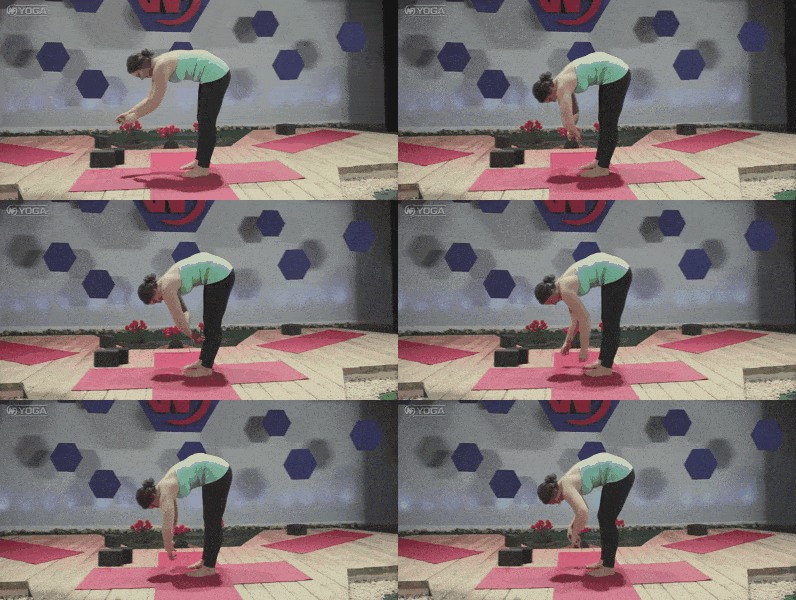
- Stand straight with your legs about hip-width apart. You want your legs to be straight, but don’t aggressively lock out your knees either (this feels like a “microbend” to a lot of people).
- Begin by bending and leaning forward towards the ground with your quads (front of your legs).
- Let your body rest naturally, as if you were a ragdoll. Keeping your hands relatively close together, straighten your fingers and begin to stretch down slowly to the ground.
- Do this 2-3 times to get warmed up. Try to keep your legs straight by flexing or activating your quads; keep your legs straight, without locking your knees.
- Other than the microbend, don’t bend your knees to help you get closer to the ground! I’m watching you. If you’re videotaping yourself on these to track your progress, note that depending on your body (and your hamstrings) your legs may not look 100% straight.
When you are ready, reach towards the ground and hold it for a few seconds. Measure the distance in one of the following ways:
- If you aren’t touching the ground, have a friend measure the distance from the tip of your fingers to the ground. If you don’t have a friend with you, place your hands on your legs and note where the tips of your fingers end up.
- If you can touch the ground, you’ll want to flatten your hands as much as possible, and record the distance from the top of your head to the ground. As you can stretch further, the top of your head will actually get closer and closer to the ground.
- If this seems easy, try hugging your calves and pulling your head in towards your body.
Record your measurement in a document or on a piece of paper (if you’re part of the flexibility challenge, we have a document you can print out), and/or save the photo/video to show how far down you are reaching.
The 4 Best Stretches to Touch Your Toes (Improve Your flexibility)

There are two key factors that will determine whether or not you are successful in gaining the ability to touch your toes as you practice over the next few weeks:
- Actively stretching your muscles JUST past the point of comfort. Like strength training by adding 1 rep or a few pounds to an exercise, we want to stretch just beyond the point where we stretched last time so our muscles have to elongate.
- Consistent practice and effort! You can’t improve your flexibility by stretching for 5 minutes once a month. You’d be better off stretching for 30 seconds spread out 10 times throughout the month.
That’s right. Studies confirmed that actively focusing on touching your toes for 30 seconds, 3 times per week was enough to lengthen hamstring muscles in 4 weeks. [6]
I‘m sure there’s an inappropriate joke to be made here about 30 seconds of effort, but I’m better than that (I think).
In less time than it takes to update your Facebook status, you could be touching your toes and make Gumby proud.

And I know you have time.
HOW TO TOUCH YOUR TOES (CONSISTENT FLEXIBILITY PRACTICE):
All I’m asking for is 2 minutes. 2 minutes! You can even spread these movements out throughout your day – I like to do them after I work out. After a long day at a desk, after driving, or upon waking up are all good times to work on flexibility!
Through each of the movements below, make sure you are breathing slowly and steadily.
You can follow along with all of the movements below that come from our really fun online course, Nerd Fitness Yoga (part of NF Prime). It’s essentially yoga for people that don’t do yoga.
THE 4 BEST STRETCHES TO TOUCH YOUR TOES:
- Standing toe touch stretch – 30 seconds
- Cat/Camel – 30 seconds (switch positions every 5 seconds)
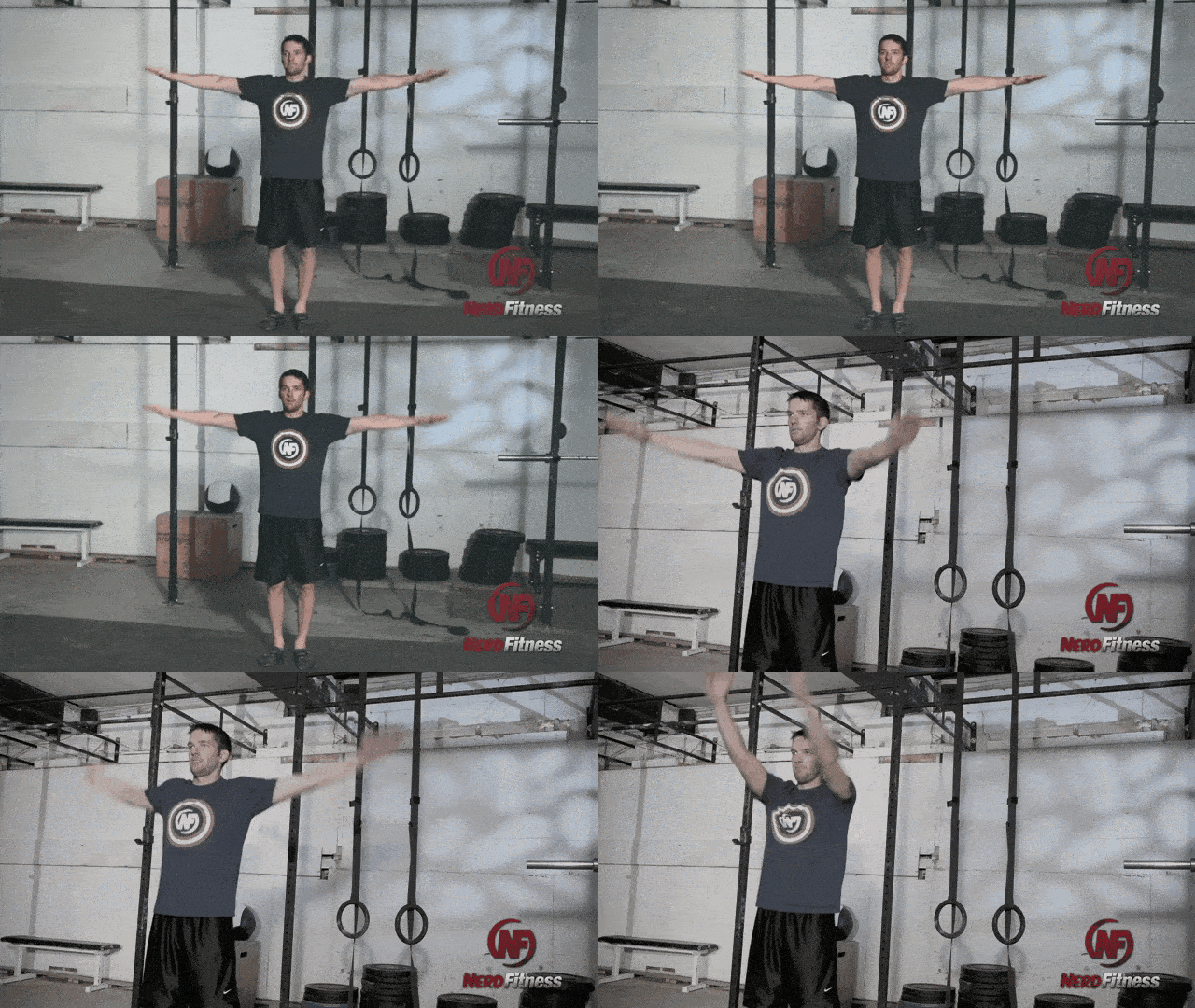
- Star stretch – 30 seconds (as many slow reps as you can)
- Moon the sky – 30 seconds (as many slow reps as you can)
1) Standing toe touch stretch: Flex/activate the front of your legs, keep them straight, and bend over at the waist juuuust past the point of discomfort; hold that position for 30 seconds. Repeat this process every other day and hold it for 30 seconds.
2) We can loosen up a tight lower back by doing 30 seconds of moving back and forth every few seconds by doing a “cat” and then a “cow”:
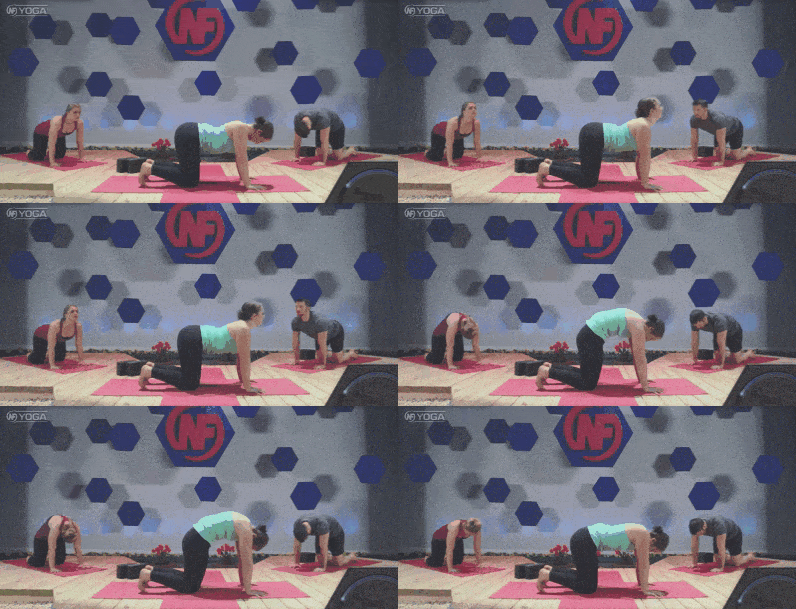
3) You can also do what we call a star stretch to help stretch those legs out! Stand with your legs spread wide, and arms extended (hence the term Star!), and then reach down with one hand to your opposite leg; hold for five seconds, back to start, and repeat with the other leg.

4) Here’s another favorite movement of mine that helps improve my flexibility and mobility: the “Moon the Sky” stretch!
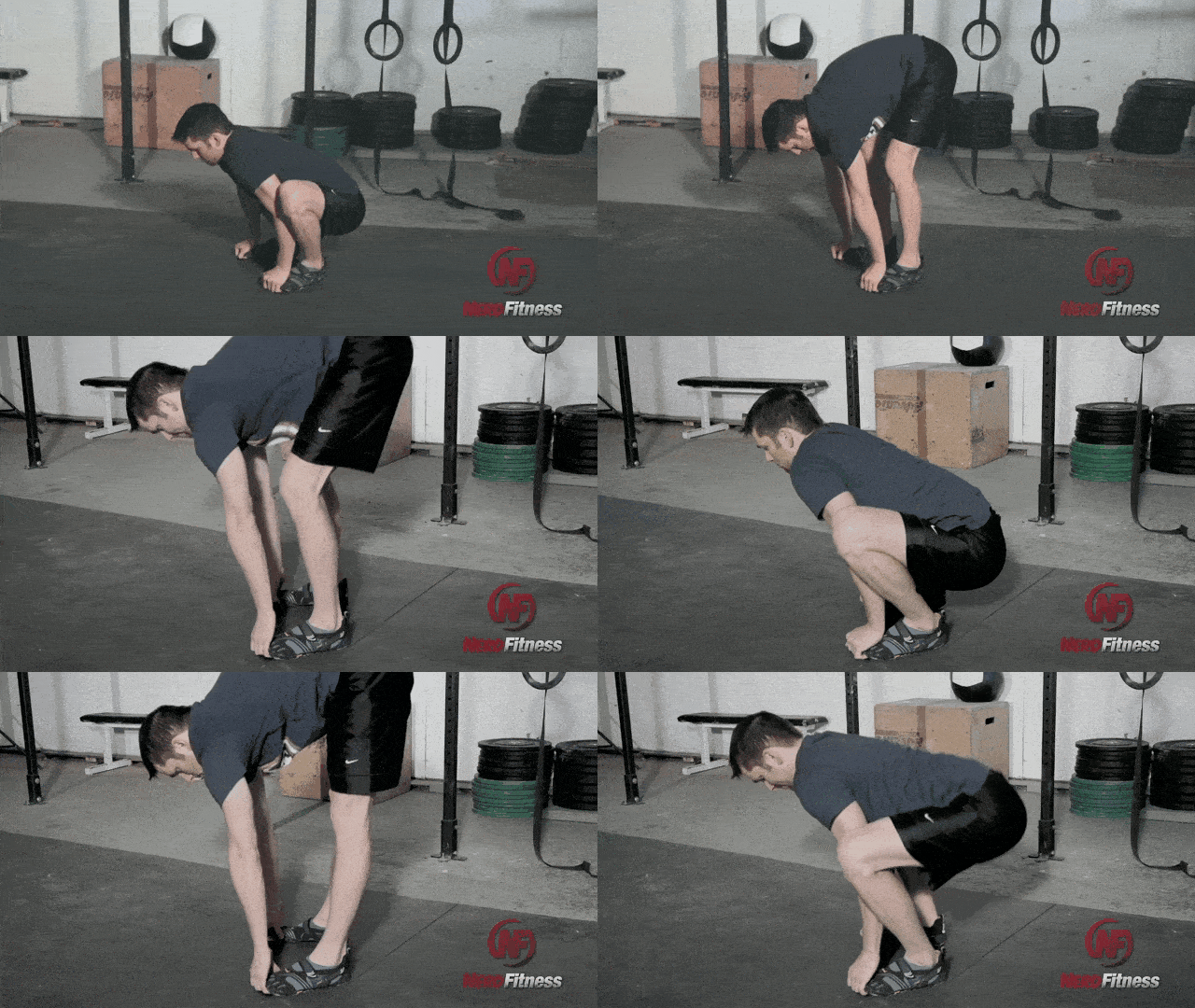
This is a great stretch to mix into your pre-workout warmup to get your legs, butt, and back prepared for work:
- Squat down and put your hands under your feet
- Slowly move your butt up with your hands remaining under your feet.
- Raise your butt and try to straighten your legs
- Go a TEENY bit higher each time until you can fully straighten your legs!
For any of the above moves, a good way to check your form would be to record a video of yourself and match it against the videos and gifs here. If they look close, you’re doing great!
If you want to have an expert review your stretches, our coaches can do just that in our snazzy app!
How to Become More Flexible (Next Steps)

It’s now time to train to touch your toes!
Test your toe-touching abilities before and after doing the 2-minutes of exercise above, and I bet you’ll notice a difference right away – just wait to see what you can accomplish in a few weeks!
The cool thing about flexibility is that any combination of the stretches above will help you improve your flexibility as long as you consistently work on it a tiny bit every day.
I do mobility work:
- When I wake up
- After I work out
- Throughout my day (when working at my desk)
- At the end of my day for a minute or two before bed
All added up, it’s less than 5 minutes of time, but it’s enough to show me some results!
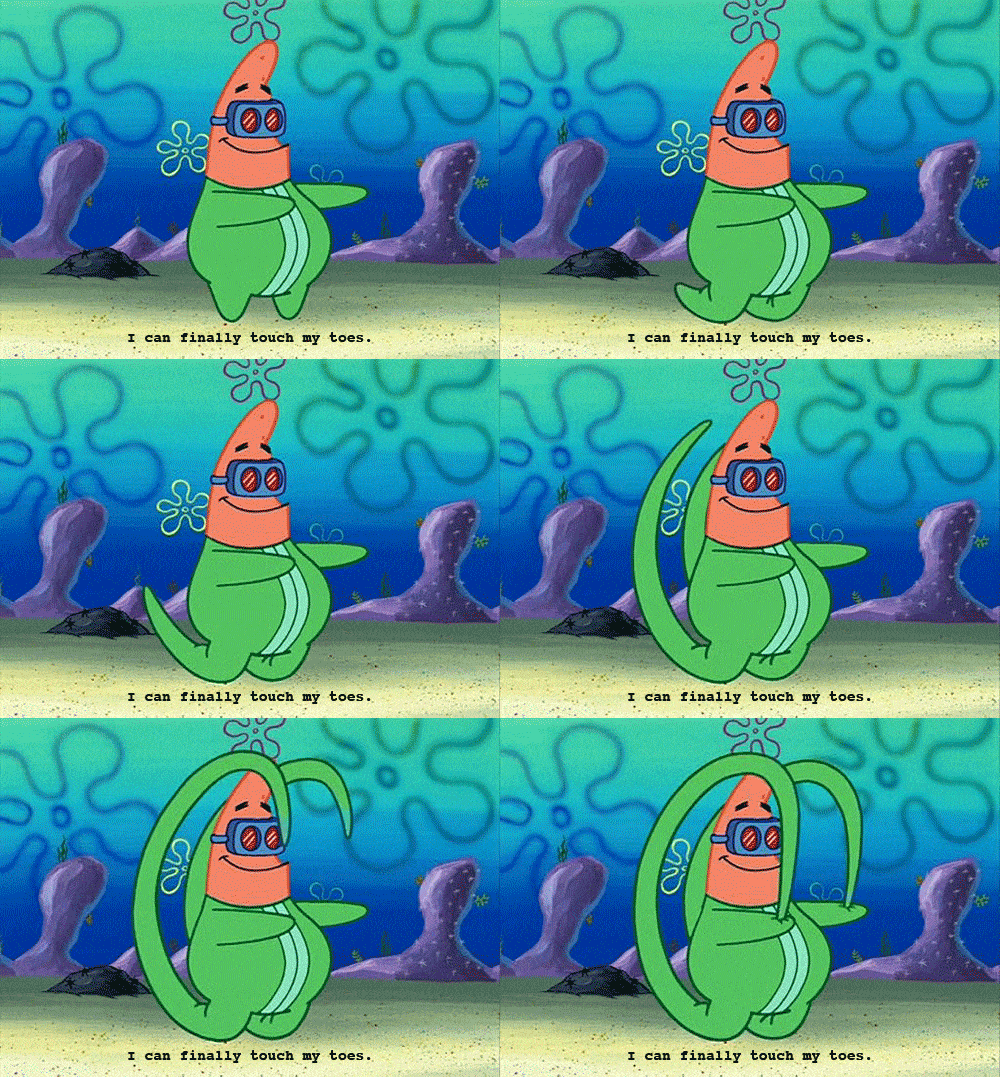
If you follow our guide above, you’ll be well on your way to increasing your flexibility and touching your toesie wosies.
You just need to start!
Want some help getting going? A little extra push out the door?
We built three perfect next steps for increasing your flexibility!
#1) Work with a professional Yoda! If you want confidence that you’re following a program that is tailor-made for your busy life, situation, and goals, check out our popular 1-on-1 Coaching Program.
Many of our clients have “increased flexibility” as one of their fitness goals, and they take comfort knowing a certified NF instructor is guiding them there.
#2) Want to take part in our Mobility Group Challenges? That way you can work on touching your toes with others? Join Nerd Fitness Prime!
Nerd Fitness Prime is our premium membership program that contains at-home exercise routines, live-streamed workouts with NF Coaches, group challenges, a supportive online community, and much more!
#3) Join our amazing free community, the Nerd Fitness Rebellion! Not only is it free to join, but we’ll provide you with loads of free goodies when you sign-up:
Get your Nerd Fitness Starter Kit
- The 15 mistakes you don’t want to make.
- Full guide to the most effective diet and why it works.
- Complete and track your first workout today, no gym required.
That should just about do it for our guide on How to Touch Your Toes.
Now, your turn:
Can you touch your toes?
Does attempting to “sit and reach” bring back horrors from grade school?
Any other tips or tricks for mobility training?
Let us know in the comments!
-Steve
PS: Make sure you check out the rest of our Mobility Training series:
- The Ultimate Guide for Improving Flexibility in 30 Days
- How to Stretch
- 21 Basic Yoga Poses for Beginners
- How to Use a Foam Roller
###
GIF credit: banana, Danny Devito, gumby, patrick.
Photo credit: toe touch, posterior chain, roar, yoga sunset, the adventures of Gumby and R2D2, Stormtroopers and Gumby
from Blog – Nerd Fitness https://ift.tt/2opH0LN
via IFTTT

While a vegetarian diet is among the healthiest ways to eat, certain nutrients can be lacking on a diet that contains no animal products at all.
In particular, many people are concerned that vegans may not get enough protein, calcium and iron from plant-based foods. This is because most people think of eating dairy products for calcium and meats for iron and protein. But it is possible to consume adequate amounts of these nutrients on vegetarian diet. It just takes bit of effort and knowledge about plant-based sources the nutrients.
Iron is an important mineral because it plays a vital role in transporting oxygen through the bloodstream. People who do not have adequate iron intake can suffer from iron deficiency anemia, a condition characterized by extreme fatigue and weakness. Adult men and post-menopausal women need about 10 mg of iron per day, while women of child-bearing age need about 15 mg per day. There are two types of iron – heme iron (from meat) and non-heme iron (from plant sources). Though non-heme iron is generally not as easily absorbed as heme iron, the incidence of iron deficiency anemia is no higher in vegans than in the general population. Dried beans and dark leafy green vegetables can provide adequate amounts of dietary iron if consumed on a regular basis. To boost absorption of iron, iron-rich plant foods should be consumed with vitamin C supplements or foods rich in vitamin C. Since vegans diets tend to be high in vitamin C naturally, iron consumption is really not as much of a problem for most vegans as might be expected. In fact, some foods, like broccoli and bok choy, are high in both iron and vitamin C. These foods are often eaten with other iron and vitamin C-rich foods, such as beans and tomato sauce.
Another important nutrient for vegetarians to consider is calcium. Adults need about 1000 mg of calcium per day. Most people think of dairy products when they think of calcium, which important for strong bones and teeth. But vegans can get plenty of calcium from dark greens, tofu processed with calcium sulfate, and other foods or from calcium supplements. Soymilk and rice milk are often fortified with calcium as well. Other good sources of calcium for vegans include blackstrap molasses, fortified orange juice, tahini and almonds. It is important to note that a compound known as oxalic acid, found in vegetables like spinach, rhubarb, chard, and beet greens, can bind with calcium and prevent it from being well absorbed. Therefore, greens like broccoli and collards are better sources of calcium for vegans.
Though there is much concern about vegetarians getting enough protein, the need for protein is often overrated. The average diet contains far more protein needed for health. In fact, excess protein can damage the kidneys and contribute to the development of osteoporosis. The recommended daily allowance of protein is 8/10ths of a gram for every kilogram of body weight or about 10-15% of total calories. Foods like soy, rice and beans, and nuts and nut butters can provide adequate amounts of protein for vegans. In contrast, animal foods are so high in protein that non-vegetarians can easily exceed the upper limit recommended for protein intake, which is 4.5 grams of protein per 100 calories of food.
Protein is comprised of amino acids, which are often called protein building blocks. The body needs nine different amino acids from foods. Because the body cannot make these nine amino acids, they are known as essential amino acids. Foods that contain all nine essential amino acids are considered “complete protein” foods. Non-vegan vegetarians can easily get all nine amino acids from eggs and dairy products. For vegans, soy protein, which is a complete protein, is often considered the best source. The nine essential amino acids can also be obtained by combining whole grain rice and beans. Other vegan sources of high quality protein include the grain quinoa and spinach. Eating a variety of legumes, grains, nuts, and seeds daily ensures that vegans consume all of the protein they need.
More tips on how vegetarians can maximize consumption of key nutrients as well as more detailed information about the amounts of calcium, iron and protein found in a variety of vegetarian foods can be found in the ebook Vegetarian Cooking at www.d-vegetarian.com.
Copied with permission from: http://plrplr.com/62332/optimising-nutrition-on-a-vegetarian-diet/
Categories
Burning Fat VS Burning Calories
 To lose weight and get in shape you must have a good diet and exercise regularly to burn fat.
The first thing you must understand about exercise is that just because you are burning calories does not mean you are burning fat. Your main focus when you exercise should be losing body fat, and you can’t lose body fat just from burning calories.
When we exercise, our bodies will start burning calories, but the calories that are burned are the calories from carbohydrates in our system. In order to burn calories from your stored fat, your body requires the presence of oxygen. There is a certain amount of oxygen that your body needs in order to start burning fat and the only way for you to measure the amount needed for your own body is to keep up with your target heart rate during exercise. Please understand that if you continue to only burn calories from carbohydrates, you will lose mostly “water weight” which leads to a decrease in your metabolism. Also, think of the calories that are burned from carbohydrates as your energy calories. If you lose too much energy calories then your muscles will not receive enough energy to increase your metabolism which indirectly burn fat. Therefore you must increase your calorie intake when you are on an exercise program to replace your burned energy calories.
Burning Fat Calories during exercise
During aerobic exercise, your body goes through several stages before it reaches the point where you are burning fat. You will hear people say that you are only burning sugar (carbohydrates) not fat during the first 10 minutes of exercise. This is true to a certain extent. I say this because you will continue to burn sugar past the 10 minute mark if you are not working out hard enough for your body to want more oxygen; or you are working out too hard and you can’t supply your body with enough oxygen for fat burning. When you exercise you must move at a steady pace (not too fast, not too slow) so your body will utilize your stored fat (not carbohydrates or sugar) as its energy source. Also remember that just because you reached the fat burning stage does not mean you will stay there. Staying at the fat burning stage once again depends on if you are moving at a pace that is right for your body. Make sure that you are within your target heart rate range.
Burning Fat Calories at rest
The only way for you to continue to burn fat calories hours after you have finished working out is through the anaerobic exercise of weight training. Weight training is the key to burning fat at rest. Weight training is an anaerobic activity that will cause you to burn more calories than aerobic exercise. The calories that you are burning during weight training exercises are mostly calories from carbohydrates (meaning you must eat even more calories per day for energy); but the calories you burn at rest are mostly calories from fat. The reason you are burning fat at rest is because weight training increases your metabolism which uses your stored fat as energy.
To make your body the ultimate fat burning machine you must do aerobic (cardio) and anaerobic (weight training) exercises.
Copied with permission from: http://plrplr.com/93507/burning-fat-vs-burning-calories/
Categories
Smaller Waist in 14 Days
Categories