Have you ever felt hangry? Do you notice when your moods fluctuate throughout the day? Food might have something to do with it. There is often a connection between food and our moods and this episode of The Balanced Life podcast will help you improve that connection.
Registered dietician (RD), Micah Siva, joins me today to discuss how food can help you boost your mood. Micah is one of the primary dieticians who works to create the RD approved recipes found in the Lindywell membership. Micah helps us nourish our bodies in realistic, practical, delicious ways.
In this episode we’ll discuss what led her to start her career in nutrition, how foods affect our moods, the best foods for brain health, and which foods can improve inflammation. Make sure to stick around until the end to hear which kitchen tools Micah thinks are the best to have for the at home cook.
You will want to hear this episode if you are interested in…
What led Micah to become a registered dietician and chef [2:42]
How her experience impacted the way she sees food [10:31]
Micah’s process for creating nutritious and delicious recipes [15:25]
The necessities of a healthy meal [21:02]
Tips to have food support your mood and mental health [24:14]
Reducing inflammation [36:35]
Foods for brain health [49:12]
The top 3 tools that Micah uses in her kitchen [56:10]
How Micah became a registered dietitian
Micah has always had a love for food. She grew up cooking with her family and even relished creating lavish meals for her friends as a teen. Even though she loved cooking, she didn’t decide to become a registered dietitian until she had a negative experience with food.
After a trip abroad, Micah came back with an undiagnosed parasite and suffered for a year before a registered dietitian really listened to her and was able to diagnose and solve her problem. This positive experience taught her that dietitians do much more than create diets. Registered dietitians have a holistic approach to health that involves food and communication.
How Micah creates delicious and nutritious recipes that everyone enjoys
Many of us grew up in the 1990s and early 2000s and experienced the yo-yo diet culture of that time. At Lindywell, we aim to redefine the relationships with our body, image, and with food.
Food is the fuel we use to power our bodies and our minds. Micah helps us do this by providing simple, delicious, and nutritious recipes. She tries to ensure there will be something for everyone in the family to enjoy and that her recipes can be created in under an hour with accessible ingredients.
Micah creates recipes based on the seasons that use fresh ingredients flavored with herbs and spices. To maximize daily nutrition, she incorporates plenty of leafy greens, nuts, seeds, and healthy fats.
Tips to use food to support mental health
Moods are affected by so many different factors: stress, sleep (or lack thereof), environment, genetics, and food. What and when you choose to fuel your body has a large impact on your mental state.
It is important to eat regularly to maintain a consistent blood sugar level. People often say that breakfast is the most important meal of the day, but actually, all meals are important. Spacing out your meals and incorporating regular snacks can help you balance your blood sugar which in turn stabilizes your mood. Skipping meals can lead to overeating during the next meal and then a crash as your body tries to process the extra fuel. To prevent this, nourish your body regularly.
Another way to improve your mood is to be mindful of what you are eating. Understand how certain foods impact your body and pay attention to what you eat. If some foods will give you a short burst of energy, make sure that you do some activity afterward.
Listen in to hear how you can use food to reduce inflammation and improve brain health.
During the first weekend of October, I went up to Inverness (as a guest of Loch Ness Marathon) to run the River Ness 10km and soak up the Festival of Running atmosphere. Massive Thanks to Loch Ness Marathon and Planit…
We believe proper sleep is so critical for health, we discuss it with each one of our coaching clients. Today, we’ll share our tips for sleeping like a log with you too.
Here’s what we’ll cover in our Ultimate Guide to Getting Better Sleep:
Sleep is freaking important, and you should get more of it!
Article over, I’m going on break!
Kidding.
Before we cover why sleep is important, let’s talk about what happens when you don’t get enough.
For example: If you manage to only get four hours of sleep, a sleep-deprived body can actually act similarly to an intoxicated body. [1]
Getting less sleep than average regularly? This is correlated with increased body fat percentage, more issues with insulin sensitivity, and even a disproportionate decrease in lean muscle mass when eating a caloric deficit.[2]
We all know missing sleep can make us grouchy, miserable, unfocused, and unproductive.
I know I’m going to have a crappy day in the gym when I don’t get enough sleep the night before. I know not sleeping enough AFTER a workout day can further hinder the muscle-building process. So, what else happens when you don’t get enough sleep?
Here are some potential consequences of forgoing sleep:
Brain shrinkage. Studies have found a correlation between sleep deprivation and brain atrophy.[3] While correlation doesn’t prove causation, it’s believed that disrupting sleep impacts our ability to restore and heal our organs, including our brains.
Raised blood pressure.Insufficient sleep might increase your blood pressure.[4] A lack of sleep can impact your central nervous system and your body’s ability to regulate blood pressure.
Increased risk of obesity and diabetes. Certain metabolic diseases, like diabetes, are associated with sleep deprivation. This study found that disrupted sleep might influence our hormones, perhaps increasing our chance of insulin resistance.[5]
Shortened lifespan. When you add up the increased risk of disease from too little sleep, it’s no wonder that a meta-analysis found a lack of sleep is associated with an increase in all-cause mortality.[6]
Not good.
Conversely, let’s talk about the awesomeness that is sleep. Here are the benefits associated with getting enough shut-eye:
Sleep will enhance your memory performance and creative problem-solving skills. You know, those things that make you smart.[7]
Sleep can boost your athletic performance. And we all know appearance is a consequence of fitness.[8]
Sleep triggers the release of human growth hormone (HGH), which plays a huge role in muscle and cellular regeneration.[9]
Sleep cuts your risk for the common cold and other basic illnesses. Less sick days at work = more productivity, more awesome, more leveling up.[10]
Sleep makes you more resilient to daily stress..aka more willpower!
Moral of the story: Sleep is awesome.
This is going to lead to a natural question…
How Much Sleep Do I Need?
There’s some debate on exactly how much sleep a person needs.[11]
But there are some best practices.
7 to 9 hours is widely accepted as the ideal target for a good night’s rest. The National Sleep Foundation promotes this range, and researchers in the UK did a study that corroborated the recommendation.[12]
We’ll roll with 7 to 9 hours as an ideal target for a good night’s sleep.
I should note, that there is a small percentage of people who have a “rare” gene that allows them to get by on 6 hours of sleep or less.
“Steve, I’m sure I’m one of those mutants who only needs 6 hours of sleep. Sounds like I’m good to go, right?”
As much as we all want to be part of the X-Men…
I used the word rare there intentionally because only about 4 in 100,000 people have this specific mutation.[13]
Realistically, you probably don’t have the special gene that makes you need less sleep. Sorry.
This is why the American Academy of Sleep Medicine and the Sleep Research Society both recommend “healthy adults” get at least 7 hours of sleep.[14]
Knowing you need to get 7 hours of sleep is one thing. But knowing is only half the battle…
So let’s get to the root of the problem for most:
“I know I need to sleep more, but my day is too busy and I just can’t get to bed sooner or wake up earlier.”
First and foremost, you’re not alone. According to a recent report from the Centers for Disease Control and Prevention, nearly a third of all working Americans get six hours or fewer of sleep a night.[15]
Does any of this sound like you?
I am always freaking tired, and I need five cups of coffee to get through the day.
Even on days when I get enough sleep, I wake up groggy.
I get to ‘bed’ but I toss and turn and it takes me forever to fall asleep.
I hit snooze half a dozen times before miserably crawling out of bed.
Let’s see if we can fix these issues.
What Does Good Sleep Look Like? (The Perfect Night)
Let’s imagine a perfect night:
You go to bed at a time that you’re happy with. You’re not stressed out because you didn’t just watch The Walking Dead, you’re reading a good fiction book in bed that’s putting you closer to sleep rather than checking your smartphone or screwing around on the internet (damn you Twitch.tv).
You sleep uninterrupted through the night. You have kickass dreams.
When you wake up, whether naturally or with an alarm…you immediately get out of bed, without a single snooze, and you feel damn good. You then crush your morning routine and dominate your day.
If you’re looking at your screen and laughing right now, you’re not alone. I’d guess this is a pipe dream for a huge majority of our society because they’re not sure how sleep actually works, and thus have NOT made sleep a priority.
It’s time to start looking at sleep as one of your most important tasks. Like I said,we value it so much here, that we bring up sleep duration and quality with every single member of our 1-on-1 Online Coaching Program.
What Are the Stages of Sleep?
Like the Indiana Jones movies, sleep can vary in quality.
Let’s take a quick look at the different stages of sleep first.
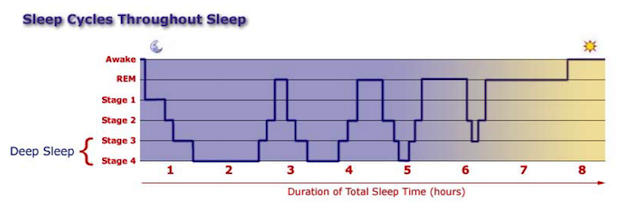
We have Rapid Eye Movement (REM) Sleep, and Non-Rapid Eye Movement Sleep:[16]
Non-REM Sleep Stage 1: Where you’re kind of asleep…but not really…but working on it. This lasts about 5-10 minutes.
Non-REM Sleep Stage 2: Your heart rate slows, your body temperature decreases, and you start to drop further into slumber…this can last about 20 minutes or so.
Non-REM Sleep Stage 3 and 4: also called “slow-wave sleep,” and each can last up to 30 minutes. These stages are where you get “deep sleep.”
REM Sleep:This is the point of the night where your eyeballs flail around your eye socket. It’s also when dreaming occurs, and one of the most important stages for mental functioning the next day.
Your body goes through these stages in order, but as you repeat sleep cycles (which are 90 minutes), the duration can shift dramatically.
Sleep Junkies provides a pretty good graph of different sleep cycles (in their article on sleep and alcohol), which we’ll borrow below:
In this example of “Cycle 5” the sleeper barely spends any time in “deep sleep,” but much more time in REM sleep.
Our bodies are cray like that.
What’s with the different stages of sleep?
During the deep stages of NREM sleep (3 and 4), our bodies build bone and muscle (like after you strength train), repairs tissue, and boosts our immune system.[17]
When your body kicks into REM sleep, this is when your brain has increased activity and leads to dreaming, while your body is the most ‘paralyzed’ and knocked out. Some studies say that REM is most important for restoring brain functions. [18]
What’s crazy is that your entire morning can be dictated by what stage of sleep you were in before waking up. If you’ve ever only slept a few hours and woke up feeling great, or conversely slept plenty of hours but woke up groggy, this could explain it!
How to Get Better Sleep (The Single Best Advice on Better Shuteye)
We have a circadian rhythm (a daily biological clock) that ebbs and flows throughout the day.
Our body uses outside stimuli and our own activity to produce certain hormones at certain times to make our body more prepared for the required functions at that time (alertness vs restfulness).
Look at it from an evolutionary perspective – way back in the day (which was a Wednesday):
When the sun rose, our bodies are signaled “the day has begun! get cracking!” We reduce the hormones that make us sleepy, and produce more hormones that allow us to do the things that need to get done.
As the sun went down, our body starts to produce more melatonin, which produces that sleepy feeling and encourages us to rest/recover. Our only option for light back then was a candle or campfire. If that went out, we’d have moonlight and nothing else.
While sleeping, our bodies knew to cut back on urine production, decrease body temperature, decrease heart rate, and muscle activity. Our brains are still highly active during our sleeping.
Unfortunately, these days, our bodies aren’t tied to the rise and fall of that giant ball of gas above us.
Instead, we can use electricity, alarm clocks, computer screens, smartphone screens, and all other sorts of outside stimuli to adjust our natural sleeping schedule.
This means that our bodies often have no effin’ clue what time it is!
Outside of our circadian rhythm, we have another biological system that tells us when to go to bed: the chemical adenosine.[19]
Think of it as “sleep pressure.” As soon as you wake up, your body starts to produce adenosine. When it hits a certain threshold, you get tired and start thinking about your pillow.
You really want your circadian rhythm and adenosine buildup in sync. When they’re not, it’s terrible.
You may have experienced it: jetlag comes about when you’re in a different part of the world than your home, so the change in daylight throws off your circadian rhythm.
For example, let’s say it was daylight when I left London and it’s daylight when I arrive in New York 10 hours later.
But your sleep pressure system doesn’t know this, so it’s trying to send you to bed, despite it being high noon.
Here’s when things can really go haywire: you finally get to bed in New York, but your circadian rhythm is still linked to London (which is now morning), so it starts making you more alert despite being nighttime in Manhattan.
And insomnia ensures…
This brings us to the single best advice on getting better sleep: do what you can to go to bed and wake up at the same time every day.[20]
Even on weekends whenever possible.
This helps your circadian rhythm and adenosine buildup stay in line with each other. Things get awful when these two systems are out of whack.
This isn’t our only piece of advice on getting better sleep!
Here are 10 more tips on engineering a perfect night’s rest:
#1) Avoid screens as you get closer to bedtime. Why avoid screen time? A couple of things to consider:
There is some evidence that the light emitted from electronic devices interferes with our circadian rhythm.[21] Artificial light, specifically blue light, is thought to confuse our body’s internal block. To capitalize on this concern, companies are now selling blue light-blocking glasses, which are advertised as sleep aids. Studies done on the effectiveness of these blue light blockers are mixed.[22]
What else can be going on? Our devices are designed to monopolize our attention, which means we spend more time on our phones instead of sleeping. We’ve all been there. This is why there’s an association between social media use and sleep deprivation.[23]
#2) Consider purchasing red lightbulbs to use in your bedroom lamps, so your bedroom is a place of soft light rather than bright/harsh light.[24]
#3) Keep your bedroom cool (but not too cold). Outside of light, our bodies use temperature as a signal to go to bed.[25] It gets colder at night, so this shift in temperature tells our body it’s time to go to sleep. Personally, I’ve found that keeping my bedroom cool helps me fall asleep. It’s been a real game-changer. What’s the sweet spot? Experiment a little here, but shoot for somewhere between 60-67 degrees Fahrenheit (15-19 Celsius). Just don’t go too cold, which can also disrupt your rest.
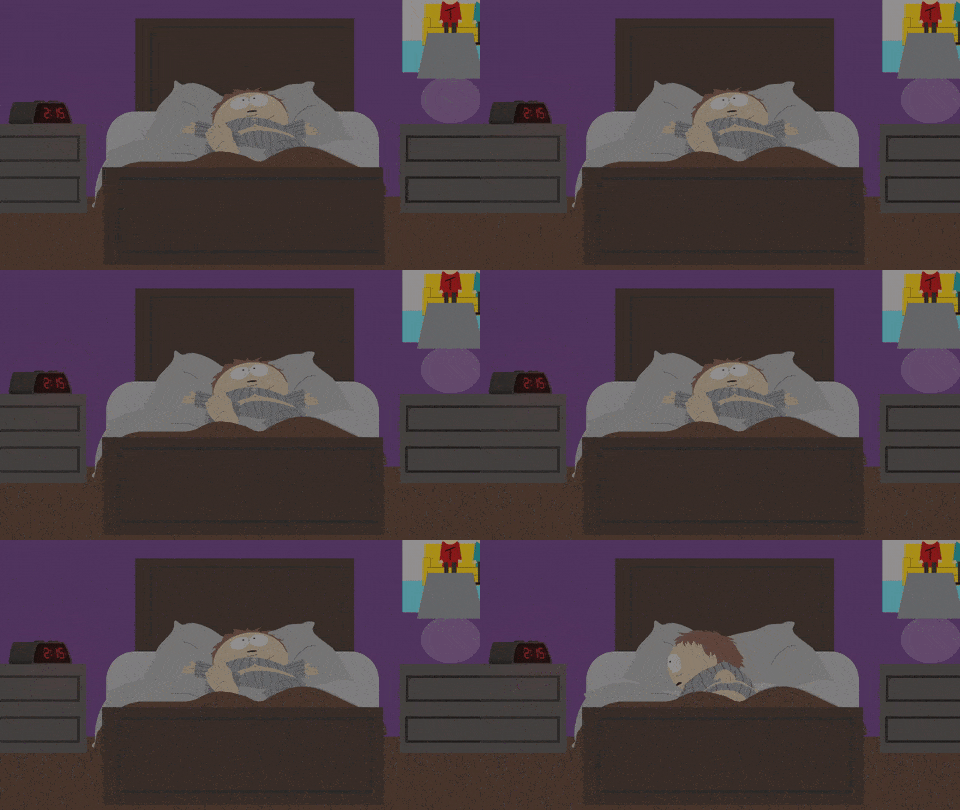
#4) Consider getting black-out curtains for your bedroom windows, especially if you live in a city. Living in a city, there’s always something bright and shiny happening outside my window – it wasn’t until I purchased super dark curtains to cover up my windows that I noticed an improvement in my ‘fall-asleep time.’
#5) Earplugs or a white noise machine might be a good idea. Sounds and other forms of ear pollution can be a distraction when you’re trying to sleep. White noise machines might drown some of this out, and studies show they do help, but some good ole fashioned earplugs could do the trick too.[26]
#6) No TV in bed. This might be incredibly difficult for you if you’ve been falling asleep to TV for years. Instead of falling asleep with the blue glow of a TV at the foot of your bed, read a book – trust me, it will put you right to sleep.[27]
#7) Get in the habit of reading fiction. Reading puts me to sleep within a few minutes most night, though only if I’m reading fiction. When reading non-fiction, my mind starts to race with all of the new ideas and things I could be working on. Either read real books or read on a Kindle, no iPads!
#8) Buy the right TYPE of Mattress for you: I slept on a soft mattress with two mattress pads for a few months years ago and wondered why I woke up with lower back pain every day. Turns out, my back was jacked up, and the soft mattress made things even worse. Since switching to a firm mattress, I wake up without back pain. Lesson learned here: I’m not smart.
#9) A lot of this can depend on HOW you sleep! Are you a side sleeper? Back sleeper? Stomach sleeper? Turns out there are some evolutionary reasons why some styles work better than others! Personally, I use the “half-military crawl position” outlined by Tim Ferriss (scroll down to tip 11 for the position).
#10) Have allergies? Try a hypoallergenic pillowcase! Your allergies could be affecting you while you sleep, and having the proper pillowcase can make a world of a difference.
How to Get More Sleep
So we’ve covered how to get BETTER sleep, what if you also need to get more of it?
In order to start getting more sleep, sleep must become more of a priority. If you constantly stay up too late because things need to get done, evaluate how your time is spent after work. Seriously, think about it!
Are you doing the important tasks first? Or are you messing around on the internet and not starting your tasks until late in the evening.
Are you watching late-night shows long after they’ve become enjoyable, simply because your DVR records them?
Are you checking your smartphone while in bed, watching Twitch, or using your laptop to watch more shows you don’t really care about on Netflix?
Yes, I understand we have parents who read Nerd Fitness and have to stay awake and function on minimal sleep (I commend you, and wish you luck!).
However, for many of us, less sleep is often a result of disorganized priorities and poor use of our time.
Here are the best practical tips for giving you the greatest chance at getting into bed earlier:
Don’t drink caffeine after lunch if possible. Caffeine can have an effect up to 6 hours after consumption. We love caffeine for many reasons (in moderation); however, you want to make sure it’s not consumed too late or your body will revolt.
Turn off the electronics sooner. I have to enforce a “laptops closed by 8PM” or a “TV off after 10PM” rule on many nights or I never get to bed. I get lost in Internetland far too easily. Putting in actual barriers really helps. If you find yourself checking Facebook and Twitter and other sites incessantly, BLOCK YOURSELF from those sites after a certain time.
Stop watching crap TV shows!Just because it exists doesn’t mean you need to watch it. Pick a FEW shows you watch on Netflix, but be wary of the “auto-play” next episode! Netflix is counting on you to be lazy to watch another episode accidentally instead of getting sleep.
Shift things by 15 minutes every week. If you want to get to bed sooner, don’t just try to get to bed an hour earlier than normal. You’ll probably lie in bed for that whole hour wondering why you can’t fall asleep, stressing yourself out and making things worse (remember our lesson on circadian rhythm). I shifted my pattern by waking up 15 minutes earlier and getting to bed 15 minutes sooner. Then I repeated that process over a series of weeks. Eventually, you can shift your bedtime by an hour or two, but do it gradually!
How to Wake Up (The NF Sleep Calculator)
Is there any more annoying sound in the world than the “beep beep beep” of an alarm clock?
Well, maybe this.
But you get the point.
So here you are, dreaming about riding a dragon, doing improv with Liam Neeson, and playing poker with Iron Man and Spock…and that damn alarm clock wakes you up. You are now incredibly groggy and miserable.
Here’s what’s happening: Remember earlier how we talked about different sleep cycles? Depending on which cycle you were woken up during, your body can struggle to move from “asleep” to “wide awake.”
Wake up in the right phase and you can feel energized and ready to go.
Wake up in the wrong phase and you will feel lethargic and sleepy.
Because we’re often waking up at times when we’re not ready to wake up, timing can be everything when it comes to getting out of bed.
Have no fear! Let’s give you a timetable to base your sleep schedule on, so your alarm clock isn’t so jarring.
Here are some assumptions we’ll use:
You need about 15 minutes to fall asleep.
A sleep cycle is 90 minutes.
You want 5 or 6 sleep cycles (our 7-9 hours range).
THE NERD FITNESS SLEEP CALCULATOR
Wake up: 5am
Bedtime for 5 Sleep Cycles (7.5 hr): 9:15pm
Bedtime for 6 Sleep Cycles (9 hr): 7:45pm
Wake up: 6:30am
Bedtime for 5 Sleep Cycles (7.5 hr): 10:45pm
Bedtime for 6 Sleep Cycles (9 hr): 9:15pm
Wake up: 8am
Bedtime for 5 Sleep Cycles (7.5 hr): 12:15am
Bedtime for 6 Sleep Cycles (9 hr): 10:45pm
You get the gist. Try to time your alarm clock to a natural break between sleep cycles.
Technology might help here too!
Set a “go to bed” alarm, rather than a wake-up alarm! Remind yourself WHEN you should go to sleep. Bonus points if you can rig it to also shut off your wifi so that you actually have nothing exciting left to do in your house except read a book and go to sleep!
Try a dawn-simulator alarm clock. Rather than waking yourself up in pitch black with a disgusting beeping noise, why not gradually rise as if there was a natural sunrise in your room?
Feel free to sing the first line of “Circle of Life” at this point. I just did.
Also, DON’T SNOOZE!
Instead of snoozing, set your alarm for 30 minutes later and SKIP snoozing entirely. If this is an issue for you, put your alarm across the room so you need to physically get out of bed to turn it off!
Here are a couple more tips to help your alertness in the morning:
Still feeling groggy? Go for a walk first thing.A mile every morning, if you can. Heck, do it while walking to Mordor! Walking outside and seeing that blue sky can trigger your body to release the hormones that encourage you to feel more awake and alive.
Consider blue light therapy during the day. Productivity guruTim Ferriss swears by it, and the reviews are overwhelmingly positive, so I’ll be testing one out during the winter months to see if my mornings are marked by increased energy. If you’ve used one and had positive/negative experiences, I’d love to hear about it in the comments.
Am I a Night Owl or a Lark? (Why Am I Not a Morning Person?)
According to studies, about 1 in 10 people are true morning people (“larks”), while 2 in 10 are considered “night owls.” The rest fit somewhere in the middle as “hummingbirds.”
What this means: Some of us are more alert at certain times of the day and naturally want to rise earlier or stay up later. [28]
Now, the difference between the two extremes isn’t as DRASTIC as we’ve made it out to be. Humans can never be truly naturally nocturnal – we don’t have night vision (yet…).
We’re not programmed to operate during the middle of the night. But, we CAN use our natural tendencies to help us be more efficient and productive during certain parts of the day.
We can change and adapt. Just like those who successfully work a night shift job (tips on that here), many who consider themselves a night owl may find they can become a morning person if they set themselves up for success.
I used the excuse for years of being a “night owl” to screw around all day and work from midnight to 4 AM each night, when it really just required a shifting of my priorities and productivity hacks.
What this all means: Identify your biological clock and try to adjust around it if possible. However, if your job requires you to get up early or stay up later, most of us can make an adjustment. Don’t let your poor habits blame “being a night owl” like I used to.
Should I Take Naps? (How to Nap During the Day)
Although generally not part of a day here in the States, we’re actually programmed to desire a quick nap in the early afternoon.[29]
In other countries, naps are more socially acceptable (Siesta? Si, por favor!). If you feel bad that you get tired in the early afternoon, it’s not because you’re lazy. It’s because you’re naturally wired for naptime. Now, you might still be lazy, but it’s not related to your nap schedule.
So, behold the power of the power nap:
Didn’t get enough sleep last night? Only have 20-30 minutes for a quick break? Try the caffeine-fueled power nap.
Fun fact: If you’ve slept less than normal, taking a 90-minute nap the following day could lead to an increased amount of REM sleep in that nap.[30]
What Is Sleep Apnea? (What’s the Best Treatment for Sleep Apnea?)
Sleep apnea is a condition where someone periodically stops breathing while sleeping.
While there are a few different versions of sleep apnea, the most common is “Obstructive Sleep Apnea,” which occurs when throat muscles become overly relaxed.
A telltale sign of obstructive sleep apnea is loud snoring, although not everyone who snores has sleep apnea.
Sleep apnea can potentially be pretty serious, what with the whole not breathing thing going on. It depends on the severity of the condition.
If it’s serve, not breathing correctly could majorly disrupt sleep, to the point of increasing the risk of certain diseases.[32]
How do you know if your sleep apnea is mild or severe?
Unfortunately, the only way to really be sure is to head to the doctor. If you go to your primary care physician, they will likely refer you to a sleep specialist to find out.
If you feel tired in the morning despite getting plenty of sleep, and a partner or loved one complains that you snore, it might be worth looking into a sleep apnea diagnosis.
I will mention that being overweight can contribute to obstructive sleep apnea, so weight loss could be a possible treatment.
I’ve got a couple of resources to help you start your journey:
How to Lose Weight (Without Dieting): check out our guide on the 5 rules for sustainable weight loss. If you’re not sure where to start, start there.
Our 1-on-1 Online Coaching Program: if you want a trained professional to tell you exactly what to do, check out our coaching program. Many clients jumpstart their weight loss journey with the help of a NF Coach, and the results they’ve achieved can be incredible.
In the meantime, try a different sleeping position (like the aforementioned half-military crawl position to keep your passages open).
What Is Second Sleep? (Waking up in the Middle of the Night)
Biphasic Sleep is sleeping in two distinct periods.
We’re gonna go back in the day again: during winter months, nighttime could last 12-14 hours.
With our bodies’ production of melatonin (the “sleepy time” hormone) kicking into high gear when that sun drops, people had nothing else to do (no TV, PS4, or iPads) and would fall asleep early. Then they would wake up for an hour or two in the middle of the night to read, pray, or think, and then fall back asleep for another 4-5 hours before waking up for the day.
If you’ve ever gone to bed at a normal hour, and then woke up in the middle of the night without being able to fall back asleep for an hour or so, you know what I’m talking about.
Here’s the thing: this is actually quite natural![33]
Rather than freaking the heck out and lying in bed wondering why you can’t fall asleep…consider it something that is more common than our current sleep schedule.[34] Don’t be afraid to turn on the light (red light!) and read a book or use the time for meditation until you can fall back asleep.
This one ‘mental shift’ alone can keep your stress levels down and let you get back to sleep faster and provide you with BETTER sleep.
4 Tips and Tricks to Hack Sleep
#1) Macrodozing:
I stumbled across the BEST biohack for optimal human performance.
It’s tricky, but here’s what to do:
Lie in bed with your eyes closed, for like, 7-9 hours.
If you can actually pull this off, productivity for the next 16 hours will be INSANE.
I often spend my nights in bed thinking and worrying about all of the things I need to do the next day. Instead of stressing out about it, take a minute and write down the things you need to do the next day. Then set it aside.
A notebook, a post-it note, an Evernote file, whatever.
Do a brain-dump and clear your head so you can focus on reading A Game of Thrones without thinking about the next day’s tasks.
#3) Want to control your dreams? It’s called “Lucid Dreaming,” it’s possible, but requires work. I’ve only been able to do it once, but haven’t given up hope that it can become a more common occurrence! Ultimately, this allows you to live out a real-life version of Inception.
#4) Have way too much time on your hands and not constricted by societal norms? Try Polyphasic sleep and then tell me how it goes 🙂 It didn’t work for Kramer, but it might work for you!
(But it probably won’t).
Start Sleeping Better Tonight (Next Steps)
Like, anything, that which gets measured gets improved.
Now, if you’re somebody that isn’t really detail-oriented, just start by picking ONE or two changes above, and focus on building that Hard Hat Habit. However, if you like to nerd out about certain details, why not nerd out about your sleep?
Starting tomorrow morning, when you wake up, recap the previous day with a journal entry:
What time did you wake up, and what time did you actually get out of bed?
How many times did you hit snooze?
After work, how much television did you watch? After you finished watching, did you go right to bed? Did you fall asleep with the TV on?
How long did you lie in bed before actually falling asleep (obviously this will be tough to tell, but you can estimate).
A quick recap on what to do:
Change one or two things about your current strategy.
Turn off the computer 15 minutes earlier.
Stop watching TV in bed.
Read fiction.
Limit the amount of blue light and screen activities that amp you up at night.
No more snoozing.
Set the alarm clock across the room.
Go for a walk in the morning outside.
If you want to use technology:F.Lux for your computer, red bulbs in the bedroom, Sunrise alarm clock for waking up without disturbing deep sleep.
That should just about do it for today’s article.
If you’re looking for where to go from here, I’ve got some options for you. But I’m only gonna tell you, because you’ve been a good sport this whole article.
NEXT STEPS IF YOU WANT TO GO FARTHER!
#1) Our 1-on-1 Online Coaching Program: a coaching program for busy people to help them lose weight, get strong, and level up their lives!
We take sleep so seriously, we discuss it with each and every client.
#2) If you want an exact blueprint for getting in shape, check out Nerd Fitness Journey! Our fun habit-building app helps you exercise more frequently, eat healthier, and level up your life (literally).
If you follow our Sleep missions, you’ll learn to improve your night rituals while earning XP! Sah-weeeet.
Try your free trial right here:
#3) Join our amazing free community, the Nerd Fitness Rebellion! Not only is it free to join, but we’ll provide you with loads of free goodies when you sign-up:
Get your Nerd Fitness Starter Kit
The 15 mistakes you don’t want to make.
Full guide to the most effective diet and why it works.
Complete and track your first workout today, no gym required.
Now, I’d love to hear from you:
What questions do you have about sleeping?
How have you learned to be better at it?
What are you still struggling with?
Have you tried sunrise alarm clocks or blue-light devices?
Read, “Moderate sleep deprivation produces impairments in cognitive and motor performance equivalent to legally prescribed levels of alcohol intoxication.” Source, NCBI.
Read, “The effects of sleep extension on the athletic performance of collegiate basketball players.” Source, PubMed.
Read, “Growth hormone secretion during sleep.” Source, PubMed.
Read, “Sleep habits and susceptibility to the common cold.” Source, PubMed.
What kind of debate? Matthew Walker wrote a very popular book called “Why We Sleep,” where Walker recommends at least 7 hours of sleep, with 8 being ideal. In turn, here’s an interesting article ripping the studies of Walker’s popular book to shreds.
Read, “The Association between Social Media Use and Sleep Disturbance among Young Adults.” Source, PubMed. Although the study doesn’t address whether it’s the artificial light or engagement of social that keeps folks up at night.
This study found red light helped a basketball team fall asleep faster.
Read, “Effects of thermal environment on sleep and circadian rhythm.” Source, PubMed.
Here’s a study that found a relationship with a TV in the bedroom and sleep deprivation in children. And while it’s not a rigorous study, Sleep Junkies took a survey and found reading fiction before bed acted as a sleep aid amongst those questioned.
Whether we acknowledge it or not, routines hold power over many aspects of our life. If you are not a fan of routines you may feel tempted to skip this episode, but I encourage you to listen. If you enjoy creating and optimizing your routines, then you’re probably already listening.
This episode is designed to help you take a closer look at your routines, both intentional and unintentional. By the end, you’ll understand why what you do each day matters. Your routines affect how you feel, your relationships, your health, and even how successful you are. Press play now to hear how routines can change your life.
You will want to hear this episode if you are interested in…
Building habits to support the life that you want to live [1:52]
Understanding how routines can change in the seasons of life [4:03]
My morning routine [8:40]
Routines from the Lindywell team [13:03]
Practical resources to get you started on a routine of your own [15:50]
My routines help make me the person I want to be
If you are not a big routine person, you may think that you don’t have a routine. But you do! Whatever you do every day is already your routine, setting a routine is just making it intentional.
My routines help me build the habits I need to support the kind of life I want to lead and help make me the type of person I want to be. Without the intentionality that comes with my routines, I wouldn’t do either of these things on my own. Bad habits and routines that don’t serve me have a way of creeping in if I don’t rely on the positive routines that I have built in my life.
Routines change with the seasons of life
Many transitions that we experience come with preconceived ideas on what the outcome or transition may look like. Rather than going into a transition with these preconceived notions, try to set them aside to make room for what may actually happen.
If you are wading through a difficult transition, take some time to create space to question your thoughts. How are you thinking about this transition? Are your thoughts holding you back? Can you reframe your thinking?
Consider the ways that you could change your thought pattern to bring about a more positive result. Journaling is a great way to work through this process and give yourself a sense of agency and empowerment.
Our thoughts affect our feelings which affect our behaviors, so if we can change our thoughts we can end up changing our behaviors and create different outcomes.
Lindywell can help you create routines to keep you grounded through life’s transitions
I haven’t always had the same routines in my life: they have changed with the seasons of life. It is important to pause and reflect periodically to see if your routines continue to serve you. If not, it may be time for an adjustment. Consider the routines that you have now. Which ones best serve the type of life you want to live and help you become the person that you want to be?
Morning and evening are ideal times to implement routines. Remember, routines don’t have to be etched in stone. Just like your Pilates workouts, your routines can be flexible and they may change a bit from day to day. Having a plan but keeping it flexible is the key to success with routines.
Lindywell can help you create routines to keep you grounded through life’s transitions
Routines help me instill habits and keep me on track with what matters most. My morning and evening routines give me the space that I need to focus on myself.
My morning routine allows me to start my morning with intention which means that I go into the day on a proactive note instead of a reactive note. In addition to boosting my energy, improving my focus, and entering a proactive state of mind, my routines have improved my relationships with my husband and kids and allowed me time for exercise, education, and reflection.
Are you ready to start your own routine? Listen in to hear what I do for my morning and evening routines, you’ll also get some ideas from more of the Lindywell team. Start your routine by joining the Lindywell 14-Day Mind-Body Reset!
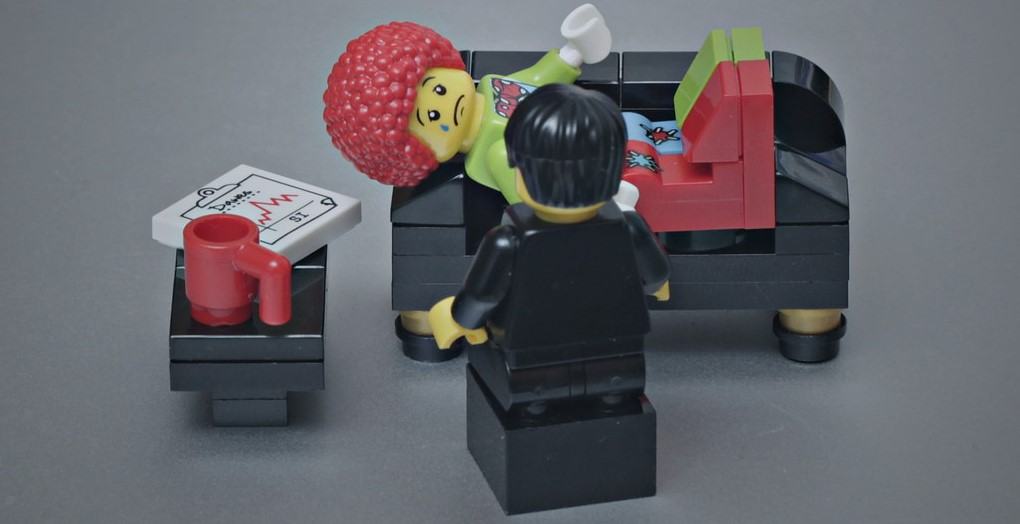
If you find yourself responding by “stress eating,” know that you are not alone.
One of the top issues faced by clients in our 1-on-1 Online Coaching Program is emotional or stress eating. It actually seems to increase in occurrence year over year.
Today, we’re going to show you exactly how we address emotional eating with our clients, including when it’s – GASP – actually okay to stress eat.
Justin covers three important lessons I want to highlight, but before we do that, we should ask ourselves a question:
“What exactly is stress eating?”
Stress eating is consuming food in response to negative emotions like fear, anger, or sadness.
When we stress eat, food is being used to solve a problem. Now, unless we’re actually hungry, it’s likely a problem that food itself isn’t meant to solve.
That’s stress or emotional eating.
Here’s what compounds the whole problem:stress eating itself can make us feel guilty. We often feel terrible once our spoon hits the bottom of the pint of ice cream.
This can drive more negative emotions, which can trigger even MORE stress eating.
And the pattern continues.
We’ll talk about ways to break this cycle in a moment, but before we do, we need to create some tools to identify it in the first place.
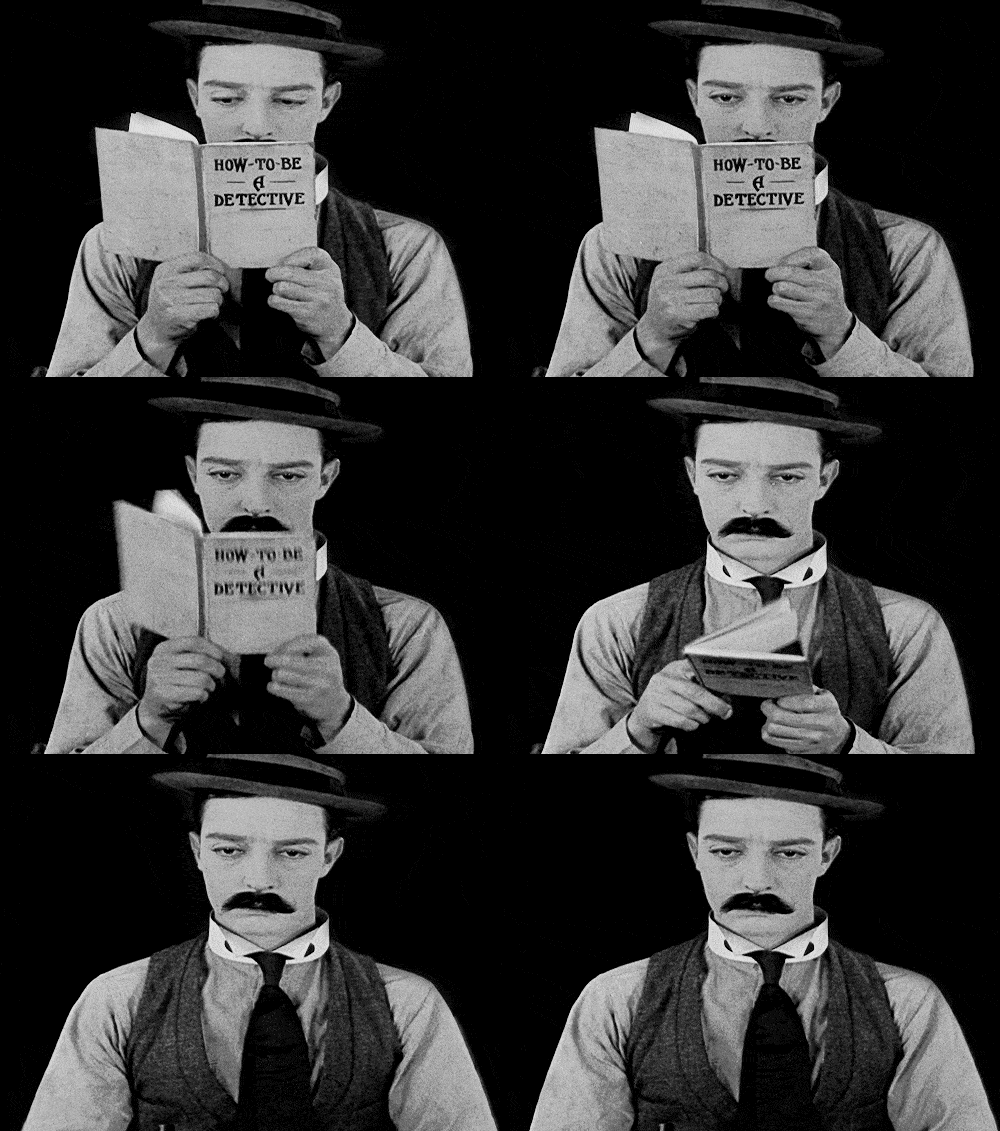
What Causes Stress Eating? (Lesson #1: Playing Detective)
You may have been surprised in our video above when Coach Justin gives permission to stress eat.
Counterintuitive and seemingly counterproductive, I know. But this is going to be important for two reasons.
How to Approach Stress Eating:
Step #1: we need to curb the guilty feelings about stress or emotional eating.
I started this guide off by highlighting the frequency of stress eating amongst our Online Coaching clients.
You are not the only one struggling with this.
Most humans do.
And robots with human-like emotions and taste buds
We’ll come back to this idea again, because ending the shame of emotional eating will be critical for moving forward.
Step #2: allowing ourselves to stress eat will help us learn why we do it.
We’re going to be playing detective here, to see if we can piece apart your actions and routines.
At the end of the day, our lives are a cumulation of habits. Stress eating is one such habit.
So let’s learn about it!
To do so, we’re gonna record some Emotional Eating Notes.
During an episode of stress eating, it’s important to ask:
What am I doing?
What am I feeling? (Both physically and emotionally)
What am I thinking about?
What time is it?
Where am I?
Who am I with?
Also, gauging these at different times can be helpful too.
How is your stress looking:
An hour or two before the eating episode?
Right before it?
During it?
Right after it?
The purpose of theseEmotional Eating Notes?
Look for patterns!
Perhaps you’ll notice some of the following:
“After my recent Tuesday morning conference call, when I got grilled by my company’s leadership, I grabbed some chocolate chip cookies. This happened the week before too.”
“Around 2pm, when I get the ‘afternoon slumps,’ I normally grab a Coca-Cola. This little boost gets me through the end of the day. This is almost a daily practice.”
“Last Sunday evening, when thinking about the start of the work week, I had a couple of glasses of wine. When looking back at my notes, this takes place at the end of most weekends.”
We’re looking for patterns to help us understand what drives our stress eating.
The most important thing about this process: withholding judgment.
We’re looking at our notes for clues into our psyche. Whatever we captured is okay.
If you order pizza every Thursday after talking with your overbearing mom (of course, she means well), step one is to recognize it.
Oftentimes, this awareness step alone can help shift behavior. “Oh, I’m reaching for a beer like I normally do after ending my workday. Typical Me.”
After creating some notes on what spurs our emotional eating, it’s time to think about some alternatives for coping with stress.
How Do I Stop Mindless Eating? (Lesson #2: The Stress Response Menu)
After documenting what sets off our stress eating, we need to formulate a plan on what to do when our anxiety rises.
That means it’s time to build…a Stress Response Menu!
Our Stress Response Menu will be a list of actions or activities you can do to de-stress outside of eating.
Ideally, you’ll do them before an eating episode, but they can be done during or after the fact too.
In other words, if you only realized you were stress eating when your hand reaches the bottom of the Doritos bag, no problem, you can do your stress response activity right then.
The purpose of the Stress Response Menu is to reward yourself with a small moment of self-love, whenever your anxiety levels are too much.
Examples for a Stress Response Menu:
Close your eyes and take five deep breaths (Coach Justin’s go-to move)
Just make sure it’s something you won’t dread doing.
A combination of a “de-stressor” and a “reward.”
This is important, as Coach Justin mentions that many of his clients only reward themselves with food. The self-love they practice only takes place in the kitchen.
Our menu above will help us develop some more options, not solely based on food.
To make the most of your Stress Response Menu:
#1) Make the activities short and easy.
You should feel confident that you can do every item on your list. So avoid activities that will take longer than 10 minutes to complete.
If you’re going to journal when stressed, keep your diary open on your work desk.
If you’re going to drink water before any emotional eating, keep your full glass near you.
If you’re going to take a short walk, keep your kicks near the door.
Don’t set yourself up for failure by picking overly complicated or burdensome activities.
#2) Place your Stress Response Menu somewhere visible.
Once you make your list, print it out and place it in your kitchen or pantry (or wherever you typically stress eat).
You could also write out a couple of your favorite activities and attach them to your refrigerator.
If it’s right in front of you, it’ll be harder to ignore (however, it’s okay to ignore it from time to time, as we aren’t striving for perfection).
Just please don’t write it and then stick the list in the junk drawer that opens to another dimension.
You never can find anything in that drawer.
#3)Track your usage of the Stress Response Menu.
This will help us in two ways:
First, by tracking your usage, you’ll start to feel better about using the SRM. You’ll see an accumulation of all the times you successfully deployed a stress response, helping you visualize the momentum you’re building.
Second, the data will help you understand your patterns of emotional eating. Maybe five deep breaths steered you away from ice cream but the large glass of water did not. You can then use this information to update and revise your response plan.
For the first point, Coach Justin has his clients keep a “Jar of Awesome.”
Every time they have a small win in the day, like taking five deep breaths instead of chugging soda, they place a marble or small token in a jar. After a while, the jar will have a decent amount of marbles or “small wins” in it.
This will then stand as a visual reminder of all the progress being made, proof of their ongoing wins.
How Common Is Stress Eating? (Lesson #3: Learning Self-Compassion)
The American Psychological Association has found that about a third of Americans respond to stress with food.[1]
This research was done BEFORE the global pandemic.
If you find yourself binging in response to stress, know that you are not alone here.
Heck, both clients and NF Coaches turn to food and alcohol for comfort every now and again.
Personally, somewhat recently I mindlessly devoured an entire tub of Animal Crackers after a stressful week. It was only when the bag was gone did I understand what just happened.
So yep, many of us (even fitness “experts”) are prone to stress eating.
Now, don’t take this as a free pass to stress eat.
If the behavior goes against your goals, it’s something we want to work towards improving.
But there’s a reason they call it “comfort food.” Food can often be used to make us happier.
At the end of the day, we’re all emotional bags of meat on this floating hunk of space rock, and we’re doing the best we can.
Give yourself a bit of a break, my friend.
You’re here, you’re reading, and you’re trying. That’s great!
This will bring me to my last point with our handy guide:
Is It Okay to Stress Eat? (Next Steps)
There are times when food is the perfect response to stress.
It’s something Coach Justin mentions in his video.
“Stress eating” might be appropriate if:
After a long workday, a glass of wine with cheese helps you unwind.
To celebrate the coming of the weekend, you have an ice cream party on Friday night.
The week already seems long, and it just started, “Taco Tuesday” might help you survive until Friday.
The important thing here?
“We are making a choice.”
We are choosing to deal with stress or anxiety with food. By making it an intentional activity, we can remove the guilt around emotional eating.
Food can be fine as a reward, as long as it’s us controlling the behavior, and not the food itself.
In addition, if we can recognize the action (or plan for it), we can then adjust our calories before and after and not go off the rails.
If it seems like you aren’t quite there yet, start with your Emotional Eating Notes and your Stress Response Menu.
Even just the process of taking notes on specific episodes of stress eating may be enough to slow down the behavior.
Remember, no matter what happens:
You are not a bad person if you stress eat.
You are not a bad person if you forget to take notes.
You are not a bad person if you ignore your Stress Response Menu.
You are not a bad person (unless you’re a Death Eater, but come on, you know what side you’re on).
If you need any help along the way, we are here for you.
We have three specific paths to continue with Nerd Fitness:
#1) Our Online Coaching program: a coaching program for busy people to help them make better food choices, stay accountable, and get healthier, permanently.
As I said before, “stress eating” is the number one issue faced by our coaching clients, so we know exactly how to help recognize and address the habit.
You can schedule a free call with our team so we can get to know you and see if our coaching program is right for you:
#2) If you want an exact blueprint for leveling up your nutrition, check out Nerd Fitness Journey! Our fun habit-building app helps you exercise more frequently, eat healthier, and level up your life (literally).
If you follow our Mindset missions, you’ll learn to de-stress while earning XP! Sah-weeeet.
Try your free trial right here:
#3) Join the Rebellion! We need good people like you in our community, the Nerd Fitness Rebellion.
Sign up in the box below to enlist and get our Rebel Starter Kit, which includes all of our “work out at home” guides, the Nerd Fitness Diet Cheat Sheet, and much more!
Get your Nerd Fitness Starter Kit
The 15 mistakes you don’t want to make.
Full guide to the most effective diet and why it works.
Complete and track your first workout today, no gym required.
Alright, I want to hear from you:
Have you been stress eating more over the last year?
Do you have any tips or tricks to interrupt the pattern?
The first half, and then some, of 2022 seems to have gone by in a flash. I started off the year with maximum energy… or at least an attempt to have maximum energy, despite feeling like I was on the…
Strengthening your wrists stabilizes your arms and shoulders which not only helps you to sustain postures longer during your workout, it also helps you in your day-to-day life, such as reducing injury associated with repetitive movements like typing and playing sports. At Lindywell, we’re dedicated to helping you feel your best with ways to target those areas while reducing stress, relieving tension, and building strength.
Watch this 2-minute quick clip of Robin Long, Pilates Instructor and founder of Lindywell, to get extra modifications and stretches to strengthen your wrists.
Click here to enjoy a 14-day free trial to access a full library of Pilates workouts, recipes, and resources!
I’ve been using Depop for 4/5 years now and it’s still my number one place for selling the excess kit I’ve accumulated. But I had to get some tips for how to sell on Depop to be able to make…
Using your breath can be a powerful wellness tool whose benefits have been backed by scientific research. This free, easily accessible tool can be used by anyone at any time to help regulate emotion and bring a sense of well-being to your life. Breath is at the core of Pilates and can be used for wellness both on the mat and off.
My guest today is breathwork coach, Kiesha Yokers of the Green and Well blog. Kiesha is passionate about breathwork and education and is striving to bring the gift of breathwork as a path to wellness to as many people as she can.
Check out this episode to hear all the ways you can benefit from using breathwork as a wellness tool. Make sure to listen until the end to hear a few breathing techniques that you (and your kids) can use right now to help you relax and enter rest and digest mode.
You will want to hear this episode if you are interested in…
Who Kiesha Yokers is [3:32]
What led Kiesha to explore breathwork [5:40]
Connecting with the many types of breathwork [14:05]
Where you hold your emotions [18:36]
Tips to empower kids to use their breath [21:52]
How breathing regulates your nervous system [27:40]
Simple ways to get started with breathwork [32:49]
Kiesha explored breathwork as a way to heal from her own trauma
In episode 78, Robin shared her personal journey with breathwork, but in this episode she wanted to dive in and explore this vital topic in more depth with Kiesha Yokers – an entrepreneur, mom, and Navy wife who has a passion for nontoxic living. She has spent the past several years researching wellness and the effect of toxins on the body while developing her blog.
Even though Kiesha was a healthy living blogger, she didn’t know anything about breathwork. After the traumatic events of 2020 and especially the vision of George Floyd struggling to breathe his last breath, Kiesha began exploring the topic of breath as a way to heal from trauma.
This led her to take a few breathwork classes. Immediately, she understood the value of this simple tool. Since she is a natural teacher, she knew right away that she wanted to teach breathwork to others. Breathwork has helped her address her trauma, get rid of brain fog, and reduce stress.
The advantages of the many types of breathing
We don’t often think about our breath unless something is wrong, but breathing is the first and last action of our lives. There are many ways that people can work on using their breath to reduce stress, reduce blood pressure, improve lung function, increase cognitive performance, and even improve sleep quality.
There are breathwork exercises that can stimulate you and get you ready to compete, and others that can calm you down from a heightened state. Circular breathing, the Wim Hof method, yogic breathing, and conscious connected breathing all have their own techniques and advantages. Listen in to hear Kiesha explain how different types of breathing could help you improve separate areas of your health.
Tips to empower kids to use their breath
As adults, we often have a hard time explaining and processing our own emotions, so imagine what it is like for kids!
Parents can model breathwork to help kids learn to work through their emotions. Talking through your emotions and describing the tools you are using to calm yourself can show your kids how breathing exercises help you. By watching you model these techniques, kids can start to take this tool into their own survival toolbox.
It is also a great idea to explicitly teach ways to use their breath to calm themselves when they are worked up, however, it is important to teach kids when they are in a calm state. No one can learn anything when they are in the midst of a meltdown. When you teach them something while they are calm they can use it as a tool to help them come back from the brink.
Listen in to learn a few breathing techniques that you can use right now to destress and return your body to a parasympathetic state.










 #4) Consider getting black-out curtains for your bedroom windows, especially if you live in a city. Living in a city, there’s always something bright and shiny happening outside my window – it wasn’t until I purchased super dark curtains to cover up my windows that I noticed an improvement in my ‘fall-asleep time.’