Not everyone is a natural “morning person.” I, however, have always been one of those annoyingly chipper morning people who wake up jumping out of bed. That’s not always the case now. From having kids to life getting hard, no matter how much of a “morning person” I am—it’s not always easy to wake up feeling excited about the possibilities of a new day.
In good times or bad, more often than not, we’re rushing around to look presentable for a Zoom meeting or to ensure the kids get to school on time while downing a cup of coffee and barely remembering to eat breakfast. Does any of this sound familiar? I’m right there with you!
Sure, the frenzied pace of some mornings can feel hectic and stressful—I know I have to intentionally control my flurry of thoughts in the morning. My mind races with energy. But, if your mind starts to race with overwhelming, panicked, or intrusive thoughts regularly, before your feet even touch the floor, a deeper mental health issue could be lurking beneath the surface.
This might be an indication of morning anxiety. What I want you to know, first and foremost, is that this doesn’t need to be the norm for you—you can shake that morning anxiety. Secondly, getting a deeper understanding of your unique experience will help you overcome it.
Let’s unpack all of this so you can start to have a fresher, brighter start to the day.
Understanding the Causes of Your Morning Anxiety
While “morning anxiety” is not an official diagnosis, it’s more common than you might realize to deal with. Maybe some of this sounds familiar to you:
Fear of not being able to complete all the tasks on your schedule.
Feeling like you’re disappointing your spouse or kids.
Worrying about running late and people being mad at you.
Struggling to navigate work and home expectations, which makes you feel like you’re always failing.
All of this can (understandably!) make starting the day feel almost impossible—and while many of us experience similar anxieties, the cause for them is different for each of us.
To combat this morning anxiety, you need to know why it’s impacting you in particular. This will help you figure out what you need to do to overcome it. Here are just a few common culprits to consider as potential anxiety-drivers in your life.
Chronically High Cortisol Levels
Cortisol (or stress hormone levels) immediately start to rise each morning within the first 30–60 minutes of being awake. This is your body’s way of priming your brain circuits for alertness and optimal function.
But if cortisol production is too high (due to chronic stress or circadian rhythm imbalance), it can elevate your morning blood pressure, heart rate, and autonomic nervous system. These sensations activate the body’s “fight-or-flight” response, which often leads to anxiety.
Insomnia or Sleep Disturbances
According to the Behavioral Sciences Journal, frequent bouts of insomnia, sleep disturbances, or irregular sleep habits increase the overall risk of anxiety. That’s because chronic poor sleep quality throws off your body’s natural secretion of melatonin and serotonin, which are responsible for stabilizing your mood.
Excess Sugar or Caffeine Intake
We’ve all heard coffee can be bad for us, and in this case, it can be playing a role in your morning anxiety. A recent study in the Cureus Journal found that increasing caffeine consumption leads to higher anxiety levels. Plus, excessive sugar intake can lead to inflammation in the body, which also contributes to anxiety.
Not Enough Balance in Your Life
Being able to maintain an intentional balance between family priorities, work obligations, and personal wellness is hard (I know how challenging this can be personally)—and yet it’s vital for reducing chronic stress, anxiety, and emotional burnout. (This is why we say play is important for all of us to reduce stress!)
From finishing work projects and shuttling the kids to soccer practice to figuring out dinner and ensuring the bills are paid on time, there’s a relentless task list competing for your attention. This can cause mindFULLness to take root, which distracts you from the present and throws you off-balance, resulting in that all-too-familiar morning anxiety and sense of overwhelm.
Practical Strategies to Help Relieve Morning Anxiety
It may not be cut and dry on what is causing your morning anxiety; it’s likely a blend of those causes mixed in with your own unique challenges. That’s okay. For right now, go with your gut—when you read the list in the section above, which ones cause a little “ping” in your mind? (Even if you’re trying to ignore that ping!)
I want you to follow that little gut feeling as you read these strategies so you can focus on the options that are best suited to what you really need.
Establish a peaceful morning rhythm.
All the talk about morning routines is more than just hype. People who form a daily routine are more likely to experience a sense of meaning in their lives. Here’s the thing: this routine doesn’t have to be elaborate for you to reap the mental health benefits. Keep it simple. Choose up to 3 small things you can do to create a rhythm. The goal is to soothe anxious feelings as you transition into a new day. Here’s a big list of self-care activities to incorporate into your morning routine if you want some ideas to get started!
Tune into your body
All that noise that causes the anxiety is in your head. Take time to get out of your head (and all that noise) and instead listen to your body.A few of my favorite ways to do that include meditation, breathwork, body scans, and Pilates. When you tune into the sensations and experiences of the moment you’re in, you can reduce the stress associated with worrying about the past or thinking about the future.
Integrate movement into your routine.
Exercise is a natural mood enhancer. Block out time in your schedule for physical activities, no matter what time of day it is. But remember: this doesn’t have to mean going to the gym or lifting weights if that doesn’t feel good for you. Focus on mindful movement and choose activities that you actually enjoy doing. If you struggle to get going in the morning, try Lindywell’s 10-minute Energizing Morning Pilates Routine. Start your 14-day free trial and try it tomorrow moring!
Seek out extra support if you need to.
There’s no shame in asking for help when the anxiety is too debilitating to overcome on your own. Seeking this support was critical to my healing process—and I wish I had asked for it sooner. Check out Psychology Today’s directory of therapists and mental health professionals to find support that’s right for you. Don’t forget that talking to your friends, family, and network can be helpful too. Sometimes just saying it out loud is the relief that you need!
Adjust expectations with compassion.
If your anxious feelings come from unrealistic expectations, rethinking those expectations can be an effective antidote. Rather than holding yourself to certain ideals or performance metrics, embrace self-compassion and shift your mindset to “grace over guilt” (a favorite mantra here at Lindywell).
Embrace Anxiety-Free Mornings with Lindywell
Ready to swap out morning anxiety for refreshment and renewal? Join our thriving community here at Lindywell where we love mindful movement, focus on grace over guilt, and embrace each season of life.
As a Lindywell member, you have access to more than 350 Pilates classes, calming breathwork sessions, nourishing recipes, and other resources to help you overcome those anxious feelings and reclaim your well-being. Plus, 91% of our members say that Lindywell helps them stay consistent! Start your wellness journey with a free 14-day trial now!
Inner peace is so much more than just a brief escape from the chaotic events of daily life—though that’s what I thought it was many years ago too. What I learned, though, is that it’s actually this beautiful, continual state of being that you can harness in all environments, circumstances, and interactions.
When I began to live from this intentional space, after a few very challenging years life threw my way, I found I could unlock a deeper sense of balance, rootedness, connection, and presence. Even as challenges arose, I felt deeply grounded in my sense of calm.
Interestingly, even in our chaotic, unpredictable world, the majority of us (61 percent) hold onto inner peace during challenging times. This is uplifting news, of course—but what if you’re among the other 39 percent who do not feel a sense of inner peace?
Here’s the thing: as desirable as inner peace sounds, it does take intentional work to make it a reality. Let’s explore what it means to find more inner peace in your daily life—and break down how these 5 simple steps can help you get there!
Understanding the Essence of Inner Peace
Inner peace is defined as an essential facet of well-being, rooted in both mindfulness and equanimity (mental and emotional composure in difficult situations). Inner peace can help you maintain resilience, calmness, acceptance, contentment, harmony, and meaning in life—no matter the stressors you might face.
Research even shows that those who cultivate inner peace are also less likely to suffer from poor mental health outcomes such as anxiety or depression. So, how does inner peace manifest itself in action?
Inner peace is about learning how to accept this moment you’re in, release the need for control, lean into curiosity and compassion, and embrace your most authentic self. This can result in healthier relationships, stronger mental and emotional stability, and a clearer sense of who you are—all the unique traits you have to offer and the areas where you still have room for growth. Basically, inner peace is a mindset through which you view life. But to experience it, you’ll need to ask the question: What holds me back from inner peace?
Unpacking the Obstacles to Inner Peace
The first step to tapping into that inner peace is being aware of the obstacles standing between you and it. When you know what’s in the way, you can challenge each obstacle to create more of that balance and harmony.
Here are a few common (but totally manageable!) barriers that can prevent you from finding the inner peace you desire.
Mindfullness
You read that correctly—there’s a clear distinction between being mindfull versus mindful. Here at Lindywell, we love talking about the benefits of mindfulness, but mindfullness is the exact opposite. Operating with a full mind consumes your brain with relentless, anxious thoughts that distract you from the present and cause you to either dwell on the past or worry about the future. Mindfulness, however, will ground you in the rhythms, sensations, and experiences of this moment you’re living in.
Self-Judgment
Everyone makes poor choices, but how you respond to those mistakes will reveal whether or not you’re in a state of inner peace. You can learn, grow, and improve—or you can internalize shame and label yourself a failure.
Self-judgment can lead you to question your intrinsic worth and fall into the “fixed mindset” trap (a belief that your attributes are unchangeable). To find that daily inner peace, you have to overcome this form of toxic guilt.
Perfectionism
Women are especially prone to feeling like we’re under a microscope (either from society or ourselves) to look and behave by unrealistic ideals. If you have felt these expectations, then chances are, you’re no stranger to the pressure and weariness of striving for perfection.
Releasing the need to be perfect and maintain rigid control over yourself will create more opportunities to embrace the unexpected joys in life—no matter how wild, messy, and nonlinear your path might be. And in that special place between wild, messy, and happy, is where you can find a whole lot of peace.
False Narratives
The script you’ve written for yourself (whether or not it’s factual) can become the lens through which you construct meaning and perceive reality. While not all of these stories are harmful, a false narrative can hold you back from achieving your full potential, realizing your dreams, or ultimately finding inner peace.
False narratives are limiting beliefs that shake your self-esteem or deter you from pursuing the kind of life you want. But as the narrator, you can write a new and empowering story!
5 Strategies to Help You Achieve Inner Peace
Peace of mind ranks just below having basic needs met as a main predictor of longevity, life satisfaction, and subjective well-being, according to the Journal of Happiness Studies. Wow, that is incredible data and so hopeful!
Peace of mind is something you can choose and these five strategies will help lay the foundation for peaceful living until it becomes your natural and habitual response to whatever situations might arise.
1. Try Somatic Breathwork
Breathwork changed my life. In particular, somatic breathwork, which we love most here at Lindywell, can be powerful in connecting you to peace and balance. This is a practice that trains you to focus on bodily sensations, like the breath you’re taking in or tingling in your arms, to create deeper awareness and connection to the present.
The benefit of this style of breathing is that it takes you out of your head and into your body. We spend so much time in our heads but the body has so much to say. Listening to your body in this way can get you one step closer to feeling more peaceful each day.
2. Prioritize Movement—Outside
Most of us know that exercise releases endorphins and serotonin, which can stimulate positive feelings. But there’s also a correlation between physical activity outside and inner peace. Adults, 60 years and older in Brazil, who moved for 120 to 180 minutes a week reported being more likely to have healthy social interactions, robust mental wellness, and a thriving quality of life than their non-active peers—but these results were compounded when they did that movement outside.
Why? Nature naturally embodies that peace you’re craving. It’s tranquil and restorative and creates a sense of calm when you immerse yourself in it. Move your body outside and tune into the peace you feel as you walk through the grass or breathe in the fresh air.
3. Get Intentional About Stress Management
Stress is an inevitable part of life, but chronic stress can lead to both physical and mental health concerns, pushing you to burnout over time. Fortunately, with a little stress management, you can slow your heart rate, lower blood pressure, and relax the nervous system.
All of this makes it easier to navigate life without constant mental distress or hypervigilance that can make it challenging to access a greater sense of peace. Some stress management strategies I love, include:
Breathwork (of course!)
Walks outside
Dancing in your kitchen or taking a class (one of my personal favorites)
Barefoot walking (earthing)
Humming or singing
Play (I love building with Legos!)
Creating (painting, making clay pots—anything with your hands is good!)
4. Build Your Mental and Emotional Resilience
Resilience refers to the ability to adapt, recover, and thrive in the face of adversity, challenges, or setbacks, demonstrating flexibility, strength, and perseverance. And let’s be honest, there’s a lot of this in life! But that’s okay because it’s these moments that not only give us the chance to practice resilience but to tap into that inner reserve of peace within us.
One way to build your resilience muscle is to sit with hard feelings and emotions. The thing many people don’t realize is that emotions have sensations and that’s part of why we build this type of resilience and awareness—it gives you information so that when you see it again you can make a connection.
For example, every time I grind my teeth, I notice that I’m feeling an emotion. It’s all connected and the more we can make those connections, the more we can take action from a place of empowerment.
One way to start recognizing these connections is with your breath. If a difficult moment or feeling comes up, I take a few moments to let it be there instead of pushing it away. As I do, I take deep breaths and get curious:
What meaning am I giving this feeling?
Where do I feel it in my body?
What sensations are coming up?
What would happen if I could let it just be?
The more we can be present during a hard moment or emotion, the more resilient we become.
5. Explore Hobbies and Creative Outlets
Whether you pick up a coloring book, write in your journal, crochet a scarf, dance in the living room, or just make a little more time for play—there’s a direct link between creativity and inner peace. An artistic or creative outlet can promote self-efficacy, encourage internal reflection and expression, increase positive affect, and nurture a clearer sense of meaning in life, according to the Heliyon Journal.
You don’t have to create a masterpiece either—just give yourself freedom to experiment, and have fun with the process wherever it leads. Even blocking out time in your normal routine to do something fun and playful can unleash new sparks of creativity and inspiration to refresh your soul and make you smile—a win-win!
Make Lindywell Part of Your Journey to Inner Peace
Finding inner peace isn’t something you can do overnight—but it is possible if you choose to intentionally create more peace in your life. More importantly, there’s power in doing it with others. If you want to be part of a community that believes in the power of doing this beautiful work together, I invite you to join us here at Lindywell.
Embark on a free 14-day trial and unlock all our membership benefits, including access to 350+ online Pilates classes, breathwork sessions, and nourishing recipes, all intentionally curated to restore wellness, balance, and peace of mind.
The importance of recovery days cannot be overlooked. In most health-focused conversations, people and experts are often quick to focus on cultivating habits around physical activity, movement, or nutrition. While both of these are important (very important!), there’s something that gets easily overlooked: rest days.
I was totally caught off guard when I got my health diagnosis a few years ago—lab results showed that my hormones were all out of whack. While the test results revealed that an auto-immune disease was not currently present, she told me that I had to make changes. Thankfully, there were steps I could take to improve my health, but it would take time, intentionality, and perhaps most important of all, rest.
For some of us, that wake-up call to rest comes as a diagnosis, like mine did. For others, it comes in letting go of the belief that rest is lazy or “unproductive.”
Perhaps you’re like me right now: operating in a state of disconnection from your body, receiving warning signs to slow down, but still powering through. The problem is, this is a clear route to burnout.
I get it. In our fast-paced, high-intensity lives, rest can become more of an afterthought than a priority. However, we need it for both physical and mental health. As a busy mom, business owner, and someone who prioritizes relationships and cup-filling activities, I know it can feel hard to slow down. Yet, it’s one of the best things we can do for minds and bodies at every age.
If you to experience, wholistic health results, you have to rest. Let’s talk about why rest days are so important, why burnout is so dangerous, and how you can rest into your routine in a way that feels fulfilling and supportive.
Without Rest, Burnout is Inevitable
Do you often feel like you’re in motion all the time? I get it, I feel that way sometimes too. The thing is, this puts you at risk for burnout. This state of physical, emotional, and mental exhaustion is a result of chronic stress or overwhelm—and women can be particularly vulnerable to the insidious impact of burnout.
In fact, women report higher stress levels than men, according to a recent survey from the American Psychological Association. What’s more, women are also more likely to feel that no one recognizes how stressed out they are, often leaving them to carry the burden alone. I hate hearing this!
While burnout might seem like one of those realities of being an adult, over time, burnout can take a serious toll on your well-being, including:
Impaired memory or concentration
Decrease in attention span
Feeling unable to make decisions
Low resilience or self-esteem
Irritability, depression, or anxiety
Chronic fatigue or insomnia
Increase in substance use
Gastrointestinal problems
Headaches or musculoskeletal pain
Compromised immune function
Detachment or low motivation
High blood cortisol levels
General dissatisfaction with life
Although burnout is “considered” normal to some, the harmful effects of burnout don’t have to be your reality.” With rest and sleep built into your wellness routine, you can feel resilient, vibrant, and strong at every age—and still give yourself the slow-down you need.
The Power of Rest to Help You Combat Burnout
We live in a culture that glorifies constant productivity while minimizing the importance of rest. What’s easy to forget is that energy is a finite resource and the human body was not designed to function like a machine. Rest days nurture both your body and mind, providing essential muscle recovery and easing soreness while also offering your brain a much-needed pause to recharge and heal.
You will be more capable of handling a busy routine when you make it a habit to pause and refresh. But you don’t have to believe me. Let’s see what the science says!
Rest Stimulates Physical Recovery
Movement is an integral part of any wellness routine, but if you exercise without prioritizing rest, it’s much harder to sustain the health benefits you’re working toward. A lack of rest can deplete energy levels, increase stress hormones, and keep the body in a catabolic state (high blood pressure, heart rate, and respiration), which affects muscle repair and elevates injury risk.
On the other hand, resting after exercise promotes an anabolic state, which will help the body re-energize and the muscles recover from muscle soreness. The physical recovery benefits alone are a good enough reason to rest for me!
Rest Promotes Confidence
When you make time to unplug from distractions or obligations to enjoy a creative, restful form of leisure, this can do wonders for your mental health. A recent study in the British Journal of Psychiatry found that hobbies like reading for pleasure, listening to music, doing craft projects, or cultivating an at-home garden can lower depression and anxiety.
Slowing down and unplugging are also connected to things I know all of us want to experience, like higher self-esteem, mood state, resilience, empowerment, and life satisfaction! Even in the busiest seasons, intentional leisure is so valuable.
Rest Helps You Manage Stress
Stressful circumstances are part of life, but chronic stress can make you more susceptible to health issues like hypertension or coronary heart disease. This is why building restful practices, like finding inner peace and setting mindful intentions, into your routine is vital to creating resilience so you can manage the inevitable stress of life.
For example, research deep breathing techniques (6 slow diaphragmatic breaths for 30 seconds) can ease the body’s stress response, calm the autonomic nervous system, stabilize heart rate, and regulate intense emotions.
Rest Boosts Your Brain
Mental fatigue will often set in when you have to focus on a difficult task for long periods. This can also drain important mental skills, like alertness, concentration, reaction speed or accuracy, and flexible thinking.
If you feel maxed out after a strenuous day, mental fatigue could be the culprit. Letting your brain rest periodically (even just for 20 minutes at a time) can alleviate the emotional pressures of mental fatigue and stimulate your brain to work the way you need it to.
How to Make Rest Part of Your Routine
At Lindwell, we love the science, but we also love practical strategies! Even more, we know that it doesn’t need to be complicated to feel great, and the same goes for building rest into your routine. The whole point of rest is to create balance and ease in your life, not pile onto all the other activities competing for your attention. So, let’s focus on just two simple (and enjoyable!) ways you can make rest a priority for your mental, emotional, and physical well-being.
Schedule a Physical “Rest Day” Each Week
Typically, a physical rest day is a 12-hour period that you set aside to recover from an intense workout or other rigorous activities. The best way to do this is through active rest, which involves gentle movement to help promote blood flow, aid recovery and prevent stiffness and muscle soreness.
As a result, this type of active recovery day can support lean muscle growth, build strength, preserve bone density, increase endurance, and boost energy levels. Yes, please! To reap the benefits on your rest days, focus on activities that encourage mindfulness and gentle physical movement, like:
You might think of a mental “rest day” as the opportunity for a Netflix marathon on the couch—but that’s not quite what I mean here (although sometimes we need those kinds of rest days too!)
What I’m talking about here is self-care, which refers to any restorative practice that nurtures a sense of inner peace, wellness, and balance. This type of sufficient rest is crucial not just as a counterbalance to your workout routine but as a foundational element of overall health. Plus, self-care also teaches you to cultivate healthy coping skills to reduce stress, which can lower the risk of both mental and physical illness. It seems like a no-brainer!
Similar to physical rest, schedule self-care into your calendar! Choose at least one day a week to take care of you, fully and completely. If you need some ideas to add to your list of daily practices, we have you covered with 25 Self-Care Sunday Ideas to Nurture Your Mind and Body.
Prioritize Rest to Feel Good, Mind and Body
If you’re looking for more effective ways to incorporate rest into your routine, join Lindywell with a 14-day free pilates trial! As a member, you’ll have access to gentle Pilates classes, restorative breathwork sessions, nourishing meal plans, and other self-care resources to help you carve out sustainable rest amid life’s hectic pace. Then if you’ve got your rest days down and are ready for more challenging movement, we have lots of strenuous workouts to choose from, including our strength-training series or Pilates advanced flow series. For additional insights and practical advice, we invite you to explore our related articles, designed to help you elevate your workout routine and overall wellness.
Daily intentions and mindful living go hand-in-hand. Mindfulness doesn’t exclusively occur in a meditation class or on a Pilates mat (although these practices can be instrumental in helping you cultivate it). Mindfulness can permeate and enrich all facets of your life no matter where you are or what you’re doing.
But how do you make mindful living a natural, intuitive, habitual response in the midst of other obligations or distractions competing for your attention?
This is something I struggled with back in 2020 when it felt like the world was crashing down around all of us. The social and political unrest, coupled with challenges in my own personal life, made it feel like living mindfully was impossible—and painful.
I learned that creating daily intentions or even micro moments, can be a simple, beautiful way to start leaning into mindful living—even when life feels hard. At Lindywell, intentionality is at the core of what we do, providing strategies like gratitude affirmations and the healing power of the breath to forge a strong bond between mindfulness and intention. These practices are not just about cultivating a positive mindset but are essential tools for navigating life with grace and resilience.
So come with me as I share about what mindful living means and along with a few simple steps to start infusing meaningful daily intentions into your wellness routine.
The Power of Mindful Living
Mindfulness is a mental state characterized by a focused and nonjudgmental awareness of the present moment. It involves paying deliberate attention to thoughts, feelings, bodily sensations, and the surrounding environment without becoming overwhelmed or reactive.
According to Frontiers in Psychology, those who prioritize mindfulness in their daily lives are more likely to exhibit resilience, emotional regulation, acceptance of themselves and others, social sensitivity, personal well-being, life satisfaction, and a capacity to face obstacles without losing perspective. They’re also less prone to psychological distress (anxiety, depression, etc.). This practice plays a crucial role in mental health, allowing you to better manage stress and focus on personal growth.
Ultimately, the goal of mindfulness is to cultivate a deeper sense of connection to yourself and to others, more intentionality in your relationships, improved focus, more self-awareness, better concentration, and an overall better quality of life. A clear intention and goal setting are not just strategies but pathways to a more authentic self.
As such, “mindful living” is a holistic integration of mindfulness into your present life, which allows you to:
Improve your relationships and social interactions.
Nurture self-compassion.
Cultivate a deeper sense of curiosity about the world.
Who doesn’t want to experience those incredible benefits? I know I do. And I do experience them as someone who lives mindfully more often than not—though not always because I’m not perfect, no one is!
The Link Between Mindfulness and Intention
Daily intentions reflect deliberate choices to cultivate the experience and outlook you want in life. The objective of intentional living is not to enforce rigid expectations on yourself or to manufacture a certain performance outcome. Rather, the goal is to honestly reflect on which thoughts, decisions, commitments, actions, and priorities align with your intrinsic values as a person.
Intentions help clarify what matters to you and how to chart your course in the right direction. They also empower you to ask courageous, introspective questions that reveal which aspects of yourself need extra care, focus, accountability, or even change. In other words, adopting daily intention setting is a powerful way to stay mindful as we navigate the challenges we’ll all inevitably face.
This can feel vulnerable and uncomfortable at first. The more you push through the discomfort, however, and live from this intentional space, the more mindful you become and the greater ease you’ll feel in all aspects of life.
Start your free trial of Lindywell to practice this mindfulness with a little guidance. Whether you’re doing one of our 300+ Pilates workouts or sitting through an on-demand guided breathwork with me, you’ll be building your mindfulness muscle!
5 Steps for Building Daily Intentions Into Your Routine
On average, it takes about 90 to 110 days of repetition for a new behavior to turn into a habit, so I want to start with this reminder: you have to commit to this practice of daily intentions if you want to see change long-term. When you do that, though, mindful living becomes natural. And let me tell you: it’s absolutely worth it!
Use these five steps to build intentions into your routine for a life of abundance, joyfulness, connection, and presence.
1. Ask Yourself Thoughtful Questions and Answer Honestly
Think about your goals, desires, values, and aspirations. What you care about helps determine which intentions to focus on. I want you to let go of toxic guilt and tap into your true desires. Carve out time for self-reflection and journal your answers to the following questions. From there, some potential daily intentions can begin to take shape.
What lights me up inside? Can I focus my energy there?
Where do I want to grow in my life?
What is an unfulfilled desire I have been putting off?
What mindset shifts do I want to cultivate, or what attributes do I want to embody?
Where could I make an impact in the world?
What limiting beliefs presently hold me back from being fully alive?
2. Be Sure Your Intentions Are Clear, Simple, and Attainable
The human brain is a multi-faceted organism, but it also needs a certain degree of simplicity. According to neuroscientist Amishi Jha, if whatever you’re focusing on feels too complex, your attention span will start to wander, making being present (being mindful) difficult.
To make your daily intentions effective and sustainable, don’t aim for the loftiest ambitions. Choose something clear and simple that you can feasibly incorporate into your routine. This will keep your attention fixed on a singular, attainable focal point, so you don’t get lost in the minutia of unrealistic expectations, which can lead to disappointment and frustration.
Powerful daily intentions, when set as a clear specific goal, not only foster motivation but also make success possible! You’re not just thinking about what you want to do—you have a plan to get there.
3. Frame Your Intentions Through a Lens of Empowerment
I like to say, don’t should all over yourself! Make sure your daily intentions empower you to embrace growth, authenticity, evolution, and well-being. If your intentions are rooted in shame or built around the assumption of how you “should” behave, this will only reinforce intrusive thoughts, harmful patterns, and limiting beliefs, which act as a barrier to mindful living.
Another study from Frontiers in Psychology found that negative emotions lead to ruminations on failure, counterproductive behaviors, and feelings of incompetence, all of which can stunt your growth potential. Intentions are meant to inspire and motivate, not burden you with pressure— that’s why we believe in the mantra of “grace over guilt” here at Lindywell.
4. Write Down Your Intentions and Keep Them Within Reach
New goal-setting research indicates that writing down what you hope to achieve in descriptive terms and even imagery will make you more likely to accomplish it. The reason for this is a neuroscientific process called encoding. When you write something, it tells your brain this information is worth storing as a long-term memory, similar to the way documenting positive statements for affirmations reinforces their importance.
Bottom line: writing down your intentions will help you articulate and remember the intentions you’ve set, which boosts the capacity to act on them. The more colorful your description, the easier it is to recall, so have fun with this!
Once you establish the right intention, you can also jot it down on a sticky note or note card and put it in a visible spot that you read as part of your morning routine or just notice throughout the day. This visual reminder will be a powerful tool to keep that intention front and center. Here are some examples of daily intentions:
I will honor my needs in one small way every single day.
I will spend time maintaining relationships with long-distance family members.
I will create space for joy every single day.
5. Turn Your Intentions into Meaningful Action
The final component in this mindful living journey is to transform your intention from words into action. Below are some examples of daily intentions and the action steps needed to achieve them. You’ll see here that the action is very specific. When you know exactly what you need to do, you’re more likely to do it!
Intention: I will honor my needs in one small way every single day.
Action: Each day I will choose one thing to do solely for me, whether that’s a workout, a walk, or drinking a cup of coffee during my alone time.
Intention: I will spend time maintaining relationships with long-distance family members.
Action: I will prioritize honest communication and quality time with my loved ones each week. This could mean scheduling a phone call, or sending a text message to let them know that you’re thinking about them.
Intention: I will create space for joy every single day.
Action: I will add one spot in my weekly schedule for a playful activity or fun creative hobby and I will find an opportunity to laugh or smile at least once each day. You can read more about this in Robin’s chapter on ‘Play’ in her book, Well to the Core. It inspired me to be more intentional with this.
Take Your Intentions From Words to Action with Lindywell
Ready to embark on this pursuit of daily intentions and mindful living? Join our Lindywell community! As a member, you get instant access to nourishing recipes, dozens of conscious breathwork sessions (led by yours truly!), and 300+ Pilates exercises to help you invite balance, wellness, and presence into your life. Start your free trial today and embrace the power of mindful living.
I get multiple emails and messages per day asking:
“Steve, what should I do for a workout?”
Well, partner, today is your lucky day.
I’m gonna help build you a custom workout program, step-by-step!
After all, a workout should be developed around a person’s training age, goals, injury history, free time, and available equipment, not to mention things you ENJOY doing!
Considering all those factors, it’s easy to overcomplicate this process. There are a seemingly infinite number of exercises, sets, reps, and programs to choose from. Don’t worry – together, we’ll cut through the noise and get to the good stuff.
Now, if you’re somebody that wants to skip all of that, and JUST be told what exactly to do:
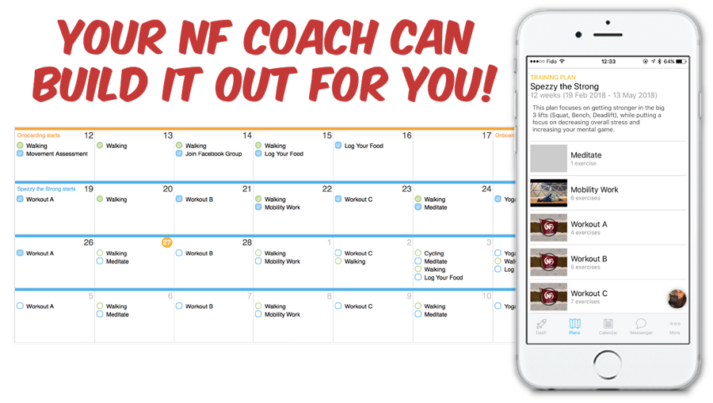
We build customized workouts for our Online Coaching Clientsand would love to have you. We get to know your story: your goals, challenges, and lifestyle. Then we develop a workout plan specific to your schedule and needs.
Now, if you’re more of a “figure this stuff out on my own” kind of person – we’re going to dig into how to build your own workout plan today!
We’ve also created a free resource you can take with you, Strength Training 101: Everything You Need to Know, which covers all of this stuff in a single guide. You can download it here:
Download our comprehensive guideSTRENGTH TRAINING 101!
Everything you need to know about getting strong.
Workout routines for bodyweight AND weight training.
How to find the right gym and train properly in one.
OKAY! Are you ready to start building your own routine?
Whatever your goals are, it’s good to write them down and be aware of what you’re trying to accomplish.
These goals will shape HOW you build your workout.
An effective way to create goals is by using the SMART method, which stands for specific, measurable, attainable, relevant, and timely.[1]
Specific – Specifically state what is to be accomplished. For example, “I want to gain 5 pounds of muscle.” (In this article we’ll cover how to build a workout to help you lose weight, build muscle, and get stronger. If you have specific goals like getting your first pull-up, getting your first push-up, or running your first 5k, we have articles covering each of these in detail.)
Measurable – Find a way to measure your progress. For example, you will need body composition equipment to assess your fat and muscle mass.
Attainable – Your goals should be realistically attainable. For example, a realistic rate of muscle gain is up to 0.5 pounds per week. To gain 5 pounds of muscle, 10 weeks would be an attainable starting point.
Relevant – Your goals must relate to your interests, needs, likes/dislikes, and abilities. Another thing to remember is that your goals need to be generated by you and you alone! For example, if you don’t care about gaining 5 pounds of muscle, or aren’t quite sure how this will benefit your life, then this isn’t a great goal for you!
Timely – Your goals must have a timeline for completion. If your goal is to gain 5 pounds of muscle then a reasonable end-point should be at minimum 10 weeks.
If you are struggling with your goals, revisit the SMART framework and see if you can tweak your goals to work better for you.
QUESTION 2: How much time can you devote to exercise?
If you can do an hour a day, that’s fantastic.
But maybe you have a wife or husband, three kids, a dog, two jobs, and no robot butler…
…then maybe you only have thirty minutes, twice a week.
That’s fine too!
In the past 15 years of working with folks from all walks of life, we’ve realized there’s a warped sense of HOW much working out is needed to achieve your goals. For many of our 1-on-1 coaching clients, working out 2 to 4 times per week for 30 to 45 minutes is PLENTY to see some serious progress. (And as Staci mentioned in the video above, even 1 workout per week can work, especially for beginners!)
Another key thing to remember: your workout doesn’t have to happen all at once! According to the American College of Sports Medicine (ACSM), if you accumulate three 10-minute bouts of exercise throughout the day to total 30 minutes of exercise, then that is as effective as someone who does one 30-minute bout of exercise.[2]
Now, no matter how much time you have, developing the most efficient workout is crucial.
Why spend two hours in a gym when you can get just as much accomplished in 30 minutes, right?
So whether you are building muscle or looking to lose weight, a strength training workout will get you the results you’re after (when combined with the right eating strategy!)
While we’re talking about time, let me quickly mention something important:
As we mention in that guide, here are some realistic timeframes for weight loss or muscle gain:[3]
For weight loss, a realistic rate is 0.5-1% of body weight per week. For example, if you weigh 200 pounds with a weight loss goal of 0.5% per week, your goal would be a 500-calorie-per-day deficit.
For muscle gain, a realistic rate is 0.25-0.5% of body weight per week. For example, if you weigh 200 pounds with a muscle gain goal of 0.25% per week, your goal would be a 250-calorie-per-day surplus.
Unless you’ve been strength training for years and know what you’re doing, we recommend a full-body routine that you can do 2-3 times a week.
You want a workout routine that has at least one exercise for your:
Quads (front of your legs).
Butt and hamstrings (back of your legs).
Chest, shoulders, and triceps: (“push” muscles).
Back, biceps, and grip ( “pull” muscles).
I have a trick for you: by targeting compound movements that recruit multiple muscles at the same time, you can build a full-body routine that uses only a handful of exercises.
How’s THAT for efficiency!?!
A compound exercise would be the yin to the yang of the isolation exercise.
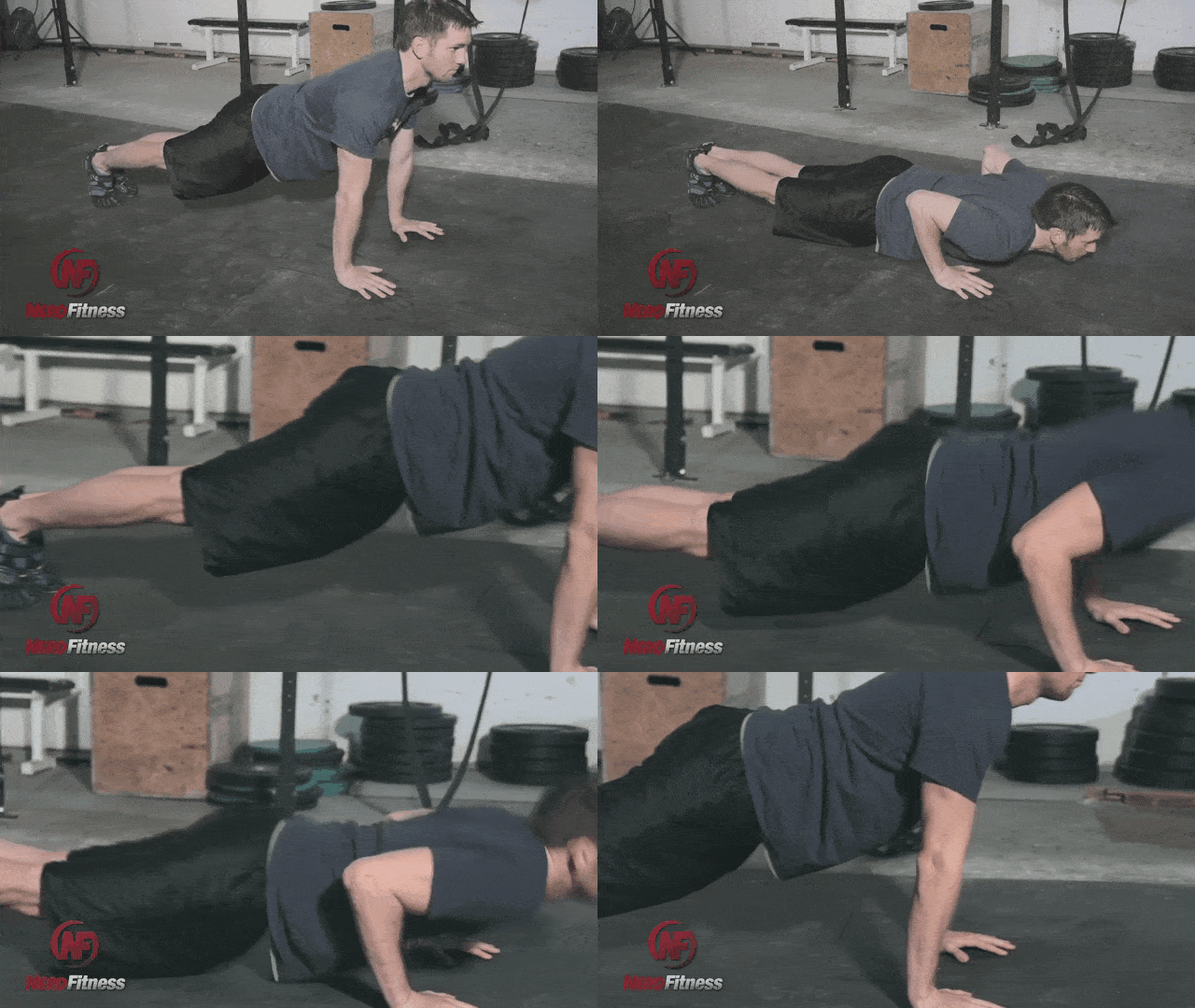
Think of a push-up (compound):
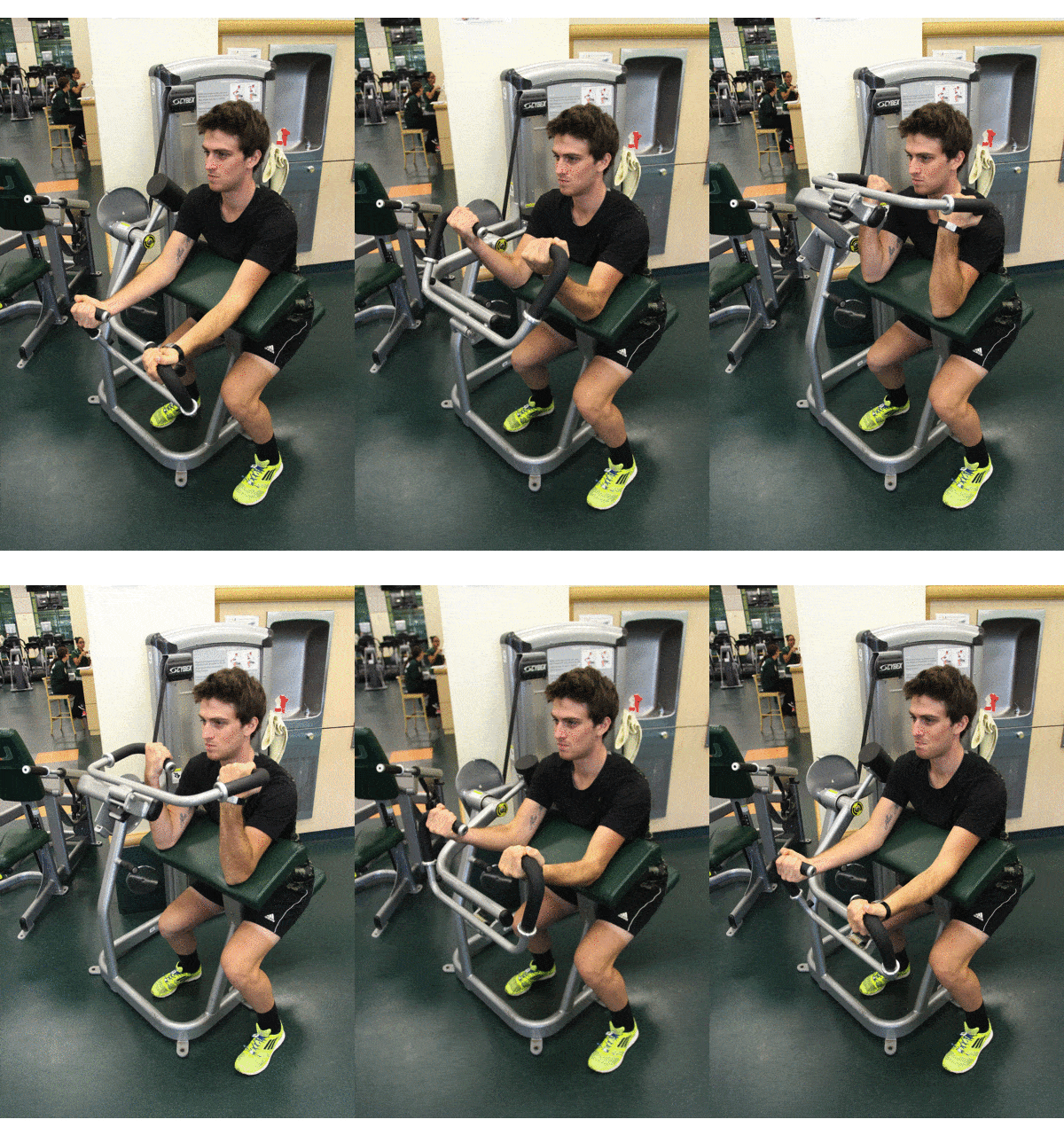
Compared to bicep curls through a machine (isolation):
Compound exercises have been found to result in improvements in aerobic endurance, muscular fitness, and flexibility, since you’re recruiting all sorts of muscle groups at once.[5]
Isolation exercises, on the other hand, focus on single-joint movements targeting one specific muscle group, like the biceps curl above.
Both compound and isolation exercises have a time and place in your training program.
As you get more advanced, isolation exercises are great for targeting specific muscles to promote further strength or development. They can also help beginners who struggle to “feel” their muscles working in specific movements learn more body awareness and control.
However, for people looking to lose weight, add some muscle, and get stronger – we recommend you start with predominantly compound exercises because of the huge return on investment for your time invested. These movements are the staple of the most effective training programs out there!
You don’t need to make things more complicated than this!
(Not that we humans have a tendency to overcomplicate things to the point of paralysis and inaction…)
Ahem.
If you’re not sure how to do any of the movements above, click on their links for thorough write-ups and video demonstrations.
Pick one exercise from EACH category above, specifically ones that scare you the least, and that will be your workout every other day for the next week.
Get really good at these basic movements and focus on getting stronger each week (I’ll cover how below).
If you get really strong at squats, deadlifts, pull-ups, and push-ups, you will build an incredible physique to be proud of.
Plus, building strength with these exercises will also help in other areas such as improving your performance in sports, decreasing your risk of chronic diseases (e.g., CVD) and premature mortality (an early death).[6]
*mic drop*
**picks up mic**
Then, once you get confident in those movements, feel free to add some variety.
Why?
If you do the same exact routine, three days a week, for months and months, you might get bored, and start slacking…
Do deadlifts every Wednesday, but change up the sets and reps you pick!
If you hit a plateau or find yourself getting bored, pick a different exercise or adjust your sets and reps so you’ll stay challenged, and you’ll actually DO the workout!
“But Steve, what about core exercises like sit-ups or planks? I don’t see those listed here.”
I’m so glad you asked! While it’s cool to add more specific core work to your program if you want to, squats, pull-ups, dips and deadlifts all do a great job of challenging your core to stay stable all on their own. If you do add in ab work, we recommend doing so at the end of your program so that you aren’t tiring out those muscles before doing your other big, compound lifts. Also, abs are revealed in the kitchen.
I know it’s really easy to overcomplicate this process as there’s an infinite number of exercises, sets, reps, and programs to choose from.
And yes, we have a solution for people that JUST want to be told what exactly to do: our uber-popular 1-on-1 coaching program pairs you with your own Nerd Fitness Coach who will get to know you, your goals, and your lifestyle, and develop a workout plan that’s specific to not only your body, but also to your schedule and life:
Step #3: How Many Sets And Reps Should I Do?
SIMPLE ANSWER: Not including a warm-up set or two, I recommend:
If you can do more than 15 reps without much of a challenge, consider increasing the weight or the difficulty of the movement. This is true for things like lunges, bodyweight squats, push-ups, pull-ups, etc.
If you want to focus more on building strength, keep your repetitions in the 5-10 range per set. As you get comfortable with the movements, you can move into lower rep ranges – but we find for beginners that starting with slightly higher reps gives you more time to practice doing the movement correctly.
There are some other generally accepted ‘rules’ about how to determine how many reps you should target per set, based on your goals:
Reps in the 1-5 range build super dense muscle and strength (called myofibrillar hypertrophy).
Reps in the 6-12 range build a somewhat equal amount of muscular strength and muscular size (this is called sarcoplasmic hypertrophy). [35]
Reps in the 12+ range build muscular endurance.
However, don’t think of these as hard and fast rules. For example, a 2015 study [10] called into question the best rep strategy for building muscle or size:
It appears that high-intensity resistance (sets of 3-5 reps) training stimulates greater improvements in some measures of strength and hypertrophy in resistance-trained men during a short-term training period [compared to sets of 8-10 reps].
Other recent studies have found that people built a similar amount of muscle with anywhere from 5 to 30 repetitions, as long as they worked close to failure.[38]
What this means: Do not freak yourself out by worrying if you should do 3 sets or 4 sets of 8 reps or 10 reps.
Our advice would be to START with lighter weights and more reps as you learn the movement, and then decide if you want to stay at higher reps and lower weight or vice versa.
You do you, because either way will get you results!
The only thing you need to worry about: get stronger the next time you do that movement.
Either pick up a heavier weight, or do 1 more repetition than last time.
“JUST GIVE ME THE ANSWER!”
Keep your TOTAL (all exercises combined) workout number of sets for all exercises in the 10-20 set range, with 5-15 reps per set:
4 exercises total, each with 2 to 5 “work sets” is a good start. [36]
Remember, the most important part is to get started – you’ll learn how your body responds and you can adapt as you go.
What you DON’T need to do: multiple exercises for each body part with 10 sets.
This will result in significant fatigue during your workout increasing your risk of sustaining an injury. It can also result in overtraining, in which you will experience a decrease in performance and plateauing (will not see muscular improvements).[11]
So calm down you eager beaver.
A BIG CAVEAT:How you eat will determine if you get bigger or stronger. Nutrition is 80-90% of the equation. So pick a range that feels good, and then focus on nutrition.
And if you don’t want to figure any of this out and just want to be told exactly how what exercises, sets, and reps to do, our online coaches can take care of that for you.
Step #4: How Long Should I Wait Between Sets?
Keep it simple, you “smart, good-looking, funny, modest person” you.
Below is a basic formula for you to determine how long you should wait between sets, but this can be adjusted based on your level of health.
The goal is to wait the least amount of time you need, but still rest enough that you can perform all reps of the next set safely and properly!
Adequate rest in-between sets will allow your body to regenerate energy, so you can execute the next set of reps with good form and technique, therefore, decreasing your risk of injury.
I’ll provide some guidelines for how long to rest based on how heavy you’re lifting (not rules set in stone!):
1-3 Reps (lifting heavy for strength/power): Rest for 3 to 5 minutes between sets.
4-7 Reps (lifting for strength): Rest for 2 to 3 minutes between sets.
8-12 Reps (lifting for size/strength): Rest for 1 to 2 minutes between sets.
13 Reps+ (lifting for endurance): Rest long enough to recover to allow you to do the next long-ass set!
If you need more or less rest than the above recommendations, that’s fine. The key is being recovered enough that you can perform the next set at similar intensity and with great technique. Whatever it takes to get you there, do it![13]
Do the best you can, record how long it takes you to rest between sets. The amount of rest you need to take over time may vary.
Your body will adjust as you get stronger and healthier!
The simple-to-learn but tough-to-implement answer:
Lift enough so that you can get through the set, but not too much that you have NO fuel left in the tank at the end.
How do you determine how much that is?
Trial and error.
ALWAYS err on the side of “too light” versus “too heavy” when starting out.
It’s better to say “I bet I could have done more!” instead of “That was too much, and now I need to go to the hospital!”
Plus, when you start working out, you’re actually programming your neuromuscular systems to do the movement correctly.[14] You can’t rush this, so it’s best not to start off too heavy.[15]
If a person can do two reps (or more) over their set goal, then they should increase the load.
How much should you increase weight?
For less trained people (i.e., beginners), it is recommended that for upper body exercises you increase the load by 2 – 5 pounds and by 5 – 10 pounds for lower body exercises.
For more trained people (i.e., advanced), it is recommended that for upper body exercises you increase the load by 5 – 10 pounds or more and by 10 – 15 pounds or more for lower body exercises [37]
I will say, if you’re doing exercises with just your body weight, you need to make each exercise more difficult as you get in shape – once you get past 20 reps for a particular exercise and you’re not gassed, it’s time to mix things up.
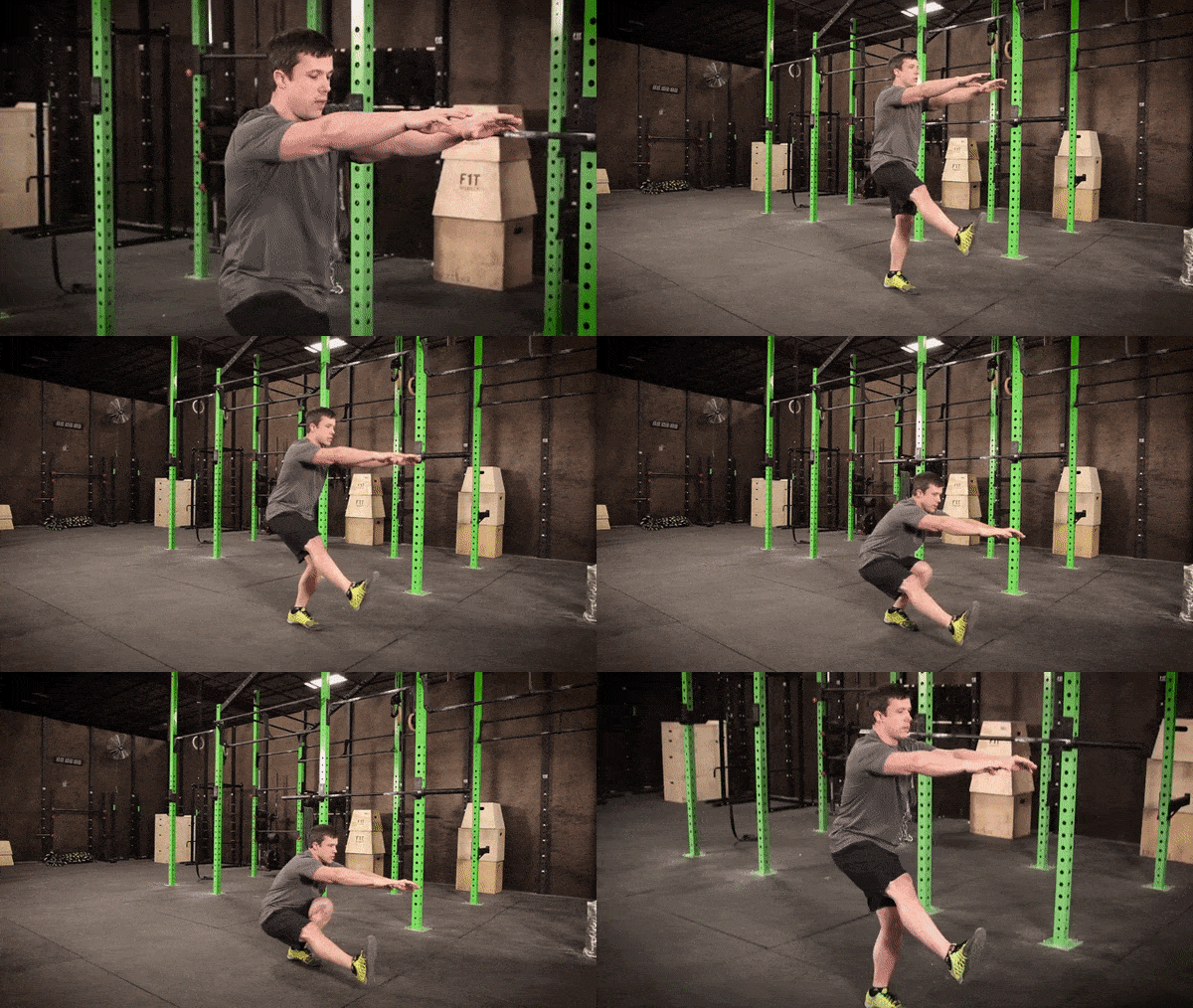
20 bodyweight squats too easy? Hold some weights high above your head as you do the next set. Eventually, you can scale up to do exercises like the pistol squat:
Step #6: How Long Should I Exercise For? How Long Should My Workout Be?
Easy answer: 45 minutes to an hour.
Longer answer: If you’re doing 10-20 sets of total exercise (2-5 sets for your 4 exercises), you should be able to get everything done within that 45-minute block.[17]
Now, factor in a five or ten-minute warm-up, and then some stretching afterward, and the workout can go a little bit longer.[18]
If you can go for over an hour and you’re not completely worn out, try increasing the intensity.
What’s that? You want to build some cardio into your weight training.
That’s where this next section comes in.
Step #7: How To Create Supersets And Circuit Training Workouts
For those short on time, a circuit training workoutis a highly efficient framework for training.
You’re getting a cardiovascular workout by consistently moving from exercise to exercise.
You’re exercising different muscles back to back, giving each muscle group a chance to recover, but in a condensed amount of time. Efficiency for the win!
It also increases the amount of calories burned in your post-workout window. [20]
If you’re familiar with CrossFit, many of those workouts are built on circuit principles.
This is also the most effective way to make you involuntarily swear at inanimate objects because you’re so tired and beat up.
We get this question quite a bit, usually from overeager beavers who decide they are going to go from “sitting on the couch watching The Office on repeat” to “exercising 7 days per week.”
I would advise something different.
I mean you can still watch The Office…
…but you don’t need to be training 7 days a week!
We don’t want you burning out quickly and falling back to square one, a concern we mention in our guide “How Often Should I Work Out?“
For starters, your muscles don’t get built in the gym.
They actually get broken down in the gym, and then get rebuilt stronger while you’re resting…watching The Office.[24]
By giving your muscles 48 hours to recover between workouts, especially when training heavy, you’ll stay injury-free and get stronger.[25]
A Monday-Wednesday-Friday workout routine works well to ensure enough time to recover, especially when you are just getting started.
If you want to do Tuesday-Thursday-Saturday, or Sunday-Tuesday-Thursday, great.
And we get it. Life doesn’t always perfectly align with this every-other-day schedule. The most important thing is to do the work with the time you have.
Then, pay attention to how you are recovering in between workouts. Are you still sore and tired when you begin your next workout? Do you notice you are having to use lighter and lighter weights because you are too fatigued? It may be worth trying to give yourself more time in between workouts so you can recover!
Just pick “exercise” that’s fun for you and that won’t exhaust your muscles. (Same questions as above.)[26][[26]]However, don’t forget that recovery is key to preventing injuries and allowing the body to rebuild itself after the stress of exercise. If you are looking to exercise on your off days we suggest that you cross-train. Cross-training involves engaging in a training routine or exercises that are different from what you normally would do. For example, if you always run for cardio, we would suggest that you change things up and go on the elliptical or bike. This allows you to stay active on your off days while also allowing the muscles that are always stressed from running to rest and recuperate. (Haff G, Triplett NT. (2016). Essentials of strength training and conditioning. Fourth edition. Champaign, IL: Human Kinetics).[[25]]
Also, here’s a lifehack: Program your workouts INTO your Google calendar (or Outlook).
You’re much more likely to do a workout that has been planned for in your work week!
Alternatively, you can hire a coach to program your workouts for you, so every day you know exactly what you need to do!
Step #9: Keep Track Of Everything!
Last but not least, keep a workout journal!
As they say, that which gets measured gets improved.
You should be getting stronger, faster, or more fit with each day of exercise.
Around these parts, we say “Level up your life, every single day.”
If you want to build from scratch, great! Let’s break it down into easy chunks with this recap:
Warm-up – 5-10 minutes on a bike, rowing machine, jumping jacks, running up and down your stairs, etc. Get the blood flowing and your muscles warm.[29]
Pick one exercise for each big muscle group – quads, butt and hamstrings, push, and pull.[30]
Do 2-5 sets for each exercise. (Start with lower sets to begin with.)
Do 5-15 reps per set for each exercise. (If you aren’t sure where to start, 10 reps is a nice middle ground.)
Rest and recovery between sets for each exercise. Keep it simple. 1-2 minutes and adjust from there.[31]
Increase your efficiency and work your heart by doing supersets or circuits. This results in a higher EPOC meaning greater caloric expenditure and weight loss!
Give yourself permission to mess up, learn a little, and keep improving as you train more regularly!
More often than not, when I email people back and tell them how to build their own workout, they generally respond with:
“Steve, can’t you just TELL me what to do? I’m afraid of building a crappy workout.”
Why we built TWO options for people like that:
1) If you are somebody who wants to know they are following a program that is tailor-made for their life, situation, and goals, check out our Online Coaching Program.
You’ll work with our certified NF instructors who will get to know you better than you know yourself and program your workouts and nutrition for you.
2) Join the Rebellion (our free community) and I’ll send you free guides, workouts, and worksheets that you can read at your leisure.
We need good people like you!
Download our comprehensive guideSTRENGTH TRAINING 101!
Everything you need to know about getting strong.
Workout routines for bodyweight AND weight training.
How to find the right gym and train properly in one.
I certainly encourage you to try and build your own workout routine.
It can really help you develop a sense of excitement and pride when you start to get in shape based on your workout!
-Steve
PS: Check out the rest of our beginner content. I promise, it kicks ass
American College of Sports Medicine. ACSM’s Guidelines for Exercise Testing and Prescription. Philadelphia: Lippincott Williams & Wilkins, 2000
Read, “Effect of short moderate intensity exercise bouts on cardiovascular function and maximal oxygen consumption in sedentary older adults.” Souce, BMJ Journals
(Spano MA, Kruskall LJ, Thomas DT. (2018). Nutrition for Sport, Exercise, and Health).
American College of Sports Medicine. ACSM’s Guidelines for Exercise Testing and Prescription. Philadelphia: Lippincott Williams & Wilkins, 2000
Haff G, Triplett NT. (2016). Essentials of strength training and conditioning. Fourth edition. Champaign, IL: Human Kinetics
Remember, it all comes down to a caloric deficit or surplus. if you are trying to lose weight it is recommended that you seek a calorie deficit by consuming 250-500 less calories per day below your typical calorie intake. This will result in a realistic weight loss goal of 1-2 pounds per week. If you’re trying to gain muscle mass, then it is recommended that you seek a calorie surplus by consuming 250-500 additional calories above your typical calorie intake. This will result in a realistic gain in lean muscle mass of about 0.5 pounds per week. Source: Spano MA, Kruskall LJ, Thomas DT. (2018). Nutrition for Sport, Exercise, and Health
American College of Sports Medicine. ACSM’s Guidelines for Exercise Testing and Prescription. Philadelphia: Lippincott Williams & Wilkins, 2000)
This goes back to the progressive overload principle. Remember, in order to achieve your training goals or to see improvements, your training must gradually and constantly increase Source: Haff G, Triplett NT. (2016). Essentials of strength training and conditioning. Fourth edition. Champaign, IL: Human Kinetics.
If you do not progress your workout, then you will reach a plateau because your body has met the demands of your exercise or stress that you have placed upon it. If you progress your workout (e.g., do more reps, lift heavier weights, do different exercises, etc.), then those microscopic tears (that don’t hurt) will happen and your muscles will go through hypertrophy and grow bigger and stronger. Source: Powers SK, Howley ET. (2011). Exercise physiology: Theory and application to fitness and performance. New York: McGraw-Hill Humanities/Social Sciences/Languages).
You’ll see a few different recommendations around this. The National Strength and Conditioning Association (NSCA) recommends 6-12 reps for 3-6 sets for muscle hypertrophy and more than 12 reps for 2-3 sets for muscular endurance (Source: Haff G, Triplett NT. (2016). Essentials of strength training and conditioning. Fourth edition. Champaign, IL: Human Kinetics). While the American College of Sports Medicine (ACSM) simply recommends 8-12 reps for 2-4 sets for healthy individuals (Read, American College of Sports Medicine position stand. Progression models in resistance training for healthy adults. Source, PubMed.
While these are great places to start, more recent studies show that anything between 5 and 30 reps, as long as you train close to failure, are similarly effective in stimulating muscle growth.
As you get more advanced, adding more sets may continue to be beneficial – as long as you can recover from the amount of workload. See this study on the effects of hypertrophy gains in trained men up to 45 sets per target muscle per week.
Read, “Musculoskeletal adaptations and injuries due to overtraining.” Soucre, PubMed.
Excessive muscle fatigue, often resulting by engaging in higher intensity exercise or engaging in exercise with short rest intervals has been found to increase one’s risk for muscle strains due to fatigue eliciting poor exercise technique. For more, read “Muscle strain injury: diagnosis and treatment.” Source, PubMed.
The NSCA also has guidelines in-place to help you determine your rest intervals in-between sets: 2 to 5 minutes for strength and power, 30 seconds to 1.5 minutes for hypertrophy, and 30 seconds or less for muscular endurance (Haff G, Triplett NT. (2016). Essentials of strength training and conditioning. Fourth edition. Champaign, IL: Human Kinetics).
Plus, ACSM has a basic recommendation of 2 to 3 minutes (American College of Sports Medicine. ACSM’s Guidelines for Exercise Testing and Prescription. Philadelphia: Lippincott Williams & Wilkins, 2000). So we don’t have to get overly dogmatic here.
More efficient communication between your neuromuscular systems results in proper motor unit recruitment. A motor unit is a single motor neuron and the muscle fibers it innervates. We have small motor units, meaning that a single motor neuron innervates relatively few muscle fibers, and these smaller motor units are good for precise and detailed movements (e.g., moving your fingers). On the other hand, we have large motor units, meaning that a single motor neuron innervates hundreds of muscle fibers, and these larger motor units are good for generating a lot of force (e.g., getting larger muscle groups like the quads to generate a lot of force to help in running) (Powers SK, Howley ET. (2011). Exercise physiology: Theory and application to fitness and performance. New York: McGraw-Hill Humanities/Social Sciences/Languages; Heckman CJ, Enoka RM. Motor unit. Compr Physiol. 2012 Oct;2(4):2629-82. doi: 10.1002/cphy.c100087. PMID: 23720261).
When you first start strength training, your motor units don’t fire as quickly and smaller motor units that don’t generate a lot of force are recruited. As you continue working out and become more trained, your motor units fire more rapidly and your brain recruits larger motor units that can generate more force allowing you to lift heavier weights. This is why the progressive overload principle is important! As your neuromuscular system communicates more efficiently, you will see improvements in your exercise technique and muscle adaptations (e.g., hypertrophy) taking place.
Haff G, Triplett NT. (2016). Essentials of strength training and conditioning. Fourth edition. Champaign, IL: Human Kinetics.
Note: these numbers can be misleading. As you get to heavier and heavier total loads, the amount of stress placed on the body increases, and so you may have to make much smaller jumps in weight, rather than larger. The important thing is to pay attention to recovery and make sure you don’t add too much weight, too soon.
According to ACSM and the CDC, all healthy adults aged 18-65 years should participate in moderate-intensity aerobic physical activity for a minimum of 30-minutes on five days per week, or vigorous-intensity aerobic activity for a minimum of 20-minutes on three days per week. Additionally, every adult should perform activities that maintain or increase muscular strength and endurance for a minimum of two days per week. Performing exercise at a moderate-to-vigorous intensity will result in greater caloric expenditure and weight loss. (American College of Sports Medicine. ACSM’s Guidelines for Exercise Testing and Prescription. Philadelphia: Lippincott Williams & Wilkins, 2000).
The NSCA recommends a 5-10 minute warm-up to prepare the body for the exercise session, and the exercise session should be followed by a 5-10 minute cool-down to bring the body back down to rest (Haff G, Triplett NT. (2016). Essentials of strength training and conditioning. Fourth edition. Champaign, IL: Human Kinetics).
The ACSM and other researchers have found that if you ACCUMULATE 10-minute bouts of exercise throughout the day that can be as effective as one who does one 30-minute bout of exercise. Read, “The Effects of Continuous Compared to Accumulated Exercise on Health: A Meta-Analytic Review.” Source, PubMed.
Circuit training results in a higher excess post-exercise oxygen consumption (EPOC) resulting in great caloric expenditure when compared to traditional strength training with longer rest intervals in between sets and exercises. Read, “Circuit weight training and its effects on excess postexercise oxygen consumption.” Source, PubMed.
Haff G, Triplett NT. (2016). Essentials of strength training and conditioning. Fourth edition. Champaign, IL: Human Kinetics
Oh, and even if you aren’t doing a ciruict, don’t use your cell phone for other purposes besides using it to listen to music! Other cell phone functions such as texting and talking have been found to lower the intensity of exercise resulting in lower caloric expenditure, and disrupt balance leading to a greater risk of musculoskeletal injuries. Read, “The Impact of Cell Phone Use on the Intensity and Liking of a Bout of Treadmill Exercise.” Source, PubMed. Read, “The impact of different cell phone functions and their effects on postural stability.” Source, ScienceDirect.
The NSCA recommends 2-3 training sessions for novice or beginners, 3 sessions if using total body training or 4 sessions if using a split routine for intermediates, and 4-6 sessions for advanced lifters (Haff G, Triplett NT. (2016). Essentials of strength training and conditioning. Fourth edition. Champaign, IL: Human Kinetics).
Strength training results in microscopic muscle tears in the muscles. This causes a cascade of events eventually leading to muscle repair and growth (i.e., hypertrophy). Our muscles adapt to the overload stress of strength training immediately after each bout of exercise, but it takes roughly eight weeks to see physical improvements (Powers SK, Howley ET. (2011). Exercise physiology: Theory and application to fitness and performance. New York: McGraw-Hill Humanities/Social Sciences/Languages).
Adequate recovery is essential to prevent overtraining. When we become overtrained, our injury risk increases and we reach a plateau and no longer see any improvements from our training. For more, read “The effects of resistance training, overtraining, and early specialization on youth athlete injury and development.” Source, PubMed.
This applies to all healthcare professionals who are working with clients, athletes, military personnel, special populations (e.g., cardiac rehab). These healthcare professionals are tracking everything so they can see if you are improving or not. And if you’re not improving, that is okay. At least you know and then you can start making changes to your exercise routine: change your exercises from bodyweight to free weights; change the number of sets and rep; shorten or lengthen your rest intervals, etc.
And if you’re not improving, that is okay. At least you know and then you can start making changes to your exercise routine: change your exercises from body weight to free weights; change the number of sets and rep; shorten or lengthen your rest intervals, etc.
A traditional warm-up usually consists of two components. The first is a general warm-up of 5-10 minutes of low- to moderate-intensity aerobic exercise, such as jogging or stationary cycling. The second is a specific warm-up that involves less intense movements similar to the sport or activity about to be performed. This second part involves performing dynamic stretches such as high knees, butt-kicks, skipping, shuffling, carioca, etc. The purpose of this type of warm-up is to allow the body to gradually adjust to the demands of exercise by allowing for increases in heart rate, blood flow, muscle temperature, and core body temperature (Haff G, Triplett NT. (2016). Essentials of strength training and conditioning. Fourth edition. Champaign, IL: Human Kinetics).
These big muscle groups allow for everyday activities to be performed with more ease and for you to maintain a more independent lifestyle for a longer period of time. For more, read “American College of Sports Medicine position stand. Progression models in resistance training for healthy adults. Source, PubMed.
But remember, the sets, reps, and rest intervals will change as your training goals change.
The longer your workout the more fatigue you will experience, therefore, increasing your risk of injury. Keep your cell phone in the locker room if you’re having a difficult time keeping your workout to less than an hour!
The same rules apply as for the warm-up. After you are done with your exercise session perform 5-10 minutes of low- to moderate-intensity aerobic exercise. The second part of the cool-down will consist of static stretching instead of dynamic stretching. Static stretching involves slowly moving a muscle to the end of its range of motion and then holding that position for a period of time (10-30 seconds or 30-60 seconds for its greatest benefits). You should stretch the muscle enough to feel a slight discomfort, but don’t go too far where you start to feel pain. For more, read “American College of Sports Medicine position stand. Quantity and quality of exercise for developing and maintaining cardiorespiratory, musculoskeletal, and neuromotor fitness in apparently healthy adults: guidance for prescribing exercise.” Source, PubMed.
Remember, the only way you’re going to know if you’re improving and if your program works is if you’re recording the data. If it’s not working, at least you can catch it early and make the necessary adjustments.
Our society has a lot of loud opinions about women’s aging in today’s world. We’ve all seen facial serum claiming to restore that “youthful radiance” or a social media post about how to avoid looking older. I’ve also had friends share that as they get older, they start to feel invisible, or they feel less relevant and as a result, less valuable.
I’ve found that this is a common feeling among many older women I know, and honestly, I hate it! We deserve better and this should not be our experience as we age and continue to grow in wisdom and experience. Healthy aging is something that should be celebrated, not feared or hidden away.
Despite what we see and hear in the media—reconstructed faces and in-your-face ads for staying young—I’ve watched the women around me age beautifully and gracefully. They’re navigating menopause, adjusting to physical changes, and embracing the natural progression of biological age with poise.
I’ve been in awe of how their wisdom becomes a guiding force in their life and the lives of those around them. As a woman myself, it’s become so important to not only embrace this alternative message of aging but share it with our members of Lindywell and our communities.
The truth is, we are all aging every single day. And as women, we have the power to reject age-related stereotypes….or fall victim to them. We can embrace the next chapter on our terms, engaging in regular exercise and physical activity, embracing nature aging as a part of older adulthood, and redefine the journey as a natural and beautiful process—one that is full of vibrancy instead of fear.
It’s time to debunk the sociocultural messages around women’s aging and explore the truth of how to age intentionally.
What’s Happening When Women Age
Human lifespans are increasing all over the world. Current projections show that the number of older adults (over 65 years of age) will surpass 1.5 billion by 2050. Plus, the average 65-year-old person could expect to live another 19 years. But what exactly occurs within the body during aging, as we notice changes in our physical appearance that come naturally with the shift in our chronological age?
An exciting field of research shows we can age with a joyful outlook, an active body, a sharp mind, vibrant social connections, and a meaningful quality of life. This is what I’m talking about!
The Regenerative Medicine Journal suggests that conscious habits, like physical movement and nutritious eating, could prevent 80 percent of deaths from diseases that develop over time from things like lifestyle choices and environmental influences. That’s too big of a percentage to overlook!
The One Big Lie: Your Value Fades as You Get Older
Age bias is real. The Gerontologist Journal found that respondents from all age brackets tend to favor young adults and show bias (even if it’s unconscious) against older adults. These biases are rooted in assumptions. Assumptions like cognitive decline, social isolation, poor health behaviors, weak physical function, and other common age-related stereotypes.
Media outlets also reinforce ageist tropes about women. It’s hard to count the number of times we’ve seen commercials for a miracle product to erase wrinkles or a TV show with the main female character stressing over her latest gray hair.
Not to mention, for women facing additional identity challenges in relation to race or sexuality, dealing with these age biases can be even more exhausting.
In each scenario, the throughline is clear: A woman’s value diminishes with age.
Well, that’s the belief mainstream cultural norms want us to buy into—but science has a different take on the aging process (and you know we’re fans of science here at Lindywell!). So, let’s challenge this lie with some concrete facts.
5 Scientific Truths to Embrace Conscious Aging
Conscious aging is an approach to growing older that emphasizes self-awareness, personal growth, and intentional living. It reminds me of joyful aging—something we wholeheartedly embrace at Lindywell!
Conscious aging involves cultivating a positive attitude toward aging and viewing the later stages of life as an opportunity for continued development and fulfillment. Aging is a natural part of the human experience and growing older with this mindset allows us to embrace that experience with grace and wisdom.
At Lindywell, we’re passionate about freeing women from the limiting beliefs that hold us back, so we can flourish in any stage of life. Here are five truths to help you embrace aging with an empowered mindset and a new definition of what it means to get older.
1. You Can Remain Active, Strong, and Mobile
It’s a common misconception that physical movement decreases with age, but this does not have to be the case. The Aging Clinical and Experimental Research Journal indicates that 150 minutes (or 2.5 hours) of moderate exercise per week can lower your risk of chronic illness, increase functional mobility, and boost health status and life satisfaction.
Even gentle, low-impact activities—like Pilates, for instance—will strengthen your muscles and joints. It will also improve stability and balance, and promote a flexible range of motion so you can maintain an active, independent routine for as long as possible.
We have older many Lindywell members who swear by our Pilates workouts. Here’s what some of them have said:
Denise: “Before joining I was diagnosed with bursitis in my hip. After 2 rounds of physical therapy, I realized that many of the same exercises at physical therapy were also part of the Lindywell routines. My hip has improved greatly and at age 64, I feel great.”
Diana: “I’ve been with LIndywell since 2017. I attribute much of my ability to stay mobile and active at 71 to Lindywell’s workouts. I appreciate that at Lindywell there are well-rounded workouts for all abilities and levels. Your age, strength, or ability should never stop you from joining and getting started with Lindywell. There is something for everyone!”
Angela: “I am recovering from having hip replacement surgery at the age of 51, just seven weeks ago. The adaptability of exercises to what I’m comfortable and able to do has helped greatly in my recovery. I’m feeling stronger every day and I’m loving my body again.”
MJ: “I’ve been a member for almost 3 years, and at age 62, Lindywell is literally the BEST thing I’ve ever done for my health and wellbeing. I just wish I’d started sooner!”
Lisa: “I have seen changes in my body I never thought possible at age 63. I was an avid walker, hiker, weight training, and yoga kind of person. Pilates looked way too hard for me. Then I found Robin. I thought why not give it a try. WOW!!”
2. Relationships Matter
This is an important reminder that health goes beyond moving your body and eating nutritious foods. Social health has a severe impact on our lives, especially as women who are naturally social and seeking connection. I even have a whole chapter about this in Well to the Core!
Yet, the average American over age 60 will spend more than half of their waking hours alone. Older adults who invest in their social connections and experience a sense of community are less susceptible to anxiety, depression, or negative mood states.
They also tend to exhibit a lower risk of metabolic syndrome, cardiovascular issues, hypertension, and substance abuse. What’s more, strong and consistent relational support could even protect you from dementia.
3. Adaptability and Emotional Regulation Improve With Age
I’m willing to bet that you’ve noticed a change in your emotional regulation over the years. Maybe something that would have caused you to panic or lash out in your younger years, doesn’t have the same effect on you that it once did. Or maybe over the years, you’ve become more comfortable with change.
Mental health can be a stigmatized topic across some generational lines. This doesn’t mean your mental and emotional balance has to suffer as you transition into older age. Despite those stereotypes about erratic behavior or irritable mood swings, the Perspectives on Psychological Science Journal shows that older adults are generally more adaptable and better at emotional regulation in adverse circumstances than their younger counterparts.
Many older adults report a higher positive affect and lower anxiety and anger levels. They also report less reactivity to stress and more acceptance of emotions than young adults, the research continues. Older adults who cultivate meaning in life also have more resilience to care for their mental health and meet changes or obstacles head-on.
A powerful way to cultivate meaning in your life as you age is through breathwork. If you’ve never done this before, start your Lindywell trial and get instant access to dozens of guided breathwork sessions to help you tap into meaning, mindfulness, and calm.
4. Cognitive Function Can Be Just as Robust
Of course, the onset of cognitive decline is a reasonable age-related concern. However, it’s not as inevitable as you might think. While some brain functions (like alertness, reaction time, and visual acuity) do slow with age, the Nature Human Behaviour Journal found that other cognitive skills can improve well into a person’s late 70s.
Many older adults can orient their attention, tune out distractions, and process conflicting information more efficiently than middle-aged adults. That’s because a wealth of life experience and lessons help strengthen neural networks. Talk about the power of wisdom!
So how do you keep your cognitive function strong? Mindful movement like Pilates can be very helpful, along with brain-healthy foods (like walnuts, eggs and fatty fish) that support memory, cognition and focus!
5. Aging Can Feel Empowering
While not everything is in our control when it comes to aging, there are things we can do to age intentionally and with joy. Our age doesn’t have to define us. We define ourselves by the choices that we make and the habits we pursue.
Aging is not something to desperately reverse with “quick fix” products or to view with resignation. Rather, it’s a season with so much to look forward to. For example, an aging mental health study found that older adults report feeling less self-conscious and less shame—I know I’m good with that shift!
When we redefine this process through a lens of empowerment. We can celebrate the mindset shifts and physical transitions that helped evolve us into the unique, multi-faceted women we are today. At the same time, we can anticipate with excitement who we’ll become as the next stage unfolds.
Defy Age-Related Stereotypes and Embracing Aging
Aging can feel nerve-wracking. Plus, our culture and the media don’t help, along with the new and sometimes unexpected issues and health conditions that arise as we age. And yet, we can still choose to create our own narrative fostering healthy living. Societal messages want us to believe that our value dips and our beauty fades as we grow older, but we don’t have to accept this.
Join me in embracing women’s aging and finding joy and happiness in every season we experience! Our mission at Lindywell is to equip women to live vibrant lives full of strength and resilience. Start your free trial today to begin reconnecting with your body, no matter what season you’re going through or how challenging it feels.
False narratives are a part of your daily life and the crazy thing is you may not even know it. While both men and women feel the pressure of these false narratives, a recent APA survey found that women are more likely to report feeling overwhelmed by societal pressure to maintain excellence in their homes, careers, relationships, and physical traits than men.
False narratives drive that unattainable expectation to look, be, act, or live a certain way. As a result, women tend to have the added pressure of heavier expectations that weigh on our shoulders.
I have certainly felt this in my role as a working mom. I have very high expectations for myself at work and also very high expectations for myself as a mom. It can be stressful to live up to my own expectations if I’m not careful.
Uncovering my false narratives around work and motherhood has been incredibly helpful for me and I want to encourage you to challenge those beliefs and rewrite the story to let go of the expectations too—even if only a little bit. To do so, you must first understand what false narratives are and how they can manifest in your life. Then we’ll get into some steps you can take to shift those false narratives.
What “False Narrative” Means
A false narrative refers to a story or belief that we internalize, often unintentionally, from things other people say or do or experiences we have. According to neuroscientist Anil K. Seth, your brain takes in sensory input from your environments, cultures, biases, or experiences in order to create meaning and construct your own version of reality. This starts at birth and lasts your entire life.
For example, as a young toddler, you as a girl might be told or shown through societal cues that being small is cute and makes you worthy of attention and adoration. Older adults might say things like, “Oh, look at that skinny minnie! So cute!” Their intention is not to make you believe that being small makes you worthy of love and praise, but that’s what the belief becomes.
As you might imagine, these ingrained stories can become the lens through which you perceive yourself and your place in this world. You learn them, take them to be true, and then build your life around them.
Here’s the thing that’s really problematic: you can believe a false narrative whether or not it has any factual basis. Over time, believing these false stories about yourself can harm your sense of worth, erode self-trust, and make life exhausting as you try to meet the unrealistic beauty standards of a woman in our world today.
The Many Ways False Narratives Show Up in Your Life
False narratives influence every area of your life, from how you function in the workplace to the way you interact in your relationships or view your external appearance. Here are a few examples of false narratives that women can be prone to believe. I bet more than one of these rings true for you—I know some of them did, and still do, for me:
I must have the “perfect” body with a flat stomach, toned muscles, and no cellulite.
I need to excel in all my various roles (home, career, family) without asking for help.
I should put others’ wants or needs before mine, even if this violates my boundaries.
I cannot claim too much space for myself—I need to remain as small as I possibly can.
I am a failure if I haven’t become a wife and mother by the time I reach a certain age.
I have to conform to society’s definition of “beautiful” (size, shape, weight, skin tone).
I must look calm and keep a smile on my face, even if I feel completely overwhelmed.
I should be grateful just to earn an income—I’m not worthy of that raise or promotion.
I am too much for others to handle, but also not enough to deserve their acceptance.
Why Women Are Susceptible to False Narratives
It’s important to note that both men and women can feel pressure to conform and to live up to a specific set of expectations. We all have the potential to digest harmful beliefs and script them into false narratives around which we orient our lives. However, research shows the messages that men and women receive are starkly different.
According to a recent study in the Journal of Health Monitoring, the expectation to maintain “physical attractiveness” is instilled in girls from an early age, with emphasis on the Western ideals of “feminine slimness.” This can reduce self-esteem and increase rates of body dissatisfaction as girls reach adolescence and eventually adulthood. Whereas in boys, the effects of poor body image will often decrease with age. I mean… wow.
This is just one example of how we as women are socialized to view ourselves—and how women conform to sociocultural messages. As a result, we may abandon the innate self-trust within and let the false narratives drive the car. Without even realizing, you compromise your well-being and happiness, unable to truly follow your own path.
Real-World Examples of False Narratives
The most important lesson here is this: you are not powerless against false narratives. The first step to re-writing it is to understand where and how these false narratives are showing up in your life. Only then can you take the wheel and start paving a path that’s actually true to you.
I also want to remind you that it doesn’t matter how old you are. You can always shift these narratives, whether you’re 8 or 80—the principles of neuroplasticity tell us so!
Body Image and Beauty Ideals
Women face a constant barrage of unrealistic beauty ideals. Western society tends to favor a youthful appearance with an able body, a thin frame, and light skin. As such, those who don’t exist within this narrow mold can internalize a false narrative that their bodies are inherently flawed.
In a survey of 4,250 women, 60 percent agree that how they feel about themselves is impacted by their weight, size, or shape. Even more concerning, 17 percent of these women would take years off their lives in exchange for the “perfect” body. Statistics like this are what empower me as the leader of Lindywell—we must change this!
This blog post, written by Kiesha, our Head of Breathwork and Somatic Programs, is a beautiful starting place for you to rewrite false narratives around your body image. Kiesha shares her “secret sauce” for tapping into what feels true to you and using that to shift your beliefs about yourself.
Cultural Gender Stereotypes
Even in our modern society, gender norms can still impact how we as women perceive our roles. For example, as a young girl you might be told or shown through societal cues that playing with trucks or building blocks is not for girls, but rather for boys. This turns into a false narrative that limits what you explore in the world while also reinforcing cultural gender stereotypes and roles.
Long-term, these types of false narratives contribute to a lack of representation and participation of women in fields such as science, technology, engineering, and mathematics (STEM) or leadership roles, perpetuating gender inequality.
While there are so many ways to approach this false narrative, getting mindful is one that I strongly believe in. Check out the blog post above to learn about how all these narratives and expectations can keep you mindFULL and why shifting to a more mindful way of living can support decision-making, confidence, adaptability and more—all qualities needed to rewrite this narrative.
Personal or Career Expectations
Women are often sold the notion that they can have it all: an exceptional family, a successful career, and an impeccable home. Most of us have a “superwoman” in our lives—maybe you even consider yourself to be that superwoman. This image is what we’re told (either directly or indirectly) to strive for.
Women in predominantly male careers, however, report overworking to prove their capabilities, which can lead to high stress, poor mental health, and early burnout. Women are also about 50 percent more likely to be responsible for household chores than men.
For me, it can be hard to prioritize family in the way that I want to, and keep up with the demands of an evolving career. I’ve had to be very intentional to uncover which false narratives have kept me stuck and also get very clear on my priorities. The reality is that when I choose to prioritize one thing, something else may get deprioritized.
These lofty expectations can convince all of us that our worth is based solely on performance and if we don’t “do it all” we’re failing. We deserve to honor our boundaries and recharge our batteries—to just be human.
One of the best ways to rewrite this false narrative is to start letting go of the idea that you need to be perfect. I know this is a hard one (it’s been a long and on-going journey for me too!), but I want to help you get there. Start with the blog post above about how the way we approach Pilates can be used in your life too. You don’t have to be on the mat to embrace these values, put them into practice, and see a change in your life.
Love and Family Relationships
As women, we’re biologically more nurturing than men. For some of us, this can lead to being more relational and connected to the people in our lives. We love our friends, we cherish our partners, we would do anything for our children and fur babies. But sometimes we become so focused on those relationships that we forget to nurture ourselves.
A recent YouGov survey found that 68 percent of women elevate others’ needs at the expense of their own, and 55 percent have a hard time saying, “no,” if another person asks them for something. (This one is SO hard for me!)
Relationships enrich our lives, but taking care of ourselves matters too. Whether a relationship is romantic or platonic, it’s not sustainable to pour so much time and energy into someone else without also making sure our needs are met.
Toxic guilt spins a false narrative that we must always prioritize our loved ones at the detriment to our own emotions, needs, wants, or boundaries. However, when we extend ourselves the same attention we freely give to others, we’re more capable of showing up for our friends and family.Check out the blog post above to learn more about how toxic guilt is showing up in your life and how you can start to release it to live a happier, less stressful life.
Turn The False Narrative into YOUR Narrative
Lindywell was born out of my desire to empower women to take control of their health and life. If you’re ready to change those false narratives, join our community of women from around the world who are committed to mindful movement, grace over guilt, and self-compassion.
Start your free trial to get instant access to this community, plus 300+ Pilates workouts, dozens of guided breathwork sessions, and more. The more you hit your mat and prioritize your mind-body connection, the easier it will be to create a positive narrative that will leave you feeling strong, resistant, and filled with grace over guilt.
Body disconnection is all too common in a world that has trained women to ignore, repress, and control their bodies. Instead of hearing what your body has to say, you learn to follow external cues and guidance. And I know that maybe this doesn’t sound so bad—why not listen to the experts?—but it is problematic for two reasons:
There’s a lot of information available today. Unfortunately, not all of it is legitimate or coming from a true expert or research-based source.
You’ve been taught to do everything with your mind, but the body has a lot to say too. If you’re not listening, you’re missing critical messages that can lead to a happier, healthier life.
I dedicated an entire chapter in my book, Well to the Core, to the importance of listening to your body. This is something that is often left out of health and fitness programs, most of which focus on facts and rules—but don’t leave space to consider the wisdom and needs of your body.
I also explained in my recent blog post, 5 Practical Strategies to Listen to Your Body Each Day, long-term, that sustainable health is only possible when you listen to your own body, and then respond with care and compassion, based on what you know about your body.
Here’s the real kicker: most women aren’t talking about the struggles and pain that come from this disconnection. The solution is just another fix or another diet when really, you need to come back to yourself first.
Let’s go deeper into what I mean when I say body disconnection and why it can feel so hard to talk about. Then I’ll share five questions that will help you understand and talk about body disconnection.
What Body Disconnection Means
While body disconnection can be diagnosed as dissociation, a clinical disorder, what I’m talking about today is something a little different. As humans, we live in three holistic, interwoven states of being: the physical, the mental, and the spiritual. It’s equally important to nourish all of these dimensions, but we often learn at early ages to see our body as a separate object, rather than an innate and beautiful part of our whole selves.
Seeing your body as a separate object means you might:
Ignore important mind-body connections, like how stress at work is impacting your physical health (ex. You’ve been having chronic headaches or digestive issues).
Not know when you’re still hungry or comfortably full. When you ignore your body, you miss those cues.
Find yourself exhausted at the end of the day because you didn’t give yourself the rest your body was asking for.
Many of these may be true for you right now. I’ve been through seasons of life where all of these are true in one way or another. The good news is, it doesn’t have to be this way.
Why Women Aren’t Talking About This
This is an interesting aspect of body disconnection: many women are suffering, yet few people are talking about it. Why? Well, the simple answer is that you may not even recognize it’s happening. After a while, body disconnection can become so automatic that you might not even realize that you aren’t listening to your body. You’ve become so accustomed to listening to your personal trainer or that nutritionist you follow on Instagram that you don’t know any other way.
This is why an important step to unraveling the complex layers of this issue is to have open discussions with other women. The power of connecting with others who are also feeling this way is immeasurable. I know when I open up to my friends, I always feel more connected to myself and less alone.
Plus, it gives you a chance to explore what’s really happening, something you might not do by yourself because let’s be honest, the to-do list is long and the day is short!
If you’re ready to talk with your trusted loved ones, like friends, close relatives or even a therapist, about feeling disconnected from your body—and whether they feel that way too—here are some questions you can use. Think of these as conversation starters to get everyone thinking more deeply and openly about this issue.
1. Why Do We Feel Disconnected from Our Bodies?
This is a multi-faceted question, and the answer can (and probably will) differ for everyone. Some women might disconnect as a result of internalized beliefs around body image while others might disconnect because of an unhealed trauma.
Being open about this with your friends might also help you recognize other reasons why you’ve disconnected that you didn’t realize. The same goes for your friends as you share your experiences.
2. How Does Body Disconnection Make Us Feel?
Many complicated feelings tend to come with body disconnection—shame, insecurity, confusion, mistrust, numbness, depression, anxiety, and more. These emotions are overwhelming to deal with in isolation, but it can be cathartic to express them with others who understand.
Interestingly, emotions are inherently somatic. This means you can feel them manifest in your head, neck, throat, shoulders, chest, stomach, or other body parts. When you feel safe (like with a group of people who love you) to can start to notice, release, and sort through your emotions out loud in real time, it gives you a chance to return to embodiment, which is the opposite of body disconnection.
3. Why Are We Afraid to Trust the Body Connection?
You’ve heard the phrase, “trust your gut,” over and over again, since childhood. So what makes it so difficult to lean into this inner trust?
If you’ve experienced illness or physical pain, you might be mad at your body or blame your body.
You may feel as though you “trusted your gut” before and it drove you in what felt like the wrong direction.
If you’ve felt out of control in your life, controlling your body (rather than surrendering and listening to it) becomes a coping mechanism.
There are so many reasons why you might feel disconnected. Sort through them with your trusted sources who may also feel the same as you.
4. What Are the Impacts of Body Disconnection?
Women who experience body disconnection also have a higher risk of shame, low self-esteem, lack of interoceptive (emotional and sensory) awareness, eating disorders, and other mental health concerns. These consequences can interfere with your life in so many ways that you might not even recognize them.
Being vulnerable about mental health issues can feel daunting, but the more open and honest you are, the lighter you’ll feel. There is power in sharing your burdens with someone else and realizing you aren’t alone in how you feel.
5. How Can We Start Reconnecting to Our Bodies?
This question is arguably the most important: how do we restore the connection to our bodies in order to cultivate a healthier and more holistic relationship with ourselves? When we consider this together as a community, we can help each other find practical, actionable ways to heal and re-establish the inherent physical connection that’s been lost.
Two powerful tools for rebuilding this connection are mindful movement and breathwork—both of which you’ll get immediate access to if you start your free Lindywell trial. With 300+ Pilates workouts and dozens of guided breathwork sessions, you’ll have important resources to come back to your body.
But don’t stop there. Talk with your friends about how they might consider reconnecting with their body. This is also a great exercise in actually listening to your body—when you ask that question, what does it tell you? Maybe you sense the need to slow down or add more play into your life.
The options are endless, so let your friends inspire you, but don’t forget to tune into your own answers.
Healing Our Body Disconnection Happens in Community
In a culture that teaches you to treat your body as a separate object, it’s no wonder you’re feeling disconnected. I want to remind you, however, that it’s never too late to break free and tune into the inner wisdom of your own body once again. This process takes time, after all, you might have to unlearn a lifetime of conditioning. But the journey is so worthwhile—and you are so deserving.
Body checking is so automatic—my bet is you don’t even know you’re doing it. If you take a minute to really think about it, how often do you stop in front of a mirror to scrutinize the width of your hips, the texture of your skin, or the fit of your jeans?
To some degree, we all practice this self-monitoring behavior. So much so that there’s a name for it: body checking. I love the way Katherine Metzelaar MSN, RDN, CD explains what this is:
“I often describe body checking as the fleeting moment between stimulus (‘Omg, how does my stomach look right now!?’), and action (doing the body checking behavior), where there is a hope of relief from the distress or anxious feeling you have. While the body checking behavior is often an attempt to relieve your discomfort or anxiety, it usually leaves you feeling worse off than before you body checked with a heightened sense of anxiety around your body which can be a difficult cycle to get stuck in.”
This cycle is exhausting! Maybe you know what I mean as you think back to how often you check yourself in the mirror or scrutinize your body in a photo. How tiring it is to always be looking for approval that you look “good enough”?
I’m a recovering body-checker and I know how hard it can be to break this habit. If you’re ready to let go of body checking and release all the anxiety that comes with it, you’re in the right place. Let’s dive in and give you some tools to get started.
Note: I want to acknowledge that body checking compulsions can be indicators of a more severe issue, like an eating disorder. To access help and start the healing journey, please visit this resource page from the National Eating Disorders Association.
Body Checking and When It Becomes Unhealthy
Body checking is the frequent evaluation of your external appearance and this can take many forms. For example, some women fixate on their body shape, weight, size, or composition. Others are more concerned with facial features such as teeth, skin, hair, or noses. Here are some examples:
When you check your hair every time you catch your reflection in a mirror.
When you question the size of your legs as you look down at your thighs while sitting.
When you dissect your outfit or the size of your arms as you look at a photo someone took of you.
Body checking can manifest at an early age and in many forms. I recall feeling insecure as an 8-year-old because of a comment someone made about my thighs. No matter how you look, what size you are, or your current stage of life, anyone can be prone to body checking.
As “normal” as this is, it isn’t always healthy. Body checking exists on a continuum. You might fall into the habit occasionally with no serious repercussions, or it could escalate into an unrelenting obsession.
How can you determine where you are on this spectrum? Here’s a helpful barometer from Liz Cook, MS, RD, LDN: “When body checking becomes something that interferes with your normal daily routine or starts to take up a lot of your time, it’s no longer a neutral behavior.”
Signs That Body Checking Has Become Harmful
When body checking tendencies result in dissatisfaction with yourself, that’s when it becomes a problem. These behaviors are rooted in shame, negative self-talk, and a poor sense of worth. At the end of the day, we live in a society that glorifies a very specific body type—and body checking is our way to see if we’re measuring up or not.
It’s important to know that body checking doesn’t only happen among women with eating disorders. Body checking, and the ramifications of it, can and do impact anyone. And It’s no wonder this sad truth is our reality—in a recent survey, more than 4,250 women shared their views on body image and here are some of the results:
88% feel their body weight or shape is at least moderately important.
74% have a list of foods they either will or won’t allow themselves to eat.
69% believe that larger bodies are not as healthy as smaller bodies.
32% think being thin is an indication of fitness and personal discipline.
14% would take 1–5 years off their lives in exchange for the “ideal” body.
Body checking is an attempt to calm all the anxiety around enoughness—good enough, thin enough, pretty enough.
My Body Checking Journey
I have been hard on myself since I was a little girl, striving for an ideal body shape for my whole life. As a dancer, body checking quickly became a regular part of my life. The pressure of being measured for costumes, judged for performance, and spending hours looking in the mirror alongside my peers led to an unhealthy level of body checking.
Once I entered the fitness space as a Pilates instructor I quickly realized I could be a part of the ongoing pressure that women face to look a certain way, or I could be a part of the solution. It became very evident that leaning in the traditional wellness gimmicks generated more clients and profits for my business and the companies I worked for.
However, considering my own experience with body insecurities, I didn’t feel good about this. I recognized that I had a choice: either leave the industry or make a change in whatever areas I could. More than a decade later and my career as a Pilates instructor has now transformed into so much more than just helping others achieve their physical health and fitness goals.
As the founder of Lindywell, my mission is now to help others break free from the layers of dissatisfaction and societal pressures we deal with on a continual basis and feel good in their body and mind. This is why at Lindywell, we say over and over again: grace over guilt!
I would say I am a recovering body-checker now. Thanks to the work I’ve done around this, I live with more freedom than ever before, and I want this outcome for you too.
Become a Recovering Body Checker With Me
Healing from body checking doesn’t happen overnight. It takes mindful action and consistent effort to recognize the habit, challenge the thoughts, and start to release what you’ve become accustomed to doing. Here are a few steps you can take to make this happen for yourself.
Step 1: Become aware ofwhen you’re body-checking. This awareness can help you start to recognize when you do it in the moment. It happens so quickly and automatically, you might not know right away. Be mindful throughout your day and try to notice when you do it.
Step 2: In the moment, ask yourself: “Why do I want to check my body right now?” This can be helpful to understand what you get out of it. We, as humans, do everything for a reason. Are you looking for validation that your stomach is flat? Do you want to be reminded that your arms are thin enough? What’s the benefit of doing this?
Step 3: Choose a reframe, or mantra, to counteract that feeling of “not enough” in the moment. Here are a few of mine: “Wellness does not equal weight loss.” “Health and fitness habits don’t have to be all or nothing.” The goal is to choose a phrase that helps you challenge the negative thought that’s pushing you to body check in the first place. Check out our blog post on self-love mantras if you’re feeling stuck on this part.
Step 4: Catch yourself before you body check. If you’re being mindful throughout your day, and you notice you want to body check—start with your reframe and then stop yourself from doing it. This will be hard because your mind is craving that validation, so use your reframe or mantra as your anchor. With practice and time, it becomes easier, I promise!
Step 5: Check out my book, Well to the Core, where I talk all about what true health and wellness look like—beyond the mirror or the shape of your body. Along the way I provide tons of actionable steps you can take to feel well to your core.
You Deserve a Life Free from Body Checking
We no longer need to live under the constant pressure of negative self-talk and compulsive body checking. You can let go of this automatic (and toxic) habit if you get intentional and take consistent action to reframe and catch yourself in the moment. I know how challenging this can be, so please remember to keep trying—it does get easier!
Start this journey to freedom right now and start your free trial of Lindywell. As a member, you have access to gentle Pilates workouts, nourishing recipes, and guided breathwork sessions—all curated to help you discover true health.
lass=”aligncenter size-full wp-image-3588421″ src=”https://ift.tt/BMPCTUr; alt=”Tony the Tiger wants you to keep eating breakfast. Should you, or should you try intermittent fasting?” width=”708″ height=”375″ />
“…Tony the Tiger tells us that breakfast is the most important meal of the day! It’s grrrrrreat!”
This adage about breakfast has become commonplace that it’s readily and unquestionably accepted as fact.
Well then, what’s with the growing popularity of Intermittent Fasting and SKIPPING breakfast?
(Tony just audibly gasped.)
In this Ultimate Guide to Intermitting Fasting, I’ll teach you everything about the science of fasting and what results you can expect:
We’re going to take two widely accepted healthy eating “rules” and turn them on their head:
RULE #1: You HAVE to eat first thing in the morning: Make sure you start with a healthy breakfast, so you can get that metabolism firing first thing in the morning!
“Eat breakfast like a king, lunch like a prince, and dinner like a pauper.”
There are even studies that show those who eat earlier in the day lose more weight than those who ate later in the day or skipped a meal.[1]
RULE #2: Eat lots of small meals for weight loss. Make sure you eat six small meals throughout the day so your metabolism stays operating at maximum capacity all day long.”
In other words, “eat breakfast and lots of small meals to lose weight and obtain optimal health.”
Can you eat breakfast and lots of small meals and get great results? Of course.
But what “conventional wisdom” misses are the actual underlying mechanisms WHY this works (hint: it’s how it affects overall behavior) – which can lead us to a false positive. Sure it can work, but if you don’t know WHY it’s working, you might miss an opportunity to do something different that works BETTER for you and your life.
For example, what if there’s science and research that shows SKIPPING BREAKFAST (the horror! blasphemy!) can help with optimum human performance, mental and physical health improvement, maximum muscle retention, and body fat loss? How would that fit in with our conventional wisdom?
That’s where our exploration of Intermittent Fasting comes in.
Intermittent fasting is not a diet, but rather a dieting pattern.
In simpler terms: it’s making a conscious decision to skip certain meals on purpose.
By fasting and then feasting deliberately, intermittent fasting generally means that you consume your calories during a specific window of the day, and choose not to eat food for a larger window of time.
There are a few different common patterns to implement Intermittent Fasting, which I learned about from Martin over at LeanGains, a resource specifically built around fasted strength training:
#1) INTERMITTENT FASTING 16/8 PLAN
What it is: Fasting for 16 hours and then only eating within a specific 8-hour window. For example, only eating from noon-8 PM, essentially skipping breakfast.
Some people only eat in a 6-hour window, or even a 4-hour window. This is the “feasting” and “fasting” parts of your days and the most common form of Intermittent Fasting. It’s also my preferred method (5 years running).
Two examples: The top means you are skipping breakfast, the bottom means you are skipping dinner each day:
You can adjust this window to make it work for your life:
If you start eating at: 7AM, stop eating and start fasting at 3pm.
If you start eating at: 11AM, stop eating and start fasting at 7pm.
If you start eating at: 2PM, stop eating and start fasting at 10pm.
If you start eating at: 6PM, stop eating and start fasting at 2AM.
#2) INTERMITTENT FASTING 24-HOUR PLAN
Skip two meals one day, where you take 24 hours off from eating. For example, eat on a normal schedule (finishing dinner at 8PM) and then you don’t eat again until 8PM the following day.
With this plan, you eat your normal 3 meals per day, and then occasionally pick a day to skip breakfast and lunch the next day.
If you can only do an 18 hour fast, or a 20 hour fast, or a 22 hour fast – that’s okay! Adjust with different time frames and see how your body responds.
Two examples: skipping breakfast and lunch one day of the week, and then another where you skip lunch and dinner one day, two days in a week.
Note: You can do this once a week, twice a week, or whatever works best for your life and situation. (We’ll talk more about how to determine that later.)
Those are the two most popular intermittent fasting plans, and the two we’ll be focusing on, though there are many variations of both that you can modify for yourself:
Some people eat in a 4-hour window, others do 6 or 8.
You’ll need to experiment, adjust to work for your lifestyle and goals, and see how your body responds. If there’s one thing we’ve learned after Coaching over 15,000 1-on-1 clients: there is no “one-size-fits-all” approach to exercise and nutrition that works for everyone, all of the time.
Let’s first get into the science here behind Intermittent Fasting and if you should consider it!
How Does Intermittent Fasting Work?
Now, you might be thinking: “okay, so by skipping a meal, I will eat less than I normally eat on average (2 meals instead of 3), and thus I will lose weight, right?”
All things being equal, yes.
By cutting out an entire meal each day, you are consuming fewer calories per week – even if your two meals per day are slightly bigger than before. Overall, you’re still consuming fewer calories per day.
In this example, you’re eating LARGER lunches and dinners than you normally do, but by skipping breakfast you’ll consume 500 less calories per day.
And thus, weight loss!
However, that doesn’t mean this works 100% of the time, for everyone. Remember the conventional wisdom we challenged above? The same goes here. By understanding the underlying mechanism of weight loss (i.e. calorie deficit), we can better understand how our dieting strategy is affecting our behavior. Then we know if this strategy will work for us or not!
In the case of intermittent fasting, by condensing their eating window, many people feel more full and naturally eat less (like in the example above.)
However, it’s also totally possible for you to overconsume calories during that same period, which would result in weight gain instead of weight loss. Whomp whomp.
If you were reliant on the idea that “Intermittent Fasting works for weight loss” – full stop – you could be easily discouraged if it didn’t work. You might think: “Is my metabolism broken?” But because we know that intermittent fasting is one dieting strategy that CAN work for weight loss if it helps you stick to a caloric deficit more easily, you’re empowered to decide if this is a good fit for you. Eureka!
This is highlighted in a recent JAMA study[2] in which both calorie-restricted dieters and intermittent fasters lost similar amounts of weight over a year period.
You might be thinking: “Ok, ok, I get it. Caloric deficit. But what about the timing of meals – can’t that also influence how your body reacts?”
It’s true – your body operates differently when “feasting” compared to when “fasting”. But it’s important to understand how this fits into the big picture.
When you eat a meal, your body spends a few hours processing that food, burning what it can from what you just consumed.
Because it has all of this readily available, easy-to-burn energy (thanks to the food you ate), your body will choose to use that as energy rather than the fat you have stored.
During the “fasted state” (the hours in which your body is not consuming or digesting any food) your body doesn’t have a recently consumed meal to use as energy.
Thus, it is more likely to pull from the fat stored in your body as it’s the only energy source readily available.
However, when we compare the differences in energy used from body fat over an entire day, that’s entirely dependent on the total calories consumed. So while your body is more likely to pull energy from a recent meal, and will rely on fat stores once that energy runs out, if you eat the same amount of calories throughout the day, the result is the same amount of energy pulled from fat. It all balances out in the end.
The same goes for working out in a “fasted” state.
Without a ready supply of glucose and glycogen to pull from (which has been depleted throughout your fasted state, and hasn’t yet been replenished with a pre-workout meal), your body is forced to adapt and pull from a source of energy that it does have available: the fat stored in your cells.
While many of us get excited about the idea of being in a “fat-burning mode”, the same principle holds. If we burn an equal amount of calories, whether fasted or not, the result is less total energy stored in our fat cells at the end of the day. (There’s even an argument for athletes whose sports require glycogen to be readily available to meet their energy demands – making sure these stores are never depleted is important so an athlete doesn’t ‘bonk’ in the middle of their competition.)
Hopefully, you can see how easy it is to take a true fact of our biology (we burn more fat from fat stores when in a fasted state) and extrapolate it to seem more than it is. The same goes for six meals a day!
The truth is, there isn’t a magic pill or solution that’s going to overcome the basics. The best reason to do Intermittent Fasting is because you like it and it fits within your lifestyle.
TL/DR: Fasting can help promote weight loss and muscle building when done properly ~ though it isn’t the ONLY method that works.
Should I Eat 6 Small Meals a Day?
There are a few main reasons why diet books recommend six small meals:
1) When you eat a meal, your body does have to burn extra calories [9] just to process that meal. So, the theory is that if you eat all day long with small meals, your body is constantly burning extra calories and your metabolism is firing at optimal capacity, right? Well, that’s not true.
Whether you eat 2000 calories spread out throughout the day, or 2000 calories in a small window, your body will burn the same number of calories processing the food [10].
So, the whole “keep your metabolism firing at optimum capacity by always eating” sounds good in principle, but reality tells a different story.
2) When you eat smaller meals, you might be less likely to overeat during your regular meals. I can definitely see some truth here, especially for people who struggle with portion control or don’t know how much food they should be eating.
However, once you educate yourself and take control of your eating, some might find that eating six times a day is very prohibitive and requires a lot of effort. I know I do.
Also, because you’re eating six small meals, I’d argue that you probably never feel “full,” and you might be MORE likely to eat extra calories during each snack.
This is why personal preference is so important when picking a diet strategy that works for you.
Although grounded in seemingly logical principles, the “six meals a day” doesn’t work for the reason you think it would (#1), and may feel prohibitive to prepare and eat 6 times a day (#2). Other people may find that 6 meals a day fits them perfectly. If you find what works for you, that rules!
If we think back to caveman days, we’d have been in serious trouble as a species if we had to eat every three hours. Do you think Joe Caveman pulled out his pocket sundial six times a day to consume his equally portioned meals?
Hell no! He ate when he could, endured and dealt with long periods of NOT eating (no refrigeration or food storage) and his body adapted to still function optimally enough to still go out and catch new food.
A recent study (written about in the NYT, highlighted by LeanGains) has done a great job of challenging the “six-meals-a-day” technique for weight loss [11]:
There were [no statistical] differences between the low- and high- [meal frequency] groups for adiposity indices, appetite measurements or gut peptides (peptide YY and ghrelin) either before or after the intervention. We conclude that increasing meal frequency does not promote greater body weight loss under the conditions described in the present study.
That’s why we made this:
Should I Try intermittent fasting? (6 Things to Consider)
Now that we’re through a lot of the science stuff, let’s get into the reality of the situation: why should you consider Intermittent Fasting?
When you fast, you are potentially making it easier to restrict your total caloric intake over the course of the week, which can lead to consistent weight loss and maintenance.
#2) Because it simplifies your day. Rather than having to prepare, pack, eat, and time your meals every 2-3 hours, you simply skip a meal or two and only worry about eating food in your eating window.
It’s one less decision you have to make every day.
It could allow you to enjoy bigger portioned meals (thus making your tastebuds and stomach satiated) and STILL eat fewer calories on average.
It’s a point that Coach Matt makes in this video on intermittent fasting:
#3) It requires less time (and potentially less money). Rather than having to prepare or purchase three to six meals a day, you only need to prepare two meals.
Instead of stopping what you’re doing six times a day to eat, you simply only have to stop to eat twice. Rather than having to do the dishes six times, you only have to do them twice.
Rather than having to purchase six meals a day, you only need to purchase two.
#4) It promotes stronger insulin sensitivity and increased growth hormone secretion, two keys for weight loss and muscle gain. Intermittent fasting helps you create a double whammy for weight loss and building a solid physique.
#5) It can level up your brain, including positively counteracting conditions like Parkinson’s, Alzheimer’s, and dementia.
As explained here in this TEDx talk by Mark Mattson, Professor at Johns Hopkins University and Chief of the Laboratory of Neurosciences at the National Institute on Aging, fasting is grounded in serious research and more studies are coming out showing the benefits:
#6) Plus, Wolverine does it:
If adamantium-clawed superheroes do Intermittent Fasting, it can probably work for you too, if you can make it work for your particular lifestyle and situation!
What Are the Negative Effects of intermittent fasting?
In my own experimentation with Intermittent Fasting since 2014, I have found very few negative side effects with Intermittent Fasting.
The biggest concern most people have is that Intermittent Fasting will lead to lower energy, focus, and the “holy crap I am hungry” feeling during the fasting period and ruin them.
People are concerned that they will spend all morning being miserable because they haven’t consumed any food, and thus will be miserable at work and ineffective at whatever task it is they are working on.
The following are my thoughts and experiences, and your results may vary:
Yes, the initial transition from EATING ALL THE TIME, to intermittent fasting MIGHT be a bit of a jolt to your system; it was for me.
However, once I got through the transition after a few days, my body quickly adapted and learned to function just as well only eating a few times a day.
Although I fast for 16 hours per day with no issues, the following might help assuage your fears that skipping breakfast will cause your body to eat itself and your brain to implode:
After 48 hours of fasting in a recent study[12], “cognitive performance, activity, sleep, and mood are not adversely affected in healthy humans by two days of calorie-deprivation.” You’ll be fasting for far less time than that.
“So why do I feel grouchy and lethargic when I skip breakfast?”
In this nerd’s humble opinion, a good portion of the grumpiness is a result of past eating habits. If you eat every three hours normally, and normally eat as soon as you wake up, your body will start to get hungry every three hours as it is now used to consuming food every three hours.
If you eat breakfast every morning, your body expects to wake up and eat food.
Once you retrain your body to NOT expect food all day every day (or first thing in the morning), these side effects become less of an issue. In addition, ghrelin (a hormone that makes you hungry [13]), is actually lowest in the mornings and decreases after a few hours of not eating too. The hunger pains will naturally pass!
Personally, I found this grumpiness subsided after a few days and now my mornings actually energize me. But your mileage may vary.
It’s important to understand that Intermittent Fasting is NOT a cure-all panacea. Don’t delude yourself into thinking that if you skip breakfast and then eat 4,000 calories of candy bars for lunch and dinner that you will lose weight.
If you struggle with portion control, figure out your calorie goals and track your calorie intake in your meals to make sure you’re not overeating.
If you skip breakfast, you might be so hungry from this that you OVEREAT for lunch and this can lead to weight gain. Again, the important thing here is that with an intermittent fasting plan, you’re eating fewer calories than normal because you’re skipping a meal every day (if your goal is weight loss.)
Think about it in caveman terms again. We certainly found ways to survive during periods of feast and famine, and that remains true today. Imagine if you needed to eat in order to be active and alert: what would hungry cavemen do?
They would go find food, and that probably required a ton of effort. It actually takes our bodies about 84 hours of fasting [14] before our glucose levels are adversely affected. As we’re talking about small fasts (16-24 hour periods), this doesn’t concern us.
AN IMPORTANT CAVEAT:Intermittent Fasting can be more complex for people who have issues with blood sugar regulation, suffer from hypoglycemia, have diabetes, etc. If you fit into this category, check with your doctor or dietitian before adjusting your eating schedule. It also affects women differently (there’s a whole section dedicated to that here).
Can I Build Muscle and Gain Weight While Intermittent Fasting?
I still eat roughly the same number of calories I was consuming before, but instead of eating all damn day long, I condense all of my calorie consumption into an eight-hour window.
11 AM Work out with heavy strength training in a fasted state.
7 PM Consume the second portion of my calories for the day in a big dinner.
8 PM – 12 PM the next day: Fast for 16 hours.
In a different method, my friend Nate Green packed on a crazy amount of muscle while fasting for a full 24 hours on Sundays – so it is possible. [15]
I’m not kidding when I say this has revolutionized how I look at muscle building and fat loss.
Ultimately, this method flies in the face of the typical “bulk and cut” techniques of overeating to build muscle (along with adding a lot of fat) before cutting calories to lose fat (along with some muscle) and settling down at a higher weight.
I prefer this method to the bulk-and-cut technique for a few reasons:
There’s far less of a crazy swing to your weight. If you are putting on 30 pounds and then cutting 25 to gain 5 lbs of muscle, your body is going through drastic swings of body mass. Your clothes will fit differently, you’ll have different levels of definition, and your body will wonder what the hell is going on.
You’re consuming less food and thus spending less money. Rather than overeating to put on 1 pound of muscle and 4 pounds of fat in a week or two, you’re aiming to eat exactly enough to put on 1 pound of muscle without adding much fat on top of it. Yeah, it’s a delicate balance, but there’s far less swing involved. You are just slowly, steadily, and consistently building muscle and strength over many months.
There’s never a need to get “vacation-ready”: we all want to look good naked, right? When you are just adding muscle, you don’t need to worry about getting your body ready before by drastically altering your diet (avoiding a miserable crash diet like the Military Diet). [16]
You can make small adjustments and stay on target. Keep your body fat percentage low, build strength and muscle, and if you happen to notice your body fat creeping up, cut back on the carbs. Within two weeks you should be back at your preferred body fat percentage and can continue the muscle-building process.
A note on BCAA consumption. Martin from LeanGains [17] recommends consuming Branched Chain Amino Acids (BCAA’s) as a supplement with regards to fasted training to aid your muscles through your workout.
Personally, I used BCAAs for about 6-8 months during my initial start with fasted training (consuming them before training), though haven’t used them in the past 2+ years. I didn’t notice any adverse effects to not taking them with regard to my performance. Recent research suggests that as long as your protein intake is adequate, BCAA supplementation doesn’t seem to have any benefit for building muscle or strength [29][[30]]https://pubmed.ncbi.nlm.nih.gov/33741748/[[30]]
Now, it should go without saying that if you want to build muscle while fasting, you need to work out. Specifically, by lifting heavy.
If you want help building a workout routine designed to create muscle, I have a couple of options:
#1) “Build Your Own Workout Routine” and get your hands dirty. Our guide will walk you through building a full-body exercise program in 10 simple steps.
By only eating fat and protein, your body must adapt to run on fat for fuel instead of carbohydrates. In the absence of carbs/glucose, your body converts fats to ketones and uses them for fuel.
This process is called “ketosis,” and there are two ways for a body to enter ketosis:
Eating in a way that induces ketosis (very low carb, high fat).
Fasting…Hey, that’s what you’re reading about right now!
We actually have an amazing success story here on Nerd Fitness, Larry, who followed our strategies, went Keto and start intermittent fasting. He ended up losing weight, getting stronger, AND overcame the challenges of rheumatoid arthritis (click on the image for his story)!
Here’s how the fasting portion of it works:
As your body enters a fast period when there are no sources of glucose energy readily available, the liver begins the process of breaking down fat into ketones.
Fasting itself can trigger ketosis.
Fasting for a period of time before kicking off a Keto-friendly eating plan COULD speed your transition into the metabolic state of ketosis, and fasting intermittently while in ketosis could help you maintain that state.
I personally love fasting for the simplicity: I skip breakfast every day and train in a fasted state. It’s one less decision I have to make, it’s one less opportunity to make a bad food choice, and it helps me reach my goals.
WHY KETO + IF WORKS = eating Keto can be really challenging. And every time you eat, it’s an opportunity to do it wrong and accidentally eat foods that knock you out of ketosis.
You’re also tempted to overeat.
So, by skipping a meal, you’re eliminating one meal, one decision, one chance to screw up.
Note: if you’re thinking “Steve, am I losing weight because I’m skipping 1/3rd of my meals for the day, AND eliminating an entire macronutrient?”, then you’d be right.
Both Keto and IF have secondary effects that could also be factoring in – physiological benefits which I explain in both articles.
Your value may vary!
You need to decide what works for you.
You probably won’t become “keto-adapted” (your body running on ketones) just skipping breakfast every day – your body will still have enough glucose stored from your carb-focused meals for lunch and dinner the day before.
In order to use fasting to enter ketosis, the fast needs to be long enough to deplete your carb/glucose stores, or you need to severely restrict carbohydrates from your meals in addition to IF in order to enter ketosis.
MORAL OF THE STORY: Experiment and try different strategies that will work for you.
By skipping a meal or minimizing carbohydrate intake, you’re more likely than not to lose weight:
You can do intermittent fasting without eating a Keto Diet and lose weight.
You can do a Keto Diet without intermittent Fasting and lose weight.
Does Intermittent Fasting Have Different Effects on Men and Women?
The quick answer is: “yes, Intermittent Fasting can affect men and women differently.”
Anecdotally, we have many women in our online coaching program that swear by Intermittent Fasting, while others have had adverse effects.
Let’s dig into the science and studies.
A recent PubMed summary concluded that “fasting can be prescribed as a safe medical intervention as well as a lifestyle regimen which can improve women’s health in many folds [18].
Now, in that extract, many of the studies cited are focused on specifically calorie restriction (and not just fasting), and they also say that “future studies should address this gap by designing medically supervised fasting techniques to extract better evidence.”
Digging into the PubMed Archives brought me to the following conclusions [19]:
One small study (with 8 men and 8 women, all non-obese) resulted in the following: “Glucose response to a meal was slightly impaired in women after 3 weeks of treatment, but insulin response was unchanged. Men had no change in glucose response and a significant reduction in insulin response.”[20]
Another small study (8 women) studied the effects on their menstrual cycles after a 72-hour fast – which is significantly longer than any fast recommended in this article: “in spite of profound metabolic changes, a 72-hour fast during the follicular phase does not affect the menstrual cycle of normal cycling women.” [21].
Yet another study tracked 11 women with 72-hour fasts (again, longer than we’d recommend) and it found that “Fasting in women elicited expected metabolic responses – included increased cortisol (a stress hormone) – and apparently advanced the central circadian clock (which can throw off sleeping patterns). [22]
Those studies above, in working with small sample sizes, and different types of fasting than recommended here, would lead me to believe that fasting affects men and women differently, and that many of the weight loss benefits associated with intermittent fasting (that affect insulin and glucose responses) work positively for men and negatively for women.
There are also a series of articles[23] out there that dig into the potential reproductive health issues, stress challenges, induction of early-menopause [24] associated with fasting (and calorie restriction) for women.
Precision Nutrition – a great resource – recommends not attempting Intermittent Fasting as a woman if:
The challenge associated with all of this is that there aren’t enough long-term studies, with large enough sample sizes, specifically targeting female humans, with relation to the different types of Intermittent Fasting.
ALL OF THIS TO SAY: It does appear that men and women will have different experiences with intermittent fasting; we’re all unique snowflakes (yep, especially you), and your body will be affected by intermittent fasting differently than the person next to you.
There is enough evidence as cited in the articles and studies above that would give me pause to recommend Intermittent Fasting for women, especially if you are considering getting pregnant in the near term.
If you are looking to attempt fasting for weight loss reasons, my research has shown me that Intermittent Fasting could be less effective for women than men with regards to weight loss, and thus you would be wise to keep your efforts elsewhere:
Now, if you’ve read the above warnings, you are still curious about Intermittent Fasting, and you want to give it a try as a female, that is your choice!
You know your body best.
So, get blood work done, speak with your doctor and get a check-up.
Give intermittent fasting a shot, track your results, and see how your body/blood work changes as a result of Intermittent Fasting and decide if it’s right for you.
Your mileage may vary, so speak with a doctor or find a doctor versed in intermittent fasting plans and treat it like an experiment on yourself!
Top 6 Questions about Intermittent Fasting
1) “Won’t I get really hungry if I start skipping meals?”
As explained above, this can be a result of the habits you have built for your body. If you are constantly eating or always eat the same time of day, your body can actually learn to prepare itself for food by beginning the process of insulin production and preparation for food.
After a brief adjustment period, your body can adapt to the fact that it’s only eating a few times a day. The more overweight you are, and the more often you eat, the more of an initial struggle this might be.
Remember, your body’s physical and cognitive abilities most likely won’t be diminished as a result of short-term fasting.[25]
2) “Where will I get my energy for my workouts? Won’t I be exhausted and not be able to complete my workouts if fasting?”
This was a major concern of mine as well, but the research shows this might not be the case: “Training with limited carbohydrate availability can stimulate adaptations in muscle cells to facilitate energy production via fat oxidation.”[26]
In other words, when you train in a fasted state, your body can get better at burning fat for energy when there are no carbs to pull from!
The caveat to this is that pulling energy from fat oxidation is a slower process than breaking down carbohydrates. If your workout is super intense (high-intensity interval training, MMA, even bodybuilding) – you’ll likely benefit from having more readily available energy to fuel your workouts for better performance.
3) “I like the idea of fasted training, but I work a regular 9-5 or a night shift and can’t train at 11AM as you do. What am I supposed to do?”
Depending on your training schedule, lifestyle, and goals, go back to the portion above where I talk about the 16/8 protocol and simply adjust your hours of fasting and feasting.
Don’t overthink this. If you can’t train until 5pm, that’s okay. Consume a small meal for lunch, or shift your Intermittent Fasting window to eat all of your meals in the 8 hours post-workout. Better to do that than abandon it as a lost cause and have 0% compliance.
If you are an elite athlete, speak with a coach or nutritionist about your specific concerns and expectations. Otherwise, make intermittent fasting work for you Consider trying the 24-hour protocol below instead of the 16/8 protocol.
If you train later in the day (say, 7pm) but break your fast before training (aka Lunch), make it a smaller meal focused around fats and protein – which should be a solid goal even if you aren’t Intermittent Fasting! Try to time your carb and big meal consumption to happen AFTER your workout.
If you exercise BEFORE work, but then don’t eat until lunchtime: consider a protein supplement immediately after your workout, or simply wait until lunch to start eating. See how your body responds and adjust accordingly.
Do what you can, and don’t psyche yourself out! Get started and adjust along the way.
4) “Won’t fasting cause muscle loss?”
We’ve been told by the supplement industry that we need to consume 30 g of protein every few hours, as that’s the most amount of protein our body can process at a time.
Along with that, we’ve been told that if we don’t eat protein every few hours, our body’s muscle will start to break down to be burned as energy.
Again, NOT TRUE! Our bodies are quite adept at preserving muscle even when fasting [27], and it turns out that protein absorption by our body can take place over many many many hours.
Protein consumed in a shorter period of time has no difference on the body compared to protein spread throughout the day.
5) “What about my body going into starvation mode from not eating?”
Now, the thought process here is that when we don’t feed ourselves, our bodies assume calories aren’t available and thus choose to store more calories as opposed to burning them, therefore eliminating the benefits of weight loss with fasting.
Fortunately, this is NOT true.
Starvation mode is significantly overblown and sensationalized these days. It takes a dramatic amount of starvation, for a long, long, long time, before your body kicks into “starvation mode”. We’re talking about 24-hour or 16-hour fasts here, and starvation mode takes significantly longer than that.[28]
In other words: starvation mode should not be factoring into your decision here.
5) How much should I eat while intermittent fasting?
If your goal is weight loss, you still need to consume fewer calories than you burn every day to lose weight. If your goal is bulking up, you’ll need to consume more calories than you burn every day. Intermittent Fasting isn’t a cure-all, it’s a PART of the puzzle.
To start, begin intermittent fasting and eat your normal-sized meals and track your weight and performance. If you are losing weight and happy with the progress, keep doing what you’re doing! If you are NOT losing weight, you could be eating too much. It’s a message I really strike home in our guide “Why Can’t I Lose Weight?”
#1) Don’t freak out! Stop wondering: “can I fast 15 hours instead of 16?” or “what if I eat an apple during my fasted period, will that ruin everything?” Relax. Your body is a complex piece of machinery and learns to adapt. Everything is not as cut and dry as you think.
If you want to eat breakfast one day but not another, that’s okay. If you are going for optimal aesthetic or athletic performance, I can see the need to be more rigid in your discipline, but otherwise…freaking chill out and don’t stress over minutiae!
Don’t let perfect be the enemy of good when it comes to your intermittent fasting plan. It’s just one tool in your toolkit.
#2) Consider fasted walks in the morning. They can be a great start to clear my mind and prepare for the day.
Simply wake up and go for a mile walk. Maybe you could even start walking to Mordor?
#3) Listen to your body during your strength training workouts. If you get lightheaded, make sure you are consuming enough water.
If you notice a significant drop in performance, make sure you are eating enough calories (especially fats and protein) during your feasting window.
And if you feel severely “off,” pause your workout. Give yourself permission to EASE into intermittent fasting and fasted workouts. This is especially true if you are an endurance athlete.
#4) Expect funny looks if you spend a lot of mornings with breakfast eaters.
A few weeks back I had a number of friends staying with me, and they were all completely dumbfounded when I told them I didn’t eat breakfast anymore.
I tried to explain it to them but received a bunch of blank stares. Breakfast has become so enGRAINed (zing!) in our culture that NOT eating it sounds crazy.
You will get weird looks from those around you…embrace it. I still go to brunch or sit with friends, I just drink black coffee and enjoy a conversation.
#5) Stay busy. If you are just sitting around thinking about how hungry you are, you’ll be more likely to struggle with this. For that reason, I time my fasting periods for maximum efficiency and minimal discomfort:
My first few hours of fasting come after consuming a MONSTER dinner, where the last thing I want to think about is eating.
When I’m sleeping: 8 of my 16 hours are occupied by sleeping. Tough to feel hungry when I’m dreaming about becoming a Jedi.
When I’m busy: After waking up, 12 hours of my fasting is already done. I spend three hours doing my best work (while drinking a cup of black coffee), and then comes my final hour of fasting: training.
#6) Zero-calorie beverages are okay. I drink green tea in the morning for my caffeine kick while writing. If you want to drink water, black coffee, or tea during your fasted period, that’s okay. Remember, don’t overthink it – keep things simple! Although be aware that Dr. Rhonda Patrick over at FoundMyFitness believes that a fast should stop at the first consumption of anything other than water, so experiment yourself and see how your body responds.
If you want to put milk in your coffee, or drink diet soda occasionally while fasting, I’m not going to stop you. Remember, we’re going for consistency and habit-building here – if milk or cream in your coffee makes life worth living, don’t deprive yourself.
There are MUCH bigger fish to fry with regards to getting healthy than a few calories here and there during a fast.
80% adherence that you stick with for a year is better than 100% adherence that you abandon after a month because it was too restrictive.
If you’re trying to get to a minimum bodyfat percentage, you’ll need to be more strict with overall calories – until then, however, do what allows you to stay compliant!
Track your calories, and see how your body changes when eating the same amount of food, but condensed into a certain window.
#8) Don’t expect miracles. Yes, Intermittent Fasting can potentially help you lose weight, increase insulin sensitivity and growth hormone secretion (all good things), but it is only ONE factor in hundreds that will determine your body composition and overall health. Don’t expect to drop to 8% body fat and get ripped just by skipping breakfast.
This is just one tool that can contribute to your success.
Getting Started with Intermittent Fasting: Next Steps
Intermittent fasting can potentially have some very positive benefits for somebody trying to lose weight or gain lean body mass.
Men and women will tend to have different results, just like each individual person will have different results. The ONLY way to find out is through a conversation with your doctor and self-experimentation.
There are multiple ways to “do” an Intermittent Fasting Plan:
Fast and feast regularly: Fast for a certain number of hours, then consume all calories within a certain number of hours.
Eat normally, then fast 1-2x a week: Consume your normal meals every day, then pick one or two days a week where you fast for 24 hours. Eat your last meal Sunday night, and then don’t eat again until dinner the following day.
Fast occasionally: probably the easiest method for the person who wants to do the least amount of work. Simply skip a meal whenever it’s convenient. On the road? Skip breakfast. Busy day at work? Skip lunch. Eat poorly all day Saturday? Make your first meal of the day dinner on Sunday.
After that, get started! Take photos, step on the scale, and track your progress for the next month.
See how your body responds.
See how your physique changes. See how your workouts change.
And then decide if it’s something you want to keep doing!
4 years later, I have no plans on going back to eating breakfast. Sorry General Mills and Dr. Kellogg!
Thanks for reading, and I hope we gave you ALL the information you wanted about Intermittent Fasting, it’s underlying mechanisms for success, and reasons it may (or may not) work for you!
-Steve
PS: Before you take off, grab our Intermittent Fasting Worksheet to help you start your fasting practice:
Download a free intermittent fasting guide and worksheet!
Complete outline of the Intermittent Fasting Protocol
Worksheets for tracking when you eat and how long you fasted
PPS: Make sure you check out the rest of our guides on losing weight:
CAVEAT: I’m a dude and can only speak from anecdotal evidence in speaking with women who have done IF, parsing studies, and trying to draw some conclusions that will help you make a decision
Glucose tolerance when doing alternate day fasting: study
Short-term fasting in normal women: absence of effects on gonadotrophin secretion and the menstrual cycle: PubMed Extract
Endocrine and chronobiological effects of fasting in women: Abstract
lass=”aligncenter size-full wp-image-3588421″ src=”https://ift.tt/BMPCTUr; alt=”Tony the Tiger wants you to keep eating breakfast. Should you, or should you try intermittent fasting?” width=”708″ height=”375″ />
“…Tony the Tiger tells us that breakfast is the most important meal of the day! It’s grrrrrreat!”
This adage about breakfast has become commonplace that it’s readily and unquestionably accepted as fact.
Well then, what’s with the growing popularity of Intermittent Fasting and SKIPPING breakfast?
(Tony just audibly gasped.)
In this Ultimate Guide to Intermitting Fasting, I’ll teach you everything about the science of fasting and what results you can expect:
We’re going to take two widely accepted healthy eating “rules” and turn them on their head:
RULE #1: You HAVE to eat first thing in the morning: Make sure you start with a healthy breakfast, so you can get that metabolism firing first thing in the morning!
“Eat breakfast like a king, lunch like a prince, and dinner like a pauper.”
There are even studies that show those who eat earlier in the day lose more weight than those who ate later in the day or skipped a meal.[1]
RULE #2: Eat lots of small meals for weight loss. Make sure you eat six small meals throughout the day so your metabolism stays operating at maximum capacity all day long.”
In other words, “eat breakfast and lots of small meals to lose weight and obtain optimal health.”
Can you eat breakfast and lots of small meals and get great results? Of course.
But what “conventional wisdom” misses are the actual underlying mechanisms WHY this works (hint: it’s how it affects overall behavior) – which can lead us to a false positive. Sure it can work, but if you don’t know WHY it’s working, you might miss an opportunity to do something different that works BETTER for you and your life.
For example, what if there’s science and research that shows SKIPPING BREAKFAST (the horror! blasphemy!) can help with optimum human performance, mental and physical health improvement, maximum muscle retention, and body fat loss? How would that fit in with our conventional wisdom?
That’s where our exploration of Intermittent Fasting comes in.
Intermittent fasting is not a diet, but rather a dieting pattern.
In simpler terms: it’s making a conscious decision to skip certain meals on purpose.
By fasting and then feasting deliberately, intermittent fasting generally means that you consume your calories during a specific window of the day, and choose not to eat food for a larger window of time.
There are a few different common patterns to implement Intermittent Fasting, which I learned about from Martin over at LeanGains, a resource specifically built around fasted strength training:
#1) INTERMITTENT FASTING 16/8 PLAN
What it is: Fasting for 16 hours and then only eating within a specific 8-hour window. For example, only eating from noon-8 PM, essentially skipping breakfast.
Some people only eat in a 6-hour window, or even a 4-hour window. This is the “feasting” and “fasting” parts of your days and the most common form of Intermittent Fasting. It’s also my preferred method (5 years running).
Two examples: The top means you are skipping breakfast, the bottom means you are skipping dinner each day:
You can adjust this window to make it work for your life:
If you start eating at: 7AM, stop eating and start fasting at 3pm.
If you start eating at: 11AM, stop eating and start fasting at 7pm.
If you start eating at: 2PM, stop eating and start fasting at 10pm.
If you start eating at: 6PM, stop eating and start fasting at 2AM.
#2) INTERMITTENT FASTING 24-HOUR PLAN
Skip two meals one day, where you take 24 hours off from eating. For example, eat on a normal schedule (finishing dinner at 8PM) and then you don’t eat again until 8PM the following day.
With this plan, you eat your normal 3 meals per day, and then occasionally pick a day to skip breakfast and lunch the next day.
If you can only do an 18 hour fast, or a 20 hour fast, or a 22 hour fast – that’s okay! Adjust with different time frames and see how your body responds.
Two examples: skipping breakfast and lunch one day of the week, and then another where you skip lunch and dinner one day, two days in a week.
Note: You can do this once a week, twice a week, or whatever works best for your life and situation. (We’ll talk more about how to determine that later.)
Those are the two most popular intermittent fasting plans, and the two we’ll be focusing on, though there are many variations of both that you can modify for yourself:
Some people eat in a 4-hour window, others do 6 or 8.
You’ll need to experiment, adjust to work for your lifestyle and goals, and see how your body responds. If there’s one thing we’ve learned after Coaching over 15,000 1-on-1 clients: there is no “one-size-fits-all” approach to exercise and nutrition that works for everyone, all of the time.
Let’s first get into the science here behind Intermittent Fasting and if you should consider it!
How Does Intermittent Fasting Work?
Now, you might be thinking: “okay, so by skipping a meal, I will eat less than I normally eat on average (2 meals instead of 3), and thus I will lose weight, right?”
All things being equal, yes.
By cutting out an entire meal each day, you are consuming fewer calories per week – even if your two meals per day are slightly bigger than before. Overall, you’re still consuming fewer calories per day.
In this example, you’re eating LARGER lunches and dinners than you normally do, but by skipping breakfast you’ll consume 500 less calories per day.
And thus, weight loss!
However, that doesn’t mean this works 100% of the time, for everyone. Remember the conventional wisdom we challenged above? The same goes here. By understanding the underlying mechanism of weight loss (i.e. calorie deficit), we can better understand how our dieting strategy is affecting our behavior. Then we know if this strategy will work for us or not!
In the case of intermittent fasting, by condensing their eating window, many people feel more full and naturally eat less (like in the example above.)
However, it’s also totally possible for you to overconsume calories during that same period, which would result in weight gain instead of weight loss. Whomp whomp.
If you were reliant on the idea that “Intermittent Fasting works for weight loss” – full stop – you could be easily discouraged if it didn’t work. You might think: “Is my metabolism broken?” But because we know that intermittent fasting is one dieting strategy that CAN work for weight loss if it helps you stick to a caloric deficit more easily, you’re empowered to decide if this is a good fit for you. Eureka!
This is highlighted in a recent JAMA study[2] in which both calorie-restricted dieters and intermittent fasters lost similar amounts of weight over a year period.
You might be thinking: “Ok, ok, I get it. Caloric deficit. But what about the timing of meals – can’t that also influence how your body reacts?”
It’s true – your body operates differently when “feasting” compared to when “fasting”. But it’s important to understand how this fits into the big picture.
When you eat a meal, your body spends a few hours processing that food, burning what it can from what you just consumed.
Because it has all of this readily available, easy-to-burn energy (thanks to the food you ate), your body will choose to use that as energy rather than the fat you have stored.
During the “fasted state” (the hours in which your body is not consuming or digesting any food) your body doesn’t have a recently consumed meal to use as energy.
Thus, it is more likely to pull from the fat stored in your body as it’s the only energy source readily available.
However, when we compare the differences in energy used from body fat over an entire day, that’s entirely dependent on the total calories consumed. So while your body is more likely to pull energy from a recent meal, and will rely on fat stores once that energy runs out, if you eat the same amount of calories throughout the day, the result is the same amount of energy pulled from fat. It all balances out in the end.
The same goes for working out in a “fasted” state.
Without a ready supply of glucose and glycogen to pull from (which has been depleted throughout your fasted state, and hasn’t yet been replenished with a pre-workout meal), your body is forced to adapt and pull from a source of energy that it does have available: the fat stored in your cells.
While many of us get excited about the idea of being in a “fat-burning mode”, the same principle holds. If we burn an equal amount of calories, whether fasted or not, the result is less total energy stored in our fat cells at the end of the day. (There’s even an argument for athletes whose sports require glycogen to be readily available to meet their energy demands – making sure these stores are never depleted is important so an athlete doesn’t ‘bonk’ in the middle of their competition.)
Hopefully, you can see how easy it is to take a true fact of our biology (we burn more fat from fat stores when in a fasted state) and extrapolate it to seem more than it is. The same goes for six meals a day!
The truth is, there isn’t a magic pill or solution that’s going to overcome the basics. The best reason to do Intermittent Fasting is because you like it and it fits within your lifestyle.
TL/DR: Fasting can help promote weight loss and muscle building when done properly ~ though it isn’t the ONLY method that works.
Should I Eat 6 Small Meals a Day?
There are a few main reasons why diet books recommend six small meals:
1) When you eat a meal, your body does have to burn extra calories [9] just to process that meal. So, the theory is that if you eat all day long with small meals, your body is constantly burning extra calories and your metabolism is firing at optimal capacity, right? Well, that’s not true.
Whether you eat 2000 calories spread out throughout the day, or 2000 calories in a small window, your body will burn the same number of calories processing the food [10].
So, the whole “keep your metabolism firing at optimum capacity by always eating” sounds good in principle, but reality tells a different story.
2) When you eat smaller meals, you might be less likely to overeat during your regular meals. I can definitely see some truth here, especially for people who struggle with portion control or don’t know how much food they should be eating.
However, once you educate yourself and take control of your eating, some might find that eating six times a day is very prohibitive and requires a lot of effort. I know I do.
Also, because you’re eating six small meals, I’d argue that you probably never feel “full,” and you might be MORE likely to eat extra calories during each snack.
This is why personal preference is so important when picking a diet strategy that works for you.
Although grounded in seemingly logical principles, the “six meals a day” doesn’t work for the reason you think it would (#1), and may feel prohibitive to prepare and eat 6 times a day (#2). Other people may find that 6 meals a day fits them perfectly. If you find what works for you, that rules!
If we think back to caveman days, we’d have been in serious trouble as a species if we had to eat every three hours. Do you think Joe Caveman pulled out his pocket sundial six times a day to consume his equally portioned meals?
Hell no! He ate when he could, endured and dealt with long periods of NOT eating (no refrigeration or food storage) and his body adapted to still function optimally enough to still go out and catch new food.
A recent study (written about in the NYT, highlighted by LeanGains) has done a great job of challenging the “six-meals-a-day” technique for weight loss [11]:
There were [no statistical] differences between the low- and high- [meal frequency] groups for adiposity indices, appetite measurements or gut peptides (peptide YY and ghrelin) either before or after the intervention. We conclude that increasing meal frequency does not promote greater body weight loss under the conditions described in the present study.
That’s why we made this:
Should I Try intermittent fasting? (6 Things to Consider)
Now that we’re through a lot of the science stuff, let’s get into the reality of the situation: why should you consider Intermittent Fasting?
When you fast, you are potentially making it easier to restrict your total caloric intake over the course of the week, which can lead to consistent weight loss and maintenance.
#2) Because it simplifies your day. Rather than having to prepare, pack, eat, and time your meals every 2-3 hours, you simply skip a meal or two and only worry about eating food in your eating window.
It’s one less decision you have to make every day.
It could allow you to enjoy bigger portioned meals (thus making your tastebuds and stomach satiated) and STILL eat fewer calories on average.
It’s a point that Coach Matt makes in this video on intermittent fasting:
#3) It requires less time (and potentially less money). Rather than having to prepare or purchase three to six meals a day, you only need to prepare two meals.
Instead of stopping what you’re doing six times a day to eat, you simply only have to stop to eat twice. Rather than having to do the dishes six times, you only have to do them twice.
Rather than having to purchase six meals a day, you only need to purchase two.
#4) It promotes stronger insulin sensitivity and increased growth hormone secretion, two keys for weight loss and muscle gain. Intermittent fasting helps you create a double whammy for weight loss and building a solid physique.
#5) It can level up your brain, including positively counteracting conditions like Parkinson’s, Alzheimer’s, and dementia.
As explained here in this TEDx talk by Mark Mattson, Professor at Johns Hopkins University and Chief of the Laboratory of Neurosciences at the National Institute on Aging, fasting is grounded in serious research and more studies are coming out showing the benefits:
#6) Plus, Wolverine does it:
If adamantium-clawed superheroes do Intermittent Fasting, it can probably work for you too, if you can make it work for your particular lifestyle and situation!
What Are the Negative Effects of intermittent fasting?
In my own experimentation with Intermittent Fasting since 2014, I have found very few negative side effects with Intermittent Fasting.
The biggest concern most people have is that Intermittent Fasting will lead to lower energy, focus, and the “holy crap I am hungry” feeling during the fasting period and ruin them.
People are concerned that they will spend all morning being miserable because they haven’t consumed any food, and thus will be miserable at work and ineffective at whatever task it is they are working on.
The following are my thoughts and experiences, and your results may vary:
Yes, the initial transition from EATING ALL THE TIME, to intermittent fasting MIGHT be a bit of a jolt to your system; it was for me.
However, once I got through the transition after a few days, my body quickly adapted and learned to function just as well only eating a few times a day.
Although I fast for 16 hours per day with no issues, the following might help assuage your fears that skipping breakfast will cause your body to eat itself and your brain to implode:
After 48 hours of fasting in a recent study[12], “cognitive performance, activity, sleep, and mood are not adversely affected in healthy humans by two days of calorie-deprivation.” You’ll be fasting for far less time than that.
“So why do I feel grouchy and lethargic when I skip breakfast?”
In this nerd’s humble opinion, a good portion of the grumpiness is a result of past eating habits. If you eat every three hours normally, and normally eat as soon as you wake up, your body will start to get hungry every three hours as it is now used to consuming food every three hours.
If you eat breakfast every morning, your body expects to wake up and eat food.
Once you retrain your body to NOT expect food all day every day (or first thing in the morning), these side effects become less of an issue. In addition, ghrelin (a hormone that makes you hungry [13]), is actually lowest in the mornings and decreases after a few hours of not eating too. The hunger pains will naturally pass!
Personally, I found this grumpiness subsided after a few days and now my mornings actually energize me. But your mileage may vary.
It’s important to understand that Intermittent Fasting is NOT a cure-all panacea. Don’t delude yourself into thinking that if you skip breakfast and then eat 4,000 calories of candy bars for lunch and dinner that you will lose weight.
If you struggle with portion control, figure out your calorie goals and track your calorie intake in your meals to make sure you’re not overeating.
If you skip breakfast, you might be so hungry from this that you OVEREAT for lunch and this can lead to weight gain. Again, the important thing here is that with an intermittent fasting plan, you’re eating fewer calories than normal because you’re skipping a meal every day (if your goal is weight loss.)
Think about it in caveman terms again. We certainly found ways to survive during periods of feast and famine, and that remains true today. Imagine if you needed to eat in order to be active and alert: what would hungry cavemen do?
They would go find food, and that probably required a ton of effort. It actually takes our bodies about 84 hours of fasting [14] before our glucose levels are adversely affected. As we’re talking about small fasts (16-24 hour periods), this doesn’t concern us.
AN IMPORTANT CAVEAT:Intermittent Fasting can be more complex for people who have issues with blood sugar regulation, suffer from hypoglycemia, have diabetes, etc. If you fit into this category, check with your doctor or dietitian before adjusting your eating schedule. It also affects women differently (there’s a whole section dedicated to that here).
Can I Build Muscle and Gain Weight While Intermittent Fasting?
I still eat roughly the same number of calories I was consuming before, but instead of eating all damn day long, I condense all of my calorie consumption into an eight-hour window.
11 AM Work out with heavy strength training in a fasted state.
7 PM Consume the second portion of my calories for the day in a big dinner.
8 PM – 12 PM the next day: Fast for 16 hours.
In a different method, my friend Nate Green packed on a crazy amount of muscle while fasting for a full 24 hours on Sundays – so it is possible. [15]
I’m not kidding when I say this has revolutionized how I look at muscle building and fat loss.
Ultimately, this method flies in the face of the typical “bulk and cut” techniques of overeating to build muscle (along with adding a lot of fat) before cutting calories to lose fat (along with some muscle) and settling down at a higher weight.
I prefer this method to the bulk-and-cut technique for a few reasons:
There’s far less of a crazy swing to your weight. If you are putting on 30 pounds and then cutting 25 to gain 5 lbs of muscle, your body is going through drastic swings of body mass. Your clothes will fit differently, you’ll have different levels of definition, and your body will wonder what the hell is going on.
You’re consuming less food and thus spending less money. Rather than overeating to put on 1 pound of muscle and 4 pounds of fat in a week or two, you’re aiming to eat exactly enough to put on 1 pound of muscle without adding much fat on top of it. Yeah, it’s a delicate balance, but there’s far less swing involved. You are just slowly, steadily, and consistently building muscle and strength over many months.
There’s never a need to get “vacation-ready”: we all want to look good naked, right? When you are just adding muscle, you don’t need to worry about getting your body ready before by drastically altering your diet (avoiding a miserable crash diet like the Military Diet). [16]
You can make small adjustments and stay on target. Keep your body fat percentage low, build strength and muscle, and if you happen to notice your body fat creeping up, cut back on the carbs. Within two weeks you should be back at your preferred body fat percentage and can continue the muscle-building process.
A note on BCAA consumption. Martin from LeanGains [17] recommends consuming Branched Chain Amino Acids (BCAA’s) as a supplement with regards to fasted training to aid your muscles through your workout.
Personally, I used BCAAs for about 6-8 months during my initial start with fasted training (consuming them before training), though haven’t used them in the past 2+ years. I didn’t notice any adverse effects to not taking them with regard to my performance. Recent research suggests that as long as your protein intake is adequate, BCAA supplementation doesn’t seem to have any benefit for building muscle or strength [29][[30]]https://pubmed.ncbi.nlm.nih.gov/33741748/[[30]]
Now, it should go without saying that if you want to build muscle while fasting, you need to work out. Specifically, by lifting heavy.
If you want help building a workout routine designed to create muscle, I have a couple of options:
#1) “Build Your Own Workout Routine” and get your hands dirty. Our guide will walk you through building a full-body exercise program in 10 simple steps.
By only eating fat and protein, your body must adapt to run on fat for fuel instead of carbohydrates. In the absence of carbs/glucose, your body converts fats to ketones and uses them for fuel.
This process is called “ketosis,” and there are two ways for a body to enter ketosis:
Eating in a way that induces ketosis (very low carb, high fat).
Fasting…Hey, that’s what you’re reading about right now!
We actually have an amazing success story here on Nerd Fitness, Larry, who followed our strategies, went Keto and start intermittent fasting. He ended up losing weight, getting stronger, AND overcame the challenges of rheumatoid arthritis (click on the image for his story)!
Here’s how the fasting portion of it works:
As your body enters a fast period when there are no sources of glucose energy readily available, the liver begins the process of breaking down fat into ketones.
Fasting itself can trigger ketosis.
Fasting for a period of time before kicking off a Keto-friendly eating plan COULD speed your transition into the metabolic state of ketosis, and fasting intermittently while in ketosis could help you maintain that state.
I personally love fasting for the simplicity: I skip breakfast every day and train in a fasted state. It’s one less decision I have to make, it’s one less opportunity to make a bad food choice, and it helps me reach my goals.
WHY KETO + IF WORKS = eating Keto can be really challenging. And every time you eat, it’s an opportunity to do it wrong and accidentally eat foods that knock you out of ketosis.
You’re also tempted to overeat.
So, by skipping a meal, you’re eliminating one meal, one decision, one chance to screw up.
Note: if you’re thinking “Steve, am I losing weight because I’m skipping 1/3rd of my meals for the day, AND eliminating an entire macronutrient?”, then you’d be right.
Both Keto and IF have secondary effects that could also be factoring in – physiological benefits which I explain in both articles.
Your value may vary!
You need to decide what works for you.
You probably won’t become “keto-adapted” (your body running on ketones) just skipping breakfast every day – your body will still have enough glucose stored from your carb-focused meals for lunch and dinner the day before.
In order to use fasting to enter ketosis, the fast needs to be long enough to deplete your carb/glucose stores, or you need to severely restrict carbohydrates from your meals in addition to IF in order to enter ketosis.
MORAL OF THE STORY: Experiment and try different strategies that will work for you.
By skipping a meal or minimizing carbohydrate intake, you’re more likely than not to lose weight:
You can do intermittent fasting without eating a Keto Diet and lose weight.
You can do a Keto Diet without intermittent Fasting and lose weight.
Does Intermittent Fasting Have Different Effects on Men and Women?
The quick answer is: “yes, Intermittent Fasting can affect men and women differently.”
Anecdotally, we have many women in our online coaching program that swear by Intermittent Fasting, while others have had adverse effects.
Let’s dig into the science and studies.
A recent PubMed summary concluded that “fasting can be prescribed as a safe medical intervention as well as a lifestyle regimen which can improve women’s health in many folds [18].
Now, in that extract, many of the studies cited are focused on specifically calorie restriction (and not just fasting), and they also say that “future studies should address this gap by designing medically supervised fasting techniques to extract better evidence.”
Digging into the PubMed Archives brought me to the following conclusions [19]:
One small study (with 8 men and 8 women, all non-obese) resulted in the following: “Glucose response to a meal was slightly impaired in women after 3 weeks of treatment, but insulin response was unchanged. Men had no change in glucose response and a significant reduction in insulin response.”[20]
Another small study (8 women) studied the effects on their menstrual cycles after a 72-hour fast – which is significantly longer than any fast recommended in this article: “in spite of profound metabolic changes, a 72-hour fast during the follicular phase does not affect the menstrual cycle of normal cycling women.” [21].
Yet another study tracked 11 women with 72-hour fasts (again, longer than we’d recommend) and it found that “Fasting in women elicited expected metabolic responses – included increased cortisol (a stress hormone) – and apparently advanced the central circadian clock (which can throw off sleeping patterns). [22]
Those studies above, in working with small sample sizes, and different types of fasting than recommended here, would lead me to believe that fasting affects men and women differently, and that many of the weight loss benefits associated with intermittent fasting (that affect insulin and glucose responses) work positively for men and negatively for women.
There are also a series of articles[23] out there that dig into the potential reproductive health issues, stress challenges, induction of early-menopause [24] associated with fasting (and calorie restriction) for women.
Precision Nutrition – a great resource – recommends not attempting Intermittent Fasting as a woman if:
The challenge associated with all of this is that there aren’t enough long-term studies, with large enough sample sizes, specifically targeting female humans, with relation to the different types of Intermittent Fasting.
ALL OF THIS TO SAY: It does appear that men and women will have different experiences with intermittent fasting; we’re all unique snowflakes (yep, especially you), and your body will be affected by intermittent fasting differently than the person next to you.
There is enough evidence as cited in the articles and studies above that would give me pause to recommend Intermittent Fasting for women, especially if you are considering getting pregnant in the near term.
If you are looking to attempt fasting for weight loss reasons, my research has shown me that Intermittent Fasting could be less effective for women than men with regards to weight loss, and thus you would be wise to keep your efforts elsewhere:
Now, if you’ve read the above warnings, you are still curious about Intermittent Fasting, and you want to give it a try as a female, that is your choice!
You know your body best.
So, get blood work done, speak with your doctor and get a check-up.
Give intermittent fasting a shot, track your results, and see how your body/blood work changes as a result of Intermittent Fasting and decide if it’s right for you.
Your mileage may vary, so speak with a doctor or find a doctor versed in intermittent fasting plans and treat it like an experiment on yourself!
Top 6 Questions about Intermittent Fasting
1) “Won’t I get really hungry if I start skipping meals?”
As explained above, this can be a result of the habits you have built for your body. If you are constantly eating or always eat the same time of day, your body can actually learn to prepare itself for food by beginning the process of insulin production and preparation for food.
After a brief adjustment period, your body can adapt to the fact that it’s only eating a few times a day. The more overweight you are, and the more often you eat, the more of an initial struggle this might be.
Remember, your body’s physical and cognitive abilities most likely won’t be diminished as a result of short-term fasting.[25]
2) “Where will I get my energy for my workouts? Won’t I be exhausted and not be able to complete my workouts if fasting?”
This was a major concern of mine as well, but the research shows this might not be the case: “Training with limited carbohydrate availability can stimulate adaptations in muscle cells to facilitate energy production via fat oxidation.”[26]
In other words, when you train in a fasted state, your body can get better at burning fat for energy when there are no carbs to pull from!
The caveat to this is that pulling energy from fat oxidation is a slower process than breaking down carbohydrates. If your workout is super intense (high-intensity interval training, MMA, even bodybuilding) – you’ll likely benefit from having more readily available energy to fuel your workouts for better performance.
3) “I like the idea of fasted training, but I work a regular 9-5 or a night shift and can’t train at 11AM as you do. What am I supposed to do?”
Depending on your training schedule, lifestyle, and goals, go back to the portion above where I talk about the 16/8 protocol and simply adjust your hours of fasting and feasting.
Don’t overthink this. If you can’t train until 5pm, that’s okay. Consume a small meal for lunch, or shift your Intermittent Fasting window to eat all of your meals in the 8 hours post-workout. Better to do that than abandon it as a lost cause and have 0% compliance.
If you are an elite athlete, speak with a coach or nutritionist about your specific concerns and expectations. Otherwise, make intermittent fasting work for you Consider trying the 24-hour protocol below instead of the 16/8 protocol.
If you train later in the day (say, 7pm) but break your fast before training (aka Lunch), make it a smaller meal focused around fats and protein – which should be a solid goal even if you aren’t Intermittent Fasting! Try to time your carb and big meal consumption to happen AFTER your workout.
If you exercise BEFORE work, but then don’t eat until lunchtime: consider a protein supplement immediately after your workout, or simply wait until lunch to start eating. See how your body responds and adjust accordingly.
Do what you can, and don’t psyche yourself out! Get started and adjust along the way.
4) “Won’t fasting cause muscle loss?”
We’ve been told by the supplement industry that we need to consume 30 g of protein every few hours, as that’s the most amount of protein our body can process at a time.
Along with that, we’ve been told that if we don’t eat protein every few hours, our body’s muscle will start to break down to be burned as energy.
Again, NOT TRUE! Our bodies are quite adept at preserving muscle even when fasting [27], and it turns out that protein absorption by our body can take place over many many many hours.
Protein consumed in a shorter period of time has no difference on the body compared to protein spread throughout the day.
5) “What about my body going into starvation mode from not eating?”
Now, the thought process here is that when we don’t feed ourselves, our bodies assume calories aren’t available and thus choose to store more calories as opposed to burning them, therefore eliminating the benefits of weight loss with fasting.
Fortunately, this is NOT true.
Starvation mode is significantly overblown and sensationalized these days. It takes a dramatic amount of starvation, for a long, long, long time, before your body kicks into “starvation mode”. We’re talking about 24-hour or 16-hour fasts here, and starvation mode takes significantly longer than that.[28]
In other words: starvation mode should not be factoring into your decision here.
5) How much should I eat while intermittent fasting?
If your goal is weight loss, you still need to consume fewer calories than you burn every day to lose weight. If your goal is bulking up, you’ll need to consume more calories than you burn every day. Intermittent Fasting isn’t a cure-all, it’s a PART of the puzzle.
To start, begin intermittent fasting and eat your normal-sized meals and track your weight and performance. If you are losing weight and happy with the progress, keep doing what you’re doing! If you are NOT losing weight, you could be eating too much. It’s a message I really strike home in our guide “Why Can’t I Lose Weight?”
#1) Don’t freak out! Stop wondering: “can I fast 15 hours instead of 16?” or “what if I eat an apple during my fasted period, will that ruin everything?” Relax. Your body is a complex piece of machinery and learns to adapt. Everything is not as cut and dry as you think.
If you want to eat breakfast one day but not another, that’s okay. If you are going for optimal aesthetic or athletic performance, I can see the need to be more rigid in your discipline, but otherwise…freaking chill out and don’t stress over minutiae!
Don’t let perfect be the enemy of good when it comes to your intermittent fasting plan. It’s just one tool in your toolkit.
#2) Consider fasted walks in the morning. They can be a great start to clear my mind and prepare for the day.
Simply wake up and go for a mile walk. Maybe you could even start walking to Mordor?
#3) Listen to your body during your strength training workouts. If you get lightheaded, make sure you are consuming enough water.
If you notice a significant drop in performance, make sure you are eating enough calories (especially fats and protein) during your feasting window.
And if you feel severely “off,” pause your workout. Give yourself permission to EASE into intermittent fasting and fasted workouts. This is especially true if you are an endurance athlete.
#4) Expect funny looks if you spend a lot of mornings with breakfast eaters.
A few weeks back I had a number of friends staying with me, and they were all completely dumbfounded when I told them I didn’t eat breakfast anymore.
I tried to explain it to them but received a bunch of blank stares. Breakfast has become so enGRAINed (zing!) in our culture that NOT eating it sounds crazy.
You will get weird looks from those around you…embrace it. I still go to brunch or sit with friends, I just drink black coffee and enjoy a conversation.
#5) Stay busy. If you are just sitting around thinking about how hungry you are, you’ll be more likely to struggle with this. For that reason, I time my fasting periods for maximum efficiency and minimal discomfort:
My first few hours of fasting come after consuming a MONSTER dinner, where the last thing I want to think about is eating.
When I’m sleeping: 8 of my 16 hours are occupied by sleeping. Tough to feel hungry when I’m dreaming about becoming a Jedi.
When I’m busy: After waking up, 12 hours of my fasting is already done. I spend three hours doing my best work (while drinking a cup of black coffee), and then comes my final hour of fasting: training.
#6) Zero-calorie beverages are okay. I drink green tea in the morning for my caffeine kick while writing. If you want to drink water, black coffee, or tea during your fasted period, that’s okay. Remember, don’t overthink it – keep things simple! Although be aware that Dr. Rhonda Patrick over at FoundMyFitness believes that a fast should stop at the first consumption of anything other than water, so experiment yourself and see how your body responds.
If you want to put milk in your coffee, or drink diet soda occasionally while fasting, I’m not going to stop you. Remember, we’re going for consistency and habit-building here – if milk or cream in your coffee makes life worth living, don’t deprive yourself.
There are MUCH bigger fish to fry with regards to getting healthy than a few calories here and there during a fast.
80% adherence that you stick with for a year is better than 100% adherence that you abandon after a month because it was too restrictive.
If you’re trying to get to a minimum bodyfat percentage, you’ll need to be more strict with overall calories – until then, however, do what allows you to stay compliant!
Track your calories, and see how your body changes when eating the same amount of food, but condensed into a certain window.
#8) Don’t expect miracles. Yes, Intermittent Fasting can potentially help you lose weight, increase insulin sensitivity and growth hormone secretion (all good things), but it is only ONE factor in hundreds that will determine your body composition and overall health. Don’t expect to drop to 8% body fat and get ripped just by skipping breakfast.
This is just one tool that can contribute to your success.
Getting Started with Intermittent Fasting: Next Steps
Intermittent fasting can potentially have some very positive benefits for somebody trying to lose weight or gain lean body mass.
Men and women will tend to have different results, just like each individual person will have different results. The ONLY way to find out is through a conversation with your doctor and self-experimentation.
There are multiple ways to “do” an Intermittent Fasting Plan:
Fast and feast regularly: Fast for a certain number of hours, then consume all calories within a certain number of hours.
Eat normally, then fast 1-2x a week: Consume your normal meals every day, then pick one or two days a week where you fast for 24 hours. Eat your last meal Sunday night, and then don’t eat again until dinner the following day.
Fast occasionally: probably the easiest method for the person who wants to do the least amount of work. Simply skip a meal whenever it’s convenient. On the road? Skip breakfast. Busy day at work? Skip lunch. Eat poorly all day Saturday? Make your first meal of the day dinner on Sunday.
After that, get started! Take photos, step on the scale, and track your progress for the next month.
See how your body responds.
See how your physique changes. See how your workouts change.
And then decide if it’s something you want to keep doing!
4 years later, I have no plans on going back to eating breakfast. Sorry General Mills and Dr. Kellogg!
Thanks for reading, and I hope we gave you ALL the information you wanted about Intermittent Fasting, it’s underlying mechanisms for success, and reasons it may (or may not) work for you!
-Steve
PS: Before you take off, grab our Intermittent Fasting Worksheet to help you start your fasting practice:
Download a free intermittent fasting guide and worksheet!
Complete outline of the Intermittent Fasting Protocol
Worksheets for tracking when you eat and how long you fasted
PPS: Make sure you check out the rest of our guides on losing weight: