If you’ve been following along on Instagram or Facebook, or are a member of The Balanced Life Sisterhood, you’ve heard Robin talking about what it means to create a healthy home environment. Often when we think of health and well-being, we think about the foods we’re eating or how much we’re exercising, but how often do we think about our environments and how they are supporting us? Today’s episode is with Becky, aka “Clean Mama”, and she is the perfect person to be talking about this topic. Becky is a long-time member of The Balanced Life Sisterhood and she is an expert on what it takes to have a clean and healthy home. Becky has created systems and processes that take the stress and overwhelm out of housekeeping, and her work has changed the lives of so many people!
We hope you come away from this episode feeling encouraged and empowered to create a healthier home and to keep it with a bit more order, without feeling overwhelmed. Be sure to follow Clean Mama on Instagram, @cleanmama, and if this episode was helpful to you, please leave a review on Apple Podcasts. If you think someone else would enjoy it and it could help them improve their environment and health, please share it with them!
Lastly, you can join our free workshop to learn tips to help you build consistency in your fitness routine and boost your ability to create and sustain a healthy lifestyle, even when you’re short on time and energy like so many of us are. You can sign up now at https://www.thebalancedlifeonline.com/creating-healthy-routines-webinar.
Show highlights: what you can look forward to in this episode!
Safety in the home with the products Becky uses has always been important, especially since a scary incident years ago with her oldest child and a product she came into contact with
If you feel you’re too busy to clean, you’ll never get a handle on it. Becky shares her 4-part routine, starting with simple daily tasks that will actually give you back your time.
Studies show that more clutter leads to more stress, but just cleaning off a table or removing items from one small area can make a huge reduction in the amount of stress that you’re feeling.
Showing versus just telling or teaching your kids what to do will work so much better, and remember to break it into small, manageable tasks when getting them involved!
There are certain things you can do if you and your roommate(s) have different cleaning habits, but it’s important to set the ground rules before moving in together.
Becky shares her thought process when developing her own DIY recipes for cleaning solutions that are quick and easy to make.
There is one area of the house that is worse than the others for toxins, which is why she recommends starting there.
Becky and Robin share a lot of the same philosophies on life, and she’s a big believer in grace over guilt when balancing life and maintaining a clean and healthy home.
Before you step foot in the great outdoors, read this guide!
There’s nothing more embarrassing than a city slicker getting lost in the woods, so let’s make sure you know where you’re going, what to wear, and what to bring.
That way your first hike will be fun, adventurous, and more importantly safe!
I’m happy you’re excited about hiking and I can’t wait for you to get started!
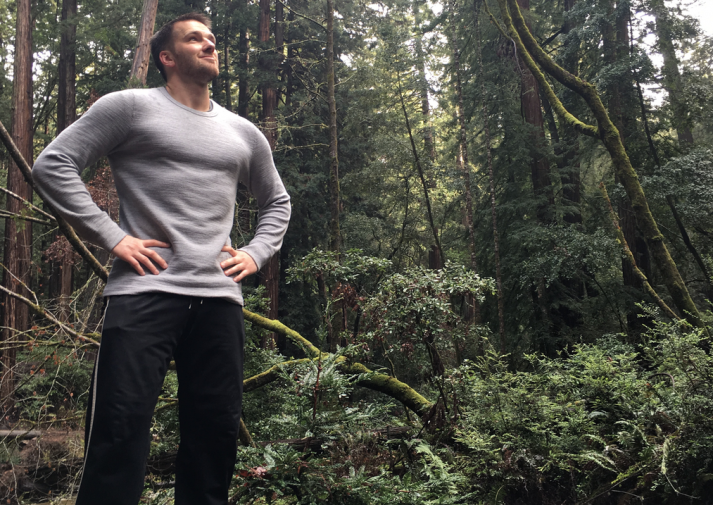
I took the above picture while hiking through Killarney National Park in Ireland many years ago, and every time I look at it, I can’t help but think of Tolkien’s Middle-earth masterpiece, so I apologize (not really) for all of the Lord of the Rings nerdery running throughout this post!
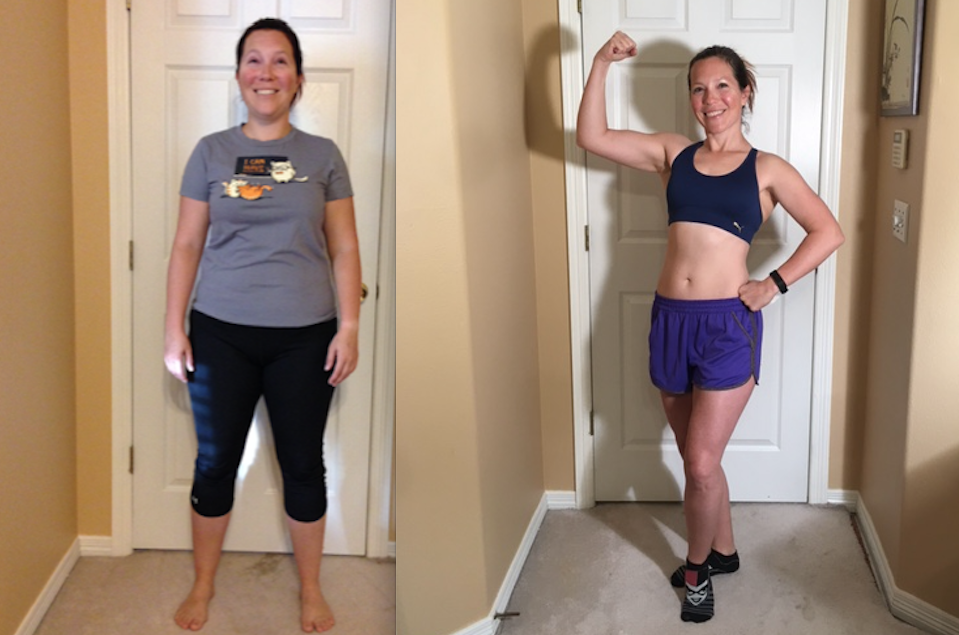
Our community members love hiking too. In fact, one of our recent success stories specifically cited hiking as one of the fun activities she loved to do to help her lose 50 pounds:
By the end of today’s post, my goal is to have you pick a trail, pick a date, and identify a fella or gal to join your fellowship (galship?).
Before we jump in, are you here because you’re learning to hike to lose weight? Did you hear it’s a fun way to exercise and get your body moving?
If so, you’ve come to the right place!
As I mentioned, some clients in our uber-popular 1-on-1 Online Coaching Program used hiking as part of their weight loss training. These folks would rather head outside than jump on a treadmill, and our coaches designed a program so they could do just that!
Here’s how it works: your NF Coach will build a custom workout plan based on your experience level and goals. Training to climb up a literal mountain? Maybe you need to get rid of an old ring? We’ll create a plan to get you to the top!
Alright, let’s get you hiking!
How Do I Find Hiking Trails Near Me? (How to Start Hiking)
When you think of hiking, you might imagine a bunch of road-tested perma-travelers with oversized backpacks, hiking through epic mountains for weeks upon weeks at a time.
Or maybe, a pair of hobbits setting out on a worldwide adventure to destroy a ring of awe-inspiring power.
If you’re just beginning your journey to a better lifestyle, just thinking about serious hiking can be enough to keep you inside your comfy hobbit hole.
Although hiking can be an epic undertaking, it doesn’t need to be!
A hike also can be super simple and fun:
A quick jaunt (such a great word, right?) around your local park after work.
Exploring the woods behind your house with your kids on a Saturday morning.
A half-day hike with your friends on a fun nature trail.
A full day or overnight hike that also includes camping.
Here’s my definition for hiking: A person (or halfing, or self-aware robot) exploring their surroundings and their feet are on the actual ground. Like, dirt. And grass.
Some might say it needs to be difficult, have a certain elevation change, require a blah blah blah. It literally doesn’t matter.
What matters is that you go outside and do something you wouldn’t have done otherwise.
Here in the Nerd Fitness Rebellion, hikers would fall into the Adventurer class.
If you’re looking for a fun “cardio” activity and want to exercise in a way that’s exciting, hiking is a great way to get your legs, feet, and body used to some strenuous activity.
You get to pick your speed and difficulty, and you can always find the right amount of challenge for you.
HIKING 101: 5 STEPS TO PLAN OUT YOUR ADVENTURE
1) Decide how long you have to hike
This is a beginner’s guide to hiking, we’re not looking to hike the Appalachian Trail.
Instead, we want to start with trails that can be done in less than a day, that won’t require you to pack a tent, or bring an extra change of clothes. Pick a hike based on how much time you have – do you have the entire Sunday? Or do you just have a few hours on a Tuesday afternoon? It took Frodo and Sam 6 months to get to Mordor, but you probably don’t have that much time.
2) Decide if you’ll be hiking solo or with a friend/group
I love hiking solo – it’s mobile meditation for me. However, it’s also more dangerous should anything happen while you’re out on the trail! If you’re heading into the wilderness, I’d recommend buddying up with a friend or your significant other for your hike. It’s the perfect bonding opportunity. This is especially true if they have more hiking experience or they know the area that you’re hiking in.
3) Determine your level
If you are a hiking newbie and out of shape, sending yourself out on an eight-hour hike through the unmapped wilderness isn’t a great idea.
Start slow, and pick places around your town that will allow you to stop when necessary and get back to your car or home quickly. No need to be a hero; it’s always better to come back excited and say “wow that was easier than I expected!” than to realize you’re six hours from home and out of steam. Well, being a hero is cool. But not THAT kind of hero.
4) Pick your hiking location
Keep it simple! Go to AllTrails.com, put in your zip code, find your hiking trail!
Or pull up Google Maps and look for big green plots of land. We call those “parks.” Google the park name, learn about it, and decide if that’s where you want to go. Do not overcomplicate this step. Just get started.
Ask your active, adventurous friends or coworkers if they know any good spots.
The world is FULL of hiking trails and awesomeness – you just need to know where to look.
5) Regardless of where you are going, let somebody else know where and when
If you are out hiking alone, take the time to email or call somebody and let him know that you’ll be hiking and when you expect to be back.
We don’t want to hear about any 127 Hours[1] stories on NF…that would make playing video games way more difficult.
You don’t need to tell them the brand of your underwear (please tell me you’re wearing underwear) or how many almonds you’re bringing, but let them know the important details so if they don’t hear back from you by a certain time they know to alert the proper authorities.
So right now, you should have answers to the following questions:
That last point is about our fun new habit-building app, which allows you to level up (literally) by going on walks or hikes.
You can try it for free right here:
What Shoes Do I Wear Hiking? (Proper Footwear)
This is simple: stilettos, your favorite mini skirt, a fishnet halter top, and a vest made out of raw meat. You’re welcome!
Wait, don’t do that.
I’m a big fan of being comfortable without breaking the bank. Like, you probably already have most of the clothing you need to go hiking.
WHAT SHOES SHOULD I WEAR TO HIKE IN?
We cover footwear extensively in our healthy feet article, but I’ll cover shoes specifically in the case of hiking here.
We at Nerd Fitness are huge fan of Merrell products – Merrell shoes of various types have treated me well for the past decade.
Just don’t let a lack of quality hiking boots keep you from a hike. If you’re concerned, pick an easy-paced hike with your current shoes to be safe and ramp up when you can ramp up your gear!
Some people hike the Appalachian Trail in their bare feet (must be part-Hobbit), so whatever you do: don’t let your footwear options keep you from getting started. Just make sure you break your shoes in and take them on test drives! Don’t take the tags off a new pair of shoes and then go on a multi-day hike – that’s a recipe for blisters and a miserable time.
Okay, let’s look at our feet.
Now that we’ve done that, let’s look at some shoe options:
LEVEL ONE: Hiking shoes – “hiking shoes” are great if you’re going to be doing simple day hikes or hiking occasionally: they have a good grip on the bottom, give you enough support, but aren’t too heavy that they are a hindrance.
Here are my favorite options if you are in the market for some new basic walking/hiking shoes:
Oh, what’s that? “Steve, I don’t have hiking shoes! Is this the end of the world?”
Well, do you have any sort of athletic shoe? Depending on the grip on the bottom, they could be decently okay for you to get started with when it comes to a basic hike. If sneakers are your only option, lace em up, pick a beginner hike, and see how they do. Just be careful on slippery surfaces – your kicks might not give you the grip you need to get over them.
LEVEL TWO – Hiking boots – I don’t hike enough or do enough multi-day hikes to justify the cost of hiking boots, but again I would point to Merrell boots if you’re in the market.
“Why boots over shoes, Steve?”
Although many prefer trail shoes (like yours truly), I can absolutely see the value in a great pair of hiking boots if you’re going on a serious hike, traveling for multiple days, or more. They have more ankle support, thicker tread, thicker shoes, and provide your feet with significantly more protection.
REI has a great article helping you pick between Trail shoes and Trail boots. My advice? Start with what you currently have before deciding whether or not to invest in big boots. Once you build up the habit of hiking and decide you want to make it a bigger part of your life, you can make the investment.
My advice? If you are going to buy boots, go to a professional store, get fitted properly, and then break them in over many weeks before going out on a trail.
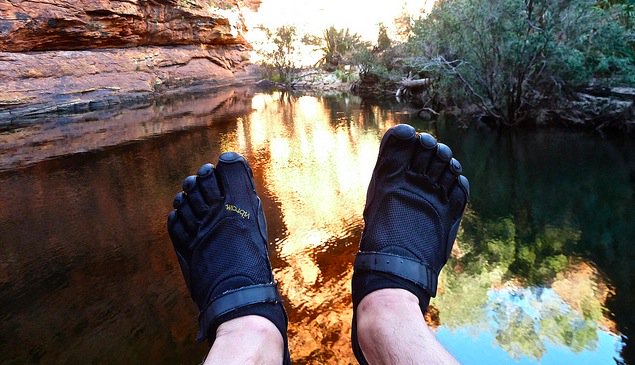
WEIRD BUT FUN FOR SIMPLE HIKES: Vibram FiveFingers – I hiked all around the globe, in various situations, wearing my Vibrams for close to 4 years. They made me feel like a ninja monkey and a hobbit. I got weird looks, but something just felt right about being able to feel the contours of the ground beneath me. I will say, when hiking in Vibrams it can be easier to twist an ankle when stepping on a root or rock, stepping on sharp rocks can hurt, so I found myself watching my feet much more than expected.
These days, I’m much more of a trail shoe kind of guy, but some still swear by Vibrams!
If you’re in the market for buying new boots, this quick video is a good primer:
WHAT SOCKS SHOULD YOU WEAR?
If you’re wearing boots or sneakers, you want to wear socks that aren’t going to give you blisters or make your feet all sweaty and gross.
Depending on how long the hike is, how serious you are about hiking, and your budget, you can look into merino-wool socks.
Like the rest of your outfit, what you wear on your feet will largely be dependent on a few things:
Weather! Are you hiking in the forest and it’s 72 degrees out? Or are you hiking up the side of the mountain in cold conditions?
Shoes! Are you in lightweight hiking shoes, lightweight hiking socks for the win. Hiking in big boots in cold months? Big thick warm socks are almost a requirement.
Budget! Are you shopping for specific socks? Tall or short? Great. If you are brand new to hiking, just wear whatever athletic socks you wear while exercising.
What’s the environment? If you’re hiking through grass, tall plants, etc. I’d go with tall socks (with your pants possibly tucked into them too). You’re not out there to win a fashion show!
Pro tip: Don’t go pantless through the wilderness. I cannot stress this enough.
The real advice when it comes to pants/shorts is heavily dependent upon your environment. If it’s going to be cold, shorts might keep you shivering. If it’s going to be hot, pants might get too uncomfortable.
Jeans? Ehhhhh. Sure. ONLY if it’s going to be a comfortable temperature and you have no other option. Being sweaty and hot while wearing jeans isn’t very fun.
I’m a big fan of my nerd pants – the Columbia Silver Ridge pants. Although they look kind of goofy, they’re incredibly lightweight, dry quickly, and can transform from pants to shorts in mere seconds!
Traveling through woods, not sure what you’ll encounter? Wear lightweight pants. I am horribly allergic to poison ivy and who knows what else, so I like to keep as much of my body covered while hiking to make sure I don’t make contact with anything I’m allergic to. [2]
WHAT TYPE OF SHIRT SHOULD I WEAR?
My favorite options are merino wool long shirts and t-shirts: they’re light, wick away moisture, hide odors, and breathe well – though you will be paying top dollar for them.
If you’re just starting out, pick an old t-shirt and rock that – you can work on optimizing performance once you’ve got a few hikes under your belt.
If you’re on a multi-day hike in various conditions then having lightweight merino wool shirts you can layer and not need to wash would be great. But just going for a hike in the woods in your backyard? Whatever you would wear while running, training, etc. Aka whatever won’t chafe!
SHOULD I BRING A JACKET?
I’ve been wearing this Mountain Hardware jacket on most of my hikes and it has been awesome (10 years and counting) – very lightweight so packing it isn’t a hassle, waterproof so it keeps me dry when it rains, and heavy enough to block the wind to keep me warm when it’s chilly.
Don’t go out of your way to buy a new jacket if you have a decent windbreaker, but if you’re going to be doing a lot of hiking or you’re in the market for a new coat, here’s my advice: go to a local store and try out all of the jackets until you find one you like.
Once you find the perfect jacket, go home and check online (you can sometimes find the same jacket for up to 60% less) – then, ask the local store if they’ll price match or just buy it online.
SHOULD I WEAR A HAT?
You should definitely bring a hat. I’m usually rocking my Nerd Fitness hat or my Red Sox hat (booo Yankees), but while hiking in Australia I wore a hat with a giant floppy brim to keep my ears and face protected from the sun.
The tops of your ears and back of your neck are highly susceptible to getting burned while on the trail, so either get some sunscreen or wear a hat that keeps them covered.
The same is true for keeping pesky things out of your hair, the sun from burning your ears and face, and keep you a bit cooler.
WHAT KIND OF BACKPACK SHOULD I BRING?
Digging into the ins and outs of backpacks is far beyond the scope of this article. I’d recommend you check out my friend Chase’s Bag Review Youtube channel – guaranteed to be the most fun you’ll ever have learning about bags.
So what would I recommend for a beginner on a hike? The bag you currently have! If you’re going on a short hike, you can start with simply whatever bag you have. The lighter and comfier it is, the better.
Multi-day hikes where you’re living out of your bag, packing up, and building a tent each day – this is beyond the scope of this article. I have rocked a Kelty Coyote bag that I’ve lived out of for months at a time, and have also used on multi-day hikes.
If you have the means and the time, and you’re planning to go on certain hikes, go to an outdoor specialty store, speak with a professional, and get fitted for your body type and the type of hike you’re doing!
THE MORAL OF THE STORY: VERSATILITY
If your weather forecast is “75 and sunny,” and you’re hiking for the afternoon through a gradually sloping wooded forest, you can severely limit what you’re bringing with you.
If it’s questionable or looks like things might change during the day, versatility is your best bet – a jacket, pants that can become shorts, a long sleeve shirt that you can take off or roll the sleeves up, etc.
Don’t go out and buy all new stuff until you’re sure hiking is an activity you want to invest in. Borrow from friends, make do with what you have
Just get started.
BY NOW YOU SHOULD HAVE A ROUGH IDEA OF WHAT YOU WILL BE WEARING!
In your head you should be saying, “Steve how can you read my mind?!
I just decided:
I’d hike in my current gym sneakers.
I have a pair of gardening pants and tall socks I can wear.
I have a floppy hat.
I feel like I’m good to go!”
Perfect.
Get Your FREE Nerd Fitness Resource Kit
15 Fitness traps you should avoid
Comprehensive beginner’s guide to Paleo diet
BONUS: How to level up your life and be the hero of your own story
How Much Water Should I Bring On My Hike?
If there’s ONE thing you should not leave home without, it’s a water container so you can stay hydrated.
“How much water should I be drinking on my hike, Steve?”
Great question. I knew you were smart from the moment you started reading this article.
You should be drinking 1 liter of water every two hours as a rough guideline. Increase this amount if you are hiking in very warm/desert climates.
FAVORITE WATER CONTAINERS:
I’m partial to stainless steel bottles or aluminum bottles over Nalgene or reused plastic bottles, but make do with what you have. Just make sure you bring enough water with you to keep you hydrated through your adventure.
Going on longer hikes?
Get yourself a hydration backpack (which can double as your hiking pack!) to transplant water more conveniently.
Not only that but make sure you have been consuming water before you go hiking so that you’re not starting at a hydration deficit.
Hangovers + early morning hikes – water = bad news bears.
What Gear Should I Bring on My Hike? (Sunscreen, Knives, and First Aid Kits)
If you’re just getting started, I’m going to guess you won’t be climbing to the top of a mountain in Alaska, but rather going on an introductory hike that will help build your confidence and get you rolling.
Here’s what I’d recommend you bring with you on your adventure:
Sunscreen – If it’s sunny outside and you’re hiking through the woods or up a mountain with a cool breeze in your face, you probably won’t be able to tell that your ears and face are getting absolutely torched. Get yourself some waterproof sweatproof sunscreen (SPF 30 minimum) to cover up those ears, cheeks, and back of your neck.
Bug spray – especially if it’s “that time of the year” in your area where bugs are out in full force. Nothing worse than coming home to arms and legs covered in bug bites.
First aid kit– Having some first aid stuff with you is a good idea: band-aids and moleskin for blisters and cuts, Neosporin or some type of disinfectant for cuts/scrapes, and maybe a bandage or two just in case. Outdoor stores sell travel first aid kits (as does Amazon), but I’d advise you to make your own (you should have these things in your medicine cabinet anyway – and then you’ll know exactly where everything is!).
Pocket knife – Not essential if you’re in a park, but a good thing to have with you out in the woods so you’re prepared for anything. Like McGyver.
Sunglasses – No need to go blind while out on the trail. You probably already have sunglasses floating around your house: I’d recommend bringing the $5 ones rather than $250 Ray-Bans.
Cellphone – a phone can help bail you out in case of an emergency, and if you have a smartphone it can multitask as your compass, distance tracker, mapper, and so on. Even if you have a cellphone, bringing a compass or GPS system isn’t a bad idea (unless it’s bright and sunny and you’re good at orienting yourself).
If you’re going on a longer hike, bringing a lightweight phone charger that you can use to charge your phone up quickly is usually pretty easy.
What Food Should I Bring Hiking? What Should I Eat on a Day Hike?
FOOD!
You know, the stuff that keeps us alive.
The answer to this will vary greatly depending on how long you plan on hiking for, the time of day, your love of snacking, so the advice here is going to largely mirror the advice we give in our nutritional posts!
Although by no means a complete list of snacks, this is usually what I like to pack in my bag before a hike:
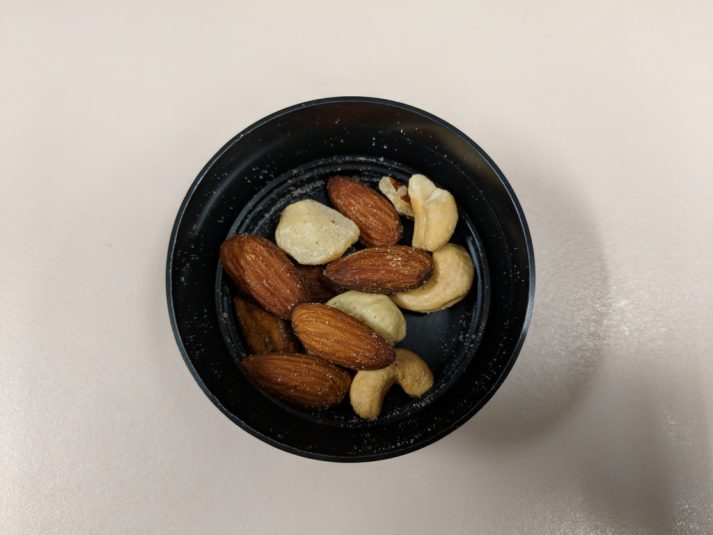
Nuts – Almonds or walnuts. Great for snacking on, loaded w/ healthy fat and protein. Nut butters are a good healthy fat option too – my favorite is Trader Joe’s raw unsalted almond butter. Ingredient: almonds! They are high in calorie content however, so if you are trying to lose weight, don’t do a 10-minute walk and eat 4000 calories worth of nuts. We in the business like to call that “counterproductive.”
Fruit – I throw two or three apples in my bag; apples and nuts mean I’ve pretty much got all of the fat, protein, and carbs I need for my day. Things like bananas, raisins, and other fruit are good options as well – pick based on your personal preference and tastes. Just be careful with dried fruit, because it can have lots of sugar and calories, so don’t kid yourself into eating 5000 calories worth of dried fruit and call it healthy! It’s something we explore in-depth in our guide “Is Fruit Healthy?“
Beef jerky!Make your own or go with some high-quality store-bought stuff. Lots of protein, easy to pack, and keeps well. Mmmmmm.
What about trail mix or granola bars? You’d probably think granola bars and trail mix are synonymous with hiking, but I’m actually not a fan of either unless they’re homemade – these products are usually loaded with salt/sugar and processed grains and are pretty damn unhealthy.
If you’re gonna go with trail mix, make your own with dried fruit and raw unsalted nuts. If you DON’T have other options, tossing a few granola bars in the bag isn’t the end of the world.
A book (optional) – I LOVE READING (more than I love lowercase letters), so I always travel with my Kindle. Although hiking with friends can be fun, I also get a huge thrill out of hiking out to a remote location overlooking a valley or sitting on the edge of a river with a book so that I can spend a few hours getting lost in a story.
If it’s a multi-day hike and you’re avoiding technology, then bringing a dead tree book is worth the extra weight in your bag!
A camera (optional) – Although I have a camera that I travel with, most of the pictures I’ve been taking recently have been done with my iPhone using apps like Camera+ or ProHDR (which I freaking love). Both apps are worth the price.
You don’t need to be a great photographer, just need to capture the moment to look back on fondly as a crotchety old grandpa. Obviously, if you’re a serious photographer, you’ve already planned to pack your DSLR so I won’t get into that.
Seven Hiking Tips for Beginners
KNOW THE LOCAL WILDLIFE! Do a quick search of your hike to know what sorts of critters you’ll encounter on the trail. If you are hiking in bear country or snake country, these are things it’s very important to know. Whether it’s carrying a can of bear mace or knowing what to look for, this can help you prevent serious problems. Also, watch out for wild ostriches.
CLEAN UP, CHECK FOR TICKS – if you’re in a heavily wooded area and carving through the wilderness, check yourself for ticks and make sure you take a shower with hot water and soap immediately when you get home in case you came in contact with any poisonous plants or things like that. I can’t tell you how many times I woke up with a swollen face as a kid because of my hike through poison ivy the day before.
AIM FOR THE HIGH GROUND – I love hiking to tall things: the top of a mountain, the high point in a town, the roof of a building. It gives you a great halfway point to stop, eat some lunch or dinner, and enjoy the view; plus, you already know exactly how far you need to go on your way down. One piece of advice on going DOWN a steep mountain or a lot of steps: Shorten your stride, and take care to land on the balls of your feet with a bent knee if possible – if you’re landing on your heels for thousands of steps, it can wreak havoc on your knees and joints as there’s no shock absorption. I remember how sore my knees were the day after hiking down Colca Canyon in Peru with my buddy Cash because I didn’t make an effort to soften my steps and take care of my body.
URBAN HIKING – “But Steve I live in a city, I can’t go hiking!” Why the hell not? Load up your backpack, map out a route on Google Maps, maybe even find a tall building – avoid the elevator, climb the steps. Or walk until you find a park, sit on a bench, and read a book. Sure, it’s not the same as hiking the Rockies, but it will still get your heart pumping and feet moving! Like The Goonies teaches us, adventure can be found in your own backyard with the right attitude!
KEEP TRACK OF IT – If you have an iPhone or Android, download a hiking or running app to keep track of how far you go and how much hiking you do. Although I haven’t been tracking my hikes abroad (I leave my phone in Airplane mode while traveling), I’ve heard great things about RunKeeper and EasyTrails. If you have more apps or suggestions on how to keep track of your hikes, let me know in the comments and I’ll add them here. I personally use a cheap Fitbit Flex 2, which tracks my steps and elevation. Good enough!
GEOCACHING – Great fun can be had while geocaching. Simply go to the website, track your location, and then decide on which cache you’re going to track down. Think of it as a real-life version of Indiana Jones or Uncharted, minus the Nazis and undead warriors. We geocached around Sydney for a Nerd Fitness meetup, and it was delightful!
GIVE A HOOT, DON’T POLLUTE – Pack it in, pack it out. If you bring anything with you, it better be coming back with you. Don’t leave trash in the woods, and pick up any extra trash you see out there. The wilderness thanks you for your service, citizen!
Not all those who wander are lost (sTART hIKING tODAY)
This article is just a primer, meant to whet your appetite and make you excited to go hiking and exploring the wonderful world around us.
Here are a few other resources on hiking if you want more information. Feel free to let me know more in the comments:
I challenge you to plan a hike for this upcoming weekend. YES, even if you’re in the opposite hemisphere and it’s really cold out!
Get some great snacks, strap on your shoes, grab a friend, and go explore.
I’d love to hear from you about the place you’re going hiking this weekend.
Leave a comment below and let me know:
Where you’re going.
When you’re going.
And what you’re most excited about!
Promise that you won’t hike pants-less.
Any tips you have for your fellow hikers.
-Steve
PS: Still unsure if you’ll be ready for your big hike? I’ll again remind you of our 1-on-1 Online Coaching Program. We have clients who successfully used the program to train for hiking up large mountains, and we’d love to see if we can help you too!
PPS: If Coaching ain’t your bag, you can always use our new app to jumpstart your new adventures!
The dude went hiking alone, got trapped under a rock, and had to cut his own arm off to get free and survive
True story: when I was a little kid, I made myself a little bow and arrow (trying to be like Link) and unknowingly feathered my homemade arrows with poison ivy leaves. My face swelled up for 2 weeks
I know what it’s like to hate exercise, and ALSO want to lose weight and see results. Ugh.
We’ve built an entire company and community around helping people overcome these obstacles – our Online Coaching Program helps people find exercises they love, and also how to make the right nutritional choices.
We are all on a unique journey and we’d love to help you with yours!
ExercIse Sucks. Do This Instead.
“But Steve, I don’t like to exercise!”
While some are like Odie and love to run around all day, others are like Garfield and feel like they must be allergic to exercise.
Exercise is merely a supporting actor, which is why we don’t ever NEED to spend time doing exercise we hate.
We’ve already talked extensively on Nerd Fitness on how to eat nutritiously, so I won’t hash that out here.
So let’s talk about exercise.
Sure, it would be great if we all strength trained 5 days a week and got super strong, but the reality is most of us don’t have that time – or the desire – to hit the gym.
Overweight people have a tendency to sit, while lean ones have trouble holding still and spend two hours more a day on their feet, pacing around and fidgeting, researchers are reporting in findings published today.
The difference translates into about 350 calories a day…
350 extra calories burned per day ain’t no joke!
As we cover in our “How many calories should I eat every day?” guide, burning an extra 350 calories per day can result in sustainable weight loss and maintenance over time for many.
Not only that, but when you factor in inertia (an object at rest tends to stay at rest, and object in motion tends to stay in motion), it paints a pretty interesting picture:
We spend our lives trying to be more “efficient.” What if the key to weight loss is to be LESS efficient?
From standing up more frequently to parking FARTHER away from the grocery store, every additional step or movement counts. Today’s guide shares TONS of ways to get yourself used to moving more frequently.
I’m actually air drumming and shuffling my feet as we speak!
From dancing to yoga to climbing to roughhousing with your kids, it all counts.
This brings me to today’s point:
Exercise is a bonus. Exercise helps your heart get stronger, can help build muscle, usually gets you outside the house and absorbing vitamin D, and brings you a litany of other health benefits. Also, any additional calories burned is a bonus!
Exercise can help us make fewer unhealthy food choices. Instead of “I earned this” you can start telling yourself: “If I’m going to exercise regularly, I might as well make it worth it by eating right too.”
Daily exercise is a constant reminder that we are leveling up our lives – that we should continue to make other good choices or we’re practically wasting our time.
This is the type of stuff we focus on – with personalized instruction, with each of our online coaching clients.
Some clients are learning Olympic lifting, while others are simply focusing on taking the stairs more and tracking their food.
We are all on a unique journey and we’d love to help you with yours!
40 Ways to Exercise Without Exercising
#1) Hiking, especially with friends – Strap on a pair of shoes, get out of the comfy confines of your hobbit-hole, and go explore the world around you!
Make sure you follow our Beginner Hiking Guide on how to find a hiking spot near you, what shoes to wear, what to bring with you, and more.
#2) Walking – No time to hike? Go for a simple walk. Even a 15-minute brisk walk is enough time to get close to a mile walked, which gets you one step closer to Mordor.
Do you have a 30-minute meeting at work? Have a walking meeting instead. Steve Jobs was known for doing this.
You should know Tim, a member of our Nerd Fitness community who lost 50 pounds – while injured – just by fixing his nutrition and going for long walks every day!
I’m proud that Tim used the philosophies laid out in our online courses under Nerd Fitness Prime to get his results!
#3) LARP – Live Action Role Playing. Might seem silly to those on the outside, but to those playing, it’s an amazing adventure that reminds us how awesome our imaginations are.
Also, depending on the game, you could be wearing a heavy costume, swinging heavy weaponry, and running for your life!
#4) Rock Climbing – I love rock climbing. It’s one of the best arm/back/forearm workouts in existence, you get to feel like a badass when you reach the top of the wall, and all climbing routes are graded so you can level up the challenge as you get stronger/fitter/better.
It’s a fit nerd’s dream!
#5) Geocaching – If rock climbing is a fit-nerd’s dream, then geocaching is an adventure nerd’s dream brought to life. Become a real-life treasure-hunter (Lara Croft? Nathan Drake? You decide!), and get a great workout in while you’re at it.
Or, if you’re truly nerdy, you can do some Digital Geocaching with Pokemon Go or Harry Potter: Wizards Unite.
#6) Dancing – Ever tried serious swing dancing? You’ll be sweating within ten minutes. How about hip hop? Drenched in sweat, and sore as hell the next day.
Zumba? Tango? Flamenco? You’d be surprised at what you can sign up for and what will elevate your heart rate.
#7) Roughhousing with your kids. I don’t have kids, but when I do, you can bet your ass I’ll be the dad out rolling around in the back yard with them. Don’t forget what it’s like to be a kid – it keeps you young.
#8) Climbing on stuff – A few years back, I attended a great conference, Midoricon, and I was walking through the woods with NF Rebel Joe (No, not THAT Joe).
It was awesome to see this guy, having lost 100 pounds since finding Nerd Fitness, explore the woods like it was no problem: climbing on stumps, balancing on fallen trees, climbing trees, and more.
We work with LOTS of Coaching Clients to get them outdoors and help build them “fun climbing programs” that burn tons of calories but don’t really feel like exercise.
Whether it’s Kung Fu, Muay Thai, Tae Kwon Do, Karate or Capoeira (breakdance fighting, seriously), there’s a martial art out there that will make you feel like a badass.
And might help you defeat your archenemy.
#10 Consider a standing desk – Although we all know that correlation does not prove causation, it’s no surprise that there’s a strong correlation between sitting all day and an unhealthy lifestyle.
Why not fix your posture, strengthen your legs, get more “fidget time” in, and spend the day being more productive with a standing desk? I have THIS desk and it allows me to switch between sitting and standing.
#11) Have an active meeting – Hat tip to Charlie Hoehn on this one. If somebody wants to meet up with you for coffee, suggest something active: throwing a baseball, tossing a frisbee, going for a hike – anything that gets you up and moving.
I say yes to pretty much anybody that invites me to play golf. Wink wink.
#12) You know… that thing that consenting adults do?
Yeah. Do that.
Self-explanatory.
Moving on…
#13) Clean! – Ugh, nobody likes to clean the house/apartment. It’s not my favorite thing to do. So I instead make a game out of it.
I see how much I can accomplish with a single song blasting at max volume, while probably also dancing. I also CRUSH podcasts while doing the dishes.
Of course, after getting through one song, I figure “welp, I’ve already started, might as well keep going.”
#14) Try handstands – This is a fun activity that builds up some serious arm and core strength and will leave you sweating bullets after even a few minutes.
So go find a park, go do handstands, cartwheels, somersaults, and whatever else makes you feel young again.
#15) Parkour – Our Beginner’s Guide to Parkour is one of the most popular on Nerd Fitness. I don’t care how old you are, there’s no reason you can’t get started with rolling around in your yard and vaulting over picnic tables and bike racks.
Or, you can do it in your office:
#16) Playout – Is Parkour too serious for you? Try a playout! Spiderman was on to something – climbing walls, swinging from skyscrapers, and popping flips around the bad guys.
You might not be able to swing between buildings, but you can definitely visit a playground in your area and get creative!
#17) Adult gymnastics – In the same vein as parkour, gymnastics will help you build some of the BEST real-world strength you can get with any type of exercise, and it’s all done in a playful way without a single weight being picked up.
Swing from rings, somersault, flip onto pads, and more.
There are gyms all over the country.
#18) Yoga – Build flexibility and strength, plus learn to freaking relax.
There are a million kinds of Yoga, including awesome stuff like Acro-Yoga, baby goat Yoga (not kidding), and Yoga with beer.
Sign up for a few different kinds and see which one lines up the best with what you’re looking for.
#19) Play video games that make you be active – Beat Saber. DDR (Dance Dance Revolution) counts too. Just Move. Anything that gets you off your ass and moving!
Oh, what’s that? You’re playing a normal game like Grand Theft Auto V? Make a rule that you can only play while standing up, or that you have to do 10 push-ups every time you die.
That’s what I do to keep myself from spending twelve hours on the couch in marathon gaming sessions!
#20) Play on a playground – Go down the slide, swing across the monkey bars, climb the rope all, balance on the balance beam.
Create an obstacle course for yourself and see how quickly you can get through it.
Full guide to the most effective diet and why it works.
Complete and track your first workout today, no gym required.
#23) Bike to work – I know there are a lot of Rebels in our community who dropped a bunch of weight by making one change: they biked to work, or biked to their friend’s house, or started biking generally.
You get from Point A to Point B, you save money on gas, and you get a workout.
Plus, you can do it with friends!
Here’s our Guide to Biking if you want some help getting started.
#24) Play a childhood game – What games did you play as a child? Capture the flag? Kick the can? Simple tag?
Get a few friends together and give it a try – it will be the most fun you’ve had in a while!
#25) Park at the far end of the parking lot – Every step counts.
Every tiny decision that is slightly different than the “OLD you” counts.
#26) Take the stairs. It’s only two flights! And we are designed to move. You can do this.
Sure, you’ll get winded the first handful of times. But it eventually becomes routine.
And it all counts! Make a game out of it.
#27) Crush audiobooks while “exercising.” This is called ‘temptation bundling.‘ Pair something you love with an activity you’re trying to do more of.
But I bet if you could only listen to Harry Potter (for the 600th time) while walking on a treadmill, you’d be more likely to get to the gym.
#28) Build stuff. Whether you’re building a fort with your kid in the backyard, or trying to figure out why you have 5 extra screws in that IKEA dresser you’re putting together, building stuff involves lots of moving and bending and picking up and maneuvering.
Warning: you’ll swear no less than 100 times building furniture. Earmuffs!
#29) Sit in a squat, or pike position on the floor while watching TV. No, not leaning against the couch. Sitting up actively engaging your core!
You can also do some sort of stretch or movement like these bodyweight exercises during commercials (or in the 15 seconds between Netflix episodes!)
#30) Impromptu dance parties. Kids or no kids, I find that great Disney songs are fantastic for bringing out your inner child.
Blast the tunes, dance around the house, and be absurd. WHO CARES! As a wise woman once said…”Let it gooooooo.”
#31) Go for a walk while on the phone. What if you just decided you had to stand for all of your phone calls?
For starters, I know many people who do phone interviews while standing because it makes them more alert and a better guest.
Next: you’re gonna get so many steps in while on the phone without realizing it!
#32) Having an impromptu picnic. Instead of sitting and gorging yourself at the dining room table, why not eat on the floor?
Grab a blanket or a towel, eat in your living room or head out into the backyard, and make it a picnic!
You’ll need to adjust your posture and seating style constantly.
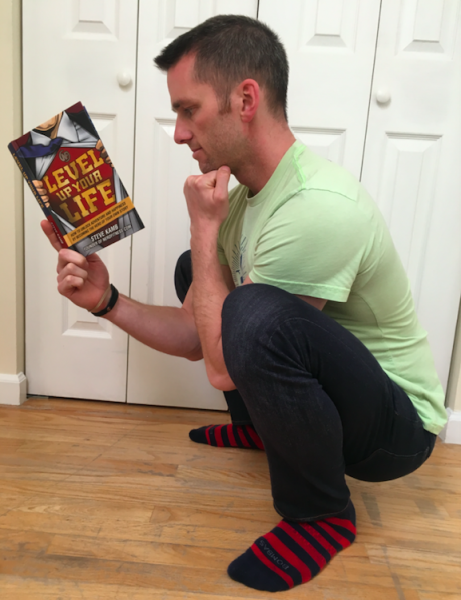
#33) Sit in a squat. We cover this in our “How to squat” guide, but sitting in a deep squat – often for long timeframes – is built into us as a species! We’ve just become soft from sitting in chairs all day long.
I try to accumulate 15 minutes of “squat time” each day – sitting in a squat while reading a chapter in a book, or journaling, or answering an email with my laptop on the ground.
Here I am sitting in a squat while reading Level Up Your Life(available online and in bookstores nationwide!)
#34) The “Pull-up bar Tax”. Get yourself a door-frame pull-up bar. Put it on a door that you have to cross through regularly.
And every time you go through, you have to do either 1 pull-up, 1 negative pull-up, or 10 seconds of hanging from the bar.
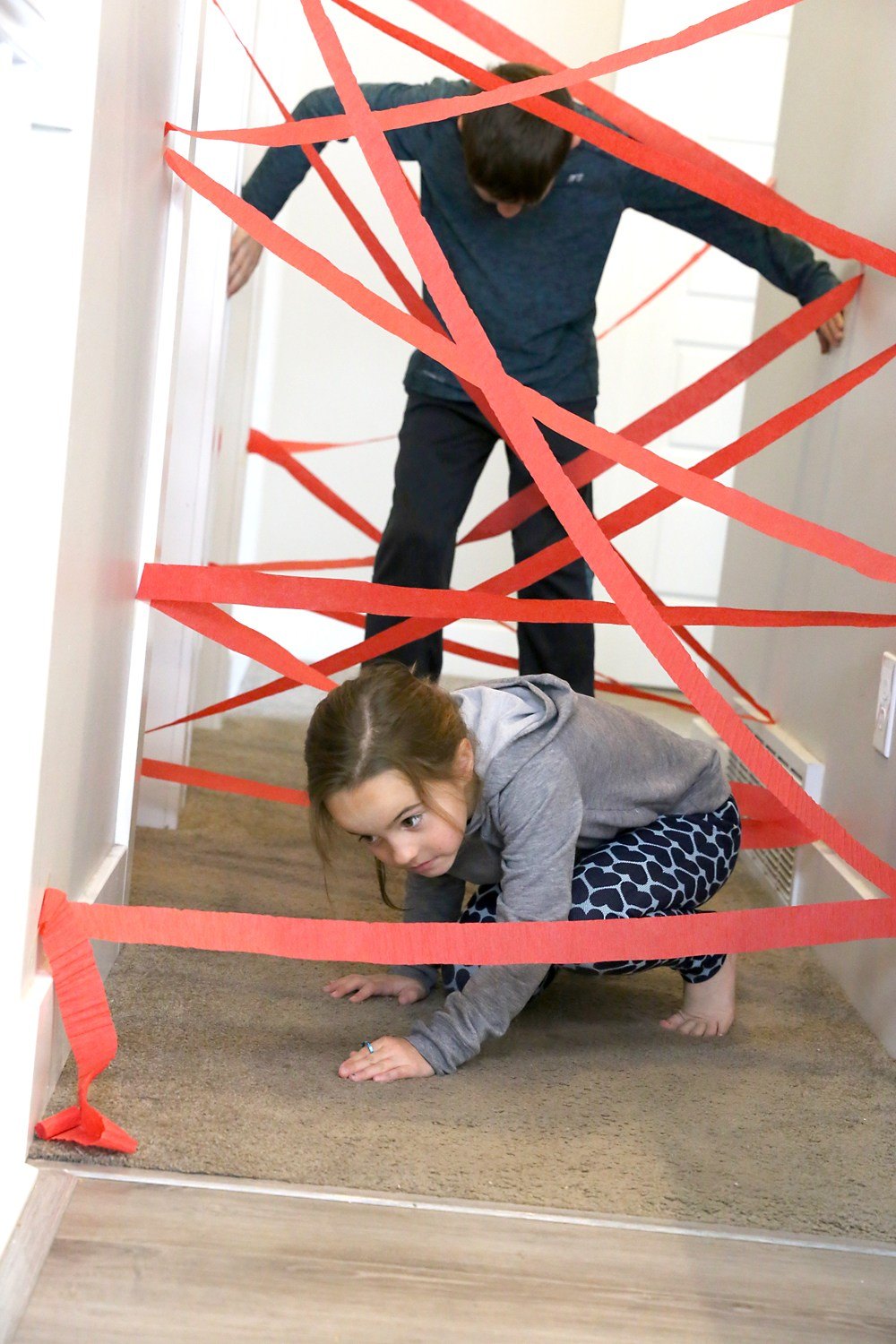
#35) Lasers around the house. Set up colored string pulled tightly across your kid’s rooms or in certain hallways, and you have to go over and under the lasers each time you traverse the hallway.
Don’t touch the lasers!
#36) Climb a tree. Your level of safety and ability on this will be dependent on your experience here, but I remember climbing trees like a monkey as a kid and loving every minute of it.
Even if it’s just hanging from a tree branch or trying to scramble up to a low branch, it can be a great way to “exercise.”
#37) The floor is lava. This is both great for exercising around your apartment, for a fun date night or night with the kids, and for playing True American. Though one is slightly more healthy than the other.
#38) Casual Parkour. From avoiding cracks on the sidewalk to balancing on curbs, or jumping from tile to tile, or hopping up onto a bench and then back down, it all counts!
Just get yourself to move differently than you would have otherwise! We are currently working with a woman who has lost 100-pounds through our Coaching Program, and her exercise is all “fun parkour in the woods behind the house!”
#39) Literally fidget more! Yes, from tapping your toes to music and twitching your legs to the beat of the music. Getting up and sitting back down. Doing laps around your office.
You don’t need to get a standing desk or treadmill desk, but there’s a definite correlation between those that can’t sit still and body composition.[1]
#40) Your kid is a backpack! From piggyback rides to playing horsey, staying active with your kids is really powerful in instilling a love of fitness in them.
If you’re a badass mom like Brownwyn – a success story from Nerd Fitness Prime, you can even do pull-ups while your kid holds on!
Full guide to the most effective diet and why it works.
Complete and track your first workout today, no gym required.
Challenge yourself to Have fun: Next Steps!
If you are looking for more guidance beyond the 40 Fun Exercise Suggestions above, we have three options to continue your journey:
1) Join our epic Online Coaching Program! We create personalized programs for each customer based on their lifestyle, goals, and personality. From parkour in the park to just walking more with your children, or even “becoming a badass powerlifter,” we cater each experience to each person.
2) If you’re looking for a bunch of fun ways to exercise, check out NF Journey. Our fun habit-building app helps you move more frequently, eat healthier, and level up your life (literally).
We assign fun missions daily to get you to exercise in a way that doesn’t feel like exercise…because it’ll feel like a side quest instead.
Try your free trial (no credit card needed) right here:
3) Enlist in The Rebellion (it’s free)! Sign up for our biweekly newsletter and join the Nerd Fitness Rebellion!
I’ll send you tons of free guides and bonuses to help you get started on your journey today.
Sign up below:
Get your Nerd Fitness Starter Kit
The 15 mistakes you don’t want to make.
Full guide to the most effective diet and why it works.
Complete and track your first workout today, no gym required.
No matter which path you pick above, I want you to commit to trying something new, or doing something different, at some point in the next week:
Say yes before you can say no. Stop saying “I don’t have time” and realize you do. Stop saying “I can’t afford it” and find a way to make it a priority. Do all of this before you can talk yourself out of it. The best way to do that?
Commit in advance. Put down a deposit and make an investment in yourself. I pre-paid 6 weeks of swing dance lessons. Having already paid for it, I knew I’d be just throwing my money away if I didn’t attend.
Go with a friend. I went to my swing classes alone, which forced me to further develop my social skills, but if you happen to be TOO afraid to attend a class, get a friend to drag you there.
Expect to suck. If you are learning a new skill, expect to suck at it. You’ll get better as long as you remember to…
Have fun. Remember, we could get hit by a bus tomorrow. Every day above ground is a blessing, so enjoy it!
When in doubt, move more.
That one thing you always wanted to try but have been putting off?
Today’s a good day to get started. Just take that FIRST step.
Google classes in your city. Find a site that focuses on beginners, and read about it. If there’s a place to pre-pay or make a deposit, do it.
Today I’m going to lead you through an all standing Pilates routine.
In less than 10 minutes, you’ll work your entire body – all while standing. So whether you’re looking for a standing workout due to health reasons or you’re traveling and looking for something you can do anywhere, anytime – this workout is for you.
You’ll get an amazing core workout, some great lower body exercises, and we’ll even mix in some great stretches, so you’ll end this workout feeling strong, flexible, and energized to take on the rest of your day.
Today we are diving into Part 2 of Robin’s conversation with Dr. Aviva Romm, and if you haven’t listened to Part 1 yet, you are going to want to do that right now)! It is full of so much good information related to hormones through all stages of life and the hidden hormone epidemic that exists among women.
In Part 2, Dr. Romm reveals the pros and cons of hormone replacement therapy, simple ways to bring more balance to your hormones, a very practical and realistic way to improve brain fog, and tips for navigating your hormones on the journey to menopause. Dr. Romm also answers your questions on everything from sex drive, to birth control, to supplements to consider for healthy hormones, and so much more.
If this two-part conversation with Dr. Romm was helpful for you, we’d love it if you could share it with your friends, family, and anyone that would benefit by listening. The more women we can empower with this knowledge, the better!
Show highlights: what you can look forward to in this episode!
Perimenopause isn’t being talked about enough, but there are botanicals and herbs that can help restore the adrenal stress response associated with it
She gives her thoughts on going the synthetic hormones versus natural route, and what you can do to feel more empowered about your options
There is hype surrounding the marketing of certain synthetic hormones, but don’t believe everything you see being promoted
Our mind is powerful, so be careful how you think of menopause! Certain studies prove that our thoughts around the subject will impact the symptoms we experience.
If you have brain fog, often hydration is the issue and drinking more water is where to start with alleviating it.
Sex drive is way more complicated that being just about our hormones, so try to unpack what is really going on in your life and impacting it.
The birth control pill depletes you, but there are things you can do and take to reduce how it affects you.
If you write down your questions before visiting the doctor, bring an advocate with you and wait to put your gown on at the office, you will be in a much better position to advocate for your health once there.
It’s been a few years since I’ve run the Hackney 5k – 2015 since I last wrote about it on the blog – but some things don’t change. Like the weather – it’s the Hackney 5k and Hackney Half Marathon…
If you’re curious about where fruits and other foods such as potatoes fall on the “healthy eating” spectrum, you should check out the Nerd Fitness Diet guide and cheat sheet. It’s a level-up system designed for you to adopt new healthy habits that will stick, by slowly progressing you from a newbie to an expert.
You can check it out for free when you join the Rebellion!
Download our free weight loss guide
THE NERD FITNESS DIET: 10 Levels to Change Your Life
Follow our 10-level nutrition system at your own pace
What you need to know about weight loss and healthy eating
3 Simple rules we follow every day to stay on target
Is Fruit Good for you?
As we lay out in our “Healthy Eating” guide, fruit is absolutely healthy and can help you reach your goals – in the right quantities.[1]
There is A LOT of evidence that the excessive intake of added sugar is indeed harmful to human health. Study[5] after study[6] after study[7] shows the adverse effects of added sugar into the diet. Fruit contains fructose, which is a sugar.
Sugar is a carbohydrate. If you’re following the Keto Diet, the Paleo Diet, or any other low-carb plan, you need to limit the number of carbs you eat – which includes sugar.
If you’re not doing Keto, you don’t need to worry about that second point, because you aren’t eliminating carbs.
But how about the first one? Is the sugar in fruit harmful to us?
In one word: no.
Fruits are loaded with fiber and water, so it’s not strictly composed of fructose.
It also takes a decent amount of effort to chew an actual piece of fruit.
All of this slows down the absorption of fructose from the fruit.
According to Dr. Ludwig of Harvard Medical School, if you eat whole fruit, it’s difficult to consume enough fructose to be harmful.[8]
Notice that caveat “whole fruit.” This is critical and deserves its own section.
But first…
Is Eating Fruit Good for Weight Loss?
We’ve established that fruit is good for you.
That news shocks exactly no one.
But is fruit good for weight loss?
To answer that question, let’s consider two points:
#1) Fruit can be generally low in calories
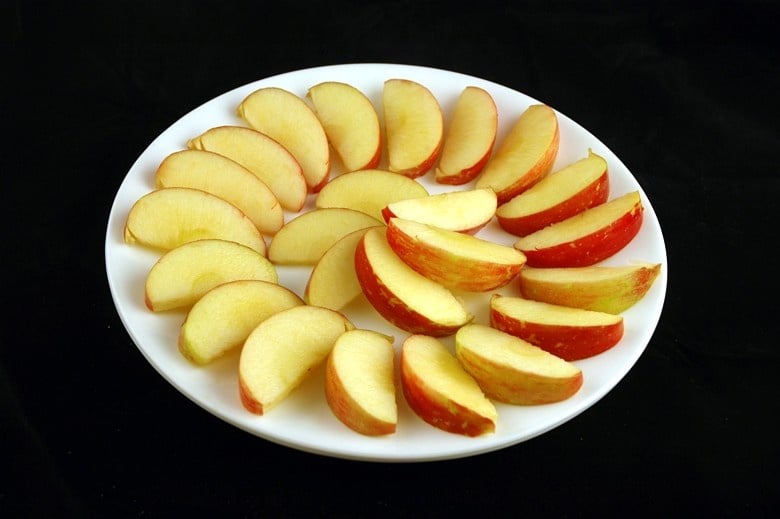
Here is 200 calories worth of an apple (thanks to WiseGEEK):
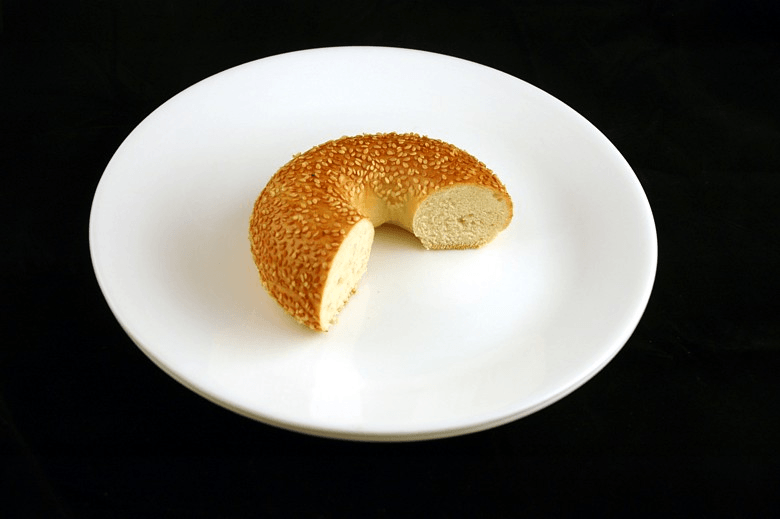
Compare that to 200 calories worth of a bagel:
#2) Fruit can be satiating
Fruit can help kill hunger or scratch that “I WANT SUGAR” itch. When you eat 200 calories worth of an apple, it can help make you feel fairly full.
When you eat 200 calories worth of bread, you haven’t even finished a single bagel yet.
Studies done on the satiating power of different foods have shown fruit to be some of the most satisfying food studied. People feel more full from eating an apple or an orange than from eating beef or eggs.[9]
In summary: Fruit can be high in nutrients, low in calories, and can help us feel full.
As we discuss in our Guide to Healthy Eating, this is a great recipe for successful weight loss.
So yes, fruit can indeed be part of a meal plan to lose weight.
We need to stop and make a point here: fruit, like every other food, obeys the laws of thermodynamics. Meaning the calories in fruit will still contribute to your total daily calorie goal.
Why does this matter?
Weight loss comes down to eating fewer calories than you burn.
Yes, there’s nuance, hormones messing with our hunger signals, and so on. But successful weight loss depends on consuming fewer calories than you expend consistently.
If you’re trying to lose weight, you need to establish calorie goals. Fruit can factor into those goals and the calories should be accounted for.
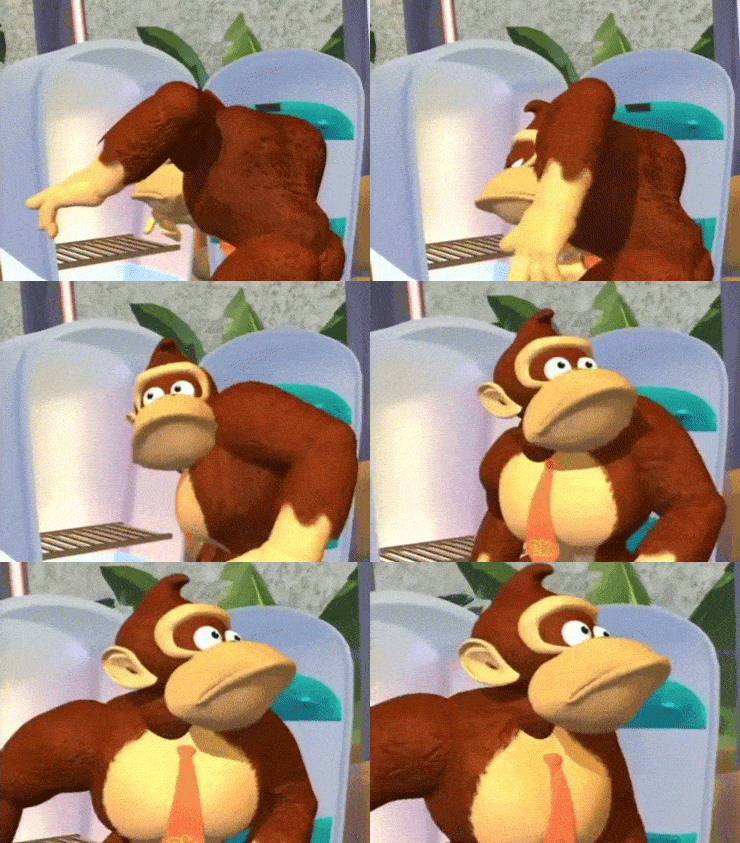
This means that even with all the nutrients and fiber, eating all of your meals along with 30 bananas a day will result in you wondering “Why can’t I lose weight?”
Save that for Donkey Kong:
Where fruit can really get you into trouble is if you start to move in the direction of “fruit-like.” We’ll jump to that with our next section.
First, if you are trying to lose weight and wondering where fruit fits into the equation, I want you to know you’re on the right track.
Lots of our coaching clients come to us with all sorts of different fitness questions, like what to eat and how to exercise, proving we all start from unique situations. The important thing is that you’re beginning to ask questions and looking for answers.
If you want help on your journey, we’re here for you. Our 1-on-1 Online Coaching Program partners busy people just like you with a coach who will get to know you better than you know yourself.
Is Fruit Juice Healthy?
While fruit can 100% be part of a healthy diet, “fruit like things” don’t quite get our stamp of approval.
Without the fiber, water, and intact cell walls of the fruit, your body will absorb the fructose very quickly.[10]
Not good.
Let’s chat specifically about “drinkable” fruit first:
#1) Fruit juices (cranberry juice, orange juice, grape juice): these are high-calorie, sugar-filled beverages.
For example, here are the calories in one 8 oz serving of:
Apple Juice: 103 calories, 22 g of sugar
Orange Juice: 103 calories, 18 g of sugar
Grape Juice: 136 calories, 32 g of sugar
For reference, an 8-ounce glass of Coca-Cola would have about 26 grams of sugar.
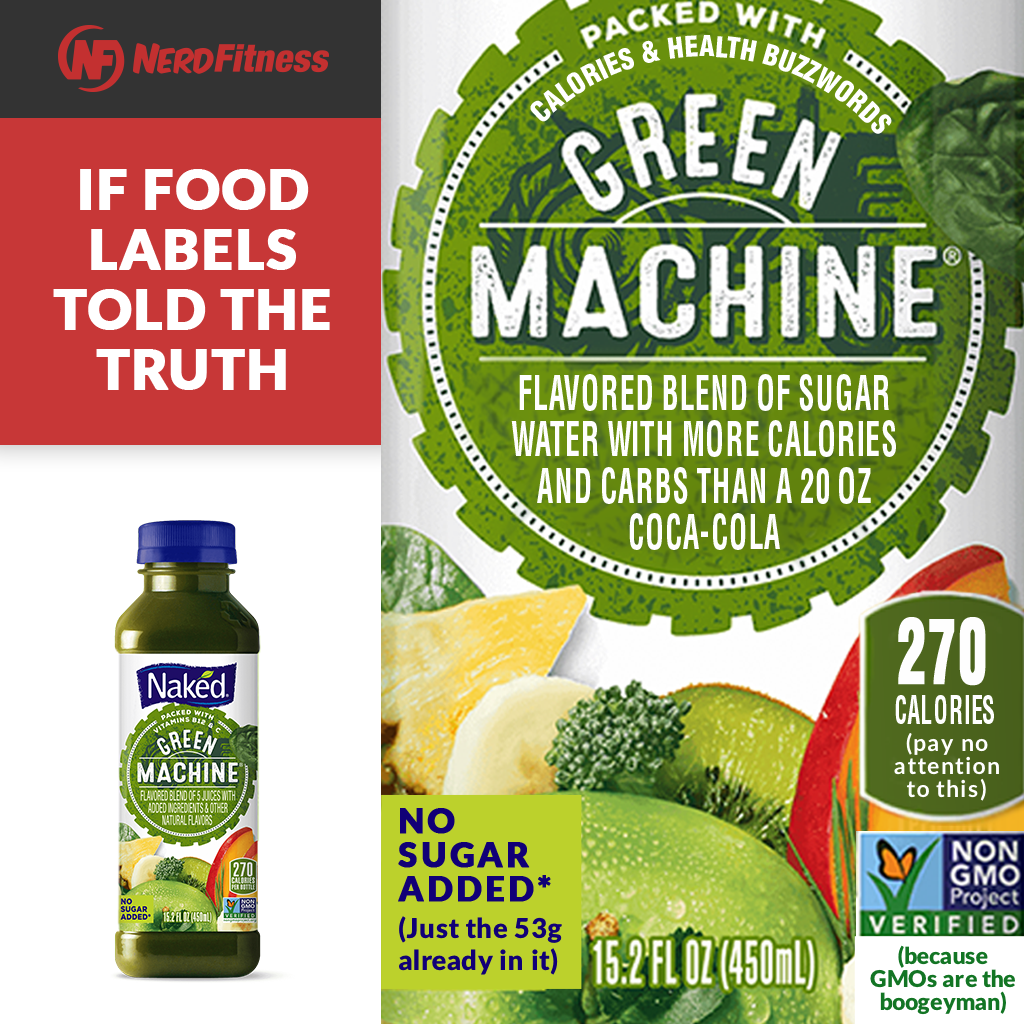
2) Fruit Smoothies: Just because it’s a fruit smoothie doesn’t mean it won’t make you fat! Have you seen the calorie count and sugar content of smoothies and ‘green drinks’? Yikes.
Green Machine Naked Juice (15.2 oz or 450 ml bottle): 270 calories, 53 g of sugar.
Smoothie King Banana Boat (20 oz or 591 ml smoothie): 450 calories, 70 g of sugar.
Another “fruit-like thing” we need to talk about is dried fruit.
Dried fruits are notoriously easy to overeat because they are so small. Since the water has been taken out, all that’s left is the sugar and fiber.
Here’s 1 serving of raisins, which is 108 calories and 21 g of sugar:
If you are saying “oh man, I eat 5x that many raisins when I eat them…” then multiply those calorie and sugar numbers by 5!
Per weight, all dried fruit will be higher in calories and sugar than its “whole fruit” counterpart.
The other thing to consider is that sugar is often ADDED to dried fruit to make it even sweeter.
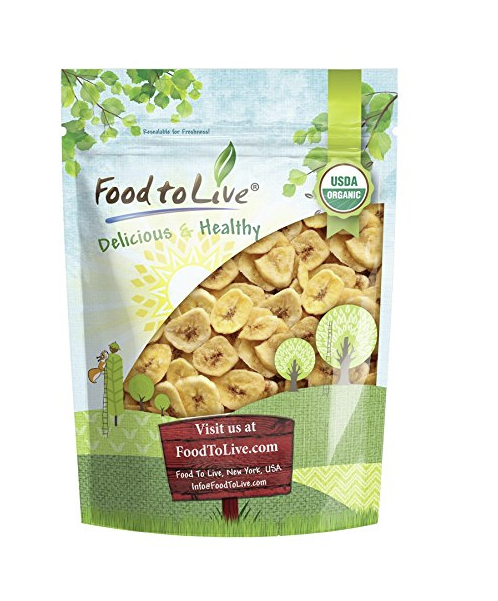
Consider these banana chips:
Second ingredient after dried banana? “Organic sugar.”
An ounce of these banana chips is going to run you about 147 calories and 10 grams of sugar (17g for total carbs).
For comparison, an ounce of a regular banana is about 25 calories.
You really have to be careful with dried fruit because it’s so easy to overeat.
However, this isn’t the only place where sugar is added to fruit.
Is Canned Fruit Healthy?
The big concern with canned fruit is the syrup that is often included with it.
What’s in the syrup? Sugar. Of course it’s sugar.
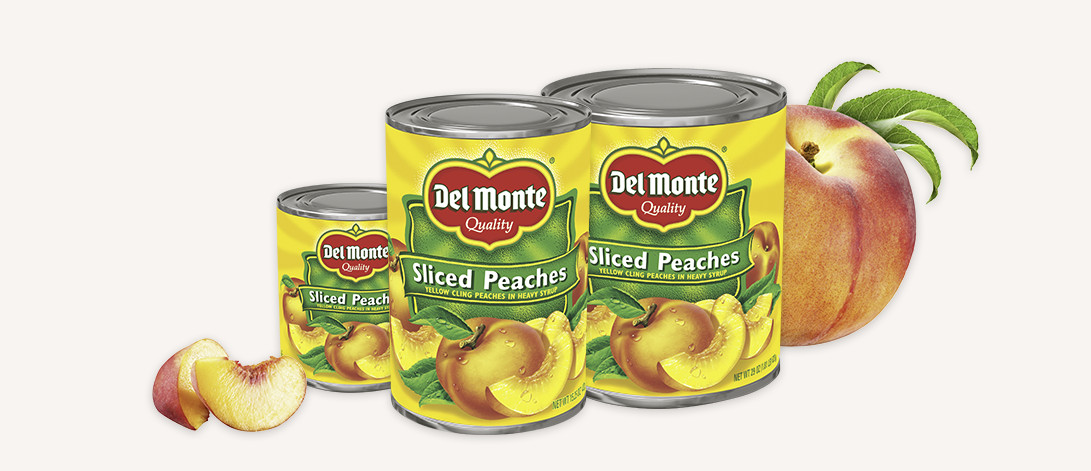
Let’s take a look at Del Monte’s canned peaches:
The syrup here is composed of “high fructose corn syrup, corn syrup, and sugar.”
Let’s compare the canned fruit to a normal peach you’d pick from a tree:
Del Monte’s Canned Peaches (in heavy syrup):
Serving size: 256g
Calories: 200
Total Sugar: 42g
Total Carbohydrates: 50g
Extra Large Peach
Serving size: 224g
Calories: 88
Total Sugar: 19g
Total Carbohydrates: 21g
When you package peaches this way you DOUBLE the calories and the sugar content.
This is why you should always read the nutrition label when purchasing canned fruit (although it’s a good habit in general).
To summarize the last few sections: fruit is healthy, provided you stick to fresh or frozen and not fruit-like food, dried fruit, or canned fruit packed in syrup.
If you enjoy a small glass of orange juice occasionally, or you pack a serving of raisins in your lunch and it makes life worth living, by all means!
Just don’t chug OJ by the gallon, drink a 64 oz “real fruit smoothie,” and eat raisins by the handful and then wonder why you’re not losing weight.
AVERAGE CALORIE AND SUGAR CONTENT of popular FRUIT
The best way to paint a picture of sugar and calorie content of fruit is with some actual serving sizes.
If you’re targeting 2,500 calories a day, and your meals are bringing you up to about 2,300 calories, you know you can fit in a couple of bananas for a snack.
If you’re following a low-carb diet, and you have about 10 net carbs left in your daily allowance, you know you can eat a handful of raspberries and still meet your goals.
Building a Healthy Plate (Next Steps)
Like anything else, Nerd Fitness recommends fresh fruit in moderation.
Except for awesomeness.
Like this.
You can have as much of that as you want.
Back to fruit!
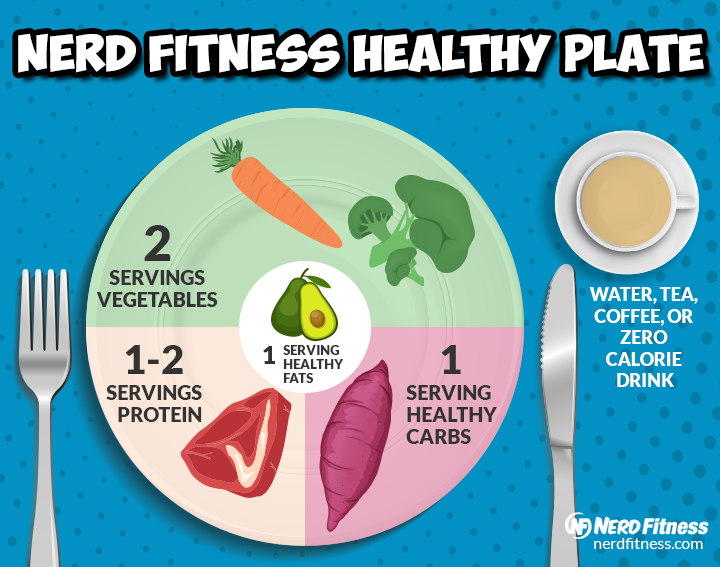
We recommend eating a healthy combination of vegetables, protein, and healthy fats.
Your “healthy carb” could 100% be a serving of fruit.
Of any type of fruit!
The different colors of fruit will correspond to different nutrients, so go wild![11] Try different fruits and experiment with new kinds. Keep rotating to ensure you give lots of different vitamins and minerals.
If you’re trying to lose weight, just remember to watch your overall calorie intake (fruit included).
You got this!
Still here? Want some more help starting your fitness journey?
Alright, I’ll give you my favorite next steps. But only caused you asked nicely.
#1) Our 1-on-1 Online Coaching program: a coaching program for busy people to help them make better food choices, stay accountable, and get healthier, permanently.
You can schedule a free call with our team so we can get to know you and see if our coaching program is right for you. Just click on the image below for more details:
#2) If you want an exact blueprint for leveling up your nutrition, check out Nerd Fitness Journey! Our fun habit-building app helps you exercise more frequently, eat healthier, and level up your life (literally).
If you follow our Nutrition missions, you’ll learn to eat healthier while earning XP! Sah-weeeet.
Try your free trial right here:
#3) Enlist in the Rebellion! We have a free email newsletter that we send out twice per week, full of tips and tricks to help you get healthy, get strong, and have fun doing so.
I’ll also send you tons of free guides that you can use to start leveling up your life too:
Download our free weight loss guide
THE NERD FITNESS DIET: 10 Levels to Change Your Life
Follow our 10-level nutrition system at your own pace
What you need to know about weight loss and healthy eating
3 Simple rules we follow every day to stay on target
Okay enough about me, let’s talk about you:
Do you LOVE fruit?
How do you compose a healthy plate?
Any great snack or recipe ideas?
For the Rebellion!
-Steve
PS: Make sure you read our Full Guide on Healthy Eating if you are just starting to level up your nutrition game.
Read “Health-Promoting Components of Fruits and Vegetables in the Diet.” Source, PubMed.
Read “Whole Fruits and Fruit Fiber Emerging Health Effects.” Source, PubMed.
Read “Health Benefits of Fruits and Vegetables.” Source, PubMed.
Read, “Adverse metabolic effects of dietary fructose: results from the recent epidemiological, clinical, and mechanistic studies.” Source, PubMed.
Read, “Consuming fructose-sweetened, not glucose-sweetened, beverages increases visceral adiposity and lipids and decreases insulin sensitivity in overweight/obese humans.” Source, PubMed.
Read, “Potential role of sugar (fructose) in the epidemic of hypertension, obesity and the metabolic syndrome, diabetes, kidney disease, and cardiovascular disease.” Source, PubMed.
Read, “Examining the Health Effects of Fructose.” Source, JAMA.
Read, “A satiety index of common foods.” Source, PubMed.
Read, “Examining the Health Effects of Fructose.” Source, JAMA.
This article has a great explanation of different colors and the nutrients they contain.
With just a couple weeks to go before RideLondon Essex 100 and one 7 hour ride on my Beyond CC training plan, cycling from London to Whitstable seemed like the ideal route. We spent some time checking out routes and…
Are you ready to talk about hormone health? This is the episode that Robin has literally been counting down the days to, with her special guest Dr. Aviva Romm!
Today they dive deep into all things hormone health that we experience in our everyday life, as well as through the various stages and seasons we move through. Robin also asks Dr. Romm the questions that you submitted by social media and email to have answered, and the information she shared was so fascinating to hear.
As you know, Robin has been on a journey this past year with her own hormonal health, sharing with you as much as possible along the way. Bringing Dr. Romm on the podcast today is a tremendous opportunity to get an expert perspective on these important topics, and hopefully it empowers you on your journey to advocate for your health and to feel your very best.
You’re not going to want to miss Part 2 of this special conversation next time on the podcast. We’ll see you then!
Show highlights: what you can look forward to in this episode!
There is a hidden hormone epidemic that exists, with several levels to why it’s hidden and so often normalized in society.
Dr. Romm made a big realization after starting college years ago, and she considered herself a “trojan horse” when she went back to Yale decades later to get her MD.
Hormone health is a critical vital sign of our overall health in a variety of ways, every day and not just during certain times of the month.
We’re getting better as moms at admitting when something is off, but historically women have just kept going and tried to push through burnout.
We often forget about the non-physical symptoms of burnout, but there are subtle signs to watch for and to be aware of.
The right types of foods, including carbohydrates, healthy fats and quality proteins, are absolutely critical for supporting our nervous system.
Smart devices can be our worst enemy at bed time. Dr. Romm shares how to approach a sleep routine in the most optimal way.
If you’re interested in running a 5k (which you are, ’cause you’re here) you may want to try our new app! It contains a fun adventure that will take you from sitting on your couch to running a full 5k – with plenty of benchmarks in between for you to find your groove. No guesswork needed, just tie your shoes and follow along with the app.
You can sign-up for a free trial right here:
What is Couch to 5K? Why is the Couch to 5K Plan so popular?
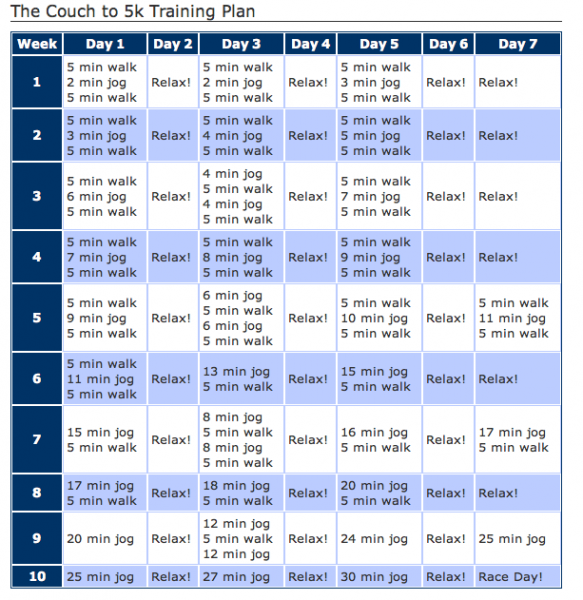
“Couch to 5K” is a free program that takes people from their couch to running a 5K race in 9 weeks.
5K is short for 5 kilometers, or 5,000 meters or 3.1 miles.
This running program was invented by Josh Clark of CoolRunning WAY back in the day.
It has since been co-opted and copied by every running blog out there, so we’re going to be referring to a generic “Couch to 5K” program when we talk about it.
(When people ask the question “How long does it take to complete Couch to 5K,” it really depends on which program they pick.
It might be 6 weeks, or 12 weeks, or 9 weeks. The original Couch to 5K plan created by Cooling Running took 9 weeks).
Here’s the Couch to 5K plan a nutshell:
The program utilizes an uber-popular concept called interval training – moving at different speeds throughout a running session – and lays out exactly what to do every day for 6-12 weeks after starting.
By varying your pacing, your body is forced to adapt to different speeds, and your heart and lungs have to adapt to various levels of strenuous activity (and get stronger/healthier as a consequence).
As a result, you actually burn more calories and get better prepared for a race than compared to just training at a constant speed.
Over the weeks, Couch to 5K slowly ramps up the amount of time you spend running and cuts back the time you spend walking until you’re at the point where you can actually run a 5K without stopping.
“STEVE, I’M INTRIGUED. WHY IS COUCH TO 5K SO DANG POPULAR?”
#1) It’s simple and clear.
Print out a PDF or download an iPhone app and for the next 9 weeks you simply do what it tells you:
Today, do this.
Tomorrow, do that.
Repeat.
We’re all busy. Most of us lead hectic lives. And programs that tell us EXACTLY what to do allow us to follow instructions without needing to figure it out ourselves.
If you’re brand new to health and fitness, and you’re trying to lose weight, you’re most likely overwhelmed by what you should start with and how you should train.
As much as I would WISH that was the answer (it’s probably the fastest path to changing one’s physique), it’s often a bridge too far for many folks.
So a majority of newbies equate running with weight loss (which MIGHT be true, but MIGHT not, I’ll explain here), and decide to start with a jog around the block.
#3) Couch to 5K is not overwhelming.
It’s a free program (or inexpensive app), and it’s very approachable.
Programs like P90X and Insanity are designed to appeal to people that consider themselves hardcore (whatever the hell that means).
Couch to 5K appeals to people who are overwhelmed at the idea of doing P90X or Insanity or mustering up the courage to go to Crossfit.
Couch to 5K makes you think “maybe I can actually do this…” which is the most important part of any fitness journey: starting.
#4) Everybody wants to “have run a 5K.”
If you’re new to health and fitness and working on setting a good obtainable goal, “run a 5K this year” is a great place to start.
It’s a short enough distance that with some training you can pull it off, even if you have to walk some or all of it.
There are 5Ks practically every weekend, many of which raise money for charity or are themed in a fun way,
So in completing Couch to 5K, you train and get to see yourself progress weekly, you get to finish a race and feel a sense of accomplishment, and you go home with a medal you can hang on your wall reminding you of the proud moment.
Plus, it might get you in shape!
Maybe…we’ll explore in just a moment.
If you are trying to get in shape, I’ll mention our 1-on-1 Online Coaching Program. I know of no better way to transform yourself than through the help of an expert who knows exactly what to do. We’ve helped hundreds of people run their first 5K and helped others train for triathlons!
Does Couch to 5K actually work? Will I lose weight Doing Couch to 5K?
“Steve that’s all fine and good. But what do you REALLY think about running 5Ks and Couch to 5K?”
Okay, you got me. I got thoughts. I also got jokes (they’re bad).
RANT INCOMING!
Will the Couch to 5K program help you run a 5k? YES! If you actually stick with it for the entirety of the training program.
Will the Couch to 5K program help you lose weight? MAYBE.
Is Couch to 5K a program that will get you healthy permanently? MAYBE.
Will Couch to 5K make me sexy and look damn good in a bathing suit? MAYBE, but probably not.
Here’s the truth about Couch to 5K: It’s the same truth with popular programs like P90X or Insanity or any other structured workout program:
It totally works and will help you lose weight if you do two things:
MISTAKE #1: Couch to 5K totally doesn’t work and won’t help you lose weight if you do two things:
You actually complete the program, BUT
You don’t fix your diet.
As sexy as it is to think that just going for a run will help you lose weight, the data doesn’t back it up. In fact, as Time Magazine rightly pointed out years ago and got yelled at for telling the truth, exercise alone won’t make you lose weight.
This is Common Mistake #1: not fixing your nutrition if you’re running for weight loss!
If this were a movie, nutrition would be Tom Cruise in Mission: Impossible and exercise is that funny sidekick who helps Tom. Let’s be real here, Tom is doing all of the heavy lifting to make that movie what it is.
Couch to 5K helps people run a 5K.
That’s it.
It’s not designed to help you lose weight or build a body you’re proud of. It’s also a temporary program that lasts a certain number of weeks until you run your 5K.
For Couch to 5K to be successful for you long term, and for it to help you lose weight, it needs to be the catalyst that causes you to build a consistent long term habit of exercise and changes how you think about food.
Remember:you never get to be “done”, so you need to enjoy the journey and look forward to exercising daily.
You also need to train the right way to build the type of body you want! And eat the right way.
That’s priority numero uno.
I know nutrition is a really challenging, complex, controversial topic (Keto? Paleo? Ah!), which is why we make it stupidly simple for smart, good looking, modest people like yourself.
In addition to our online coaching program that guides you on making healthier food choices, we also created a free 10-level NF Diet blueprint you can hang on your fridge next to your Couch to 5K PDF.
Print it out, hang it on your fridge, and follow the instructions to level up every 2 weeks! You can get yours free when you sign up in the box below:
Download our free weight loss guide
THE NERD FITNESS DIET: 10 Levels to Change Your Life
Follow our 10-level nutrition system at your own pace
What you need to know about weight loss and healthy eating
3 Simple rules we follow every day to stay on target
Now that we have the “will I lose weight?” stuff out of the way, I have two BIG questions to ask you:
Do you like running?
Are you healthy enough to run?
Do I Even Like Running?
Bodybuilder Ronnie Coleman said it best:
“Everybody wanna be a bodybuilder, don’t nobody wanna lift no heavy ass weight.”
In other words: “Everybody wants to be in shape, and look great, but nobody wants to put the work in to actually GET in shape and look great.”
And yup, getting in shape is tough; if it were easy we’d all look like Captain America and Wonder Woman.
Instead, 70% of America is overweight and 30+% are obese. Crap.
This brings me back to the most crucial question of this entire 5K process:
Do you even LIKE running?
The world is split into three groups:
People that like running and want to run.
People that don’t like running but eventually learn to love it.
People that don’t like running and will never like running.
Here’s that Ronnie Coleman quote, slightly adapted: “Everybody wants to have run a 5K, but many people don’t actually enjoy running.”
Running a 5K is a great achievement and a worthwhile fun goal, but it’s only one way of thousands to “get in shape.”
Many people feel like Andy Dwyer in Parks and Rec when they go running.
Some people love that feeling of anguish or pushing beyond the limits, and that’s awesome!
But for everybody else, they make Mistake #2: they force themselves to run even though they don’t like it!
So before you start Couch to 5K, think of it as a science experiment:
“I hypothesize that following Couch to 5K will help me run a 5K. I also hypothesize I’ll enjoy the process, enjoy how I feel after a run, enjoy running a 5k, and/or enjoy the achievement of having run a 5k.”
And that’s all this is: an experiment to see if running is the type of exercise you want to continue doing consistently for the next few years.
If 2 weeks into Couch to 5K you’re miserable and hate it: fantastic!
You just discovered that you hate running and are now free to NEVER RUN EVER AGAIN FOREVER. It doesn’t make you a failure.
It means your science experiment produced a result that you can now use to inform future exercise decisions.
Again, it doesn’t make you a failure.
It just means you found a type of exercise that doesn’t work for you.
If you discover you LOVE running and how it makes you feel: fantastic! You can now make running part of your regular exercise routine. Combine this with a good nutritional strategy, and you will build yourself a runner’s physique. And you’ve found something you can do for the rest of your life.
If you are running to prove something to yourself, because a friend is doing it, because you’re raising money for charity, or anything else: fantastic! Do Couch to 5K and then decide after if this is the strategy that you enjoy and want to stick with permanently.
Don’t make Mistake #2: If you’re ONLY doing this to lose weight and it’s making you miserable, quit. Don’t run. Ever.
Instead, pick an exercise you actually enjoy. But not because the exercise is going to help you lose weight – because doing an exercise you love is a constant reminder of “I’m making healthier choices, and thus I should probably eat healthier!”
If weight loss above all else is your goal, I’d recommend our Beginner Bodyweight routine you can do at home and combine it with our “Beginner’s Guide to Healthy Eating.” I can promise that if you read those strategies and start to implement them in your life, you’ll see results without ever having to set foot on a treadmill.
Phew! Okay, that covers “do you actually LIKE running?”
There’s another massive question you should be asking yourself before you start…
Are You Healthy Enough to Run a 5K?
Just because you WANT to run doesn’t mean you SHOULD necessarily start running just yet.
It could be a fast track to injury, disappointment, and misery!
Those are literally three of my least favorite things. The fourth being brunch.[1]
Back to your health: are you physically ready to run?
If you’re at or close to your goal weight, then starting a running program is a good idea.
If you are obese or very overweight, I think (power) WALKING a 5K is a great goal for the immediate future.
However, I think Mistake #3 would be running a 5K before properly preparing your body for it!In fact, running prematurely without addressing your weight might cause damage to your joints and ligaments and cause you to backslide a whole bunch.
This will build you a solid foundation of strength, core strength, and endurance.
Download our free Bodyweight Workout Worksheet when you sign up in the box below:
Grab Your Beginner Bodyweight Routine Worksheet. No Gym Required!
Complete this workout at home, no equipment required
Avoid the common mistakes everybody makes when doing bodyweight exercises
Learn how to finally get your first pull-up
Here’s why you should focus on strength and nutrition before pounding the pavement with hours of running:
As you begin to drop weight, a lot of the stress on your joints, organs, bones, etc. will start to decrease.
As you strength train, the ligaments that hold your body together will become stronger and more adequately prepared for the rigors of running.
As you refine your running form to minimize resistance and jarring shocks throughout your body, your body will learn to become more efficient.
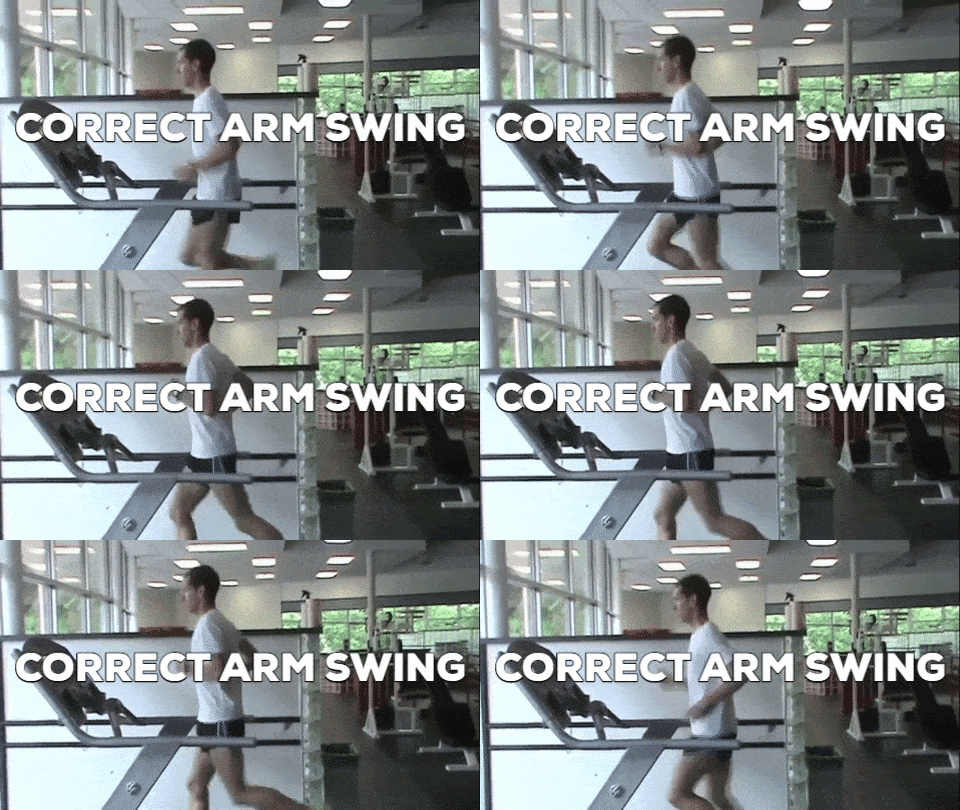
When you start to approach your goal weight, you can start to introduce increase your speed from power walking to jogging – with correct running technique (see below) – and staying healthy.
“STEVE, I was all excited to run a 5k, and now you have me demoralized. I’m overweight but I still want to run!”
Okay okay okay, fine! I don’t want to keep you from exercising, I want to help you build momentum and make you antifragile.
Obviously, you’re going to do what you’re going to do, and if running before you’re physically ready is what you want to do, go for it!
If you want any help getting in shape to run your 5K, we got you! We help men and women and self-aware robots with our 1-on-1 Online Coaching Program. We offer nutritional guidance, professional accountability, and custom workouts!
How to Start the Couch to 5K Program
“Steve I’m in. I read all of that jazz above and I am ready to get started. Whether I’m walking or running, I want to start Couch to 5K!”
If you’re ready to do the Couch to 5K program, you can download the following which I believe is the Original Couch to 5K Program (they’ve made it quite tough to find!).
The reason it’s tough to find is they’re pushing people towards the official Couch to 5K App.
For us Nerds, I’d be remiss if I didn’t mention the super fun Zombies Run! app, which uses interval training combined with fun audio cues and video game mechanics throughout your running sessions.
What I would do next after downloading the program? Do the first day of training!
I would also recommend finding a race that’s 2-3 months from now, and sign up for it even if you’re not ready.
Recruit a friend or two to join you in training and the race!
HOW TO FIND A 5K IN YOUR TOWN: Let me google that for you. Type “5K + [your town]”, and I bet there’s a 5k every weekend for the rest of the year coming up. The Couch to 5K app also lists local races for you.
To recap:
Pick a race that looks fun that raises money for a good cause
Recruit a friend or two
Go for your first day of running!
It’s gonna suck, and you’re going to be fine. You’ll get better!
This is exactly what I did years ago when I dressed up like a Caveman with 20 of my friends and raised thousands of dollars for kids with cancer to go to summer camp!
How to Not Get Injured Training For a 5K
If you don’t learn how to run correctly, you’re doomed to develop an overuse injury and that’s going to negate the whole reason you started running in the first place!
This is Mistake #4: Crappy running form!
When you run, you’re putting hundreds of pounds of pressure on your joints and ligaments with each bounding step down the road.
This is then repeated thousands of times over the course of training and a race.
No wonder nearly every runner has tons of stories of injuries they’ve had to deal with. It can be a brutal activity that can wreak havoc even with good running mechanics.
With poor running mechanics, the results are compounded.
And not the GOOD kind of “compounded” like compound interest like you learned in 2nd grade with the story about starting with 1 penny a day and doubling it every day for 30 days.
The BAD kind of “compounded” like plantar fasciitis and stress fractures and sore IT bands and torn ligaments and crazy soreness all the time.
We don’t want that.
I’m going to get super granular into proper running technique in this section, so if you already have perfect running form, you can skip this section. But I’d still read it.
Yeah, you should probably read it.
Here are the “5 Steps to Not Sucking at Running a 5K,” thanks to my friend Jason Fitzgerald of Strength Running:
1) Lean From Your Ankles
Lean from your ankles, and keep a straight line from your ankle, through your butt, and up to your head.
If you’re standing still with this slight forward lean, you should feel like you’re about to fall forward.
When you start running, gravity will help keep you progressing forward. A proper lean from the ankles keeps your body in alignment and loads your muscles properly and efficiently.
2) Increase Your Cadence
Cadence is your stride rate, or the number of steps you take per minute. It will probably seem weird at first, but you’re putting less stress on your legs with shorter foot strikes.
Your cadence should be at least 170-190 steps per minute when you’re running at an easy, conversational pace. It will probably increase once you start running faster—that’s normal.
“Steve, what the hell do I do with “170-190 steps per minute?”
Great question. Go to Spotify and look for 170-190BPM playlists, like these which I found here:
Not on Spotify? Cool. (But like, why?) To get a cadence, try running to Outkast’s “Hey Ya” and time your strides to match the beat. That’s the cadence you’re looking for:
Research has shown[2] that increasing your cadence and taking more steps (around 180 per minute) provides many of the same benefits of barefoot running: less impact shock that goes up your legs, improved running economy (or your efficiency, which means you’ll run faster with less effort!), and a reduced chance of injury.
You’ll feel like you’re taking way more steps than normal – that means you probably had poor form before and now you’re fixing it!
If your legs get to the point where they’re going this fast, let me know:
3) Foot Strike at the Right Time
When your foot comes down and makes contact with the ground, it should be underneath your body, not in front of it.
Combined with a quick cadence and a slight forward lean from your ankles, you’ll be distributing impact shock evenly—and efficiently.
This aspect of running form is often skipped over by beginning runners.
Instead of focusing on where the foot is landing in relation to the rest of the body, they focus too much on running on their forefoot. If you don’t first land in the right place, a midfoot or forefoot strike will only do more damage.
As you’re running, a good mental cue is to think that you’re just “putting your foot down” in a straight line underneath your body.
There’s no reaching or stretching your leg out in front of you. Practicing this mental cue will have your leg touching down almost exactly underneath your center of mass, distributing your weight evenly and safely.
4) Land on Your Mid-Foot
While not as important as landing underneath your center of mass, becoming a mid-foot striker has a host of benefits.
It can help you avoid a lot of injuries by absorbing impact shock and preventing a severe heel striking running stride.
Heel-striking can’t be entirely blamed for injuries and labeled “bad.”
Even elite athletes heel strike when they run races! It’s not entirely bad— especially if you’re putting weight down on your foot just after you heel strike, instead of directly on the heel.[3]
What you should focus on is having a higher cadence, landing underneath your body, and not aggressively heel striking.
Try to land with your foot flat on the ground, instead of with your toes angled upwards.[4]
5) Symmetrical Arm Swing
Nobody wants to look at you running if you’re flailing your arms wildly all over the place like Elaine dancing from Seinfeld.
An ideal arm swing has your arm bent at about 90 degrees and a front-to-back swing (not side-to-side).
Imagine a pretend line that goes down your mid-line or center of your body. When you run, your hands should not cross over this imaginary line.
Cup your hands loosely together (no clenched fists!) and if you want to use your arms for momentum, pump your elbows, not your hands.
Once you incorporate these changes into your running form, you’ll feel a lot more comfortable and your injury risk is going to plummet.
For extra credit, learn to run softly and quietly. Foot stomping isn’t allowed and gets increasingly more difficult as you approach 180 steps per minute.
A few other things you want to keep in mind:
Keep a tall back, chest up. No slouching.
Look 30-50 meters in front of you – not head down looking at your toes.
Both are easy cues to keep an athletic posture and good running form.
Go back through and read this section a few more times. We know it’s a LOT to think about while running, but it is incredibly important. If you get a chance, have somebody film you running, and then watch your tape back to see how you’re doing.
I should note that we provide form checks to our coaching clients. Through our awesome app, you can record a video of your running form or exercise technique and send it right to your coach! That way you can know your running and training safely and correctly!
10 Tips and Tricks for Training for Your 5K
Although the Couch to 5K Program covers specifically how you should be training, it still leaves out quite a few important things (like technique, which I covered above!).
Once you’ve picked your 5K training program, here’s how to get yourself to ACTUALLY follow through on your training!
#1) Recruit an accountability partner. Have somebody that trains with you (or at least somebody you tell about your training), so that each day you can check in with each other.
Wanna be diabolical?
Give somebody else $100 of your money. And tell them you’ll check in with them after your training every day – if you don’t do your run, they’ll donate $50 of that money to a political cause you HATE.
While you’re building the habit of running, you need to make the pain of skipping your run greater than the pain of doing the run.
Do this enough times until you build up enough momentum and get hooked on that runners high so that you actually look forward to training.
#2) Warm-up before, stretch after. Don’t do static stretches before your runs. It’s not doing what you think it is[5]. Instead, you’re going to warm up your muscles through active movement.
Do a dynamic warm-up before you run. Continue this by going for a light jog, high knees, and warming up your muscles through movement.
#3) Make it the first thing you do each day. Build the habit of doing your run first thing in the morning when life hasn’t had a chance to get in the way.
Sleep in your running clothes.
Put your alarm clock/phone across the room. Put your running shoes by the door. By hacking your Batcave, you’ll minimize the steps between you and the new habit you’re trying to build.
#4) Strength training makes running easier. Doing 1-2 sessions of strength training per week (on days you’re not running) will help you burn fat, build muscle, and stay injury-free.
Follow our Beginner Bodyweight Routine, no equipment required. We’ll have you training with your furniture instead:
If you sign-up for our free weekly newsletter, I’ll send you a PDF of the workout so you can track your progress.
Grab Your Beginner Bodyweight Routine Worksheet. No Gym Required!
Complete this workout at home, no equipment required
Avoid the common mistakes everybody makes when doing bodyweight exercises
Learn how to finally get your first pull-up
#5) Don’t worry about your shoes when you start. Wear whatever shoes you have so that you can just get started building the habit immediately. If you START to love running, read our article on proper footwear and get yourself some better kicks.
The same is true for “running clothes.” Do not let this be a barrier to entry.
Start running first and make sure you like it before you go spending any hard-earned cash on stuff you’re not gonna use.
Oh, and as Coach Jim mentions in the video below, DON’T RUN IN BRAND NEW SHOES!
Trust us on this one.
#6) Sign up for your race as far in advance as possible. Use 20 seconds of courage if you need to, but commit to the race.
If you don’t sign up, you’re going to be much more likely to back out when life gets busy.
But if you pay for it ahead of time, and get other people to run with you, you’re going to be using positive peer pressure to follow through on your commitments.
#7) Your race time doesn’t matter! Who cares if you’re the last person to finish? Like the Rock taught us, it doesn’t matter.
What’s important is that you finish something that you started. That’s a huge accomplishment in itself.
#8) Start a running club or join one at work – the more people you surround yourself with that are doing the things you want to do, the better. Hang out with runners that are faster than you.
You’re the average of the 5 people you associate most with, so you might as well start associating with faster, healthy runners.
#9) Don’t have an in-person running community? That’s cool! Join the Scouts Guild in the Nerd Fitness Rebellion.
It’s the section of our community that does running, biking, swimming, and other distance-based activities!
#10) Hire a coach. Outside of having a group of friends or co-workers keeping you accountable, a coach who routinely checks in with you and your progress can be a godsend. We’ve helped tons of people build the habit of running!
What Do I do After the Couch to 5k?
You made it through the training, and you ran/walked your first 5K! I’m so proud of you.
Gold star.
A+.
So after successfully completing your first 5K, you may be wondering what you should do next. To run again or not…
Many new runners absolutely love the atmosphere at a race; the number pick- up, pre-race motivational speech, cheering crowds, and crossing that finish line.
Oh, and the post-race beer and meal is the best food and drink you’ve ever tasted.
So after the excitement settles down, you need to ask what you want to do next.
Your three options:
Run Faster: Sign up for another 5K, keep training, and try to beat your previous race time.
Run longer: Maybe you want to run a longer race like a 5 miler, a 10k, or go slay a bigger dragon, like half-marathons or marathons.
Pick a different activity: Going from Couch to 5K to Couch doesn’t help you at all. Temporary changes create temporary results.
Notice there wasn’t a 4th option, the option that usually everybody picks:
“Go back to sitting on the couch”
That’s Mistake #5: not having a plan to CONTINUE exercising after Couch to 5K!
As we say at Nerd Fitness: “Temporary changes create temporary results.”
So you have to do SOMETHING next, otherwise all that hard work and training will have been for naught!
Want help figuring out exactly where you should go from here? I got you!
Pick the option below that best aligns with your goals and timeline:
#1) We have a bunch of NF Coaching clients that are training for 5Ks, 10Ks, half-marathons, and tough mudders. If you want step-by-step guidance on how to lose weight, eat better, and train for races, check out our killer 1-on-1 coaching program:
2) If you want a fun way to start running 5ks, check out NF Journey. Our fun habit-building app helps you exercise more frequently, eat healthier, and level up your life (literally).
Try your free trial right here:
3) Join the Rebellion! We need good people like you in our community, the Nerd Fitness Rebellion.
Sign up in the box below to enlist and get the Nerd Fitness Starter Kit, including the 15 fitness mistakes you don’t want to make and our guide to the most effective diet and why it works
Get Your FREE Nerd Fitness Resource Kit
15 Fitness traps you should avoid
Comprehensive beginner’s guide to Paleo diet
BONUS: How to level up your life and be the hero of your own story
4) Check out these other sweet running resources:
Beginner’s Guide to Running: Covering everything you need to start a running practice, including technique, proper footwear, and a training schedule.
To recap our guide on the Couch the 5K plan, these are the 5 Mistakes to avoid:
Running a 5K might be a good way to lose weight. It is entirely dependent on your nutrition. The same is true of literally ANY workout program. (Mistake #1: Not changing your nutrition)
Couch to 5K may or may not be a great program for you. It depends on how much you enjoy running, and what you are hoping to get out of the program. (Mistake #2: not actually enjoying running)
Make sure you are fit enough to endure the rigors of running! If you’re severely overweight, let’s get you in shape FIRST before we put stress on your knees and joints for thousands of running steps. (Mistake #3: Running before you’re ready)
Make sure your running technique is solid. It’ll save you years of pain and injury. (Mistake #4: Running with improper form)
Recruit a friend or find a way to stay accountable so you actually do the race!
Who cares about your race time! Just completing the race should be your goal.
Once you finish the race, decide if you want to keep running or if you are going to pick a different activity. (Mistake #5: Not having another goal after completing your 5K)
Okay, it’s your turn. I’d love to hear your experiences when it comes to training for a 5K, and if you enjoyed the process.
Have you DONE Couch to 5K? Did you stick with it?
What challenges did you run into along the way?
Share it in the comments below!
-Steve
PS:I’ll leave you with a final reminder of our 1-on-1 Coaching Program. If you’re blown away by the fact that you don’t have to run to get in shape, but don’t know where else to begin, we got you.