Women’s hormone health is a hot topic in the wellness world—and for good reason. Our hormones impact every area of our life, as I’ve learned in the last few years after being diagnosed with a hormonal imbalance.
My doctor was surprised I was even functioning when I was first diagnosed with hormone imbalance! I attribute this resilience of my body to the Pilates routine and our Lindywell approach to wellness, both of which had been a part of my life for many years before my diagnosis.
Over the course of this journey (that I’m still on), I’ve learned so much about women’s hormone health and how to find even more balance in my body. Along the way, Pilates has continued to be a key tool, and I want to share why and how.
My hope is that this article—and a membership with Lindywell, if you choose to join us!—will help you find greater balance, ease, and strength in your body.
Why Hormone Balance is So Important for Women
Experiences that impact our stress levels, sleep habits, eating or exercise patterns, and autoimmune function can lead to hormone dysfunction. For some women, this is caused by major life transitions like puberty, childbirth, peri-menopause, and menopause. For me, this was a result of the demands on my life, including having four kids in five years (including twins!), a miscarriage, and exposure to toxic mold. All of that added stress to my system because of how taxing it was to my endocrine system.
This hormonal imbalance is temporary and can be treated with conventional medicine or basic lifestyle shifts for many women. If you don’t come back into balance, however, you may start to experience uncomfortable symptoms and chronic health problems.
Because hormones regulate several important systems and functions in the body, from mood and appetite to sleep and stress, it’s so important to for women to find that balance once again. While there are different ways to do this through diet, lifestyle, and supplementation, one of our favorite tools for supporting women’s hormone balance is Pilates.
Pilates and Women’s Hormone Health
While we may seem biased—we love Pilates here at Lindywell!—it’s true that this form of movement can be extremely supportive of your hormone health and help you come back into balance. Here’s why:
Pilates Strengthens the Mind-Body Connection
Pilates teaches you how to be mindful of the present, as you bring awareness to each and every movement. This Pilates method combines precise, controlled movements with a focus on intentional, conscious breathing to strengthen the mind-body connection.
Mind-body exercise has been shown to support the production of Serotonin (the “happy hormone”) and the reduction of Cortisol (known as the “stress hormone). This means that doing Pilates can support your ability to deal with life’s everyday obstacles. And our thousands of members around the globe can attest to this!
Pilates Supports Weight Management
If the hormones that control energy metabolism and blood sugar levels are out of balance, you can experience insulin resistance. Over time, this causes inflammation, weight fluctuations, and chronic health issues like diabetes.
Researchers at the University of Mohaghegh Ardabil in Iran monitored the effect of Pilates on women with excess weight. They saw that this particular Pilates routine, which included mat and ball workouts, reduced three hormones (chemerin, visfatin, and resistin) that can impact your body’s ability to manage weight, insulin, and metabolism when elevated.
In other words, Pilates helped balance these three important hormones. One of the results of that re-balancing was weight loss. If you want to experience a similar workout as the study participants, try this free workout, which includes ball and mat exercises!
Pilates Keeps Oxygen Flowing Through Your Systems
Endocrine glands create and release hormones into your bloodstream. These glands need oxygen to perform their critical function. If they don’t get this, you risk disrupting the endocrine system as a whole. This can escalate into diabetes, infertility, endometriosis, or even some forms of cancer.
Because Pilates combines rhythmic breath and full-body movement, you naturally stimulate oxygenation and circulation, which can lead to greater hormone balance, head to toe. I want to exhale just thinking about how good that feels!
Pilates Boosts Brain Health
The low-impact movement and a continuous pattern of breathing that supports oxygen flow through your body are also linked to a well-functioning brain. Both of these things help regulate three of the brain’s primary hormone groups (metabolic, stress, and sex). This means getting on your Pilates mat regularly helps boost brain health and even reduce cognitive decline.
At Lindywell, we make it easy to commit to this daily brain-boosting movement with a wide variety of short, 15-20 minute workouts that help you build strength too! Lindywell member, Catherine, experienced this and so much more:
“I’m stronger, have better balance, have lost several inches all over, and just look better. On an emotional and mental level, I have more confidence, am less stressed – or better able to handle it, and just feel more joy.”
If you’ve experienced hormonal imbalance—or you’re in a life transition that might cause those hormones to fluctuate—bring Pilates into your routine. This mindful movement is a powerful tool for women’s hormone balance and one that’s been critical on my journey as well.
Not only can it help you restore balance in your body (yes, please!), but it will also help regulate your mind. This helps you You may be surprised by how great you feel if you commit even just 10 minutes a day to a Pilates workout.
Have you ever considered Pilates for scoliosis relief? I discovered how supportive this type of movement can be more than a decade ago when I took my first Pilates class, well before I ever became a teacher or created Lindywell!
I was diagnosed with scoliosis in high school. We discovered that I have an S-curve in my mid-thoracic spine—the mid-upper section of my back. While it didn’t significantly worsen over the years, I did develop a lot of pain in my shoulder, neck, and jaw as a result of muscular and postural imbalances from one side to the other and TMJ from my jaw being out of alignment.
Pilates has greatly (greatly!) reduced my pain. The consistent practice of getting back into alignment and rebalancing my body has been key to living with this diagnosis with less pain.
If you’re struggling with pain or discomfort from a curvature in your back, you’ve come to the right place. Let’s dig into how you can lean on Pilates for scoliosis relief.
Please note the information provided in this article should not be used for diagnosing or treating scoliosis. Always seek the advice of your doctor or another qualified health provider regarding a medical condition.
What You Need to Know About Scoliosis
Scoliosis is an abnormal rotation and curvature of the spine. It can manifest in the cervical (neck), thoracic (upper back), or lumbar (lower back) regions. As I shared earlier, my scoliosis created an S curve in my spine but was luckily not severe enough for surgery or a brace.
Although posture does not cause scoliosis, this condition can affect how you stand or move. For example, a few common signs include:
Uneven hips or shoulders
A significant curve in the back
Forward jutting ribs
Bump in the lumbar area
Sideways lean
Trouble walking
If you feel pain, numbness, and a lack of balance or coordination in your legs, this could point to scoliosis as well.
It’s important to note that mild forms of scoliosis are easy to overlook. In fact, some of my past clients had scoliosis without realizing it. As they did a Roll-Down, I noticed a hunch or lift on one side of their back, indicating they might have a curve in their spine. Sure enough, they were diagnosed after seeing a doctor.
If you notice any of the signs and symptoms mentioned above, we encourage you to see a doctor. With a diagnosis, you can understand how to best manage the pain and find support.
How Pilates Can Alleviate Scoliosis Pain
I’ve experienced pain from my scoliosis ever since I was diagnosed in high school. Mild and serious cases of scoliosis can exert pressure on the nerves and muscles which connect to your spine. This can be uncomfortable or disruptive to your life. In fact, those with scoliosis are highly prone to suffer from chronic musculoskeletal low-back pain.
Orthotic treatments, such as braces, can relieve some of that pressure, but another intervention can also support, in addition to, or in some cases, instead of, a brace. It’s effective, low-impact, and gentle on the body. I’m talking (of, course!) about Pilates, which has been a game-changer for my diagnosis.
Here are a few of the ways Pilates can provide pain relief for you as it has for me:
Pilates uses intentional and controlled movements to lengthen the muscles, bring flexibility into the spine, and stabilize the core. Not only does this promote balance, strength, and flexibility, but a strong, stable core reduces pressure on the spine. This can help alleviate back pain and increase mobility.
Muscle elongation plays a role in scoliosis relief too. Performing an exercise that stretches and lengthens your muscles (and fascia) can ease stiffness or compression in the vertebrae joints. This, in turn, can help relieve any chronic or acute neck, shoulder, back, and pelvic tension you might experience.
Pilates has been found to gently correct balance and postural alignment issues, which is just one more way to alleviate pain and support your body through scoliosis.
I have more rotation in one direction compared to the other and one of my shoulders is higher than the other. The rotational and side-strengthening movements in Pilates help to balance that out.
In extreme cases, there’s only so much relief that Pilates can provide, but if your scoliosis is either mild or moderate, Pilates for scoliosis relief can be a great option. This type of movement can help you build and maintain a functional range of motion while relieving pain, tension, and discomfort.
How to Practice Pilates with scoliosis
I know what you’re thinking: I’m ready for relief now. I get it, I’ve been there—and some days, I’m still there. That’s why I want to share a few strategies you can use to make the most of Pilates for scoliosis whenever you step on your mat.
Remember that doing Pilates once or twice will likely not give you the relief you’re looking for. While I still have occasional discomfort, it’s mild, and that’s only because I continually do Pilates to balance my body and build strength on both sides.
This is why a Lindywell membership can be so powerful. With workouts that range from 10 to 30 minutes, it’s easier to make time for your movement each day. If you’re not a member, sign up for your free 14-day trial and start with a workout like Total Body Alignment. If you’re already a member log in to push play on your next workout!
Here are a few ways to make your Pilates workouts most effective for reducing pain and supporting your scoliosis.
Don’t force a painful movement—allow for modifications.
Move gently through your Pilates session and listen to your own body. We always say this at Lindywell, but it’s even more important for you. If a certain movement causes pain, a joint or muscle group is tense, or you notice restriction in a particular area, be mindful of this.
It’s your practice. This means I want you to listen to your body and scale back on the resistance or modify an exercise so that it feels more comfortable. In most Lindywell workouts, we offer modifications to make this easier for you.
Stay connected to your core.
We always say your core is at the heart of ours. That’s because the connection to your core is so important, in life and Pilates. This is especially true if you’re struggling with back pain or discomfort. This helps take the pressure off your spine and allows your core to support your body exactly the way it’s supposed to. This also helps you build greater core strength, which will support your scoliosis off the mat too.
Pilates and breathwork are closely intertwined. Each movement can be made more effective (and in some cases, easier!) when you coordinate with the rhythmic flow of breathing. We start most Lindywell workouts with a moment to connect to the body and breath.
If you can hold this awareness throughout the entire workout, you’ll not only make it more effective, but you’ll also help your body relieve even more stress and tension.
A Routine to Support Your Body
Get a sense of how Pilates can provide relief for your scoliosis with this restorative workout. In just 10 minutes, you’ll stretch your body, practice intentional breathing, and build strength. It’s a perfect example of what you can expect from every Pilates workout with Lindywell.
Try Pilates for scoliosis Relief
If you’re ready to get the full experience, start your free trial of Lindywell today! We have more than 250 online Pilates workouts for all fitness and experience levels, taught by certified instructors, and founded by me, Robin, someone who’s managed a scoliosis diagnosis for nearly 25 years.
Each routine is built to develop strength, increase mobility, restore balance, realign posture, and boost flexibility—often in just 15 minutes or less. This means you can use Pilates for scoliosis relief without adding a time-consuming task to your to-do list—a win-win!
The difference in the spelling of mindful vs. mindFULL is minor, but the difference in how each of these things can impact your life is significant.
You’re probably familiar with the feeling of being mindfull. It starts from the moment you hear the alarm each morning, as the thoughts come rushing in:
What time is that appointment tomorrow?
I need to pay that bill later today.
What should I make for dinner tonight?
This isn’t surprising, considering the average human processes about 6,200 thoughts per day. As a busy mom and business owner, I am working on this daily. My mind gets so full and runs wild with thoughts of to-do list items, past conversations, upcoming meetings, etc.
But notice how none of those thoughts pertain to the present moment. It’s normal to think, feel, sense, interpret, and create meaning from the world around you, but focusing so much of our inner dialogue on what’s behind or ahead, what could go wrong, or what we might miss, can lead to anxiety.
If we’re being honest with ourselves, most of us automatically slip into this anxious state automatically—and that’s okay. Awareness of this is key to shifting to being mindful vs. mindfull so you can finally experience more inner calm.
What Does it Mean to Be Mindful?
Mindfulness is an awareness that arises when you’re present and attentive to life in real-time. Here’s an example that might sound familiar:
You turn off the shower and think: I don’t recall anything from the last 10 minutes. That inner chatter had you so distracted, you didn’t even notice the hot water on your skin or the smell of the soap in your hair.
I know I can go through entire routines, like showering, without even noticing what is really happening. I’ve tried to implement more rhythms and routines into my day to bring me back to a place of more mindfulness, which is the experience of noticing those sensations, tuning into the moment, and being present, rather than getting lost in your thoughts.
It’s not about silencing the chatter altogether (reality check: that’s pretty much impossible!) but bringing awareness to it and then tuning back into the sensations and experiences of the present moment.
As I became more mindful through Pilates, breathwork, being in nature, and simply pausing to tune into the moment, I found I was more balanced, peaceful, and less reactive. That impulse to criticize myself or get lost in my thoughts became less automatic and it made every aspect of life more enjoyable.
What Does It Mean to Be MindFULL?
Nope, we’re not repeating ourselves! The difference in the spelling of mindful and mindFULL may be easy to miss, but the impact in life is significant! That shower experience we mentioned above is an example of being mindFULL; all the tabs in your brain are open, the chatter is going—your mind is full.
Whether you’re prone to ruminating on the past or anticipating the future, getting stuck in this constant state of anxious thinking can lead to depression, anxiety, substance abuse, eating disorders, or insomnia, among other health challenges.
I know how these thoughts can feel intrusive and all-consuming, making it seem impossible to shift into mindfulness. However, I’ve learned that not only is making this shift possible, but it will have a ripple effect throughout your life.
How to Cultivate a State of Mindfulness
If you’re ready to replace the anxious mindfull spiral with mindful inner calm, here are a few simple strategies to try. The key is to practice mindfulness in small, consistent ways so you can build it into an automatic habit over time.
Notice Inner or Outer Sensations
The goal of this practice is to name your feelings as they arise, and then notice what that physical sensation is in your body.
All thoughts and emotions are connected with a physical reaction. For example, when I feel stressed, I notice my stomach tightens and my shoulders creep up and feel tight. You may also notice your throat constricts, your hands tingle, or your armpits sweat. On the other hand, a sense of calm might cause your breath to deepen, your shoulders to relax, or your chest to expand.
Another simple starting point for this is to check in with your senses. Start by looking around you and naming one item you can see, one you can touch, one you can hear, and one you can smell. This exercise is a great way to bring your mind into the moment. I even do this with my kids to help them be more mindful too!
Tune Into Your Breathing
We offer breathwork sessions in the Lindywell app because tuning into your breath is one of the most powerful tools in your toolbox, it certainly is for me. A recent study found that intentional breathing techniques relieved markers of depression, anxiety, stress, or other low mood states.
A great starting point is simply taking note of the natural, rhythmic flow of breath at any time will shift you into a state of mindfulness. You may also find that this almost immediately calms your mind while relaxing your muscles and body.
You’ve been there before: You open a social media app, start scrolling and before you know it, 20 minutes have passed! This mindless scrolling fills your brain with endless content that can cause stress and anxiety.
The good news is, you can create a balanced relationship with your smartphone really easily by setting daily screen limits on social media. You can do this for yourself by setting a mental boundary or downloading an app that cuts access to the apps you specify after a certain amount of time.
With this simple boundary, you can enjoy the content you love without slipping into that mindless scrolling.
Practice Pilates
One of the reasons I love Pilates so much is because it helps me in my practice to be more mindful. It’s based on mindful and intentional movement. This means, every time you step on your mat, you’re encouraged to practice mindfulness. This is especially true for all Lindywell workouts, which always start with a few minutes to connect to the moment, your breath, and your body. As you do each exercise, you’re continually reminded to come back to the breath again and again. This is why Lindywell members say they feel rejuvenated after their workout instead of depleted.
Meditation doesn’t mean you have to sit motionless with your eyes shut and legs crossed for 30 minutes. It is simply the practice of slowing down and breathing with intention, which means you can do it anywhere, even if you’re moving or having a busy day and can’t commit to a long period of sitting alone.
Meditation can be done sitting to laying down, during walking or even stretching. In fact, coordinating movements with mindful awareness rejuvenates your mind and body.
Whether you take a meditative walk or sit with peaceful music or silence for 5 minutes, you will be practicing meditation.
Create Calm By Being Mindful vs. MindFULL
No one’s perfect, it’s nearly impossible always to be mindful. But when we check in with ourselves and remember that we can choose what gets our focus, attention, and mental energy we set ourselves up for less mental chatter and more enjoyment. Try checking in with yourself this week to see if you’re being mindful vs mindFULL. It could make all the difference!
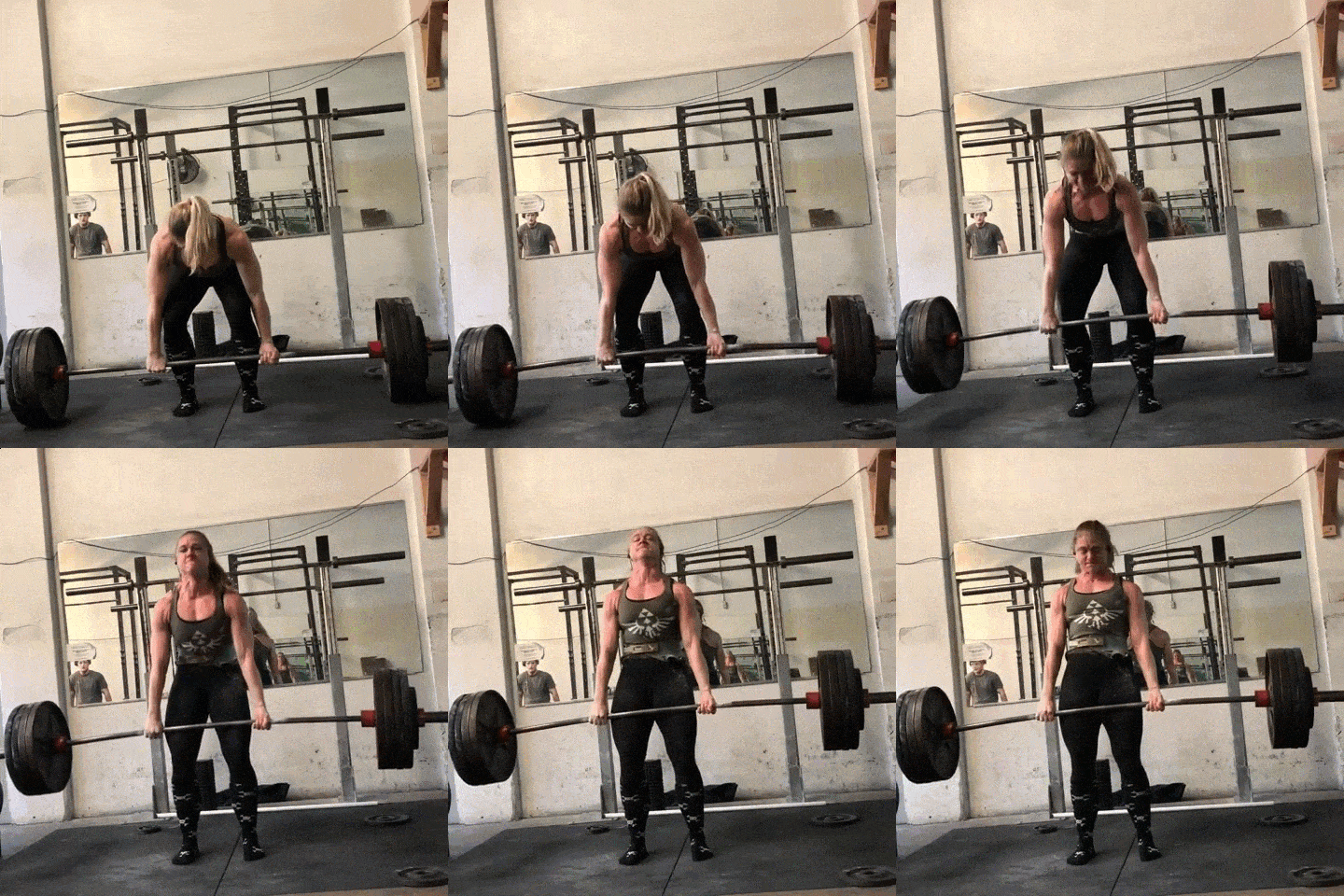
And no, I wasn’t born this strong (that would be strangely awesome). It’s only after discovering a love of strength training that I learned how to handle weight like this.
Obviously, we won’t start you out lifting that much at first. But we will set you up on a path that if you want to, one day you’ll be able to.
Before we get to it, if you’re in a hurry, I want you to know we’ve compiled all our strength training material into a friendly guide so you can read it at your leisure (I’m picturing you reading the guide poolside, sipping a lemonade).
Download Strength Training 101: Everything You Need to Know when you enlist in the Rebellion (that’s us!) below:
Download our comprehensive guideSTRENGTH TRAINING 101!
Everything you need to know about getting strong.
Workout routines for bodyweight AND weight training.
How to find the right gym and train properly in one.
Alright, let’s do this!
Should Women Lift Weights? (Why You Should Start Strength Training)
Everyone should start strength training: people of every sex and gender, the young, the old…everyone.[1]
#1) When you’re stronger – life is easier. No need to call for help to get that 50lb bag of dog food off the top shelf, or carrying an air conditioner unit up a flight of stairs. LIFE is easier when you’re stronger.
#2) Less injury risk – when you build strong muscles, you’re also building stronger bones, ligaments, and tendons, making you less prone to injury doing things you love (like playing in a quidditch league).[3]
#3) Helps combat age-related muscle loss,[4] allowing us to remain independent longer as we age:
#4) Muscle is harder to maintain, which means you need to eat more just to hold on to it.[5]
#5) Reduce pain – having a strong body makes living easier on your joints, as well as allows you to hold a better posture and reduce back / hip pain.[6]
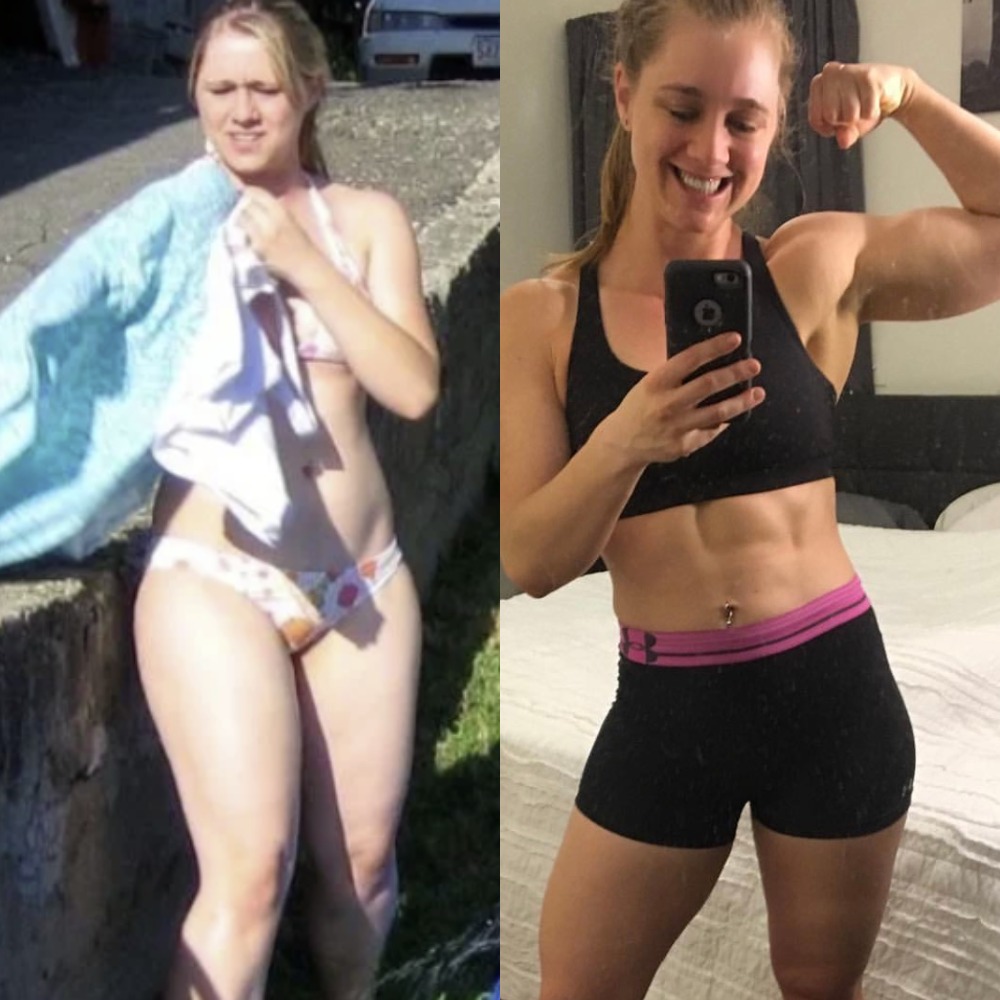
#6) Appearance – this is a personal preference! Some women like to have a lot of muscle, and some don’t. While you can’t spot reduce fat, you can choose to build more muscle in specific areas, changing your body shape. Growing up, I was an extreme pear shape, but due to strength training, I now have more of an hourglass shape.
#7) Live longer – want to spend more time on Earth? Strength training and growing muscle will help you do just that.[7]
Boom!
Although strength training is one of the best things you can do for your health, it’s estimated that only about 20% of women do it, far below that of our male counterparts.[8]
That sucks.
It’s part of my life’s work to reverse this trend and to do so, I’m going to need your help.
You in?
Perfect!
Is Strength Training Different for Women?
Here’s something that may shock you: there’s no reason everybody – of any gender or sex – shouldn’t strength train the same way!
Yep, you don’t need 3-pound pink dumbbells, unless you like 3-pound pink dumbbells! You can train with free weights and barbells just like everybody else at the gym.
Sure, there are biological differences between the sexes. For example when strength training, people with typical male anatomy will produce more type IIa fibers than people with typical female anatomy, who will in turn produce more type I fibers than men.[9]
The American College of Sports Medicine doesn’t differentiate between sexes in their strength training recommendation.[11] So neither shall we.
So what exactly is strength training, you may be asking?
“Strength training” of any kind can be explained by two things:
#1) Movement of any weight (including your body weight) – Doing ANY exercise that pushes your muscles outside of their comfort zone, forcing them to rebuild stronger to prepare for the next challenge.
#2) Progressive overload: exerting slightly more effort than last time (lift a heavier weight or do 1 more rep) consistently. Your muscles will constantly have to adapt and will constantly be rebuilding themselves to get stronger.
Coach Jim walks you through different strategies for progressive overload in this video:
Before we get into the ins and outs of strength training, I need to address a question we get over and over from the women in our coaching clients:
Will I get bulky if I lift weights?
If you see a woman who is incredibly muscular and at an extremely low body fat percentage, I guarantee she has been working her butt off for a very long time with the very specific goal of building muscle and looking that way.
It’s not something that happens overnight, or by mistake.
We simply don’t have the same amount of testosterone as people with male anatomy to get there easily.[12] It’s something we cover in great detail in our guide on How to Build Muscle as a Woman.
If you’d like to build muscle, but not as much as a professional bodybuilder – don’t worry, it’s not something that happens by accident.
It’s something Rebel Leader Steve brings up in the video below:
So strike “I don’t want to get bulky” from your vernacular.
Alright, let’s talk about how to actually get started strength training.
Strength Training Level 1: Bodyweight Workouts
If you’re just starting your strength training journey, our first stop will be a bodyweight workout.
Bodyweight training is simply doing an exercise in which your own body is the “weight” you are “lifting.”
Duh.
This is the BEST place for anybody – regardless of weight or age – to start their strength training journey.
Why is this the best place to start?
Here are two big reasons to do bodyweight training:
#1) You always have your body with you (unless you are a ghost, in which case, this is awkward). This means you can work out ANYWHERE with bodyweight training:
#2) Using your body for resistance training is the most “human” thing ever! By learning to push and pull and hang and squat and lunge, you are doing what your body is literally designed to do.
By getting strong with bodyweight movements, you’re making yourself antifragile and less injury-prone.
Bodyweight training isn’t as easy to ‘scale’ the difficulty as some of the other strength training methods (“put more weight on barbell”), but you can get REALLY strong with just bodyweight training.
For example…
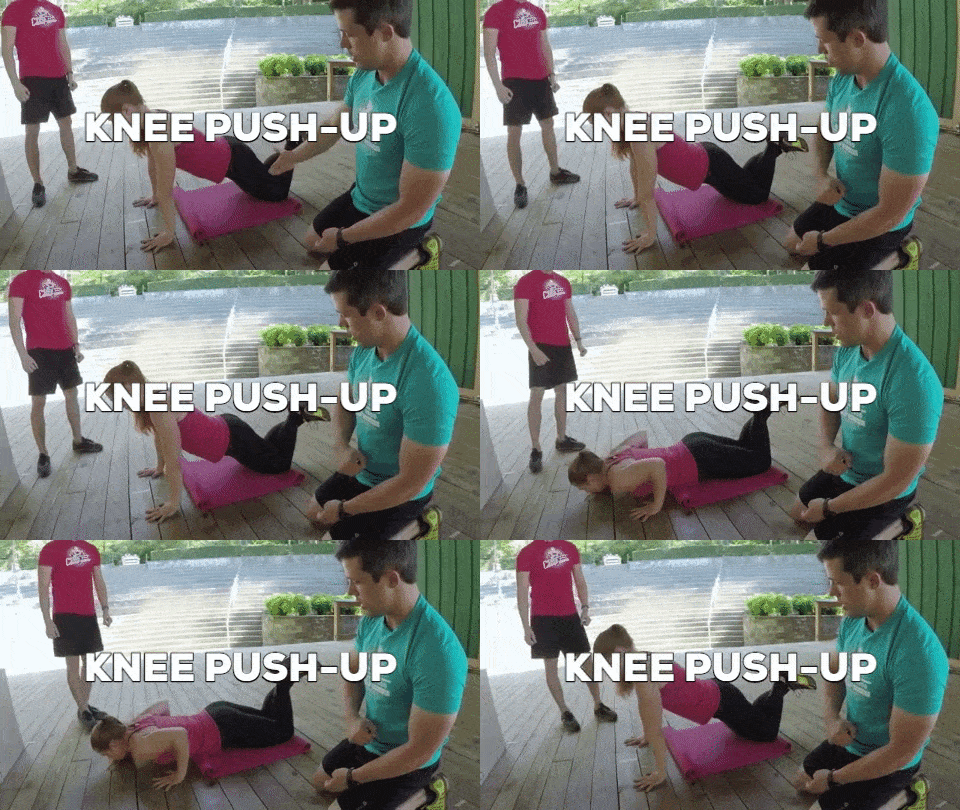
You can start with knee push-ups:
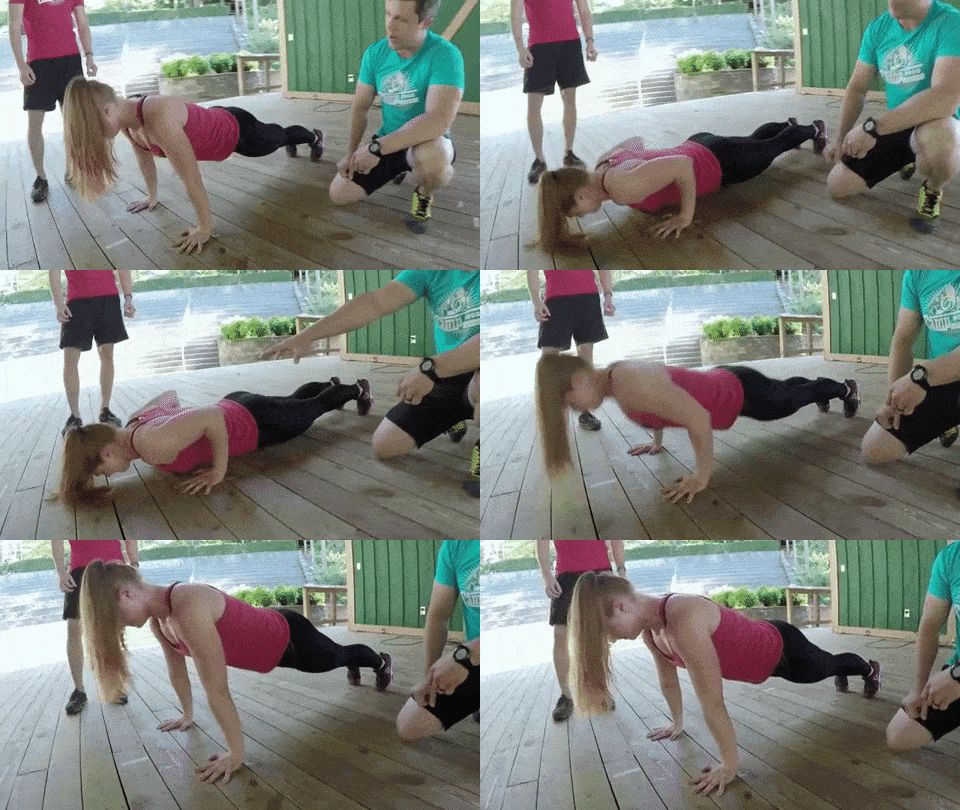
Then go to regular push-ups:
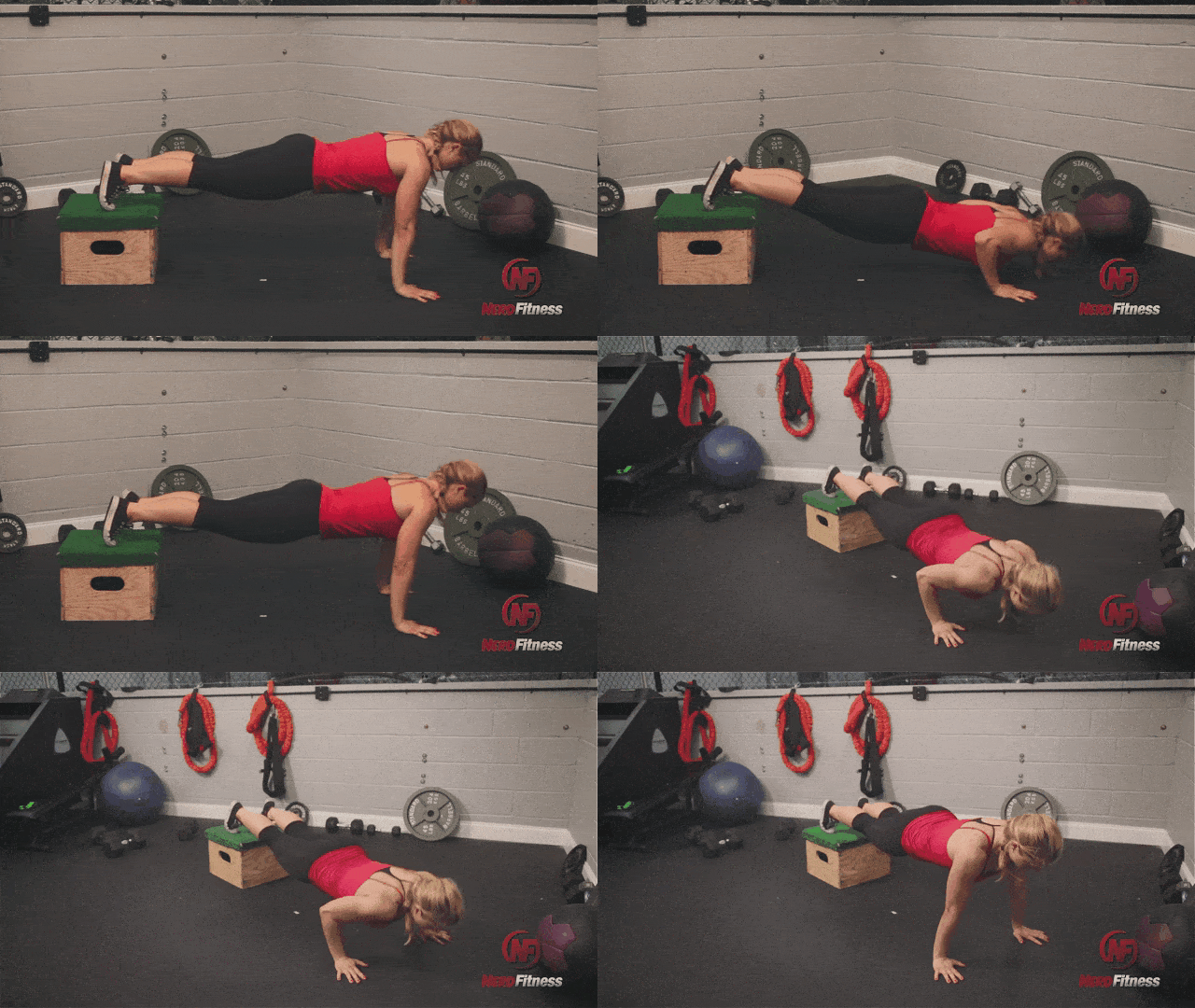
Then elevated push-ups:
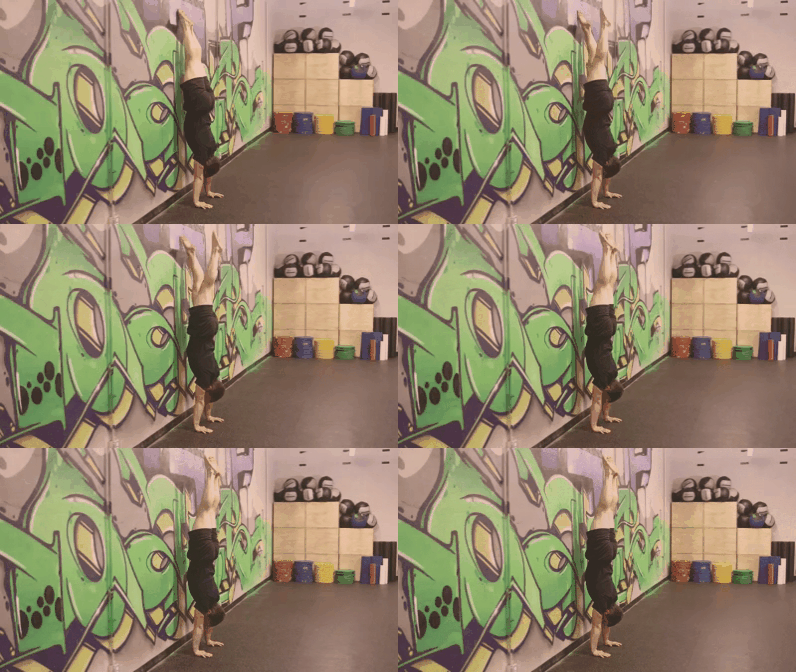
Then even up to things like handstands:
And even handstand push-ups:
You just have to know HOW and WHEN to scale up (we can help there too).
Want a sample bodyweight workout you can try? You got it:
This is the Beginner Bodyweight Workout (3 Circuits):
20 Bodyweight squats.
10 Push-ups.
10 Walking lunges (each leg).
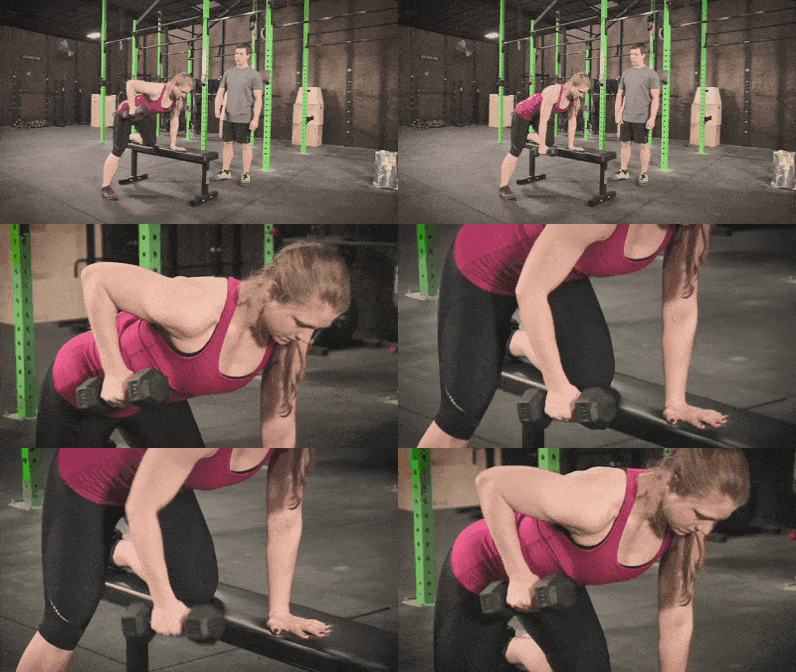
10 Dumbbell rows (use a milk jug or other weight).
If you’re following along at home, you just did your first full-body workout using weights!
Want a custom-built dumbbell workout? Something designed for the weights in your apartment’s gym?
Our Nerd Fitness Coaches can do just that! Plus they’ll scale your workouts as you grow stronger, turning you into a superhero!
Strength Training Level 3: The Wide World of Barbells
You made it! It’s now time to start training with barbells!
This is going to help you become ultra-powerful and strong.
It’s how I transformed myself into the person I am today.
The reason barbell training is so important is that it allows you to pick up heavy weights and do movements that recruit every muscle in your body. This is great for building powerful, strong muscles in your core, legs, glutes, and so on.
Show me somebody that’s strong at both of these movements, and I’ll show you somebody that’s in better shape than most of the human population.
But wait!
Even an empty barbell can be heavy (normally 45 pounds or 20Kg), so before we jump into the deep end, let’s make sure you are strong enough to proceed.
You’ll need to be able to complete a goblet squat with a 45 pound dumbbell (shown earlier) and the Romanian deadlift with 20 pound dumbbells.
Here’s how to perform the Romanian deadlift with dumbbells:
Our test to see if you can handle barbell training will be the Level 4 Gym Workout: Dumbbell Division C (taken from our Beginner’s Guide to the Gym).
You’ll need to be able to go through the following before you start training with barbells:
10 goblet squats – 45 lbs (20Kg dumbbell),
10 Romanian deadlifts with 20 lbs dumbbells (9-10 Kg)
10 push-ups (on knees or regular)
10 dumbbell rows with each arm – at least a 20 lb dumbbell
Can’t do those movements at that weight? Stick to the Level 4 Gym Workouts until you build up the strength to progress to barbells.
Once you CAN do the above, the real fun is going to start!
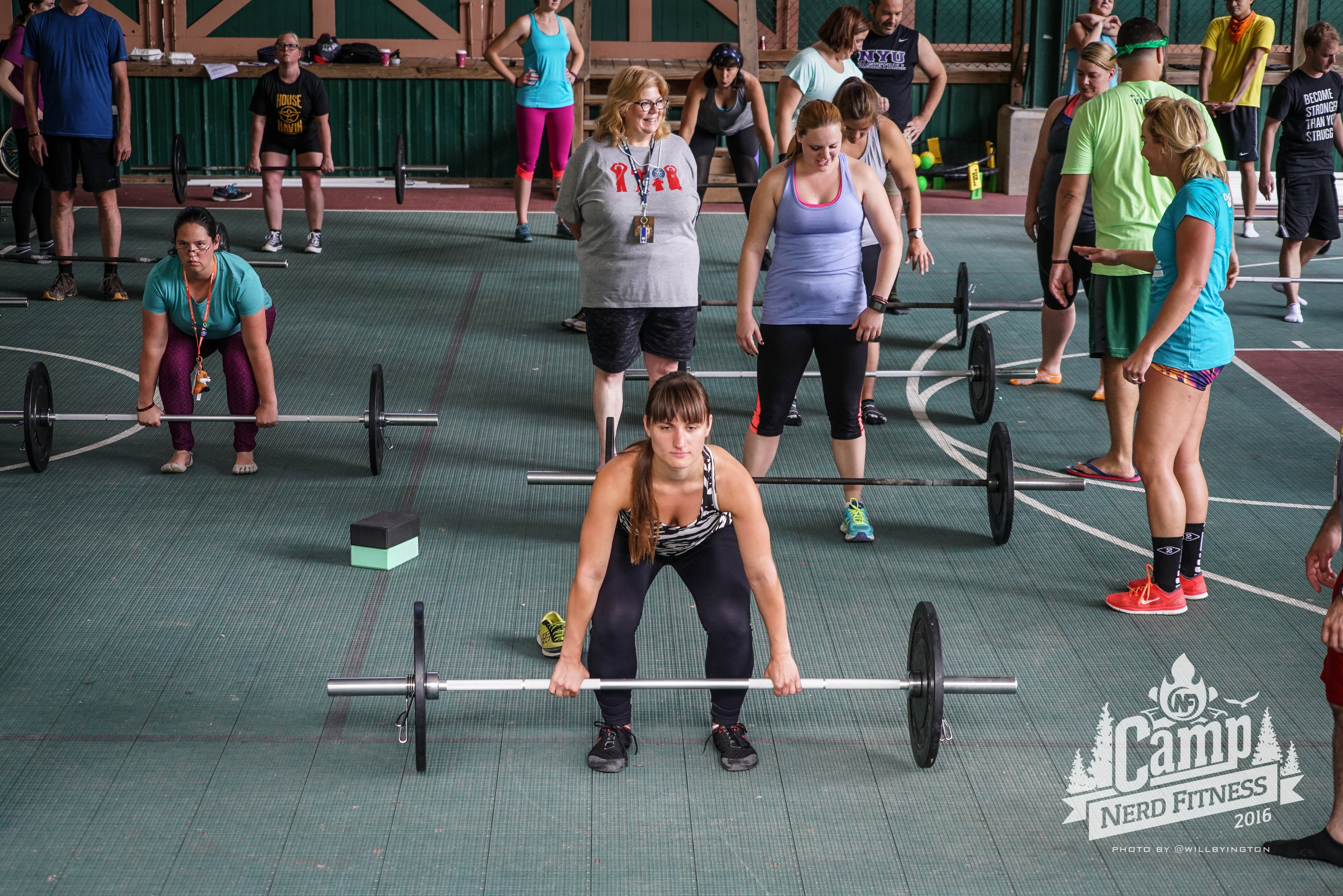
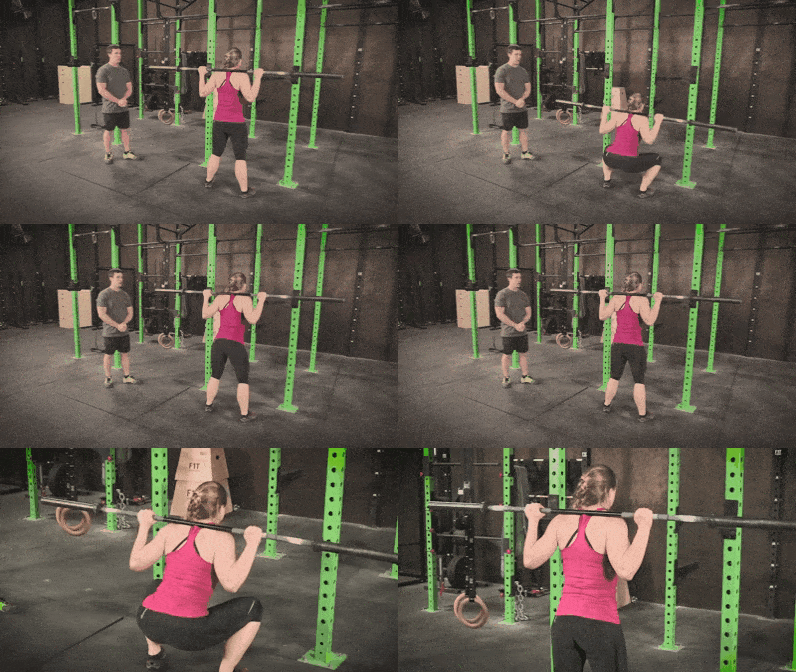
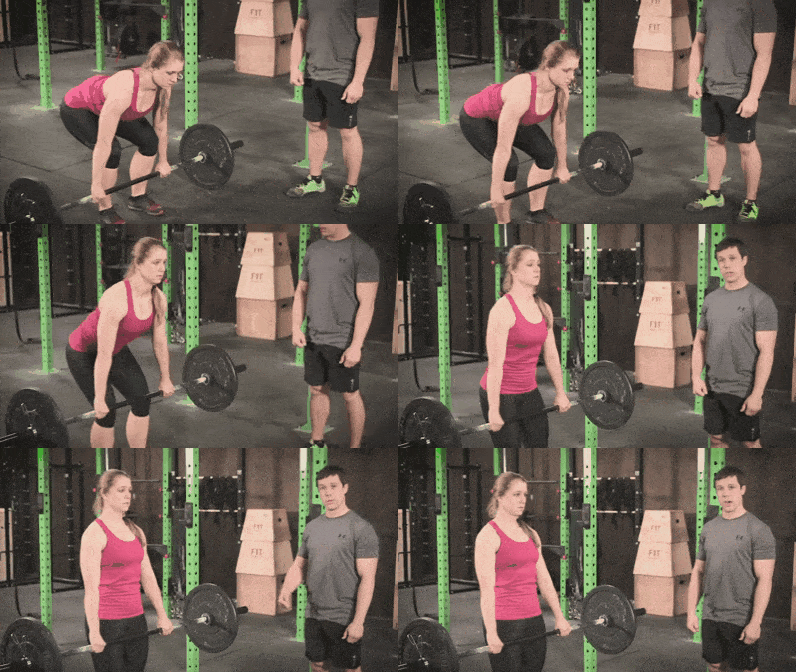
We’re gonna replace the goblet squat with a back squat and the RDL with a barbell deadlift.
Here’s a video demonstration on how to perform the barbell back squat:
I would also encourage you to read How to Squat Properly for a full tutorial, especially if you’re just learning how to squat.
Here’s a step-by-step video on how to do the deadlift:
That’s it! Do each of these once a week and you’ll be rocking an awesome strength training practice.
Are you doing the workouts correctly?
A good way to tell would be to record yourself doing the movement and then match them against the gifs and videos in this guide. If they look close you’re doing great!
We also provide form checks in our 1-on-1 Online Coaching Program. Through our snazzy app, a Nerd Fitness Coach (like me!) will review your movement to make sure you are training correctly and safely!
The simple to learn but tough to implement answer: lift enough so that you can get through the set, but not too much that you have NO fuel left in the tank at the end.
And then, try to lift sliiiightly more than last time.
How much weight should I start with?
If you are using dumbbells or a kettlebell, always err on the side of “too light” versus “too heavy.” You want to learn the movement correctly and build correct form.
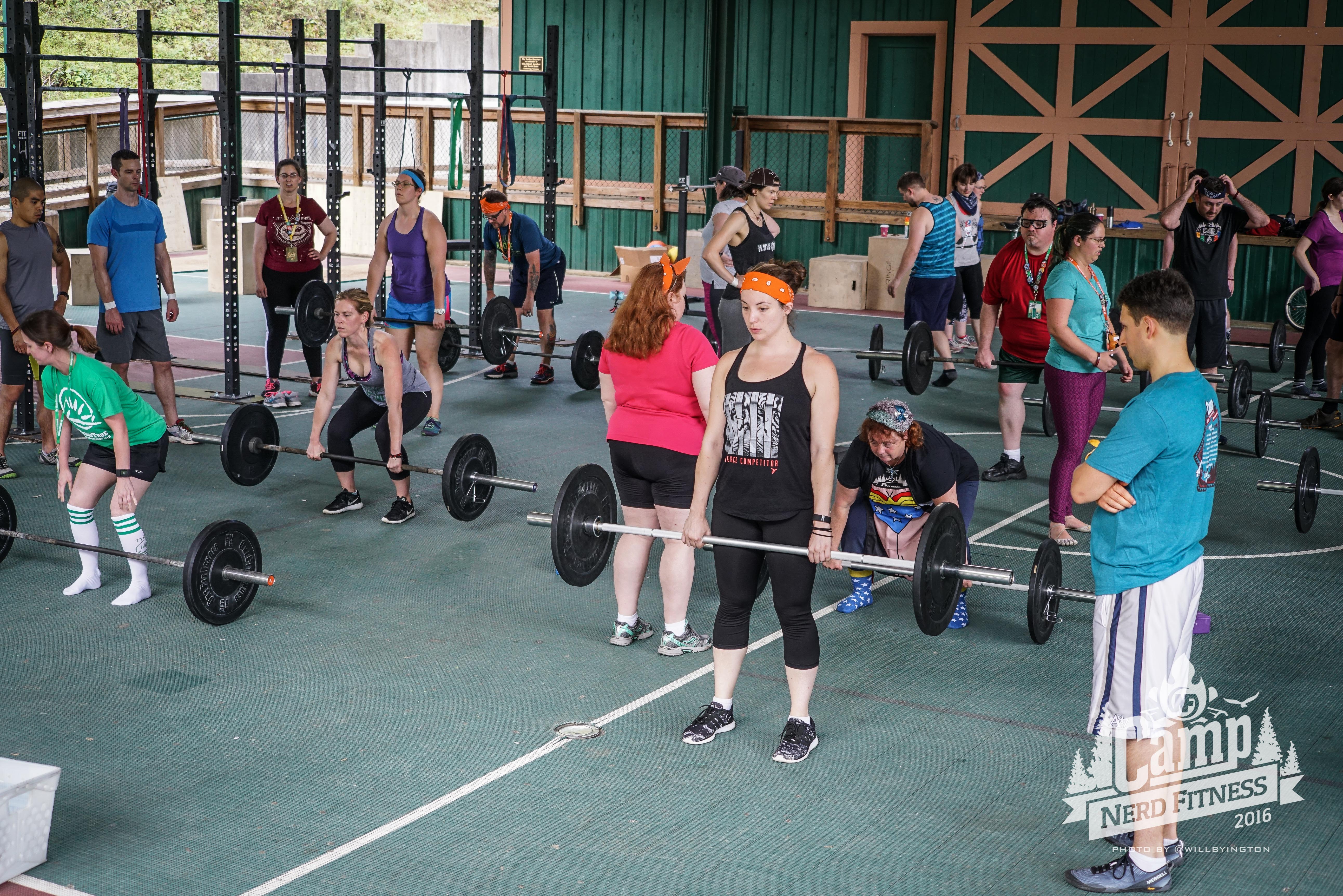
If you are training with a barbell, ALWAYS start with JUST the bar, no matter the exercise (as a reminder, a standard barbell weighs 45 pounds).
“How fast should I add weight to the bar?”
Here’s what we teach all of our coaching clients: add the minimum amount of weight each week you can, even if you THINK you can lift more. It’s better to finish a workout full of momentum and say “I can do more!” than defeated and saying “that was too much, crapola.”
Think of it this way, even if you are adding just 5 pounds per week to the bar, within a year you would be lifting 300+ pounds!
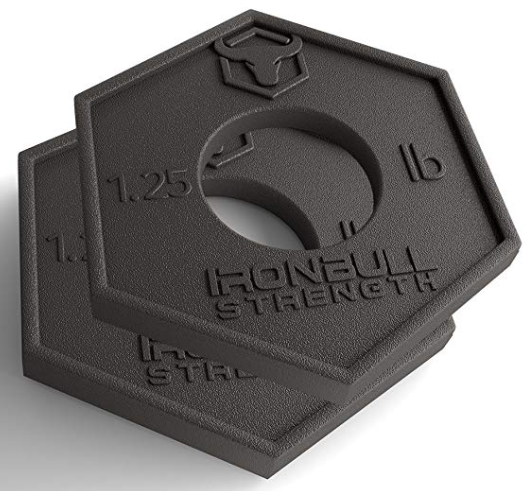
So go SLOW. Team NF’s Steve even bought little half-pound weights and increases many of his lifts by just 1 pound per week.
And if you are looking for this content in an easily digestible form, make sure you download our free Strength 101 Guide when you join the Rebellion below:
Download our comprehensive guideSTRENGTH TRAINING 101!
Everything you need to know about getting strong.
Workout routines for bodyweight AND weight training.
How to find the right gym and train properly in one.
Can Strength Training Help with Weight Loss?
We get questions relating to weight loss and strength training all the time, and it’s something we cover throughout our Strength Training 101 series.
Let me quickly address it here:
Fat and muscle are two different things – one can’t transform into the other.
We all have plenty of muscle right now (otherwise we wouldn’t be able to move, walk, sit upright, etc.), the muscle is just hiding underneath a layer of body fat.
In order for us to lose weight and look better, we want to do two things:
Build our muscles stronger and tighter.
Reduce the fat covering those muscles!
And luckily, both of those things happen simultaneously through strength training!
So NO, you don’t need to lose weight first before you start strength training.
You will lose weight BY strength training (and keep the muscle you have).
You do NOT need to do hours of cardio for weight loss – weight loss is 90% a result of your nutrition. So honestly, you don’t need to ever set foot on a treadmill again (unless you WANT to).
Strength training will help you lose weight and look better IF you do two key things for effective weight loss:
As we cover in our “Why can’t I lose weight” article (full of fun Harry Potter references), combining a caloric deficit and strength training is magic:
You’re not consuming enough calories to carry out your body’s daily functions.
Your body needs to use lots of calories to rebuild the muscle that was broken down during the strength training workout.
Your body has no choice BUT to pull from fat stores to get stuff done!
Just by doing those two things (get strong, reduce calories), all sorts of wizardry and witchcraft takes place in your body:
Get stronger and keep the muscle you have.
Build tight dense muscle.
A revved-up metabolism while rebuilding muscle.
Burning of body fat to get things done.
Yeah, you’re hearing me correctly.
Lose the body fat that sits on top of your muscles and you’ll make your muscles tighter and denser = look better without clothes on.
So how do you put this into practice?
Pick one of the strength workouts we covered earlier (start at the Beginner Bodyweight Workout if you feel unsure where to begin).
Oh, what’s that? You just want somebody to tell you exactly how to train for your body, and how to eat for your goals?
Fine!
Check out our 1-on-1 Coaching Program – it’s helped hundreds of women lose weight through strength training – and proper nutrition. We work with you on habit-building and lifestyle design to actually get stuff done!
The Best Strength Training Exercises for Women
Great news:
The best strength training exercises are universal. No matter your size, shape, sex, gender, age, or whether you love Star Trek more than Star Wars, these are the best exercises to build a great physique.
I’m going to share with you the exercises that every beginner should master (scroll down for full video and explanations!).
The 9 Best Strength Training Exercises for Women are:
Push-up: uses every push muscle in your body (chest, shoulders, triceps)
Bodyweight squat: uses every muscle in the lower body (quads, hamstrings, glutes, core)
Bodyweight row: works every “pull” muscle and helps prepare you for a pull-up!
Pull-up or chin-up: the best “pull” exercise in history! Everybody should have a goal to get their first pull-up.
Bodyweight dip: advanced “push” movement that targets your push muscles (chest, shoulders, triceps) in a different way than push-ups.
Barbell squat: the best bang for your buck on muscle building. Recruits nearly every push muscle in your whole body, and a great core workout.
Barbell deadlift: the favorite exercise of every coach at Nerd Fitness. Uses every “pull,” leg, and core muscle in your body.
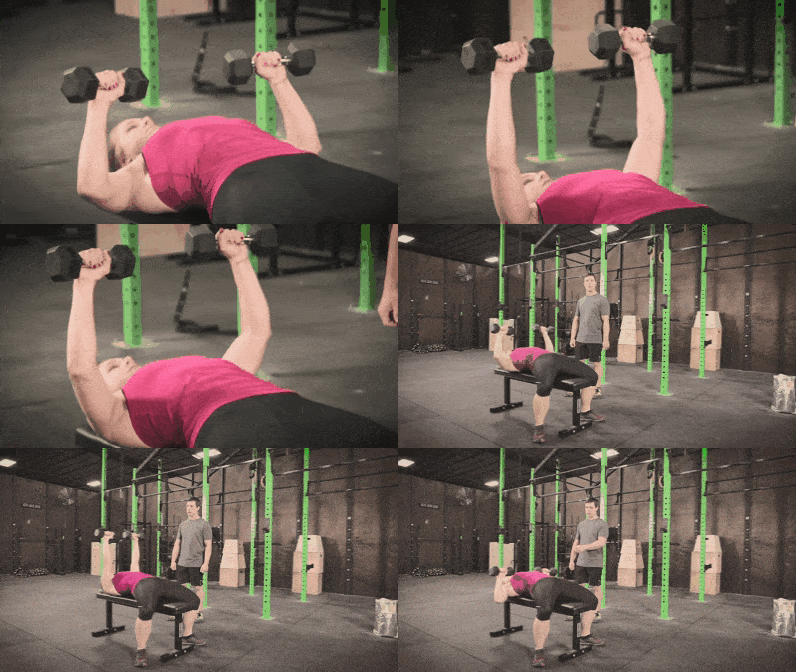
Barbell benchpress: as basic and powerful as they come. Uses every “push” movement in your upper body and can get you strong as heck!
Barbell press: press the bar above your head! Targets shoulders and triceps more than the chest.
Click on any of these exercises to get a FULL explanation of the movement, step-by-step:
1) The Push-Up: The best exercise you could ever do for yourself when it comes to using your bodyweight for push muscles (your chest, shoulders, and triceps):
2) The Bodyweight Squat: This exercise serves a dual purpose as it’s the foundation for building strength AND helps build proper mobility. If you are going to ever do barbell squats, you need to work on hitting proper depth with a bodyweight squat first!
3) The Inverted Bodyweight Row: Until you can get your first pull-up or chin-up, these exercises are GREAT to start building your pull-muscle strength (back, biceps, and forearms).
4) The Pull-Up and Chin-Up: Once you can support your bodyweight above the bar, the world becomes your playground. No strength training routine should be without pull-up or chin-up work! (Click here if you can’t do a pull-up or chin-up yet?)
5) The Bodyweight Dip: As you start to get stronger with push-ups and need to find a way to increase the challenge, consider doing dips. Warning: these are very advanced, but incredible strength-building exercises.
And now we’re into the best weight training exercises:
6) The Barbell Squat: Probably the best exercise when it comes to building strength and muscle throughout your whole body. It also burns crazy calories and makes life better. This is a MUST:
7) The Barbell Deadlift: Maybe the best exercise of all time. Actually no, it IS the best exercise of all time. It’s certainly the most primal: “pick the weight up off the ground. Done.”
This is a very technical lift, so make sure you read our article on how to do it with proper form:
8) The Barbell Press: Press a barbell above your head. This recruits all of the muscles in your chest, shoulders, and arms in order for you to lift the weight over your head.
As a bonus, you need to really flex and brace your core, which gets those muscles working too.
9) The Barbell Bench Press. Lie on a bench, and lower a barbell until it almost touches your chest. Pause, and then press it back up towards the sky. Repeat! And get strong.
Your mission, should you choose to accept it: commit to trying ONE of these movements in the next week. Use 20 seconds of courage, recruit a friend who has lifted or trained before, and try your best.
And if you want somebody to help you put these into a workout program, teach you HOW to do these movements properly, and have the confidence to know you’re training correctly for your goals…
A Meal Plan for Strength Training (Healthy Eating 101)
So far, we’ve been more or less just talking about exercises when it comes to strength training.
This is logical, because this is in fact a guide on how to perform certain exercises to grow strong.
However, we constantly remind our coaching clients that 90% of their success or failure on their fitness journey will come down to what they eat.
“Success” in this context really comes down to your goals.
Are you looking to bulk up? You’ll need to eat more calories than you burn.
Are you looking to slim down? You’ll need to eat fewer calories than you burn.
At this point, you might be thinking “Staci, how many calories do I need?”
To answer that question, it’s time for the Nerd Fitness Calorie Calculator!
(Note: we have used The Mifflin-St Jeor Equation to create this calculator! [14]).
If you want to bulk up and gain weight, take your TDEE and add 250 calories to it to get your daily goal. This should result in gaining half a pound per week.
Want to lose weight? Take your TDEE and subtract 250 calories to receive your daily goal. This should result in losing about a half-pound a week.
The other piece of the equation outside of a caloric surplus/deficit is protein.
Since you will be strength training and building muscle, you’ll need to make sure you are eating protein at every meal. It’s the number one macronutrient for creating new muscle tissue.[15]
Protein can come from any number of sources, including:
As we cover in our “How much Protein do I need?”, claims for the amount of protein required for muscle growth vary wildly from source to source (and woman to woman).[17]
Here is our recommendation:
If you’re of healthy weight, active, and wish to build muscle, aim for 1 g per pound of bodyweight (2.2 g/kg).
If you’re an experienced lifter on a bulk, intakes up to 1.50 g/lb (3.3 g/kg) may help you minimize fat gain.
Let me simplify it for you:
“To build muscle, target at least 1 gram of protein per pound of bodyweight (2.2 grams per kg).”
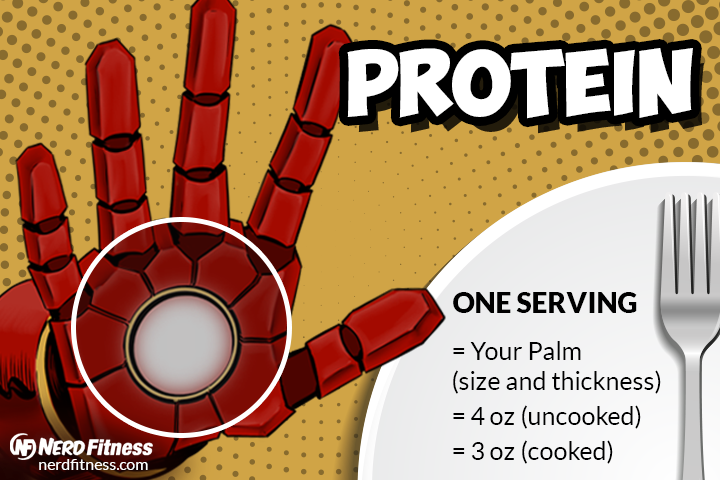
If you’re curious, from our healthy eating article, this is what a portion of protein looks like:
Here’s how much protein is in a serving of food:
4 oz (113 g) of chicken has around 30 g of protein.
4 oz (113 g) of salmon has 23 g of protein
4 oz (113 g) of steak has 28 g of protein.
Want to get more protein? Consider protein shakes. Rebel Leader Steve and I both supplement with shakes daily to meet our protein goals.
Whatever you do, make sure you’re getting enough!
Whenever we speak with new Online Coaching Clients, protein is the macronutrient we begin every discussion with! It’s THAT important when it comes to either weight loss or building muscle. I’m not kidding when I say it should make up a portion of every meal you eat.
The Top Frequently Asked Strength Training Questions for Women
Here are some of the most common questions we receive from women beginning their strength training practice in our 1-on-1 Coaching Program.
#1) Will I get bulky lifting weights? I really don’t want to.
I have GREAT NEWS!
Strength training will not make you bulky, UNLESS you want it to!
You get to pick how you want to look, so you do you.
Just remember that women who compete as bodybuilders didn’t start looking like overnight:
They have eaten, trained, and potentially taken supplements specifically so they can look like that! Which is great. Good for them.
They’ve been working towards that goal for years, probably decades.
Here’s the truth: when you pick up heavy things (like barbell training), your muscles get STRONGER (but not necessarily bigger).
If you actively eat for the goal of building muscle and getting bigger, you CAN build muscle and size.
Again, if you want bigger arms or stronger glutes, AWESOME. You do you.
Let’s talk about the reverse: If you pick up heavy things and eat a caloric deficit, your muscles will get stronger and denser; you will burn the fat on top of your muscle, and you will lose weight and get that “toned” look that many women are after.
Sir Mix-A-Lot was wrong. Don’t do side bends and sit-ups, because you’re wasting your time!
Side bends don’t get rid of love handles. They will simply strengthen your side muscles without actually reducing any fat there, potentially making you bigger around the waist unless you change your diet as well.
Sit-ups will not remove belly fat. They can also wreak havoc on your lower back, and are an incomplete exercise.
Your body cannot spot reduce fat in specific locations. If you have flabby arms or a big stomach, doing thousands of bicep curls and thousands of crunches won’t help.
Your body is genetically predisposed to storing fat in certain locations in a certain order.
When you start to lose weight, your body will lose the fat you currently have in a certain order as well – it might come off your arms first, then your legs, then your belly, then your chest, and THEN your butt.
Or in a different order, depending on your personal genetic makeup.
No amount of targeted exercise will change how that fat disappears.
Want to lose weight? Reduce your caloric intake in a way that doesn’t make you miserable:
Big compound movements that recruit lots of muscle (and thus force your body to rebuild lots of muscle, which requires extra calories burned, even after the workout is done). Our section on the best strength training exercises for women would be good examples of compound movements.
#3) How many days a week should a woman lift weights?
Unless you’ve been strength training for years and know what you’re doing, we recommend that you pick a full-body routine that you can do 2-3 times a week.
You build muscles while resting, not working out, so you generally want 48 hours before engaging the same muscle group again.
If you made it up to our “The Wide World of Barbells” section, you can do the DAY A workout on Monday and the DAY B workout on Thursday. That’ll give you plenty of time to recover.
Want more? Maybe on the weekend, you sneak away for a short hike.
Don’t worry if this doesn’t seem like a lot at first. We are interested in building the habit of strength training initially. We can up the frequency once you’re rocking and rolling.
Learning to meal prep would also be a good use of your time between training sessions.
4) Can I do strength training at home?
You sure can!
Many of our coaching clients have gotten in great shape simply by doing bodyweight exercises at home.
Here are a few resources to get you strength training in your living room:
Beginner Bodyweight Workout: many a Rebel have started their fitness journey here, and you can do it right in your own living room (if your dog will let you).
Advanced Bodyweight Workout: crushed the Beginner Bodyweight Workout? Then try this advanced circuit on for size.
42 Best Bodyweight Exercises: want to get your hands dirty? Use this guide to create your own bodyweight workout you can do anywhere!
20-Min Kettlebell Workout: own a kettlebell? Want one? With one single piece of equipment you can get in a great workout.
We can also build you a custom workout for your exact situation, whether you’re stuck at home or in an office, we can create a solution that fits your busy life!
How to Begin Lifting Weights as a Woman (Next Steps)
Since 2009, Team Nerd Fitness has learned a tremendous amount about how to best serve the ladies of this community.
I want to share with you my favorite success story.
Meet Leslie, a very sedentary single mom who works long hours that managed to lose 100+ lbs with the Nerd Fitness Coaching Program:
So if you’re tired of the same ole same ole and you’re ready to start strength training, you’re in the right place!
Not sure what to do or how to get started?
1) Check out our 1-on-1 Coaching Program! Our philosophies help women like Leslie above and they can be the philosophies that help you become strong inside and out.
Click on the image below to schedule a call and see if we’re a good fit for each other!
2) If you want a daily prompt for doing workouts at the gym (or at home), check out NF Journey. Our fun habit-building app helps you exercise more frequently, eat healthier, and level up your life (literally).
Try your free trial right here:
3) Join the Rebellion! Our free community numbers in the hundreds of thousands scattered throughout the globe, and we need good people like you!
You can join by signing up in the awesome yellow box below, and I’ll send you a bunch of free guides and printable workouts, including our Strength 101 guide!
Download our comprehensive guideSTRENGTH TRAINING 101!
Everything you need to know about getting strong.
Workout routines for bodyweight AND weight training.
How to find the right gym and train properly in one.
4) Do a strength training workout this week! The most important step you can do is to actually start.
Check out “Value of resistance training for the reduction of sports injuries” to learn more. Source: PubMed.
Read “Resistance training and sarcopenia” for more. Source: PubMed
This study “Skeletal muscle metabolism is a major determinant of resting energy expenditure” explores more. Source: PubMed
Here’s a study on different forms of exercise and their impact on pain, “Physical activity and exercise for chronic pain in adults.” Source: PubMed.
You can learn more at, “Strength Training and All‐Cause, Cardiovascular Disease, and Cancer Mortality in Older Women.” Source: PubMed.
Read “Practices, Perceived Benefits, and Barriers to Resistance Training Among Women Enrolled in College.” Source, PubMed.
Read “Age and sex affect human muscle fibre adaptations to heavy‐resistance strength training.” Source, The Physiological Society.
Since Women produce more type 1 muscle fiber, they might be able to perform more reps of an exercise than a man could. Don’t stress this. This marginal difference is overkill for a beginner.
Read, “American College of Sports Medicine position stand. Progression models in resistance training for healthy adults.” Source, PubMed.
Read “Circulating Testosterone as the Hormonal Basis of Sex Differences in Athletic Performance.” Source, PubMed.
There’s always one of you.
Studies have shown the Mifflin-St Jeor Equation to bevery accurate in determining BMR and TDEE
Read, “Dietary protein for athletes: from requirements to optimum adaptation.” Source, PubMed.
If you are pregnant or lactating, you’ll need even more protein than our below recommendation. Examine has a great article pointing out protein requirements.
It feels like everyone is talking about the healing power of the breath these days. I know, it sounds like just one more trend to add to the egregiously growing list of to-do’s from the latest HIIT workout to the newest diet trend, and here is one more thing you need to do to be healthy, right?
Friend, I am here to tell you that it’s not true.
Breathwork is not a trend; it’s been around for thousands of years and has been used to clear the mind and support good health.
Intentional breathing has been an important part of my journey, and that’s why I’m honored to be providing breathwork sessions in the Lindywell app—the power of slowing down and breathing with intention cannot be underestimated.
Whether breathwork is new or familiar to you, or you just want to learn more about it, you’ve come to the right place.
My Breathwork Journey
I am a recovering wellness-a-holic and like many folks trying to manage the lack of control we felt in 2020, I bought everything the internet said would support my self-care journey (I see you, Peloton getting dusty in the corner).
It was toward the end of 2020 that I found myself feeling mentally worn and emotionally drained. I have a pretty serious trauma history and that year brought a lot of unresolved pain to the surface. There was nothing left in my tank so I turned to my trusted advisor, Google, to help me figure out why I couldn’t get out of this funk.
One of the suggestions I came across was breathwork. This practice intentionally manipulates the breath to create a deeper connection to the self along with other benefits, including mental clarity, spiritual connection, and a calm nervous system.
It couldn’t hurt; it was just breathing, right?
Something happened when I took my first 15-minute class. Did it up my self-care game? Sure, but it did something even better than that. It oxygenated my brain enough to think a little more clearly. I felt instantly calm in my body and that feeling lasted well after the session.
It even brought up a few tears (rest can do that, you know). It also gave me enough coherence to make the next right move: find a therapist to help me through this turbulent time. One step led to another, and with the routine of near-daily breathwork, I started to get better and better. I was aiding in the healing of my nervous system. That was in my control.
Who knew one little class would lead this elementary teacher to a new career? And as a teacher, I like to geek out on the benefits (yes, it’s backed by science). So let’s dig into how breath impacts your body and how you can start practicing right there, right now!
The Connection Between Breath and Stress
The healing power of the breath is especially obvious when we look at how it impacts stress. To understand how breathing can reduce stress, it’s important to first understand the connection between the two. Stress is a natural response to perceived threats or challenges, and triggers the body’s “fight or flight” response.
When we experience stress, the body releases stress hormones like cortisol and adrenaline, which cause a range of physical changes such as increased heart rate and tense muscles. When you’re stressed, your breathing also changes, becoming rapid and shallow.
By taking deep, slow breaths, you can activate the parasympathetic nervous system, which helps to counteract the “fight or flight” response and promote relaxation. Let’s look at a few ways this plays out in the body.
Breathing and the Autonomic Nervous System
Breathing is closely linked to the autonomic nervous system. This system controls bodily functions that occur without conscious control, like heart rate, digestion, and respiration. Breathing can directly influence the activity of this system with each inhale and exhale.
Inhale: When you breathe in, your heart rate increases, and your blood vessels constrict, activating the sympathetic nervous system.
Exhale: When you breathe out, your heart rate slows down, and your blood vessels dilate, activating the parasympathetic nervous system.
With intentional breathing, you shift your physiological response from the sympathetic (“fight or flight”) to the parasympathetic nervous system (“rest and digest”) inducing a state of relaxation and calmness.
Breathing and Stress Hormones
Stress triggers the release of hormones such as cortisol and adrenaline, which prepare the body for a “fight or flight” response. Breathing also plays a role in regulating the release of stress hormones, but in the opposite way: when you intentionally slow and deepen your breath, you reduce your levels of cortisol, which in turn can reduce blood pressure and help you feel more relaxed and at ease.
Breathing and Muscle Tension
Stress can cause muscle tension and tightness, which often leads to more feelings of anxiety and stress as the body tightens and constricts. When you breathe deeply, you take in more oxygen and trigger the parasympathetic nervous system, which encourages muscle release. As this happens, you may feel a sensation of less stress and more relaxation.
Breathing Techniques for Stress Reduction
At Lindywell, we bring breath into each and every Pilates workout. While this is a powerful way to get intentional with your breathing, we encourage you to take it one step further and practice breathwork on its own. This can allow you to slow down, connect inward, focus on letting go of anxiety and stress, and let the breath support you.
Plus, there are many different breathing exercises that can help you reduce stress but would be challenging to do while moving your body! Here are a few different techniques to try.
Remember that as a member of Lindywell, you have access to all of our breathwork practice. A great place to start is with our Breathwork Basics session.Start your 14-day free trial to experience breathwork from Lindywell for yourself!
Box Breathing (4×4)
This is a simple and effective technique for reducing stress and you can do it anytime, any place, from your car to your workspace. This is a great exercise to do with children as well. My kids make the shape of a box by drawing one side with each step.
Pro tip: Make this a practice in your home when all is calm. You want your kids to build muscle memory so that when tensions rise, they have this tool in their toolbox.
How to do it: Take a slow, deep breath through your nose for four seconds, feeling your stomach expand as you inhale. Hold your breath for four seconds, then exhale slowly through your mouth for four seconds. Hold at the end for four seconds and repeat for 3-5 minutes.
4-7-8 Breathing
This technique, also known as “relaxing breath,” was popularized by Dr. Andrew Weil. It’s designed to promote relaxation and reduce stress and anxiety. It can also help you sleep better, reduce blood pressure, and increase focus and concentration. In other words, it’s beneficial to do almost any time! It can be helpful to place one hand on your chest and the other on your stomach, but this isn’t necessary.
How to do it: Take a slow, deep breath through your nose for four counts, hold the breath for seven counts, then exhale slowly through your mouth for eight counts. Start by repeating this breathing pattern for 4 cycles and work up to 8 as you feel more comfortable.
The Healing Power of the Breath Cannot Be Overlooked
I’ve learned that the healing power of the breath cannot be underestimated. Breathwork is a powerful way to stimulate your nervous system, regulate your emotions, feel more relaxed, and ultimately, reduce stress and anxiety.
This practice has had a massive impact on my own trauma-healing journey. I can honestly say that I would not be here at Lindywell if it weren’t for this self-care Google search that turned into a life-changing practice. We hope that you give it a try to experience the power for yourself.
I recently dusted off this HigherDOSE Infrared Sauna Blanket after it’d been sitting in my hallway for… well, probably a couple of years. I was sent it to try out and to share a review with you but life got…
There’s a lot of discussion around nervous system dysregulation in the wellness world these days—and for good reason. The nervous system impacts every area of your life, and when out of alignment (dysregulated), it can cause a ripple effect of issues and challenges, physical, mental, and emotional.
If you’ve felt overwhelmed, irritable, or extremely fatigued, or have had gut or skin conditions, you’ve experienced symptoms of nervous system dysregulation. These are all signs of stress, and while experiencing these things here and there is normal, when they become chronic is when you need to consider whether they’re signs of dysregulation.
Let’s break down what this all means and then give you practical solutions so you can address your nervous system dysregulation and start thriving again!
This article is meant for educational purposes only. If you’re experiencing symptoms of a nervous system disorder, it is important to seek the advice of a healthcare professional to receive an accurate diagnosis and appropriate treatment.
Why Stress Isn’t Bad
Stress is a normal part of life, and it may be a surprise that a certain amount of stress can sometimes be helpful. A surge of hormones occurs when you are excited about an event like a concert or game. If you’ve played competitive sports, you know there is a natural element of stress that gets you fired up to play. The stress of a first date (think: butterflies).
None of these are signs of nervous system dysregulation. It’s just your body’s way of communicating that something big is happening. Yet, all of these examples have one thing in common: there is no threat of danger.
The threat of danger triggers a primitive response in our amygdala (one of the oldest parts of our brain). This trigger turns on the fire hose of stress hormones, telling our body that we either need to bare down and get ready for a fight or get out of there to save our lives.
Still, compounded smaller stressors in our life (think phone dings, traffic, never-ending to-do lists, and caring for others’ needs constantly) can trigger this response and leave our nervous system dysregulated.
In this state, your body is reacting as if it’s constantly dealing with a threat of danger.
We likely aren’t dealing with a true threat that often throughout the day, so we have to be mindful to slow down. When we do this, we can tell our body to hit the reset button and return to a place of safety and connection. This in turn helps us reset any nervous system dysregulation.
How to Reset Your Nervous System With Breath and Pilates
Creating balance when we’re experiencing nervous system dysregulation requires you to relax the body and reduce stress. Here at Lindywell, we love to focus on two specific strategies to make that happen: breath and Pilates. While these aren’t the only options for self-regulating, they can be powerful tools on your journey back to health.
The good news is, these two things also go hand-in-hand. While you can practice breathwork outside of Pilates, and we encourage you to do so with our Lindywell breathwork sessions, Pilates itself encourages deep and intentional breathing.
Here’s how both of these can support regulating your nervous system.
Breath
Stop right now and check in with your breath. Listen closely to the sound of your breathing.
Are you nostril breathing or mouth breathing?
Are you breathing into your chest, your belly, or both?
Your current breathing pattern could contribute to your overall wellness and your emotional state at this very moment. Your breath and your nervous system are close friends who rely on one another for information. Giving attention to your breath can help you shift into the right state of mind.
The nervous system is closely connected to the way we breathe and the state of our mind. When you use your breath to calm your body and bring awareness to the present moment, you can shift your nervous system from a state of fight-or-flight (sympathetic activation) to rest-and-digest (parasympathetic activation).
Breathwork can trigger the amygdala to slow down, sending the message that fear and anxiety aren’t necessary now. In fact, a 2016 study shows that deep breathing reduces emotional responses in the amygdala. This promotes overall relaxation within the body, which helps you come back into regulation when practiced regularly.
To get a better understanding of the power of breath for your overall health and well-being, tune into Breathwork as a Path to Wellness, an episode of The Balanced Life Podcast with Kiesha, our Head of Breathwork + Somatic Programs.
Pilates
Movement, and Pilates specifically, can be a powerful tool for calming your nervous system. Even just a short workout helps to release feel-good hormones (neurotransmitters such as dopamine and serotonin) which play a role in regulating mood, improving focus, and helping your brain to function better overall.
Because Pilates utilizes mindfulness and intentional breathing it can also reduce levels of stress hormones, such as cortisol, which in turn, can help us to feel calmer and more relaxed. Plus, when we move our bodies we improve blood flow, helping to oxygenate the brain which helps us to think more clearly (goodbye brain fog!) and function more optimally.
Connecting your mind and body through regular Pilates workouts is one of the best ways to not only build strength, improve mobility, and reduce aches and pains, but also to support a healthy nervous system.
Rebalance and Reset During Nervous System Dysregulation
Stress is normal—and we all experience it on a regular basis. When you experience stress chronically you may experience nervous system dysregulation. Using Pilates and intentional breathing, you can come back to a state of balance so you can better handle the many ups and downs that life has in store.
For a limited time, your first month is on us (yes, you can get 30 days FREE!). This offer ends on March 13th at midnight PST, so don’t miss this opportunity to take care of your body AND your mind with Pilates and breath! Get started today!
Hi Lindywell community! Kiesha here. I’m so excited to be joining the team as the Head of Breathwork and Somatic Programs.
In addition to providing you high quality, effective and efficient Pilates workouts you can do from home (or on the road), Lindywell is now also a place where you can find guided breathwork sessions and intentional breathing exercises to help you reduce stress, clear your mind, increase your energy and improve your mental health.
You may already be a dedicated breathwork fan, or you may be curious what breathwork even is.
The definition of breathwork is quite simple: It is a conscious practice of using your breath to help shift your emotions and create the desired outcome.
While breathwork is trending right now (and for good reasons!), it’s an ancient practice with roots in southeast Asia that has been utilized for years – in many different ways.
As a trauma-informed breathwork facilitator and a somatic life coach, I’m passionate about helping equip people with somatic tools to address trauma in the body. Healing isn’t a linear process, but it’s possible, and I’m proud of that.
Understandably, there are some questions about breathwork and we’ve listened to you, our community, to answer your questions. Here are a few answers to the most frequently asked questions.
Core Strength
This is one of the most well-known benefits of Pilates—and it’s worth talking about! For women, core strength is critical for improving posture, reducing the risk of injury, and improving balance and stability. It’s also supportive of overall pelvic health, which is important in every area of life for women.
Pilates helps build strength through exercises that target the abdominal, lower back, and pelvic floor muscles. These exercises, paired with slow, controlled movements, concentration, and precision, engage the core muscles, helping to strengthen and tone them.
Give these pelvic floor exercises a try to experience the power of Pilates for your core.
2. How does breathwork help calm my mind and address stress responses like “fight or flight”?
When we mindfully breathe, we slow our heart rate down, thus signaling to our
brains that we are not in a state that requires hypervigilance.
What type of breathing comes to mind when you think of “fight or flight”?
Shallow?
Rapid?
Are there any racing thoughts?
In order to increase oxygen, our lungs must work harder when we are in this state.
When we slow our breathing, we signal to our brains that we are okay, and our parasympathetic cues the nervous system to calm us down.
Long, deep breaths can also manage our stress responses to help decrease anxiety, fear, racing thoughts, a rapid heartbeat, and shallow chest breathing. These responses can impact our physical, mental, and emotional health and longevity. Toxic stress negatively impacts our overall wellness and longevity, but breathwork is one somatic (body-based) tool that can create a sense of calm and well-being.
3. Why do we always breathe in through the nose and out through the mouth versus in and out through the nose? Is there something specific that it does for the body?
I’ll answer this in two parts.
First, at Lindywell, we do a variety of techniques. There are so many different breathing exercises. Sometimes they specifically call for nostril or mouth breathing for a reason, and sometimes, it doesn’t matter.
When I instruct, I’m giving you suggestions because everyone is at a different place and may or may not be able to access certain movements that day.
In breathwork, mouth breathing is cooling and helps us shift states when we do the 3 part open mouth breath (a style used during longer breathwork sessions known as a conscious connected circular breathwork pattern).
The elementary teacher in me relates this to teaching young children how to spell. Spelling the word apple correctly doesn’t matter at the beginning. It may matter later, but I always asked my students, “What do you hear? I would ask, “Can you stretch out the sounds?” I want them to let go of perfection, get curious, enjoy the process, and trust their minds as young writers. While they may look different, Apl and Apple mean the same thing.
Similarly, with breathwork, one way may be how it’s technically done, but how you show up today is valid and valuable. This is similar to Robin’s approach to breathing in Pilates as well!
Like my former students, I want you to let go of perfection or the need to be a purist, get curious and be playful about your body and breath, and trust your mind. I will let you know if a strategy requires nasal or mouth breathing.
Secondly, as a general rule, we should breathe through our noses in our daily lives. This is for optimal health (mouth breathing comes with many issues affecting our sleep, teeth, weight, and mental health).
Mouth breathing bypasses the functions of the nose, which include warming, humidifying, and filtering the air we breathe.
Nostril breathing allows your lungs to be more efficient in oxygen absorption. It also activates the lower part of the lungs when doing breathwork, thus taking in more oxygen.
However, in breathwork, when we are doing targeted exercise for a short time to achieve a desired result, short durations of mouth breathing aren’t a problem.
Some exercises call for either nose or mouth breathing for a specific reason, but it doesn’t matter unless specified. If you have a stuffy nose and all you can do is breathe through your mouth, it would be better to do that than the way I may instruct (or suggest) because the benefits of breathwork are worth it.
4. How to change your mindset of “this won’t work for me”?
The mind-body connection is real and is one of the best ways to take charge of your health. So much of life is not in your control, but knowing that your thoughts are connected to emotions and that those emotions reside in the body is powerful. Knowing that this connection impacts your overall wellness gives you great motivation to do something about it.
Research supports the role of the mind-body connection in healing and recovery.
“Over the past 30 years, neurobiological research has shown that the placebo effect, which stems in part from an individual’s mindset or expectation to heal, triggers distinct brain areas associated with anxiety and pain that activate physiological effects that lead to healing outcomes”.Stanford University
Healing and recovery are more than acts that require medical attention and support; you are a part of the equation. Our thoughts affect our ability to recover.
“Many scientists believe there is a strong mind-body connection that can affect healing. Sometimes the trauma to the body and negative thoughts can lead to stress, depression, and anxiety. Occasionally, the injury leads to fear about getting injured again. These negative thoughts and emotions can affect recovery.” Bone-Joint
“Your body responds to the way you think, feel, and act. This is one type of “mind/body connection.” When you are stressed, anxious, or upset, your body reacts physically. For example, you might develop high blood pressure or a stomach ulcer after a particularly stressful event, such as the death of a loved one. Family Doctor
Try reframing your thoughts and get curious by instead asking yourself “Could this work for me?” and be open to exploring the ways your mindset can impact your experience.
5. How to get started with breathwork?
Join Lindywell! Try different techniques and don’t give up. Like everything else in life, it takes practice. I’d love for you to join me and an amazing group of instructors!
After downloading our app, here are some steps for beginners and experts alike:
1. Start paying attention to your breath more often throughout the day. Right now, at a stoplight, upon rising, during Pilates, before sleep. Make it a habit to be a student of the way you breathe.
2. Get curious. Can I breathe more deeply, more slowly, and bring my mind back to how I breathe throughout the day?
3. Play! We encourage you to try different sessions in the Lindywell app. There are short guided sessions and longer, deeper sessions – something to suit your mood each day. Each style and experience is different, so be open to trying sessions more than once.
4. Subscribe and follow Lindywell: We want breathwork and Pilates to be as accessible as possible. Subscribe to our newsletter for free tips and tools. Follow us on Instagram @wearelindywell for daily breathwork inspo and IG Live tutorials. Join one of our free challenges that let you experience that power of grace over guilt pilates, breathwork, and nourishment.
5. Breathwork feels intimidating to me; can you explain why it might feel scary to try?
Oh, friend, this is so real; I feel this in my soul.
Meditation, breathwork, and basically anything that slows us down and gets us into our bodies can be scary. Hear me clearly:
You are not alone.
That is why you need someone who is trauma-informed as a guide. You need someone to hold space for you, and don’t take for granted that something as simple as breathing can be terrifying based on what you have been through and what is happening in your body.
This is a common experience, and in my teaching, whether live, online, or in-app, I teach from a place of grace and gentleness.
6. Can breathwork reduce anxiety?
Yes! Deep breathing slows your heart rate and signals your body to calm down.
As someone with a lot of anxiety experience, I know how important this is.
Learning about my nervous system and how to nourish it has given me power and agency in my body. That, in and of itself, has reduced my anxiety.
Controlled breathing leads to physiological changes in the body. Think about when a child is upset and someone they love holds them and takes deep breaths with them. What happens? It regulates their breathing and shifts their state. You can do this same thing for yourself with controlled breathing. The benefits only increase when practiced regularly.
Deep breathing signals the body to slow your heart rate and lower blood pressure, which reduces cortisol levels (the stress hormone). See the list of benefits in question 1.
The beauty of breathwork is that it’s evidence-based.
Ready to jump in?
Try this simple breathwork technique the next time you are feeling anxious or the 20-minute guided breathwork session to reset your nervous system and connect to your body.
I can’t wait to get to know all of you in the Lindywell community better – and can’t wait to see you in the app for your next breathwork session!
Women’s wellness is multi-faceted. We have a lot to think about when it comes to taking care of our minds and bodies as we juggle friendships, family, work (and so much more), all while taking care of ourselves.
Pilates has been a powerful tool for me to stay strong, both mind and body while raising a family, building a business, and weathering the many storms that have come up along the way. In my 10 years of practicing, I’m continually reminded (by the thousands of women that practice with us at Lindywell!) that Pilates is one of the only forms of exercise that can help us women achieve all of this—often in just a single workout!
Let’s get into the details about the powerful connection between Pilates and women’s wellness and how it can positively impact your well-being at every stage of life.
Core Strength
This is one of the most well-known benefits of Pilates—and it’s worth talking about! For women, core strength is critical for improving posture, reducing the risk of injury, and improving balance and stability. It’s also supportive of overall pelvic health, which is important in every area of life for women.
Pilates helps build strength through exercises that target the abdominal, lower back, and pelvic floor muscles. These exercises, paired with slow, controlled movements, concentration, and precision, engage the core muscles, helping to strengthen and tone them.
Give these pelvic floor exercises a try to experience the power of Pilates for your core.
Stress Management
Stress is a normal part of life, we all experience it in some way. When stress is chronic, however, women can see the impact on menstrual cycles, pregnancy, and digestion, in addition to typical symptoms like headaches, anxiety, and lack of focus.
Pilates is a powerful way to reduce stress because it emphasizes the connection between the mind and body. This helps reset the nervous system and, in turn, promotes mindfulness and relaxation. Intentional breathing, which is a key principle of the Pilates method and a central component of the Lindywell approach, also reduces stress levels.
Here are a few other interesting ways Pilates can reduce your stress that you may have never thought about:
Relieve muscle tension: Pilates helps to relieve muscle tension and improve blood flow, leading to a reduction in physical stress.
Increased endorphins: Consistent Pilates practice can increase endorphin production, which can help to reduce stress and improve mood.
Improved sleep: Pilates can also help improve sleep quality, which can help to reduce stress and promote overall wellness.
At Lindywell, we focus on short, efficient workouts so it’s easier for you to prioritize daily movement, and as a result, reduce your stress and feel your best every single day. Join for free with a 14-day trial or log in and press play on your next workout!
Spine Health
As Joseph Pilates said, “If your spine is inflexibly stiff at 30, you are old; if it is completely flexible at 60, you are young.” Very few forms of exercise focus on spine health. Yet, this is key to reducing back pain, maintaining good posture, and making physical movement possible throughout your entire life.
For women in pregnancy, a healthy spine is also necessary to keep a healthy posture as the belly grows and the center of gravity shifts.
Rolling and stretching movements in Pilates keep the spine young, flexible, and strong. One of our favorite exercises at Lindywell is Rolling Like a Ball, which is great for your spine and fun to do! Try it at home to give your spine a little love and have a laugh.
88 percent say their body weight or shape is at least moderately important.
87 percent have been on a diet with the purpose to change their shape or weight.
60 percent say how they feel about themselves is largely influenced by their weight, shape, or size.
This is something I personally struggled with for many years and as a result, I also dealt with low self-esteem and anxiety. For some women, this can also lead to depression and behaviors like restrictive eating or excessive exercise.
Pilates was incredibly supportive on my journey back to appreciating and nourishing my body. Thanks to the physical strength I was building, I felt more confident—and thanks to better posture, I walked more confidently too! More than that, though, Pilates encouraged me to focus on what my body could do each day. Whether it was a lot or a little, this helped me develop a more positive self-perception.
At Lindywell, you are seen, heard, and supported no matter what you’re going through with a non-competitive community of women. We’re all about celebrating non-scale victories and cheering one another on!
Physical Strength
You don’t need to work out for 60 minutes a day or lift heavy weights to build strength. In Pilates, we build strength with body weight, in addition to playing with fun props like light hand weights, resistance bands, a Pilates ring, or a Pilates ball. And at Lindywell, we do it in as little as 10 minutes too!
Not only does Pilates provide targeted muscle training, but each movement is efficient. For example, the Swimming exercise targets the entire back of your body, from your upper back and triceps to your lower back, glutes, and hamstrings. It also helps strengthen your core, as with most Pilates movements. Check it out here:
Most Pilates exercises are like this, allowing you to work your entire body at one time, leading to a balanced and comprehensive workout. Thanks to the low-impact nature of these movements, nearly anyone can do it too.
Pilates and Women’s Wellness Go Hand-in-Hand
Women’s wellness is all about building resilience, strength, and flexibility in the mind and body. At Lindywell, Pilates helps you achieve all of that and more through full-body movement, focus on the breath, and efficient workouts that can be done in just 10 minutes. If you’re ready to love yourself more, appreciate your body, and feel strong and confident, it’s time to give Pilates a try.
Let’s learn how to use simple spices to make your meals awesome!
Maybe you’re just getting comfortable cooking in the kitchen.
Or maybe you’ve been eating the same chicken and broccoli for weeks and it’s time to spice it up.
Either way, you’re in the right place.
Not only do we program workouts in Nerd Fitness Coaching, but we also discuss low-calorie recipes that are delicious (we use them ourselves!). Today, we’ll share our tips for making any meal delicious, using only a handful of common spices.
Remember those diagrams of the tongue that you learned about in school?
They told you the tongue tasted different flavors depending on the section. The back tastes bitter, the front tastes sweet, and the sides taste salty and sour.
1. Bitter 2. Sour 3. Salt 4. Sweet
Most of us now know this is wrong.
Your whole tongue tastes all flavors, and it’s not just your tongue! The roof of our mouth and your nose help out too! In fact, there are more than just the four flavors we learned about in school.
There is another lie that has been circulating in the fitness world for years. It’s a lie that says healthy food is boring and bland.
It drives me crazy.
And in this nerd’s opinion, it’s one of the most damaging lies told about getting healthy.
We know diet is 80% of the battle when it comes to achieving our health and fitness goals. And when we tell ourselves eating healthy food is boring, flavorless, and downright gross, we put ourselves on the fast track to failure! Just like exercise can and should be fun, cooking meat and veggies should be delicious.
Today we’re going over some basic skills that will allow you to see maximal benefit for minimal effort.
How? Simple flavors.
Here are 6 foolproof spice combinations to help you level up your cooking skills, explore the world with your tongue, and (hopefully) get you out of your food rut!
6 Spice Combinations for Tasty Food
Tons of rebels looking to level up their cooking have asked about re-creating their favorite dishes from around the world. I’ve got good news for you! It’s not as difficult as most people think.
Regional dishes taste the way they do because they are made from the spices and ingredients local to that community. Your ancestors didn’t need Super Processed Stir Fry Sauce™ to make dinner. They used whole foods to create delicious dishes, and we’re going to do the same.
Here are 6 simplified spice combinations that you can use to take your healthy meals from bland to bold. Each is measured for a pound of food:
#1) Mexican:
Chili powder: 1 Tbsp (15ml)
Lime (Juice from 1 lime)
#2) Greek:
Oregano: 1 Tbsp (15ml)
Olive Oil: 2 tbsp (30ml)
Lemon juice: 2 tbsp (30ml)
#3) Italian:
Oregano: ½ Tbsp (7ml)
Garlic: 3 Cloves (½ tsp or 2.5ml powdered)
Basil: ½ tbsp (7ml)
Tomatoes: 1 diced can
#4) Indian:
Cumin: ½ Tsp (2.5ml)
Curry: 1 tbsp (15ml)
Coriander: ½ tsp (2.5ml)
#5&6) Chinese/Japanese (this makes a marinade or stir-fry sauce):
Ginger: ¼ tsp (1ml)
Tamari: ¼ cup (59ml), can also use coconut aminos or soy sauce
Rice Vinegar: 2 Tbsp (30ml)
Garlic: 3 cloves (½ tsp/2.5ml powdered)
Dash Red Pepper Flakes
Sugar (Honey): 1 tbsp (15ml)
Bonus flavors!
#7) Thai (this makes a marinade or stir-fry sauce):
Coconut milk: 1/2 cup (118ml)
Tamari: 1/4 cup (59ml) (coconut aminos could also be used)
Fish Sauce: 2 tbsp (30ml)
Green or Red Curry Paste: 1 Tbsp (15ml)
Cilantro: Handful of fresh chopped
For the complete set, add these to your shopping list (herbs and spices are dried):
2 limes
2 lemons
Can or jar of diced tomatoes
Coconut aminos or soy sauce
Rice vinegar or apple cider vinegar
Chili Powder
Oregano
Basil
Parsley
Red Pepper Flake
Garlic Powder (or fresh bulb of garlic, your choice)
Curry powder
Cumin
Coriander
Ginger powder
If you go to the store and buy these 15 items, you’ll be set to make a wide variety of dishes from all over the world.
These spice combinations can be used for chicken, fish, eggs, beef, or pork; roasted, sauteed, steamed, or microwaved veggies; stir-fries, and more!
For a very minimal monetary investment and one trip to the grocery store, you can have a different dish from around the world every day of the week!
How to Add Spices to a Meal (7 Simple Recipes)
Okay, you’ve got your spices.
Now how do you put them to work?
Glad you asked!
We’re going to take one of your favorite recipes and put your new spices to the test! Grab one of our many recipes and take one of the above spice combos and put them together.
My suggestion is that you omit the suggested spices from the original recipe posts and replace them with the ingredient measurements above. Remember, the above suggestions are by the pound, so if you’re using two pounds of chicken or veggies, double the spices!
Here are just a few examples of how you can these spices for almost any dish:
Roasted veggies – Anyone up for some Mexican chili lime or Indian curry-spiced veggies?
Chicken Stir Fry – Try the Asian spices out to level up this classic!
Shepherd’s Pie – Indian curry shepherd’s pie sounds like an unexpected and delightful combination.
Lettuce Wrapped Burgers – Make some Italian spiced burgers, and top with fresh mozzarella, tomato, and fresh basil!
Scrambled Eggs and Veggies – Try a different spice combo on plain old scrambled eggs each morning this week to see how the flavors differ!
Easiest Chicken Ever – Toss the chicken in some Greek spices, lemon, and olive oil instead of the spices prescribed in the original recipe.
After a while, you’ll learn which spices you like in a dish and which ones you can live without.
Maybe you like cinnamon in your curry or maybe you can’t stand the taste of ginger. That’s totally cool! Your food is YOURS!
Soon you’ll be able to spice your dishes without having to measure them every time. Be sure to use your nose and mouth to smell and taste what you’re making as you go! (Unless it’s raw meat. Never taste raw meat.)
5 Tips for Using Spices While Cooking
So you’re heading to the store, or you already have your spices. Awesome! Here are some tips to make shopping and cooking a little bit easier.
1. Does buying individual spices and mixing them sound intimidating? The spice companies make this easy for us. Check out the spice aisle in your grocery store. Lots of companies make pre-mixed spices for regional dishes:
Italian Seasoning
Greek Seasoning
Herbs de Provence
Taco/Fajita seasoning
Curry powder
Chinese 5-spice powder
To experiment with these, buy a couple and try a new one every time you cook something. Put it on something basic like eggs or baked chicken so you can begin to taste the difference between spices from different areas of the world.
2. Salt and pepper don’t do the same job.
Salt makes your food taste MORE like what it is. It enhances the flavors of the food that are already there. If you over-season with salt, of course it will make your food taste salty, but that’s not salt’s function in the culinary world.
If you’re feeling adventurous and have a little extra cash, buy some fancy looking sea salt. There’s Hawaiian pink sea salt, fleur de sel, coarse sea salt, fine sea salt. There’s even weird stuff like truffle salt, grey sea salt, and black pyramid salt!
The best advice for pepper is to buy whole peppercorns and a pepper grinder. They even sell disposable ones with peppercorns already in them at the grocery store. You don’t have to get fancy. This is what I have. Fresh ground pepper makes all the difference in the world. If you like pepper on your food, this is the way to go!
Sometimes the most simple combination of coarse sea salt and coarsely cracked black pepper is all I use to season a steak, and it’s freaking delicious. Never discount simplicity.
3. Buy a pre-stocked spice rack. I might get some flack for this tip from seasoned (pun intended!) cooks. But when you’re first starting out, instead of buying all your spices individually, sometimes it’s nice just to have it all done for you. Spice racks are relatively cheap, they give you a lot of spices and herbs that you may not have thought about picking up at the store, but you’ll be glad you have it when a recipe calls for paprika and voila! You already have it!
Admittedly, spices and herbs that come in a pre-stocked spice rack from a department store may be older and therefore less flavorful, but it’s better than having no spices at all!
4. Get acquainted with acid. By acid, I mean vinegars and citrus juices. You’ll be amazed at how much adding a little bit of vinegar to a plate of sauteed veggies or your paleo spaghetti sauce makes it pop.
Acids brighten the flavors in your food and help minimize some of the bitter flavors in certain foods (like dark leafy green veggies). An acid can also help you bring down the heat if you added too much red pepper flake to a dish.
5. Fry the spices first. This is called “blooming” your spices. When your oil is heated in your pan, add your spices to the oil first and mix them around for 3-5 seconds, then add your veggies or meat or whatever you’re cooking in that oil. This is a quick and easy way to deepen and intensify the flavor of your spices.
Getting Started Spicing up Your Food (Next Steps)
We’ve all heard people say eating healthy food is boring and bland. If you ask me, the people who are telling you this are doing it wrong.
When we force ourselves to eat the same foods over and over (like plain baked chicken and steamed veggies with minimal seasoning), it can deplete our willpower bar if we crave more flavors and variety.
Companies design Frankenfoods to make us crave the sugars and chemicals they’ve created, so they can profit off of us indefinitely.
How can we fight against that?
By mastering the art of using spices and sauces!
Healthy eating doesn’t have to be boring. Armed with these basic concepts and combinations you can defeat cravings and actually enjoy and look forward to your healthy meals!
Just roll up your sleeves and get going!
If you want some more help, Nerd Fitness is here for you.
We have three options on how to continue with us. Pick the option that best aligns with your goals:
Option #1) Our 1-on-1 Online Coaching program: a coaching program for busy people to help them make better food choices, stay accountable, and get healthier, permanently.
All the coaches from our videos today are part of the program, and they’re ready to help you level up your kitchen skills, apocalypse or no apocalypse.
You can schedule a free call with our team so we can get to know you and see if our coaching program is right for you:
Option #2) If you want an exact blueprint for how to eat better and get in shape, check out NF Journey. Our fun habit-building app helps you exercise more frequently, eat healthier, and level up your life (literally). We even have quite a few “How to Cook” adventures.
Try your free trial right here:
Option #3) Join the Rebellion! We need good people like you in our community, the Nerd Fitness Rebellion.
Sign up in the box below to enlist and get our Rebel Starter Kit, which includes all of our “work out at home” guides, the Nerd Fitness Diet Cheat Sheet, and much more!
Get your Nerd Fitness Starter Kit
The 15 mistakes you don’t want to make.
Full guide to the most effective diet and why it works.
Complete and track your first workout today, no gym required.
Alright, now I want to hear from you:
What flavors are we missing?
Are there any other spices in your cabinet that you have NO IDEA what to do with?
Let us know in the comments! Maybe we can help!
-Noel
PS: Make sure you catch the rest of our Cooking 101 series: