Categories
Uncategorized

#holistic #getfit #nutrition 7 Reasons You Hit a Workout or Weight Loss Plateau, And 5 Quick Fixes.

orth Cape with a steep cliff and a large flat plateau is in the Barents Sea.

So you’ve hit a workout or weight loss plateau the size of a…well, an actual plateau, eh?

Have no fear, our step-by-step guide will get you back on track! (Plus, the most badass Bruce Lee quote you’ll ever read).

Whether you’ve stalled in your weight loss journey, strength training, or some other fitness benchmark, today we’ll tell you exactly how to keep progressing by sharing with you the exact tools we use with our coaching clients.


Don’t lose morale. Together we got this!

We’ll cover:

I know how demoralizing plateaus can be, especially when it comes to strength training and weight loss – they can be a total momentum killer!

It’s actually why we built our newest app, Nerd Fitness Journey! It’s designed so when you wake up in the morning, you know the exact next step to help you reach your goals.

You can try it for free right here, so this plateau can be a thing of the past:
What is a Plateau?

A picture of a LEGO Spider-man, who is interested in weight loss.

A plateau occurs when you stall out on progress despite continuing to do “all of the right things,” usually including:

And so on.

Our bodies go from losing weight consistently to getting stuck at a certain number. Or we go from building muscle and getting stronger, to having a week or two where we can’t seem to lift anything heavier.

We call this point in our training “The Plateau,” and we don’t like being stuck on them.

A man hitting his head over and over.

As we learned in a previous article on happiness, humans (nerds especially) are happier when we make progress.

When we work hard for something and don’t see progress, we get unhappy.

How Do I Know If I’ve Hit a Plateau?

How do you bust through a plateau?

I get a lot of emails from people who tell me they’re stuck in a plateau.

They talk about how they’ve been eating right, exercising, and getting enough rest and they can’t seem to make progress!

They throw their hands in the air, freak out, get discouraged, and give up or quickly move onto the next plan that they hope will work.

When somebody comes to me saying they’ve plateaued, my first response is always:

Are you really on a plateau?

“Have you REALLLLLLLLY plateaued? REALLY?”

In a strong majority of the cases, plateaus are really just issues with concentration, tracking, and discipline in disguise. Before you think you have plateaued, consider the following:

1) HOW IS YOUR NUTRITION…REALLY? Oftentimes we think we are being diligent, until we realize that after a few weeks of eating great we’ve started slacking. “Oh I’ve been good, just this one time…” and “Hmmm, sure why not” become more commonplace as we start to fall back into old habits. Track your calories for the next week and check your numbers.

And even if you are eating the right amounts of food, there’s this: as you lose weight, your metabolism slows down. This isn’t sabotaging black magic, it’s science.

There’s simply LESS of you that your body needs to maintain.

A gif of Beaker shrinking, who will for sure need fewer calories now.

Here is the estimated daily resting calorie burn (“sit on your ass all day”) of a 35-year old male nerd at 3 very different weights:

  • 300 lbs: 2,600 calories.
  • 250 lbs: 2,300 calories.
  • 200 lbs: 2,000 calories.

You might have hit a plateau simply because you’ve reached an equilibrium of calories consumed to calories burned! This means you need to adjust your calorie intake to continue losing weight.

If you are trying to bulk up, are you eating ENOUGH calories to promote muscle growth? Rededicate yourself for two weeks, track your meals, and see if progress picks back up!

2) HOW ARE YOUR WORKOUTS…REALLY? If you are weeks or months into a workout plan, I bet the initial luster of “NEW! PROGRESS! WINNING!” has worn off.

Have you been skipping that last rep, cutting out an exercise here or there, or getting bored and wanting to go home?

I know when I hit a plateau at the gym, it’s generally because I haven’t been pushing myself as hard as I had been previously. Track your workouts diligently for two weeks and see if these changes kick you back on track.

3) HOW iS YOUR SLEEP?…REALLY? This is one that most people skip out on. They are exercising, eating right, but for whatever reason they’ve been slacking on their sleep.

It’s might be too much television…

Netflix can turn you into this.

We all know sleep is important – lack of sleep leads to increased levels of stress, less time for our bodies to rebuild muscle, to recover from strenuous activity, and more.

I know that if I didn’t get a good night’s sleep, then my performance in the gym the next day will suffer.

Can you honestly say you’ve spent two weeks with quality sleep, nutrition, and exercise?

In many cases we think we’re stuck, in need of some sort of drastic change or adjustment to kickstart progress again. Now, there are definitely instances where we ARE stuck or stalled, and that’s when things need to change.

However, before we cover the dreaded plateau, let’s get a few things clear.

Why Am I Plateauing?

This lego wants to know how to overcome a plateau.

To start, linear progress cannot continue indefinitely: 

  1. If you are learning to squat and you start with just the bar, adding 5 lbs a week (which is how you should learn to squat!), you will eventually reach a point where your body cannot build the strength/muscle fast enough to continually add 5 lbs a week. If it DID work that way, in three years everybody would be squatting 1,000 pounds.
  2. You will run into the same issues with weight loss. For example, it’s easier for you to lose 3 pounds a week when you are at 300 lbs than it is to lose 3 pounds a week when you are 150 pounds….there’s more of you to “lose” when you’re bigger and thus progress will be easier. If you could lose 2-3 pounds a week every week forever, at some point you’d disappear, and we don’t want that. Weight loss might slow to 1 pound every other week.
  3. Your margin for error gets smaller. When you are at a higher body fat percentage, or just getting starting with training, you can make a lot of progress quickly due to there being MORE of you to lose, or MORE gains to make quickly. As you start to make progress, you can’t keep making big progress without making more and more dedicated effort.
  4. Adaptive thermogensis. Our bodies WANT to maintain the extra body fat we have (“I don’t know when I’ll need this, better save”), and are actively working in unison to preserve it – so even after a few pounds, it’s going to be a persistent challenge to keep progressing. It’s a subject a dive in deep in the article “Why can’t I lose weight?” If you’ve stalled on your weight loss journey, this might be the problem, as your body is adapting to the body fat being lost.

Your progress at a consistent pace will definitely slow down, which can FEEL like a plateau. 

If you’ve been training for more than a few months, you might need to slightly adjust your expectations. Maybe this week you can only add 2.5 lbs to the bar. Or 1lb. Maybe your muscle-building will crawl to 1 lb gained a month.

It happens to all of us. Even Batman.

Batman giving you the thumbs up.

Now, if your progress stalls out COMPLETELY or you actually regress, AND you are doing all of the right things, then congrats!

You MAY have plateaued.

Like in games like World of Warcraft, at some point you will stop gaining experience from killing rats – you could spend all day doing so but because you’ve hit a certain level they no longer provide you with value.

It’s time to move onto attacking spiders, then orcs, then dragons.

It’s something Coach Jim brings up in this video on progressive overload:

When you started out, just doing 5 push-ups might have felt like a full workout. Now you can do 50 push-ups for a warm-up and not break a sweat.

Our bodies are constantly adapting and learning to manage the stresses we put on it, seeking the path of least resistance.

Back to our gaming analogy:

If it’s something worth doing, there will most likely be grinding involved, and that’s why I need to talk to you about The Dip.

No not a strength training type of ‘dip’, though those are good to help bust through a plateau too!

You can learn more about how we help build plateau-less workouts at Nerd Fitness by downloading our free Strength Training 101 eBook when you sign up in the box below:

Is a Plateau Normal? (The Dip)

A LEGO going very fast on their mountain bike.

I want to introduce you to Seth Godin, author of The Dip.

We all hit plateaus in our lives and quests for health and happiness. In order to be successful at the task at hand, we need to grind our way through that low point (or flat point) until we can climb out and continue progress.

Here’s a visualization of the dip:
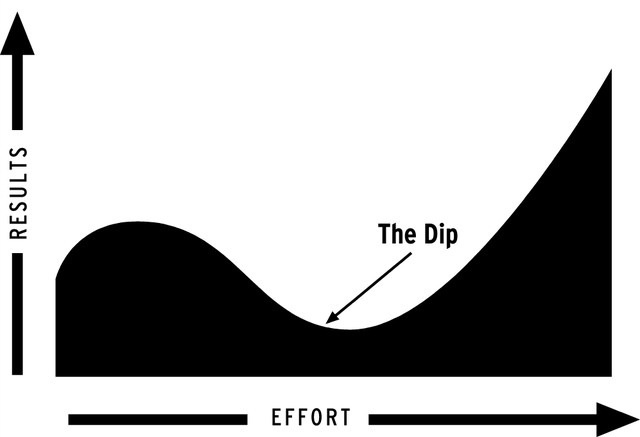
A picture of "The Dip"

When you first start something new, you can make quick progress and everything rocks because you see big changes.

However, after a few months, the reward you get from your effort decreases and it seems like you’re rapidly slowing down:

  1. In the first few weeks of weight loss, everything is GREAT! The scale is moving, your clothes are getting looser, progress is exciting because it’s coming so quickly. Then, you might have a few weeks where you’re really trying hard and yet…the scale stalls or increases.
  2. When building a new running habit, each new run is exhilarating – you rapidly progress from wheezing and coughing after two blocks to now being able to run a whole mile! A few months later, that progress slows, and you find yourself struggling with the same distances and speeds even though you’re doing all of the right things.
  3. When lifting weights, the first few months can be life-changing. Squats, deadlifts, pull-ups, push-ups. Every session in the gym is an opportunity to see massive progress compared to the time before, except for that week or two when you walk in and you have to lift less than before! What gives!?

When we hit that dip/plateau where our hard work seems like it goes unrewarded, it’s easy to give up and say, “I’m a failure.”

Not true.

We will all experience a dip when it comes to progress on things that are important to us.

If we want to TRULY be successful, we need to anticipate the dip’s arrival and plan for it so that it doesn’t completely derail us.

Much like grinding out experience points in an RPG, sometimes we need to grind out practice in life, workouts, nutrition, and more…until we can hit that sweet spot for progress again.

So, how do we stay dedicated, focused, and motivated through the dip?

How do we progress during the plateau when we feel like our hard work is a waste of time?

We focus on small wins, and find a way to get a teeny tiny bit better.

What Should I Do When I Hit a Plateau? (Setting Personal Records)
Success is setting a personal record.

In order for us to crawl out of a dip or off a plateau, we need to find a way to make a small win every day.

Think of these small wins like “a light to you in dark places, when all other lights go out.”

The longer we’ve been training, the older we get, and/or the more advanced we get in our training, the more likely we’ll be to hit plateaus and the more necessary it will be to grind out small victories, prepare for dips, and power through them.

Here’s how you can grind out your own small wins and prove to yourself that you are still progressing when you are in the dip:

1) TRACK EVERY SET, REP, AND WORKOUT. Find a way to be better today in SOME WAY than you were yesterday, and prove to yourself that you are still making progress – even if it’s progress in a different way than you were progressing before.

If you are stuck at 3 sets of 5 reps of 150 pounds on the bench press and haven’t been able to go up to 155 lbs for a few weeks, try 3 sets of 6 reps of 150 pounds.

Or 4 sets of 5 reps of 150 pounds.

Then come back to 3 sets of 5 reps of 155 a few weeks from now, and see if you can do that.

If you wait 60 seconds between sets, try waiting 90 seconds instead and lift a different amount

As long as SOMETHING has progressed in some way – your total amount of weight lifted, decreased time between sets, one extra rep, or one more pound lifted – it proves to yourself that you made progress. Remember, progress makes us happy.

RECORD EVERYTHING.

2) COLLECT TINY WINS. Optimus Prime doesn’t transform with one single movement; it’s a combination of hundreds of thousands of tiny movements that happen rapidly.

We are transformers (Joe especially), and our small changes add up too.

It’s these tiny, small victories that can push us over the edge. Enough small victories and we can reach that tipping point, that end of the dip where progress continues again.

Find a way to set a tiny win in SOME WAY each day that shows you that you are getting better/faster/stronger.

Here’s an example: I have been working on handstand balancing. For the past few months, my progress has stagnated and even gone in reverse on some days (helloooo Dip!).

I continued to work on building the habit of handstands for five minutes a day (Hard Hat challenge for the win!). Progress felt nonexistent, but I knew that my continued dedicated practice was adding up in ways that didn’t make themselves readily apparent.

I had “stalled,” so I focused on getting tiny wins: increasing flexibility in my wrists, staying against the wall as long as I could, practicing my kick-ups, tightening my core, etc.

Despite not being able to balance for longer than 10 seconds at any point in the past, I kicked up into a handstand, without even touching the wall (something else that had never happened before), and I held my handstand for 24 seconds!

Rebel Leader Steve showing you how to kick up to a handstand.

I still have a ways to go before I’m holding perfectly vertical handstands for 60+ seconds, but months spent grinding out practice in the dip have paid off.

I made it through the plateau, and my progress has continued rapidly after struggling for months. Those months of struggle were teeny tiny wins in different ways that added up until I hit that tipping point where progress exploded.

3) TRACK OTHER METRICS OTHER THAN THE SCALE. The scale can lie. The scale will DEFINITELY slow down even if you are making progress in healthier ways, simply due to the fact that you have less weight to lose than you did before! You might also be dealing with extra water weight, or bloat, or menstruation, or anything in between.

So, track other things! Here’s what you can track to help keep you motivated while plateauing:

  1. Take biweekly photos. Who cares if the scale isn’t moving. Are you looking better? Are you FEELING better? Do your clothes fit better? That is progress.
  2. Take measurements. Spend 5 bucks on a cloth tape measure (or one of these), and measure the important parts of your body. Maybe the scale isn’t moving, but you took half an inch off of your waist. Or maybe you added a quarter of an inch to your arms.
  3. Track your body fat percentage. A simple caliper is enough to show trends. Remember Saint? His weight went UP but his body fat percentage dropped. Had he only been tracking the scale, he might have panicked during his ‘dip.’ Fortunately, he was tracking more metrics and used that momentum to catapult himself to victory.

The goal is to consistently prove to ourselves that we are moving one step closer towards our goal. 

This is exactly the system we used when we built Nerd Fitness Journey.

When you’re working through the app, not only are you doing fun missions, but you’ll see how tasks build up to your larger goal. There’s no getting stuck or frustrated, just log in and work on the next adventure.

If you want, you can sign-up for a free trial right here:

5 Tips and Tricks for Overcoming a Plateau

These heroes don't worry about plateaus.

The above is just the beginning. This will also help you make progress and get out of that dip:

1) Shock your workout. Our bodies crave efficiency, and love to be as lazy as possible, but we truly thrive on chaos. So introduce some chaos into your system!

Note: This is NOT the same as “muscle confusion” (which is a made-up marketing term to sell DVDs). We’re still progressing, lifting more, and doing the same exercises – we’re just throwing in some variation occasionally to help stimulate progress. 

If you do the exact same thing over and over and over, your body becomes more efficient at that activity.

In fact, your body can learn and adapt after doing the same thing enough times so that it burns fewer calories to carry out the process. So mix it up!

  • If you are trying to run a faster 5K? Mix in a day of sprints rather than just basic runs.
  • Trying to increase your deadlift? Rather than just doing a 1-rep max, do a day of higher volume, or train the deadlift twice a week.
  • Want to squat better? Squat with higher frequency. NF Senior Coach Staci followed an advanced Smolov Squat program for 13 weeks (Warning: not for beginners). Your body can adapt and overcompensate by getting stronger.
  • Want to improve your upper body strength/size? Try doing a PLP program along with your regular workouts. Starting with 10 total reps of Pull-ups, Lunges, and Push-ups, and every day add a rep, for 50 days.

2) Adjust your diet. Your body can also become quite efficient with calories (not to mention the oft-mentioned but controversial “starvation mode” theory), and can sometimes struggle to progress.

As we lay out in “Why can’t I lose weight?,” if you’ve lost a decent amount of weight, your body now burns significantly fewer calories each day (there’s less of you to manage!) This means you need to adjust your calorie intake!

So, I would start by tracking your intake and determine how many calories you should be eating.

ONLY after that doesn’t work would I recommend the following:

Consider throwing in one day a week of OVER eating, along with days where you are intermittent fasting. Keep your body guessing and see if that shocks your system back into weight loss mode.

Consider adjusting your macronutrient breakdown. Keep your protein intake high, and adjust your carbs and fats. Some people feel better or worse with high fat or low fat, high carb or low carb.

And remember, thermodynamics still rule all: weight loss requires caloric deficits.

3) REST! I’ve heard it said “there’s no such thing as “overtraining, just under-recovering.” Are you getting enough sleep?

Maybe Cartmen here is jetlagged.

Maybe you’re a new parent and trying to maintain your old workout routine on 2 hours of sleep a night.

Or work has you stressed like crazy and it’s causing you to eat like crap.

Rest is such an important part of a healthy lifestyle that it needs to be prioritized too. In the book Essentialism, this is referred to as “Protecting the Asset.”

You are the asset.

If you are trying to do too much, or you’re caught in a plateau, consider a week off, refocusing on sleep and recovery, and come back refreshed.

4) Adjust your goals. Maybe your body needs a new dragon to slay.

Again, nature loves chaos. If you are focused solely on weight loss, you might feel like you have stalled out. So shift your focus. Work on handstands. Or running faster.

Or doing your first pull-up.
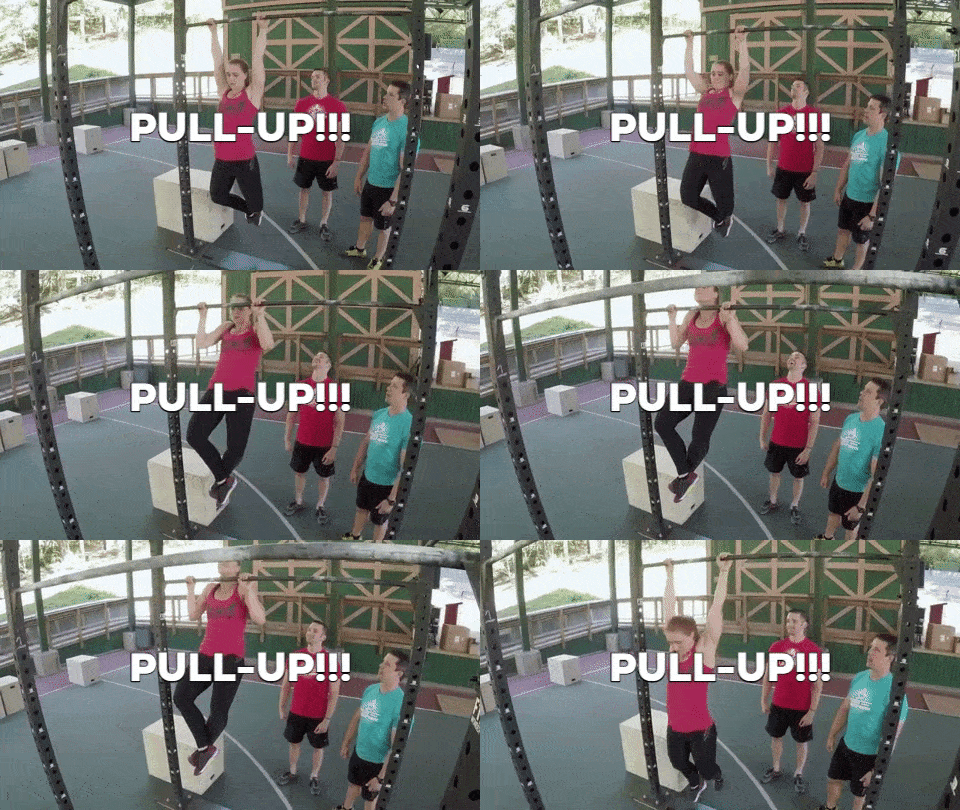
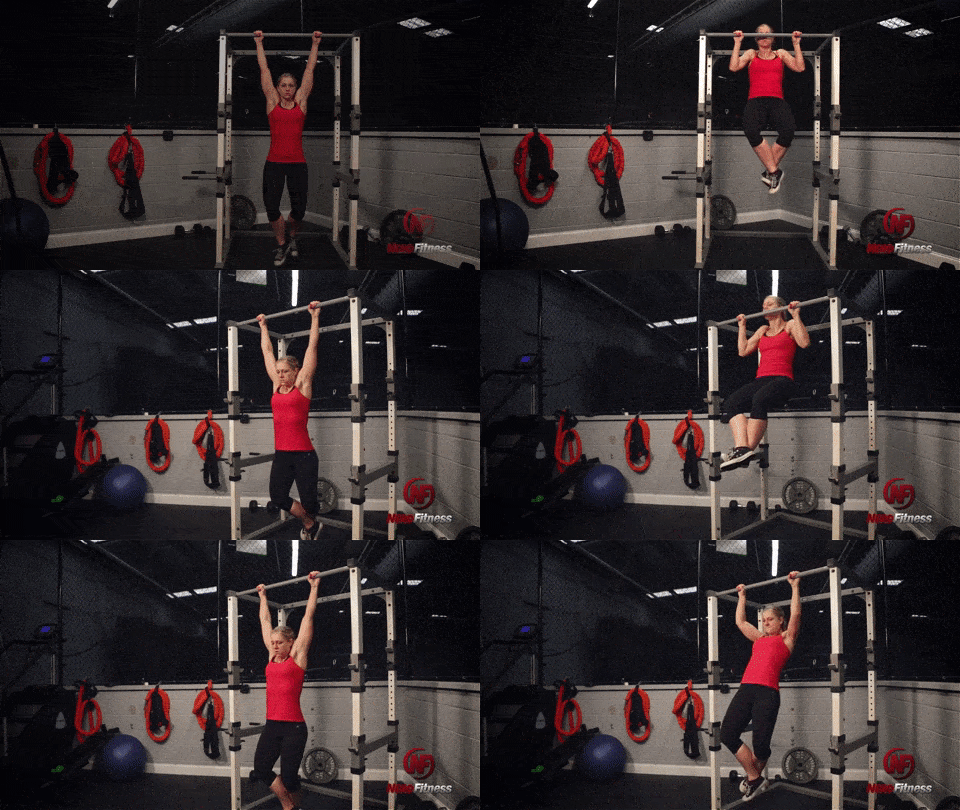
Here's a gif of a pull-up in perfect form.

Pick a new skill!

Try something different. Give your body a chance to recover and then come back to it.

If you’re solely focused on the scale and it stalls out, it can be depressing. So put the scale away for a month, and instead focus on the process of getting stronger and eating better. Stop stressing and remember to enjoy the game you’re playing.

5) Accept that we have bad weeks. We are complex pieces of machinery.

Sometimes shit happens.

We just have bad weeks and can’t lift enough or we GAIN weight when we expected to lose weight. It doesn’t make you a bad person, it doesn’t make you a failure, it makes you human.

So on days when you feel great, PUSH yourself harder. On days when you feel like crap, scale back the heavy lifting and focus on more reps or better technique.

The greatest predictor of success in our lives is grit (which can be developed). Grit is what you need to slog through these slow weeks. These dips are where we find out who’s truly dedicated. I know you are, and you know you are.

Remember, look for any sign of progress in any way to reveal that “light” at the end of the tunnel.

If you are stuck on a plateau when it comes to strength training, consider working with one of our Yodas in the 1-on-1 Online Training Program at Nerd Fitness! No guilt, no shame. Just somebody to keep you accountable, expert guidance from somebody that knows you, and peace of mind knowing you’re doing the right thing!

Nerd Fitness Coaching Banner

How did you break through your plateau?

A picture of Bruce Lee

“If you always put limits on everything you do, physical or anything else, it will spread into your work and into your life. There are no limits. There are only plateaus, and you must not stay there. You must go beyond them.” -Bruce Lee 

Hopefully, I’ve covered everything you need to know about plateaus. What’s that? You were expecting some lame joke about plateaus somewhere?

You know me too well. Okay, how bout this one:

Did you know that a plateau is the highest form of flattery?

Get it?

Thank you, I’ll be here all week.

I want to hear your story:

  • Have you successfully busted through a plateau? Leave a comment with how you got out of it.
  • Are you currently stuck? If so, what’s ONE SPECIFIC piece of advice you’re taking from today’s article to apply to what you’re going to do this afternoon?

Let’s hear it! I’m excited to hear how I can help.

-Steve

PS: We know starting with this stuff can be intimidating. If you’re looking  to take it to the next level:

  • 1-on-1 Online Coaching: A coach from Team NF gets to know you better than you know yourself and builds a workout program and nutritional strategy that fits your busy life, your body type, and your goals.
  • Nerd Fitness Journey: a fun app that will show you the path for overcoming any plateau. Sign up for a free trial below:

###

Photo Sources: olegmit1 © 123RF.com, Nattapol Sritongcom © 123RF.com, seeveeaar: success, Stefan Baudy: question, clement127: Eurobasket 2015, Four Bricks Tall: Mountain Biker, JD Hancock: Heroes, Anton Ivanov © 123RF.com

The post Blog first appeared on Nerd Fitness.

from Nerd Fitness: Helping You Lose Weight, Get Stronger, Live Better. https://ift.tt/2oHnPki
via IFTTT
Categories
Uncategorized

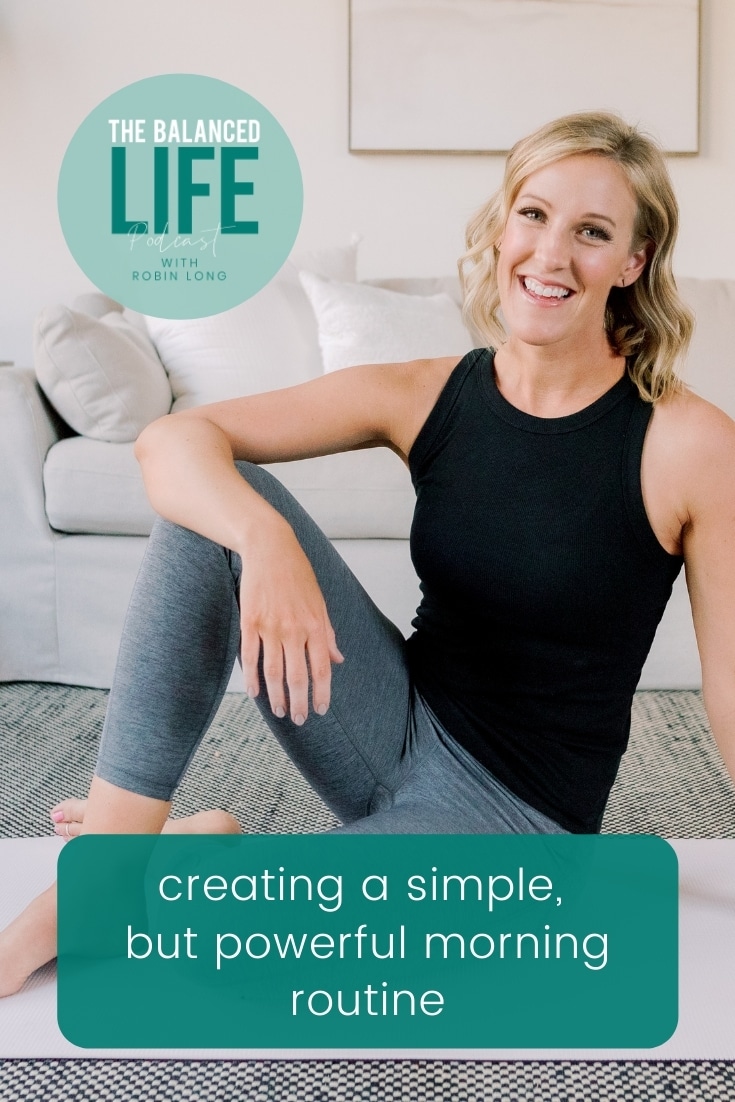
#healthyliving #holistic #nutrition Creating a simple, but powerful morning routine

As seasons of life shift, so do our morning routines. Maybe you have one, maybe you don’t, maybe you want a more set routine, or maybe you do better going with the flow. Regardless of what season you’re currently in, having habits we integrate into our mornings can help us set ourselves up better for our days. 

In today’s episode, Robin shares her current morning routine and the reasons why she prioritizes them in the morning. Whether you’re looking to make a new routine, want to switch yours up a bit, or you’re just getting started, this episode is packed with tangible and rejuvenating ideas. 

simple morning routine

Show highlights: what you can look forward to in this episode!

  • How to adapt and create a morning routine that fits for you 
  • Embracing seasons and readjusting your routine 
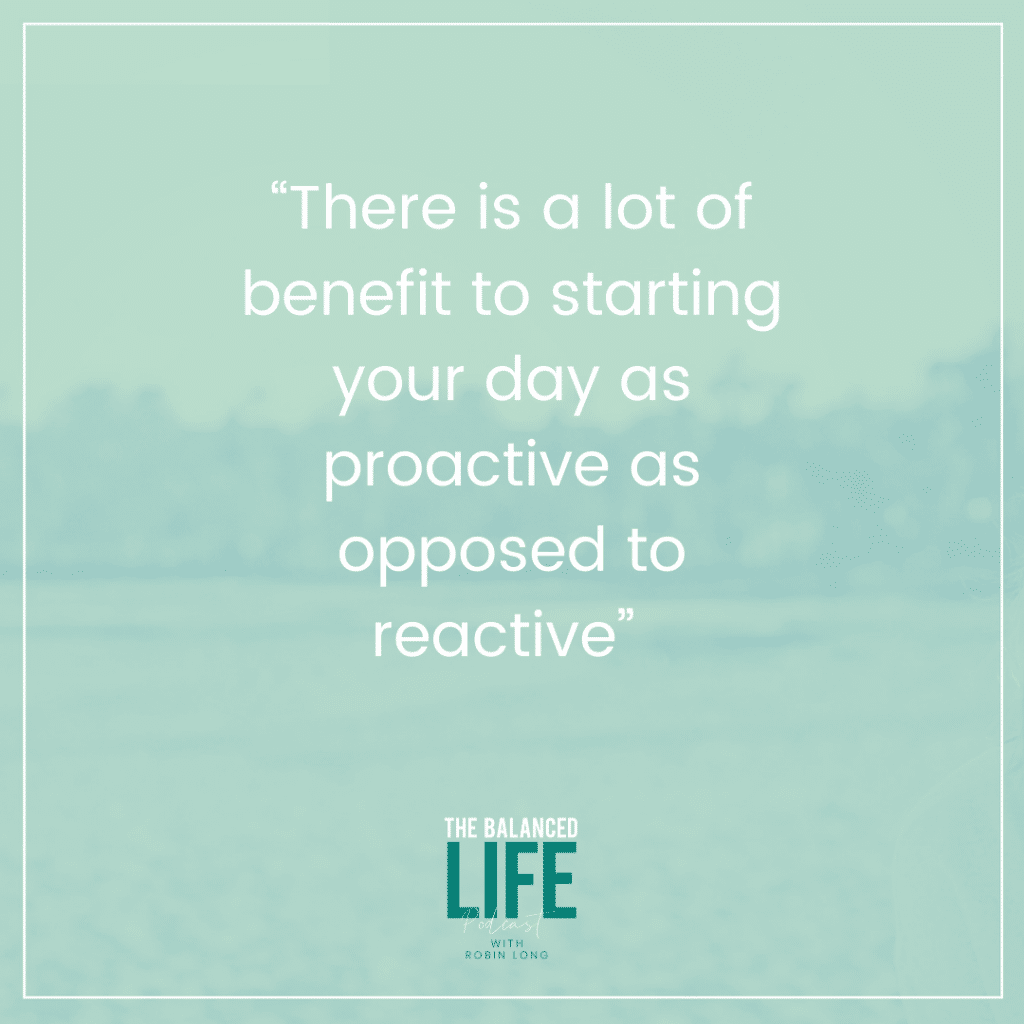
  • Being proactive throughout your day instead of reactive 
  • Why Robin likes to “get ahead” of the day 
  • Starting off the morning with positive and grateful thoughts 
  • The benefits of using a dry brush 
  • Why Robin takes a cold shower in the mornings 
  • Listening to a podcast to start your day 
  • Doing a 15-minute workout in the mornings 
  • What Robin does for her spirituality
  • Why Robin avoids her phone in the morning 

Links in this episode:

Share this podcast episode!

The post Creating a simple, but powerful morning routine appeared first on The Balanced Life.

from Blog – The Balanced Life https://ift.tt/3sGR5Vw
via IFTTT
Categories
Uncategorized

#healthyliving #holistic #nutrition Creating a simple, but powerful morning routine

As seasons of life shift, so do our morning routines. Maybe you have one, maybe you don’t, maybe you want a more set routine, or maybe you do better going with the flow. Regardless of what season you’re currently in, having habits we integrate into our mornings can help us set ourselves up better for our days. 

In today’s episode, Robin shares her current morning routine and the reasons why she prioritizes them in the morning. Whether you’re looking to make a new routine, want to switch yours up a bit, or you’re just getting started, this episode is packed with tangible and rejuvenating ideas. 

simple morning routine

Show highlights: what you can look forward to in this episode!

  • How to adapt and create a morning routine that fits for you 
  • Embracing seasons and readjusting your routine 
  • Being proactive throughout your day instead of reactive 
  • Why Robin likes to “get ahead” of the day 
  • Starting off the morning with positive and grateful thoughts 
  • The benefits of using a dry brush 
  • Why Robin takes a cold shower in the mornings 
  • Listening to a podcast to start your day 
  • Doing a 15-minute workout in the mornings 
  • What Robin does for her spirituality
  • Why Robin avoids her phone in the morning 

Links in this episode:

Share this podcast episode!

The post Creating a simple, but powerful morning routine appeared first on The Balanced Life.

from Blog – The Balanced Life https://ift.tt/3sGR5Vw
via IFTTT
Categories
Uncategorized

#healthyliving #holistic #nutrition Creating a simple, but powerful morning routine

As seasons of life shift, so do our morning routines. Maybe you have one, maybe you don’t, maybe you want a more set routine, or maybe you do better going with the flow. Regardless of what season you’re currently in, having habits we integrate into our mornings can help us set ourselves up better for our days. 

In today’s episode, Robin shares her current morning routine and the reasons why she prioritizes them in the morning. Whether you’re looking to make a new routine, want to switch yours up a bit, or you’re just getting started, this episode is packed with tangible and rejuvenating ideas. 

simple morning routine

Show highlights: what you can look forward to in this episode!

  • How to adapt and create a morning routine that fits for you 
  • Embracing seasons and readjusting your routine 
  • Being proactive throughout your day instead of reactive 
  • Why Robin likes to “get ahead” of the day 
  • Starting off the morning with positive and grateful thoughts 
  • The benefits of using a dry brush 
  • Why Robin takes a cold shower in the mornings 
  • Listening to a podcast to start your day 
  • Doing a 15-minute workout in the mornings 
  • What Robin does for her spirituality
  • Why Robin avoids her phone in the morning 

Links in this episode:

Share this podcast episode!

The post Creating a simple, but powerful morning routine appeared first on The Balanced Life.

from Blog – The Balanced Life https://ift.tt/3sGR5Vw
via IFTTT

Categories
Uncategorized

#holistic #getfit #nutrition The 8 Best At-Home Workout Routines: The Ultimate Guide for Training Without a Gym

night scenery of wooden houses in the mountain in winter, illustration painting

So you want to start working out, but you don’t want to leave the house?

No problem! 

Our online coaches specialize in helping people get fit from home.

If you’re in a hurry, sign-up for our free weekly newsletter and we’ll send you PDFs of our “Work Out at Home” guides!


Let’s go over the 8 Best At-Home Workouts so you can start training today: no gym or equipment required!

Note: If you’re here because your gym is shut down due to the outbreak of Covid-19, check out our guide “How to Stay In Shape (While Staying Inside).”

At Home Warm-ups and stretching routines

the adventure man with a torch standing and looking at a large keyhole on the brass wall, digital art style, illustration painting

No matter which at-home workout you pick, I want you to start with one important thing:

Warm-up!

I cover why you should always warm up in an article found right here. It doesn’t have to be much though, give it about five minutes to get your muscles active and your heart rate up.

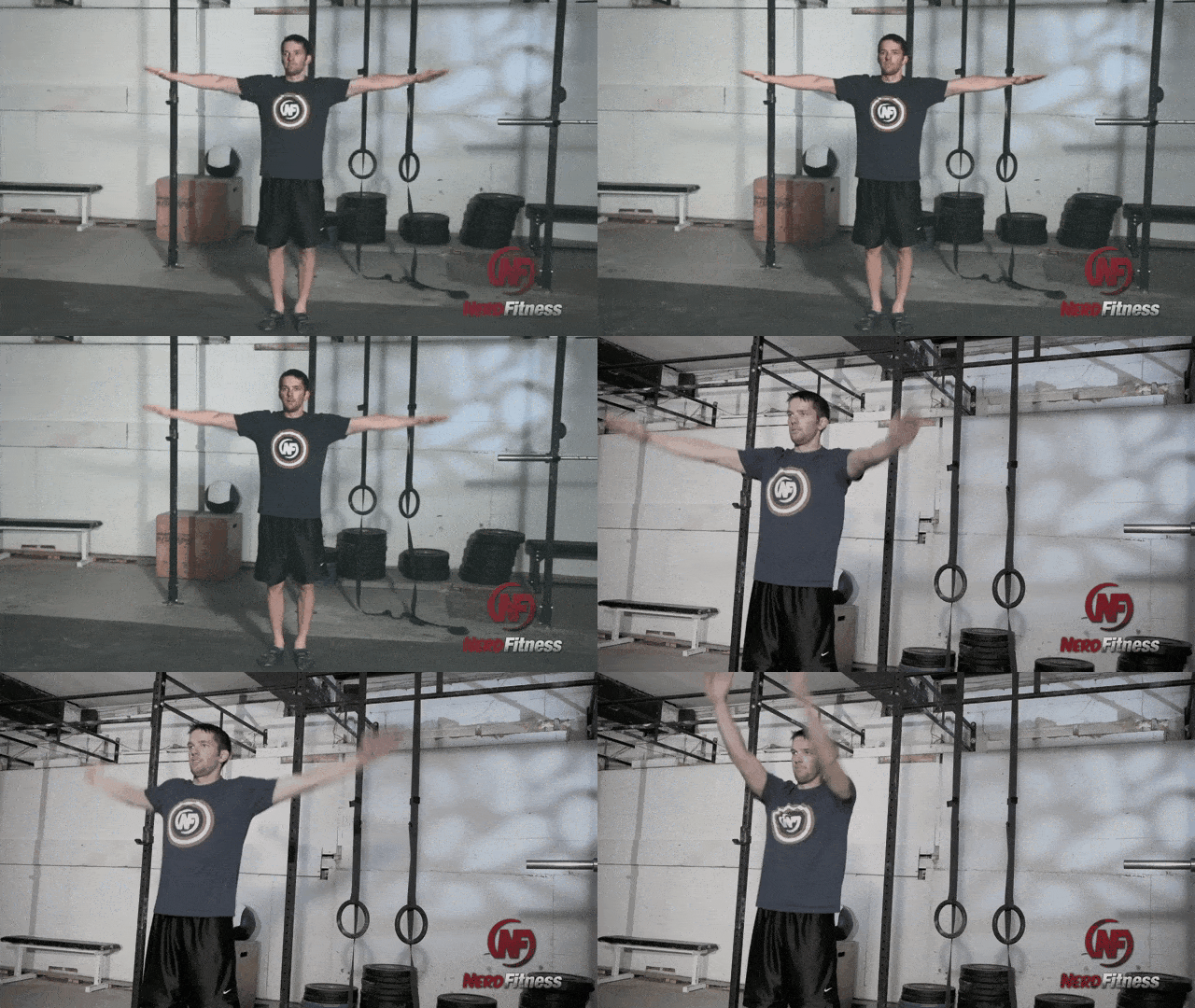
Arm circles are a great way to warm-up for your at-home workout.

This will help you do exercises properly and help prevent injury. You can run in place, do air punches and kicks, or some jumping jacks.

Here is NF Senior Coach Staci (you might know her incredible story) showing you many beginner options you can use to warm up as well:

If you’re curious, here’s my personal (advanced) warm-up:

  • Jump rope: 2-3 minutes 
  • Jumping jacks: 25 reps
  • Bodyweight squats: 20 reps
  • Lunges: 5 reps each leg.
  • Hip extensions: 10 reps each side
  • Hip rotations: 5 each leg
  • Forward leg swings: 10 each leg
  • Side leg swings: 10 each leg
  • Push-ups: 10-20 reps
  • Spider-man steps: 10 reps

Our goal isn’t to tire you out, instead we want to warm you up.

That’s step one.

Completing your chosen at-home workout would be step two.

The Count proclaiming the number "2"

Below, you’ll find 8 sequences you can follow along with!

Home Workout #1: Beginner Bodyweight

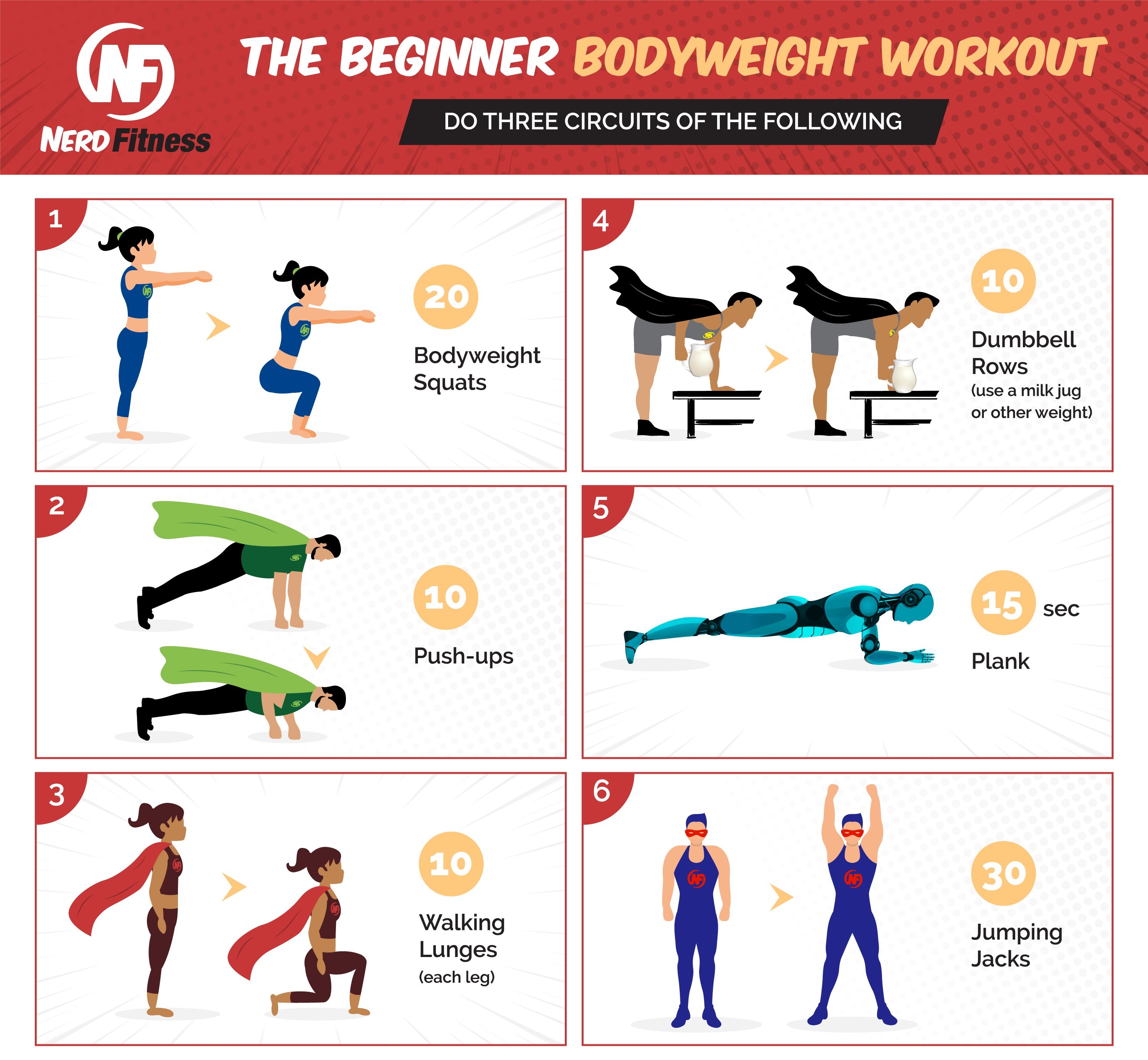
This at-home routine, as we lay out in our Beginner Bodyweight Workout article, is as follows:

We also turned it into a fun infographic with superheroes, because that’s how we roll:

This infographic will show you the 6 exercises needed to complete our Beginner Bodyweight Workout.


The above is what we call “circuit training,” with the objective being to run through the workout sequence once, then again, then again.

Note: Not a milk drinker?

GOMAD will for sure help you gain weight, as this kid can attest to.

If you don’t have milk in the house for the rows, find something of roughly the same weight with a good handle.

Also, if you want to download this Beginner Bodyweight Workout as a worksheet, you can do so when you sign up in the box below:

It’ll help you track your progress as you begin your training.

Home Workout #2: Advanced Bodyweight 

If the beginner at-home workout above is too easy for you, move on to our Advanced Bodyweight Workout. The workout looks like this:

  • One-legged squats – 10 each side [warning: super-difficult, only attempt if you’re in good enough shape]
  • Bodyweight squats: 20 reps
  • Walking lunges: 20 reps (10 each leg)
  • Jump step-ups: 20 reps (10 each leg)
  • Pull-ups: 10 reps [or inverted bodyweight rows]
  • Dips (between bar stools): 10 reps
  • Chin-ups: 10 reps [or inverted bodyweight rows with underhand grip]
  • Push-ups: 10 reps
  • Plank: 30 seconds

Not familiar with these moves? Check out the 21 Best Advanced Bodyweight Exercises for a full breakdown.

I warn you, the above sequence will hurt… in a good way. You should be proud if you can get through this three times.

Do you want to get as strong as possible so this workout ain’t no thang? 

Sign up in the box below to grab our guide, Strength Training 101: Everything You Need to Know. It’ll teach you all of these advanced bodyweight exercises!

Home Workout #3: The 20-Min Hotel Routine

Is there anyway to work out in this hotel room?

Sometimes, you just plain find yourself stuck in a hotel room. Maybe you can find the hotel gym, but I bet it’s terrible! It probably has 2 machines, a broken treadmill, and no free weights. 

Ugh.

Instead, how about a 20-min workout you can do in the room itself! Utilize the furniture to its full potential.

You can work out in your hotel room like these two people are doing!

Level 1

Level 2

Set the alarm clock to 15 minutes from now and see how many circuits you can do!

Check out our full post on hotel circuits if you want Level 3!

We have a LOT of business travelers throughout the Rebellion! Learn how they stay fit on the road with the Nerd Fitness Starter Kit!

Home Workout #4: High-Intensity Interval Training 

the robot planting seeds in the ruin city at sunset, illustration painting

You don’t have to head to the gym to do High-Intensity Interval Training. You can do a complete routine right in your own home!

HIIT is just following a specific regimen where you vary your speeds and intensity throughout a shorter run, swim, bike, or row.

Unless you have a giant backyard, running at home might be tough.

But you know what doesn’t require a lot of room?

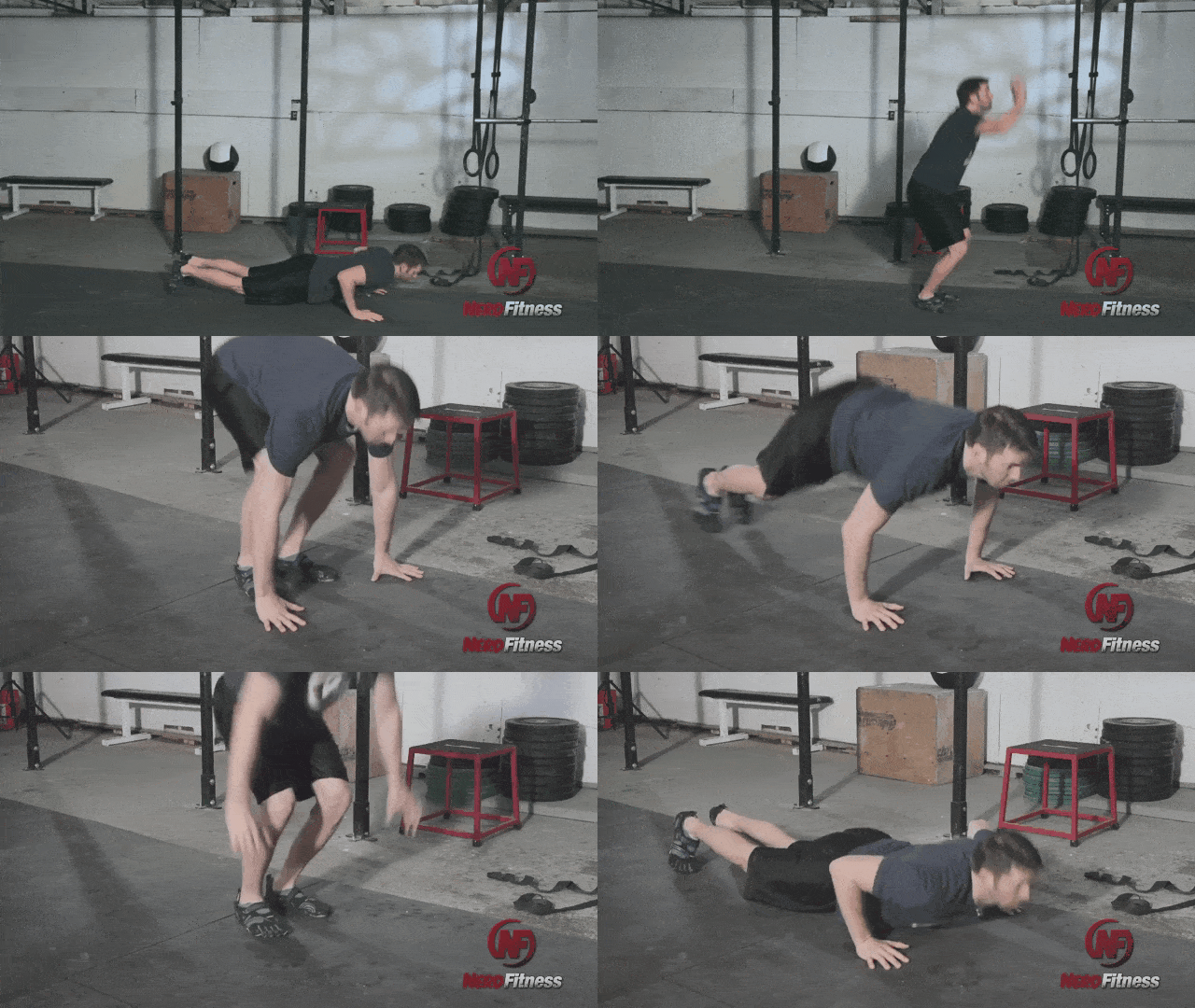
The infamous burpee bodyweight exercise!

Burpees!

To complete a burpee:

  • Start standing up, then squat down and kick your legs out.
  • Do a push-up, bring your legs back in, and explode up into a jump.
  • For a HIIT workout, try to do 20 repetitions, then rest for two minutes.
  • Repeat until you hate yourself.

Check out our full guide on How to Start Interval Training for some more ideas on HIIT workouts.

You can also check out our post “The 20-Min HIIT Workout for Home” for another living-room-friendly interval routine!

Home Workout #5: Attack of the Angry Birds

Little Cute Birds in a row

The Angry Birds Workout is designed to be done when you have 5 or 10 minutes to kill.

Sort of like playing Angry Birds…

If you have time for Angry Birds, you have time for an at home workout.

Here’s how The Angry Birds Workout Plan works: it’s deceptively simple – only four major movements.

If you don’t have time to run through the whole sequence, no problem!

Depending on how much time you have during the day, you can do your whole workout at once, or break up your training into four different sessions throughout the day (with each session being ONE of the exercises).

Here’s a sample day for your No-Equipment Workout:

  • Wake up, do 40 jumping jacks to warm up, and then do bodyweight squats.
  • At lunch, you grab your suitcase (if you’re at work, milk jug if you’re at home) and do inverted rows.
  • After work, you do another 50 jumping jacks and then do your push-ups.
  • After dinner, you do your planks while watching TV.

You could even split it up over two days if needed, but the goal would be to do it the whole sequence at once.

The main Angry Birds Workout article describes in detail Levels 1-6, but here’s Level 3 for you:

Once you’ve done the complete routine, you have my permission to whip out your phone and play the actual game!

Home Workout #6: Train like Batman

Lego minifigures standing in rows. In first row - Batman, The Jo

We love the Caped Crusader here at Nerd Fitness, so naturally we have The Batman Bodyweight Workout for you to try!

Bonus points if you somehow do this no-equipment workout in a cave, as that’s how Bruce Wayne would roll.[1]

This workout is separated into two days for you:

Batman No-Equipment Workout Day 1:

  • Rolling squat tuck-up jumps: 5 reps
  • Side to side push-ups: 5 reps
  • Modified headstand push-ups: 5 reps
  • Jump pull-up with tuck / Pull-up with Tuck-up: 5 reps
  • Handstands against wall: 8 seconds

Batman No-Equipment Workout Day 2:

  • ‘180 Degree’ jump turns: 5 reps
  • Tuck front lever hold: 8 seconds
  • Tuck back lever hold: 8 seconds
  • Low frog hold: 8 seconds

This is a relatively advanced workout already, but if you want to progress to the next level, check out the main Batman Bodyweight Workout for tips on how to do just that.

Batman is stoked you want to do an at-home workout.


Home Workout #7: The PLP Progression

At Nerd Fitness we encourage everyone to get to their first pull-up!

The PLP is a progressive program in which you complete one additional rep of three exercises – Pull-Ups, Lunges, and Push-Ups – every day, for two months.

NOTE: This is NOT a beginner program, and should not be attempted unless you have been training consistently and can do multiple repetitions of pull-ups and push-ups with great form.

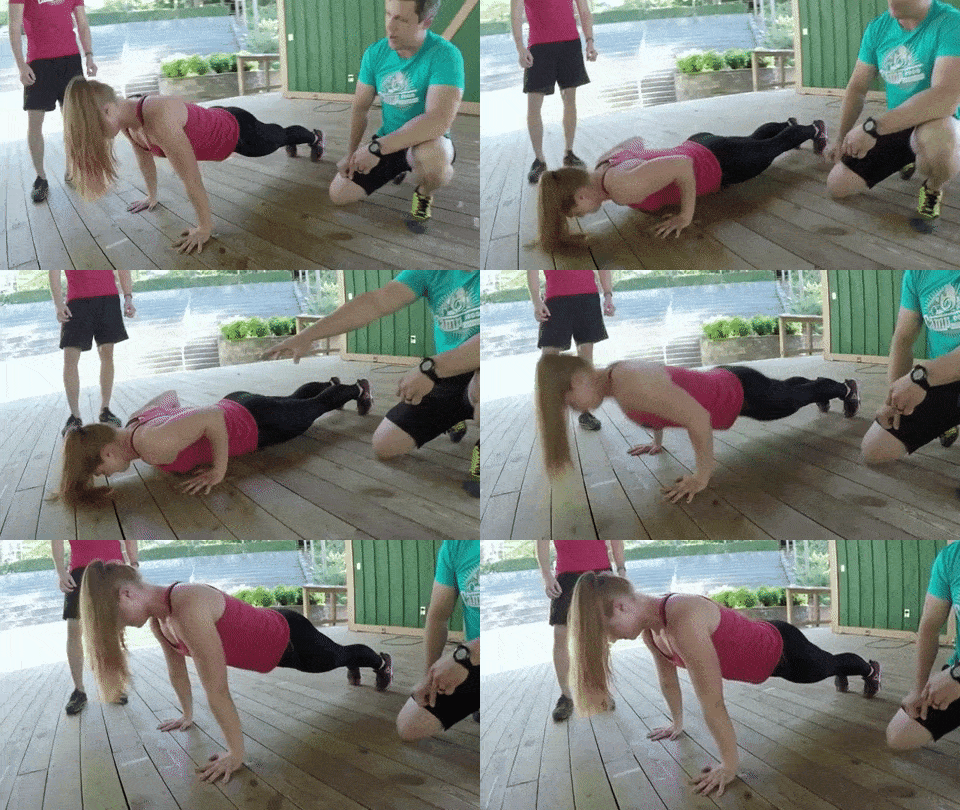
Like this perfect push-up:

This gif shows Staci doing a push-up in perfect form.

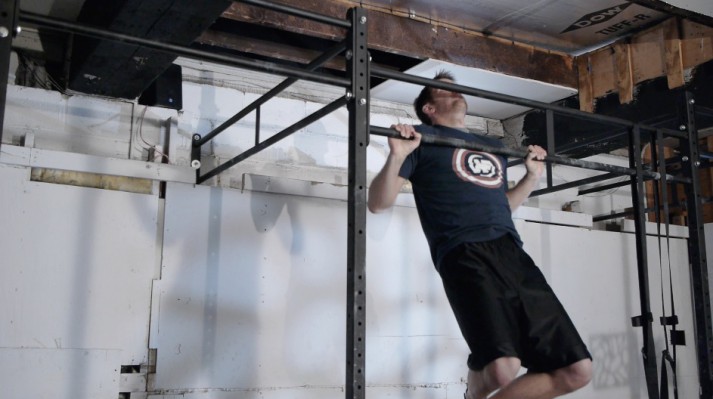
And this perfect pull-up:

The classic pull-up

Here’s how the PLP Progression works:

Day 1:

  • Pull-ups: 10 reps
  • Push-ups: 10 reps
  • Lunges: 10 reps (each leg)

Day 2:

  • Pull-ups: 11 reps
  • Push-ups: 11 reps
  • Lunges: 11 reps (each leg)

Day 3:

  • Pull-ups: 12 reps
  • Push-ups: 12 reps
  • Lunges: 12 reps (each leg)

How long do you keep doing this?

As originally envisioned by Chad Waterbury, the PLP Workout lasts 60 days.[3]

A man realizing how difficult this at-home workout will be.

Yeah…by the end of it you’ll be doing more than 50 pull-ups.

There are two versions:

  • If you can do 10 straight pull-ups: Start day 1 with 10 reps of each.
  • If you cannot do 10 straight pull-ups: Start day 1 with 1 rep of each.

Complete your required reps each day in as many sets as you need, whenever you need to. The goal is to do it in as few sets as possible, but enough so that you can complete each rep with proper form.

Want to learn more? Check out my results on the PLP Workout.

Home Workout #8: The Star Wars Workout!

A picture of a crowd of Stormtroopers, who could probably use some extra space.

Do you have access to a hallway that you can commandeer for a bit?

Then you can do our Star Wars Workout!

It’s designed to be done in a very small space, like your home’s hallway…or an escape pod.

The “Padawan” Level of this workout is:

  • 30-second knee or feet front plank (3 Sets)
  • 10 assisted squats or squats (3 Sets)
  • 10 doorway rows (3 Sets)
  • A 60-second Farmer-carry (Farmer’s Walk) dumbbells (or milk jugs) (2 sets)
  • March in place for 3 minutes of intervals (6 sets of 20 seconds on, 10 seconds off)
  • 8 elevated or knee push-ups (4 sets)
  • 60-second Doorway Leans (2 sets)

If you want to advance to the Jedi Knight or Master Levels, check out The Star Wars Workout, which will also offer you a full description of each move.

Bonus No-Equipment Workout: The Playground Circuit

Do you have a nearby playground? Why not work out there! If you have kids, you can do it together. Or let them ignore you.

I’ll give you a Level One workout, and a Level Two. Check out The 20-Minute Playground Workout for some Level Three exercises.

Level One

  • Alternating step-ups: 20 reps (10 each leg)
  • Elevated push-ups: 10 reps
  • Swing rows: 10 reps
  • Assisted lunges: 8 reps each leg
  • Bent leg reverse crunches: 10 reps

Level Two

  • Bench jumps: 10 reps
  • Lower incline push-ups: 10 reps
  • Body rows: 10 reps
  • Lunges: 8 reps each leg
  • Straight leg reverse crunches: 10 reps

After you’ve gone through a complete set three times, go down the slide!


Can Home Workouts Build Muscle or Help With Weight Loss?

Aerial view with the man sitting on edge of building looking at futuristic city.

Throughout our Online Coaching Program, we get two common questions for those wanting to train at home:

  1. Can working out at home help me build muscle?
  2. Can working out at home help me lose weight?

The answer to both of these: yep!

Let’s tackle them one by one.

#1) Can working out at home help me build muscle?

You can 100% build muscle mass at home.

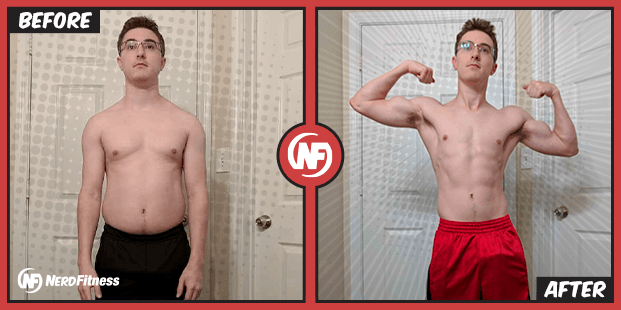
Just ask out friend Jimmy here:

Jimmy before and after he did bodyweight training

Read more on how Jimmy turned into Spider-Man from home!

The trick is to follow a progressive overload strategy, as Coach Jim outlines in this video:

With progressive overload, we want to make our workouts more and more challenging, thus putting additional strain on our muscles.

So to build muscle with home workouts, focus on:

  • Increasing your repetitions.
  • Decreasing your rest periods between exercises.
  • Performing more difficult variations (knee push-ups to push-ups).
  • Increasing your time under tension (by going slower).

That will help you build strength and muscle from your casa.

Next up:

#2) Can working out at home help me lose weight?

You can totally train at home for a successful weight loss strategy.

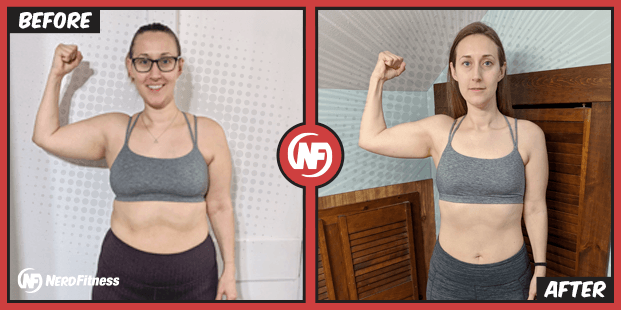
Again, we have a great example with one of our Online Coaching Clients, Sarah the Supermom:

This picture shows Sarah's transformation

The trick here is to couple your home workouts with adjustments to your nutrition.

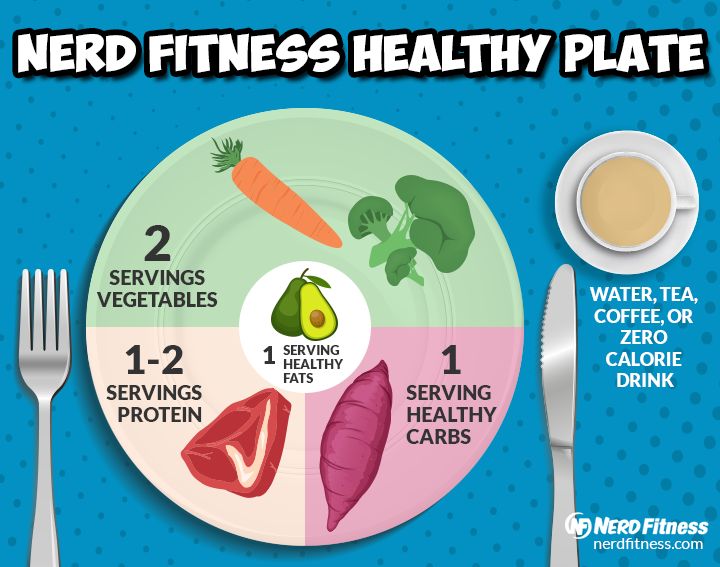
We’re big believers that you can’t outrun your fork, so any successful weight loss plan will include a focus on building a healthy plate.

That will look something like this:

If your meal plate looks like this, you're doing a lot of the heavy lifting for weight loss.

If you want some help on adjusting your nutrition, I’ve got two great resources for you:

  • The Nerd Fitness Guide to Healthy Eating. This massive resource will help you slowly adjust your nutrition, without forcing you to give up the food you love (yes, you can still eat pizza here and there). No more diets, instead we’ll work on building habits together.
  • Nerd Fitness Coaching. If you want to take it to the next level, one of our trained professionals can help you adjust your way of eating to help you reach your goals. No shame. No judgment. Just a like-minded nerd who will show you the way.


How to Build Your Own At-Home Workout

You can workout in a home just like this!

We just went over 8 workouts you can do at home (plus a workout you can do in a park).

You don’t have to stick to these though! I have two resources to help you design your own no-equipment workout:

  1. The 42 Best Bodyweight Exercises: This guide will teach you how to perform the best bodyweight exercises – no equipment required! Check it out if you are unfamiliar with any of the movements referenced in today’s guide.
  2. How To Build Your Own Workout Routine: Once you’re comfortable with a handful of bodyweight exercises, use this guide to pull them all together into a full-body workout!

That should get you going on building a workout you can do in the comfort of your own home.

Want more? Alright, eager beaver, I got you.

This beaver is ready to start his at home training.

We built THREE options for people just like you:

1) If you want step-by-step guidance, a custom workout program that levels up as you get stronger, and a coach to keep you accountable, check out our killer 1-on-1 coaching program:

Your NF Coach can help you lose weight and get healthy!

2) If you want a daily prompt for doing workouts at home, check out NF Journey. Our fun habit-building app helps you exercise more frequently, eat healthier, and level up your life (literally).

Try your free trial right here:

3) Join the Rebellion! We need good people like you in our community, the Nerd Fitness Rebellion. 

Sign up in the box below to enlist and get our guide, Strength Training 101: Everything You Need to Know. It’ll help you start incorporating these bodyweight moves into your training.

Alright, your turn: I’d love to hear how your home training is going!

Which workout above did you try? Did you make one of your own?

Leave a comment below with your results or any questions you have on working out at home.

For the Rebellion!

-Steve

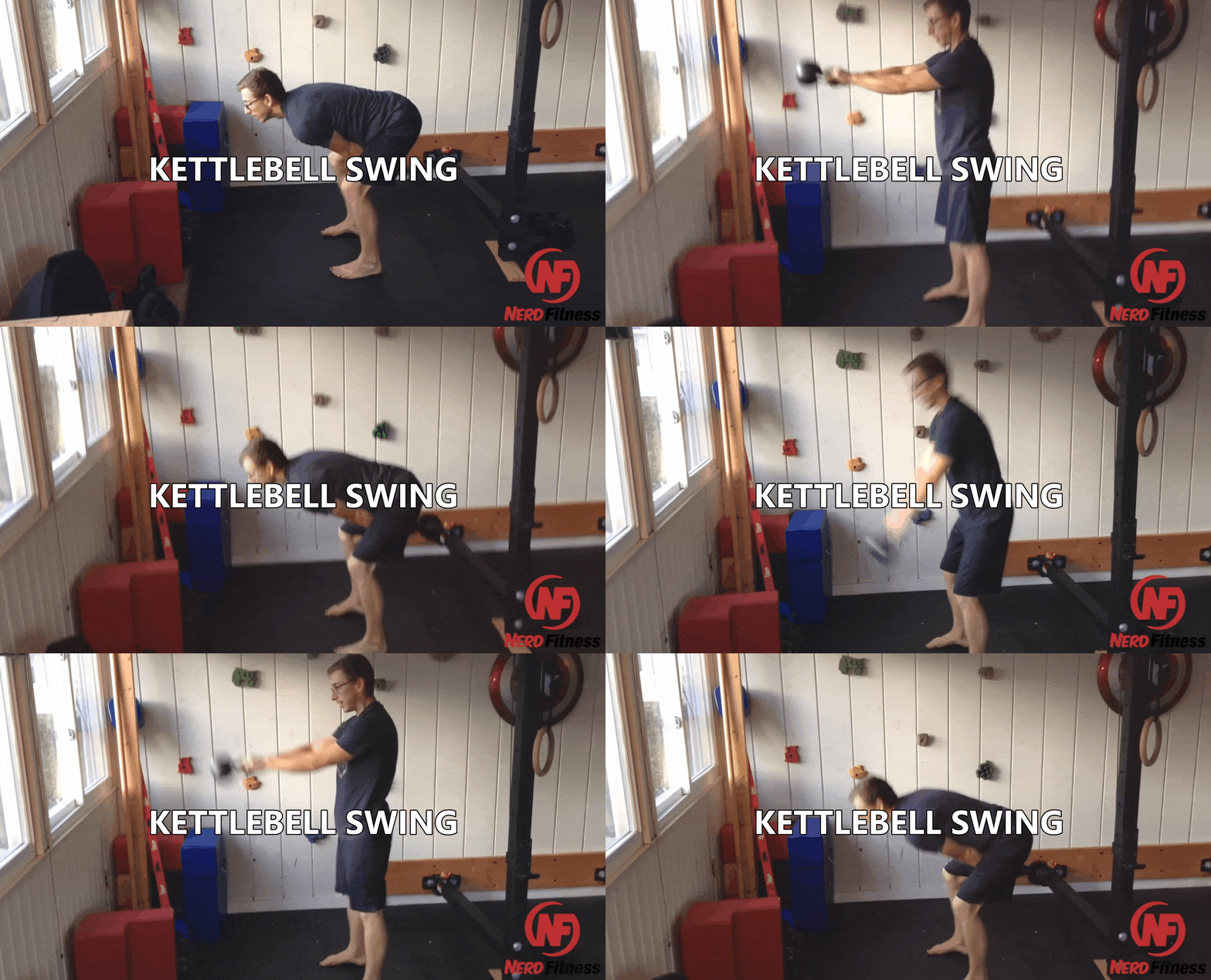
PS: If you were going to buy one piece of equipment to utilize in your home, a kettlebell would offer you a lot of versatility:

Coach Matt showing you how to rock the kettlebell swing.

###

Photo Sources: Tithi Luadthong © 123RF.com, Evgenii Naumov © 123RF.com; Ekaterina Minaeva © 123RF.com; Hotel Room, af8images © 123RF.com, Tithi Luadthong © 123RF.com, Vintage House Bicycle,

The post Blog first appeared on Nerd Fitness.

from Nerd Fitness: Helping You Lose Weight, Get Stronger, Live Better. https://ift.tt/2MsZ73V
via IFTTT

Categories
Uncategorized

#holistic #getfit #nutrition The 8 Best At-Home Workout Routines: The Ultimate Guide for Training Without a Gym

night scenery of wooden houses in the mountain in winter, illustration painting

So you want to start working out, but you don’t want to leave the house?

No problem! 

Our online coaches specialize in helping people get fit from home.

If you’re in a hurry, sign-up for our free weekly newsletter and we’ll send you PDFs of our “Work Out at Home” guides!


Let’s go over the 8 Best At-Home Workouts so you can start training today: no gym or equipment required!

Note: If you’re here because your gym is shut down due to the outbreak of Covid-19, check out our guide “How to Stay In Shape (While Staying Inside).”

At Home Warm-ups and stretching routines

the adventure man with a torch standing and looking at a large keyhole on the brass wall, digital art style, illustration painting

No matter which at-home workout you pick, I want you to start with one important thing:

Warm-up!

I cover why you should always warm up in an article found right here. It doesn’t have to be much though, give it about five minutes to get your muscles active and your heart rate up.

Arm circles are a great way to warm-up for your at-home workout.

This will help you do exercises properly and help prevent injury. You can run in place, do air punches and kicks, or some jumping jacks.

Here is NF Senior Coach Staci (you might know her incredible story) showing you many beginner options you can use to warm up as well:

If you’re curious, here’s my personal (advanced) warm-up:

  • Jump rope: 2-3 minutes 
  • Jumping jacks: 25 reps
  • Bodyweight squats: 20 reps
  • Lunges: 5 reps each leg.
  • Hip extensions: 10 reps each side
  • Hip rotations: 5 each leg
  • Forward leg swings: 10 each leg
  • Side leg swings: 10 each leg
  • Push-ups: 10-20 reps
  • Spider-man steps: 10 reps

Our goal isn’t to tire you out, instead we want to warm you up.

That’s step one.

Completing your chosen at-home workout would be step two.

The Count proclaiming the number "2"

Below, you’ll find 8 sequences you can follow along with!

Home Workout #1: Beginner Bodyweight

This at-home routine, as we lay out in our Beginner Bodyweight Workout article, is as follows:

We also turned it into a fun infographic with superheroes, because that’s how we roll:

This infographic will show you the 6 exercises needed to complete our Beginner Bodyweight Workout.


The above is what we call “circuit training,” with the objective being to run through the workout sequence once, then again, then again.

Note: Not a milk drinker?

GOMAD will for sure help you gain weight, as this kid can attest to.

If you don’t have milk in the house for the rows, find something of roughly the same weight with a good handle.

Also, if you want to download this Beginner Bodyweight Workout as a worksheet, you can do so when you sign up in the box below:

It’ll help you track your progress as you begin your training.

Home Workout #2: Advanced Bodyweight 

If the beginner at-home workout above is too easy for you, move on to our Advanced Bodyweight Workout. The workout looks like this:

  • One-legged squats – 10 each side [warning: super-difficult, only attempt if you’re in good enough shape]
  • Bodyweight squats: 20 reps
  • Walking lunges: 20 reps (10 each leg)
  • Jump step-ups: 20 reps (10 each leg)
  • Pull-ups: 10 reps [or inverted bodyweight rows]
  • Dips (between bar stools): 10 reps
  • Chin-ups: 10 reps [or inverted bodyweight rows with underhand grip]
  • Push-ups: 10 reps
  • Plank: 30 seconds

Not familiar with these moves? Check out the 21 Best Advanced Bodyweight Exercises for a full breakdown.

I warn you, the above sequence will hurt… in a good way. You should be proud if you can get through this three times.

Do you want to get as strong as possible so this workout ain’t no thang? 

Sign up in the box below to grab our guide, Strength Training 101: Everything You Need to Know. It’ll teach you all of these advanced bodyweight exercises!

Home Workout #3: The 20-Min Hotel Routine

Is there anyway to work out in this hotel room?

Sometimes, you just plain find yourself stuck in a hotel room. Maybe you can find the hotel gym, but I bet it’s terrible! It probably has 2 machines, a broken treadmill, and no free weights. 

Ugh.

Instead, how about a 20-min workout you can do in the room itself! Utilize the furniture to its full potential.

You can work out in your hotel room like these two people are doing!

Level 1

Level 2

Set the alarm clock to 15 minutes from now and see how many circuits you can do!

Check out our full post on hotel circuits if you want Level 3!

We have a LOT of business travelers throughout the Rebellion! Learn how they stay fit on the road with the Nerd Fitness Starter Kit!

Home Workout #4: High-Intensity Interval Training 

the robot planting seeds in the ruin city at sunset, illustration painting

You don’t have to head to the gym to do High-Intensity Interval Training. You can do a complete routine right in your own home!

HIIT is just following a specific regimen where you vary your speeds and intensity throughout a shorter run, swim, bike, or row.

Unless you have a giant backyard, running at home might be tough.

But you know what doesn’t require a lot of room?

The infamous burpee bodyweight exercise!

Burpees!

To complete a burpee:

  • Start standing up, then squat down and kick your legs out.
  • Do a push-up, bring your legs back in, and explode up into a jump.
  • For a HIIT workout, try to do 20 repetitions, then rest for two minutes.
  • Repeat until you hate yourself.

Check out our full guide on How to Start Interval Training for some more ideas on HIIT workouts.

You can also check out our post “The 20-Min HIIT Workout for Home” for another living-room-friendly interval routine!

Home Workout #5: Attack of the Angry Birds

Little Cute Birds in a row

The Angry Birds Workout is designed to be done when you have 5 or 10 minutes to kill.

Sort of like playing Angry Birds…

If you have time for Angry Birds, you have time for an at home workout.

Here’s how The Angry Birds Workout Plan works: it’s deceptively simple – only four major movements.

If you don’t have time to run through the whole sequence, no problem!

Depending on how much time you have during the day, you can do your whole workout at once, or break up your training into four different sessions throughout the day (with each session being ONE of the exercises).

Here’s a sample day for your No-Equipment Workout:

  • Wake up, do 40 jumping jacks to warm up, and then do bodyweight squats.
  • At lunch, you grab your suitcase (if you’re at work, milk jug if you’re at home) and do inverted rows.
  • After work, you do another 50 jumping jacks and then do your push-ups.
  • After dinner, you do your planks while watching TV.

You could even split it up over two days if needed, but the goal would be to do it the whole sequence at once.

The main Angry Birds Workout article describes in detail Levels 1-6, but here’s Level 3 for you:

Once you’ve done the complete routine, you have my permission to whip out your phone and play the actual game!

Home Workout #6: Train like Batman

Lego minifigures standing in rows. In first row - Batman, The Jo

We love the Caped Crusader here at Nerd Fitness, so naturally we have The Batman Bodyweight Workout for you to try!

Bonus points if you somehow do this no-equipment workout in a cave, as that’s how Bruce Wayne would roll.[1]

This workout is separated into two days for you:

Batman No-Equipment Workout Day 1:

  • Rolling squat tuck-up jumps: 5 reps
  • Side to side push-ups: 5 reps
  • Modified headstand push-ups: 5 reps
  • Jump pull-up with tuck / Pull-up with Tuck-up: 5 reps
  • Handstands against wall: 8 seconds

Batman No-Equipment Workout Day 2:

  • ‘180 Degree’ jump turns: 5 reps
  • Tuck front lever hold: 8 seconds
  • Tuck back lever hold: 8 seconds
  • Low frog hold: 8 seconds

This is a relatively advanced workout already, but if you want to progress to the next level, check out the main Batman Bodyweight Workout for tips on how to do just that.

Batman is stoked you want to do an at-home workout.


Home Workout #7: The PLP Progression

At Nerd Fitness we encourage everyone to get to their first pull-up!

The PLP is a progressive program in which you complete one additional rep of three exercises – Pull-Ups, Lunges, and Push-Ups – every day, for two months.

NOTE: This is NOT a beginner program, and should not be attempted unless you have been training consistently and can do multiple repetitions of pull-ups and push-ups with great form.

Like this perfect push-up:

This gif shows Staci doing a push-up in perfect form.

And this perfect pull-up:

The classic pull-up

Here’s how the PLP Progression works:

Day 1:

  • Pull-ups: 10 reps
  • Push-ups: 10 reps
  • Lunges: 10 reps (each leg)

Day 2:

  • Pull-ups: 11 reps
  • Push-ups: 11 reps
  • Lunges: 11 reps (each leg)

Day 3:

  • Pull-ups: 12 reps
  • Push-ups: 12 reps
  • Lunges: 12 reps (each leg)

How long do you keep doing this?

As originally envisioned by Chad Waterbury, the PLP Workout lasts 60 days.[3]

A man realizing how difficult this at-home workout will be.

Yeah…by the end of it you’ll be doing more than 50 pull-ups.

There are two versions:

  • If you can do 10 straight pull-ups: Start day 1 with 10 reps of each.
  • If you cannot do 10 straight pull-ups: Start day 1 with 1 rep of each.

Complete your required reps each day in as many sets as you need, whenever you need to. The goal is to do it in as few sets as possible, but enough so that you can complete each rep with proper form.

Want to learn more? Check out my results on the PLP Workout.

Home Workout #8: The Star Wars Workout!

A picture of a crowd of Stormtroopers, who could probably use some extra space.

Do you have access to a hallway that you can commandeer for a bit?

Then you can do our Star Wars Workout!

It’s designed to be done in a very small space, like your home’s hallway…or an escape pod.

The “Padawan” Level of this workout is:

  • 30-second knee or feet front plank (3 Sets)
  • 10 assisted squats or squats (3 Sets)
  • 10 doorway rows (3 Sets)
  • A 60-second Farmer-carry (Farmer’s Walk) dumbbells (or milk jugs) (2 sets)
  • March in place for 3 minutes of intervals (6 sets of 20 seconds on, 10 seconds off)
  • 8 elevated or knee push-ups (4 sets)
  • 60-second Doorway Leans (2 sets)

If you want to advance to the Jedi Knight or Master Levels, check out The Star Wars Workout, which will also offer you a full description of each move.

Bonus No-Equipment Workout: The Playground Circuit

Do you have a nearby playground? Why not work out there! If you have kids, you can do it together. Or let them ignore you.

I’ll give you a Level One workout, and a Level Two. Check out The 20-Minute Playground Workout for some Level Three exercises.

Level One

  • Alternating step-ups: 20 reps (10 each leg)
  • Elevated push-ups: 10 reps
  • Swing rows: 10 reps
  • Assisted lunges: 8 reps each leg
  • Bent leg reverse crunches: 10 reps

Level Two

  • Bench jumps: 10 reps
  • Lower incline push-ups: 10 reps
  • Body rows: 10 reps
  • Lunges: 8 reps each leg
  • Straight leg reverse crunches: 10 reps

After you’ve gone through a complete set three times, go down the slide!


Can Home Workouts Build Muscle or Help With Weight Loss?

Aerial view with the man sitting on edge of building looking at futuristic city.

Throughout our Online Coaching Program, we get two common questions for those wanting to train at home:

  1. Can working out at home help me build muscle?
  2. Can working out at home help me lose weight?

The answer to both of these: yep!

Let’s tackle them one by one.

#1) Can working out at home help me build muscle?

You can 100% build muscle mass at home.

Just ask out friend Jimmy here:

Jimmy before and after he did bodyweight training

Read more on how Jimmy turned into Spider-Man from home!

The trick is to follow a progressive overload strategy, as Coach Jim outlines in this video:

With progressive overload, we want to make our workouts more and more challenging, thus putting additional strain on our muscles.

So to build muscle with home workouts, focus on:

  • Increasing your repetitions.
  • Decreasing your rest periods between exercises.
  • Performing more difficult variations (knee push-ups to push-ups).
  • Increasing your time under tension (by going slower).

That will help you build strength and muscle from your casa.

Next up:

#2) Can working out at home help me lose weight?

You can totally train at home for a successful weight loss strategy.

Again, we have a great example with one of our Online Coaching Clients, Sarah the Supermom:

This picture shows Sarah's transformation

The trick here is to couple your home workouts with adjustments to your nutrition.

We’re big believers that you can’t outrun your fork, so any successful weight loss plan will include a focus on building a healthy plate.

That will look something like this:

If your meal plate looks like this, you're doing a lot of the heavy lifting for weight loss.

If you want some help on adjusting your nutrition, I’ve got two great resources for you:

  • The Nerd Fitness Guide to Healthy Eating. This massive resource will help you slowly adjust your nutrition, without forcing you to give up the food you love (yes, you can still eat pizza here and there). No more diets, instead we’ll work on building habits together.
  • Nerd Fitness Coaching. If you want to take it to the next level, one of our trained professionals can help you adjust your way of eating to help you reach your goals. No shame. No judgment. Just a like-minded nerd who will show you the way.


How to Build Your Own At-Home Workout

You can workout in a home just like this!

We just went over 8 workouts you can do at home (plus a workout you can do in a park).

You don’t have to stick to these though! I have two resources to help you design your own no-equipment workout:

  1. The 42 Best Bodyweight Exercises: This guide will teach you how to perform the best bodyweight exercises – no equipment required! Check it out if you are unfamiliar with any of the movements referenced in today’s guide.
  2. How To Build Your Own Workout Routine: Once you’re comfortable with a handful of bodyweight exercises, use this guide to pull them all together into a full-body workout!

That should get you going on building a workout you can do in the comfort of your own home.

Want more? Alright, eager beaver, I got you.

This beaver is ready to start his at home training.

We built THREE options for people just like you:

1) If you want step-by-step guidance, a custom workout program that levels up as you get stronger, and a coach to keep you accountable, check out our killer 1-on-1 coaching program:

Your NF Coach can help you lose weight and get healthy!

2) If you want a daily prompt for doing workouts at home, check out NF Journey. Our fun habit-building app helps you exercise more frequently, eat healthier, and level up your life (literally).

Try your free trial right here:

3) Join the Rebellion! We need good people like you in our community, the Nerd Fitness Rebellion. 

Sign up in the box below to enlist and get our guide, Strength Training 101: Everything You Need to Know. It’ll help you start incorporating these bodyweight moves into your training.

Alright, your turn: I’d love to hear how your home training is going!

Which workout above did you try? Did you make one of your own?

Leave a comment below with your results or any questions you have on working out at home.

For the Rebellion!

-Steve

PS: If you were going to buy one piece of equipment to utilize in your home, a kettlebell would offer you a lot of versatility:

Coach Matt showing you how to rock the kettlebell swing.

###

Photo Sources: Tithi Luadthong © 123RF.com, Evgenii Naumov © 123RF.com; Ekaterina Minaeva © 123RF.com; Hotel Room, af8images © 123RF.com, Tithi Luadthong © 123RF.com, Vintage House Bicycle,

The post Blog first appeared on Nerd Fitness.

from Nerd Fitness: Helping You Lose Weight, Get Stronger, Live Better. https://ift.tt/2MsZ73V
via IFTTT

Categories
Uncategorized

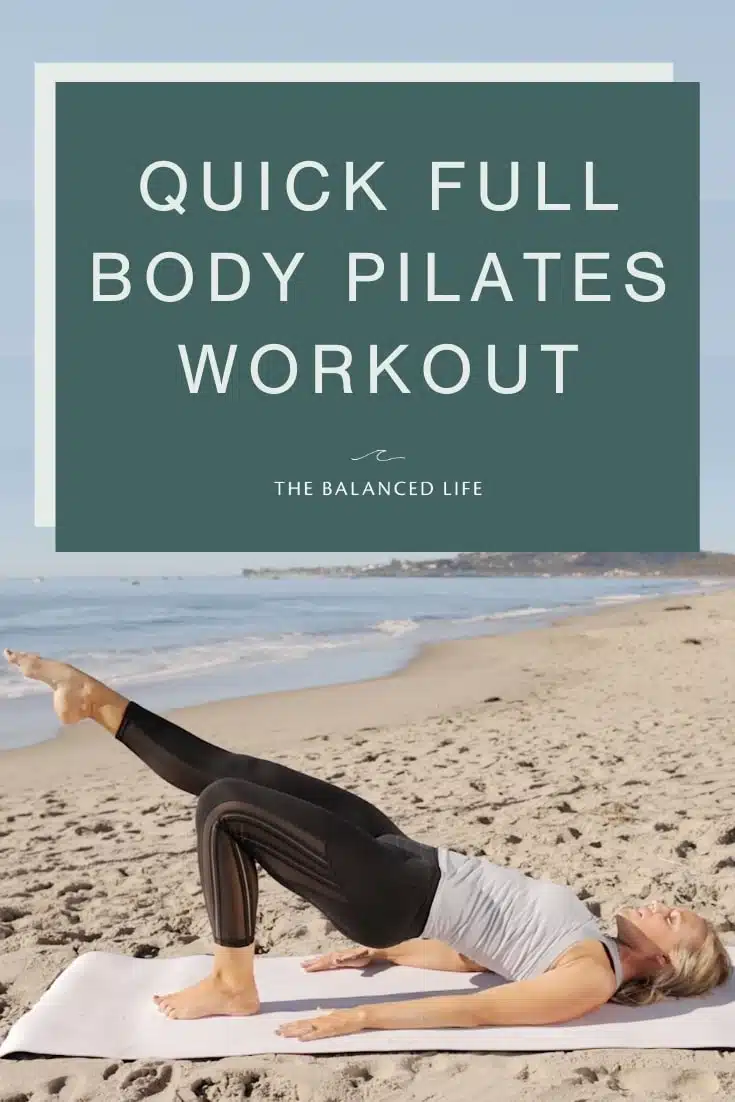
#healthyliving #holistic #nutrition Quick Full Body Pilates Workout

How long do you think you need for a full body workout? An hour? 30 minutes?

How about 15 minutes?

That’s right. In this brand new workout, you’ll build strength, reduce stress, and work your full body in just under 15 minutes.

We keep things simple and realistic at The Balanced Life. And we know that 15 minutes of focused movement today can help us make progress on our goals.

You’ll finish this workout feeling energized, refreshed, accomplished, and ready to tackle the rest of your day.

So take some time for you today.

Roll out your mat.

Press play on this workout.

And give yourself 15 minutes for this full body workout today.

xo,

The post Quick Full Body Pilates Workout appeared first on The Balanced Life.

from Blog – The Balanced Life https://ift.tt/3smowMO
via IFTTT
Categories
Uncategorized

#healthyliving #holistic #nutrition Quick Full Body Pilates Workout

How long do you think you need for a full body workout? An hour? 30 minutes?

How about 15 minutes?

That’s right. In this brand new workout, you’ll build strength, reduce stress, and work your full body in just under 15 minutes.

We keep things simple and realistic at The Balanced Life. And we know that 15 minutes of focused movement today can help us make progress on our goals.

You’ll finish this workout feeling energized, refreshed, accomplished, and ready to tackle the rest of your day.

So take some time for you today.

Roll out your mat.

Press play on this workout.

And give yourself 15 minutes for this full body workout today.

xo,

The post Quick Full Body Pilates Workout appeared first on The Balanced Life.

from Blog – The Balanced Life https://ift.tt/3smowMO
via IFTTT

Categories
Uncategorized

#healthyliving #holistic #nutrition Quick Full Body Pilates Workout

How long do you think you need for a full body workout? An hour? 30 minutes?

How about 15 minutes?

That’s right. In this brand new workout, you’ll build strength, reduce stress, and work your full body in just under 15 minutes.

We keep things simple and realistic at The Balanced Life. And we know that 15 minutes of focused movement today can help us make progress on our goals.

You’ll finish this workout feeling energized, refreshed, accomplished, and ready to tackle the rest of your day.

So take some time for you today.

Roll out your mat.

Press play on this workout.

And give yourself 15 minutes for this full body workout today.

xo,

The post Quick Full Body Pilates Workout appeared first on The Balanced Life.

from Blog – The Balanced Life https://ift.tt/3smowMO
via IFTTT
Categories
Uncategorized

#holistic #getfit #nutrition How to Find a Good Personal Trainer or Coach: 5 Mistakes to Avoid!

Two Legos about to workout together.

Before you fork out some cash for a personal trainer, read this guide!

It’ll help you spot the difference between a bad personal trainer and an AMAZING trainer. 

And trust us, having the right trainer can make ALL the difference in the world.

There’s nothing worse than spending 6+ months in a gym (and thousands of dollars) with a trainer, only to step on the scale and realize that you haven’t made any progress.

It’s the worst.

A bad personal trainer is the worst

I’ve worked with good trainers and bad trainers over the past 16 years, have worked with the same online personal trainer since 2014, and we have a team of 15 personal trainers on Team Nerd Fitness.

Long story short, we know our stuff, and we’ll give it to you straight.

Whether or not you want to check out our 1-on-1 Online Training Program, this guide is going to help you with all the details.


In this guide we’ll cover the good, the bad, and the ugly when it comes to personal trainers – both in-person and online:

What do you need from a personal trainer

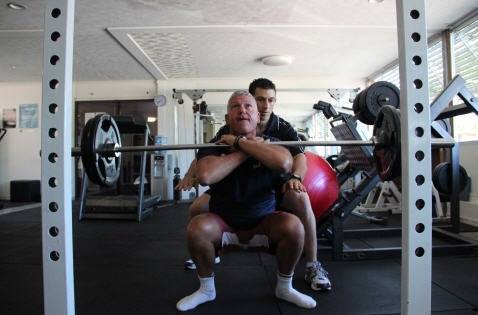
A Personal Trainer assisting a client.

First and foremost, understand that your diet is 80-90% of the battle.

Even if you worked with a trainer for 60-90 minutes every day, that still leaves you with 22-23 hours per day to screw things up if you don’t eat properly!

Hopefully, your trainer will also help you craft a nutritional strategy in addition to helping you build a workout strategy that aligns with your goals.

Start by picking your goals first and determine if a trainer you’re paired up with is the right fit for you. Like dating, you can meet somebody who’s amazing but not right for you.

A gif of Chandler saying "kill me"

If somebody is a competitive marathon runner, they might not be a great powerlifting coach, and vice versa.

So, start with your goals for finding a personal trainer:

  1. Are you trying to lose 300 pounds? 20 pounds? Get to 10% body fat?
  2. Are you trying to get stronger or hold your first handstand?
  3. Do you want to become a competitive powerlifter?
  4. Are you looking to run your first 5k?
  5. Do you just want to get in shape, feel better, and enjoy exercise?

These goals will largely determine the type of trainer you’re looking for.

MISTAKE #1: Not making sure your trainer has expertise in the area you want to train in.

Expertise in one area does not necessarily make them a good fit in another!

After that, you’ll want to think about what you NEED from your personal trainer:

  1. Are you looking for a powerlifting coach to show you the basics (squat, deadlift, bench) so your form is right? Just a few sessions up front and a few later down the line to confirm you’re on the right path might suffice.
  2. Are you new to working out or looking to kick start your first 2 months of training with 2 sessions per week to keep you disciplined?
  3. What type of person are you? Do you need more hands-on guidance throughout your workouts, or more space to take ownership and thrive on your own? Do you need somebody who will cheer you on or do you need tough love from somebody to call you on your bullshit?

Once you set proper expectations with what you want and how long you need a trainer for, then you can pick out one that hopefully will work for you.


How to find a good personal trainer

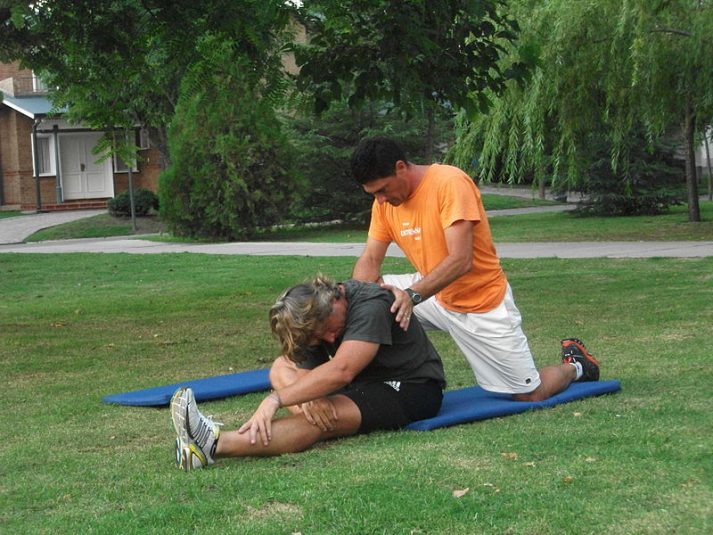
A personal trainer stretching out a client.

Once you find a trainer you are considering working with, the next step should always be an in-depth conversation.

MISTAKE #2: Blindly accepting what your trainer tells you without making sure you fit together! 

They SHOULD be listening to you completely and hear your full story.

They SHOULD ask about any past issues with injuries or experience with exercise. If you’re injured or have any deficiencies, they should know this so they can create a great program for you.

They SHOULD ask you about your nutrition. If they don’t ask about your nutrition, you’re going to be wasting your time.

They SHOULD practice what they preach. They don’t have to be an Olympian, but should have a healthy lifestyle.

They SHOULD tell you about their expertise and how they can help you. They should be able to share past successes of clients with you or point to their credentials and history of success.

They SHOULD set proper expectations. You won’t get ripped in a month, but they can let you know it could take many months to get in shape or build the right kind of habits.

That’s what to look for. These are the things we specifically focus on with our 1-on-1 online coaching program. We love helping people in a way that fits their lifestyle, at a pace that they feel great about, while actually having fun.


What are the Signs of a bad personal trainer?

Our Lego friend is terrified of bad personal trainers.

Beware the “entertainment exercise” trainers with a routine that isn’t catered to your goals.

MISTAKE #3: Thinking a workout is more effective because it’s confusing.

Many trainers just try to confuse you with needlessly complex movements, and put all their clients through roughly the same cookie-cutter plan.

Why? because they know it makes them look knowledgeable without actually needing to do something effectively:

“Now balance on this bosu ball while doing these dumbbell squat lunge curls and standing on one foot with your tongue out! Muscle confusion!

I hope you saved some energy for the row machine.”

Make sure the training from your PT matches your goals!
Tough workouts are great, but remember that while it’s easy to get someone tired (“go do 100 burpees!”), it’s harder to help someone slowly improve and build momentum.

Sure, it might elevate your heart rate and tire you out, but if it’s not building towards your goals in a way that you couldn’t do at home, what are you paying for?

They might also have just obtained a basic certification and stopped their education there, relying on ‘conventional wisdom’ rather than doing the research and building the experience.

If your trainer says any of the following phrases, run for the high hills:

  • “Yeah you don’t want to squat too low – it’s bad for your knees.”
  • “Use this machine; it’s safer for you than free weights” (unless you have an injury)
  • “Yes, you should be using mostly your back. That’s why it’s called the back squat”
  • “These (ab) exercise will burn fat from your stomach in no time” (You can’t spot reduce fat.)

I have overheard all of these sound bites from real trainers in real gyms, and it made me weep like the Native American in the 1970s pollution ad:

Your trainer should be results-focused, not focused on scheduling you a new session and keeping you around.

I often see clients working with trainers for months and months and that client never looks any different.

The trainer is just interested in cashing another check.

Remember, your personal trainer works for YOU: Don’t let them build a program that doesn’t actually fit your needs!.

Do they adjust your workout to take care of any pre-existing injuries you may have, or do they just give you a cookie cutter workout?

Are they encouraging or helping you succeed in the way you want to be encouraged, or are they scrolling through Instagram models on their phones while you’re doing your sets?

Are they putting in the time so they can see you get results, or are they putting in the time so they can check the box and collect your money?

You’re paying money for this person’s expertise and attention – it’s not too much to ask to find somebody who takes those things seriously.

Getting in shape requires you to go when you don't feel like going

What certifications should a personal trainer have?

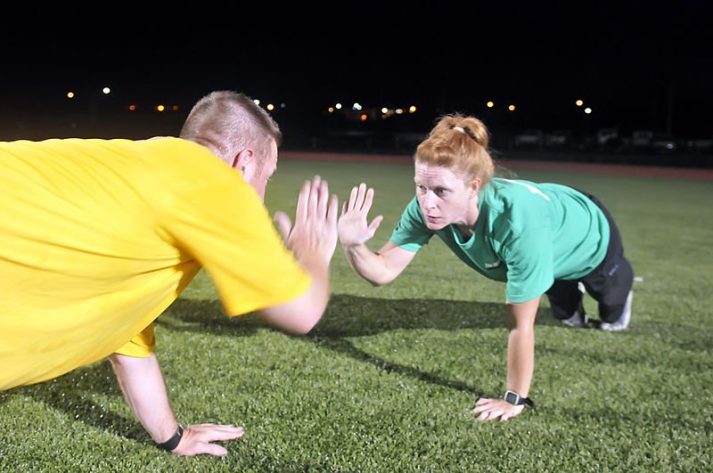
A personal trainer high-fiving a client.

There are a wide variety of personal trainer certifications and other “credibility indicators.”

The more traditional path – a degree in exercise science or kinesiology may mean the trainer in question is knowledgeable about the human body.

However, that doesn’t speak to any experience they may or may not have coaching in real-world circumstances.

6 of the most popular personal trainer certifications are:

  1. NSCA: National Strength and Conditioning Association
  2. ACSM: American College of Sports Medicine
  3. NASM: National Academy of Sports Medicine
  4. ACE: American Council on Exercise
  5. NPTI: National Personal Training Institute
  6. CrossFit

T-Nation provides a rundown of the pros and cons from a trainer’s perspective that we feel is also useful insight from a client’s perspective. Be sure to check them out if you want to learn more about what’s behind your trainer’s certification.

CrossFit certifications are completed in a single weekend. While a CrossFit certification does not make a trainer bad (there are plenty of excellent CrossFit coaches out there!), it does not guarantee excellence either.

Here are our thoughts on CrossFit.

A certification from NPTI – the National Personal Training Institute – is a credential gained from going to a full school on personal training (rather than attending a class or taking a test).

While no certification can fully promise excellence, we believe trainers with NPTI certifications are worth your consideration.

CAVEAT TO ALL OF THIS: Plenty of trainers who have NO certification are incredible, and plenty of other trainers have the most elite certifications and are terrible trainers.

MISTAKE #4: Blindly accepting a trainer’s credentials or discounting a trainer without certain credentials.

Certifications can be a starting point, but it shouldn’t be the determining factor.

One of the most important things to look for in your trainer isn’t a credential or certification at all, but real experience and an enthusiasm for helping you reach your goals.

For example:

Looking to powerlift or get into Olympic lifting? Look for someone who has successfully competed in their fields, or someone who actually coaches athletes who do compete!

Need to lose a lot of weight? Ask a trainer to share with you success stories from people who are like you.

In our view, finding a trainer with proven experience and a track record of performing or coaching (or both) in the area of your goals is the most valuable step you can take to ensure quality.

The credential is only a starting point.

Trainers aren’t cheap, but the benefits can be priceless.

Remember, you aren’t paying simply for their time with you. You’re paying for the years and years they’ve spent learning, training, and coaching.

It’s the years behind the certification that makes their time so valuable, so expect the cost of a trainer to be significantly more than the cost of a basic membership at your gym.


How much does a personal trainer cost? Are Personal Trainers Worth it?

This Lego wants to know how much personal training costs.

The cost of a personal trainer can vary dramatically depending on:

  • Where you live (in an expensive city, small town, etc.).
  • The quantity and duration of your training sessions.
  • What kind of training you are looking for.

But you want specifics.

The average North American trainer charges $55 for an hour session.[1]

That’s an “average” so let’s break it down a little.

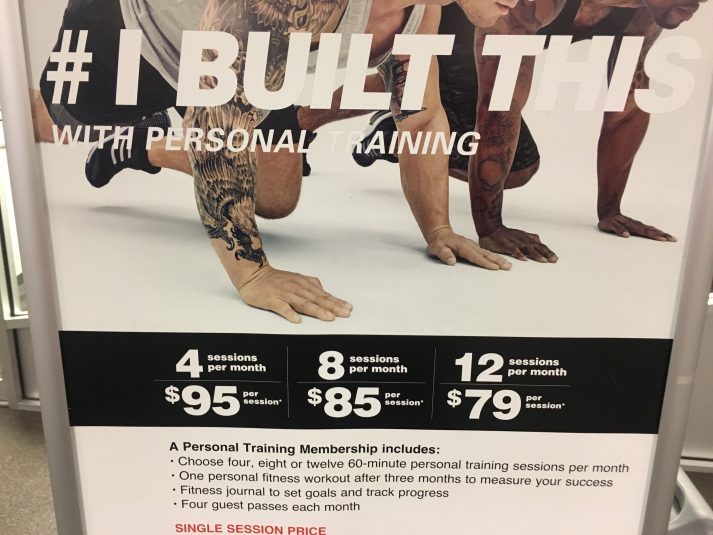
Here are the prices for working with a trainer in various capacities at my generic commercial gym in the NYC area (definitely on the more expensive end):

  • 4 sessions per month: $95 per session = $380/month
  • 8 sessions per month: $85 per session = $680/month
  • 12 sessions per month: $79 per session = $948/month

This is what one can expect to pay for personal training near NYC.

Is this pricing more or less than you expected?

Here is how much a personal trainer costs at:

  1. Global Gyms: Most big box gyms offer personal training:
    • LA Fitness: you can expect to pay about $60 per session.
    • 24-Hour Fitness: it’ll be about $80 per session.
    • Anytime Fitness: as little as $35 a session.

  2. Luxury Gyms: If you go to a more upscale gym like Equinox, expect to pay “luxury” prices of $110+ an hour.

  3. In-Home Personal Training. If you don’t want to head to the gym, you can actually have a personal trainer come to your home. The cost on this could be all over the place, but a rough average would be about $65 for an hour session.

Different trainers will have different qualifications and expertise, leading to vastly different training experiences.

This can be really important.

MISTAKE #5: Thinking “more expensive” automatically means “better results.” 

Cost is not the right metric. VALUE is the right metric!

Depending on your goals and the results you’re after:

  • $30 per session might be overpaying for a crap trainer who gives you a generic workout and doesn’t care about you. 
  • $100 per session might be a STEAL if it’s an amazing trainer that gets to know your life and your personality, motivates you in the way you need to be motivated, and helps you get past a plateau when you stall.

That’s why remembering your “get in shape” goals is critical when buying a personal trainer.

If you’re looking to do 5 sessions to improve your powerlifting technique, that’s different than hiring a trainer to be with you in person 3x a week to get you to the gym.

HOW TO THINK ABOUT HIRING A TRAINER: 

You’re not just paying for an hour of somebody’s time.

You’re paying for their years of experience, schooling, training, and expertise.

You’re paying to outsource ALL of your fitness questions to somebody who knows what they’re doing.

Somebody who gives you the confidence you’re training correctly.

This Muppet knows strength training will help him gain muscle and lose weight.

So instead of “I am paying this trainer for 1 hour, this is too expensive,” what you’re really paying for is confidence, momentum, and (hopefully) results.

As somebody who has worked with an online trainer since 2014, I would pay any amount of money to my coach (just don’t tell him that) because I love getting results after years of struggle.

How does an in-person trainer compare to our online coaching program?

Our pricing comes in at a less-expensive price than 4 sessions per month with a trainer.

In addition to building you a workout program for the month, we also help you with your nutrition, mindset, and goals, and answer all the questions you have.

There are very real pros and cons to hiring an online personal trainer, so make sure you read that next section.

So a trainer can be AMAZING and worth every penny, IF you have the right one who also takes an active role in your nutrition.

After all, workouts only make up 1-3 hours per week.

What about the other 165? That’s where the progress happens! And your coach should be helping you there too!


SHOULD I HIRE AN ONLINE PERSONAL TRAINER? WHAT ARE THE PROS AND CONS OF AN ONLINE PERSONAL TRAINER?

This Lego athlete is ready for his personal training.

Warning: I’m going to be slightly biased in this area, but I’ll share the honest pros and cons of online training:

As I’ve mentioned, I’ve been working with an online trainer since 2014, and it’s allowed me to prove an internet troll wrong and then lose 22 pounds in 6 months while getting super strong!

Here are the Pros to Online Personal Training:

#1) Freedom to fit your schedule. With an online personal coach, you can train when and where you want to fit your schedule – your coach builds the workout program for you ahead of time, so you can fit it in at your convenience.

Compare this to a traditional coach, and you’re at the mercy of their busy schedule. If they only have time Friday morning at 8am, and you’re not a morning person, conflict ensues.

#2) Persistent worldwide accountability. I’m borrowing this phrase from a NF Coaching Client, Jeff (his success story is great). No matter where in the globe you are, your online trainer comes with you.

Which means the accountability never stops. If you travel for work, your coach can plan for that and build you a special travel routine. Getting relocated for work? No problem – your coach will still be there.

#3) Nutritional guidance. With most traditional personal trainers, you engage with them only during your scheduled visits: they help you work out and that’s about it.

With an online personal trainer, you’re connected whenever you have access to the internet. And I would imagine that MOST online coaching programs, work with you on the most important part of the equation: eating healthier!

AKA everything that happens in the 23 hours outside of the gym.

#4) More cost-effective. Most in-person personal trainers are expensive, especially if you work out with them two or three times a week.

That’s because if your trainer is working with you, they can’t work with anybody else at the same time.

When you work with an online coach, because you aren’t training with them 1-on-1 in the gym, they can provide more cost-effective guidance.

When you factor in their availability via chat and their help on habits and your nutrition, you’re looking at a life-changing experience if you find a coach that fits your personality.

#5) It might be the only option. With so many gyms closing because of the pandemic, you might not even have much of a choice here. Here’s our guide to staying in shape (while staying inside) if you need to train from home. 

When comparing online coaches versus regular coaches, I’m going to share the cons as if you have the option between a GREAT online coach and a GREAT in-person coach.

Neither of those is guaranteed.

Here are the cons of an online coach when compared against a real-life equivalent:

#1) Your coach can’t do the work for you. There’s nothing stopping you from skipping your workout and lying to your online coach that you did it. Nobody wins in this scenario, but I can totally see it happening.

So yeah, an online coach can’t pick up the weight for you, and they can’t yell at you to put down the donut. You have to do the work!

#2) No real-time feedback and instant form check. If you’re learning how to powerlift, or you’re going for a particular heavy lift, having a coach right there is HUGE.

They can tell you to move your squat slightly wider. They can guide you through the movement and consistently remind you – even when tired – to keep great form.

Although we do form check videos, where we have coaches and clients send clips back and forth to each other, it’s not the same as having somebody critique you in real-time.

If you’re looking to nail a particularly challenging lift, or learn a dangerous gymnastics move, working with a trained professional in person is invaluable.

#3) The value of sunk cost. If you pay for a month of online coaching, there’s nothing inherently motivating you to go to the gym when it’s cold and you’re tired – your coach can’t yell at you, and you’re not letting anybody down in the moment when you don’t make it.

Compare this to working with a real coach in person.

You paid $100 for a session, and if you don’t show up, that money is *POOF* gone. So you tell yourself, “I already paid for this, and my coach is gonna be mad, I should probably go.”

And then you go. And you’re so glad that you did.

Wayne stoked he made it to the gym today to meet his personal trainer!

Although your online coach can notice that you haven’t signed in on your app, and they can ask what’s going on, this is after the fact compared to an in-person coach getting stood up.

There’s a lot to consider when debating in-person training vs. an online personal trainer.

I wouldn’t say one format is clearly better than or superior to another. It really depends on what you’re after and the circumstances of your situation.

MY PERSONAL EXPERIENCE: I’ve been working with an online trainer since 2014, and it’s truly been life-changing for me.

I had some goals that had evaded me despite a DECADE of effort, and it took a great coach to coax out the right strategy. It’s how I say (jokingly) that I went from Steve Rogers to Captain America.

And it was my coach’s programming that got me a 420-pound deadlift at a bodyweight of 172 pounds:


View this post on Instagram


A post shared by Steve Kamb (@stevekamb) on

I’m not gonna set any powerlifting records, but I’m healthier, happier, and stronger each and every month, and I’m damn proud of that.  

For somebody that can’t afford a top-of-the-line professional coach for each session, having an online coach to build your programming and guide your food choices is a verrrrry close second.


How to hire a personal trainer

It's now time to buy stuff!

HERE’S MY ADVICE: Give your new personal trainer 5 sessions before making a decision that things aren’t working out (sessions are often sold at a discount in a package).

The first session is often exploratory, explanatory, and introductory, and the trainer needs to test your limits and movements to build upon that.

This isn’t a “get fit quick” strategy, but rather one that could take months and months for you to find the right person to aid you on your journey.

Don’t expect miracles in a day!

A few words of wisdom if you do hire a trainer:

DO NOT USE YOUR TRAINER AS AN EXCUSE: Too many people will hire up a trainer and give no effort in the gym or the kitchen.

Then, when they fail to see results they can turn to their friends and say “man, my trainer is terrible, THAT’S why I’m not losing weight/getting stronger/etc.”

This happens so much more often than you’d think. A trainer is a guide, like Morpheus.

Morpheus is kind of like a personal trainer, he'll show you the way but you have to do the work.

You have to take the pill and walk through the door yourself.

MAKE CRITICISM CONSTRUCTIVE CRITICISM: Often when the trainer asks them to do something (walk every day, throw away junk food, eat a vegetable), the client/trainee comes back with 1,001 reasons why they can’t do that.

No compromise or discussion of possible solutions. This stinks.

Instead of saying “no,” offer an alternative solution and negotiate a plan: “I don’t really like broccoli, do you have a way to make vegetables taste better?”

In other words, don’t look for problems, look for solutions.

IF YOU ENJOY WORKING WITH YOUR TRAINER: Let them know and continue working with them.

The more information you can give them on your progress, the easier it will be for them to alter your program as you go on.

IF YOU DON’T ENJOY WORKING WITH YOUR TRAINER: That’s okay too. Not all relationships end in marriages.

Some first dates suck, and some trainers aren’t what you need.

I think you can be honest with them and let them know that it’s not a good fit and you will not be continuing to work with them.

Good trainers at this point will ask what they could have done better.

Trainers who are simply after your money may guilt trip you or beg you to stick around. Try somebody new and keep the search going.

REMEMBER: this is a lifelong quest, and you’re on the hunt for a great guide to help you on your journey.

They won’t do the work for you, and they can’t work miracles.

Have proper expectations, do what you’re told, and this could be the best investment you’ll make in your entire life!

Trainers in the Rebellion, what did I miss?

Those who have had experience working with Trainers, any wisdom to share from your experience?

One final note: Going to a gym is intimidating, especially if you’re starting out.

If you are in a location where there aren’t any great trainers, you don’t have access to a gym, or you’re just not ready to work with somebody in person, consider checking out our Online Coaching Program!

Schedule a free call to learn more by clicking on the image below:

Nerd Fitness Coaching Ad

If you have questions about what you need to look for when it comes to training with a coach in person, or even questions about working with an online trainer, leave them in the comments below so I can chime in!

-Steve

###

photo: Decathlon, wikimedia: high five, Wikimedia: Spot, Bicycle, Wikimedia: stretching, Amazing playground: bicycles and football

The post Blog first appeared on Nerd Fitness.

from Nerd Fitness: Helping You Lose Weight, Get Stronger, Live Better. https://ift.tt/2m9IrAJ
via IFTTT