Categories
weight loss

#weightloss How to Exercise and Lose Weight on a Busy Schedule

In my fitness consulting business, I get the opportunity to talk with people from all walks of life about their health, fitness, and weight loss goals. Whether their goal is to lose weight, gain muscle, stick to a diet plan or program, improve their cardiovascular health, or simply to maintain their current fitness level they all have one common enemy—TIME.

glute exercisesFor most of us, the #1 challenge in the quest to stay in shape and/or lose weight is not exercising itself but being able to actually fit an exercise program into our busy schedules.

So how do you do it? How do you balance the demands of family, career, important errands, relationships, organizational responsibilities, and working out? I have found that there are five keys that will help you to be able to fit a consistent workout plan into your already hectic life.

  1. Commit to a specific schedule

    When you fail to plan you plan to fail. Don’t try to haphazardly fit your workouts into your schedule without any rhyme or reason. Don’t think you’re guilty? If you’ve ever told yourself “I’ll workout as soon as I get some time”,
    you were in direct violation of this key principle.

    In order to set yourself up for success, you will need to take the time to literally write your workouts into your weekly schedule. In order to be effective, you will want to be following your exercise program at least 3 days per week. Anything less would be kidding yourself.

    Therefore, right in the midst of all of your appointments, “to-do” lists, etc., should be a written plan for your weekly workout routine, so that
    you will never be in the dark as to when you committed to yourself to go.

  2. Utilize the weekend

    Take advantage of the fact that it only takes 3-5 days per week to put together an effective, results-producing workout. One trick to help you pull it all off is to workout on the weekends. One of the benefits to this course of action is that your schedule is more flexible and under your control during this time.

    What is also means is that when the hectic weekdays roll back around, you will only be responsible for working out 1-3 days during the work week.

  3. Keep your workouts as a high priority

    One of the biggest mistakes that even many people who have scheduled a workout program into their schedule make is allowing it to be bumped off of their schedule to easily.

    Although things will occassionally come up that will cause you to have to reschedule the workout you had planned, you must be vigilant in making sure that only the most important emergencies are allowed to temporarily take you off of your plan.

    In the event that one of those important emergencies does happen and you can’t make it to your workout, reschedule with yourself to make it up on the next possible day that you are available to do so. If your own health, fitness, and efforts to lose weight are not a priority to you, they certainly won’t be so to anyone else.

  4. Enroll others in your goals

    Don’t go at this alone. Let the important people in your life know what you are up to. Your spouse or love interest, parents, children, co-workers, and close friends will often pitch in and help you to meet your fitness or weight loss commitment to yourself if you make them aware and ask for their support.

    Leverage these relationships to delegate some of your normal responsibilities
    or even allow you to shift appointments that you have with them as you restructure your schedule for your workout. If any of them are into exercise or trying to lose weight themselves, don’t hesitate to form a buddy system with them as you move forward with your program.

  5. Don’t beat yourself up

    No matter who you are, there will be times in your workout program that you just aren’t able to keep it up as you would like due to outside demands. Don’t be too tough on yourself when that happens.

    Remember that it is what you do consistently over a long period of time, not what you do in spurts, that truly counts. Just make sure that you get back on the horse full force as soon as you can and continue to press forward, doing your best to avoid slacking off again.

No matter what goals you have for health, fitness, or weight loss, you CAN fit an effective exercise program into that hectic schedule of yours and be amazingly successful at getting the exact results that you want !

Please share this post on Facebook, Twitter or Pinterest. Thanks !

Categories
Uncategorized

#holistic #getfit #nutrition What is Seasonal Affective Disorder? (How to Slay the SAD Beast!)

This photo shows Link about to do battle with the SAD monster.

Winter is approaching and with it comes SAD.

No, I don’t mean the emotion (although that’s part of it).

I’m talking about Seasonal Affective Disorder.

Luckily, we have some tips and tricks for treating SAD that our Online Coaching Clients use. Today, we’ll share them with you too.


Here’s what we’ll cover:

Disclaimer: We’re going to be discussing some issues that may be difficult for some going through a tough time. If you (or someone you know) aren’t coping so well, PLEASE see the links at the bottom of this article with some resources from all around the world. Obviously, we recommend discussing this information with your health professional – none of this is a diagnosis, but rather a starting point for discussion.

From here, mental health wizard and resident NF Family Rebel Correspondent, Dan Schmidt, will take it away:

What is Seasonal Affective Disorder?

Winter landscapes like this can make us SAD at times.

Aside from being a really clever acronym, Seasonal Affective Disorder (SAD) is a mood disorder that, spoiler alert, has a seasonal pattern. 

It’s also known as:

  • Winter depression
  • Winter blues
  • Seasonal depression.

In a nutshell, SAD makes people with ‘normal’ mental health experience depressive symptoms at a specific time each year – most often winter.

Charlie Brown saying "I always end up feeling depressed."

SAD can be a cruel, powerful, and damaging arctic foe.

But armed with the right weapons, we can ward off the winter monster, or even keep it in full hibernation.

How Do I Know if I have SAD?

This picture shows Mario acting a little SAD

Most of us feel a little glum in winter… it’s natural to feel a little down.

Cold mornings, less time outside, and often it’s not as easy to get out and do our favorite things:

A gif of an RV outside

So for a lot of us, winter just sucks a little. 

We’ve known something was up since the 6th century, but SAD remained a mythical creature until the 1980s in the West when it became officially recognized as a mood disorder. While we’re still not 100% sure of how it works; it’s pretty clear to see that SAD especially thrives in the cooler, darker climates.

For example, studies show[1] SAD’s prevalence in the U.S. ranges from around 1% in Florida to 9% in Alaska. Looking around the world, in Oslo, Norway, around 14% of the population will be impacted by SAD,[2] while us lucky buggers Down Under are barely impacted at all, with estimates that only around 1 in 300 Aussies (0.33%)[3] will experience SAD during the “winter.”

A picture of a sand "Snowman" that says "meanwhile in Australia"

Yes, SAD can occur for some people during summer and other seasons, but this is particularly rare compared to winter prevalence.

Common SAD symptoms include:

  • low mood for most of the day.
  • loss of interest in your usual activities.
  • drowsiness and low energy (lethargy).
  • fatigue, irritability, and severe mood swings.
  • Irregular sleep patterns (too much and/or too little)
  • eating more than usual, especially craving sugar and carbohydrates, leading to weight gain.
  • loss of interest in things you normally enjoy doing.
  • intrusive or disturbing thoughts.

Depression is not just a fancy word for feeling “bummed out”, and SAD is just as serious as any other depression and needs to be dealt with promptly and effectively. (See the end of the article for a list of mental health services links.)

“But how do I know the difference between general winter glumness, or if I’m being mauled by the SAD beast like Leo in the Revenant?”

This gif shows a man being attacked by a Bear, cartoon style.

Ask yourself these questions:

  • “Do you feel like you can’t get yourself out of this rut?”
  • “Have you lost an interest in things that you usually enjoy?”
  • “Have you felt this way for more than two weeks?”

If so, then it could be time to have a chat with a professional and perhaps seek treatment. Once again, SAD is just as real and can be just as devastating as Major Depressive Disorder; the only difference is the yearly regular onset.

This bitter beast can take over someone’s entire wellbeing, and left untreated, the consequences can be devastating.

So let’s learn how we can slay the SAD, or even better, keep it in hibernation this year, so we nerds can continue to conquer all year round.

What is the best treatment for Seasonal Affective Disorder? (Slaying the SAD Beast)

A picture of a Games of Thrones bobblehead, who is about to slay the SAD monster.

As with any injury or illness boss battle, you need to use the right medicine weapon to save the day. And there are many weapons you can equip yourself with to slay SAD.

Here is how to treat Seasonal Affective Disorder: 

#1) GET SOME LIGHT:

Light helps the body produce serotonin (hormone that affects mood) and reduces the production of melatonin (hormone that makes you sleepy).[4]

Starting with natural light is best, even though it’s not easy. If the sun happens to be peeking out from the clouds, try and get outside for a nice walk. Even on cold or cloudy days, outdoor light can help, particularly in the morning. Making your work and home environments as light and airy as possible and sitting near windows can help too. 

A gif of someone opening a window to help with SAD

If you feel you’re just simply not able to get enough natural light, ‘Light Therapy’ is generally one of the first weapons picked up to slay SAD.[5] It can start alleviating symptoms in just a few days and rarely causes any side effects. It’s incredibly simple, and sitting under bright fluorescent globes or in front of a therapy lamp (again, particularly in the morning) has shown to be effective against SAD[6] (anecdotal, but I once met a young woman who started to feel better just by increasing the wattage of her bedroom lightglobes). 

#2) EXERCISE AND DIET

Surprise, surprise, our old friends come to the rescue once again. It’s clear[7] that exercise and eating well are key in keeping the blues at bay, so rug up and take a long walk, and be sure to exercise regularly.

Gonzo knows he has to eat protein to match his strength training goals, but he doesn't eat chicken, for obvious reasons.

Exercise and other types of physical activity help relieve stress and anxiety, both of which can increase SAD symptoms.

If you’re really keen to take on winter, try the Winter Is Coming Workoutand start building that summer body early. For those who don’t like the freezing weather, that’s cool (get it?), you can always do Steve’s 20-minute hotel room workout (pro tip: you don’t actually need to be staying in a hotel room to do the workout… that was $250 I’ll never get back).

As for diet, Steve has already highlighted, if you’re going to eat unhealthy foods during winter, let’s at least be smart about it and negate the impact the holidays have on our waistlines. Try your best to provide a counterbalance to those comfort foods, and keep your diet as close as you can to what it is the rest of the year. 

#3) THERAPY

Talk Therapy (Psychotherapy) and cognitive behavioral therapy sound scary but really aren’t.

A psychiatrist saying "Do not be alarmed"

Psychotherapy focuses on helping you to build skills to deal with the stresses in your life, along with identifying and changing negative thinking patterns. Therapies such as these assist with relearning some of the patterns and thoughts in your life that aren’t doing you any good.

You can read the Nerd Fitness Guide to Mental Health for more info.

It can feel daunting and really weird ‘opening up’ to a stranger at first. But having a coach to talk through your negative thoughts and feelings, someone who can teach you to manage those better, is generally quite effective. Most people will notice an improvement in as little as two weeks. Really, the “weird” stigma is usually the biggest barrier to even doing the thing in the first place!

#4) GET SOME VITAMIN D

When exposure to sunlight is low, your body makes less Vitamin D.[8] According to this study,[9] Vitamin D deficiency affects nearly HALF of the world population. It is important for overall health. Our friends over at Examine say that if your diet is decent and there’s only one supplement you’re taking, it should probably be Vitamin D during these upcoming months.

The research is a little mixed when it comes to Vitamin D’s effectiveness in battling SAD,[10] but some studies[11] do show an improvement to everyone’s depression scale scores (those with or without SAD). Overall, if you aren’t getting enough sunlight in the winter, consider picking up some Vitamin D!

#5) GET AWAY

If you’re lucky enough to have the opportunity (and can do so safely), take a winter holiday in a sunny, warm location if you feel the SAD is lurking too close to home. If you’re looking to save some cash, I’m happy to have any Rebels crash on my fold-out couch during the Aussie summer (a love of cricket, barbeques, and beer is a must [BYOBB]).

Homer saying the extra "b" is for "BYOB"

Finally, some people with SAD benefit from antidepressant treatment, especially if symptoms are severe. We’re not here to offer any medical advice, so please see your doctor if you think medication may assist you.

Moving forward with SAD (This too shall pass)

A picture of Link in the sun, who overcame SAD

It’s normal to have some days when you feel down, and the holiday season can be especially hard for some.

When short days and miserable weather are piled on top of this, it’s easy to see why ‘winter blues’ is so common. But if you feel down for days at a time and you can’t get motivated to do activities you normally enjoy, please speak to someone and see your doctor. This is especially important if your sleep patterns and appetite have changed, you feel a sense of hopelessness, you have intrusive thoughts, or you turn to alcohol/substances for comfort or relaxation.

Above all, take care of yourself this winter: 

  • Be sure to get enough rest, and take the time to relax.
  • Participate in an exercise program or engage in another form of regular physical activity.
  • Get outside when you can.
  • Make healthy choices for meals and snacks when possible.
  • Reach out to a trusted friend, family member, or health professional if you feel you’re having a tough time.

And if someone reaches out to you, rememberWe are Rebels, we fight conventional wisdom and smash stigmas. Never leave a fellow nerd behind.

The Rock saying "we have to do this together"

If you feel the bitter, arctic beast starting to rise from its summer slumber, remember that you are not alone, and there are ways to slay the frosty fiend. You are strong enough to beat this, and the entire Rebellion has your back.

Want a little more from us?

If you want to continue your journey with Nerd Fitness, we have three great ways for you to do so:

#1) Our Online Coaching Program: a coaching program for busy people to help them make better food choices, stay accountable, and get healthier, permanently.

You can schedule a free call with our team so we can get to know you and see if our coaching program is right for you. Just click on the button below for more details:


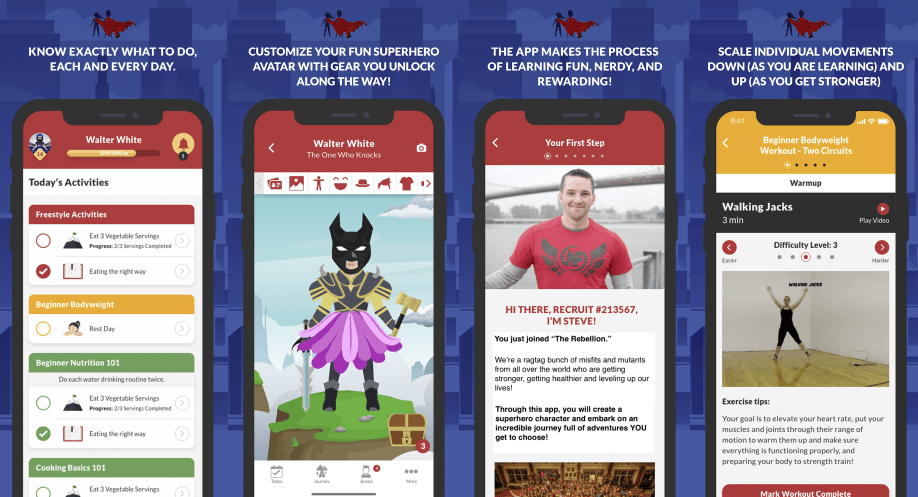
#2) Check out NF Journey, our fun habit-building app that helps you exercise more frequently, eat healthier, and level up your life (literally). 

This picture shows you many of the features of the NF Journey app.

You gain access to this app through Nerd Fitness Prime.


#3) Join the Rebellion! We need good people like you in our community, the Nerd Fitness Rebellion.

Sign up in the box below to enlist and get our Rebel Starter Kit, which includes all of our “work out at home” guides, the Nerd Fitness Diet Cheat Sheet, and much more!

Alright, that does it for me. Rebels, take care of yourself and each other.

Do you have your own secret weapon to slay the SAD? We’d love to hear from all you Rebels about how you keep your mind healthy during winter; the more ideas we all have, the better! Let us know in the comments!

– Dan

PS – If you, or someone you know, would like further support, here are some excellent links and services that will get you started in the right direction:

###

Photo source: lilu330 © 123RF.com

from Blog – Nerd Fitness https://ift.tt/2gUEIQU
via IFTTT

Categories
Uncategorized

#healthyliving #holistic #nutrition Bedtime Pilates Routine

Hi friends!

Could you use a little something to help you wind down, release tension, and let go of stress you’ve been carrying around in your body?

I just uploaded a brand new workout to The Balanced Life’s YouTube channel and I think you’re going to love it…

This routine will help you to release tension, breathe deeply, and also wind down your mind and body so you can set yourself up for a good night’s rest. Come back to this routine anytime you need to de-stress! 

CLICK HERE to view this workout directly on YouTube and make sure to subscribe and you’ll be notified of every new workout!

Remember to take care of yourself this week. You’re worth it. 

xo,

PS – Need a little extra self-care? Click here for 3 ways to calm your mind today.

The post Bedtime Pilates Routine appeared first on The Balanced Life.

from Blog – The Balanced Life https://ift.tt/364rYCV
via IFTTT

Categories
Uncategorized

#holistic #getfit #nutrition What’s the Best Diet to Lose Weight? (Which Diet is Right for Me?)

This picture shows a LEGO family, who are looking for the best diet.

If you’re currently trying to lose weight, you might be asking yourself:

Which diet is right for me?”

What’s the best diet for weight loss?”

They’re great questions, both with many different variables to consider.

Today, we’ll unpack it all for you.

We focus on proper diet and nutrition extensively in our 1-on-1 Coaching Program, but we’re gonna tell you everything you need to know below too.


Here’s what we’ll discuss in answering “What’s the best diet to lose weight?”:

It’s a lot to cover, but DON’T PANIC

We’ll get through it together using science, stories from our very own community, and one too many pop-culture references:

Hang in there Spock, we're only going to get crazier with our nerd references today.

Let’s get started.

How to Eat For Healthy Weight Loss

A picture of a scale and tape measure, tools for fast weight loss.

#1 – Eat fewer calories than you burn every day.

#2 – Want to also be healthy? Eat mostly real food.

Full stop.

Want to KEEP the weight off?

Add #3: Do those two things consistently for a decade.

This solution will get you like 90% of the way towards a killer physique and a consistently healthy checkup at the doctor.

Mix in the right training and you’ll be 99% of the way there.

The problem is that pesky things like “reality” and “genetics” and “human behavior” keep getting in the way.

It’s why everybody goes on diet after diet after diet, gaining and losing the same 10-50 lbs.

Most people can only stick with a diet for a few weeks before they’re so miserable that they can’t wait to go back to how they were eating before.

Yeah, it can be tough going from cookies to raw vegetables...

They count calories and allow themselves to eat “health food” like low-fat ice cream and low-fat chips and just two Oreos. These people are so nutritionally deficient—eating calorie-heavy, unfulfilling foods—that they struggle to stay under their allotment of calories for the day. D’oh.

To make matters worse, even if they’re counting calories, they’re probably misreporting their food and overeating without realizing it.[2]

This is why people get so dang frustrated when they go on a calorie-restricted diet, track their food, and still don’t lose weight. The only explanation must be that their bodies must have slow metabolisms.

Yes, some people can do well with calorie counting long term – and I do believe EVERYBODY should count calories for at least a week to educate themselves about the food they are eating – but I think it’s only part of a solution that has plenty of room for error.

Watch this quick video of a person who believes she has a slow metabolism[3].

It turns out the exact opposite is true. Crap.

Despite everything stacked against us, Nerd Fitness is FULL of success stories of people who have lost 100s of pounds and kept the weight off. Here are a few dramatic ones (click on the images to read their full stories):

Our community has plenty of successful weight loss transformations.

Kenny's weight loss really is stunning.

What gives?

Nerd Fitness doesn’t just tell you what to eat. Any Google search can tell you that.

Though we help there too.

At Nerd Fitness, we’re helping you learn HOW to think about eating too.

And that’s the difference-maker.

Which Diet Will Help Me Lose Weight? (Mental Models for the Win)

Closed up tiny home models on sand with sunlight and beach.

The Nerd Fitness community is full of ridiculously smart people. Smart people that have tried in vain to lose weight for years or decades.

It’s because we’re fighting a brutal, uphill battle.

For many of us, food is way more than just fuel:

  • It’s a coping mechanism.
  • It’s how our moms showed us love.
  • It’s what we turn to when we’re happy or sad.
  • It can provide us with a small bit of happiness during an otherwise boring day.

Add in the fact that unhealthy food has been designed in a laboratory to be so delicious that it must be consumed in mass quantities, and trying to eat “just a few” of something is nearly impossible.

I get it, these cookies were DESIGNED to be overeaten.

Next, add a dash of “I am obsessive and if I start to track calories I’m going to drive myself insane,” “even if I track my calories I’ll probably underreport how many calories I eat by at least 20%,” and “there is so much information that this all appears so overwhelming, so it’s a lost cause.”

This is why Mental Models are so useful (hat tip to my friend Shane over at Farnam Street Blog who taught me about Mental Models). I’m gonna borrow the concept here for nutrition.

Enter a MENTAL MODEL DIET:

  • Paleo Diet: If a caveman didn’t eat it, neither should you. “Okay, what would a caveman eat? Probably things that grow in the ground, so vegetables and fruit, and also animals. They wouldn’t eat candy or bread or pasta or drink soda.”
  • Keto Diet: Keep your carb intake under 5% (or more extreme, 10 grams, for example) of your total calories so your body has to burn fat for fuel instead of carbs and sugar. “Time to learn how many carbs are in everything I eat, and start tracking.”
  • Slow Carb Diet: Eat legumes, protein, veggies. “Time to learn how to make food that only fits the slow-carb model. At least until cheat day!”
  • Intermittent Fasting: Only eat between 12pm and 8pm. Occasionally do 24-hour fasts. “Okay, so I’ll just skip breakfast. That’s one less meal I have to think about.”

In each of the above options, there are a few similarities that make them such trendy/popular diet choices. 

For the sake of simplicity, we’re going to hold off on digging into the health benefits that apply to a small percentage of the population on certain diets (Keto to treat epilepsy, Paleo/Keto for Hashimoto’s Disease, identifying a gluten intolerance, etc), we’re going to focus on the reasons MOST people pick these diets.

They’re simple to comprehend and will probably help you lose weight:

#1) They all will result in you eating fewer calories (usually).

If you follow the Paleo Diet, you are eliminating some of the most calorie-dense, nutritionally deficient, unhealthy foods out there. No more soda, no candy, no bread, no pasta, no sugar, no dairy.

If you follow the Keto Diet, you must track your carb intake, which means you’re going to also learn how many calories are in everything else you eat. You’re also essentially eliminating an entire macronutrient from your diet that’s notorious for keeping people overweight.

If you follow the Slow Carb Diet, you learn about which foods you can eat and which foods you can’t eat: yes to beans, no to dairy and grains. Like Paleo or Keto, you’re eliminating massively unhealthy foods from your diet, which will most likely result in weight loss.

If you do Intermittent Fasting, you’re eliminating 1/3rd of your meals for the day! Let’s say you normally ate an 800 calorie breakfast, 800 calorie lunch, and 800 calorie dinner. If you SKIP breakfast, that means you could eat larger lunches and dinners (1000 calories each) and still end up eating 400 calories less per day on average. That’s enough for 3-4 pounds of weight loss per month!

#2) You can answer “YES” or “NO” to adherence.

Sure, it would be great if you could weigh every element of food that you eat, and track each meal in a spreadsheet and KNOW you’re tracking each calorie and macronutrient correctly.

And for some people looking to get to bodybuilder levels of body fat, this level of perfection is required.

However, for the rest of us, working regular jobs, with kids, and lives, this shit is wayyyyy too much.

Yeah, for most people, tracking ever single calorie you eat is WAY TOO MUCH.

So these mental models are so damn helpful because they can simplify the overly complicated and allow us to get out of our own heads.

These Mental Model Diets require compliance and consistency. In each instance, there’s a very specific answer you can say every day, and a question you can ask yourself with each meal.

As our favorite green Jedi Master once said: 

Yoda saying "do, or do not, there is no try."

  • Paleo Diet: “Would a caveman eat this?” Yes or no.
  • Keto Diet: “Am I in ketosis?” Yes or no. You can even pee on strips to see if you are in ketosis.
  • Slow Carb Diet: “Did I only eat slow-carb foods today?” Yes or no.
  • Intermittent Fasting: “Did I skip breakfast today? Did I stop eating after my feeding window?” Yes or no.

In each of these examples above, it removes ALLLLLLLL of the fluff, simplifies the heck out of our complex physiology and a complex problem. And it allows us to stop fooling ourselves.

With the mental models above, we have rules and a framework within which we can operate. It starts with black and white YES or NO questions we can ask.

A simple blueprint of what to eat and not eat might help a lot with weight loss.

We know what (or when) we can and can’t eat.

It’s a lot easier to fool ourselves when we are sneaking bites of cookies, having an extra roll at dinner, drinking a larger soda during a long night at work, eating some of our kid’s Halloween candy, and overeating while absentmindedly watching television.

When the rules are black and white, yes or no, there’s no place to hide.

Which means we need to get our act together if we’re going to stick with something.

We start to understand the quality and quantity of things we are putting in our pie holes. We start to dig into our relationship with food.

And in MANY cases, we start to lose some weight (again, see #1 above); this starts to make us feel better about ourselves. And we chase that feeling.

We create a positive virtuous cycle where we lose weight, get complimented, wake up not feeling like crap, look forward to exercising, and over time we become permanently changed, healthier, happier people.

In a similar vein, The Whole 30 Diet works for many people (“I only eat Whole 30 foods for the next 30 days”), but it will not result in long term changes if somebody goes back to their original unhealthy diet after the 30 days are up.

Temporary changes = temporary results.

#3) They can be done incorrectly, are tough to stick with long term, and won’t work for everybody.

Depending on our genetics, upbringing, lifestyle choices, addiction to sugar, relationship with food, what foods satiate us, etc., some of these options might work better for us than others.

As mentioned above, if ANY of the above nutritional strategies are done temporarily, they will result in temporary changes. This is how the majority of people go through life: gaining and losing the same 15-30 (or 50, or 100) pounds as they go on a diet and off a diet.

It’s a rollercoaster.

It doesn't look like Scooby and Shaggy like wooden rollercoasters either.

And not the good kind of rollercoaster with flips and corkscrews and probably involving Batman. It’s more like one of those rickety old wooden coasters that ruins your back.

Those rollercoasters suck, and so does putting your body through crazy weight-loss extremes, up-down, yes-no, yo-yo.

Although these Mental Model diets can help people lose weight, they are often done for short time periods to get quick results.

And that’s only if people can actually stick with them long enough to get results! 

Let me explain.

Why Can’t I Stick to a Diet?

n apple smiling to other one that is concealing its sadness behind a smily mask

There are two main reasons why these diets won’t work for you.

  1. Some of them are more strict, have more rules, and require you to be more militant in your approach.
  2. Even if you are strict in applying the rules, you can STILL do the diets incorrectly and gain weight because of this whole concept of thermodynamics.

Don’t get mad at me. Get mad at science.[4]

MOST PEOPLE GROW FRUSTRATED BY POPULAR DIETS BECAUSE:

#1) You Can Do These Mental Model Diets Incorrectly:

Paleo: I know people who “go paleo” but eat just as many calories as they did in the past: they are eating paleo cookies, buckets of dried fruit (soooo much sugar and carbs), sweet potatoes, and so on. This person will be frustrated when they don’t lose weight.

Keto: If you go Keto but eat 5,000 calories per day, you’re gonna put on weight. Do this while sitting on your ass not doing heavy strength training, and that weight will be all fat.

Intermittent Fasting: If you do intermittent fasting but eat 2,000 calorie lunches and dinners, you’re gonna put on weight. Hell, I put on probably 30 pounds while doing IF, which was my plan.

Slow Carb: If you go slow-carb but eat 6,000 calories of beans and other slow-carb worthy foods, you’re gonna gain weight (and have extreme flatulence).

#2) Sticking with these Mental Model Diets for the long haul can be tough!

The Paleo Diet and the Keto diet often come up dead last when it comes to a “List of Best Diets.”[5]

Now, the people writing those lists certainly have agendas, are trying to deal with the general population, adherence, a number of other factors, and more. In addition, there just haven’t been enough long term studies on some of these newer diet strategies.

Oh, and factor in anybody that wants to get page views by taking shots and tearing down whatever becomes popular. We’ll call this the “hipster phenomenon.” I look forward to the vitriolic backlash to Keto Diets over the next 3 years.

And you never know who to trust. Coca-Cola famously used to bribe scientists to conduct studies claiming sugar was healthy.

It's a shame even scientific studies can be bought.

So why the hate for diets that have changed millions of lives and will probably help you lose weight?

The reason these diets have poor compliance is that most people will abandon them within days/weeks after starting them:

If somebody is following Paleo or Keto, they’re gonna go through “carb flu” symptoms as their body has to learn to burn fat instead of carbs for fuel. Their body can revolt against this, making them miserable for days or weeks.

Many give up and go back to sweet, comforting carbs. I imagine this happens to the majority of people.

For others, they might make it past the physiological challenges but still give up on the date. They hate having to be the difficult one at barbecues, they hate weighing food or counting carbs, and find the diets too restrictive to fit into their lives.

Compliance and elimination of certain foods can be really challenging, especially for people with families, who travel for work, and aren’t in control of the lunch and dinner options.

In an EXTREME example of a Mental Model diet done for publicity, a professor went on the Twinkie Diet (he ONLY ate Twinkies) and lost 27 pounds.[6]

The "Twinkie" scene from Ghosbusters

Disregarding the health implications of only eating Twinkies, I can’t imagine saying “this is a diet I can stick with for the next decade.”

#3) People think “All or Nothing” and quickly abandon the diet when compliance fails.

If you are somebody who is on a Keto Diet or Paleo, you have a very specific set of rules to follow. If you accidentally slip up:

  • Oh crap, that food had more carbs than I realized, I am now out of ketosis and my world has ended.
  • Oh crap, I didn’t realize this was dairy. I have now brought shame upon my paleo heritage and must atone for my sins.

Life happens. Shit happens. And with these diets, we dumb humans have this unique ability to take one tiny mistake and allow it to ruin the next decade:

“I ate a breakfast that wasn’t Paleo, today is ruined and so this month. I’ll try again next month (even though it’s only the 5th). Oh, look, a pile of carbs! NOM NOM NOM.”

“I got knocked out of Ketosis, which makes me a loser that can’t stick with anything and I hate myself. What’s the point? Who cares that I was in ketosis and lost 30 pounds. I’ll try again later. Now back to my regularly scheduled program of carbs and carbs and carbs topped with carbs!”

No wonder 60+% of America is overweight! We’re surrounded by calorie-dense, nutritionally-deficient foods designed to make us overeat.

Maybe don't result to gunfire when picking your diet...

We’re also surrounded by diet plans and products that promise fast results with no effort. We sabotage ourselves by thinking “99% complaint” is a failure and thus it’s a quick slide back to “0% compliant.”

It’s for these reasons I LOVE the IDEA of the Mental Model Diets above, but know that they’re not for everybody. They’re actually not for most people.

I think they can be a valuable starting point to help somebody simplify their decision-making process and educate themselves about the food they’re eating.

These Mental Model Diets can help people identify certain nutritional deficiencies or imbalances somebody might have, or unknown allergies.

They can help people identify sugar addictions, gluten intolerances, emotional triggers for food, and other valuable information to uncover.

And as previously mentioned, some of these diets even have serious health benefits for certain conditions (Keto has been used to treat epilepsy, for example).

But let’s stick with the general population and keep things simple.

For somebody that is very overweight, following one of the Mental Model Diets can be a huge boon and momentum builder. They can lose lots of weight early on, and build off this success to beget further success.

I also think long term compliance is really difficult for 95+% of the planet.

This is why the Paleo Diet isn’t for me. Nor is Keto. Or slow-carb. And although I have been Intermittent Fasting for close to 5 years, I still don’t mind eating breakfast or brunch occasionally because it fits for me.

I want the solution that is pretty good. That gets me results. That fits into my reality.

This is the rough philosophy behind our 10-Level system which you can download as a free PDF when you sign up in the box below, which allows you to be damn good most of the time! Simple rules you can follow, and increase the challenge as you build momentum.

What Is the Most Effective Weight Loss Diet? (The 80% Solution)

Lego chef with hot dog against blue baseplate backgrounds.

You are a real person who lives in the real world and thus must deal with this thing called reality.

Sucks, I know.

We have to learn to make a Mental Model diet fit into our personal reality:

If you work in a candy store or a pastry shop, trying to go full Paleo 100% of the time is going to be impossible. You’re setting yourself up for failure, because you’re expecting your reality to be different than it is.

If you’re married to somebody who loves to cook Italian food, cutting out pasta is the first step towards divorce.

Some people take their pasta very seriously.

If you have kids, only keeping Keto foods will not win you any “Parent of the Year” awards. And you can kiss that “#1 Dad” mug goodbye.

If you can’t have “just one” of something, don’t fool yourself into trying to be disciplined enough to have “just one.” It’s actually why I pay extra money for small cartons of Goldfish Crackers and/or small cans of soda. It makes it easier for me to treat these things like…well, a treat and less like a staple of my diet.

You need to educate yourself about the food you eat. You need to identify the mental models that simplify your decision-making process when it comes to food.

And you need to pick the level of adherence that aligns with your goals:

It’s why I wrote about how I’m “Paleo-ish” in the past. For some people, they start Paleo and settle into a “good enough” mentality that still has guardrails.

It’s why our “Beginner’s Guide to Healthy Eating” is one of our most popular articles.

It’s why thousands have joined Nerd Fitness Prime for our 10-level diet blueprint.

And it’s why our Online Coaching Program doesn’t promote a “one diet fits all” solution. Our coaches have our hundreds of clients track how they’re eating now and then educate them to introduce new rules and challenges from month to month!

We don’t want you to follow a diet for the next 30 days. We want you to follow a nutritional strategy that you can stick with for the next DECADE.

Which means you need a solution that accomplishes three things:

  1. A strategy that you can follow consistently for 5+ years.
  2. A strategy that you can track your compliance with.
  3. If done long enough, a strategy that will help you reach your goal weight/physique.

Following a “pizza, pasta, and soda” diet might be something you can stick with for 5+ years, but it won’t make you reach your healthy weight.

If Keto will help you lose weight but you can’t stick with it for 5+ years, then “strict keto forever” probably isn’t the best strategy for you.

This is why we want rules we can follow, that help us reach our goals, that we can live with permanently.

Think of these rules like bumper lanes in bowling.

You can’t throw it in the gutter (0% compliance), but you have enough guardrails that allow you to still knock over the pins (weight loss).

THAT is the sweet spot.

What’s a “Good Enough” Diet? (Steve’s 80% Solution)

A picture of Captain America and the Hulk

I’ve identified certain mental models and rules that help me make sense of my day without being overly neurotic, still have fun with friends, and ALSO allow me to reach my strength training and physique goals.

Here’s my personal “80% of the time, it works every time” strategy:

#1) Skip breakfast. I don’t eat breakfast. My first feed happens after my 11am workout. Yup, sometimes I’ll eat brunch on a weekend or have a bagel/donut, but that’s rare. I love Intermittent Fasting, it works for me, and I’ll probably do this for the rest of my life.

#2) Eat real food most of the time. I know what real food is. I try to only eat real food. If you hate veggies (as I used to), here’s how I learned to love them. Yup, I still eat rice and potatoes.

#3) Know my calories. I skip breakfast, and I eat the same lunch every day, and I know the basic quantities and calories of foods I normally eat. This means I generally know how many calories I’m eating every day with minimal effort. This is done more strictly if I am targeting certain goals.

Alternatively, we can learn portion sizes, as we cover in our “Healthy Eating” guide:

A serving of protein should be about the size of your palm, like so.

#4) No unnecessary liquid calories. I drink black coffee, unsweet black tea, or water. No soda. No juice (which is pretty much sugar water). I do put whole milk in my powerbomb smoothies, which I drink specifically to help me overeat on training days to build muscle. I still drink whiskey (neat) or good beer when the occasion calls for it!

#5) Never eat two unhealthy meals in a row. If I eat an unhealthy lunch (pizza and wings and beer), I either make my dinner healthy or skip dinner entirely. If I ate an unhealthy dinner, my lunch the next day is going to be healthy. I know myself, and when it comes to momentum-killing, 1 bad meal is a speed bump, 2 is a brick wall.

Before I help you come up with your own rules, I want to address the elephant in the room.

A cute elephant drinking from a hose.

Hi, elephant!

Okay, now that I’ve addressed him, let’s talk about vegetarians and vegans!

Will Being a Vegetarian (Or Vegan) Help Me Lose Weight?

This picture shows a couple vegan cupcakes, which might not be the best for weight loss.

I actually considered including Vegetarian or Vegan mental models in the above sections, as I know we have plenty of plant-based folks in the Rebellion.

Here’s why I didn’t: neither option satisfies Rule #1 (“By following this strategy, you will most likely lose weight”). Allow me to explain.

Yes, as a vegan or vegetarian, you can ask yourself: “Is this Vegan/Vegetarian? Yes or No” (Rule #2), which does make it a mental model in that respect.

However, in order for you to lose weight and be healthier on either mental model, you need to be very aware of the foods you’re eating and how many calories they have—which introduces more complexity.

Pizza, fettuccine alfredo, bowls of sugary cereal, grilled cheese sandwiches, and calorie-bomb burritos can be vegetarian.[7]

Donuts, pasta, and bread can be vegan.

Plant-based? Technically, yes.

Healthy? Ehhhh.

Vegan does not equal healthy. You gotta do it right!

Just like you can do Paleo or Keto incorrectly, you absolutely can be an unhealthy vegetarian or an unhealthy vegan. The same is true of going gluten-free.

Long story short: if you are thinking of going vegetarian or vegan for whatever reason (nutritional, moral, religion, this new person you’re dating is vegetarian, etc.), go for it!

It might work for you! It might not.

It might help you lose weight! It might not.

It all depends on what foods you are eating in addition to being vegan or vegetarian.

So, if going plant-based ALSO helps you educate yourself on what you’re putting in your body, if it helps you make better food decisions, and changes your relationship with food for the long term, and gets you the health/physique results you’re after, great!

KEEP DOING IT!

Just don’t fool yourself into blindly believing what you’re doing is healthy just because you cut out meat without actually analyzing what you’re replacing it with.

If you are vegan or vegetarian and planned on emailing me angry words for not including them as healthy options above, thus concludes my cover-my-ass explanation. We’re cool, right?

Also, yes. I have read the China Study. [8]

Lastly, if you are contemplating moving to a vegan or vegetarian diet, make sure you check out our massive guide “How to Eat a Plant-Based Diet: A Scientific Look at Going Vegan Safely” for tips and tricks to make it work.

How to Pick the Diet That’s Right For You (next steps)

Food quality control expert inspecting specimens of groceries in the laboratory

Those are the rules I’ve picked above that fit MY reality. I adjust based on my progress from month-to-month, whether or not I’m making progress in the gym (and in the mirror!).

Here’s how you can determine the best diet for you: Throw the concept of the “perfect diet” out the window and staple this to your forehead: “The perfect diet is the diet I can actually stick with.”

Actually, don’t staple that to your forehead. It’ll be backwards when you look in the mirror and that will defeat the purpose.

Instead, do this – Be a badass scientist:

#1 – Do some research, juuuuust enough to get started[9], and pick the diet or the rules you want to start with. Pick the rules that you can live with. Then, start. Now.

You are not ready to create your own "good enough" diet!

Here are some sample yes/no rules to get you started outside of the mental model diets. Note the difference in challenge/healthiness – pick the ones at YOUR level:

  • I can’t drink more than 5 sodas per week (instead of my normal 10). It’s up to me when I drink them.
  • I don’t eat fast food Monday through Friday.
  • I eat a vegetable with every lunch and dinner.
  • Once per week I’ll do a 24-hour fast.
  • I don’t drink alcohol on Sunday afternoon through Friday afternoon. Other than that, all bets are off.

#2 – Track your adherence to the diet or rules. It can be very simple (“Yes I was compliant today”/“No I wasn’t”). A spreadsheet, a calendar where you write X’s on the days where you were compliant, an app, a friend you check in with, etc. Your rules can be “Only drink 5 sodas this week,” “eat two vegetables per day,” or “eat under X amount of carbs.” Pick rules that line up with your life.

#3 – Track your progress, assess your strategy. Compare photos, measurements, and/or lifts in the gym at the end of the month. Are you better off than you were 30 days ago? Do you feel like you can stick with the rules for another few months? Were you able to stick to the plan more than 80-90% of the time?

#4) Stay the course, or course-correct:

  • Compliant with your rules and you lost weight? Great! Do it again for another month.
  • Couldn’t stick with your rules? Great! Adjust your rules to be less rigid so you’re more likely to stick with them.
  • Stuck with your rules but didn’t lose any weight? Great! You identified that your rules weren’t aligned with your goals. Adjust them.

#5) Repeat! Forgive yourself if you don’t succeed (each month is a new experiment). Even “failure” gives you information on what diets DON’T work for your situation.

You will need to follow these 5 steps every month for the rest of your life, so better get used it.

That’s what we call “life.”

Because life IS change and chaos.

Yes, life WILL get crazy, but you might not necessarily be attacked by birds.

Success comes from learning to navigate through the muck!

Your body will change in the coming years, and so will your rules. You might get pregnant or go through menopause. You might get an injury or change jobs or discover a food allergy. You might have kids or move cross country or go on vacation.

Each month, do a quick evaluation of where you are. Decide if you need to stay the course or make adjustments.

Do this consistently, and you’ll eventually arrive at the perfect diet FOR YOU. You are a unique snowflake in an environment and situation that is unique to you.

So again, I do not follow a paleo lifestyle. I don’t even recommend Paleo as the option that’s best for everybody.

What I recommend is treating life like an experiment, and using the resources and community here at Nerd Fitness to identify the rules and strategy that works for YOUR reality.

The Mental Models of Paleo, Keto, Slow Carb, Intermittent Fasting, Vegan, Vegetarian, or other eating models may be able to help you get started, and MIGHT even get you results!

But it’s gotta fit your life and ultimately be sustainable to have any real chance at long-term success.

So I recommend that YOU take control over finding the perfect diet for YOU.

Pick a mental model and incorporate it into your life. Lean on your friends or this community for support. Learn from people who have succeeded in the way you want to succeed. Track your compliance and progress. AND KEEP EVOLVING.

This is why I started Nerd Fitness: to help people cut through the crap and start to make progress that can stick even as the rest of their life goes through change.

If you’re somebody who is super overwhelmed or has struggled with yo-yo dieting for years, you’re not alone! This stuff is tough, and finding a way to navigate a constantly changing, chaotic life while following brutally strict rules ain’t easy.

This is why we created three different paths forward. The next step so you determine the “right diet for me.”

Pick the option that best aligns with your goals:

#1) Our 1-on-1 Online Coaching program: a coaching program for busy people to help them make better food choices, stay accountable, and get healthier, permanently.

You can schedule a free call with our team so we can get to know you and see if our coaching program is right for you. Just click on the image below for more details:

Your NF Coach can help you lose weight and get healthy!


#2) Check out NF Journey, our fun habit-building app that helps you exercise more frequently, eat healthier, and level up your life (literally). 

This picture shows you many of the features of the NF Journey app.

You gain access to this app through Nerd Fitness Prime.


#3) Join The Rebellion! We have a free email newsletter that we send out twice per week, full of tips and tricks to help you get healthy, get strong, and have fun doing so. 

I’ll also send you tons of free guides that you can use to start leveling up your life too:

NOW IT’S YOUR TURN!

I want to hear from you with regards to these Mental Models and how they fit into your life:

What are your questions that I didn’t address above? I’ll do my best to respond to all comments!

Which Mental Model Diet worked for you?

Which one didn’t?

Let me know in the comments below!

-Steve

PS: Make sure you check out the rest of our Sustainable Weight Loss Content:

PPS: Please don’t do the Twinkie Diet.

###

Photo source: andersonrise © 123RF.com, Olga Yastremska © 123RF.com, antstang © 123RF.com, luisrsphoto © 123RF.com, Ekaterina Minaeva © 123RF.com, Anton Ivanov © 123RF.com, Artem Evdokimov © 123RF.com, Alexander Raths © 123RF.com

from Blog – Nerd Fitness https://ift.tt/2kLaEvh
via IFTTT

Categories
weight loss

#weightloss Low Carb Eating For Weight Loss

Low carb diets are still very popular, and seem to be effective. Here are some tips for following a balanced low carb diet:

quick weight lossEat more fruit and vegetables, aiming for at least five portions a day. Include fruit at breakfast and salad at lunch. Reduce the amount of salt by eating less processed food, such as ready meals, and adding a smaller amount of salt to food.

Eat a varied diet. Change your shopping list every week to help keep you out of unhealthy food ruts and make eating more enjoyable. Eat regular meals – although it doesn’t matter when you eat your food, a consistent schedule helps most people to control their diet and their weight.

Control your portion sizes so that over time, if not necessarily every day, the amount of energy you consume matches your level of activity. Try to be more physically active. Aim for 30 minutes of physical activity on most days of the week. Activity helps to regulate your appetite, and means that you can eat more without gaining weight.

Drink alcohol only within sensible limits: not more than 14 units per week for women, and no more than three in any one day, and not more than 21 units per week for men, and no more than four in any one day.

The current most popular fad diet is the Lo Carb or Atkins diet. It restricts carbohydrate rich foods, thereby restricting total daily calories. Phase One of the four in the Atkins Diet consists of between 1400 to 1500 total daily calories. The average adult female consumes around 2200 calories daily and the average adult male consumes around 2800 calories daily.

Almost any adult will lose weight if they consume 800 to 1300 fewer calories daily. Phase One of the Atkins Diet also restricts carbohydrate intake to only 20 grams of net carbohydrates daily. The definition of net carbohydrates is total grams of carbohydrates per serving minus dietary fibre per serving. Dietary fibre is the non-digestible remains of plant products found in beans, whole grains, fruits, and vegetables.

Carbohydrates are the body’s preferred fuel source. In the near future there will be a recommended dietary allowance, or R.D.A., for carbohydrates of 130 grams daily. 130 grams of carbohydrates our body needs daily is for the proper functioning of the central nervous system and production of red blood cells. Only during Phase Four of the Atkins Diet are participants allowed up to 120 grams of net carbohydrate daily. Low carbohydrate diets are nothing new, they have been around since the 1860’s and the Atkins Diet first came out in the early 1970’s.

Most nutrition experts agree that to be successful in weight loss a person needs to keep the weight off for 5 years. Over 90% of people who take weight off through a fad diet like the Atkins Diet gain the weight back in less than one year. Participants on the Atkins Diet lose between 10 to 12 pounds in the first several weeks but this is only water loss, not fat. One pound of fat contains 3500 calories. Therefore to lose 10 pounds of fat in several weeks you would need to consume 35,000 fewer calories or burn 35,000 calories more through exercise. Neither is likely to happen.

So, the best way to lose weight and become more healthy is to eat a balanced diet. Don’t cut out all your carbs, but don’t go overboard with them either. In addition to eating well, exercise in a proportional amount to what you are eating. Exercising too much is as bad as exercising too little.

Categories
weight loss

#weightloss How To Lose That Belly

Shedding excess body fat has become a major goal for many people thanks to the growing health and fitness awareness around the globe.

weight loss tipsHowever, losing fat is no easy job unless you are disciplined and committed. It calls for regular exercise and balanced nutrient diet to achieve the desired results.

The notion that body fat and the quantity of food consumed are directly proportionate is a misconception. Smaller quantity of protein and carbohydrates at lesser intervals would only help one for easy digestion than fewer heavy meals and also help lose fat. Your daily food need contain carbohydrate and protein rich items such as oatmeal, beans, green vegetables sprouted cereals, peas apples and leafy vegetables.

Roughly 3500 calories makes one pound of fat going by the analogy one should not attempt to reduce fat more than 2lbs.a week. Cutting done fat-rich beef and fried items and addition of more vegetables not only help reduce fat but also keeps the system more disease resistant.

Losing excess fat is synonymous with regular exercise. The kind of exercise one should choose depends on a variety of factors like ones interest, the extra pound to shed out and the time at his disposal. One should not attempt to do the exercise for more than 45 minutes a day normally. In picking up weights one need to be careful to pick up one that one can handle for not more than 25-30 repetitions.

Losing body fat should not be confused with losing weight as the two are very different. One can easily work out and eat right and burn fat while still gaining weight through the gain of muscle mass. Therefore it would be considered a better concept to strive to lose fat and gain muscle definition as just losing weight can be hazardous to one’s health.

Shedding body fat is easily achieved by the presently popular Yoga exercise for about an hour a day. The beauty of the exercise is that while it reduces the fat by consumption of calories it keeps the body and mind cool and healthy. Walk into any good yoga training center and reap the benefits. But never attempt to do the same from self study books that may surely land you in trouble.

Please share this post on Facebook, Twitter or Pinterest. Thanks !

Categories
Uncategorized

#getfit #nutrition #holistic Build a Combo Workout Class with Weights (45 Mins)

Build a Combo Workout Class with Weights: Total Body, 45 Mins | In Build a Combo classes, we gradually build a sequence of exercises over 2-minute intervals of work. Free workout video is up for all on YouTube. #strengthtraining #workoutclass #fitness #workoutvideo

This total body Build a Combo workout class with weights is 45 minutes long. The video includes a warm up and cool down. If you love class, I have more like it available on Patreon this month. Another using weights (no jumping), and two that are bodyweight-only (one low-impact and one with minimal jumping).

Build a Combo Workout Class with Weights (45 Mins)

EQUIPMENT FOR CLASS:

In this class, we start with a guided warm up, focusing on mobility. We then move onto our build-a-combo-strength work. In each of the three sequences, you’ll gradually build a combination of movements, adding on every 30 seconds. You rest for 30 seconds before repeating.

Here’s a general breakdown of each combo:

  • (30 sec) Movement A
  • (30 sec) Movement A + B
  • (30 sec) Movement A + B + C
  • (30 sec) Movement C

You’ll do each combo twice on the right then twice on the left. There is some jumping in this workout, that we build up to gradually, but I will show you how to modify if you prefer to keep the entire class low impact.

Between each of the three combos you get a minute to recover, but pause the video and take more time if needed.

Always listen to your body, modifying or stopping as needed.

We finish class with a guided cool down and stretch.

Build a Combo Workout Class with Weights: Total Body, 45 Mins | In Build a Combo classes, we gradually build a sequence of exercises over 2-minute intervals of work. Free workout video is up for all on YouTube. #strengthtraining #workoutclass #fitness #workoutvideo

Workout Breakdown

See the times in parentheses in the above video to jump to that section.

(01:51) Warm Up & Mobility

(09:32) Build a Combo Workout

Combo 1

  • Overhead Raise in Side Lunge
  • + SL Stand with Curl to Press
  • + Row with Step
  • Just Row with Step

Combo 2

  • Standing Side Bend
  • + Back Lunge
  • + Lunge Hop
  • Just Lunge Hop

Combo 3

  • Split Lunge Row
  • + Step to Squat + High Pull
  • + Squat Jump
  • Just Squat Jump

(41:10) Cool Down & Stretch

xo Nicole

The post Build a Combo Workout Class with Weights (45 Mins) appeared first on Pumps & Iron.

from Pumps & Iron https://ift.tt/3egxIwS
via IFTTT

Categories
weight loss

#weightloss #RETWEEETME #RetweeetPlease Get Started With A Weight Loss Program

Many people want to lose excess body weight. The impression we have is that we have to really get geared up mentally to start. We plan, we set a date, we worry and we fuss over the upcoming start and trauma of a pending diet.

burning fatChill out ! Beginning a weight loss program should be easy and simple and stress free.

First of all, start small. Do something different but something that will not make a huge, traumatic impact on your life. Try skipping dessert. Eat one less cookie a day. Instead of a handful of candy have one piece.

If you’re interested in losing weight, you’re objective is to create a daily calorie deficit. For example, by consuming 1700 calories per day, and expending 2000 calories per day, your caloric deficit is 300 calories. 300 Calories is roughly 1 candy bar.

If you understand that to increase your daily calorie deficit, there are two options you have, eat fewer calories or increase calorie expenditure via exercise and other physical activity, it even becomes easier.

Take a walk each evening. Take the stairs instead of an elevator at work. By exercising for 30 minutes, three days per week, you can substantially increase your calorie expenditure and in addition, improve your metabolism.

Below is a quick list to help you easily create a calorie deficit without the stress of a diet:

1. Make aerobic exercise such as walking, jogging, or swimming part of your daily life. Walk each evening. Make it fun. Walk with music or a good friend.

2. Be an early riser and exercise in the morning.

3. Stay off the scales. Don’t weigh yourself every day. Focus on how you feel not how much you weigh.

4. Develop a desire and focus on being healthy.

5. Avoid fad diets and learn to understand that healthy weight loss takes time.

With a focus on feeling good your negative calorie deficit will not only be see but will give you more enegry and vibrance and be permanent. It becomes a new way of life.

Please share this post on Facebook, Twitter or Pinterest. Thanks !

Categories
weight loss

#weightloss How To Eat Wisely For Weight Loss

Please bear in mind that I am not a dietician, or a physician, and my opinions are those of a Yoga teacher and life-long student of Ayurveda. Always consult your family physician before changing your diet.

It may be generally agreed that eating wisely and weight loss do not often agree. Just look back that the parade of “fad diets” that didn’t seem to work over the long term and, in retrospect, were not wise from the onset.

This article will be a “union” of ideas from Ayurvedic principles, modern fitness concepts, and overall strategies for better health.

It goes without saying that a vegetarian diet is healthy. Only a decade ago, there were many reservations, among local physicians in New England, in regard to this concept. How rapidly knowledge, insight, and opinions change.

Marie, my wife, exposed me to the vegetarian diet. Before that, I ate what is now called the “Mediterranean Diet.” The diet I eat, to this day, is a combination of the two. The combination of these two, “classic” diets, are easy for me to live with and it is not an effort, at all, for me.

That is the biggest hurdle for most people. Many of us take on a radical dieting change that we cannot live with. Most of us can afford to make a few small changes at a time, instead of changing everything at once – unless you are dieting under the guidance of your doctor or dietician.

Therefore, I propose a few small changes to your eating habits that will make sense. You do not have to change them all at one time.

Sit down and focus on eating your meal.

Avoid television, reading, heated conversations, etc.

Thoroughly chew your food at a slow pace and do not put more food in your mouth until you have swallowed the previous bite.

Be aware of how hungry you are before your meal.

Try to avoid too much time between meals, as this leads to over consumption and your stomach should never be more than three quarters full, after a meal.

Exercise tip: Some of you practice Yoga and understand the many benefits of Sun Salutations, but have you ever tried weight resistance?

Strength training increases energy expenditure during a weight resistance training session. The high intensity of strength training indicates a high utilization of carbohydrates during a training session.

During the post-exercise recovery period, energy expenditure is elevated for a period ranging from two to fifteen hours (1). The increased energy demands are obtained by burning more calories, and a good portion of the calories are coming from fat stores.

Reference (1) – Melby C, Scholl C, Edwards G, Bullough R. Effect of acute resistance exercise on post exercise energy expenditure and resting metabolic rate. Journal of Applied Physiology 75(4): 1847-1853, 1993.

Even if you work every body part just once a week, this method of cross training will effectively burn calories. When you combine this with any aerobic activity, you have a powerful combination. Rowing and bicycling are good substitute forms of resistance too.

Strategies for results: Get help from a qualified Personal Trainer, Dietician, or a Life Coach. You could do it all yourself, but how much time do you have to “spin your wheels.” without any progress? These services exist for those who don’t want to waste time and want solutions now.

Categories
weight loss

The Best Breakfast for Weight Loss

Did you know that simply eating breakfast raises your metabolism by 10 percent ?

best breakfast for weight lossOatmeal is one of the most powerful breakfast foods of them all. If you are looking to get your body in great shape, you should incorporate this as a staple food in your diet.

Oatmeal is the perfect meal to start your day because it boosts your energy and has plenty of fiber to keep you full and satisfied. Oatmeal breaks down slowly in the stomach, giving you long-lasting energy. It is also full of water-soluble fibers, which play a crucial role in making you feel full over a longer period of time. Studies have also shown that oatmeal reduces cholesterol, maintains blood sugar levels and fights against heart disease, diabetes, colon cancer, and obesity.

If you want to add some powerful antioxidants to your oatmeal, simply throw on some blueberries and raspberries. These delicious fruits are packed with antioxidants that fight against heart disease, cancer, and a multitude of other ailments. Blueberries have also been proven to preserve vision. This powerful fruit rated highest in antioxidants among over 40 fruits and vegetables.

What more could you ask out of the first meal of your day? However, oatmeal doesn’t just have to be for breakfast. You can use it a couple hours before you exercise to energize your workout. You can even include oatmeal in your smoothies. It is also a wonderful addition to muffins and even as a covering for chicken breasts.

Keep in mind that you must buy the unsweetened, unflavored variety. To spice it up a little, you can use bananas, berries, or milk. The downfall of pre-flavored oatmeal is that it often comes loaded with sugar calories. So, stick to the good stuff.

If you’re looking for oatmeal with a little more texture, you can try out the steel-cut oat variety. Although this type does take a little longer to cook, I find that it is well worth the wait. They have a somewhat chewier texture and heartier flavor than rolled oats. Once you try this variety, you may never go back.

If your having trouble with late night binges, have a bowl of oatmeal instead. This will help squash your cravings. Not to mention, you’ll be avoiding any junk food or empty calories.

If your looking to get in the best shape of your life, I suggest your alternate your morning meals between oatmeal on one day and have eggs and meat on another. This will put your fat-burning into overdrive.