Categories
Uncategorized

#healthyliving #holistic #nutrition 5 Ways to Cultivate Mindful Living Through Daily Intentions

daily-intentions-mindful-living

Daily intentions and mindful living go hand-in-hand. Mindfulness doesn’t exclusively occur in a meditation class or on a Pilates mat (although these practices can be instrumental in helping you cultivate it). Mindfulness can permeate and enrich all facets of your life no matter where you are or what you’re doing. 

But how do you make mindful living a natural, intuitive, habitual response in the midst of other obligations or distractions competing for your attention? 

This is something I struggled with back in 2020 when it felt like the world was crashing down around all of us. The social and political unrest, coupled with challenges in my own personal life, made it feel like living mindfully was impossible—and painful.

I learned that creating daily intentions or even micro moments, can be a simple, beautiful way to start leaning into mindful living—even when life feels hard. At Lindywell, intentionality is at the core of what we do, providing strategies like gratitude affirmations and the healing power of the breath to forge a strong bond between mindfulness and intention. These practices are not just about cultivating a positive mindset but are essential tools for navigating life with grace and resilience.

So come with me as I share about what mindful living means and along with a few simple steps to start infusing meaningful daily intentions into your wellness routine.
Lindywell Free Trial

The Power of Mindful Living

Mindfulness is a mental state characterized by a focused and nonjudgmental awareness of the present moment. It involves paying deliberate attention to thoughts, feelings, bodily sensations, and the surrounding environment without becoming overwhelmed or reactive. 

According to Frontiers in Psychology, those who prioritize mindfulness in their daily lives are more likely to exhibit resilience, emotional regulation, acceptance of themselves and others, social sensitivity, personal well-being, life satisfaction, and a capacity to face obstacles without losing perspective. They’re also less prone to psychological distress (anxiety, depression, etc.). This practice plays a crucial role in mental health, allowing you to better manage stress and focus on personal growth. 

Ultimately, the goal of mindfulness is to cultivate a deeper sense of connection to yourself and to others, more intentionality in your relationships, improved focus, more self-awareness, better concentration, and an overall better quality of life. A clear intention and goal setting are not just strategies but pathways to a more authentic self.

As such, “mindful living” is a holistic integration of mindfulness into your present life, which allows you to:

  • Improve your relationships and social interactions. 
  • Nurture self-compassion.
  • Cultivate a deeper sense of curiosity about the world. 
  • Pause, notice, and honor your own needs at any given moment. 

Who doesn’t want to experience those incredible benefits? I know I do. And I do experience them as someone who lives mindfully more often than not—though not always because I’m not perfect, no one is!

The Link Between Mindfulness and Intention

Daily intentions reflect deliberate choices to cultivate the experience and outlook you want in life. The objective of intentional living is not to enforce rigid expectations on yourself or to manufacture a certain performance outcome. Rather, the goal is to honestly reflect on which thoughts, decisions, commitments, actions, and priorities align with your intrinsic values as a person. 

Intentions help clarify what matters to you and how to chart your course in the right direction. They also empower you to ask courageous, introspective questions that reveal which aspects of yourself need extra care, focus, accountability, or even change. In other words, adopting daily intention setting is a powerful way to stay mindful as we navigate the challenges we’ll all inevitably face.

This can feel vulnerable and uncomfortable at first. The more you push through the discomfort, however, and live from this intentional space, the more mindful you become and the greater ease you’ll feel in all aspects of life. 

Start your free trial of Lindywell to practice this mindfulness with a little guidance. Whether you’re doing one of our 300+ Pilates workouts or sitting through an on-demand guided breathwork with me, you’ll be building your mindfulness muscle!

5 Steps for Building Daily Intentions Into Your Routine

On average, it takes about 90 to 110 days of repetition for a new behavior to turn into a habit, so I want to start with this reminder: you have to commit to this practice of daily intentions if you want to see change long-term. When you do that, though, mindful living becomes natural. And let me tell you: it’s absolutely worth it!

Use these five steps to build intentions into your routine for a life of abundance, joyfulness, connection, and presence.

1. Ask Yourself Thoughtful Questions and Answer Honestly

Think about your goals, desires, values, and aspirations. What you care about helps determine which intentions to focus on. I want you to let go of toxic guilt and tap into your true desires. Carve out time for self-reflection and journal your answers to the following questions. From there, some potential daily intentions can begin to take shape.

  • What lights me up inside? Can I focus my energy there?
  • Where do I want to grow in my life?
  • What is an unfulfilled desire I have been putting off?
  • What mindset shifts do I want to cultivate, or what attributes do I want to embody?
  • Where could I make an impact in the world?
  • What limiting beliefs presently hold me back from being fully alive?

2. Be Sure Your Intentions Are Clear, Simple, and Attainable

The human brain is a multi-faceted organism, but it also needs a certain degree of simplicity. According to neuroscientist Amishi Jha, if whatever you’re focusing on feels too complex, your attention span will start to wander, making being present (being mindful) difficult.  

To make your daily intentions effective and sustainable, don’t aim for the loftiest ambitions. Choose something clear and simple that you can feasibly incorporate into your routine. This will keep your attention fixed on a singular, attainable focal point, so you don’t get lost in the minutia of unrealistic expectations, which can lead to disappointment and frustration. 

Powerful daily intentions, when set as a clear specific goal, not only foster motivation but also make success possible! You’re not just thinking about what you want to do—you have a plan to get there.

3. Frame Your Intentions Through a Lens of Empowerment

I like to say, don’t should all over yourself! Make sure your daily intentions empower you to embrace growth, authenticity, evolution, and well-being. If your intentions are rooted in shame or built around the assumption of how you “should” behave, this will only reinforce intrusive thoughts, harmful patterns, and limiting beliefs, which act as a barrier to mindful living.

Another study from Frontiers in Psychology found that negative emotions lead to ruminations on failure, counterproductive behaviors, and feelings of incompetence, all of which can stunt your growth potential. Intentions are meant to inspire and motivate, not burden you with pressure— that’s why we believe in the mantra of “grace over guilt” here at Lindywell.

4. Write Down Your Intentions and Keep Them Within Reach

New goal-setting research indicates that writing down what you hope to achieve in descriptive terms and even imagery will make you more likely to accomplish it. The reason for this is a neuroscientific process called encoding. When you write something, it tells your brain this information is worth storing as a long-term memory, similar to the way documenting positive statements for affirmations reinforces their importance. 

Bottom line: writing down your intentions will help you articulate and remember the intentions you’ve set, which boosts the capacity to act on them. The more colorful your description, the easier it is to recall, so have fun with this! 

Once you establish the right intention, you can also jot it down on a sticky note or note card and put it in a visible spot that you read as part of your morning routine or just notice throughout the day. This visual reminder will be a powerful tool to keep that intention front and center. Here are some examples of daily intentions: 

  • I will honor my needs in one small way every single day.
  • I will spend time maintaining relationships with long-distance family members. 
  • I will create space for joy every single day.

5. Turn Your Intentions into Meaningful Action

The final component in this mindful living journey is to transform your intention from words into action. Below are some examples of daily intentions and the action steps needed to achieve them. You’ll see here that the action is very specific. When you know exactly what you need to do, you’re more likely to do it!

Intention: I will honor my needs in one small way every single day.

Action: Each day I will choose one thing to do solely for me, whether that’s a workout, a walk, or drinking a cup of coffee during my alone time.

Intention: I will spend time maintaining relationships with long-distance family members. 

Action: I will prioritize honest communication and quality time with my loved ones each week. This could mean scheduling a phone call, or sending a text message to let them know that you’re thinking about them.

Intention: I will create space for joy every single day.

Action: I will add one spot in my weekly schedule for a playful activity or fun creative hobby and I will find an opportunity to laugh or smile at least once each day. You can read more about this in Robin’s chapter on ‘Play’ in her book, Well to the Core. It inspired me to be more intentional with this.

Take Your Intentions From Words to Action with Lindywell

Ready to embark on this pursuit of daily intentions and mindful living? Join our Lindywell community! As a member, you get instant access to nourishing recipes, dozens of conscious breathwork sessions (led by yours truly!), and 300+ Pilates exercises to help you invite balance, wellness, and presence into your life. Start your free trial today and embrace the power of mindful living.

The post 5 Ways to Cultivate Mindful Living Through Daily Intentions appeared first on Lindywell.

from Blog – Lindywell https://ift.tt/biK4ynQ
via IFTTT
Categories
Uncategorized

#healthyliving #holistic #nutrition 5 Truths About Aging for Women (And One Major Lie)

women's aging

Our society has a lot of loud opinions about women’s aging in today’s world. We’ve all seen facial serum claiming to restore that “youthful radiance” or a social media post about how to avoid looking older. I’ve also had friends share that as they get older, they start to feel invisible, or they feel less relevant and as a result, less valuable. 

I’ve found that this is a common feeling among many older women I know, and honestly, I hate it! We deserve better and this should not be our experience as we age and continue to grow in wisdom and experience. Healthy aging is something that should be celebrated, not feared or hidden away.

Despite what we see and hear in the media—reconstructed faces and in-your-face ads for staying young—I’ve watched the women around me age beautifully and gracefully. They’re navigating menopause, adjusting to physical changes, and embracing the natural progression of biological age with poise.

I’ve been in awe of how their wisdom becomes a guiding force in their life and the lives of those around them. As a woman myself, it’s become so important to not only embrace this alternative message of aging but share it with our members of Lindywell and our communities.

The truth is, we are all aging every single day. And as women, we have the power to reject age-related stereotypes….or fall victim to them. We can embrace the next chapter on our terms, engaging in regular exercise and physical activity, embracing nature aging as a part of older adulthood, and redefine the journey as a natural and beautiful process—one that is full of vibrancy instead of fear.

It’s time to debunk the sociocultural messages around women’s aging and explore the truth of how to age intentionally.   

What’s Happening When Women Age

Human lifespans are increasing all over the world. Current projections show that the number of older adults (over 65 years of age) will surpass 1.5 billion by 2050. Plus, the average 65-year-old person could expect to live another 19 years. But what exactly occurs within the body during aging, as we notice changes in our physical appearance that come naturally with the shift in our chronological age? 

An exciting field of research shows we can age with a joyful outlook, an active body, a sharp mind, vibrant social connections, and a meaningful quality of life. This is what I’m talking about!

The Regenerative Medicine Journal suggests that conscious habits, like physical movement and nutritious eating, could prevent 80 percent of deaths from diseases that develop over time from things like lifestyle choices and environmental influences. That’s too big of a percentage to overlook! 

The One Big Lie: Your Value Fades as You Get Older

Age bias is real. The Gerontologist Journal found that respondents from all age brackets tend to favor young adults and show bias (even if it’s unconscious) against older adults. These biases are rooted in assumptions. Assumptions like cognitive decline, social isolation, poor health behaviors, weak physical function, and other common age-related stereotypes. 

Media outlets also reinforce ageist tropes about women. It’s hard to count the number of times we’ve seen commercials for a miracle product to erase wrinkles or a TV show with the main female character stressing over her latest gray hair. 

Not to mention, for women facing additional identity challenges in relation to race or sexuality, dealing with these age biases can be even more exhausting. 

In each scenario, the throughline is clear: A woman’s value diminishes with age. 

Well, that’s the belief mainstream cultural norms want us to buy into—but science has a different take on the aging process (and you know we’re fans of science here at Lindywell!). So, let’s challenge this lie with some concrete facts.    

5 Scientific Truths to Embrace Conscious Aging

Conscious aging is an approach to growing older that emphasizes self-awareness, personal growth, and intentional living. It reminds me of joyful aging—something we wholeheartedly embrace at Lindywell! 

Conscious aging involves cultivating a positive attitude toward aging and viewing the later stages of life as an opportunity for continued development and fulfillment. Aging is a natural part of the human experience and growing older with this mindset allows us to embrace that experience with grace and wisdom.

At Lindywell, we’re passionate about freeing women from the limiting beliefs that hold us back, so we can flourish in any stage of life. Here are five truths to help you embrace aging with an empowered mindset and a new definition of what it means to get older. 

1. You Can Remain Active, Strong, and Mobile

It’s a common misconception that physical movement decreases with age, but this does not have to be the case. The Aging Clinical and Experimental Research Journal indicates that 150 minutes (or 2.5 hours) of moderate exercise per week can lower your risk of chronic illness, increase functional mobility, and boost health status and life satisfaction. 

Even gentle, low-impact activities—like Pilates, for instance—will strengthen your muscles and joints. It will also improve stability and balance, and promote a flexible range of motion so you can maintain an active, independent routine for as long as possible. 

We have older many Lindywell members who swear by our Pilates workouts. Here’s what some of them have said:

Denise: “Before joining I was diagnosed with bursitis in my hip. After 2 rounds of physical therapy, I realized that many of the same exercises at physical therapy were also part of the Lindywell routines. My hip has improved greatly and at age 64, I feel great.” 

Diana: “I’ve been with LIndywell since 2017. I attribute much of my ability to stay mobile and active at 71 to Lindywell’s workouts. I appreciate that at Lindywell there are well-rounded workouts for all abilities and levels. Your age, strength, or ability should never stop you from joining and getting started with Lindywell. There is something for everyone!” 

Angela: “I am recovering from having hip replacement surgery at the age of 51, just seven weeks ago. The adaptability of exercises to what I’m comfortable and able to do has helped greatly in my recovery. I’m feeling stronger every day and I’m loving my body again.” 

MJ: “I’ve been a member for almost 3 years, and at age 62, Lindywell is literally the BEST thing I’ve ever done for my health and wellbeing. I just wish I’d started sooner!” 

Lisa: “I have seen changes in my body I never thought possible at age 63. I was an avid walker, hiker, weight training, and yoga kind of person. Pilates looked way too hard for me. Then I found Robin. I thought why not give it a try. WOW!!”

2. Relationships Matter

This is an important reminder that health goes beyond moving your body and eating nutritious foods. Social health has a severe impact on our lives, especially as women who are naturally social and seeking connection. I even have a whole chapter about this in Well to the Core!

Yet, the average American over age 60 will spend more than half of their waking hours alone. Older adults who invest in their social connections and experience a sense of community are less susceptible to anxiety, depression, or negative mood states. 

They also tend to exhibit a lower risk of metabolic syndrome, cardiovascular issues, hypertension, and substance abuse. What’s more, strong and consistent relational support could even protect you from dementia. 

3. Adaptability and Emotional Regulation Improve With Age

I’m willing to bet that you’ve noticed a change in your emotional regulation over the years. Maybe something that would have caused you to panic or lash out in your younger years, doesn’t have the same effect on you that it once did. Or maybe over the years, you’ve become more comfortable with change.

Mental health can be a stigmatized topic across some generational lines. This doesn’t mean your mental and emotional balance has to suffer as you transition into older age. Despite those stereotypes about erratic behavior or irritable mood swings, the Perspectives on Psychological Science Journal shows that older adults are generally more adaptable and better at emotional regulation in adverse circumstances than their younger counterparts.

Many older adults report a higher positive affect and lower anxiety and anger levels. They also report less reactivity to stress and more acceptance of emotions than young adults, the research continues. Older adults who cultivate meaning in life also have more resilience to care for their mental health and meet changes or obstacles head-on.

A powerful way to cultivate meaning in your life as you age is through breathwork. If you’ve never done this before, start your Lindywell trial and get instant access to dozens of guided breathwork sessions to help you tap into meaning, mindfulness, and calm.

4. Cognitive Function Can Be Just as Robust

Of course, the onset of cognitive decline is a reasonable age-related concern. However, it’s not as inevitable as you might think. While some brain functions (like alertness, reaction time, and visual acuity) do slow with age, the Nature Human Behaviour Journal found that other cognitive skills can improve well into a person’s late 70s.    

Many older adults can orient their attention, tune out distractions, and process conflicting information more efficiently than middle-aged adults. That’s because a wealth of life experience and lessons help strengthen neural networks. Talk about the power of wisdom!

So how do you keep your cognitive function strong? Mindful movement like Pilates can be very helpful, along with brain-healthy foods (like walnuts, eggs and fatty fish) that support memory, cognition and focus!

5. Aging Can Feel Empowering

While not everything is in our control when it comes to aging, there are things we can do to age intentionally and with joy. Our age doesn’t have to define us. We define ourselves by the choices that we make and the habits we pursue.

Aging is not something to desperately reverse with “quick fix” products or to view with resignation. Rather, it’s a season with so much to look forward to. For example, an aging mental health study found that older adults report feeling less self-conscious and less shame—I know I’m good with that shift!

When we redefine this process through a lens of empowerment. We can celebrate the mindset shifts and physical transitions that helped evolve us into the unique, multi-faceted women we are today. At the same time, we can anticipate with excitement who we’ll become as the next stage unfolds. 

Defy Age-Related Stereotypes and Embracing Aging

Aging can feel nerve-wracking. Plus, our culture and the media don’t help, along with the new and sometimes unexpected issues and health conditions that arise as we age. And yet, we can still choose to create our own narrative fostering healthy living. Societal messages want us to believe that our value dips and our beauty fades as we grow older, but we don’t have to accept this. 

Join me in embracing women’s aging and finding joy and happiness in every season we experience! Our mission at Lindywell is to equip women to live vibrant lives full of strength and resilience. Start your free trial today to begin reconnecting with your body, no matter what season you’re going through or how challenging it feels.

The post 5 Truths About Aging for Women (And One Major Lie) appeared first on Lindywell.

from Blog – Lindywell https://ift.tt/z06bxdt
via IFTTT

Categories
Uncategorized

#healthyliving #holistic #nutrition False Narratives We Tell Ourselves as Women

false narratives women

False narratives are a part of your daily life and the crazy thing is you may not even know it. While both men and women feel the pressure of these false narratives, a recent APA survey found that women are more likely to report feeling overwhelmed by societal pressure to maintain excellence in their homes, careers, relationships, and physical traits than men.

False narratives drive that unattainable expectation to look, be, act, or live a certain way. As a result, women tend to have the added pressure of heavier expectations that weigh on our shoulders.

I have certainly felt this in my role as a working mom. I have very high expectations for myself at work and also very high expectations for myself as a mom. It can be stressful to live up to my own expectations if I’m not careful.

Uncovering my false narratives around work and motherhood has been incredibly helpful for me and I want to encourage you to challenge those beliefs and rewrite the story to let go of the expectations too—even if only a little bit. To do so, you must first understand what false narratives are and how they can manifest in your life. Then we’ll get into some steps you can take to shift those false narratives.

lindywell free trial

What “False Narrative” Means

A false narrative refers to a story or belief that we internalize, often unintentionally, from things other people say or do or experiences we have. According to neuroscientist Anil K. Seth, your brain takes in sensory input from your environments, cultures, biases, or experiences in order to create meaning and construct your own version of reality. This starts at birth and lasts your entire life. 

For example, as a young toddler, you as a girl might be told or shown through societal cues that being small is cute and makes you worthy of attention and adoration. Older adults might say things like, “Oh, look at that skinny minnie! So cute!” Their intention is not to make you believe that being small makes you worthy of love and praise, but that’s what the belief becomes.

As you might imagine, these ingrained stories can become the lens through which you perceive yourself and your place in this world. You learn them, take them to be true, and then build your life around them. 

Here’s the thing that’s really problematic: you can believe a false narrative whether or not it has any factual basis. Over time, believing these false stories about yourself can harm your sense of worth, erode self-trust, and make life exhausting as you try to meet the unrealistic beauty standards of a woman in our world today.

The Many Ways False Narratives Show Up in Your Life

False narratives influence every area of your life, from how you function in the workplace to the way you interact in your relationships or view your external appearance. Here are a few examples of false narratives that women can be prone to believe. I bet more than one of these rings true for you—I know some of them did, and still do, for me:

  • I must have the “perfect” body with a flat stomach, toned muscles, and no cellulite. 
  • I need to excel in all my various roles (home, career, family) without asking for help.
  • I should put others’ wants or needs before mine, even if this violates my boundaries.
  • I cannot claim too much space for myself—I need to remain as small as I possibly can.
  • I am a failure if I haven’t become a wife and mother by the time I reach a certain age.
  • I have to conform to society’s definition of “beautiful” (size, shape, weight, skin tone).
  • I must look calm and keep a smile on my face, even if I feel completely overwhelmed.
  • I should be grateful just to earn an income—I’m not worthy of that raise or promotion.
  • I am too much for others to handle, but also not enough to deserve their acceptance.

Why Women Are Susceptible to False Narratives

It’s important to note that both men and women can feel pressure to conform and to live up to a specific set of expectations. We all have the potential to digest harmful beliefs and script them into false narratives around which we orient our lives. However, research shows the messages that men and women receive are starkly different. 

According to a recent study in the Journal of Health Monitoring, the expectation to maintain “physical attractiveness” is instilled in girls from an early age, with emphasis on the Western ideals of “feminine slimness.” This can reduce self-esteem and increase rates of body dissatisfaction as girls reach adolescence and eventually adulthood. Whereas in boys, the effects of poor body image will often decrease with age. I mean… wow. 

This is just one example of how we as women are socialized to view ourselves—and how women conform to sociocultural messages. As a result, we may abandon the innate self-trust within and let the false narratives drive the car. Without even realizing, you compromise your well-being and happiness, unable to truly follow your own path. 

Real-World Examples of False Narratives

The most important lesson here is this: you are not powerless against false narratives. The first step to re-writing it is to understand where and how these false narratives are showing up in your life. Only then can you take the wheel and start paving a path that’s actually true to you.

I also want to remind you that it doesn’t matter how old you are. You can always shift these narratives, whether you’re 8 or 80—the principles of neuroplasticity tell us so!

Body Image and Beauty Ideals

Women face a constant barrage of unrealistic beauty ideals. Western society tends to favor a youthful appearance with an able body, a thin frame, and light skin. As such, those who don’t exist within this narrow mold can internalize a false narrative that their bodies are inherently flawed. 

In a survey of 4,250 women, 60 percent agree that how they feel about themselves is impacted by their weight, size, or shape. Even more concerning, 17 percent of these women would take years off their lives in exchange for the “perfect” body. Statistics like this are what empower me as the leader of Lindywell—we must change this!

Rewrite this Narrative

Start here: Why Your Self-Love Mantras Aren’t Working (And How to Fix Them)

This blog post, written by Kiesha, our Head of Breathwork and Somatic Programs, is a beautiful starting place for you to rewrite false narratives around your body image. Kiesha shares her “secret sauce” for tapping into what feels true to you and using that to shift your beliefs about yourself.

Cultural Gender Stereotypes

Even in our modern society, gender norms can still impact how we as women perceive our roles. For example, as a young girl you might be told or shown through societal cues that playing with trucks or building blocks is not for girls, but rather for boys. This turns into a false narrative that limits what you explore in the world while also reinforcing cultural gender stereotypes and roles. 

Long-term, these types of false narratives contribute to a lack of representation and participation of women in fields such as science, technology, engineering, and mathematics (STEM) or leadership roles, perpetuating gender inequality.

Rewrite this Narrative

Start here: Mindful vs. MindFULL: How to Shift Out of Anxiety and into Calm

While there are so many ways to approach this false narrative, getting mindful is one that I strongly believe in. Check out the blog post above to learn about how all these narratives and expectations can keep you mindFULL and why shifting to a more mindful way of living can support decision-making, confidence, adaptability and more—all qualities needed to rewrite this narrative.

Personal or Career Expectations

Women are often sold the notion that they can have it all: an exceptional family, a successful career, and an impeccable home. Most of us have a “superwoman” in our lives—maybe you even consider yourself to be that superwoman. This image is what we’re told (either directly or indirectly) to strive for. 

Women in predominantly male careers, however, report overworking to prove their capabilities, which can lead to high stress, poor mental health, and early burnout. Women are also about 50 percent more likely to be responsible for household chores than men.

For me, it can be hard to prioritize family in the way that I want to, and keep up with the demands of an evolving career.  I’ve had to be very intentional to uncover which false narratives have kept me stuck and also get very clear on my priorities. The reality is that when I choose to prioritize one thing, something else may get deprioritized.  

These lofty expectations can convince all of us that our worth is based solely on performance and if we don’t “do it all” we’re failing. We deserve to honor our boundaries and recharge our batteries—to just be human. 

Rewrite this Narrative

Start here: How to Embrace Progress Over Perfection With the Six Principles of Pilates

One of the best ways to rewrite this false narrative is to start letting go of the idea that you need to be perfect. I know this is a hard one (it’s been a long and on-going journey for me too!), but I want to help you get there. Start with the blog post above about how the way we approach Pilates can be used in your life too. You don’t have to be on the mat to embrace these values, put them into practice, and see a change in your life.

Love and Family Relationships

As women, we’re biologically more nurturing than men. For some of us, this can lead to being more relational and connected to the people in our lives. We love our friends, we cherish our partners, we would do anything for our children and fur babies. But sometimes we become so focused on those relationships that we forget to nurture ourselves. 

A recent YouGov survey found that 68 percent of women elevate others’ needs at the expense of their own, and 55 percent have a hard time saying, “no,” if another person asks them for something. (This one is SO hard for me!) 

Relationships enrich our lives, but taking care of ourselves matters too. Whether a relationship is romantic or platonic, it’s not sustainable to pour so much time and energy into someone else without also making sure our needs are met.

Rewrite this Narrative

Start here: Overcome Toxic Guilt: Strategies for Letting Go

Toxic guilt spins a false narrative that we must always prioritize our loved ones at the detriment to our own emotions, needs, wants, or boundaries. However, when we extend ourselves the same attention we freely give to others, we’re more capable of showing up for our friends and family. Check out the blog post above to learn more about how toxic guilt is showing up in your life and how you can start to release it to live a happier, less stressful life.

Turn The False Narrative into YOUR Narrative

Lindywell was born out of my desire to empower women to take control of their health and life. If you’re ready to change those false narratives, join our community of women from around the world who are committed to mindful movement, grace over guilt, and self-compassion. 

Start your free trial to get instant access to this community, plus 300+ Pilates workouts, dozens of guided breathwork sessions, and more. The more you hit your mat and prioritize your mind-body connection, the easier it will be to create a positive narrative that will leave you feeling strong, resistant, and filled with grace over guilt.

The post False Narratives We Tell Ourselves as Women appeared first on Lindywell.

from Blog – Lindywell https://ift.tt/cKRujmA
via IFTTT

Categories
Uncategorized

#healthyliving #holistic #nutrition What is Body Disconnection? Plus 5 Questions to Discuss With Your Friends

body disconnection

Body disconnection is all too common in a world that has trained women to ignore, repress, and control their bodies. Instead of hearing what your body has to say, you learn to follow external cues and guidance. And I know that maybe this doesn’t sound so bad—why not listen to the experts?—but it is problematic for two reasons:

  1. There’s a lot of information available today. Unfortunately, not all of it is legitimate or coming from a true expert or research-based source. 
  1. You’ve been taught to do everything with your mind, but the body has a lot to say too. If you’re not listening, you’re missing critical messages that can lead to a happier, healthier life.

I dedicated an entire chapter in my book, Well to the Core, to the importance of listening to your body. This is something that is often left out of health and fitness programs, most of which focus on facts and rules—but don’t leave space to consider the wisdom and needs of your body. 

I also explained in my recent blog post, 5 Practical Strategies to Listen to Your Body Each Day, long-term, that sustainable health is only possible when you listen to your own body, and then respond with care and compassion, based on what you know about your body.

Here’s the real kicker: most women aren’t talking about the struggles and pain that come from this disconnection. The solution is just another fix or another diet when really, you need to come back to yourself first.

Let’s go deeper into what I mean when I say body disconnection and why it can feel so hard to talk about. Then I’ll share five questions that will help you understand and talk about body disconnection. 

lindywell free trial

What Body Disconnection Means

While body disconnection can be diagnosed as dissociation, a clinical disorder, what I’m talking about today is something a little different. As humans, we live in three holistic, interwoven states of being: the physical, the mental, and the spiritual. It’s equally important to nourish all of these dimensions, but we often learn at early ages to see our body as a separate object, rather than an innate and beautiful part of our whole selves. 

Seeing your body as a separate object means you might:

  • Ignore important mind-body connections, like how stress at work is impacting your physical health (ex. You’ve been having chronic headaches or digestive issues).
  • Struggle with body image or fall victim to the unrealistic beauty standards of our image-obsessed world.
  • Not know when you’re still hungry or comfortably full. When you ignore your body, you miss those cues.
  • Find yourself exhausted at the end of the day because you didn’t give yourself the rest your body was asking for.

Many of these may be true for you right now. I’ve been through seasons of life where all of these are true in one way or another. The good news is, it doesn’t have to be this way.

Why Women Aren’t Talking About This

This is an interesting aspect of body disconnection: many women are suffering, yet few people are talking about it. Why? Well, the simple answer is that you may not even recognize it’s happening. After a while, body disconnection can become so automatic that you might not even realize that you aren’t listening to your body. You’ve become so accustomed to listening to your personal trainer or that nutritionist you follow on Instagram that you don’t know any other way.

This is why an important step to unraveling the complex layers of this issue is to have open discussions with other women. The power of connecting with others who are also feeling this way is immeasurable. I know when I open up to my friends, I always feel more connected to myself and less alone. 

Plus, it gives you a chance to explore what’s really happening, something you might not do by yourself because let’s be honest, the to-do list is long and the day is short! 

If you don’t have this community yet, Lindywell can bridge that gap for you. Start your free trial and get access to our supportive, non-judgmental community on Facebook!

5 Questions to Explore Body Disconnection 

If you’re ready to talk with your trusted loved ones, like friends, close relatives or even a therapist, about feeling disconnected from your body—and whether they feel that way too—here are some questions you can use. Think of these as conversation starters to get everyone thinking more deeply and openly about this issue.

1. Why Do We Feel Disconnected from Our Bodies?

This is a multi-faceted question, and the answer can (and probably will) differ for everyone. Some women might disconnect as a result of internalized beliefs around body image while others might disconnect because of an unhealed trauma. 

Being open about this with your friends might also help you recognize other reasons why you’ve disconnected that you didn’t realize. The same goes for your friends as you share your experiences. 

2. How Does Body Disconnection Make Us Feel?

Many complicated feelings tend to come with body disconnection—shame, insecurity, confusion, mistrust, numbness, depression, anxiety, and more. These emotions are overwhelming to deal with in isolation, but it can be cathartic to express them with others who understand.

Interestingly, emotions are inherently somatic. This means you can feel them manifest in your head, neck, throat, shoulders, chest, stomach, or other body parts. When you feel safe (like with a group of people who love you) to can start to notice, release, and sort through your emotions out loud in real time, it gives you a chance to return to embodiment, which is the opposite of body disconnection.  

3. Why Are We Afraid to Trust the Body Connection?

You’ve heard the phrase, “trust your gut,” over and over again, since childhood. So what makes it so difficult to lean into this inner trust

  • If you’ve experienced illness or physical pain, you might be mad at your body or blame your body. 
  • You may feel as though you “trusted your gut” before and it drove you in what felt like the wrong direction. 
  • If you’ve felt out of control in your life, controlling your body (rather than surrendering and listening to it) becomes a coping mechanism.

There are so many reasons why you might feel disconnected. Sort through them with your trusted sources who may also feel the same as you.

4. What Are the Impacts of Body Disconnection?

Women who experience body disconnection also have a higher risk of shame, low self-esteem, lack of interoceptive (emotional and sensory) awareness, eating disorders, and other mental health concerns. These consequences can interfere with your life in so many ways that you might not even recognize them. 

Being vulnerable about mental health issues can feel daunting, but the more open and honest you are, the lighter you’ll feel. There is power in sharing your burdens with someone else and realizing you aren’t alone in how you feel.

5. How Can We Start Reconnecting to Our Bodies?

This question is arguably the most important: how do we restore the connection to our bodies in order to cultivate a healthier and more holistic relationship with ourselves? When we consider this together as a community, we can help each other find practical, actionable ways to heal and re-establish the inherent physical connection that’s been lost. 

Two powerful tools for rebuilding this connection are mindful movement and breathwork—both of which you’ll get immediate access to if you start your free Lindywell trial. With 300+ Pilates workouts and dozens of guided breathwork sessions, you’ll have important resources to come back to your body.

But don’t stop there. Talk with your friends about how they might consider reconnecting with their body. This is also a great exercise in actually listening to your body—when you ask that question, what does it tell you? Maybe you sense the need to slow down or add more play into your life

The options are endless, so let your friends inspire you, but don’t forget to tune into your own answers.

Healing Our Body Disconnection Happens in Community

In a culture that teaches you to treat your body as a separate object, it’s no wonder you’re feeling disconnected. I want to remind you, however, that it’s never too late to break free and tune into the inner wisdom of your own body once again. This process takes time, after all, you might have to unlearn a lifetime of conditioning. But the journey is so worthwhile—and you are so deserving.

The post What is Body Disconnection? Plus 5 Questions to Discuss With Your Friends appeared first on Lindywell.

from Blog – Lindywell https://ift.tt/Rk2C3Eq
via IFTTT

Categories
Uncategorized

#healthyliving #holistic #nutrition Body Checking: The Dangerous Habit You Don’t Even Know You Have

body checking

Body checking is so automatic—my bet is you don’t even know you’re doing it. If you take a minute to really think about it, how often do you stop in front of a mirror to scrutinize the width of your hips, the texture of your skin, or the fit of your jeans?

To some degree, we all practice this self-monitoring behavior. So much so that there’s a name for it: body checking. I love the way Katherine Metzelaar MSN, RDN, CD explains what this is:

“I often describe body checking as the fleeting moment between stimulus (‘Omg, how does my stomach look right now!?’), and action (doing the body checking behavior), where there is a hope of relief from the distress or anxious feeling you have. While the body checking behavior is often an attempt to relieve your discomfort or anxiety, it usually leaves you feeling worse off than before you body checked with a heightened sense of anxiety around your body which can be a difficult cycle to get stuck in.”

This cycle is exhausting! Maybe you know what I mean as you think back to how often you check yourself in the mirror or scrutinize your body in a photo. How tiring it is to always be looking for approval that you look “good enough”? 

I’m a recovering body-checker and I know how hard it can be to break this habit. If you’re ready to let go of body checking and release all the anxiety that comes with it, you’re in the right place. Let’s dive in and give you some tools to get started. 

Note: I want to acknowledge that body checking compulsions can be indicators of a more severe issue, like an eating disorder. To access help and start the healing journey, please visit this resource page from the National Eating Disorders Association. 

lindywell free trial

Body Checking and When It Becomes Unhealthy

Body checking is the frequent evaluation of your external appearance and this can take many forms. For example, some women fixate on their body shape, weight, size, or composition. Others are more concerned with facial features such as teeth, skin, hair, or noses. Here are some examples:

  • When you check your hair every time you catch your reflection in a mirror.
  • When you question the size of your legs as you look down at your thighs while sitting.
  • When you dissect your outfit or the size of your arms as you look at a photo someone took of you.

Body checking can manifest at an early age and in many forms. I recall feeling insecure as an 8-year-old because of a comment someone made about my thighs. No matter how you look, what size you are, or your current stage of life, anyone can be prone to body checking.

As “normal” as this is, it isn’t always healthy. Body checking exists on a continuum. You might fall into the habit occasionally with no serious repercussions, or it could escalate into an unrelenting obsession. 

How can you determine where you are on this spectrum? Here’s a helpful barometer from Liz Cook, MS, RD, LDN: “When body checking becomes something that interferes with your normal daily routine or starts to take up a lot of your time, it’s no longer a neutral behavior.” 

Signs That Body Checking Has Become Harmful

When body checking tendencies result in dissatisfaction with yourself, that’s when it becomes a problem. These behaviors are rooted in shame, negative self-talk, and a poor sense of worth. At the end of the day, we live in a society that glorifies a very specific body type—and body checking is our way to see if we’re measuring up or not.

It’s important to know that body checking doesn’t only happen among women with eating disorders. Body checking, and the ramifications of it, can and do impact anyone. And It’s no wonder this sad truth is our reality—in a recent survey, more than 4,250 women shared their views on body image and here are some of the results: 

  • 88% feel their body weight or shape is at least moderately important.
  • 74% have a list of foods they either will or won’t allow themselves to eat.
  • 69% believe that larger bodies are not as healthy as smaller bodies.
  • 32% think being thin is an indication of fitness and personal discipline.
  • 14% would take 1–5 years off their lives in exchange for the “ideal” body.

Body checking is an attempt to calm all the anxiety around enoughness—good enough, thin enough, pretty enough.

My Body Checking Journey

I have been hard on myself since I was a little girl, striving for an ideal body shape for my whole life. As a dancer, body checking quickly became a regular part of my life. The pressure of being measured for costumes, judged for performance, and spending hours looking in the mirror alongside my peers led to an unhealthy level of body checking.

Once I entered the fitness space as a Pilates instructor I quickly realized I could be a part of the ongoing pressure that women face to look a certain way, or I could be a part of the solution. It became very evident that leaning in the traditional wellness gimmicks generated more clients and profits for my business and the companies I worked for.

However, considering my own experience with body insecurities, I didn’t feel good about this. I recognized that I had a choice: either leave the industry or make a change in whatever areas I could. More than a decade later and my career as a Pilates instructor has now transformed into so much more than just helping others achieve their physical health and fitness goals. 

As the founder of Lindywell, my mission is now to help others break free from the layers of dissatisfaction and societal pressures we deal with on a continual basis and feel good in their body and mind. This is why at Lindywell, we say over and over again: grace over guilt! 

I would say I am a recovering body-checker now. Thanks to the work I’ve done around this, I live with more freedom than ever before, and I want this outcome for you too. 

Become a Recovering Body Checker With Me

Healing from body checking doesn’t happen overnight. It takes mindful action and consistent effort to recognize the habit, challenge the thoughts, and start to release what you’ve become accustomed to doing. Here are a few steps you can take to make this happen for yourself.

  • Step 1: Become aware of when you’re body-checking. This awareness can help you start to recognize when you do it in the moment. It happens so quickly and automatically, you might not know right away. Be mindful throughout your day and try to notice when you do it.
  • Step 2: In the moment, ask yourself: “Why do I want to check my body right now?” This can be helpful to understand what you get out of it. We, as humans, do everything for a reason. Are you looking for validation that your stomach is flat? Do you want to be reminded that your arms are thin enough? What’s the benefit of doing this?
  • Step 3: Choose a reframe, or mantra, to counteract that feeling of “not enough” in the moment. Here are a few of mine: “Wellness does not equal weight loss.” “Health and fitness habits don’t have to be all or nothing.” The goal is to choose a phrase that helps you challenge the negative thought that’s pushing you to body check in the first place. Check out our blog post on self-love mantras if you’re feeling stuck on this part.
  • Step 4: Catch yourself before you body check. If you’re being mindful throughout your day, and you notice you want to body check—start with your reframe and then stop yourself from doing it. This will be hard because your mind is craving that validation, so use your reframe or mantra as your anchor. With practice and time, it becomes easier, I promise!
  • Step 5: Check out my book, Well to the Core, where I talk all about what true health and wellness look like—beyond the mirror or the shape of your body. Along the way I provide tons of actionable steps you can take to feel well to your core.

You Deserve a Life Free from Body Checking

We no longer need to live under the constant pressure of negative self-talk and compulsive body checking. You can let go of this automatic (and toxic) habit if you get intentional and take consistent action to reframe and catch yourself in the moment. I know how challenging this can be, so please remember to keep trying—it does get easier!

Start this journey to freedom right now and start your free trial of Lindywell. As a member, you have access to gentle Pilates workouts, nourishing recipes, and guided breathwork sessions—all curated to help you discover true health.  

The post Body Checking: The Dangerous Habit You Don’t Even Know You Have appeared first on Lindywell.

from Blog – Lindywell https://ift.tt/T1rpc2A
via IFTTT

Categories
Uncategorized

#healthyliving #holistic #nutrition Overcome Toxic Guilt: Strategies for Letting Go

overcoming toxic guilt

While guilt is a normal emotion we all feel—toxic guilt isn’t something you should have to deal with. Guilt is a complex emotion that you feel when you’ve done something wrong. As a child, and even as an adult, this is important. Guilt teaches you the difference between right and wrong, supports the development of morals that will act as a compass throughout your life, and so much more.

Toxic guilt, on the other hand, is what many women feel as adults. Instead of feeling guilty when you truly do something wrong—like hitting a friend on the playground—you feel it when you haven’t done anything “wrong.” 

For example, you might feel guilt when you set a boundary with a loved one. You do something that’s healthy and supportive for you, but feel guilty for disappointing them or making them unhappy in the process. This isn’t helpful guilt—this is toxic guilt.

Over time, this becomes a heavy burden, holding you back from living a truly fulfilling life. In this blog post, I’ll explore the concept of toxic guilt and, of course, share some practical steps to find that liberation you’ve been seeking. 

lindywell free trial

Your Daily Dose of Toxic Guilt

Toxic guilt refers to feelings that are disproportionate and irrational, and often disconnected from any real wrongdoing. The sad thing is, as an adult—and especially as a woman—you may feel this toxic guilt on a near-daily basis. Here are some examples of where you might see it show up in your life:

  • Taking time for yourself: You feel selfish or undeserving when prioritizing your own needs.
  • Achieving success or happiness: You may feel toxic guilt if others around you are struggling while you’re succeeding. 
  • Making decisions for loved ones: If you’re a parent or a caretaker, you worry that your choices will negatively impact your children or the people you care for, even if those decisions are reasonable.
  • Expressing personal needs or desires: You may feel this more intensely if those needs or desires inconvenience others. 
  • Not meeting unrealistically high expectations: You see others following the status quo and you feel toxic guilt when you’re not. This goes hand-in-hand with any and all expectations, from unrealistic beauty standards to the standards both parents and women are held to. 

There are many reasons why you might feel that toxic guilt, so I want to talk about how to let it go and find a greater sense of peace in your life. 

5 Steps to Let Go of Guilt (The Toxic Kind!)

Some level of guilt is normal—it’s an emotion just like love, fear, anger, or joy. It’s the toxic kind that we want to let go of. To do so, you have to be willing to self-reflect, tap into your self-compassion, and get intentional about changing those negative thought patterns that are keeping you stuck. Here are five steps that have been helpful for me in making this happen.

Step 1: Become Aware of the Guilt

Step one is being aware of that toxic guilt. This is something you’ve likely been experiencing most of your adult life. Like any habit you’ve been doing for a long time, you might spiral into that negative mindset without even realizing it. 

One way to create this awareness is to make a list of trigger moments, or times when you know it comes up. For me, that unnecessary guilt can creep up when I need to take time off of work because I’m feeling under the weather or when I say no to a social gathering so that I can create more downtime for myself.

Knowing when it’s likely to show up will help you with the next step.

Step 2: Challenge the Toxic Guilt

This guilt is rarely the result of something you’ve done wrong. This is why it’s so important to challenge that emotion when one of those trigger moments happens. Doing this can be as simple as asking yourself, “Is this feeling of guilt real? Did I do something wrong?” This brings you back to reality and facts—rather than getting stuck in that spiral.

Step 3: Give Yourself Some Love

Now it’s time for self-compassion. You didn’t do anything wrong, yet you’ve been conditioned to believe otherwise. In this moment, it’s so important that you shift from critical to compassionate. For me, this often looks like a moment of talking to myself. I might say:

“This is a hard moment, Robin. It’s understandable that you might feel guilty right now because it’s what you’ve been taught. I know it’s hard to feel this and I understand why you’re struggling. I also know that you didn’t do anything wrong.”

The key to this is to talk to yourself like a best friend would talk to you. If you’re a parent, you can also think of how you would soothe your child. You want to be kind, loving and soft with yourself.

Step 4: Correct the Thought Pattern

According to the Principles of Neuroplasticity, you can literally change your brain (so cool!) over time. A therapist once taught me that all automatic thoughts are like train tracks. When you interrupt and correct the thought, you start building a new train track. Over time, the train follows the new train track that you built and thus, your thoughts change as well. The more you practice this, over time, you won’t automatically default to guilt. You’ll default to compassion, happiness or neutrality.

Step 5: Be Consistent

The key with this process is consistency. You have to catch that thought, give yourself some love, and then correct it again and again and again for this to work. The best way to ensure you stick with it is to build your mindfulness muscle. The more mindful you are, the easier it is to catch the guilt, and then follow through with each step.

Mindfulness for Overcoming Guilt That Doesn’t Serve You

Being mindful means that you’re present. Instead of living a busy life on auto-pilot, you’re engaged in each moment and aware of your feelings and emotions. Check out my blog post on mindful versus mindfull to learn more about the difference between these two things.

Living with more mindfulness means you’re not just letting thoughts take over—like toxic guilt. Instead, you’re aware and present, and can then tap into that compassion and challenge the guilt when it does arise.

There are many ways to develop more mindfulness in your everyday life, and here at Lindywell, we particularly love breathwork and Pilates. Both of these can be valuable tools in creating more mindfulness in every area of your life. Let’s look at how and why.

Mindfulness and Breathwork

This is a key mindfulness tool, according to Kiesha Yokers Head of Breathwork and Somatic Programs. As she said: “Breathwork is a perfect tool for building your mindfulness muscle because when you practice conscious, intentional breathing, you create space for rest. You also create space to turn down the volume on the noise that surrounds you and the constant clamor in your head, and you become more available to listen.”

With that greater capacity to listen, you can be more present and mindful—even outside of your breathwork session. Sign up for your free trial of our Pilates and breathwork app and get access to dozens of guided breathwork sessions, which our members love. Catherine said, “The breathwork sessions have also been such a gift.” While Jodene said, “The breathwork has been an eye-opener!”

Mindfulness and Pilates

The intentional and focused style of movement you do in Pilates gives you a chance to practice mindfulness every time you step on the mat. This is especially true at Lindywell, where you start each workout by tuning into the body and checking in with yourself. While studies have found this correlation between Pilates and mindfulness, we can also see just by looking at the 2,000+ reviews from our thousands of members across the globe!

Start your free trial of Lindywell and get instant access to 350+ workouts that range from 10 to 30 minutes. Even better, make one less decision each day and just do the workout of the day!

Let Go of Your Toxic Guilt

Toxic guilt is a bad friend—and it’s time to let go of her. While guilt can and does serve a purpose, this chronic form of guilt that comes up when you’re not doing anything wrong does not. I hope you can use these five steps to let go of toxic guilt that doesn’t serve you so you can make room for more joy and happiness in your life!

The post Overcome Toxic Guilt: Strategies for Letting Go appeared first on Lindywell.

from Blog – Lindywell https://ift.tt/g7M1FmX
via IFTTT

Categories
Uncategorized

#healthyliving #holistic #nutrition How to Infuse Your Workout With Body Image Affirmations (And Why You Should)

body image affirmations

We think about body image affirmations a little differently here at Lindywell. I use them often while guiding our workouts. Members will hear me say: “Meet your body where it’s at,” or “Take a moment to thank your body for all it’s done for you today.” I say this to remind them that, not only are our bodies incredible, but that these workouts are about so much more than how our bodies look.

At Lindywell we believe in the power of a grace-over-guilt mindset. This can relate to letting go of perfectionism and allowing room for mistakes, but it can also relate to how we view our bodies – choosing self-compassion over judgment, guilt, and shame. 

We believe that strength and mobility are important, but so is the way we talk to ourselves and view ourselves. At Lindywell, appreciating your body on a much deeper level – a level that goes far beyond outward appearance.

I want you to slow down, regulate your nervous system, and find some joy and calm in your day too. I want you to see how showing up for yourself for even 10 minutes isn’t just about your fitness, but about releasing stress and anxiety too.

Research shows when you infuse these kinds of body image affirmations into your movement, you impact both your mental and physical wellness. So, let’s dive into the research and then talk about how to seamlessly incorporate this practice into your workout routine. 

lindywell free trial

Why Combine Exercise with Body Image Affirmations

The prevalence of body image dissatisfaction has become a global health concern. You may have noticed this anecdotally, in your Instagram feed, for example—but it’s also being noticed and studied through global reports

The internalized pressure that stems from a mainstream society that favors smaller bodies can cause anxiety related to weight, shape, size, age, muscle tone, and other external features. Over time, these body image anxieties can escalate into eating disorders or compulsive exercising—but even if it doesn’t, we’re still left in a place of constant dissatisfaction with our bodies.

One way to combat this is to speak more love, grace, and self-compassion over our bodies as we mindfully move them. Rather than using exercise as a tool to control the areas we feel critical or insecure about, body image affirmations remind us to celebrate the joy of movement, while listening to what our bodies actually need in the moment. I know this might seem “woo-woo,” but there’s scientific evidence to back it up.     

If you believe you’re suffering from an eating disorder, we encourage you to seek support through organizations like ANAD or ProjectHEAL, where you’ll find educational resources and a 24/7 crisis helpline.

The Mental Health Connection

A recent study in the Behavioral Sciences Journal found that women who intentionally practiced self-compassion for three weeks reported an increase in overall body acceptance, confidence, and empowerment. This created an awareness of their capacity to reframe negative beliefs or behaviors around their appearance. The research also showed that this self-compassion results in less shame, depression, anxiety, body comparison, and critical inner dialogue. I know we can all use less of that.

According to another study, positive body image attitudes, practices, and beliefs will lead to appreciation for how the body functions, instead of just focusing on how it looks. It can also lead to higher self-esteem and more satisfaction in life. 

All of this is incredible to me—our brains have so much power! (Learn more about that in Principles of Neuroplasticity 101: How to Change Your Health Habits.)

The Physical Health Connection

Nurturing a positive body image can increase feelings of physical competence too. In other words, when you’re comfortable and secure in your body, you feel more confident in your own athletic or fitness abilities. This, in turn, reinforces the desire to be active, which correlates with improved muscular strength, endurance, and cardiorespiratory function. All of this impacts so much of your physical health!

Body image affirmations could even help to bolster exercise adherence, according to this recent report. That’s because this practice teaches you to notice when body ruminations or anxieties surface, so you can redirect those thoughts toward healthier exercise motivations that have nothing to do with appearance (ex. being active with your kids or fur babies). 

When movement is about more than how your body looks, you’re more deeply connected to your “why,” which is a much more powerful motivator than image.

How to Infuse Body Image Affirmations into Your Workout

I am suggesting bringing these powerful body image affirmations into your movement routine to help you tap into the innate mind-body connection we all have. In doing so, you may find it’s easier to choose a pace that feels good for you or allow yourself to use more modifications. In other words, you’re more likely to honor what your own unique, miraculous body is capable of today—which is different from tomorrow or yesterday! 

Instead of pushing or forcing, which makes you feel shame or frustration, you can simply allow yourself to move in whatever way feels good. That is what leads to the long-term commitment to movement you’ve been seeking.  (It’s also not about having more motivation; check out my blog post on motivation vs. consistency to find out why!)

Create Your Body Image Affirmation

There are seemingly unlimited versions of different body image affirmations you can choose from or create. If you do a workout with us at Lindywell, you may even pick up on a few from me! The key is to focus on affirmations that feel true and accessible to you. Check out this blog post on self-love mantras from our Head of Breathwork and Somatic Programs to find out how to create the perfect affirmation (which is similar to a mantra) for yourself.

To help you get a jump-start, here are some affirmations that you can use as-is or customize to make it feel more like your own: 

  • I meet my body wherever it’s at in this present moment.
  • I tune into what my body is telling me, then respond to its needs.
  • I grant my body permission to claim as much space as it wants.
  • I trust my body to choose the right pace and rhythm.
  • I honor my body’s strength, resilience, abilities, and limitations.
  • I know that nothing about my body must change to be worthy.
  • I can accept my body at its current shape, size, and weight, even if I want to change it.
  • I offer my body unconditional respect, love, and compassion.
  • I feel rooted, safe, and competent within my body. 
  • I am grateful to my body for keeping me active and alive.

Weave Affirmations Into Your Workout

There is no one perfect way to use body image affirmations during your workout—it’s all about what feels good to you! I can, however, recommend a few simple steps if you’re looking for some guidance:

Step 1: Choose an affirmation that helps you connect to your focus or intention for that day or workout.

Step 2: Before starting your workout, sit or stand with your hands on your heart. Take three deep breaths in and out, and as you do, repeat the affirmation to yourself.

Step 3: Repeat this affirmation throughout the workout. As you start to feel frustrated or notice a negative thought pop into your head is a great time to come back to it.

Step 4: Finish the workout the same way you started. Take three deep breaths in and out with your hands on your heart, repeating the affirmation as you do.

Start your free trial of Lindywell and try it for yourself. Just choose your affirmation, pick from one of our 300+ workouts, follow these steps, and see how good you feel when you finish!

It’s Time for Body Image Affirmations

Body image affirmations can be a simple (yet powerful) way to connect with your body, and all it can do, during a workout. As with anything, this takes practice and time. Give yourself grace as you try on different affirmations. Some days, it might stick and feel great—others, it may be hard to hold onto it and believe it, and that’s normal. 

Through it all, remember: you’re surrounded in nearly every area of life by a narrative that tells you your body size matters. Those beliefs won’t go away overnight, but you can slowly work toward shifting them for yourself with each affirmation you choose.

The post How to Infuse Your Workout With Body Image Affirmations (And Why You Should) appeared first on Lindywell.

from Blog – Lindywell https://ift.tt/5GbNnfL
via IFTTT

Categories
Uncategorized

#healthyliving #holistic #nutrition Q&A with Robin as a Newly Certified Nutrition Therapy Practitioner

Q&A with Robin as a Newly Certified Nutrition Therapy Practitioner

What led you to pursue further education in nutrition and to acquire your certification as a Nutrition Therapy Practitioner?

It’s no secret that I’m passionate and deeply interested in the power of food and nutrition. For more than a decade I’ve been supporting clients and members on their quest to nourish their bodies well and understand the implications of food on our health and wellbeing. Up until this past year I’ve been largely self-taught (through hours and hours of reading, classes, courses, etc) and have partnered closely with nutrition professionals and registered dietitians in order to lead and guide in a way that is ethical and well-researched. I will still continue to do that, but I also wanted to go through the entire certification process myself to bolster my knowledge, increase my understanding and allow myself and our team at Lindywell to support our community in more significant ways as it relates to nutrition. 

Why now?

The past 10 years have been so full – full of growing a business and growing a family, while cultivating our very special Lindywell community. Adding to my plate by going back to school was just not in the cards. Once I completed my manuscript for Well to the Core, it felt like the right time given that the massive project of writing a book was nearing completion. However, in hindsight. Adding “going back to school” to my plate this last year has been extremely challenging. I’m grateful that the Nutrition Therapy Association is designed to work for working professionals, but it was still a lot of work! From weekly reading, to weekly homework, to weekly classes and midterms and finals – it was a lot to juggle while also being a mom and working full-time. But I am SO glad I did and so grateful to have made it through!

In a world full of nutrition programs and certifications, why did you choose Nutrition Therapy Association?

My dear friend Madeline Given recommended them to me because she knows me well, she knows my approach to nutrition and she thought we would have good alignment. She was right! I did a lot of research on programs and certifications and found that my approach to food and nutrition fell very in line with the Nutrition Therapy Association. 

A few of the key elements that come to mind are that many of modern society’s health problems result from dysfunction and imbalances in the body’s physiological foundations, which include: 

  • A nutrient dense diet
  • Sleep
  • Stress
  • Blood sugar regulation 
  • Digestion. 

In my years of studying nutrition on my own accord, my own personal experience and my work with clients and members of Lindywell, these are the foundations I believe in as well. (If you’ve read Well to the Core, this is no surprise!) 

The NTA also believes in the fact that we are all bio-individual (meaning one approach to food doesn’t always fit all) and that the body must be treated as a whole. I also greatly appreciated the depth of education they provide within the curriculum, the acknowledgment that access to quality food is not equal and the celebration of food as an important part of emotional, cultural and social health. 

I love this quote from their website: 

“Our practitioners work to help each client find the right types of whole foods that will restore balance and enhance their health. They teach the importance of following a thoughtfully prepared, nutrient-dense diet, rich in whole foods that are delicious, nourish our bodies, and restore good health. We also honor the body’s innate intelligence and its incredible capacity to restore, regenerate, and correct itself – when given support through nutritional therapy, lifestyle modifications, and patience.”

How did you fit this into your busy schedule?

A lot of creativity and hard work! I tried my best to not do school work at night, because I know how much that impacts my sleep and circadian rhythms (I talk about this more in chapter _ of Well to the Core). So I time-blocked my schedule to allow time for nutrition homework either during the week or on the weekend. I did lots of nutrition work from the airport or on planes and I was very thankful that classes were recorded so that in the even that I couldn’t show up live (which was often) I could watch the replay on my own time. I’m very thankful for the Lindywell team that supports me so much and for my husband, Matt, who is a true partner in caring for the kids and the home.

How do you see this impacting what you do at Lindywell?

I am so excited because I am now able to lean deeper into nutrition, provide more specific guidance and I have SO much information that I want to share! I’m eager to hear what our community hopes for in terms of nutrition support and to continue listening to our community and providing the most trustworthy, reliable and realistic information I can to help each of us feel our best and live our lives to the fullest. As someone who spent years feeling paralyzed and frustrated by food (ie: Is this “healthy”? Should I eat this? Is this a good food/bad food to eat?) that I’m excited to bring more information and support to our community to make it easier to nourish our bodies well, support our health, achieve our fitness goals (like more muscle and healthier bones!), and to do so while celebrating and enjoying the gift that food is in our lives. 

I want to improve my diet, but get so overwhelmed by all the conflicting information about where to focus first. What should I start with?

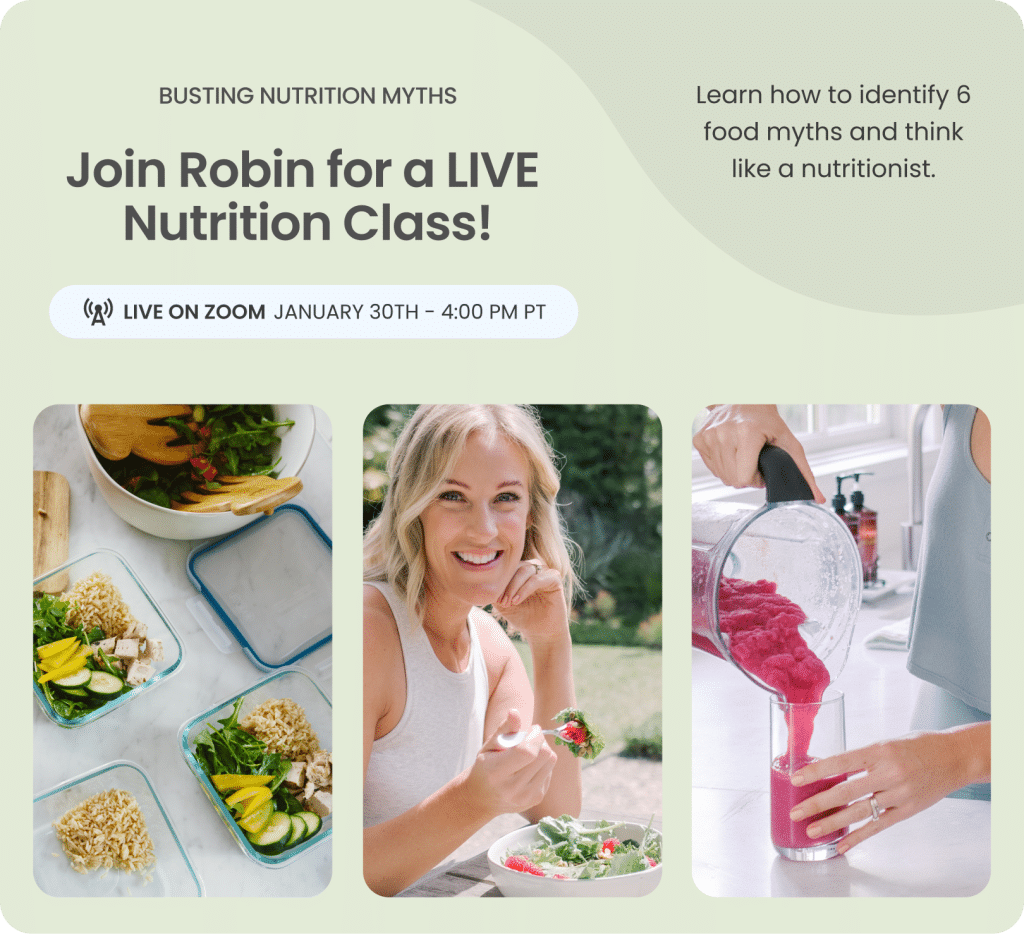
Join me LIVE as I dive deeper into these myths on a FREE Nutrition Class on January 30 at 4pm PT/ 7pm ET. 

PS: If you’re wanting to study nutrition for your own personal purposes or for your career, I do highly recommend the Nutrition Therapy Association. I paid in full and this post is not sponsored. However, if you enroll you can use my code at checkout (code: ROBIN) to receive a bonus resource. And you can also enter the code FEB24NTP500 to receive $500 off the February enrollment!

The post Q&A with Robin as a Newly Certified Nutrition Therapy Practitioner appeared first on Lindywell.

from Blog – Lindywell https://ift.tt/Q9ExUOd
via IFTTT

Categories
Uncategorized

#healthyliving #holistic #nutrition Functional Core Workout: 5 Pilates Exercises for a Stronger Body

functional core workout

Despite what we have been taught to believe, a great functional core workout has nothing to do with aesthetics. A strong and stable core is about so much more than visibly toned abs. As the body’s main center of gravity, this muscle group allows you to stand, reach, twist, bend, lean, squat, and perform other basic moves without losing your balance. You cannot live your life without your core—and life is much easier and more enjoyable when it’s strong! 

Even more importantly, your core is important in all stages of life, especially for women. If you want to age joyfully—and with strength—you can’t overlook this aspect of strength-building. Luckily, this is a critical aspect of what we do at Lindywell. We say that your core is at the heart of ours because we know how important the core is to living a happy and functional life.

Before you do another random “ab workout” from YouTube, take a few minutes to learn about your core and how to keep it (truly) strong, so you can enhance mobility and function in everyday life. Don’t miss our functional core workout at the end. 

lindywell free trial

The Health Benefits of Core Strength and Stability

The core muscles include your front abdominals, obliques, diaphragm, pelvic floor, and lumbar spine. Increased strength and stability in these muscles will lead to a wide range of physical benefits, including:

  • Postural alignment
  • Muscular endurance
  • Flexible range-of-motion
  • Lower risk of injury
  • Balance control

Core stabilization exercises, like the ones you’ll find in the work below, can also help reduce non-specific lower back pain, which could improve mobility. Pilates was key for managing and living with my scoliosis while still enjoying life and movement. I shared about in my blog post, Pilates for Scoliosis: How to Find Relief with Movement. Please check this out if you’re struggling with scoliosis too.

The problem is, most people associate a core workout with a series of boring, repetitive crunches. Crunches only activate the abdominals and obliques with one back-and-forth spinal motion. This creates pressure on the lower back and hip flexors, which can lead to chronic pain or injuries over time. It also ignores all other areas of your core, which are just as important. The most beneficial core exercises recruit all the deep core muscles—not just your abs—for a more holistic, functional movement. 

Learn more about the connection between your abs and your pelvic floor in my podcast episode, Abs, Core, and Pelvic Floor: What You Need to Know to See Progress.

Core Strength and Pilates

The gentle, whole-body approach of Pilates is the perfect way to build core strength, flexibility, and balance—without adding pressure or discomfort to your spine. 

I don’t just believe this as the founder of Lindywell; science tells us this too. The European Journal of Investigation in Health, Psychology, and Education found that Pilates is a more efficient way to promote core balance, maintain functional autonomy, and lower the risk of age-related falls than traditional resistance training. 

No matter what season or phase of life you’re in, Pilates is a simple and effective way to strengthen this key area of your body.

5  Functional Pilates Exercises for Optimal Core Strength

If you’re ready to build core strength (for real—not just do a bunch of crunches!), you’ve come to the right place. I have a free workout for you below to get started with. If you want more workouts like this, start your free trial of our Pilates app, Lindywell. You’ll get instant access to 300+ workouts, guided breathwork sessions and more.    

1. Pelvic Floor Lift

As you do this, imagine there’s a corset around your waist, causing the pelvic floor muscles to draw in and lift. Keep that corset image in mind as you continue to perform this subtle movement.

2. Single Leg Toe Taps   

As your leg hinges and your toes tap down, the pelvic floor should remain stable. Don’t let your back arch up and keep your collarbone open. If you can’t stop the arching, make your movement a little smaller.

3. Single Leg Stretch

Make sure your core stays activated while drawing the belly button in and lifting your legs into the tabletop position. Aim to keep your shoulder blades up off the mat during the entire workout; you can also lay flat between movements if that’s easier for you too.

4. Chest Lift

As you lengthen the head, neck, and chest, focus on keeping your waits in the corset and your pelvis strong and stable. As you lift, think of lifting the pelvic floor as well to stay connected to your core.

5. Double Leg Toe Taps

Lie on your back with a neutral spine and flat pelvis. Maintain the corset feeling around your waist as you lift both legs into a tabletop position. Open the collarbone, then draw the belly button in. If your back arches during this exercise, make the movement smaller again, as you did during the single-leg toe tap.

Harness the Power of Pilates to Build a Strong and Stable Core 

Having visible abs doesn’t mean someone has a strong core—this goes much deeper than that (literally). The core is one of the most important areas of the body, making it easier and more comfortable for you to go about daily life. Whether you’re bending down to pick a flower or reaching up high on one foot to get something at the top of a cabinet, your core is always working for you. That’s why this functional core workout, and those similar to it in the Lindywell app, cannot be overlooked if you want to live a long, healthy life!

The post Functional Core Workout: 5 Pilates Exercises for a Stronger Body appeared first on Lindywell.

from Blog – Lindywell https://ift.tt/E7z6HMj
via IFTTT

Categories
Uncategorized

#healthyliving #holistic #nutrition 25 Self-Care Sunday Ideas to Nurture Your Mind and Body

Self-care Sunday

Self-care Sunday is more than just something to share about on social media. While it may have started that way, it’s a trend that’s actually rooted in science! (And you know how we feel about that here at Lindywell!) 

A recent study from the University of Exeter found that it’s more common than you might think to feel stressed, nervous, or emotionally down on Sundays. For some, this feeling comes from the pressure to be all ready for the upcoming week. For others, it’s an inability to “switch off” and relax.

However it manifests for you, this phenomenon has a name: The Sunday Scaries. Sounds like the exact opposite of restful and enjoyable, doesn’t it? 

At Lindywell, we’re about finding holistic ways to balance mental, emotional, and physical well-being, so we don’t have to feel stressed at the thought of another week ahead. After all, fresh starts and new possibilities should be revitalizing—not anxiety-inducing.

So if you want to add some self-care Sunday ideas to your toolbox (and ditch The Sunday Scaries), I have you covered! Here are some of the many ways I bring this fun trend into my life to feel refreshed and happy heading into each new week.

lindywell free trial

25 Simple Ways to Nurture Yourself on Self-Care Sunday

Self-care Sunday is about cultivating an intentional practice that feels nurturing during a time when you might otherwise feel anxious or stressed. No matter what you choose, the idea is to nourish your mind, soul, and body in order to achieve a deep sense of wellness and balance in heading into the week. 

Here are some ideas to help you begin creating your own self-care Sunday practice.

1. Turn Off Your Alarm

How often do you sleep in without any guilt attached? Rest is one of the most precious gifts we can offer ourselves—especially in a culture that glorifies constant busyness, often to the point of burnout. Don’t set your alarm and let yourself wake up naturally in the morning, with no expectations to hit the floor running. I know for parents this one can be hard, but maybe you can take turns each week allowing one of you to sleep in.

2. Set a Peaceful Ambiance

Curate an environment that makes you feel calm and relaxed during the day:

  • Light your favorite candle. 
  • Diffuse some aromatherapy or essential oils. 
  • Turn on soft, ambient music in the background. 

Research shows that a “multisensory atmosphere” with pleasant sounds, sights, and smells will enhance your mood state and sense of well-being. 

3. Connect to Your Breath

Breathwork is a powerful somatic tool to reset the nervous system, slow down anxious thoughts or frenetic energy, and anchor yourself in the present. Work this into your self-care Sunday routine to let go of tension and connect to your intentions for the week—or simply slow your thoughts for a few minutes. 

Learn more about breathwork in The Healing Power of the Breath and start your free trial of Lindywell to get instant access to dozens of guided breathwork sessions so you don’t have to think about what to do—you can just let go and breathe.

4. Make Brunch for Yourself

Sure, it’s fun to meet your friends for brunch and mimosas at a trendy café—but cooking brunch for yourself at home can be just as satisfying (not to mention, less expensive). Find a recipe that looks delicious, whether it’s a fluffy batch of pancakes or a cheesy egg frittata and recreate it in your own kitchen. Don’t forget the coffee!  

I love making Pumpkin Spice Gluten Free Pancakes or a Farmer’s Market Scramble. Both of these recipes can be found in the Lindywell app too!

5. Go Thrift Shopping

Sometimes retail therapy is hard to beat—but it doesn’t have to be expensive. Not only is thrifting a fun and cost-effective activity for your self-care Sunday, but it’s also more sustainable for our planet. Fun fact that I just love: if all of us bought a used outfit instead of something new, it would lower carbon emissions by over 2 billion pounds!

6. Do a Pelvic Floor Exercise

Pelvic floor function is often ignored in women’s health and wellness—but crucial for alignment, mobility, balance, strength, and flexibility. If you want to feel strong as you move around all day long, you can’t ignore your pelvic floor. That’s why some gentle, low-impact movements that stretch, lengthen, and alleviate tension in this group of muscles is perfect for self-care Sunday. 

Learn more about pelvic floor movement here: 5 Deep Core and Pelvic Floor Exercises. Take it a step further and start your Lindywell free trial to get access to 350+ Pilates workouts, all of which support the pelvic floor and full-body strength and mobility.

7. Have a Spa Day at Home

You don’t have to plan an entire weekend retreat to reap the benefits of a luxurious spa day. I love to give myself that same lush treatment right in the comfort of my own home! Here are a few small “spa treatments” you can do for yourself:

  • Take a warm bath with Epsom salts. 
  • Put on a bathrobe and fuzzy socks. 
  • Exfoliate with a seaweed face mask. 
  • Paint your nails a fun, bright color.  
  • Do a hot bath followed by a cold shower to mimic a sauna and cold plunge.  

8. Unleash Your Inner Artist

Whether your medium is a professional canvas or a coloring book, let your creativity run wild on Sundays. You don’t have to be an “artist” to enjoy this either. There are so many ways to tap into your creative side:

  • Make a collage or vision board. 
  • Paint a sunset. 
  • Take photos of nature. 
  • Learn calligraphy. 
  • Write a haiku. 

Your end result doesn’t have to be perfect. Art is about the freedom of self-expression without a rigid outcome. You may be surprised by how much you love it!

9. Stimulate Your Brain

The brain needs regular exercise just like the body. In fact, “brain training” can lower the risk of memory loss or cognitive decline. On Sundays, carve out some time for a puzzle, sudoku, crossword, or anything else that activates your thinking cap. You’ll have fun, and your brain will get a workout. I love doing Wordle!

Learn more about healthy brain function and how you can use it to create healthy habits in our blog post, Principles of Neuroplasticity 101

10. Get Outside

Spending at least 120 minutes each week outside in green spaces will increase physical health markers while alleviating mental distress. Walk or ride your bike to a local park, trail, or nature preserve on Sundays. If you don’t want to get out and about, just spend time in your yard. 

I started doing daily walks and I’ve come to love it much more than I anticipated I would. There’s something so pure and restorative about touching the earth, breathing in the fresh air, and soaking up the scenic views.

11. Unplug from Screens

Let’s be honest: many of us have jobs and other obligations that make it hard to escape from screens during the week. But all this exposure to technology can feel stressful or overwhelming at times. If this sounds familiar, make intentional screen-free time part of your self-care Sunday routine. 

Instead, read a book, write in your journal or just listen to music with a cup of tea—those social media notifications can wait. If you don’t know where to start, buy my book Well to the Core to get access to the Choose Your Own Digital Detox Guide that I share inside!

12. Do a Meditation

The science-based benefits of meditation are seemingly endless. Even better, just 10 minutes can feel so refreshing and allow you to reap the many benefits. Bring meditation into your self-care Sunday routine to calm your mind, balance your nervous system and so much more.

I love to meditate with Breathwork for Gratitude, Grounding, and Joy, one of the breathwork sessions inside of Lindywell!

13. Explore Your Neighborhood

You don’t need a plane ticket to have an adventure—be a tourist in your own zip code! I love seeing all the beauty that Santa Barbara (where I live) holds. Here are some ways you can do this where you live: 

  • Check out a museum or a new restaurant that opened recently. 
  • Take your time checking out all the unique vendors at your local farmers market. 
  • Grab some coffee and walk around a new neighborhood or area of town.

You might discover a hidden gem that you can’t believe you never knew existed!

14. Savor a Cozy Beverage

Raise your hand if the idea of curling up under a blanket with a warm beverage makes you feel warm and cozy. Same! Especially in the winter. Whether you prefer your drink to be light and fizzy or rich and toasty, mix up whatever libation you’re craving on Sunday.

Get some fun drink recipes in 3 Winter Mocktails to Make You Healthier and Happier.

15. Declutter Your Space

A messy physical environment can (surprisingly!) impact so many areas of your life, including:

  • Mental health
  • Emotional balance
  • Stress levels
  • Decision-making abilities
  • Concentration
  • Sleep habits
  • Eating habits

Since your brain is wired to seek out order, too much clutter can make you feel out of control. Fortunately, there’s a solution—organize your space on Sundays. If you do this regularly, there will be less and less to organize each time and you’ll feel more calm all week long. 

16. Call a Loved One to Chat

Maintaining healthy relationships is an essential part of your overall health. The CDC says, “When people are socially connected and have stable and supportive relationships, they are more likely to make healthy choices and to have better mental and physical health outcomes. They are also better able to cope with hard times, stress, anxiety, and depression.”

When was the last time you called someone just to catch up? Reach out to a loved one you haven’t spoken to in a while and ask about what’s happening in their world. It can be casual and short, but you’ll finish feeling refreshed and connected.

17. Let Yourself Be Playful

You’re never too old to play! During the week, other commitments can make it difficult to prioritize this—I know how it goes as a business owner with four kids myself—but Sunday is the ideal time to cut loose and unleash your inner child:

  • Dance around the house. 
  • Build a blanket fort in the living room. 
  • Play a game of hide-and-seek with your kids.   

Learn more about the surprising health benefits of play in our blog post, 5 Reasons to Make Play a Daily Habit as an Adult.

18. Try Out a New Hobby 

It can be easy to feel “too busy” to explore something you love. I know I feel that way sometimes too. But there’s no time like the present to learn a new hobby—or revisit one that you used to love. I started gardening as a new hobby! It was a great way to learn about something new, get outside, get my hands dirty, and include my kids in the process as well. A total win-win-win!

19. Practice Mindful Movement

Fitness doesn’t have to be boring, repetitive, or forced. In the Lindywell world, we focus on mindful movement that’s anything but those three things. Instead, I guide our members through Pilates routines that encourage them to tune into the mind-body connection as they flow through each exercise building strength, mobility, and self-compassion. Make this a part of your Sunday routine and your mind and body will thank you.

Learn more about mindful movement here: 8 Reasons Mindful Movement Will Make Your Fitness Routine Stick. Plus, start your free trial of Lindywell and get instant access to 300+ workouts, guided breathwork sessions, and recipes!

20. Connect With Personal Goals

Pursuing goals that align with your values and passions can boost your well-being, vitality, and sense of meaning in life. So don’t let these goals fall to the wayside as you focus on other areas of your life, like work. Spend time during self-care Sunday to reconnect with what you want to achieve in your personal life and what you need to do to get there.

Journaling is a way that I like to check in with myself and how I’m doing with goals that I previously set. I also like to set intentions for the week when I do this. For example, I might set an intention of taking three walks and doing 3 Pilates workouts throughout the week, plus drinking 64+ oz of water per day.

21. Blast Your Favorite Song

This one is simple—and maybe also one of my favorites on this list. From Beyonce’s “Run the World,” to Taylor Swift’s “Shake It Off,” to Lady Gaga’s “Born This Way,” the right song can make any day feel better. Put on your favorite playlist and belt out the lyrics at the top of your lungs. Side note: Free-style dance moves are also encouraged!

22. Lean into Gratitude

There’s so much to be grateful for in this world—from the small pleasures, like morning coffee, to the existential blessings, like another day to be alive. Pause to reflect on these gifts, then set aside a few minutes to cultivate your own gratitude practice. You’ll feel more generous, altruistic, compassionate, and a whole lot happier!

Learn more about gratitude practices in our recent blog post, 5 Steps to Create an Attitude of Gratitude. You can also learn about how gratitude impacted me personally in my post about 30 days of gratitude

23. Write Affirmations for Yourself

Personal affirmations or mantras are truthful statements you repeat in order to combat intrusive thoughts and critical self-talk. These can also help you manage stress and cope with uncertainties. On Sunday, write an affirmation that resonates with you (ex: “I am worthy”), then place it in a visible area like on your fridge or mirror so you can see it and repeat it each day.

If it seems like your affirmations or mantras don’t feel aligned, read Why Your Self-Love Mantras Aren’t Working (And How to Fix Them), written by Kiesha, our head of Breathwork and Somatic Programs.

24. Do a Financial Check-In

Have a budget meeting with yourself each week. Believe it or not, financial literacy is part of self-care too. When you’re in control of spending habits, saving plans and other facets of money management, you’ll be in a more stable position to work toward your future dreams, such as buying a house or traveling abroad. Plus you feel more confident as you educate yourself on finances and how to get where you want to go!

25. Create a Food Prep Ritual

Prep some of your favorite meals in advance for the upcoming week. This is a convenient way to ensure you’re eating nutritious foods on a regular basis. Plus, the mindful act of preparing your own meals (whether it’s oatmeal for breakfast or a grain bowl for dinner) can help you start nurturing a balanced relationship with food. It’s an act of self-care that also makes your week easier—win-win!

Learn more about how this can support your self-love practice in, How to Fuel Radical Self-Love with Food.

Make Self-Care Sunday an Intentional Part of Your Weekly Routine

Self-care Sunday is more than just a social media trend. It’s a great way to transition back into the week feeling calm, confident, and connected rather than stressed or anxious. I hope some of these ideas will find their way into your weekly routine, even beyond Sunday! 

The best way to take care of yourself is to make it a regular practice. See how you might be able to weave some of these ideas into your daily routine or as part of other days of your week, in addition to Sunday, to reduce stress even more. 

The post 25 Self-Care Sunday Ideas to Nurture Your Mind and Body appeared first on Lindywell.

from Blog – Lindywell https://ift.tt/lousENg
via IFTTT