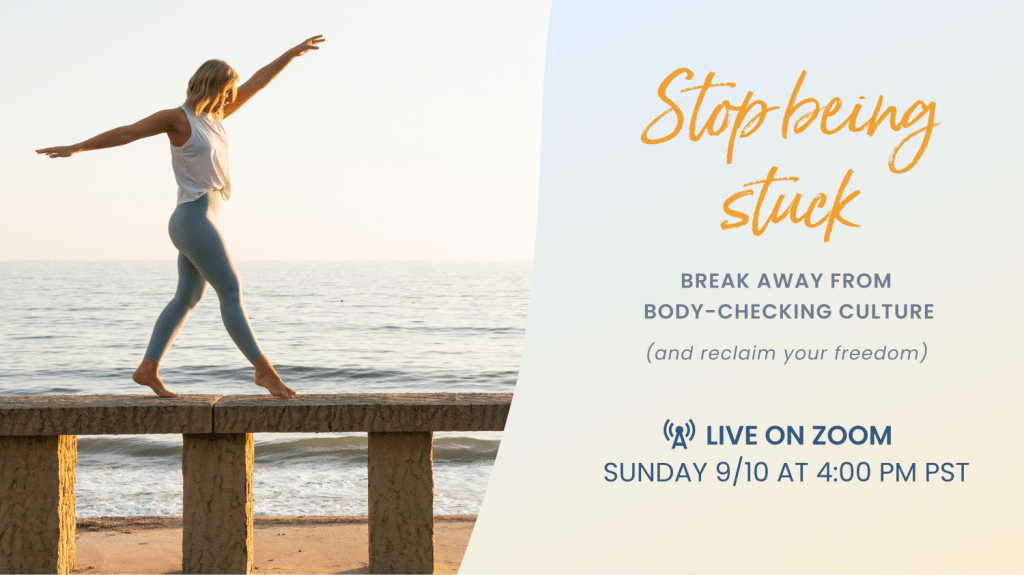
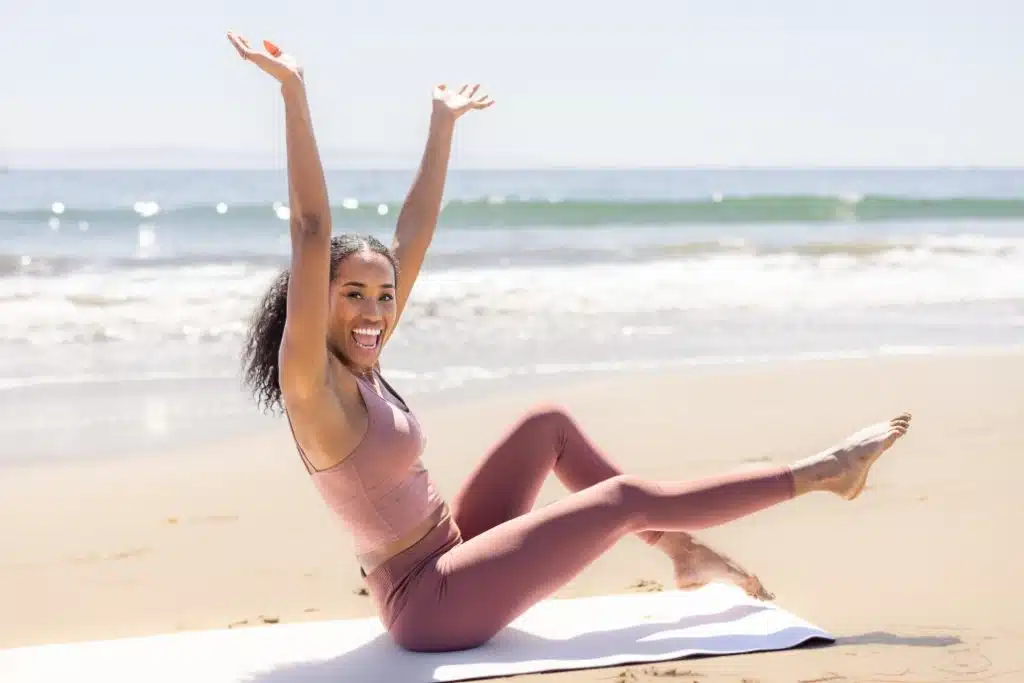
If you’re feeling stuck when it comes to your body, you’re not alone. My new FREE workshop is an opportunity to discover how to cultivate a healthier relationship with your body, food and movement—so you can embrace self-acceptance and prioritize your mental health without sacrificing your health goals.
So many of us are confused by the extremes in the fitness world and have fallen into this body-checking culture. Body-checking is the habit of seeking information about our bodies (weight, shape, size, appearance, etc). And it can be truly harmful to our self confidence.
So I decided to put together a FREE workshop to help you reclaim your body and freedom!
In a world that often fixates on appearance and external measures of health, it’s time to shift the conversation.
We’re going to uncover the myths and lies in the fitness, beauty and diet industries that have led to a culture of body insecurity and dissatisfaction. The goal that I have for this workshop is to show you how you can erase the lies and negative self-talk. You’ll walk away with a fresh sense of motivation.
You deserve that, I deserve that, and that’s what we’re going to dive into in the Stop being stuck workshop.
You may have heard someone say, “just listen to your body” and thought: “How do I even do that?” I get it. Learning how to listen to my body has been a practice of mine for the last decade—and I still have to be mindful about it today.
This skill is crucial for maintaining a sustainable health journey in today’s world where we’re often encouraged to ignore our intuition and physical cues. I know you’ve been told, “Push through the pain!” or seen an Instagram post that says, “Don’t stop when you’re tired, stop when you’re done.”
While these sentiments are meant to motivate and inspire, they can also be harmful because they encourage you to ignore your body. The problem is, if you push when your body says stop, you could hurt yourself. If you always force yourself to workout when you don’t want to, you’ll never stay consistent because you don’t enjoy the experience.
Long-term, sustainable health comes when you listen to your body, and then respond with care, action, and compassion. This has been a significant part of my health journey, and a big reason why I started Lindywell, so let’s talk about what it means and how you can start listening.
What Does It Mean to Listen to Your Body?
Listening to the body means cultivating a mindful awareness of what it (you!) needs at any given moment, followed by honoring that need. This intuitive practice will help you understand and make decisions based on internal cues, rather than steamrolling past your own limits.
The more present and responsive you are to these important cues, the more impactful your health journey can be. In fact, simply maintaining intentional body awareness (listening to your body), can improve:
Creating a mindful relationship with your body can also make it easier to instill positive habits around nutrition, exercise, body image, self-care, mental resilience, and coping mechanisms.
Emotional regulation
Attentional span
Self-acceptance
Brain function
Compassion
Stress management
Anxiety or depression
Plus, when you do what feels good to your body, rather than forcing something that doesn’t, you are often more consistent because you enjoy the experience. This, in turn, leads to better long-term results and feeling more confident.
5 Ways to Listen to Your Body
All that sounds great, but you’re probably wondering how to actually take action. Here are five practical strategies I’ve used to listen to my body and honor those cues each and every day.
1. Ask Questions and Scan Your Body for the Answer
Set aside at least one moment each day to pause and ask yourself, “How do I feel and what do I need right now?” Then before rushing into the next item on your to-do list, take action on what your body needs. Here are some examples:
I’m feeling tired, so I’m going to have a snack, take a short walk, and then come back to my computer feeling more refreshed and ready for work.
I’m feeling energized and craving movement, so I’m going to squeeze in a 15-minute Lindywell workout right now, while the kids are at school. That way I don’t have to worry about it when they get home.
I’m feeling some tension in my neck, so I’m going to do a few neck circles and stretches to ease that discomfort before driving to the store.
In your fast-paced and often hectic life, it’s easy to overlook these basic bodily necessities. The good news is, tuning in and asking what your body needs doesn’t have to derail your day. It may just mean you spend a few minutes stretching or taking a walk—and that will likely make the rest of your day so much better too.
2. Notice How Your Body Reacts to Certain Emotions
Emotions manifest in the body, especially within the cardiac, respiratory, nervous, and gastrointestinal systems. I know I often feel anxiety in my chest or stress in my head. You may be able to recall areas of your body where you commonly feel your emotions too.
Bringing awareness to these emotions, and tuning into where you’re feeling them in the body, can make it easier to soothe those intense reactions and get back to feeling balanced quickly. Next time a strong emotion comes to the surface, be curious about where you feel it.
Constriction in your throat?
Warmth in your cheeks?
Tension in your forehead?
Sweat in your armpits?
Nausea in your stomach?
A pounding heart rate in your chest?
Finally, visualize sending love, calm or peace to that area of the body while taking slow, deep breaths until you start to regain equilibrium. You may be surprised by how quickly the emotion passes compared to the times when you try to push it aside.
In fact, according to Dr. Jill Bolte Taylor, all it takes is 90 seconds to move through an emotion if you stop, identify it, and simply maintain awareness of that emotion. Instead of letting that pesky anxiety hang around all day, let it go right then and there!
3. Build a Mindfulness Practice Around Meal Times
Bring mindfulness to meal times to start creating greater body awareness. The idea is simple: when you’re eating a meal, slow down and tune into your senses.
What do you smell?
How does it taste?
What is the texture like?
Do you hear crunching or slurping sounds?
By practicing this for even just one meal a day—eating dinner with kids is likely not the easiest time to practice this, but perhaps a solo lunch is—you’re training yourself to slow down and listen to your body. This may also make it easier to notice hunger cues that say you’re full or you want to go in for seconds; a skill that most of us have lost touch with.
In addition, mindful eating can reduce stress, promote digestive health, increase body acceptance, and curb emotional eating behaviors.
4. Choose Your Workout Based on What Your Body Needs
Your workouts are most effective when they match your current energy levels, stamina, and time capacity—all of which fluctuates from one day to the next. One morning I might wake up with the motivation to do a 30-minute weighted Pilates workout, while the next day, I desire a slow, 15-minute stretching session in the afternoon.
This is so normal for women and why cycle syncing your workouts can be really beneficial. If you don’t have a cycle, however, you can still choose workouts each day based on what your body is asking for.
Pause before starting a workout and tune into which kind of movement feels most enjoyable at the moment. Do your legs feel strong and ready for a challenge? Or does a slower-paced movement sound really good? Plus, ask yourself: do I have extra time or do I need to fit something in quickly? Choose your workout based on these answers.
It’s really easy for Lindywell members to honor what their body is craving (and their schedule calls for) because we have 300+ workouts, both gentle and challenging, that range from 10 minutes to 30+ minutes. As a member, you’ll find whatever workout you need, no matter the season or time frame.
Start your 14-day free trial to get instant access to all of our workouts, plus guided breathwork sessions and nourishing recipes!
5. Carve Out Alone Time to Connect with Your Body
When was the last time you thought of your body as a friend to connect with, instead of just a vehicle to move through life? All too often, the focus is on pushing through and getting things done so you forget to spend time with yourself and your body. I fall into that rhythm so easily as a busy mom and business owner and have to be really intentional about this.
Whether you can spare 2 minutes or 20, carve out time and space each week—if possible, each day—to be alone with yourself. Unplug from social media and other external distractions and just connect. You can do this by listening to gentle music, moving your body, meditating or even doing a breathwork session in the Lindywell app.
Practicing mindfulness like this, especially using meditation to do so, can improve your memory, mood and overall well being. Plus it helps you start to understand the language of your body so it’s easy to hear what it’s asking for.
Listening to Your Body Is a Integral Part of Wellness
Your body is always speaking to you—but are you listening? No matter how long it’s been since you last paid attention to those inner cues (or you never have before), consider this an invitation to start. These practical strategies will help you listen to your body, and as a result, get more consistent with workouts, choose movement you enjoy, and ultimately, see better results. It truly is the key to long-term health and happiness.
Take your relationship with your body one step further with my upcoming book, Well to the Core! In it, I dedicate an entire chapter to developing the skill of listening to our bodies and how we can break free from the confines of problematic fitness sayings and develop a more holistic and sustainable approach to our fitness journeys. Pre-order your copy now and get $300 in free bonuses!
You’ve probably seen or heard the phrase “mindset is everything” a lot lately—and for good reason. Your mindset creates the lens through which you think, feel, interact, and behave. In that way, it really is everything—and science can prove it.
For example, recognizing how I perceive stress in my life over the past few years has been incredibly eye opening for me. Understanding when my mindset is coming from a place of lack, scarcity, overwhelm and helplessness allows me to shift to recognizing the challenge while also seeing the many ways in which I can tackle it or make changes to support myself. This has been a huge growth area for me and has made a significant impact in my life.
To help you embrace the idea that mindset is everything, let’s look at just how powerful your mindset actually is for creating a healthier and happier life.
Proof That Mindset is Everything
Your mindset shifts your perspective, which in turn impacts how you navigate circumstances, make sense of experiences, strive toward goals, learn from failures, and confront obstacles.
1. Feel Less Stressed (Yes, it’s possible!)
Feeling less stressed may come down to how you think about stress, according to psychologist Alia Crum, PhD, an assistant professor at Stanford University. In one particular study, a group of employees in a downsizing financial company were told that stress could help rather than hurt them in an effort to reduce their stress. It sounds crazy, right?
Well, turns out, it works! This group of employees reported fewer symptoms of depression and anxiety, along with an increase in optimism versus the control group. While we don’t believe empty mantras and affirmations can change your life, we do believe shifting your perspective does—and this is one great example of just how powerful that can be.
In fact, I know that when I’m stressed with an overwhelming workload and I remind myself that the stress about my job pales in comparison to the stress that others are facing, I immediately gain perspective. Similarly, when I focus on the fact that I am grateful for work that challenges me and helps me grow, I can embrace the challenge in a different way.
2. Be More Resilient
Growth mindset, the idea that you can change the way you think (as opposed to a fixed mindset, in which what you believe cannot change), is a key element of feeling more resilient and persistent as you manage the ups and downs of life. (Let’s be honest, we all have them!)
A study of 2,500 students found that those in the growth mindset group scored lower on “mental health issues” and “stress due to life events” than those in the fixed mindset group. As the research points out, this is because this mindset “encourages healthy and adaptive ways of facing and tolerating anxiety, frustration, and disappointment, which promotes resilience.”
So often, we feel we’re at the whim of life when we don’t have to. In fact, science says that our mindset can help us feel more resilient in the face of anything that comes our way.
3. Jump-Start Your Wellness Journey
How many times have you started working out just to stop days later? I’m very familiar with this back-and-forth dance; it’s one I did for many years before I found Pilates. Part of this back and forth may be about the way you set goals when you’re just starting out.
This research found that groups who were prescribed “low-and-liberal” exercise recommendations (vs. high-and-stringent) felt that their movement was more adequate. This meant that they were more likely to keep going and feel better about their health a week later.
This is the idea that Lindywell built upon—and what ultimately helped me create consistency in my workout routine once and for all. When you can shift your mindset from “I need to work out hard for 60 minutes a day every day” to something more realistic, like, “I’ll just move my body for 10 minutes in any way that feels good” you’re much more likely to stick with it.
Chronic illness is complex. What I’m not saying here is: it’s all in your head—and mindset can help relieve some of the symptoms experienced. A study from the Journal of the American Medical Association reveals that if you expect a healing outcome, the body will listen and even respond.
This research found positive correlations between a growth mindset and functional improvements in the immune, cardiovascular, and neuroendocrine systems. What’s more, patients with type-1 diabetes, who believe their health can change, have lower blood sugar levels. The power of the mind-body connection cannot be overlooked.
5. Feel More Connected in Romantic Relationships
Your mindset is playing a critical role in your relationships, especially romantic ones. This collection of research explains that mindfulness not only enhances closeness and connections with a partner but when measured on the Mindful Attention Awareness Scale (MAAS), researchers found a positive association with relationship satisfaction.
While not everything can be “fixed” with your mindset, you can shift the lens with which to look at your relationship. Being more mindful might help you overlook the little things that aren’t quite perfect while creating an even deeper connection with your partner.
How to Work on Your Mindset
At Lindywell, we have two favorite ways to work on mindset: Pilates and breathwork. Why?
At Lindywell, we’re continually reframing fitness and our relationship to our bodies through the words we use in every single workout, email and video. While Pilates is inherently a mind-body style of movement, we regularly remind our members to shift their mindset around not just the way they exercise, but how they think about perfection, self-compassion, strength, and so much more.
Similarly, breathwork encourages you to slow down and tune in. When you close down all the tabs in your mind (I have a dozen open most times of the day!), you can understand what you’re actually thinking and feeling. That’s when you can begin shifting beliefs and perspectives that are impacting the way you live your life.
The reminder I always want to share, however, is that it’s not a one-and-done. Consistently showing up on your mat or taking time to breathe with intention each week is the only way to reap the long-term benefits in your life.
If you want to start working on your mindset (while moving your body, feeling more confident, and so much more!), start your 14-day free trial of Lindywell today. You’ll get instant access to hundreds of workout videos, dozens of guided breathwork sessions, and all of our Lindywell recipes!
Bottom Line: Your Mindset Matters
Mindset is everything. It impacts your mental, emotional, and physical wellness by shifting the lens through which you see the world. As such, your mindset influences how you overcome setbacks, embrace new opportunities, interact with others, and evolve as a human. Don’t overlook this important aspect of your personal development if you want to live a happier, calmer, and more connected life.
Self-love mantras sound good, in theory, right? Reminding yourself how brilliant or wonderful you are to overcome your self-doubt is a great idea—but it’s not taking the whole picture into account. This particular ideology says that if you believe in a certain outcome or think hard enough, the universe (higher power, source, God) will present it to you.
If that were true, I would be the world’s most patient mother! The thing is, your body can’t be fooled. No matter how many times you repeat a mantra, you can’t overwrite what your body already believes to be true.
If you’re quick to abandon mantras because they just don’t work for you, this could explain why. Before you give up entirely though, I have another idea. Let’s get into the science of self-love mantras (you know we love to dig into the science!) and how to reframe them so you can actually create the change you’re seeking.
Why Your Self-Love Mantras Aren’t Working
The goal of a mantra is to shift what you currently believe into a new, perhaps happier, or more supportive, belief and/or take action on something you want to change. Here’s the problem: in order for a mantra to stick, and actually shift your belief or spur you into action, you need to know it’s possible. You can’t simply “wishful think” yourself into anything despite what many social media influencers might lead you to believe.
I’ll use an example to illustrate. Let’s assume you’re unhappy with how little you’re working out and want to be more fit. You might develop a mantra to combat your body insecurities and motivate you to go to the gym, like: “I am fit. I love to work out. My body is toned.”
If you’re unhappy with how little you’re working out and how out of shape you feel, chances are this mantra is going to fizzle out in the long term because your body knows it’s a false narrative. You won’t decide to start working out every day or magically start loving your body just because you chant a few things you want to believe.
Instead, you’ll feel shame when you stay exactly where you are. The good news is, making your self-love mantras work is as simple as a reframe.
The Secret Sauce for Self-Love Mantras That Work
Reframing is what your self-love mantras are missing. Here’s what I mean by that. Let’s use the fitness example from earlier:
Current Desire: Work out more often to become more fit.
Useless Self-Love Mantra: I am fit. I love to work out. My body is toned.
Reframed Self-Love Mantra: My body can be active. My body can master new challenges. My body has overcome many obstacles and it can do that again.
This reframed mantra is effective because all the statements are true. Rather than forcing yourself to chant a hollow phrase you don’t actually believe, this mantra is empowering and reminds you of the capabilities you already have and that you’re more likely to feel are genuine.
This reframing formula leverages NLP (Neuro Linguistic Programming, a language technique that can change someone’s thoughts and behaviors to help achieve desired outcomes). It also brings in the power of self-love while rejecting old shame deeply embedded in the fitness industry.
With all of this, you can tap into the body (somatics) and build new neural pathways (the result of neuroplasticity) to create new beliefs.
The Science Behind Your New Self-Love Mantras
The brain has a reward center in the prefrontal cortex (the front of your brain), which activates if you do something to cause a positive outcome. This matters because, when you turn your mantra into something you actually believe, you’re more likely to take action.
When you take action, and feel good about yourself for doing so, your reward center releases dopamine (the pleasure chemical). This has a domino effect, causing you to want to do it more and more, which is, of course, how real change occurs.
The best part about this is that even a small taste of success will ultimately breed more success because the brain is wired to continue seeking it out. This means, reframing your self-love mantras leads to long-term habit-building, growth, and happiness— and that’s what we all want, right? (I know I do!)
It’s Time to Reframe Your Mantras
To reap the benefits of self-love mantras, or any mantras for that matter, you have to echo what’s already true. You can’t overwrite your current beliefs or build new habits just by saying something over and over. You have to leverage what your body already believes to be true to take action. This in turn releases that pleasure hormone, so you’re motivated to keep doing it. Before you know it, that thing you started repeating to yourself has shifted your reality and you can’t even remember what life was like before!
At Lindywell, we focus on Pilates mat exercises because we love how accessible they are. You can do your workout anywhere and sometimes, you don’t even need a mat! (Our standing workouts are a favorite in the community.)
Another thing we love is how fun these exercises can be. Forget workouts that are repetitive, long, and boring. At Lindywell, we always want to make workouts challenging but also enjoyable. I mean, why else would we do it, right? Plus, when we love what we’re doing, we’re more likely to be consistent with it. A win-win!
Let’s talk about the importance of building more fun into your workout routine. Afterward, I’ll share some of my favorite Pilates mat exercises that are as fun as they are effective.
The Benefits of Making Fitness Fun
It’s no secret that a consistent wellness routine is important for both your physical and mental health. If you don’t look forward to exercise, however, chances are, you won’t stick with the program. That’s because interest and enjoyment are two main predictors of sticking with a workout routine over time.
This fun factor boosts your intrinsic motivation, which helps to build more consistency. Plus, this has a positive effect on your mental wellness too. There’s a direct correlation between exercise and dopamine (your happy hormone). The more you love it, the more you do it, the happier you are. That’s an equation I can get behind!
Finally, prioritizing fun in your workouts can help with social connections as well. When study participants took part in group or community exercise programs they felt more energized, experienced healthier relationships, and felt more satisfaction in life overall.
You can’t argue with science—fun fitness pays off!
8 Fun and Playful Pilates Mat Exercises
While I think most Pilates exercises are fun, I especially love these ones, which come from our Joyful Movement workout.
If you’re not already a Lindywell member, sign up for your 14-day free trial to get instant access to this, along with more workouts, a weekly workout calendar, and daily featured workout suggestions—say goodbye to decision fatigue! Plus, our breathwork sessions help alleviate stress and regulate your nervous system!
1. Spinal Warm-Up (10 repetitions)
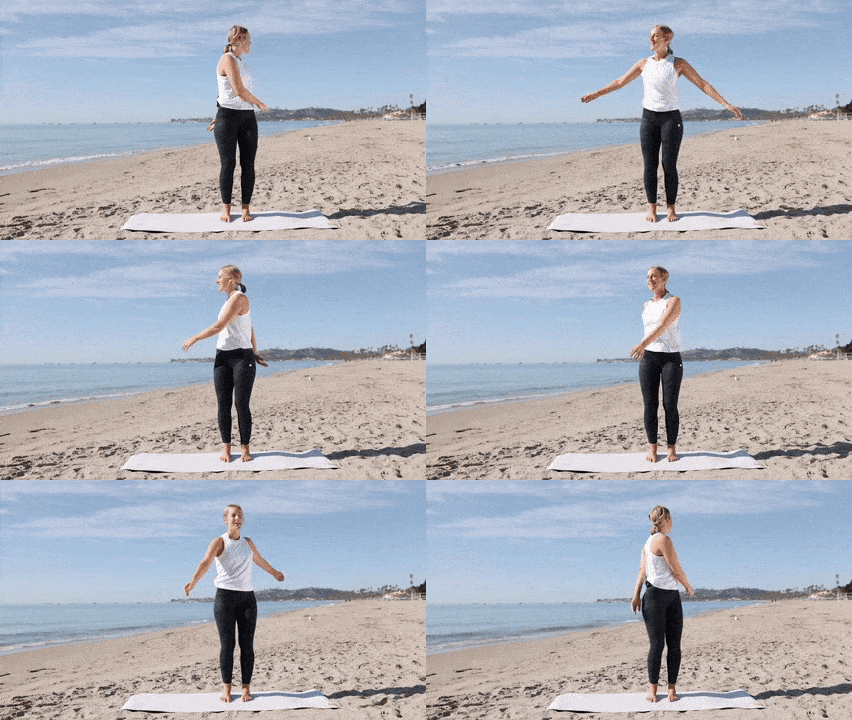
Allow your body to move in an unstructured, free-flowing manner. This is a fun and comfortable way to loosen the spine, increase circulation, and work out any stiffness or tension. Remember to softly bend the knees, maintain a neutral posture, relax the shoulders, then let the arms swing freely as you twist from one side to the other—and have fun!
2. Prancing (10 repetitions)
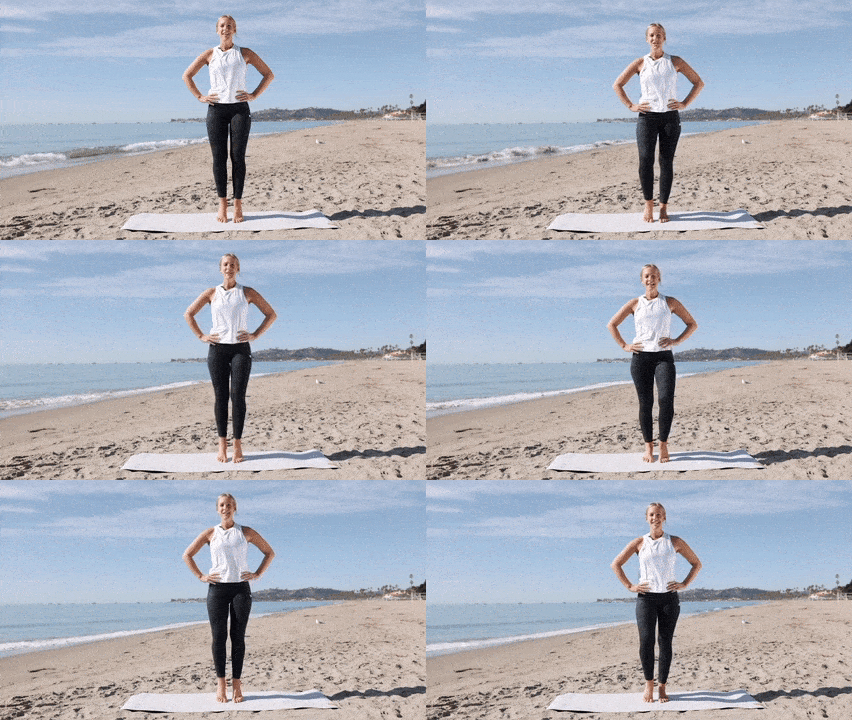
This movement activates the calf muscles and helps strengthen the feet and ankles, an area that can be easily forgotten. As you perform this back-and-forth motion, maintain a lift in your pelvic floor and length in your spine.
3. Standing Balance (5 repetitions on each side)
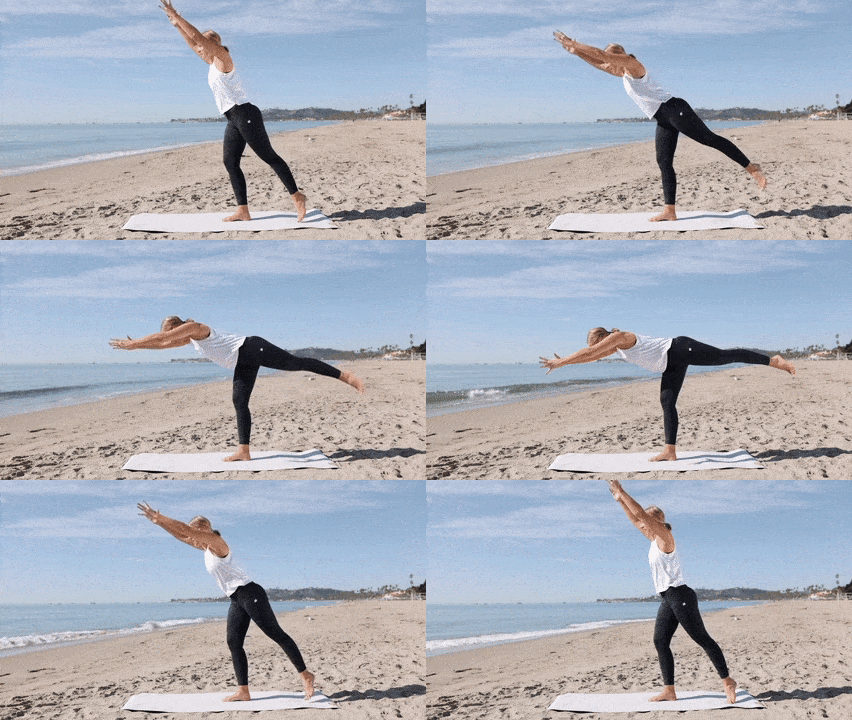
This is one of my favorite Pilates mat exercises for challenging stability. Balancing forces your accessory muscles (all the little muscles) to work harder, so you’ll build even more strength. Remember to continuously use the core to stabilize yourself as you move through this exercise.
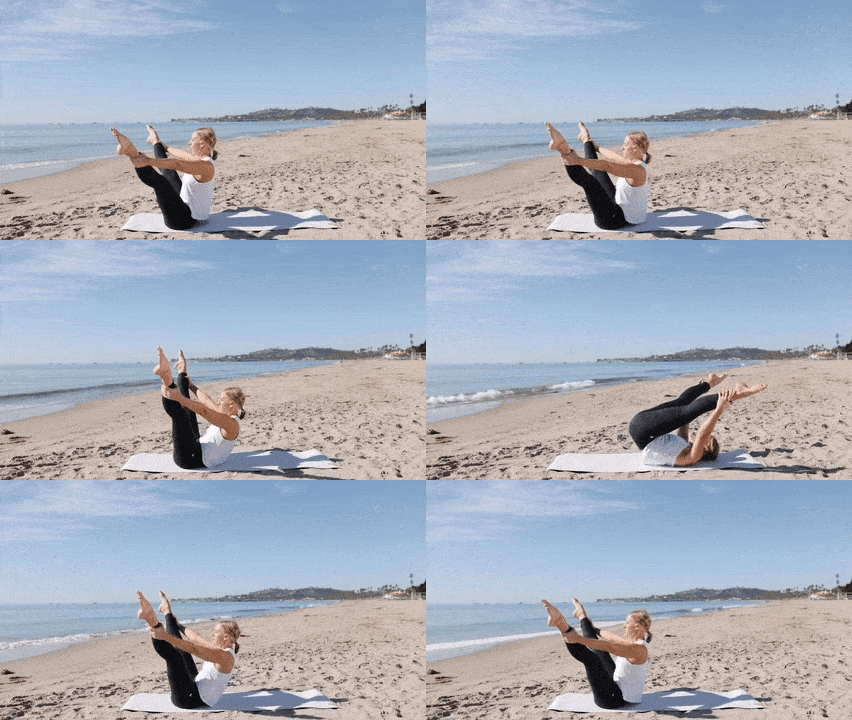
4. Rolling Like a Ball
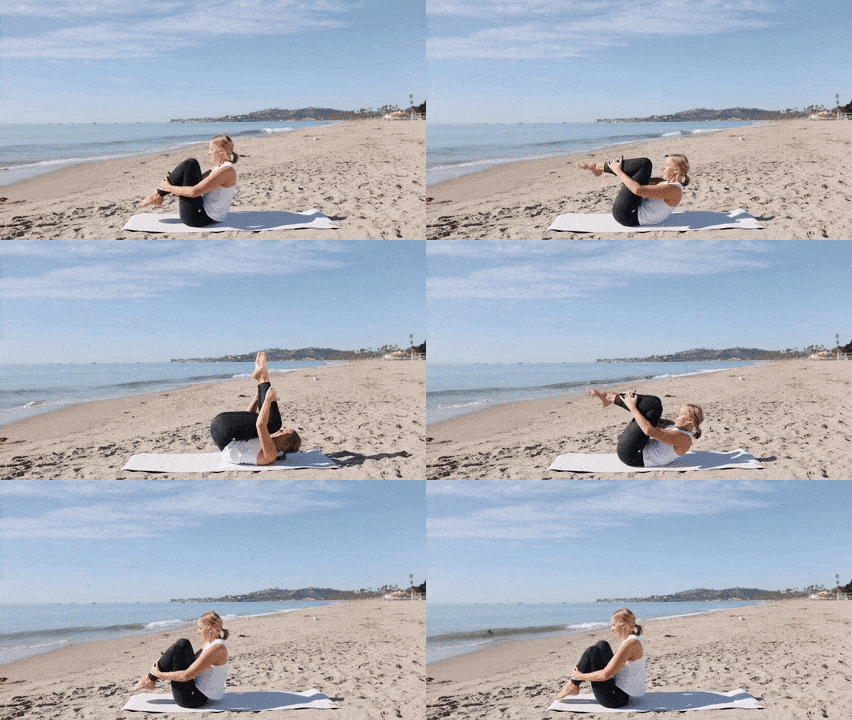
Rolling is so silly and playful—and it’s also a great way to massage the spinal column while building core strength. If you find that you’re falling flat on your back as you roll back, tuck your pelvis more (creating more of a c-shape with your spine) to get that rolling motion. This one is fun, so enjoy it!
5. Open Leg Rocker (10 repetitions)
If you love Rolling Like a Ball, you’ll love this one too—and the added challenge can make it even more silly because it’s not always easy to do gracefully! Remember that you can modify this position with a slight bend in the knees.
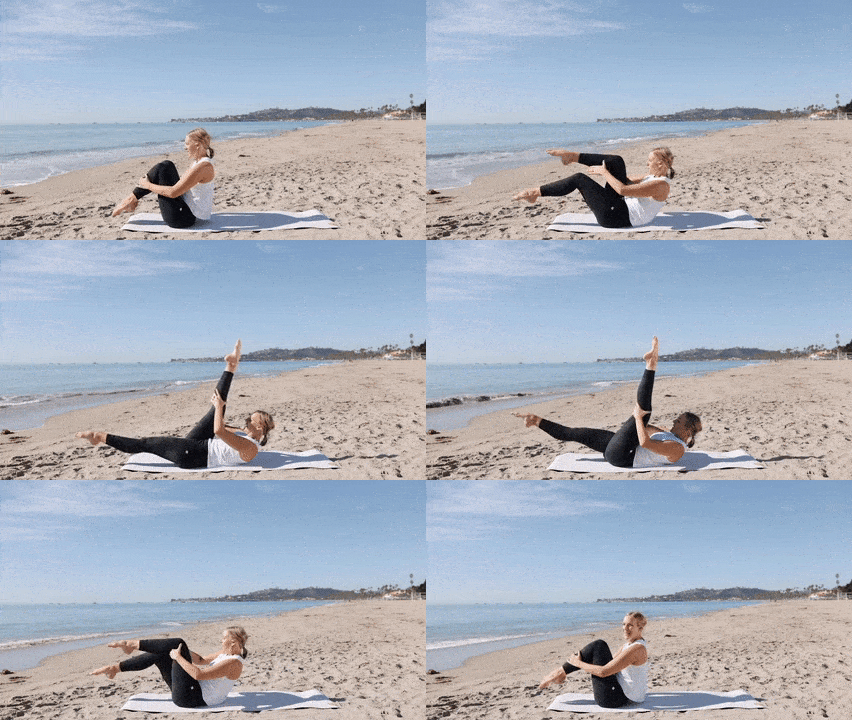
6. Hamstring Pull with Roll-Ups (5 repetitions on each side)
Tension in the hamstrings can lead to injuries or limit flexibility and range of motion in the hips and lower back. This is a great Pilates mat exercise to do regularly to stay mobile if you sit at a desk all day—plus, it’s also great for your core.
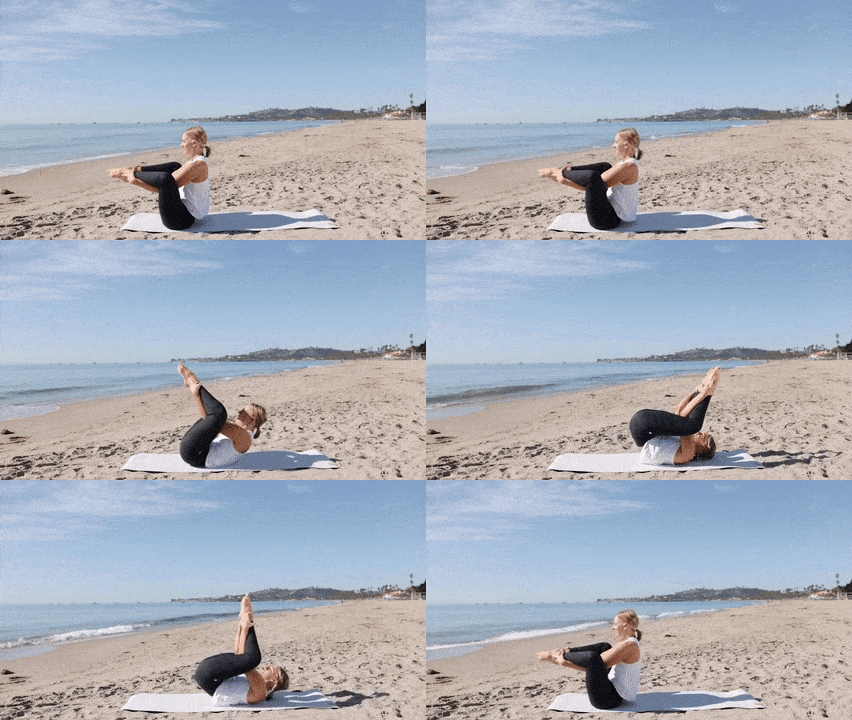
7. Seal Pup (10 repetitions)
Unleash your inner seal with this exercise—”barking” noises are optional, but encouraged! As with all of the other rolling exercises, remember to tuck your pelvis and activate the core so you can flow while building strength.
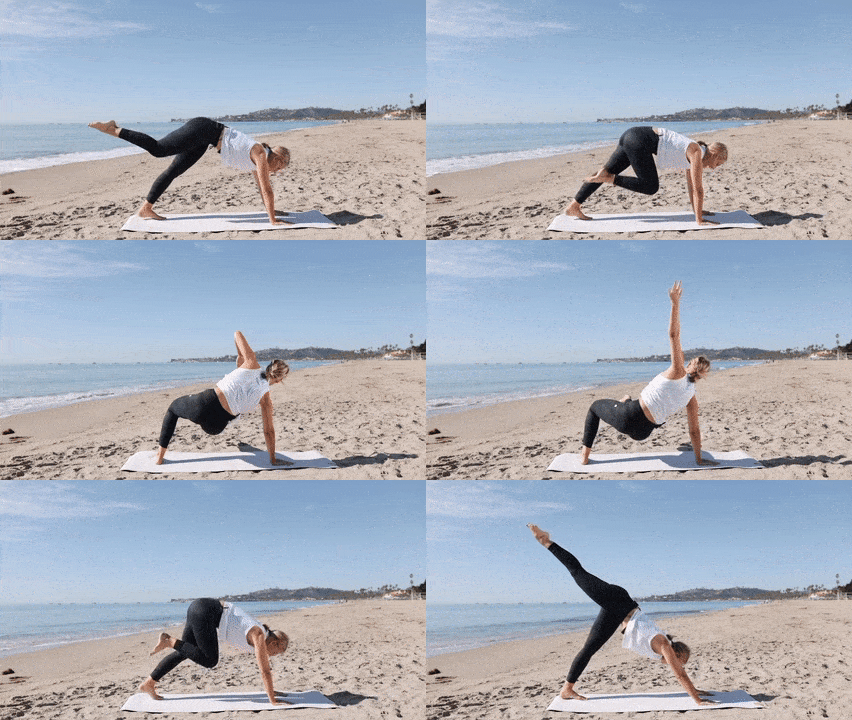
8. Plank Hovers with C-Curves (5 repetitions on each side)
This movement creates resistance in your shoulders, arms, spine, abdominals, glutes, quads, and calves. It’s one of those amazing full-body Pilates mat exercises that’s so efficient! Exercises like this make your workouts super effective—and fun.
Make Your Workout More Fun With Pilates
No matter where you’re at on your fitness journey, Mat Pilates is accessible, beneficial, and enjoyable. You can adapt each move to your own comfort level while building strength, balance, and flexibility. If you want to make fitness fun, give these exercises a try—and don’t forget to sign up for your free 14-day Lindywell trial to enjoy this full workout and many more like it!
Somatic breathwork, despite how it may sound, is not technical or complicated. In fact, if you’ve ever done a breathwork session with me at Lindywell, you’ve already done it!
At Lindywell, we consider somatic breathwork a conscious form of breathing that is intended to help you experience being in your body. It teaches you to breathe fully, oxygenate your body, and become aware of your senses. Somatic breathwork helps shift your mental state while allowing you to return to full and healthy breath.
For example, if I encourage you to sink into the seat below you as you take a deep breath, feeling your body relax into that support, we’re not just breathing, we’re altering our physical state.
This way of breathing is so important because the connection between the breath and the body is powerful. Here’s the thing though: powerful doesn’t have to mean serious.
In fact, what I want to talk about today is how we can use somatic breathwork to be more playful! Let’s talk about how you can connect play and somatic breathwork, why this connection can be even more beneficial for your body and mind, and, most importantly, a few ways to try it for yourself.
Breathwork and Play: What’s the Connection?
All breathwork, somatic or otherwise, can be playful. Think back to when you were a child. As children, you were likely playful with your breath in ways you might not even recognize:
Blowing out birthday candles
Blowing a pinwheel
Blowing bubbles
Blowing the fluffy head of a dandelion
Sniffing cookies freshly baked
All of these activities brought a deep sense of joy and satisfaction—and were also innately playful. I want you to take a moment right now to think about one of these memories for you. Take a deep breath and imagine you’re back in that moment.
As you do this, notice how your body feels. You might immediately be transported back to your childhood home with your parents baking in the kitchen, or running around your yard blowing bubbles with your siblings.
Your senses are heightened like you’re there again. In this moment of nostalgia, you feel more relaxed, you may even have a smile on your face. That right there, is why playful breathwork is important.
The Connection Between Play and Calm
It’s time to let go of what breathwork should look like, and embrace the fun of it! When you do this, you not only experience the nervous system regulation benefits of breathwork (you feel less anxious and stressed, your body is able to function better—hello, deeper sleep and improved digestion—and so much more), but you get to enjoy the benefits of play too, which include:
Better management of difficult emotions like grief.
Improved brain functioning.
Increased resilience and self-confidence.
Greater sense of optimism and overall life satisfaction.
So much of your life can improve by simply having a little fun with your breath—so let’s get into how you can do that.
How to Make Somatic Breathwork Playful
Bringing back the playfulness of childhood through breathwork is actually really simple. You just have to be willing to have a little fun! Here are two exercises to start with. The first is down-regulating, meaning to calm the body down. The second is up-regulating, which means to increase energy. Yes, both may feel silly—and yes, THAT is the point!
This style of breathwork alleviates feelings of stress and anxiety, increases cognitive function, and boosts lung capacity.
Find a comfortable place to sit, close your eyes, and take three deep breaths in and out to slow down and come into this space and your body. Now, inhale slowly through your nose, feeling your belly expand as you fill your lungs with air. There’s that soma (body) connection.
Now it’s time for Lion’s Breath: after inhaling slowly, exhale forcefully through your mouth while looking up at the exhale. As you do, release the breath with a powerful “ha” or “hah” sound from the back of your throat, creating a roaring or lion-like sound. Stick out your tongue as far as you can, making it feel alive and active.
Repeat this for 3 minutes to start and go longer if necessary.
This style of breathwork gives you an energy boost through rapid exhalations. As you prepare, engage your core by drawing your belly button in towards your spine. This will provide support and stability during the practice.
Take a deep breath in, and on the next exhale, forcefully and quickly contract your abdominal muscles to push the air out through your nose. The inhale will happen passively as your abdomen relaxes. It should be quick and automatic, without conscious effort. The focus should be on the forceful exhale.
When doing this, try to maintain a consistent and continuous rhythm. Remember, though, that the speed of the breath should be moderate and comfortable, without straining or gasping for air. Follow your body and what feels best for you.
Repeat this for 30 seconds to up to 10 minutes depending on how comfortable this is for you and your level of experience.
How to Bring Play to Your Daily Breathwork Session
While both of the previous practices are supportive (and fun!), you can make your everyday breathwork more playful too. Here are a few simple ways to do that.
Choose a Fun Visualization
Pretend you have a plate of cookies, your favorite food, or a gorgeous flower in front of you. Spend 30 seconds visualizing this item to the point where you start to smell it. This happens because the experience of visualization turns on your olfactory response (the sensation of smell) and your mouth starts to salivate. Crazy, right?
Get creative with what you visualize, but try to get it so clear that you can truly inhale the scent. Enjoy the feeling of calm and happiness that washes over you as you do it.
Use a Hoberman Sphere
This kid’s toy, first invented in 1995, is actually a great breathwork tool! Not only is it fun and playful, but it can increase mindfulness during breathwork. You can use this as an adult to bring more fun and intention to your breathwork session, but it’s also great to share with little ones to model how belly breathing works. Expand and contract the ball as you breathe in and out, just as your belly expands with airflow in and contracts with airflow out.
Try Shape Breathing
This simple somatic breathwork exercise is done by tracing shapes in the air (a heart, a cloud, the outline of a building, anything!) and letting your breath follow as you do. For example, if I trace the shape of a heart, I may inhale on one side and exhale on the other.
It’s fun and playful, and, as a bonus, it helps you bring even more attention to your breath. This is another good one to do with kiddos and something they can do no matter where they are.
Breathwork Can Be Playful
You might think of breathwork as being serious—and it can be. It requires us to slow down and focus. That doesn’t mean you can’t have fun with it, though! Even more importantly, when you do make it playful, there are more mind-body benefits for you to experience.
Take your somatic breathwork to a new level and play with these different exercises. You may just find you walk away with a smile on your face and lightness in your step—just like when you were a kid! If you’re still looking for some breathwork guidance, join us for Exhale Hour in July, where we’ll be focused on making breathwork FUN!
Here at Lindywell, we’ve been focusing on turning play into a daily habit, both on and off the Pilates mat. What I’ve found is that taking time for play is about so much more than just having fun—it’s an essential component of my mental and physical health.
As adults, however, it can be difficult to integrate play into our normal routines. If you’re anything like me, you have a full schedule of commitments and priorities that need your attention. The good news is, you don’t have to carve out hours each day to leverage the many benefits of play. In fact, you may not even need to add anything extra at all.
Here are five reasons to turn this childhood pastime into a daily habit, plus a few tips for how to do it.
1. Play for Mental Health
Mental health struggles can feel unavoidable sometimes. Our world is hectic and our lives are busy! This is why play is so needed—it might even help you restore the balance you’ve been craving in your life.
During COVID-19, 200 respondents in quarantine were asked to track their mood states. According to the research, those who prioritized leisure activities (I.E. things that they participate in voluntarily for fun) were more mentally adaptable and resilient in the face of pandemic stress. Those people were also less vulnerable to depression, anxiety, and loneliness, and they reported higher overall life satisfaction.
Even in hard circumstances, play can be the natural mood lifter you need to help sustain mental and emotional wellness.
Your New Daily Habit: Shift your perception of “play.” What I mean is, everyday activities like working out, making dinner, or listening to music in the car can be playful if you choose to make them so. Pick a workout that you love, try a new recipe for dinner, or put on your favorite music from high school to turn these everyday activities into outlets for play.
2. Play for Productivity
Productivity is often the name of the game, whether you’re cleaning the yard or working at an office. Surprisingly, play can be a key element in helping you be more productive. Office workers who played a team video game for 45 minutes were 20 percent more efficient and productive when returning to their tasks. This playtime activity emphasized collaboration and enjoyment, and the results paid off.
Team members also improved in their cohesion, problem-solving, communication, goal orientation, motivation, and creative thinking. Plus they had to make time to focus and process information quickly, all of which boosts brain function.
Your New Daily Habit: Take play breaks in between productive chunks of your day. Go for a walk, dance around the house, or play with your pet. I love to BLANK on busy days—and I always come back feeling refreshed and ready to jump back in.
3. Play for Your Relationships
It’s not a coincidence that young children who play together often become close friends. This phenomenon isn’t true of just children either. Play is a way to build healthy adult relationships too, no matter your stage of life.
A group of adults (45 years or older), who played together for 10 consecutive weeks, had a noticeable improvement in their relationships with one another. They reported feeling more emotionally attuned, cooperative, altruistic, trusting, and empathetic toward one another—so cool!
They also felt encouraged to be authentic without any fear of judgment. That’s because shared play can reinforce secure community bonds. So powerful, and yet so simple.
Your New Daily Habit: Prioritize opportunities for play and fun in your relationships with romantic partners, family, and friends. Maybe you put away the phones and try playing a card game while waiting at a restaurant or play charades while catching up with your friends. These small changes can make a big difference in how you connect with the people around you.
4. Play for Self-Confidence
Confidence doesn’t have to come from loving how you look in the mirror or being the smartest one in the room. Play can actually give your confidence a surprising boost. That’s because fun activities can nurture a sense of personal worth and value, increase feelings of competence and self-efficacy, and create more meaning in life.
Here’s the trick with this one: your chosen form of play must be enjoyable, stimulating, active, and intentional in order to count as a confidence booster, according to the research. In other words, binging your favorite TV show won’t do the trick. Play that boosts your confidence should immerse both the brain and body.
Your New Daily Habit: A great way to gain this confidence is to make your daily movement more playful. While I think most Pilates workouts (okay, maybe all!) are fun, we have a few Lindywell workouts specifically designed to be fun, like Mood Boosting Pilates.
Start your free 14-day Lindywell trial or log in to get instant access to this plus 275+ more workouts, hundreds of anti-inflammatory (and fun!) recipes, and guided breathwork sessions.
5. Play for a Vibrant and Energetic Sense of Self
To quote George Bernard Shaw, “We don’t stop playing because we grow old. We grow old because we stop playing.” I love this quote because, even though he spoke those words almost a century ago, his point is still so relevant today.
A playful, imaginative attitude will keep you vibrant, energetic, and full of wonder. If you’ve ever watched a child, you know exactly what I’m talking about here. This not only feels great, but it also supports overall health and can even increase predictors of longevity.
Adults (over age 59) who prioritize active recreation on a regular basis have more efficient metabolisms and more expendable energy, which lowers their risk of cardiovascular disease or cancer mortality. Illness prevention that’s also fun? Count us in!
Your New Daily Habit: Find ways to play that you truly enjoy—rather than letting it be another item on your to-do list. This will help you stay consistent with play so you can reap the benefits well into your 50s, 60s, and 70s and beyond. This is an important part of aging intentionally and loving the journey of it.
Play Is the Daily Habit Your Schedule Has Been Missing
Making play a daily habit can be as simple as turning things like dinner, a workout, or your drive to work into a playful moment. You don’t necessarily need more time—you just need to be intentional about what you do with your time and how playful you make it!
If you search “how to calm your nervous system” in Google you’ll find hundreds of options—and I’m very intentional about how I do this too. It’s something we talk about all the time at Lindywell.
A favorite of mine, though, is play. It’s one of the most overlooked ways to stay well. It’s easy to play as a child, but as adults, it often becomes a lot more challenging and many of us don’t know how to play anymore.
What’s more, we don’t make the time for it. This is why I devoted an entire chapter in my book, Well to the Core, to play. What most of us need to do to actually make time for play. In our hyper-productive culture, the simple act of having fun usually takes a backseat to other more pragmatic commitments on the schedule.
This is probably one of the many reasons why our mental and emotional burnout continues to rise. In today’s culture, our nervous systems are totally out of balance, which means we’re anything but happy and calm.
Being in this state of burnout consistently can lead to chronic stress, anxiety, and depression. It can also manifest physically in digestive issues, trouble with sleep, heart conditions and so much more.
This is why we need to play now, more than ever before. Play can help to:
Calm the nervous system
Relieve the impacts of stress
Restore a feeling of balance
Lift your overall mood.
Plus, it might even encourage you to spend more time doing other things that make you happy!
Let’s explore the science behind the health benefits of play, and then talk about how to have more fun as an adult.
The Many Health Benefits of Play
Knowing how to calm your nervous system will impact every area of your life: mental, emotional, physical and spiritual. That’s why play is such an important tool; it helps you create joy, calm, and balance in all of these areas.
Playfulness is associated with being in a flow state, which is when your brain is fully immersed in a certain activity. I feel this when I’m doing Pilates or doing Pilates or playing a game that requires all of my attention, like pickle ball or tennis—I’m completely immersed in that moment.
Being in this flow state can release dopamine, the happy hormone that activates pleasure and stimulates a feeling of reward. As the brain enters what is referred to as a “dopaminergic flow state,” your nervous system begins to calm down, reducing stress levels, increasing a sense of calm, and likely, making you feel happier and more balanced.
Here are a few ways that play can impact specific areas of your health.
Mental and Physical Health
Researchers have found that leisure (which refers to voluntary, enjoyable non-work activities, such as hobbies, arts, volunteering, community group membership, sports, and socializing) impacts almost every area of our mental and physical health. It can:
Support emotional regulation and changes in mood.
Improve management of challenging emotions like grief.
Support overall brain functioning.
Increase resilience, self-confidence, and self talk.
Boosts optimism, personal growth and overall life satisfaction.
Reduced heart rate, hypertension and glucose levels.
Improves balance, posture and bone health.
Stress Relief
During the COVID-19 lockdown, playfulness actually became a vital coping mechanism for many people to increase resilience, seek pleasure, and soothe mental and emotional distress. Since it’s both adaptable and flexible, sharing playful moments on social media networks also helped form cross-cultural and -generational connections.
Even in the most stressful times, play can boost morale, creativity, motivation, and self-efficacy.
Emotional Health
A study on adults with Type-1 Diabetes found that play made it easier for them to cope with the effects of their chronic illness. Participants also reported healthier emotional regulation and positive mood states. Psychiatrists reported similar results from play. Even with their high-pressure jobs, clinicians who prioritized fun had less perceived stress and more life satisfaction in general.
How to Make Time for Fun
You might be thinking: this sounds amazing, but I don’t have time to play. I get it, I’m not immune to that feeling either! One thing I’ve learned, however, is that we can make time for play by broadening our lens of what it actually means.
As kids, play meant running around with friends or pulling out a board game. As adults, these can be fun things to do as well—but we can create that sense of play in activities that give us all those amazing benefits but also fit our adult lifestyle.
The good news is, you may find you are already playing and can simply shift your perception around what you’re doing or the intentionality behind it. For example, a workout can be just a workout, or it can be a chance to feel great in your body, have fun, and tap into that sense of child-like joy.
Movement as Play
As adults, we often associate movement with boring or repetitive exercise, but it doesn’t have to be. In fact, we have many workouts in the Lindywell app, like Joyful Movement, specifically designed to make your time on the mat even more fun and playful.
Whether you do that workout or another one of our 300+ available, Pilates is a great way to calm your nervous system, enjoy fitness, and build strength all at the same time! If you’re not a Lindywell member yet, sign up for a 14-day free trial and see how playful and fun it can be.
Other forms of movement can be just as playful too, from hiking to riding a bike. You get to make it fun by laughing along the way with a friend or checking out a new trail.
Creativity as Play
You don’t have to be a prolific artist to have fun unleashing your creativity. It can be fun to paint, draw, take photos, create a collage or just make something with your hands—even if the final product isn’t “perfect.” What’s more, this creative time can also:
Reinforce positive emotions
Increase a sense of well-being
Reduce perceived stress.
Remember, there are so many artistic or creative outlets to choose from. If you’re not sure where to start, we’ll be hosting a LIVE Sunday Setup workshop where play expert Kara Latta will be leading us through a live, interactive experience to help us all recover our playful, creative selves. Register for the FREE play workshop with me and Kara here at Lindywell.com/play!
Games as Play
Of course, we know games are fun—but do you make time for them as an adult? Make games more fun for this stage of life by hosting a game night for your friend group. You can also take some time to enjoy a puzzle or board game with your partner or relish some alone time with a few rounds of Solitaire.
Whichever option sounds fun to you, all games lend themselves to play. It’s hard not to smile (and slip into that flow state) when you’re immersed in lively competition, with yourself or others.
Even better, games promote healthy brain function and stress management, while also reducing levels of anxiety or depression. So swap out your favorite Netflix show for Scrabble or Uno a few times a month.
How to Calm Your Nervous System? Play!
In a hectic world where stress lurks around every corner, the intentional act of reclaiming play is restorative in every way. It not only calms your nervous system, but you’ll also notice improvements in your mental, emotional, physical, and social well-being. My guess is you’ll feel lighter from the inside out as you play that stress away, and that’s exactly what we want!
To learn more about how play can positively impact your health and to discover a sustainable and enjoyable roadmap to better mental and physical health, be sure to pre-order my new book Well to the Core.
July is here and that means it is time to have some fun. Every July we break out of our routines, let go, and focus on play. This year we have a special guest to join us and guide us as we play.
Kara Latta is the Chief Fun Officer at The Playful Warrior and today we chat about the positive impact that play has on our mental and physical health. We’ll learn about the neuroscience behind incorporating play into our daily routine and you’ll discover how you can incorporate fun into your life each day.
Make sure to stick around until the end of the episode to hear how you can join all of us at Lindywell for a play-filled workshop.
You will want to hear this episode if you are interested in…
What Kara does at The Playful Warrior [1:22]
What inspired Kara to create The Playful Warrior [6:04]
What your inner child really is [10:30]
Roadblocks to play [13:00]
How she got back into play [16:39]
What playful resilience is [17:58]
Play rewires your brain [24:44]
How to navigate play through the hard seasons of life [30:48]
What play looks like in Kara’s daily life [32:17]
How community is an important part of play [35:51]
What to expect in the live workshop on Sunday, July 16 [38:50]
How Kara became a Playful Warrior
In 2019 Kara experienced a dark night of the soul. She suffered from health issues, lost her job, and ended a long-term relationship. Therapy helped her work through codependency issues and abandonment wounds. However, it was only when she began to incorporate the power of play into her life that she began to fully heal.
Today Kara helps people connect with their inner child through the power of play. In her healing journey, she realized that she could overcome perfectionism and self-doubt and to become the playful creative self that she didn’t even realize she could be.
This healing journey led her to become a play and mindset coach. At The Playful Warrior Kara offers a safe space for others to express themselves without judgment through play. Kara connects adults to their innate creativity and offers fun and joy in the true spirit of play.
What play can mean for your life
When Kara’s therapist first brought up the subject of play therapy she wondered what that would mean for an adult. How does an adult play?
She felt so disconnected from her childhood self that she had to research what it could mean to play. The more she researched, the more she learned about the science of play. Kara discovered that play is actually important for brain health and mental well-being.
While play still isn’t valued in society, it helps people reconnect with their curiosity, bring spontaneity, and navigate challenging situations. Neuroscience has shown that play can even improve physical health and brain function.
As a natural perfectionist, she thought about the outcomes of play, but the more she got into the true nature of play she realized that playing is not about the outcomes or proving her worth, it is about enjoying the present moment. This freedom of expression changed her relationships and her life.
Are you ready to play?
Join us for a live workshop with Kara Latta, The Playful Warrior, via Zoom on Sunday, July 16. Kara will lead us through interactive playful exercises offered in a safe space. Come have fun simply for the sake of having fun.
Resources & People Mentioned
Register here for our FREE play workshop with Kara Latta on July 16 at 4 pm PDT
If you have been trying to incorporate more exercise into your life you know exactly how challenging it can be to build the habit. Our habits make us who we are, so it’s important to intentionally cultivate good habits.
Our guest today is Sandra Chuma, a coach and certified habit-building expert. In this episode, she answers some of the most frequent questions I get surrounding habits: how to create habits that stick, how to break bad habits, and how many habits we should work on building at once.
Sandra provides us with a number of practical tips that we can implement today. Press play to discover her wealth of inspiration and knowledge.
You will want to hear this episode if you are interested in…
How Sandra got into coaching [3:42]
How to know where to start [8:33]
How many habits to crate at one time [20:05]
How to stop bad habits [27:40]
Breathwork hour [37:52]
What people forget about building habits [42:22]
Sandra Chuma helps others build an extraordinary life
Sandra Chuma is a repeat guest. We discussed habits on episode 74 and she had such great advice that I knew I had to have her back on the show. Sandra is a coach, a mentor, a serial entrepreneur, a podcaster, and a documentarian.
She became an expert on habits after reading Dr. BJ Fogg’s book, Tiny Habits. Since his book so inspired her, she was motivated to learn more. That’s when she studied with Dr. Fogg to become a certified habit coach so that she could share what she was learning with others.
Her passion is helping people step into their greatest version of themselves. Her goal is to help others create an extraordinary life for themselves.
How do we know where to start?
When people decide to build a new habit they sometimes feel that they must go big or go home. They go all in to achieve the best results. However, the truth is, habits are cumulative. Starting small and sticking to it will actually yield greater results than trying to overdo it and stopping a few months later.
To understand how behaviors are created you can use the Fogg behavior model with the acronym MAP.
M is for motivation – Your motivation is what drives you to create the habit. While it is important to have motivation to get started, solely relying on your motivation will ultimately end in failure.
A is for action – Make it as easy as possible for yourself to take action. Give yourself as little friction as possible. See how you can make your habit easy to do. Is it something that can be done in five or ten minutes? Small changes can yield mighty results
P is for prompt – Look for a cue or trigger that will prompt you to do the habit you are trying to build. Should you build your habit as soon as you wake up? Should you put a reminder on your phone? No behavior happens without a prompt or trigger.
It is also important to acknowledge your efforts. Celebrate your wins and your milestones. Reinforce the good you are doing with a small celebration. This is another way to train your mind.
How many habits to create at one time
When we get started creating new habits we may tend to overdo it. Rather than chasing too many things, consider dialing in on one particular habit that could be a lynchpin for the rest of your life. By finding that keystone habit to focus on, it could lead you to make better choices throughout your day. Sandra asks herself three questions each day. Want to know what they are? Listen in! When you’re done listening to this episode take a screenshot and tag us @WeAreLindywell and @Sandra.Chuma!