Categories
Uncategorized

#healthyliving #holistic #nutrition Mindful vs. MindFULL: How to Shift Out of Anxiety and into Calm

mindful vs. mindfull

The difference in the spelling of mindful vs. mindFULL is minor, but the difference in how each of these things can impact your life is significant. 

You’re probably familiar with the feeling of being mindfull. It starts from the moment you hear the alarm each morning, as the thoughts come rushing in: 

What time is that appointment tomorrow? 

I need to pay that bill later today.

What should I make for dinner tonight? 

This isn’t surprising, considering the average human processes about 6,200 thoughts per day. As a busy mom and business owner, I am working on this daily. My mind gets so full and runs wild with thoughts of to-do list items, past conversations, upcoming meetings, etc. 

But notice how none of those thoughts pertain to the present moment. It’s normal to think, feel, sense, interpret, and create meaning from the world around you, but focusing so much of our inner dialogue on what’s behind or ahead, what could go wrong, or what we might miss, can lead to anxiety.

If we’re being honest with ourselves, most of us automatically slip into this anxious state automatically—and that’s okay. Awareness of this is key to shifting to being mindful vs. mindfull so you can finally experience more inner calm.
lindywell free trial

What Does it Mean to Be Mindful?

Mindfulness is an awareness that arises when you’re present and attentive to life in real-time. Here’s an example that might sound familiar:

You turn off the shower and think: I don’t recall anything from the last 10 minutes. That inner chatter had you so distracted, you didn’t even notice the hot water on your skin or the smell of the soap in your hair.

I know I can go through entire routines, like showering, without even noticing what is really happening. I’ve tried to implement more rhythms and routines into my day to bring me back to a place of more mindfulness, which is the experience of noticing those sensations, tuning into the moment, and being present, rather than getting lost in your thoughts. 

It’s not about silencing the chatter altogether (reality check: that’s pretty much impossible!) but bringing awareness to it and then tuning back into the sensations and experiences of the present moment. 

In doing this, you may experience

  • Greater ability to control your reactions
  • More confidence
  • Easier decision-making
  • Less stress 
  • Better adaptability
  • Reduced anxiety or depression 
  • Stronger mental resilience
  • Improved problem-solving sills
  • Stronger concentration

As I became more mindful through Pilates, breathwork, being in nature, and simply pausing to tune into the moment, I found I was more balanced, peaceful, and less reactive. That impulse to criticize myself or get lost in my thoughts became less automatic and it made every aspect of life more enjoyable. 

What Does It Mean to Be MindFULL?

Nope, we’re not repeating ourselves! The difference in the spelling of mindful and mindFULL may be easy to miss, but the impact in life is significant! That shower experience we mentioned above is an example of being mindFULL; all the tabs in your brain are open, the chatter is going—your mind is full.

Whether you’re prone to ruminating on the past or anticipating the future, getting stuck in this constant state of anxious thinking can lead to depression, anxiety, substance abuse, eating disorders, or insomnia, among other health challenges. 

I know how these thoughts can feel intrusive and all-consuming, making it seem impossible to shift into mindfulness. However, I’ve learned that not only is making this shift possible, but it will have a ripple effect throughout your life. 

How to Cultivate a State of Mindfulness

If you’re ready to replace the anxious mindfull spiral with mindful inner calm, here are a few simple strategies to try. The key is to practice mindfulness in small, consistent ways so you can build it into an automatic habit over time.

Notice Inner or Outer Sensations 

The goal of this practice is to name your feelings as they arise, and then notice what that physical sensation is in your body. 

All thoughts and emotions are connected with a physical reaction. For example, when I feel stressed, I notice my stomach tightens and my shoulders creep up and feel tight. You may also notice your throat constricts, your hands tingle, or your armpits sweat. On the other hand, a sense of calm might cause your breath to deepen, your shoulders to relax, or your chest to expand. 

Another simple starting point for this is to check in with your senses. Start by looking around you and naming one item you can see, one you can touch, one you can hear, and one you can smell. This exercise is a great way to bring your mind into the moment. I even do this with my kids to help them be more mindful too!

Tune Into Your Breathing 

We offer breathwork sessions in the Lindywell app because tuning into your breath is one of the most powerful tools in your toolbox, it certainly is for me. A recent study found that intentional breathing techniques relieved markers of depression, anxiety, stress, or other low mood states. 

A great starting point is simply taking note of the natural, rhythmic flow of breath at any time will shift you into a state of mindfulness. You may also find that this almost immediately calms your mind while relaxing your muscles and body. 

Try it for yourself! Sign up for your 14-day free trial of Lindywell to access our guided breathwork sessions or log into your app if you’re already a member!

Set Screen-Time Boundaries for Yourself

You’ve been there before: You open a social media app, start scrolling and before you know it, 20 minutes have passed! This mindless scrolling fills your brain with endless content that can cause stress and anxiety. 

The good news is, you can create a balanced relationship with your smartphone really easily by setting daily screen limits on social media. You can do this for yourself by setting a mental boundary or downloading an app that cuts access to the apps you specify after a certain amount of time. 

With this simple boundary, you can enjoy the content you love without slipping into that mindless scrolling.

Practice Pilates

One of the reasons I love Pilates so much is because it helps me in my practice to be more mindful. It’s based on mindful and intentional movement. This means, every time you step on your mat, you’re encouraged to practice mindfulness. This is especially true for all Lindywell workouts, which always start with a few minutes to connect to the moment, your breath, and your body. As you do each exercise, you’re continually reminded to come back to the breath again and again. This is why Lindywell members say they feel rejuvenated after their workout instead of depleted. 

Experience Pilates for yourself with a 14-day free Lindywell trial or press play on a workout if you’re already a member of our community!

Develop a Meditation Ritual

Meditation doesn’t mean you have to sit motionless with your eyes shut and legs crossed for 30 minutes. It is simply the practice of slowing down and breathing with intention, which means you can do it anywhere, even if you’re moving or having a busy day and can’t commit to a long period of sitting alone. 

Meditation can be done sitting to laying down, during walking or even stretching. In fact, coordinating movements with mindful awareness rejuvenates your mind and body.

Whether you take a meditative walk or sit with peaceful music or silence for 5 minutes, you will be practicing meditation.

Create Calm By Being Mindful vs. MindFULL

No one’s perfect, it’s nearly impossible always to be mindful.  But when we check in with ourselves and remember that we can choose what gets our focus, attention, and mental energy we set ourselves up for less mental chatter and more enjoyment. Try checking in with yourself this week to see if you’re being mindful vs mindFULL. It could make all the difference!

The post Mindful vs. MindFULL: How to Shift Out of Anxiety and into Calm appeared first on Lindywell.

from Blog – Lindywell https://ift.tt/JFOmgRr
via IFTTT
Categories
Uncategorized

#healthyliving #holistic #nutrition The Healing Power of the Breath

the healing power of the breath

It feels like everyone is talking about the healing power of the breath these days. I know, it sounds like just one more trend to add to the egregiously growing list of to-do’s from the latest HIIT workout to the newest diet trend, and here is one more thing you need to do to be healthy, right? 

Friend, I am here to tell you that it’s not true. 

Breathwork is not a trend; it’s been around for thousands of years and has been used to clear the mind and support good health.

Intentional breathing has been an important part of my journey, and that’s why I’m honored to be providing breathwork sessions in the Lindywell app—the power of slowing down and breathing with intention cannot be underestimated.

Whether breathwork is new or familiar to you, or you just want to learn more about it, you’ve come to the right place. 

lindywell free trial

My Breathwork Journey

I am a recovering wellness-a-holic and like many folks trying to manage the lack of control we felt in 2020, I bought everything the internet said would support my self-care journey (I see you, Peloton getting dusty in the corner). 

It was toward the end of 2020 that I found myself feeling mentally worn and emotionally drained. I have a pretty serious trauma history and that year brought a lot of unresolved pain to the surface. There was nothing left in my tank so I turned to my trusted advisor, Google, to help me figure out why I couldn’t get out of this funk. 

One of the suggestions I came across was breathwork. This practice intentionally manipulates the breath to create a deeper connection to the self along with other benefits, including mental clarity, spiritual connection, and a calm nervous system

It couldn’t hurt; it was just breathing, right?

Something happened when I took my first 15-minute class. Did it up my self-care game? Sure, but it did something even better than that. It oxygenated my brain enough to think a little more clearly. I felt instantly calm in my body and that feeling lasted well after the session. 

It even brought up a few tears (rest can do that, you know). It also gave me enough coherence to make the next right move: find a therapist to help me through this turbulent time. One step led to another, and with the routine of near-daily breathwork, I started to get better and better. I was aiding in the healing of my nervous system. That was in my control.

Who knew one little class would lead this elementary teacher to a new career? And as a teacher, I like to geek out on the benefits (yes, it’s backed by science). So let’s dig into how breath impacts your body and how you can start practicing right there, right now!

lindywell free trial

The Connection Between Breath and Stress

The healing power of the breath is especially obvious when we look at how it impacts stress. To understand how breathing can reduce stress, it’s important to first understand the connection between the two. Stress is a natural response to perceived threats or challenges, and triggers the body’s “fight or flight” response. 

When we experience stress, the body releases stress hormones like cortisol and adrenaline, which cause a range of physical changes such as increased heart rate and tense muscles. When you’re stressed, your breathing also changes, becoming rapid and shallow. 

By taking deep, slow breaths, you can activate the parasympathetic nervous system, which helps to counteract the “fight or flight” response and promote relaxation. Let’s look at a few ways this plays out in the body.

Breathing and the Autonomic Nervous System

Breathing is closely linked to the autonomic nervous system. This system controls bodily functions that occur without conscious control, like heart rate, digestion, and respiration. Breathing can directly influence the activity of this system with each inhale and exhale.

  • Inhale: When you breathe in, your heart rate increases, and your blood vessels constrict, activating the sympathetic nervous system. 
  • Exhale: When you breathe out, your heart rate slows down, and your blood vessels dilate, activating the parasympathetic nervous system. 

With intentional breathing, you shift your physiological response from the sympathetic (“fight or flight”) to the parasympathetic nervous system (“rest and digest”) inducing a state of relaxation and calmness.

Breathing and Stress Hormones

Stress triggers the release of hormones such as cortisol and adrenaline, which prepare the body for a “fight or flight” response. Breathing also plays a role in regulating the release of stress hormones, but in the opposite way: when you intentionally slow and deepen your breath, you reduce your levels of cortisol, which in turn can reduce blood pressure and help you feel more relaxed and at ease.

Breathing and Muscle Tension

Stress can cause muscle tension and tightness, which often leads to more feelings of anxiety and stress as the body tightens and constricts. When you breathe deeply, you take in more oxygen and trigger the parasympathetic nervous system, which encourages muscle release. As this happens, you may feel a sensation of less stress and more relaxation.

Breathing Techniques for Stress Reduction

At Lindywell, we bring breath into each and every Pilates workout. While this is a powerful way to get intentional with your breathing, we encourage you to take it one step further and practice breathwork on its own. This can allow you to slow down, connect inward, focus on letting go of anxiety and stress, and let the breath support you.

Plus, there are many different breathing exercises that can help you reduce stress but would be challenging to do while moving your body! Here are a few different techniques to try. 

Remember that as a member of Lindywell, you have access to all of our breathwork practice. A great place to start is with our Breathwork Basics session. Start your 14-day free trial to experience breathwork from Lindywell for yourself!

Box Breathing (4×4)

This is a simple and effective technique for reducing stress and you can do it anytime, any place, from your car to your workspace. This is a great exercise to do with children as well. My kids make the shape of a box by drawing one side with each step. 

Pro tip: Make this a practice in your home when all is calm. You want your kids to build muscle memory so that when tensions rise, they have this tool in their toolbox. 

How to do it: Take a slow, deep breath through your nose for four seconds, feeling your stomach expand as you inhale. Hold your breath for four seconds, then exhale slowly through your mouth for four seconds. Hold at the end for four seconds and repeat for 3-5 minutes. 

4-7-8 Breathing

This technique, also known as “relaxing breath,” was popularized by Dr. Andrew Weil. It’s designed to promote relaxation and reduce stress and anxiety. It can also help you sleep better, reduce blood pressure, and increase focus and concentration. In other words, it’s beneficial to do almost any time! It can be helpful to place one hand on your chest and the other on your stomach, but this isn’t necessary.

How to do it: Take a slow, deep breath through your nose for four counts, hold the breath for seven counts, then exhale slowly through your mouth for eight counts. Start by repeating this breathing pattern for 4 cycles and work up to 8 as you feel more comfortable.

The Healing Power of the Breath Cannot Be Overlooked

I’ve learned that the healing power of the breath cannot be underestimated. Breathwork is a powerful way to stimulate your nervous system, regulate your emotions, feel more relaxed, and ultimately, reduce stress and anxiety. 

This practice has had a massive impact on my own trauma-healing journey. I can honestly say that I would not be here at Lindywell if it weren’t for this self-care Google search that turned into a life-changing practice. We hope that you give it a try to experience the power for yourself.

The post <strong>The Healing Power of the Breath</strong> appeared first on Lindywell.

from Blog – Lindywell https://ift.tt/RJEd3AV
via IFTTT

Categories
Uncategorized

#healthyliving #holistic #nutrition How to Reset Nervous System Dysregulation With Pilates and Breath

nervous system dysregulation

There’s a lot of discussion around nervous system dysregulation in the wellness world these days—and for good reason. The nervous system impacts every area of your life, and when out of alignment (dysregulated), it can cause a ripple effect of issues and challenges, physical, mental, and emotional.

If you’ve felt overwhelmed, irritable, or extremely fatigued, or have had gut or skin conditions, you’ve experienced symptoms of nervous system dysregulation. These are all signs of stress, and while experiencing these things here and there is normal, when they become chronic is when you need to consider whether they’re signs of dysregulation. 

Let’s break down what this all means and then give you practical solutions so you can address your nervous system dysregulation and start thriving again!

This article is meant for educational purposes only. If you’re experiencing symptoms of a nervous system disorder, it is important to seek the advice of a healthcare professional to receive an accurate diagnosis and appropriate treatment.

Why Stress Isn’t Bad

Stress is a normal part of life, and it may be a surprise that a certain amount of stress can sometimes be helpful. A surge of hormones occurs when you are excited about an event like a concert or game. If you’ve played competitive sports, you know there is a natural element of stress that gets you fired up to play. The stress of a first date (think: butterflies). 

None of these are signs of nervous system dysregulation. It’s just your body’s way of communicating that something big is happening. Yet, all of these examples have one thing in common: there is no threat of danger.

The threat of danger triggers a primitive response in our amygdala (one of the oldest parts of our brain). This trigger turns on the fire hose of stress hormones, telling our body that we either need to bare down and get ready for a fight or get out of there to save our lives. 

Still, compounded smaller stressors in our life (think phone dings, traffic, never-ending to-do lists, and caring for others’ needs constantly) can trigger this response and leave our nervous system dysregulated. 

In this state, your body is reacting as if it’s constantly dealing with a threat of danger. 

We likely aren’t dealing with a true threat that often throughout the day, so we have to be mindful to slow down. When we do this, we can tell our body to hit the reset button and return to a place of safety and connection. This in turn helps us reset any nervous system dysregulation.

How to Reset Your Nervous System With Breath and Pilates

Creating balance when we’re experiencing nervous system dysregulation requires you to relax the body and reduce stress. Here at Lindywell, we love to focus on two specific strategies to make that happen: breath and Pilates. While these aren’t the only options for self-regulating, they can be powerful tools on your journey back to health.

The good news is, these two things also go hand-in-hand. While you can practice breathwork outside of Pilates, and we encourage you to do so with our Lindywell breathwork sessions, Pilates itself encourages deep and intentional breathing. 

Here’s how both of these can support regulating your nervous system. 

Breath

Stop right now and check in with your breath. Listen closely to the sound of your breathing. 

  • Are you nostril breathing or mouth breathing? 
  • Are you breathing into your chest, your belly, or both?

Your current breathing pattern could contribute to your overall wellness and your emotional state at this very moment. Your breath and your nervous system are close friends who rely on one another for information. Giving attention to your breath can help you shift into the right state of mind. 

The nervous system is closely connected to the way we breathe and the state of our mind. When you use your breath to calm your body and bring awareness to the present moment, you can shift your nervous system from a state of fight-or-flight (sympathetic activation) to rest-and-digest (parasympathetic activation).

Breathwork can trigger the amygdala to slow down, sending the message that fear and anxiety aren’t necessary now. In fact, a 2016 study shows that deep breathing reduces emotional responses in the amygdala. This promotes overall relaxation within the body, which helps you come back into regulation when practiced regularly.

To get a better understanding of the power of breath for your overall health and well-being, tune into Breathwork as a Path to Wellness, an episode of The Balanced Life Podcast with Kiesha, our Head of Breathwork + Somatic Programs.

Pilates

Movement, and Pilates specifically, can be a powerful tool for calming your nervous system. Even just a short workout helps to release feel-good hormones (neurotransmitters such as dopamine and serotonin) which play a role in regulating mood, improving focus, and helping your brain to function better overall.

Because Pilates utilizes mindfulness and intentional breathing it can also reduce levels of stress hormones, such as cortisol, which in turn, can help us to feel calmer and more relaxed. Plus, when we move our bodies we improve blood flow, helping to oxygenate the brain which helps us to think more clearly (goodbye brain fog!) and function more optimally. 

Connecting your mind and body through regular Pilates workouts is one of the best ways to not only build strength, improve mobility, and reduce aches and pains, but also to support a healthy nervous system.

Rebalance and Reset During Nervous System Dysregulation

Stress is normal—and we all experience it on a regular basis. When you experience stress chronically you may experience nervous system dysregulation. Using Pilates and intentional breathing, you can come back to a state of balance so you can better handle the many ups and downs that life has in store.

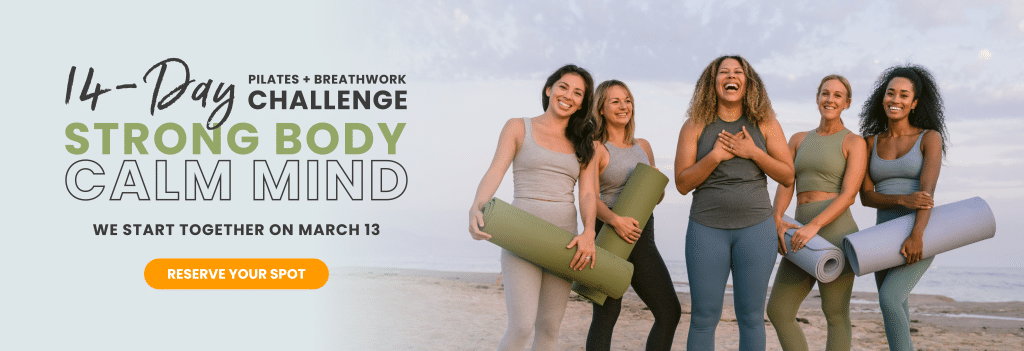
For a limited time, your first month is on us (yes, you can get 30 days FREE!). This offer ends on March 13th at midnight PST, so don’t miss this opportunity to take care of your body AND your mind with Pilates and breath! Get started today!

The post <strong>How to Reset Nervous System Dysregulation With Pilates and Breath</strong> appeared first on Lindywell.

from Blog – Lindywell https://ift.tt/ukUsb0I
via IFTTT

Categories
Uncategorized

#healthyliving #holistic #nutrition All your Breathwork Questions Answered!

Hi Lindywell community! Kiesha here. I’m so excited to be joining the team as the Head of Breathwork and Somatic Programs.

In addition to providing you high quality, effective and efficient Pilates workouts you can do from home (or on the road), Lindywell is now also a place where you can find guided breathwork sessions and intentional breathing exercises to help you reduce stress, clear your mind, increase your energy and improve your mental health.

You may already be a dedicated breathwork fan, or you may be curious what breathwork even is.

The definition of breathwork is quite simple: It is a conscious practice of using your breath to help shift your emotions and create the desired outcome. 

While breathwork is trending right now (and for good reasons!), it’s an ancient practice with roots in southeast Asia that has been utilized for years – in many different ways.

As a trauma-informed breathwork facilitator and a somatic life coach, I’m passionate about helping equip people with somatic tools to address trauma in the body. Healing isn’t a linear process, but it’s possible, and I’m proud of that. 

Understandably, there are some questions about breathwork and we’ve listened to you, our community, to answer your questions. Here are a few answers to the most frequently asked questions.

lindywell free trial

Core Strength

This is one of the most well-known benefits of Pilates—and it’s worth talking about! For women, core strength is critical for improving posture, reducing the risk of injury, and improving balance and stability. It’s also supportive of overall pelvic health, which is important in every area of life for women.

Pilates helps build strength through exercises that target the abdominal, lower back, and pelvic floor muscles. These exercises, paired with slow, controlled movements, concentration, and precision, engage the core muscles, helping to strengthen and tone them.

Give these pelvic floor exercises a try to experience the power of Pilates for your core. 

2. How does breathwork help calm my mind and address stress responses like “fight or flight”?

When we mindfully breathe, we slow our heart rate down, thus signaling to our 

brains that we are not in a state that requires hypervigilance. 

What type of breathing comes to mind when you think of “fight or flight”? 

  • Shallow?
  • Rapid?
  • Are there any racing thoughts?

In order to increase oxygen, our lungs must work harder when we are in this state.

When we slow our breathing, we signal to our brains that we are okay, and our parasympathetic cues the nervous system to calm us down.

Long, deep breaths can also manage our stress responses to help decrease anxiety, fear, racing thoughts, a rapid heartbeat, and shallow chest breathing. 
These responses can impact our physical, mental, and emotional health and longevity. Toxic stress negatively impacts our overall wellness and longevity, but breathwork is one somatic (body-based) tool that can create a sense of calm and well-being.

3. Why do we always breathe in through the nose and out through the mouth versus in and out through the nose? Is there something specific that it does for the body?

I’ll answer this in two parts.

First, at Lindywell, we do a variety of techniques. There are so many different breathing exercises. Sometimes they specifically call for nostril or mouth breathing for a reason, and sometimes, it doesn’t matter. 

When I instruct, I’m giving you suggestions because everyone is at a different place and may or may not be able to access certain movements that day. 

In breathwork, mouth breathing is cooling and helps us shift states when we do the 3 part open mouth breath (a style used during longer breathwork sessions known as a conscious connected circular breathwork pattern).

The elementary teacher in me relates this to teaching young children how to spell. Spelling the word apple correctly doesn’t matter at the beginning. It may matter later, but I always asked my students, “What do you hear? I would ask, “Can you stretch out the sounds?” I want them to let go of perfection, get curious, enjoy the process, and trust their minds as young writers. While they may look different, Apl and Apple mean the same thing. 

Similarly, with breathwork, one way may be how it’s technically done, but how you show up today is valid and valuable. This is similar to Robin’s approach to breathing in Pilates as well!

Like my former students, I want you to let go of perfection or the need to be a purist, get curious and be playful about your body and breath, and trust your mind. I will let you know if a strategy requires nasal or mouth breathing.

Secondly, as a general rule, we should breathe through our noses in our daily lives. This is for optimal health (mouth breathing comes with many issues affecting our sleep, teeth, weight, and mental health). 

Mouth breathing bypasses the functions of the nose, which include warming, humidifying, and filtering the air we breathe.

Nostril breathing allows your lungs to be more efficient in oxygen absorption. It also activates the lower part of the lungs when doing breathwork, thus taking in more oxygen.

However, in breathwork, when we are doing targeted exercise for a short time to achieve a desired result, short durations of mouth breathing aren’t a problem. 

Some exercises call for either nose or mouth breathing for a specific reason, but it doesn’t matter unless specified. If you have a stuffy nose and all you can do is breathe through your mouth, it would be better to do that than the way I may instruct (or suggest) because the benefits of breathwork are worth it.

4. How to change your mindset of “this won’t work for me”?

The mind-body connection is real and is one of the best ways to take charge of your health. So much of life is not in your control, but knowing that your thoughts are connected to emotions and that those emotions reside in the body is powerful. Knowing that this connection impacts your overall wellness gives you great motivation to do something about it. 

Research supports the role of the mind-body connection in healing and recovery.

“Over the past 30 years, neurobiological research has shown that the placebo effect, which stems in part from an individual’s mindset or expectation to heal, triggers distinct brain areas associated with anxiety and pain that activate physiological effects that lead to healing outcomes”.Stanford University

Healing and recovery are more than acts that require medical attention and support; you are a part of the equation. Our thoughts affect our ability to recover.

“Many scientists believe there is a strong mind-body connection that can affect healing. Sometimes the trauma to the body and negative thoughts can lead to stress, depression, and anxiety. Occasionally, the injury leads to fear about getting injured again. These negative thoughts and emotions can affect recovery.” Bone-Joint

“Your body responds to the way you think, feel, and act. This is one type of “mind/body connection.” When you are stressed, anxious, or upset, your body reacts physically. For example, you might develop high blood pressure or a stomach ulcer after a particularly stressful event, such as the death of a loved one. Family Doctor

Try reframing your thoughts and get curious by instead asking yourself “Could this work for me?” and be open to exploring the ways your mindset can impact your experience. 

5. How to get started with breathwork?

Join Lindywell! Try different techniques and don’t give up. Like everything else in life, it takes practice. I’d love for you to join me and an amazing group of instructors!

After downloading our app, here are some steps for beginners and experts alike: 

1. Start paying attention to your breath more often throughout the day. Right now, at a stoplight, upon rising, during Pilates, before sleep. Make it a habit to be a student of the way you breathe.

2. Get curious. Can I breathe more deeply, more slowly, and bring my mind back to how I breathe throughout the day?

3. Play! We encourage you to try different sessions in the Lindywell app. There are short guided sessions and longer, deeper sessions – something to suit your mood each day. Each style and experience is different, so be open to trying sessions more than once.

4. Subscribe and follow Lindywell: We want breathwork and Pilates to be as accessible as possible. Subscribe to our newsletter for free tips and tools. Follow us on Instagram @wearelindywell for daily breathwork inspo and IG Live tutorials. Join one of our free challenges that let you experience that power of grace over guilt pilates, breathwork, and nourishment. 

5. Breathwork feels intimidating to me; can you explain why it might feel scary to try?

Oh, friend, this is so real; I feel this in my soul. 

Meditation, breathwork, and basically anything that slows us down and gets us into our bodies can be scary. Hear me clearly: 

You are not alone. 

That is why you need someone who is trauma-informed as a guide. You need someone to hold space for you, and don’t take for granted that something as simple as breathing can be terrifying based on what you have been through and what is happening in your body. 

This is a common experience, and in my teaching, whether live, online, or in-app, I teach from a place of grace and gentleness. 

6. Can breathwork reduce anxiety?

Yes! Deep breathing slows your heart rate and signals your body to calm down. 

As someone with a lot of anxiety experience, I know how important this is.

Learning about my nervous system and how to nourish it has given me power and agency in my body. That, in and of itself, has reduced my anxiety. 

Controlled breathing leads to physiological changes in the body. Think about when a child is upset and someone they love holds them and takes deep breaths with them. What happens? It regulates their breathing and shifts their state. You can do this same thing for yourself with controlled breathing. The benefits only increase when practiced regularly.

Deep breathing signals the body to slow your heart rate and lower blood pressure, which reduces cortisol levels (the stress hormone). See the list of benefits in question 1.

The beauty of breathwork is that it’s evidence-based. 

Ready to jump in? 

Try this simple breathwork technique the next time you are feeling anxious or the 20-minute guided breathwork session to reset your nervous system and connect to your body. 

I can’t wait to get to know all of you in the Lindywell community better – and can’t wait to see you in the app for your next breathwork session!

Until then…remember to breathe.

Kiesha

The post All your Breathwork Questions Answered! appeared first on Lindywell.

from Blog – Lindywell https://ift.tt/Haj1c4h
via IFTTT

Categories
Uncategorized

#healthyliving #holistic #nutrition The Powerful Connection Between Women’s Wellness and Pilates

women's wellness and pilates

Women’s wellness is multi-faceted. We have a lot to think about when it comes to taking care of our minds and bodies as we juggle friendships, family, work (and so much more), all while taking care of ourselves. 

Pilates has been a powerful tool for me to stay strong, both mind and body while raising a family, building a business, and weathering the many storms that have come up along the way. In my 10 years of practicing, I’m continually reminded (by the thousands of women that practice with us at Lindywell!) that Pilates is one of the only forms of exercise that can help us women achieve all of this—often in just a single workout!

Let’s get into the details about the powerful connection between Pilates and women’s wellness and how it can positively impact your well-being at every stage of life.

lindywell free trial

Core Strength

This is one of the most well-known benefits of Pilates—and it’s worth talking about! For women, core strength is critical for improving posture, reducing the risk of injury, and improving balance and stability. It’s also supportive of overall pelvic health, which is important in every area of life for women.

Pilates helps build strength through exercises that target the abdominal, lower back, and pelvic floor muscles. These exercises, paired with slow, controlled movements, concentration, and precision, engage the core muscles, helping to strengthen and tone them.

Give these pelvic floor exercises a try to experience the power of Pilates for your core. 

Stress Management

Stress is a normal part of life, we all experience it in some way. When stress is chronic, however, women can see the impact on menstrual cycles, pregnancy, and digestion, in addition to typical symptoms like headaches, anxiety, and lack of focus. 

Pilates is a powerful way to reduce stress because it emphasizes the connection between the mind and body. This helps reset the nervous system and, in turn, promotes mindfulness and relaxation. Intentional breathing, which is a key principle of the Pilates method and a central component of the Lindywell approach, also reduces stress levels. 

Here are a few other interesting ways Pilates can reduce your stress that you may have never thought about:

  • Relieve muscle tension: Pilates helps to relieve muscle tension and improve blood flow, leading to a reduction in physical stress.
  • Increased endorphins: Consistent Pilates practice can increase endorphin production, which can help to reduce stress and improve mood.
  • Improved sleep: Pilates can also help improve sleep quality, which can help to reduce stress and promote overall wellness.

At Lindywell, we focus on short, efficient workouts so it’s easier for you to prioritize daily movement, and as a result, reduce your stress and feel your best every single day. Join for free with a 14-day trial or log in and press play on your next workout!

Spine Health

As Joseph Pilates said, “If your spine is inflexibly stiff at 30, you are old; if it is completely flexible at 60, you are young.” Very few forms of exercise focus on spine health. Yet, this is key to reducing back pain, maintaining good posture, and making physical movement possible throughout your entire life. 

For women in pregnancy, a healthy spine is also necessary to keep a healthy posture as the belly grows and the center of gravity shifts.

Rolling and stretching movements in Pilates keep the spine young, flexible, and strong. One of our favorite exercises at Lindywell is Rolling Like a Ball, which is great for your spine and fun to do! Try it at home to give your spine a little love and have a laugh. 

Body Image

Body image is a significant concern for many women. In fact, a 2022 survey of 4,250 women found:

  • 88 percent say their body weight or shape is at least moderately important.
  • 87 percent have been on a diet with the purpose to change their shape or weight.
  • 60 percent say how they feel about themselves is largely influenced by their weight, shape, or size.

This is something I personally struggled with for many years and as a result, I also dealt with low self-esteem and anxiety. For some women, this can also lead to depression and behaviors like restrictive eating or excessive exercise.

Pilates was incredibly supportive on my journey back to appreciating and nourishing my body. Thanks to the physical strength I was building, I felt more confident—and thanks to better posture, I walked more confidently too! More than that, though, Pilates encouraged me to focus on what my body could do each day. Whether it was a lot or a little, this helped me develop a more positive self-perception. 

At Lindywell, you are seen, heard, and supported no matter what you’re going through with a non-competitive community of women. We’re all about celebrating non-scale victories and cheering one another on!

Physical Strength

You don’t need to work out for 60 minutes a day or lift heavy weights to build strength. In Pilates, we build strength with body weight, in addition to playing with fun props like light hand weights, resistance bands, a Pilates ring, or a Pilates ball. And at Lindywell, we do it in as little as 10 minutes too! 

Not only does Pilates provide targeted muscle training, but each movement is efficient. For example, the Swimming exercise targets the entire back of your body, from your upper back and triceps to your lower back, glutes, and hamstrings. It also helps strengthen your core, as with most Pilates movements. Check it out here: 

Most Pilates exercises are like this, allowing you to work your entire body at one time, leading to a balanced and comprehensive workout. Thanks to the low-impact nature of these movements, nearly anyone can do it too.

Pilates and Women’s Wellness Go Hand-in-Hand

Women’s wellness is all about building resilience, strength, and flexibility in the mind and body. At Lindywell, Pilates helps you achieve all of that and more through full-body movement, focus on the breath, and efficient workouts that can be done in just 10 minutes. If you’re ready to love yourself more, appreciate your body, and feel strong and confident, it’s time to give Pilates a try.

The post <strong>The Powerful Connection Between Women’s Wellness and Pilates</strong> appeared first on Lindywell.

from Blog – Lindywell https://ift.tt/wK9AWyR
via IFTTT

Categories
Uncategorized

#healthyliving #holistic #nutrition Abs, Core, and Pelvic Floor: What You Need to Know to See Progress  

There is so much misinformation about abs, core, and the pelvic floor that people harbor many misconceptions about these areas. At the same time, the midsection is one of the most unloved parts of people’s bodies. People come to me all the time seeking ways to tone and slim down their midsection.

In today’s episode of The Balanced Life podcast, I’ll clear up common misconceptions about abs, core, and the pelvic floor, you’ll learn the muscle groups that make up your core, what to do to tone your midsection, and what you can do about pelvic floor issues like pain and incontinence. 

So many people have been waiting for an episode on this subject, so don’t hesitate to click play and share with a friend.

You will want to hear this episode if you are interested in…

  • How to increase strength in the midsection [3:32]
  • Understanding abdominal separation [7:22]
  • How to flatten your belly [14:35]
  • The pelvic floor [22:33]

Understanding Abdominal Separation

Diastasis recti is a common issue that women face. This common abdominal separation happens in pregnancy to allow the abdominal muscles to spread apart to provide room for the expanding belly. While the beauty of the human body’s design accommodates the making of a new life, the after effect often displeases moms. Since the connective tissue of the linea alba often has trouble reconnecting, it can create a forward pooch that is difficult to slim down. 

If you aren’t sure whether you have diastasis recti, check out my video on Instagram to see how you can check. It’s important to understand whether you have it or not since many common ab exercises like sit-ups can actually worsen the condition. Healing diastasis recti can be done on your own; however, some severe cases may require a physical therapist to help.

How to Increase Strength in the Midsection and Flatten Your Belly 

One of the most common questions I get is how do I flatten my belly? 

A strong core means working all of the muscles that connect to the pelvis. All core muscles are anchored by the pelvis, so to work the entire core it is important to not solely focus on the abdominal muscles.

If you are a member of Lindywell, you already know that in Pilates we don’t do sit-ups, yet we focus on core strength. Pilates work deepens your core muscle strength through slow, focused, precise movements. This deep, intentional work affects your entire body and even spills over into the rest of your life resulting in better posture and improved daily function.

It is important to remember that exercise alone won’t help to flatten your belly. Eating a healthy, balanced diet plays a major role. Check out our healthy, delicious, dietitian-created recipes in the app.

How to Work Through Pelvic Floor Issues

Many women suffer in silence about their pelvic floor issues. The pelvic floor is a group of muscles located within your pelvis that support your organs. Since a healthy muscle must be able to tighten and release it is important to steer clear of exercises that only focus on tightening the muscles. They must be able to release to function properly. 

Pilates is one of the best-kept secrets to pelvic floor health. Lindywell is loaded with workouts that build your core and your pelvic floor strength. Build strength and movement with our pelvic floor exercises. If you aren’t a member yet you can even check out one of my pelvic floor exercises on YouTube

Hopefully, you have learned a ton from this episode. If you have, please leave a 5-star review on your favorite podcast app. 

Resources & People Mentioned

Follow Lindywell

Join Lindywell

Subscribe to The Balanced Life

The post Abs, Core, and Pelvic Floor: What You Need to Know to See Progress   appeared first on Lindywell.

from Blog – Lindywell https://ift.tt/1fghivk
via IFTTT

Categories
Uncategorized

#healthyliving #holistic #nutrition 10 Benefits of Pilates for the Mind and Body (Backed by Science!) 

10 benefits of Pilates

This isn’t your usual 10 benefits-of-Pilates list. You may have heard about the physical benefits of Pilates like getting stronger or looking more toned, but the value of it goes so much deeper than that.

In this list, we’re digging into how Pilates impacts your whole self, including sex, sleep, aging and so much more—all backed by science.

Let’s get to the core of how this style of movement can impact you with the top 10 benefits of Pilates!

1. Reduce Stress and Improve Your Mood 

Source: International Journal of Psychiatry

Since Pilates combines physical motion with mindful presence, it can have a calming, meditative effect. In fact, Pilates can alleviate chronic stress, anxiety, or depression. It also helps to stimulate the release of serotonin (a mood-enhancing hormone), so you often finish your workout feeling uplifted and refreshed.

Lindywell tip: Come to your mat if you’re feeling anxious or stressed. A short 10-minute session can be exactly what you need to shift your energy and feel rejuvenated.

2. Relieve Pain With Better Posture

Source: International Journal of Spine Research

Misalignment in your spine (vertebral misalignment) can result in muscular weakness and imbalance. If you’re experiencing chronic pain, this could be a reason why. Pilates, however, can improve spine health by restoring a natural, healthy curvature in the lumbar (lower back), thoracic (mid to upper back), and cervical (neck) regions. 

This helps to improve your posture, which relieves pressure on the entire spinal column to ease pain and tightness in other areas of the body. As I always say (and what Joseph Pilates always taught): you’re as young as your spine is healthy.

Lindywell tip: Keep your spine healthy and happy with our Pilates Powerhouse Mat, which was made with just the right amount of thickness for stability and support.

3. Feel Stronger in Every Area of Life

Source: International Journal of Environmental Research and Public Health

Your core muscles are the foundation for movement on and off the mat. As you reach over to pick something up, you use your core muscles to twist. As you walk on the sand, you use your core to stay balanced. 

Pilates centers on these core muscles and when the core is strong, you can move more freely without tension, strain, or discomfort. Plus, you’ll feel more mobile and flexible overall. This means you can do all the things you want in your everyday life and feel strong as you do it!

Lindywell tip: Remember to stay connected to listen to your body in every workout. You don’t need to increase the intensity to reap the strength benefits. In fact, moving slower and with greater intention is actually often more challenging and will help you build just as much strength, if not more.

4. Create Mental Clarity

Source: Frontiers in Psychology

The mind-body coordination of Pilates can reinforce your attention span, self-efficacy, emotional regulation, and cognitive function as a whole. This supports you in your Pilates workouts, in your work, and in your personal life. When your brain is sharp and alert, you can show up as your best self for you and everyone around you.

Lindywell tip: Start or end each Pilates workout with one of the breathwork sessions in the Lindywell app. Taking a few moments to breathe in stillness can help you create even more mental clari. ty.

5. Stay Strong Through Aging

Source: Manual Therapy, Posturology, and Rehabilitation Journal

As the body ages (which can start as early as the age of 26!), it’s normal to lose some bone density over time. Women who have been through menopause, however, are often at a higher risk of bone deterioration, along with osteoporosis. Fortunately, Pilates can strengthen bone mineral density to improve functional movements and protect the musculoskeletal system from turning frail or brittle.

Lindywell tip: Consistency is key to building bone strength and resilience over time. Committing to just one short workout each day, even for just 5 to 10 minutes, will support bone strength and health.

6. Sleep Better—and Feel More Rested

Source: Maturitas Journal

Uninterrupted, restful sleep is crucial for both mental and physical well-being, and Pilates can help with this. In fact, women who participated in Pilates for at least three months saw an increase in overall sleep quality, as well as a decrease in fatigue and mental health issues that affect sleep. 

Lindywell tip: You don’t have to do Pilates right before bed to sleep better at night. A Pilates workout at any time of day will improve your ability to sleep soundly at night.

7. Boost Your Immune System to Fight Sickness

Source: PLOS One Journal

Immune health and resilience are vital to staying healthy. Pilates has been found to reduce inflammation while boosting plasma and hemoglobin circulation. This means you’ll have less inflammation and more circulation, which can result in stronger immunity. 

Lindywell tip: A strong immune system is important all year long—not just in the winter or during flu season. Maintaining a consistent practice, no matter the season, is the best way to keep your immune system healthy when you need it most.

8. Stay In Tune With Your Body

Source: Frontiers in Psychiatry

Body awareness is a state of conscious connection to the form and function of your own body as it moves through space. Consistent Pilates practice correlates with higher levels of body awareness, which can improve overall body image and acceptance. This helps to combat body dissatisfaction and can even help you connect with a deeper level of self-compassion.

Lindywell tip: We start every Lindywell workout with a moment to connect with the body and then move with intention. This allows you to create a better connection with your body both on and off the mat.

9. Reduce Your Risk of Injuries

Source: British Medical Journal

Pilates helps you build dynamic strength, which makes it possible for you to exert force on the muscles and joints repeatedly without causing strain or injuries. In fact, soccer players who used Pilates as a conditioning exercise had more stability in their knees, hips, and other joints. This not only elevated their coordination and performance on the field, but it also lowered their risk of sports injuries. 

Lindywell tip: You don’t have to play soccer to experience the benefits of dynamic strength. Practicing Pilates helps you feel stronger while doing the active things you love, like playing with your kids or taking a long walk.

10. Improve Your Sexual Health and Function

Source: International Journal of Public Health and Environmental Research

Pilates may play a surprising role in your sexual health because it activates the core, and can help build pelvic floor strength. Your pelvic floor muscles—located in the base of your pelvis, between the hip flexors and tailbone—play an important role in sexual function. Since this area is home to the vagina and uterus, a healthy, properly functioning pelvic floor is essential for both pleasure and reproduction. 

Lindywell tip: While Pilates can support this area of your health, if you’re experiencing chronic pelvic pain, dysfunction, or discomfort, it’s important to get care from a pelvic therapist. 

The 10 Benefits of Pilates: Support Your Mind and Body

Pilates can improve every area of your life, mind, and body—and those benefits are also backed by science! The best part is, you don’t have to practice every day for hours on end to experience less stress, better sleep, stronger bones, or any of the other benefits. Just a few minutes each day, or a couple of times each week, can positively impact your life.

If you want to experience these 10 benefits of Pilates, sign up for your free trial of Lindywell today to get fit and feel good for a lifetime or log into the app if you’re already a member!

The post <strong>10 Benefits of Pilates for the Mind and Body (Backed by Science!) </strong> appeared first on Lindywell.

from Blog – Lindywell https://ift.tt/BlZ8O5S
via IFTTT

Categories
Uncategorized

#healthyliving #holistic #nutrition How to Spot the Best Pilates Mat for Your Practice

best Pilates mat

If you’re searching for the best Pilates mat, you’ve come to the right place. As a Certified Pilates instructor who’s been practicing and teaching Pilates for over a decade, I’ve used a lot of mats. This has helped me identify all the “must-haves” when it comes to finding the best mat for your practice.

Before you decide which mat to buy, I want to share a few tips for choosing the best option for your practice because your needs are as unique as your practice. 

Because I believe everything shared here, from materials to function, is so important to a great Pilates mat, we brought them all together to create our own: the Lindywell Pilates Powerhouse Mat

Check out why and how we created our mat and keep reading to learn about how these details support every element of your practice.

The Best Pilates Mat is: Non-Toxic and Eco-Friendly

You shouldn’t have to worry about the materials of your mat negatively affecting your body while you’re on it. That’s why it’s so important to find a mat that’s free of toxins like PVC, phthalates, and chloride. These toxins have been shown to disrupt your whole system, from hormones to digestion. 

This was a non-negotiable for me when designing our new Pilates Powerhouse Mat. Everything within us is connected and when one system is affected all the others respond. 

I will say, however, that it was nearly impossible for me to find a mat that met this particular part of the criteria, which is why I developed my own. Our Lindywell mat is very unique in this way.

The Best Pilates Mat is: Supportive and Stable

As you flow through the workout, you need a mat that can provide the perfect foundation for each movement, which is why thickness is so important. The best Pilates mat is supportive enough for rolling exercises, yet stable enough for balancing exercises. 

A yoga mat is a great place to start if it’s what you already have. As you progress in your practice, however, a Pilates-specific mat will make your body feel so much better because of all the rolling you do on your spine. 

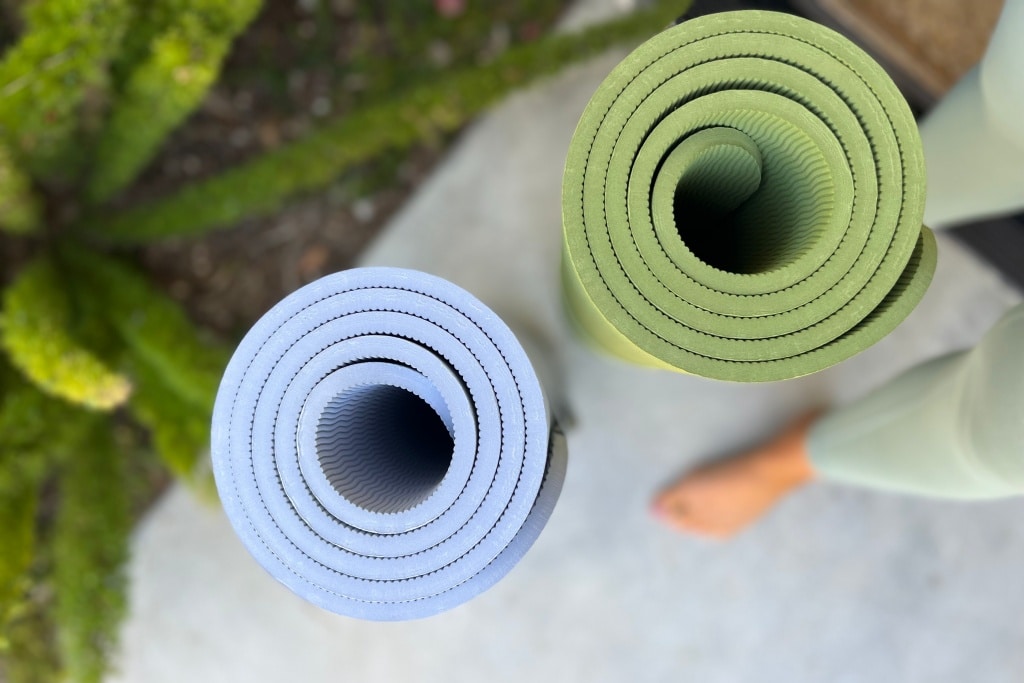
The thickness of a Pilates mat ranges from 6mm up to 12mm. I found the sweet spot to be 10mm for the Lindywell mat, specifically because of the materials we use. This means, other 10mm mats might feel squishier, and less stable than ours. 

In addition to thickness, both length and width make a big difference in how you experience your Pilates workout. That’s why the Lindywell mat is wide and long, giving you the space you need to move comfortably and feel fully supported.

The Best Pilates Mat is: Easy to Clean

We build strength on our mat. We heal on our mat. We sweat on our mat! Being able to quickly and easily clean it is a must so you can save time in your already-busy day. This is why finding a mat with moisture-wicking material is key. 

I took this one step further and used bacteria-resistant material (that also wicks the moisture), so your sweat won’t soak into the mat. This also means you won’t have to worry about the mat holding onto any odors. All you need is a damp cloth to wipe it down after your workout.

This is one reason why our Lindwell mat can also take the place of your yoga mat, especially if you prefer hot yoga. The material will keep that mat from absorbing your sweat and building up with bacteria.

The Best Pilates Mat is: Lightweight

A light mat makes moving it around—or going into the Pilates studio—that much easier. If you’re juggling a water bottle, bag, and keys, in addition to your mat, you want it to be easy to tuck under your arm or throw over your shoulder.

This is why, at Lindywell, thick doesn’t mean heavy. Our mat is light as a feather and easy to carry. You can use the two matching elastic straps to hold it in your hands, or just toss it under your arms or in your bag. 

The Best Pilates Mat is: Aesthetically Pleasing

You likely see your Pilates mat on a daily basis, whether it’s rolled up in the corner of your bedroom or next to the door. The best Pilates mat is not only useful but also beautiful. It’s something you want to look at and roll out for each workout. This is why you want to choose a mat that makes you feel good when you get on it.

Our Lindywell mat comes in two calming colors, sky blue and aloe green, both of which help you connect to a sense of grounding and calm. We also added a simple reminder to each mat: Remember to breathe. 

Choose The Best Pilates Mat for You

Don’t overlook the importance of having the right mat: it’s the foundation of your practice. Our Lindywell mat was designed to be exactly that, which is why we created it to be:

  • Thick enough to support you through your practice.
  • Easy to clean and non-toxic.
  • Lightweight for carrying and storage.
  • Calming with the colors sky blue and aloe green.

If you’re having trouble finding the best Pilates mat for you, purchase the Lindywell Powerhouse Pilates Mat. It was designed with your needs in mind and I know it will support every aspect of your practice.

The post <strong>How to Spot the Best Pilates Mat for Your Practice</strong> appeared first on Lindywell.

from Blog – Lindywell https://ift.tt/VC87m25
via IFTTT

Categories
Uncategorized

#healthyliving #holistic #nutrition How to Fuel Radical Self-Love With Food

radical self-love

To practice radical self-love is to live life in a way that honors your worth, enoughness, and inherent right to happiness, here and now, just as you are.

This can be easier said than done in a world that’s bursting at the seams with diets, quick fixes, and perfectly filtered faces. It can feel like there’s always something you can do better or somewhere you’re falling short in life. 

Food is an especially challenging area when it comes to practicing radical self-love. It’s often fraught with expectations around what’s “healthy” or what your food choices say about you. On the other hand, it’s also a perfect way to actually fuel your radical self-love.

On my journey to embody a healthier relationship with food, the grace over guilt mindset, which helps create more self-love, changed everything for me. I used to get caught in the cycle of feeling bad for what I ate and then making sure to exercise more in order to burn it off (punishment, disguised as a workout). Or I’d beat myself up for making choices that didn’t align with the “perfect” diet I was trying to follow. 

Once I started embracing grace over guilt, I began to understand that one meal or one night of “over-indulgence” didn’t define me as a person, or define my health! I was able to break free of the patterns that were keeping me trapped in an unhealthy relationship with food and myself. 

Guilt does not work as a motivator—it leads to feelings of shame that keep us stuck and hold us back from freedom and self-love.

So, if you’re ready to break free and love yourself more completely too, let’s flip the script, re-write the narrative, and talk about how you can create more self-compassion with food.

lindywell free trial

Eat Mindfully

Eating can be a pleasurable experience—if you’re mindful as you do it. Funny enough, it’s often the case that you’re not actually paying attention to your food as you eat it. I often inhale my lunch while working on my computer or standing at the kitchen counter trying to get my kids ready for school. I forget to pause and actually enjoy the food! 

Mindful eating is the opposite of this. It’s the practice of being present with yourself, your food, and the experience at each meal. It’s about taking pleasure in each bite, no matter what the food is. 

How to Eat Mindfully

Because radical self-love is all about claiming the joy that is yours, choosing to eat mindfully. Consciously enjoying your meal and appreciating the way the food is nourishing your body can be the perfect way to bring more self-compassion into your world. Bring this concept to your mealtimes with these three simple steps:

  • Stop and eat. This is the most important step. It’s hard to eat mindfully if you’re focused on driving or doing work. I’ve made it a practice to pause every night before eating my dinner to take a few slow, deep breaths. I’m usually rushing to get food on the table and negotiating with four kids to do their family contributions (setting the table, filling water, etc.) so when I get to my meal, if I don’t intentionally pause and breathe to reset my nervous system, I will eat in that rushed and over-stimulated state.
  • Tune into your sensations. What is the texture of the food like? Can you describe the taste? As you continue to eat, tune into your satiation and fullness so you can stop when your hunger has subsided.
  • Express gratitude. Align with the feeling of gratitude as you chew each bite. What about this meal are you grateful for? Hold that gratitude in your heart as you enjoy the meal from start to finish.

When practiced regularly, this mindfulness can spill over into other areas of your life, making it easier to be more mindful when spending time with loved ones or moving your body. Being in the present is just one more way to experience radical self-love in every area of your life.

Let Go of “Good” and “Bad”

This is another lingering habit from living in a world consumed by diet culture. You may have been taught, or simply learned by hearing and watching others, that some foods are “good” while others are “bad.” I don’t even have to say which foods are which because you probably already have your own lists. 

One way to fuel radical self-love with food is to let go of this rating system. Instead, let all foods have a place in your life. Everything from a bowl of cereal to a cookie or a veggie stir fry can be pleasurable, nurturing, and supportive in different ways. 

One day you might choose chicken noodle soup because it’s nurturing to your soul in the winter. The next day you might choose to eat a cupcake because it tastes good. And later in the week, you may have a salad because you’re craving fresh produce.

There is no such thing as being “perfect” when choosing food. There’s just loving yourself and honoring your desires.

Fill Your Life With Radical Self-Love 

Food is a great tool to practice and fuel radical self-love. Learning how to create more self-love around food has been an important part of my journey too, which is how I know that bringing these shifts in your life can be so helpful. Use these ideas to tune more deeply into your intuitive desires, learn to trust yourself, and finally see all food for what it is: an opportunity to nurture, love, and care for yourself, no matter what you’re craving. 

The post How to Fuel Radical Self-Love With Food appeared first on Lindywell.

from Blog – Lindywell https://ift.tt/eqRYNfW
via IFTTT

Categories
Uncategorized

#healthyliving #holistic #nutrition How to Help Our Kids Cultivate a Healthy Relationship with Food with Rachel Rothman, [Part 2]

Navigating family mealtimes can be stressful. Everyone has their own ideas of what they want to eat. Kids can be selective, and families are often frazzled by the end of the day when dinner rolls around. 

Rachel Rothman helps families have less stress at mealtimes. She uses her extensive experience as a registered dietitian to work with families to alleviate food worries. Rachel and I had such an illuminating conversation that we had to split it into two parts. This is the second part of our insightful discussion. Join us to learn how to work through mealtime battles, how to handle teen food issues, how to approach vitamin deficiencies, and the answers to many more questions.

You will want to hear this episode if you are interested in…

  • How to work through mealtime battles [1:22]
  • How to navigate eating well in the teenage years [8:06]
  • What to do when kids fully refuse to eat or throw a fit [12:45]
  • How to expand kids’ palates [15:50]
  • How to approach vitamin deficiencies in selective eaters [21:51]
  • Teen body issues [23:48]
  • Rachel’s favorite snack options [26:19]

A Bedtime Hunger Tip

We’ve all been there. We prepare a healthy dinner that the kids don’t eat and when bedtime rolls around suddenly they’re hungry. Now you have to decide–are they stalling bedtime or actually hungry?

Rachel offers a tip: the bedtime snack. Try offering one more opportunity to eat by implementing a bedtime snack time. You decide what’s on the menu. It could be dessert, a piece of fruit, cheese and crackers, or a small veggie tray. 

Set a reminder or an alarm that lets them know this is their last opportunity to eat before bedtime. With this regular routine, you’ll put them to bed with the comfort of knowing they had one last chance to satisfy their hunger.

How to Handle Teen Food Rebellion

Older kids come with a whole range of other issues around food. Oftentimes they revert back to toddlerhood with their own version of tantrums in the form of teen rebellion. This rebellion could spill over into their eating habits. 

As kids get older, continue to gather for meals a few times a week. We can apply the same principles that we learned in the first part of this interview: parents provide the what, when, and where. The kids get to decide whether to eat or how much to eat. 

Another way to get teens to eat better is to get them into the kitchen to show them how to create great tasting food. Teach them how flavors can change by experimenting together in the kitchen. 

Our kids learn the most by watching us, so what we model is even more important than what we say.

Show Don’t Tell

Kids learn from the example you set. The more you develop a healthy relationship with food and movement in your own body, the more you will help your children. 

If you’re not a member of Lindywell yet, check us out. Lindywell is based on three pillars: Pilates at the core, nourishment, not restriction, and a thriving mindset. 

Pilates is at our core. We use movement to connect to our minds and bodies. We have a library of delicious recipes focusing on nourishment, not restriction. A healthy breathwork practice can relieve stress, improve sleep, and reset your nervous system. 
Be the model that you want your kids to emulate. Join Lindywell today!

Resources & People Mentioned

Connect with Rachel

Follow Lindywell

Join Lindywell

Subscribe to The Balanced Life

The post How to Help Our Kids Cultivate a Healthy Relationship with Food with Rachel Rothman, [Part 2] appeared first on Lindywell.

from Blog – Lindywell https://ift.tt/MgzhNsI
via IFTTT